Vinyasa yoga is fundamentally an exercise modality. Its defining characteristic, the continuous linking of movement to breath across sequences of postures, generates physiological demands that overlap with aerobic conditioning, resistance training, and neuromuscular coordination work.
What is Vinyasa Yoga?
Vinyasa yoga, often called "flow yoga," is a dynamic style of yoga that links poses together with breath. Think of it as a dance where each movement is synchronized with an inhale or an exhale.
This creates a continuous flow, moving from one posture to the next without long pauses. It's a popular form of modern yoga, and you'll find it in many studios.
The Core Principles of Vinyasa
The main idea behind Vinyasa is the connection between breath and movement. Each pose is held for a breath or two before transitioning to the next, guided by the inhale or exhale.
This synchronized breathing helps to build internal heat, focus the mind, and create a rhythmic practice. Unlike some other styles where you might hold poses for a while, Vinyasa emphasizes the journey between them. The sequences can change from class to class, making each practice unique.
Key Poses in a Vinyasa Flow
While Vinyasa sequences vary, certain poses often form the foundation of a flow. These are typically introduced through Sun Salutations, which are sequences designed to warm up the body and link breath with movement.
Downward-Facing Dog (Adho Mukha Svanasana): Often used as a transition pose, it stretches the hamstrings and shoulders.
Chaturanga Dandasana (Four-Limbed Staff Pose): A challenging pose that builds upper body strength, usually held for one breath before moving to the next pose.
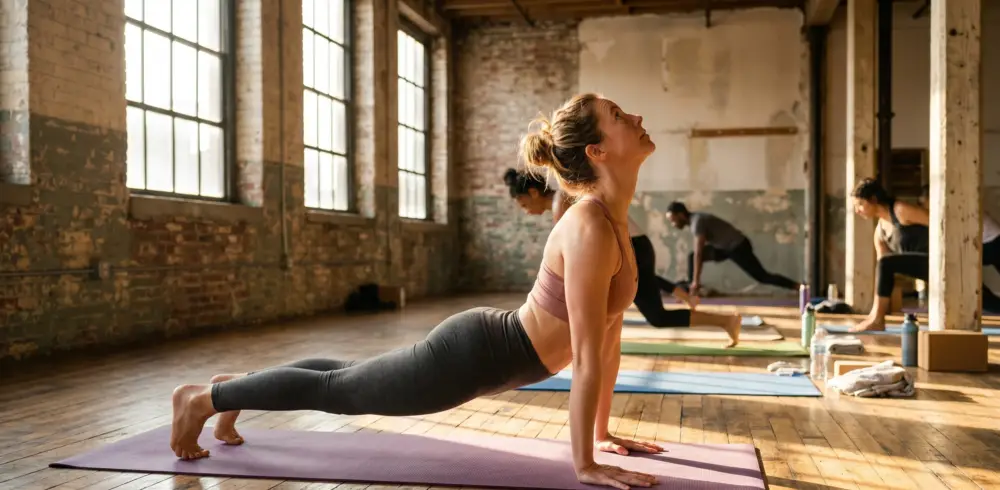
Upward-Facing Dog (Urdhva Mukha Svanasana) or Cobra Pose (Bhujangasana): These poses open the chest and abdomen after Chaturanga.
Warrior Poses (Virabhadrasana I, II, III): These build strength and stability in the legs and core.
Triangle Pose (Trikonasana): Stretches the sides of the body and legs.
Benefits of Practicing Vinyasa Yoga
Vinyasa yoga offers a wide array of advantages that extend beyond the physical. Its dynamic nature, linking breath with movement, cultivates a unique synergy between the body and mind.
This practice can lead to significant improvements in both physical well-being and mental clarity.
Physical Benefits of Vinyasa Yoga
The continuous flow of Vinyasa yoga creates a cardiovascular workout, which can contribute to improved heart health and increased stamina. The varied sequences and transitions between poses work various muscle groups, building strength and endurance throughout the body.
Regular practice can lead to enhanced flexibility and a greater range of motion, making everyday activities feel easier and reducing the risk of injury.
The core muscles, essential for stability and posture, are consistently engaged during Vinyasa flows, leading to improved core strength. This can, in turn, help alleviate pressure on the lower back and hips.
Mental and Emotional Benefits of Vinyasa Yoga
Vinyasa yoga is often described as a moving meditation. The requirement to synchronize breath with movement demands focus, drawing attention away from distracting thoughts and worries.
This mindful engagement can significantly reduce stress and anxiety levels. The physical exertion also releases endorphins, which can naturally boost mood and promote feelings of well-being.
By concentrating on the present moment and the physical sensations of the practice, people can cultivate a greater sense of calm and emotional resilience.
What Is The Neurological Basis of The Vinyasa "Flow State"?
Athletes, musicians, and surgeons describe the flow state in consistent terms:
A sense of effortless, automatic performance
A diminished awareness of time
A reduction in self-critical inner dialogue
A feeling of total absorption in the task.
In Vinyasa yoga, practitioners frequently report a similar phenomenology during vigorous, well-executed sequences. During exercise of sufficient intensity and complexity, blood flow is redistributed toward brain regions managing motor output and sensory integration. The prefrontal cortex receives comparatively less, and its activity partially decreases.
This phenomenon is called transient hypofrontality.
How Does Continuous Movement Influence Transient Hypofrontality?
The transient hypofrontality hypothesis, developed by exercise neuroscientist Arne Dietrich, proposes that the subjective qualities of a flow state emerge directly from this temporary reduction in prefrontal activity.
When the prefrontal cortex is less dominant, the continuous internal narration of self-assessment, planning, and worry quiets. The experience of "thinking less and moving more" reflects a genuine shift in which brain regions are driving moment-to-moment processing.
Vinyasa practice has the potential to generate the conditions for transient hypofrontality more reliably than many other exercise forms because it simultaneously demands high physical output and intense attentional focus. The practitioner must track breath phase, body position, gaze point (drishti), and muscular engagement all at once.
This multi-channel attentional demand saturates the brain's processing resources, preventing the ruminative thought patterns typically associated with prefrontal dominance.
The outcome is the characteristic absorption of flow, neurologically derived from a metabolic redistribution that exercise science can now quantify.
Can EEG Identify The Neural Signatures of Flow During Vinyasa?
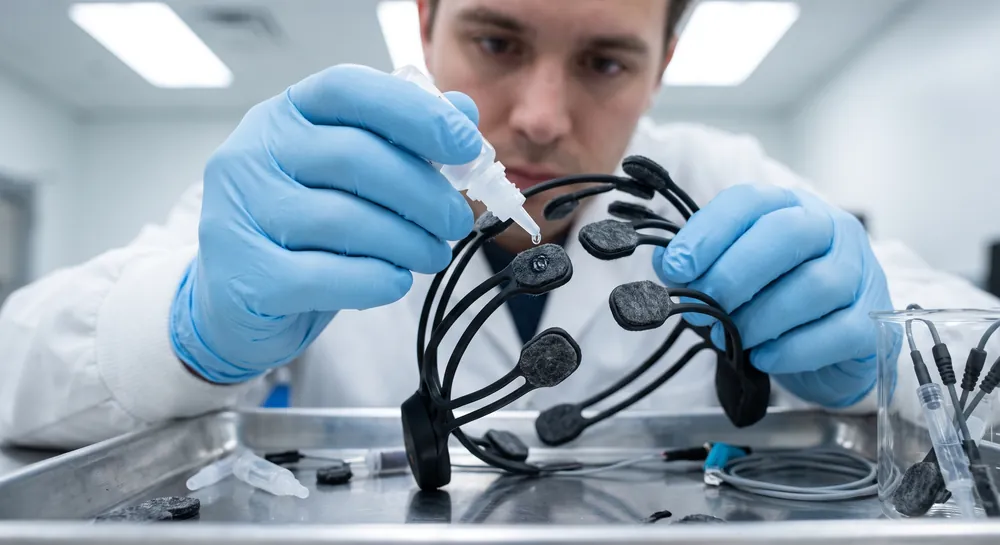
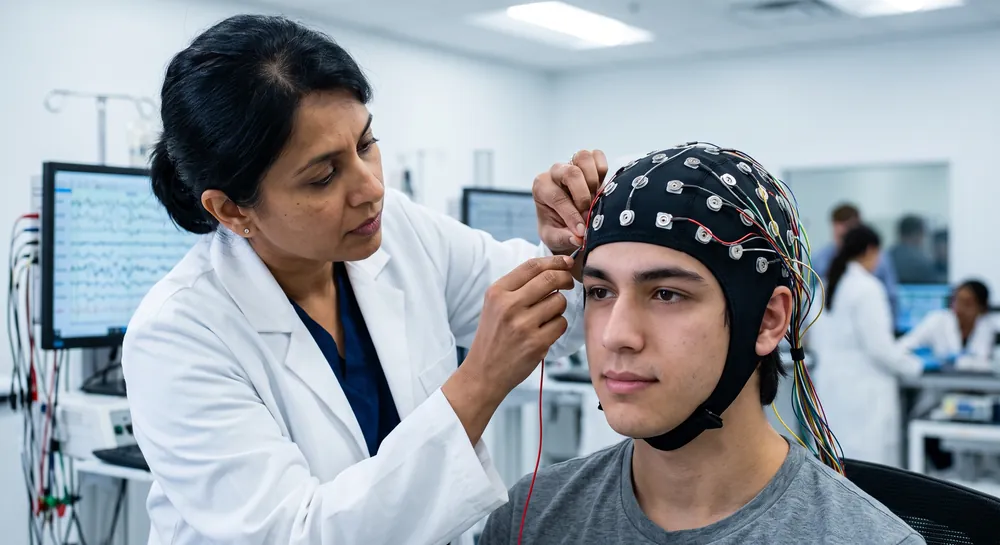
The subjective experience of the "flow state" during Vinyasa yoga is increasingly studied through the lens of electroencephalography (EEG) to identify objective neural signatures. While structural imaging reveals long-term adaptations, EEG can provide a millisecond-resolution data necessary to capture the rapid, transient oscillations that define a flow state in progress.
Research frequently points to a specific shift in cortical activity, marked by an increase in frontal theta power (4–8 Hz) and enhanced alpha-band synchrony (8–12 Hz) across the cortex.
This combination of theta and alpha activity is thought to reflect a "quieting" of the mind’s analytical centers. During intense, rhythmic sequences, the brain appears to shift away from the high-frequency beta oscillations (13–30 Hz) associated with active, self-critical, or goal-oriented internal monologue and toward these slower, more synchronized states.
The rise in alpha synchrony, in particular, is often interpreted as an active inhibition of task-irrelevant neural networks, which allows for a heightened state of focused immersion.
It is crucial, however, to approach these oscillatory patterns as exploratory markers rather than definitive, universal biomarkers for flow. While the simultaneous increase in frontal theta and alpha synchrony offers a compelling neurophysiological model for the transition from conscious effort to fluid movement, these signatures are influenced by individual baseline differences, the intensity of the Vinyasa sequence, and the practitioner’s level of experience.
Summary
Vinyasa yoga offers a unique and dynamic approach to the practice, blending physical movement with breath in a flowing sequence.
Whether you're seeking a physical challenge, a way to manage stress, or a deeper mind-body connection, Vinyasa can provide a rewarding experience. Its adaptable nature means it can be tailored to various levels, making it accessible for beginners and a continuous exploration for experienced practitioners.
By understanding its core principles and finding the right guidance, you can begin to experience the many benefits this vibrant style of yoga has to offer.
References
Rosso, G., Ricci, R., Pia, L., Rebaudo, G., Guindani, M., Marocchino, A., ... & Rosso, A. F. (2025). Quantifying Flow State Dynamics: A Prefrontal Cortex EEG-Based Model Validation Study. Unveiling the Prefrontal Cortex's Role in Flow State Experience: An Empirical EEG Analysis. arXiv preprint arXiv:2506.16838. https://doi.org/10.48550/arXiv.2506.16838
Katahira, K., Yamazaki, Y., Yamaoka, C., Ozaki, H., Nakagawa, S., & Nagata, N. (2018). EEG correlates of the flow state: A combination of increased frontal theta and moderate frontocentral alpha rhythm in the mental arithmetic task. Frontiers in psychology, 9, 300. https://doi.org/10.3389/fpsyg.2018.00300
Frequently Asked Questions
What exactly is Vinyasa yoga?
Vinyasa yoga is a style where you move from one yoga pose to the next in a smooth, connected way. It's like a dance, with your breath setting the rhythm. This is why it's sometimes called 'flow yoga'.
How is Vinyasa different from Hatha yoga?
In Hatha yoga, you usually hold poses for a longer time to focus on alignment. Vinyasa yoga, however, is all about moving between poses with your breath. It's a faster pace and more about the flow.
How Does Vinyasa Challenge Balance and Body Awareness?
The practice constantly shifts the center of gravity and changes the base of support, forcing the nervous system to rapidly recalculate position and adjust muscular activity. This repeated proprioceptive demand improves motor coordination and the seamless timing of multiple muscle groups.
What Is the “Flow State” During Vinyasa and What Causes It?
The flow state is an absorbed, effortless-feeling performance where self-critical inner dialogue quiets. It is linked to transient hypofrontality—a temporary reduction in prefrontal cortex activity—that occurs when intense physical focus and complex movement fully occupy the brain’s processing resources.
Emotiv is a neurotechnology leader helping advance neuroscience research through accessible EEG and brain data tools.
Medical Disclaimer: The information provided on this website is for educational and informational purposes only and is not intended as medical or health advice. This content may contain errors and should not be relied upon to make life-altering health, medical, or lifestyle choices. Always seek the advice of your physician or other qualified health provider with any questions you may have regarding a medical condition or treatment.
Christian Burgos