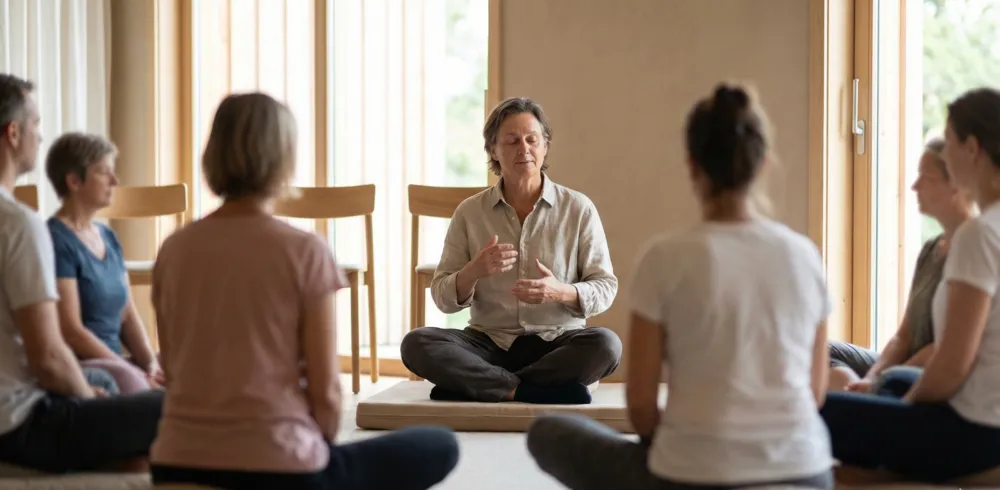
In today's busy world, it's easy to feel pulled in a million directions. We often find ourselves rushing from one task to the next, our minds racing ahead or dwelling on the past.
Mindfulness offers a way to slow down, to simply be present with whatever is happening right now. It's about paying attention on purpose, without judgment. This practice can help bring a sense of calm and clarity to our lives, making everyday experiences richer and less overwhelming.
What is Mindfulness?
Mindfulness is essentially the ability to be fully present and aware of where you are and what you are doing. It involves paying attention to your current experience, whether that's your senses, your thoughts, or your emotions, without getting too caught up in them or judging them. Think of it as a way to notice what's happening right now, both inside you and around you.
While everyone has the natural capacity for mindfulness, it becomes more accessible with regular practice. It's about bringing awareness to whatever you are directly experiencing. This can be as simple as noticing the taste of your food, the feeling of your feet on the ground, or the thoughts passing through your mind.
It's a skill that can be cultivated, allowing for a clearer perception of mental and bodily states. This practice is not about stopping thoughts or emotions, but rather about observing them with a sense of curiosity and acceptance. It's a way to engage with life more fully, rather than being swept away by distractions or automatic reactions. The core idea is to be aware of the mind's attention and to gently guide it back when it wanders.
What Are the Historical Origins of Mindfulness?
The concept of mindfulness, while widely discussed today, has roots that stretch back centuries, primarily within Buddhist traditions. The English word "mindfulness" itself has a history predating its modern application in Western contexts.
Early uses of the term, appearing as "myndfulness" in the 16th century, referred to a general state of awareness or thought. However, its deeper meaning and systematic practice are largely drawn from Eastern contemplative practices, particularly from Buddhism.
In Buddhist philosophy, the term sati is often translated as mindfulness. Sati refers to a moment-to-moment awareness of present experiences, coupled with the ability to remember to maintain that awareness. This practice is central to traditions like Zen and Vipassanā, where it serves as a core element in cultivating insight and understanding.
Over time, these ancient practices have been adapted and secularized, particularly in the West. This adaptation has led to what some refer to as "McMindfulness," where the practice is sometimes presented as a tool for stress reduction or peak performance, potentially detached from its original ethical and spiritual underpinnings.
Despite these shifts, the core idea of paying attention to the present moment without judgment remains a consistent thread through its historical development.
Benefits of Practicing Evidence-Based Mindfulness
Practicing mindfulness, particularly through evidence-based methods, has shown a range of positive effects across different aspects of brain health. These practices are not about achieving a perfect state of mind, but rather about developing a more aware and accepting relationship with one's experiences.
How Does Mindfulness Benefit Mental Health and Anxiety?
Mindfulness practices have been linked to improvements in various mental health conditions. Neuroscience research suggests that regular practice can help individuals manage symptoms associated with anxiety and depression.
By cultivating present-moment awareness, people may find it easier to observe their thoughts and feelings without getting caught up in them. This can lead to a reduction in rumination and worry, common features of many mental health challenges. The ability to disengage from unhelpful thought patterns is a key outcome.
What Are the Physical Health Benefits of Mindfulness?
The connection between the mind and body is significant, and mindfulness practices can influence physical health. Studies have indicated potential benefits for conditions such as chronic pain, sleep disturbances, and even cardiovascular health.
By promoting relaxation and reducing stress responses, mindfulness may contribute to a more balanced physiological state.
How Does Mindfulness Improve Emotional Well-Being and Resilience?
Cultivating mindfulness can lead to greater emotional regulation and resilience. Individuals may develop a more balanced perspective on their emotions, experiencing them without being overwhelmed. This can translate to a greater capacity to cope with life's challenges and a general increase in positive emotional states.
The practice encourages a non-judgmental stance towards one's feelings, which can be liberating.
How Does Mindfulness Impact Theory of Mind and Social Cognition?
Mindfulness practices may also influence how a person understands and relates to others. Some research suggests a connection between mindfulness and aspects of social cognition, including empathy and perspective-taking.
By becoming more attuned to one's own internal experiences, individuals might gain a better appreciation for the internal states of others, potentially improving interpersonal relationships.
What Are the Most Common Misconceptions About Mindfulness?
One common thought is that mindfulness is all about stopping your thoughts. That's not quite right. The goal isn't to empty your mind, which is pretty much impossible anyway.
Instead, it's about noticing your thoughts without getting carried away by them. You learn to observe them as they come and go, like clouds passing in the sky. It's more about changing your relationship with your thoughts than eliminating them.
Another idea is that mindfulness is a religious practice. While it has roots in some spiritual traditions, modern mindfulness, especially as it's taught in secular settings, is not tied to any particular religion.
It's a way of paying attention that anyone can practice, regardless of their beliefs. Think of it as a mental skill, not a dogma.
Some people believe mindfulness is a way to escape from reality or problems. This is also a misunderstanding. Mindfulness actually encourages you to face reality more directly, with greater awareness.
It's about being present with whatever is happening, good or bad, rather than trying to avoid it. It's not a vacation from life, but a way to engage with it more fully.
Finally, there's the misconception that mindfulness is a magic cure-all for every problem. While practicing mindfulness can bring many benefits, like reduced stress and improved focus, it's not a solution for everything.
It's a tool that can help you cope better and live more fully, but it doesn't erase all difficulties. It's a practice that supports well-being, not a guarantee of constant happiness or problem-free living.
What Are the Best Mindfulness Techniques and Practices for Beginners?
Getting started with mindfulness doesn't require complex rituals or extensive training. Several accessible techniques can help people cultivate present-moment awareness. These practices are designed to be simple and can be integrated into daily life with consistent effort.
Breathwork
Focusing on the breath is a foundational practice in mindfulness. It involves paying attention to the physical sensations of breathing – the air entering and leaving the body, the rise and fall of the chest or abdomen.
This practice can be done anywhere, at any time, and serves as an anchor to the present moment. When the mind wanders, the instruction is to gently guide attention back to the breath without judgment.
Mindfulness Meditation
Mindfulness meditation often involves sitting comfortably and directing attention to a chosen object, such as the breath, bodily sensations, or sounds. A common approach is the body scan, where attention is systematically moved through different parts of the body, noticing any sensations without trying to change them.
The core principle is non-judgmental observation of whatever arises in one's experience. Guided meditations, often available through audio recordings or apps, can be particularly helpful for beginners to learn the process.
Yoga
Certain forms of yoga integrate mindfulness by emphasizing the connection between movement, breath, and awareness. Poses are held with attention to physical sensations and the breath, encouraging a state of focused presence.
The practice encourages noticing the body's responses and maintaining a calm, observant attitude throughout the session.
Journaling
Mindful journaling involves writing about one's thoughts, feelings, and experiences with an attitude of curiosity and acceptance. This practice can help individuals gain insight into their patterns of thinking and emotional responses.
Prompts might include reflecting on the day's events, exploring specific emotions, or noting moments of gratitude. The act of writing itself can be a form of focused attention.
Tai Chi
Tai Chi is a gentle form of exercise that involves slow, flowing movements. It cultivates mindfulness by requiring concentration on the precise sequence of movements and the coordination of breath with motion.
This practice can lead to a sense of calm and centeredness, promoting awareness of the body in space and the present moment.
Qigong
Similar to Tai Chi, Qigong involves coordinated movements, breathing, and meditation. It is often described as a practice to cultivate and balance qi (life energy).
Qigong exercises focus on gentle movements, deep breathing, and mental focus, aiming to promote relaxation, reduce stress, and increase body awareness. The deliberate nature of the movements and the focus on breath make it a mindful activity.
Sound Healing
Sound healing is a practice that uses specific frequencies and vibrations to promote relaxation and well-being. It's thought that by exposing the body and mind to certain sounds, one can achieve a state of balance and reduce stress. This can involve various instruments, such as singing bowls, gongs, tuning forks, or even the human voice.
The core idea behind sound healing is that everything in the universe vibrates, including our bodies. When these vibrations are disrupted or out of sync, it can lead to discomfort or illness. Sound healing aims to restore harmony by introducing resonant frequencies that can help realign these vibrations.
Different types of sound baths or sessions might utilize a range of techniques:
Singing Bowls: These Tibetan instruments produce rich, sustained tones when struck or rubbed. Their vibrations are believed to penetrate the body, promoting deep relaxation.
Gongs: The powerful, complex sound of a gong can create a profound meditative experience, often described as washing over the listener.
Tuning Forks: These are metal instruments that produce specific pitches when struck. They can be applied to the body or used near the ears to target specific energetic points.
Chanting and Vocalizations: The human voice itself is a powerful tool in sound healing, with specific tones and mantras used to create therapeutic effects.
What Are the Best Resources and Tools to Support Mindfulness?
Practicing mindfulness can be a journey, and thankfully, there are many tools and resources available to help along the way. These can range from digital applications to more traditional methods, all designed to make mindfulness more accessible and integrated into daily life.
How Do Mindfulness Apps Help With Daily Practice?
Mobile applications have become a popular and convenient way to access mindfulness practices. These apps often provide guided meditations, breathing exercises, and educational content.
Many offer structured programs that can help beginners start their practice and allow experienced users to explore different techniques. Some apps focus on specific areas like sleep, stress reduction, or focus, while others offer a broader range of tools.
The development of these applications has made it simpler for people to engage with mindfulness techniques anytime, anywhere, often with features that track progress and offer personalized recommendations. When selecting an app, it is advisable to consider those that prioritize user privacy and ethical development, especially if they aim to connect users with themselves and others in a meaningful way.
Some commonly utilized features in mindfulness apps include:
Guided meditations for various purposes (e.g., stress, sleep, focus).
Timers for unguided meditation sessions.
Soundscapes or nature sounds to aid relaxation.
Educational modules on mindfulness principles and techniques.
Progress tracking and journaling features.
Community forums or social features for shared practice (use with discretion).
Beyond apps, a wealth of other resources exists. Books offer in-depth exploration of mindfulness theory and practice, with titles covering everything from mindful parenting to mindful eating. Online courses and workshops provide structured learning environments, often led by experienced instructors.
Community meditation groups and centers offer a supportive space for group practice and learning. Even simple tools like a comfortable cushion for sitting meditation or a quiet space can significantly support a consistent practice.
What Is the Future of Mindfulness and Evidence-Based Practice?
As we've seen, mindfulness is a practical skill with a growing body of evidence supporting its benefits. From its roots in ancient traditions to its modern applications in psychology and everyday life, the main idea remains consistent: paying attention to the present moment without judgment.
Whether through formal meditation or simple daily practices, cultivating this awareness can lead to reduced stress, improved focus, and a greater sense of well-being. The ongoing research continues to explore its potential, suggesting that mindfulness offers a valuable path toward a more balanced and aware existence.
Frequently Asked Questions
What exactly is mindfulness?
Mindfulness is like paying close attention to what's happening right now, without judging it. It means noticing your thoughts, feelings, and what you sense around you, and gently bringing your focus back when it wanders.
Is mindfulness only about meditation?
While meditation is a popular way to practice mindfulness, it's not the only way. You can be mindful during everyday activities, like eating, walking, or even talking to someone, by paying full attention to the experience.
What are the main benefits of being mindful?
Practicing mindfulness can help reduce stress and anxiety, improve focus and concentration, and lead to better emotional balance. It can also help you understand yourself and others more deeply.
Can mindfulness really help with mental health issues?
Yes, studies show that mindfulness practices can be very helpful for conditions like depression and anxiety. It teaches skills to manage difficult thoughts and feelings in a healthier way.
Are there any physical health benefits to mindfulness?
Indeed, there are. Mindfulness can help with managing pain, improving sleep, and even supporting your immune system. It helps your body respond better to stress, which has many health advantages.
How do I start practicing mindfulness if I'm a beginner?
Beginners can start with simple techniques like focusing on their breath for a few minutes, paying attention to their senses during daily tasks, or trying guided meditations available through apps or online.
Is there a right or wrong way to be mindful?
There's no single 'right' way. The key is the intention to be present and aware. If your mind wanders, you simply notice it and gently guide your attention back, without self-criticism.
Can children benefit from mindfulness?
Absolutely. Mindfulness can help children manage big emotions, improve their focus in school, and build better relationships. Many schools are now introducing these practices.
What is 'mindful eating'?
Mindful eating means paying full attention to the experience of eating – noticing the colors, smells, textures, and tastes of your food, and recognizing your body's hunger and fullness cues.
Emotiv is a neurotechnology leader helping advance neuroscience research through accessible EEG and brain data tools.
Medical Disclaimer: The information provided on this website is for educational and informational purposes only and is not intended as medical or health advice. This content may contain errors and should not be relied upon to make life-altering health, medical, or lifestyle choices. Always seek the advice of your physician or other qualified health provider with any questions you may have regarding a medical condition or treatment.
Christian Burgos