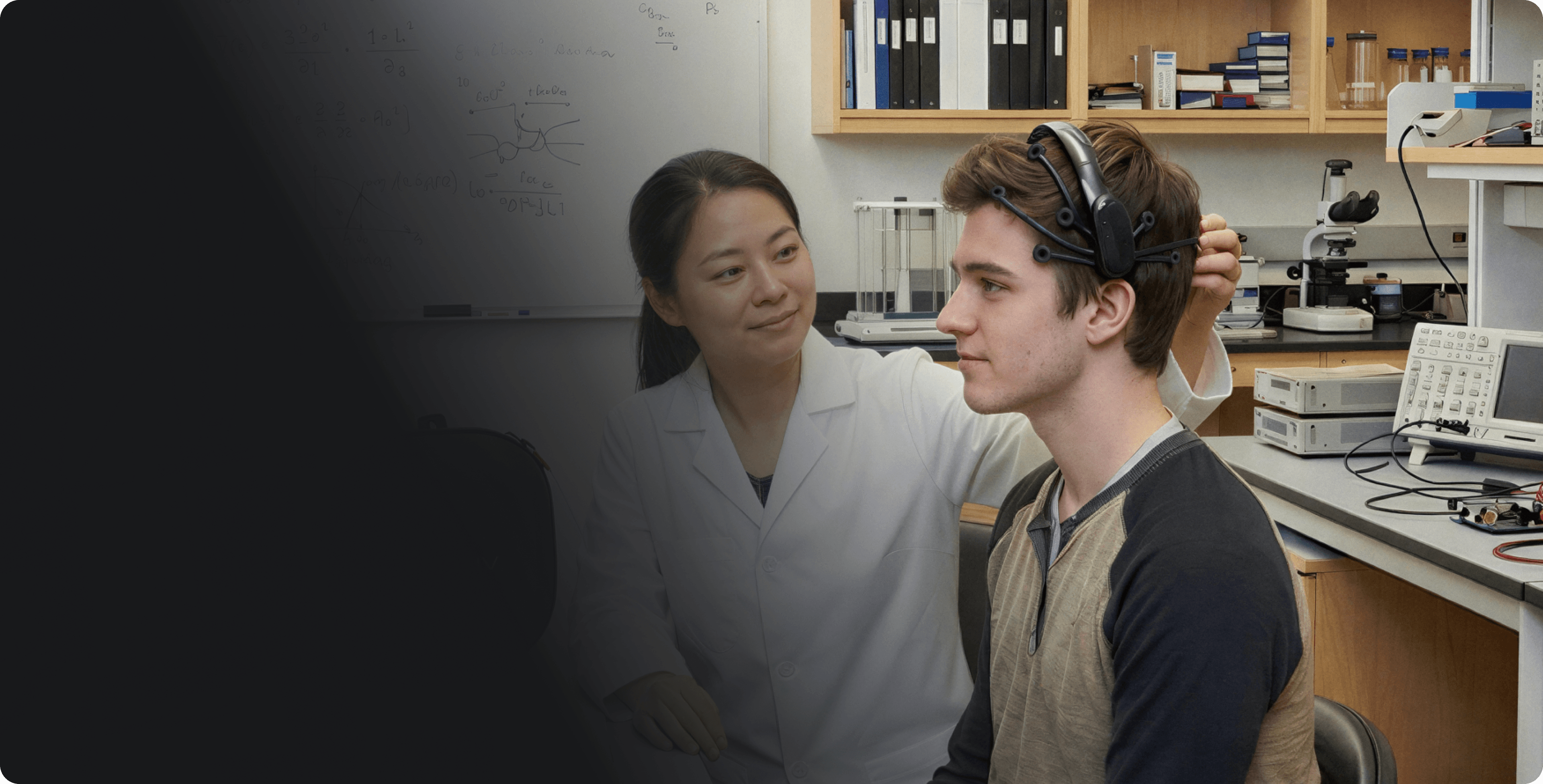
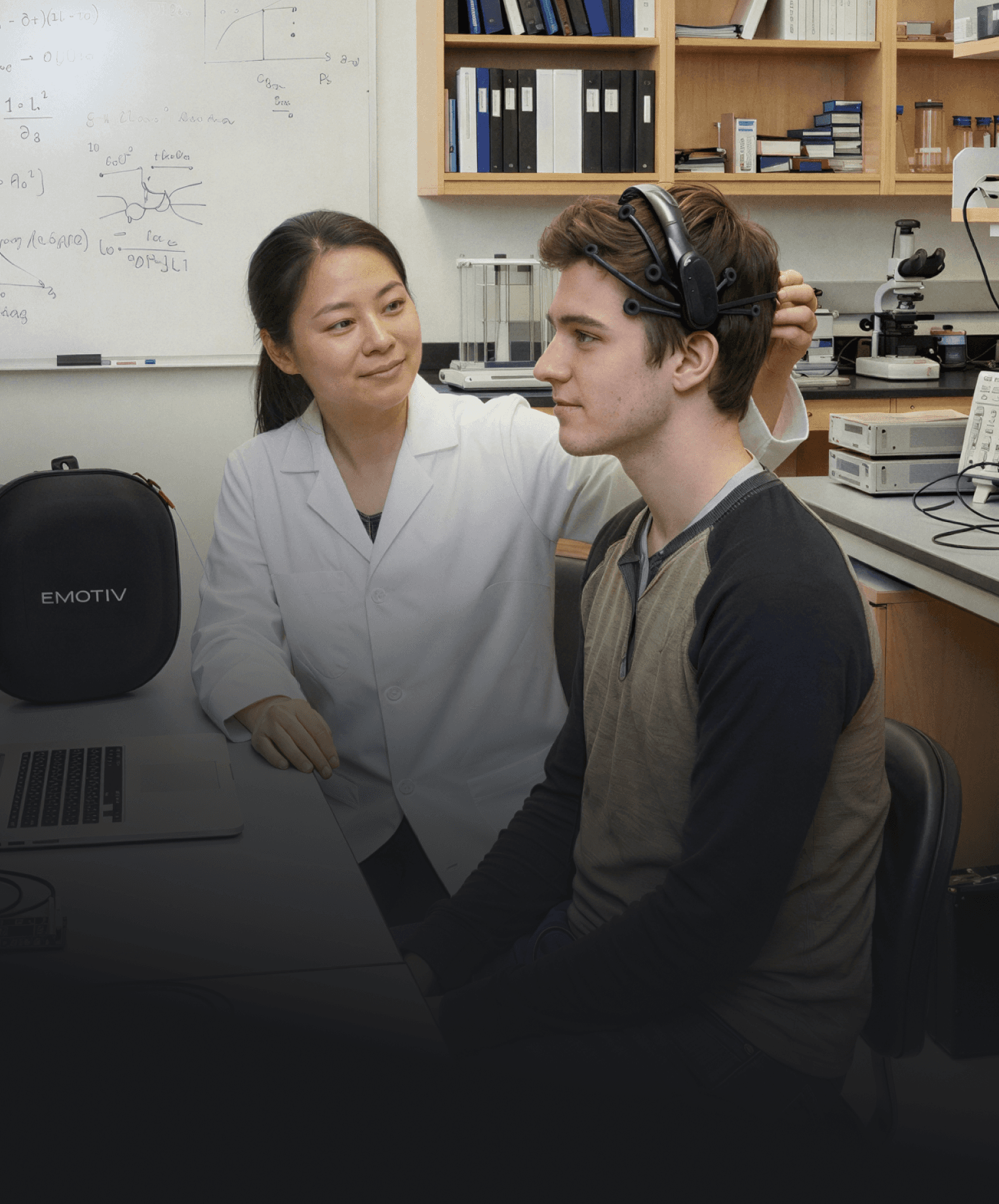

“Emotiv devices are the most widely used consumer EEG headsets in global peer-reviewed research across neuroscience, engineering, and BCI applications.”
Sabio et al. (2024)
University of Queensland
WHY EMOTIV
Why Research Teams
Choose Emotiv
What We Offer
Start With the Right Bundle
For students, educators, and researchers running EEG studies in the lab and beyond.
What your Standard PRO license includes:
Built on more than a decade of peer-reviewed EEG validation.
Measure in real time with the integrated raw EEG viewer dashboard.
Add event markers to your EEG recordings, synced with motion data.
Build, preview, and publish experiments directly from EmotivPRO.
Process EEG in the cloud without exporting or coding.
Filter and export raw EEG to analysis and statistical software. Save it locally or in the cloud.
Runs on PC, macOS, and mobile devices.
or
Start with one headset.
Scale to multi-participant studies when your research grows.
Lab & Team Bundle
A complete EEG system for multi-participant, grant-funded research. Validated hardware and integrated software, in one institutional purchase.
Lab & Team Bundle
For research groups collecting data from several participants at once. Built for parallel sessions, longitudinal studies, and growing cohorts.
15% Off headsets and your Standard Team PRO 3-year License
$8,391
$9,872
You save $1,481
Need a different setup? Choose your headsets, license term, and team size.
Bundle includes:
3 Epoc X headsets
14-channel wireless EEG with fast setup, for lab and field research.
Standard Team PRO 3-year License
3-year license for researchers to create, organize, and analyze recordings.
IRB and procurement support
Ready-to-use IRB language and procurement documents to speed up approvals.
Lab Streaming Layer (LSL)
Sync EEG, event markers, and other sensors on one shared clock, even across multiple participants. Works with MATLAB, EEGLAB, and PsychoPy or your own app through LSL.
5 License Seats
So your whole team can run studies on their own computers.
Grant Support
Grant Application Suport
Proven technology
P300
SSVEP
N170
ERP & cognitive workload paradigms
Customer Validation
Loved by Our Community
Our systems are supported by long-term software continuity, institutional documentation, and secure data handling practices.
23K+
Scientific Papers
4K+
Universities
156









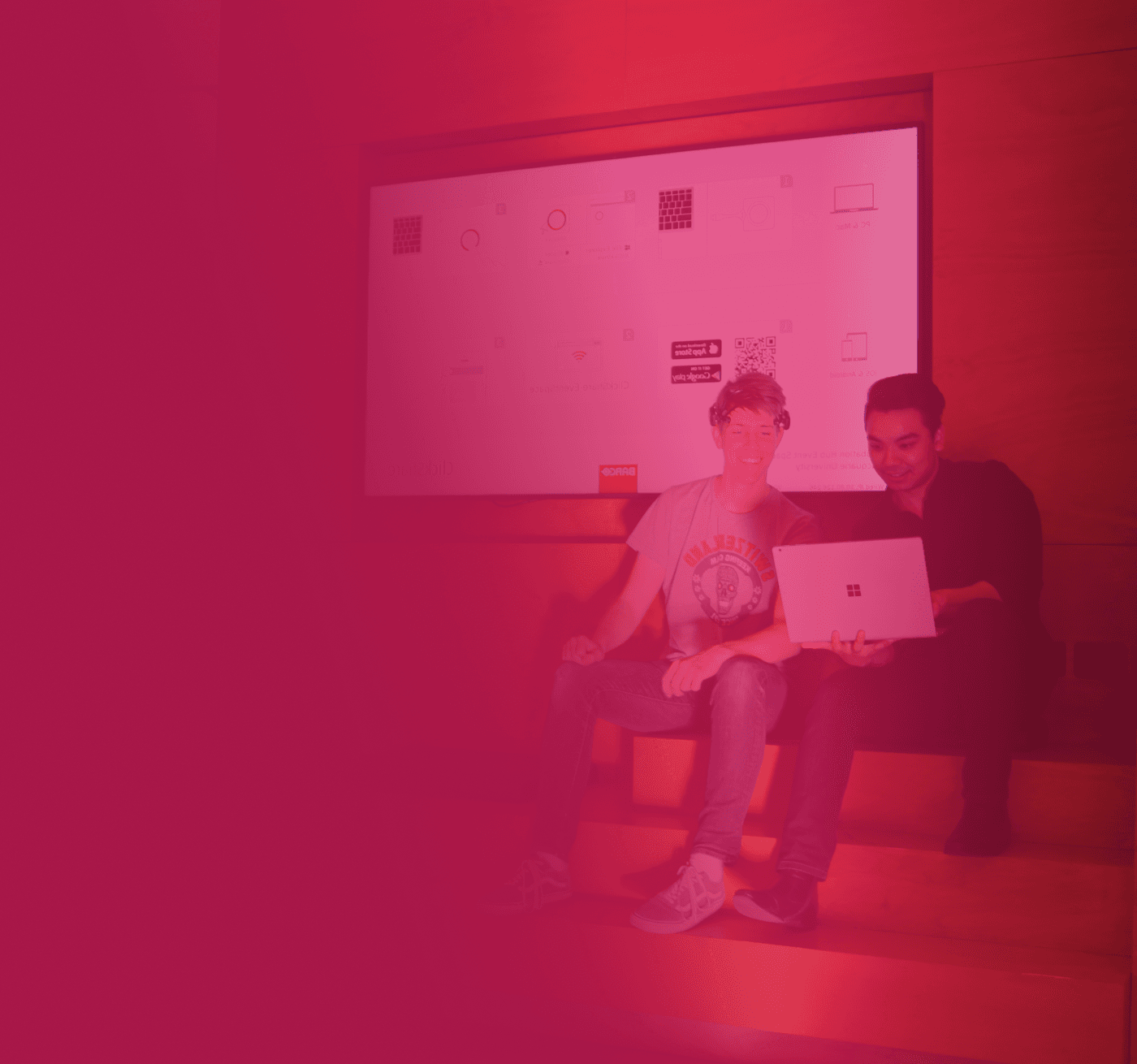







SCALABLE DATA COLLECTION