Anxiety disorders are not a single condition. Panic disorder, generalized anxiety disorder, and social anxiety each produce distinct physiological signatures, distinct patterns of thought, and distinct behavioral traps.
This distinction matters enormously when applying yoga as a therapeutic tool, because a breathing technique that calms a panic attack may do almost nothing for the chronic, low-grade worry that defines GAD, and neither of those approaches directly addresses the self-consciousness that drives social avoidance.
Applying yoga effectively means matching the tool to the mechanism.
Understanding Anxiety and How Yoga Can Help
The Mind-Body Connection in Anxiety
Anxiety is a complex condition that affects both the mind and the body. When someone experiences anxiety, it can manifest physically through symptoms like a racing heart, tense muscles, and difficulty breathing.
This connection between mental and physical states is central to understanding how anxiety operates. The body's stress response system, often called the fight-or-flight response, can become overactive in people with anxiety disorders.
This leads to a cycle where anxious thoughts trigger physical symptoms, and physical discomfort can, in turn, fuel more anxious thoughts.
How Yoga Practices Target Anxiety Symptoms
Yoga offers a unique approach to managing anxiety by directly addressing the mind-body connection. The practice integrates physical postures (asanas), controlled breathing techniques (pranayama), and mindfulness or meditation. From a neuroscience perspective, these components work together to help regulate the nervous system.
For instance, certain yoga poses are designed to release physical tension that often accumulates with anxiety, such as in the shoulders and neck. Breathing exercises can help slow down a rapid heart rate and promote a sense of calm.
Furthermore, the focus required to hold poses and follow breath patterns can help redirect attention away from anxious thoughts, bringing the practitioner into the present moment. Research suggests that yoga can be a beneficial complementary practice for conditions like generalized anxiety disorder, showing improvements in symptoms compared to stress education alone.
While not always as impactful long-term as therapies like Cognitive Behavioral Therapy (CBT), yoga is accessible and well-tolerated, making it a valuable addition to a broader anxiety management plan for many individuals.
What Yoga Practices Can Help Ground You During a Panic Attack?
A panic attack is a false alarm. The amygdala, the brain's threat-detection hub, fires as though a physical danger is imminent, even when none exists. The resulting cascade floods the body with stress hormones, accelerates heart rate, constricts breathing, and in many cases triggers derealization, a perceptual distortion where the environment or one's own body feels unreal or detached.
In this state, cognitive strategies like telling yourself "this is not dangerous" are largely ineffective because the prefrontal cortex, the part of the brain capable of rational override, is functionally suppressed by the intensity of the alarm.
Effective yoga intervention at this stage works through the body, not through reasoning. The goal is to send competing sensory signals to the brain that are stronger than the alarm signal, giving the nervous system a legitimate physiological reason to downregulate.
How Does Proprioceptive Input from Poses Counter Dissociation?
Proprioception is the body's internal sense of its own position and pressure in space. During a panic attack, when dissociative symptoms cause a person to feel detached from their body or surroundings, generating strong proprioceptive input is one of the fastest ways to re-anchor that sense of physical reality.
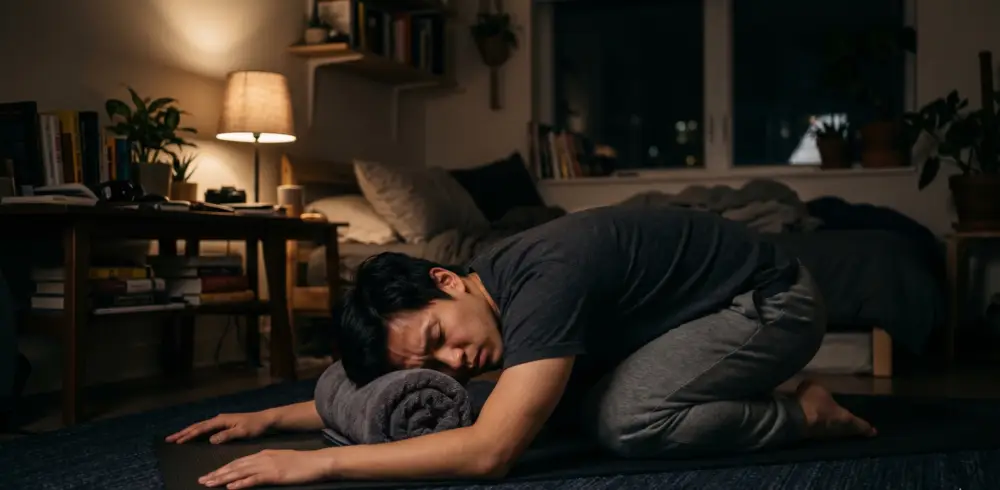
Child's Pose (Balasana) often works directly on this mechanism. The posture folds the body forward, compressing the abdomen and chest against the thighs, creating simultaneous pressure across the anterior torso, the knees, and the forehead if it rests on the floor.
This multi-point contact floods proprioceptive receptors across a large surface area of the body, sending a dense stream of physical location signals to the brain. The brain, receiving this concrete sensory data, has less perceptual space to sustain the dissociative distortion.
Why Is Extending the Exhale a Crucial First-Aid Tool?
Exhalation activates the parasympathetic branch through the vagus nerve, decelerating it.
This phenomenon is called respiratory sinus arrhythmia, and it means that breath ratio directly manipulates the balance between sympathetic and parasympathetic tone. During a panic attack, rapid, shallow breathing sustains sympathetic dominance.
Deliberately extending the exhalation holds the potential to shift the ratio toward parasympathetic dominance, triggering a measurable reduction in heart rate within seconds.
Effective Yoga Styles for Generalized Anxiety Disorder (GAD)
Where panic disorder strikes acutely, GAD operates as a persistent background condition. The person with GAD does not typically experience dramatic episodes.
Instead, they live in a state of chronic low-level activation, with a mind that generates worries compulsively and a body that carries the physical consequences such as tight shoulders, a braced jaw, a shortened diaphragm, disrupted sleep.
Managing GAD through yoga requires practices that work on this recalibrated baseline, training the nervous system toward a lower resting set point.
How Does a Structured Hatha Practice Help Reduce Chronic Worry?
Hatha yoga provides a specific countermeasure: deliberate, sequenced physical instruction that demands present-moment attentional engagement.
In a well-structured Hatha class, each posture requires the practitioner to track:
Breath
Alignment
Weight distribution
Physical sensation simultaneously
Over repeated practice, this constitutes a form of attentional training. The mind learns, through direct physical repetition, that it can sustain focus on immediate sensory experience rather than defaulting to anxious projection.
How Can Yin Yoga Address the Physical Manifestations of GAD?
This physical layer of anxiety is often the most treatment-resistant element of GAD, because standard talk therapy and even most active yoga styles do not directly address it.
Yin yoga works on a fundamentally different physical level. Unlike active styles that work primarily with muscle tissue, Yin poses are held passively for three to five minutes or longer, allowing the body's weight and gravity to apply sustained, gentle stress to the deep connective tissues and fascial layers.
Yin yoga's passive holds reach structural layers that active effort cannot access, producing deep releases that are often accompanied by noticeable shifts in emotional state.
How Can Yoga Build Confidence for Social Anxiety?
Social anxiety is maintained by two mutually reinforcing mechanisms.
The first is avoidance: when social situations feel threatening, withdrawing from them prevents the experience of discomfort in the short term but prevents the nervous system from learning that social exposure is survivable.
The second is self-focused attention: people with social anxiety allocate a disproportionate amount of cognitive bandwidth to monitoring how they appear to others, generating a distorted, typically negative image of their social performance.
Both mechanisms need to be targeted for meaningful long-term change. Yoga addresses these mechanisms through both direct and indirect pathways.
What Is the Role of Group Classes in a Therapeutic Context?
The yoga studio occupies a unique psychological position as a social environment. Participants are physically present with others but the primary directive of the practice is inward attention, not social performance.
Conversation is minimal, eye contact is not demanded, and the structured sequence means that nobody is expected to generate social content on the spot. For someone with social anxiety, this creates a genuinely low-stakes social exposure that is difficult to replicate in most other group settings.
How Do 'Power Poses' Influence Self-Perception Before Social Events?
Upright, expansive postures like Warrior II (Virabhadrasana II) and Mountain Pose (Tadasana) generate proprioceptive feedback associated with stability and physical authority.
In Warrior II, the wide stance, open chest, and extended arms create a broad physical footprint that directly counters the physical signature of social anxiety, which tends to produce collapsed posture, contracted chest, and downward gaze.
In Tadasana, the deliberate alignment of the body from feet to crown with even weight distribution and a lifted sternum activates the postural muscles of the back and core in a pattern the nervous system associates with readiness rather than threat.
Practicing these postures in the minutes before a social challenge provides the nervous system with a competing set of physical signals to the slumped, contracted body language that social anxiety tends to generate. The brain reads the body's state continuously, and when the body sends signals of stability and uprightness, the subjective experience of the emotional state begins to shift accordingly.
Anxiety Disorder | Yoga Practice |
|---|---|
Panic Disorder | Grounding poses & extended exhale |
GAD | Structured Hatha & Yin Yoga |
Social Anxiety | Group classes & power poses |
How Do You Create a Consistent At-Home Practice for Long-Term Anxiety Regulation?
Building an effective at-home practice begins with honest identification of which anxiety presentation is being targeted.
Someone managing panic disorder may prioritize breath regulation techniques, specifically ratio breathing and extended exhale exercises, practiced daily so they become automatic under pressure.
Someone managing GAD may benefit the most from a consistent Hatha sequence performed at the same time each day, using the predictability of the structure as an anchor, supplemented by weekly Yin sessions targeting the hips, chest, and thoracic spine.
Someone working with social anxiety can use a short daily sequence ending with Tadasana or Warrior II as a pre-social ritual, while committing to regular attendance in a group class setting for gradual exposure.
Furthermore, practicing in a dedicated space, with a mat already laid out, at a fixed time that requires no decision-making, removes the cognitive overhead that most commonly interrupts streaks.
Lastly, tracking practice adherence over weeks rather than evaluating any single session also reframes the therapeutic goal correctly.
The aim is not to feel immediately calm after each session. The aim is to raise the nervous system's baseline capacity for regulation across the arc of sustained practice, which is exactly what the evidence for yoga and mental health consistently supports.
Can EEG Neurofeedback Enhance a Targeted Yoga Practice for Anxiety Disorders?
How Does Neurofeedback Training Target Anxiety-Specific Brainwave Patterns?
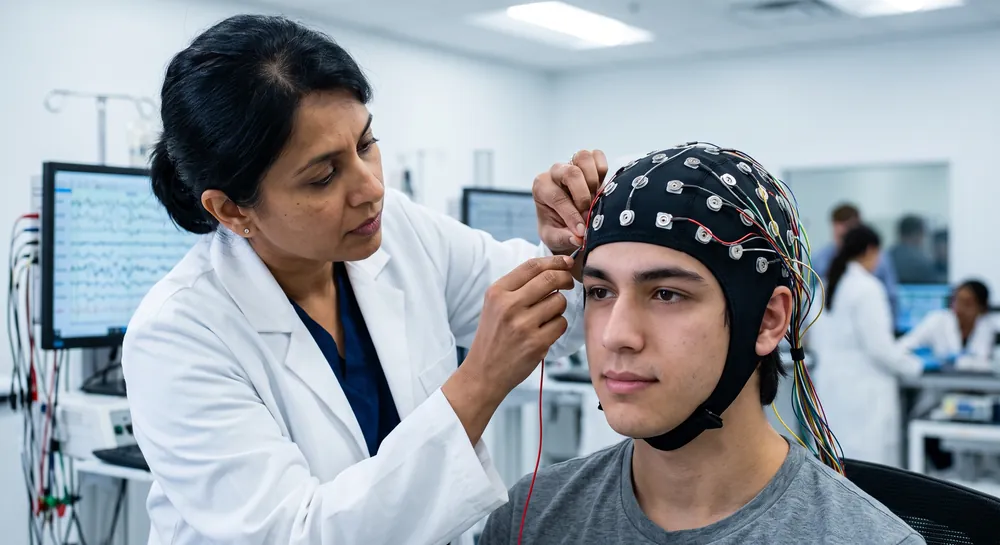
EEG neurofeedback protocols operate as an exploratory, complementary tool to help people modulate specific brainwave patterns that are frequently dysregulated in anxiety disorders.
In many anxiety presentations, electrophysiological measurement captures an overabundance of high-frequency beta waves (13–30 Hz), which are associated with cognitive hyperarousal, threat-scanning, and persistent worry. Neurofeedback training addresses these imbalances by utilizing real-time operant conditioning to reward the brain when it successfully dampens excessive beta power.
When utilized alongside a tailored yoga practice, this training acts as an explicit top-down cognitive intervention that complements the bottom-up somatic effects of physical asanas and pranayama.
While yoga works primarily through the peripheral nervous system to release physical tension and lower autonomic arousal, neurofeedback directly targets central cortical circuits, offering a multifaceted framework for self-regulation without overstating efficacy or presenting the technology as a definitive clinical cure.
What Are Practical Ways to Integrate EEG Feedback with a Home Yoga Routine?
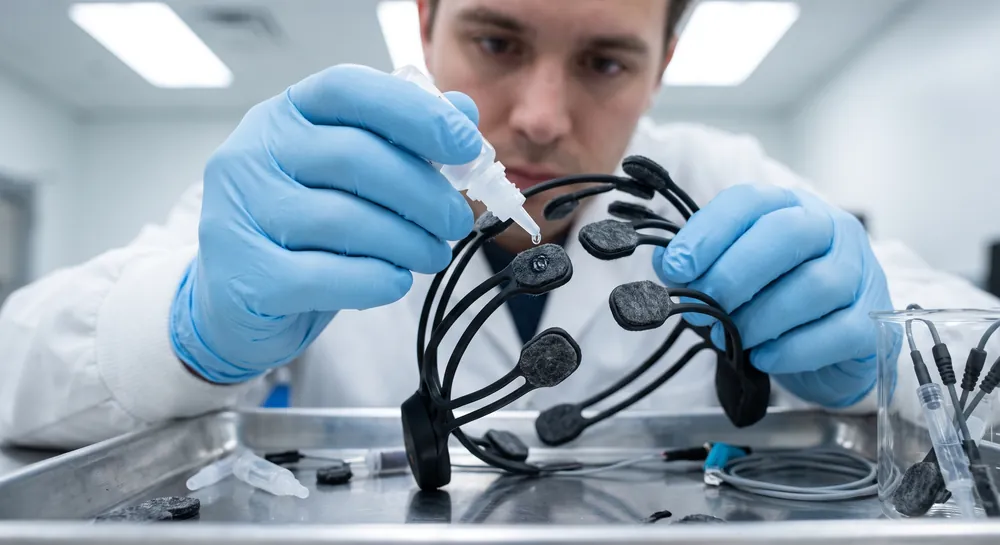
Integrating electrophysiological data into a home routine has become increasingly accessible through lightweight consumer neurofeedback devices and portable biofeedback applications.
Practitioners can use these simple headbands immediately before or after a yoga session to gather real-time indicators of their attentional states and measure general trends in anxiety reduction.
For example, completing a brief neurofeedback session prior to moving on the mat can help a user identify baseline mental agitation, while measuring brainwave states during post-yoga meditation allows them to observe whether specific breathing exercises successfully encourage a shift toward lower-frequency rhythms.
By translating microvoltage changes into immediate auditory or visual rewards, these devices help users build a clearer internal awareness of their own physiological states. However, because consumer-grade equipment is highly susceptible to muscle artifacts and environmental noise, these systems must be approached with evidence-aware caution.
Conclusion
Integrating yoga into your life can be a useful way to manage anxiety. By combining physical postures, breath control, and mindfulness, you can create a holistic practice that improves brain health and soothes the body.
While yoga may not replace traditional treatments for everyone, it offers a safe, accessible, and beneficial complementary approach. Remember to listen to your body, practice consistently, and consult with healthcare professionals as needed.
References
Hofmann, S. G., Curtiss, J., Khalsa, S. B. S., Hoge, E., Rosenfield, D., Bui, E., ... & Simon, N. (2015). Yoga for generalized anxiety disorder: design of a randomized controlled clinical trial. Contemporary clinical trials, 44, 70-76. https://doi.org/10.1016/j.cct.2015.08.003
Yasuma, F., & Hayano, J. (2004). Respiratory sinus arrhythmia: why does the heartbeat synchronize with respiratory rhythm?. Chest, 125(2), 683–690. https://doi.org/10.1378/chest.125.2.683
Frequently Asked Questions
How does yoga need to be adapted for different anxiety disorders?
Yoga must be tailored because each anxiety disorder involves distinct physiological patterns. Panic attacks require immediate body-based grounding, generalized anxiety needs practices that lower the nervous system's chronic baseline, and social anxiety benefits from approaches that gradually reshape self-perception and social threat responses.
How does a pose like Child's Pose counter feelings of detachment during panic?
Child's Pose creates widespread proprioceptive input through pressure on the torso, knees, and forehead. This flood of physical location data anchors the brain's sense of reality, making dissociative distortions harder to sustain.
How does Yin yoga address the physical stagnation linked to chronic worry?
Yin yoga holds passive poses for several minutes to target deep connective tissues and fascia that tighten under long-term stress. This sustained pressure eventually signals the nervous system to release physical guarding that conscious effort cannot undo.
What makes a group yoga class therapeutic for social anxiety?
A yoga class creates a social environment where the focus is inward, not on conversational performance or eye contact. This provides repeated, low-stakes exposure that desensitizes the threat response without the typical pressure of group interaction.
How can standing poses influence confidence before a social situation?
Expansive postures like Warrior II generate proprioceptive feedback associated with stability and physical authority. When the body signals upright openness, the brain interprets this as a state of readiness, helping to counter the collapsed posture that feeds social anxiety.
Emotiv is a neurotechnology leader helping advance neuroscience research through accessible EEG and brain data tools.
Medical Disclaimer: The information provided on this website is for educational and informational purposes only and is not intended as medical or health advice. This content may contain errors and should not be relied upon to make life-altering health, medical, or lifestyle choices. Always seek the advice of your physician or other qualified health provider with any questions you may have regarding a medical condition or treatment.
Christian Burgos