Real-time brain measurement has moved far beyond the research laboratory. EEG records electrical activity from the scalp on very fast timescales, and neuroscience applications ranging from attention research to brain-computer interfaces depend on that speed.
Traditional laboratory systems produce stable, high-density recordings, but they are expensive, bulky, and typically require trained technicians. The newer class of consumer EEG headsets is lighter, often wireless, and built for use outside controlled research rooms.
Those design changes are worth considering for anyone who wants to collect brain data in a home, classroom, workplace, or field setting.
What is an EEG Headset?
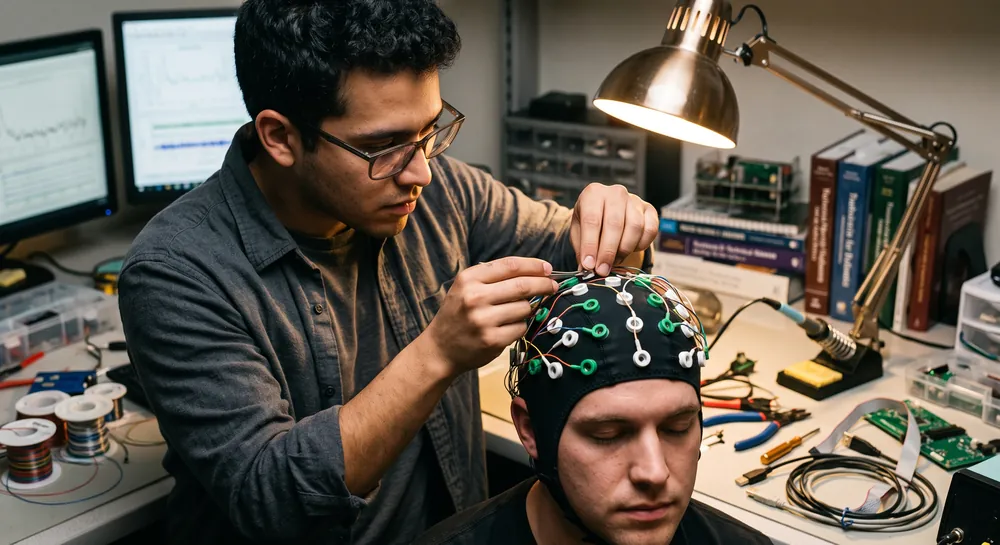
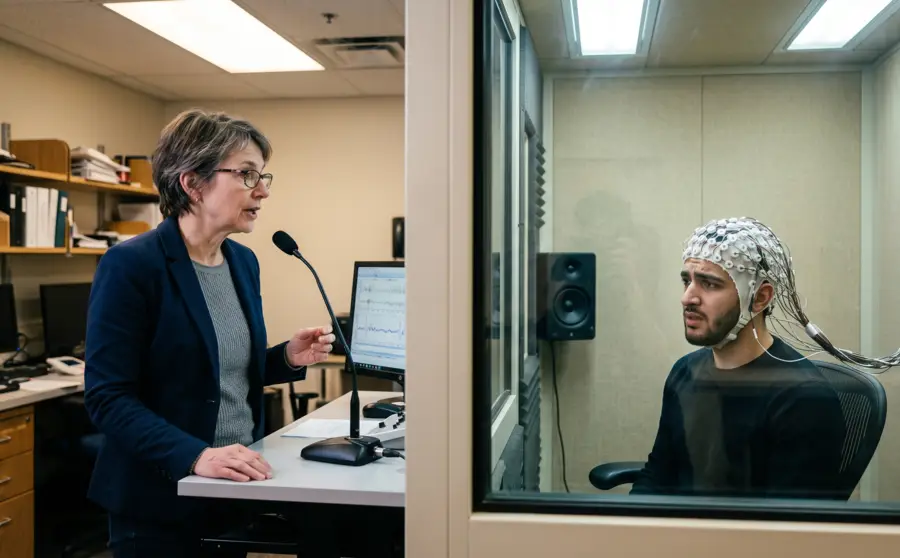
An EEG headset is a wearable device that places electrodes against the scalp to record voltage changes associated with brain activity. The headset itself usually forms part of a larger system that includes amplification, digitization, storage, and analysis software.
Unlike imaging systems that show anatomy, EEG primarily captures changing electrical patterns over time. It is non-invasive, but the recording still requires careful setup and interpretation.
How Does an EEG Headset Work?
Neurons communicate through electrical activity, and populations of active neurons can produce voltage fluctuations detectable at the scalp. Electrodes sense these small changes, while amplifiers increase the signal and filtering reduces some unwanted interference before the data are digitized.
The resulting recording can then be examined as waveforms, frequency patterns, or event-related responses. EEG data practices also include artifact management, channel maps, sampling rates, and complete metadata.
The quality of an EEG headset recording depends on more than the number of sensors:
Electrode contact
Scalp movement
Facial and muscle activity
Cable motion
Electrical interference
Standardized placement systems help make recordings more comparable across sessions, although they do not remove every source of noise. For that reason, signal quality is foundational to any interpretation, whether the setting is a laboratory, clinic, or consumer application.
What Is a Consumer EEG Headset?
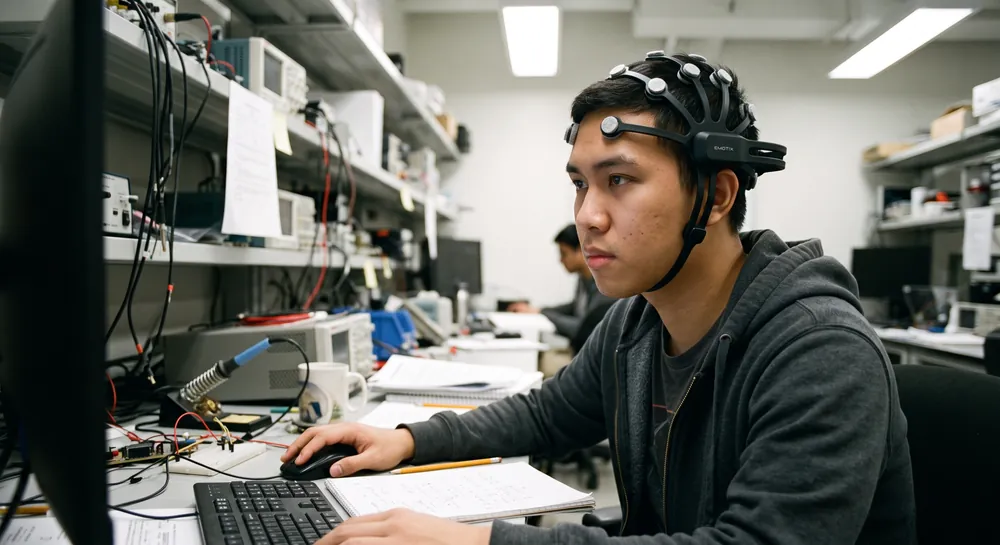
Consumer EEG headsets have brought brain-sensing technology into many everyday settings including homes, classrooms, offices, and field research sites.
A 2024 scoping review of the field charted peer-reviewed articles that used consumer-grade EEG devices to collect neural data, following a systematic search across PsycINFO, MEDLINE, Embase, Web of Science, and IEEE Xplore. The review identified 916 studies that recorded brain data with consumer-grade devices, including 531 journal articles and 385 conference papers.
The most common use was brain-computer interfaces, followed by experimental research, signal processing, validation, and clinical purposes. That distribution shows that consumer EEG is not limited to one narrow application since researchers have used it across engineering and cognitive neuroscience alike.
The review concluded that consumer-grade EEG is a genuinely useful research tool and is likely to keep growing in use. Practically speaking, these devices are attractive because they are less expensive, frequently wireless, and designed for use in operational settings where people move freely.
Applications of EEG Headsets
EEG headsets are used in settings ranging from neuroscience laboratories to interactive software experiments. Their common advantage is temporal resolution: electrical changes can be tracked over very short intervals. Their limitations are equally relevant, since scalp recordings are vulnerable to artifacts and provide less direct spatial information than some imaging methods.
Applications should therefore be matched to the type and quality of data a headset can produce.
Brain-Computer Interfaces (BCIs)
Brain-computer interfaces translate selected features of brain activity into commands or feedback. An EEG headset may support this process by recording patterns linked with attention, imagined movement, or responses to external events.
The signal must then be cleaned, segmented, and classified, often with calibration for the individual participant. Performance can vary across people and sessions, so a prototype result is not automatically a dependable control method.
Mental Health and Wellness
Consumer EEG systems are sometimes used for meditation feedback, relaxation exercises, neurofeedback training, and general self-observation.
Noteworthy, these applications sometimes may present simplified measures or trends rather than a clinical interpretation of brain function. A change in a displayed score should not be treated as proof of a mental health diagnosis or as evidence that a particular treatment has worked.
Clinical diagnosis and treatment decisions require qualified professionals, appropriate history, and relevant examinations. EEG may contribute useful information in selected neurological evaluations, but a headset reading on its own cannot establish the cause of symptoms. Wellness software can be informative as an interaction or training tool while remaining separate from medical assessment.
Research and Neuroscience
Research applications include studies of attention, perception, sleep, motor activity, sensory processing, and event-related responses.
EEG can be recorded during carefully timed tasks, then analyzed through filtering, epoching, artifact rejection, and statistical comparison. Reproducible placement and complete documentation are essential when results need to be compared across participants or laboratories. Resources on neuroscience provide useful context for the broader scientific questions that EEG studies address.
What Affects Signal Quality Outside the Lab
Wireless, consumer-oriented EEG systems are often evaluated against high-density, wired laboratory-grade systems as a reference standard.
In one within-subject comparison, researchers tested a 32-channel research-grade system against two lighter, more portable headsets in a P300-based brain-computer interface communication task with 13 participants. The P300 response is a brain signal associated with recognizing a meaningful target in a sequence, and it's commonly used to select items in communication systems.
Therein, the high-density research system reached the highest offline classification accuracy of the group. But when the comparison was restricted to the same eight recording channels across all systems, there was no meaningful difference in accuracy between the research-grade system and the lighter headset.
These results show that a higher channel count does not automatically guarantee better signal quality. Accuracy depends on the task, the number of channels actually used, and where on the scalp the signals are recorded, not simply on how many sensors a headset has.
Moreover, signal quality in real-world use also depends on individual physical characteristics. One ergonomic evaluation of commercial BCI devices found reduced performance for users with long or coarse hair, since stable sensor-to-scalp contact is essential for capturing a reliable signal. Further, usability factors like signal reliability and ease of use varied meaningfully across individual users.
Meanwhile, a separate design assessment identified five elements that shape real-world EEG quality:
Adaptability for differing head sizes.
Participant comfort and preference.
Variance in scalp electrode locations.
Stability of the electrical connection between scalp and electrode.
Accurate timing integration between the EEG system, the stimulus computer, and external events.
A headset can look capable on paper but lose data quality in the field if it shifts on the head or fails to synchronize event markers accurately. Real-world reliability, in other words, is best understood as a combination of sensor stability, physical fit, and timing accuracy, not a single hardware specification.
EEG Headset Comfort and Wearability
Comfort is a major practical consideration, especially during prolonged use outside the lab. In an evaluation of seven mobile EEG devices measured something very concrete: the maximum length of time participants could tolerate wearing each one.
Twenty-four participants wore each device on separate 60-minute sessions and rated wearing comfort, visual appearance, and practicability afterward. The results showed that the difference in maximum wearing duration across devices was highly significant (χ²(6) \= 40.2, n \= 24, p \< .001). In other words, how long someone could comfortably wear a device varied strongly from one headset to another.
Rigid, heavier headsets with less flexible contact points, and pin-style electrodes in particular, produced the lowest comfort ratings, especially when combined with a heavy frame. Importantly, when researchers asked whether people would accept less comfort in exchange for a more attractive design, the answer was consistently no. A stylish device can create initial interest, but physical comfort is what determines whether people keep wearing it for repeated sessions or longer data-collection blocks.
Additionally, adjustability to different head sizes matters too. Usability assessments of wireless EEG systems found that devices differ in how well they fit different users. A headset that can't adapt to smaller or larger head shapes is more likely to create pressure points or unstable electrode contact.
Therefore, for real-world use, comfort and fit aren't separate from signal reliability, they're connected through the physical contact between sensors and scalp.
Setup Time and Everyday Practicality of EEG Headsets
Preparation time is a key practical barrier outside the lab. Laboratory systems often require careful electrode preparation, conductive gel, and lengthy impedance checks.
In the same comparison referenced above, the high-density, wired research system took noticeably longer to set up than the two lighter, consumer-style headsets. Hypothetically speaking, if a field session only allows 30 minutes, a headset that takes 20 minutes to prepare leaves little time for the actual recording. This is one reason EEG consumer devices are often designed specifically to reduce that setup burden.
Furthermore, in the seven-device wearability study mentioned earlier, ratings for practicability showed highly significant differences among systems (χ²(6) \= 83.2, n \= 24, p \< .001) which the authors interpreted as some devices being considerably easier to use in day-to-day practice than others.
Noteworthy, while faster setup is valuable for field use, it shouldn't be the only consideration. A device that's quick to prepare but produces unstable signals may not support the intended application.
Therefore, a well-designed field headset should reduce preparation time while still maintaining the sensor contact and signal fidelity a given task requires. For simple attention measurement, a quick, dry-electrode headset is often perfectly sufficient. For high-accuracy BCI communication tasks, a gelled system may be worth the extra setup time.
Aesthetics vs. Comfort: What the Research Shows
Appearance clearly matters when people choose a headset, but it doesn't override comfort. In the aforementioned three-way comparison, one of the lighter headsets was rated the most visually appealing of the group, and participants preferred it when they didn't yet know how the different systems performed on accuracy. That's a meaningful finding for product design and study recruitment since a visually appealing headset can attract attention and increase willingness to participate.
But that first impression can fade with extended wear. The seven-device study found that visual appearance ratings differed significantly across devices (χ²(6) \= 78.7, n \= 24, p \< .001) and then, when researchers tested whether people would accept less comfort for a better-looking headset, the answer was no for every device tested.
Aesthetics and comfort both matter, but they aren't interchangeable. Good design creates initial interest; comfort and usability determine whether someone keeps wearing the device long enough to generate usable data.
How to Choose the Right Consumer EEG Headset
The right selection means weighing signal quality, comfort, setup time, and the specific demands of the task at hand. A few practical guidelines emerge consistently from the research:
Match the headset to the application. If the goal is high accuracy and efficient signal recording, prioritize a system built for signal fidelity. If the goal is user engagement, easy setup, and a smooth overall experience, prioritize comfort and ease of use.
Test with the intended user group. Head size, hair type, and tolerance for extended wear all affect comfort and signal reliability. A device that works well for one group may fit poorly or produce unstable contact for another.
More sensors don't automatically mean better results. One study found that a headset with more channels was not meaningfully more accurate than a lighter headset once the recording setup was matched.
Consumer-grade EEG is already widely used in published research. The scoping review referenced above found 916 studies using these devices, so they're far from toys. That said, this doesn't remove the need for local validation. Because signal quality depends on fit, environment, and task, a device should be tested in its actual intended environment and with its actual intended users before you rely on its data.
Validate before scaling. A small pilot session can reveal setup-time problems, hair-related signal loss, or comfort issues that a spec sheet won't show — especially important in non-laboratory settings where people move freely and external events need to stay synced with the EEG stream.
Where Emotiv Fits Into the Consumer EEG Landscape
Given how much the research above depends on device-specific design choices, it's worth looking at where Emotiv sits within this picture.
According to the scoping review, Emotiv devices were used more frequently than any other consumer-grade EEG headset in the peer-reviewed literature, spanning brain-computer interface research, experimental studies, signal processing, and clinical applications. That track record reflects a design built for research use outside the traditional lab: lightweight, wireless, and accessible enough for researchers, developers, and everyday users to adopt across a wide range of settings.
On signal performance, the channel-matched comparison discussed earlier is a particularly useful data point: when researchers controlled for the number of recording channels, Emotiv's headset showed no meaningful difference in classification accuracy compared to a 32-channel, wired, laboratory-grade research system. In other words, a well-matched recording setup can bring a lightweight, wireless headset into the same performance range as far more expensive lab equipment for a given task.
On design, Emotiv's headset was also rated the most visually appealing device in the same three-way comparison–the design people were drawn to first, before any accuracy data came into play. And on practicality, Emotiv's setup time was meaningfully faster than the high-density, wired research-grade system it was tested against, which matters directly for anyone working within limited field-session time.
Taken together, these findings point to a device built to make research-grade brain sensing more approachable: fast to set up, comfortable enough for extended use across a wide range of applications, and validated repeatedly in the very research the field relies on.
The Future of EEG Headset Technology
Future development is likely to focus on smaller form factors, easier setup, improved electrode contact, and more capable real-time processing. Dry electrodes may reduce preparation time, while better mechanical designs may help maintain contact during movement. Wireless transmission can support more naturalistic recordings, provided that timing, battery life, and data integrity remain adequate.
These improvements address practical barriers rather than eliminating the underlying complexity of EEG measurement.
Further, machine-learning tools may assist with artifact detection, signal classification, and event recognition. Such tools can make large recordings easier to review, but their output remains dependent on training data, preprocessing, and the quality of the original signal.
Greater portability may also expand research beyond highly controlled laboratories. Mobile recordings could support studies of cognition during realistic tasks, provided investigators preserve accurate timing, document electrode placement, and report signal loss or artifacts.
Lastly, privacy will become increasingly important as recordings are stored, shared, and connected to behavioral data. Technical progress is most meaningful when convenience develops alongside transparent validation and careful interpretation.
Conclusion
Consumer EEG headsets have successfully transitioned brain measurement from traditional laboratories to real-world applications across research, BCIs, and cognitive neuroscience. While hardware aesthetics may drive initial interest, long-term success and data reliability ultimately depend on physical comfort, rapid setup, proper channel placement, and robust sensor stability.
References
Sabio, J., Williams, N. S., McArthur, G. M., & Badcock, N. A. (2024). A scoping review on the use of consumer-grade EEG devices for research. Plos one, 19(3), e0291186. https://doi.org/10.1371/journal.pone.0291186
Nijboer, F., Van De Laar, B., Gerritsen, S., Nijholt, A., & Poel, M. (2015). Usability of three electroencephalogram headsets for brain–computer interfaces: a within subject comparison. Interacting with computers, 27(5), 500-511. https://doi.org/10.1093/iwc/iwv023
Ekandem, J. I., Davis, T. A., Alvarez, I., James, M. T., & Gilbert, J. E. (2012). Evaluating the ergonomics of BCI devices for research and experimentation. Ergonomics, 55(5), 592-598. https://doi.org/10.1080/00140139.2012.662527
David Hairston, W., Whitaker, K. W., Ries, A. J., Vettel, J. M., Cortney Bradford, J., Kerick, S. E., & McDowell, K. (2014). Usability of four commercially-oriented EEG systems. Journal of neural engineering, 11(4), 046018.
Radüntz, T., & Meffert, B. (2019). User experience of 7 mobile electroencephalography devices: comparative study. JMIR mHealth and uHealth, 7(9), e14474. https://doi.org/10.2196/14474
Frequently Asked Questions
What makes consumer EEG headsets useful for real-world use?
Consumer EEG headsets are useful because they are lighter, often wireless, and designed for use outside controlled laboratory rooms. They have been widely used in published research for applications such as brain-computer interfaces, experimental studies, and cognitive neuroscience.
Do consumer EEG headsets provide signal quality as good as lab systems?
Consumer headsets usually perform well when the same number of recording channels is compared with a lab system. In a direct comparison, a lab headset had higher overall accuracy, but when matching the number of channels used, the consumer headset performed at a similar level.
Does a higher number of electrodes always mean better EEG data?
No. A higher channel count does not automatically guarantee better signal quality. Accuracy depends more on which electrode locations are used and whether the task matches the recording setup than on the total number of sensors.
How does hair type affect EEG headset performance?
EEG requires stable contact between the sensor and the scalp, so long or coarse hair can interfere with signal quality. Users with different hair types may experience more discomfort or poor electrode contact, leading to weaker or noisier signals.
What factors shape real-world EEG signal quality?
The key factors are head size fit, comfort, stability of the sensor on the scalp, the quality of the electrical connection, and accurate timing between the headset and the stimulus computer. A device can look capable on paper but fail if it shifts on the head or loses sync during recording.
How does comfort affect how long people will wear an EEG headset?
Comfort strongly determines wearing duration, and heavier, rigid headsets are often tolerated less well. Comfort does not necessarily track with whether a device is lab-grade or consumer-grade — it depends more on frame weight and electrode type.
Do people choose EEG headsets based on appearance or comfort?
People may initially prefer headsets that look good, even if those headsets turn out to be less comfortable. However, when asked to trade comfort for a more attractive design over longer wear, users consistently were not willing to do so—comfort matters more once a device is actually in use.
Why does setup time matter for field EEG studies?
Long setup times reduce the time available for actual data collection, which is a serious constraint in field settings with limited session time. Consumer devices are often designed to reduce this preparation burden, though ease of setup still varies by user and condition.
Can a stylish EEG headset replace a comfortable one?
No. A visually appealing headset can create a positive first impression and generate interest, but it doesn't make up for discomfort during long recording sessions. People may initially prefer an attractive device, yet they won't accept less comfort in exchange for better looks.
How should someone choose a consumer EEG headset for their needs?
Choose based on the task and the intended user group rather than appearance alone. If the application requires quick setup and comfortable extended wear, prioritize a practical, comfortable device. If very high signal accuracy is critical for a specific task, it may be worth investing more time in preparation for a more precise setup.
Emotiv is a neurotechnology leader helping advance neuroscience research through accessible EEG and brain data tools.
Medical Disclaimer: The information provided on this website is for educational and informational purposes only and is not intended as medical or health advice. This content may contain errors and should not be relied upon to make life-altering health, medical, or lifestyle choices. Always seek the advice of your physician or other qualified health provider with any questions you may have regarding a medical condition or treatment.
Christian Burgos