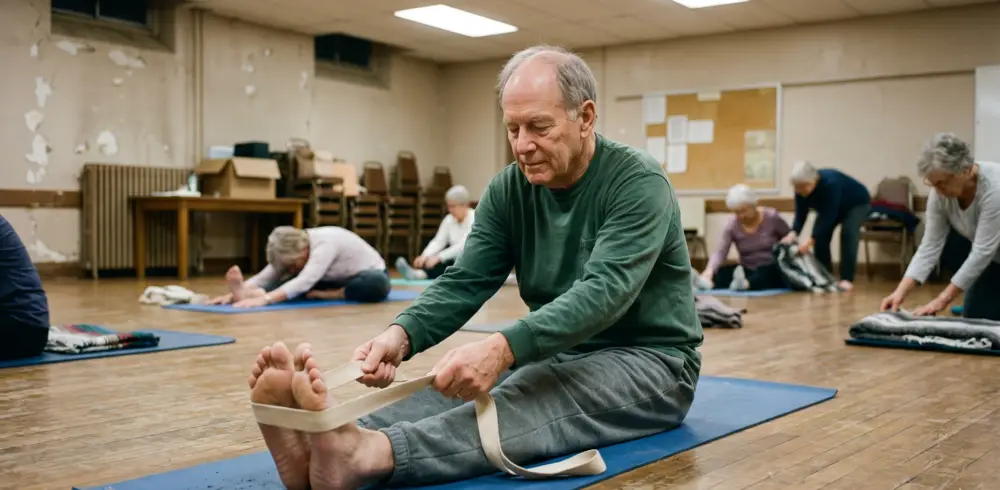
Hatha yoga is a foundational style of yoga that emphasizes physical postures and breathing techniques. It has evolved over centuries and offers a wide range of benefits for practitioners.
Beneath every sustained posture and controlled exhale, specific physiological mechanisms are being activated, suppressed, and gradually restructured. Understanding these mechanisms transforms yoga from a generalized wellness activity into a targetable physiological intervention.
What is Hatha Yoga?
Hatha yoga is a broad category within the practice of yoga that focuses on physical postures, breathing techniques, and meditation. The term "Hatha" itself comes from Sanskrit and can be translated to mean "force" or "forceful."
This name alludes to the system's emphasis on using physical methods to work with the body's energy.
Key Characteristics of Hatha Yoga
While the modern practice often emphasizes asanas, traditional Hatha yoga involves a more comprehensive approach. Key characteristics include:
Asana: The physical postures, used to prepare the body for deeper practices and to cultivate strength and flexibility.
Pranayama: Breathing exercises designed to control and direct the flow of vital energy (prana).
Meditation: Practices aimed at calming the mind and cultivating awareness.
Ethical Principles: Many traditions incorporate ethical guidelines and a mindful approach to life.
Cleansing Techniques: Internal cleansing practices (kriyas) were historically part of the system to purify the body.
Benefits of Practicing Hatha Yoga
Physical Benefits
The sustained engagement seen in Hatha yoga can contribute to increased muscular strength and endurance. By focusing on alignment within each pose, practitioners can work towards improving posture and body awareness.
The deliberate movements and holds also support the development of flexibility and balance. Over time, consistent practice may lead to a greater range of motion in the joints and a more stable physical foundation.
Mental and Emotional Benefits
Beyond the physical aspects, Hatha yoga offers significant benefits for mental and emotional well-being.
The emphasis on breath control, known as pranayama, is a core component that can help calm the nervous system. This focus on the breath, combined with the mindful attention required to maintain poses, can cultivate a state of present-moment awareness.
This practice of mindfulness can be instrumental in reducing feelings of stress and anxiety. Furthermore, the discipline and patience developed through holding challenging poses can translate into greater emotional resilience and a more centered outlook.
Common Hatha Yoga Poses (Asanas)
Standing Poses
Standing poses form the foundation for many Hatha yoga practices. They help build strength and stability while teaching focus and alignment.
Tadasana (Mountain Pose): Standing upright with feet together, spine lengthened, and arms at the sides.
Vrikshasana (Tree Pose): Balancing on one leg, the other foot pressed to the inner thigh, hands together above the head.
Utkatasana (Chair Pose): Bending the knees as if sitting back in a chair, arms extended overhead.
Trikonasana (Triangle Pose): Standing with legs apart, one hand reaching down to the foot, the other arm pointing straight up.
Seated Poses
Seated asanas encourage flexibility in the hips and spine and are often used for breathing exercises or meditation.
Padmasana (Lotus Pose): Crossed legs with feet resting on opposite thighs, hands on the knees. This pose is commonly used for meditation.
Sukhasana (Easy Pose): A simple cross-legged sitting posture, often used by beginners.
Paschimottanasana (Seated Forward Bend): Legs extended forward, folding at the hips, reaching for the feet.
Siddhasana (Accomplished Pose): Heels placed close to the body, spine erect, hands on the knees—valued for breathwork.
Inversions and Backbends
Inversions and backbends stimulate circulation and strength in the body. They can feel intense or unfamiliar at first but are widely practiced in Hatha yoga.
Sarvangasana (Shoulder Stand): Lifting the legs and pelvis over the shoulders while lying on the back, supported by the hands.
Bhujangasana (Cobra Pose): Lying face down, chest lifting up using the back muscles and arms, shoulders pulled away from the ears.
Setu Bandhasana (Bridge Pose): Lying on the back, knees bent, feet flat on the floor, lifting the hips toward the ceiling.
Getting Started with Hatha Yoga
Embarking on a Hatha yoga practice involves a few key considerations to establish a beneficial and safe experience.
Initially, finding a suitable space is important. This area should be free from distractions, offering a stable and quiet environment. Many practitioners find a dedicated corner in their home or a quiet room conducive to practice.
When beginning with the physical postures, known as asanas, it is common for them to feel challenging. Early texts on Hatha Yoga suggest that for a beginner, postures may be uncomfortable and difficult to hold for extended periods.
However, with consistent practice and attention, the body adapts, and the effort required diminishes. The goal is to reach a point where the posture feels natural and requires minimal conscious effort, allowing for normal breathing and a sense of ease.
Several foundational elements contribute to a well-rounded Hatha Yoga practice:
Finding a Qualified Instructor: Guidance from an experienced teacher is highly recommended, especially for beginners. An instructor can demonstrate proper alignment, offer modifications, and provide cues that help prevent injury and deepen the practice.
Understanding Basic Poses: Familiarizing oneself with common Hatha Yoga poses, such as Mountain Pose (Tadasana), Downward-Facing Dog (Adho Mukha Svanasana), and Warrior poses (Virabhadrasana), provides a solid base.
Focusing on Breath (Pranayama): Integrating breath awareness with movement is central to Hatha Yoga. Simple breathing exercises can be practiced alongside or before the physical postures.
Patience and Consistency: Progress in yoga is gradual. Regular, consistent practice, even for short durations, yields more significant results than infrequent, lengthy sessions.
How Does Hatha Yoga Modulate the Autonomic Nervous System?
Hatha yoga provides a physiologically grounded method for modulating the autonomic nervous system. The benefits of yoga in this domain operate through concrete, measurable pathways in the nervous system.
What Is the Connection Between Controlled Pranayama and Heart Rate Variability?
Heart rate variability, or HRV, is the beat-to-beat variation in the interval between heartbeats. Counterintuitively, a higher degree of variability indicates a healthier cardiovascular system, because it reflects the heart's ability to respond fluidly to changing demands.
Low HRV is associated with autonomic rigidity, elevated stress, and increased cardiovascular risk.
High HRV signals robust parasympathetic tone and systemic resilience.
The primary driver of HRV changes during yoga is pranayama, the practice of conscious breath regulation. Slow, diaphragmatic breathing at roughly 5 to 6 breath cycles per minute, a rate naturally approached in Hatha practice, directly stimulates the vagus nerve.
The vagus nerve is the principal communication highway of the parasympathetic system, running from the brainstem through the thorax and into the abdomen. Diaphragmatic movement during deep inhalation creates a mechanical pressure change in the thoracic cavity that physically stimulates vagal afferent fibers embedded in the lung tissue and diaphragm.
This vagal activation slows the sinoatrial node (the heart's natural pacemaker), increases beat-to-beat variability, and signals the brainstem to reduce sympathetic outflow. This elevation represents a genuine restructuring of the autonomic nervous system's default operating tone.
How Does This Practice Shift the Body From Sympathetic to Parasympathetic Dominance?
The transition from sympathetic to parasympathetic dominance during a Hatha session follows a coherent physiological sequence:
Reduced skeletal muscle activity lowers cardiac output demand
Slow, controlled breathing maintains blood gas balance
The combination of both reduces sympathetic alert signals
Can EEG Objectively Track These Shifts in Brain State?
Electroencephalography (EEG) research has consistently documented specific shifts in spectral power—the intensity of various brainwave frequencies—that provide a direct neural correlate to the autonomic relaxation documented in HRV studies. During static Hatha postures and the breath-focused meditation that often follows, practitioners frequently exhibit a marked increase in alpha (8–12 Hz) and delta (0.5–4 Hz) activity.
In clinical populations experiencing physical disability-related stress, an 8-week modified Hatha yoga intervention has been shown to induce significant increases in alpha activity across the frontal, central, and parietal electrodes, alongside increased delta activity in centroparietal regions.
These shifts are complemented by improved cognitive processing speeds, as evidenced by faster auditory reaction times and reduced P300 peak latency in event-related potential (ERP) assessments. This rise in alpha power is broadly associated with a state of "relaxed alertness," serving as an objective marker of the internal sensory gating that occurs when a practitioner shifts focus away from external environmental stimuli and toward proprioceptive feedback.
By coupling these central electrical signatures with peripheral markers like vagal tone and HRV, neuroscientists have begun to map a comprehensive model of whole-body integration.
Noteworthy, while these EEG findings provide a valuable, objective framework for conceptualizing the calming effects of Hatha yoga as an adjunct to routine rehabilitation, they remain exploratory indicators grounded in research settings.
These spectral power shifts offer a significant window into how the brain supports the body’s shift toward equilibrium, providing a tangible, measurable dimension to the subjective experience of moving from a stressed to a centered state.
Hatha Yoga vs. Other Yoga Styles
Hatha yoga, in its broadest sense, encompasses all physical yoga practices. This means that many other popular styles, such as Vinyasa, Ashtanga, Iyengar, and Bikram, can be considered branches or developments stemming from Hatha principles.
However, when people refer to a "Hatha" class specifically, they often mean a slower-paced practice focused on holding poses and exploring alignment, often using props. This contrasts with more dynamic styles like Vinyasa, where the emphasis is on flowing between poses with the breath.
Here's a general look at how Hatha might differ from some other styles:
Pace: Hatha classes are typically slower, allowing time to settle into poses. Other styles like Vinyasa or Ashtanga move at a faster pace.
Focus: While all yoga involves breath and movement, Hatha often emphasizes foundational alignment and holding poses. Vinyasa focuses on the flow between poses, linking breath to movement.
Structure: Hatha classes can vary widely in their sequence. Ashtanga follows a set series, and Bikram has a fixed sequence.
Intensity: Hatha is generally considered moderate in intensity, suitable for beginners. Styles like Ashtanga or Power Yoga are often more physically demanding.
Conclusion
Hatha yoga, with its roots deeply embedded in ancient Indian traditions, offers a holistic approach to well-being. While its historical context is rich and complex, its modern practice provides accessible physical postures and breathing techniques that benefit both the body and mind.
Whether you are seeking physical fitness, stress reduction, or a deeper connection with yourself, hatha yoga offers a path that is adaptable to individual needs and goals.
References
Naragatti, S. (2025). A Comparative Analysis of Yoga Practices and their Effects on Autonomic Nervous System Functionality. INTERNATIONAL JOURNAL, 14(3), 555-563.
Sharpe, E., Lacombe, A., Sadowski, A., Phipps, J., Heer, R., Rajurkar, S., Hanes, D., Jindal, R. D., & Bradley, R. (2021). Investigating components of pranayama for effects on heart rate variability. Journal of psychosomatic research, 148, 110569. https://doi.org/10.1016/j.jpsychores.2021.110569
Ajjimaporn, A., Rachiwong, S., & Siripornpanich, V. (2018). Effects of 8 weeks of modified hatha yoga training on resting-state brain activity and the p300 ERP in patients with physical disability-related stress. Journal of physical therapy science, 30(9), 1187–1192. https://doi.org/10.1589/jpts.30.1187
Frequently Asked Questions
What exactly is hatha yoga?
Hatha yoga is a type of yoga that uses physical poses and breathing exercises. Think of it as the practice of holding yoga poses and controlling your breath to get your body and mind working together. It's a very old style that forms the basis for many other yoga classes you might see today.
What are the main benefits of practicing hatha yoga?
Practicing hatha yoga can make your body stronger and more flexible. It also helps calm your mind, reduce stress, and improve your overall sense of well-being. Many people find it helps them feel more balanced and focused.
How is hatha yoga different from other yoga styles like Vinyasa or Ashtanga?
While all these styles come from the same roots, hatha yoga typically involves holding poses for a few breaths, making it slower. Styles like Vinyasa or Ashtanga often link poses together in a flowing sequence, which can be more physically demanding.
Emotiv is a neurotechnology leader helping advance neuroscience research through accessible EEG and brain data tools.
Medical Disclaimer: The information provided on this website is for educational and informational purposes only and is not intended as medical or health advice. This content may contain errors and should not be relied upon to make life-altering health, medical, or lifestyle choices. Always seek the advice of your physician or other qualified health provider with any questions you may have regarding a medical condition or treatment.
Christian Burgos