Managing bipolar disorder often involves more than just medication. This article looks into various therapy approaches that can help people with bipolar disorder live more stable lives. We'll explore how different types of talk therapy can equip individuals with practical skills to handle mood swings and improve their daily functioning.
How Therapy Is Tailored for Bipolar Disorder
Bipolar disorder presents a complex challenge, characterized by significant shifts in mood, energy, and activity levels. These shifts can range from periods of intense depression to episodes of mania or hypomania.
While medication is a primary treatment, psychological therapies play a vital role in managing the brain condition. These therapies are adapted to address the specific nature of bipolar disorder and the individual's experience.
The goal of therapy is to equip a person with practical skills to manage mood swings and improve overall functioning. This involves understanding the disorder, recognizing personal triggers, and developing strategies to cope with different mood states. The effectiveness of therapy is often seen when it is combined with medication, creating a more robust treatment plan.
Different types of bipolar disorder, such as Bipolar I, Bipolar II, and cyclothymia, require tailored approaches.
For instance, Bipolar I is marked by full manic episodes, while Bipolar II involves hypomanic episodes and significant depressive periods. Cyclothymia involves milder but more persistent mood fluctuations. Each presentation necessitates specific therapeutic interventions.
Key therapeutic components often include:
Psychoeducation: Learning about bipolar disorder, its symptoms, and how it affects daily life. This includes understanding the importance of medication adherence and identifying early warning signs of mood shifts.
Skill-building: Acquiring concrete strategies to manage thoughts, emotions, and behaviors associated with mood episodes.
Interpersonal focus: Addressing how relationships and social routines impact mood stability.
Family involvement: Educating family members and improving communication to create a supportive environment.
How Is Cognitive Behavioral Therapy Applied to Manage Bipolar Moods?
Cognitive Behavioral Therapy, or CBT, is often used to help people with bipolar disorder manage changes in mood. CBT focuses on the links between thoughts, behaviors, and feelings, and—importantly—it adapts to the unique challenges found in bipolar disorder.
Unlike a one-size-fits-all plan, CBT for bipolar disorder uses different tools depending on whether a person is feeling low, high, or somewhere in between.
How Can Patients Challenge Automatic Negative Thoughts During Depression?
During depressive episodes, many people experience a steady stream of negative, self-critical thoughts that can feel automatic. CBT takes a structured approach to challenge these thoughts:
Step one: Identify the negative thought. For example, “I can’t do anything right.”
Consider the evidence for and against this idea.
Develop a more balanced thought, like “I’ve had setbacks before and moved past them.”
This process helps break the cycle of unhelpful thinking that keeps low moods in place.
What Strategies Are Used to Deconstruct and Manage Hypomanic Beliefs?
When hypomania sets in, thoughts might lean toward grandiosity or impulsivity—“I don’t need sleep” or “Everything I do is perfect.” CBT aims to:
Catch early signs of inflated thinking.
Question the reality behind these beliefs.
Encourage more measured choices and expectations.
By doing this, therapy helps limit actions that might trigger more serious symptoms later.
How Does Behavioral Activation Counteract the Inertia of Depression?
Depression can sap the energy to take even simple actions. Behavioral activation is a common CBT tool that involves planning and scheduling small, manageable activities:
Make a daily list of basic tasks—showering, brief walk, text a friend.
Set realistic goals, starting small.
Over time, these activities can add structure and a sense of accomplishment.
It’s less about big changes and more about practical steps forward.
Why Is Activity Pacing Critical for Preventing Hypomanic Escalation?
Hypomania often brings high energy and a drive for nonstop activity, which can backfire. CBT uses activity pacing as a strategy:
List upcoming plans and commitments for the day.
Break up large tasks into short bursts with scheduled breaks.
Regularly check in with energy levels and mood to avoid overdoing it.
Here's a simple table showing how activity planning might look:
Time of Day | Planned Activity | Break Scheduled? |
|---|---|---|
Morning | Work on project | 15 minutes off |
Afternoon | Meet with friend | Yes, after lunch |
Evening | Read/relax | Not needed |
CBT strategies like these help people keep their routines stable and lower the risk of mood swings. Structure, small steps, and reality checks turn CBT into a workable routine, even when moods are unpredictable.
What Core Dialectical Behavior Therapy Skills Support Bipolar Stability?
Dialectical Behavior Therapy (DBT) offers a structured approach to managing the complexities of bipolar disorder, particularly focusing on skills that help people navigate mood shifts and improve overall stability.
While DBT was initially developed for borderline personality disorder, its skill-building modules are potentially beneficial for bipolar disorder as well. The therapy emphasizes a balance between acceptance and change, teaching individuals how to accept difficult emotions and situations while also working to change unhelpful behaviors.
How Does Mindfulness Assist in Recognizing Early Mood Shift Signals?
Mindfulness is a core component of DBT, focusing on paying attention to the present moment without judgment. For people with bipolar disorder, this means learning to observe thoughts, feelings, and physical sensations as they arise.
By practicing mindfulness, a person can become more attuned to the subtle early signs of a mood episode, whether it's the beginning of a depressive slump or the subtle lift of hypomania. This awareness is key to intervening before a mood state becomes severe.
Regular mindfulness practice can help create a mental space between an impulse or emotion and the resulting action, allowing for more considered responses.
How Are Distress Tolerance Skills Utilized During Agitation and Mixed States?
Agitation and mixed states, where symptoms of both mania and depression occur simultaneously, can be particularly challenging. DBT's distress tolerance skills provide strategies for getting through intense emotional or situational crises without making things worse.
These skills are not about solving the problem but about surviving the moment. Techniques include:
TIPP skills: These involve changing your physiology to calm down quickly (Temperature, Intense exercise, Paced breathing, Paired muscle relaxation).
Distracting yourself: Engaging in activities that take your mind off the distress temporarily.
Self-soothing: Using your senses to comfort yourself.
Improving the moment: Finding ways to make the current situation more bearable.
How Do Emotion Regulation Skills Foster Long-Term Therapeutic Stability?
Emotion regulation skills in DBT aim to help individuals understand their emotions, reduce emotional vulnerability, and manage emotional reactivity. For bipolar disorder, this involves learning to identify emotions, understand their function, and decrease the frequency and intensity of unwanted emotional experiences.
Key aspects include:
Understanding and naming emotions: Accurately identifying what you are feeling.
Reducing emotional vulnerability: Building resilience against emotional triggers through healthy lifestyle habits like adequate sleep and exercise.
Increasing positive emotions: Actively engaging in activities that bring joy and satisfaction.
Acting opposite to emotion: When an emotion is unhelpful, learning to take action that is contrary to the emotion's urge (e.g., engaging socially when feeling depressed and wanting to isolate).
What Is the Focus of Interpersonal and Social Rhythm Therapy (IPSRT)?
Interpersonal and Social Rhythm Therapy, or IPSRT, was designed for people living with bipolar disorder who struggle with rapid changes in mood. IPSRT focuses on stabilizing daily routines along with paying close attention to personal relationships.
Keeping consistent patterns in sleep, meals, and activities can help reduce the number of mood episodes. IPSRT is built on the idea that regularity in daily life can act as a protective factor against mood swings.
How Does the Social Rhythm Metric Assist in Tracking Daily Routines?
The Social Rhythm Metric (SRM) is a tool used to help users become more aware of how regular or irregular their daily activities are. This self-monitoring chart asks clients to record when they:
Wake up and go to sleep
Eat meals
Go to work or school
Spend social time with others
Exercise
The SRM data is then reviewed in sessions to find patterns in routine and identify areas that could be more stable. Over time, the goal is to move toward steadier habits, making it less likely for mood symptoms to spiral out of control.
How Are Key Interpersonal Connections Identified and Stabilized?
IPSRT doesn’t just look at routines, though—relationships are an equally important piece. Therapy sessions might explore:
Who provides support in times of stress
Which relationships tend to bring joy or, on the other hand, extra stress
How communication styles shift with mood changes
Simple steps to talk through misunderstandings
What Strategies Help in Navigating Life Disruptions Without Triggering Episodes?
One part of IPSRT is learning how to handle the surprises and bumps that can shake up daily life. Here are simple ways people might work on this:
Make a plan for changes to sleep or work schedules, like travel or late shifts.
Use small, gradual adjustments instead of large, sudden changes.
Practice talking with friends or family about what kind of support is helpful during those tough moments.
Keep using the SRM to track and spot warning signs early.
What Are the Fundamental Components of Family-Focused Therapy (FFT)?
How Does Psychoeducation Help Families Become Effective Support Teams?
Family-Focused Therapy (FFT) recognizes that a person's support system plays a big role in managing bipolar disorder.
A key part of FFT is psychoeducation. This means giving family members clear information about bipolar disorder.
They learn what it is, how it affects the person, and what signs to look for. Understanding the condition helps families move from confusion or blame to becoming active partners in care.
This education isn't just about facts; it's about building empathy and a shared approach to treatment. Families learn about the different mood states (mania, hypomania, depression, and mixed episodes) and how they manifest.
They also learn about the importance of medication adherence and the role of therapy. This shared knowledge creates a foundation for a more supportive home environment.
How Can Communication Skills Be Enhanced for High-Stakes Conversations?
Living with bipolar disorder can put a strain on family relationships. FFT aims to improve how family members talk to each other, especially when discussing difficult topics related to the disorder. This involves teaching practical communication skills.
Families learn to:
Listen actively to understand each other's perspectives.
Express their own needs and feelings clearly and respectfully.
Problem-solve together when challenges arise.
Manage conflict in a way that doesn't escalate mood episodes.
These skills are particularly important when discussing medication changes, recognizing early warning signs of an episode, or setting boundaries. By improving communication, families can reduce stress and create a more stable and predictable environment, which is beneficial for everyone involved.
What Emerging Neuro-Informed Techniques are Being Investigated for Bipolar Disorder?
How Is EEG Neurofeedback Being Explored for Bipolar Self-Regulation?
While established psychotherapies focus on cognitive and behavioral coping strategies, researchers in the neuroscience field are also investigating neuro-informed techniques designed to target emotional modulation at a biological level.
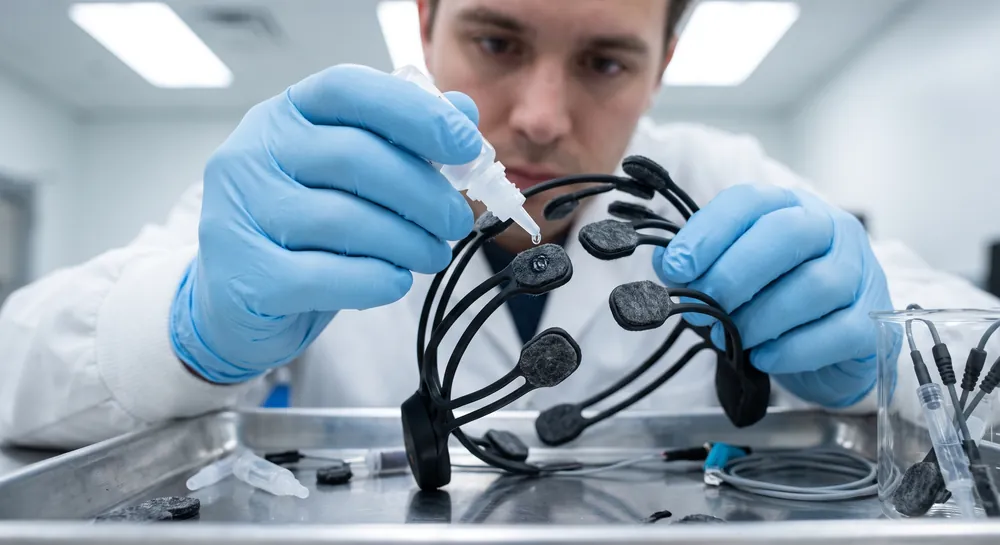
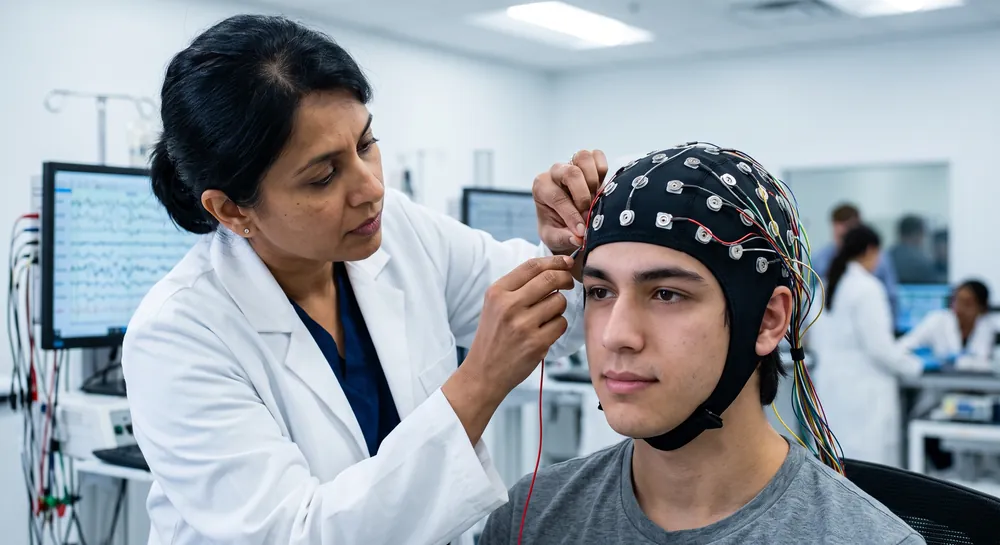
One such investigational approach is electroencephalogram (EEG) neurofeedback. This technique utilizes real-time EEG data to display a patient's brainwave activity on a screen, allowing them to visualize their current neurological state.
Through guided practice and visual or auditory cues, people attempt to voluntarily regulate the specific brain activity patterns associated with emotional stability. In theory, this approach aims to train the same core self-regulation and distress tolerance skills emphasized in treatments like DBT, but through direct neural feedback.
However, it is essential to understand that neurofeedback for bipolar disorder remains firmly in the experimental research phase. It is strictly an adjunctive, exploratory approach rather than a standalone treatment, and it is not a substitute for standard, evidence-based interventions such as medication management or comprehensive talk therapy.
How Can EEG Help Scientists Understand Treatment Effects and Predict Relapse?
Beyond therapeutic self-regulation, the scientific community is utilizing EEG to better understand how the bipolar brain responds to various treatments over time. Researchers are actively searching for objective electrophysiological biomarkers that could eventually help clinicians personalize therapeutic interventions and predict an individual's unique response to specific protocols.
Furthermore, ongoing studies are exploring whether subtle shifts in resting brainwave patterns might one day serve as early, biological warning signs of an impending manic or depressive episode, potentially appearing before outward behavioral symptoms become obvious.
While these applications of EEG are not yet available in everyday clinical practice, the ultimate goal of this research is to provide a predictive neurological tool that supports the long-term stability and relapse prevention strategies that are foundational to managing the bipolar spectrum.
What Are the Long-Term Considerations for Sustaining Well-being with Bipolar Disorder?
While medication forms the basis of treatment, the integration of evidence-based therapies like psychoeducation and CBT offers tangible skills for navigating mood shifts and life's challenges.
These approaches empower people with practical tools to recognize triggers, manage symptoms, and work towards their brain health. Remember, consistent engagement with healthcare providers, adherence to treatment plans, and building strong support systems are key to fostering long-term stability and a fulfilling life.
References
Zaehringer, J., Ende, G., Santangelo, P., Kleindienst, N., Ruf, M., Bertsch, K., ... & Paret, C. (2019). Improved emotion regulation after neurofeedback: A single-arm trial in patients with borderline personality disorder. NeuroImage: Clinical, 24, 102032. https://doi.org/10.1016/j.nicl.2019.102032
Newson, J. J., & Thiagarajan, T. C. (2019). EEG frequency bands in psychiatric disorders: a review of resting state studies. Frontiers in human neuroscience, 12, 521. https://doi.org/10.3389/fnhum.2018.00521
Frequently Asked Questions
What are the main types of therapy used for bipolar disorder?
Several types of therapy help manage bipolar disorder. These include Cognitive Behavioral Therapy (CBT), Dialectical Behavior Therapy (DBT), Interpersonal and Social Rhythm Therapy (IPSRT), and Family-Focused Therapy (FFT). Each offers different tools to help people cope with their moods.
How does Cognitive Behavioral Therapy (CBT) help with bipolar disorder?
CBT helps people understand how their thoughts, feelings, and actions are connected. It teaches skills to challenge negative thinking during depression and to manage impulsive thoughts that can come with hypomania. It also encourages taking action to combat the lack of energy in depression.
What are some key skills taught in Dialectical Behavior Therapy (DBT) for bipolar disorder?
DBT teaches important skills like mindfulness to notice early signs of mood changes. It also provides ways to handle intense emotions and stressful situations without making things worse. Learning these skills helps people stay more stable over time.
What is Interpersonal and Social Rhythm Therapy (IPSRT) and how does it work?
IPSRT focuses on keeping your daily routines, like sleep and meal times, as regular as possible. This is because disruptions in these routines can trigger mood episodes. It also helps improve relationships, which can be affected by mood swings.
What is the role of Family-Focused Therapy (FFT) in treating bipolar disorder?
FFT involves the family in treatment. It helps family members learn about bipolar disorder, how to communicate better, and how to support the person with the condition. This teamwork can make a big difference in managing the disorder.
Can therapy alone treat bipolar disorder?
Therapy is a very important part of managing bipolar disorder, but it's usually most effective when combined with medication. Medication helps stabilize moods, while therapy provides skills and strategies to cope with the condition and live a fuller life.
How do I know if I need therapy for bipolar disorder?
If you are struggling to manage your mood swings, if they are affecting your daily life, relationships, or work, or if you find it hard to cope with the symptoms, therapy could be very helpful. A mental health professional can help you decide the best treatment plan.
How long does therapy for bipolar disorder usually last?
The length of therapy can vary greatly depending on the individual's needs and the type of therapy used. Some people benefit from short-term therapy to learn specific skills, while others may engage in longer-term therapy for ongoing support and management.
Emotiv is a neurotechnology leader helping advance neuroscience research through accessible EEG and brain data tools.
Medical Disclaimer: The information provided on this website is for educational and informational purposes only and is not intended as medical or health advice. This content may contain errors and should not be relied upon to make life-altering health, medical, or lifestyle choices. Always seek the advice of your physician or other qualified health provider with any questions you may have regarding a medical condition or treatment.
Christian Burgos