Bipolar disorder is often talked about, but its different forms can be confusing. It's a complex condition with distinct types that experts use to understand and treat it.
Here we break down how these classifications work, looking at the main categories and what makes them different.
How Does a Spectrum Model Account for the Variety in Symptoms and Intensities?
Thinking about bipolar disorder as a spectrum, rather than just a few distinct boxes, helps us see how varied it can be. This approach acknowledges that there's a wide range of experiences and symptom intensities.
This is important because how someone experiences bipolar disorder can really affect how it's treated. For instance, the way a doctor manages bipolar I might be quite different from how they approach bipolar II. Some medications that work well for one type might actually make the other worse.
Also, teaching people about managing their brain condition needs to be tailored. What works for preventing manic episodes might not be the best approach for preventing depressive ones.
This spectrum view also helps us understand conditions that might not fit neatly into the main categories, like cyclothymic disorder, which involves milder but more persistent mood swings.
What Primary Factors Do Experts Evaluate When Diagnosing Bipolar Disorder?
When experts diagnose bipolar disorder, they look at a few key things:
Mood: This includes the intensity and type of mood experienced, whether it's elevated, irritable, or depressed.
Energy Levels: Changes in energy are a big clue. This can range from feeling restless and having too much energy to feeling completely drained and fatigued.
Duration: How long these mood states last is also critical. A mood episode needs to persist for a certain amount of time to meet diagnostic criteria.
These three elements—mood, energy, and how long they last—are the building blocks for understanding where someone falls on the bipolar spectrum. They help differentiate between various types of bipolar disorder and even between bipolar disorder and other conditions like major depression.
How Do Bipolar I and Bipolar II Serve as Diagnostic Anchors?
When we talk about bipolar disorder, two main categories often come up: Bipolar I and Bipolar II. They represent distinct patterns of mood episodes that guide how professionals approach diagnosis and treatment. It's like having two different blueprints for understanding the condition.
What Specific Mood Episode Defines the Diagnosis of Bipolar I Disorder?
The key feature that sets Bipolar I apart is the occurrence of at least one manic episode. Mania is a distinct period of abnormally and persistently elevated, expansive, or irritable mood, and abnormally and persistently increased activity or energy.
This period typically lasts for at least one week and is present most of the day, nearly every day. During a manic episode, people often experience significant changes in their behavior and functioning.
Symptoms can include:
Inflated self-esteem or grandiosity
Decreased need for sleep (feeling rested after only a few hours)
More talkative than usual or pressure to keep talking
Flight of ideas or subjective experience that thoughts are racing
Distractibility
Increase in goal-directed activity or psychomotor agitation
Excessive involvement in activities that have a high potential for painful consequences
These episodes are often severe enough to cause marked impairment in social or occupational functioning or to necessitate hospitalization to prevent harm to oneself or others, or there may be psychotic features.
While depressive episodes are common in Bipolar I, they are not required for the diagnosis. The presence of mania is the defining characteristic.
What Combination of Mood Episodes Is Found in Bipolar II Disorder?
Bipolar II disorder is characterized by a pattern of depressive episodes and hypomanic episodes, but never a full manic episode.
Hypomania is a less severe form of mania. It's a distinct period of abnormally and persistently elevated, expansive, or irritable mood, and abnormally and persistently increased activity or energy, lasting at least 4 consecutive days.
While hypomanic symptoms are similar to manic symptoms, they are not severe enough to cause marked impairment in social or occupational functioning or to necessitate hospitalization.
Individuals experiencing hypomania might feel unusually productive, creative, or energetic, and these periods can sometimes be perceived positively. However, hypomania is still a significant departure from the person's usual behavior and is often followed by a depressive episode.
Why Is the Distinction Between Mania and Hypomania Clinically Significant?
The distinction between mania (Bipolar I) and hypomania (Bipolar II) has significant implications for treatment and prognosis. The severity and impact of the mood elevation are the primary differentiators.
Severity of Impairment: Manic episodes in Bipolar I often lead to severe disruption in daily life, relationships, and work, sometimes requiring hospitalization. Hypomanic episodes, while noticeable changes, do not typically reach this level of impairment.
Treatment Approaches: While mood stabilizers are a cornerstone for both, the specific medications and strategies can differ. For instance, some medications that might be helpful for mania could potentially worsen the course of illness in Bipolar II, particularly if used without careful consideration of the depressive component.
Risk of Psychosis: Psychotic features (hallucinations or delusions) are more commonly associated with manic episodes in Bipolar I than with hypomanic episodes in Bipolar II.
Focus of Burden: For individuals with Bipolar II, the depressive episodes often represent the most significant source of suffering and functional impairment, making the accurate identification of hypomanic periods critical for developing an effective treatment plan that prioritizes managing depression alongside preventing future hypomanic or depressive shifts.
Cyclothymia and Other Specified Disorders
What Is Cyclothymic Disorder and How Is It Characterized?
Sometimes, the mood swings aren't quite severe enough to meet the criteria for Bipolar I or Bipolar II, but they're still a significant disruption. That's where cyclothymic disorder comes in.
Think of it as a more persistent, but less intense, version of the bipolar spectrum. People with cyclothymia experience numerous periods with symptoms of hypomania and numerous periods with symptoms of depression over at least two years (one year for children and adolescents).
The key here is that these mood states don't reach the full diagnostic threshold for a manic, hypomanic, or major depressive episode.
It's like a constant ebb and flow, but the waves aren't as high or as low as in other bipolar types. This chronic nature can be exhausting and can significantly impact relationships and daily functioning, even if the individual episodes aren't as dramatic.
Treatment often focuses on managing these persistent mood fluctuations, with psychotherapy playing a major role in helping a person understand their patterns and develop coping strategies. Sometimes, medication might be used to help stabilize mood over the long term.
When Is the 'Other Specified Bipolar and Related Disorder' Diagnosis Used?
This category is a bit of a catch-all, used when someone has symptoms characteristic of a bipolar disorder but doesn't quite fit neatly into the defined categories like Bipolar I, Bipolar II, or Cyclothymia. It's for those situations where the presentation is unusual or doesn't meet all the specific criteria.
For example, someone might have recurrent hypomanic episodes without any major depressive episodes, or they might have short-duration manic or hypomanic episodes that don't last the full required time.
This designation acknowledges that there's a bipolar-related issue at play, even if it doesn't perfectly match the established diagnostic boxes. It allows clinicians to recognize and address these presentations, which can still cause significant distress and brain health impairment.
Treatment in these cases is tailored to the specific symptoms and patterns observed, often involving a combination of psychotherapy and medication aimed at mood stabilization.
In What Scenarios Is 'Unspecified Bipolar and Related Disorder' Applied?
Finally, there's the 'Unspecified Bipolar and Related Disorder' category. This is used in situations where there isn't enough information to make a more specific diagnosis.
This might happen in emergency room settings, for instance, where a full assessment isn't immediately possible, or when a patient's history is unclear. It signals that a bipolar-related condition is suspected, but more details are needed to pinpoint the exact type.
It's important to note that this category is generally used when the clinician deliberately chooses not to specify the reason for the lack of diagnostic criteria being met, or when there's simply insufficient information. Like 'Other Specified,' it allows for clinical recognition and initial management, with the goal of obtaining more information later to arrive at a more precise diagnosis and treatment plan.
How Do Episode Specifiers Help Clinicians Fine-Tune a Diagnosis?
Beyond the core diagnosis of bipolar disorder, clinicians often use specifiers to add more detail. These specifiers help paint a clearer picture of a person's experience, which can be really important for figuring out the best treatment plan.
Think of them like adding specific notes to a general diagnosis. They don't change the main diagnosis, but they give doctors more information to work with.
What Does the 'Mixed Feature' Specifier Indicate About Mood Symptoms?
Sometimes, a person might experience symptoms of both mania or hypomania and depression at the same time, or in rapid succession. This is known as a "mixed feature" specifier. It can make symptoms feel particularly intense and confusing.
For example, someone might feel a surge of energy and racing thoughts (manic symptoms) while also feeling profoundly sad and hopeless (depressive symptoms).
How Is Rapid Cycling Defined and What Is Its Significance?
Rapid cycling is another specifier that describes the frequency of mood episodes. For individuals with bipolar disorder, rapid cycling means experiencing four or more distinct mood episodes (manic, hypomanic, or depressive) within a 12-month period.
These episodes can sometimes occur even more frequently, with shifts happening within days or even hours. This pattern can be particularly challenging to manage and may require different treatment approaches.
What Distinguishes Melancholic and Atypical Features in Depression?
When a depressive episode occurs, it can have different characteristics. The "melancholic features" specifier is used when depression is severe, often involving a loss of pleasure in nearly all activities, a distinct quality of depressed mood (feeling worse in the morning), significant weight loss, and excessive guilt.
On the other hand, "atypical features" are characterized by a mood that can temporarily brighten in response to positive events, increased appetite or weight gain, hypersomnia (sleeping too much), and a feeling of heaviness in the limbs.
What Experiences Are Associated With the Presence of Psychotic Features?
In some instances, during a severe manic or depressive episode, a person might experience psychosis. This means losing touch with reality, which can include hallucinations (seeing or hearing things that aren't there) or delusions (fixed, false beliefs).
When psychosis occurs, it's specified as "with psychotic features." The content of these psychotic symptoms often aligns with the person's mood state; for example, delusions might be grandiose during mania or involve themes of worthlessness during depression.
What Motor and Behavioral Abnormalities Characterize Catatonia?
Catatonia is a state characterized by motor immobility and behavioral abnormalities. It can manifest in various ways, such as stupor (unresponsiveness), excessive purposeless motor activity, extreme negativism or mutism, peculiar voluntary movements, or echolalia (repeating others' words) or echopraxia (imitating others' actions).
When catatonia is present during a manic, hypomanic, or depressive episode, it is noted with the "with catatonia" specifier. This specifier indicates a need for specific interventions, as catatonia can sometimes be treated effectively with certain medications or even electroconvulsive therapy (ECT).
How Is EEG Used in Neuroscience to Identify Biological Markers?
As the clinical understanding of the bipolar spectrum evolves, researchers in the neuroscience field are increasingly looking beyond subjective symptom reporting toward the identification of objective, measurable biological markers.
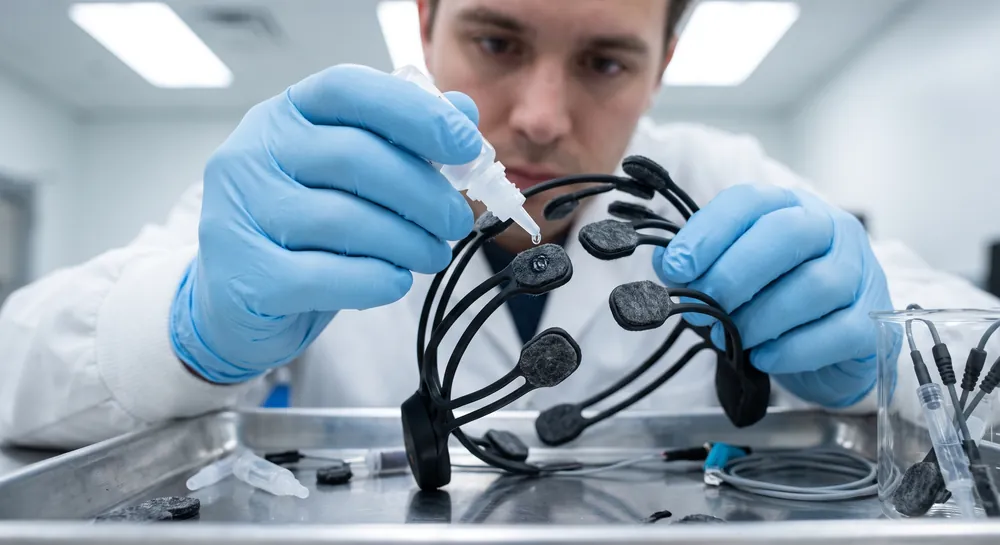
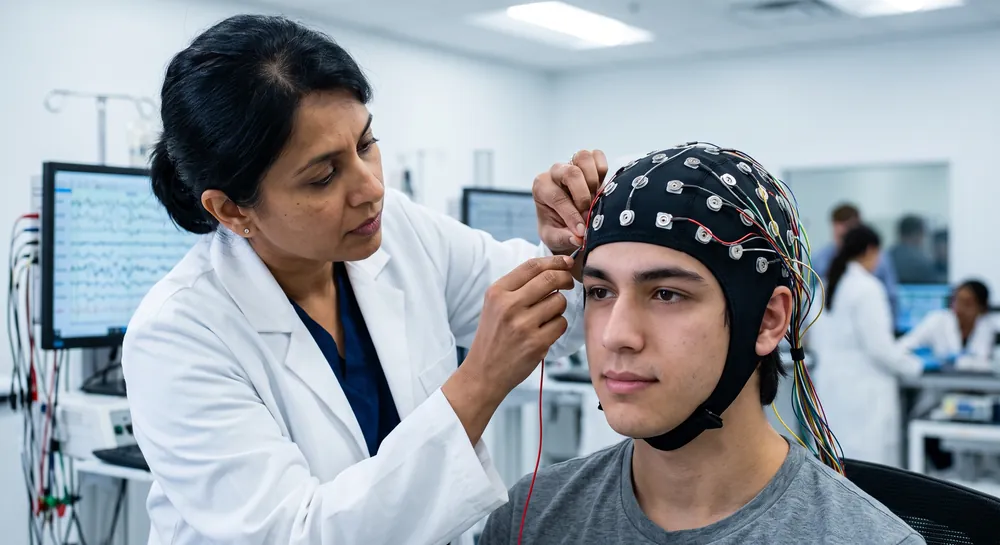
Electroencephalography (EEG) serves as a primary non-invasive tool in this scientific pursuit, allowing researchers to monitor the brain's real-time electrical activity. By analyzing these complex brainwave patterns, scientists aim to identify specific neurophysiological signatures that correlate with the distinct mood states characteristic of bipolar disorder—such as the hyperexcitability often seen in mania versus the slowed processing associated with depression.
Ultimately, the goal of this ongoing research is to discover reliable biomarkers that could eventually supplement clinical interviews, grounding psychiatric diagnosis in observable neurobiology.
Why Is Distinguishing Between Bipolar and Unipolar Depression a Challenge?
One of the most significant diagnostic challenges in psychiatry is distinguishing the depressive phase of bipolar disorder from unipolar major depressive disorder, as the outward symptoms are often nearly identical. This diagnostic ambiguity frequently leads to years of misdiagnosis and inappropriate treatment.
To address this, researchers are utilizing EEG, and specifically event-related potentials (ERPs), to uncover functional differences in how these two groups process information.
For example, studies measuring the P300 component—an electrical response that reflects cognitive processing and attention—have frequently demonstrated distinct variations in amplitude and latency between individuals with bipolar depression and those with unipolar depression.
While these findings suggest that the underlying neural architecture of these depressive states is fundamentally different, they remain subtle trends observed across study populations rather than definitive diagnostic rules.
Why Is EEG Currently Confined to Laboratory Settings Rather Than Clinics?
While the neurophysiological insights provided by EEG research are compelling, it is crucial to understand that these tools are currently confined to the laboratory. Identifying a consistent, individualized biomarker is incredibly complex, and EEG is not yet a validated or standard diagnostic test for bipolar disorder or any of its specifiers in everyday clinical practice.
Diagnoses continue to rely entirely on comprehensive psychiatric evaluations and longitudinal observation of mood cycles. However, the data gathered from this electrophysiological research is vital for the future of the field.
By continuing to map the precise neural networks involved in mood regulation, scientists hope to eventually translate these laboratory discoveries into practical clinical tools, moving psychiatry toward a more precise, biologically-informed system of classification and personalized treatment.
How Does the Evolving Classification Landscape Contribute to Personalized Care?
The classification of bipolar disorder, particularly the distinctions between its subtypes like Bipolar I and Bipolar II, remains a dynamic area of psychiatric research and clinical practice. While diagnostic categories are necessary for effective treatment and prognosis, ongoing exploration into the spectrum of bipolar illness, including concepts like 'predominant polarity,' offers a path toward more personalized psychiatric care.
Recognizing the unique needs of individuals with different presentations of bipolar disorder, such as the specific challenges faced by those with Bipolar II, is vital for improving treatment outcomes and reducing the burden of the illness.
As research continues to refine our understanding, the objective is to develop diagnostic frameworks that accurately reflect the complexity of bipolar disorder, ultimately leading to better support and management for those affected.
References
Degabriele, R., & Lagopoulos, J. (2009). A review of EEG and ERP studies in bipolar disorder. Acta Neuropsychiatrica, 21(2), 58-66. https://doi.org/10.1111/j.1601-5215.2009.00359.x
Frequently Asked Questions
Are there different kinds of bipolar disorder?
Yes, experts classify bipolar disorder into different types. The main ones are Bipolar I, Bipolar II, and Cyclothymic Disorder. Each type has its own pattern of mood swings.
What's the difference between Bipolar I and Bipolar II?
The main difference is the severity of the mood episodes. Bipolar I involves at least one manic episode, which is a period of intense high energy that can cause significant problems. Bipolar II involves hypomanic episodes (less severe highs) along with at least one major depressive episode.
What is a manic episode?
A manic episode is a period where someone feels extremely high, energetic, and often irritable. They might have racing thoughts, need less sleep, and engage in risky behaviors. This state is usually severe enough to cause serious problems in their life.
What is a hypomanic episode?
Hypomania is like a milder form of mania. People might feel more energetic, creative, and productive, but it's not as extreme or disruptive as a full manic episode. However, it can still lead to problems and often precedes a depressive episode.
What is Cyclothymic Disorder?
Cyclothymic disorder involves shorter periods of hypomanic symptoms and shorter periods of depressive symptoms that last for at least two years. The mood swings aren't as severe as in Bipolar I or II, but they are persistent.
Why is it important to tell the difference between mania and hypomania?
The difference is important because it affects how doctors diagnose and treat the disorder. Manic episodes are a defining feature of Bipolar I and often require different treatment approaches than the hypomanic episodes seen in Bipolar II.
What does 'Other Specified Bipolar and Related Disorder' mean?
This category is used when someone has symptoms of bipolar disorder that don't quite fit into the main categories like Bipolar I or II. It acknowledges that there are variations in how the disorder can present.
Can bipolar disorder have other features besides mood swings?
Yes, bipolar disorder can come with other features. For example, a mood episode might include psychotic symptoms (like hallucinations or delusions), or a person might experience rapid cycling, meaning many mood shifts in a year.
Emotiv is a neurotechnology leader helping advance neuroscience research through accessible EEG and brain data tools.
Medical Disclaimer: The information provided on this website is for educational and informational purposes only and is not intended as medical or health advice. This content may contain errors and should not be relied upon to make life-altering health, medical, or lifestyle choices. Always seek the advice of your physician or other qualified health provider with any questions you may have regarding a medical condition or treatment.
Christian Burgos