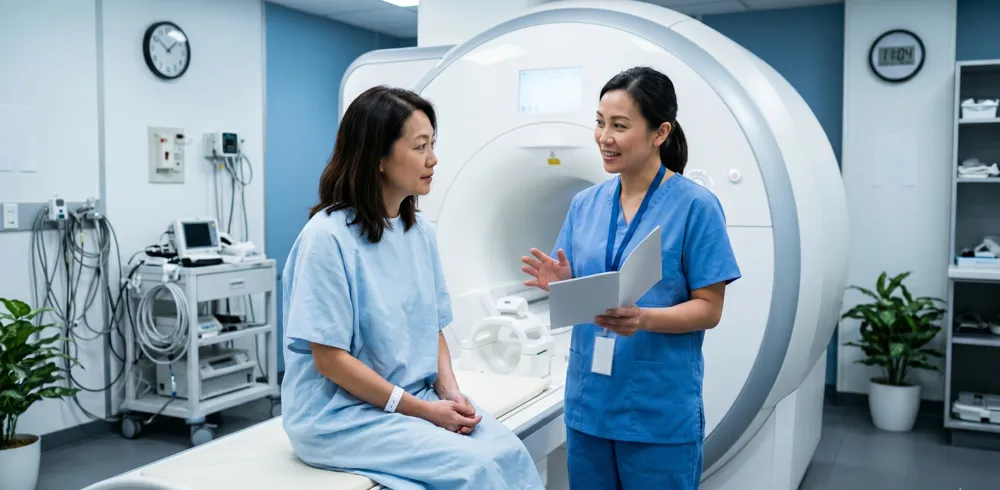
Getting an ALS diagnosis can feel like a long road. It's not always straightforward because other conditions can look a lot like it. Doctors have to do a lot of checking and ruling things out to be sure. This process involves looking at your symptoms, doing tests, and sometimes even genetic checks.
How Do Doctors Establish Motor Neuron Damage for an ALS Diagnosis?
Diagnosing Amyotrophic Lateral Sclerosis (ALS) begins with a thorough examination to find evidence of damage to the motor neurons. These are the nerve cells that control voluntary muscle movement, sending signals from the brain and spinal cord to the muscles.
In ALS, these neurons break down, leading to progressive muscle weakness. The diagnostic process focuses on identifying signs of damage in both the upper and lower motor neuron systems.
What Are the Clinical Signs of Upper Motor Neuron (UMN) Damage in ALS?
Upper motor neurons originate in the brain and travel down the spinal cord. Damage to these neurons can manifest in several ways.
A common sign is spasticity, a stiffness or tightness in the muscles that can make movement difficult. Another indicator is hyperreflexia, where reflexes are exaggerated.
Patients might also show a positive Babinski sign, where the big toe extends upward when the sole of the foot is stroked, which is abnormal in adults. Muscle weakness can also be present, but it's often accompanied by increased muscle tone.
How Is Lower Motor Neuron (LMN) Damage Identified in ALS?
Lower motor neurons start in the spinal cord and extend out to the muscles. When these neurons are affected, the signs are different.
Muscle weakness is a primary symptom, often accompanied by atrophy, which is a wasting away of the muscle tissue due to lack of use. Fasciculations, which are small, involuntary muscle twitches visible under the skin, are another hallmark sign of LMN damage.
Muscle tone may be reduced, leading to flaccid paralysis in severe cases, and reflexes in the affected muscles can be diminished or absent.
Why Is Evidence of Both UMN and LMN Damage Required for an ALS Diagnosis?
Amyotrophic Lateral Sclerosis is characterized by the degeneration of both upper and lower motor neurons. Therefore, a definitive diagnosis requires clinical evidence of damage in both systems.
If signs of only UMN or only LMN damage are present, other conditions might be considered. The presence of symptoms and signs pointing to dysfunction in both pathways strongly supports the suspicion of ALS.
This dual involvement is a key diagnostic feature that helps distinguish ALS from other neurological disorders that might affect only one part of the motor system.
How Do Doctors Rule Out ALS Mimic Syndromes?
Diagnosing ALS isn't always straightforward because its symptoms can overlap with those of other neurological conditions. These other conditions, sometimes called 'mimic syndromes,' need to be ruled out to arrive at an accurate ALS diagnosis. This process involves a series of tests designed to exclude other possibilities.
How Is MRI Used to Identify Structural Lesions That Mimic ALS?
Magnetic Resonance Imaging (MRI) is a powerful neuroscience tool in the diagnostic process. It uses magnetic fields and radio waves to create detailed images of the brain and spinal cord.
For suspected ALS, an MRI is primarily used to look for structural abnormalities that could be causing similar symptoms. Conditions like spinal cord compression from a herniated disc, tumors, or multiple sclerosis (MS) can present with weakness and neurological deficits that might initially seem like ALS.
By visualizing these structures, MRI can help identify or exclude these alternative diagnoses. For instance, if an MRI shows clear evidence of a tumor pressing on the spinal cord, that would become the primary focus of investigation and treatment, rather than ALS.
What Do Blood Tests Reveal About Metabolic and Autoimmune ALS Mimics?
Blood tests are a routine part of the diagnostic workup for many conditions, including those that can mimic ALS. These tests can provide information about a person's overall health and help identify or rule out a range of issues. For example:
Metabolic disorders: Imbalances in electrolytes (like sodium, potassium, or calcium) or problems with thyroid function can sometimes cause muscle weakness or fatigue. Blood tests can quickly identify these issues.
Autoimmune diseases: Conditions where the body's immune system mistakenly attacks its own tissues, such as lupus or certain types of vasculitis, can affect the nervous system and cause neurological symptoms. Specific antibody tests in the blood can help detect these conditions.
Infections: Certain infections can also impact nerve function. Blood tests can screen for markers of infection.
By analyzing these results, clinicians can either identify an alternative cause for the patient's symptoms or confirm that these common metabolic and autoimmune pathways are not the source of the problem, bringing the focus back to neurological disorders like ALS.
Why Is Cerebrospinal Fluid Analyzed to Rule Out Inflammatory Disorders?
When other tests don't provide a clear answer, a lumbar puncture, often called a spinal tap, may be performed. This procedure involves collecting a small sample of cerebrospinal fluid (CSF) from the lower back.
CSF is the fluid that surrounds the brain and spinal cord. Analyzing this fluid can help diagnose or rule out various neurological conditions, particularly inflammatory and infectious disorders.
Inflammatory conditions: In conditions like Guillain-Barré syndrome or certain types of myelitis (inflammation of the spinal cord), the CSF may show an increased number of white blood cells or specific protein patterns. These findings point away from ALS and towards an inflammatory cause that might be treatable with different therapies.
Infections: The CSF can be tested for the presence of bacteria, viruses, or other pathogens that could be affecting the nervous system.
While ALS itself is not typically characterized by significant changes in the CSF, the absence of inflammatory biomarkers in the fluid is an important piece of evidence that supports the diagnosis of ALS when other signs are present. It helps confirm that the motor neuron degeneration is not due to an active inflammatory process.
How Is Electrophysiological Testing Used to Confirm an ALS Diagnosis?
How Does Electromyography (EMG) Detect Nerve Damage in ALS?
Electromyography, or EMG, is a key test used to figure out if your muscles are working right and if the nerves controlling them are healthy. It's like a diagnostic tool that listens in on the electrical activity happening between your nerves and muscles.
When a doctor suspects ALS, an EMG can show if there's damage to the motor neurons. The test involves inserting a very fine needle electrode into a muscle. This needle picks up the electrical signals produced by your muscles, both when they're at rest and when you're asked to contract them.
The patterns of electrical activity can tell doctors a lot. For instance, they can see if a muscle is currently being damaged (active denervation) or if it has been damaged for a while and is trying to recover (reinnervation).
In ALS, EMG often shows signs of damage to motor neurons in multiple parts of the body, which is a significant clue. It helps distinguish ALS from other conditions that might cause muscle weakness but affect nerves or muscles differently.
How Are Nerve Conduction Study (NCS) Results Interpreted in Suspected ALS?
Nerve conduction studies (NCS) are usually done along with EMG. This part of the test looks at how well and how fast electrical signals travel along your nerves.
Small electrodes are placed on the skin, and a mild electrical impulse is delivered to a nerve. Another electrode records the signal as it travels down the nerve. This helps measure the speed and strength of the nerve signals.
In ALS, NCS results are often normal or show only minor changes. This is because ALS primarily affects the motor neurons themselves, particularly their cell bodies in the spinal cord and brainstem, and their axons.
While the nerves might show some signs of damage if the axon is significantly affected, NCS is generally more sensitive to problems with the nerve's outer covering (myelin sheath) or widespread nerve damage, which are more typical of other neurological conditions.
Therefore, normal NCS findings in the context of abnormal EMG findings can actually support an ALS diagnosis by pointing away from other nerve disorders.
How Do EMG and NCS Tests Support a Clinical Suspicion of ALS?
EMG and NCS are not typically used to diagnose ALS on their own. Instead, they play a vital role in confirming a diagnosis when a patient's symptoms and physical examination already suggest ALS. These tests help doctors by:
Identifying the specific type of nerve or muscle problem: They can show whether the issue lies with the nerves, the muscles, or the connection between them.
Determining the extent and pattern of damage: The results can indicate if motor neurons are affected in a way consistent with ALS, showing damage in both the upper and lower parts of the nervous system.
Ruling out other conditions: By showing normal nerve conduction or specific patterns of muscle activity, these tests can help exclude other diseases that might mimic ALS symptoms, such as peripheral neuropathy or certain myopathies.
Ultimately, electrodiagnostic testing provides objective evidence that complements the clinical picture, helping the medical team build a strong case for an ALS diagnosis or directing them to investigate other possibilities if the results don't align with ALS.
How Are Formal Diagnostic Criteria Applied to an ALS Diagnosis?
What Are the El Escorial Criteria for an ALS Diagnosis?
For a long time, the El Escorial criteria have been the standard for defining definite, probable, and possible ALS. These criteria require evidence of both upper motor neuron (UMN) and lower motor neuron (LMN) degeneration.
The presence of UMN signs, such as spasticity and hyperreflexia, alongside LMN signs, like muscle weakness, atrophy, and fasciculations, is a cornerstone of the diagnosis.
Without signs pointing to damage in both systems, the diagnosis of ALS becomes less likely, and other conditions must be considered more strongly.
Diagnostic Category | Inclusion Criteria |
|---|---|
Definite ALS | UMN and LMN signs in 3 anatomical regions |
Probable ALS | UMN and LMN signs in 2 regions (UMN must be rostral to LMN) |
Probable (Lab-Supported) | UMN and LMN signs in 1 region + EMG evidence of LMN in 1 other region |
Possible ALS | UMN and LMN signs in 1 region OR UMN signs in 2+ regions |
How Did the Awaji Criteria Refine the Role of EMG in ALS Diagnosis?
While El Escorial was a significant step, it had limitations, particularly in the early stages of the disease. The Awaji criteria were developed to address some of these.
A key change was the reclassification of certain EMG findings. Previously, EMG results showing only LMN abnormalities were not enough to meet the criteria for definite or probable ALS, even with clear clinical signs of UMN involvement.
The Awaji criteria allow for a diagnosis of definite ALS based on EMG evidence of LMN damage in at least three regions of the body, combined with clinical evidence of UMN damage in at least two regions, or vice versa. This refinement acknowledges the power of electrophysiological testing in identifying motor neuron disease earlier.
Why Is Documenting Disease Progression Over Time Essential for ALS?
ALS is a progressive disease, meaning it gets worse over time. This progression is a vital part of the diagnostic puzzle.
Even if a patient initially presents with symptoms that could fit ALS, but shows no clear signs of both UMN and LMN involvement, or if the findings are limited to a single body region, a diagnosis of 'possible' or 'suspected' ALS might be made.
However, the diagnosis is often solidified by observing the spread of symptoms and signs to new areas of the body and the worsening of existing deficits over subsequent clinical evaluations. Regular follow-up appointments are therefore not just for monitoring the disease but are integral to confirming the diagnosis itself.
How Does Genetic Testing Help Diagnose Familial ALS?
While most cases of ALS, around 90-95%, appear without a clear family history and are termed sporadic, a smaller percentage, about 5-10%, are inherited. This inherited form is known as familial ALS (fALS).
Identifying fALS is where genetic testing plays a significant role in the diagnostic process. It's not just about confirming a diagnosis; it can also help understand the potential risk for other family members.
Genetic testing looks for specific changes, or mutations, in genes that are known to be associated with ALS. When a mutation is found in a gene linked to fALS, it can help solidify a diagnosis, especially in cases where the clinical signs might be less clear or overlap with other neurological conditions.
This is particularly important because ALS is a progressive disease, and an early, accurate diagnosis can help in planning care and accessing support services. Here's how genetic testing contributes:
Confirmation of Inheritance: Finding a known ALS-associated gene mutation in an individual with symptoms strongly suggests a diagnosis of familial ALS. This can differentiate it from sporadic ALS or other conditions that might mimic ALS symptoms.
Family Risk Assessment: If a genetic mutation is identified, it can inform other family members about their potential risk of developing ALS. This allows for informed decisions regarding genetic counseling and potential future testing.
Research and Treatment Development: Understanding the specific genetic cause in fALS cases can contribute to broader research efforts. Identifying the pathways affected by these gene mutations may lead to the development of targeted therapies in the future.
Some of the genes commonly implicated in familial ALS include SOD1, C9orf72, FUS, and TARDBP. The specific gene and mutation can sometimes correlate with the age of onset and the rate of disease progression, though this is not always the case.
It's important to remember that a negative genetic test does not rule out ALS, especially in sporadic cases, and a positive test doesn't guarantee the development of symptoms if the mutation is in a gene with reduced penetrance.
The decision to pursue genetic testing should always be made in consultation with a genetic counselor and the patient's medical team.
When Is a Muscle or Nerve Biopsy Recommended During an ALS Evaluation?
While not a primary diagnostic tool for ALS itself, muscle or nerve biopsies can sometimes be part of the diagnostic process. These procedures are typically considered when other tests haven't provided a clear answer or to rule out other conditions that might mimic ALS.
For instance, certain neuropathies or myopathies can present with symptoms that overlap with those seen in ALS. A biopsy allows a pathologist to examine the actual tissue under a microscope, looking for specific changes that indicate a particular disease process.
The decision to perform a biopsy is usually made after a thorough review of clinical findings, electrophysiological tests like EMG and NCS, and imaging studies. If these investigations suggest a condition other than ALS, or if there's uncertainty, a biopsy might be recommended.
It's a more invasive procedure, so it's reserved for situations where it can significantly alter the diagnostic pathway or guide treatment decisions. The findings from a biopsy, when combined with all other clinical information, help build a complete picture of what might be causing a patient's symptoms.
What Is the Future Outlook for ALS Diagnosis and Treatment?
Figuring out if someone has ALS is a complex process, and scientists are still working hard to understand it better. While there's no cure yet, the medical field is making progress to improve the brain health of these patients.
New research is helping doctors find ALS sooner and develop ways to manage its effects. Treatments focus on making life easier for those with the condition, helping with symptoms and maintaining as much independence as possible. The ongoing work in research and clinical trials offers hope for future advancements in care and treatment for ALS.
References
Verma, A. (2021). Clinical manifestation and management of amyotrophic lateral sclerosis. In T. Araki (Ed.), Amyotrophic lateral sclerosis. Exon Publications. https://doi.org/10.36255/exonpublications.amyotrophiclateralsclerosis.management.2021
Costa, J., Swash, M., & De Carvalho, M. (2012). Awaji criteria for the diagnosis of amyotrophic lateral sclerosis: a systematic review. Archives of neurology, 69(11), 1410-1416. doi:10.1001/archneurol.2012.254
Frequently Asked Questions
How do doctors figure out if someone has ALS?
Figuring out if someone has ALS involves a few steps. Doctors will check for signs of muscle weakness and review any past tests. They often use a test called an EMG, which checks how well nerves and muscles are talking to each other. They also do tests to see how well your lungs are working and take blood and urine samples. Sometimes, imaging tests like MRIs are used to rule out other problems.
Why is it important to check for other diseases that look like ALS?
Doctors need to make sure they aren't mistaking another condition for ALS. There are other diseases, sometimes called 'mimic syndromes,' that can cause similar symptoms. By doing tests like MRIs, blood work, and checking spinal fluid, doctors can rule out these other possibilities and be more sure that the diagnosis is indeed ALS.
What is an EMG test and what does it show?
An electromyography, or EMG, is a test that helps doctors see if there's a problem with the signals between your nerves and muscles. It involves placing small needles into your muscles to record their electrical activity. This test can show if nerves are damaged or if muscles are weak, which is a key part of diagnosing ALS.
What do nerve conduction studies (NCS) tell doctors about ALS?
Nerve conduction studies, often done with an EMG, measure how fast electrical signals travel through your nerves. In ALS, these studies can help doctors understand the extent of nerve damage. They help confirm that the nerves connecting to the muscles are affected, supporting the diagnosis.
Are there special rules doctors use to diagnose ALS?
Yes, doctors follow specific guidelines to make an ALS diagnosis. The El Escorial criteria and the newer Awaji criteria are like checklists that help doctors confirm the diagnosis. They look for evidence of damage to both upper and lower motor neurons and consider results from tests like EMG to be sure.
Why is seeing the disease get worse over time important for diagnosis?
ALS is a progressive disease, meaning it gets worse over time. Doctors need to see this progression to help confirm the diagnosis. They will often monitor patients over a period to see how symptoms change and worsen, which is a crucial part of the diagnostic process.
Does everyone with ALS have a family history of the disease?
No, not everyone with ALS has a family history. Most cases, about 90-95%, are considered 'sporadic,' meaning they happen by chance and aren't inherited. However, about 5-10% of cases are 'familial,' which means they are caused by gene changes passed down in families.
Can genetic testing help diagnose ALS?
Genetic testing is very helpful, especially for cases that run in families, known as familial ALS. If a doctor suspects a genetic cause, testing can identify specific gene changes. This helps confirm the diagnosis for those families and can also help other family members understand their own risk.
When would a doctor consider taking a muscle or nerve sample (biopsy)?
Taking a sample of muscle or nerve tissue, called a biopsy, is not usually the first step in diagnosing ALS. Doctors typically rely on other tests and clinical signs. However, a biopsy might be considered in complex cases or when other tests haven't provided a clear answer, to help rule out other muscle or nerve conditions.
Emotiv is a neurotechnology leader helping advance neuroscience research through accessible EEG and brain data tools.
Medical Disclaimer: The information provided on this website is for educational and informational purposes only and is not intended as medical or health advice. This content may contain errors and should not be relied upon to make life-altering health, medical, or lifestyle choices. Always seek the advice of your physician or other qualified health provider with any questions you may have regarding a medical condition or treatment.
Christian Burgos