Amyotrophic Lateral Sclerosis, or ALS, is a disease that affects nerve cells controlling muscles. It can lead to weakness and eventually paralysis. While we don't always know exactly why it happens, a lot of research points to genes playing a part.
So, is ALS genetic? The answer is complicated, but understanding the genetic side is helping us learn more about the disease and how to fight it.
The Expanding Landscape of ALS Genetics
Is ALS Caused by More Than Just a Few Genes?
For a long time, the genetic picture of Amyotrophic Lateral Sclerosis (ALS) seemed relatively straightforward. However, recent research has shown it's much more complex.
While a small percentage of ALS cases, around 5-10%, are directly caused by inherited changes in a single gene, the full story involves a wider array of genetic factors. These genetic influences can range from direct causes to subtle risk factors that increase a person's likelihood of developing the disease.
Understanding these genetic components is becoming increasingly important, especially as new treatments are developed that target specific genetic pathways.
How Do Doctors Differentiate Between Causative Genes and Risk Factors?
It's important to distinguish between genes that directly cause ALS and those that only increase the risk.
Genes like SOD1, TARDBP, and FUS have been identified as directly causative in some familial cases. In these instances, a mutation in one of these genes can lead to the development of ALS.
On the other hand, genes such as NEK1 have been linked to an increased susceptibility to ALS. This means that while a mutation in NEK1 doesn't guarantee someone will get ALS, it might make them more prone to developing it, often in combination with other genetic or environmental factors.
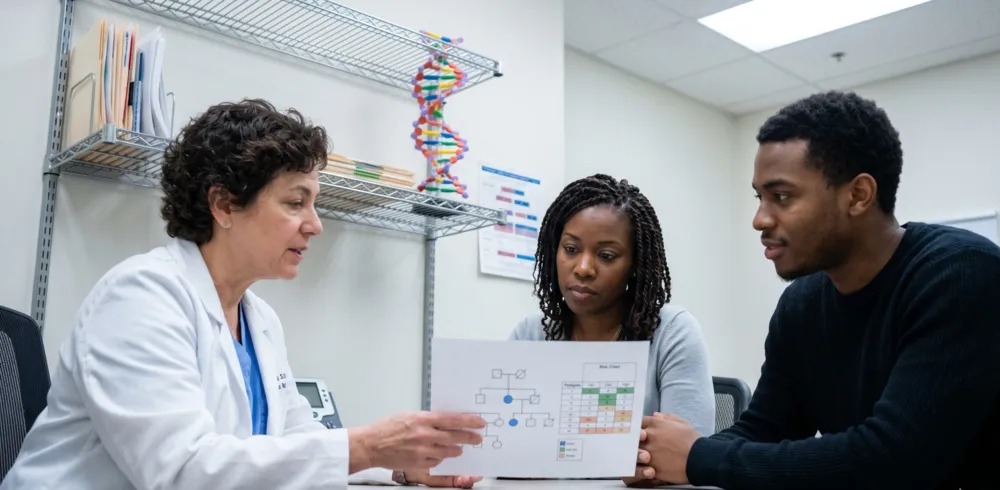
This distinction is key for genetic counseling and for understanding the different ways genetics can play a role in this disease.
What Are Other Significant ALS Genes Beyond the Main Four?
While the genes C9orf72, SOD1, TARDBP, and FUS are frequently discussed in relation to ALS, they represent only a portion of the genetic landscape.
Research has identified numerous other genes where mutations can contribute to the disease, highlighting the complexity of ALS etiology.
How Does the NEK1 Gene Affect DNA Repair and ALS Risk?
The NEK1 (NIMA-related kinase 1) gene has emerged as another significant player in ALS genetics. Mutations in NEK1 have been linked to both familial and sporadic forms of ALS.
This gene is involved in several cellular processes, including DNA repair and the regulation of centrosome function. When NEK1 is mutated, these critical functions can be impaired, potentially leading to motor neuron dysfunction and degeneration.
Why Do KIF5A Mutations Disrupt Axonal Transport in ALS?
Mutations in the KIF5A (kinesin family member 5A) gene are also implicated in ALS. KIF5A encodes a protein that is part of the kinesin motor protein family, which are essential for transporting molecules along the axons of nerve cells. This process, known as axonal transport, is critical for maintaining the health and function of neurons.
Disruptions in axonal transport caused by KIF5A mutations can lead to the accumulation of cellular waste and the deprivation of essential nutrients within the neuron, ultimately contributing to motor neuron death. The precise mechanisms by which these transport defects lead to ALS are an active area of research.
What Is the Link Between the VCP Gene and Protein Processing?
The VCP (valosin-containing protein) gene is associated with a spectrum of neurodegenerative disorders, including ALS.
The VCP protein plays a role in various cellular functions, such as protein degradation, DNA repair, and membrane fusion. When VCP is mutated, these processes can become dysfunctional, leading to the buildup of misfolded or damaged proteins within cells.
This protein aggregation is a hallmark of many neurodegenerative diseases, and in the context of ALS, it is believed to contribute to the stress and eventual death of motor neurons.
Which Other Newly Implicated Genes are Linked to ALS?
The ongoing exploration of ALS genetics continues to reveal more genes associated with the disease. For instance, intermediate repeat expansions in the ATXN2 gene have been identified as a risk factor for ALS.
While not always a direct cause, these expansions can modify the risk conferred by other genetic factors or environmental exposures.
Other genes, such as SQSTM1, CHCHD10, and SETX, have also been linked to ALS in various studies. The discovery of these additional genes broadens our understanding of the molecular pathways involved in ALS and opens new avenues for research into potential treatments.
The identification of these genes is often a result of advanced genetic screening techniques like whole exome and whole genome sequencing, applied to large patient cohorts and families.
How Do Scientists Discover New Genetic Links to ALS?
Neuroscientists use a variety of sophisticated tools and approaches to identify the specific genes and genetic variations that might contribute to the disease. It's a process that has evolved significantly over the years, leading to a much clearer picture of ALS's genetic landscape.
How Does GWAS Help Identify ALS Risk Variants?
Genome-Wide Association Studies, or GWAS, are a common starting point for understanding genetic risk. These studies look across the entire genome of many different people, comparing those with ALS to those without. The goal is to find small genetic differences, called variants, that appear more often in people with ALS.
These variants don't necessarily cause ALS on their own, but they can increase a person's susceptibility to developing the disease. Think of it like finding a slightly weaker link in a chain – it doesn't break the chain, but it makes it more prone to snapping under stress.
What Is the Power of Whole Exome and Whole Genome Sequencing?
While GWAS can point to areas of interest, whole exome sequencing (WES) and whole genome sequencing (WGS) offer a much more detailed look. WES focuses on the protein-coding parts of our DNA (the exome), while WGS looks at the entire DNA sequence.
These methods allow researchers to find rare genetic mutations that might be directly responsible for causing ALS, especially in families with a strong history of the disease. By sequencing the DNA of many individuals and their families, scientists can pinpoint specific gene alterations that are consistently present in those affected.
Why Is Studying Large Families Crucial for Finding Hereditary Mutations?
For a long time, studying large, multi-generational families affected by ALS has been incredibly valuable. When a disease runs strongly through a family, it suggests a strong hereditary component.
By collecting DNA samples from affected and unaffected family members, researchers can use genetic analysis to track which gene variants are passed down along with the disease. This approach has been instrumental in identifying many of the major genes linked to familial ALS, providing clear examples of how specific mutations can lead to the condition.
How Does Genetic Inheritance Work in ALS Cases?
When we talk about ALS and genetics, it's not always a straightforward story. While some cases are clearly passed down through families, many others seem to pop up without any prior history. This is where understanding different inheritance patterns becomes really important.
What Is the Difference Between Dominant and Recessive ALS Inheritance?
In dominant inheritance, having just one copy of a changed gene is enough to potentially lead to ALS. This means if a parent has a dominant ALS-associated gene variant, each child has a 50% chance of inheriting it.
On the other hand, recessive inheritance is a bit different. Here, you typically need to inherit a changed gene from both parents to develop the condition. If you only get one changed copy, you're usually a carrier but don't show symptoms yourself.
While dominant inheritance is more commonly discussed with familial ALS, the distinction is key to understanding how genetic risk can be passed down.
What Is Incomplete Penetrance in ALS Genetic Testing?
Incomplete penetrance means that even if someone inherits a gene variant known to cause ALS, they might not actually develop the disease. It's like having the blueprint for a problem, but the problem doesn't always show up.
This variability is a major reason why not everyone with a family history of ALS will develop it, and why genetic testing results need careful interpretation. Many factors, possibly including other genes and environmental influences, likely play a role in whether a genetic predisposition actually leads to the disease.
Can Polygenic Risk Explain Sporadic ALS Cases?
For the majority of ALS cases, often called sporadic ALS, there isn't a single gene variant clearly responsible. Instead, the current thinking is that these cases might arise from a combination of many small genetic variations, each contributing a tiny bit to the overall risk.
This is known as polygenic risk. Identifying these multiple genetic factors and how they interact with each other and with environmental exposures is a major focus of ongoing ALS research.
What Is the Future of Genetic Discovery and Targeted Therapy for ALS?
The ongoing exploration into the genetic underpinnings of ALS is rapidly advancing, promising a more detailed understanding of this complex disease. Researchers are continuously identifying new genes and genetic variations that contribute to ALS risk and development. This work directly impacts how we approach diagnosis and potential treatments.
The drive to uncover more genetic factors is fueled by the hope of developing more targeted therapies. As we learn more about the specific genetic pathways involved, the possibility of precision medicine for ALS becomes more tangible. This means treatments could be tailored to a person's specific genetic profile, potentially leading to better outcomes.
Furthermore, the integration of large-scale genetic data with clinical information is creating powerful tools for research. By analyzing the genomes of thousands of individuals with ALS, researchers can identify subtle genetic patterns that might have been missed previously. This collaborative effort, involving scientists, clinicians, and patients, is key to accelerating discovery.
Looking ahead, the focus will likely remain on:
Expanding the list of known ALS-associated genes and variants.
Understanding how these genetic factors interact with each other and with environmental influences.
Translating genetic discoveries into clinically actionable insights for diagnosis and treatment.
Developing and refining genetic testing panels to cover a wider range of known and newly discovered genetic contributors.
This evolving landscape of genetic research holds significant promise for improving the lives of those affected by ALS.
Can EEG Find the 'Electrical Signature' of ALS Genes?
An electrophysiological biomarker is an objective, measurable indicator of the brain's electrical activity that reflects an underlying biological process or disease state.
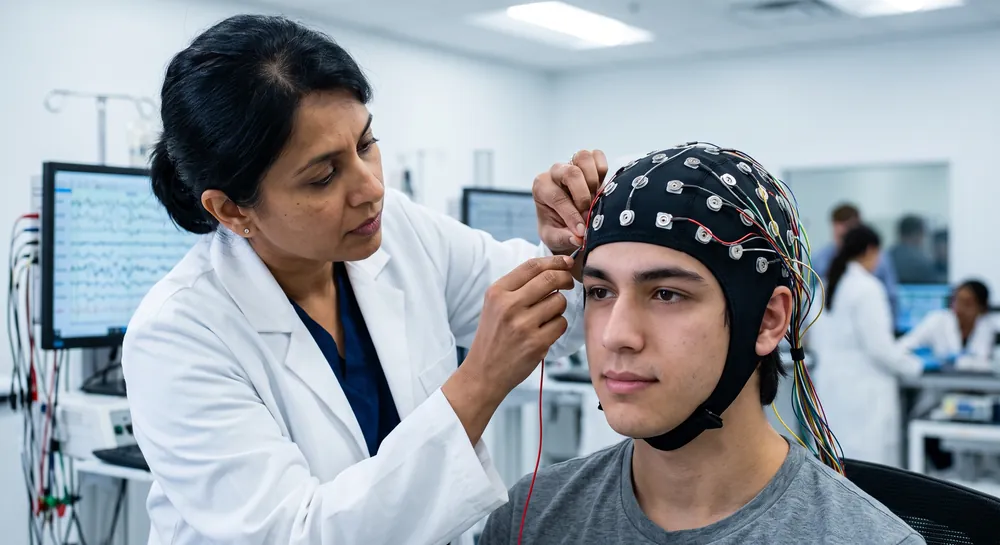
In ALS research, these markers are highly valued because they provide a non-invasive method to measure a brain’s circuit function in real-time. By utilizing sensors placed on the scalp to capture neural firing and synchronization, researchers can identify specific functional changes—such as altered signaling speeds—that may correlate with the progression of the disease.
This objective data allows scientists to move beyond subjective clinical observations, providing a clearer view of how the central nervous system behaves at a cellular and network level.
How Do Researchers Connect Genetic Data to Brainwave Patterns?
Researchers are currently exploring how specific genetic variants associated with ALS, such as the C9orf72 expansion, manifest in the brain's electrical activity. By comparing the EEG data of gene carriers with that of healthy control groups, scientists aim to identify unique "electrical signatures" that are specific to certain genotypes.
This research often focuses on measures of cortical hyperexcitability (a state where neurons become overly sensitive and fire excessively) and disruptions in functional connectivity, which describes how well different brain regions communicate.
Identifying these signatures helps bridge the gap between abstract genetic code and its physical expression in the brain. While these patterns are not yet used for individual clinical diagnosis, they are vital in research for tracking disease mechanisms and evaluating whether emerging genetic therapies are effectively normalizing brain function.
How Is the Overall Genetic Picture of ALS Evolving?
So, is ALS genetic? The answer is complex, but increasingly clear. While most cases of ALS don't seem to have a direct, inherited cause, we now know that genetics plays a part in a significant number of them.
We've identified specific gene changes, like those in C9orf72, SOD1, TARDBP, and FUS, that can directly lead to the disease, especially in the 5-10% of cases known as familial ALS. Even in sporadic ALS, which makes up the bulk of diagnoses, genetic factors can increase a person's risk.
New research, like the findings on ATXN2 repeat expansions, keeps adding pieces to this puzzle. Understanding these genetic links is crucial, not just for figuring out how ALS starts, but also for developing new treatments that improve brain health.
Genetic testing is a big help here, offering insights that can guide diagnosis and research. It's a field that's changing fast, and staying on top of these genetic discoveries is key to making progress against ALS.
References
Mann, J. R., McKenna, E. D., Mawrie, D., Papakis, V., Alessandrini, F., Anderson, E. N., ... & Kiskinis, E. (2023). Loss of function of the ALS-associated NEK1 kinase disrupts microtubule homeostasis and nuclear import. Science advances, 9(33), eadi5548. https://doi.org/10.1126/sciadv.adi5548
Soustelle, L., Aimond, F., López-Andrés, C., Brugioti, V., Raoul, C., & Layalle, S. (2023). ALS-Associated KIF5A Mutation Causes Locomotor Deficits Associated with Cytoplasmic Inclusions, Alterations of Neuromuscular Junctions, and Motor Neuron Loss. The Journal of neuroscience : the official journal of the Society for Neuroscience, 43(47), 8058–8072. https://doi.org/10.1523/JNEUROSCI.0562-23.2023
Feng, S. Y., Lin, H., Che, C. H., Huang, H. P., Liu, C. Y., & Zou, Z. Y. (2022). Phenotype of VCP mutations in Chinese amyotrophic lateral sclerosis patients. Frontiers in Neurology, 13, 790082. https://doi.org/10.3389/fneur.2022.790082
Vieira de Sá, R., Sudria-Lopez, E., Cañizares Luna, M., Harschnitz, O., van den Heuvel, D. M., Kling, S., ... & Pasterkamp, R. J. (2024). ATAXIN-2 intermediate-length polyglutamine expansions elicit ALS-associated metabolic and immune phenotypes. Nature communications, 15(1), 7484. https://doi.org/10.1038/s41467-024-51676-0
Dukic, S., Govaarts, R., Hillebrand, A., de Visser, M., Seeck, M., & McMackin, R. (2025). Novel approaches to EEG and MEG in motor neurone disease. Clinical Neurophysiology Practice. https://doi.org/10.1016/j.cnp.2025.07.001
Frequently Asked Questions
Is ALS always caused by genes?
No, not always. In most cases, we don't know exactly why ALS happens. But for about 5% to 10% of people with ALS, it is caused by changes in their genes that they inherit.
What does it mean if ALS runs in my family?
If ALS runs in your family, it means that some family members have had the disease. This could be because of a gene change passed down through generations. This is sometimes called inherited ALS or familial ALS.
Can a single gene change cause ALS?
Yes, sometimes a change in just one gene can cause ALS. Scientists have found several genes that, when changed, can lead to the disease. These changes can be passed from parents to children.
What are 'risk factors' for ALS?
Risk factors are things that might make a person more likely to get ALS. Some gene changes don't directly cause ALS but can increase the chance of developing it. It's like having a slightly higher chance of something happening.
How do scientists find new genes linked to ALS?
Scientists use special studies that look at the DNA of many people. They compare the genes of people with ALS to those without ALS to find differences that might be important. They also study large families where ALS is common.
What is 'polygenic risk' in ALS?
Polygenic risk means that many small genetic changes, rather than one big one, might add up to increase a person's chance of getting ALS. It's like many small steps leading towards a higher risk.
How does understanding ALS genetics help with treatments?
Knowing which genes are involved helps scientists develop new medicines that target the specific problems caused by those gene changes. This is called precision medicine, and it's a hopeful area for ALS treatment.
If I have a family history of ALS, should I get genetic testing?
Talking to a doctor or a genetic counselor is the best first step. They can explain the pros and cons of genetic testing for ALS based on your personal and family history.
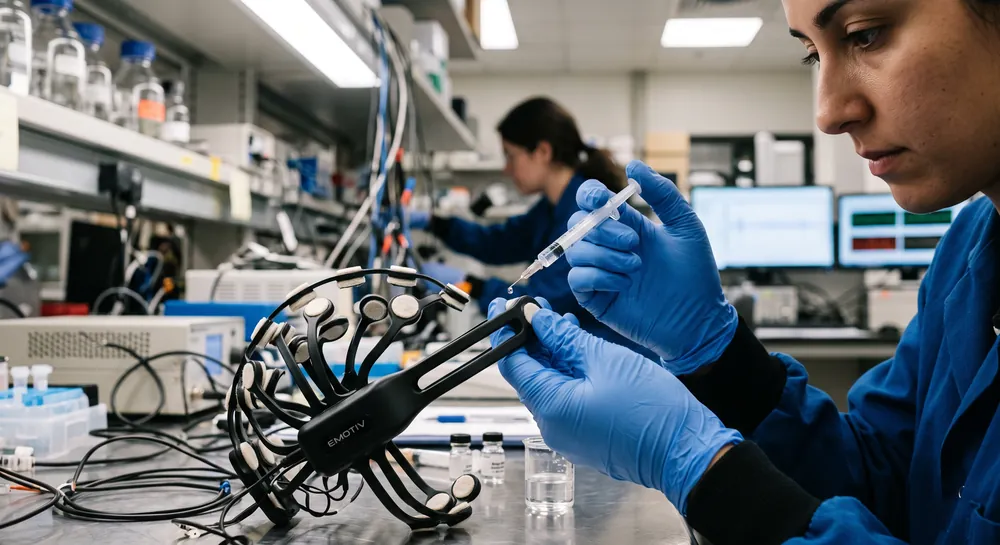
Emotiv is a neurotechnology leader helping advance neuroscience research through accessible EEG and brain data tools.
Medical Disclaimer: The information provided on this website is for educational and informational purposes only and is not intended as medical or health advice. This content may contain errors and should not be relied upon to make life-altering health, medical, or lifestyle choices. Always seek the advice of your physician or other qualified health provider with any questions you may have regarding a medical condition or treatment.
Christian Burgos