An Overview of the Emotiv EEG Headset Lineup
Emotiv
Updated on
Feb 2, 2026
An Overview of the Emotiv EEG Headset Lineup
Emotiv
Updated on
Feb 2, 2026
An Overview of the Emotiv EEG Headset Lineup
Emotiv
Updated on
Feb 2, 2026
What if you could build an application controlled by focus, conduct consumer research that captures genuine emotional responses, or explore your own cognitive states in real time? These ideas are no longer science fiction; they are the reality of brain-computer interface (BCI) technology. The key to turning these concepts into practical applications is accessible, reliable brain data. An Emotiv EEG headset is designed to be that key. It’s a powerful yet easy-to-use tool that measures the brain’s electrical signals and translates them into data you can work with. Whether you’re a developer, a neuromarketer, or a researcher, this guide will show you how our ecosystem of hardware and software can provide the insights you need to bring your most ambitious projects to life.
Key Takeaways
Choose the Right Tool for the Job: Select a headset based on your project’s specific data needs. A lower channel count like the 5-channel Insight is ideal for getting started, while the 14-channel Epoc X or 32-channel Flex provide the high-density data required for in-depth academic research.
Think Beyond the Hardware: An Emotiv headset is part of a complete ecosystem. To get the most out of your device, pair it with the right software, like EmotivPRO for advanced analysis or EmotivBCI for building custom applications.
Set Realistic Expectations: Remember that our headsets are research tools, not medical devices, and interpreting EEG data takes practice. Plan your budget to include not just the headset but also software subscriptions and any necessary supplies for a complete picture of the investment.
What is an Emotiv EEG headset and how does it work?
At its core, an Emotiv headset is a wireless device that uses electroencephalography (EEG) to measure electrical activity in the brain. Think of it as a tool that translates the complex electrical signals produced by your brain cells into data you can see and work with. For decades, this kind of technology was confined to large, expensive machines in clinical labs. Our goal was to change that. We’ve created a range of portable, user-friendly EEG headsets that allow you to explore brain activity just about anywhere.
Whether you’re a researcher conducting a study, a developer building a brain-computer interface, or simply curious about your own cognitive processes, our headsets are designed to make brain science accessible. They connect wirelessly to a computer or mobile device, where our software helps you visualize and interpret the data in real time. This opens up a world of possibilities for understanding the human brain outside of a traditional laboratory setting, making it easier than ever to gather valuable insights for your projects.
How EEG technology works
So, how does an EEG headset actually measure brain activity? It all comes down to tiny sensors, called electrodes, that are placed on your scalp. Your brain is made up of billions of neurons that communicate with each other using tiny electrical impulses. The electrodes in our headsets are sensitive enough to detect these faint signals right through your skull. Once the headset picks up these signals, it amplifies them and sends them wirelessly to your computer. Our software then processes this raw data, allowing you to see your brain’s electrical patterns and analyze them for research or application development.
The Emotiv approach to brain data
Our mission has always been to empower people to understand their own brains and to help accelerate brain research globally. We believe that by making high-quality EEG technology more accessible, we can support innovation across many fields. Our tools are designed to be versatile enough for both personal exploration and serious scientific studies. We provide the hardware and software that researchers, developers, and creators need to ask new questions and find new answers, whether they’re studying consumer behavior for neuromarketing or exploring new ways for people to interact with technology.
The advantage of semi-dry sensors
One of the biggest hurdles with traditional EEG has always been the setup. It often involves applying a sticky, conductive gel to each electrode to get a good connection, which is messy and time-consuming. We wanted to create a much better experience. Most of our headsets, like the popular Insight, use semi-dry polymer sensors. This means you don’t need any messy gels. Instead, you just apply a few drops of a simple saline solution to hydrate the sensors, and you’re ready to start collecting data in minutes. This makes the setup process faster, cleaner, and much more convenient for repeated use.
An overview of Emotiv EEG headsets
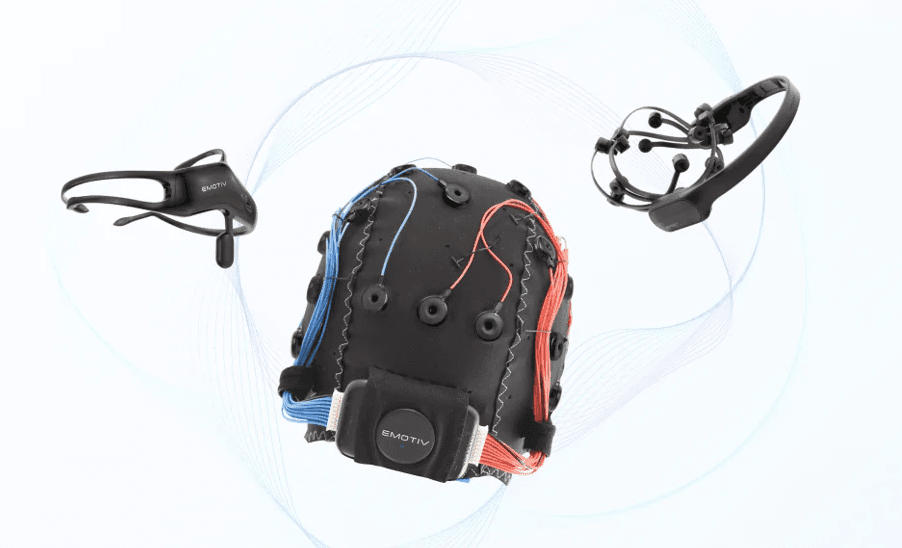
Choosing the right tool for the job is crucial, and that’s especially true when it comes to EEG technology. Our lineup of headsets is designed to meet a wide spectrum of needs, from quick, everyday brain activity measurements to complex, multi-channel research studies. The key difference between our headsets is the number of EEG sensors, or “channels,” they have. A higher channel count generally allows for more detailed and spatially precise data about brain activity.
Whether you’re a developer building your first brain-computer interface, a researcher conducting an in-depth study, or someone curious about cognitive wellness tools, there’s a headset designed for you. Each device is wireless, portable, and built to integrate seamlessly with our software ecosystem, including the Emotiv App, EmotivPRO, and EmotivBCI. This ensures you can not only gather brain data but also analyze and apply it effectively. Let’s walk through each model so you can find the perfect fit for your project.
MN8: 2-channel EEG earbuds
The Emotiv MN8 offers a unique and discreet way to access brain data. Housed within a familiar earbud design, these devices are equipped with two sensors, making them incredibly easy to use for everyday applications. Their compact form factor is perfect for anyone looking for a simple entry point into EEG or for projects that require quick, specific measurements without the setup of a full headset. The MN8 is well-suited for simple brain-computer applications and provides access to cognitive wellness tools in a portable package. Their subtlety makes them ideal for use in various settings, from the office to your home.
Insight: 5-channel EEG headset
Our Insight headset is a sleek, lightweight device that features five EEG sensors. It’s designed to be exceptionally user-friendly, making it a popular choice for personal use and introductory research. The five channels provide good coverage for measuring key mental performance metrics. This headset is ideal for individuals and developers who want to explore brain data related to focus, engagement, and relaxation states. Its minimalist design and ease of use remove many of the traditional barriers to working with EEG technology, allowing you to get up and running in minutes.
Epoc X: 14-channel EEG headset
For more demanding applications, the Epoc X provides a significant step up in data resolution with its 14 channels. This is a robust, research-grade headset designed for a wide variety of professional uses, from academic studies to commercial neuromarketing. The 14 sensors are strategically placed to provide broad coverage across the cortex, capturing high-quality, contextual brain data. It’s a versatile workhorse suitable for a range of academic research and is built to deliver reliable performance for both lab-based and real-world studies.
Flex Saline: 32-channel EEG headset
The Flex Saline headset is engineered for serious researchers who require high-density data for their work. With 32 channels, this device provides a comprehensive and detailed view of brain activity across the entire scalp. The cap-based design uses saline-hydrated sensors, which are quick to set up and comfortable for participants. This headset is ideal for in-depth scientific studies, advanced BCI development, and any application where capturing nuanced brain dynamics is critical. It gives researchers the power and flexibility needed to explore complex questions about brain function.
Flex Gel: 32-channel EEG headset
Similar to its saline counterpart, the Flex Gel headset also offers 32 channels for extensive research needs. The primary difference is its use of traditional gel-based sensors. This method is often preferred for long-duration studies, as the gel provides an exceptionally stable and reliable connection that minimizes signal noise over many hours. The Flex Gel is the go-to choice for experiments in controlled environments where precision and signal integrity are the highest priorities. It delivers the clean, high-density data that is essential for rigorous scientific publication and advanced neurological research.
What makes Emotiv headsets stand out?
When you’re looking for an EEG headset, the options can feel overwhelming. What sets our devices apart is a focus on making brain data accessible and practical. We’ve designed our headsets to be more than just data collection tools; they are part of a complete ecosystem that’s easy to use, comfortable to wear, and powerful enough for professional applications. It’s about removing the traditional barriers of EEG technology—like clunky hardware and complicated software—so you can focus on what matters most: your work.
Wireless and portable by design
Traditional EEG systems often mean being tethered to a lab. We designed our headsets to be completely wireless and portable, giving you the freedom to gather data in real-world environments. Unlike old lab equipment, our headsets are easy to use for a wide range of applications, from neuromarketing studies in a simulated store to cognitive performance research on the go. This portability allows studies and development to take place in more natural contexts, free from the constraints of wires.
Designed for comfort and extended use
If you’re running long experiments, comfort is key. We’ve paid close attention to the ergonomics of our headsets, using lightweight materials and flexible designs that fit securely without causing distraction. For example, some of our headsets can last up to 20 hours on a single charge, which is perfect for long research sessions. This combination of comfort and long battery life ensures you can conduct extended work without interruption while maintaining high-quality data collection.
Access real-time data feedback
A headset is only half the equation; you need intuitive software to make sense of the data. Our platform, EmotivPRO, visualizes your brain activity as it happens, providing the instant feedback that’s crucial for dynamic research and development. This immediate access allows you to adjust experiments on the fly or see how a user interacts with a brain-computer interface application. It’s this seamless integration of hardware and software that makes our ecosystem so effective.
Experience a simple setup
Getting started with EEG shouldn’t be a chore. Unlike older systems that require sticky conductive gels, many of our headsets use semi-dry polymer sensors. This means you don’t need messy gels; just a few drops of saline solution, and you’re ready to go. This streamlined setup process saves you valuable time and makes the entire experience much more pleasant. For products like our Insight headset, you can go from unboxing to collecting data in minutes.
How to choose the right Emotiv EEG headset
Choosing the right EEG headset can feel like a big decision, but it really comes down to matching the technology to your project. With several options available, the best one for you depends entirely on what you want to achieve. Are you a researcher needing high-density data for a complex study? A developer building a new brain-computer interface application? Or are you just starting to explore brain data for personal projects? Each of these paths points to a different headset.
Think of it like choosing a camera. A professional photographer needs a high-end DSLR with multiple lenses, while a casual user might be perfectly happy with a simple point-and-shoot. Similarly, our EEG headsets are designed for different levels of detail and application. The key is to clearly define your goals first. This will help you pinpoint the features that matter most, from the number of channels to the type of sensors, ensuring you get a device that not only meets your needs but also fits your budget. We’ve designed our lineup to provide accessible options for everyone, from beginners to seasoned neuroscientists. Let’s walk through the key factors to consider so you can feel confident in your choice.
Consider your channel count and data needs
The number of channels on a headset determines the level of detail you can capture from the brain. More channels usually mean more detailed brain maps. For basic applications or getting started with cognitive performance metrics, a headset like our 5-channel Insight is a great entry point. For more in-depth academic research or complex BCI development, the 14-channel Epoc X provides a significant step up in data resolution. And for projects that demand the highest spatial detail, our 32-channel Flex headsets offer the comprehensive coverage you need. Think about the data granularity your project requires to find the right balance.
Assess your primary use case
Before you pick a headset, it’s crucial to know exactly what you want to use it for. Your primary application is the most important factor in your decision. If you’re conducting academic studies, you’ll likely need a higher channel count for robust data analysis. Developers creating a brain-computer interface might prioritize a headset that balances channel count with ease of use for end-users. If your focus is on neuromarketing or accessing cognitive wellness tools, a headset with fewer channels but strong signal quality in key brain regions might be the perfect fit. Clearly defining your use case will guide you to the ideal device for your work.
Balance your budget and goals
It’s easy to assume that more is always better, but that’s not necessarily true when it comes to EEG headsets. It’s important to balance your budget with your specific goals. You don’t need to purchase the most advanced model if a more accessible option will meet your requirements. This approach helps you invest wisely in features you’ll actually use. For example, if you’re focused on detecting facial expressions or performance metrics, a 5-channel headset is often sufficient. By aligning your purchase with your project’s needs, you ensure you’re getting the best value and the right tool for the job.
Find the right fit for comfort
The physical fit of your headset is more than just a matter of preference—it can directly impact your data quality. An uncomfortable headset can introduce noise into your recordings or make it difficult to conduct longer sessions. The headset should be lightweight and comfortable, especially for extended use. We design our headsets to be ergonomic and easy to wear for long periods, whether you’re in the lab or working on a personal project. A comfortable fit ensures better compliance from participants and allows you to focus on the data, not on distractions from the hardware.
Power your headset with Emotiv software
An Emotiv headset is your gateway to understanding brain data, but our software is what brings that data to life. Whether you’re taking your first steps into neuroscience, conducting complex academic studies, or building the next generation of brain-computer interfaces, we have a software solution designed for your goals. Think of the headset as the instrument and the software as the sheet music—each one is powerful on its own, but together they create something truly remarkable. Our software ecosystem is designed to be flexible, scaling with you as your needs and ambitions grow.
Emotiv App: Get started easily
If you’re new to EEG, the Emotiv App is the perfect place to start. It’s designed for personal use and provides a straightforward, accessible way to see your own brain data in action. The app translates complex brain signals into easy-to-understand metrics for mental states like focus and relaxation. It’s an excellent tool for familiarizing yourself with the fundamentals of EEG technology without a steep learning curve. You can get immediate feedback on your mental activity, making it a great companion for personal wellness practices or simply satisfying your curiosity about how your brain works.
EmotivPRO: For advanced research
For researchers and professionals who need to perform detailed analysis, EmotivPRO is our dedicated data acquisition and analysis software. This platform is built for the rigors of scientific study, allowing you to view and record raw EEG data, mark events in real-time, and see frequency data visualizations. It’s the tool you need for a comprehensive understanding of brain activity in a research setting. Whether you’re conducting studies in psychology, neuromarketing, or human performance, EmotivPRO provides the robust capabilities required for high-quality data collection and interpretation.
EmotivBCI: Build your own applications
For the creators and innovators, EmotivBCI opens up a world of possibilities. This software development kit (SDK) allows you to use brain data to command and control applications, devices, and virtual objects. It’s your toolkit for building custom brain-computer interface applications from the ground up. The flexibility of EmotivBCI lets developers explore new frontiers in assistive technology, interactive entertainment, and artistic expression. If you can imagine a way to use brain data to interact with the digital world, this is the software that helps you build it.
Explore use cases across industries
The combination of our headsets and software is used across a surprisingly wide range of fields. In academic research and education, our tools help students and scientists explore the brain in an accessible way. Consumer insights teams use our technology for neuromarketing to understand genuine customer reactions. Developers are constantly pushing the boundaries of what’s possible with brain-computer interfaces, while others are exploring applications for workplace wellness and personal performance. This versatility shows just how broadly applicable our technology has become, empowering people in many different sectors.
Key considerations before you buy
Choosing an EEG headset is an exciting step, whether you’re diving into academic research, developing a new application, or exploring your own cognitive processes. Before you make a decision, it’s helpful to understand a few key points to ensure you find the perfect fit for your project. Think of it like buying any specialized tool—knowing its capabilities and how to use it properly is the key to getting great results.
We want you to feel confident and prepared from the moment you unbox your headset. That means having realistic expectations about what the technology can do, being ready to work with the data you collect, and understanding the nuances of wireless performance. Our goal is to make brain data accessible, and part of that is providing the information you need to use it effectively. Let’s walk through a few important considerations together.
Understand device limitations
It’s important to know that consumer EEG devices are not the same as the clinical systems you’d find in a hospital. While our headsets provide high-quality, research-grade data that’s trusted by institutions around the world, they are not designed to be medical devices. They aren’t intended to diagnose or treat any medical conditions. Instead, they are powerful tools for research, innovation, and personal insight, making it possible to study the brain in real-world environments instead of being limited to a traditional lab.
Prepare for data interpretation
EEG data offers a fascinating window into brain activity, but it doesn’t come with simple labels. There can be a learning curve when it comes to interpreting the information you collect. Raw EEG signals are complex, and understanding them requires some context about what they represent and the limitations of the readings. We provide powerful software like EmotivPRO to help you process and visualize data, but you should be prepared to spend some time learning how to draw meaningful conclusions from your recordings. This preparation will help you get the most out of your headset and your research.
Weigh wireless technology factors
One of the biggest advantages of Emotiv headsets is their wireless, portable design. This freedom allows you to collect data in dynamic, real-world settings that were previously inaccessible. As with any wireless technology, it’s good to be mindful of your environment. Factors like radio frequency interference from other devices can sometimes impact your signal. Our hardware is designed to be robust, but for the highest quality data, it’s always a good practice to minimize potential interference in your recording space. This small step helps ensure your wireless connection is stable and your data is clean.
Compare precision with clinical systems
A common question we get is how our headsets compare to the large, wired systems used in clinical settings. While our devices provide incredibly high-quality data, they are not intended to match the precision of a clinical EEG system, which often costs tens of thousands of dollars and requires a controlled lab environment. Our headsets are engineered to provide a balance of data quality, portability, and ease of use. They make it possible to gather valuable brain data almost anywhere, offering a different but equally powerful approach to understanding the brain.
How much do Emotiv EEG headsets cost?
When you’re ready to start working with brain data, one of the first questions you’ll have is about cost. The price of an EEG headset can vary quite a bit, depending on what you need it to do. The biggest factor influencing the price is the channel count—basically, the number of sensors the device uses to gather data from your brain. More channels mean higher spatial resolution and a more detailed picture of brain activity, which is reflected in the cost.
Our goal at Emotiv is to make brain-computer interface technology accessible, whether you’re a student just starting out or a seasoned researcher leading a large-scale study. That’s why we offer a range of headsets at different price points. Think of it not just as buying a piece of hardware, but as an investment in the tools you need to achieve your goals. Beyond the headset itself, you’ll also want to consider the software and any supplies needed to run your experiments. Let’s break down what you can expect.
A look at pricing by model
Our headset lineup is designed to meet a variety of needs and budgets. For those new to EEG or focused on applications requiring just a few data streams, our 2-channel MN8 earbuds are a great starting point, with pricing beginning around $500. As your needs become more complex, you can move up to our multi-channel headsets.
The 5-channel Insight headset offers a significant step up in data capability for a modest increase in price. For more demanding research and development, the 14-channel Epoc X provides a powerful balance of performance and cost. At the top of our range, the 32-channel Flex headsets are built for high-density data acquisition, with prices reaching over $2,500, reflecting their advanced capabilities for detailed brain mapping.
Consider costs beyond the hardware
When planning your budget, it’s helpful to think beyond the initial price of the headset. To get the most out of your device, you’ll need the right software. While our Emotiv App is a great way to get started, many researchers and developers subscribe to EmotivPRO for advanced data analysis, recording, and exporting capabilities.
You should also account for any consumables required for your specific headset. For instance, the Flex Saline headset uses a simple saline solution to ensure good sensor contact, while the Flex Gel uses a conductive gel. These supplies are essential for maintaining high-quality data streams during your sessions. Factoring in these recurring costs will give you a more complete picture of your total investment.
Compare value across channel counts
Choosing the right headset often comes down to balancing your budget with your data requirements. The number of channels directly impacts the kind of insights you can gather. Our entry-level headsets, like the 5-channel Insight, are perfect for educational purposes, personal projects, and developing brain-computer interface applications where high spatial resolution isn’t the primary concern.
For professional and academic work, mid-range devices like the 14-channel Epoc X hit a sweet spot. They provide enough data density for robust studies in fields like neuromarketing without the cost of a high-density system. When your research demands the highest possible detail for mapping brain activity across the scalp, the 32-channel Flex offers incredible value for its advanced capabilities.
How to get started with your Emotiv headset
Once you’ve chosen your headset, getting started is straightforward. We’ve designed the entire Emotiv experience to be intuitive, from unboxing your device to analyzing your first stream of data. Whether you’re a seasoned researcher or a developer exploring brain-computer interfaces for the first time, our goal is to provide the tools and support you need to succeed. Here’s how to get your headset up and running and make the most of its capabilities.
Follow the simple setup process
Getting started with your Emotiv headset is designed to be a smooth experience. A headset like the Emotiv Insight, for example, is a sleek, wireless device that measures your brain’s electrical activity (EEG) using five sensors. Unlike older EEG systems that require messy gels, our headsets use semi-dry sensors. This means you just need a few drops of saline solution to get a good connection, and you’re ready to go. The goal is to get you from unboxing to collecting data quickly, so you can focus on your project without a complicated setup.
Access developer and community support
Once you’re set up, you can explore the software and tools that bring your data to life. For those who want to build custom applications, we provide a suite of Developer Tools (SDKs) that let you work directly with brain data. Our software is designed to help you understand the information you’re collecting, from identifying signal quality to visualizing performance metrics like focus. This support system ensures you have the resources you need for your project. You’re not just getting hardware; you’re getting access to a full ecosystem built for innovation.
Get the most out of your headset
Our headsets are built for more than just collecting data; they’re designed to be used. Comfort is key, especially for long sessions, which is why our devices are lightweight and ergonomic. People who use our headsets often share that they gain a new perspective on their own cognitive processes. By providing access to tools for cognitive wellness, you can explore concepts like focus and attention in a tangible way. Emotiv products are known for being precise and user-friendly, helping you get meaningful insights into how the brain works without needing a full laboratory.
Related Articles
Frequently Asked Questions
What’s the main difference between all the headset models? The primary difference comes down to the number of sensors, or channels, each headset has. Think of it this way: more channels give you a more detailed and spatially precise map of brain activity. Our 2-channel MN8 earbuds are great for simple applications and easy access to cognitive wellness tools, while the 5-channel Insight is a perfect entry point for personal projects and introductory research. For professional academic or neuromarketing studies, the 14-channel Epoc X offers a big jump in data resolution. Our 32-channel Flex headsets are designed for researchers who need the highest density data for complex scientific questions.
Do I need a background in neuroscience to use an Emotiv headset? Not at all. While a background in neuroscience is certainly helpful for deep academic research, we’ve designed our entire ecosystem to be accessible. If you’re just starting out, the Emotiv App provides a very user-friendly way to see and understand your own brain data without a steep learning curve. For developers, our software kits are made to integrate
What can I actually do with the brain data I collect? The possibilities are incredibly broad and depend on your goals. With our software, you can visualize your brain’s electrical activity in real time for research purposes using EmotivPRO. Developers use EmotivBCI to build custom applications that can be controlled by brain commands, creating new frontiers in assistive tech or interactive experiences. You can also use the Emotiv App to access tools related to cognitive wellness, exploring your own mental states like focus or relaxation in a tangible way.
Are the headsets comfortable to wear for long periods? Yes, they are designed specifically for that. We know that research studies and development sessions can last for hours, so comfort was a top priority. We use lightweight materials and focus on ergonomic designs that provide a secure but gentle fit. Many of our headsets also have a long battery life, so you can conduct extended experiments without interruption. The goal is to make the hardware feel like a natural tool, so you and your participants can focus on the work itself, not on the equipment.
Are these medical devices? Can they be used for diagnosis? This is a really important question. Our EEG headsets are powerful tools for research, development, and personal insight, but they are not medical devices. They are not intended to diagnose, treat, or prevent any medical conditions. Think of them as research-grade instruments that make it possible to study the brain in all kinds of real-world environments, providing valuable data for innovation and discovery outside of a clinical setting.
What if you could build an application controlled by focus, conduct consumer research that captures genuine emotional responses, or explore your own cognitive states in real time? These ideas are no longer science fiction; they are the reality of brain-computer interface (BCI) technology. The key to turning these concepts into practical applications is accessible, reliable brain data. An Emotiv EEG headset is designed to be that key. It’s a powerful yet easy-to-use tool that measures the brain’s electrical signals and translates them into data you can work with. Whether you’re a developer, a neuromarketer, or a researcher, this guide will show you how our ecosystem of hardware and software can provide the insights you need to bring your most ambitious projects to life.
Key Takeaways
Choose the Right Tool for the Job: Select a headset based on your project’s specific data needs. A lower channel count like the 5-channel Insight is ideal for getting started, while the 14-channel Epoc X or 32-channel Flex provide the high-density data required for in-depth academic research.
Think Beyond the Hardware: An Emotiv headset is part of a complete ecosystem. To get the most out of your device, pair it with the right software, like EmotivPRO for advanced analysis or EmotivBCI for building custom applications.
Set Realistic Expectations: Remember that our headsets are research tools, not medical devices, and interpreting EEG data takes practice. Plan your budget to include not just the headset but also software subscriptions and any necessary supplies for a complete picture of the investment.
What is an Emotiv EEG headset and how does it work?
At its core, an Emotiv headset is a wireless device that uses electroencephalography (EEG) to measure electrical activity in the brain. Think of it as a tool that translates the complex electrical signals produced by your brain cells into data you can see and work with. For decades, this kind of technology was confined to large, expensive machines in clinical labs. Our goal was to change that. We’ve created a range of portable, user-friendly EEG headsets that allow you to explore brain activity just about anywhere.
Whether you’re a researcher conducting a study, a developer building a brain-computer interface, or simply curious about your own cognitive processes, our headsets are designed to make brain science accessible. They connect wirelessly to a computer or mobile device, where our software helps you visualize and interpret the data in real time. This opens up a world of possibilities for understanding the human brain outside of a traditional laboratory setting, making it easier than ever to gather valuable insights for your projects.
How EEG technology works
So, how does an EEG headset actually measure brain activity? It all comes down to tiny sensors, called electrodes, that are placed on your scalp. Your brain is made up of billions of neurons that communicate with each other using tiny electrical impulses. The electrodes in our headsets are sensitive enough to detect these faint signals right through your skull. Once the headset picks up these signals, it amplifies them and sends them wirelessly to your computer. Our software then processes this raw data, allowing you to see your brain’s electrical patterns and analyze them for research or application development.
The Emotiv approach to brain data
Our mission has always been to empower people to understand their own brains and to help accelerate brain research globally. We believe that by making high-quality EEG technology more accessible, we can support innovation across many fields. Our tools are designed to be versatile enough for both personal exploration and serious scientific studies. We provide the hardware and software that researchers, developers, and creators need to ask new questions and find new answers, whether they’re studying consumer behavior for neuromarketing or exploring new ways for people to interact with technology.
The advantage of semi-dry sensors
One of the biggest hurdles with traditional EEG has always been the setup. It often involves applying a sticky, conductive gel to each electrode to get a good connection, which is messy and time-consuming. We wanted to create a much better experience. Most of our headsets, like the popular Insight, use semi-dry polymer sensors. This means you don’t need any messy gels. Instead, you just apply a few drops of a simple saline solution to hydrate the sensors, and you’re ready to start collecting data in minutes. This makes the setup process faster, cleaner, and much more convenient for repeated use.
An overview of Emotiv EEG headsets
Choosing the right tool for the job is crucial, and that’s especially true when it comes to EEG technology. Our lineup of headsets is designed to meet a wide spectrum of needs, from quick, everyday brain activity measurements to complex, multi-channel research studies. The key difference between our headsets is the number of EEG sensors, or “channels,” they have. A higher channel count generally allows for more detailed and spatially precise data about brain activity.
Whether you’re a developer building your first brain-computer interface, a researcher conducting an in-depth study, or someone curious about cognitive wellness tools, there’s a headset designed for you. Each device is wireless, portable, and built to integrate seamlessly with our software ecosystem, including the Emotiv App, EmotivPRO, and EmotivBCI. This ensures you can not only gather brain data but also analyze and apply it effectively. Let’s walk through each model so you can find the perfect fit for your project.
MN8: 2-channel EEG earbuds
The Emotiv MN8 offers a unique and discreet way to access brain data. Housed within a familiar earbud design, these devices are equipped with two sensors, making them incredibly easy to use for everyday applications. Their compact form factor is perfect for anyone looking for a simple entry point into EEG or for projects that require quick, specific measurements without the setup of a full headset. The MN8 is well-suited for simple brain-computer applications and provides access to cognitive wellness tools in a portable package. Their subtlety makes them ideal for use in various settings, from the office to your home.
Insight: 5-channel EEG headset
Our Insight headset is a sleek, lightweight device that features five EEG sensors. It’s designed to be exceptionally user-friendly, making it a popular choice for personal use and introductory research. The five channels provide good coverage for measuring key mental performance metrics. This headset is ideal for individuals and developers who want to explore brain data related to focus, engagement, and relaxation states. Its minimalist design and ease of use remove many of the traditional barriers to working with EEG technology, allowing you to get up and running in minutes.
Epoc X: 14-channel EEG headset
For more demanding applications, the Epoc X provides a significant step up in data resolution with its 14 channels. This is a robust, research-grade headset designed for a wide variety of professional uses, from academic studies to commercial neuromarketing. The 14 sensors are strategically placed to provide broad coverage across the cortex, capturing high-quality, contextual brain data. It’s a versatile workhorse suitable for a range of academic research and is built to deliver reliable performance for both lab-based and real-world studies.
Flex Saline: 32-channel EEG headset
The Flex Saline headset is engineered for serious researchers who require high-density data for their work. With 32 channels, this device provides a comprehensive and detailed view of brain activity across the entire scalp. The cap-based design uses saline-hydrated sensors, which are quick to set up and comfortable for participants. This headset is ideal for in-depth scientific studies, advanced BCI development, and any application where capturing nuanced brain dynamics is critical. It gives researchers the power and flexibility needed to explore complex questions about brain function.
Flex Gel: 32-channel EEG headset
Similar to its saline counterpart, the Flex Gel headset also offers 32 channels for extensive research needs. The primary difference is its use of traditional gel-based sensors. This method is often preferred for long-duration studies, as the gel provides an exceptionally stable and reliable connection that minimizes signal noise over many hours. The Flex Gel is the go-to choice for experiments in controlled environments where precision and signal integrity are the highest priorities. It delivers the clean, high-density data that is essential for rigorous scientific publication and advanced neurological research.
What makes Emotiv headsets stand out?
When you’re looking for an EEG headset, the options can feel overwhelming. What sets our devices apart is a focus on making brain data accessible and practical. We’ve designed our headsets to be more than just data collection tools; they are part of a complete ecosystem that’s easy to use, comfortable to wear, and powerful enough for professional applications. It’s about removing the traditional barriers of EEG technology—like clunky hardware and complicated software—so you can focus on what matters most: your work.
Wireless and portable by design
Traditional EEG systems often mean being tethered to a lab. We designed our headsets to be completely wireless and portable, giving you the freedom to gather data in real-world environments. Unlike old lab equipment, our headsets are easy to use for a wide range of applications, from neuromarketing studies in a simulated store to cognitive performance research on the go. This portability allows studies and development to take place in more natural contexts, free from the constraints of wires.
Designed for comfort and extended use
If you’re running long experiments, comfort is key. We’ve paid close attention to the ergonomics of our headsets, using lightweight materials and flexible designs that fit securely without causing distraction. For example, some of our headsets can last up to 20 hours on a single charge, which is perfect for long research sessions. This combination of comfort and long battery life ensures you can conduct extended work without interruption while maintaining high-quality data collection.
Access real-time data feedback
A headset is only half the equation; you need intuitive software to make sense of the data. Our platform, EmotivPRO, visualizes your brain activity as it happens, providing the instant feedback that’s crucial for dynamic research and development. This immediate access allows you to adjust experiments on the fly or see how a user interacts with a brain-computer interface application. It’s this seamless integration of hardware and software that makes our ecosystem so effective.
Experience a simple setup
Getting started with EEG shouldn’t be a chore. Unlike older systems that require sticky conductive gels, many of our headsets use semi-dry polymer sensors. This means you don’t need messy gels; just a few drops of saline solution, and you’re ready to go. This streamlined setup process saves you valuable time and makes the entire experience much more pleasant. For products like our Insight headset, you can go from unboxing to collecting data in minutes.
How to choose the right Emotiv EEG headset
Choosing the right EEG headset can feel like a big decision, but it really comes down to matching the technology to your project. With several options available, the best one for you depends entirely on what you want to achieve. Are you a researcher needing high-density data for a complex study? A developer building a new brain-computer interface application? Or are you just starting to explore brain data for personal projects? Each of these paths points to a different headset.
Think of it like choosing a camera. A professional photographer needs a high-end DSLR with multiple lenses, while a casual user might be perfectly happy with a simple point-and-shoot. Similarly, our EEG headsets are designed for different levels of detail and application. The key is to clearly define your goals first. This will help you pinpoint the features that matter most, from the number of channels to the type of sensors, ensuring you get a device that not only meets your needs but also fits your budget. We’ve designed our lineup to provide accessible options for everyone, from beginners to seasoned neuroscientists. Let’s walk through the key factors to consider so you can feel confident in your choice.
Consider your channel count and data needs
The number of channels on a headset determines the level of detail you can capture from the brain. More channels usually mean more detailed brain maps. For basic applications or getting started with cognitive performance metrics, a headset like our 5-channel Insight is a great entry point. For more in-depth academic research or complex BCI development, the 14-channel Epoc X provides a significant step up in data resolution. And for projects that demand the highest spatial detail, our 32-channel Flex headsets offer the comprehensive coverage you need. Think about the data granularity your project requires to find the right balance.
Assess your primary use case
Before you pick a headset, it’s crucial to know exactly what you want to use it for. Your primary application is the most important factor in your decision. If you’re conducting academic studies, you’ll likely need a higher channel count for robust data analysis. Developers creating a brain-computer interface might prioritize a headset that balances channel count with ease of use for end-users. If your focus is on neuromarketing or accessing cognitive wellness tools, a headset with fewer channels but strong signal quality in key brain regions might be the perfect fit. Clearly defining your use case will guide you to the ideal device for your work.
Balance your budget and goals
It’s easy to assume that more is always better, but that’s not necessarily true when it comes to EEG headsets. It’s important to balance your budget with your specific goals. You don’t need to purchase the most advanced model if a more accessible option will meet your requirements. This approach helps you invest wisely in features you’ll actually use. For example, if you’re focused on detecting facial expressions or performance metrics, a 5-channel headset is often sufficient. By aligning your purchase with your project’s needs, you ensure you’re getting the best value and the right tool for the job.
Find the right fit for comfort
The physical fit of your headset is more than just a matter of preference—it can directly impact your data quality. An uncomfortable headset can introduce noise into your recordings or make it difficult to conduct longer sessions. The headset should be lightweight and comfortable, especially for extended use. We design our headsets to be ergonomic and easy to wear for long periods, whether you’re in the lab or working on a personal project. A comfortable fit ensures better compliance from participants and allows you to focus on the data, not on distractions from the hardware.
Power your headset with Emotiv software
An Emotiv headset is your gateway to understanding brain data, but our software is what brings that data to life. Whether you’re taking your first steps into neuroscience, conducting complex academic studies, or building the next generation of brain-computer interfaces, we have a software solution designed for your goals. Think of the headset as the instrument and the software as the sheet music—each one is powerful on its own, but together they create something truly remarkable. Our software ecosystem is designed to be flexible, scaling with you as your needs and ambitions grow.
Emotiv App: Get started easily
If you’re new to EEG, the Emotiv App is the perfect place to start. It’s designed for personal use and provides a straightforward, accessible way to see your own brain data in action. The app translates complex brain signals into easy-to-understand metrics for mental states like focus and relaxation. It’s an excellent tool for familiarizing yourself with the fundamentals of EEG technology without a steep learning curve. You can get immediate feedback on your mental activity, making it a great companion for personal wellness practices or simply satisfying your curiosity about how your brain works.
EmotivPRO: For advanced research
For researchers and professionals who need to perform detailed analysis, EmotivPRO is our dedicated data acquisition and analysis software. This platform is built for the rigors of scientific study, allowing you to view and record raw EEG data, mark events in real-time, and see frequency data visualizations. It’s the tool you need for a comprehensive understanding of brain activity in a research setting. Whether you’re conducting studies in psychology, neuromarketing, or human performance, EmotivPRO provides the robust capabilities required for high-quality data collection and interpretation.
EmotivBCI: Build your own applications
For the creators and innovators, EmotivBCI opens up a world of possibilities. This software development kit (SDK) allows you to use brain data to command and control applications, devices, and virtual objects. It’s your toolkit for building custom brain-computer interface applications from the ground up. The flexibility of EmotivBCI lets developers explore new frontiers in assistive technology, interactive entertainment, and artistic expression. If you can imagine a way to use brain data to interact with the digital world, this is the software that helps you build it.
Explore use cases across industries
The combination of our headsets and software is used across a surprisingly wide range of fields. In academic research and education, our tools help students and scientists explore the brain in an accessible way. Consumer insights teams use our technology for neuromarketing to understand genuine customer reactions. Developers are constantly pushing the boundaries of what’s possible with brain-computer interfaces, while others are exploring applications for workplace wellness and personal performance. This versatility shows just how broadly applicable our technology has become, empowering people in many different sectors.
Key considerations before you buy
Choosing an EEG headset is an exciting step, whether you’re diving into academic research, developing a new application, or exploring your own cognitive processes. Before you make a decision, it’s helpful to understand a few key points to ensure you find the perfect fit for your project. Think of it like buying any specialized tool—knowing its capabilities and how to use it properly is the key to getting great results.
We want you to feel confident and prepared from the moment you unbox your headset. That means having realistic expectations about what the technology can do, being ready to work with the data you collect, and understanding the nuances of wireless performance. Our goal is to make brain data accessible, and part of that is providing the information you need to use it effectively. Let’s walk through a few important considerations together.
Understand device limitations
It’s important to know that consumer EEG devices are not the same as the clinical systems you’d find in a hospital. While our headsets provide high-quality, research-grade data that’s trusted by institutions around the world, they are not designed to be medical devices. They aren’t intended to diagnose or treat any medical conditions. Instead, they are powerful tools for research, innovation, and personal insight, making it possible to study the brain in real-world environments instead of being limited to a traditional lab.
Prepare for data interpretation
EEG data offers a fascinating window into brain activity, but it doesn’t come with simple labels. There can be a learning curve when it comes to interpreting the information you collect. Raw EEG signals are complex, and understanding them requires some context about what they represent and the limitations of the readings. We provide powerful software like EmotivPRO to help you process and visualize data, but you should be prepared to spend some time learning how to draw meaningful conclusions from your recordings. This preparation will help you get the most out of your headset and your research.
Weigh wireless technology factors
One of the biggest advantages of Emotiv headsets is their wireless, portable design. This freedom allows you to collect data in dynamic, real-world settings that were previously inaccessible. As with any wireless technology, it’s good to be mindful of your environment. Factors like radio frequency interference from other devices can sometimes impact your signal. Our hardware is designed to be robust, but for the highest quality data, it’s always a good practice to minimize potential interference in your recording space. This small step helps ensure your wireless connection is stable and your data is clean.
Compare precision with clinical systems
A common question we get is how our headsets compare to the large, wired systems used in clinical settings. While our devices provide incredibly high-quality data, they are not intended to match the precision of a clinical EEG system, which often costs tens of thousands of dollars and requires a controlled lab environment. Our headsets are engineered to provide a balance of data quality, portability, and ease of use. They make it possible to gather valuable brain data almost anywhere, offering a different but equally powerful approach to understanding the brain.
How much do Emotiv EEG headsets cost?
When you’re ready to start working with brain data, one of the first questions you’ll have is about cost. The price of an EEG headset can vary quite a bit, depending on what you need it to do. The biggest factor influencing the price is the channel count—basically, the number of sensors the device uses to gather data from your brain. More channels mean higher spatial resolution and a more detailed picture of brain activity, which is reflected in the cost.
Our goal at Emotiv is to make brain-computer interface technology accessible, whether you’re a student just starting out or a seasoned researcher leading a large-scale study. That’s why we offer a range of headsets at different price points. Think of it not just as buying a piece of hardware, but as an investment in the tools you need to achieve your goals. Beyond the headset itself, you’ll also want to consider the software and any supplies needed to run your experiments. Let’s break down what you can expect.
A look at pricing by model
Our headset lineup is designed to meet a variety of needs and budgets. For those new to EEG or focused on applications requiring just a few data streams, our 2-channel MN8 earbuds are a great starting point, with pricing beginning around $500. As your needs become more complex, you can move up to our multi-channel headsets.
The 5-channel Insight headset offers a significant step up in data capability for a modest increase in price. For more demanding research and development, the 14-channel Epoc X provides a powerful balance of performance and cost. At the top of our range, the 32-channel Flex headsets are built for high-density data acquisition, with prices reaching over $2,500, reflecting their advanced capabilities for detailed brain mapping.
Consider costs beyond the hardware
When planning your budget, it’s helpful to think beyond the initial price of the headset. To get the most out of your device, you’ll need the right software. While our Emotiv App is a great way to get started, many researchers and developers subscribe to EmotivPRO for advanced data analysis, recording, and exporting capabilities.
You should also account for any consumables required for your specific headset. For instance, the Flex Saline headset uses a simple saline solution to ensure good sensor contact, while the Flex Gel uses a conductive gel. These supplies are essential for maintaining high-quality data streams during your sessions. Factoring in these recurring costs will give you a more complete picture of your total investment.
Compare value across channel counts
Choosing the right headset often comes down to balancing your budget with your data requirements. The number of channels directly impacts the kind of insights you can gather. Our entry-level headsets, like the 5-channel Insight, are perfect for educational purposes, personal projects, and developing brain-computer interface applications where high spatial resolution isn’t the primary concern.
For professional and academic work, mid-range devices like the 14-channel Epoc X hit a sweet spot. They provide enough data density for robust studies in fields like neuromarketing without the cost of a high-density system. When your research demands the highest possible detail for mapping brain activity across the scalp, the 32-channel Flex offers incredible value for its advanced capabilities.
How to get started with your Emotiv headset
Once you’ve chosen your headset, getting started is straightforward. We’ve designed the entire Emotiv experience to be intuitive, from unboxing your device to analyzing your first stream of data. Whether you’re a seasoned researcher or a developer exploring brain-computer interfaces for the first time, our goal is to provide the tools and support you need to succeed. Here’s how to get your headset up and running and make the most of its capabilities.
Follow the simple setup process
Getting started with your Emotiv headset is designed to be a smooth experience. A headset like the Emotiv Insight, for example, is a sleek, wireless device that measures your brain’s electrical activity (EEG) using five sensors. Unlike older EEG systems that require messy gels, our headsets use semi-dry sensors. This means you just need a few drops of saline solution to get a good connection, and you’re ready to go. The goal is to get you from unboxing to collecting data quickly, so you can focus on your project without a complicated setup.
Access developer and community support
Once you’re set up, you can explore the software and tools that bring your data to life. For those who want to build custom applications, we provide a suite of Developer Tools (SDKs) that let you work directly with brain data. Our software is designed to help you understand the information you’re collecting, from identifying signal quality to visualizing performance metrics like focus. This support system ensures you have the resources you need for your project. You’re not just getting hardware; you’re getting access to a full ecosystem built for innovation.
Get the most out of your headset
Our headsets are built for more than just collecting data; they’re designed to be used. Comfort is key, especially for long sessions, which is why our devices are lightweight and ergonomic. People who use our headsets often share that they gain a new perspective on their own cognitive processes. By providing access to tools for cognitive wellness, you can explore concepts like focus and attention in a tangible way. Emotiv products are known for being precise and user-friendly, helping you get meaningful insights into how the brain works without needing a full laboratory.
Related Articles
Frequently Asked Questions
What’s the main difference between all the headset models? The primary difference comes down to the number of sensors, or channels, each headset has. Think of it this way: more channels give you a more detailed and spatially precise map of brain activity. Our 2-channel MN8 earbuds are great for simple applications and easy access to cognitive wellness tools, while the 5-channel Insight is a perfect entry point for personal projects and introductory research. For professional academic or neuromarketing studies, the 14-channel Epoc X offers a big jump in data resolution. Our 32-channel Flex headsets are designed for researchers who need the highest density data for complex scientific questions.
Do I need a background in neuroscience to use an Emotiv headset? Not at all. While a background in neuroscience is certainly helpful for deep academic research, we’ve designed our entire ecosystem to be accessible. If you’re just starting out, the Emotiv App provides a very user-friendly way to see and understand your own brain data without a steep learning curve. For developers, our software kits are made to integrate
What can I actually do with the brain data I collect? The possibilities are incredibly broad and depend on your goals. With our software, you can visualize your brain’s electrical activity in real time for research purposes using EmotivPRO. Developers use EmotivBCI to build custom applications that can be controlled by brain commands, creating new frontiers in assistive tech or interactive experiences. You can also use the Emotiv App to access tools related to cognitive wellness, exploring your own mental states like focus or relaxation in a tangible way.
Are the headsets comfortable to wear for long periods? Yes, they are designed specifically for that. We know that research studies and development sessions can last for hours, so comfort was a top priority. We use lightweight materials and focus on ergonomic designs that provide a secure but gentle fit. Many of our headsets also have a long battery life, so you can conduct extended experiments without interruption. The goal is to make the hardware feel like a natural tool, so you and your participants can focus on the work itself, not on the equipment.
Are these medical devices? Can they be used for diagnosis? This is a really important question. Our EEG headsets are powerful tools for research, development, and personal insight, but they are not medical devices. They are not intended to diagnose, treat, or prevent any medical conditions. Think of them as research-grade instruments that make it possible to study the brain in all kinds of real-world environments, providing valuable data for innovation and discovery outside of a clinical setting.
What if you could build an application controlled by focus, conduct consumer research that captures genuine emotional responses, or explore your own cognitive states in real time? These ideas are no longer science fiction; they are the reality of brain-computer interface (BCI) technology. The key to turning these concepts into practical applications is accessible, reliable brain data. An Emotiv EEG headset is designed to be that key. It’s a powerful yet easy-to-use tool that measures the brain’s electrical signals and translates them into data you can work with. Whether you’re a developer, a neuromarketer, or a researcher, this guide will show you how our ecosystem of hardware and software can provide the insights you need to bring your most ambitious projects to life.
Key Takeaways
Choose the Right Tool for the Job: Select a headset based on your project’s specific data needs. A lower channel count like the 5-channel Insight is ideal for getting started, while the 14-channel Epoc X or 32-channel Flex provide the high-density data required for in-depth academic research.
Think Beyond the Hardware: An Emotiv headset is part of a complete ecosystem. To get the most out of your device, pair it with the right software, like EmotivPRO for advanced analysis or EmotivBCI for building custom applications.
Set Realistic Expectations: Remember that our headsets are research tools, not medical devices, and interpreting EEG data takes practice. Plan your budget to include not just the headset but also software subscriptions and any necessary supplies for a complete picture of the investment.
What is an Emotiv EEG headset and how does it work?
At its core, an Emotiv headset is a wireless device that uses electroencephalography (EEG) to measure electrical activity in the brain. Think of it as a tool that translates the complex electrical signals produced by your brain cells into data you can see and work with. For decades, this kind of technology was confined to large, expensive machines in clinical labs. Our goal was to change that. We’ve created a range of portable, user-friendly EEG headsets that allow you to explore brain activity just about anywhere.
Whether you’re a researcher conducting a study, a developer building a brain-computer interface, or simply curious about your own cognitive processes, our headsets are designed to make brain science accessible. They connect wirelessly to a computer or mobile device, where our software helps you visualize and interpret the data in real time. This opens up a world of possibilities for understanding the human brain outside of a traditional laboratory setting, making it easier than ever to gather valuable insights for your projects.
How EEG technology works
So, how does an EEG headset actually measure brain activity? It all comes down to tiny sensors, called electrodes, that are placed on your scalp. Your brain is made up of billions of neurons that communicate with each other using tiny electrical impulses. The electrodes in our headsets are sensitive enough to detect these faint signals right through your skull. Once the headset picks up these signals, it amplifies them and sends them wirelessly to your computer. Our software then processes this raw data, allowing you to see your brain’s electrical patterns and analyze them for research or application development.
The Emotiv approach to brain data
Our mission has always been to empower people to understand their own brains and to help accelerate brain research globally. We believe that by making high-quality EEG technology more accessible, we can support innovation across many fields. Our tools are designed to be versatile enough for both personal exploration and serious scientific studies. We provide the hardware and software that researchers, developers, and creators need to ask new questions and find new answers, whether they’re studying consumer behavior for neuromarketing or exploring new ways for people to interact with technology.
The advantage of semi-dry sensors
One of the biggest hurdles with traditional EEG has always been the setup. It often involves applying a sticky, conductive gel to each electrode to get a good connection, which is messy and time-consuming. We wanted to create a much better experience. Most of our headsets, like the popular Insight, use semi-dry polymer sensors. This means you don’t need any messy gels. Instead, you just apply a few drops of a simple saline solution to hydrate the sensors, and you’re ready to start collecting data in minutes. This makes the setup process faster, cleaner, and much more convenient for repeated use.
An overview of Emotiv EEG headsets
Choosing the right tool for the job is crucial, and that’s especially true when it comes to EEG technology. Our lineup of headsets is designed to meet a wide spectrum of needs, from quick, everyday brain activity measurements to complex, multi-channel research studies. The key difference between our headsets is the number of EEG sensors, or “channels,” they have. A higher channel count generally allows for more detailed and spatially precise data about brain activity.
Whether you’re a developer building your first brain-computer interface, a researcher conducting an in-depth study, or someone curious about cognitive wellness tools, there’s a headset designed for you. Each device is wireless, portable, and built to integrate seamlessly with our software ecosystem, including the Emotiv App, EmotivPRO, and EmotivBCI. This ensures you can not only gather brain data but also analyze and apply it effectively. Let’s walk through each model so you can find the perfect fit for your project.
MN8: 2-channel EEG earbuds
The Emotiv MN8 offers a unique and discreet way to access brain data. Housed within a familiar earbud design, these devices are equipped with two sensors, making them incredibly easy to use for everyday applications. Their compact form factor is perfect for anyone looking for a simple entry point into EEG or for projects that require quick, specific measurements without the setup of a full headset. The MN8 is well-suited for simple brain-computer applications and provides access to cognitive wellness tools in a portable package. Their subtlety makes them ideal for use in various settings, from the office to your home.
Insight: 5-channel EEG headset
Our Insight headset is a sleek, lightweight device that features five EEG sensors. It’s designed to be exceptionally user-friendly, making it a popular choice for personal use and introductory research. The five channels provide good coverage for measuring key mental performance metrics. This headset is ideal for individuals and developers who want to explore brain data related to focus, engagement, and relaxation states. Its minimalist design and ease of use remove many of the traditional barriers to working with EEG technology, allowing you to get up and running in minutes.
Epoc X: 14-channel EEG headset
For more demanding applications, the Epoc X provides a significant step up in data resolution with its 14 channels. This is a robust, research-grade headset designed for a wide variety of professional uses, from academic studies to commercial neuromarketing. The 14 sensors are strategically placed to provide broad coverage across the cortex, capturing high-quality, contextual brain data. It’s a versatile workhorse suitable for a range of academic research and is built to deliver reliable performance for both lab-based and real-world studies.
Flex Saline: 32-channel EEG headset
The Flex Saline headset is engineered for serious researchers who require high-density data for their work. With 32 channels, this device provides a comprehensive and detailed view of brain activity across the entire scalp. The cap-based design uses saline-hydrated sensors, which are quick to set up and comfortable for participants. This headset is ideal for in-depth scientific studies, advanced BCI development, and any application where capturing nuanced brain dynamics is critical. It gives researchers the power and flexibility needed to explore complex questions about brain function.
Flex Gel: 32-channel EEG headset
Similar to its saline counterpart, the Flex Gel headset also offers 32 channels for extensive research needs. The primary difference is its use of traditional gel-based sensors. This method is often preferred for long-duration studies, as the gel provides an exceptionally stable and reliable connection that minimizes signal noise over many hours. The Flex Gel is the go-to choice for experiments in controlled environments where precision and signal integrity are the highest priorities. It delivers the clean, high-density data that is essential for rigorous scientific publication and advanced neurological research.
What makes Emotiv headsets stand out?
When you’re looking for an EEG headset, the options can feel overwhelming. What sets our devices apart is a focus on making brain data accessible and practical. We’ve designed our headsets to be more than just data collection tools; they are part of a complete ecosystem that’s easy to use, comfortable to wear, and powerful enough for professional applications. It’s about removing the traditional barriers of EEG technology—like clunky hardware and complicated software—so you can focus on what matters most: your work.
Wireless and portable by design
Traditional EEG systems often mean being tethered to a lab. We designed our headsets to be completely wireless and portable, giving you the freedom to gather data in real-world environments. Unlike old lab equipment, our headsets are easy to use for a wide range of applications, from neuromarketing studies in a simulated store to cognitive performance research on the go. This portability allows studies and development to take place in more natural contexts, free from the constraints of wires.
Designed for comfort and extended use
If you’re running long experiments, comfort is key. We’ve paid close attention to the ergonomics of our headsets, using lightweight materials and flexible designs that fit securely without causing distraction. For example, some of our headsets can last up to 20 hours on a single charge, which is perfect for long research sessions. This combination of comfort and long battery life ensures you can conduct extended work without interruption while maintaining high-quality data collection.
Access real-time data feedback
A headset is only half the equation; you need intuitive software to make sense of the data. Our platform, EmotivPRO, visualizes your brain activity as it happens, providing the instant feedback that’s crucial for dynamic research and development. This immediate access allows you to adjust experiments on the fly or see how a user interacts with a brain-computer interface application. It’s this seamless integration of hardware and software that makes our ecosystem so effective.
Experience a simple setup
Getting started with EEG shouldn’t be a chore. Unlike older systems that require sticky conductive gels, many of our headsets use semi-dry polymer sensors. This means you don’t need messy gels; just a few drops of saline solution, and you’re ready to go. This streamlined setup process saves you valuable time and makes the entire experience much more pleasant. For products like our Insight headset, you can go from unboxing to collecting data in minutes.
How to choose the right Emotiv EEG headset
Choosing the right EEG headset can feel like a big decision, but it really comes down to matching the technology to your project. With several options available, the best one for you depends entirely on what you want to achieve. Are you a researcher needing high-density data for a complex study? A developer building a new brain-computer interface application? Or are you just starting to explore brain data for personal projects? Each of these paths points to a different headset.
Think of it like choosing a camera. A professional photographer needs a high-end DSLR with multiple lenses, while a casual user might be perfectly happy with a simple point-and-shoot. Similarly, our EEG headsets are designed for different levels of detail and application. The key is to clearly define your goals first. This will help you pinpoint the features that matter most, from the number of channels to the type of sensors, ensuring you get a device that not only meets your needs but also fits your budget. We’ve designed our lineup to provide accessible options for everyone, from beginners to seasoned neuroscientists. Let’s walk through the key factors to consider so you can feel confident in your choice.
Consider your channel count and data needs
The number of channels on a headset determines the level of detail you can capture from the brain. More channels usually mean more detailed brain maps. For basic applications or getting started with cognitive performance metrics, a headset like our 5-channel Insight is a great entry point. For more in-depth academic research or complex BCI development, the 14-channel Epoc X provides a significant step up in data resolution. And for projects that demand the highest spatial detail, our 32-channel Flex headsets offer the comprehensive coverage you need. Think about the data granularity your project requires to find the right balance.
Assess your primary use case
Before you pick a headset, it’s crucial to know exactly what you want to use it for. Your primary application is the most important factor in your decision. If you’re conducting academic studies, you’ll likely need a higher channel count for robust data analysis. Developers creating a brain-computer interface might prioritize a headset that balances channel count with ease of use for end-users. If your focus is on neuromarketing or accessing cognitive wellness tools, a headset with fewer channels but strong signal quality in key brain regions might be the perfect fit. Clearly defining your use case will guide you to the ideal device for your work.
Balance your budget and goals
It’s easy to assume that more is always better, but that’s not necessarily true when it comes to EEG headsets. It’s important to balance your budget with your specific goals. You don’t need to purchase the most advanced model if a more accessible option will meet your requirements. This approach helps you invest wisely in features you’ll actually use. For example, if you’re focused on detecting facial expressions or performance metrics, a 5-channel headset is often sufficient. By aligning your purchase with your project’s needs, you ensure you’re getting the best value and the right tool for the job.
Find the right fit for comfort
The physical fit of your headset is more than just a matter of preference—it can directly impact your data quality. An uncomfortable headset can introduce noise into your recordings or make it difficult to conduct longer sessions. The headset should be lightweight and comfortable, especially for extended use. We design our headsets to be ergonomic and easy to wear for long periods, whether you’re in the lab or working on a personal project. A comfortable fit ensures better compliance from participants and allows you to focus on the data, not on distractions from the hardware.
Power your headset with Emotiv software
An Emotiv headset is your gateway to understanding brain data, but our software is what brings that data to life. Whether you’re taking your first steps into neuroscience, conducting complex academic studies, or building the next generation of brain-computer interfaces, we have a software solution designed for your goals. Think of the headset as the instrument and the software as the sheet music—each one is powerful on its own, but together they create something truly remarkable. Our software ecosystem is designed to be flexible, scaling with you as your needs and ambitions grow.
Emotiv App: Get started easily
If you’re new to EEG, the Emotiv App is the perfect place to start. It’s designed for personal use and provides a straightforward, accessible way to see your own brain data in action. The app translates complex brain signals into easy-to-understand metrics for mental states like focus and relaxation. It’s an excellent tool for familiarizing yourself with the fundamentals of EEG technology without a steep learning curve. You can get immediate feedback on your mental activity, making it a great companion for personal wellness practices or simply satisfying your curiosity about how your brain works.
EmotivPRO: For advanced research
For researchers and professionals who need to perform detailed analysis, EmotivPRO is our dedicated data acquisition and analysis software. This platform is built for the rigors of scientific study, allowing you to view and record raw EEG data, mark events in real-time, and see frequency data visualizations. It’s the tool you need for a comprehensive understanding of brain activity in a research setting. Whether you’re conducting studies in psychology, neuromarketing, or human performance, EmotivPRO provides the robust capabilities required for high-quality data collection and interpretation.
EmotivBCI: Build your own applications
For the creators and innovators, EmotivBCI opens up a world of possibilities. This software development kit (SDK) allows you to use brain data to command and control applications, devices, and virtual objects. It’s your toolkit for building custom brain-computer interface applications from the ground up. The flexibility of EmotivBCI lets developers explore new frontiers in assistive technology, interactive entertainment, and artistic expression. If you can imagine a way to use brain data to interact with the digital world, this is the software that helps you build it.
Explore use cases across industries
The combination of our headsets and software is used across a surprisingly wide range of fields. In academic research and education, our tools help students and scientists explore the brain in an accessible way. Consumer insights teams use our technology for neuromarketing to understand genuine customer reactions. Developers are constantly pushing the boundaries of what’s possible with brain-computer interfaces, while others are exploring applications for workplace wellness and personal performance. This versatility shows just how broadly applicable our technology has become, empowering people in many different sectors.
Key considerations before you buy
Choosing an EEG headset is an exciting step, whether you’re diving into academic research, developing a new application, or exploring your own cognitive processes. Before you make a decision, it’s helpful to understand a few key points to ensure you find the perfect fit for your project. Think of it like buying any specialized tool—knowing its capabilities and how to use it properly is the key to getting great results.
We want you to feel confident and prepared from the moment you unbox your headset. That means having realistic expectations about what the technology can do, being ready to work with the data you collect, and understanding the nuances of wireless performance. Our goal is to make brain data accessible, and part of that is providing the information you need to use it effectively. Let’s walk through a few important considerations together.
Understand device limitations
It’s important to know that consumer EEG devices are not the same as the clinical systems you’d find in a hospital. While our headsets provide high-quality, research-grade data that’s trusted by institutions around the world, they are not designed to be medical devices. They aren’t intended to diagnose or treat any medical conditions. Instead, they are powerful tools for research, innovation, and personal insight, making it possible to study the brain in real-world environments instead of being limited to a traditional lab.
Prepare for data interpretation
EEG data offers a fascinating window into brain activity, but it doesn’t come with simple labels. There can be a learning curve when it comes to interpreting the information you collect. Raw EEG signals are complex, and understanding them requires some context about what they represent and the limitations of the readings. We provide powerful software like EmotivPRO to help you process and visualize data, but you should be prepared to spend some time learning how to draw meaningful conclusions from your recordings. This preparation will help you get the most out of your headset and your research.
Weigh wireless technology factors
One of the biggest advantages of Emotiv headsets is their wireless, portable design. This freedom allows you to collect data in dynamic, real-world settings that were previously inaccessible. As with any wireless technology, it’s good to be mindful of your environment. Factors like radio frequency interference from other devices can sometimes impact your signal. Our hardware is designed to be robust, but for the highest quality data, it’s always a good practice to minimize potential interference in your recording space. This small step helps ensure your wireless connection is stable and your data is clean.
Compare precision with clinical systems
A common question we get is how our headsets compare to the large, wired systems used in clinical settings. While our devices provide incredibly high-quality data, they are not intended to match the precision of a clinical EEG system, which often costs tens of thousands of dollars and requires a controlled lab environment. Our headsets are engineered to provide a balance of data quality, portability, and ease of use. They make it possible to gather valuable brain data almost anywhere, offering a different but equally powerful approach to understanding the brain.
How much do Emotiv EEG headsets cost?
When you’re ready to start working with brain data, one of the first questions you’ll have is about cost. The price of an EEG headset can vary quite a bit, depending on what you need it to do. The biggest factor influencing the price is the channel count—basically, the number of sensors the device uses to gather data from your brain. More channels mean higher spatial resolution and a more detailed picture of brain activity, which is reflected in the cost.
Our goal at Emotiv is to make brain-computer interface technology accessible, whether you’re a student just starting out or a seasoned researcher leading a large-scale study. That’s why we offer a range of headsets at different price points. Think of it not just as buying a piece of hardware, but as an investment in the tools you need to achieve your goals. Beyond the headset itself, you’ll also want to consider the software and any supplies needed to run your experiments. Let’s break down what you can expect.
A look at pricing by model
Our headset lineup is designed to meet a variety of needs and budgets. For those new to EEG or focused on applications requiring just a few data streams, our 2-channel MN8 earbuds are a great starting point, with pricing beginning around $500. As your needs become more complex, you can move up to our multi-channel headsets.
The 5-channel Insight headset offers a significant step up in data capability for a modest increase in price. For more demanding research and development, the 14-channel Epoc X provides a powerful balance of performance and cost. At the top of our range, the 32-channel Flex headsets are built for high-density data acquisition, with prices reaching over $2,500, reflecting their advanced capabilities for detailed brain mapping.
Consider costs beyond the hardware
When planning your budget, it’s helpful to think beyond the initial price of the headset. To get the most out of your device, you’ll need the right software. While our Emotiv App is a great way to get started, many researchers and developers subscribe to EmotivPRO for advanced data analysis, recording, and exporting capabilities.
You should also account for any consumables required for your specific headset. For instance, the Flex Saline headset uses a simple saline solution to ensure good sensor contact, while the Flex Gel uses a conductive gel. These supplies are essential for maintaining high-quality data streams during your sessions. Factoring in these recurring costs will give you a more complete picture of your total investment.
Compare value across channel counts
Choosing the right headset often comes down to balancing your budget with your data requirements. The number of channels directly impacts the kind of insights you can gather. Our entry-level headsets, like the 5-channel Insight, are perfect for educational purposes, personal projects, and developing brain-computer interface applications where high spatial resolution isn’t the primary concern.
For professional and academic work, mid-range devices like the 14-channel Epoc X hit a sweet spot. They provide enough data density for robust studies in fields like neuromarketing without the cost of a high-density system. When your research demands the highest possible detail for mapping brain activity across the scalp, the 32-channel Flex offers incredible value for its advanced capabilities.
How to get started with your Emotiv headset
Once you’ve chosen your headset, getting started is straightforward. We’ve designed the entire Emotiv experience to be intuitive, from unboxing your device to analyzing your first stream of data. Whether you’re a seasoned researcher or a developer exploring brain-computer interfaces for the first time, our goal is to provide the tools and support you need to succeed. Here’s how to get your headset up and running and make the most of its capabilities.
Follow the simple setup process
Getting started with your Emotiv headset is designed to be a smooth experience. A headset like the Emotiv Insight, for example, is a sleek, wireless device that measures your brain’s electrical activity (EEG) using five sensors. Unlike older EEG systems that require messy gels, our headsets use semi-dry sensors. This means you just need a few drops of saline solution to get a good connection, and you’re ready to go. The goal is to get you from unboxing to collecting data quickly, so you can focus on your project without a complicated setup.
Access developer and community support
Once you’re set up, you can explore the software and tools that bring your data to life. For those who want to build custom applications, we provide a suite of Developer Tools (SDKs) that let you work directly with brain data. Our software is designed to help you understand the information you’re collecting, from identifying signal quality to visualizing performance metrics like focus. This support system ensures you have the resources you need for your project. You’re not just getting hardware; you’re getting access to a full ecosystem built for innovation.
Get the most out of your headset
Our headsets are built for more than just collecting data; they’re designed to be used. Comfort is key, especially for long sessions, which is why our devices are lightweight and ergonomic. People who use our headsets often share that they gain a new perspective on their own cognitive processes. By providing access to tools for cognitive wellness, you can explore concepts like focus and attention in a tangible way. Emotiv products are known for being precise and user-friendly, helping you get meaningful insights into how the brain works without needing a full laboratory.
Related Articles
Frequently Asked Questions
What’s the main difference between all the headset models? The primary difference comes down to the number of sensors, or channels, each headset has. Think of it this way: more channels give you a more detailed and spatially precise map of brain activity. Our 2-channel MN8 earbuds are great for simple applications and easy access to cognitive wellness tools, while the 5-channel Insight is a perfect entry point for personal projects and introductory research. For professional academic or neuromarketing studies, the 14-channel Epoc X offers a big jump in data resolution. Our 32-channel Flex headsets are designed for researchers who need the highest density data for complex scientific questions.
Do I need a background in neuroscience to use an Emotiv headset? Not at all. While a background in neuroscience is certainly helpful for deep academic research, we’ve designed our entire ecosystem to be accessible. If you’re just starting out, the Emotiv App provides a very user-friendly way to see and understand your own brain data without a steep learning curve. For developers, our software kits are made to integrate
What can I actually do with the brain data I collect? The possibilities are incredibly broad and depend on your goals. With our software, you can visualize your brain’s electrical activity in real time for research purposes using EmotivPRO. Developers use EmotivBCI to build custom applications that can be controlled by brain commands, creating new frontiers in assistive tech or interactive experiences. You can also use the Emotiv App to access tools related to cognitive wellness, exploring your own mental states like focus or relaxation in a tangible way.
Are the headsets comfortable to wear for long periods? Yes, they are designed specifically for that. We know that research studies and development sessions can last for hours, so comfort was a top priority. We use lightweight materials and focus on ergonomic designs that provide a secure but gentle fit. Many of our headsets also have a long battery life, so you can conduct extended experiments without interruption. The goal is to make the hardware feel like a natural tool, so you and your participants can focus on the work itself, not on the equipment.
Are these medical devices? Can they be used for diagnosis? This is a really important question. Our EEG headsets are powerful tools for research, development, and personal insight, but they are not medical devices. They are not intended to diagnose, treat, or prevent any medical conditions. Think of them as research-grade instruments that make it possible to study the brain in all kinds of real-world environments, providing valuable data for innovation and discovery outside of a clinical setting.
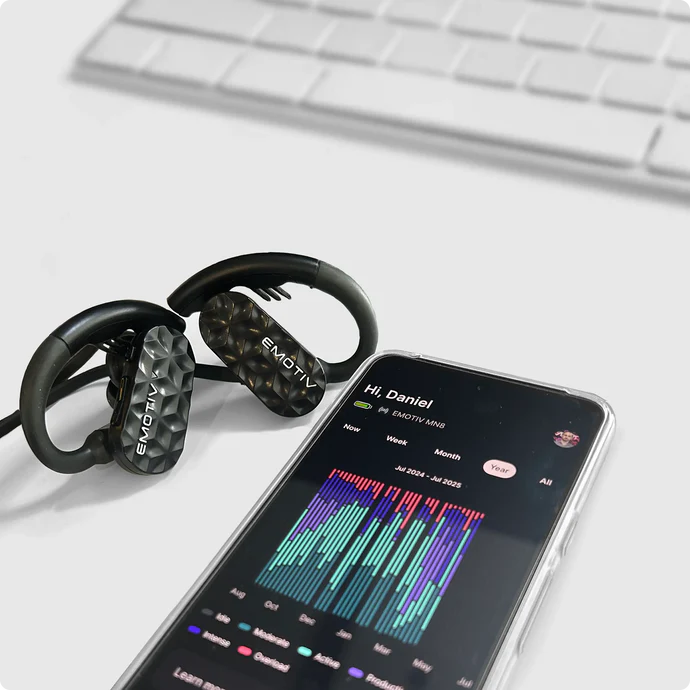
Continue reading