Buy a Wireless EEG Device: A Complete Buyer's Guide
Emotiv
Updated on
Dec 9, 2025
Buy a Wireless EEG Device: A Complete Buyer's Guide
Emotiv
Updated on
Dec 9, 2025
Buy a Wireless EEG Device: A Complete Buyer's Guide
Emotiv
Updated on
Dec 9, 2025
Choosing an electroencephalography (EEG) system is a lot like picking the right camera. A simple point-and-shoot is perfect for casual use, but a professional photographer needs a DSLR with interchangeable lenses for high-stakes work. Similarly, a 5-channel headset might be ideal for a student project, while a 32-channel system is essential for granular neuroscience research. Your project dictates the tool. This guide acts as your manual, breaking down the key specifications like channel count, data quality, and software integration. Our goal is to make the technical details clear and understandable, helping you make an informed decision when you’re ready to buy a wireless EEG device.
Key Takeaways
Start with your project's goal to find the right device: Your primary objective, whether for personal use, brain-computer interface (BCI) development, or academic research, will determine the features you need, like the number of channels and required data quality.
Look beyond the headset to the entire ecosystem: The best experience comes from a seamless system. Pay attention to crucial factors like signal accuracy, battery life, and software compatibility to ensure your workflow is smooth from data collection to analysis.
A little preparation leads to quality data: Getting clean EEG signals involves a small learning curve. Taking time to learn the proper setup and create a good recording environment is the key to collecting reliable and meaningful brain data.
Wireless EEG: Your Guide to Getting Started
If you're just starting to look into EEG, you might picture a lab full of wires and complex machinery. But that’s not the whole story anymore. Wireless EEG devices have made EEG technology portable, accessible, and ready for real-world applications. This guide will walk you through the basics of what these devices are, who uses them, and what they can do.
What is a wireless EEG device?
A wireless EEG device is a portable headset or set of earbuds that measures electrical activity in the brain without being physically tethered to a computer. This freedom opens up a world of possibilities, allowing for brain activity recordings in all sorts of contexts outside of a traditional lab, from a classroom to your own living room. This flexibility makes it easier than ever to work with brain data. Our guide to brainwave devices can give you a deeper look into how this technology works and what it can do for your projects.
Who uses wireless EEG?
It’s a common misconception that EEG devices are only for clinical or medical settings. In reality, they’re used by a wide and diverse range of people. Researchers in neuroscience and psychology use them to study how the brain works. Developers and creators build applications, from interactive art to hands-on educational tools. And many people are exploring their own brain activity to access cognitive wellness tools or simply learn more about themselves. The community of users is growing every day, with people from all backgrounds finding new and innovative ways to apply this technology.
Powering academic research
The world of academic research has been transformed by the availability of portable EEG systems. The global market for wireless EEG headsets is expanding rapidly, showing just how much value researchers see in this technology. Instead of being limited to stationary lab equipment, scientists can now conduct studies in more natural environments, gathering data that reflects real-life scenarios. This has implications for fields like developmental psychology, education, and human-computer interaction. Emotiv devices are designed to support this work, providing reliable data for academic research and education and helping to push the boundaries of what we know about the human brain.
Exploring brain-computer interfaces
One of the most exciting applications for wireless EEG is in the field of brain-computer interfaces, or BCIs. A BCI creates a direct pathway between your brain's electrical activity and an external device, like a computer or a smart home appliance. This allows you to interact with technology using your brain signals. While it might sound like science fiction, it’s a very real and rapidly developing area. Emotiv technology is well-suited for personal exploration, scientific studies, and creating your own brain-computer interfaces. From composing music to interacting with virtual environments, BCI is opening up new avenues for communication and control.
Key Features to Look For in a Wireless EEG Device
Choosing the right wireless EEG device feels a lot like picking the right tool for a big project—you need to match the features to the job at hand. With so many options available, it helps to break down the key components that will make or break your experience. From the number of sensors to the software that powers your analysis, each feature plays a critical role. Let’s walk through the most important things to consider so you can find a device that fits your goals.
Find your ideal channel count
The channel count on an EEG device refers to the number of sensors that make contact with your scalp. Think of each channel as a unique listening post for your brain's electrical activity. A higher channel count allows for more detailed and spatially precise brain mapping, which is often essential for complex academic research and education. For instance, our 32-channel Emotiv Flex Saline headset is designed for this kind of in-depth work. On the other hand, applications focused on broader brain states or simple brain-computer interface commands may not require as many channels. A device with fewer channels, like our 5-channel Emotiv Insight, can be more than enough and is often quicker to set up.
Get quality data and accurate signals
The most important job of an EEG device is to provide clean, reliable data. After all, your insights and discoveries will be built on the quality of the signals you collect. The accuracy of a wireless EEG device can vary, so it’s crucial to choose one with a reputation for high-quality data acquisition. This comes down to the quality of the sensors, the internal hardware that processes the signal, and the overall design that ensures a stable connection to the head. Without accurate data, your analysis can be misleading. Prioritizing a device that delivers trustworthy signals is the first step toward achieving meaningful results in your work.
Consider battery life and portability
One of the main advantages of a wireless EEG device is freedom from cords and cables. To make the most of this, you need a device with a battery that can keep up with you. A long battery life is essential for running lengthy experiments or for all-day use without interruption. Portability is another key factor. A lightweight, comfortable, and easy-to-transport headset makes it possible to conduct studies in real-world environments, not just in a lab. When you’re evaluating options, think about how long your sessions will be and where you’ll be using the device to ensure it fits your practical needs.
Check for software compatibility
The hardware is just one half of the puzzle; the software is what brings your data to life. Before you commit to a device, make sure it’s compatible with the software you need for analysis and application development. Some EEG systems lock you into a single, proprietary program, while others offer more flexibility. We provide a full software suite, including EmotivPRO for advanced data analysis and visualization. For developers, having access to an API or a dedicated tool like EmotivBCI can make it easier to integrate brain data into your own applications. Always check what software and development kits are available.
Compare sensor types and setup
Getting a good connection is key to collecting quality EEG data, and the type of sensor plays a big role in this. The most common types are saline and gel sensors. Saline sensors are generally faster to set up since they just need to be moistened with a saltwater solution. This makes them suitable for studies that require quick preparation. Gel sensors require applying a conductive gel, which can take longer but often provides a very strong and stable signal for extended recording sessions. Our Emotiv Flex is available with either option, allowing you to choose based on your project’s specific demands for convenience versus recording duration.
Find the Right Wireless EEG Device for You
Choosing the right wireless EEG device really comes down to what you want to accomplish. Are you curious about your own brain activity during meditation, or are you conducting a complex study on cognitive states for a university? Your goals will determine the number of channels, data quality, and form factor you need. Think of it like picking a camera: a point-and-shoot is great for vacation photos, but you’d want a DSLR for professional portrait photography. The same principle applies here. Someone looking to access cognitive wellness tools has different needs than a developer building a brain-computer interface or a neuroscientist publishing a paper. Before you dive into specs, take a moment to clarify your primary goal. This step will make your decision much easier.
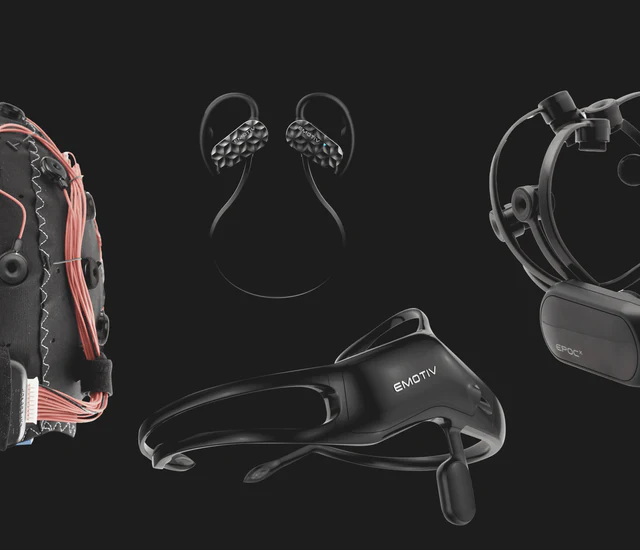
Emotiv offers a full range of wireless EEG devices, so you can find the match for your project. Whether you're taking your first steps into understanding brain data or pushing the boundaries of neuroscience, there's a tool designed for your specific journey. From discreet earbuds for everyday use to high-density headsets for advanced research, each device is designed with a specific user in mind. Let’s walk through the options to see which one fits your needs.
Emotiv MN8: 2-Channel EEG Earbuds
If you’re looking for an easy and accessible way to start exploring brain data, the Emotiv MN8 is a practical starting point. This 2-channel EEG device is designed as discreet earbuds, making it convenient for daily use. Because it is so portable and simple to use, it’s ideal for anyone interested in accessing cognitive wellness tools or integrating brain data into personal applications without the commitment of a full headset. Emotiv MN8 provides a straightforward introduction to EEG technology, allowing you to gather foundational brain activity data with minimal setup.
Emotiv Insight: 5-Channel EEG Headset
The Emotiv Insight steps things up with five channels of EEG data, offering a balance between performance and ease of use. This wireless headset is a popular choice for personal use, students, and developers who need more detailed data than a 2-channel device can provide. It’s robust enough for building your first brain-computer interface or conducting smaller-scale scientific experiments. If you’re ready to move beyond basic measurements and want to explore brain dynamics with more spatial resolution, Emotiv Insight is an accessible option.
Emotiv Epoc X: 14-Channel EEG Headset
For serious researchers and developers, the Emotiv Epoc X is a professional-grade tool designed for high-quality data acquisition. With 14 channels, this headset can sense brain activity across the cortex, providing the detailed data needed for nuanced studies. It’s built for applications in neuroscience, neuromarketing, and psychology research. Emotiv Epoc X is a workhorse for labs and institutions that require reliable, context-rich brain data for their academic research and education projects.
Emotiv Flex: 32-Channel EEG Headset
When your research demands higher resolution, the Emotiv Flex is designed for advanced scientific applications where granular detail is a priority. This 32-channel EEG headset allows you to place sensors in custom arrangements, giving you control over your experiment’s setup. Emotiv Flex is a strong choice for professional researchers who need to capture subtle and complex brain activity. It provides the high-density data required for cutting-edge studies in cognitive neuroscience and other demanding fields.
How Emotiv compares to other options
When you’re looking at different EEG systems, it’s helpful to consider the entire ecosystem, not just the hardware. One of the key strengths of the Emotiv lineup is how the devices integrate with a comprehensive suite of software. Whether you’re using the Emotiv App for personal insights or the EmotivPRO platform for advanced data analysis, the software is designed to work with the hardware. This creates a streamlined workflow from data acquisition to analysis. For developers, this ecosystem provides the tools and APIs needed to build custom applications, making it a flexible choice for a range of projects.
How Much Does a Wireless EEG Device Cost?
When you start looking for a wireless EEG device, you'll notice the prices can vary. This is because they're designed for a wide range of uses, from personal projects and wellness applications to complex academic research. The cost is directly tied to the device's capabilities, like how many data points it can collect and the quality of its signals. To help you make sense of it all, this section breaks down the costs into a few common tiers so you can find a device that fits both your project goals and your budget.
Entry-level options: Under $500
If you're just starting your journey with EEG or have a limited budget, you don't have to break the bank. There are entry-level options that provide a solid introduction to brain data. For example, our Emotiv Insight headset is priced at $499 and comes with five sensors to measure brain activity. This makes it an accessible choice for students, developers, or anyone curious about brain-computer interfaces. Devices in this range are suitable for learning the fundamentals and running simple experiments without a major upfront investment.
Mid-range devices: $500–$1,500
Moving into the mid-range, you'll find devices that offer more power and flexibility for more demanding projects. This price bracket is popular because it hits a sweet spot for many researchers, developers, and prosumers. Here, you can expect a higher channel count and more robust features. Our Emotiv Epoc X headset, for instance, sits in this category and provides 14 channels for more detailed data collection. This tier is appropriate if you're working on more complex BCI applications or research that requires a richer dataset than entry-level devices can offer.
Professional-grade systems: Over $1,500
For advanced academic studies or larger research projects, you'll likely be looking at professional-grade systems. These devices are designed for higher performance and data resolution. They typically feature a high number of channels, like our 32-channel Emotiv Flex, which allows for more detailed brain mapping. The investment in this tier gives researchers access to the higher-density data required for nuanced experiments. These systems are often the choice for neuroscience labs and institutions that need comprehensive data collection tools.
What’s behind the price tag?
Several key factors influence the cost of a wireless EEG device. The most significant is usually the channel count—more channels mean the device can collect data from more areas of the brain simultaneously, providing a more detailed picture. Another factor is signal accuracy, as higher-end systems often include advanced sensors and filtering to support clean, reliable data. Portability and battery life also play a role. Understanding these key features and considerations will help you evaluate different options and choose the device that offers the right balance of performance and price for your needs.
Where to Buy Your Wireless EEG Device
Once you’ve decided which wireless EEG device fits your project, the next step is figuring out the best way to purchase it. The right approach can help ensure you get the support you need to get started smoothly. From exploring different sellers to finding special discounts, a small amount of research before you buy is helpful. Think about what matters most to you—whether it’s direct support from the manufacturer, the best possible price, or a comprehensive warranty. Here are a few key things to consider as you prepare to make your purchase.
Buying direct vs. through retailers
Purchasing your EEG device directly from the manufacturer is often the most straightforward path. When you buy from us, for example, you get direct access to our customer support team and the full manufacturer’s warranty, which gives you peace of mind. It ensures you’re getting a new, authentic device straight from the source. Alternatively, some authorized retailers might carry our products. These sellers may occasionally offer different pricing or have their own return policies that could be beneficial. Weigh your options by considering whether you prioritize direct support and a guaranteed warranty or a different deal through a third-party seller.
Finding academic and group discounts
If you’re part of a university, lab, or educational institution, always ask about academic pricing. Many companies in this field support the next wave of innovation and offer special discounts for academic research and education. These programs can make equipment more accessible for your team or classroom. The same often applies if you’re buying multiple devices for a commercial group. It never hurts to reach out to a company’s sales department directly to see if you qualify for group pricing.
Looking for promotions and bundles
Keep an eye out for special offers, especially bundles that package a headset with software or accessories. These deals are a way to get a complete setup at a better value than buying each piece separately. For instance, you might find a headset like the Emotiv Epoc X bundled with a subscription to our EmotivPRO software. We sometimes run seasonal promotions or special events, so checking the official website periodically can help you catch a deal. Subscribing to a company’s newsletter is another way to stay informed about upcoming sales and product announcements.
What to know about shipping and warranties
Before you click "buy," take a moment to review the shipping and warranty policies. Check the shipping options available for your region and be aware of any potential customs fees if you’re ordering internationally. A solid warranty is also important. Understand how long it lasts and what it covers—this is your protection for a significant investment. Knowing these details upfront helps prevent surprises and supports a smooth process from purchase to delivery.
Common Misconceptions About Wireless EEG
As wireless EEG technology becomes more accessible, it’s natural for questions and a few myths to pop up. It’s a complex field, and it’s easy to get the wrong idea about what these devices can and can’t do. Let’s clear up some of the most common misunderstandings so you can feel confident as you get started.
Medical device vs. research tool
One of the biggest misconceptions is that EEG devices are only for medical diagnosis in a hospital. While EEG is a powerful clinical tool, many wireless devices are designed specifically for non-medical purposes. Researchers, developers, and creators use them for everything from academic research and education to building new applications with brain-computer interfaces. These tools are not intended to diagnose or treat medical conditions. Instead, think of them as versatile sensors that open up ways to understand brain activity for innovation, performance analysis, and personal insight.
Understanding data accuracy
It’s common to wonder if a portable, wireless device can provide accurate data. The truth is, data quality can vary from one device to another, so this is a valid question. The reliability of your data depends on factors like the number and quality of the sensors, the headset’s design, and the software used to process the signal. Professional-grade systems like the Emotiv Epoc X are built to deliver high-resolution data that’s appropriate for demanding research applications, while simpler devices might be better for introductory projects. The key is to match the device’s capabilities to your project’s needs.
How your environment affects signal quality
Getting clean EEG data isn’t just about the headset—your environment plays a role, too. Wireless EEG devices are sensitive and can pick up electrical “noise” from nearby electronics or even muscle movements like blinking or clenching your jaw. This is normal and is known as an artifact. Learning to create a good recording environment and using software like EmotivPRO to filter out these artifacts is a standard part of the process. A little preparation, like turning off fluorescent lights or sitting still, helps support signal quality.
Preparing for setup and learning
Many people assume you can just put on a headset and start collecting perfect data instantly. While technology has made the process simpler, there’s still a learning curve to get the best results. Getting a strong signal requires proper sensor placement and, for some headsets like the Emotiv Flex, ensuring the saline-based sensors are correctly hydrated. It’s not difficult, but it does require practice. Taking a few minutes to learn the proper setup for your device is an important step toward getting reliable, meaningful data from your sessions.
Considering data privacy and security
Your EEG data is personal, so it’s smart to think about privacy and security. When you use a wireless EEG device, you’re generating sensitive information, and you should feel confident that it’s being handled responsibly. It’s important to choose a platform from a company that prioritizes data protection and is transparent about its policies. At Emotiv, we take this responsibility seriously, providing tools and platforms for developers and researchers with security in mind, so you can focus on your work.
Related Articles
Frequently Asked Questions
Which Emotiv device is the best for a beginner? If you're just getting started, I'd recommend looking at either the Emotiv MN8 earbuds or the Emotiv Insight headset. Emotiv MN8 is straightforward to use and is suitable for exploring your own brain activity and accessing cognitive wellness tools in a familiar earbud format. If you want to start building simple applications or conducting small experiments, the 5-channel Emotiv Insight offers a balance of user-friendliness and richer data.
Do I need to be a scientist to use a wireless EEG device? Not at all. While Emotiv devices are used in professional research labs around the world, they are designed to be accessible. Developers, artists, students, and people who are simply curious about their own minds use this technology every day. Emotiv software is designed to help you visualize and understand your brain data, so you can start exploring without needing a background in neuroscience.
What can I actually do with a brain-computer interface? A brain-computer interface lets you interact with technology using your brain signals. This opens up creative possibilities. For example, you could learn to control a character in a video game, interact with a smart home device, or compose music based on your focus levels. It’s a way to explore the connection between your brain activity and the digital world, whether for a personal project or a more advanced application.
How long does it take to set up a headset for a recording session? This gets faster with practice. For a headset with saline sensors, like Emotiv Insight or Emotiv Epoc X, you can expect to be ready in just a few minutes once you get the hang of it. You hydrate the sensors and ensure you have a good connection. Devices with gel sensors, like one of our Emotiv Flex models, take longer to prepare but can provide a stable connection for long recording sessions.
What's the main difference between a device with a few channels versus one with many? Think of it like the resolution of a picture. A device with fewer channels, like our 2-channel Emotiv MN8, gives you a general snapshot of your overall brain activity. It’s suitable for understanding broad states like focus or relaxation. A device with many channels, like our 32-channel Emotiv Flex, is like a higher-resolution image. It measures brain activity from more locations at once, giving you a more detailed map, which is important for advanced research.
Choosing an electroencephalography (EEG) system is a lot like picking the right camera. A simple point-and-shoot is perfect for casual use, but a professional photographer needs a DSLR with interchangeable lenses for high-stakes work. Similarly, a 5-channel headset might be ideal for a student project, while a 32-channel system is essential for granular neuroscience research. Your project dictates the tool. This guide acts as your manual, breaking down the key specifications like channel count, data quality, and software integration. Our goal is to make the technical details clear and understandable, helping you make an informed decision when you’re ready to buy a wireless EEG device.
Key Takeaways
Start with your project's goal to find the right device: Your primary objective, whether for personal use, brain-computer interface (BCI) development, or academic research, will determine the features you need, like the number of channels and required data quality.
Look beyond the headset to the entire ecosystem: The best experience comes from a seamless system. Pay attention to crucial factors like signal accuracy, battery life, and software compatibility to ensure your workflow is smooth from data collection to analysis.
A little preparation leads to quality data: Getting clean EEG signals involves a small learning curve. Taking time to learn the proper setup and create a good recording environment is the key to collecting reliable and meaningful brain data.
Wireless EEG: Your Guide to Getting Started
If you're just starting to look into EEG, you might picture a lab full of wires and complex machinery. But that’s not the whole story anymore. Wireless EEG devices have made EEG technology portable, accessible, and ready for real-world applications. This guide will walk you through the basics of what these devices are, who uses them, and what they can do.
What is a wireless EEG device?
A wireless EEG device is a portable headset or set of earbuds that measures electrical activity in the brain without being physically tethered to a computer. This freedom opens up a world of possibilities, allowing for brain activity recordings in all sorts of contexts outside of a traditional lab, from a classroom to your own living room. This flexibility makes it easier than ever to work with brain data. Our guide to brainwave devices can give you a deeper look into how this technology works and what it can do for your projects.
Who uses wireless EEG?
It’s a common misconception that EEG devices are only for clinical or medical settings. In reality, they’re used by a wide and diverse range of people. Researchers in neuroscience and psychology use them to study how the brain works. Developers and creators build applications, from interactive art to hands-on educational tools. And many people are exploring their own brain activity to access cognitive wellness tools or simply learn more about themselves. The community of users is growing every day, with people from all backgrounds finding new and innovative ways to apply this technology.
Powering academic research
The world of academic research has been transformed by the availability of portable EEG systems. The global market for wireless EEG headsets is expanding rapidly, showing just how much value researchers see in this technology. Instead of being limited to stationary lab equipment, scientists can now conduct studies in more natural environments, gathering data that reflects real-life scenarios. This has implications for fields like developmental psychology, education, and human-computer interaction. Emotiv devices are designed to support this work, providing reliable data for academic research and education and helping to push the boundaries of what we know about the human brain.
Exploring brain-computer interfaces
One of the most exciting applications for wireless EEG is in the field of brain-computer interfaces, or BCIs. A BCI creates a direct pathway between your brain's electrical activity and an external device, like a computer or a smart home appliance. This allows you to interact with technology using your brain signals. While it might sound like science fiction, it’s a very real and rapidly developing area. Emotiv technology is well-suited for personal exploration, scientific studies, and creating your own brain-computer interfaces. From composing music to interacting with virtual environments, BCI is opening up new avenues for communication and control.
Key Features to Look For in a Wireless EEG Device
Choosing the right wireless EEG device feels a lot like picking the right tool for a big project—you need to match the features to the job at hand. With so many options available, it helps to break down the key components that will make or break your experience. From the number of sensors to the software that powers your analysis, each feature plays a critical role. Let’s walk through the most important things to consider so you can find a device that fits your goals.
Find your ideal channel count
The channel count on an EEG device refers to the number of sensors that make contact with your scalp. Think of each channel as a unique listening post for your brain's electrical activity. A higher channel count allows for more detailed and spatially precise brain mapping, which is often essential for complex academic research and education. For instance, our 32-channel Emotiv Flex Saline headset is designed for this kind of in-depth work. On the other hand, applications focused on broader brain states or simple brain-computer interface commands may not require as many channels. A device with fewer channels, like our 5-channel Emotiv Insight, can be more than enough and is often quicker to set up.
Get quality data and accurate signals
The most important job of an EEG device is to provide clean, reliable data. After all, your insights and discoveries will be built on the quality of the signals you collect. The accuracy of a wireless EEG device can vary, so it’s crucial to choose one with a reputation for high-quality data acquisition. This comes down to the quality of the sensors, the internal hardware that processes the signal, and the overall design that ensures a stable connection to the head. Without accurate data, your analysis can be misleading. Prioritizing a device that delivers trustworthy signals is the first step toward achieving meaningful results in your work.
Consider battery life and portability
One of the main advantages of a wireless EEG device is freedom from cords and cables. To make the most of this, you need a device with a battery that can keep up with you. A long battery life is essential for running lengthy experiments or for all-day use without interruption. Portability is another key factor. A lightweight, comfortable, and easy-to-transport headset makes it possible to conduct studies in real-world environments, not just in a lab. When you’re evaluating options, think about how long your sessions will be and where you’ll be using the device to ensure it fits your practical needs.
Check for software compatibility
The hardware is just one half of the puzzle; the software is what brings your data to life. Before you commit to a device, make sure it’s compatible with the software you need for analysis and application development. Some EEG systems lock you into a single, proprietary program, while others offer more flexibility. We provide a full software suite, including EmotivPRO for advanced data analysis and visualization. For developers, having access to an API or a dedicated tool like EmotivBCI can make it easier to integrate brain data into your own applications. Always check what software and development kits are available.
Compare sensor types and setup
Getting a good connection is key to collecting quality EEG data, and the type of sensor plays a big role in this. The most common types are saline and gel sensors. Saline sensors are generally faster to set up since they just need to be moistened with a saltwater solution. This makes them suitable for studies that require quick preparation. Gel sensors require applying a conductive gel, which can take longer but often provides a very strong and stable signal for extended recording sessions. Our Emotiv Flex is available with either option, allowing you to choose based on your project’s specific demands for convenience versus recording duration.
Find the Right Wireless EEG Device for You
Choosing the right wireless EEG device really comes down to what you want to accomplish. Are you curious about your own brain activity during meditation, or are you conducting a complex study on cognitive states for a university? Your goals will determine the number of channels, data quality, and form factor you need. Think of it like picking a camera: a point-and-shoot is great for vacation photos, but you’d want a DSLR for professional portrait photography. The same principle applies here. Someone looking to access cognitive wellness tools has different needs than a developer building a brain-computer interface or a neuroscientist publishing a paper. Before you dive into specs, take a moment to clarify your primary goal. This step will make your decision much easier.
Emotiv offers a full range of wireless EEG devices, so you can find the match for your project. Whether you're taking your first steps into understanding brain data or pushing the boundaries of neuroscience, there's a tool designed for your specific journey. From discreet earbuds for everyday use to high-density headsets for advanced research, each device is designed with a specific user in mind. Let’s walk through the options to see which one fits your needs.
Emotiv MN8: 2-Channel EEG Earbuds
If you’re looking for an easy and accessible way to start exploring brain data, the Emotiv MN8 is a practical starting point. This 2-channel EEG device is designed as discreet earbuds, making it convenient for daily use. Because it is so portable and simple to use, it’s ideal for anyone interested in accessing cognitive wellness tools or integrating brain data into personal applications without the commitment of a full headset. Emotiv MN8 provides a straightforward introduction to EEG technology, allowing you to gather foundational brain activity data with minimal setup.
Emotiv Insight: 5-Channel EEG Headset
The Emotiv Insight steps things up with five channels of EEG data, offering a balance between performance and ease of use. This wireless headset is a popular choice for personal use, students, and developers who need more detailed data than a 2-channel device can provide. It’s robust enough for building your first brain-computer interface or conducting smaller-scale scientific experiments. If you’re ready to move beyond basic measurements and want to explore brain dynamics with more spatial resolution, Emotiv Insight is an accessible option.
Emotiv Epoc X: 14-Channel EEG Headset
For serious researchers and developers, the Emotiv Epoc X is a professional-grade tool designed for high-quality data acquisition. With 14 channels, this headset can sense brain activity across the cortex, providing the detailed data needed for nuanced studies. It’s built for applications in neuroscience, neuromarketing, and psychology research. Emotiv Epoc X is a workhorse for labs and institutions that require reliable, context-rich brain data for their academic research and education projects.
Emotiv Flex: 32-Channel EEG Headset
When your research demands higher resolution, the Emotiv Flex is designed for advanced scientific applications where granular detail is a priority. This 32-channel EEG headset allows you to place sensors in custom arrangements, giving you control over your experiment’s setup. Emotiv Flex is a strong choice for professional researchers who need to capture subtle and complex brain activity. It provides the high-density data required for cutting-edge studies in cognitive neuroscience and other demanding fields.
How Emotiv compares to other options
When you’re looking at different EEG systems, it’s helpful to consider the entire ecosystem, not just the hardware. One of the key strengths of the Emotiv lineup is how the devices integrate with a comprehensive suite of software. Whether you’re using the Emotiv App for personal insights or the EmotivPRO platform for advanced data analysis, the software is designed to work with the hardware. This creates a streamlined workflow from data acquisition to analysis. For developers, this ecosystem provides the tools and APIs needed to build custom applications, making it a flexible choice for a range of projects.
How Much Does a Wireless EEG Device Cost?
When you start looking for a wireless EEG device, you'll notice the prices can vary. This is because they're designed for a wide range of uses, from personal projects and wellness applications to complex academic research. The cost is directly tied to the device's capabilities, like how many data points it can collect and the quality of its signals. To help you make sense of it all, this section breaks down the costs into a few common tiers so you can find a device that fits both your project goals and your budget.
Entry-level options: Under $500
If you're just starting your journey with EEG or have a limited budget, you don't have to break the bank. There are entry-level options that provide a solid introduction to brain data. For example, our Emotiv Insight headset is priced at $499 and comes with five sensors to measure brain activity. This makes it an accessible choice for students, developers, or anyone curious about brain-computer interfaces. Devices in this range are suitable for learning the fundamentals and running simple experiments without a major upfront investment.
Mid-range devices: $500–$1,500
Moving into the mid-range, you'll find devices that offer more power and flexibility for more demanding projects. This price bracket is popular because it hits a sweet spot for many researchers, developers, and prosumers. Here, you can expect a higher channel count and more robust features. Our Emotiv Epoc X headset, for instance, sits in this category and provides 14 channels for more detailed data collection. This tier is appropriate if you're working on more complex BCI applications or research that requires a richer dataset than entry-level devices can offer.
Professional-grade systems: Over $1,500
For advanced academic studies or larger research projects, you'll likely be looking at professional-grade systems. These devices are designed for higher performance and data resolution. They typically feature a high number of channels, like our 32-channel Emotiv Flex, which allows for more detailed brain mapping. The investment in this tier gives researchers access to the higher-density data required for nuanced experiments. These systems are often the choice for neuroscience labs and institutions that need comprehensive data collection tools.
What’s behind the price tag?
Several key factors influence the cost of a wireless EEG device. The most significant is usually the channel count—more channels mean the device can collect data from more areas of the brain simultaneously, providing a more detailed picture. Another factor is signal accuracy, as higher-end systems often include advanced sensors and filtering to support clean, reliable data. Portability and battery life also play a role. Understanding these key features and considerations will help you evaluate different options and choose the device that offers the right balance of performance and price for your needs.
Where to Buy Your Wireless EEG Device
Once you’ve decided which wireless EEG device fits your project, the next step is figuring out the best way to purchase it. The right approach can help ensure you get the support you need to get started smoothly. From exploring different sellers to finding special discounts, a small amount of research before you buy is helpful. Think about what matters most to you—whether it’s direct support from the manufacturer, the best possible price, or a comprehensive warranty. Here are a few key things to consider as you prepare to make your purchase.
Buying direct vs. through retailers
Purchasing your EEG device directly from the manufacturer is often the most straightforward path. When you buy from us, for example, you get direct access to our customer support team and the full manufacturer’s warranty, which gives you peace of mind. It ensures you’re getting a new, authentic device straight from the source. Alternatively, some authorized retailers might carry our products. These sellers may occasionally offer different pricing or have their own return policies that could be beneficial. Weigh your options by considering whether you prioritize direct support and a guaranteed warranty or a different deal through a third-party seller.
Finding academic and group discounts
If you’re part of a university, lab, or educational institution, always ask about academic pricing. Many companies in this field support the next wave of innovation and offer special discounts for academic research and education. These programs can make equipment more accessible for your team or classroom. The same often applies if you’re buying multiple devices for a commercial group. It never hurts to reach out to a company’s sales department directly to see if you qualify for group pricing.
Looking for promotions and bundles
Keep an eye out for special offers, especially bundles that package a headset with software or accessories. These deals are a way to get a complete setup at a better value than buying each piece separately. For instance, you might find a headset like the Emotiv Epoc X bundled with a subscription to our EmotivPRO software. We sometimes run seasonal promotions or special events, so checking the official website periodically can help you catch a deal. Subscribing to a company’s newsletter is another way to stay informed about upcoming sales and product announcements.
What to know about shipping and warranties
Before you click "buy," take a moment to review the shipping and warranty policies. Check the shipping options available for your region and be aware of any potential customs fees if you’re ordering internationally. A solid warranty is also important. Understand how long it lasts and what it covers—this is your protection for a significant investment. Knowing these details upfront helps prevent surprises and supports a smooth process from purchase to delivery.
Common Misconceptions About Wireless EEG
As wireless EEG technology becomes more accessible, it’s natural for questions and a few myths to pop up. It’s a complex field, and it’s easy to get the wrong idea about what these devices can and can’t do. Let’s clear up some of the most common misunderstandings so you can feel confident as you get started.
Medical device vs. research tool
One of the biggest misconceptions is that EEG devices are only for medical diagnosis in a hospital. While EEG is a powerful clinical tool, many wireless devices are designed specifically for non-medical purposes. Researchers, developers, and creators use them for everything from academic research and education to building new applications with brain-computer interfaces. These tools are not intended to diagnose or treat medical conditions. Instead, think of them as versatile sensors that open up ways to understand brain activity for innovation, performance analysis, and personal insight.
Understanding data accuracy
It’s common to wonder if a portable, wireless device can provide accurate data. The truth is, data quality can vary from one device to another, so this is a valid question. The reliability of your data depends on factors like the number and quality of the sensors, the headset’s design, and the software used to process the signal. Professional-grade systems like the Emotiv Epoc X are built to deliver high-resolution data that’s appropriate for demanding research applications, while simpler devices might be better for introductory projects. The key is to match the device’s capabilities to your project’s needs.
How your environment affects signal quality
Getting clean EEG data isn’t just about the headset—your environment plays a role, too. Wireless EEG devices are sensitive and can pick up electrical “noise” from nearby electronics or even muscle movements like blinking or clenching your jaw. This is normal and is known as an artifact. Learning to create a good recording environment and using software like EmotivPRO to filter out these artifacts is a standard part of the process. A little preparation, like turning off fluorescent lights or sitting still, helps support signal quality.
Preparing for setup and learning
Many people assume you can just put on a headset and start collecting perfect data instantly. While technology has made the process simpler, there’s still a learning curve to get the best results. Getting a strong signal requires proper sensor placement and, for some headsets like the Emotiv Flex, ensuring the saline-based sensors are correctly hydrated. It’s not difficult, but it does require practice. Taking a few minutes to learn the proper setup for your device is an important step toward getting reliable, meaningful data from your sessions.
Considering data privacy and security
Your EEG data is personal, so it’s smart to think about privacy and security. When you use a wireless EEG device, you’re generating sensitive information, and you should feel confident that it’s being handled responsibly. It’s important to choose a platform from a company that prioritizes data protection and is transparent about its policies. At Emotiv, we take this responsibility seriously, providing tools and platforms for developers and researchers with security in mind, so you can focus on your work.
Related Articles
Frequently Asked Questions
Which Emotiv device is the best for a beginner? If you're just getting started, I'd recommend looking at either the Emotiv MN8 earbuds or the Emotiv Insight headset. Emotiv MN8 is straightforward to use and is suitable for exploring your own brain activity and accessing cognitive wellness tools in a familiar earbud format. If you want to start building simple applications or conducting small experiments, the 5-channel Emotiv Insight offers a balance of user-friendliness and richer data.
Do I need to be a scientist to use a wireless EEG device? Not at all. While Emotiv devices are used in professional research labs around the world, they are designed to be accessible. Developers, artists, students, and people who are simply curious about their own minds use this technology every day. Emotiv software is designed to help you visualize and understand your brain data, so you can start exploring without needing a background in neuroscience.
What can I actually do with a brain-computer interface? A brain-computer interface lets you interact with technology using your brain signals. This opens up creative possibilities. For example, you could learn to control a character in a video game, interact with a smart home device, or compose music based on your focus levels. It’s a way to explore the connection between your brain activity and the digital world, whether for a personal project or a more advanced application.
How long does it take to set up a headset for a recording session? This gets faster with practice. For a headset with saline sensors, like Emotiv Insight or Emotiv Epoc X, you can expect to be ready in just a few minutes once you get the hang of it. You hydrate the sensors and ensure you have a good connection. Devices with gel sensors, like one of our Emotiv Flex models, take longer to prepare but can provide a stable connection for long recording sessions.
What's the main difference between a device with a few channels versus one with many? Think of it like the resolution of a picture. A device with fewer channels, like our 2-channel Emotiv MN8, gives you a general snapshot of your overall brain activity. It’s suitable for understanding broad states like focus or relaxation. A device with many channels, like our 32-channel Emotiv Flex, is like a higher-resolution image. It measures brain activity from more locations at once, giving you a more detailed map, which is important for advanced research.
Choosing an electroencephalography (EEG) system is a lot like picking the right camera. A simple point-and-shoot is perfect for casual use, but a professional photographer needs a DSLR with interchangeable lenses for high-stakes work. Similarly, a 5-channel headset might be ideal for a student project, while a 32-channel system is essential for granular neuroscience research. Your project dictates the tool. This guide acts as your manual, breaking down the key specifications like channel count, data quality, and software integration. Our goal is to make the technical details clear and understandable, helping you make an informed decision when you’re ready to buy a wireless EEG device.
Key Takeaways
Start with your project's goal to find the right device: Your primary objective, whether for personal use, brain-computer interface (BCI) development, or academic research, will determine the features you need, like the number of channels and required data quality.
Look beyond the headset to the entire ecosystem: The best experience comes from a seamless system. Pay attention to crucial factors like signal accuracy, battery life, and software compatibility to ensure your workflow is smooth from data collection to analysis.
A little preparation leads to quality data: Getting clean EEG signals involves a small learning curve. Taking time to learn the proper setup and create a good recording environment is the key to collecting reliable and meaningful brain data.
Wireless EEG: Your Guide to Getting Started
If you're just starting to look into EEG, you might picture a lab full of wires and complex machinery. But that’s not the whole story anymore. Wireless EEG devices have made EEG technology portable, accessible, and ready for real-world applications. This guide will walk you through the basics of what these devices are, who uses them, and what they can do.
What is a wireless EEG device?
A wireless EEG device is a portable headset or set of earbuds that measures electrical activity in the brain without being physically tethered to a computer. This freedom opens up a world of possibilities, allowing for brain activity recordings in all sorts of contexts outside of a traditional lab, from a classroom to your own living room. This flexibility makes it easier than ever to work with brain data. Our guide to brainwave devices can give you a deeper look into how this technology works and what it can do for your projects.
Who uses wireless EEG?
It’s a common misconception that EEG devices are only for clinical or medical settings. In reality, they’re used by a wide and diverse range of people. Researchers in neuroscience and psychology use them to study how the brain works. Developers and creators build applications, from interactive art to hands-on educational tools. And many people are exploring their own brain activity to access cognitive wellness tools or simply learn more about themselves. The community of users is growing every day, with people from all backgrounds finding new and innovative ways to apply this technology.
Powering academic research
The world of academic research has been transformed by the availability of portable EEG systems. The global market for wireless EEG headsets is expanding rapidly, showing just how much value researchers see in this technology. Instead of being limited to stationary lab equipment, scientists can now conduct studies in more natural environments, gathering data that reflects real-life scenarios. This has implications for fields like developmental psychology, education, and human-computer interaction. Emotiv devices are designed to support this work, providing reliable data for academic research and education and helping to push the boundaries of what we know about the human brain.
Exploring brain-computer interfaces
One of the most exciting applications for wireless EEG is in the field of brain-computer interfaces, or BCIs. A BCI creates a direct pathway between your brain's electrical activity and an external device, like a computer or a smart home appliance. This allows you to interact with technology using your brain signals. While it might sound like science fiction, it’s a very real and rapidly developing area. Emotiv technology is well-suited for personal exploration, scientific studies, and creating your own brain-computer interfaces. From composing music to interacting with virtual environments, BCI is opening up new avenues for communication and control.
Key Features to Look For in a Wireless EEG Device
Choosing the right wireless EEG device feels a lot like picking the right tool for a big project—you need to match the features to the job at hand. With so many options available, it helps to break down the key components that will make or break your experience. From the number of sensors to the software that powers your analysis, each feature plays a critical role. Let’s walk through the most important things to consider so you can find a device that fits your goals.
Find your ideal channel count
The channel count on an EEG device refers to the number of sensors that make contact with your scalp. Think of each channel as a unique listening post for your brain's electrical activity. A higher channel count allows for more detailed and spatially precise brain mapping, which is often essential for complex academic research and education. For instance, our 32-channel Emotiv Flex Saline headset is designed for this kind of in-depth work. On the other hand, applications focused on broader brain states or simple brain-computer interface commands may not require as many channels. A device with fewer channels, like our 5-channel Emotiv Insight, can be more than enough and is often quicker to set up.
Get quality data and accurate signals
The most important job of an EEG device is to provide clean, reliable data. After all, your insights and discoveries will be built on the quality of the signals you collect. The accuracy of a wireless EEG device can vary, so it’s crucial to choose one with a reputation for high-quality data acquisition. This comes down to the quality of the sensors, the internal hardware that processes the signal, and the overall design that ensures a stable connection to the head. Without accurate data, your analysis can be misleading. Prioritizing a device that delivers trustworthy signals is the first step toward achieving meaningful results in your work.
Consider battery life and portability
One of the main advantages of a wireless EEG device is freedom from cords and cables. To make the most of this, you need a device with a battery that can keep up with you. A long battery life is essential for running lengthy experiments or for all-day use without interruption. Portability is another key factor. A lightweight, comfortable, and easy-to-transport headset makes it possible to conduct studies in real-world environments, not just in a lab. When you’re evaluating options, think about how long your sessions will be and where you’ll be using the device to ensure it fits your practical needs.
Check for software compatibility
The hardware is just one half of the puzzle; the software is what brings your data to life. Before you commit to a device, make sure it’s compatible with the software you need for analysis and application development. Some EEG systems lock you into a single, proprietary program, while others offer more flexibility. We provide a full software suite, including EmotivPRO for advanced data analysis and visualization. For developers, having access to an API or a dedicated tool like EmotivBCI can make it easier to integrate brain data into your own applications. Always check what software and development kits are available.
Compare sensor types and setup
Getting a good connection is key to collecting quality EEG data, and the type of sensor plays a big role in this. The most common types are saline and gel sensors. Saline sensors are generally faster to set up since they just need to be moistened with a saltwater solution. This makes them suitable for studies that require quick preparation. Gel sensors require applying a conductive gel, which can take longer but often provides a very strong and stable signal for extended recording sessions. Our Emotiv Flex is available with either option, allowing you to choose based on your project’s specific demands for convenience versus recording duration.
Find the Right Wireless EEG Device for You
Choosing the right wireless EEG device really comes down to what you want to accomplish. Are you curious about your own brain activity during meditation, or are you conducting a complex study on cognitive states for a university? Your goals will determine the number of channels, data quality, and form factor you need. Think of it like picking a camera: a point-and-shoot is great for vacation photos, but you’d want a DSLR for professional portrait photography. The same principle applies here. Someone looking to access cognitive wellness tools has different needs than a developer building a brain-computer interface or a neuroscientist publishing a paper. Before you dive into specs, take a moment to clarify your primary goal. This step will make your decision much easier.
Emotiv offers a full range of wireless EEG devices, so you can find the match for your project. Whether you're taking your first steps into understanding brain data or pushing the boundaries of neuroscience, there's a tool designed for your specific journey. From discreet earbuds for everyday use to high-density headsets for advanced research, each device is designed with a specific user in mind. Let’s walk through the options to see which one fits your needs.
Emotiv MN8: 2-Channel EEG Earbuds
If you’re looking for an easy and accessible way to start exploring brain data, the Emotiv MN8 is a practical starting point. This 2-channel EEG device is designed as discreet earbuds, making it convenient for daily use. Because it is so portable and simple to use, it’s ideal for anyone interested in accessing cognitive wellness tools or integrating brain data into personal applications without the commitment of a full headset. Emotiv MN8 provides a straightforward introduction to EEG technology, allowing you to gather foundational brain activity data with minimal setup.
Emotiv Insight: 5-Channel EEG Headset
The Emotiv Insight steps things up with five channels of EEG data, offering a balance between performance and ease of use. This wireless headset is a popular choice for personal use, students, and developers who need more detailed data than a 2-channel device can provide. It’s robust enough for building your first brain-computer interface or conducting smaller-scale scientific experiments. If you’re ready to move beyond basic measurements and want to explore brain dynamics with more spatial resolution, Emotiv Insight is an accessible option.
Emotiv Epoc X: 14-Channel EEG Headset
For serious researchers and developers, the Emotiv Epoc X is a professional-grade tool designed for high-quality data acquisition. With 14 channels, this headset can sense brain activity across the cortex, providing the detailed data needed for nuanced studies. It’s built for applications in neuroscience, neuromarketing, and psychology research. Emotiv Epoc X is a workhorse for labs and institutions that require reliable, context-rich brain data for their academic research and education projects.
Emotiv Flex: 32-Channel EEG Headset
When your research demands higher resolution, the Emotiv Flex is designed for advanced scientific applications where granular detail is a priority. This 32-channel EEG headset allows you to place sensors in custom arrangements, giving you control over your experiment’s setup. Emotiv Flex is a strong choice for professional researchers who need to capture subtle and complex brain activity. It provides the high-density data required for cutting-edge studies in cognitive neuroscience and other demanding fields.
How Emotiv compares to other options
When you’re looking at different EEG systems, it’s helpful to consider the entire ecosystem, not just the hardware. One of the key strengths of the Emotiv lineup is how the devices integrate with a comprehensive suite of software. Whether you’re using the Emotiv App for personal insights or the EmotivPRO platform for advanced data analysis, the software is designed to work with the hardware. This creates a streamlined workflow from data acquisition to analysis. For developers, this ecosystem provides the tools and APIs needed to build custom applications, making it a flexible choice for a range of projects.
How Much Does a Wireless EEG Device Cost?
When you start looking for a wireless EEG device, you'll notice the prices can vary. This is because they're designed for a wide range of uses, from personal projects and wellness applications to complex academic research. The cost is directly tied to the device's capabilities, like how many data points it can collect and the quality of its signals. To help you make sense of it all, this section breaks down the costs into a few common tiers so you can find a device that fits both your project goals and your budget.
Entry-level options: Under $500
If you're just starting your journey with EEG or have a limited budget, you don't have to break the bank. There are entry-level options that provide a solid introduction to brain data. For example, our Emotiv Insight headset is priced at $499 and comes with five sensors to measure brain activity. This makes it an accessible choice for students, developers, or anyone curious about brain-computer interfaces. Devices in this range are suitable for learning the fundamentals and running simple experiments without a major upfront investment.
Mid-range devices: $500–$1,500
Moving into the mid-range, you'll find devices that offer more power and flexibility for more demanding projects. This price bracket is popular because it hits a sweet spot for many researchers, developers, and prosumers. Here, you can expect a higher channel count and more robust features. Our Emotiv Epoc X headset, for instance, sits in this category and provides 14 channels for more detailed data collection. This tier is appropriate if you're working on more complex BCI applications or research that requires a richer dataset than entry-level devices can offer.
Professional-grade systems: Over $1,500
For advanced academic studies or larger research projects, you'll likely be looking at professional-grade systems. These devices are designed for higher performance and data resolution. They typically feature a high number of channels, like our 32-channel Emotiv Flex, which allows for more detailed brain mapping. The investment in this tier gives researchers access to the higher-density data required for nuanced experiments. These systems are often the choice for neuroscience labs and institutions that need comprehensive data collection tools.
What’s behind the price tag?
Several key factors influence the cost of a wireless EEG device. The most significant is usually the channel count—more channels mean the device can collect data from more areas of the brain simultaneously, providing a more detailed picture. Another factor is signal accuracy, as higher-end systems often include advanced sensors and filtering to support clean, reliable data. Portability and battery life also play a role. Understanding these key features and considerations will help you evaluate different options and choose the device that offers the right balance of performance and price for your needs.
Where to Buy Your Wireless EEG Device
Once you’ve decided which wireless EEG device fits your project, the next step is figuring out the best way to purchase it. The right approach can help ensure you get the support you need to get started smoothly. From exploring different sellers to finding special discounts, a small amount of research before you buy is helpful. Think about what matters most to you—whether it’s direct support from the manufacturer, the best possible price, or a comprehensive warranty. Here are a few key things to consider as you prepare to make your purchase.
Buying direct vs. through retailers
Purchasing your EEG device directly from the manufacturer is often the most straightforward path. When you buy from us, for example, you get direct access to our customer support team and the full manufacturer’s warranty, which gives you peace of mind. It ensures you’re getting a new, authentic device straight from the source. Alternatively, some authorized retailers might carry our products. These sellers may occasionally offer different pricing or have their own return policies that could be beneficial. Weigh your options by considering whether you prioritize direct support and a guaranteed warranty or a different deal through a third-party seller.
Finding academic and group discounts
If you’re part of a university, lab, or educational institution, always ask about academic pricing. Many companies in this field support the next wave of innovation and offer special discounts for academic research and education. These programs can make equipment more accessible for your team or classroom. The same often applies if you’re buying multiple devices for a commercial group. It never hurts to reach out to a company’s sales department directly to see if you qualify for group pricing.
Looking for promotions and bundles
Keep an eye out for special offers, especially bundles that package a headset with software or accessories. These deals are a way to get a complete setup at a better value than buying each piece separately. For instance, you might find a headset like the Emotiv Epoc X bundled with a subscription to our EmotivPRO software. We sometimes run seasonal promotions or special events, so checking the official website periodically can help you catch a deal. Subscribing to a company’s newsletter is another way to stay informed about upcoming sales and product announcements.
What to know about shipping and warranties
Before you click "buy," take a moment to review the shipping and warranty policies. Check the shipping options available for your region and be aware of any potential customs fees if you’re ordering internationally. A solid warranty is also important. Understand how long it lasts and what it covers—this is your protection for a significant investment. Knowing these details upfront helps prevent surprises and supports a smooth process from purchase to delivery.
Common Misconceptions About Wireless EEG
As wireless EEG technology becomes more accessible, it’s natural for questions and a few myths to pop up. It’s a complex field, and it’s easy to get the wrong idea about what these devices can and can’t do. Let’s clear up some of the most common misunderstandings so you can feel confident as you get started.
Medical device vs. research tool
One of the biggest misconceptions is that EEG devices are only for medical diagnosis in a hospital. While EEG is a powerful clinical tool, many wireless devices are designed specifically for non-medical purposes. Researchers, developers, and creators use them for everything from academic research and education to building new applications with brain-computer interfaces. These tools are not intended to diagnose or treat medical conditions. Instead, think of them as versatile sensors that open up ways to understand brain activity for innovation, performance analysis, and personal insight.
Understanding data accuracy
It’s common to wonder if a portable, wireless device can provide accurate data. The truth is, data quality can vary from one device to another, so this is a valid question. The reliability of your data depends on factors like the number and quality of the sensors, the headset’s design, and the software used to process the signal. Professional-grade systems like the Emotiv Epoc X are built to deliver high-resolution data that’s appropriate for demanding research applications, while simpler devices might be better for introductory projects. The key is to match the device’s capabilities to your project’s needs.
How your environment affects signal quality
Getting clean EEG data isn’t just about the headset—your environment plays a role, too. Wireless EEG devices are sensitive and can pick up electrical “noise” from nearby electronics or even muscle movements like blinking or clenching your jaw. This is normal and is known as an artifact. Learning to create a good recording environment and using software like EmotivPRO to filter out these artifacts is a standard part of the process. A little preparation, like turning off fluorescent lights or sitting still, helps support signal quality.
Preparing for setup and learning
Many people assume you can just put on a headset and start collecting perfect data instantly. While technology has made the process simpler, there’s still a learning curve to get the best results. Getting a strong signal requires proper sensor placement and, for some headsets like the Emotiv Flex, ensuring the saline-based sensors are correctly hydrated. It’s not difficult, but it does require practice. Taking a few minutes to learn the proper setup for your device is an important step toward getting reliable, meaningful data from your sessions.
Considering data privacy and security
Your EEG data is personal, so it’s smart to think about privacy and security. When you use a wireless EEG device, you’re generating sensitive information, and you should feel confident that it’s being handled responsibly. It’s important to choose a platform from a company that prioritizes data protection and is transparent about its policies. At Emotiv, we take this responsibility seriously, providing tools and platforms for developers and researchers with security in mind, so you can focus on your work.
Related Articles
Frequently Asked Questions
Which Emotiv device is the best for a beginner? If you're just getting started, I'd recommend looking at either the Emotiv MN8 earbuds or the Emotiv Insight headset. Emotiv MN8 is straightforward to use and is suitable for exploring your own brain activity and accessing cognitive wellness tools in a familiar earbud format. If you want to start building simple applications or conducting small experiments, the 5-channel Emotiv Insight offers a balance of user-friendliness and richer data.
Do I need to be a scientist to use a wireless EEG device? Not at all. While Emotiv devices are used in professional research labs around the world, they are designed to be accessible. Developers, artists, students, and people who are simply curious about their own minds use this technology every day. Emotiv software is designed to help you visualize and understand your brain data, so you can start exploring without needing a background in neuroscience.
What can I actually do with a brain-computer interface? A brain-computer interface lets you interact with technology using your brain signals. This opens up creative possibilities. For example, you could learn to control a character in a video game, interact with a smart home device, or compose music based on your focus levels. It’s a way to explore the connection between your brain activity and the digital world, whether for a personal project or a more advanced application.
How long does it take to set up a headset for a recording session? This gets faster with practice. For a headset with saline sensors, like Emotiv Insight or Emotiv Epoc X, you can expect to be ready in just a few minutes once you get the hang of it. You hydrate the sensors and ensure you have a good connection. Devices with gel sensors, like one of our Emotiv Flex models, take longer to prepare but can provide a stable connection for long recording sessions.
What's the main difference between a device with a few channels versus one with many? Think of it like the resolution of a picture. A device with fewer channels, like our 2-channel Emotiv MN8, gives you a general snapshot of your overall brain activity. It’s suitable for understanding broad states like focus or relaxation. A device with many channels, like our 32-channel Emotiv Flex, is like a higher-resolution image. It measures brain activity from more locations at once, giving you a more detailed map, which is important for advanced research.