How to Buy the Right Consumer EEG Headset
Emotiv
Updated on
Dec 10, 2025
How to Buy the Right Consumer EEG Headset
Emotiv
Updated on
Dec 10, 2025
How to Buy the Right Consumer EEG Headset
Emotiv
Updated on
Dec 10, 2025
From building hands-free controls for a wheelchair to understanding how a customer truly feels about a new product, the applications for brain-computer interfaces (BCIs) are expanding every day. What was once science fiction is now a tangible reality, thanks to accessible EEG technology. These tools are no longer confined to the lab; they’re being used by creators, educators, and researchers to power innovative projects. If you’re ready to move from idea to execution, you need the right hardware. This article serves as a practical guide, breaking down exactly what to look for so you can buy a consumer-grade EEG headset and start building the future.
Key Takeaways
Choose channels based on your project’s needs: Your application—whether it’s a simple BCI or a more advanced research project—should determine the channel count. Prioritize signal quality and comfort over choosing a device solely based on the highest number of sensors.
Prioritize a strong software ecosystem: Hardware collects the data, but software makes it meaningful. Look for platforms with robust analysis tools, developer resources, and data export options so you can transform raw EEG signals into insights.
Balance price and precision: Cost typically reflects channel count, signal quality, and software support. Defining your budget upfront helps you choose the right tool—whether that’s an accessible entry-level device or a higher-density system for advanced research.
What is a Consumer-Grade EEG Headset?
If you’re curious about exploring brain data, you’ve likely come across the term “consumer-grade EEG.” Think of these devices as accessible entry points into working with brain signals. Unlike complex clinical systems used in hospitals, consumer-grade EEG headsets are designed to be portable, user-friendly, and affordable, opening up opportunities for developers, independent researchers, and anyone interested in personal science.
These headsets are used for a wide range of applications—from building brain-computer interfaces to exploring neurofeedback. While they typically have fewer electrodes than clinical systems, modern consumer devices offer robust data suitable for education, prototyping, and research outside traditional labs. The goal is to make EEG technology accessible to more people, enabling learning, creativity, and exploration.
How EEG Technology Works
An EEG headset measures electrical activity generated by your brain. Neurons communicate using tiny electrical impulses, and an EEG device uses electrodes on the scalp to detect these signals. The headset amplifies the activity, filters out noise, and converts the information into digital data. Software then visualizes and analyzes the signals in real time. EEG is non-invasive, safe, and widely used to study brain dynamics in various environments.
Consumer vs. Clinical EEG: What’s the Difference?
The key differences involve purpose, complexity, and cost.
Clinical EEG systems are designed for medical diagnostics and advanced scientific research. They are highly precise, include many electrodes, and require trained operators.
Consumer-grade devices are built for accessibility. They are easier to use, more affordable, and ideal for personal experimentation, education, wellness tools, and creative projects. Both categories are valuable, but they serve different goals—similar to the difference between a professional cinema camera and a high-quality smartphone camera.
Clearing Up Common Myths About Consumer EEG
A common misconception is that consumer EEG devices are identical in precision to clinical systems. While consumer headsets have become significantly more capable, they are not medical devices and are not intended for diagnosis or treatment. Their strength lies in accessibility: enabling BCI prototyping, neurofeedback exploration, and preliminary research without the complexity or cost of clinical hardware.
What to Look for in an EEG Headset
Choosing the right EEG headset means balancing features, performance, and cost based on your goals. Whether you’re working on academic research, developing a new application, or exploring your own brain activity, focus on the factors below to find a device that supports both your current work and future projects.
Channel Count and Signal Quality
Channel count represents the number of electrodes detecting brain activity. More channels provide more spatial detail—but the quality of the signal matters more than the quantity. A lower-channel device with clean, stable data is often more useful than one with many channels but inconsistent signal. Choose the channel count that aligns with your project’s complexity.
Comfort and Fit for Long-Term Use
Comfort directly influences data quality. If a headset isn’t secure, sensors may lose contact with the scalp, producing noise or artifacts. Look for lightweight, adjustable designs that maintain consistent placement. Our Emotiv Flex, for example, is built to support flexible sensor arrangements and comfortable long-term use.
Battery Life and Connectivity
Battery life and connectivity shape the user experience. Real-world BCI applications and mobile research benefit from long-lasting power and reliable wireless communication. Check battery duration, Bluetooth compatibility, and supported devices to ensure the headset suits your environment.
Software and Data Analysis Tools
The software ecosystem defines how you interact with and interpret your data. Consider whether the platform offers real-time visualization, raw data export, event marking, and session recording. For developers, tools like APIs or SDKs are essential. Our EmotivPRO software, for example, allows precise recording, replay, and analysis.
Understanding Sampling Rate and Data Precision
Sampling rate (measured in Hz) indicates how often the device captures data per second. Higher sampling rates can capture fast neural dynamics but generate larger files. Many applications work well with 128 Hz or 256 Hz, while some advanced studies may require more.
A Look at the Top Consumer EEG Headsets
Consumer EEG devices now span a wide range of use cases—from casual exploration to sophisticated academic projects. The key is matching your goals to the capabilities of each system. Below is an overview of Emotiv’s headset family and how to compare them within the broader market.
Meet the Emotiv Headset Family
Emotiv’s lineup is designed to support creators, researchers, and developers at every level:
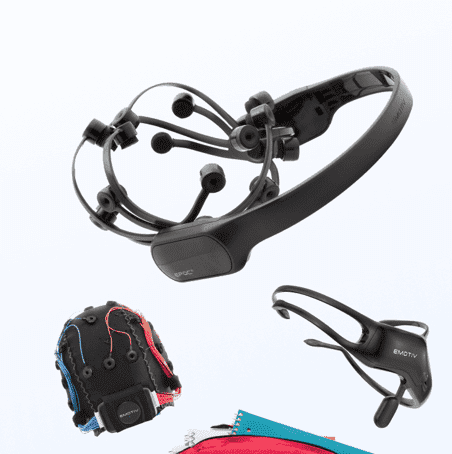
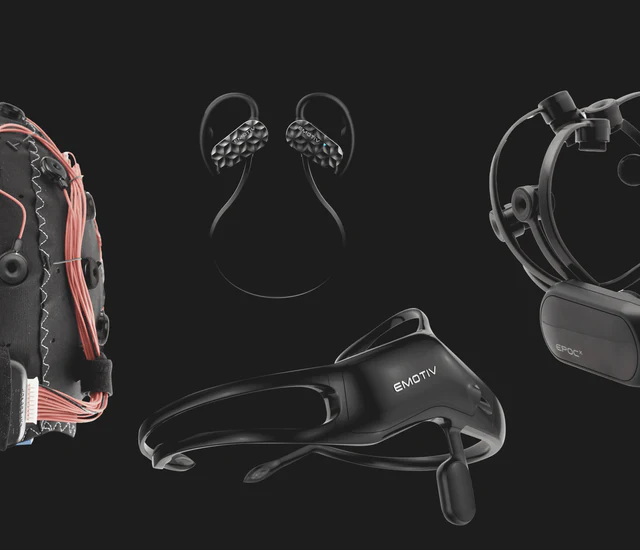
Emotiv MN8: discreet 2-channel EEG earbuds for on-the-go, everyday use
Emotiv Insight: a versatile 5-channel headset ideal for learning, prototyping, and education
Emotiv Epoc X: a 14-channel system for neuroscience, psychology, and neuromarketing research
Emotiv Flex: a high-density 32-channel saline or gel-based system for advanced research
Each device supports different applications, from cognitive wellness to cutting-edge academic research.
How Other Headsets Compare
Consumer EEG systems vary in design, portability, channel count, and software support. Regardless of brand, fit is critical. A poorly adjusted device can reduce signal quality significantly. When comparing options, consider ergonomics, sensor stability, software compatibility, and long-term comfort.
What Can You Do With a Consumer EEG Headset?
Consumer EEG has unlocked countless possibilities across development, research, education, and personal exploration.
Develop Brain-Computer Interfaces
BCIs let you interact with technology using brain signals instead of physical input. With platforms like EmotivBCI, you can translate mental commands into digital actions—ideal for hands-free control, game development, and assistive applications.
Power Academic Research and Education
Portable EEG enables studies outside traditional labs and provides hands-on learning tools for classrooms. Researchers can collect data in natural environments, and students can explore EEG concepts through direct interaction with their own brain activity.
Access Cognitive Wellness Tools
EEG enables real-time neurofeedback that helps users understand patterns associated with focus, calm, or stress. With the Emotiv App, you can view your cognitive state and explore personal wellness techniques.
Conduct Neuromarketing Research
EEG allows researchers to measure authentic, moment-to-moment responses to ads, product designs, and user experiences. Tools for neuromarketing help capture engagement, cognitive load, and emotional indicators.
Practice Meditation with Neurofeedback
Neurofeedback provides immediate insights into your brain’s state during meditation. This feedback helps refine your practice and build consistency over time.
How to Choose the Right Channel Count for Your Needs
Channel count determines the spatial detail of your EEG data. Your project goals dictate whether you need a portable entry-level system or a high-density research device.
2-Channel Systems: For Portability and Simple Tasks
Devices like Emotiv MN8 are ideal for cognitive wellness, everyday use, and simple BCI commands. They prioritize accessibility and quick setup.
5-Channel Headsets: The All-Rounder
Emotiv Insight provides a balanced mix of usability and data quality—great for early research, education, and prototyping.
14-Channel Devices: For Deeper Research
Emotiv Epoc X offers more spatial detail for neuroscience, neuromarketing, and behavioral research.
32-Channel Systems: For Professional-Grade Data
Emotiv Flex provides high-density coverage for advanced research and BCI development, supporting both saline and gel sensors.
Finding an EEG Headset That Fits Your Budget
Channel count, sensor technology, and software support influence price. Here’s a breakdown of typical tiers.
Entry-Level Options (Under $1,000)
Devices like the Emotiv MN8 are perfect for beginners, students, and casual users exploring EEG for the first time.
Mid-Range Headsets ($1,000–$2,000)
Systems like the Emotiv Insight and Emotiv Epoc X offer richer data for more complex research and development.
Premium Models ($2,000+)
High-density systems like Emotiv Flex deliver detailed data for advanced academic research and sophisticated BCI development.
What Determines the Price?
Major factors include channel count, signal quality, electrode type, software ecosystem, and support services such as EmotivPRO.
Your Guide to EEG Software and Data
Software is essential for collecting, analyzing, and using EEG data effectively.
Platforms for Data Collection and Visualization
Applications like the Emotiv App allow real-time visualization and immediate interaction with your cognitive data.
What to Look for in Analysis Tools
Platforms such as EmotivPRO support recording, replay, annotation, and data export for advanced research.
Integrations and Developer Tools
APIs and SDKs let developers stream EEG data into custom applications, enabling creative BCI, wellness, or educational experiences.
Keeping Your Data Private and Secure
Choose a platform with transparent data governance and strong privacy protections. Emotiv follows rigorous security standards and clear policies for developers and researchers.
Where to Find Your Perfect EEG Headset
Choosing where to buy is part of choosing the right device.
Buying Direct vs. Through a Retailer
Buying directly from Emotiv ensures warranty support, the latest models, and access to exclusive bundles.
How to Find Trustworthy Reviews
Look for peer-reviewed studies, detailed comparisons, and evaluations from established neurotechnology communities—not just star ratings.
Why Support and Warranties Matter
A solid warranty and responsive customer support protect your investment and help you advance your projects more efficiently.
Related Articles
Frequently Asked Questions
Can I use a consumer EEG headset for medical diagnosis?
No. These devices are not medical equipment and are not intended to diagnose, treat, or prevent medical conditions. Consult a qualified professional for any health concerns.
I’m new—what should I start with?
A 2-channel or 5-channel system is ideal for beginners. These devices are approachable and support foundational BCI and neurofeedback exploration.
How do I get a good fit and clean data?
Ensure sensors make firm contact with the scalp, adjust the headset properly, and minimize movement. This helps reduce artifacts and improves signal quality.
Is analyzing my own brain data difficult?
Most platforms—including the Emotiv App—provide intuitive visualizations. When you’re ready for more advanced analysis, EmotivPRO offers deeper tools in a user-friendly interface.
What can developers do with raw data?
Export EEG data in standard formats or stream it via SDKs and APIs to build custom applications, BCIs, wellness tools, and research workflows.
From building hands-free controls for a wheelchair to understanding how a customer truly feels about a new product, the applications for brain-computer interfaces (BCIs) are expanding every day. What was once science fiction is now a tangible reality, thanks to accessible EEG technology. These tools are no longer confined to the lab; they’re being used by creators, educators, and researchers to power innovative projects. If you’re ready to move from idea to execution, you need the right hardware. This article serves as a practical guide, breaking down exactly what to look for so you can buy a consumer-grade EEG headset and start building the future.
Key Takeaways
Choose channels based on your project’s needs: Your application—whether it’s a simple BCI or a more advanced research project—should determine the channel count. Prioritize signal quality and comfort over choosing a device solely based on the highest number of sensors.
Prioritize a strong software ecosystem: Hardware collects the data, but software makes it meaningful. Look for platforms with robust analysis tools, developer resources, and data export options so you can transform raw EEG signals into insights.
Balance price and precision: Cost typically reflects channel count, signal quality, and software support. Defining your budget upfront helps you choose the right tool—whether that’s an accessible entry-level device or a higher-density system for advanced research.
What is a Consumer-Grade EEG Headset?
If you’re curious about exploring brain data, you’ve likely come across the term “consumer-grade EEG.” Think of these devices as accessible entry points into working with brain signals. Unlike complex clinical systems used in hospitals, consumer-grade EEG headsets are designed to be portable, user-friendly, and affordable, opening up opportunities for developers, independent researchers, and anyone interested in personal science.
These headsets are used for a wide range of applications—from building brain-computer interfaces to exploring neurofeedback. While they typically have fewer electrodes than clinical systems, modern consumer devices offer robust data suitable for education, prototyping, and research outside traditional labs. The goal is to make EEG technology accessible to more people, enabling learning, creativity, and exploration.
How EEG Technology Works
An EEG headset measures electrical activity generated by your brain. Neurons communicate using tiny electrical impulses, and an EEG device uses electrodes on the scalp to detect these signals. The headset amplifies the activity, filters out noise, and converts the information into digital data. Software then visualizes and analyzes the signals in real time. EEG is non-invasive, safe, and widely used to study brain dynamics in various environments.
Consumer vs. Clinical EEG: What’s the Difference?
The key differences involve purpose, complexity, and cost.
Clinical EEG systems are designed for medical diagnostics and advanced scientific research. They are highly precise, include many electrodes, and require trained operators.
Consumer-grade devices are built for accessibility. They are easier to use, more affordable, and ideal for personal experimentation, education, wellness tools, and creative projects. Both categories are valuable, but they serve different goals—similar to the difference between a professional cinema camera and a high-quality smartphone camera.
Clearing Up Common Myths About Consumer EEG
A common misconception is that consumer EEG devices are identical in precision to clinical systems. While consumer headsets have become significantly more capable, they are not medical devices and are not intended for diagnosis or treatment. Their strength lies in accessibility: enabling BCI prototyping, neurofeedback exploration, and preliminary research without the complexity or cost of clinical hardware.
What to Look for in an EEG Headset
Choosing the right EEG headset means balancing features, performance, and cost based on your goals. Whether you’re working on academic research, developing a new application, or exploring your own brain activity, focus on the factors below to find a device that supports both your current work and future projects.
Channel Count and Signal Quality
Channel count represents the number of electrodes detecting brain activity. More channels provide more spatial detail—but the quality of the signal matters more than the quantity. A lower-channel device with clean, stable data is often more useful than one with many channels but inconsistent signal. Choose the channel count that aligns with your project’s complexity.
Comfort and Fit for Long-Term Use
Comfort directly influences data quality. If a headset isn’t secure, sensors may lose contact with the scalp, producing noise or artifacts. Look for lightweight, adjustable designs that maintain consistent placement. Our Emotiv Flex, for example, is built to support flexible sensor arrangements and comfortable long-term use.
Battery Life and Connectivity
Battery life and connectivity shape the user experience. Real-world BCI applications and mobile research benefit from long-lasting power and reliable wireless communication. Check battery duration, Bluetooth compatibility, and supported devices to ensure the headset suits your environment.
Software and Data Analysis Tools
The software ecosystem defines how you interact with and interpret your data. Consider whether the platform offers real-time visualization, raw data export, event marking, and session recording. For developers, tools like APIs or SDKs are essential. Our EmotivPRO software, for example, allows precise recording, replay, and analysis.
Understanding Sampling Rate and Data Precision
Sampling rate (measured in Hz) indicates how often the device captures data per second. Higher sampling rates can capture fast neural dynamics but generate larger files. Many applications work well with 128 Hz or 256 Hz, while some advanced studies may require more.
A Look at the Top Consumer EEG Headsets
Consumer EEG devices now span a wide range of use cases—from casual exploration to sophisticated academic projects. The key is matching your goals to the capabilities of each system. Below is an overview of Emotiv’s headset family and how to compare them within the broader market.
Meet the Emotiv Headset Family
Emotiv’s lineup is designed to support creators, researchers, and developers at every level:
Emotiv MN8: discreet 2-channel EEG earbuds for on-the-go, everyday use
Emotiv Insight: a versatile 5-channel headset ideal for learning, prototyping, and education
Emotiv Epoc X: a 14-channel system for neuroscience, psychology, and neuromarketing research
Emotiv Flex: a high-density 32-channel saline or gel-based system for advanced research
Each device supports different applications, from cognitive wellness to cutting-edge academic research.
How Other Headsets Compare
Consumer EEG systems vary in design, portability, channel count, and software support. Regardless of brand, fit is critical. A poorly adjusted device can reduce signal quality significantly. When comparing options, consider ergonomics, sensor stability, software compatibility, and long-term comfort.
What Can You Do With a Consumer EEG Headset?
Consumer EEG has unlocked countless possibilities across development, research, education, and personal exploration.
Develop Brain-Computer Interfaces
BCIs let you interact with technology using brain signals instead of physical input. With platforms like EmotivBCI, you can translate mental commands into digital actions—ideal for hands-free control, game development, and assistive applications.
Power Academic Research and Education
Portable EEG enables studies outside traditional labs and provides hands-on learning tools for classrooms. Researchers can collect data in natural environments, and students can explore EEG concepts through direct interaction with their own brain activity.
Access Cognitive Wellness Tools
EEG enables real-time neurofeedback that helps users understand patterns associated with focus, calm, or stress. With the Emotiv App, you can view your cognitive state and explore personal wellness techniques.
Conduct Neuromarketing Research
EEG allows researchers to measure authentic, moment-to-moment responses to ads, product designs, and user experiences. Tools for neuromarketing help capture engagement, cognitive load, and emotional indicators.
Practice Meditation with Neurofeedback
Neurofeedback provides immediate insights into your brain’s state during meditation. This feedback helps refine your practice and build consistency over time.
How to Choose the Right Channel Count for Your Needs
Channel count determines the spatial detail of your EEG data. Your project goals dictate whether you need a portable entry-level system or a high-density research device.
2-Channel Systems: For Portability and Simple Tasks
Devices like Emotiv MN8 are ideal for cognitive wellness, everyday use, and simple BCI commands. They prioritize accessibility and quick setup.
5-Channel Headsets: The All-Rounder
Emotiv Insight provides a balanced mix of usability and data quality—great for early research, education, and prototyping.
14-Channel Devices: For Deeper Research
Emotiv Epoc X offers more spatial detail for neuroscience, neuromarketing, and behavioral research.
32-Channel Systems: For Professional-Grade Data
Emotiv Flex provides high-density coverage for advanced research and BCI development, supporting both saline and gel sensors.
Finding an EEG Headset That Fits Your Budget
Channel count, sensor technology, and software support influence price. Here’s a breakdown of typical tiers.
Entry-Level Options (Under $1,000)
Devices like the Emotiv MN8 are perfect for beginners, students, and casual users exploring EEG for the first time.
Mid-Range Headsets ($1,000–$2,000)
Systems like the Emotiv Insight and Emotiv Epoc X offer richer data for more complex research and development.
Premium Models ($2,000+)
High-density systems like Emotiv Flex deliver detailed data for advanced academic research and sophisticated BCI development.
What Determines the Price?
Major factors include channel count, signal quality, electrode type, software ecosystem, and support services such as EmotivPRO.
Your Guide to EEG Software and Data
Software is essential for collecting, analyzing, and using EEG data effectively.
Platforms for Data Collection and Visualization
Applications like the Emotiv App allow real-time visualization and immediate interaction with your cognitive data.
What to Look for in Analysis Tools
Platforms such as EmotivPRO support recording, replay, annotation, and data export for advanced research.
Integrations and Developer Tools
APIs and SDKs let developers stream EEG data into custom applications, enabling creative BCI, wellness, or educational experiences.
Keeping Your Data Private and Secure
Choose a platform with transparent data governance and strong privacy protections. Emotiv follows rigorous security standards and clear policies for developers and researchers.
Where to Find Your Perfect EEG Headset
Choosing where to buy is part of choosing the right device.
Buying Direct vs. Through a Retailer
Buying directly from Emotiv ensures warranty support, the latest models, and access to exclusive bundles.
How to Find Trustworthy Reviews
Look for peer-reviewed studies, detailed comparisons, and evaluations from established neurotechnology communities—not just star ratings.
Why Support and Warranties Matter
A solid warranty and responsive customer support protect your investment and help you advance your projects more efficiently.
Related Articles
Frequently Asked Questions
Can I use a consumer EEG headset for medical diagnosis?
No. These devices are not medical equipment and are not intended to diagnose, treat, or prevent medical conditions. Consult a qualified professional for any health concerns.
I’m new—what should I start with?
A 2-channel or 5-channel system is ideal for beginners. These devices are approachable and support foundational BCI and neurofeedback exploration.
How do I get a good fit and clean data?
Ensure sensors make firm contact with the scalp, adjust the headset properly, and minimize movement. This helps reduce artifacts and improves signal quality.
Is analyzing my own brain data difficult?
Most platforms—including the Emotiv App—provide intuitive visualizations. When you’re ready for more advanced analysis, EmotivPRO offers deeper tools in a user-friendly interface.
What can developers do with raw data?
Export EEG data in standard formats or stream it via SDKs and APIs to build custom applications, BCIs, wellness tools, and research workflows.
From building hands-free controls for a wheelchair to understanding how a customer truly feels about a new product, the applications for brain-computer interfaces (BCIs) are expanding every day. What was once science fiction is now a tangible reality, thanks to accessible EEG technology. These tools are no longer confined to the lab; they’re being used by creators, educators, and researchers to power innovative projects. If you’re ready to move from idea to execution, you need the right hardware. This article serves as a practical guide, breaking down exactly what to look for so you can buy a consumer-grade EEG headset and start building the future.
Key Takeaways
Choose channels based on your project’s needs: Your application—whether it’s a simple BCI or a more advanced research project—should determine the channel count. Prioritize signal quality and comfort over choosing a device solely based on the highest number of sensors.
Prioritize a strong software ecosystem: Hardware collects the data, but software makes it meaningful. Look for platforms with robust analysis tools, developer resources, and data export options so you can transform raw EEG signals into insights.
Balance price and precision: Cost typically reflects channel count, signal quality, and software support. Defining your budget upfront helps you choose the right tool—whether that’s an accessible entry-level device or a higher-density system for advanced research.
What is a Consumer-Grade EEG Headset?
If you’re curious about exploring brain data, you’ve likely come across the term “consumer-grade EEG.” Think of these devices as accessible entry points into working with brain signals. Unlike complex clinical systems used in hospitals, consumer-grade EEG headsets are designed to be portable, user-friendly, and affordable, opening up opportunities for developers, independent researchers, and anyone interested in personal science.
These headsets are used for a wide range of applications—from building brain-computer interfaces to exploring neurofeedback. While they typically have fewer electrodes than clinical systems, modern consumer devices offer robust data suitable for education, prototyping, and research outside traditional labs. The goal is to make EEG technology accessible to more people, enabling learning, creativity, and exploration.
How EEG Technology Works
An EEG headset measures electrical activity generated by your brain. Neurons communicate using tiny electrical impulses, and an EEG device uses electrodes on the scalp to detect these signals. The headset amplifies the activity, filters out noise, and converts the information into digital data. Software then visualizes and analyzes the signals in real time. EEG is non-invasive, safe, and widely used to study brain dynamics in various environments.
Consumer vs. Clinical EEG: What’s the Difference?
The key differences involve purpose, complexity, and cost.
Clinical EEG systems are designed for medical diagnostics and advanced scientific research. They are highly precise, include many electrodes, and require trained operators.
Consumer-grade devices are built for accessibility. They are easier to use, more affordable, and ideal for personal experimentation, education, wellness tools, and creative projects. Both categories are valuable, but they serve different goals—similar to the difference between a professional cinema camera and a high-quality smartphone camera.
Clearing Up Common Myths About Consumer EEG
A common misconception is that consumer EEG devices are identical in precision to clinical systems. While consumer headsets have become significantly more capable, they are not medical devices and are not intended for diagnosis or treatment. Their strength lies in accessibility: enabling BCI prototyping, neurofeedback exploration, and preliminary research without the complexity or cost of clinical hardware.
What to Look for in an EEG Headset
Choosing the right EEG headset means balancing features, performance, and cost based on your goals. Whether you’re working on academic research, developing a new application, or exploring your own brain activity, focus on the factors below to find a device that supports both your current work and future projects.
Channel Count and Signal Quality
Channel count represents the number of electrodes detecting brain activity. More channels provide more spatial detail—but the quality of the signal matters more than the quantity. A lower-channel device with clean, stable data is often more useful than one with many channels but inconsistent signal. Choose the channel count that aligns with your project’s complexity.
Comfort and Fit for Long-Term Use
Comfort directly influences data quality. If a headset isn’t secure, sensors may lose contact with the scalp, producing noise or artifacts. Look for lightweight, adjustable designs that maintain consistent placement. Our Emotiv Flex, for example, is built to support flexible sensor arrangements and comfortable long-term use.
Battery Life and Connectivity
Battery life and connectivity shape the user experience. Real-world BCI applications and mobile research benefit from long-lasting power and reliable wireless communication. Check battery duration, Bluetooth compatibility, and supported devices to ensure the headset suits your environment.
Software and Data Analysis Tools
The software ecosystem defines how you interact with and interpret your data. Consider whether the platform offers real-time visualization, raw data export, event marking, and session recording. For developers, tools like APIs or SDKs are essential. Our EmotivPRO software, for example, allows precise recording, replay, and analysis.
Understanding Sampling Rate and Data Precision
Sampling rate (measured in Hz) indicates how often the device captures data per second. Higher sampling rates can capture fast neural dynamics but generate larger files. Many applications work well with 128 Hz or 256 Hz, while some advanced studies may require more.
A Look at the Top Consumer EEG Headsets
Consumer EEG devices now span a wide range of use cases—from casual exploration to sophisticated academic projects. The key is matching your goals to the capabilities of each system. Below is an overview of Emotiv’s headset family and how to compare them within the broader market.
Meet the Emotiv Headset Family
Emotiv’s lineup is designed to support creators, researchers, and developers at every level:
Emotiv MN8: discreet 2-channel EEG earbuds for on-the-go, everyday use
Emotiv Insight: a versatile 5-channel headset ideal for learning, prototyping, and education
Emotiv Epoc X: a 14-channel system for neuroscience, psychology, and neuromarketing research
Emotiv Flex: a high-density 32-channel saline or gel-based system for advanced research
Each device supports different applications, from cognitive wellness to cutting-edge academic research.
How Other Headsets Compare
Consumer EEG systems vary in design, portability, channel count, and software support. Regardless of brand, fit is critical. A poorly adjusted device can reduce signal quality significantly. When comparing options, consider ergonomics, sensor stability, software compatibility, and long-term comfort.
What Can You Do With a Consumer EEG Headset?
Consumer EEG has unlocked countless possibilities across development, research, education, and personal exploration.
Develop Brain-Computer Interfaces
BCIs let you interact with technology using brain signals instead of physical input. With platforms like EmotivBCI, you can translate mental commands into digital actions—ideal for hands-free control, game development, and assistive applications.
Power Academic Research and Education
Portable EEG enables studies outside traditional labs and provides hands-on learning tools for classrooms. Researchers can collect data in natural environments, and students can explore EEG concepts through direct interaction with their own brain activity.
Access Cognitive Wellness Tools
EEG enables real-time neurofeedback that helps users understand patterns associated with focus, calm, or stress. With the Emotiv App, you can view your cognitive state and explore personal wellness techniques.
Conduct Neuromarketing Research
EEG allows researchers to measure authentic, moment-to-moment responses to ads, product designs, and user experiences. Tools for neuromarketing help capture engagement, cognitive load, and emotional indicators.
Practice Meditation with Neurofeedback
Neurofeedback provides immediate insights into your brain’s state during meditation. This feedback helps refine your practice and build consistency over time.
How to Choose the Right Channel Count for Your Needs
Channel count determines the spatial detail of your EEG data. Your project goals dictate whether you need a portable entry-level system or a high-density research device.
2-Channel Systems: For Portability and Simple Tasks
Devices like Emotiv MN8 are ideal for cognitive wellness, everyday use, and simple BCI commands. They prioritize accessibility and quick setup.
5-Channel Headsets: The All-Rounder
Emotiv Insight provides a balanced mix of usability and data quality—great for early research, education, and prototyping.
14-Channel Devices: For Deeper Research
Emotiv Epoc X offers more spatial detail for neuroscience, neuromarketing, and behavioral research.
32-Channel Systems: For Professional-Grade Data
Emotiv Flex provides high-density coverage for advanced research and BCI development, supporting both saline and gel sensors.
Finding an EEG Headset That Fits Your Budget
Channel count, sensor technology, and software support influence price. Here’s a breakdown of typical tiers.
Entry-Level Options (Under $1,000)
Devices like the Emotiv MN8 are perfect for beginners, students, and casual users exploring EEG for the first time.
Mid-Range Headsets ($1,000–$2,000)
Systems like the Emotiv Insight and Emotiv Epoc X offer richer data for more complex research and development.
Premium Models ($2,000+)
High-density systems like Emotiv Flex deliver detailed data for advanced academic research and sophisticated BCI development.
What Determines the Price?
Major factors include channel count, signal quality, electrode type, software ecosystem, and support services such as EmotivPRO.
Your Guide to EEG Software and Data
Software is essential for collecting, analyzing, and using EEG data effectively.
Platforms for Data Collection and Visualization
Applications like the Emotiv App allow real-time visualization and immediate interaction with your cognitive data.
What to Look for in Analysis Tools
Platforms such as EmotivPRO support recording, replay, annotation, and data export for advanced research.
Integrations and Developer Tools
APIs and SDKs let developers stream EEG data into custom applications, enabling creative BCI, wellness, or educational experiences.
Keeping Your Data Private and Secure
Choose a platform with transparent data governance and strong privacy protections. Emotiv follows rigorous security standards and clear policies for developers and researchers.
Where to Find Your Perfect EEG Headset
Choosing where to buy is part of choosing the right device.
Buying Direct vs. Through a Retailer
Buying directly from Emotiv ensures warranty support, the latest models, and access to exclusive bundles.
How to Find Trustworthy Reviews
Look for peer-reviewed studies, detailed comparisons, and evaluations from established neurotechnology communities—not just star ratings.
Why Support and Warranties Matter
A solid warranty and responsive customer support protect your investment and help you advance your projects more efficiently.
Related Articles
Frequently Asked Questions
Can I use a consumer EEG headset for medical diagnosis?
No. These devices are not medical equipment and are not intended to diagnose, treat, or prevent medical conditions. Consult a qualified professional for any health concerns.
I’m new—what should I start with?
A 2-channel or 5-channel system is ideal for beginners. These devices are approachable and support foundational BCI and neurofeedback exploration.
How do I get a good fit and clean data?
Ensure sensors make firm contact with the scalp, adjust the headset properly, and minimize movement. This helps reduce artifacts and improves signal quality.
Is analyzing my own brain data difficult?
Most platforms—including the Emotiv App—provide intuitive visualizations. When you’re ready for more advanced analysis, EmotivPRO offers deeper tools in a user-friendly interface.
What can developers do with raw data?
Export EEG data in standard formats or stream it via SDKs and APIs to build custom applications, BCIs, wellness tools, and research workflows.
Continue reading