4 Best Bluetooth EEG Headset Models Compared
Duong Tran
Updated on
Oct 13, 2025
4 Best Bluetooth EEG Headset Models Compared
Duong Tran
Updated on
Oct 13, 2025
4 Best Bluetooth EEG Headset Models Compared
Duong Tran
Updated on
Oct 13, 2025
The human brain is the source of our thoughts, emotions, and actions, yet understanding its inner workings has always been a challenge. What if you could see your focus levels during a work session or get real-time feedback during meditation? This is no longer science fiction. With a Bluetooth EEG headset, you can monitor your brain's activity easily and comfortably. These devices make electroencephalography portable and user-friendly, empowering you to explore your own cognitive patterns or build innovative new technologies. Whether you are a researcher, a developer, or simply curious about your own mind, this technology provides a powerful toolkit. This guide explains the fundamentals, from key features to common applications.
Key Takeaways
Go Beyond the Lab with Wireless EEG: Bluetooth headsets make it possible to measure brain activity in real-world settings, opening up new possibilities for research, personal wellness tracking, and developing brain-computer interfaces.
Match the Headset to Your Mission: Define your primary goal first. A high-channel device is essential for detailed academic research, while a headset with fewer channels is ideal for wellness tracking or building introductory BCI apps.
Focus on the Features That Matter: Look beyond the price tag and evaluate the number of channels for data resolution, the electrode type for ease of use, and the software compatibility to ensure you can analyze your data effectively.
What is a Bluetooth EEG Headset?
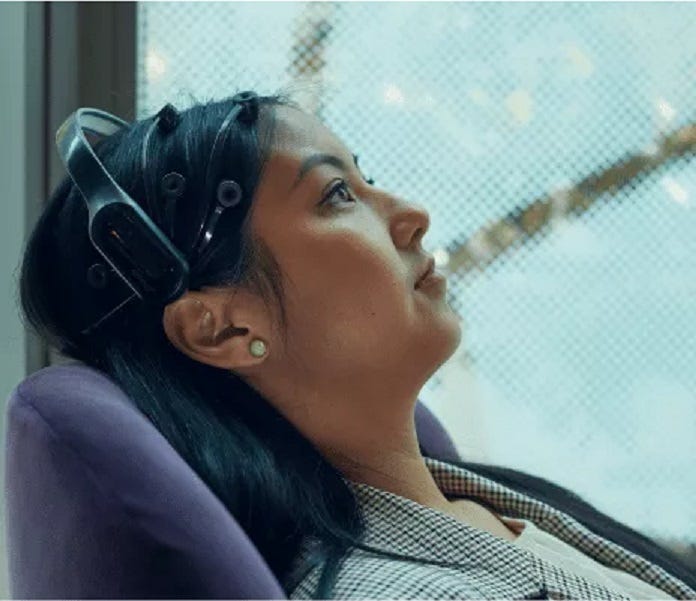
A Bluetooth EEG headset is a wearable device that measures your brain's electrical activity, often called brainwaves. Think of it as a fitness tracker, but for your brain. In the past, getting this kind of data required a complicated setup in a hospital or lab. Now, wireless technology has made electroencephalography (EEG) accessible, comfortable, and easy enough to use from your own home or office. These headsets are designed to be user-friendly, often running on a simple rechargeable battery and connecting seamlessly to your computer or smartphone.
The core purpose of a Bluetooth EEG headset is to translate the tiny electrical signals produced by your neurons into understandable data. This opens up a world of possibilities, from serious academic research to personal wellness and innovative tech development. Companies like EMOTIV have been at the forefront of this shift, creating powerful yet portable devices that allow anyone to explore the workings of the human brain. Whether you're a scientist, a developer, or just curious about your own cognitive performance, these headsets provide a direct window into your mind's activity.
How Does It Work?
At its heart, a Bluetooth EEG headset works by using small sensors, called electrodes, that make contact with your scalp. These electrodes are incredibly sensitive and can detect the faint electrical impulses generated by your brain cells as they communicate with each other. The headset then amplifies these signals, converts them into digital data, and transmits them wirelessly via Bluetooth to a connected device.
Many consumer-friendly headsets, including some EMOTIV models, use convenient dry or saline-based electrodes, which means you don't need to apply any sticky gels to get a clean reading. Once the data reaches your device, specialized software like EmotivPRO takes over. This software processes the raw brainwave data, visualizes it in real-time, and provides metrics on things like your focus, stress, and engagement levels. It’s a seamless flow of information from your brain to your screen.
Key Benefits of Going Wireless
The most significant advantage of a wireless EEG headset is freedom. By removing the tethers to a large, stationary machine, you can collect research-grade brain data in real-world settings, not just a controlled lab environment. This is a game-changer for fields like neuromarketing, where researchers can study consumer responses to products in a natural shopping setting. It also allows for more dynamic studies of athletes, artists, or anyone whose performance can’t be replicated while sitting still.
This mobility also powers incredible innovations in technology. Wireless headsets are the key that unlocks practical brain-computer interfaces (BCI), allowing users to control drones, wheelchairs, or video game characters with their thoughts. For personal use, it means you can track your focus during a workday, monitor your meditation sessions, or simply gain a deeper understanding of your own cognitive patterns without being tied to a desk.
Common Myths vs. Reality
A common question that comes up with any wireless wearable is, "Is it safe?" It's natural to be cautious about a device that sits on your head and transmits signals. The primary concern people raise is often related to radiofrequency (RF) energy. However, it's important to distinguish between different types of wireless signals. Bluetooth is a very low-power technology, significantly weaker than what your cell phone emits.
Major health organizations have looked into this extensively. The National Cancer Institute, for example, states that no scientific evidence has established a clear link between wireless device use and cancer or other illnesses. In fact, many health experts recommend using Bluetooth devices as a safer alternative for making calls, as it keeps the higher-power RF signal from your phone away from your head. You can feel confident that modern EEG headsets are designed with safety as a top priority.
Popular Ways to Use Them
The applications for Bluetooth EEG headsets are as diverse as the people who use them. For developers and tech enthusiasts, these devices are a playground for innovation. Using EMOTIV's resources for developers, you can build apps that respond to a user's emotional state, create mind-controlled games, or design assistive technologies for individuals with disabilities.
In the wellness space, people use EEG headsets to enhance their meditation practices by getting real-time feedback on their state of calm or to train their focus for better productivity. Researchers use them to conduct studies on everything from learning and memory to emotional responses. And in the world of entertainment, mind-controlled art installations and immersive gaming experiences are becoming a reality. The technology provides a powerful toolkit for anyone interested in exploring the connection between mind and machine.
A Breakdown of the Top Bluetooth EEG Headsets
With so many options available, finding the right wireless EEG headset can feel like a big task. The best choice for you really depends on what you want to achieve, whether it's conducting in-depth academic research, developing a new brain-computer interface, or simply exploring your own cognitive wellness. Let's walk through some of the top models to see how they stack up. We’ll cover everything from high-density research caps to discreet earbuds, giving you a clear picture of what each device offers.
EMOTIV EPOC X (14-Channel)
The EMOTIV EPOC X is a fantastic all-rounder that has become a staple in the research community. With 14 channels, it provides high-resolution brain data that’s perfect for a wide range of applications, from neuromarketing to cognitive performance studies. One of its most practical features is the saline-based sensor system, which is easy to set up and rehydrate for longer recording sessions. The headset is designed for comfort and stability, ensuring you get clean, reliable data. It’s a powerful tool that strikes an excellent balance between professional-grade performance and user-friendly design, making it a go-to for both seasoned researchers and serious BCI developers.
EMOTIV Insight (5-Channel)
If you’re looking for something more streamlined for personal use or projects that don’t require high-density data, the EMOTIV Insight is an excellent choice. This 5-channel headset uses semi-dry polymer sensors, which means you can skip the saline solution and gels entirely for a quick and clean setup. It’s lightweight, comfortable, and connects easily to your computer or tablet via Bluetooth. With a battery that lasts up to 20 hours, it’s built for convenience. The Insight is ideal for tracking your own cognitive wellness, building introductory brain-computer interface applications, or running studies where ease of use is the top priority.
EMOTIV MN8 EEG Earbuds
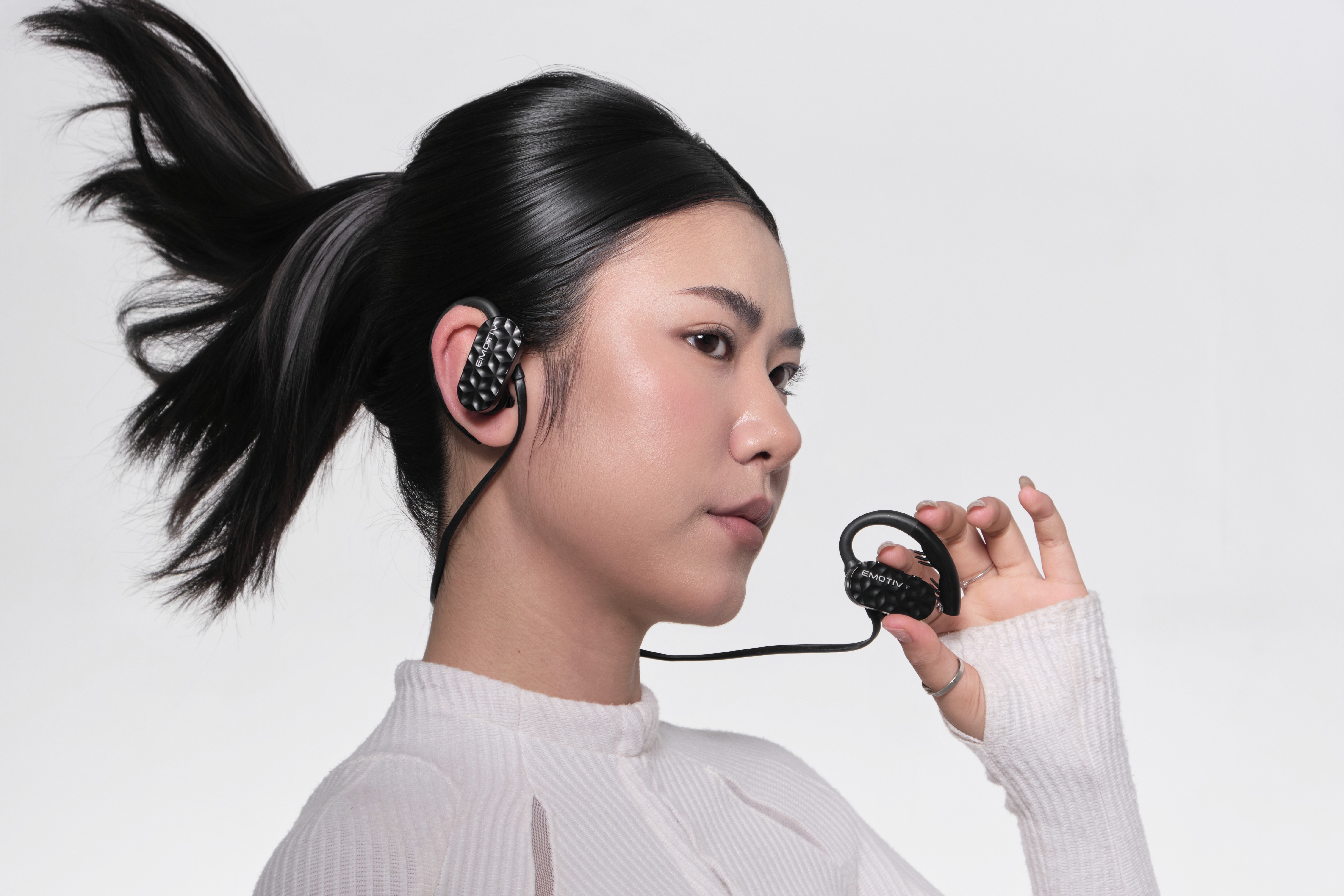
For the most discreet and portable brain monitoring experience, the EMOTIV MN8 EEG Earbuds are in a class of their own. These earbuds offer a 2-channel EEG system in a form factor you can wear anywhere, making them perfect for tracking cognitive states throughout your day. They are designed for users who want to integrate brain data into their daily wellness routines without the bulk of a traditional headset. Whether you're interested in monitoring focus, stress, or relaxation during work or meditation, the MN8 provides a simple and comfortable way to gather valuable insights on the go.
EMOTIV FLEX Series (32-Channel)
When your research demands the highest level of detail and precision, the EMOTIV FLEX series is the answer. This 32-channel system is designed for advanced academic research and education, offering dense coverage across the scalp. The cap-based design allows you to place sensors precisely where you need them for your specific experiment. You can choose between the FLEX Saline for a convenient setup or the FLEX Gel for the gold-standard signal quality required in sensitive studies. This headset is the premium choice for researchers who need comprehensive, high-quality data to explore the complexities of the human brain.
A Look at Other Options on the Market
While EMOTIV offers a comprehensive range, it’s helpful to know about other devices out there. Brands like NeuroSky offer single-channel headsets, such as the MindWave Mobile 2, which are often used for simple gaming and educational apps. These devices are great for getting a basic introduction to EEG technology. However, they lack the multi-channel configuration and data resolution needed for serious research or sophisticated BCI development. For applications in fields like neuromarketing or clinical studies, the data quality and spatial detail from a multi-channel headset like the EPOC X or FLEX are essential for drawing meaningful conclusions.
Key Features to Look For
When you start shopping for a Bluetooth EEG headset, you’ll quickly realize they aren’t all built the same. The right device for a university research lab will have different features than one designed for personal wellness tracking at home. Making the best choice comes down to understanding your specific goals and knowing which technical specifications will help you achieve them.
Think about what you want to accomplish. Are you conducting detailed cognitive studies that require high-density data from across the scalp? Or are you a developer building a brain-computer interface that relies on a few clear signals? Maybe you’re focused on improving your focus and managing stress. Each of these use cases points to a different set of ideal features. To help you sort through the options, let’s break down the most important features to consider, from the number of channels and electrode type to software compatibility and overall comfort.
Number of EEG Channels
The number of channels on a headset refers to the number of electrodes collecting data from your brain. Think of it like pixels in a picture—more channels provide higher spatial resolution, giving you a more detailed map of brain activity. A device like the 32-channel EMOTIV FLEX is built for in-depth academic research where localizing specific neural signals is critical. On the other hand, a headset with fewer channels, like the 5-channel EMOTIV Insight, is perfect for tracking broader brainwave patterns related to wellness, focus, or simple control commands. Your ideal channel count depends entirely on the level of detail your work requires.
Electrode Types and Data Quality
The electrodes are where the magic happens—they’re the sensors that actually detect your brain’s electrical signals. The type of electrode used directly impacts data quality and ease of use. Gel-based electrodes, like those on the FLEX Gel, are often seen as the gold standard in research for their excellent signal conductivity, though they require some prep time. Saline-based electrodes, found on the EPOC X, offer a fantastic middle ground, providing high-quality data with a much quicker setup. Dry electrodes are the most convenient but can sometimes be more susceptible to noise. Choosing the right type is a balance between your need for pristine data and the practicalities of your setup.
Battery Life and Wireless Range
When you’re in the middle of an experiment or a deep focus session, the last thing you want is a dead battery. A long battery life is crucial for uninterrupted data collection. The EPOC X headset, for example, offers up to nine hours of continuous use, making it reliable for all-day studies. A strong wireless range is just as important, giving you the freedom to move around without being tethered to a computer. This flexibility is essential for research involving physical tasks or for simply creating a more natural, comfortable user experience. Always check these specs to ensure the device can keep up with your demands.
Comfort and Practical Design
An EEG headset can have the best technology in the world, but if it’s uncomfortable, you won’t want to wear it. Comfort is key, especially for long sessions. Look for a design that is lightweight, adjustable, and distributes pressure evenly. The ideal headset should feel secure without being too tight. Practicality also matters. How easy is it to put on and take off? For daily use, a discreet and simple design like the MW20 EEG Earbuds might be perfect. For comprehensive lab research, a full-cap system like the FLEX is more appropriate. The best design is one that fits both your head and your lifestyle.
Software and App Compatibility
The headset hardware gathers the raw data, but it’s the software that turns those signals into meaningful insights. A powerful and intuitive software ecosystem is non-negotiable. Check if the headset is compatible with software that matches your goals. For instance, EmotivPRO is designed for analyzing and visualizing complex data for scientific research, while the Emotiv App provides accessible tools for tracking your cognitive wellness. If you’re a developer, look for robust API and software development kit (SDK) access to build your own custom applications. The right software makes all the difference in what you can achieve with your device.
Price Point and Long-Term Value
Of course, budget is always a factor. While it can be tempting to go for the cheapest option, it’s more effective to think in terms of long-term value. A low-cost headset that produces noisy data or lacks essential software support won’t be a good investment. Consider the total package: the quality of the hardware, the capabilities of the software, the level of customer support, and the device’s durability. The goal is to find a headset that not only fits your budget today but also provides the reliable performance and features you’ll need as your projects or personal goals evolve over time.
Explore Common EEG Applications
EEG technology has moved far beyond the clinical setting. Thanks to wireless headsets, what was once confined to research labs is now powering an incredible range of applications you can use yourself. From controlling devices with your thoughts to gaining deeper insights into your own cognitive health, the possibilities are expanding every day. This technology is making it easier for researchers, developers, and curious individuals to interact with brain data in meaningful ways. These headsets are not just for scientists anymore; they are practical tools for understanding and interacting with the world in new ways.
The real magic happens when you take EEG out of the lab. Imagine studying a student's focus in a real classroom, not a simulated one. Or think about a developer creating an application that adapts to a user's emotional state in real time. This is what portable EEG makes possible. Whether you're a developer creating the next generation of interactive software, a researcher studying the brain in real-world settings, or someone interested in personal wellness, portable EEG offers a window into the mind's workings. Let's look at some of the most common and exciting ways people are using Bluetooth EEG headsets to innovate, learn, and improve their well-being.
Brain-Computer Interfaces
Imagine steering a drone or typing a message using only your mind. That’s the reality of a Brain-Computer Interface (BCI). This technology translates your brain's electrical signals into commands that a computer or device can understand and execute. Modern EEG headsets can turn your brainwaves into direct actions, allowing you to interact with apps, games, and even assistive devices without lifting a finger. For developers, this opens up a new world of hands-free control systems. For individuals, especially those with mobility challenges, BCI offers a powerful new way to connect with the world around them. It’s a field where science fiction is quickly becoming science fact.
Academic Research
Wireless EEG headsets have been a game-changer for academic research and education. Researchers are no longer limited to collecting data in controlled, artificial lab environments. Now, they can study brain activity during real-world activities like learning in a classroom, making decisions in a simulated market, or even during athletic performance. This shift allows for more authentic and applicable findings. In fact, the accessibility and reliability of these devices have made them a staple in the field. A 2023 study found that nearly 70% of studies using consumer-grade EEG devices used EMOTIV EPOC headsets, showing just how integral they’ve become to modern neuroscience research.
Cognitive Training and Wellness
Have you ever wished you could see what’s happening in your brain when you meditate or try to focus? With EEG, you can. This technology provides real-time feedback on your mental state, making it a powerful tool for cognitive wellness. Apps designed for wellness can help you practice mindfulness, manage stress, and improve your concentration by showing you how your brain responds to different techniques. By observing these patterns, you can learn to better regulate your attention and emotional responses. It’s like having a personal trainer for your brain, guiding you toward a more balanced and focused state of mind.
Mental Health Monitoring
While consumer EEG headsets aren't meant to diagnose conditions, they can be an incredibly useful tool for monitoring aspects of your mental well-being. By tracking your brain activity over time with an application like the Emotiv App, you can start to notice patterns related to stress, focus, and relaxation. For example, you might see how a mindfulness practice affects your brainwaves or identify times of day when your focus naturally dips. Portable EEG devices can help you gain self-awareness about your mental and emotional states. This data can empower you to make more informed decisions about your daily routines and habits, supporting your overall mental health journey.
Gaming and Immersive Entertainment
The worlds of gaming and entertainment are becoming more immersive, and EEG is at the forefront of this evolution. Imagine a game that responds not just to your button clicks, but to your emotional state. An EEG headset can detect if you’re feeling calm, focused, or excited, and the game’s environment, music, or even difficulty could adapt in real time. This creates a deeply personal and dynamic experience that’s unique to every player. For developers, this technology provides a new input method to create truly innovative and responsive entertainment, moving beyond traditional controllers and into the realm of thought-controlled action.
A Guide to Technical Specifications
Getting into the technical specifications of an EEG headset can feel a bit like reading a different language. But understanding these details is what separates a good purchase from a great one. The specs on a product page aren't just numbers; they directly define what you can measure, how accurately you can measure it, and what you can ultimately achieve with your device. Whether you're conducting detailed academic research or exploring your own cognitive wellness, paying attention to the technical details ensures the headset you choose is perfectly suited for your goals.
Think of this as your decoder ring for EEG specs. We'll walk through the most important terms and what they mean for you in a practical sense. By the end of this section, you'll be able to look at a comparison chart and know exactly which features matter for your project. This knowledge will help you invest in a tool that not only meets your needs today but also supports your ambitions as you grow.
Understand Channel Configuration
The term "channels" simply refers to the number of sensors (electrodes) on the headset that record brain activity. Each channel collects data from a different location on your scalp. A device with more channels, like the 32-channel EMOTIV FLEX, can gather more detailed information from across the brain, giving you higher spatial resolution. For projects that require a comprehensive map of brain activity, more channels are better.
On the other hand, a headset with fewer channels, such as the 5-channel EMOTIV Insight, is perfect for monitoring general brain states or for applications focused on specific, well-understood metrics. The number of channels you need is directly tied to your primary goal.
Compare Sampling Rates
The sampling rate tells you how many times per second the headset records a data point from each channel. It's measured in Hertz (Hz). A higher sampling rate means the device captures brainwave activity in much finer detail, which is essential for detecting very fast neural responses. For example, if you're studying event-related potentials (ERPs), you'll need a high sampling rate to pinpoint the brain's reaction to a specific stimulus.
For applications like meditation tracking or general cognitive wellness, a lower sampling rate is often sufficient. When comparing headsets, consider the speed of the brain activity you intend to study and choose a device with a sampling rate that can keep up.
Evaluate Wireless Performance
Since we're focused on Bluetooth headsets, wireless performance is a critical factor. A stable and reliable connection is non-negotiable for collecting clean, uninterrupted data. Look for information on the headset's Bluetooth version, range, and battery life. A poor connection can result in lost data packets or delays (latency), which can compromise the timing and accuracy of your measurements. Modern EEG headsets have been rigorously tested to ensure their wireless capabilities are robust enough for even the most demanding research environments, so you can move freely without sacrificing data integrity.
Check Data Quality Standards
Not all EEG data is created equal. The ultimate goal is to get a clean signal with minimal background noise. Data quality depends on several factors, including the type of electrodes used (dry, saline, or gel), how well the headset fits, and the quality of its internal components. Reputable manufacturers are transparent about their device's performance and often provide validation studies. When you choose a well-engineered device like the EMOTIV EPOC X, you're investing in a tool designed to provide a high signal-to-noise ratio, ensuring your data is both accurate and reliable for any application.
Confirm Device Compatibility
An EEG headset is only as powerful as the software that supports it. Before you make a decision, confirm that the device is compatible with your computer's operating system and any mobile devices you plan to use. More importantly, check its compatibility with the software you'll need for your specific application. For instance, if you're a researcher, you'll want a headset that works seamlessly with advanced analysis software like EmotivPRO. If you're developing a brain-computer interface, ensure the headset has a robust SDK and is compatible with tools like EmotivBCI.
How to Choose the Right EEG Headset for You
Picking the right EEG headset feels a lot like choosing any other piece of important tech—the best one is the one that fits what you actually need to do. With so many options available, it’s easy to get lost in technical specifications. The key is to step back and think about your project, your experience level, and your practical needs before you start comparing models. A researcher conducting a complex study will have different requirements than a developer building a brain-computer interface or someone exploring their own cognitive wellness.
To make the right choice, you’ll want to balance features like the number of channels, sensor type, and software compatibility with your budget and how much time you want to spend on setup and maintenance. Think of it as a checklist. By walking through a few key questions, you can narrow down the field and find a headset that not only collects the data you need but also fits seamlessly into your workflow. Let’s break down the most important factors to consider.
Define Your Primary Goal
First things first: what do you want to accomplish? Your primary goal is the single most important factor in determining the right headset. Are you conducting formal academic research that requires high-density data from specific brain regions? Or are you a developer prototyping a new BCI application? Maybe you’re simply curious about your own brain activity and want to explore cognitive wellness.
For example, a versatile headset like the EPOC X is built for both professional researchers and serious enthusiasts who need reliable, high-quality data. On the other hand, if your focus is on personal wellness or straightforward BCI commands, a device with fewer channels might be perfect. Clearly defining your "why" will immediately help you filter out options that are either overkill or underpowered for your needs.
Consider Your Budget
Let's be practical—budget always plays a role. EEG headset prices can range significantly, and the cost is often tied to the number of channels, sensor technology, and overall data resolution. It’s helpful to think about your budget not just as a limit, but as a way to find the best value for your specific goals. You don't always need the model with the most channels to get the insights you’re looking for.
For many users, a headset like the Insight strikes an excellent balance between functionality and cost. With its 5 channels, it provides meaningful brain activity data without the price tag of a high-density research device. When weighing your options, consider the long-term value. Investing in a quality device that meets your needs from the start is often more cost-effective than starting with a tool that you’ll quickly outgrow.
Know Where to Buy
Once you have an idea of what you need, it’s important to purchase your headset from a reputable source. Buying directly from the manufacturer, like EMOTIV, is almost always the best route. This ensures you’re getting an authentic product, a valid warranty, and access to official customer support. You’ll also know that the hardware and software are up-to-date.
While you might find headsets on third-party marketplaces, be cautious. These sellers may not be authorized dealers, which could leave you without support or a warranty if something goes wrong. Sticking to official channels gives you peace of mind and a direct line to the experts who created the technology. When you’re ready, you can explore the full range of EMOTIV products on our official website to compare models and find the perfect fit.
Plan for Setup and Support
A great headset is more than just its hardware; the entire user experience matters, starting with setup. You want a device that you can get up and running without a major headache. Some headsets are designed for simplicity and can be ready to go in just a few minutes. The Insight, for instance, is known for its quick 1- to 2-minute setup process, making it ideal for users who want to start collecting data right away.
Beyond the initial setup, consider the software ecosystem. Powerful, intuitive software like EmotivPRO is essential for visualizing, recording, and analyzing your brain data. Look for a system that offers robust support, whether through detailed documentation, tutorials, or an active user community. This support network can be invaluable as you learn to make the most of your device.
Learn the Maintenance Basics
Finally, think about the long-term care of your headset. Different models have different maintenance needs, and understanding them upfront will help you maintain data quality and extend the life of your device. The type of sensors your headset uses is the biggest factor here. For example, saline-based sensors, like those on the EPOC X, are easy to manage—you just rehydrate them with a simple saltwater solution. This makes them convenient for repeated use and long studies.
On the other hand, some headsets, like the FLEX Gel, use a conductive gel. Gel-based sensors can provide excellent signal quality but require a bit more cleanup after each session. Neither is inherently better; it’s a trade-off between convenience and specific data requirements. Considering these practical, day-to-day realities will ensure you choose a headset that you’re happy to use regularly.
Related Articles
Frequently Asked Questions
Do I need a background in neuroscience to use one of these headsets? Not at all. While these devices are powerful enough for serious academic research, they're also designed to be accessible for everyone. If you're focused on personal wellness or are a developer exploring new tech, the accompanying software, like the Emotiv App, does the heavy lifting for you. It translates complex brainwave data into straightforward metrics like focus and stress, so you can gain insights without needing a science degree.
What's the practical difference between saline, gel, and dry sensors? Think of it as a trade-off between convenience and data quality. Gel sensors are the gold standard for researchers who need the cleanest possible signal, but they require some prep and cleanup. Saline sensors, like those on the EPOC X, are a fantastic middle ground, offering excellent data with a much faster setup—you just need to rehydrate them. Dry sensors, found on the Insight, are the most convenient for daily use since they require no prep, making them perfect for quick sessions and personal tracking.
Are Bluetooth EEG headsets safe to wear for long periods? Yes, you can feel confident wearing them. The concern about wireless signals is understandable, but Bluetooth is an extremely low-power technology. The radiofrequency energy it emits is significantly less than that of a cell phone. Health organizations have found no evidence linking this level of exposure to health issues. In fact, the headsets are designed with both safety and comfort in mind for extended use.
I'm just starting out. Which EMOTIV headset is best for a beginner? If you're new to EEG and want a device that's easy to use for personal wellness or introductory BCI projects, the EMOTIV Insight is an excellent starting point. Its 5-channel system and dry sensors make the setup incredibly fast and simple, so you can start exploring your brain activity in just a couple of minutes. It provides meaningful data without the complexity of a high-density research device, making it the perfect entry point.
What software do I need to see and understand my brain data? The hardware is only half of the equation; the software is what brings your data to life. Your headset will connect to a specific software platform that visualizes your brainwaves and provides analysis. For example, EMOTIV headsets work with a suite of applications like EmotivPRO for in-depth research and analysis, or the Emotiv App for tracking personal cognitive wellness. If you're a developer, you'll use an SDK to build your own custom applications that can interpret the data.
The human brain is the source of our thoughts, emotions, and actions, yet understanding its inner workings has always been a challenge. What if you could see your focus levels during a work session or get real-time feedback during meditation? This is no longer science fiction. With a Bluetooth EEG headset, you can monitor your brain's activity easily and comfortably. These devices make electroencephalography portable and user-friendly, empowering you to explore your own cognitive patterns or build innovative new technologies. Whether you are a researcher, a developer, or simply curious about your own mind, this technology provides a powerful toolkit. This guide explains the fundamentals, from key features to common applications.
Key Takeaways
Go Beyond the Lab with Wireless EEG: Bluetooth headsets make it possible to measure brain activity in real-world settings, opening up new possibilities for research, personal wellness tracking, and developing brain-computer interfaces.
Match the Headset to Your Mission: Define your primary goal first. A high-channel device is essential for detailed academic research, while a headset with fewer channels is ideal for wellness tracking or building introductory BCI apps.
Focus on the Features That Matter: Look beyond the price tag and evaluate the number of channels for data resolution, the electrode type for ease of use, and the software compatibility to ensure you can analyze your data effectively.
What is a Bluetooth EEG Headset?
A Bluetooth EEG headset is a wearable device that measures your brain's electrical activity, often called brainwaves. Think of it as a fitness tracker, but for your brain. In the past, getting this kind of data required a complicated setup in a hospital or lab. Now, wireless technology has made electroencephalography (EEG) accessible, comfortable, and easy enough to use from your own home or office. These headsets are designed to be user-friendly, often running on a simple rechargeable battery and connecting seamlessly to your computer or smartphone.
The core purpose of a Bluetooth EEG headset is to translate the tiny electrical signals produced by your neurons into understandable data. This opens up a world of possibilities, from serious academic research to personal wellness and innovative tech development. Companies like EMOTIV have been at the forefront of this shift, creating powerful yet portable devices that allow anyone to explore the workings of the human brain. Whether you're a scientist, a developer, or just curious about your own cognitive performance, these headsets provide a direct window into your mind's activity.
How Does It Work?
At its heart, a Bluetooth EEG headset works by using small sensors, called electrodes, that make contact with your scalp. These electrodes are incredibly sensitive and can detect the faint electrical impulses generated by your brain cells as they communicate with each other. The headset then amplifies these signals, converts them into digital data, and transmits them wirelessly via Bluetooth to a connected device.
Many consumer-friendly headsets, including some EMOTIV models, use convenient dry or saline-based electrodes, which means you don't need to apply any sticky gels to get a clean reading. Once the data reaches your device, specialized software like EmotivPRO takes over. This software processes the raw brainwave data, visualizes it in real-time, and provides metrics on things like your focus, stress, and engagement levels. It’s a seamless flow of information from your brain to your screen.
Key Benefits of Going Wireless
The most significant advantage of a wireless EEG headset is freedom. By removing the tethers to a large, stationary machine, you can collect research-grade brain data in real-world settings, not just a controlled lab environment. This is a game-changer for fields like neuromarketing, where researchers can study consumer responses to products in a natural shopping setting. It also allows for more dynamic studies of athletes, artists, or anyone whose performance can’t be replicated while sitting still.
This mobility also powers incredible innovations in technology. Wireless headsets are the key that unlocks practical brain-computer interfaces (BCI), allowing users to control drones, wheelchairs, or video game characters with their thoughts. For personal use, it means you can track your focus during a workday, monitor your meditation sessions, or simply gain a deeper understanding of your own cognitive patterns without being tied to a desk.
Common Myths vs. Reality
A common question that comes up with any wireless wearable is, "Is it safe?" It's natural to be cautious about a device that sits on your head and transmits signals. The primary concern people raise is often related to radiofrequency (RF) energy. However, it's important to distinguish between different types of wireless signals. Bluetooth is a very low-power technology, significantly weaker than what your cell phone emits.
Major health organizations have looked into this extensively. The National Cancer Institute, for example, states that no scientific evidence has established a clear link between wireless device use and cancer or other illnesses. In fact, many health experts recommend using Bluetooth devices as a safer alternative for making calls, as it keeps the higher-power RF signal from your phone away from your head. You can feel confident that modern EEG headsets are designed with safety as a top priority.
Popular Ways to Use Them
The applications for Bluetooth EEG headsets are as diverse as the people who use them. For developers and tech enthusiasts, these devices are a playground for innovation. Using EMOTIV's resources for developers, you can build apps that respond to a user's emotional state, create mind-controlled games, or design assistive technologies for individuals with disabilities.
In the wellness space, people use EEG headsets to enhance their meditation practices by getting real-time feedback on their state of calm or to train their focus for better productivity. Researchers use them to conduct studies on everything from learning and memory to emotional responses. And in the world of entertainment, mind-controlled art installations and immersive gaming experiences are becoming a reality. The technology provides a powerful toolkit for anyone interested in exploring the connection between mind and machine.
A Breakdown of the Top Bluetooth EEG Headsets
With so many options available, finding the right wireless EEG headset can feel like a big task. The best choice for you really depends on what you want to achieve, whether it's conducting in-depth academic research, developing a new brain-computer interface, or simply exploring your own cognitive wellness. Let's walk through some of the top models to see how they stack up. We’ll cover everything from high-density research caps to discreet earbuds, giving you a clear picture of what each device offers.
EMOTIV EPOC X (14-Channel)
The EMOTIV EPOC X is a fantastic all-rounder that has become a staple in the research community. With 14 channels, it provides high-resolution brain data that’s perfect for a wide range of applications, from neuromarketing to cognitive performance studies. One of its most practical features is the saline-based sensor system, which is easy to set up and rehydrate for longer recording sessions. The headset is designed for comfort and stability, ensuring you get clean, reliable data. It’s a powerful tool that strikes an excellent balance between professional-grade performance and user-friendly design, making it a go-to for both seasoned researchers and serious BCI developers.
EMOTIV Insight (5-Channel)
If you’re looking for something more streamlined for personal use or projects that don’t require high-density data, the EMOTIV Insight is an excellent choice. This 5-channel headset uses semi-dry polymer sensors, which means you can skip the saline solution and gels entirely for a quick and clean setup. It’s lightweight, comfortable, and connects easily to your computer or tablet via Bluetooth. With a battery that lasts up to 20 hours, it’s built for convenience. The Insight is ideal for tracking your own cognitive wellness, building introductory brain-computer interface applications, or running studies where ease of use is the top priority.
EMOTIV MN8 EEG Earbuds
For the most discreet and portable brain monitoring experience, the EMOTIV MN8 EEG Earbuds are in a class of their own. These earbuds offer a 2-channel EEG system in a form factor you can wear anywhere, making them perfect for tracking cognitive states throughout your day. They are designed for users who want to integrate brain data into their daily wellness routines without the bulk of a traditional headset. Whether you're interested in monitoring focus, stress, or relaxation during work or meditation, the MN8 provides a simple and comfortable way to gather valuable insights on the go.
EMOTIV FLEX Series (32-Channel)
When your research demands the highest level of detail and precision, the EMOTIV FLEX series is the answer. This 32-channel system is designed for advanced academic research and education, offering dense coverage across the scalp. The cap-based design allows you to place sensors precisely where you need them for your specific experiment. You can choose between the FLEX Saline for a convenient setup or the FLEX Gel for the gold-standard signal quality required in sensitive studies. This headset is the premium choice for researchers who need comprehensive, high-quality data to explore the complexities of the human brain.
A Look at Other Options on the Market
While EMOTIV offers a comprehensive range, it’s helpful to know about other devices out there. Brands like NeuroSky offer single-channel headsets, such as the MindWave Mobile 2, which are often used for simple gaming and educational apps. These devices are great for getting a basic introduction to EEG technology. However, they lack the multi-channel configuration and data resolution needed for serious research or sophisticated BCI development. For applications in fields like neuromarketing or clinical studies, the data quality and spatial detail from a multi-channel headset like the EPOC X or FLEX are essential for drawing meaningful conclusions.
Key Features to Look For
When you start shopping for a Bluetooth EEG headset, you’ll quickly realize they aren’t all built the same. The right device for a university research lab will have different features than one designed for personal wellness tracking at home. Making the best choice comes down to understanding your specific goals and knowing which technical specifications will help you achieve them.
Think about what you want to accomplish. Are you conducting detailed cognitive studies that require high-density data from across the scalp? Or are you a developer building a brain-computer interface that relies on a few clear signals? Maybe you’re focused on improving your focus and managing stress. Each of these use cases points to a different set of ideal features. To help you sort through the options, let’s break down the most important features to consider, from the number of channels and electrode type to software compatibility and overall comfort.
Number of EEG Channels
The number of channels on a headset refers to the number of electrodes collecting data from your brain. Think of it like pixels in a picture—more channels provide higher spatial resolution, giving you a more detailed map of brain activity. A device like the 32-channel EMOTIV FLEX is built for in-depth academic research where localizing specific neural signals is critical. On the other hand, a headset with fewer channels, like the 5-channel EMOTIV Insight, is perfect for tracking broader brainwave patterns related to wellness, focus, or simple control commands. Your ideal channel count depends entirely on the level of detail your work requires.
Electrode Types and Data Quality
The electrodes are where the magic happens—they’re the sensors that actually detect your brain’s electrical signals. The type of electrode used directly impacts data quality and ease of use. Gel-based electrodes, like those on the FLEX Gel, are often seen as the gold standard in research for their excellent signal conductivity, though they require some prep time. Saline-based electrodes, found on the EPOC X, offer a fantastic middle ground, providing high-quality data with a much quicker setup. Dry electrodes are the most convenient but can sometimes be more susceptible to noise. Choosing the right type is a balance between your need for pristine data and the practicalities of your setup.
Battery Life and Wireless Range
When you’re in the middle of an experiment or a deep focus session, the last thing you want is a dead battery. A long battery life is crucial for uninterrupted data collection. The EPOC X headset, for example, offers up to nine hours of continuous use, making it reliable for all-day studies. A strong wireless range is just as important, giving you the freedom to move around without being tethered to a computer. This flexibility is essential for research involving physical tasks or for simply creating a more natural, comfortable user experience. Always check these specs to ensure the device can keep up with your demands.
Comfort and Practical Design
An EEG headset can have the best technology in the world, but if it’s uncomfortable, you won’t want to wear it. Comfort is key, especially for long sessions. Look for a design that is lightweight, adjustable, and distributes pressure evenly. The ideal headset should feel secure without being too tight. Practicality also matters. How easy is it to put on and take off? For daily use, a discreet and simple design like the MW20 EEG Earbuds might be perfect. For comprehensive lab research, a full-cap system like the FLEX is more appropriate. The best design is one that fits both your head and your lifestyle.
Software and App Compatibility
The headset hardware gathers the raw data, but it’s the software that turns those signals into meaningful insights. A powerful and intuitive software ecosystem is non-negotiable. Check if the headset is compatible with software that matches your goals. For instance, EmotivPRO is designed for analyzing and visualizing complex data for scientific research, while the Emotiv App provides accessible tools for tracking your cognitive wellness. If you’re a developer, look for robust API and software development kit (SDK) access to build your own custom applications. The right software makes all the difference in what you can achieve with your device.
Price Point and Long-Term Value
Of course, budget is always a factor. While it can be tempting to go for the cheapest option, it’s more effective to think in terms of long-term value. A low-cost headset that produces noisy data or lacks essential software support won’t be a good investment. Consider the total package: the quality of the hardware, the capabilities of the software, the level of customer support, and the device’s durability. The goal is to find a headset that not only fits your budget today but also provides the reliable performance and features you’ll need as your projects or personal goals evolve over time.
Explore Common EEG Applications
EEG technology has moved far beyond the clinical setting. Thanks to wireless headsets, what was once confined to research labs is now powering an incredible range of applications you can use yourself. From controlling devices with your thoughts to gaining deeper insights into your own cognitive health, the possibilities are expanding every day. This technology is making it easier for researchers, developers, and curious individuals to interact with brain data in meaningful ways. These headsets are not just for scientists anymore; they are practical tools for understanding and interacting with the world in new ways.
The real magic happens when you take EEG out of the lab. Imagine studying a student's focus in a real classroom, not a simulated one. Or think about a developer creating an application that adapts to a user's emotional state in real time. This is what portable EEG makes possible. Whether you're a developer creating the next generation of interactive software, a researcher studying the brain in real-world settings, or someone interested in personal wellness, portable EEG offers a window into the mind's workings. Let's look at some of the most common and exciting ways people are using Bluetooth EEG headsets to innovate, learn, and improve their well-being.
Brain-Computer Interfaces
Imagine steering a drone or typing a message using only your mind. That’s the reality of a Brain-Computer Interface (BCI). This technology translates your brain's electrical signals into commands that a computer or device can understand and execute. Modern EEG headsets can turn your brainwaves into direct actions, allowing you to interact with apps, games, and even assistive devices without lifting a finger. For developers, this opens up a new world of hands-free control systems. For individuals, especially those with mobility challenges, BCI offers a powerful new way to connect with the world around them. It’s a field where science fiction is quickly becoming science fact.
Academic Research
Wireless EEG headsets have been a game-changer for academic research and education. Researchers are no longer limited to collecting data in controlled, artificial lab environments. Now, they can study brain activity during real-world activities like learning in a classroom, making decisions in a simulated market, or even during athletic performance. This shift allows for more authentic and applicable findings. In fact, the accessibility and reliability of these devices have made them a staple in the field. A 2023 study found that nearly 70% of studies using consumer-grade EEG devices used EMOTIV EPOC headsets, showing just how integral they’ve become to modern neuroscience research.
Cognitive Training and Wellness
Have you ever wished you could see what’s happening in your brain when you meditate or try to focus? With EEG, you can. This technology provides real-time feedback on your mental state, making it a powerful tool for cognitive wellness. Apps designed for wellness can help you practice mindfulness, manage stress, and improve your concentration by showing you how your brain responds to different techniques. By observing these patterns, you can learn to better regulate your attention and emotional responses. It’s like having a personal trainer for your brain, guiding you toward a more balanced and focused state of mind.
Mental Health Monitoring
While consumer EEG headsets aren't meant to diagnose conditions, they can be an incredibly useful tool for monitoring aspects of your mental well-being. By tracking your brain activity over time with an application like the Emotiv App, you can start to notice patterns related to stress, focus, and relaxation. For example, you might see how a mindfulness practice affects your brainwaves or identify times of day when your focus naturally dips. Portable EEG devices can help you gain self-awareness about your mental and emotional states. This data can empower you to make more informed decisions about your daily routines and habits, supporting your overall mental health journey.
Gaming and Immersive Entertainment
The worlds of gaming and entertainment are becoming more immersive, and EEG is at the forefront of this evolution. Imagine a game that responds not just to your button clicks, but to your emotional state. An EEG headset can detect if you’re feeling calm, focused, or excited, and the game’s environment, music, or even difficulty could adapt in real time. This creates a deeply personal and dynamic experience that’s unique to every player. For developers, this technology provides a new input method to create truly innovative and responsive entertainment, moving beyond traditional controllers and into the realm of thought-controlled action.
A Guide to Technical Specifications
Getting into the technical specifications of an EEG headset can feel a bit like reading a different language. But understanding these details is what separates a good purchase from a great one. The specs on a product page aren't just numbers; they directly define what you can measure, how accurately you can measure it, and what you can ultimately achieve with your device. Whether you're conducting detailed academic research or exploring your own cognitive wellness, paying attention to the technical details ensures the headset you choose is perfectly suited for your goals.
Think of this as your decoder ring for EEG specs. We'll walk through the most important terms and what they mean for you in a practical sense. By the end of this section, you'll be able to look at a comparison chart and know exactly which features matter for your project. This knowledge will help you invest in a tool that not only meets your needs today but also supports your ambitions as you grow.
Understand Channel Configuration
The term "channels" simply refers to the number of sensors (electrodes) on the headset that record brain activity. Each channel collects data from a different location on your scalp. A device with more channels, like the 32-channel EMOTIV FLEX, can gather more detailed information from across the brain, giving you higher spatial resolution. For projects that require a comprehensive map of brain activity, more channels are better.
On the other hand, a headset with fewer channels, such as the 5-channel EMOTIV Insight, is perfect for monitoring general brain states or for applications focused on specific, well-understood metrics. The number of channels you need is directly tied to your primary goal.
Compare Sampling Rates
The sampling rate tells you how many times per second the headset records a data point from each channel. It's measured in Hertz (Hz). A higher sampling rate means the device captures brainwave activity in much finer detail, which is essential for detecting very fast neural responses. For example, if you're studying event-related potentials (ERPs), you'll need a high sampling rate to pinpoint the brain's reaction to a specific stimulus.
For applications like meditation tracking or general cognitive wellness, a lower sampling rate is often sufficient. When comparing headsets, consider the speed of the brain activity you intend to study and choose a device with a sampling rate that can keep up.
Evaluate Wireless Performance
Since we're focused on Bluetooth headsets, wireless performance is a critical factor. A stable and reliable connection is non-negotiable for collecting clean, uninterrupted data. Look for information on the headset's Bluetooth version, range, and battery life. A poor connection can result in lost data packets or delays (latency), which can compromise the timing and accuracy of your measurements. Modern EEG headsets have been rigorously tested to ensure their wireless capabilities are robust enough for even the most demanding research environments, so you can move freely without sacrificing data integrity.
Check Data Quality Standards
Not all EEG data is created equal. The ultimate goal is to get a clean signal with minimal background noise. Data quality depends on several factors, including the type of electrodes used (dry, saline, or gel), how well the headset fits, and the quality of its internal components. Reputable manufacturers are transparent about their device's performance and often provide validation studies. When you choose a well-engineered device like the EMOTIV EPOC X, you're investing in a tool designed to provide a high signal-to-noise ratio, ensuring your data is both accurate and reliable for any application.
Confirm Device Compatibility
An EEG headset is only as powerful as the software that supports it. Before you make a decision, confirm that the device is compatible with your computer's operating system and any mobile devices you plan to use. More importantly, check its compatibility with the software you'll need for your specific application. For instance, if you're a researcher, you'll want a headset that works seamlessly with advanced analysis software like EmotivPRO. If you're developing a brain-computer interface, ensure the headset has a robust SDK and is compatible with tools like EmotivBCI.
How to Choose the Right EEG Headset for You
Picking the right EEG headset feels a lot like choosing any other piece of important tech—the best one is the one that fits what you actually need to do. With so many options available, it’s easy to get lost in technical specifications. The key is to step back and think about your project, your experience level, and your practical needs before you start comparing models. A researcher conducting a complex study will have different requirements than a developer building a brain-computer interface or someone exploring their own cognitive wellness.
To make the right choice, you’ll want to balance features like the number of channels, sensor type, and software compatibility with your budget and how much time you want to spend on setup and maintenance. Think of it as a checklist. By walking through a few key questions, you can narrow down the field and find a headset that not only collects the data you need but also fits seamlessly into your workflow. Let’s break down the most important factors to consider.
Define Your Primary Goal
First things first: what do you want to accomplish? Your primary goal is the single most important factor in determining the right headset. Are you conducting formal academic research that requires high-density data from specific brain regions? Or are you a developer prototyping a new BCI application? Maybe you’re simply curious about your own brain activity and want to explore cognitive wellness.
For example, a versatile headset like the EPOC X is built for both professional researchers and serious enthusiasts who need reliable, high-quality data. On the other hand, if your focus is on personal wellness or straightforward BCI commands, a device with fewer channels might be perfect. Clearly defining your "why" will immediately help you filter out options that are either overkill or underpowered for your needs.
Consider Your Budget
Let's be practical—budget always plays a role. EEG headset prices can range significantly, and the cost is often tied to the number of channels, sensor technology, and overall data resolution. It’s helpful to think about your budget not just as a limit, but as a way to find the best value for your specific goals. You don't always need the model with the most channels to get the insights you’re looking for.
For many users, a headset like the Insight strikes an excellent balance between functionality and cost. With its 5 channels, it provides meaningful brain activity data without the price tag of a high-density research device. When weighing your options, consider the long-term value. Investing in a quality device that meets your needs from the start is often more cost-effective than starting with a tool that you’ll quickly outgrow.
Know Where to Buy
Once you have an idea of what you need, it’s important to purchase your headset from a reputable source. Buying directly from the manufacturer, like EMOTIV, is almost always the best route. This ensures you’re getting an authentic product, a valid warranty, and access to official customer support. You’ll also know that the hardware and software are up-to-date.
While you might find headsets on third-party marketplaces, be cautious. These sellers may not be authorized dealers, which could leave you without support or a warranty if something goes wrong. Sticking to official channels gives you peace of mind and a direct line to the experts who created the technology. When you’re ready, you can explore the full range of EMOTIV products on our official website to compare models and find the perfect fit.
Plan for Setup and Support
A great headset is more than just its hardware; the entire user experience matters, starting with setup. You want a device that you can get up and running without a major headache. Some headsets are designed for simplicity and can be ready to go in just a few minutes. The Insight, for instance, is known for its quick 1- to 2-minute setup process, making it ideal for users who want to start collecting data right away.
Beyond the initial setup, consider the software ecosystem. Powerful, intuitive software like EmotivPRO is essential for visualizing, recording, and analyzing your brain data. Look for a system that offers robust support, whether through detailed documentation, tutorials, or an active user community. This support network can be invaluable as you learn to make the most of your device.
Learn the Maintenance Basics
Finally, think about the long-term care of your headset. Different models have different maintenance needs, and understanding them upfront will help you maintain data quality and extend the life of your device. The type of sensors your headset uses is the biggest factor here. For example, saline-based sensors, like those on the EPOC X, are easy to manage—you just rehydrate them with a simple saltwater solution. This makes them convenient for repeated use and long studies.
On the other hand, some headsets, like the FLEX Gel, use a conductive gel. Gel-based sensors can provide excellent signal quality but require a bit more cleanup after each session. Neither is inherently better; it’s a trade-off between convenience and specific data requirements. Considering these practical, day-to-day realities will ensure you choose a headset that you’re happy to use regularly.
Related Articles
Frequently Asked Questions
Do I need a background in neuroscience to use one of these headsets? Not at all. While these devices are powerful enough for serious academic research, they're also designed to be accessible for everyone. If you're focused on personal wellness or are a developer exploring new tech, the accompanying software, like the Emotiv App, does the heavy lifting for you. It translates complex brainwave data into straightforward metrics like focus and stress, so you can gain insights without needing a science degree.
What's the practical difference between saline, gel, and dry sensors? Think of it as a trade-off between convenience and data quality. Gel sensors are the gold standard for researchers who need the cleanest possible signal, but they require some prep and cleanup. Saline sensors, like those on the EPOC X, are a fantastic middle ground, offering excellent data with a much faster setup—you just need to rehydrate them. Dry sensors, found on the Insight, are the most convenient for daily use since they require no prep, making them perfect for quick sessions and personal tracking.
Are Bluetooth EEG headsets safe to wear for long periods? Yes, you can feel confident wearing them. The concern about wireless signals is understandable, but Bluetooth is an extremely low-power technology. The radiofrequency energy it emits is significantly less than that of a cell phone. Health organizations have found no evidence linking this level of exposure to health issues. In fact, the headsets are designed with both safety and comfort in mind for extended use.
I'm just starting out. Which EMOTIV headset is best for a beginner? If you're new to EEG and want a device that's easy to use for personal wellness or introductory BCI projects, the EMOTIV Insight is an excellent starting point. Its 5-channel system and dry sensors make the setup incredibly fast and simple, so you can start exploring your brain activity in just a couple of minutes. It provides meaningful data without the complexity of a high-density research device, making it the perfect entry point.
What software do I need to see and understand my brain data? The hardware is only half of the equation; the software is what brings your data to life. Your headset will connect to a specific software platform that visualizes your brainwaves and provides analysis. For example, EMOTIV headsets work with a suite of applications like EmotivPRO for in-depth research and analysis, or the Emotiv App for tracking personal cognitive wellness. If you're a developer, you'll use an SDK to build your own custom applications that can interpret the data.
The human brain is the source of our thoughts, emotions, and actions, yet understanding its inner workings has always been a challenge. What if you could see your focus levels during a work session or get real-time feedback during meditation? This is no longer science fiction. With a Bluetooth EEG headset, you can monitor your brain's activity easily and comfortably. These devices make electroencephalography portable and user-friendly, empowering you to explore your own cognitive patterns or build innovative new technologies. Whether you are a researcher, a developer, or simply curious about your own mind, this technology provides a powerful toolkit. This guide explains the fundamentals, from key features to common applications.
Key Takeaways
Go Beyond the Lab with Wireless EEG: Bluetooth headsets make it possible to measure brain activity in real-world settings, opening up new possibilities for research, personal wellness tracking, and developing brain-computer interfaces.
Match the Headset to Your Mission: Define your primary goal first. A high-channel device is essential for detailed academic research, while a headset with fewer channels is ideal for wellness tracking or building introductory BCI apps.
Focus on the Features That Matter: Look beyond the price tag and evaluate the number of channels for data resolution, the electrode type for ease of use, and the software compatibility to ensure you can analyze your data effectively.
What is a Bluetooth EEG Headset?
A Bluetooth EEG headset is a wearable device that measures your brain's electrical activity, often called brainwaves. Think of it as a fitness tracker, but for your brain. In the past, getting this kind of data required a complicated setup in a hospital or lab. Now, wireless technology has made electroencephalography (EEG) accessible, comfortable, and easy enough to use from your own home or office. These headsets are designed to be user-friendly, often running on a simple rechargeable battery and connecting seamlessly to your computer or smartphone.
The core purpose of a Bluetooth EEG headset is to translate the tiny electrical signals produced by your neurons into understandable data. This opens up a world of possibilities, from serious academic research to personal wellness and innovative tech development. Companies like EMOTIV have been at the forefront of this shift, creating powerful yet portable devices that allow anyone to explore the workings of the human brain. Whether you're a scientist, a developer, or just curious about your own cognitive performance, these headsets provide a direct window into your mind's activity.
How Does It Work?
At its heart, a Bluetooth EEG headset works by using small sensors, called electrodes, that make contact with your scalp. These electrodes are incredibly sensitive and can detect the faint electrical impulses generated by your brain cells as they communicate with each other. The headset then amplifies these signals, converts them into digital data, and transmits them wirelessly via Bluetooth to a connected device.
Many consumer-friendly headsets, including some EMOTIV models, use convenient dry or saline-based electrodes, which means you don't need to apply any sticky gels to get a clean reading. Once the data reaches your device, specialized software like EmotivPRO takes over. This software processes the raw brainwave data, visualizes it in real-time, and provides metrics on things like your focus, stress, and engagement levels. It’s a seamless flow of information from your brain to your screen.
Key Benefits of Going Wireless
The most significant advantage of a wireless EEG headset is freedom. By removing the tethers to a large, stationary machine, you can collect research-grade brain data in real-world settings, not just a controlled lab environment. This is a game-changer for fields like neuromarketing, where researchers can study consumer responses to products in a natural shopping setting. It also allows for more dynamic studies of athletes, artists, or anyone whose performance can’t be replicated while sitting still.
This mobility also powers incredible innovations in technology. Wireless headsets are the key that unlocks practical brain-computer interfaces (BCI), allowing users to control drones, wheelchairs, or video game characters with their thoughts. For personal use, it means you can track your focus during a workday, monitor your meditation sessions, or simply gain a deeper understanding of your own cognitive patterns without being tied to a desk.
Common Myths vs. Reality
A common question that comes up with any wireless wearable is, "Is it safe?" It's natural to be cautious about a device that sits on your head and transmits signals. The primary concern people raise is often related to radiofrequency (RF) energy. However, it's important to distinguish between different types of wireless signals. Bluetooth is a very low-power technology, significantly weaker than what your cell phone emits.
Major health organizations have looked into this extensively. The National Cancer Institute, for example, states that no scientific evidence has established a clear link between wireless device use and cancer or other illnesses. In fact, many health experts recommend using Bluetooth devices as a safer alternative for making calls, as it keeps the higher-power RF signal from your phone away from your head. You can feel confident that modern EEG headsets are designed with safety as a top priority.
Popular Ways to Use Them
The applications for Bluetooth EEG headsets are as diverse as the people who use them. For developers and tech enthusiasts, these devices are a playground for innovation. Using EMOTIV's resources for developers, you can build apps that respond to a user's emotional state, create mind-controlled games, or design assistive technologies for individuals with disabilities.
In the wellness space, people use EEG headsets to enhance their meditation practices by getting real-time feedback on their state of calm or to train their focus for better productivity. Researchers use them to conduct studies on everything from learning and memory to emotional responses. And in the world of entertainment, mind-controlled art installations and immersive gaming experiences are becoming a reality. The technology provides a powerful toolkit for anyone interested in exploring the connection between mind and machine.
A Breakdown of the Top Bluetooth EEG Headsets
With so many options available, finding the right wireless EEG headset can feel like a big task. The best choice for you really depends on what you want to achieve, whether it's conducting in-depth academic research, developing a new brain-computer interface, or simply exploring your own cognitive wellness. Let's walk through some of the top models to see how they stack up. We’ll cover everything from high-density research caps to discreet earbuds, giving you a clear picture of what each device offers.
EMOTIV EPOC X (14-Channel)
The EMOTIV EPOC X is a fantastic all-rounder that has become a staple in the research community. With 14 channels, it provides high-resolution brain data that’s perfect for a wide range of applications, from neuromarketing to cognitive performance studies. One of its most practical features is the saline-based sensor system, which is easy to set up and rehydrate for longer recording sessions. The headset is designed for comfort and stability, ensuring you get clean, reliable data. It’s a powerful tool that strikes an excellent balance between professional-grade performance and user-friendly design, making it a go-to for both seasoned researchers and serious BCI developers.
EMOTIV Insight (5-Channel)
If you’re looking for something more streamlined for personal use or projects that don’t require high-density data, the EMOTIV Insight is an excellent choice. This 5-channel headset uses semi-dry polymer sensors, which means you can skip the saline solution and gels entirely for a quick and clean setup. It’s lightweight, comfortable, and connects easily to your computer or tablet via Bluetooth. With a battery that lasts up to 20 hours, it’s built for convenience. The Insight is ideal for tracking your own cognitive wellness, building introductory brain-computer interface applications, or running studies where ease of use is the top priority.
EMOTIV MN8 EEG Earbuds
For the most discreet and portable brain monitoring experience, the EMOTIV MN8 EEG Earbuds are in a class of their own. These earbuds offer a 2-channel EEG system in a form factor you can wear anywhere, making them perfect for tracking cognitive states throughout your day. They are designed for users who want to integrate brain data into their daily wellness routines without the bulk of a traditional headset. Whether you're interested in monitoring focus, stress, or relaxation during work or meditation, the MN8 provides a simple and comfortable way to gather valuable insights on the go.
EMOTIV FLEX Series (32-Channel)
When your research demands the highest level of detail and precision, the EMOTIV FLEX series is the answer. This 32-channel system is designed for advanced academic research and education, offering dense coverage across the scalp. The cap-based design allows you to place sensors precisely where you need them for your specific experiment. You can choose between the FLEX Saline for a convenient setup or the FLEX Gel for the gold-standard signal quality required in sensitive studies. This headset is the premium choice for researchers who need comprehensive, high-quality data to explore the complexities of the human brain.
A Look at Other Options on the Market
While EMOTIV offers a comprehensive range, it’s helpful to know about other devices out there. Brands like NeuroSky offer single-channel headsets, such as the MindWave Mobile 2, which are often used for simple gaming and educational apps. These devices are great for getting a basic introduction to EEG technology. However, they lack the multi-channel configuration and data resolution needed for serious research or sophisticated BCI development. For applications in fields like neuromarketing or clinical studies, the data quality and spatial detail from a multi-channel headset like the EPOC X or FLEX are essential for drawing meaningful conclusions.
Key Features to Look For
When you start shopping for a Bluetooth EEG headset, you’ll quickly realize they aren’t all built the same. The right device for a university research lab will have different features than one designed for personal wellness tracking at home. Making the best choice comes down to understanding your specific goals and knowing which technical specifications will help you achieve them.
Think about what you want to accomplish. Are you conducting detailed cognitive studies that require high-density data from across the scalp? Or are you a developer building a brain-computer interface that relies on a few clear signals? Maybe you’re focused on improving your focus and managing stress. Each of these use cases points to a different set of ideal features. To help you sort through the options, let’s break down the most important features to consider, from the number of channels and electrode type to software compatibility and overall comfort.
Number of EEG Channels
The number of channels on a headset refers to the number of electrodes collecting data from your brain. Think of it like pixels in a picture—more channels provide higher spatial resolution, giving you a more detailed map of brain activity. A device like the 32-channel EMOTIV FLEX is built for in-depth academic research where localizing specific neural signals is critical. On the other hand, a headset with fewer channels, like the 5-channel EMOTIV Insight, is perfect for tracking broader brainwave patterns related to wellness, focus, or simple control commands. Your ideal channel count depends entirely on the level of detail your work requires.
Electrode Types and Data Quality
The electrodes are where the magic happens—they’re the sensors that actually detect your brain’s electrical signals. The type of electrode used directly impacts data quality and ease of use. Gel-based electrodes, like those on the FLEX Gel, are often seen as the gold standard in research for their excellent signal conductivity, though they require some prep time. Saline-based electrodes, found on the EPOC X, offer a fantastic middle ground, providing high-quality data with a much quicker setup. Dry electrodes are the most convenient but can sometimes be more susceptible to noise. Choosing the right type is a balance between your need for pristine data and the practicalities of your setup.
Battery Life and Wireless Range
When you’re in the middle of an experiment or a deep focus session, the last thing you want is a dead battery. A long battery life is crucial for uninterrupted data collection. The EPOC X headset, for example, offers up to nine hours of continuous use, making it reliable for all-day studies. A strong wireless range is just as important, giving you the freedom to move around without being tethered to a computer. This flexibility is essential for research involving physical tasks or for simply creating a more natural, comfortable user experience. Always check these specs to ensure the device can keep up with your demands.
Comfort and Practical Design
An EEG headset can have the best technology in the world, but if it’s uncomfortable, you won’t want to wear it. Comfort is key, especially for long sessions. Look for a design that is lightweight, adjustable, and distributes pressure evenly. The ideal headset should feel secure without being too tight. Practicality also matters. How easy is it to put on and take off? For daily use, a discreet and simple design like the MW20 EEG Earbuds might be perfect. For comprehensive lab research, a full-cap system like the FLEX is more appropriate. The best design is one that fits both your head and your lifestyle.
Software and App Compatibility
The headset hardware gathers the raw data, but it’s the software that turns those signals into meaningful insights. A powerful and intuitive software ecosystem is non-negotiable. Check if the headset is compatible with software that matches your goals. For instance, EmotivPRO is designed for analyzing and visualizing complex data for scientific research, while the Emotiv App provides accessible tools for tracking your cognitive wellness. If you’re a developer, look for robust API and software development kit (SDK) access to build your own custom applications. The right software makes all the difference in what you can achieve with your device.
Price Point and Long-Term Value
Of course, budget is always a factor. While it can be tempting to go for the cheapest option, it’s more effective to think in terms of long-term value. A low-cost headset that produces noisy data or lacks essential software support won’t be a good investment. Consider the total package: the quality of the hardware, the capabilities of the software, the level of customer support, and the device’s durability. The goal is to find a headset that not only fits your budget today but also provides the reliable performance and features you’ll need as your projects or personal goals evolve over time.
Explore Common EEG Applications
EEG technology has moved far beyond the clinical setting. Thanks to wireless headsets, what was once confined to research labs is now powering an incredible range of applications you can use yourself. From controlling devices with your thoughts to gaining deeper insights into your own cognitive health, the possibilities are expanding every day. This technology is making it easier for researchers, developers, and curious individuals to interact with brain data in meaningful ways. These headsets are not just for scientists anymore; they are practical tools for understanding and interacting with the world in new ways.
The real magic happens when you take EEG out of the lab. Imagine studying a student's focus in a real classroom, not a simulated one. Or think about a developer creating an application that adapts to a user's emotional state in real time. This is what portable EEG makes possible. Whether you're a developer creating the next generation of interactive software, a researcher studying the brain in real-world settings, or someone interested in personal wellness, portable EEG offers a window into the mind's workings. Let's look at some of the most common and exciting ways people are using Bluetooth EEG headsets to innovate, learn, and improve their well-being.
Brain-Computer Interfaces
Imagine steering a drone or typing a message using only your mind. That’s the reality of a Brain-Computer Interface (BCI). This technology translates your brain's electrical signals into commands that a computer or device can understand and execute. Modern EEG headsets can turn your brainwaves into direct actions, allowing you to interact with apps, games, and even assistive devices without lifting a finger. For developers, this opens up a new world of hands-free control systems. For individuals, especially those with mobility challenges, BCI offers a powerful new way to connect with the world around them. It’s a field where science fiction is quickly becoming science fact.
Academic Research
Wireless EEG headsets have been a game-changer for academic research and education. Researchers are no longer limited to collecting data in controlled, artificial lab environments. Now, they can study brain activity during real-world activities like learning in a classroom, making decisions in a simulated market, or even during athletic performance. This shift allows for more authentic and applicable findings. In fact, the accessibility and reliability of these devices have made them a staple in the field. A 2023 study found that nearly 70% of studies using consumer-grade EEG devices used EMOTIV EPOC headsets, showing just how integral they’ve become to modern neuroscience research.
Cognitive Training and Wellness
Have you ever wished you could see what’s happening in your brain when you meditate or try to focus? With EEG, you can. This technology provides real-time feedback on your mental state, making it a powerful tool for cognitive wellness. Apps designed for wellness can help you practice mindfulness, manage stress, and improve your concentration by showing you how your brain responds to different techniques. By observing these patterns, you can learn to better regulate your attention and emotional responses. It’s like having a personal trainer for your brain, guiding you toward a more balanced and focused state of mind.
Mental Health Monitoring
While consumer EEG headsets aren't meant to diagnose conditions, they can be an incredibly useful tool for monitoring aspects of your mental well-being. By tracking your brain activity over time with an application like the Emotiv App, you can start to notice patterns related to stress, focus, and relaxation. For example, you might see how a mindfulness practice affects your brainwaves or identify times of day when your focus naturally dips. Portable EEG devices can help you gain self-awareness about your mental and emotional states. This data can empower you to make more informed decisions about your daily routines and habits, supporting your overall mental health journey.
Gaming and Immersive Entertainment
The worlds of gaming and entertainment are becoming more immersive, and EEG is at the forefront of this evolution. Imagine a game that responds not just to your button clicks, but to your emotional state. An EEG headset can detect if you’re feeling calm, focused, or excited, and the game’s environment, music, or even difficulty could adapt in real time. This creates a deeply personal and dynamic experience that’s unique to every player. For developers, this technology provides a new input method to create truly innovative and responsive entertainment, moving beyond traditional controllers and into the realm of thought-controlled action.
A Guide to Technical Specifications
Getting into the technical specifications of an EEG headset can feel a bit like reading a different language. But understanding these details is what separates a good purchase from a great one. The specs on a product page aren't just numbers; they directly define what you can measure, how accurately you can measure it, and what you can ultimately achieve with your device. Whether you're conducting detailed academic research or exploring your own cognitive wellness, paying attention to the technical details ensures the headset you choose is perfectly suited for your goals.
Think of this as your decoder ring for EEG specs. We'll walk through the most important terms and what they mean for you in a practical sense. By the end of this section, you'll be able to look at a comparison chart and know exactly which features matter for your project. This knowledge will help you invest in a tool that not only meets your needs today but also supports your ambitions as you grow.
Understand Channel Configuration
The term "channels" simply refers to the number of sensors (electrodes) on the headset that record brain activity. Each channel collects data from a different location on your scalp. A device with more channels, like the 32-channel EMOTIV FLEX, can gather more detailed information from across the brain, giving you higher spatial resolution. For projects that require a comprehensive map of brain activity, more channels are better.
On the other hand, a headset with fewer channels, such as the 5-channel EMOTIV Insight, is perfect for monitoring general brain states or for applications focused on specific, well-understood metrics. The number of channels you need is directly tied to your primary goal.
Compare Sampling Rates
The sampling rate tells you how many times per second the headset records a data point from each channel. It's measured in Hertz (Hz). A higher sampling rate means the device captures brainwave activity in much finer detail, which is essential for detecting very fast neural responses. For example, if you're studying event-related potentials (ERPs), you'll need a high sampling rate to pinpoint the brain's reaction to a specific stimulus.
For applications like meditation tracking or general cognitive wellness, a lower sampling rate is often sufficient. When comparing headsets, consider the speed of the brain activity you intend to study and choose a device with a sampling rate that can keep up.
Evaluate Wireless Performance
Since we're focused on Bluetooth headsets, wireless performance is a critical factor. A stable and reliable connection is non-negotiable for collecting clean, uninterrupted data. Look for information on the headset's Bluetooth version, range, and battery life. A poor connection can result in lost data packets or delays (latency), which can compromise the timing and accuracy of your measurements. Modern EEG headsets have been rigorously tested to ensure their wireless capabilities are robust enough for even the most demanding research environments, so you can move freely without sacrificing data integrity.
Check Data Quality Standards
Not all EEG data is created equal. The ultimate goal is to get a clean signal with minimal background noise. Data quality depends on several factors, including the type of electrodes used (dry, saline, or gel), how well the headset fits, and the quality of its internal components. Reputable manufacturers are transparent about their device's performance and often provide validation studies. When you choose a well-engineered device like the EMOTIV EPOC X, you're investing in a tool designed to provide a high signal-to-noise ratio, ensuring your data is both accurate and reliable for any application.
Confirm Device Compatibility
An EEG headset is only as powerful as the software that supports it. Before you make a decision, confirm that the device is compatible with your computer's operating system and any mobile devices you plan to use. More importantly, check its compatibility with the software you'll need for your specific application. For instance, if you're a researcher, you'll want a headset that works seamlessly with advanced analysis software like EmotivPRO. If you're developing a brain-computer interface, ensure the headset has a robust SDK and is compatible with tools like EmotivBCI.
How to Choose the Right EEG Headset for You
Picking the right EEG headset feels a lot like choosing any other piece of important tech—the best one is the one that fits what you actually need to do. With so many options available, it’s easy to get lost in technical specifications. The key is to step back and think about your project, your experience level, and your practical needs before you start comparing models. A researcher conducting a complex study will have different requirements than a developer building a brain-computer interface or someone exploring their own cognitive wellness.
To make the right choice, you’ll want to balance features like the number of channels, sensor type, and software compatibility with your budget and how much time you want to spend on setup and maintenance. Think of it as a checklist. By walking through a few key questions, you can narrow down the field and find a headset that not only collects the data you need but also fits seamlessly into your workflow. Let’s break down the most important factors to consider.
Define Your Primary Goal
First things first: what do you want to accomplish? Your primary goal is the single most important factor in determining the right headset. Are you conducting formal academic research that requires high-density data from specific brain regions? Or are you a developer prototyping a new BCI application? Maybe you’re simply curious about your own brain activity and want to explore cognitive wellness.
For example, a versatile headset like the EPOC X is built for both professional researchers and serious enthusiasts who need reliable, high-quality data. On the other hand, if your focus is on personal wellness or straightforward BCI commands, a device with fewer channels might be perfect. Clearly defining your "why" will immediately help you filter out options that are either overkill or underpowered for your needs.
Consider Your Budget
Let's be practical—budget always plays a role. EEG headset prices can range significantly, and the cost is often tied to the number of channels, sensor technology, and overall data resolution. It’s helpful to think about your budget not just as a limit, but as a way to find the best value for your specific goals. You don't always need the model with the most channels to get the insights you’re looking for.
For many users, a headset like the Insight strikes an excellent balance between functionality and cost. With its 5 channels, it provides meaningful brain activity data without the price tag of a high-density research device. When weighing your options, consider the long-term value. Investing in a quality device that meets your needs from the start is often more cost-effective than starting with a tool that you’ll quickly outgrow.
Know Where to Buy
Once you have an idea of what you need, it’s important to purchase your headset from a reputable source. Buying directly from the manufacturer, like EMOTIV, is almost always the best route. This ensures you’re getting an authentic product, a valid warranty, and access to official customer support. You’ll also know that the hardware and software are up-to-date.
While you might find headsets on third-party marketplaces, be cautious. These sellers may not be authorized dealers, which could leave you without support or a warranty if something goes wrong. Sticking to official channels gives you peace of mind and a direct line to the experts who created the technology. When you’re ready, you can explore the full range of EMOTIV products on our official website to compare models and find the perfect fit.
Plan for Setup and Support
A great headset is more than just its hardware; the entire user experience matters, starting with setup. You want a device that you can get up and running without a major headache. Some headsets are designed for simplicity and can be ready to go in just a few minutes. The Insight, for instance, is known for its quick 1- to 2-minute setup process, making it ideal for users who want to start collecting data right away.
Beyond the initial setup, consider the software ecosystem. Powerful, intuitive software like EmotivPRO is essential for visualizing, recording, and analyzing your brain data. Look for a system that offers robust support, whether through detailed documentation, tutorials, or an active user community. This support network can be invaluable as you learn to make the most of your device.
Learn the Maintenance Basics
Finally, think about the long-term care of your headset. Different models have different maintenance needs, and understanding them upfront will help you maintain data quality and extend the life of your device. The type of sensors your headset uses is the biggest factor here. For example, saline-based sensors, like those on the EPOC X, are easy to manage—you just rehydrate them with a simple saltwater solution. This makes them convenient for repeated use and long studies.
On the other hand, some headsets, like the FLEX Gel, use a conductive gel. Gel-based sensors can provide excellent signal quality but require a bit more cleanup after each session. Neither is inherently better; it’s a trade-off between convenience and specific data requirements. Considering these practical, day-to-day realities will ensure you choose a headset that you’re happy to use regularly.
Related Articles
Frequently Asked Questions
Do I need a background in neuroscience to use one of these headsets? Not at all. While these devices are powerful enough for serious academic research, they're also designed to be accessible for everyone. If you're focused on personal wellness or are a developer exploring new tech, the accompanying software, like the Emotiv App, does the heavy lifting for you. It translates complex brainwave data into straightforward metrics like focus and stress, so you can gain insights without needing a science degree.
What's the practical difference between saline, gel, and dry sensors? Think of it as a trade-off between convenience and data quality. Gel sensors are the gold standard for researchers who need the cleanest possible signal, but they require some prep and cleanup. Saline sensors, like those on the EPOC X, are a fantastic middle ground, offering excellent data with a much faster setup—you just need to rehydrate them. Dry sensors, found on the Insight, are the most convenient for daily use since they require no prep, making them perfect for quick sessions and personal tracking.
Are Bluetooth EEG headsets safe to wear for long periods? Yes, you can feel confident wearing them. The concern about wireless signals is understandable, but Bluetooth is an extremely low-power technology. The radiofrequency energy it emits is significantly less than that of a cell phone. Health organizations have found no evidence linking this level of exposure to health issues. In fact, the headsets are designed with both safety and comfort in mind for extended use.
I'm just starting out. Which EMOTIV headset is best for a beginner? If you're new to EEG and want a device that's easy to use for personal wellness or introductory BCI projects, the EMOTIV Insight is an excellent starting point. Its 5-channel system and dry sensors make the setup incredibly fast and simple, so you can start exploring your brain activity in just a couple of minutes. It provides meaningful data without the complexity of a high-density research device, making it the perfect entry point.
What software do I need to see and understand my brain data? The hardware is only half of the equation; the software is what brings your data to life. Your headset will connect to a specific software platform that visualizes your brainwaves and provides analysis. For example, EMOTIV headsets work with a suite of applications like EmotivPRO for in-depth research and analysis, or the Emotiv App for tracking personal cognitive wellness. If you're a developer, you'll use an SDK to build your own custom applications that can interpret the data.