EEG Cap for Sale: The Ultimate Buyer's Guide
Emotiv
Updated on
Feb 12, 2026
EEG Cap for Sale: The Ultimate Buyer's Guide
Emotiv
Updated on
Feb 12, 2026
EEG Cap for Sale: The Ultimate Buyer's Guide
Emotiv
Updated on
Feb 12, 2026
The quality of your brain data starts with the connection between the electrode and the scalp. That single point of contact is where everything begins. For years, this meant dealing with time-consuming gels and complicated setups. Today, the technology has evolved significantly. Innovations in saline and dry electrode systems have made setting up for a session faster and more comfortable for participants, all while maintaining excellent signal quality. When you’re evaluating an 'eeg cap for sale', understanding these different electrode types is crucial. It directly impacts your workflow, data integrity, and the overall user experience. Here, we’ll explore the pros and cons of each system to help you make an informed choice.
Key Takeaways
Define your goal before choosing your gear: Your specific project—whether it's academic research, BCI development, or accessing wellness tools—should determine the channel count and electrode type you need, not just the technical specifications on a product page.
Prioritize practicality for better data quality: A comfortable participant and an efficient setup are crucial for capturing clean data. Consider factors like electrode type, software integration, and ease of use to ensure your workflow supports your project's success.
High-quality brain data is accessible at every budget: You don't need a massive budget to get started with EEG. From affordable entry-level devices for personal projects to advanced multi-channel systems for professional research, there are reliable options available at every price point.
What Is an EEG Cap and Why Do You Need One?
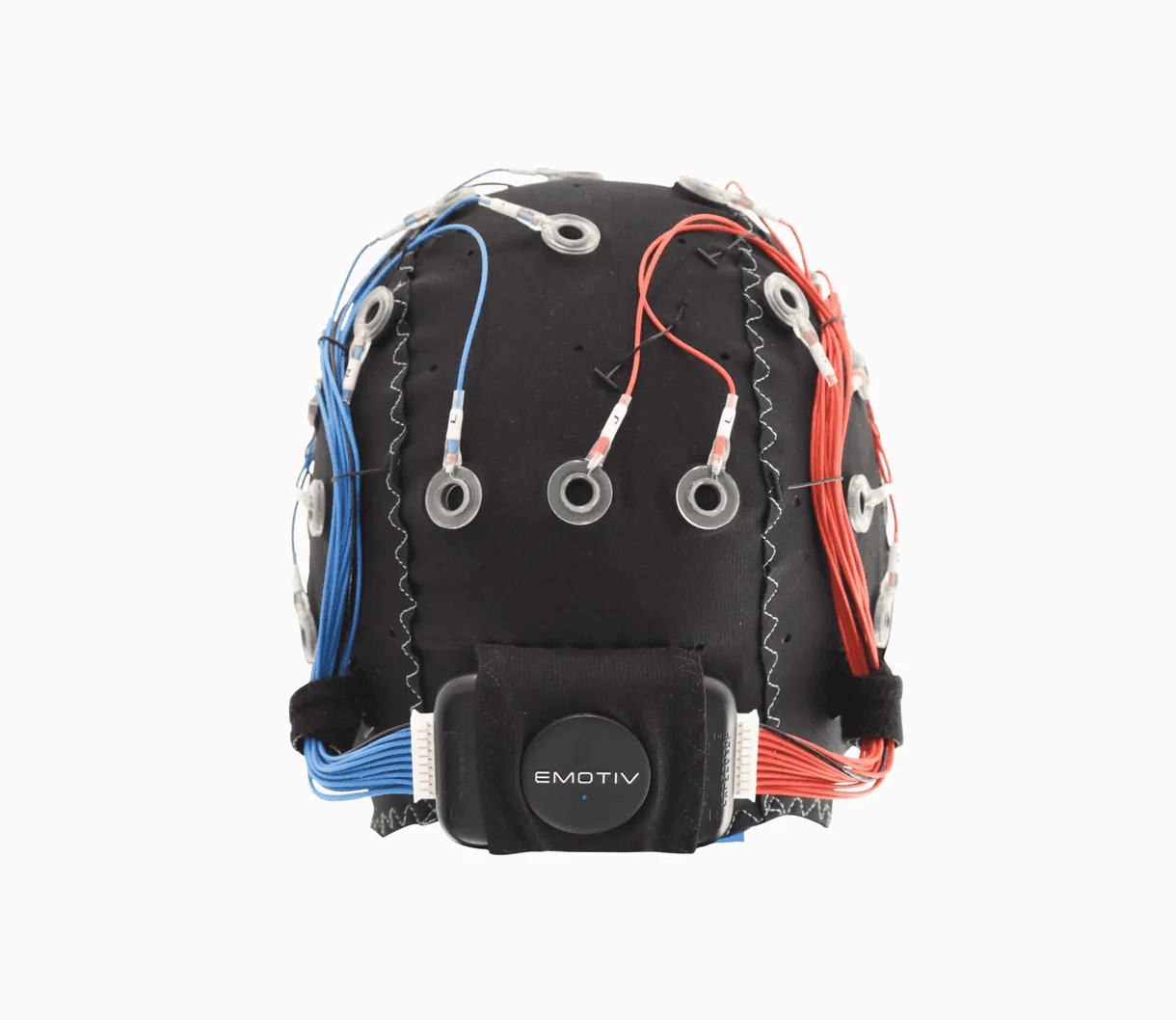
So, what exactly is an EEG cap? Think of it as a piece of headwear, much like a swim cap, but fitted with small sensors called electrodes. These electrodes sit gently on your scalp and measure the tiny electrical signals your brain produces naturally. It’s a completely non-invasive way to get a glimpse into brain activity. You might need one for a variety of reasons, from conducting formal academic research to developing a brain-computer interface or simply exploring tools for cognitive wellness.
An EEG cap is the bridge between your brain's activity and the data you want to analyze. It translates complex neural signals into a format that software can interpret, opening up a world of possibilities for developers, researchers, and creators. Whether you're studying emotional responses for a neuromarketing project or building a hands-free application, the right EEG cap is your starting point for gathering high-quality brain data. It’s a fundamental tool for anyone serious about working with EEG technology.
Explore the Types of EEG Caps
EEG caps aren't a one-size-fits-all solution. They come in several forms, each designed for different needs. You'll find individual caps with a fixed number of channels, like 14 or 19, which are great for specific and repeatable studies. Then there are more flexible systems, like our Flex Saline headset, which allow you to place electrodes exactly where you need them. These are ideal for advanced quantitative EEG (QEEG) studies or experiments that require a custom layout. The type you choose really depends on the questions you’re trying to answer and the level of detail your project requires.
Compare Clinical vs. Research Applications
It’s important to understand the distinction between EEG devices intended for clinical use and those designed for research. Clinical-grade devices are certified medical instruments used by healthcare professionals for diagnosis. On the other hand, most commercially available EEG caps, including Emotiv headsets, are research tools. They are built to provide reliable, high-quality data for scientific studies, neuromarketing, and developing new technologies. Always check a device's classification to ensure it aligns with your project's requirements, especially if your work is in a regulated field.
Debunk Common EEG Cap Myths
Let's clear up a couple of common myths. First, many people assume that a higher price tag or more channels automatically equals a better device. That’s not always true. The "best" EEG cap is the one that fits your specific needs. A 5-channel headset could be perfect for one project, while another might require a 32-channel system. Second, there's a belief that saline-based EEG caps are a hassle and take too long to prepare. While that may have been true in the past, modern designs have made the setup process much quicker and more user-friendly, allowing you to get great data without a lengthy prep time.
What to Look For When Buying an EEG Cap
Finding the right EEG cap feels a lot like choosing a new piece of core lab equipment—it’s a significant decision that impacts your work for a long time. It’s easy to get caught up in the technical specifications, but the best choice for you balances performance with practicality. Think about your specific projects, the people who will be wearing the cap, and your day-to-day workflow. A cap that’s perfect for quick, exploratory studies might not be the right fit for long-term, in-depth research. We’ll walk through the key factors to consider, from the number of channels and electrode types to software compatibility and ease of use, so you can feel confident in your choice.
Consider Channel Count and Electrode Placement
The number of channels on an EEG cap corresponds to the number of electrodes collecting data from the scalp. This is one of the first specs you’ll see, and it’s a big one. A lower channel count, like our 2-channel MN8 earbuds or 5-channel Insight headset, is great for applications focused on specific brain responses, accessing cognitive wellness tools, or building a brain-computer interface. For more complex research that requires detailed brain mapping, a higher channel count is necessary. Our Flex headset offers up to 32 channels, allowing you to capture a much richer, more comprehensive dataset. Most research-grade caps follow the international 10-20 system for electrode placement, which ensures your data is standardized and comparable to other studies.
Prioritize Comfort and Adjustability
An uncomfortable participant can lead to fidgeting and muscle tension, which creates artifacts in your EEG data. That’s why comfort isn’t just a luxury—it’s essential for data quality. Look for caps made with flexible, breathable materials and adjustable straps to ensure a good fit for a wide range of head sizes. Some designs use soft silicone cups instead of hard plastic to reduce pressure points. This is especially important for studies that require long recording sessions. Our Epoc X headset is designed to be lightweight and adaptable, making it a comfortable option for both researchers and participants during extended use. A well-fitting, comfortable cap helps your participants stay relaxed and focused.
Choose Your Electrode Type: Gel, Saline, or Dry
The type of electrode your cap uses will have a huge impact on your daily workflow. It’s a myth that a higher price or a certain electrode type automatically means better quality; the best choice depends entirely on your needs.
Gel electrodes are known for providing a very strong, stable signal, but they require a conductive gel application that can be time-consuming and messy to clean up.
Saline electrodes, which we use in most of our headsets, offer a great middle ground. They provide excellent signal quality with a much faster and cleaner setup using a simple saline solution.
Dry electrodes are the fastest to set up since they don't require any conductive medium, but they can be more sensitive to movement artifacts.
Check Software Compatibility and Data Quality
Your EEG cap is only as powerful as the software it’s paired with. Before you buy, make sure you understand the software options available for acquiring, analyzing, and visualizing your data. Our EmotivPRO software, for example, is a comprehensive platform for analyzing and visualizing brain data captured with Emotiv headsets. Check if the software is compatible with your computer’s operating system and if it allows you to export data in a format you can use with other analysis tools. The hardware itself should be designed for reliable measurements. A good cap will maintain consistent contact between the electrodes and the scalp, ensuring you capture high-quality, dependable data every time.
Factor in Setup Time and Maintenance
Think about the practical side of using your EEG cap. How much time can you realistically dedicate to setup and cleanup for each session? Gel-based caps often require the most prep time and a thorough cleaning process after every use. As some studies note, caps must be carefully cleaned and hung to dry, which adds to your post-session workload. Saline and dry systems offer a much quicker turnaround. Our saline-based headsets, for instance, can be prepped in just a few minutes. For developers and researchers who need to get projects up and running quickly, this efficiency is a major advantage. Consider your resources and how a cap’s maintenance requirements will fit into your project’s workflow.
Which EEG Cap Brands Should You Know?
Choosing an EEG cap means you’re also choosing the ecosystem that comes with it. Some brands are known for their hardware reliability, while others stand out for their powerful software and user-friendly designs. Getting familiar with the key players will help you find the perfect match for your project’s goals and budget. Let’s look at some of the most recognized brands in the EEG space.
Emotiv EEG Headsets and Systems
Your EEG cap is only as powerful as the software it's paired with. At Emotiv, we design our hardware and software to work together seamlessly, giving you a complete solution right out of the box. Our product line is built for accessibility and flexibility, whether you're just starting out or conducting complex studies. For those interested in cognitive wellness tools, our 2-channel MN8 earbuds offer a discreet and simple way to gather brain data. For more demanding applications, our multi-channel headsets like the 5-channel Insight, 14-channel Epoc X, and 32-channel Flex provide the resolution needed for detailed academic research and building custom brain-computer interfaces. All our devices integrate with our robust software suite, including EmotivPRO for data analysis and EmotivBCI for BCI development.
Electro-Cap International Solutions
Electro-Cap has been a staple in the EEG field for decades, and for good reason. They are known for producing reliable, traditional electrode caps that are widely used in clinical and research settings. Their caps are designed to help you set up and record brain activity quickly and consistently. Many researchers appreciate the straightforward design and the quality of the data they produce. Electro-Cap systems typically use gel-based electrodes, which is a standard method for achieving a strong, clear signal. If you’re looking for a time-tested, no-frills system that is trusted by professionals, this is a brand you’ll frequently encounter. They offer a range of cap sizes to fit different participants, from infants to adults.
WaveGuard Connect Technology
When your study involves long recording sessions, participant comfort is a top priority. This is where WaveGuard Connect caps shine. Manufactured by ANT Neuro, these caps are designed with comfort in mind, using soft silicone electrode cups instead of harder plastic ones. This can make a significant difference for participants, especially in studies that last for an hour or more. WaveGuard Connect offers both gel-based and dry electrode options, giving you flexibility depending on your setup needs. Their focus on a comfortable yet secure fit helps ensure you can collect high-quality data without causing participant fatigue or discomfort, which is crucial for maintaining data integrity over time.
Brain Products Offerings
Brain Products is a prominent name in the high-end EEG research space, offering comprehensive systems tailored for demanding scientific applications. Their equipment is frequently used in university labs and clinical research facilities around the world. They provide a wide array of solutions, including high-density caps with up to 256 channels, as well as systems compatible with other neuroimaging techniques like fMRI and TMS. Brain Products is also well-regarded in the neurofeedback community, offering hardware and software designed for real-time brain activity analysis. If your work requires highly precise, research-grade equipment with extensive customization options, this is a brand you should definitely explore.
Discover Key Innovations in Modern EEG Caps
The world of EEG technology is constantly evolving, with a major focus on making systems easier to use without sacrificing data quality. One of the most exciting trends is the advancement of dry electrode technology. These innovative electrodes don't require gels or saline solutions, which dramatically cuts down on setup time and makes the experience more pleasant for participants. As this technology matures, we're seeing improved comfort and signal quality that rivals traditional wet electrodes. These innovations are making it possible to use EEG in more natural, real-world settings, opening up new possibilities for brain-computer interfaces and everyday applications.
How Much Do EEG Caps Cost and Where Can You Buy Them?
The price of an EEG cap can vary quite a bit, depending on what you need it for. Factors like the number of channels, the type of electrodes, and the included software all play a role in the final cost. It’s a lot like buying a camera—a simple point-and-shoot for family photos is going to have a very different price tag than a professional DSLR for high-fashion photography. The key is to match the equipment to your project's goals and budget. A cap designed for large-scale academic research will have different capabilities, and a different price, than one intended for personal wellness applications or a small pilot study.
To make it easier, I’ve broken down the common price ranges you’ll find when shopping for an EEG cap. Whether you’re just starting, running a professional lab, or conducting large-scale academic research, there’s a solution that fits your needs. This guide will walk you through what to expect at each price point, from budget-friendly options to high-end research systems, and give you some tips on where to find them. My goal is to give you the clarity you need to make a confident purchase.
Find Budget-Friendly Options (Under $500)
If you're working with a tight budget or just dipping your toes into brain data acquisition, you can find some solid entry-level options. In this range, you’ll often see disposable EEG caps designed for single-patient use, which can be a practical choice for short-term projects. For a more modern and reusable approach, our MN8 EEG earbuds offer a discreet and accessible way to get started. They are designed for everyday use and provide access to cognitive wellness tools through our Emotiv App. This price point is all about accessibility, giving you the essential tools you need without a major financial commitment.
Explore Mid-Range Professional Caps ($500-$1,500)
This price range is the sweet spot for many professionals and small-scale researchers. Here, you’ll find a great balance of performance, features, and affordability. Caps in this category, like some Electro-cap models, are built for repeated use and often designed to streamline the setup process for multi-channel systems. Our 5-channel Insight headset fits perfectly in this category, offering a user-friendly design with dry sensors that makes it ideal for pilot studies, educational purposes, or developing brain-computer interface applications. These systems provide reliable data quality and more robust features than entry-level models, making them a workhorse for many different projects.
Invest in High-End Research Systems (Over $1,500)
When your work demands high-density data and maximum precision, you’ll be looking at high-end research systems. These advanced setups are built for in-depth studies and complex experiments. In this tier, you’ll find our professional-grade headsets like the 14-channel Epoc X and the 32-channel Flex. These systems are designed for serious academic research and neuromarketing studies, offering extensive brain coverage and compatibility with advanced software like EmotivPRO. While they represent a larger investment, the detailed data and flexibility they provide are essential for pushing the boundaries of neuroscience.
Where to Find the Best Deals
You can purchase all Emotiv headsets and software directly from the Emotiv website, which ensures you get authentic products and full customer support. For other brands and general accessories like gels and pastes, you can check out specialty retailers that focus on biomedical equipment. Some of these suppliers offer perks like free shipping on larger orders, which can help you save, especially when you’re stocking up a new lab. My advice is to compare your options and buy from a reputable source to make sure you’re getting quality equipment that will last.
How to Choose the Right EEG Cap for Your Project
Finding the perfect EEG cap feels a lot like finding the right tool for a job—the best one depends entirely on what you plan to build. Whether you're conducting a complex research study, developing a brain-computer interface, or exploring cognitive wellness applications, your specific goals will guide your choice. Let's walk through the key considerations to help you select a headset that not only fits your project but also sets you up for success from day one.
Match the Cap to Your Research
Your research question is the single most important factor in choosing an EEG cap. The brain activity you want to measure will determine the necessary channel count and electrode placement. For instance, a study on motor cortex activity will require different coverage than one focused on the visual cortex. Your EEG cap is only as powerful as the software it's paired with, so it's essential to understand the analysis tools available. Our EmotivPRO software, for example, is designed for detailed analysis and is a great fit for academic work. For in-depth projects, a high-density system like the Flex offers the comprehensive data you need, while other studies might be perfectly served by the fixed-sensor placement of the Epoc X.
Meet Brain-Computer Interface Requirements
When you're working on a brain-computer interface (BCI), you need a system that delivers clean data with minimal delay. Real-time performance is everything. Look for a headset that is easy to set up and comfortable enough for users to wear during interactive tasks. Modern dry electrode technology has made this much more achievable, improving both comfort and signal quality without the need for gels. Our headsets are designed with these applications in mind, pairing seamlessly with software like EmotivBCI to translate brain signals into commands. This allows developers and enthusiasts to create hands-free control systems for software, games, and other devices right out of the box.
Select a Cap for Neurofeedback and Cognitive Wellness
If your focus is on neurofeedback or providing access to cognitive wellness tools, simplicity and ease of use are your top priorities. Practitioners and individuals often prefer caps because they eliminate the guesswork of finding precise electrode locations on the head. A system that you can put on and start using in minutes makes the entire experience more accessible and repeatable. Headsets like the Insight are designed for this purpose, offering a balance of good data quality and user-friendly setup. The goal is to get reliable data for applications like performance training or personal exploration without the steep learning curve of traditional research equipment.
Consider Participant Diversity and Comfort
An often-overlooked aspect of choosing an EEG cap is ensuring it works for everyone you plan to include in your project. A participant who is uncomfortable is less likely to provide high-quality data. Traditional EEG cap designs can be challenging for individuals with certain hair types or larger head sizes, which can introduce bias into research. It's important to select hardware that is adjustable and accommodating. For example, the design of our Flex headset allows for a customized fit across a diverse range of participants. Prioritizing inclusivity and comfort isn't just good ethics—it's good science.
What to Expect After You Buy Your EEG Cap
Buying an EEG cap is just the beginning. Once it arrives, you’ll want to get it set up correctly, learn how to capture clean data, and understand how to care for it. Here’s what you can expect as you get started.
Handling Setup and Installation
Once your EEG cap arrives, the first step is getting it connected. Your device is only as powerful as the software it’s paired with, so you’ll want to install the right application for your needs. Our EmotivPRO software, for example, is designed for detailed research. The setup process varies by electrode type; saline or gel-based systems require preparing the electrodes for a good connection. Taking your time with this initial setup can make a big difference in your first recording session.
Get Tips for Optimizing Data Quality
Getting clean data is the goal, and it starts with a proper fit. Ensure the cap is snug and the electrodes are making solid contact with the scalp. It’s a common myth that more channels automatically equal better data—the best EEG cap is the one that fits your project. Minimizing artifacts is also key. Reduce participant movement and electrical interference from nearby devices. A quiet, controlled environment will always yield better results for your academic research.
Prepare for the Learning Curve
Using an EEG system for the first time can feel intimidating, but it gets easier with practice. A major advantage of using a cap is that it simplifies electrode placement, since the locations are pre-set. This removes the guesswork of finding precise spots on the head. Once you’re comfortable with the physical setup, you can focus on understanding the data. Exploring what’s possible with a brain-computer interface is an exciting part of the process, so give yourself time to experiment.
Understand Ongoing Maintenance and Care
To keep your EEG cap in top condition, post-session care is essential. If you're using a system with saline or gel electrodes, like our Flex Saline headset, you’ll need to clean the cap and sensors after each use. This usually involves a gentle rinse to remove any residue, followed by hanging it up to air dry completely. This step is crucial for preventing material degradation and ensuring accurate readings in future sessions. It’s a small investment of time to protect your equipment.
Related Articles
Frequently Asked Questions
What's the real difference between gel, saline, and dry electrodes for my daily work? Think of it as a trade-off between setup time and signal stability. Gel electrodes are known for creating a very strong, reliable connection, but they require applying a conductive paste and a significant cleanup process afterward. Saline electrodes, which we use in most of our headsets, give you excellent signal quality with a much faster and cleaner setup using a simple saltwater solution. Dry electrodes are the quickest of all since they need no liquid, but they can be more susceptible to signal noise if the participant moves around a lot.
Do I really need a high-channel-count headset? Not necessarily. The ideal number of channels depends entirely on your project's goals. If you're developing a BCI application or accessing cognitive wellness tools, a lower channel count like our 5-channel Insight headset is often perfect. For complex academic research that requires detailed brain mapping across different regions, a higher channel count like the 32-channel Flex becomes essential. It’s about matching the tool to the question you’re trying to answer.
How long does a typical EEG setup take? This varies quite a bit based on the electrode type. A traditional gel-based cap can take 20 to 40 minutes to prepare, plus additional time for cleanup after the session. One of the biggest advantages of modern systems is speed. With our saline-based headsets, you can be ready to record high-quality data in just a few minutes, which makes a huge difference when you're running multiple sessions in a day.
Is wearing an EEG cap uncomfortable, especially for long sessions? This is a valid concern, as participant comfort is crucial for good data. While older caps could be rigid and heavy, modern designs prioritize a comfortable experience. We use lightweight, breathable materials and adjustable designs to ensure a secure but gentle fit for different head shapes and sizes. A comfortable participant is more likely to remain still and relaxed, which directly contributes to capturing cleaner, more reliable brain data.
Can I use my EEG data with software other than what's provided? Absolutely. While our software like EmotivPRO offers a comprehensive platform for data acquisition and analysis, we know that many researchers and developers have their own preferred tools. Our systems are designed with this in mind. You can easily export the raw EEG data in standard formats like EDF or CSV, allowing you to import it into other programs like MATLAB, EEGLAB, or custom Python scripts for further analysis.
The quality of your brain data starts with the connection between the electrode and the scalp. That single point of contact is where everything begins. For years, this meant dealing with time-consuming gels and complicated setups. Today, the technology has evolved significantly. Innovations in saline and dry electrode systems have made setting up for a session faster and more comfortable for participants, all while maintaining excellent signal quality. When you’re evaluating an 'eeg cap for sale', understanding these different electrode types is crucial. It directly impacts your workflow, data integrity, and the overall user experience. Here, we’ll explore the pros and cons of each system to help you make an informed choice.
Key Takeaways
Define your goal before choosing your gear: Your specific project—whether it's academic research, BCI development, or accessing wellness tools—should determine the channel count and electrode type you need, not just the technical specifications on a product page.
Prioritize practicality for better data quality: A comfortable participant and an efficient setup are crucial for capturing clean data. Consider factors like electrode type, software integration, and ease of use to ensure your workflow supports your project's success.
High-quality brain data is accessible at every budget: You don't need a massive budget to get started with EEG. From affordable entry-level devices for personal projects to advanced multi-channel systems for professional research, there are reliable options available at every price point.
What Is an EEG Cap and Why Do You Need One?
So, what exactly is an EEG cap? Think of it as a piece of headwear, much like a swim cap, but fitted with small sensors called electrodes. These electrodes sit gently on your scalp and measure the tiny electrical signals your brain produces naturally. It’s a completely non-invasive way to get a glimpse into brain activity. You might need one for a variety of reasons, from conducting formal academic research to developing a brain-computer interface or simply exploring tools for cognitive wellness.
An EEG cap is the bridge between your brain's activity and the data you want to analyze. It translates complex neural signals into a format that software can interpret, opening up a world of possibilities for developers, researchers, and creators. Whether you're studying emotional responses for a neuromarketing project or building a hands-free application, the right EEG cap is your starting point for gathering high-quality brain data. It’s a fundamental tool for anyone serious about working with EEG technology.
Explore the Types of EEG Caps
EEG caps aren't a one-size-fits-all solution. They come in several forms, each designed for different needs. You'll find individual caps with a fixed number of channels, like 14 or 19, which are great for specific and repeatable studies. Then there are more flexible systems, like our Flex Saline headset, which allow you to place electrodes exactly where you need them. These are ideal for advanced quantitative EEG (QEEG) studies or experiments that require a custom layout. The type you choose really depends on the questions you’re trying to answer and the level of detail your project requires.
Compare Clinical vs. Research Applications
It’s important to understand the distinction between EEG devices intended for clinical use and those designed for research. Clinical-grade devices are certified medical instruments used by healthcare professionals for diagnosis. On the other hand, most commercially available EEG caps, including Emotiv headsets, are research tools. They are built to provide reliable, high-quality data for scientific studies, neuromarketing, and developing new technologies. Always check a device's classification to ensure it aligns with your project's requirements, especially if your work is in a regulated field.
Debunk Common EEG Cap Myths
Let's clear up a couple of common myths. First, many people assume that a higher price tag or more channels automatically equals a better device. That’s not always true. The "best" EEG cap is the one that fits your specific needs. A 5-channel headset could be perfect for one project, while another might require a 32-channel system. Second, there's a belief that saline-based EEG caps are a hassle and take too long to prepare. While that may have been true in the past, modern designs have made the setup process much quicker and more user-friendly, allowing you to get great data without a lengthy prep time.
What to Look For When Buying an EEG Cap
Finding the right EEG cap feels a lot like choosing a new piece of core lab equipment—it’s a significant decision that impacts your work for a long time. It’s easy to get caught up in the technical specifications, but the best choice for you balances performance with practicality. Think about your specific projects, the people who will be wearing the cap, and your day-to-day workflow. A cap that’s perfect for quick, exploratory studies might not be the right fit for long-term, in-depth research. We’ll walk through the key factors to consider, from the number of channels and electrode types to software compatibility and ease of use, so you can feel confident in your choice.
Consider Channel Count and Electrode Placement
The number of channels on an EEG cap corresponds to the number of electrodes collecting data from the scalp. This is one of the first specs you’ll see, and it’s a big one. A lower channel count, like our 2-channel MN8 earbuds or 5-channel Insight headset, is great for applications focused on specific brain responses, accessing cognitive wellness tools, or building a brain-computer interface. For more complex research that requires detailed brain mapping, a higher channel count is necessary. Our Flex headset offers up to 32 channels, allowing you to capture a much richer, more comprehensive dataset. Most research-grade caps follow the international 10-20 system for electrode placement, which ensures your data is standardized and comparable to other studies.
Prioritize Comfort and Adjustability
An uncomfortable participant can lead to fidgeting and muscle tension, which creates artifacts in your EEG data. That’s why comfort isn’t just a luxury—it’s essential for data quality. Look for caps made with flexible, breathable materials and adjustable straps to ensure a good fit for a wide range of head sizes. Some designs use soft silicone cups instead of hard plastic to reduce pressure points. This is especially important for studies that require long recording sessions. Our Epoc X headset is designed to be lightweight and adaptable, making it a comfortable option for both researchers and participants during extended use. A well-fitting, comfortable cap helps your participants stay relaxed and focused.
Choose Your Electrode Type: Gel, Saline, or Dry
The type of electrode your cap uses will have a huge impact on your daily workflow. It’s a myth that a higher price or a certain electrode type automatically means better quality; the best choice depends entirely on your needs.
Gel electrodes are known for providing a very strong, stable signal, but they require a conductive gel application that can be time-consuming and messy to clean up.
Saline electrodes, which we use in most of our headsets, offer a great middle ground. They provide excellent signal quality with a much faster and cleaner setup using a simple saline solution.
Dry electrodes are the fastest to set up since they don't require any conductive medium, but they can be more sensitive to movement artifacts.
Check Software Compatibility and Data Quality
Your EEG cap is only as powerful as the software it’s paired with. Before you buy, make sure you understand the software options available for acquiring, analyzing, and visualizing your data. Our EmotivPRO software, for example, is a comprehensive platform for analyzing and visualizing brain data captured with Emotiv headsets. Check if the software is compatible with your computer’s operating system and if it allows you to export data in a format you can use with other analysis tools. The hardware itself should be designed for reliable measurements. A good cap will maintain consistent contact between the electrodes and the scalp, ensuring you capture high-quality, dependable data every time.
Factor in Setup Time and Maintenance
Think about the practical side of using your EEG cap. How much time can you realistically dedicate to setup and cleanup for each session? Gel-based caps often require the most prep time and a thorough cleaning process after every use. As some studies note, caps must be carefully cleaned and hung to dry, which adds to your post-session workload. Saline and dry systems offer a much quicker turnaround. Our saline-based headsets, for instance, can be prepped in just a few minutes. For developers and researchers who need to get projects up and running quickly, this efficiency is a major advantage. Consider your resources and how a cap’s maintenance requirements will fit into your project’s workflow.
Which EEG Cap Brands Should You Know?
Choosing an EEG cap means you’re also choosing the ecosystem that comes with it. Some brands are known for their hardware reliability, while others stand out for their powerful software and user-friendly designs. Getting familiar with the key players will help you find the perfect match for your project’s goals and budget. Let’s look at some of the most recognized brands in the EEG space.
Emotiv EEG Headsets and Systems
Your EEG cap is only as powerful as the software it's paired with. At Emotiv, we design our hardware and software to work together seamlessly, giving you a complete solution right out of the box. Our product line is built for accessibility and flexibility, whether you're just starting out or conducting complex studies. For those interested in cognitive wellness tools, our 2-channel MN8 earbuds offer a discreet and simple way to gather brain data. For more demanding applications, our multi-channel headsets like the 5-channel Insight, 14-channel Epoc X, and 32-channel Flex provide the resolution needed for detailed academic research and building custom brain-computer interfaces. All our devices integrate with our robust software suite, including EmotivPRO for data analysis and EmotivBCI for BCI development.
Electro-Cap International Solutions
Electro-Cap has been a staple in the EEG field for decades, and for good reason. They are known for producing reliable, traditional electrode caps that are widely used in clinical and research settings. Their caps are designed to help you set up and record brain activity quickly and consistently. Many researchers appreciate the straightforward design and the quality of the data they produce. Electro-Cap systems typically use gel-based electrodes, which is a standard method for achieving a strong, clear signal. If you’re looking for a time-tested, no-frills system that is trusted by professionals, this is a brand you’ll frequently encounter. They offer a range of cap sizes to fit different participants, from infants to adults.
WaveGuard Connect Technology
When your study involves long recording sessions, participant comfort is a top priority. This is where WaveGuard Connect caps shine. Manufactured by ANT Neuro, these caps are designed with comfort in mind, using soft silicone electrode cups instead of harder plastic ones. This can make a significant difference for participants, especially in studies that last for an hour or more. WaveGuard Connect offers both gel-based and dry electrode options, giving you flexibility depending on your setup needs. Their focus on a comfortable yet secure fit helps ensure you can collect high-quality data without causing participant fatigue or discomfort, which is crucial for maintaining data integrity over time.
Brain Products Offerings
Brain Products is a prominent name in the high-end EEG research space, offering comprehensive systems tailored for demanding scientific applications. Their equipment is frequently used in university labs and clinical research facilities around the world. They provide a wide array of solutions, including high-density caps with up to 256 channels, as well as systems compatible with other neuroimaging techniques like fMRI and TMS. Brain Products is also well-regarded in the neurofeedback community, offering hardware and software designed for real-time brain activity analysis. If your work requires highly precise, research-grade equipment with extensive customization options, this is a brand you should definitely explore.
Discover Key Innovations in Modern EEG Caps
The world of EEG technology is constantly evolving, with a major focus on making systems easier to use without sacrificing data quality. One of the most exciting trends is the advancement of dry electrode technology. These innovative electrodes don't require gels or saline solutions, which dramatically cuts down on setup time and makes the experience more pleasant for participants. As this technology matures, we're seeing improved comfort and signal quality that rivals traditional wet electrodes. These innovations are making it possible to use EEG in more natural, real-world settings, opening up new possibilities for brain-computer interfaces and everyday applications.
How Much Do EEG Caps Cost and Where Can You Buy Them?
The price of an EEG cap can vary quite a bit, depending on what you need it for. Factors like the number of channels, the type of electrodes, and the included software all play a role in the final cost. It’s a lot like buying a camera—a simple point-and-shoot for family photos is going to have a very different price tag than a professional DSLR for high-fashion photography. The key is to match the equipment to your project's goals and budget. A cap designed for large-scale academic research will have different capabilities, and a different price, than one intended for personal wellness applications or a small pilot study.
To make it easier, I’ve broken down the common price ranges you’ll find when shopping for an EEG cap. Whether you’re just starting, running a professional lab, or conducting large-scale academic research, there’s a solution that fits your needs. This guide will walk you through what to expect at each price point, from budget-friendly options to high-end research systems, and give you some tips on where to find them. My goal is to give you the clarity you need to make a confident purchase.
Find Budget-Friendly Options (Under $500)
If you're working with a tight budget or just dipping your toes into brain data acquisition, you can find some solid entry-level options. In this range, you’ll often see disposable EEG caps designed for single-patient use, which can be a practical choice for short-term projects. For a more modern and reusable approach, our MN8 EEG earbuds offer a discreet and accessible way to get started. They are designed for everyday use and provide access to cognitive wellness tools through our Emotiv App. This price point is all about accessibility, giving you the essential tools you need without a major financial commitment.
Explore Mid-Range Professional Caps ($500-$1,500)
This price range is the sweet spot for many professionals and small-scale researchers. Here, you’ll find a great balance of performance, features, and affordability. Caps in this category, like some Electro-cap models, are built for repeated use and often designed to streamline the setup process for multi-channel systems. Our 5-channel Insight headset fits perfectly in this category, offering a user-friendly design with dry sensors that makes it ideal for pilot studies, educational purposes, or developing brain-computer interface applications. These systems provide reliable data quality and more robust features than entry-level models, making them a workhorse for many different projects.
Invest in High-End Research Systems (Over $1,500)
When your work demands high-density data and maximum precision, you’ll be looking at high-end research systems. These advanced setups are built for in-depth studies and complex experiments. In this tier, you’ll find our professional-grade headsets like the 14-channel Epoc X and the 32-channel Flex. These systems are designed for serious academic research and neuromarketing studies, offering extensive brain coverage and compatibility with advanced software like EmotivPRO. While they represent a larger investment, the detailed data and flexibility they provide are essential for pushing the boundaries of neuroscience.
Where to Find the Best Deals
You can purchase all Emotiv headsets and software directly from the Emotiv website, which ensures you get authentic products and full customer support. For other brands and general accessories like gels and pastes, you can check out specialty retailers that focus on biomedical equipment. Some of these suppliers offer perks like free shipping on larger orders, which can help you save, especially when you’re stocking up a new lab. My advice is to compare your options and buy from a reputable source to make sure you’re getting quality equipment that will last.
How to Choose the Right EEG Cap for Your Project
Finding the perfect EEG cap feels a lot like finding the right tool for a job—the best one depends entirely on what you plan to build. Whether you're conducting a complex research study, developing a brain-computer interface, or exploring cognitive wellness applications, your specific goals will guide your choice. Let's walk through the key considerations to help you select a headset that not only fits your project but also sets you up for success from day one.
Match the Cap to Your Research
Your research question is the single most important factor in choosing an EEG cap. The brain activity you want to measure will determine the necessary channel count and electrode placement. For instance, a study on motor cortex activity will require different coverage than one focused on the visual cortex. Your EEG cap is only as powerful as the software it's paired with, so it's essential to understand the analysis tools available. Our EmotivPRO software, for example, is designed for detailed analysis and is a great fit for academic work. For in-depth projects, a high-density system like the Flex offers the comprehensive data you need, while other studies might be perfectly served by the fixed-sensor placement of the Epoc X.
Meet Brain-Computer Interface Requirements
When you're working on a brain-computer interface (BCI), you need a system that delivers clean data with minimal delay. Real-time performance is everything. Look for a headset that is easy to set up and comfortable enough for users to wear during interactive tasks. Modern dry electrode technology has made this much more achievable, improving both comfort and signal quality without the need for gels. Our headsets are designed with these applications in mind, pairing seamlessly with software like EmotivBCI to translate brain signals into commands. This allows developers and enthusiasts to create hands-free control systems for software, games, and other devices right out of the box.
Select a Cap for Neurofeedback and Cognitive Wellness
If your focus is on neurofeedback or providing access to cognitive wellness tools, simplicity and ease of use are your top priorities. Practitioners and individuals often prefer caps because they eliminate the guesswork of finding precise electrode locations on the head. A system that you can put on and start using in minutes makes the entire experience more accessible and repeatable. Headsets like the Insight are designed for this purpose, offering a balance of good data quality and user-friendly setup. The goal is to get reliable data for applications like performance training or personal exploration without the steep learning curve of traditional research equipment.
Consider Participant Diversity and Comfort
An often-overlooked aspect of choosing an EEG cap is ensuring it works for everyone you plan to include in your project. A participant who is uncomfortable is less likely to provide high-quality data. Traditional EEG cap designs can be challenging for individuals with certain hair types or larger head sizes, which can introduce bias into research. It's important to select hardware that is adjustable and accommodating. For example, the design of our Flex headset allows for a customized fit across a diverse range of participants. Prioritizing inclusivity and comfort isn't just good ethics—it's good science.
What to Expect After You Buy Your EEG Cap
Buying an EEG cap is just the beginning. Once it arrives, you’ll want to get it set up correctly, learn how to capture clean data, and understand how to care for it. Here’s what you can expect as you get started.
Handling Setup and Installation
Once your EEG cap arrives, the first step is getting it connected. Your device is only as powerful as the software it’s paired with, so you’ll want to install the right application for your needs. Our EmotivPRO software, for example, is designed for detailed research. The setup process varies by electrode type; saline or gel-based systems require preparing the electrodes for a good connection. Taking your time with this initial setup can make a big difference in your first recording session.
Get Tips for Optimizing Data Quality
Getting clean data is the goal, and it starts with a proper fit. Ensure the cap is snug and the electrodes are making solid contact with the scalp. It’s a common myth that more channels automatically equal better data—the best EEG cap is the one that fits your project. Minimizing artifacts is also key. Reduce participant movement and electrical interference from nearby devices. A quiet, controlled environment will always yield better results for your academic research.
Prepare for the Learning Curve
Using an EEG system for the first time can feel intimidating, but it gets easier with practice. A major advantage of using a cap is that it simplifies electrode placement, since the locations are pre-set. This removes the guesswork of finding precise spots on the head. Once you’re comfortable with the physical setup, you can focus on understanding the data. Exploring what’s possible with a brain-computer interface is an exciting part of the process, so give yourself time to experiment.
Understand Ongoing Maintenance and Care
To keep your EEG cap in top condition, post-session care is essential. If you're using a system with saline or gel electrodes, like our Flex Saline headset, you’ll need to clean the cap and sensors after each use. This usually involves a gentle rinse to remove any residue, followed by hanging it up to air dry completely. This step is crucial for preventing material degradation and ensuring accurate readings in future sessions. It’s a small investment of time to protect your equipment.
Related Articles
Frequently Asked Questions
What's the real difference between gel, saline, and dry electrodes for my daily work? Think of it as a trade-off between setup time and signal stability. Gel electrodes are known for creating a very strong, reliable connection, but they require applying a conductive paste and a significant cleanup process afterward. Saline electrodes, which we use in most of our headsets, give you excellent signal quality with a much faster and cleaner setup using a simple saltwater solution. Dry electrodes are the quickest of all since they need no liquid, but they can be more susceptible to signal noise if the participant moves around a lot.
Do I really need a high-channel-count headset? Not necessarily. The ideal number of channels depends entirely on your project's goals. If you're developing a BCI application or accessing cognitive wellness tools, a lower channel count like our 5-channel Insight headset is often perfect. For complex academic research that requires detailed brain mapping across different regions, a higher channel count like the 32-channel Flex becomes essential. It’s about matching the tool to the question you’re trying to answer.
How long does a typical EEG setup take? This varies quite a bit based on the electrode type. A traditional gel-based cap can take 20 to 40 minutes to prepare, plus additional time for cleanup after the session. One of the biggest advantages of modern systems is speed. With our saline-based headsets, you can be ready to record high-quality data in just a few minutes, which makes a huge difference when you're running multiple sessions in a day.
Is wearing an EEG cap uncomfortable, especially for long sessions? This is a valid concern, as participant comfort is crucial for good data. While older caps could be rigid and heavy, modern designs prioritize a comfortable experience. We use lightweight, breathable materials and adjustable designs to ensure a secure but gentle fit for different head shapes and sizes. A comfortable participant is more likely to remain still and relaxed, which directly contributes to capturing cleaner, more reliable brain data.
Can I use my EEG data with software other than what's provided? Absolutely. While our software like EmotivPRO offers a comprehensive platform for data acquisition and analysis, we know that many researchers and developers have their own preferred tools. Our systems are designed with this in mind. You can easily export the raw EEG data in standard formats like EDF or CSV, allowing you to import it into other programs like MATLAB, EEGLAB, or custom Python scripts for further analysis.
The quality of your brain data starts with the connection between the electrode and the scalp. That single point of contact is where everything begins. For years, this meant dealing with time-consuming gels and complicated setups. Today, the technology has evolved significantly. Innovations in saline and dry electrode systems have made setting up for a session faster and more comfortable for participants, all while maintaining excellent signal quality. When you’re evaluating an 'eeg cap for sale', understanding these different electrode types is crucial. It directly impacts your workflow, data integrity, and the overall user experience. Here, we’ll explore the pros and cons of each system to help you make an informed choice.
Key Takeaways
Define your goal before choosing your gear: Your specific project—whether it's academic research, BCI development, or accessing wellness tools—should determine the channel count and electrode type you need, not just the technical specifications on a product page.
Prioritize practicality for better data quality: A comfortable participant and an efficient setup are crucial for capturing clean data. Consider factors like electrode type, software integration, and ease of use to ensure your workflow supports your project's success.
High-quality brain data is accessible at every budget: You don't need a massive budget to get started with EEG. From affordable entry-level devices for personal projects to advanced multi-channel systems for professional research, there are reliable options available at every price point.
What Is an EEG Cap and Why Do You Need One?
So, what exactly is an EEG cap? Think of it as a piece of headwear, much like a swim cap, but fitted with small sensors called electrodes. These electrodes sit gently on your scalp and measure the tiny electrical signals your brain produces naturally. It’s a completely non-invasive way to get a glimpse into brain activity. You might need one for a variety of reasons, from conducting formal academic research to developing a brain-computer interface or simply exploring tools for cognitive wellness.
An EEG cap is the bridge between your brain's activity and the data you want to analyze. It translates complex neural signals into a format that software can interpret, opening up a world of possibilities for developers, researchers, and creators. Whether you're studying emotional responses for a neuromarketing project or building a hands-free application, the right EEG cap is your starting point for gathering high-quality brain data. It’s a fundamental tool for anyone serious about working with EEG technology.
Explore the Types of EEG Caps
EEG caps aren't a one-size-fits-all solution. They come in several forms, each designed for different needs. You'll find individual caps with a fixed number of channels, like 14 or 19, which are great for specific and repeatable studies. Then there are more flexible systems, like our Flex Saline headset, which allow you to place electrodes exactly where you need them. These are ideal for advanced quantitative EEG (QEEG) studies or experiments that require a custom layout. The type you choose really depends on the questions you’re trying to answer and the level of detail your project requires.
Compare Clinical vs. Research Applications
It’s important to understand the distinction between EEG devices intended for clinical use and those designed for research. Clinical-grade devices are certified medical instruments used by healthcare professionals for diagnosis. On the other hand, most commercially available EEG caps, including Emotiv headsets, are research tools. They are built to provide reliable, high-quality data for scientific studies, neuromarketing, and developing new technologies. Always check a device's classification to ensure it aligns with your project's requirements, especially if your work is in a regulated field.
Debunk Common EEG Cap Myths
Let's clear up a couple of common myths. First, many people assume that a higher price tag or more channels automatically equals a better device. That’s not always true. The "best" EEG cap is the one that fits your specific needs. A 5-channel headset could be perfect for one project, while another might require a 32-channel system. Second, there's a belief that saline-based EEG caps are a hassle and take too long to prepare. While that may have been true in the past, modern designs have made the setup process much quicker and more user-friendly, allowing you to get great data without a lengthy prep time.
What to Look For When Buying an EEG Cap
Finding the right EEG cap feels a lot like choosing a new piece of core lab equipment—it’s a significant decision that impacts your work for a long time. It’s easy to get caught up in the technical specifications, but the best choice for you balances performance with practicality. Think about your specific projects, the people who will be wearing the cap, and your day-to-day workflow. A cap that’s perfect for quick, exploratory studies might not be the right fit for long-term, in-depth research. We’ll walk through the key factors to consider, from the number of channels and electrode types to software compatibility and ease of use, so you can feel confident in your choice.
Consider Channel Count and Electrode Placement
The number of channels on an EEG cap corresponds to the number of electrodes collecting data from the scalp. This is one of the first specs you’ll see, and it’s a big one. A lower channel count, like our 2-channel MN8 earbuds or 5-channel Insight headset, is great for applications focused on specific brain responses, accessing cognitive wellness tools, or building a brain-computer interface. For more complex research that requires detailed brain mapping, a higher channel count is necessary. Our Flex headset offers up to 32 channels, allowing you to capture a much richer, more comprehensive dataset. Most research-grade caps follow the international 10-20 system for electrode placement, which ensures your data is standardized and comparable to other studies.
Prioritize Comfort and Adjustability
An uncomfortable participant can lead to fidgeting and muscle tension, which creates artifacts in your EEG data. That’s why comfort isn’t just a luxury—it’s essential for data quality. Look for caps made with flexible, breathable materials and adjustable straps to ensure a good fit for a wide range of head sizes. Some designs use soft silicone cups instead of hard plastic to reduce pressure points. This is especially important for studies that require long recording sessions. Our Epoc X headset is designed to be lightweight and adaptable, making it a comfortable option for both researchers and participants during extended use. A well-fitting, comfortable cap helps your participants stay relaxed and focused.
Choose Your Electrode Type: Gel, Saline, or Dry
The type of electrode your cap uses will have a huge impact on your daily workflow. It’s a myth that a higher price or a certain electrode type automatically means better quality; the best choice depends entirely on your needs.
Gel electrodes are known for providing a very strong, stable signal, but they require a conductive gel application that can be time-consuming and messy to clean up.
Saline electrodes, which we use in most of our headsets, offer a great middle ground. They provide excellent signal quality with a much faster and cleaner setup using a simple saline solution.
Dry electrodes are the fastest to set up since they don't require any conductive medium, but they can be more sensitive to movement artifacts.
Check Software Compatibility and Data Quality
Your EEG cap is only as powerful as the software it’s paired with. Before you buy, make sure you understand the software options available for acquiring, analyzing, and visualizing your data. Our EmotivPRO software, for example, is a comprehensive platform for analyzing and visualizing brain data captured with Emotiv headsets. Check if the software is compatible with your computer’s operating system and if it allows you to export data in a format you can use with other analysis tools. The hardware itself should be designed for reliable measurements. A good cap will maintain consistent contact between the electrodes and the scalp, ensuring you capture high-quality, dependable data every time.
Factor in Setup Time and Maintenance
Think about the practical side of using your EEG cap. How much time can you realistically dedicate to setup and cleanup for each session? Gel-based caps often require the most prep time and a thorough cleaning process after every use. As some studies note, caps must be carefully cleaned and hung to dry, which adds to your post-session workload. Saline and dry systems offer a much quicker turnaround. Our saline-based headsets, for instance, can be prepped in just a few minutes. For developers and researchers who need to get projects up and running quickly, this efficiency is a major advantage. Consider your resources and how a cap’s maintenance requirements will fit into your project’s workflow.
Which EEG Cap Brands Should You Know?
Choosing an EEG cap means you’re also choosing the ecosystem that comes with it. Some brands are known for their hardware reliability, while others stand out for their powerful software and user-friendly designs. Getting familiar with the key players will help you find the perfect match for your project’s goals and budget. Let’s look at some of the most recognized brands in the EEG space.
Emotiv EEG Headsets and Systems
Your EEG cap is only as powerful as the software it's paired with. At Emotiv, we design our hardware and software to work together seamlessly, giving you a complete solution right out of the box. Our product line is built for accessibility and flexibility, whether you're just starting out or conducting complex studies. For those interested in cognitive wellness tools, our 2-channel MN8 earbuds offer a discreet and simple way to gather brain data. For more demanding applications, our multi-channel headsets like the 5-channel Insight, 14-channel Epoc X, and 32-channel Flex provide the resolution needed for detailed academic research and building custom brain-computer interfaces. All our devices integrate with our robust software suite, including EmotivPRO for data analysis and EmotivBCI for BCI development.
Electro-Cap International Solutions
Electro-Cap has been a staple in the EEG field for decades, and for good reason. They are known for producing reliable, traditional electrode caps that are widely used in clinical and research settings. Their caps are designed to help you set up and record brain activity quickly and consistently. Many researchers appreciate the straightforward design and the quality of the data they produce. Electro-Cap systems typically use gel-based electrodes, which is a standard method for achieving a strong, clear signal. If you’re looking for a time-tested, no-frills system that is trusted by professionals, this is a brand you’ll frequently encounter. They offer a range of cap sizes to fit different participants, from infants to adults.
WaveGuard Connect Technology
When your study involves long recording sessions, participant comfort is a top priority. This is where WaveGuard Connect caps shine. Manufactured by ANT Neuro, these caps are designed with comfort in mind, using soft silicone electrode cups instead of harder plastic ones. This can make a significant difference for participants, especially in studies that last for an hour or more. WaveGuard Connect offers both gel-based and dry electrode options, giving you flexibility depending on your setup needs. Their focus on a comfortable yet secure fit helps ensure you can collect high-quality data without causing participant fatigue or discomfort, which is crucial for maintaining data integrity over time.
Brain Products Offerings
Brain Products is a prominent name in the high-end EEG research space, offering comprehensive systems tailored for demanding scientific applications. Their equipment is frequently used in university labs and clinical research facilities around the world. They provide a wide array of solutions, including high-density caps with up to 256 channels, as well as systems compatible with other neuroimaging techniques like fMRI and TMS. Brain Products is also well-regarded in the neurofeedback community, offering hardware and software designed for real-time brain activity analysis. If your work requires highly precise, research-grade equipment with extensive customization options, this is a brand you should definitely explore.
Discover Key Innovations in Modern EEG Caps
The world of EEG technology is constantly evolving, with a major focus on making systems easier to use without sacrificing data quality. One of the most exciting trends is the advancement of dry electrode technology. These innovative electrodes don't require gels or saline solutions, which dramatically cuts down on setup time and makes the experience more pleasant for participants. As this technology matures, we're seeing improved comfort and signal quality that rivals traditional wet electrodes. These innovations are making it possible to use EEG in more natural, real-world settings, opening up new possibilities for brain-computer interfaces and everyday applications.
How Much Do EEG Caps Cost and Where Can You Buy Them?
The price of an EEG cap can vary quite a bit, depending on what you need it for. Factors like the number of channels, the type of electrodes, and the included software all play a role in the final cost. It’s a lot like buying a camera—a simple point-and-shoot for family photos is going to have a very different price tag than a professional DSLR for high-fashion photography. The key is to match the equipment to your project's goals and budget. A cap designed for large-scale academic research will have different capabilities, and a different price, than one intended for personal wellness applications or a small pilot study.
To make it easier, I’ve broken down the common price ranges you’ll find when shopping for an EEG cap. Whether you’re just starting, running a professional lab, or conducting large-scale academic research, there’s a solution that fits your needs. This guide will walk you through what to expect at each price point, from budget-friendly options to high-end research systems, and give you some tips on where to find them. My goal is to give you the clarity you need to make a confident purchase.
Find Budget-Friendly Options (Under $500)
If you're working with a tight budget or just dipping your toes into brain data acquisition, you can find some solid entry-level options. In this range, you’ll often see disposable EEG caps designed for single-patient use, which can be a practical choice for short-term projects. For a more modern and reusable approach, our MN8 EEG earbuds offer a discreet and accessible way to get started. They are designed for everyday use and provide access to cognitive wellness tools through our Emotiv App. This price point is all about accessibility, giving you the essential tools you need without a major financial commitment.
Explore Mid-Range Professional Caps ($500-$1,500)
This price range is the sweet spot for many professionals and small-scale researchers. Here, you’ll find a great balance of performance, features, and affordability. Caps in this category, like some Electro-cap models, are built for repeated use and often designed to streamline the setup process for multi-channel systems. Our 5-channel Insight headset fits perfectly in this category, offering a user-friendly design with dry sensors that makes it ideal for pilot studies, educational purposes, or developing brain-computer interface applications. These systems provide reliable data quality and more robust features than entry-level models, making them a workhorse for many different projects.
Invest in High-End Research Systems (Over $1,500)
When your work demands high-density data and maximum precision, you’ll be looking at high-end research systems. These advanced setups are built for in-depth studies and complex experiments. In this tier, you’ll find our professional-grade headsets like the 14-channel Epoc X and the 32-channel Flex. These systems are designed for serious academic research and neuromarketing studies, offering extensive brain coverage and compatibility with advanced software like EmotivPRO. While they represent a larger investment, the detailed data and flexibility they provide are essential for pushing the boundaries of neuroscience.
Where to Find the Best Deals
You can purchase all Emotiv headsets and software directly from the Emotiv website, which ensures you get authentic products and full customer support. For other brands and general accessories like gels and pastes, you can check out specialty retailers that focus on biomedical equipment. Some of these suppliers offer perks like free shipping on larger orders, which can help you save, especially when you’re stocking up a new lab. My advice is to compare your options and buy from a reputable source to make sure you’re getting quality equipment that will last.
How to Choose the Right EEG Cap for Your Project
Finding the perfect EEG cap feels a lot like finding the right tool for a job—the best one depends entirely on what you plan to build. Whether you're conducting a complex research study, developing a brain-computer interface, or exploring cognitive wellness applications, your specific goals will guide your choice. Let's walk through the key considerations to help you select a headset that not only fits your project but also sets you up for success from day one.
Match the Cap to Your Research
Your research question is the single most important factor in choosing an EEG cap. The brain activity you want to measure will determine the necessary channel count and electrode placement. For instance, a study on motor cortex activity will require different coverage than one focused on the visual cortex. Your EEG cap is only as powerful as the software it's paired with, so it's essential to understand the analysis tools available. Our EmotivPRO software, for example, is designed for detailed analysis and is a great fit for academic work. For in-depth projects, a high-density system like the Flex offers the comprehensive data you need, while other studies might be perfectly served by the fixed-sensor placement of the Epoc X.
Meet Brain-Computer Interface Requirements
When you're working on a brain-computer interface (BCI), you need a system that delivers clean data with minimal delay. Real-time performance is everything. Look for a headset that is easy to set up and comfortable enough for users to wear during interactive tasks. Modern dry electrode technology has made this much more achievable, improving both comfort and signal quality without the need for gels. Our headsets are designed with these applications in mind, pairing seamlessly with software like EmotivBCI to translate brain signals into commands. This allows developers and enthusiasts to create hands-free control systems for software, games, and other devices right out of the box.
Select a Cap for Neurofeedback and Cognitive Wellness
If your focus is on neurofeedback or providing access to cognitive wellness tools, simplicity and ease of use are your top priorities. Practitioners and individuals often prefer caps because they eliminate the guesswork of finding precise electrode locations on the head. A system that you can put on and start using in minutes makes the entire experience more accessible and repeatable. Headsets like the Insight are designed for this purpose, offering a balance of good data quality and user-friendly setup. The goal is to get reliable data for applications like performance training or personal exploration without the steep learning curve of traditional research equipment.
Consider Participant Diversity and Comfort
An often-overlooked aspect of choosing an EEG cap is ensuring it works for everyone you plan to include in your project. A participant who is uncomfortable is less likely to provide high-quality data. Traditional EEG cap designs can be challenging for individuals with certain hair types or larger head sizes, which can introduce bias into research. It's important to select hardware that is adjustable and accommodating. For example, the design of our Flex headset allows for a customized fit across a diverse range of participants. Prioritizing inclusivity and comfort isn't just good ethics—it's good science.
What to Expect After You Buy Your EEG Cap
Buying an EEG cap is just the beginning. Once it arrives, you’ll want to get it set up correctly, learn how to capture clean data, and understand how to care for it. Here’s what you can expect as you get started.
Handling Setup and Installation
Once your EEG cap arrives, the first step is getting it connected. Your device is only as powerful as the software it’s paired with, so you’ll want to install the right application for your needs. Our EmotivPRO software, for example, is designed for detailed research. The setup process varies by electrode type; saline or gel-based systems require preparing the electrodes for a good connection. Taking your time with this initial setup can make a big difference in your first recording session.
Get Tips for Optimizing Data Quality
Getting clean data is the goal, and it starts with a proper fit. Ensure the cap is snug and the electrodes are making solid contact with the scalp. It’s a common myth that more channels automatically equal better data—the best EEG cap is the one that fits your project. Minimizing artifacts is also key. Reduce participant movement and electrical interference from nearby devices. A quiet, controlled environment will always yield better results for your academic research.
Prepare for the Learning Curve
Using an EEG system for the first time can feel intimidating, but it gets easier with practice. A major advantage of using a cap is that it simplifies electrode placement, since the locations are pre-set. This removes the guesswork of finding precise spots on the head. Once you’re comfortable with the physical setup, you can focus on understanding the data. Exploring what’s possible with a brain-computer interface is an exciting part of the process, so give yourself time to experiment.
Understand Ongoing Maintenance and Care
To keep your EEG cap in top condition, post-session care is essential. If you're using a system with saline or gel electrodes, like our Flex Saline headset, you’ll need to clean the cap and sensors after each use. This usually involves a gentle rinse to remove any residue, followed by hanging it up to air dry completely. This step is crucial for preventing material degradation and ensuring accurate readings in future sessions. It’s a small investment of time to protect your equipment.
Related Articles
Frequently Asked Questions
What's the real difference between gel, saline, and dry electrodes for my daily work? Think of it as a trade-off between setup time and signal stability. Gel electrodes are known for creating a very strong, reliable connection, but they require applying a conductive paste and a significant cleanup process afterward. Saline electrodes, which we use in most of our headsets, give you excellent signal quality with a much faster and cleaner setup using a simple saltwater solution. Dry electrodes are the quickest of all since they need no liquid, but they can be more susceptible to signal noise if the participant moves around a lot.
Do I really need a high-channel-count headset? Not necessarily. The ideal number of channels depends entirely on your project's goals. If you're developing a BCI application or accessing cognitive wellness tools, a lower channel count like our 5-channel Insight headset is often perfect. For complex academic research that requires detailed brain mapping across different regions, a higher channel count like the 32-channel Flex becomes essential. It’s about matching the tool to the question you’re trying to answer.
How long does a typical EEG setup take? This varies quite a bit based on the electrode type. A traditional gel-based cap can take 20 to 40 minutes to prepare, plus additional time for cleanup after the session. One of the biggest advantages of modern systems is speed. With our saline-based headsets, you can be ready to record high-quality data in just a few minutes, which makes a huge difference when you're running multiple sessions in a day.
Is wearing an EEG cap uncomfortable, especially for long sessions? This is a valid concern, as participant comfort is crucial for good data. While older caps could be rigid and heavy, modern designs prioritize a comfortable experience. We use lightweight, breathable materials and adjustable designs to ensure a secure but gentle fit for different head shapes and sizes. A comfortable participant is more likely to remain still and relaxed, which directly contributes to capturing cleaner, more reliable brain data.
Can I use my EEG data with software other than what's provided? Absolutely. While our software like EmotivPRO offers a comprehensive platform for data acquisition and analysis, we know that many researchers and developers have their own preferred tools. Our systems are designed with this in mind. You can easily export the raw EEG data in standard formats like EDF or CSV, allowing you to import it into other programs like MATLAB, EEGLAB, or custom Python scripts for further analysis.