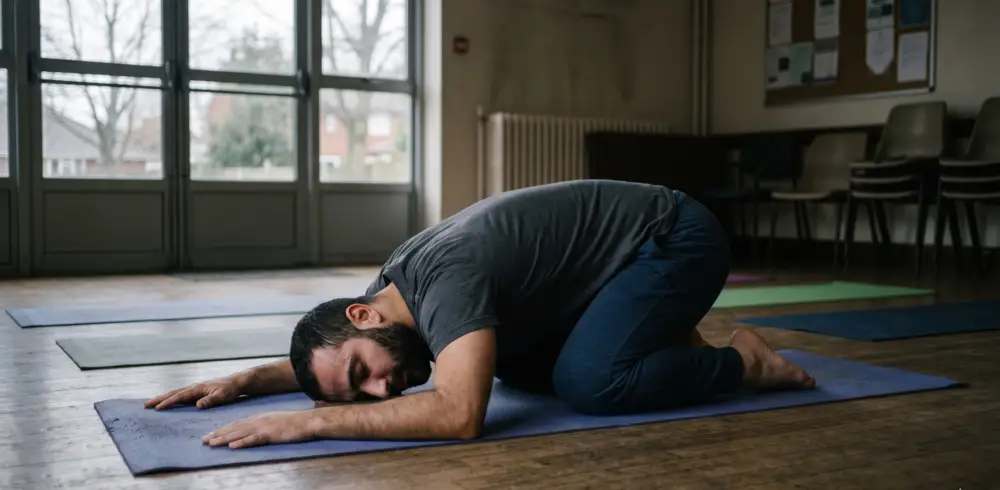
Most people encounter Yin Yoga expecting a gentle stretch class. What they find instead is something considerably harder: four minutes in a hip fold, the mind cycling through grocery lists, unresolved arguments, and the persistent urge to simply stand up and leave. That experience, uncomfortable and revealing in equal measure, is precisely the point.
Yin Yoga is a practice built on long, passive holds, typically lasting between three and seven minutes per pose, targeting the deep connective tissue of the body rather than its superficial muscles.
What is Yin Yoga?
Yin Yoga is a distinct style of yoga practice characterized by its slow pace and extended holds of passive postures. Unlike more dynamic forms of yoga, Yin Yoga focuses on applying gentle stress to the body's deep connective tissues, including fascia, ligaments, and joints.
These poses are typically held for durations ranging from three to ten minutes, allowing the muscles to remain relaxed so that the stress can reach these deeper layers. This approach aims to improve joint mobility and flexibility over time.
Benefits of Practicing Yin Yoga
Practicing Yin Yoga can bring about a range of positive changes, affecting both the body and the mind.
Physical Benefits of Yin Yoga
The physical advantages of Yin Yoga are primarily linked to its ability to work with the body's connective tissues. By holding poses for several minutes, practitioners can gradually increase their range of motion.
This is particularly beneficial for improving joint mobility, as it encourages circulation in areas that might not be regularly engaged. Over time, this can contribute to healthier joints and a greater ease of movement in daily activities.
The practice is also known to help balance the effects of more vigorous physical activities, offering a complementary approach to fitness routines.
Improved Flexibility: Long-held poses gently stress connective tissues, leading to increased flexibility over time.
Enhanced Joint Mobility: Regular practice can improve circulation within the joints, supporting their health and function.
Support for Recovery: Yin Yoga can serve as a beneficial practice for recovery after intense workouts or active lifestyles.
Mental and Emotional Benefits of Yin Yoga
Beyond the physical, Yin Yoga offers significant benefits for mental and emotional well-being. The prolonged stillness required in each pose encourages a deep sense of calm and introspection.
This practice can help to quiet the constant chatter of the mind, promoting mental clarity and a reduction in feelings of stress. By cultivating stillness and present moment awareness, practitioners may find it easier to manage daily stressors and cultivate a more balanced emotional state.
Key Poses in Yin Yoga
Seated Forward Fold (Paschimottanasana)
This pose, a variation of the traditional forward fold, involves sitting with the legs extended forward. The practitioner gently folds the torso over the legs, allowing the spine to round naturally.
The emphasis is on releasing tension in the back of the body, particularly the hamstrings and spine. Unlike more active styles, muscular engagement is minimal, allowing gravity to do the work over several minutes.
Modifications might include bending the knees or using props to support the head or torso, making it accessible for various levels of flexibility.
Butterfly Pose (Baddha Konasana)
Also known as Bound Angle Pose, Butterfly involves sitting with the soles of the feet together and the knees falling outwards.
The torso can remain upright or gently fold forward. This posture is designed to open the hips and inner thighs. The hold allows for a passive stretch in the groin and hip flexors.
To manage intensity, practitioners might place cushions under their knees or sit on a folded blanket to tilt the pelvis forward, creating a more comfortable and effective stretch.
Sphinx Pose (Salamba Bhujangasana)
Sphinx Pose is a gentle backbend performed lying on the belly. The forearms rest on the floor, parallel to each other, with the elbows positioned roughly under the shoulders. The chest is lifted, creating a mild curve in the spine.
This pose targets the front of the torso and can help to relieve tension in the lower back. It's a less intense variation of the Seal Pose, where the arms are fully extended and the backbend is deeper.
The key is to keep the legs and glutes relaxed, allowing the spine to lengthen rather than forcing a deep backbend.
How to Get Started with Yin Yoga
Beginning a Yin Yoga practice is accessible to most individuals, regardless of prior yoga experience. The foundational aspect involves understanding the core principles and approaching the practice with patience and awareness. I
t is generally recommended to start with guided instruction, particularly from a qualified teacher, to ensure safe and effective engagement with the poses.
When first exploring Yin Yoga, focus on the following:
Props: Utilize props such as bolsters, blankets, and blocks to support the body. These aids help achieve the necessary stillness and allow the connective tissues to be targeted without excessive muscular effort. Props make poses more accessible and comfortable for longer holds.
Duration: Begin with shorter hold times, perhaps 1 to 3 minutes, and gradually increase as comfort and familiarity grow. The goal is to find a sustainable edge of sensation, not to push into pain.
Awareness: Pay close attention to bodily sensations. Yin Yoga encourages introspection and understanding how the body responds to sustained stretches. Notice the difference between a beneficial stretch and strain.
Breath: Maintain a steady, calm breath throughout the practice. The breath serves as an anchor to the present moment and helps to relax the body and mind.
Why Does Stillness Present a Unique Challenge to the Nervous System?
The modern environment is systematically designed against stillness. Notifications, movement, ambient sound, and constant task-switching have conditioned the nervous system to expect perpetual input.
The brain's default mode network, the neural circuitry that activates during mind-wandering and self-referential thought, does not switch off when external stimulation stops. It amplifies. Lay a person down in silence and within minutes they are replaying a conversation from three days ago or rehearsing one that may never happen.
When someone enters a Yin pose, they are essentially running a diagnostic test on that wiring. The first two minutes of a hold frequently surface restlessness, irritability, or a powerful impulse to exit the pose. For most people, this is the truest picture they will get of their baseline stress load without a laboratory instrument in sight.
That diagnostic quality is also what makes Yin genuinely useful. A practice that only feels comfortable reveals nothing. One that asks the practitioner to stay present inside mild, manageable discomfort, and to study what happens in the mind during that time, becomes a precise training environment for emotional regulation.
How Does Yin Yoga Cultivate Interoceptive Awareness?
Interoception is the brain's ability to sense the internal state of the body. It encompasses everything from hunger and temperature to heartbeat, breath, and the subtle quality of tension held in the chest during anxiety.
It is mediated primarily by a bundle of neural fibers called the insular cortex, and it functions as the brain's real-time feed of what the body is experiencing at any given moment.
Some people have a surprisingly poor connection to this feed. They may not notice that their shoulders have been braced for hours until neck pain forces the observation. They may not realize they are breathing shallowly until they consciously try to take a deep breath and find the chest resistant.
This gap between actual bodily state and conscious awareness is not trivial as neuroscience research consistently links low interoceptive accuracy to difficulties in both mood regulation and decision-making.
Long Yin holds create conditions that sharpen this feed. When a pose places sustained, mild stress on deep connective tissue, the range of sensation becomes immediate and demanding enough that attention must turn inward.
A practitioner in a four-minute Dragon pose, a deep hip flexor opener, will encounter sensations that shift, migrate, and modulate over the course of the hold. Some will be sharp and then soften. Some will appear in unexpected locations.
Tracking these shifts requires a quality of sustained inward attention that most people rarely practice.
Over time, this can train the insular cortex to process bodily signals more accurately and more quickly.
Conclusion
Yin Yoga offers a unique and beneficial approach to physical and mental well-being. By holding poses for extended periods, it targets the deep connective tissues, improving flexibility and joint health.
This practice also cultivates mindfulness and a sense of calm, making it a valuable complement to more active lifestyles or yoga styles. Whether you are a seasoned yogi or new to the practice, incorporating Yin Yoga can lead to a more balanced and resilient body and mind.
Frequently Asked Questions
What exactly is Yin Yoga?
Yin Yoga is a very slow kind of yoga. You hold each pose for a long time, usually between 3 and 10 minutes. The idea is to gently work on the deeper parts of your body, like your joints and the tissues that connect your muscles, instead of just focusing on muscles.
What are the main benefits of practicing Yin Yoga?
Practicing Yin Yoga can make your joints more flexible and increase your range of motion. It's also great for calming your mind and reducing stress because you have to be still and patient in each pose. It helps you relax and feel more balanced.
What kind of poses are common in Yin Yoga?
You'll find poses that are held for a long time, mostly on the floor. Some common ones are Seated Forward Fold, Butterfly Pose, and Sphinx Pose. These poses are designed to gently stretch your hips, legs, and back.
Can Yin Yoga help with stress or anxiety?
Definitely. Because Yin Yoga requires you to stay still and focus on your breath and body sensations, it can be very calming for your nervous system. This stillness helps quiet a busy mind, which can be very helpful for managing stress and anxiety.
Why does staying still in a pose feel so mentally challenging?
The modern nervous system is wired for constant stimulation, so stillness can register as a mild threat that triggers restlessness and racing thoughts. This reaction reveals your baseline stress load, as the brain’s default mode network amplifies inner mental chatter when external input stops.
How does Yin Yoga build emotional resilience?
It teaches you to observe uncomfortable sensations without immediately reacting or fleeing. By repeatedly practicing this non-reactive awareness, you develop the ability to stay present with difficult emotions in daily life rather than suppressing or acting impulsively on them.
What is interoceptive awareness and why is it trained in Yin Yoga?
Interoception is the brain’s ability to sense internal body signals like tension, heartbeat, or breath. Yin holds sharpen this sense by forcing sustained attention to shifting physical sensations, which helps the brain process bodily data more accurately.
Emotiv is a neurotechnology leader helping advance neuroscience research through accessible EEG and brain data tools.
Medical Disclaimer: The information provided on this website is for educational and informational purposes only and is not intended as medical or health advice. This content may contain errors and should not be relied upon to make life-altering health, medical, or lifestyle choices. Always seek the advice of your physician or other qualified health provider with any questions you may have regarding a medical condition or treatment.
Christian Burgos