Sleep is something we all need, but getting it can be tough sometimes. If the usual advice like 'go to bed earlier' isn't cutting it, there are other things to try.
This article looks at some less common but potentially effective insomnia tips that might help you finally get some rest. We'll cover how to use sound and light, what to eat, ways to relax your mind and body, and even how temperature can play a role.
Advanced Tips for When Sleep Hygiene Isn't Enough
Sometimes, even with the best intentions and consistent application of sleep hygiene principles, achieving restful sleep remains a challenge. This can be due to a variety of factors, including deeply ingrained habits, underlying physiological responses, or environmental influences that standard advice doesn't fully address.
When the foundational elements of good sleep practice are in place, it becomes necessary to explore more nuanced strategies.
Why Common Sleep Advice Sometimes Fails
While widely recommended, basic sleep hygiene practices may not be sufficient for everyone. The effectiveness of advice like maintaining a consistent sleep schedule or optimizing the bedroom environment can be limited if other factors are at play.
For instance, persistent racing thoughts, significant stress, or even subtle environmental cues can override these efforts. The body's response to stress, for example, can keep the sympathetic nervous system activated, making it difficult to transition into a relaxed state conducive to sleep.
Furthermore, individual differences in biology and lifestyle mean that a one-size-fits-all approach often falls short. What works for one person might not work for another, highlighting the need for personalized adjustments and a deeper understanding of individual sleep patterns.
Adopting a Mindset of Experimentation
When standard sleep hygiene measures are not yielding the desired results, adopting an experimental approach can be beneficial. This involves viewing sleep improvement not as a rigid set of rules, but as a process of discovery.
It requires patience and a willingness to try different techniques to see what resonates best with your individual physiology and lifestyle. Instead of becoming discouraged by what doesn't work, focus on gathering information about your own sleep patterns and responses.
Consider the following as starting points for experimentation:
Environmental Adjustments: Beyond basic darkness and quiet, experiment with specific soundscapes, or fine-tune room temperature to find your optimal sleep setting.
Behavioral Modifications: If you find yourself lying awake for extended periods, try the strategy of getting out of bed and engaging in a quiet, non-stimulating activity until sleepiness returns, rather than tossing and turning.
Mind-Body Techniques: Explore various relaxation methods, such as different breathing exercises or mindfulness practices, to identify which best calms your mind and body before sleep.
This iterative process of trying, observing, and adjusting allows for a more personalized and effective strategy for improving sleep quality over time.
Sound and Light Manipulation Techniques
Sometimes, the environment itself can be a significant factor in sleep disruption. Adjusting the auditory and visual stimuli in your sleep space can offer a more controlled approach to improving sleep quality when standard advice falls short.
Using Pink or Brown Noise for Uninterrupted Sleep
Environmental sounds can often disrupt sleep. While silence might seem ideal, some individuals find that a consistent, low-level sound can mask sudden noises and create a more stable auditory environment.
Pink noise and brown noise are types of sound frequencies that are often explored for this purpose. Pink noise contains equal energy across all octaves, resulting in a flatter sound profile than white noise, which has equal energy per frequency. Brown noise has even more energy in the lower frequencies, giving it a deeper, more resonant quality.
The Light Anchor Strategy for Shift Workers
For individuals working non-traditional hours, such as shift workers, aligning the body's internal clock with the external environment presents a unique challenge. Light exposure plays a critical role in regulating the circadian rhythm.
The 'light anchor' strategy involves strategically using light to signal to the body when it is time to be awake and when it is time to sleep, regardless of the clock time. This might involve seeking bright light exposure at the beginning of the desired 'day' and minimizing light exposure before the desired 'night' sleep period.
For instance, shift workers might use bright light therapy upon waking for their shift and then use dim, red-spectrum lighting in their home environment as they prepare for sleep, to avoid suppressing melatonin production.
Red Light Therapy: A Gentle Nudge for Your Circadian Rhythm?
Red light therapy, often discussed in the context of skin health, is also being explored for its potential impact on circadian rhythms and sleep.
The theory is that exposure to red light, particularly in the evening, may help signal to the body that it is time to wind down without significantly disrupting the natural production of melatonin. Unlike blue light, which is known to suppress melatonin and promote wakefulness, red light has a longer wavelength and is less likely to interfere with the sleep-wake cycle.
While research is ongoing, some studies suggest that using red light devices for a specific duration before bedtime could potentially aid in preparing the body for sleep.
Strategic Nutrition for Sleep
Sleep and nutrition have an interesting relationship. What people consume and when they eat can influence how easily they fall asleep and stay that way. The science behind this isn't always simple, but certain nutrients and habits keep coming up when researchers look into sleep quality.
The Role of Tryptophan-Rich Snacks Before Bed
Tryptophan is an amino acid found in a lot of common foods. It's important because the body uses it to make melatonin and serotonin, both key players in the sleep-wake cycle. Some snacks—like a small serving of turkey, yogurt, or pumpkin seeds—offer decent amounts of tryptophan.
There's emerging evidence that a light, protein-rich snack before bed may help some people fall asleep, especially if it contains tryptophan. Here are a few examples:
Plain yogurt with a few almonds
Half a banana with nut butter
A boiled egg or a slice of turkey
Keeping the snack small is best, since large meals can cause discomfort and keep people awake.
Exploring Tart Cherry Juice for Natural Melatonin
Tart cherry juice is often mentioned as a sleep aid. Scientists believe its benefits come from two things: it's naturally rich in melatonin (the hormone that signals darkness to the brain), and it also has antioxidants that might support longer, higher-quality sleep.
Studies—usually small ones—suggest a modest but real improvement in sleep duration for some people who drink tart cherry juice regularly. Here's a quick look comparing tart cherries to other sources:
Food/Drink | Melatonin Content (ng/100g) |
|---|---|
Tart cherry juice | 13.5 |
Grapes | 1.5 |
Tomatoes | 1.0 |
Consuming tart cherry juice isn't a guarantee of better sleep, but the research is interesting and ongoing. More investigation would help clarify how much people would need, and who might benefit the most from it.
How Meal Timing Influences Your Body's Internal Clock
When meals are eaten can shape the body's internal clock, which in turn affects sleep. Sleep experts have noticed that eating large meals right before bed can disrupt sleep, causing discomfort and even heartburn.
The timing of eating appears to influence:
Melatonin production
Insulin response
The body's ability to cool down for rest
Most research points to finishing the last meal at least 2 hours before bedtime for best results. Late-night eating doesn’t just affect sleep, it also interacts with medications and conditions like insomnia that need careful management.
Sophisticated Relaxation and Brain-Calming Protocols
When standard sleep hygiene practices do not yield the desired results, more targeted methods for quieting the mind and body can be explored. These techniques draw on principles from neuroscience and psychology to influence brain health and promote a state conducive to sleep. They often involve structured mental exercises or physical relaxation sequences.
The 4-7-8 Breathing Technique Explained
The 4-7-8 breathing technique is a method designed to help calm the nervous system. It involves a specific pattern of breath control.
The practice requires placing the tip of the tongue on the roof of the mouth, just behind the front teeth, and keeping it there throughout the exercise. With the mouth closed, one inhales through the nose while counting to four. This is followed by holding the breath for a count of seven.
Finally, the breath is exhaled through the mouth with a gentle whooshing sound for a count of eight. This cycle is typically repeated for a total of four breaths.
Introduction to Non-Sleep Deep Rest (NSDR) and Yoga Nidra
Non-Sleep Deep Rest (NSDR) is a category of practices aimed at achieving a state of profound relaxation without necessarily falling asleep. Yoga Nidra, often translated as 'yogic sleep,' is a specific form of NSDR. It involves systematically guiding attention through different parts of the body while maintaining a state of relaxed awareness.
Participants typically lie down and follow verbal instructions, focusing on sensations like warmth, heaviness, or coolness in various body parts. The goal is to induce a deep state of rest that can be restorative, similar to sleep, and may help manage stress and improve overall brain health.
The Cognitive Shuffle: A Method to Distract a Racing Mind
The Cognitive Shuffle is a technique developed to help manage a mind that is overly active with intrusive or worrying thoughts, a common issue in brain disorders affecting sleep. This method uses a word game to redirect mental focus. The process begins by selecting a neutral word with five or more letters, ideally without repeating any letters.
For instance, the word 'DREAM' could be chosen. The next step involves generating as many words as possible that start with the first letter of the chosen word (e.g., 'D' words like 'dog,' 'duck,' 'dim'). This is followed by visualizing each generated word. The process is then repeated for each subsequent letter of the original word. If sleepiness occurs during the exercise, it is encouraged to allow oneself to fall asleep.
Leveraging Temperature and Somatic Awareness
Beyond the typical advice, manipulating your physical environment and internal sensations can significantly influence sleep quality. Temperature and how you perceive your body's signals, often termed somatic awareness, are two areas that can be strategically adjusted.
The Bed-Cooling Effect: Precise Temperature Control
The body's core temperature naturally drops as bedtime approaches, a signal that facilitates sleep onset. Creating a cooler sleep environment can support this natural process. This doesn't necessarily mean a frigid room, but rather a temperature that feels comfortably cool.
The ideal range often cited is between 62-82 degrees Fahrenheit (17-28 degrees Celsius), though individual preferences vary. Using breathable bedding materials and ensuring good air circulation can also contribute to a cooler sleep surface.
Some research suggests that even a slight drop in body temperature, achieved through methods like a warm bath followed by exposure to cooler air, can help initiate sleep.
The Benefit of Keeping Your Feet and Hands Warm
While a cool core temperature is beneficial, extremities like the feet and hands play a different role. Keeping these areas warm can actually help signal to the body that it's time to rest.
Vasodilation, the widening of blood vessels, in the hands and feet can help dissipate heat from the body's core, contributing to that natural temperature drop. Conversely, cold extremities can sometimes be a sign of poor circulation or stress, which can interfere with sleep.
Simple methods like wearing socks to bed or using a warm water bottle can help maintain comfortable warmth in these areas. This focus on peripheral warmth, in conjunction with a cooler overall environment, creates a more conducive state for sleep.
Putting It All Together
Making changes to how you sleep can feel like a lot at first. You might try a few things and not see results right away. That's okay. The key is to stick with the habits that work for you.
Things like keeping a regular sleep schedule, making your bedroom a good place to sleep, and winding down before bed are solid steps. If these don't help enough, looking into options like CBT-I or talking to a doctor is the next logical step.
References
Zhou, J., Liu, D., Li, X., Ma, J., Zhang, J., & Fang, J. (2012). Pink noise: effect on complexity synchronization of brain activity and sleep consolidation. Journal of theoretical biology, 306, 68-72. https://doi.org/10.1016/j.jtbi.2012.04.006
Yoon, H., & Baek, H. J. (2022). External auditory stimulation as a non-pharmacological sleep aid. Sensors, 22(3), 1264\. https://doi.org/10.3390/s22031264
Bonmati-Carrion, M. A., Arguelles-Prieto, R., Martinez-Madrid, M. J., Reiter, R., Hardeland, R., Rol, M. A., & Madrid, J. A. (2014). Protecting the melatonin rhythm through circadian healthy light exposure. International journal of molecular sciences, 15(12), 23448-23500. https://doi.org/10.3390/ijms151223448
Zhao, J., Tian, Y., Nie, J., Xu, J., & Liu, D. (2012). Red light and the sleep quality and endurance performance of Chinese female basketball players. Journal of athletic training, 47(6), 673-678. https://doi.org/10.4085/1062-6050-47.6.08
Abou-Khalil R. (2025). Nutritional Interventions for Enhancing Sleep Quality: The Role of Diet and Key Nutrients in Regulating Sleep Patterns and Disorders. Food science & nutrition, 13(12), e71309. https://doi.org/10.1002/fsn3.71309
Barforoush, F., Ebrahimi, S., Abdar, M. K., Khademi, S., & Morshedzadeh, N. (2025). The Effect of Tart Cherry on Sleep Quality and Sleep Disorders: A Systematic Review. Food Science & Nutrition, 13(9), e70923. https://doi.org/10.1002/fsn3.70923
Nogueira, L. F. R., Pellegrino, P., Cipolla-Neto, J., Moreno, C. R. C., & Marqueze, E. C. (2021). Timing and Composition of Last Meal before Bedtime Affect Sleep Parameters of Night Workers. Clocks & sleep, 3(4), 536–546. https://doi.org/10.3390/clockssleep3040038
Caddick, Z. A., Gregory, K., Arsintescu, L., & Flynn-Evans, E. E. (2018). A review of the environmental parameters necessary for an optimal sleep environment. Building and environment, 132, 11-20. https://doi.org/10.1016/j.buildenv.2018.01.020
Frequently Asked Questions
What is sleep hygiene, and why isn't it always enough?
Sleep hygiene refers to the habits and practices that help you get good sleep, like having a regular sleep schedule and a comfy bedroom. Sometimes, even with good sleep hygiene, people still have trouble sleeping. This can happen because other things, like stress or worries, might be affecting your sleep more strongly than these basic tips can fix.
How can sounds like pink or brown noise help me sleep?
Pink and brown noise are types of sound that can help block out sudden noises that might wake you up. They create a steady, calming background sound that can make it easier to stay asleep and feel more rested.
What is the 'Light Anchor Strategy' for shift workers?
This strategy helps people who work different shifts adjust their body's internal clock. It involves using light at specific times to signal to your body when it should be awake and when it should be sleepy, even if your work schedule is unusual.
Can red light therapy really help with sleep?
Red light therapy is being studied for its potential to help regulate your body's natural sleep-wake cycle. The idea is that using red light at certain times might gently encourage your body to get ready for sleep, but more research is needed to be sure how well it works.
What foods contain tryptophan, and why are they good before bed?
Tryptophan is a natural substance found in foods like turkey, milk, nuts, and seeds. Your body uses tryptophan to make chemicals that help you feel relaxed and sleepy, so a small snack with these foods might help you drift off to sleep.
How does drinking tart cherry juice affect sleep?
Tart cherry juice is a natural source of melatonin, a hormone that helps control your sleep. Drinking it might help boost your body's melatonin levels, making it easier to fall asleep and stay asleep.
Does eating dinner late at night make it harder to sleep?
Yes, eating large meals too close to bedtime can make sleep difficult. Your body is busy digesting, which can keep you awake. It's generally better to eat your meals earlier in the evening.
Can you explain the 4-7-8 breathing technique?
This is a simple breathing exercise to help you relax. You breathe in quietly through your nose for a count of 4, hold your breath for a count of 7, and then breathe out slowly and completely through your mouth for a count of 8\. Repeating this can calm your mind and body.
What is Non-Sleep Deep Rest (NSDR) and Yoga Nidra?
These are practices designed to help your body and mind relax deeply, even when you're not sleeping. They involve guided relaxation and awareness techniques that can help reduce stress and improve your overall sense of calm, which can indirectly help with sleep.
How does the 'Cognitive Shuffle' help with a busy mind at night?
The Cognitive Shuffle is a way to distract a mind that's full of thoughts. It involves quickly listing random things, like different types of animals or colors, to give your brain something simple to focus on instead of worries or stressful thoughts.
Why is keeping my body cool important for sleep?
Your body temperature naturally drops when you're about to sleep. Making your bedroom cool helps this process along, signaling to your brain that it's time to rest. This can lead to deeper, more refreshing sleep.
What's the deal with keeping my feet and hands warm for better sleep?
Keeping your extremities, like your feet and hands, warm can actually help your body cool down overall. When your blood vessels in your hands and feet open up to release heat, it helps lower your core body temperature, which is a key signal for sleep.
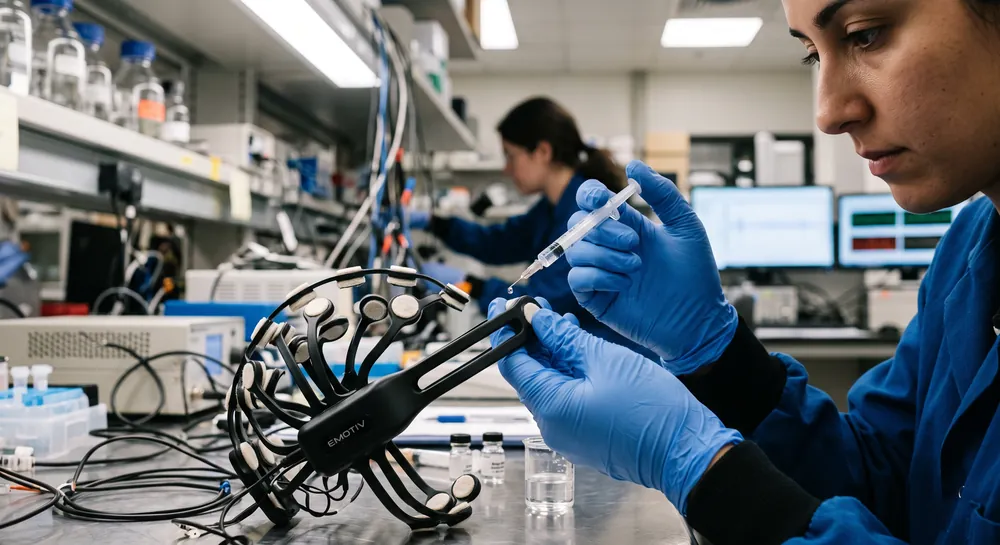
Emotiv is a neurotechnology leader helping advance neuroscience research through accessible EEG and brain data tools.
Medical Disclaimer: The information provided on this website is for educational and informational purposes only and is not intended as medical or health advice. This content may contain errors and should not be relied upon to make life-altering health, medical, or lifestyle choices. Always seek the advice of your physician or other qualified health provider with any questions you may have regarding a medical condition or treatment.
Christian Burgos