Amyotrophic Lateral Sclerosis (ALS) and Multiple Sclerosis (MS) affect the nervous system and cause progressive disability. However, their management philosophies, disease trajectories, and long-term outcomes diverge dramatically.
MS represents an autoimmune attack on the central nervous system's myelin sheaths, creating opportunities for intervention through immune modulation. ALS involves the selective death of motor neurons, a process that current medicine can only modestly influence.
This fundamental difference in disease mechanism drives entirely different approaches to treatment and care.
What Are the Main Differences in Disease Management Goals Between ALS and MS?
The therapeutic philosophies governing ALS and MS management reflect their underlying biological realities. MS treatment centers on controlling the autoimmune process that drives the disease, while ALS management focuses on preserving function and quality of life in the face of inevitable neurodegeneration.
This distinction affects every clinical decision. MS neurologists work to prevent future attacks and slow the accumulation of disability over decades.
ALS specialists concentrate on maximizing current function while preparing patients and families for predictable decline. The timeline of concern extends 25–45 years for MS, compared to 2–3 years for most ALS cases.
Why Does MS Treatment Focus on Long-Term Immune System Modulation?
Disease-modifying therapies (DMTs) form the cornerstone of MS management because they address the root cause of tissue damage. These medications suppress or redirect the immune system's attack on myelin, dramatically altering the disease's natural history. The goal extends beyond symptom management to actual disease modification.
Modern DMTs can reduce relapse rates of at least 30% and significantly slow the progression of disability. This success creates a management paradigm focused on aggressive early intervention to preserve long-term function.
This strategy requires ongoing surveillance:
Regular MRI monitoring
Bloodwork for immune suppression complications
Liver function assessment
Infection risk monitoring
Evaluation for rare complications such as progressive multifocal leukoencephalopathy
Treatment selection also considers fertility plans, age, comorbidities, and tolerance for risk, since patients may remain on therapy for decades.
Why Does ALS Management Prioritize Neuroprotection and Symptomatic Support?
ALS management acknowledges the limited ability to alter disease progression while maximizing quality of life and function. The two FDA-approved medications, riluzole and edaravone, provide modest benefits.
The modest efficacy of current neuroprotective agents shifts emphasis toward comprehensive symptomatic management. Multidisciplinary ALS clinics coordinate care across neurology, pulmonology, gastroenterology, physical therapy, occupational therapy, speech pathology, nutrition, and social work. This team approach addresses the multiple systems affected by motor neuron loss.
Moreover, symptomatic management in ALS requires proactive planning for predictable complications. Respiratory insufficiency, dysphagia, communication difficulties, and mobility loss follow relatively predictable patterns. Early introduction of non-invasive ventilation, feeding tubes, and communication devices often provides greater benefit than waiting for severe symptoms to develop.
The philosophy emphasizes maintaining dignity and autonomy while preparing for functional decline. Discussions about advance directives, ventilator support, and hospice care begin early in the disease course, allowing patients to make informed decisions while cognitively intact.
How Does the Disease Progression Compare Between ALS and MS?
MS typically follows a relapsing-remitting pattern with periods of stability or improvement, while ALS demonstrates relentless, linear decline without recovery periods.
These different progression patterns influence treatment timing, patient expectations, and care planning strategies.
MS patients learn to manage uncertainty about when and how severely the next relapse will occur. ALS patients face certainty about progressive decline while uncertainty remains about the rate of progression.
What Are the Relapsing-Remitting and Progressive Phases of MS?
Approximately 85% of MS patients initially present with relapsing-remitting disease (RRMS), characterized by distinct attacks followed by periods of remission.
Relapses involve acute neurological symptoms lasting days to weeks, followed by partial or complete recovery. Between relapses, patients may experience stable function or even improvement.
Common relapses may involve:
Optic neuritis
Limb weakness
Sensory loss
Brainstem dysfunction
Balance impairment
Cognitive changes
Within 20 years, many RRMS patients transition to secondary progressive MS (SPMS), where disability accumulates steadily without distinct relapses. This transition represents a shift from inflammatory to neurodegenerative processes, making the disease more similar to ALS in its relentless progression.
On the other hand, primary progressive MS (PPMS) affects 10–15% of patients from disease onset. These individuals experience gradual worsening without distinct relapses, typically beginning with progressive walking difficulties. PPMS more closely resembles ALS in its steady decline, though progressing over decades rather than years.
What Characterizes the Inevitable and Linear Progression of ALS?
ALS progression follows a predictable downward trajectory without periods of improvement or stability. Motor neurons die continuously, and once lost, they do not regenerate.
Patients typically lose 1–5% of their motor function monthly, though the rate varies significantly between individuals.
The pattern of progression depends on disease subtype. Limb-onset ALS begins with weakness in arms or legs, gradually spreading to other regions. Bulbar-onset ALS starts with speech and swallowing difficulties, often progressing more rapidly. Respiratory-onset ALS, though rare, presents with breathing problems as the initial symptom.
Most patients retain cognitive function throughout the disease course, creating the psychological challenge of being mentally aware while becoming physically helpless. This preservation of cognition distinguishes ALS from many other neurodegenerative diseases and intensifies the emotional impact of functional loss.
The median survival from symptom onset ranges from 2–3 years, with 20% of patients surviving beyond 5 years and 10% beyond 10 years. Factors associated with longer survival include younger age at onset, limb onset rather than bulbar onset, and absence of certain genetic mutations.
Feature | ALS | MS |
|---|---|---|
Nature | Motor neuron death | Autoimmune demyelination |
Typical onset age | 55–65 years | 20–40 years |
Main disease trajectory | Linear, steady decline | Relapses then progressive |
Cognition | Usually intact | Mild cognitive changes common |
Median survival | 2–3 years | Near-normal life expectancy |
Primary focus | Symptom support, neuroprotection | Immune modulation, DMTs |
How Do Rehabilitative Therapy Approaches Differ for ALS and MS?
Rehabilitation strategies for ALS and MS reflect their contrasting disease trajectories and recovery potentials. MS rehabilitation often focuses on recovery and compensation, while ALS rehabilitation emphasizes adaptation and preparation for functional decline.
The timing and intensity of rehabilitation differ significantly between conditions. MS patients may undergo intensive rehabilitation following relapses to maximize recovery, while ALS patients require continuous adaptation as function steadily declines.
How Do Therapies for MS Help Manage Symptoms and Maintain Function?
MS rehabilitation addresses the specific complications of central nervous system inflammation and demyelination.
Physical therapy targets spasticity, weakness, balance problems, and fatigue. Occupational therapy focuses on cognitive dysfunction, visual problems, and activities of daily living. Speech therapy addresses dysarthria and cognitive-communication disorders.
Furthermore, spasticity management represents a major focus in MS rehabilitation. Techniques include stretching, strengthening, functional electrical stimulation, and medication management.
The goal involves reducing muscle stiffness while maintaining enough tone to support mobility and transfers.
In addition, cognitive rehabilitation addresses the executive dysfunction, memory problems, and processing speed deficits common in MS. Strategies include external memory aids, organizational systems, and computer-based training programs.
The intermittent nature of cognitive symptoms in MS creates opportunities for improvement that do not exist in ALS.
How Do Therapies for ALS Focus on Adaptation and Compensation?
Physical therapy in ALS focuses on maintaining range of motion, preventing contractures, and optimizing remaining strength. Exercise programs must balance the benefits of activity against the risk of overuse weakness, a phenomenon where excessive exercise may accelerate motor neuron death. Moderate exercise appears beneficial, while intense exercise may be harmful.
Respiratory therapy becomes central to ALS management as diaphragm and accessory respiratory muscles weaken. Non-invasive ventilation support begins when forced vital capacity drops below 50% of predicted values or when patients develop symptoms of hypoventilation. Early introduction improves survival and quality of life.
Further, occupational therapy addresses the progressive loss of fine motor skills and upper extremity function. Adaptive equipment introduction occurs proactively, allowing patients to master new tools while retaining sufficient function to operate them. Equipment includes button hooks, zipper pulls, universal cuffs, and environmental control systems.
Lastly, speech therapy in ALS manages progressive dysarthria and dysphagia. Augmentative and alternative communication (AAC) devices require early introduction, as patients need adequate motor skills to operate them effectively. Voice banking allows patients to preserve their natural speech for future use with communication devices.
Why Are EEG-Based Brain-Computer Interfaces (BCIs) Crucial for Late-Stage ALS?
As ALS progresses into its advanced stages, some people may encounter a "locked-in" state, where voluntary muscle control is almost entirely lost while cognitive functions remain intact.
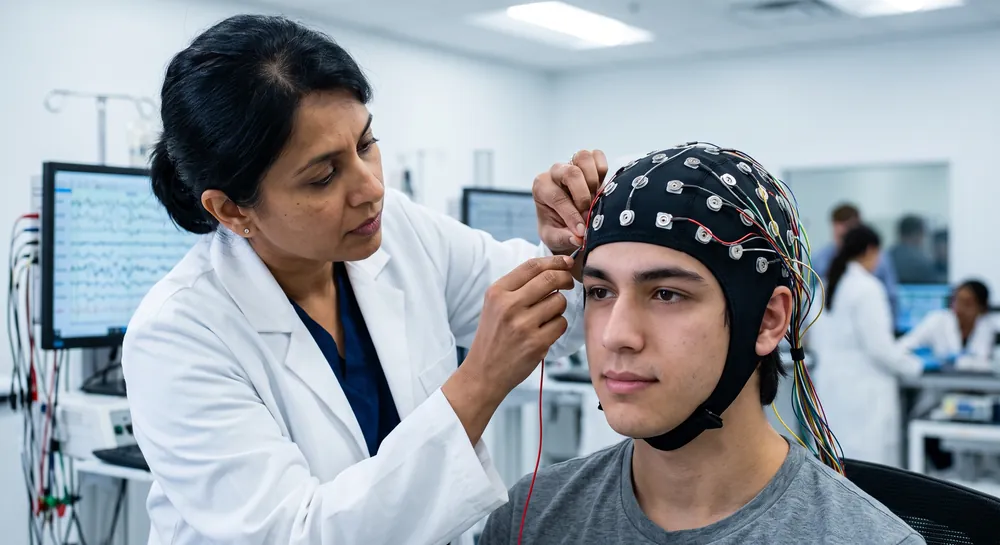
In these circumstances, non-invasive brain-computer interfaces (BCIs) based on electroencephalography (EEG) become vital tools for maintaining communication and environmental control. These systems utilize electrodes placed on the scalp to detect the brain's electrical activity, which is then translated by specialized software into digital commands.
This allows a user to select letters, operate smart-home devices, or navigate software interfaces through mental intent alone, bypassing the need for physical movement. While BCIs offer a profound opportunity to preserve autonomy and quality of life, it is important to recognize that this neuroscience technology is an evolving field.
How Is EEG Used to Understand and Monitor Cognitive Fatigue in MS?
In contrast to the motor-focused applications for ALS, neurotechnology in MS is increasingly employed as a research tool to quantify subjective symptoms like cognitive fatigue. This type of fatigue is one of the most debilitating long-term challenges of MS, yet it is difficult to measure through traditional clinical observation.
Researchers use EEG to identify objective neural correlates of this mental exhaustion by analyzing changes in brainwave power and functional connectivity. For example, shifts in specific frequency bands—such as increased power in theta or alpha waves—can indicate when the brain’s resources are being depleted during cognitive tasks.
By mapping how brain regions synchronize or disconnect under the strain of fatigue, scientists aim to develop better measuring strategies. Although this remains a research application rather than a widespread standard of care, it provides a crucial pathway for developing personalized management strategies that account for the invisible, functional impact of the disease.
What Are the Summary Findings Regarding ALS vs MS Disease Trajectories?
The economic burden of ALS is substantial, with average annual costs exceeding $60,000. Most costs stem from durable medical equipment, home healthcare, and lost productivity. The concentrated timeframe of high-cost care distinguishes ALS from MS, where costs accumulate over decades.
Despite the grave prognosis, advances in supportive care have improved quality of life, brain health, and modestly extended survival. Multidisciplinary care, early respiratory support, optimal nutrition, and psychosocial support can significantly impact the disease experience.
Research continues into neuroprotective agents, gene therapy, and stem cell treatments, offering hope for future therapeutic advances.
References
Leray, E., Vukusic, S., Debouverie, M., Clanet, M., Brochet, B., de Sèze, J., Zéphir, H., Defer, G., Lebrun-Frenay, C., Moreau, T., Clavelou, P., Pelletier, J., Berger, E., Cabre, P., Camdessanché, J. P., Kalson-Ray, S., Confavreux, C., & Edan, G. (2015). Excess Mortality in Patients with Multiple Sclerosis Starts at 20 Years from Clinical Onset: Data from a Large-Scale French Observational Study. PloS one, 10(7), e0132033. https://doi.org/10.1371/journal.pone.0132033
Filippi, M., Amato, M. P., Centonze, D., Gallo, P., Gasperini, C., Inglese, M., Patti, F., Pozzilli, C., Preziosa, P., & Trojano, M. (2022). Early use of high-efficacy disease‑modifying therapies makes the difference in people with multiple sclerosis: an expert opinion. Journal of neurology, 269(10), 5382–5394. https://doi.org/10.1007/s00415-022-11193-w
Perrone, V., Veronesi, C., Giacomini, E., Citraro, R., Dell'Orco, S., Lena, F., Paciello, A., Resta, A. M., Nica, M., Ritrovato, D., & Degli Esposti, L. (2022). The Epidemiology, Treatment Patterns and Economic Burden of Different Phenotypes of Multiple Sclerosis in Italy: Relapsing-Remitting Multiple Sclerosis and Secondary Progressive Multiple Sclerosis. Clinical epidemiology, 14, 1327–1337. https://doi.org/10.2147/CLEP.S376005
Rajabi, M., Shafaeibajestan, S., Asadpour, S., Alyari, G., Taei, N., Kohkalani, M., Raoufinia, R., Afarande, H., & Saburi, E. (2025). Primary Progressive Multiple Sclerosis: New Therapeutic Approaches. Neuropsychopharmacology reports, 45(3), e70039. https://doi.org/10.1002/npr2.70039
Gladman, M., & Zinman, L. (2015). The economic impact of amyotrophic lateral sclerosis: a systematic review. Expert review of pharmacoeconomics & outcomes research, 15(3), 439-450. https://doi.org/10.1586/14737167.2015.1039941
Frequently Asked Questions
What are the main differences in how ALS and MS are treated?
MS treatment aims to suppress the immune system's attack on myelin using disease-modifying therapies to prevent relapses and slow disability over decades. ALS management focuses on modest neuroprotection with drugs like riluzole and emphasizes comprehensive symptomatic and multidisciplinary support to maintain quality of life during the relentless decline.
Why can MS patients experience recovery while ALS patients do not?
MS often follows a relapsing-remitting pattern where inflammation causes temporary symptoms that can partially or fully heal between attacks. ALS involves continuous motor neuron death without any regenerative periods, so each lost function is permanent and never improves.
How does disease progression differ between ALS and MS?
MS typically starts with unpredictable relapses and remissions, and some patients later transition to a steady progression over decades. ALS progresses in a relentless, linear decline without plateaus or improvements, with median survival of 2–3 years from symptom onset.
What role does rehabilitation play in MS management?
MS rehabilitation focuses on recovery after relapses, managing spasticity, fatigue, and balance, with the goal of regaining function. Therapy intensity can vary, and patients may return to independent walking after temporary disability during a relapse.
How is rehabilitation different for ALS patients?
ALS rehabilitation emphasizes adaptation and compensation to preserve function and prevent complications as abilities decline. Interventions like non-invasive ventilation and communication devices are introduced proactively before severe symptoms appear, because there is no recovery.
Emotiv is a neurotechnology leader helping advance neuroscience research through accessible EEG and brain data tools.
Medical Disclaimer: The information provided on this website is for educational and informational purposes only and is not intended as medical or health advice. This content may contain errors and should not be relied upon to make life-altering health, medical, or lifestyle choices. Always seek the advice of your physician or other qualified health provider with any questions you may have regarding a medical condition or treatment.
Christian Burgos