Amyotrophic Lateral Sclerosis, or ALS, is a condition that affects nerve cells controlling voluntary muscles. Understanding how the symptoms of ALS typically progress can help individuals and their families prepare for the changes ahead. This overview looks at the common journey of ALS symptom progression.
How Does ALS Progress in the Early Stages?
What Are the First Signs of Limb-Onset ALS in the Arms and Legs?
Early signs of ALS, particularly when it begins in the limbs, can be quite subtle. People might notice a slight weakness in their hands, making it harder to grip things or perform tasks requiring fine motor skills, like buttoning a shirt or turning a key.
Sometimes, it's just a feeling of clumsiness or tripping more often than usual. Muscles might feel a bit stiff or begin to twitch involuntarily. These twitches can be small and barely noticeable at first, or they might become more frequent.
Over time, these muscles can start to lose mass, a process called atrophy, though this is often not apparent in the very early stages. Fatigue can also be a symptom, making physical activities feel more tiring than they used to.
How Does Bulbar-Onset ALS Affect Speech and Swallowing?
When ALS starts with bulbar symptoms, the initial changes are often related to the muscles controlling speech and swallowing. This can manifest as a slight hoarseness or a change in voice quality. Words might become a little slurred, especially when tired.
Difficulty swallowing, or dysphagia, might begin with certain foods or liquids, perhaps a feeling of food getting stuck or a slight cough after drinking. Chewing can also become more challenging.
These symptoms can sometimes be mistaken for other issues, like a cold or allergies, making the diagnosis process take longer.
When Does ALS Muscle Weakness Lead to Atrophy?
As ALS progresses into its early stages, the muscle weakness that was once subtle becomes more noticeable.
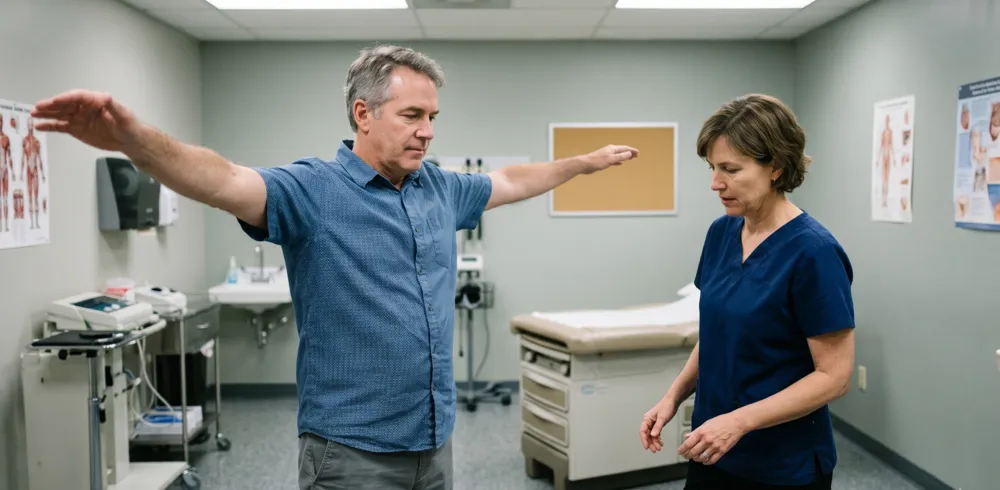
Doctors can detect this through physical examinations, noting reduced muscle power when testing reflexes or resistance. This weakness can start to impact daily activities.
For instance, lifting objects might become difficult, or walking might require more effort. In some cases, the muscles themselves begin to shrink, a visible sign of muscle atrophy.
This loss of muscle bulk is a direct result of the nerve signals to the muscles being interrupted.
What Are ALS Muscle Fasciculations, Cramps, and Spasticity?
Beyond weakness, early-stage ALS often involves other muscle-related symptoms. Fasciculations, those involuntary muscle twitches, can become more frequent and sometimes more widespread.
Muscle cramps, which are sudden, painful tightenings of a muscle, can also occur. These are different from the cramps experienced after strenuous exercise; they can happen at rest.
Another common symptom is spasticity, which is a feeling of muscle stiffness or tightness. This can make movements feel jerky or difficult to control. These symptoms, while not always painful, can be uncomfortable and disruptive to daily life.
How Does Early ALS Impact Fine Motor Skills and Daily Activities?
The progression of early-stage ALS significantly affects a person's ability to perform everyday tasks.
Fine motor skills, which involve the precise movements of small muscles, are often among the first to be impacted. This can make activities like writing, typing, using utensils, or managing personal hygiene more challenging.
Tasks that were once automatic may now require considerable concentration and effort. As weakness spreads, even simpler activities like walking, standing up from a chair, or reaching for objects can become more difficult.
What Happens During Mid-Stage ALS Symptom Progression?
As ALS progresses, the symptoms experienced in the early stages typically become more pronounced and widespread. This middle phase of the disease is characterized by increasing muscle weakness and a greater impact on daily activities.
How Does Spreading Weakness Create Mobility Challenges in ALS?
Muscle weakness, which may have initially been localized, often begins to spread to other parts of the body. This can lead to significant challenges with mobility.
Walking may become more difficult, and individuals might find themselves unable to get up unassisted if they fall. Tasks that were once simple, like driving, may no longer be possible.
Why Do ALS Speech and Swallowing Difficulties Get Worse?
The muscles involved in speech and swallowing can also be increasingly affected. This can result in more pronounced dysarthria, or difficulty forming words, and dysphagia, making it harder to chew and swallow food.
The risk of choking can increase, and maintaining adequate nutrition and hydration may require specific strategies and interventions.
When Do Breathing Changes Start to Occur in ALS?
Breathing can also become more challenging as the respiratory muscles weaken. This can lead to shortness of breath, particularly with exertion.
Managing these respiratory changes is a key focus during mid-stage ALS. Medical professionals may monitor breathing function closely and discuss potential interventions to support respiratory health as the disease progresses.
How Are Advanced and Late-Stage ALS Symptoms Managed?
How Does ALS Cause Significant Respiratory Muscle Weakness?
As ALS progresses, the muscles responsible for breathing, such as the diaphragm and intercostal muscles, weaken considerably.
This can lead to reduced lung capacity and make it difficult to inhale and exhale effectively. Symptoms like fatigue, shortness of breath, and even confusion can arise from insufficient oxygen.
Why Is Caregiver Dependence Necessary in Late-Stage ALS?
In the advanced stages, most voluntary muscles may become paralyzed. This significantly impacts mobility, making it difficult or impossible for people to move independently.
Daily activities such as eating, drinking, bathing, and dressing often require substantial assistance from caregivers. Specialized equipment becomes vital for maintaining quality of life and independence as much as possible.
This can include power wheelchairs for mobility, hospital beds for comfort and positioning, and mechanical lifts to aid in transfers. Environmental control units, operated by minimal movement, can also help manage aspects of daily living.
How Can ALS Patients Communicate After Losing the Ability to Speak?
When speech becomes difficult or impossible due to the progression of ALS, alternative communication methods are essential.
Augmentative and alternative communication (AAC) devices can be used. These range from simple alphabet boards to sophisticated electronic devices that can generate speech.
Eye-gaze technology, where eye movements control a cursor on a screen, is one method that allows people with severe physical limitations to communicate. Maintaining social connections and expressing needs and desires remains a priority, and these tools play a key role in achieving that.
Can Brain-Computer Interfaces Help Late-Stage ALS Patients Communicate?
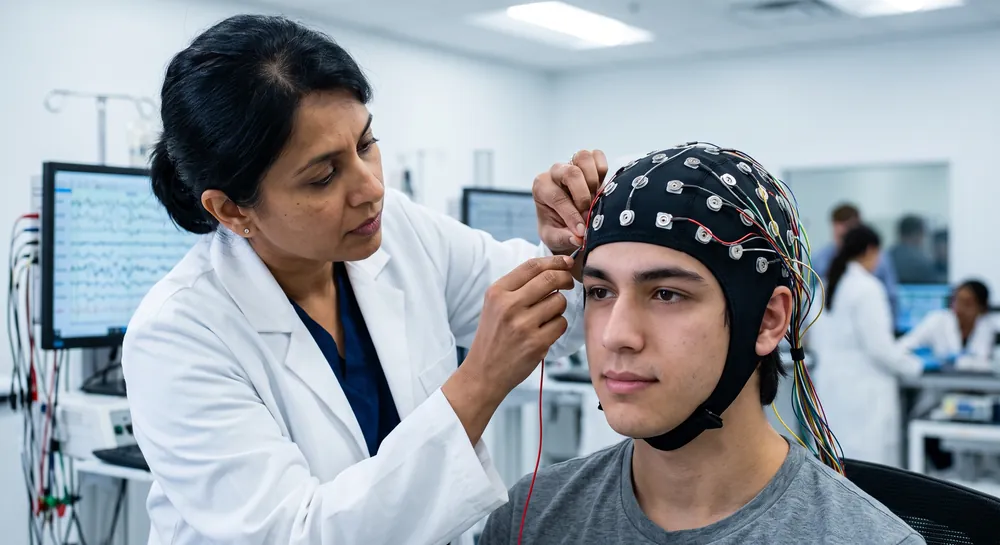
For individuals in the advanced stages of ALS who have reached a "locked-in" state—where total muscle paralysis prevents the use of speech or traditional assistive devices like eye-trackers—EEG-based Brain-Computer Interfaces (BCIs) offer a vital alternative for maintaining connection.
These systems utilize electrodes placed on the scalp to detect the brain’s electrical activity, which is then processed by sophisticated algorithms and translated into specific commands. By focusing on specific mental tasks or visual stimuli, a user can navigate a computer interface or select letters to form words, effectively bypassing the need for physical movement.
While this neuroscience-based technology represents a significant breakthrough in neurorehabilitation and personal autonomy, it is currently an evolving field. Most high-functioning EEG-based BCIs are found within specialized research environments or dedicated neurotechnology centers rather than as standard home-care equipment.
These systems often require a period of calibration and user training to ensure the software can accurately interpret the person's unique neural signatures. While not yet a universal standard of care, BCIs provide a hopeful and increasingly viable pathway for communication in the most restrictive phases of the disease.
What Are the Non-Motor Symptoms of ALS?
While the physical effects of ALS are often the most visible, it's important to recognize that non-motor symptoms can also significantly impact a person's quality of life.
These symptoms can occur at any stage of the disease and may affect cognitive function, emotional well-being, and overall comfort.
Can ALS Cause Cognitive and Behavioral Changes?
Some people with ALS may experience changes in thinking, memory, and behavior. These can range from subtle shifts to more pronounced difficulties.
For instance, problems with executive functions, such as planning, problem-solving, and decision-making, might arise. Behavioral changes can also occur, sometimes leading to increased irritability, apathy, or disinhibition.
It is important for individuals and their families to communicate any such changes to the healthcare team. While there is no cure for these cognitive changes, strategies and support can help manage them.
Medications may be considered in some cases to address specific behavioral symptoms, and cognitive rehabilitation techniques can assist with maintaining daily functioning.
How Is Pain and Discomfort Managed Throughout the ALS Journey?
Pain and discomfort are common non-motor symptoms experienced by people with this brain condition. This can stem from various sources, including muscle cramps, spasticity, joint stiffness, or even from the immobility associated with the disease.
Managing pain effectively is a key aspect of care. Treatment approaches are tailored to the individual and may include:
Medications: Over-the-counter or prescription pain relievers, muscle relaxants, or medications specifically for nerve pain can be prescribed.
Physical and Occupational Therapy: Therapies can help with stretching, positioning, and using adaptive equipment to reduce discomfort and improve mobility.
Assistive Devices: Devices like specialized cushions or supports can help alleviate pressure points and improve comfort during sitting or lying down.
Complementary Therapies: Some patients find relief through approaches like massage or acupuncture, though it is important to discuss these with a healthcare provider.
Open communication with the medical team is vital for identifying and managing these non-motor symptoms effectively.
What Should Be Expected Regarding ALS Symptom Progression?
Amyotrophic Lateral Sclerosis is a complex disease, and its progression is unique to each individual. While there isn't a set timeline, symptoms generally worsen over time, impacting movement, speech, swallowing, and breathing.
Understanding these changes, from early signs to later stages, helps patients, families, and healthcare providers prepare and adapt. Focusing on symptom management and supportive care throughout the disease course is key to maintaining the best possible quality of life for as long as possible.
Frequently Asked Questions
How does ALS typically start?
ALS often begins in one of two ways. Some people first notice weakness in their arms or legs, which is called limb-onset ALS. Others might have trouble speaking or swallowing at first, known as bulbar-onset ALS. Limb-onset is more common.
Does ALS progress at the same speed for everyone?
No, ALS doesn't follow a strict schedule. It's different for each person. Some people might see symptoms get worse quickly, while for others, it might happen more slowly. There isn't a set timeline for how the disease will advance.
What happens in the middle stages of ALS?
During the middle stages, the weakness and muscle loss spread to more parts of the body. Moving around becomes much harder, and people might need help with daily activities like bathing or getting dressed. Speaking and swallowing can become significantly more difficult, and breathing may start to be affected.
What are the challenges in late-stage ALS?
In the later stages, people with ALS often have severe muscle weakness and may be unable to move on their own. Breathing becomes a major concern, and many need help from machines to breathe. Talking and eating are usually very difficult, and full-time care is often necessary.
Can ALS affect thinking or emotions?
Yes, some people with ALS can experience changes in their thinking or behavior. This can include problems with memory, decision-making, or personality. It's important for doctors to check for these non-motor symptoms too.
What is muscle atrophy and fasciculations?
Muscle atrophy means that muscles waste away and become smaller because they aren't being used or are damaged. Fasciculations are small, involuntary muscle twitches that can look like a ripple under the skin. Both can be signs of ALS.
How does ALS affect breathing?
ALS weakens the muscles used for breathing, like the diaphragm. As the disease progresses, breathing can become harder, leading to shortness of breath. In advanced stages, people may need a machine called a ventilator to help them breathe.
What is pseudobulbar affect (PBA)?
Pseudobulbar affect, or PBA, is when people have sudden, intense outbursts of laughing or crying that don't match how they feel. It's caused by damage to the brain areas that control emotions and can happen in ALS.
Emotiv is a neurotechnology leader helping advance neuroscience research through accessible EEG and brain data tools.
Medical Disclaimer: The information provided on this website is for educational and informational purposes only and is not intended as medical or health advice. This content may contain errors and should not be relied upon to make life-altering health, medical, or lifestyle choices. Always seek the advice of your physician or other qualified health provider with any questions you may have regarding a medical condition or treatment.
Christian Burgos