Receiving an ALS prognosis fundamentally alters the trajectory of your life, transforming conversations from decades-long plans to more immediate concerns about comfort, connection, and meaning.
The medical community typically frames this discussion around statistical projections, but the most profound challenge lies not in the numbers themselves, but in how you choose to respond to them.
Quality of life becomes the primary compass when quantity becomes uncertain.
How Can You Process an ALS Life Expectancy Estimate?
The psychological impact of receiving an ALS life expectancy estimate creates a complex emotional landscape that requires careful navigation. Your mind will likely cycle through multiple stages of processing, each carrying its own challenges and opportunities for growth.
What Are the Common Psychological Responses to a Terminal ALS Diagnosis?
The initial shock of an ALS diagnosis often manifests as emotional numbness or disbelief, creating a protective barrier against overwhelming information. This response serves as your psyche's attempt to process life-altering news gradually rather than all at once. Many patients describe feeling as though they are hearing about someone else's diagnosis, creating psychological distance from the immediate reality.
Anger frequently emerges as the numbness fades, directed at the unfairness of the situation, the medical system, or even loved ones who still enjoy good brain health. This anger often stems from a sense of lost control and the interruption of previously held life assumptions.
On the other hand, fear manifests in multiple dimensions:
Fear of physical suffering
Fear of becoming a burden
Fear of losing independence
Fear of the dying process itself
These concerns often intensify at night or during quiet moments when distraction is minimal. The fear frequently centers not just on death, but on the progressive loss of abilities that define your sense of self.
Sadness and grief begin immediately upon diagnosis, contrary to the common misconception that grief only occurs after death. This anticipatory grief encompasses mourning for the future you had envisioned, the activities you may no longer be able to pursue, and the relationships that will be affected by your changing condition.
How Do You Shift Focus From Survival Duration to ALS Quality of Life?
Reframing your relationship with time requires actively choosing to measure life in experiences rather than calendar days. This mental shift begins with identifying moments that bring genuine satisfaction, connection, or peace. The quality-focused approach prioritizes how you want to spend your energy rather than how much time you have to spend it.
Creating daily or weekly goals that align with your current abilities helps maintain forward momentum without becoming overwhelmed by long-term uncertainty. These goals might include having meaningful conversations, enjoying favorite foods while swallowing remains comfortable, or completing creative projects that express your personality and values.
The concept of "good days" and "difficult days" replaces the linear progression model that dominates healthy thinking. Good days become opportunities to engage fully in preferred activities, while difficult days become acceptable periods for rest, reflection, and receiving care. This framework eliminates the pressure to maintain consistent productivity or emotional stability.
Mindfulness practices help anchor your attention in present-moment experiences rather than projecting into an uncertain future. Simple awareness techniques, such as focusing on sensory experiences during meals or noticing physical comfort while resting, create pockets of peace amid medical complexities.
Why Is It Important to Grieve Physical Losses While Living With ALS?
Anticipatory grief allows you to process the emotional weight of impending changes before they occur, creating psychological space for adaptation. This grief encompasses multiple layers: mourning the loss of your pre-diagnosis identity, the activities that defined your lifestyle, and the future plans that now require modification or abandonment.
The grieving process extends to your family members, who are also confronting the loss of their imagined future with you. Acknowledging their grief alongside your own prevents isolation and creates opportunities for mutual support. Family members often need permission to express their sadness without feeling as though they are adding to your emotional burden.
How Can You Redefine Personal Goals After an ALS Diagnosis?
The process of goal redefinition requires honest assessment of your current and anticipated abilities while maintaining connection to your core values and sources of meaning.
Which Frameworks Help Identify What Matters Most Following an ALS Diagnosis?
Values clarification exercises help distinguish between activities you enjoyed and the underlying needs those activities fulfilled.
For example, if you valued hiking for the physical challenge, you might redirect that energy toward adapted fitness activities. If hiking represents connection with nature, you might focus on spending time in outdoor spaces that remain accessible.
The "legacy lens" framework encourages you to consider how you want to be remembered and what impact you hope to have on others. This perspective shifts attention from personal achievements to relational and community contributions that can continue even as physical abilities decline. Legacy thinking often reveals values that transcend physical limitations.
Priority ranking exercises force difficult but clarifying decisions about how to allocate limited energy. Creating lists of experiences, relationships, and projects, then ranking them by importance, helps ensure that your most valued elements receive attention before others.
This process prevents the regret that comes from spending precious time on activities that ultimately feel less meaningful.
How Can You Adapt Hobbies and Activities as ALS Symptoms Progress?
Creative adaptation transforms beloved activities into modified versions that remain accessible as ALS symptoms progress.
Musicians might transition from playing instruments to composing or teaching. Visual artists might shift from detailed drawing to broader brushwork or digital creation. These modifications preserve the creative essence while accommodating physical limitations.
Technology integration expands possibilities for continued engagement in previously physical activities. Voice-controlled devices allow continued participation in reading, writing, and communication even after manual dexterity declines. Virtual reality experiences can provide travel and adventure opportunities when physical mobility becomes limited.
Moreover, the discovery of new interests often emerges from necessary adaptations, revealing previously unexplored sources of satisfaction. Many ALS patients report finding unexpected enjoyment in activities they never considered before diagnosis, such as audiobook narration, mentoring, or spiritual practices that require minimal physical engagement.
Why Is Creating a Legacy Project Meaningful for ALS Patients?
Legacy projects provide a sense of continuity beyond physical limitations, creating tangible contributions that will persist after death. These projects channel energy toward lasting impact rather than focusing solely on personal comfort or medical management.
The act of creating something permanent often reduces existential anxiety and provides purpose during difficult treatment periods.
Personal narrative projects, such as written memoirs, recorded stories, or video messages, preserve your voice and perspective for future generations. These projects allow you to share wisdom, family history, and personal insights that might otherwise be lost. The process of reflection involved in creating these narratives often provides therapeutic benefits as well as practical legacy value.
Meanwhile, mentorship and teaching opportunities allow you to share professional knowledge and life experience with younger people who can benefit from your expertise. This might involve:
Formal mentoring relationships
Writing instructional materials
Participating in educational programs
Philanthropic initiatives enable you to direct resources toward causes that reflect your values and priorities. Whether through financial contributions, volunteer coordination, or awareness advocacy, these projects create positive change that extends your impact beyond your personal sphere.
How Can You Maintain Social Connections While Living With ALS?
Preserving relationships and communication abilities requires proactive planning and adaptation as motor neuron disease progresses. These connections often become more precious as physical limitations increase, making the investment in maintaining them particularly valuable for quality of life.
Strategies That Preserve Relationships During ALS Physical Changes
Open communication about changing dynamics helps relationships adapt rather than deteriorate as ALS progresses. Discussing how roles and responsibilities within relationships may shift prevents resentment and confusion while maintaining emotional intimacy despite physical changes.
Redefining intimacy expands beyond physical expressions to include emotional, intellectual, and spiritual connections that remain accessible throughout disease progression. Couples often discover new forms of closeness through increased communication, shared decision-making about care preferences, and mutual support during difficult moments.
Further, family role flexibility allows relationships to evolve constructively as caregiving needs increase. Adult children might gradually assume more responsibility for practical matters while maintaining their essential role as children rather than becoming solely caregivers. This balance preserves family dynamics while acknowledging changed circumstances.
Proactive Planning for ALS Communication to Aid Maintain Autonomy
Early exploration of augmentative and alternative communication (AAC) devices allows for gradual adaptation and training before communication abilities become severely impaired. This preparation prevents the crisis-driven selection of communication tools that may not match your preferences or communication style.
Voice banking technology captures your natural speech patterns while your voice remains clear, creating personalized synthetic speech that maintains your vocal identity even after natural speech becomes impossible. This process requires advance planning but provides significant psychological benefits by preserving your recognizable voice for communication devices.
In addition, communication method progression planning anticipates the likely sequence of communication changes and prepares appropriate tools for each stage. This might involve progressing from speech amplification devices to tablet-based communication apps to eye-gaze controlled computers, ensuring smooth transitions between methods.
What Is the Future Role of Brain-Computer Interfaces in ALS Care?
Brain-computer interfaces (BCIs) represent a specialized area of neurotechnology designed to bypass damaged motor pathways by translating neural electrical activity into digital communication.
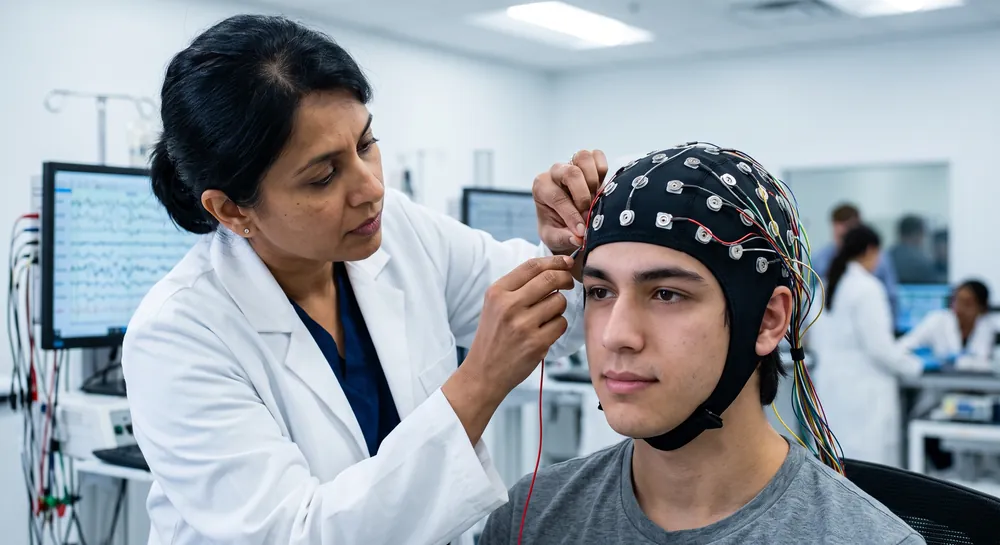
For people whose symptoms progress to a complete loss of verbal communication—a transition frequently seen in the advanced stages of the disease—EEG-based BCIs offer a potential means to interact with computer interfaces through mental focus alone.
Although these neuroscience-based systems are an important consideration for long-term proactive planning, they are currently in an emerging research phase and are not yet considered a standard clinical treatment or widely available for home use.
Major associations often prioritize funding for such high-risk, novel investigations to bridge the gap between discovery science and clinical application. Consequently, while BCIs represent a hopeful frontier for maintaining autonomy, they currently exist primarily within academic studies and specialized clinical trials rather than as an established standard of care.
Which Support Systems Help Families Navigate the ALS Journey?
Professional and community support systems provide expertise, resources, and emotional support that supplement family and personal coping efforts. These systems offer specialized knowledge about ALS progression and management strategies that can significantly improve quality of life throughout the disease course.
How Does Palliative Care Enhance Comfort and Control for ALS Patients?
Palliative care focuses on symptom management and quality of life optimization at any stage of illness, not exclusively end-of-life care. This approach addresses physical symptoms such as pain, breathing difficulties, and mobility challenges while also supporting emotional and spiritual well-being throughout disease progression.
Interdisciplinary palliative care teams include physicians, nurses, social workers, chaplains, and therapists who collaborate to address multiple aspects of living with ALS. This team approach ensures comprehensive support that addresses medical symptoms alongside psychological adjustment and practical challenges.
Symptom anticipation and prevention strategies help maintain comfort and function longer than reactive treatment approaches. Palliative care providers experienced with ALS can identify potential problems before they become severe and implement interventions that preserve quality of life and prevent complications.
What Type of Professional Counseling Is Available for ALS Patients and Caregivers?
Individual psychotherapy provides personalized support for processing the emotional impact of ALS diagnosis and adapting to ongoing changes. Therapists specializing in chronic and terminal illness understand the unique psychological challenges of progressive brain conditions and can offer targeted coping strategies.
Moreover, family therapy addresses relationship dynamics and communication patterns that may be disrupted by illness stress and changing roles. These sessions help family members navigate difficult conversations, resolve conflicts related to care decisions, and maintain healthy relationships despite extraordinary circumstances.
Modalities like cognitive behavioral therapy help manage anxiety, depression, and grief responses that commonly accompany ALS diagnosis and progression. These evidence-based approaches provide practical tools for managing difficult emotions and maintaining psychological resilience during challenging periods.
Conclusion
The journey of living with ALS requires both emotional adaptation and practical preparation, but it does not require facing these challenges alone.
Quality of life remains achievable through careful attention to what matters most, proactive planning for future needs, and connection with others who understand the complexity of this experience.
The focus shifts from the length of remaining time to the depth and meaning found within whatever time exists.
Frequently Asked Questions
What are the common psychological responses to an ALS diagnosis?
Initial shock often manifests as emotional numbness or disbelief, serving as a protective psychological buffer. Anger, fear, and sadness follow—anger frequently from lost control, fear centered on suffering, burden, and loss of independence, and sadness as anticipatory grief for the future and abilities being lost.
How can I shift focus from how much time I have left to quality of life?
Reframe time by measuring life in meaningful experiences rather than calendar days. Set daily or weekly goals aligned with current abilities, adopt a “good days/difficult days” framework that allows rest without guilt, and use mindfulness practices to anchor attention in present-moment sensory experience.
Why is it important to grieve losses even while I am still alive?
Anticipatory grief processes the emotional weight of impending changes before they fully occur, creating psychological space for adaptation. Acknowledging these losses including your pre-diagnosis identity, activities, and future plans prevents isolation and allows mutual support with family who are also grieving.
What frameworks help identify what matters most when redefining personal goals?
Values clarification uncovers the underlying needs behind past activities. A legacy lens shifts focus to how you want to be remembered and the impact you wish to have. Priority ranking forces decisions about limited energy, and regular check-ins realign daily choices with evolving values.
How can I adapt hobbies and activities as my ALS symptoms progress?
Creative adaptation modifies activities. Musicians may compose or teach, artists may shift to digital tools. Collaborative approaches involve family as active partners, and exploring new interests often uncovers unexpected sources of satisfaction.
What is the role of advance care planning and living wills in ALS?
Advance care planning translates your values and preferences into legally binding directives, addressing decisions about feeding tubes, ventilators, antibiotics, and comfort care. Living wills specify end-of-life care desires, while POLST forms provide actionable medical orders that travel between care settings.
How can proactive planning for communication aids maintain my autonomy?
Early exploration of augmentative and alternative communication devices allows gradual training before abilities decline. Voice banking captures natural speech for personalized synthetic voice output. Planning a progression of communication methods and training family in support techniques prevent crisis-driven choices and preserve effective interaction.
What strategies preserve relationships amidst physical changes?
Open communication about shifting roles prevents resentment. Intimacy is redefined to emphasize emotional, intellectual, and spiritual connections. Family role flexibility allows adaptation without caregiver–child role reversal, while expanding social circles through support groups supplements relationships that struggle with illness realities.
Emotiv is a neurotechnology leader helping advance neuroscience research through accessible EEG and brain data tools.
Medical Disclaimer: The information provided on this website is for educational and informational purposes only and is not intended as medical or health advice. This content may contain errors and should not be relied upon to make life-altering health, medical, or lifestyle choices. Always seek the advice of your physician or other qualified health provider with any questions you may have regarding a medical condition or treatment.
Christian Burgos