What Is a Real Time EEG Data Stream API?
Duong Tran
Updated on
Nov 18, 2025
What Is a Real Time EEG Data Stream API?
Duong Tran
Updated on
Nov 18, 2025
What Is a Real Time EEG Data Stream API?
Duong Tran
Updated on
Nov 18, 2025
Working with brain data used to mean a two-step process: record everything first, then analyze the files later. This workflow is useful, but it misses the magic of immediacy. What if you could interact with brain activity as it happens? This is where a real time eeg data stream api changes everything. It acts as a live bridge, connecting an EEG headset directly to your software and allowing data to flow continuously with minimal delay. This guide is for the developers, researchers, and creators who want to move beyond static data files and build applications that respond to human cognition in the moment.
Key Takeaways
Embrace real-time data for interactive applications: Using a streaming API lets you move beyond analyzing recorded data and start building applications that react to brain activity as it happens, from responsive BCIs to dynamic research studies.
Build on a foundation of clean data and user trust: Ensure your project’s success by focusing on high-quality signal acquisition and robust error handling, while also implementing essential security measures like encryption and transparent user consent to protect sensitive brain data.
Leverage existing platforms to accelerate development: Save time and effort by using established tools like Lab Streaming Layer (LSL) and our software solutions to manage the technical challenges of data streaming and synchronization, letting you focus on creating your unique application.
What is a real-time EEG data stream API?
Think of an API, or Application Programming Interface, as a translator that lets different software programs talk to each other. A real-time EEG data stream API does this for brain activity data, creating a live, continuous connection between an EEG headset and a software application. This allows data to flow instantly, which means developers and researchers can build applications that interact with brain activity as it happens, rather than just analyzing a recording later.
These APIs are the foundation for creating all sorts of interactive experiences, from brain-computer interfaces to applications that give you real-time feedback on cognitive states. A common system used to manage these connections is Lab Streaming Layer (LSL), an open-source solution designed to synchronize data streams from multiple devices. This makes it an essential tool for complex academic research projects that might combine EEG with other biometric sensors. By providing a standardized way to transmit data, these APIs make advanced neuroscience tools more accessible to everyone, from seasoned researchers to curious developers.
How does EEG data streaming work?
At its core, EEG data streaming is a structured conversation between a sender and a receiver. The program sending the data, like your EEG headset and its software, is often called a StreamOutlet. The program receiving it, such as the application you’re building, is called a StreamInlet. This setup ensures that brain activity data flows efficiently from the source to its destination. To keep the data fresh, streaming systems often use a ring buffer, which acts like a short-term memory. As new data points arrive, they are added to the buffer while the oldest ones are overwritten, ensuring your application always has the most current information.
How APIs connect you to brain data
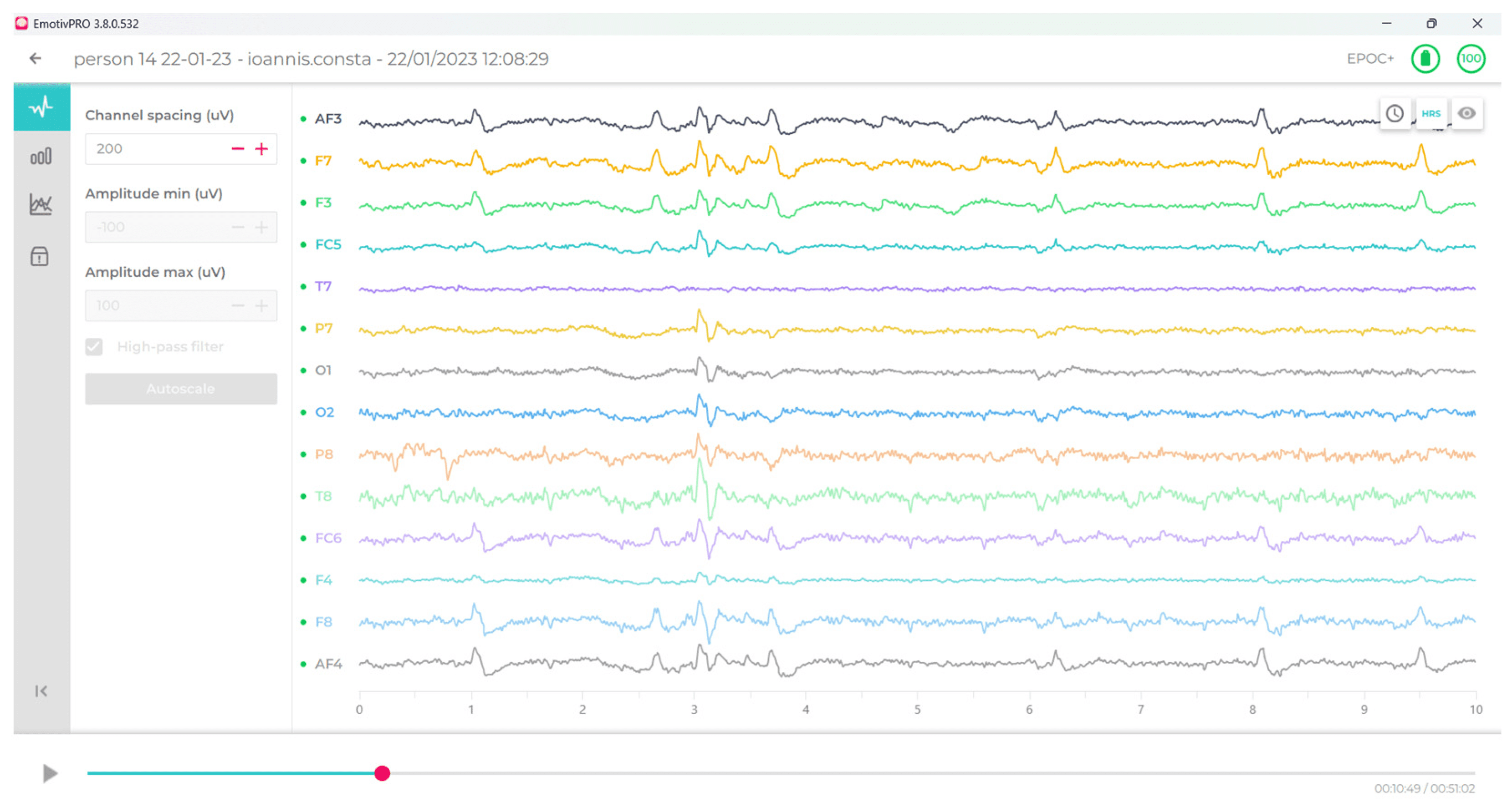
APIs provide the specific commands and protocols your software needs to request and receive information from an EEG device. For example, our EmotivPRO software uses an API to display your data and perform frequency analysis in real time while you’re wearing a headset. For those who want to build custom applications, our Cortex API gives developers direct access to raw EEG data streams. This connection is what makes it possible to create truly innovative neuro-powered technologies.
Why use a real-time EEG streaming API?
If you’ve ever worked with EEG data, you might be used to the record-then-analyze workflow. You capture the data, save it to a file, and then process it later. While that method has its place, a real-time EEG streaming API completely changes the experience. Instead of working with static files, you can access and interact with brain data as it’s being generated. This opens up possibilities for interactive applications, dynamic research experiments, and responsive user experiences.
An API acts as a bridge, allowing your software to communicate directly with an EEG device. This connection lets you pull a continuous stream of data for immediate use. Think of it as the difference between watching a recorded video and being on a live video call. The live interaction allows for immediate feedback and adaptation, which is essential for many cutting-edge applications.
Stream data with minimal delay
For applications like brain-computer interfaces, speed is critical. Any noticeable lag between brain activity and system response can disrupt the experience. A real-time streaming API minimizes this delay, ensuring data flows with the lowest possible latency. This is crucial because many BCI applications rely on timely, responsive interactions.
Work across any platform
One of the biggest advantages of using a well-designed API is flexibility. It handles the complex, behind-the-scenes work of network programming and time synchronization, freeing you up to focus on your application. This means you can integrate live EEG data into applications built with different programming languages and for various operating systems.
Analyze brain signals instantly
With a real-time API, you don’t have to wait until a session is over to see what’s happening. You can visualize, annotate, and process brain signals as they occur. EmotivPRO, for example, lets you see data streams live, apply markers, and get immediate insights.
Advance your research capabilities
A real-time streaming API can significantly expand the scope of your work. It allows you to unify data streams from an EEG headset with other devices, like eye-trackers or heart rate sensors. By synchronizing these different data sources, you can build comprehensive and multi-modal research setups.
How to implement real-time EEG data streaming
Working with live EEG data might sound complex, but the process is more approachable than it appears. Once you have your EEG headset, implementation breaks into a few steps:
Prepare your software environment
Establish a live connection
Set up specific data subscriptions
Process the incoming stream
Install and set up your environment
Before streaming any data, you need to prepare your development environment. This typically involves installing SDKs or libraries that support communication with the EEG device. We provide documentation and SDKs for all our headsets, from Insight to the 32-channel Flex.
Connect to an EEG data stream
With your environment ready, the next step is to establish a live connection. In your code, you’ll typically create a stream object that looks for and connects to the headset. You’ll also specify a buffer size to manage incoming data efficiently.
Set up data subscriptions
You can customize your stream to receive only the data you need. Select channels, apply filters, and refine the stream to remove noise. This helps ensure that the data entering your pipeline is accurate and useful.
Process incoming brain data
This is where your application comes alive. As data arrives, your code can continuously read new values and timestamps. From there, you can visualize signals, apply machine learning, or build BCI applications.
Overcoming common challenges with real-time EEG APIs
Maintain signal quality and remove artifacts
Clean data is the foundation of any EEG project. Artifacts can interfere with accurate interpretation. EmotivPRO provides real-time quality metrics to help you confirm a strong signal before analysis begins.
Manage high data volume and processing speed
EEG generates large volumes of data quickly. For real-time applications, your system must handle this efficiently. Our developer tools are optimized for performance, ensuring you can maintain low latency.
Address network latency and synchronization
Streaming EEG over a network introduces latency. This can affect alignment with external events. Many developers rely on synchronization protocols to maintain precise experimental timing.
Simplify complex integrations
A well-designed API simplifies integration, enabling you to focus on building your application. EmotivBCI handles core data acquisition and processing, allowing you to concentrate on your intended use case.
How to ensure data security and privacy
Brain data is deeply personal. Protecting it is essential.
Encrypt your data
Encrypt data both in transit and at rest to prevent unauthorized access.
Implement access controls
Limit access based on role and necessity.
Get user consent and be transparent
Be clear about what you collect, why you collect it, and how it will be used.
Perform regular audits for compliance
Conduct routine reviews to ensure privacy best practices remain intact.
How to get reliable EEG data streams
Choose the right sampling rate
Higher sampling rates are not always better in real-time applications. Choosing an optimal rate balances resolution and processing load.
Use clear stream identification
Assign unique identifiers to ensure you’re accessing the correct stream.
Verify your data’s integrity
Convert raw values into standard units like microvolts, and check for packet loss.
Develop an error handling strategy
Plan for disconnections or latency issues from the beginning.
Popular EEG streaming protocols and platforms
Lab Streaming Layer (LSL)
LSL is widely used for synchronizing multi-device research and ensures accurate time-stamping.
MNE-LSL framework
MNE-LSL simplifies interacting with LSL streams, providing a more accessible interface.
Our streaming solutions
EmotivPRO allows you to view and analyze data streams in real time, supporting both live and playback modes.
What can you build with real-time EEG data?
Develop brain-computer interfaces
Real-time EEG enables applications where users can interact with systems using brain activity.
Power academic research and education
Real-time data allows researchers to observe cognitive responses instantly.
Create cognitive wellness applications
Real-time feedback can support mindfulness and focus practices by providing actionable insights into cognitive patterns.
Gain neuromarketing insights
Real-time EEG offers second-by-second indicators of engagement and emotional resonance.
Related Articles
EmotivPRO
Raw EEG
Frequently Asked Questions
What’s the biggest difference between using a real-time API and just analyzing a recorded EEG file?
A real-time stream allows interactivity. It enables applications that adapt to cognitive states as they occur.
Do I need to be an expert programmer to work with a real-time EEG stream?
No. EmotivPRO offers real-time visualization without requiring coding experience.
What kind of insights can I get from a live data stream?
Raw brain activity plus derived metrics related to performance states.
My biggest concern is getting clean, usable data. What’s the first thing I should focus on?
Sensor contact quality. Strong signal acquisition ensures valid data.
How do I ensure the privacy of the people whose brain data I’m working with?
Encrypt data, regulate access, and obtain transparent consent.
Working with brain data used to mean a two-step process: record everything first, then analyze the files later. This workflow is useful, but it misses the magic of immediacy. What if you could interact with brain activity as it happens? This is where a real time eeg data stream api changes everything. It acts as a live bridge, connecting an EEG headset directly to your software and allowing data to flow continuously with minimal delay. This guide is for the developers, researchers, and creators who want to move beyond static data files and build applications that respond to human cognition in the moment.
Key Takeaways
Embrace real-time data for interactive applications: Using a streaming API lets you move beyond analyzing recorded data and start building applications that react to brain activity as it happens, from responsive BCIs to dynamic research studies.
Build on a foundation of clean data and user trust: Ensure your project’s success by focusing on high-quality signal acquisition and robust error handling, while also implementing essential security measures like encryption and transparent user consent to protect sensitive brain data.
Leverage existing platforms to accelerate development: Save time and effort by using established tools like Lab Streaming Layer (LSL) and our software solutions to manage the technical challenges of data streaming and synchronization, letting you focus on creating your unique application.
What is a real-time EEG data stream API?
Think of an API, or Application Programming Interface, as a translator that lets different software programs talk to each other. A real-time EEG data stream API does this for brain activity data, creating a live, continuous connection between an EEG headset and a software application. This allows data to flow instantly, which means developers and researchers can build applications that interact with brain activity as it happens, rather than just analyzing a recording later.
These APIs are the foundation for creating all sorts of interactive experiences, from brain-computer interfaces to applications that give you real-time feedback on cognitive states. A common system used to manage these connections is Lab Streaming Layer (LSL), an open-source solution designed to synchronize data streams from multiple devices. This makes it an essential tool for complex academic research projects that might combine EEG with other biometric sensors. By providing a standardized way to transmit data, these APIs make advanced neuroscience tools more accessible to everyone, from seasoned researchers to curious developers.
How does EEG data streaming work?
At its core, EEG data streaming is a structured conversation between a sender and a receiver. The program sending the data, like your EEG headset and its software, is often called a StreamOutlet. The program receiving it, such as the application you’re building, is called a StreamInlet. This setup ensures that brain activity data flows efficiently from the source to its destination. To keep the data fresh, streaming systems often use a ring buffer, which acts like a short-term memory. As new data points arrive, they are added to the buffer while the oldest ones are overwritten, ensuring your application always has the most current information.
How APIs connect you to brain data
APIs provide the specific commands and protocols your software needs to request and receive information from an EEG device. For example, our EmotivPRO software uses an API to display your data and perform frequency analysis in real time while you’re wearing a headset. For those who want to build custom applications, our Cortex API gives developers direct access to raw EEG data streams. This connection is what makes it possible to create truly innovative neuro-powered technologies.
Why use a real-time EEG streaming API?
If you’ve ever worked with EEG data, you might be used to the record-then-analyze workflow. You capture the data, save it to a file, and then process it later. While that method has its place, a real-time EEG streaming API completely changes the experience. Instead of working with static files, you can access and interact with brain data as it’s being generated. This opens up possibilities for interactive applications, dynamic research experiments, and responsive user experiences.
An API acts as a bridge, allowing your software to communicate directly with an EEG device. This connection lets you pull a continuous stream of data for immediate use. Think of it as the difference between watching a recorded video and being on a live video call. The live interaction allows for immediate feedback and adaptation, which is essential for many cutting-edge applications.
Stream data with minimal delay
For applications like brain-computer interfaces, speed is critical. Any noticeable lag between brain activity and system response can disrupt the experience. A real-time streaming API minimizes this delay, ensuring data flows with the lowest possible latency. This is crucial because many BCI applications rely on timely, responsive interactions.
Work across any platform
One of the biggest advantages of using a well-designed API is flexibility. It handles the complex, behind-the-scenes work of network programming and time synchronization, freeing you up to focus on your application. This means you can integrate live EEG data into applications built with different programming languages and for various operating systems.
Analyze brain signals instantly
With a real-time API, you don’t have to wait until a session is over to see what’s happening. You can visualize, annotate, and process brain signals as they occur. EmotivPRO, for example, lets you see data streams live, apply markers, and get immediate insights.
Advance your research capabilities
A real-time streaming API can significantly expand the scope of your work. It allows you to unify data streams from an EEG headset with other devices, like eye-trackers or heart rate sensors. By synchronizing these different data sources, you can build comprehensive and multi-modal research setups.
How to implement real-time EEG data streaming
Working with live EEG data might sound complex, but the process is more approachable than it appears. Once you have your EEG headset, implementation breaks into a few steps:
Prepare your software environment
Establish a live connection
Set up specific data subscriptions
Process the incoming stream
Install and set up your environment
Before streaming any data, you need to prepare your development environment. This typically involves installing SDKs or libraries that support communication with the EEG device. We provide documentation and SDKs for all our headsets, from Insight to the 32-channel Flex.
Connect to an EEG data stream
With your environment ready, the next step is to establish a live connection. In your code, you’ll typically create a stream object that looks for and connects to the headset. You’ll also specify a buffer size to manage incoming data efficiently.
Set up data subscriptions
You can customize your stream to receive only the data you need. Select channels, apply filters, and refine the stream to remove noise. This helps ensure that the data entering your pipeline is accurate and useful.
Process incoming brain data
This is where your application comes alive. As data arrives, your code can continuously read new values and timestamps. From there, you can visualize signals, apply machine learning, or build BCI applications.
Overcoming common challenges with real-time EEG APIs
Maintain signal quality and remove artifacts
Clean data is the foundation of any EEG project. Artifacts can interfere with accurate interpretation. EmotivPRO provides real-time quality metrics to help you confirm a strong signal before analysis begins.
Manage high data volume and processing speed
EEG generates large volumes of data quickly. For real-time applications, your system must handle this efficiently. Our developer tools are optimized for performance, ensuring you can maintain low latency.
Address network latency and synchronization
Streaming EEG over a network introduces latency. This can affect alignment with external events. Many developers rely on synchronization protocols to maintain precise experimental timing.
Simplify complex integrations
A well-designed API simplifies integration, enabling you to focus on building your application. EmotivBCI handles core data acquisition and processing, allowing you to concentrate on your intended use case.
How to ensure data security and privacy
Brain data is deeply personal. Protecting it is essential.
Encrypt your data
Encrypt data both in transit and at rest to prevent unauthorized access.
Implement access controls
Limit access based on role and necessity.
Get user consent and be transparent
Be clear about what you collect, why you collect it, and how it will be used.
Perform regular audits for compliance
Conduct routine reviews to ensure privacy best practices remain intact.
How to get reliable EEG data streams
Choose the right sampling rate
Higher sampling rates are not always better in real-time applications. Choosing an optimal rate balances resolution and processing load.
Use clear stream identification
Assign unique identifiers to ensure you’re accessing the correct stream.
Verify your data’s integrity
Convert raw values into standard units like microvolts, and check for packet loss.
Develop an error handling strategy
Plan for disconnections or latency issues from the beginning.
Popular EEG streaming protocols and platforms
Lab Streaming Layer (LSL)
LSL is widely used for synchronizing multi-device research and ensures accurate time-stamping.
MNE-LSL framework
MNE-LSL simplifies interacting with LSL streams, providing a more accessible interface.
Our streaming solutions
EmotivPRO allows you to view and analyze data streams in real time, supporting both live and playback modes.
What can you build with real-time EEG data?
Develop brain-computer interfaces
Real-time EEG enables applications where users can interact with systems using brain activity.
Power academic research and education
Real-time data allows researchers to observe cognitive responses instantly.
Create cognitive wellness applications
Real-time feedback can support mindfulness and focus practices by providing actionable insights into cognitive patterns.
Gain neuromarketing insights
Real-time EEG offers second-by-second indicators of engagement and emotional resonance.
Related Articles
EmotivPRO
Raw EEG
Frequently Asked Questions
What’s the biggest difference between using a real-time API and just analyzing a recorded EEG file?
A real-time stream allows interactivity. It enables applications that adapt to cognitive states as they occur.
Do I need to be an expert programmer to work with a real-time EEG stream?
No. EmotivPRO offers real-time visualization without requiring coding experience.
What kind of insights can I get from a live data stream?
Raw brain activity plus derived metrics related to performance states.
My biggest concern is getting clean, usable data. What’s the first thing I should focus on?
Sensor contact quality. Strong signal acquisition ensures valid data.
How do I ensure the privacy of the people whose brain data I’m working with?
Encrypt data, regulate access, and obtain transparent consent.
Working with brain data used to mean a two-step process: record everything first, then analyze the files later. This workflow is useful, but it misses the magic of immediacy. What if you could interact with brain activity as it happens? This is where a real time eeg data stream api changes everything. It acts as a live bridge, connecting an EEG headset directly to your software and allowing data to flow continuously with minimal delay. This guide is for the developers, researchers, and creators who want to move beyond static data files and build applications that respond to human cognition in the moment.
Key Takeaways
Embrace real-time data for interactive applications: Using a streaming API lets you move beyond analyzing recorded data and start building applications that react to brain activity as it happens, from responsive BCIs to dynamic research studies.
Build on a foundation of clean data and user trust: Ensure your project’s success by focusing on high-quality signal acquisition and robust error handling, while also implementing essential security measures like encryption and transparent user consent to protect sensitive brain data.
Leverage existing platforms to accelerate development: Save time and effort by using established tools like Lab Streaming Layer (LSL) and our software solutions to manage the technical challenges of data streaming and synchronization, letting you focus on creating your unique application.
What is a real-time EEG data stream API?
Think of an API, or Application Programming Interface, as a translator that lets different software programs talk to each other. A real-time EEG data stream API does this for brain activity data, creating a live, continuous connection between an EEG headset and a software application. This allows data to flow instantly, which means developers and researchers can build applications that interact with brain activity as it happens, rather than just analyzing a recording later.
These APIs are the foundation for creating all sorts of interactive experiences, from brain-computer interfaces to applications that give you real-time feedback on cognitive states. A common system used to manage these connections is Lab Streaming Layer (LSL), an open-source solution designed to synchronize data streams from multiple devices. This makes it an essential tool for complex academic research projects that might combine EEG with other biometric sensors. By providing a standardized way to transmit data, these APIs make advanced neuroscience tools more accessible to everyone, from seasoned researchers to curious developers.
How does EEG data streaming work?
At its core, EEG data streaming is a structured conversation between a sender and a receiver. The program sending the data, like your EEG headset and its software, is often called a StreamOutlet. The program receiving it, such as the application you’re building, is called a StreamInlet. This setup ensures that brain activity data flows efficiently from the source to its destination. To keep the data fresh, streaming systems often use a ring buffer, which acts like a short-term memory. As new data points arrive, they are added to the buffer while the oldest ones are overwritten, ensuring your application always has the most current information.
How APIs connect you to brain data
APIs provide the specific commands and protocols your software needs to request and receive information from an EEG device. For example, our EmotivPRO software uses an API to display your data and perform frequency analysis in real time while you’re wearing a headset. For those who want to build custom applications, our Cortex API gives developers direct access to raw EEG data streams. This connection is what makes it possible to create truly innovative neuro-powered technologies.
Why use a real-time EEG streaming API?
If you’ve ever worked with EEG data, you might be used to the record-then-analyze workflow. You capture the data, save it to a file, and then process it later. While that method has its place, a real-time EEG streaming API completely changes the experience. Instead of working with static files, you can access and interact with brain data as it’s being generated. This opens up possibilities for interactive applications, dynamic research experiments, and responsive user experiences.
An API acts as a bridge, allowing your software to communicate directly with an EEG device. This connection lets you pull a continuous stream of data for immediate use. Think of it as the difference between watching a recorded video and being on a live video call. The live interaction allows for immediate feedback and adaptation, which is essential for many cutting-edge applications.
Stream data with minimal delay
For applications like brain-computer interfaces, speed is critical. Any noticeable lag between brain activity and system response can disrupt the experience. A real-time streaming API minimizes this delay, ensuring data flows with the lowest possible latency. This is crucial because many BCI applications rely on timely, responsive interactions.
Work across any platform
One of the biggest advantages of using a well-designed API is flexibility. It handles the complex, behind-the-scenes work of network programming and time synchronization, freeing you up to focus on your application. This means you can integrate live EEG data into applications built with different programming languages and for various operating systems.
Analyze brain signals instantly
With a real-time API, you don’t have to wait until a session is over to see what’s happening. You can visualize, annotate, and process brain signals as they occur. EmotivPRO, for example, lets you see data streams live, apply markers, and get immediate insights.
Advance your research capabilities
A real-time streaming API can significantly expand the scope of your work. It allows you to unify data streams from an EEG headset with other devices, like eye-trackers or heart rate sensors. By synchronizing these different data sources, you can build comprehensive and multi-modal research setups.
How to implement real-time EEG data streaming
Working with live EEG data might sound complex, but the process is more approachable than it appears. Once you have your EEG headset, implementation breaks into a few steps:
Prepare your software environment
Establish a live connection
Set up specific data subscriptions
Process the incoming stream
Install and set up your environment
Before streaming any data, you need to prepare your development environment. This typically involves installing SDKs or libraries that support communication with the EEG device. We provide documentation and SDKs for all our headsets, from Insight to the 32-channel Flex.
Connect to an EEG data stream
With your environment ready, the next step is to establish a live connection. In your code, you’ll typically create a stream object that looks for and connects to the headset. You’ll also specify a buffer size to manage incoming data efficiently.
Set up data subscriptions
You can customize your stream to receive only the data you need. Select channels, apply filters, and refine the stream to remove noise. This helps ensure that the data entering your pipeline is accurate and useful.
Process incoming brain data
This is where your application comes alive. As data arrives, your code can continuously read new values and timestamps. From there, you can visualize signals, apply machine learning, or build BCI applications.
Overcoming common challenges with real-time EEG APIs
Maintain signal quality and remove artifacts
Clean data is the foundation of any EEG project. Artifacts can interfere with accurate interpretation. EmotivPRO provides real-time quality metrics to help you confirm a strong signal before analysis begins.
Manage high data volume and processing speed
EEG generates large volumes of data quickly. For real-time applications, your system must handle this efficiently. Our developer tools are optimized for performance, ensuring you can maintain low latency.
Address network latency and synchronization
Streaming EEG over a network introduces latency. This can affect alignment with external events. Many developers rely on synchronization protocols to maintain precise experimental timing.
Simplify complex integrations
A well-designed API simplifies integration, enabling you to focus on building your application. EmotivBCI handles core data acquisition and processing, allowing you to concentrate on your intended use case.
How to ensure data security and privacy
Brain data is deeply personal. Protecting it is essential.
Encrypt your data
Encrypt data both in transit and at rest to prevent unauthorized access.
Implement access controls
Limit access based on role and necessity.
Get user consent and be transparent
Be clear about what you collect, why you collect it, and how it will be used.
Perform regular audits for compliance
Conduct routine reviews to ensure privacy best practices remain intact.
How to get reliable EEG data streams
Choose the right sampling rate
Higher sampling rates are not always better in real-time applications. Choosing an optimal rate balances resolution and processing load.
Use clear stream identification
Assign unique identifiers to ensure you’re accessing the correct stream.
Verify your data’s integrity
Convert raw values into standard units like microvolts, and check for packet loss.
Develop an error handling strategy
Plan for disconnections or latency issues from the beginning.
Popular EEG streaming protocols and platforms
Lab Streaming Layer (LSL)
LSL is widely used for synchronizing multi-device research and ensures accurate time-stamping.
MNE-LSL framework
MNE-LSL simplifies interacting with LSL streams, providing a more accessible interface.
Our streaming solutions
EmotivPRO allows you to view and analyze data streams in real time, supporting both live and playback modes.
What can you build with real-time EEG data?
Develop brain-computer interfaces
Real-time EEG enables applications where users can interact with systems using brain activity.
Power academic research and education
Real-time data allows researchers to observe cognitive responses instantly.
Create cognitive wellness applications
Real-time feedback can support mindfulness and focus practices by providing actionable insights into cognitive patterns.
Gain neuromarketing insights
Real-time EEG offers second-by-second indicators of engagement and emotional resonance.
Related Articles
EmotivPRO
Raw EEG
Frequently Asked Questions
What’s the biggest difference between using a real-time API and just analyzing a recorded EEG file?
A real-time stream allows interactivity. It enables applications that adapt to cognitive states as they occur.
Do I need to be an expert programmer to work with a real-time EEG stream?
No. EmotivPRO offers real-time visualization without requiring coding experience.
What kind of insights can I get from a live data stream?
Raw brain activity plus derived metrics related to performance states.
My biggest concern is getting clean, usable data. What’s the first thing I should focus on?
Sensor contact quality. Strong signal acquisition ensures valid data.
How do I ensure the privacy of the people whose brain data I’m working with?
Encrypt data, regulate access, and obtain transparent consent.
Continue reading