Best Neurofeedback Headsets for Home Training and Research
Emotiv
Updated on
Feb 9, 2026
Best Neurofeedback Headsets for Home Training and Research
Emotiv
Updated on
Feb 9, 2026
Best Neurofeedback Headsets for Home Training and Research
Emotiv
Updated on
Feb 9, 2026
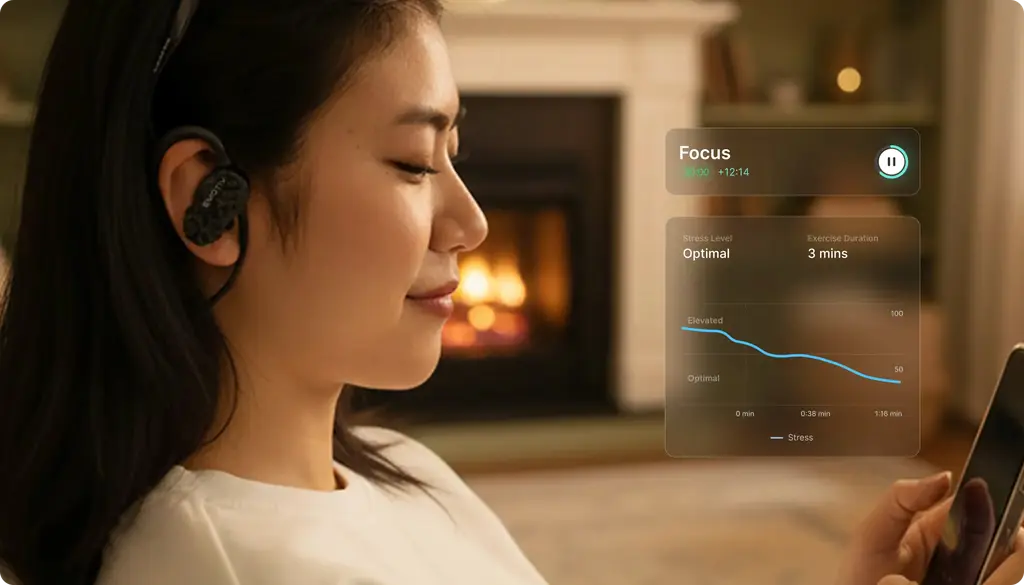
The ability to see and interact with your own brain activity is no longer the stuff of science fiction. What was once confined to expensive, bulky equipment in research labs is now available in sleek, user-friendly devices you can use from the comfort of your home. What was once confined to expensive, bulky equipment in research labs is now available in sleek, user-friendly devices you can use from the comfort of your home—often in the form of a portable EEG device designed for quick setup and everyday practice. A modern neurofeedback headset makes this powerful technology accessible to everyone. It provides a direct, non-invasive way to explore your cognitive patterns through real-time feedback. This guide is designed to introduce you to the world of at-home neurofeedback, covering everything from the science behind it to the best devices on the market for personal use.
Key Takeaways
Define your purpose before you purchase: Your specific goals determine the best headset for you. Simple, discreet devices like the MN8 earbuds are ideal for personal wellness exercises, whereas multi-channel systems like the Epoc X are built for the detailed data required in research and development.
Software and comfort are just as important as sensors: A headset is only as good as its software and how it feels to wear. Prioritize intuitive apps and a comfortable design, as these are the features that will keep you engaged and consistent with your training.
Embrace the process, not just the outcome: At-home neurofeedback is a form of brain training, not a quick fix. Success comes from consistent practice over time, so approach it with patience and focus on the journey of learning to guide your own brain activity.
What is a Neurofeedback Headset?
Think of a neurofeedback headset as a kind of mirror for your brain. Instead of showing your physical reflection, it gives you a real-time look at your brain’s activity. At its core, a neurofeedback headset is a tool for brain training. It uses sensors—typically electroencephalography (EEG) sensors—to measure the electrical signals your brain produces naturally. This information is then presented back to you through visual or auditory cues, creating a feedback loop that you can interact with. This raw data is sent to a software application that functions as an EEG analysis tool, processing the signal in real time and identifying patterns associated with different mental states like focus, calm, or excitement.
The goal of this process is to help you learn how to consciously guide your brain activity. For example, if you’re trying to enter a more focused state, the feedback might be a game that speeds up or a sound that becomes clearer as your brain activity aligns with patterns of concentration. Over time, these exercises can help you become more aware of your internal states and learn to influence them. What was once complex technology found only in clinical settings is now accessible enough for anyone to explore at home, offering a unique window into the mind. It’s a powerful way to engage with your own brain and access tools for cognitive wellness.
How Does Neurofeedback Work?
Neurofeedback operates on a simple but powerful principle: if you can see what your brain is doing, you can learn to change it. The process starts when the EEG sensors on the headset pick up your brainwaves—the tiny electrical pulses that your neurons fire as they communicate. This raw data is sent to a software application that analyzes it in real time, identifying patterns associated with different mental states like focus, calm, or excitement.
The software then translates your brain activity into a form of feedback. Imagine playing a game where a character only moves forward when your brain shows patterns of calm and relaxation. By trying to make the character move, you are actively training your brain to produce the desired state. This immediate feedback loop is what makes neurofeedback a form of active learning, turning abstract mental states into tangible goals you can work toward. It’s a practical application of brain-computer interface technology that puts you in the driver’s seat.
The Core Parts of an EEG Neurofeedback System
An at-home neurofeedback system is made up of a few key components working together. First is the hardware: the EEG headset itself. This device contains the sensors that make contact with your scalp to detect brainwave activity. The number and placement of these sensors can vary, which affects the type of data the headset can gather.
The second part is the software. This is usually an application on your computer or smartphone, like the Emotiv App, that receives the data from the headset. The software is responsible for analyzing your brainwaves and running the training exercises. Finally, there’s the feedback mechanism. This is how the software communicates your brain activity back to you. It could be a graph on the screen, a changing color, a musical tone, or an interactive game. Together, these parts create a complete system that allows you to see and interact with your brain’s activity from home.
A Guide to the Best Neurofeedback Headsets for Home Use
Finding the right neurofeedback headset for home use can feel like a big task, but it really comes down to what you want to achieve. Whether you’re a developer creating a new application, a researcher conducting a study outside the lab, or just curious about exploring your own brain activity, there’s a device designed for your needs. The market offers everything from simple, portable earbuds to multi-channel systems that provide rich, detailed data.
This guide walks through some of the most popular and effective neurofeedback headsets available. We’ll look at devices from our own Emotiv line as well as other notable options, covering their key features, channel counts, and ideal use cases. The goal is to give you a clear picture of what each headset does best, so you can choose the one that aligns perfectly with your personal or professional goals.
Emotiv Insight: 5-Channel EEG Headset
The Emotiv Insight is a sleek, lightweight headset that strikes a great balance between ease of use and powerful data collection. With five channels of EEG sensors, it captures brain activity from key areas of the cerebral cortex. Its semi-dry polymer sensors are designed for convenience, requiring no saline solution for setup, which makes it perfect for quick, daily sessions at home. Insight is versatile enough for personal wellness applications, such as meditation and focus training, while also providing the quality data needed for many research and education projects. It’s an excellent starting point for anyone who wants to go beyond basic neurofeedback without the complexity of a full research-grade system.
Emotiv Epoc X: 14-Channel EEG Headset
For those who need more comprehensive brain data, the Emotiv Epoc X is a professional-grade, 14-channel wireless EEG headset. It provides access to high-quality data, making it a favorite among researchers and developers. The saline-based sensors ensure a strong connection for reliable signal quality. This headset is ideal for advanced applications, including scientific research, neuromarketing studies, and developing sophisticated brain-computer interface (BCI) systems. When paired with our EmotivPRO software, you can analyze and record an incredible amount of data, including raw EEG, performance metrics, and frequency band analysis. It’s the go-to choice for users who require detailed, spatially-resolved brain data for their projects.
Emotiv MN8: 2-Channel EEG Earbuds
The Emotiv MN8 offers a unique and discreet way to access brain data through a familiar earbud design. These earbuds contain two EEG sensors that make contact just inside the ear canal, allowing for convenient data collection during everyday activities like working or commuting. The MN8 is designed for real-world applications, providing insights into focus and attention levels in various environments. It’s an excellent tool for anyone interested in accessing cognitive wellness tools without wearing a traditional headset. The data integrates seamlessly with the Emotiv App, making it simple to see your brain activity patterns on your smartphone and learn more about your mental states throughout the day.
Myndlift Neurofeedback System
Myndlift offers a guided neurofeedback experience by pairing an EEG headset with its mobile app and the option for remote clinician oversight. The system is designed to be user-friendly, with engaging games and exercises that respond to your brain activity in real time. While Myndlift provides its own electrode, it’s primarily a software platform that can be used with third-party hardware. This approach is great for individuals who want a structured training program and the ability to connect with a professional for guidance, all from the comfort of home. It’s a popular choice for those seeking a more supportive and personalized neurofeedback journey.
Sens.ai Neurofeedback Headset
The Sens.ai headset takes a comprehensive approach by combining EEG neurofeedback with heart rate variability (HRV) training. This device uses light-based stimulation (photobiomodulation) alongside its sensors to offer a multi-faceted training experience. The system is built around personalized programs that adapt to your progress over time, targeting different cognitive functions. By integrating brain and heart data, Sens.ai aims to provide a more complete picture of your physiological state. Its gamified training sessions are designed to make the process engaging, making it a compelling option for users interested in a holistic approach to brain training.
Neurosity Crown
The Neurosity Crown is an EEG device specifically designed to help you find and maintain focus. Its eight EEG sensors are positioned over the frontal lobe to measure activity related to concentration. The Crown’s standout feature is its ability to integrate with other apps and devices, allowing you to do things like automatically silence notifications when you enter a state of deep focus. This makes it a practical tool for professionals, students, and anyone looking to manage distractions and be more productive. The focus is less on traditional training games and more on real-time, practical application in your daily workflow.
Mendi Neurofeedback Device
Mendi uses a different technology called functional near-infrared spectroscopy (fNIRS) instead of EEG. Rather than measuring electrical activity, fNIRS measures blood flow and oxygenation in the prefrontal cortex, which is associated with executive functions like focus and decision-making. The device is a simple headband paired with a mobile app that features a game you control with your brain activity. Increased blood flow in the target area makes the ball in the game rise. This visual and interactive feedback makes it an intuitive and engaging way for beginners to start exploring brain training.
FocusCalm Training Headset
As its name suggests, the FocusCalm headset is designed to help you learn how to manage stress and achieve a calmer state of mind. It uses a single EEG sensor on the forehead to measure brain activity and translates it into a simple score from 0 to 100 in its companion app. The app includes guided meditations, focus games, and exercises that provide real-time feedback on your mental state. It’s a straightforward and accessible device, making it a great choice for individuals who are new to neurofeedback and are primarily interested in relaxation and mindfulness practices.
Flowtime Meditation Device
The Flowtime biosensing meditation headband is designed to deepen your meditation practice by providing detailed feedback on your sessions. It uses a two-channel EEG sensor and a heart rate sensor to measure your brainwaves and heart activity in real time. After each session, the app generates a report showing your levels of relaxation and attention, helping you understand what’s happening internally as you meditate. This data can help you refine your technique and see your progress over time. It’s an excellent tool for meditators who want to bring a quantitative element to their practice.
What to Look for in a Neurofeedback Headset
Choosing the right neurofeedback headset feels a lot like picking a new laptop—the best one for you depends entirely on what you plan to do with it. It’s not about finding a single “best” device, but about finding the right tool for your specific goals. Whether you’re a researcher needing granular data for a study, a developer building a new brain-computer interface application, or someone curious about exploring brain training at home, certain features will be more important than others. A university lab studying cognitive load will have very different needs than someone looking to access cognitive wellness tools on their lunch break.
To make an informed choice, you’ll want to look beyond the marketing and understand the core components that make a system work for you. This includes the number of EEG channels, which dictates the detail of brain activity you can see, and the quality of the signal itself. You’ll also need to consider the software ecosystem. Is it an open platform for developers, or a closed app with guided exercises? Practical features like comfort, portability, and battery life are also crucial because a device you don’t enjoy using is one you won’t use at all. Finally, in an age of personal data, understanding the privacy and security measures a company has in place is non-negotiable. Let’s walk through each of these areas to help you find the perfect fit.
EEG Channels and Signal Quality
The number of EEG channels, or sensors, on a headset determines how much brain activity data you can gather at once. A device with fewer channels, like our 2-channel MN8 earbuds or 5-channel Insight headset, is great for general applications like wellness exercises or simple brain-computer interface commands. For more detailed analysis, like in academic research or neuromarketing, a headset with more channels, such as the 14-channel Epoc X, provides a richer, more comprehensive view of brain activity across different regions. Signal quality is just as important; look for a device with a snug, comfortable fit and quality sensors to ensure your data is clean and accurate. For more detailed analysis, like in academic studies, neuromarketing, or exploratory brain research, a headset with more channels, such as the 14-channel Epoc X, provides a richer, more comprehensive view of brain activity across different regions.
Software Compatibility and Training Options
A headset is only as powerful as the software it runs on. Before you commit, explore the device’s software ecosystem. Does it come with a user-friendly app for guided training sessions and performance reports? For those with more technical goals, check if the company offers a developer kit or API access to work with the raw data. The best systems provide a range of options, from simple, engaging games that respond to your focus levels to advanced analytics platforms like EmotivPRO, which lets you visualize and interpret complex EEG data streams. The right software makes the experience both accessible for beginners and powerful for experts.
Comfort, Portability, and Design
You’re more likely to use a device that feels good to wear. Comfort is critical, especially for training sessions that can last 20 minutes or longer. Consider the headset’s weight, how it sits on your head, and the material of the sensors. Portability is another key factor for at-home use. A lightweight, compact design is easier to store and travel with. Form factors vary widely, from traditional over-the-head designs to discreet earbuds. The goal is to find a device that fits so naturally into your routine that you’ll look forward to using it, not see it as a chore.
Battery Life and Wireless Connectivity
When you’re settling in for a neurofeedback session, the last thing you want is to be cut short by a dead battery. Check the device’s specifications for its average battery life to make sure it aligns with how you plan to use it. Most modern headsets are wireless, connecting to your computer or mobile device via Bluetooth, which gives you the freedom to train without being tethered by cables. Also, consider the charging time. A device that charges quickly and holds that charge for several sessions offers the most convenience and ensures your training schedule is never interrupted.
Real-Time Feedback
The “feedback” in neurofeedback is the most important part of the process. The headset needs to measure your brainwave activity and present it back to you instantly. This feedback can be visual, like a graph that moves or a game where you control a character with your mind. It can also be auditory, with sounds that change in pitch or volume based on your mental state. This immediate response is what helps you learn to recognize and guide your brain activity. When evaluating a device, look at the types of real-time feedback it offers and whether they seem engaging and intuitive to you.
Data Privacy and Security
Your brainwave data is incredibly personal, so it’s essential to understand how a company handles it. Before purchasing a headset, take a moment to review the manufacturer’s privacy policy. A trustworthy company will be transparent about what data they collect, how it is stored, and who has access to it. Look for information on data encryption, both on the device and in the cloud. You should have full control over your own information. Choosing a device from a company that prioritizes user privacy ensures you can explore your own brain data with confidence and peace of mind.
How Much Do Neurofeedback Headsets Cost?
The price of neurofeedback headsets can vary quite a bit, ranging from around a hundred dollars to several thousand. This wide spectrum exists because devices are designed for different purposes, from casual home use to demanding academic research. Generally, the cost reflects the sophistication of the technology inside the headset.
Consumer-focused devices are typically more affordable and offer a great entry point into neurofeedback. As you move up in price, you’ll find headsets with more sensors, higher data quality, and more powerful software for analysis and application development. Professional and research-grade equipment sits at the higher end, providing the precision and flexibility needed for scientific studies and building complex brain-computer interface applications. Understanding these tiers can help you find a device that matches both your goals and your budget.
Entry-Level Options ($100-$500)
Headsets in this price range are designed to make neurofeedback accessible to everyone. These consumer-grade devices are perfect for beginners or anyone curious about exploring their own brain activity without a major financial commitment. They measure brainwave activity and use simple, real-time feedback—often through an app with games or guided exercises—to help you train your focus or relaxation. While they may not offer the deep data analysis of more expensive models, they provide a solid introduction to the core principles of neurofeedback and can be a great way to access personal cognitive wellness tools.
Mid-Range Professional Devices ($500-$2,000)
This category represents the sweet spot for many serious users, offering a great balance of advanced features and affordability. Devices in this range, like the Emotiv Insight, often include more EEG channels, which allows for more detailed brain mapping and analysis. The software is also typically more robust, giving you greater control over your training sessions and data. Many of these systems were originally developed with professionals in mind but have become popular for dedicated home users who want to go beyond the basics and engage in more structured neurofeedback training.
High-End Research Equipment ($2,000+)
At the top end of the market, you’ll find research-grade EEG systems built for maximum precision and data quality. These headsets, such as the Emotiv Epoc X or Flex, can have 14, 32, or even more channels, capturing high-fidelity brainwave data across the entire scalp. This level of detail is essential for clinical applications and academic research and education. The accompanying software, like EmotivPRO, provides powerful tools for analyzing raw EEG data, running experiments, and developing custom applications. These systems are investments for researchers, developers, and institutions that require the highest standard of performance.
What Drives the Difference in Price?
Several key factors contribute to the cost of a neurofeedback headset. The number of EEG channels is a primary driver; more channels allow for more comprehensive data collection but require more complex hardware. Signal quality is also crucial, with higher-end devices using advanced sensors and filtering to ensure clean, reliable data. The sophistication of the software plays a huge role, too. Basic apps are often included with entry-level devices, while access to raw data, advanced analytics, and developer tools usually comes with professional-grade systems. Finally, design elements like comfort, portability, and battery life also influence the final price.
How Do the Top Neurofeedback Headsets Compare?
With so many options out there, figuring out which neurofeedback headset is right for you can feel overwhelming. The best device isn’t always the one with the most features, but the one that aligns with your specific goals. Whether you’re a researcher needing granular data, a developer building a new application, or someone curious about their own cognitive patterns, understanding the core differences is key. Let’s break down the main comparison points—from data quality and software to price and underlying technology—to help you make a clear and confident choice.
Comparing Channel Count and Data Quality
The number of EEG channels on a headset directly relates to the level of detail you can capture from the brain. Think of it like pixels in a photo: more channels provide a higher-resolution map of your brain’s electrical activity. A device with just a few channels can give you a general sense of states like focus or calm. However, a multi-channel headset like our Epoc X offers a much more comprehensive view, allowing you to see activity across different brain regions. This level of detail is essential for serious research and advanced applications, giving you richer, more reliable data to work with.
Comparing Software Features and Training
A headset is only as powerful as the software that comes with it. After all, the software is what translates raw brainwave data into meaningful insights and actionable feedback. When comparing devices, look at what the software allows you to do. Do you need access to raw EEG data for in-depth analysis? Our EmotivPRO software is designed for that. Or are you looking for guided training exercises and simple visualizations? The right software should feel intuitive and align with your technical comfort level and end goals, making it easy to see, analyze, and understand your brain data.
A Price-to-Performance Breakdown
Neurofeedback headsets come in a wide range of prices, from a few hundred to several thousand dollars. This difference is usually driven by a few key factors: the number of channels, the quality of the sensors, and the sophistication of the accompanying software. Entry-level devices are great for basic exploration, while high-end systems provide the robust, research-grade data needed for academic studies or developing brain-computer interface applications. The key is to find the right balance. Consider what you want to achieve and choose a device that offers the performance you need without overpaying for features you won’t use.
EEG vs. fNIRS: What’s the Difference?
Most neurofeedback devices use electroencephalography (EEG), which measures the brain’s electrical activity. It’s incredibly fast, capturing changes in brain states like attention and relaxation in real-time. However, you might also see devices that use functional near-infrared spectroscopy (fNIRS). Instead of electrical signals, fNIRS measures blood flow and oxygen levels in the brain, which indicates how hard a specific brain region is working. While EEG tells you when brain activity changes, fNIRS is more about where it’s happening. Both are valid technologies, but EEG is the standard for the kind of real-time feedback used in most neurofeedback training.
What to Expect from At-Home Neurofeedback Training
Starting with at-home neurofeedback is an exciting step, but it’s natural to wonder what the experience will be like. While everyone’s journey is unique, understanding the potential outcomes, timelines, and common applications can help you set realistic goals. Think of it less as a quick fix and more as a skill you develop over time through consistent practice. Neurofeedback training is an effective, non-invasive method for exploring brain function, and with the right mindset, it can be a rewarding process of self-discovery.
What Benefits Do Users Report?
Many people who practice neurofeedback at home have reported benefits from this brain training technique. Users frequently share stories about feeling more focused, calm, or mentally resilient after consistent training. While individual results vary, the goal is to learn how to guide your brain activity toward more desirable patterns. Preliminary findings from some studies have even pointed to the efficacy of remote neurofeedback. Our tools give you access to cognitive wellness practices designed to support you on this journey of self-discovery and training.
A Look at Typical Results and Timelines
One of the most common questions is, “How long will it take?” The answer is that it depends. Neurofeedback is a training process, much like learning an instrument or strengthening a muscle at the gym. Consistency is more important than intensity. Some people report noticing subtle shifts within a few sessions, while for others, it may take several weeks of regular practice to observe changes. The process is about helping your brain become more flexible and resilient over time. Progress isn’t always linear, so patience is key. Using the Emotiv App can help you follow your sessions and see how your practice evolves.
Important Considerations and Limitations
It’s important to approach at-home neurofeedback with realistic expectations. While the evidence for its benefits appears promising, it’s not a cure-all. At-home systems are powerful tools for personal development, brain-computer interface experiments, and self-exploration, but they are not medical devices and shouldn’t be used to diagnose or treat any conditions. Think of it as a partnership with your own brain. The technology provides the feedback, but you are the one doing the learning. The field is also an active area of academic research, with scientists continually exploring its full potential and limitations.
Common Applications and Use Cases
So, what do people actually use neurofeedback for? The applications are incredibly diverse. Many use it as a tool to train for improved concentration, helping them stay on task during work or study. Others focus on practices aimed at managing stress levels, learning to enter a more relaxed state on demand. Other common goals include memory exercises and achieving deeper states during meditation. For those interested in building their own solutions, our hardware provides a platform for developers to create custom applications tailored to specific training goals, from artistic expression to complex problem-solving.
Which Neurofeedback Headset is Best for Beginners?
Getting started with neurofeedback can feel like a big step, but choosing the right device doesn’t have to be complicated. The best headset for a beginner is one that aligns with your goals, budget, and comfort level with technology. You want a device that makes it easy to get started and stay consistent. When you’re just beginning, focus on factors like user-friendliness, simple setup, and intuitive software. A complicated device can be discouraging, so finding one that feels approachable is key to building a successful practice from day one.
Our Top Picks for User-Friendly Headsets
When you’re new to neurofeedback, you need a headset with an intuitive interface and clear instructions. The goal is to spend less time troubleshooting and more time training. For this, I highly recommend the Emotiv Insight. It’s a 5-channel headset designed for accessibility, featuring polymer biosensors that don’t require any saline solution for setup. You just place it on your head, and you’re ready to go. For those seeking ultimate simplicity, our MN8 earbuds offer a seamless entry point. They provide access to brain data in a familiar, comfortable form factor, making them one of the most user-friendly options available.
The Best Budget-Friendly Options
You don’t need to spend a fortune to get started with quality neurofeedback at home. The key is to find a device that offers a good balance between cost and functionality. If you’re looking for an affordable yet effective option, the Emotiv MN8 is an excellent choice. These 2-channel EEG earbuds make brain-sensing technology more accessible than ever. While they have fewer sensors than our larger headsets, they are perfect for specific applications, like using cognitive wellness tools or exploring basic brain-computer interface commands. This allows you to experience the core benefits of neurofeedback without a significant upfront investment.
Headsets with the Easiest Setup and Training
A smooth setup process is crucial for beginners. You want a device that requires minimal technical knowledge so you can start your first session with confidence. Both the Emotiv Insight and MN8 are designed for an easy out-of-the-box experience. The Insight’s fixed sensor placement means you get a reliable connection quickly, while the MN8 is as simple as putting in a pair of earbuds. Paired with our Emotiv App, which guides you through the process step-by-step, you can go from unboxing to training in just a few minutes. This simplicity helps you build momentum and stay engaged with your neurofeedback practice.
How to Set Up Your Neurofeedback System at Home
So, you’ve chosen your headset and you’re ready to get started. The great news is that setting up a neurofeedback system at home is more straightforward than ever. What was once confined to clinical settings is now accessible right from your living room, thanks to professional-grade systems designed for personal use. Getting your setup right from the beginning helps create a smooth and effective training experience. Think of it like setting up a new workout space—you want everything in its place so you can focus on the activity itself.
The process involves just a few key steps: getting your software and hardware connected, creating a calm environment, and running your first session. It’s less about technical know-how and more about creating a consistent routine. Whether you’re exploring neurofeedback for personal development, creative projects, or to access cognitive wellness tools, a proper setup is your foundation for success. Let’s walk through exactly what you need to do to get your system up and running.
Step 1: Install the Software and Pair Your Device
First things first, let’s get your tech talking. Begin by downloading the software that pairs with your headset. For our devices, you’ll want to install the Emotiv App or EmotivPRO, depending on your device and goals. Once the software is installed on your computer or mobile device, it’s time to pair your headset. Make sure your headset is charged, then turn it on and follow the on-screen instructions to connect it via Bluetooth. The software should automatically detect your device and guide you through the pairing process. It’s designed to be user-friendly, so you can get started without a hitch.
Step 2: Create the Right Environment for Training
Your environment plays a huge role in the effectiveness of your neurofeedback sessions. Find a quiet, comfortable place where you won’t be interrupted for 15 to 30 minutes. This could be a cozy chair in your office or a quiet corner of your bedroom. Minimize distractions by silencing your phone, closing unnecessary tabs on your computer, and letting others in your home know you need some uninterrupted time. Using EEG headsets for neurofeedback at home allows you to create a safe space that supports your brain’s ability to self-regulate, and a peaceful environment is key to making that happen.
Step 3: Start Your First Session
With your device paired and your space ready, it’s time to begin. For your first session, I recommend choosing a short, introductory exercise within the software. This will help you get a feel for how the feedback works without feeling overwhelming. The software will provide real-time feedback—often through sounds or visuals—that corresponds to your brain activity. Your only job is to relax and allow your brain to respond to the feedback. Don’t worry about “doing it right.” Neurofeedback is a learning process, and consistency is more important than perfection, especially when you’re just starting out.
Professional Guidance vs. Self-Training: Which is for You?
As you begin your journey, you might wonder whether to go it alone or seek professional guidance. Self-training offers incredible flexibility and privacy, allowing you to train whenever it fits your schedule. For many, this is a perfect way to explore personal development. However, if you have specific goals or are working on particular challenges, remote professional guidance can be incredibly valuable. Some studies have shown the efficacy of remote neurofeedback, and a practitioner can help you tailor protocols and interpret your data, adding a structured layer to your home training.
Where to Find the Best Deals on Neurofeedback Headsets
Investing in a neurofeedback headset is a big step, and it’s smart to look for ways to make it more affordable. The price of these devices often reflects their technological sophistication, from the number of EEG channels to the power of the accompanying software. But a higher price tag doesn’t mean they have to be out of reach. Many companies, including us at Emotiv, believe in making this technology accessible to everyone, from students and researchers to individuals exploring cognitive wellness tools at home. A little bit of research can uncover significant savings through seasonal sales, educational discounts, or flexible payment plans.
Finding the right deal isn’t just about getting the lowest price; it’s about finding the best value for your specific needs. For example, a researcher might prioritize a device with special academic pricing, while a home user might be more interested in a bundle that includes training software or a flexible payment plan. It’s helpful to start by making a list of your must-have features and then searching for devices that meet those criteria. Once you have a shortlist, you can start hunting for deals. Don’t forget to sign up for newsletters from the companies you’re interested in, as this is often the first place you’ll hear about upcoming promotions or exclusive offers. Taking the time to explore these avenues can make a real difference, helping you get the right device for your goals without overstretching your budget.
Look for Promotions and Educational Discounts
One of the most straightforward ways to save money is by keeping an eye out for special promotions. Many companies run sales around major holidays or events, so it pays to be patient if you can. Signing up for a company’s email newsletter is a great tactic, as you’ll often get early access to sales or receive exclusive discount codes. Beyond seasonal offers, look for educational discounts. If you’re a student or work at a university, you may be eligible for special pricing designed to support learning and research. Many retailers also offer perks like free shipping, which can cut down the overall cost, especially for international orders. These small savings can really add up.
Explore Financing and Payment Options
The upfront cost of a high-quality neurofeedback headset can be a hurdle, but flexible payment options can make it much more manageable. Many brands and retailers now partner with financing companies like Klarna or Afterpay, allowing you to split your purchase into several smaller, interest-free installments. This lets you get your device right away and pay for it over time. It’s also worth checking the accepted payment methods. Most online stores accept all major credit cards, but many also support digital wallets like PayPal, Apple Pay, or Google Pay, which can simplify the checkout process. These financing options make advanced technology more accessible without requiring a large one-time payment.
Check for Research and Academic Pricing
If you’re part of a university, lab, or other research institution, be sure to look for special academic pricing. Many neurotechnology companies are deeply committed to advancing scientific discovery and offer their products at a reduced rate for non-commercial research and educational purposes. This is a common practice in the industry and can lead to substantial savings, especially on multi-channel EEG systems and software licenses. At Emotiv, we have a dedicated program to support the academic community. These programs often make it possible for labs and classrooms to access professional-grade equipment that might otherwise be outside their budget, fostering the next wave of innovation in neuroscience.
Related Articles
Frequently Asked Questions
Is at-home neurofeedback the same as going to a clinic? While both use similar core technology, the experience is different. Clinical neurofeedback is typically guided by a trained practitioner who sets specific protocols for you. At-home neurofeedback puts you in control, offering the flexibility to train on your own schedule. Our systems are designed to give you access to powerful cognitive wellness tools and brain-computer interface applications, but they are not medical devices and are not intended to replace professional guidance.
How long should a neurofeedback session be, and how often should I do it? A good starting point for a single session is around 15 to 20 minutes. The key to neurofeedback is consistency, not intensity. Think of it like learning a new skill or going to the gym. Practicing for a shorter amount of time a few days a week is generally more effective than doing one very long session once a month. Listen to your body and mind; you’ll find a rhythm that works best for you.
What does the feedback actually feel like? Am I going to feel electricity? You won’t feel a thing! EEG sensors are completely passive, meaning they only listen to the tiny electrical signals your brain naturally produces. They don’t send any electricity into your head. The “feedback” part of the experience is purely sensory—it comes through the app as sounds that change in pitch, colors that shift on the screen, or a game character that moves based on your brain activity.
Can I use these headsets for more than just the training games in the app? Absolutely. While the Emotiv App provides a great starting point with guided exercises, our more advanced headsets are built to be powerful tools for creators and researchers. With software like EmotivPRO, you can see and record the raw EEG data stream for in-depth analysis. We also offer developer kits that allow you to build your own custom applications, from interactive art installations to unique brain-computer interface controls.
Do I need to use a special gel or solution with the headsets? It depends on the device you choose. Some of our headsets, like the Epoc X, use saline-based sensors that require a simple saline solution to ensure a high-quality connection, which is ideal for research. Others, like the Insight, use advanced polymer sensors that are semi-dry and require no preparation at all. We designed our product line this way so you can choose the setup that best fits your needs and lifestyle.
The ability to see and interact with your own brain activity is no longer the stuff of science fiction. What was once confined to expensive, bulky equipment in research labs is now available in sleek, user-friendly devices you can use from the comfort of your home. What was once confined to expensive, bulky equipment in research labs is now available in sleek, user-friendly devices you can use from the comfort of your home—often in the form of a portable EEG device designed for quick setup and everyday practice. A modern neurofeedback headset makes this powerful technology accessible to everyone. It provides a direct, non-invasive way to explore your cognitive patterns through real-time feedback. This guide is designed to introduce you to the world of at-home neurofeedback, covering everything from the science behind it to the best devices on the market for personal use.
Key Takeaways
Define your purpose before you purchase: Your specific goals determine the best headset for you. Simple, discreet devices like the MN8 earbuds are ideal for personal wellness exercises, whereas multi-channel systems like the Epoc X are built for the detailed data required in research and development.
Software and comfort are just as important as sensors: A headset is only as good as its software and how it feels to wear. Prioritize intuitive apps and a comfortable design, as these are the features that will keep you engaged and consistent with your training.
Embrace the process, not just the outcome: At-home neurofeedback is a form of brain training, not a quick fix. Success comes from consistent practice over time, so approach it with patience and focus on the journey of learning to guide your own brain activity.
What is a Neurofeedback Headset?
Think of a neurofeedback headset as a kind of mirror for your brain. Instead of showing your physical reflection, it gives you a real-time look at your brain’s activity. At its core, a neurofeedback headset is a tool for brain training. It uses sensors—typically electroencephalography (EEG) sensors—to measure the electrical signals your brain produces naturally. This information is then presented back to you through visual or auditory cues, creating a feedback loop that you can interact with. This raw data is sent to a software application that functions as an EEG analysis tool, processing the signal in real time and identifying patterns associated with different mental states like focus, calm, or excitement.
The goal of this process is to help you learn how to consciously guide your brain activity. For example, if you’re trying to enter a more focused state, the feedback might be a game that speeds up or a sound that becomes clearer as your brain activity aligns with patterns of concentration. Over time, these exercises can help you become more aware of your internal states and learn to influence them. What was once complex technology found only in clinical settings is now accessible enough for anyone to explore at home, offering a unique window into the mind. It’s a powerful way to engage with your own brain and access tools for cognitive wellness.
How Does Neurofeedback Work?
Neurofeedback operates on a simple but powerful principle: if you can see what your brain is doing, you can learn to change it. The process starts when the EEG sensors on the headset pick up your brainwaves—the tiny electrical pulses that your neurons fire as they communicate. This raw data is sent to a software application that analyzes it in real time, identifying patterns associated with different mental states like focus, calm, or excitement.
The software then translates your brain activity into a form of feedback. Imagine playing a game where a character only moves forward when your brain shows patterns of calm and relaxation. By trying to make the character move, you are actively training your brain to produce the desired state. This immediate feedback loop is what makes neurofeedback a form of active learning, turning abstract mental states into tangible goals you can work toward. It’s a practical application of brain-computer interface technology that puts you in the driver’s seat.
The Core Parts of an EEG Neurofeedback System
An at-home neurofeedback system is made up of a few key components working together. First is the hardware: the EEG headset itself. This device contains the sensors that make contact with your scalp to detect brainwave activity. The number and placement of these sensors can vary, which affects the type of data the headset can gather.
The second part is the software. This is usually an application on your computer or smartphone, like the Emotiv App, that receives the data from the headset. The software is responsible for analyzing your brainwaves and running the training exercises. Finally, there’s the feedback mechanism. This is how the software communicates your brain activity back to you. It could be a graph on the screen, a changing color, a musical tone, or an interactive game. Together, these parts create a complete system that allows you to see and interact with your brain’s activity from home.
A Guide to the Best Neurofeedback Headsets for Home Use
Finding the right neurofeedback headset for home use can feel like a big task, but it really comes down to what you want to achieve. Whether you’re a developer creating a new application, a researcher conducting a study outside the lab, or just curious about exploring your own brain activity, there’s a device designed for your needs. The market offers everything from simple, portable earbuds to multi-channel systems that provide rich, detailed data.
This guide walks through some of the most popular and effective neurofeedback headsets available. We’ll look at devices from our own Emotiv line as well as other notable options, covering their key features, channel counts, and ideal use cases. The goal is to give you a clear picture of what each headset does best, so you can choose the one that aligns perfectly with your personal or professional goals.
Emotiv Insight: 5-Channel EEG Headset
The Emotiv Insight is a sleek, lightweight headset that strikes a great balance between ease of use and powerful data collection. With five channels of EEG sensors, it captures brain activity from key areas of the cerebral cortex. Its semi-dry polymer sensors are designed for convenience, requiring no saline solution for setup, which makes it perfect for quick, daily sessions at home. Insight is versatile enough for personal wellness applications, such as meditation and focus training, while also providing the quality data needed for many research and education projects. It’s an excellent starting point for anyone who wants to go beyond basic neurofeedback without the complexity of a full research-grade system.
Emotiv Epoc X: 14-Channel EEG Headset
For those who need more comprehensive brain data, the Emotiv Epoc X is a professional-grade, 14-channel wireless EEG headset. It provides access to high-quality data, making it a favorite among researchers and developers. The saline-based sensors ensure a strong connection for reliable signal quality. This headset is ideal for advanced applications, including scientific research, neuromarketing studies, and developing sophisticated brain-computer interface (BCI) systems. When paired with our EmotivPRO software, you can analyze and record an incredible amount of data, including raw EEG, performance metrics, and frequency band analysis. It’s the go-to choice for users who require detailed, spatially-resolved brain data for their projects.
Emotiv MN8: 2-Channel EEG Earbuds
The Emotiv MN8 offers a unique and discreet way to access brain data through a familiar earbud design. These earbuds contain two EEG sensors that make contact just inside the ear canal, allowing for convenient data collection during everyday activities like working or commuting. The MN8 is designed for real-world applications, providing insights into focus and attention levels in various environments. It’s an excellent tool for anyone interested in accessing cognitive wellness tools without wearing a traditional headset. The data integrates seamlessly with the Emotiv App, making it simple to see your brain activity patterns on your smartphone and learn more about your mental states throughout the day.
Myndlift Neurofeedback System
Myndlift offers a guided neurofeedback experience by pairing an EEG headset with its mobile app and the option for remote clinician oversight. The system is designed to be user-friendly, with engaging games and exercises that respond to your brain activity in real time. While Myndlift provides its own electrode, it’s primarily a software platform that can be used with third-party hardware. This approach is great for individuals who want a structured training program and the ability to connect with a professional for guidance, all from the comfort of home. It’s a popular choice for those seeking a more supportive and personalized neurofeedback journey.
Sens.ai Neurofeedback Headset
The Sens.ai headset takes a comprehensive approach by combining EEG neurofeedback with heart rate variability (HRV) training. This device uses light-based stimulation (photobiomodulation) alongside its sensors to offer a multi-faceted training experience. The system is built around personalized programs that adapt to your progress over time, targeting different cognitive functions. By integrating brain and heart data, Sens.ai aims to provide a more complete picture of your physiological state. Its gamified training sessions are designed to make the process engaging, making it a compelling option for users interested in a holistic approach to brain training.
Neurosity Crown
The Neurosity Crown is an EEG device specifically designed to help you find and maintain focus. Its eight EEG sensors are positioned over the frontal lobe to measure activity related to concentration. The Crown’s standout feature is its ability to integrate with other apps and devices, allowing you to do things like automatically silence notifications when you enter a state of deep focus. This makes it a practical tool for professionals, students, and anyone looking to manage distractions and be more productive. The focus is less on traditional training games and more on real-time, practical application in your daily workflow.
Mendi Neurofeedback Device
Mendi uses a different technology called functional near-infrared spectroscopy (fNIRS) instead of EEG. Rather than measuring electrical activity, fNIRS measures blood flow and oxygenation in the prefrontal cortex, which is associated with executive functions like focus and decision-making. The device is a simple headband paired with a mobile app that features a game you control with your brain activity. Increased blood flow in the target area makes the ball in the game rise. This visual and interactive feedback makes it an intuitive and engaging way for beginners to start exploring brain training.
FocusCalm Training Headset
As its name suggests, the FocusCalm headset is designed to help you learn how to manage stress and achieve a calmer state of mind. It uses a single EEG sensor on the forehead to measure brain activity and translates it into a simple score from 0 to 100 in its companion app. The app includes guided meditations, focus games, and exercises that provide real-time feedback on your mental state. It’s a straightforward and accessible device, making it a great choice for individuals who are new to neurofeedback and are primarily interested in relaxation and mindfulness practices.
Flowtime Meditation Device
The Flowtime biosensing meditation headband is designed to deepen your meditation practice by providing detailed feedback on your sessions. It uses a two-channel EEG sensor and a heart rate sensor to measure your brainwaves and heart activity in real time. After each session, the app generates a report showing your levels of relaxation and attention, helping you understand what’s happening internally as you meditate. This data can help you refine your technique and see your progress over time. It’s an excellent tool for meditators who want to bring a quantitative element to their practice.
What to Look for in a Neurofeedback Headset
Choosing the right neurofeedback headset feels a lot like picking a new laptop—the best one for you depends entirely on what you plan to do with it. It’s not about finding a single “best” device, but about finding the right tool for your specific goals. Whether you’re a researcher needing granular data for a study, a developer building a new brain-computer interface application, or someone curious about exploring brain training at home, certain features will be more important than others. A university lab studying cognitive load will have very different needs than someone looking to access cognitive wellness tools on their lunch break.
To make an informed choice, you’ll want to look beyond the marketing and understand the core components that make a system work for you. This includes the number of EEG channels, which dictates the detail of brain activity you can see, and the quality of the signal itself. You’ll also need to consider the software ecosystem. Is it an open platform for developers, or a closed app with guided exercises? Practical features like comfort, portability, and battery life are also crucial because a device you don’t enjoy using is one you won’t use at all. Finally, in an age of personal data, understanding the privacy and security measures a company has in place is non-negotiable. Let’s walk through each of these areas to help you find the perfect fit.
EEG Channels and Signal Quality
The number of EEG channels, or sensors, on a headset determines how much brain activity data you can gather at once. A device with fewer channels, like our 2-channel MN8 earbuds or 5-channel Insight headset, is great for general applications like wellness exercises or simple brain-computer interface commands. For more detailed analysis, like in academic research or neuromarketing, a headset with more channels, such as the 14-channel Epoc X, provides a richer, more comprehensive view of brain activity across different regions. Signal quality is just as important; look for a device with a snug, comfortable fit and quality sensors to ensure your data is clean and accurate. For more detailed analysis, like in academic studies, neuromarketing, or exploratory brain research, a headset with more channels, such as the 14-channel Epoc X, provides a richer, more comprehensive view of brain activity across different regions.
Software Compatibility and Training Options
A headset is only as powerful as the software it runs on. Before you commit, explore the device’s software ecosystem. Does it come with a user-friendly app for guided training sessions and performance reports? For those with more technical goals, check if the company offers a developer kit or API access to work with the raw data. The best systems provide a range of options, from simple, engaging games that respond to your focus levels to advanced analytics platforms like EmotivPRO, which lets you visualize and interpret complex EEG data streams. The right software makes the experience both accessible for beginners and powerful for experts.
Comfort, Portability, and Design
You’re more likely to use a device that feels good to wear. Comfort is critical, especially for training sessions that can last 20 minutes or longer. Consider the headset’s weight, how it sits on your head, and the material of the sensors. Portability is another key factor for at-home use. A lightweight, compact design is easier to store and travel with. Form factors vary widely, from traditional over-the-head designs to discreet earbuds. The goal is to find a device that fits so naturally into your routine that you’ll look forward to using it, not see it as a chore.
Battery Life and Wireless Connectivity
When you’re settling in for a neurofeedback session, the last thing you want is to be cut short by a dead battery. Check the device’s specifications for its average battery life to make sure it aligns with how you plan to use it. Most modern headsets are wireless, connecting to your computer or mobile device via Bluetooth, which gives you the freedom to train without being tethered by cables. Also, consider the charging time. A device that charges quickly and holds that charge for several sessions offers the most convenience and ensures your training schedule is never interrupted.
Real-Time Feedback
The “feedback” in neurofeedback is the most important part of the process. The headset needs to measure your brainwave activity and present it back to you instantly. This feedback can be visual, like a graph that moves or a game where you control a character with your mind. It can also be auditory, with sounds that change in pitch or volume based on your mental state. This immediate response is what helps you learn to recognize and guide your brain activity. When evaluating a device, look at the types of real-time feedback it offers and whether they seem engaging and intuitive to you.
Data Privacy and Security
Your brainwave data is incredibly personal, so it’s essential to understand how a company handles it. Before purchasing a headset, take a moment to review the manufacturer’s privacy policy. A trustworthy company will be transparent about what data they collect, how it is stored, and who has access to it. Look for information on data encryption, both on the device and in the cloud. You should have full control over your own information. Choosing a device from a company that prioritizes user privacy ensures you can explore your own brain data with confidence and peace of mind.
How Much Do Neurofeedback Headsets Cost?
The price of neurofeedback headsets can vary quite a bit, ranging from around a hundred dollars to several thousand. This wide spectrum exists because devices are designed for different purposes, from casual home use to demanding academic research. Generally, the cost reflects the sophistication of the technology inside the headset.
Consumer-focused devices are typically more affordable and offer a great entry point into neurofeedback. As you move up in price, you’ll find headsets with more sensors, higher data quality, and more powerful software for analysis and application development. Professional and research-grade equipment sits at the higher end, providing the precision and flexibility needed for scientific studies and building complex brain-computer interface applications. Understanding these tiers can help you find a device that matches both your goals and your budget.
Entry-Level Options ($100-$500)
Headsets in this price range are designed to make neurofeedback accessible to everyone. These consumer-grade devices are perfect for beginners or anyone curious about exploring their own brain activity without a major financial commitment. They measure brainwave activity and use simple, real-time feedback—often through an app with games or guided exercises—to help you train your focus or relaxation. While they may not offer the deep data analysis of more expensive models, they provide a solid introduction to the core principles of neurofeedback and can be a great way to access personal cognitive wellness tools.
Mid-Range Professional Devices ($500-$2,000)
This category represents the sweet spot for many serious users, offering a great balance of advanced features and affordability. Devices in this range, like the Emotiv Insight, often include more EEG channels, which allows for more detailed brain mapping and analysis. The software is also typically more robust, giving you greater control over your training sessions and data. Many of these systems were originally developed with professionals in mind but have become popular for dedicated home users who want to go beyond the basics and engage in more structured neurofeedback training.
High-End Research Equipment ($2,000+)
At the top end of the market, you’ll find research-grade EEG systems built for maximum precision and data quality. These headsets, such as the Emotiv Epoc X or Flex, can have 14, 32, or even more channels, capturing high-fidelity brainwave data across the entire scalp. This level of detail is essential for clinical applications and academic research and education. The accompanying software, like EmotivPRO, provides powerful tools for analyzing raw EEG data, running experiments, and developing custom applications. These systems are investments for researchers, developers, and institutions that require the highest standard of performance.
What Drives the Difference in Price?
Several key factors contribute to the cost of a neurofeedback headset. The number of EEG channels is a primary driver; more channels allow for more comprehensive data collection but require more complex hardware. Signal quality is also crucial, with higher-end devices using advanced sensors and filtering to ensure clean, reliable data. The sophistication of the software plays a huge role, too. Basic apps are often included with entry-level devices, while access to raw data, advanced analytics, and developer tools usually comes with professional-grade systems. Finally, design elements like comfort, portability, and battery life also influence the final price.
How Do the Top Neurofeedback Headsets Compare?
With so many options out there, figuring out which neurofeedback headset is right for you can feel overwhelming. The best device isn’t always the one with the most features, but the one that aligns with your specific goals. Whether you’re a researcher needing granular data, a developer building a new application, or someone curious about their own cognitive patterns, understanding the core differences is key. Let’s break down the main comparison points—from data quality and software to price and underlying technology—to help you make a clear and confident choice.
Comparing Channel Count and Data Quality
The number of EEG channels on a headset directly relates to the level of detail you can capture from the brain. Think of it like pixels in a photo: more channels provide a higher-resolution map of your brain’s electrical activity. A device with just a few channels can give you a general sense of states like focus or calm. However, a multi-channel headset like our Epoc X offers a much more comprehensive view, allowing you to see activity across different brain regions. This level of detail is essential for serious research and advanced applications, giving you richer, more reliable data to work with.
Comparing Software Features and Training
A headset is only as powerful as the software that comes with it. After all, the software is what translates raw brainwave data into meaningful insights and actionable feedback. When comparing devices, look at what the software allows you to do. Do you need access to raw EEG data for in-depth analysis? Our EmotivPRO software is designed for that. Or are you looking for guided training exercises and simple visualizations? The right software should feel intuitive and align with your technical comfort level and end goals, making it easy to see, analyze, and understand your brain data.
A Price-to-Performance Breakdown
Neurofeedback headsets come in a wide range of prices, from a few hundred to several thousand dollars. This difference is usually driven by a few key factors: the number of channels, the quality of the sensors, and the sophistication of the accompanying software. Entry-level devices are great for basic exploration, while high-end systems provide the robust, research-grade data needed for academic studies or developing brain-computer interface applications. The key is to find the right balance. Consider what you want to achieve and choose a device that offers the performance you need without overpaying for features you won’t use.
EEG vs. fNIRS: What’s the Difference?
Most neurofeedback devices use electroencephalography (EEG), which measures the brain’s electrical activity. It’s incredibly fast, capturing changes in brain states like attention and relaxation in real-time. However, you might also see devices that use functional near-infrared spectroscopy (fNIRS). Instead of electrical signals, fNIRS measures blood flow and oxygen levels in the brain, which indicates how hard a specific brain region is working. While EEG tells you when brain activity changes, fNIRS is more about where it’s happening. Both are valid technologies, but EEG is the standard for the kind of real-time feedback used in most neurofeedback training.
What to Expect from At-Home Neurofeedback Training
Starting with at-home neurofeedback is an exciting step, but it’s natural to wonder what the experience will be like. While everyone’s journey is unique, understanding the potential outcomes, timelines, and common applications can help you set realistic goals. Think of it less as a quick fix and more as a skill you develop over time through consistent practice. Neurofeedback training is an effective, non-invasive method for exploring brain function, and with the right mindset, it can be a rewarding process of self-discovery.
What Benefits Do Users Report?
Many people who practice neurofeedback at home have reported benefits from this brain training technique. Users frequently share stories about feeling more focused, calm, or mentally resilient after consistent training. While individual results vary, the goal is to learn how to guide your brain activity toward more desirable patterns. Preliminary findings from some studies have even pointed to the efficacy of remote neurofeedback. Our tools give you access to cognitive wellness practices designed to support you on this journey of self-discovery and training.
A Look at Typical Results and Timelines
One of the most common questions is, “How long will it take?” The answer is that it depends. Neurofeedback is a training process, much like learning an instrument or strengthening a muscle at the gym. Consistency is more important than intensity. Some people report noticing subtle shifts within a few sessions, while for others, it may take several weeks of regular practice to observe changes. The process is about helping your brain become more flexible and resilient over time. Progress isn’t always linear, so patience is key. Using the Emotiv App can help you follow your sessions and see how your practice evolves.
Important Considerations and Limitations
It’s important to approach at-home neurofeedback with realistic expectations. While the evidence for its benefits appears promising, it’s not a cure-all. At-home systems are powerful tools for personal development, brain-computer interface experiments, and self-exploration, but they are not medical devices and shouldn’t be used to diagnose or treat any conditions. Think of it as a partnership with your own brain. The technology provides the feedback, but you are the one doing the learning. The field is also an active area of academic research, with scientists continually exploring its full potential and limitations.
Common Applications and Use Cases
So, what do people actually use neurofeedback for? The applications are incredibly diverse. Many use it as a tool to train for improved concentration, helping them stay on task during work or study. Others focus on practices aimed at managing stress levels, learning to enter a more relaxed state on demand. Other common goals include memory exercises and achieving deeper states during meditation. For those interested in building their own solutions, our hardware provides a platform for developers to create custom applications tailored to specific training goals, from artistic expression to complex problem-solving.
Which Neurofeedback Headset is Best for Beginners?
Getting started with neurofeedback can feel like a big step, but choosing the right device doesn’t have to be complicated. The best headset for a beginner is one that aligns with your goals, budget, and comfort level with technology. You want a device that makes it easy to get started and stay consistent. When you’re just beginning, focus on factors like user-friendliness, simple setup, and intuitive software. A complicated device can be discouraging, so finding one that feels approachable is key to building a successful practice from day one.
Our Top Picks for User-Friendly Headsets
When you’re new to neurofeedback, you need a headset with an intuitive interface and clear instructions. The goal is to spend less time troubleshooting and more time training. For this, I highly recommend the Emotiv Insight. It’s a 5-channel headset designed for accessibility, featuring polymer biosensors that don’t require any saline solution for setup. You just place it on your head, and you’re ready to go. For those seeking ultimate simplicity, our MN8 earbuds offer a seamless entry point. They provide access to brain data in a familiar, comfortable form factor, making them one of the most user-friendly options available.
The Best Budget-Friendly Options
You don’t need to spend a fortune to get started with quality neurofeedback at home. The key is to find a device that offers a good balance between cost and functionality. If you’re looking for an affordable yet effective option, the Emotiv MN8 is an excellent choice. These 2-channel EEG earbuds make brain-sensing technology more accessible than ever. While they have fewer sensors than our larger headsets, they are perfect for specific applications, like using cognitive wellness tools or exploring basic brain-computer interface commands. This allows you to experience the core benefits of neurofeedback without a significant upfront investment.
Headsets with the Easiest Setup and Training
A smooth setup process is crucial for beginners. You want a device that requires minimal technical knowledge so you can start your first session with confidence. Both the Emotiv Insight and MN8 are designed for an easy out-of-the-box experience. The Insight’s fixed sensor placement means you get a reliable connection quickly, while the MN8 is as simple as putting in a pair of earbuds. Paired with our Emotiv App, which guides you through the process step-by-step, you can go from unboxing to training in just a few minutes. This simplicity helps you build momentum and stay engaged with your neurofeedback practice.
How to Set Up Your Neurofeedback System at Home
So, you’ve chosen your headset and you’re ready to get started. The great news is that setting up a neurofeedback system at home is more straightforward than ever. What was once confined to clinical settings is now accessible right from your living room, thanks to professional-grade systems designed for personal use. Getting your setup right from the beginning helps create a smooth and effective training experience. Think of it like setting up a new workout space—you want everything in its place so you can focus on the activity itself.
The process involves just a few key steps: getting your software and hardware connected, creating a calm environment, and running your first session. It’s less about technical know-how and more about creating a consistent routine. Whether you’re exploring neurofeedback for personal development, creative projects, or to access cognitive wellness tools, a proper setup is your foundation for success. Let’s walk through exactly what you need to do to get your system up and running.
Step 1: Install the Software and Pair Your Device
First things first, let’s get your tech talking. Begin by downloading the software that pairs with your headset. For our devices, you’ll want to install the Emotiv App or EmotivPRO, depending on your device and goals. Once the software is installed on your computer or mobile device, it’s time to pair your headset. Make sure your headset is charged, then turn it on and follow the on-screen instructions to connect it via Bluetooth. The software should automatically detect your device and guide you through the pairing process. It’s designed to be user-friendly, so you can get started without a hitch.
Step 2: Create the Right Environment for Training
Your environment plays a huge role in the effectiveness of your neurofeedback sessions. Find a quiet, comfortable place where you won’t be interrupted for 15 to 30 minutes. This could be a cozy chair in your office or a quiet corner of your bedroom. Minimize distractions by silencing your phone, closing unnecessary tabs on your computer, and letting others in your home know you need some uninterrupted time. Using EEG headsets for neurofeedback at home allows you to create a safe space that supports your brain’s ability to self-regulate, and a peaceful environment is key to making that happen.
Step 3: Start Your First Session
With your device paired and your space ready, it’s time to begin. For your first session, I recommend choosing a short, introductory exercise within the software. This will help you get a feel for how the feedback works without feeling overwhelming. The software will provide real-time feedback—often through sounds or visuals—that corresponds to your brain activity. Your only job is to relax and allow your brain to respond to the feedback. Don’t worry about “doing it right.” Neurofeedback is a learning process, and consistency is more important than perfection, especially when you’re just starting out.
Professional Guidance vs. Self-Training: Which is for You?
As you begin your journey, you might wonder whether to go it alone or seek professional guidance. Self-training offers incredible flexibility and privacy, allowing you to train whenever it fits your schedule. For many, this is a perfect way to explore personal development. However, if you have specific goals or are working on particular challenges, remote professional guidance can be incredibly valuable. Some studies have shown the efficacy of remote neurofeedback, and a practitioner can help you tailor protocols and interpret your data, adding a structured layer to your home training.
Where to Find the Best Deals on Neurofeedback Headsets
Investing in a neurofeedback headset is a big step, and it’s smart to look for ways to make it more affordable. The price of these devices often reflects their technological sophistication, from the number of EEG channels to the power of the accompanying software. But a higher price tag doesn’t mean they have to be out of reach. Many companies, including us at Emotiv, believe in making this technology accessible to everyone, from students and researchers to individuals exploring cognitive wellness tools at home. A little bit of research can uncover significant savings through seasonal sales, educational discounts, or flexible payment plans.
Finding the right deal isn’t just about getting the lowest price; it’s about finding the best value for your specific needs. For example, a researcher might prioritize a device with special academic pricing, while a home user might be more interested in a bundle that includes training software or a flexible payment plan. It’s helpful to start by making a list of your must-have features and then searching for devices that meet those criteria. Once you have a shortlist, you can start hunting for deals. Don’t forget to sign up for newsletters from the companies you’re interested in, as this is often the first place you’ll hear about upcoming promotions or exclusive offers. Taking the time to explore these avenues can make a real difference, helping you get the right device for your goals without overstretching your budget.
Look for Promotions and Educational Discounts
One of the most straightforward ways to save money is by keeping an eye out for special promotions. Many companies run sales around major holidays or events, so it pays to be patient if you can. Signing up for a company’s email newsletter is a great tactic, as you’ll often get early access to sales or receive exclusive discount codes. Beyond seasonal offers, look for educational discounts. If you’re a student or work at a university, you may be eligible for special pricing designed to support learning and research. Many retailers also offer perks like free shipping, which can cut down the overall cost, especially for international orders. These small savings can really add up.
Explore Financing and Payment Options
The upfront cost of a high-quality neurofeedback headset can be a hurdle, but flexible payment options can make it much more manageable. Many brands and retailers now partner with financing companies like Klarna or Afterpay, allowing you to split your purchase into several smaller, interest-free installments. This lets you get your device right away and pay for it over time. It’s also worth checking the accepted payment methods. Most online stores accept all major credit cards, but many also support digital wallets like PayPal, Apple Pay, or Google Pay, which can simplify the checkout process. These financing options make advanced technology more accessible without requiring a large one-time payment.
Check for Research and Academic Pricing
If you’re part of a university, lab, or other research institution, be sure to look for special academic pricing. Many neurotechnology companies are deeply committed to advancing scientific discovery and offer their products at a reduced rate for non-commercial research and educational purposes. This is a common practice in the industry and can lead to substantial savings, especially on multi-channel EEG systems and software licenses. At Emotiv, we have a dedicated program to support the academic community. These programs often make it possible for labs and classrooms to access professional-grade equipment that might otherwise be outside their budget, fostering the next wave of innovation in neuroscience.
Related Articles
Frequently Asked Questions
Is at-home neurofeedback the same as going to a clinic? While both use similar core technology, the experience is different. Clinical neurofeedback is typically guided by a trained practitioner who sets specific protocols for you. At-home neurofeedback puts you in control, offering the flexibility to train on your own schedule. Our systems are designed to give you access to powerful cognitive wellness tools and brain-computer interface applications, but they are not medical devices and are not intended to replace professional guidance.
How long should a neurofeedback session be, and how often should I do it? A good starting point for a single session is around 15 to 20 minutes. The key to neurofeedback is consistency, not intensity. Think of it like learning a new skill or going to the gym. Practicing for a shorter amount of time a few days a week is generally more effective than doing one very long session once a month. Listen to your body and mind; you’ll find a rhythm that works best for you.
What does the feedback actually feel like? Am I going to feel electricity? You won’t feel a thing! EEG sensors are completely passive, meaning they only listen to the tiny electrical signals your brain naturally produces. They don’t send any electricity into your head. The “feedback” part of the experience is purely sensory—it comes through the app as sounds that change in pitch, colors that shift on the screen, or a game character that moves based on your brain activity.
Can I use these headsets for more than just the training games in the app? Absolutely. While the Emotiv App provides a great starting point with guided exercises, our more advanced headsets are built to be powerful tools for creators and researchers. With software like EmotivPRO, you can see and record the raw EEG data stream for in-depth analysis. We also offer developer kits that allow you to build your own custom applications, from interactive art installations to unique brain-computer interface controls.
Do I need to use a special gel or solution with the headsets? It depends on the device you choose. Some of our headsets, like the Epoc X, use saline-based sensors that require a simple saline solution to ensure a high-quality connection, which is ideal for research. Others, like the Insight, use advanced polymer sensors that are semi-dry and require no preparation at all. We designed our product line this way so you can choose the setup that best fits your needs and lifestyle.
The ability to see and interact with your own brain activity is no longer the stuff of science fiction. What was once confined to expensive, bulky equipment in research labs is now available in sleek, user-friendly devices you can use from the comfort of your home. What was once confined to expensive, bulky equipment in research labs is now available in sleek, user-friendly devices you can use from the comfort of your home—often in the form of a portable EEG device designed for quick setup and everyday practice. A modern neurofeedback headset makes this powerful technology accessible to everyone. It provides a direct, non-invasive way to explore your cognitive patterns through real-time feedback. This guide is designed to introduce you to the world of at-home neurofeedback, covering everything from the science behind it to the best devices on the market for personal use.
Key Takeaways
Define your purpose before you purchase: Your specific goals determine the best headset for you. Simple, discreet devices like the MN8 earbuds are ideal for personal wellness exercises, whereas multi-channel systems like the Epoc X are built for the detailed data required in research and development.
Software and comfort are just as important as sensors: A headset is only as good as its software and how it feels to wear. Prioritize intuitive apps and a comfortable design, as these are the features that will keep you engaged and consistent with your training.
Embrace the process, not just the outcome: At-home neurofeedback is a form of brain training, not a quick fix. Success comes from consistent practice over time, so approach it with patience and focus on the journey of learning to guide your own brain activity.
What is a Neurofeedback Headset?
Think of a neurofeedback headset as a kind of mirror for your brain. Instead of showing your physical reflection, it gives you a real-time look at your brain’s activity. At its core, a neurofeedback headset is a tool for brain training. It uses sensors—typically electroencephalography (EEG) sensors—to measure the electrical signals your brain produces naturally. This information is then presented back to you through visual or auditory cues, creating a feedback loop that you can interact with. This raw data is sent to a software application that functions as an EEG analysis tool, processing the signal in real time and identifying patterns associated with different mental states like focus, calm, or excitement.
The goal of this process is to help you learn how to consciously guide your brain activity. For example, if you’re trying to enter a more focused state, the feedback might be a game that speeds up or a sound that becomes clearer as your brain activity aligns with patterns of concentration. Over time, these exercises can help you become more aware of your internal states and learn to influence them. What was once complex technology found only in clinical settings is now accessible enough for anyone to explore at home, offering a unique window into the mind. It’s a powerful way to engage with your own brain and access tools for cognitive wellness.
How Does Neurofeedback Work?
Neurofeedback operates on a simple but powerful principle: if you can see what your brain is doing, you can learn to change it. The process starts when the EEG sensors on the headset pick up your brainwaves—the tiny electrical pulses that your neurons fire as they communicate. This raw data is sent to a software application that analyzes it in real time, identifying patterns associated with different mental states like focus, calm, or excitement.
The software then translates your brain activity into a form of feedback. Imagine playing a game where a character only moves forward when your brain shows patterns of calm and relaxation. By trying to make the character move, you are actively training your brain to produce the desired state. This immediate feedback loop is what makes neurofeedback a form of active learning, turning abstract mental states into tangible goals you can work toward. It’s a practical application of brain-computer interface technology that puts you in the driver’s seat.
The Core Parts of an EEG Neurofeedback System
An at-home neurofeedback system is made up of a few key components working together. First is the hardware: the EEG headset itself. This device contains the sensors that make contact with your scalp to detect brainwave activity. The number and placement of these sensors can vary, which affects the type of data the headset can gather.
The second part is the software. This is usually an application on your computer or smartphone, like the Emotiv App, that receives the data from the headset. The software is responsible for analyzing your brainwaves and running the training exercises. Finally, there’s the feedback mechanism. This is how the software communicates your brain activity back to you. It could be a graph on the screen, a changing color, a musical tone, or an interactive game. Together, these parts create a complete system that allows you to see and interact with your brain’s activity from home.
A Guide to the Best Neurofeedback Headsets for Home Use
Finding the right neurofeedback headset for home use can feel like a big task, but it really comes down to what you want to achieve. Whether you’re a developer creating a new application, a researcher conducting a study outside the lab, or just curious about exploring your own brain activity, there’s a device designed for your needs. The market offers everything from simple, portable earbuds to multi-channel systems that provide rich, detailed data.
This guide walks through some of the most popular and effective neurofeedback headsets available. We’ll look at devices from our own Emotiv line as well as other notable options, covering their key features, channel counts, and ideal use cases. The goal is to give you a clear picture of what each headset does best, so you can choose the one that aligns perfectly with your personal or professional goals.
Emotiv Insight: 5-Channel EEG Headset
The Emotiv Insight is a sleek, lightweight headset that strikes a great balance between ease of use and powerful data collection. With five channels of EEG sensors, it captures brain activity from key areas of the cerebral cortex. Its semi-dry polymer sensors are designed for convenience, requiring no saline solution for setup, which makes it perfect for quick, daily sessions at home. Insight is versatile enough for personal wellness applications, such as meditation and focus training, while also providing the quality data needed for many research and education projects. It’s an excellent starting point for anyone who wants to go beyond basic neurofeedback without the complexity of a full research-grade system.
Emotiv Epoc X: 14-Channel EEG Headset
For those who need more comprehensive brain data, the Emotiv Epoc X is a professional-grade, 14-channel wireless EEG headset. It provides access to high-quality data, making it a favorite among researchers and developers. The saline-based sensors ensure a strong connection for reliable signal quality. This headset is ideal for advanced applications, including scientific research, neuromarketing studies, and developing sophisticated brain-computer interface (BCI) systems. When paired with our EmotivPRO software, you can analyze and record an incredible amount of data, including raw EEG, performance metrics, and frequency band analysis. It’s the go-to choice for users who require detailed, spatially-resolved brain data for their projects.
Emotiv MN8: 2-Channel EEG Earbuds
The Emotiv MN8 offers a unique and discreet way to access brain data through a familiar earbud design. These earbuds contain two EEG sensors that make contact just inside the ear canal, allowing for convenient data collection during everyday activities like working or commuting. The MN8 is designed for real-world applications, providing insights into focus and attention levels in various environments. It’s an excellent tool for anyone interested in accessing cognitive wellness tools without wearing a traditional headset. The data integrates seamlessly with the Emotiv App, making it simple to see your brain activity patterns on your smartphone and learn more about your mental states throughout the day.
Myndlift Neurofeedback System
Myndlift offers a guided neurofeedback experience by pairing an EEG headset with its mobile app and the option for remote clinician oversight. The system is designed to be user-friendly, with engaging games and exercises that respond to your brain activity in real time. While Myndlift provides its own electrode, it’s primarily a software platform that can be used with third-party hardware. This approach is great for individuals who want a structured training program and the ability to connect with a professional for guidance, all from the comfort of home. It’s a popular choice for those seeking a more supportive and personalized neurofeedback journey.
Sens.ai Neurofeedback Headset
The Sens.ai headset takes a comprehensive approach by combining EEG neurofeedback with heart rate variability (HRV) training. This device uses light-based stimulation (photobiomodulation) alongside its sensors to offer a multi-faceted training experience. The system is built around personalized programs that adapt to your progress over time, targeting different cognitive functions. By integrating brain and heart data, Sens.ai aims to provide a more complete picture of your physiological state. Its gamified training sessions are designed to make the process engaging, making it a compelling option for users interested in a holistic approach to brain training.
Neurosity Crown
The Neurosity Crown is an EEG device specifically designed to help you find and maintain focus. Its eight EEG sensors are positioned over the frontal lobe to measure activity related to concentration. The Crown’s standout feature is its ability to integrate with other apps and devices, allowing you to do things like automatically silence notifications when you enter a state of deep focus. This makes it a practical tool for professionals, students, and anyone looking to manage distractions and be more productive. The focus is less on traditional training games and more on real-time, practical application in your daily workflow.
Mendi Neurofeedback Device
Mendi uses a different technology called functional near-infrared spectroscopy (fNIRS) instead of EEG. Rather than measuring electrical activity, fNIRS measures blood flow and oxygenation in the prefrontal cortex, which is associated with executive functions like focus and decision-making. The device is a simple headband paired with a mobile app that features a game you control with your brain activity. Increased blood flow in the target area makes the ball in the game rise. This visual and interactive feedback makes it an intuitive and engaging way for beginners to start exploring brain training.
FocusCalm Training Headset
As its name suggests, the FocusCalm headset is designed to help you learn how to manage stress and achieve a calmer state of mind. It uses a single EEG sensor on the forehead to measure brain activity and translates it into a simple score from 0 to 100 in its companion app. The app includes guided meditations, focus games, and exercises that provide real-time feedback on your mental state. It’s a straightforward and accessible device, making it a great choice for individuals who are new to neurofeedback and are primarily interested in relaxation and mindfulness practices.
Flowtime Meditation Device
The Flowtime biosensing meditation headband is designed to deepen your meditation practice by providing detailed feedback on your sessions. It uses a two-channel EEG sensor and a heart rate sensor to measure your brainwaves and heart activity in real time. After each session, the app generates a report showing your levels of relaxation and attention, helping you understand what’s happening internally as you meditate. This data can help you refine your technique and see your progress over time. It’s an excellent tool for meditators who want to bring a quantitative element to their practice.
What to Look for in a Neurofeedback Headset
Choosing the right neurofeedback headset feels a lot like picking a new laptop—the best one for you depends entirely on what you plan to do with it. It’s not about finding a single “best” device, but about finding the right tool for your specific goals. Whether you’re a researcher needing granular data for a study, a developer building a new brain-computer interface application, or someone curious about exploring brain training at home, certain features will be more important than others. A university lab studying cognitive load will have very different needs than someone looking to access cognitive wellness tools on their lunch break.
To make an informed choice, you’ll want to look beyond the marketing and understand the core components that make a system work for you. This includes the number of EEG channels, which dictates the detail of brain activity you can see, and the quality of the signal itself. You’ll also need to consider the software ecosystem. Is it an open platform for developers, or a closed app with guided exercises? Practical features like comfort, portability, and battery life are also crucial because a device you don’t enjoy using is one you won’t use at all. Finally, in an age of personal data, understanding the privacy and security measures a company has in place is non-negotiable. Let’s walk through each of these areas to help you find the perfect fit.
EEG Channels and Signal Quality
The number of EEG channels, or sensors, on a headset determines how much brain activity data you can gather at once. A device with fewer channels, like our 2-channel MN8 earbuds or 5-channel Insight headset, is great for general applications like wellness exercises or simple brain-computer interface commands. For more detailed analysis, like in academic research or neuromarketing, a headset with more channels, such as the 14-channel Epoc X, provides a richer, more comprehensive view of brain activity across different regions. Signal quality is just as important; look for a device with a snug, comfortable fit and quality sensors to ensure your data is clean and accurate. For more detailed analysis, like in academic studies, neuromarketing, or exploratory brain research, a headset with more channels, such as the 14-channel Epoc X, provides a richer, more comprehensive view of brain activity across different regions.
Software Compatibility and Training Options
A headset is only as powerful as the software it runs on. Before you commit, explore the device’s software ecosystem. Does it come with a user-friendly app for guided training sessions and performance reports? For those with more technical goals, check if the company offers a developer kit or API access to work with the raw data. The best systems provide a range of options, from simple, engaging games that respond to your focus levels to advanced analytics platforms like EmotivPRO, which lets you visualize and interpret complex EEG data streams. The right software makes the experience both accessible for beginners and powerful for experts.
Comfort, Portability, and Design
You’re more likely to use a device that feels good to wear. Comfort is critical, especially for training sessions that can last 20 minutes or longer. Consider the headset’s weight, how it sits on your head, and the material of the sensors. Portability is another key factor for at-home use. A lightweight, compact design is easier to store and travel with. Form factors vary widely, from traditional over-the-head designs to discreet earbuds. The goal is to find a device that fits so naturally into your routine that you’ll look forward to using it, not see it as a chore.
Battery Life and Wireless Connectivity
When you’re settling in for a neurofeedback session, the last thing you want is to be cut short by a dead battery. Check the device’s specifications for its average battery life to make sure it aligns with how you plan to use it. Most modern headsets are wireless, connecting to your computer or mobile device via Bluetooth, which gives you the freedom to train without being tethered by cables. Also, consider the charging time. A device that charges quickly and holds that charge for several sessions offers the most convenience and ensures your training schedule is never interrupted.
Real-Time Feedback
The “feedback” in neurofeedback is the most important part of the process. The headset needs to measure your brainwave activity and present it back to you instantly. This feedback can be visual, like a graph that moves or a game where you control a character with your mind. It can also be auditory, with sounds that change in pitch or volume based on your mental state. This immediate response is what helps you learn to recognize and guide your brain activity. When evaluating a device, look at the types of real-time feedback it offers and whether they seem engaging and intuitive to you.
Data Privacy and Security
Your brainwave data is incredibly personal, so it’s essential to understand how a company handles it. Before purchasing a headset, take a moment to review the manufacturer’s privacy policy. A trustworthy company will be transparent about what data they collect, how it is stored, and who has access to it. Look for information on data encryption, both on the device and in the cloud. You should have full control over your own information. Choosing a device from a company that prioritizes user privacy ensures you can explore your own brain data with confidence and peace of mind.
How Much Do Neurofeedback Headsets Cost?
The price of neurofeedback headsets can vary quite a bit, ranging from around a hundred dollars to several thousand. This wide spectrum exists because devices are designed for different purposes, from casual home use to demanding academic research. Generally, the cost reflects the sophistication of the technology inside the headset.
Consumer-focused devices are typically more affordable and offer a great entry point into neurofeedback. As you move up in price, you’ll find headsets with more sensors, higher data quality, and more powerful software for analysis and application development. Professional and research-grade equipment sits at the higher end, providing the precision and flexibility needed for scientific studies and building complex brain-computer interface applications. Understanding these tiers can help you find a device that matches both your goals and your budget.
Entry-Level Options ($100-$500)
Headsets in this price range are designed to make neurofeedback accessible to everyone. These consumer-grade devices are perfect for beginners or anyone curious about exploring their own brain activity without a major financial commitment. They measure brainwave activity and use simple, real-time feedback—often through an app with games or guided exercises—to help you train your focus or relaxation. While they may not offer the deep data analysis of more expensive models, they provide a solid introduction to the core principles of neurofeedback and can be a great way to access personal cognitive wellness tools.
Mid-Range Professional Devices ($500-$2,000)
This category represents the sweet spot for many serious users, offering a great balance of advanced features and affordability. Devices in this range, like the Emotiv Insight, often include more EEG channels, which allows for more detailed brain mapping and analysis. The software is also typically more robust, giving you greater control over your training sessions and data. Many of these systems were originally developed with professionals in mind but have become popular for dedicated home users who want to go beyond the basics and engage in more structured neurofeedback training.
High-End Research Equipment ($2,000+)
At the top end of the market, you’ll find research-grade EEG systems built for maximum precision and data quality. These headsets, such as the Emotiv Epoc X or Flex, can have 14, 32, or even more channels, capturing high-fidelity brainwave data across the entire scalp. This level of detail is essential for clinical applications and academic research and education. The accompanying software, like EmotivPRO, provides powerful tools for analyzing raw EEG data, running experiments, and developing custom applications. These systems are investments for researchers, developers, and institutions that require the highest standard of performance.
What Drives the Difference in Price?
Several key factors contribute to the cost of a neurofeedback headset. The number of EEG channels is a primary driver; more channels allow for more comprehensive data collection but require more complex hardware. Signal quality is also crucial, with higher-end devices using advanced sensors and filtering to ensure clean, reliable data. The sophistication of the software plays a huge role, too. Basic apps are often included with entry-level devices, while access to raw data, advanced analytics, and developer tools usually comes with professional-grade systems. Finally, design elements like comfort, portability, and battery life also influence the final price.
How Do the Top Neurofeedback Headsets Compare?
With so many options out there, figuring out which neurofeedback headset is right for you can feel overwhelming. The best device isn’t always the one with the most features, but the one that aligns with your specific goals. Whether you’re a researcher needing granular data, a developer building a new application, or someone curious about their own cognitive patterns, understanding the core differences is key. Let’s break down the main comparison points—from data quality and software to price and underlying technology—to help you make a clear and confident choice.
Comparing Channel Count and Data Quality
The number of EEG channels on a headset directly relates to the level of detail you can capture from the brain. Think of it like pixels in a photo: more channels provide a higher-resolution map of your brain’s electrical activity. A device with just a few channels can give you a general sense of states like focus or calm. However, a multi-channel headset like our Epoc X offers a much more comprehensive view, allowing you to see activity across different brain regions. This level of detail is essential for serious research and advanced applications, giving you richer, more reliable data to work with.
Comparing Software Features and Training
A headset is only as powerful as the software that comes with it. After all, the software is what translates raw brainwave data into meaningful insights and actionable feedback. When comparing devices, look at what the software allows you to do. Do you need access to raw EEG data for in-depth analysis? Our EmotivPRO software is designed for that. Or are you looking for guided training exercises and simple visualizations? The right software should feel intuitive and align with your technical comfort level and end goals, making it easy to see, analyze, and understand your brain data.
A Price-to-Performance Breakdown
Neurofeedback headsets come in a wide range of prices, from a few hundred to several thousand dollars. This difference is usually driven by a few key factors: the number of channels, the quality of the sensors, and the sophistication of the accompanying software. Entry-level devices are great for basic exploration, while high-end systems provide the robust, research-grade data needed for academic studies or developing brain-computer interface applications. The key is to find the right balance. Consider what you want to achieve and choose a device that offers the performance you need without overpaying for features you won’t use.
EEG vs. fNIRS: What’s the Difference?
Most neurofeedback devices use electroencephalography (EEG), which measures the brain’s electrical activity. It’s incredibly fast, capturing changes in brain states like attention and relaxation in real-time. However, you might also see devices that use functional near-infrared spectroscopy (fNIRS). Instead of electrical signals, fNIRS measures blood flow and oxygen levels in the brain, which indicates how hard a specific brain region is working. While EEG tells you when brain activity changes, fNIRS is more about where it’s happening. Both are valid technologies, but EEG is the standard for the kind of real-time feedback used in most neurofeedback training.
What to Expect from At-Home Neurofeedback Training
Starting with at-home neurofeedback is an exciting step, but it’s natural to wonder what the experience will be like. While everyone’s journey is unique, understanding the potential outcomes, timelines, and common applications can help you set realistic goals. Think of it less as a quick fix and more as a skill you develop over time through consistent practice. Neurofeedback training is an effective, non-invasive method for exploring brain function, and with the right mindset, it can be a rewarding process of self-discovery.
What Benefits Do Users Report?
Many people who practice neurofeedback at home have reported benefits from this brain training technique. Users frequently share stories about feeling more focused, calm, or mentally resilient after consistent training. While individual results vary, the goal is to learn how to guide your brain activity toward more desirable patterns. Preliminary findings from some studies have even pointed to the efficacy of remote neurofeedback. Our tools give you access to cognitive wellness practices designed to support you on this journey of self-discovery and training.
A Look at Typical Results and Timelines
One of the most common questions is, “How long will it take?” The answer is that it depends. Neurofeedback is a training process, much like learning an instrument or strengthening a muscle at the gym. Consistency is more important than intensity. Some people report noticing subtle shifts within a few sessions, while for others, it may take several weeks of regular practice to observe changes. The process is about helping your brain become more flexible and resilient over time. Progress isn’t always linear, so patience is key. Using the Emotiv App can help you follow your sessions and see how your practice evolves.
Important Considerations and Limitations
It’s important to approach at-home neurofeedback with realistic expectations. While the evidence for its benefits appears promising, it’s not a cure-all. At-home systems are powerful tools for personal development, brain-computer interface experiments, and self-exploration, but they are not medical devices and shouldn’t be used to diagnose or treat any conditions. Think of it as a partnership with your own brain. The technology provides the feedback, but you are the one doing the learning. The field is also an active area of academic research, with scientists continually exploring its full potential and limitations.
Common Applications and Use Cases
So, what do people actually use neurofeedback for? The applications are incredibly diverse. Many use it as a tool to train for improved concentration, helping them stay on task during work or study. Others focus on practices aimed at managing stress levels, learning to enter a more relaxed state on demand. Other common goals include memory exercises and achieving deeper states during meditation. For those interested in building their own solutions, our hardware provides a platform for developers to create custom applications tailored to specific training goals, from artistic expression to complex problem-solving.
Which Neurofeedback Headset is Best for Beginners?
Getting started with neurofeedback can feel like a big step, but choosing the right device doesn’t have to be complicated. The best headset for a beginner is one that aligns with your goals, budget, and comfort level with technology. You want a device that makes it easy to get started and stay consistent. When you’re just beginning, focus on factors like user-friendliness, simple setup, and intuitive software. A complicated device can be discouraging, so finding one that feels approachable is key to building a successful practice from day one.
Our Top Picks for User-Friendly Headsets
When you’re new to neurofeedback, you need a headset with an intuitive interface and clear instructions. The goal is to spend less time troubleshooting and more time training. For this, I highly recommend the Emotiv Insight. It’s a 5-channel headset designed for accessibility, featuring polymer biosensors that don’t require any saline solution for setup. You just place it on your head, and you’re ready to go. For those seeking ultimate simplicity, our MN8 earbuds offer a seamless entry point. They provide access to brain data in a familiar, comfortable form factor, making them one of the most user-friendly options available.
The Best Budget-Friendly Options
You don’t need to spend a fortune to get started with quality neurofeedback at home. The key is to find a device that offers a good balance between cost and functionality. If you’re looking for an affordable yet effective option, the Emotiv MN8 is an excellent choice. These 2-channel EEG earbuds make brain-sensing technology more accessible than ever. While they have fewer sensors than our larger headsets, they are perfect for specific applications, like using cognitive wellness tools or exploring basic brain-computer interface commands. This allows you to experience the core benefits of neurofeedback without a significant upfront investment.
Headsets with the Easiest Setup and Training
A smooth setup process is crucial for beginners. You want a device that requires minimal technical knowledge so you can start your first session with confidence. Both the Emotiv Insight and MN8 are designed for an easy out-of-the-box experience. The Insight’s fixed sensor placement means you get a reliable connection quickly, while the MN8 is as simple as putting in a pair of earbuds. Paired with our Emotiv App, which guides you through the process step-by-step, you can go from unboxing to training in just a few minutes. This simplicity helps you build momentum and stay engaged with your neurofeedback practice.
How to Set Up Your Neurofeedback System at Home
So, you’ve chosen your headset and you’re ready to get started. The great news is that setting up a neurofeedback system at home is more straightforward than ever. What was once confined to clinical settings is now accessible right from your living room, thanks to professional-grade systems designed for personal use. Getting your setup right from the beginning helps create a smooth and effective training experience. Think of it like setting up a new workout space—you want everything in its place so you can focus on the activity itself.
The process involves just a few key steps: getting your software and hardware connected, creating a calm environment, and running your first session. It’s less about technical know-how and more about creating a consistent routine. Whether you’re exploring neurofeedback for personal development, creative projects, or to access cognitive wellness tools, a proper setup is your foundation for success. Let’s walk through exactly what you need to do to get your system up and running.
Step 1: Install the Software and Pair Your Device
First things first, let’s get your tech talking. Begin by downloading the software that pairs with your headset. For our devices, you’ll want to install the Emotiv App or EmotivPRO, depending on your device and goals. Once the software is installed on your computer or mobile device, it’s time to pair your headset. Make sure your headset is charged, then turn it on and follow the on-screen instructions to connect it via Bluetooth. The software should automatically detect your device and guide you through the pairing process. It’s designed to be user-friendly, so you can get started without a hitch.
Step 2: Create the Right Environment for Training
Your environment plays a huge role in the effectiveness of your neurofeedback sessions. Find a quiet, comfortable place where you won’t be interrupted for 15 to 30 minutes. This could be a cozy chair in your office or a quiet corner of your bedroom. Minimize distractions by silencing your phone, closing unnecessary tabs on your computer, and letting others in your home know you need some uninterrupted time. Using EEG headsets for neurofeedback at home allows you to create a safe space that supports your brain’s ability to self-regulate, and a peaceful environment is key to making that happen.
Step 3: Start Your First Session
With your device paired and your space ready, it’s time to begin. For your first session, I recommend choosing a short, introductory exercise within the software. This will help you get a feel for how the feedback works without feeling overwhelming. The software will provide real-time feedback—often through sounds or visuals—that corresponds to your brain activity. Your only job is to relax and allow your brain to respond to the feedback. Don’t worry about “doing it right.” Neurofeedback is a learning process, and consistency is more important than perfection, especially when you’re just starting out.
Professional Guidance vs. Self-Training: Which is for You?
As you begin your journey, you might wonder whether to go it alone or seek professional guidance. Self-training offers incredible flexibility and privacy, allowing you to train whenever it fits your schedule. For many, this is a perfect way to explore personal development. However, if you have specific goals or are working on particular challenges, remote professional guidance can be incredibly valuable. Some studies have shown the efficacy of remote neurofeedback, and a practitioner can help you tailor protocols and interpret your data, adding a structured layer to your home training.
Where to Find the Best Deals on Neurofeedback Headsets
Investing in a neurofeedback headset is a big step, and it’s smart to look for ways to make it more affordable. The price of these devices often reflects their technological sophistication, from the number of EEG channels to the power of the accompanying software. But a higher price tag doesn’t mean they have to be out of reach. Many companies, including us at Emotiv, believe in making this technology accessible to everyone, from students and researchers to individuals exploring cognitive wellness tools at home. A little bit of research can uncover significant savings through seasonal sales, educational discounts, or flexible payment plans.
Finding the right deal isn’t just about getting the lowest price; it’s about finding the best value for your specific needs. For example, a researcher might prioritize a device with special academic pricing, while a home user might be more interested in a bundle that includes training software or a flexible payment plan. It’s helpful to start by making a list of your must-have features and then searching for devices that meet those criteria. Once you have a shortlist, you can start hunting for deals. Don’t forget to sign up for newsletters from the companies you’re interested in, as this is often the first place you’ll hear about upcoming promotions or exclusive offers. Taking the time to explore these avenues can make a real difference, helping you get the right device for your goals without overstretching your budget.
Look for Promotions and Educational Discounts
One of the most straightforward ways to save money is by keeping an eye out for special promotions. Many companies run sales around major holidays or events, so it pays to be patient if you can. Signing up for a company’s email newsletter is a great tactic, as you’ll often get early access to sales or receive exclusive discount codes. Beyond seasonal offers, look for educational discounts. If you’re a student or work at a university, you may be eligible for special pricing designed to support learning and research. Many retailers also offer perks like free shipping, which can cut down the overall cost, especially for international orders. These small savings can really add up.
Explore Financing and Payment Options
The upfront cost of a high-quality neurofeedback headset can be a hurdle, but flexible payment options can make it much more manageable. Many brands and retailers now partner with financing companies like Klarna or Afterpay, allowing you to split your purchase into several smaller, interest-free installments. This lets you get your device right away and pay for it over time. It’s also worth checking the accepted payment methods. Most online stores accept all major credit cards, but many also support digital wallets like PayPal, Apple Pay, or Google Pay, which can simplify the checkout process. These financing options make advanced technology more accessible without requiring a large one-time payment.
Check for Research and Academic Pricing
If you’re part of a university, lab, or other research institution, be sure to look for special academic pricing. Many neurotechnology companies are deeply committed to advancing scientific discovery and offer their products at a reduced rate for non-commercial research and educational purposes. This is a common practice in the industry and can lead to substantial savings, especially on multi-channel EEG systems and software licenses. At Emotiv, we have a dedicated program to support the academic community. These programs often make it possible for labs and classrooms to access professional-grade equipment that might otherwise be outside their budget, fostering the next wave of innovation in neuroscience.
Related Articles
Frequently Asked Questions
Is at-home neurofeedback the same as going to a clinic? While both use similar core technology, the experience is different. Clinical neurofeedback is typically guided by a trained practitioner who sets specific protocols for you. At-home neurofeedback puts you in control, offering the flexibility to train on your own schedule. Our systems are designed to give you access to powerful cognitive wellness tools and brain-computer interface applications, but they are not medical devices and are not intended to replace professional guidance.
How long should a neurofeedback session be, and how often should I do it? A good starting point for a single session is around 15 to 20 minutes. The key to neurofeedback is consistency, not intensity. Think of it like learning a new skill or going to the gym. Practicing for a shorter amount of time a few days a week is generally more effective than doing one very long session once a month. Listen to your body and mind; you’ll find a rhythm that works best for you.
What does the feedback actually feel like? Am I going to feel electricity? You won’t feel a thing! EEG sensors are completely passive, meaning they only listen to the tiny electrical signals your brain naturally produces. They don’t send any electricity into your head. The “feedback” part of the experience is purely sensory—it comes through the app as sounds that change in pitch, colors that shift on the screen, or a game character that moves based on your brain activity.
Can I use these headsets for more than just the training games in the app? Absolutely. While the Emotiv App provides a great starting point with guided exercises, our more advanced headsets are built to be powerful tools for creators and researchers. With software like EmotivPRO, you can see and record the raw EEG data stream for in-depth analysis. We also offer developer kits that allow you to build your own custom applications, from interactive art installations to unique brain-computer interface controls.
Do I need to use a special gel or solution with the headsets? It depends on the device you choose. Some of our headsets, like the Epoc X, use saline-based sensors that require a simple saline solution to ensure a high-quality connection, which is ideal for research. Others, like the Insight, use advanced polymer sensors that are semi-dry and require no preparation at all. We designed our product line this way so you can choose the setup that best fits your needs and lifestyle.

Continue reading