5 Best Commercial EEG Headsets: A Buyer's Guide
Duong Tran
Updated on
Oct 14, 2025
5 Best Commercial EEG Headsets: A Buyer's Guide
Duong Tran
Updated on
Oct 14, 2025
5 Best Commercial EEG Headsets: A Buyer's Guide
Duong Tran
Updated on
Oct 14, 2025
Think about the first computers—they were massive machines that filled entire rooms, accessible only to a few specialists. Today, we carry more power in our pockets. The commercial EEG headset represents a similar leap for brain science. What once required a lab full of wired, intimidating equipment is now a sleek, wireless device you can wear almost anywhere. This shift has moved brain research out of the lab and into the real world, opening up new frontiers in fields like neuromarketing and academic research. This guide will walk you through this transformative technology and what to look for.
Key Takeaways
Define Your Goal Before Choosing Your Gear: The best EEG headset is the one that aligns with your specific objective. Whether you're conducting academic research, developing a BCI, or exploring personal wellness, clarifying your primary goal is the most critical step in selecting the right hardware.
Look Beyond the Hardware to the Software Ecosystem: A headset gathers the raw data, but the software is what translates it into actionable insights. A powerful and intuitive platform for data analysis, visualization, and development is just as important as the device itself.
Prioritize a Meticulous Setup for Reliable Data: Your results are only as good as your data. A proper headset fit, solid sensor contact, and a controlled environment are fundamental for minimizing noise and ensuring the brain data you collect is clean and trustworthy.
What is a Commercial EEG Headset?
A commercial EEG headset is a specialized device designed to measure and analyze the brain's electrical activity through a process called electroencephalography (EEG). Unlike the bulky, wired equipment you might picture in a clinical lab, these modern headsets are portable, user-friendly, and built for a wide range of applications outside of traditional medical settings. They’ve become essential tools in fields like consumer research, workplace well-being, and product innovation.
Organizations use these headsets to gather brain data that can lead to powerful insights. For example, a company might use EEG to understand genuine emotional responses to an advertisement, or a developer could build an application that allows a user to interact with a computer using their brain signals. At Emotiv, we provide a complete platform that includes not just the EEG headsets but also the software tools and APIs needed to turn raw brainwave data into actionable information. This makes advanced brain-computer interface technology accessible for both research and commercial projects.
How EEG Technology Works
So, how does an EEG headset actually work? It all comes down to detecting the tiny electrical signals your brain cells produce when they communicate with each other. The headset has sensors, or electrodes, that are placed on your scalp. These sensors pick up the electrical activity and transmit it wirelessly to a computer. The technology allows for a real-time stream of brain signal data, which can then be analyzed.
For instance, the Emotiv Epoc X headset uses 14 channels to capture brain activity across different regions of the cortex. This multi-channel approach provides a detailed picture of what’s happening in the brain. The software can then interpret these patterns to identify mental states like focus or stress, or even recognize specific mental commands. It’s a non-invasive and safe way to gain a deeper understanding of cognitive processes as they happen.
Key Components and Features
When you look at a commercial EEG headset, you’ll find a few key components working together. First are the electrodes, which make direct contact with the scalp to pick up brain signals. These can come in different forms, like the saline-based sensors on our Flex Saline headset, which are designed for quick setup and comfort. Second is the wireless technology that sends the data from the headset to your device, giving you the freedom to move around.
The third, and arguably most critical, component is the software. The hardware gathers the raw data, but the software is what makes sense of it all. A powerful software suite like EmotivPRO allows you to view the data stream, perform detailed analysis, and see performance metrics in real-time. Together, these components create a complete system for anyone looking to conduct serious academic research or develop innovative new applications.
A Guide to the Top Commercial EEG Headsets
Choosing the right EEG headset depends entirely on what you want to accomplish. Whether you're conducting in-depth academic studies, developing a new brain-computer interface, or exploring your own cognitive performance, there’s a device designed for your needs. The key is to match the headset’s capabilities—like its channel count and sensor type—to your specific goals. Let's look at some of the best options available to help you find the perfect fit for your project.
Emotiv Epoc X
If you need a powerful, research-grade device that’s also user-friendly, the Emotiv Epoc X is an excellent choice. This 14-channel wireless headset delivers high-resolution data, making it ideal for a wide range of applications, from neuroscience research to performance analytics. Its saline-based sensors are quick to set up, so you can spend less time on preparation and more time collecting data. The Epoc X is a versatile workhorse, providing the detail needed for professional projects while remaining accessible enough for developers and serious enthusiasts to explore complex brain dynamics.
Emotiv Flex Series
For researchers who require the highest density of brain data, the Emotiv Flex series is the gold standard. With 32 channels, this headset allows for a comprehensive measurement of brain activity across the entire scalp. It comes in two main configurations: the Flex Saline for rapid, convenient setup, and the Flex Gel for long-duration studies where signal stability is paramount. This level of detail is essential for advanced academic research, giving you the flexibility to design experiments with precise sensor placement and capture nuanced neural signatures.
Emotiv Insight
The Emotiv Insight is designed for everyday use, making it a perfect entry point into the world of EEG. This sleek, 5-channel headset focuses on measuring key cognitive and emotional metrics in a simple, accessible package. Its dry polymer sensors require little setup time, so you can put it on and start a session in seconds. The Insight is a fantastic tool for anyone interested in cognitive wellness, personal performance improvement, or building basic brain-computer interface applications. It translates complex brain signals into easy-to-understand feedback on focus, stress, and engagement.
Other Notable Solutions
While headsets are the most common form factor, innovation is pushing EEG into new designs. The Emotiv MN8 is a great example, embedding two channels of EEG sensors into a discreet pair of earbuds. This design is perfect for capturing brain data in real-world environments without the user feeling self-conscious. On the other end of the spectrum, the open-source community offers options like the Ultracortex headset from OpenBCI. This DIY-friendly device is highly customizable, appealing to developers and makers who want to build their own hardware setups and experiment with different sensor configurations.
What to Look For in an EEG Headset
Choosing the right EEG headset feels a lot like picking the perfect tool for a project—the best one depends entirely on what you want to accomplish. Whether you're conducting academic research, developing a brain-computer interface, or exploring cognitive wellness, certain features will be more important than others. To help you make an informed decision, let's walk through the key factors to consider. From the number of channels to the software that brings the data to life, understanding these elements will ensure you find a headset that fits your goals perfectly.
Channel Count and Placement
The channel count refers to the number of electrodes the headset uses to detect brain activity. A higher channel count generally provides greater spatial resolution, meaning you can pinpoint the source of brain signals more accurately. For example, a device like the Emotiv Flex offers 32 channels for high-density mapping. However, more channels can also mean a longer setup time. Just as important is placement—where the electrodes sit on the scalp. Most systems follow the international 10-20 system for consistency. Some headsets, like Emotiv Flex, allow you to record from various locations, which is ideal for targeting particular brain regions for your study.
Signal Quality and Processing
Your research is only as good as your data, which makes signal quality a top priority. High-quality signals are clean, with minimal noise or interference from muscle movements or environmental factors. The type of sensor—saline or gel—can impact this, as can the headset's internal processing capabilities. Portability doesn't have to mean a compromise in quality. Devices like the Epoc X are designed for mobile research and have been validated against more expensive lab systems for measuring specific brain responses. Ultimately, you need a headset that delivers reliable, artifact-free data you can trust for your analysis.
Wireless Connectivity
The freedom of wireless connectivity is a game-changer for modern EEG research. It allows you to study brain activity in more natural, real-world settings, from a classroom to a retail store. This is essential for applications in neuromarketing, sports science, or any study where participant mobility is key. When evaluating a wireless headset, look for modern standards like Bluetooth 5.0, which ensures fast and stable data transmission without being tethered to a computer. This reliability is crucial for maintaining a consistent data stream throughout your recording sessions, giving you the flexibility to design more dynamic and engaging experiments.
Software Integration
The headset is just one piece of the puzzle; the software brings your data to life. A great EEG system comes with an intuitive software suite that makes it easy to set up experiments, view data in real-time, and manage recordings. For instance, purchasing an Emotiv headset gives you access to software like EmotivPRO, which helps you visualize and understand the brain data you're collecting right out of the box. For those looking to build custom applications, check if the manufacturer provides an API or SDK. This is essential for developers who want to integrate EEG data into their own software, games, or BCI projects.
Data Analysis Tools
Collecting raw EEG data is the first step; turning it into meaningful insights is the next. The right data analysis tools can streamline this process significantly. Look for platforms that offer features like automatic artifact detection, frequency analysis, and data visualization. Some systems provide performance metrics that translate complex brainwave patterns into understandable scores for things like focus or stress. Companies like Emotiv have focused on creating technology that makes processing and interpreting EEG tests more efficient, which is a huge advantage for any project. This support helps you move from raw data to actionable conclusions faster, whether for academic research or personal wellness.
Comfort and Design
Comfort is a critical, yet often overlooked, factor. An uncomfortable headset can distract a participant, leading to movement artifacts that contaminate your data. For studies that require long recording sessions, a lightweight and ergonomic design is non-negotiable. Studies have specifically evaluated the user experience of mobile EEG devices, highlighting how crucial wearing comfort is for data integrity and participant compliance. Consider the form factor that best suits your needs. A traditional headset like the Insight is great for many applications, while something more discreet might be better for studies where subtlety is important.
How EEG Headsets Are Used Across Industries
EEG technology has expanded far beyond clinical labs, becoming a vital tool in a surprising range of fields. From understanding consumer choices to creating new ways for people to interact with technology, here’s how different industries are using commercial EEG headsets to gather valuable brain data.
Academic Research
For decades, neuroscience research was confined to the lab. Portable EEG headsets have changed the game, allowing researchers to study brain activity in real-world settings. This shift is particularly valuable for academic research and education, where scientists can now gather high-quality data from larger, more diverse groups of people in their natural environments. Online research tools and remote data acquisition streamline everything from participant recruitment to experimental administration. This efficiency doesn't come at the cost of quality; studies show that data collected remotely with devices like the EmotivPRO is just as reliable as data gathered in a traditional laboratory, opening up new frontiers for discovery.
Brain-Computer Interfaces
A brain-computer interface (BCI) creates a direct pathway between the brain and an external device, and EEG is one of the most accessible ways to build one. This technology has profound implications, from helping individuals with motor disabilities control prosthetic limbs to creating immersive gaming experiences. While consumer-grade devices have historically faced challenges with signal artifacts, modern headsets are designed with better sensors and software to deliver cleaner data. With the right hardware and software like EmotivBCI, developers and researchers are building sophisticated control systems that translate brain signals into commands, making science fiction a reality.
Neuromarketing
What really makes a consumer choose one product over another? Surveys and focus groups can be unreliable, but brain data offers a more direct look into a person's preferences. In neuromarketing, researchers use EEG to measure genuine emotional and cognitive responses to advertisements, packaging, and products. By analyzing brainwave patterns, companies can see what truly captures attention, evokes an emotional connection, and influences purchasing decisions. This allows brands to move beyond what customers say they feel and instead design experiences based on their unfiltered reactions, leading to more effective and resonant marketing campaigns.
Healthcare
The ability to collect high-quality EEG data remotely has significant potential for healthcare. It opens the door for remote diagnostics and the long-term assessment of brain health without requiring frequent clinic visits. This is especially crucial for individuals in rural areas or those with mobility issues. Ensuring participants can obtain clean, reliable data at home is key to making this work. As the technology for remote acquisition improves, EEG headsets are becoming an increasingly viable tool for professionals to assess neurological conditions and support patient care from a distance, contributing to a more accessible healthcare system.
Cognitive Wellness
Beyond clinical applications, EEG is empowering individuals to take an active role in their own mental well-being. People are using headsets to explore the effects of meditation, improve their focus, and understand their unique cognitive patterns. Paired with applications like the Emotiv App, EEG provides real-time feedback that can help you train your brain. While the field is still growing, this technology offers a data-driven approach to cognitive wellness, connecting thousands of years of practical experience from contemplative traditions with modern scientific methods. It’s a powerful way to learn more about yourself and cultivate a healthier mind.
How to Choose the Right EEG Headset for You
Picking the right EEG headset feels a lot like choosing the right tool for a project. You wouldn't use a sledgehammer to hang a picture frame, and the same principle applies here. The best device for you depends entirely on what you want to accomplish. Are you a researcher conducting a detailed study, a developer building a new application, or an individual curious about your own cognitive processes?
Your specific application will guide your decision, influencing everything from the number of channels you need to the type of software you’ll use. Let's walk through the key factors to consider so you can find the perfect match for your goals.
Define Your Research Goals
Before you even look at a single product page, the most important step is to clarify your "why." What question are you trying to answer? Your objective is the foundation of your decision. For example, if you're in neuromarketing, your goal might be to see what truly captures a consumer's attention and evokes emotion. A clear goal helps you filter out devices that don't have the capabilities you need.
Are you developing a hands-free application using a brain-computer interface? Or perhaps you're conducting academic research on cognitive load during a specific task. Maybe you're focused on personal cognitive wellness and want to explore focus or relaxation states. Each of these goals requires different data and, therefore, different hardware specifications. Writing down your primary objective will make the next steps much easier.
Evaluate the Technical Specifications
Once you know your goal, you can start matching it with the right technical specs. This is where you look at the details, like channel count, sensor type, and data quality. For instance, the Epoc X is a 14-channel wireless EEG system that uses saline-soaked felt pads and has been shown to record research-quality data. This makes it a versatile choice for many research applications.
If your work requires high-density brain mapping, a device like the FLEX Saline with 32 channels might be the right fit. For developers or wellness enthusiasts who need a more streamlined setup, the 5-channel Insight offers a great balance of performance and ease of use. Pay attention to whether the device uses saline or gel sensors, as this affects setup time and comfort. Also, check the software compatibility—does it work with the analysis tools you plan to use, like EmotivPRO?
Consider Your Budget and ROI
EEG technology is an investment, so it’s important to consider your budget. Prices can vary widely based on channel count, data quality, and included software. Instead of just looking at the initial cost, think about the return on investment (ROI). A more capable headset might speed up your data collection or provide cleaner signals, saving you valuable time and resources in the long run.
The wearable EEG market is growing rapidly, reflecting the increasing value of this technology in various fields. For a business or research institution, the investment can lead to groundbreaking insights. For an independent developer, it could be the key to creating a new BCI application. Plan your budget by weighing the upfront cost against the long-term value and potential outcomes your work will generate with the right academic research tools.
Review Support and Community Options
A great piece of hardware is only part of the equation. The support system behind it is just as critical. Some scientists have had concerns about the validity and quality of data from commercial headsets, which is why many researchers have conducted validation studies. Choosing a company that is transparent about its data quality and offers robust support is essential.
Look for comprehensive documentation, responsive customer service, and an active user community. A strong community can be an incredible resource for troubleshooting, sharing analysis scripts, and collaborating on projects. For those building new things, access to a solid developer SDK and API is non-negotiable. This ecosystem of support ensures you can get the most out of your device and confidently move forward with your project.
Your Guide to a Successful Setup
You’ve chosen your EEG headset, and now it’s time for the exciting part: setting it up to collect brain data. A successful setup is the foundation of any great project, whether you're conducting formal academic research or exploring your own cognitive wellness. Taking a few extra minutes to get the hardware and software configured correctly will save you a lot of time and ensure you gather the highest quality data possible. Think of it as building a sturdy foundation before putting up the walls. A little precision here goes a long way.
This guide will walk you through the essential steps, from fitting your headset to making sure your data is clean and reliable. We’ll cover best practices for your hardware, software configuration, and tips for getting a clear signal, so you can feel confident as you begin your work.
Best Practices for Hardware Setup
Getting your hardware set up correctly is the first and most critical step. A proper fit ensures the sensors make solid contact with your scalp, which is essential for capturing clear brainwave signals. Start by adjusting the headset so it feels snug but not uncomfortable. For a device like the Emotiv Epoc X, you’ll want to ensure each of its 14 sensors is properly placed. If you’re using a saline-based headset like the FLEX, make sure the sensors are adequately hydrated before you put it on. Taking the time to check each connection point will dramatically improve your data quality from the very beginning.
How to Configure Your Software
With your headset comfortably in place, the next step is to connect it to your software. This is where the raw data from the sensors is translated into something you can see and analyze. Emotiv’s software, like EmotivPRO, is designed to make this process straightforward. After installing the application, you’ll pair your device—usually via Bluetooth or a dedicated USB receiver. Once connected, the software provides a real-time display of the signal quality from each sensor. This immediate feedback lets you make small adjustments to the headset’s fit to ensure every channel is providing clean data before you start recording.
Tips for Optimizing Signal Quality
Optimizing your signal quality is all about minimizing "noise," which is any electrical interference that isn't coming from the brain. Common sources of noise include muscle movements like blinking, clenching your jaw, or even small head movements. Before you start a recording session, find a comfortable, relaxed position. It’s also helpful to be in a quiet environment, away from other electronic devices that could cause interference. For saline-based headsets, ensuring the sensors remain moist is key to maintaining a strong connection. These small adjustments can make a huge difference in the clarity of your EEG data.
Guidelines for Clean Data Collection
Now that your hardware is fitted and your software is showing a strong signal, you’re ready to collect data. The key to clean data collection is consistency. Try to maintain a controlled environment for your recording sessions to ensure your results are reliable. The Epoc X headset is known for its ability to record high-quality brain data, giving you a solid starting point. Before each session, run through a quick checklist: is the headset fitted correctly? Are all sensors showing good contact in the software? Is the environment free of distractions? Following these simple guidelines will help you gather accurate and dependable data for your analysis.
How to Manage Your Data Quality
Collecting brain data is just the first step. The real value comes from ensuring that data is clean, accurate, and meaningful. High-quality data is the foundation of any successful research project, wellness plan, or BCI application. Without it, your insights will be unreliable. Managing your data quality involves a few key stages, from processing the raw signals your headset collects to using the right software to make sense of it all. It also means knowing how to handle the common challenges that can arise during data collection. By establishing a solid workflow for data management, you can be confident in your results and get the most out of your EEG headset.
Processing Your Raw EEG Data
The raw data from your EEG headset is a continuous stream of electrical activity, but it’s not immediately ready for analysis. This initial data contains a mix of brain signals and "noise," such as artifacts from eye blinks, muscle movements, or electrical interference. Processing is the critical step where you clean this data to isolate the neural signals you’re interested in. Modern research tools have made this process incredibly efficient, allowing you to achieve quality and reliable data that’s comparable to what you’d get in a traditional lab setting, even when collecting data remotely. This involves applying filters to remove unwanted frequencies and using algorithms to identify and remove artifacts, turning noisy raw data into a clean dataset ready for interpretation.
Finding the Right Analysis Tools
Your EEG hardware is only as powerful as the software you pair it with. The right analysis tools can make the difference between a frustrating process and a streamlined workflow. Look for software that’s designed to work seamlessly with your headset, as this simplifies everything from initial setup to final interpretation. Companies like Emotiv have developed integrated software solutions that make the entire process of conducting and processing tests faster and more intuitive. A platform like EmotivPRO, for example, allows you to view and analyze data in real-time, apply filters, and mark events, giving you a comprehensive toolkit for turning complex brain data into actionable insights.
How to Ensure Quality Assurance
Maintaining data quality starts before you even begin recording. A consistent setup routine is your best defense against noisy, unusable data. This means ensuring the headset fits snugly, the sensors have good contact with the scalp, and the participant is in a comfortable environment with minimal distractions. For quality assurance, it helps to use hardware that has been independently tested and verified. For instance, systems like the Epoc X have been empirically validated against traditional, research-grade equipment, confirming their ability to record high-quality data. This kind of validation gives you a strong baseline of confidence in the signals you’re collecting.
Overcoming Common Challenges
It’s normal to have questions about the validity and quality of data from commercial EEG headsets. Researchers have conducted numerous validation studies to address these concerns, but you’ll still encounter practical challenges. The most common issues are EEG artifacts—unwanted signals from non-brain activity like jaw clenching or eye movements. You can minimize these by properly instructing participants and using software filters. Other problems with using consumer-grade devices can include signal loss from poor sensor contact or what’s known as "BCI illiteracy," where a user struggles to produce the consistent brain patterns needed for control tasks. Patience, practice, and a good setup protocol are your best tools for overcoming these hurdles.
What's Next for EEG Technology?
The field of EEG is constantly evolving, moving from complex lab equipment to accessible tools that anyone can use. This progress is opening up new possibilities for research, development, and personal insight. As the technology becomes more powerful and user-friendly, its applications are expanding in exciting ways. Let’s look at the key innovations and future trends shaping the world of EEG.
The Latest Innovations
The wearable EEG headset market is growing at an impressive pace. Recent reports show the market is projected to more than double by 2030, a clear sign that demand for accessible brain data is on the rise. This expansion is fueled by major strides in wireless technology, artificial intelligence, and hardware design, making devices more portable and powerful than ever.
Gone are the days when EEG research was confined to a laboratory. Today’s wireless headsets, like the Epoc X, offer researchers and developers the freedom to gather high-quality data in real-world environments. These advancements are making EEG technology more approachable, putting sophisticated tools into the hands of a broader community of innovators and creators.
New and Emerging Applications
As EEG technology becomes more accessible, its use cases are branching out far beyond traditional clinical settings. One of the most fascinating new frontiers is neuromarketing, where businesses can gain direct insight into consumer responses. By measuring brainwave activity, companies can understand what truly captures an audience's attention and emotional engagement with an ad, product, or experience.
This expansion isn't just happening in the commercial world. The rise of powerful software and portable hardware has transformed academic research, allowing scientists to conduct studies remotely. This enables access to larger and more diverse groups of participants, making it easier to gather robust data efficiently and reliably from anywhere in the world.
A Look at Future Developments
The future of EEG is bright, with a clear trend toward even more compact, integrated, and user-friendly devices. As headsets become smaller and more comfortable for everyday wear, we can expect to see them integrated into new areas of life. Imagine using EEG for personalized cognitive training programs, creating more immersive gaming experiences, or gaining deeper insights into your own mental well-being.
This evolution points toward a future where understanding brain activity is a common tool for both personal and professional growth. For developers, this opens up a world of possibilities for creating new applications through brain-computer interfaces. As the technology continues to advance, EEG is set to become an even more integral part of how we learn, create, and understand ourselves.
Related Articles
Frequently Asked Questions
Do I need a neuroscience degree to use an EEG headset? Not at all. While a background in neuroscience is certainly helpful for deep academic research, our systems are designed to be accessible. The software translates complex brainwave data into understandable performance metrics for things like focus and stress. If you're a developer, an innovator, or simply curious about your own cognitive wellness, you have all the tools you need to get started and find meaningful insights right out of the box.
What's the main difference between saline, gel, and dry sensors? The type of sensor really comes down to the needs of your project. Saline sensors, like those on the Epoc X and Flex Saline, offer a great balance of high-quality signal and quick setup time. Gel sensors, found on our Flex Gel headset, are the standard for long-duration studies where you need the most stable signal possible over many hours. Dry sensors, used on the Insight, are the most convenient because they require no preparation, making them perfect for everyday use and quick sessions.
How many channels are enough for my project? The number of channels you need depends on the level of detail you want to capture. For personal wellness or basic BCI applications, a 5-channel device like the Insight provides excellent data on key performance metrics. For more detailed academic or neuromarketing research, a 14-channel headset like the Epoc X gives you greater spatial resolution across the brain. If your work involves high-density brain mapping or source localization, the 32 channels of the Flex series will give you the comprehensive data you need.
Is it difficult to get a clean signal outside of a lab? It’s very achievable to get high-quality data in real-world settings. Modern wireless headsets are designed specifically for this purpose. The key is a good setup routine. Ensuring the headset fits snugly and that the sensors have solid contact with the scalp is the most important step. Minimizing muscle-related "noise" by having your participant sit comfortably and avoid excessive movement, like clenching their jaw, will also make a huge difference in your data quality.
Can I export the data to use with my own analysis tools? Yes, absolutely. We understand that many researchers and developers have their own preferred analysis pipelines. Our EmotivPRO software allows you to easily export raw EEG data in standard formats like EDF and CSV, which you can then import into tools like MATLAB, EEGLAB, or your own custom Python scripts. For developers who want to build applications, we also provide APIs and SDKs to stream data directly into your software.
Think about the first computers—they were massive machines that filled entire rooms, accessible only to a few specialists. Today, we carry more power in our pockets. The commercial EEG headset represents a similar leap for brain science. What once required a lab full of wired, intimidating equipment is now a sleek, wireless device you can wear almost anywhere. This shift has moved brain research out of the lab and into the real world, opening up new frontiers in fields like neuromarketing and academic research. This guide will walk you through this transformative technology and what to look for.
Key Takeaways
Define Your Goal Before Choosing Your Gear: The best EEG headset is the one that aligns with your specific objective. Whether you're conducting academic research, developing a BCI, or exploring personal wellness, clarifying your primary goal is the most critical step in selecting the right hardware.
Look Beyond the Hardware to the Software Ecosystem: A headset gathers the raw data, but the software is what translates it into actionable insights. A powerful and intuitive platform for data analysis, visualization, and development is just as important as the device itself.
Prioritize a Meticulous Setup for Reliable Data: Your results are only as good as your data. A proper headset fit, solid sensor contact, and a controlled environment are fundamental for minimizing noise and ensuring the brain data you collect is clean and trustworthy.
What is a Commercial EEG Headset?
A commercial EEG headset is a specialized device designed to measure and analyze the brain's electrical activity through a process called electroencephalography (EEG). Unlike the bulky, wired equipment you might picture in a clinical lab, these modern headsets are portable, user-friendly, and built for a wide range of applications outside of traditional medical settings. They’ve become essential tools in fields like consumer research, workplace well-being, and product innovation.
Organizations use these headsets to gather brain data that can lead to powerful insights. For example, a company might use EEG to understand genuine emotional responses to an advertisement, or a developer could build an application that allows a user to interact with a computer using their brain signals. At Emotiv, we provide a complete platform that includes not just the EEG headsets but also the software tools and APIs needed to turn raw brainwave data into actionable information. This makes advanced brain-computer interface technology accessible for both research and commercial projects.
How EEG Technology Works
So, how does an EEG headset actually work? It all comes down to detecting the tiny electrical signals your brain cells produce when they communicate with each other. The headset has sensors, or electrodes, that are placed on your scalp. These sensors pick up the electrical activity and transmit it wirelessly to a computer. The technology allows for a real-time stream of brain signal data, which can then be analyzed.
For instance, the Emotiv Epoc X headset uses 14 channels to capture brain activity across different regions of the cortex. This multi-channel approach provides a detailed picture of what’s happening in the brain. The software can then interpret these patterns to identify mental states like focus or stress, or even recognize specific mental commands. It’s a non-invasive and safe way to gain a deeper understanding of cognitive processes as they happen.
Key Components and Features
When you look at a commercial EEG headset, you’ll find a few key components working together. First are the electrodes, which make direct contact with the scalp to pick up brain signals. These can come in different forms, like the saline-based sensors on our Flex Saline headset, which are designed for quick setup and comfort. Second is the wireless technology that sends the data from the headset to your device, giving you the freedom to move around.
The third, and arguably most critical, component is the software. The hardware gathers the raw data, but the software is what makes sense of it all. A powerful software suite like EmotivPRO allows you to view the data stream, perform detailed analysis, and see performance metrics in real-time. Together, these components create a complete system for anyone looking to conduct serious academic research or develop innovative new applications.
A Guide to the Top Commercial EEG Headsets
Choosing the right EEG headset depends entirely on what you want to accomplish. Whether you're conducting in-depth academic studies, developing a new brain-computer interface, or exploring your own cognitive performance, there’s a device designed for your needs. The key is to match the headset’s capabilities—like its channel count and sensor type—to your specific goals. Let's look at some of the best options available to help you find the perfect fit for your project.
Emotiv Epoc X
If you need a powerful, research-grade device that’s also user-friendly, the Emotiv Epoc X is an excellent choice. This 14-channel wireless headset delivers high-resolution data, making it ideal for a wide range of applications, from neuroscience research to performance analytics. Its saline-based sensors are quick to set up, so you can spend less time on preparation and more time collecting data. The Epoc X is a versatile workhorse, providing the detail needed for professional projects while remaining accessible enough for developers and serious enthusiasts to explore complex brain dynamics.
Emotiv Flex Series
For researchers who require the highest density of brain data, the Emotiv Flex series is the gold standard. With 32 channels, this headset allows for a comprehensive measurement of brain activity across the entire scalp. It comes in two main configurations: the Flex Saline for rapid, convenient setup, and the Flex Gel for long-duration studies where signal stability is paramount. This level of detail is essential for advanced academic research, giving you the flexibility to design experiments with precise sensor placement and capture nuanced neural signatures.
Emotiv Insight
The Emotiv Insight is designed for everyday use, making it a perfect entry point into the world of EEG. This sleek, 5-channel headset focuses on measuring key cognitive and emotional metrics in a simple, accessible package. Its dry polymer sensors require little setup time, so you can put it on and start a session in seconds. The Insight is a fantastic tool for anyone interested in cognitive wellness, personal performance improvement, or building basic brain-computer interface applications. It translates complex brain signals into easy-to-understand feedback on focus, stress, and engagement.
Other Notable Solutions
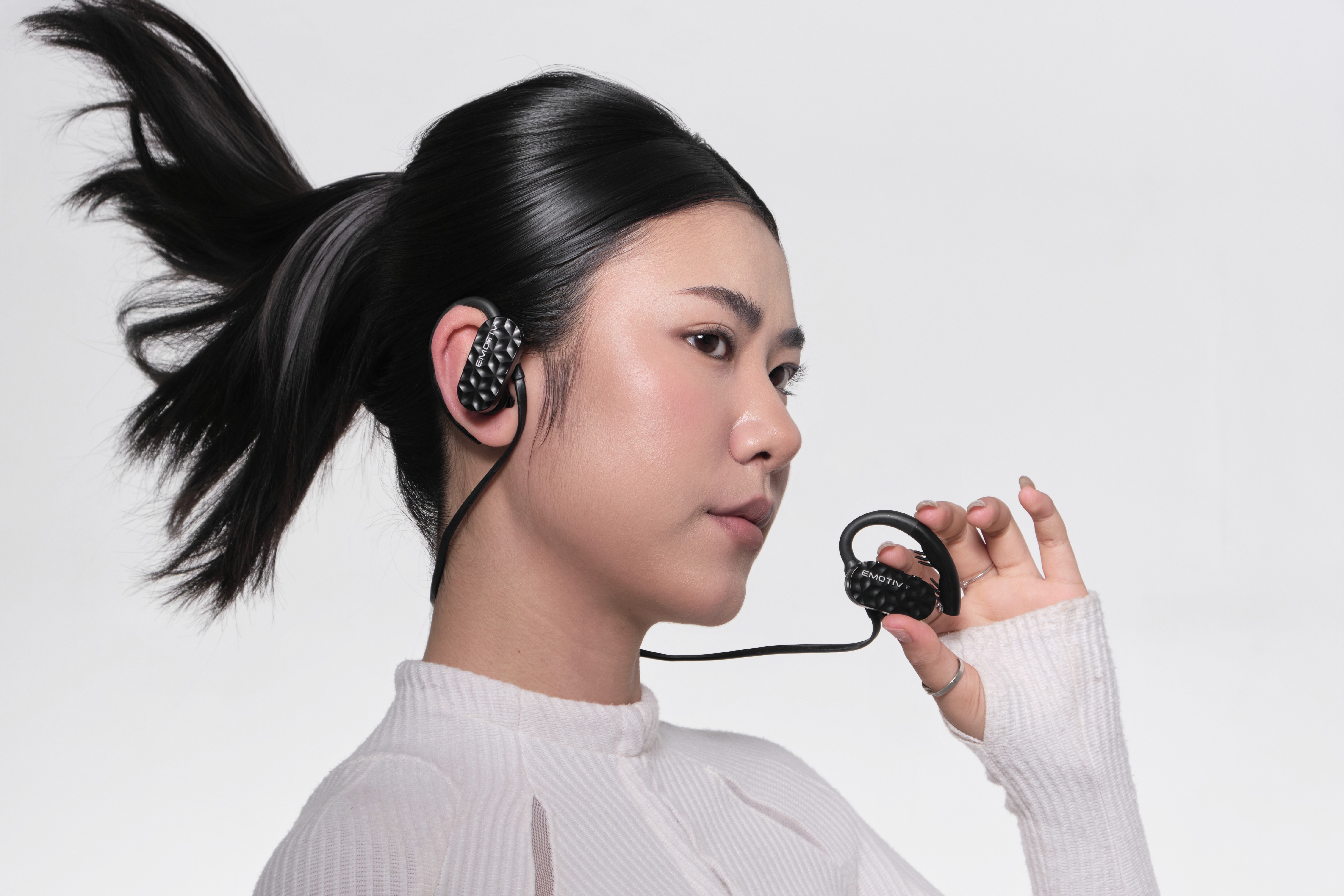
While headsets are the most common form factor, innovation is pushing EEG into new designs. The Emotiv MN8 is a great example, embedding two channels of EEG sensors into a discreet pair of earbuds. This design is perfect for capturing brain data in real-world environments without the user feeling self-conscious. On the other end of the spectrum, the open-source community offers options like the Ultracortex headset from OpenBCI. This DIY-friendly device is highly customizable, appealing to developers and makers who want to build their own hardware setups and experiment with different sensor configurations.
What to Look For in an EEG Headset
Choosing the right EEG headset feels a lot like picking the perfect tool for a project—the best one depends entirely on what you want to accomplish. Whether you're conducting academic research, developing a brain-computer interface, or exploring cognitive wellness, certain features will be more important than others. To help you make an informed decision, let's walk through the key factors to consider. From the number of channels to the software that brings the data to life, understanding these elements will ensure you find a headset that fits your goals perfectly.
Channel Count and Placement
The channel count refers to the number of electrodes the headset uses to detect brain activity. A higher channel count generally provides greater spatial resolution, meaning you can pinpoint the source of brain signals more accurately. For example, a device like the Emotiv Flex offers 32 channels for high-density mapping. However, more channels can also mean a longer setup time. Just as important is placement—where the electrodes sit on the scalp. Most systems follow the international 10-20 system for consistency. Some headsets, like Emotiv Flex, allow you to record from various locations, which is ideal for targeting particular brain regions for your study.
Signal Quality and Processing
Your research is only as good as your data, which makes signal quality a top priority. High-quality signals are clean, with minimal noise or interference from muscle movements or environmental factors. The type of sensor—saline or gel—can impact this, as can the headset's internal processing capabilities. Portability doesn't have to mean a compromise in quality. Devices like the Epoc X are designed for mobile research and have been validated against more expensive lab systems for measuring specific brain responses. Ultimately, you need a headset that delivers reliable, artifact-free data you can trust for your analysis.
Wireless Connectivity
The freedom of wireless connectivity is a game-changer for modern EEG research. It allows you to study brain activity in more natural, real-world settings, from a classroom to a retail store. This is essential for applications in neuromarketing, sports science, or any study where participant mobility is key. When evaluating a wireless headset, look for modern standards like Bluetooth 5.0, which ensures fast and stable data transmission without being tethered to a computer. This reliability is crucial for maintaining a consistent data stream throughout your recording sessions, giving you the flexibility to design more dynamic and engaging experiments.
Software Integration
The headset is just one piece of the puzzle; the software brings your data to life. A great EEG system comes with an intuitive software suite that makes it easy to set up experiments, view data in real-time, and manage recordings. For instance, purchasing an Emotiv headset gives you access to software like EmotivPRO, which helps you visualize and understand the brain data you're collecting right out of the box. For those looking to build custom applications, check if the manufacturer provides an API or SDK. This is essential for developers who want to integrate EEG data into their own software, games, or BCI projects.
Data Analysis Tools
Collecting raw EEG data is the first step; turning it into meaningful insights is the next. The right data analysis tools can streamline this process significantly. Look for platforms that offer features like automatic artifact detection, frequency analysis, and data visualization. Some systems provide performance metrics that translate complex brainwave patterns into understandable scores for things like focus or stress. Companies like Emotiv have focused on creating technology that makes processing and interpreting EEG tests more efficient, which is a huge advantage for any project. This support helps you move from raw data to actionable conclusions faster, whether for academic research or personal wellness.
Comfort and Design
Comfort is a critical, yet often overlooked, factor. An uncomfortable headset can distract a participant, leading to movement artifacts that contaminate your data. For studies that require long recording sessions, a lightweight and ergonomic design is non-negotiable. Studies have specifically evaluated the user experience of mobile EEG devices, highlighting how crucial wearing comfort is for data integrity and participant compliance. Consider the form factor that best suits your needs. A traditional headset like the Insight is great for many applications, while something more discreet might be better for studies where subtlety is important.
How EEG Headsets Are Used Across Industries
EEG technology has expanded far beyond clinical labs, becoming a vital tool in a surprising range of fields. From understanding consumer choices to creating new ways for people to interact with technology, here’s how different industries are using commercial EEG headsets to gather valuable brain data.
Academic Research
For decades, neuroscience research was confined to the lab. Portable EEG headsets have changed the game, allowing researchers to study brain activity in real-world settings. This shift is particularly valuable for academic research and education, where scientists can now gather high-quality data from larger, more diverse groups of people in their natural environments. Online research tools and remote data acquisition streamline everything from participant recruitment to experimental administration. This efficiency doesn't come at the cost of quality; studies show that data collected remotely with devices like the EmotivPRO is just as reliable as data gathered in a traditional laboratory, opening up new frontiers for discovery.
Brain-Computer Interfaces
A brain-computer interface (BCI) creates a direct pathway between the brain and an external device, and EEG is one of the most accessible ways to build one. This technology has profound implications, from helping individuals with motor disabilities control prosthetic limbs to creating immersive gaming experiences. While consumer-grade devices have historically faced challenges with signal artifacts, modern headsets are designed with better sensors and software to deliver cleaner data. With the right hardware and software like EmotivBCI, developers and researchers are building sophisticated control systems that translate brain signals into commands, making science fiction a reality.
Neuromarketing
What really makes a consumer choose one product over another? Surveys and focus groups can be unreliable, but brain data offers a more direct look into a person's preferences. In neuromarketing, researchers use EEG to measure genuine emotional and cognitive responses to advertisements, packaging, and products. By analyzing brainwave patterns, companies can see what truly captures attention, evokes an emotional connection, and influences purchasing decisions. This allows brands to move beyond what customers say they feel and instead design experiences based on their unfiltered reactions, leading to more effective and resonant marketing campaigns.
Healthcare
The ability to collect high-quality EEG data remotely has significant potential for healthcare. It opens the door for remote diagnostics and the long-term assessment of brain health without requiring frequent clinic visits. This is especially crucial for individuals in rural areas or those with mobility issues. Ensuring participants can obtain clean, reliable data at home is key to making this work. As the technology for remote acquisition improves, EEG headsets are becoming an increasingly viable tool for professionals to assess neurological conditions and support patient care from a distance, contributing to a more accessible healthcare system.
Cognitive Wellness
Beyond clinical applications, EEG is empowering individuals to take an active role in their own mental well-being. People are using headsets to explore the effects of meditation, improve their focus, and understand their unique cognitive patterns. Paired with applications like the Emotiv App, EEG provides real-time feedback that can help you train your brain. While the field is still growing, this technology offers a data-driven approach to cognitive wellness, connecting thousands of years of practical experience from contemplative traditions with modern scientific methods. It’s a powerful way to learn more about yourself and cultivate a healthier mind.
How to Choose the Right EEG Headset for You
Picking the right EEG headset feels a lot like choosing the right tool for a project. You wouldn't use a sledgehammer to hang a picture frame, and the same principle applies here. The best device for you depends entirely on what you want to accomplish. Are you a researcher conducting a detailed study, a developer building a new application, or an individual curious about your own cognitive processes?
Your specific application will guide your decision, influencing everything from the number of channels you need to the type of software you’ll use. Let's walk through the key factors to consider so you can find the perfect match for your goals.
Define Your Research Goals
Before you even look at a single product page, the most important step is to clarify your "why." What question are you trying to answer? Your objective is the foundation of your decision. For example, if you're in neuromarketing, your goal might be to see what truly captures a consumer's attention and evokes emotion. A clear goal helps you filter out devices that don't have the capabilities you need.
Are you developing a hands-free application using a brain-computer interface? Or perhaps you're conducting academic research on cognitive load during a specific task. Maybe you're focused on personal cognitive wellness and want to explore focus or relaxation states. Each of these goals requires different data and, therefore, different hardware specifications. Writing down your primary objective will make the next steps much easier.
Evaluate the Technical Specifications
Once you know your goal, you can start matching it with the right technical specs. This is where you look at the details, like channel count, sensor type, and data quality. For instance, the Epoc X is a 14-channel wireless EEG system that uses saline-soaked felt pads and has been shown to record research-quality data. This makes it a versatile choice for many research applications.
If your work requires high-density brain mapping, a device like the FLEX Saline with 32 channels might be the right fit. For developers or wellness enthusiasts who need a more streamlined setup, the 5-channel Insight offers a great balance of performance and ease of use. Pay attention to whether the device uses saline or gel sensors, as this affects setup time and comfort. Also, check the software compatibility—does it work with the analysis tools you plan to use, like EmotivPRO?
Consider Your Budget and ROI
EEG technology is an investment, so it’s important to consider your budget. Prices can vary widely based on channel count, data quality, and included software. Instead of just looking at the initial cost, think about the return on investment (ROI). A more capable headset might speed up your data collection or provide cleaner signals, saving you valuable time and resources in the long run.
The wearable EEG market is growing rapidly, reflecting the increasing value of this technology in various fields. For a business or research institution, the investment can lead to groundbreaking insights. For an independent developer, it could be the key to creating a new BCI application. Plan your budget by weighing the upfront cost against the long-term value and potential outcomes your work will generate with the right academic research tools.
Review Support and Community Options
A great piece of hardware is only part of the equation. The support system behind it is just as critical. Some scientists have had concerns about the validity and quality of data from commercial headsets, which is why many researchers have conducted validation studies. Choosing a company that is transparent about its data quality and offers robust support is essential.
Look for comprehensive documentation, responsive customer service, and an active user community. A strong community can be an incredible resource for troubleshooting, sharing analysis scripts, and collaborating on projects. For those building new things, access to a solid developer SDK and API is non-negotiable. This ecosystem of support ensures you can get the most out of your device and confidently move forward with your project.
Your Guide to a Successful Setup
You’ve chosen your EEG headset, and now it’s time for the exciting part: setting it up to collect brain data. A successful setup is the foundation of any great project, whether you're conducting formal academic research or exploring your own cognitive wellness. Taking a few extra minutes to get the hardware and software configured correctly will save you a lot of time and ensure you gather the highest quality data possible. Think of it as building a sturdy foundation before putting up the walls. A little precision here goes a long way.
This guide will walk you through the essential steps, from fitting your headset to making sure your data is clean and reliable. We’ll cover best practices for your hardware, software configuration, and tips for getting a clear signal, so you can feel confident as you begin your work.
Best Practices for Hardware Setup
Getting your hardware set up correctly is the first and most critical step. A proper fit ensures the sensors make solid contact with your scalp, which is essential for capturing clear brainwave signals. Start by adjusting the headset so it feels snug but not uncomfortable. For a device like the Emotiv Epoc X, you’ll want to ensure each of its 14 sensors is properly placed. If you’re using a saline-based headset like the FLEX, make sure the sensors are adequately hydrated before you put it on. Taking the time to check each connection point will dramatically improve your data quality from the very beginning.
How to Configure Your Software
With your headset comfortably in place, the next step is to connect it to your software. This is where the raw data from the sensors is translated into something you can see and analyze. Emotiv’s software, like EmotivPRO, is designed to make this process straightforward. After installing the application, you’ll pair your device—usually via Bluetooth or a dedicated USB receiver. Once connected, the software provides a real-time display of the signal quality from each sensor. This immediate feedback lets you make small adjustments to the headset’s fit to ensure every channel is providing clean data before you start recording.
Tips for Optimizing Signal Quality
Optimizing your signal quality is all about minimizing "noise," which is any electrical interference that isn't coming from the brain. Common sources of noise include muscle movements like blinking, clenching your jaw, or even small head movements. Before you start a recording session, find a comfortable, relaxed position. It’s also helpful to be in a quiet environment, away from other electronic devices that could cause interference. For saline-based headsets, ensuring the sensors remain moist is key to maintaining a strong connection. These small adjustments can make a huge difference in the clarity of your EEG data.
Guidelines for Clean Data Collection
Now that your hardware is fitted and your software is showing a strong signal, you’re ready to collect data. The key to clean data collection is consistency. Try to maintain a controlled environment for your recording sessions to ensure your results are reliable. The Epoc X headset is known for its ability to record high-quality brain data, giving you a solid starting point. Before each session, run through a quick checklist: is the headset fitted correctly? Are all sensors showing good contact in the software? Is the environment free of distractions? Following these simple guidelines will help you gather accurate and dependable data for your analysis.
How to Manage Your Data Quality
Collecting brain data is just the first step. The real value comes from ensuring that data is clean, accurate, and meaningful. High-quality data is the foundation of any successful research project, wellness plan, or BCI application. Without it, your insights will be unreliable. Managing your data quality involves a few key stages, from processing the raw signals your headset collects to using the right software to make sense of it all. It also means knowing how to handle the common challenges that can arise during data collection. By establishing a solid workflow for data management, you can be confident in your results and get the most out of your EEG headset.
Processing Your Raw EEG Data
The raw data from your EEG headset is a continuous stream of electrical activity, but it’s not immediately ready for analysis. This initial data contains a mix of brain signals and "noise," such as artifacts from eye blinks, muscle movements, or electrical interference. Processing is the critical step where you clean this data to isolate the neural signals you’re interested in. Modern research tools have made this process incredibly efficient, allowing you to achieve quality and reliable data that’s comparable to what you’d get in a traditional lab setting, even when collecting data remotely. This involves applying filters to remove unwanted frequencies and using algorithms to identify and remove artifacts, turning noisy raw data into a clean dataset ready for interpretation.
Finding the Right Analysis Tools
Your EEG hardware is only as powerful as the software you pair it with. The right analysis tools can make the difference between a frustrating process and a streamlined workflow. Look for software that’s designed to work seamlessly with your headset, as this simplifies everything from initial setup to final interpretation. Companies like Emotiv have developed integrated software solutions that make the entire process of conducting and processing tests faster and more intuitive. A platform like EmotivPRO, for example, allows you to view and analyze data in real-time, apply filters, and mark events, giving you a comprehensive toolkit for turning complex brain data into actionable insights.
How to Ensure Quality Assurance
Maintaining data quality starts before you even begin recording. A consistent setup routine is your best defense against noisy, unusable data. This means ensuring the headset fits snugly, the sensors have good contact with the scalp, and the participant is in a comfortable environment with minimal distractions. For quality assurance, it helps to use hardware that has been independently tested and verified. For instance, systems like the Epoc X have been empirically validated against traditional, research-grade equipment, confirming their ability to record high-quality data. This kind of validation gives you a strong baseline of confidence in the signals you’re collecting.
Overcoming Common Challenges
It’s normal to have questions about the validity and quality of data from commercial EEG headsets. Researchers have conducted numerous validation studies to address these concerns, but you’ll still encounter practical challenges. The most common issues are EEG artifacts—unwanted signals from non-brain activity like jaw clenching or eye movements. You can minimize these by properly instructing participants and using software filters. Other problems with using consumer-grade devices can include signal loss from poor sensor contact or what’s known as "BCI illiteracy," where a user struggles to produce the consistent brain patterns needed for control tasks. Patience, practice, and a good setup protocol are your best tools for overcoming these hurdles.
What's Next for EEG Technology?
The field of EEG is constantly evolving, moving from complex lab equipment to accessible tools that anyone can use. This progress is opening up new possibilities for research, development, and personal insight. As the technology becomes more powerful and user-friendly, its applications are expanding in exciting ways. Let’s look at the key innovations and future trends shaping the world of EEG.
The Latest Innovations
The wearable EEG headset market is growing at an impressive pace. Recent reports show the market is projected to more than double by 2030, a clear sign that demand for accessible brain data is on the rise. This expansion is fueled by major strides in wireless technology, artificial intelligence, and hardware design, making devices more portable and powerful than ever.
Gone are the days when EEG research was confined to a laboratory. Today’s wireless headsets, like the Epoc X, offer researchers and developers the freedom to gather high-quality data in real-world environments. These advancements are making EEG technology more approachable, putting sophisticated tools into the hands of a broader community of innovators and creators.
New and Emerging Applications
As EEG technology becomes more accessible, its use cases are branching out far beyond traditional clinical settings. One of the most fascinating new frontiers is neuromarketing, where businesses can gain direct insight into consumer responses. By measuring brainwave activity, companies can understand what truly captures an audience's attention and emotional engagement with an ad, product, or experience.
This expansion isn't just happening in the commercial world. The rise of powerful software and portable hardware has transformed academic research, allowing scientists to conduct studies remotely. This enables access to larger and more diverse groups of participants, making it easier to gather robust data efficiently and reliably from anywhere in the world.
A Look at Future Developments
The future of EEG is bright, with a clear trend toward even more compact, integrated, and user-friendly devices. As headsets become smaller and more comfortable for everyday wear, we can expect to see them integrated into new areas of life. Imagine using EEG for personalized cognitive training programs, creating more immersive gaming experiences, or gaining deeper insights into your own mental well-being.
This evolution points toward a future where understanding brain activity is a common tool for both personal and professional growth. For developers, this opens up a world of possibilities for creating new applications through brain-computer interfaces. As the technology continues to advance, EEG is set to become an even more integral part of how we learn, create, and understand ourselves.
Related Articles
Frequently Asked Questions
Do I need a neuroscience degree to use an EEG headset? Not at all. While a background in neuroscience is certainly helpful for deep academic research, our systems are designed to be accessible. The software translates complex brainwave data into understandable performance metrics for things like focus and stress. If you're a developer, an innovator, or simply curious about your own cognitive wellness, you have all the tools you need to get started and find meaningful insights right out of the box.
What's the main difference between saline, gel, and dry sensors? The type of sensor really comes down to the needs of your project. Saline sensors, like those on the Epoc X and Flex Saline, offer a great balance of high-quality signal and quick setup time. Gel sensors, found on our Flex Gel headset, are the standard for long-duration studies where you need the most stable signal possible over many hours. Dry sensors, used on the Insight, are the most convenient because they require no preparation, making them perfect for everyday use and quick sessions.
How many channels are enough for my project? The number of channels you need depends on the level of detail you want to capture. For personal wellness or basic BCI applications, a 5-channel device like the Insight provides excellent data on key performance metrics. For more detailed academic or neuromarketing research, a 14-channel headset like the Epoc X gives you greater spatial resolution across the brain. If your work involves high-density brain mapping or source localization, the 32 channels of the Flex series will give you the comprehensive data you need.
Is it difficult to get a clean signal outside of a lab? It’s very achievable to get high-quality data in real-world settings. Modern wireless headsets are designed specifically for this purpose. The key is a good setup routine. Ensuring the headset fits snugly and that the sensors have solid contact with the scalp is the most important step. Minimizing muscle-related "noise" by having your participant sit comfortably and avoid excessive movement, like clenching their jaw, will also make a huge difference in your data quality.
Can I export the data to use with my own analysis tools? Yes, absolutely. We understand that many researchers and developers have their own preferred analysis pipelines. Our EmotivPRO software allows you to easily export raw EEG data in standard formats like EDF and CSV, which you can then import into tools like MATLAB, EEGLAB, or your own custom Python scripts. For developers who want to build applications, we also provide APIs and SDKs to stream data directly into your software.
Think about the first computers—they were massive machines that filled entire rooms, accessible only to a few specialists. Today, we carry more power in our pockets. The commercial EEG headset represents a similar leap for brain science. What once required a lab full of wired, intimidating equipment is now a sleek, wireless device you can wear almost anywhere. This shift has moved brain research out of the lab and into the real world, opening up new frontiers in fields like neuromarketing and academic research. This guide will walk you through this transformative technology and what to look for.
Key Takeaways
Define Your Goal Before Choosing Your Gear: The best EEG headset is the one that aligns with your specific objective. Whether you're conducting academic research, developing a BCI, or exploring personal wellness, clarifying your primary goal is the most critical step in selecting the right hardware.
Look Beyond the Hardware to the Software Ecosystem: A headset gathers the raw data, but the software is what translates it into actionable insights. A powerful and intuitive platform for data analysis, visualization, and development is just as important as the device itself.
Prioritize a Meticulous Setup for Reliable Data: Your results are only as good as your data. A proper headset fit, solid sensor contact, and a controlled environment are fundamental for minimizing noise and ensuring the brain data you collect is clean and trustworthy.
What is a Commercial EEG Headset?
A commercial EEG headset is a specialized device designed to measure and analyze the brain's electrical activity through a process called electroencephalography (EEG). Unlike the bulky, wired equipment you might picture in a clinical lab, these modern headsets are portable, user-friendly, and built for a wide range of applications outside of traditional medical settings. They’ve become essential tools in fields like consumer research, workplace well-being, and product innovation.
Organizations use these headsets to gather brain data that can lead to powerful insights. For example, a company might use EEG to understand genuine emotional responses to an advertisement, or a developer could build an application that allows a user to interact with a computer using their brain signals. At Emotiv, we provide a complete platform that includes not just the EEG headsets but also the software tools and APIs needed to turn raw brainwave data into actionable information. This makes advanced brain-computer interface technology accessible for both research and commercial projects.
How EEG Technology Works
So, how does an EEG headset actually work? It all comes down to detecting the tiny electrical signals your brain cells produce when they communicate with each other. The headset has sensors, or electrodes, that are placed on your scalp. These sensors pick up the electrical activity and transmit it wirelessly to a computer. The technology allows for a real-time stream of brain signal data, which can then be analyzed.
For instance, the Emotiv Epoc X headset uses 14 channels to capture brain activity across different regions of the cortex. This multi-channel approach provides a detailed picture of what’s happening in the brain. The software can then interpret these patterns to identify mental states like focus or stress, or even recognize specific mental commands. It’s a non-invasive and safe way to gain a deeper understanding of cognitive processes as they happen.
Key Components and Features
When you look at a commercial EEG headset, you’ll find a few key components working together. First are the electrodes, which make direct contact with the scalp to pick up brain signals. These can come in different forms, like the saline-based sensors on our Flex Saline headset, which are designed for quick setup and comfort. Second is the wireless technology that sends the data from the headset to your device, giving you the freedom to move around.
The third, and arguably most critical, component is the software. The hardware gathers the raw data, but the software is what makes sense of it all. A powerful software suite like EmotivPRO allows you to view the data stream, perform detailed analysis, and see performance metrics in real-time. Together, these components create a complete system for anyone looking to conduct serious academic research or develop innovative new applications.
A Guide to the Top Commercial EEG Headsets
Choosing the right EEG headset depends entirely on what you want to accomplish. Whether you're conducting in-depth academic studies, developing a new brain-computer interface, or exploring your own cognitive performance, there’s a device designed for your needs. The key is to match the headset’s capabilities—like its channel count and sensor type—to your specific goals. Let's look at some of the best options available to help you find the perfect fit for your project.
Emotiv Epoc X
If you need a powerful, research-grade device that’s also user-friendly, the Emotiv Epoc X is an excellent choice. This 14-channel wireless headset delivers high-resolution data, making it ideal for a wide range of applications, from neuroscience research to performance analytics. Its saline-based sensors are quick to set up, so you can spend less time on preparation and more time collecting data. The Epoc X is a versatile workhorse, providing the detail needed for professional projects while remaining accessible enough for developers and serious enthusiasts to explore complex brain dynamics.
Emotiv Flex Series
For researchers who require the highest density of brain data, the Emotiv Flex series is the gold standard. With 32 channels, this headset allows for a comprehensive measurement of brain activity across the entire scalp. It comes in two main configurations: the Flex Saline for rapid, convenient setup, and the Flex Gel for long-duration studies where signal stability is paramount. This level of detail is essential for advanced academic research, giving you the flexibility to design experiments with precise sensor placement and capture nuanced neural signatures.
Emotiv Insight
The Emotiv Insight is designed for everyday use, making it a perfect entry point into the world of EEG. This sleek, 5-channel headset focuses on measuring key cognitive and emotional metrics in a simple, accessible package. Its dry polymer sensors require little setup time, so you can put it on and start a session in seconds. The Insight is a fantastic tool for anyone interested in cognitive wellness, personal performance improvement, or building basic brain-computer interface applications. It translates complex brain signals into easy-to-understand feedback on focus, stress, and engagement.
Other Notable Solutions
While headsets are the most common form factor, innovation is pushing EEG into new designs. The Emotiv MN8 is a great example, embedding two channels of EEG sensors into a discreet pair of earbuds. This design is perfect for capturing brain data in real-world environments without the user feeling self-conscious. On the other end of the spectrum, the open-source community offers options like the Ultracortex headset from OpenBCI. This DIY-friendly device is highly customizable, appealing to developers and makers who want to build their own hardware setups and experiment with different sensor configurations.
What to Look For in an EEG Headset
Choosing the right EEG headset feels a lot like picking the perfect tool for a project—the best one depends entirely on what you want to accomplish. Whether you're conducting academic research, developing a brain-computer interface, or exploring cognitive wellness, certain features will be more important than others. To help you make an informed decision, let's walk through the key factors to consider. From the number of channels to the software that brings the data to life, understanding these elements will ensure you find a headset that fits your goals perfectly.
Channel Count and Placement
The channel count refers to the number of electrodes the headset uses to detect brain activity. A higher channel count generally provides greater spatial resolution, meaning you can pinpoint the source of brain signals more accurately. For example, a device like the Emotiv Flex offers 32 channels for high-density mapping. However, more channels can also mean a longer setup time. Just as important is placement—where the electrodes sit on the scalp. Most systems follow the international 10-20 system for consistency. Some headsets, like Emotiv Flex, allow you to record from various locations, which is ideal for targeting particular brain regions for your study.
Signal Quality and Processing
Your research is only as good as your data, which makes signal quality a top priority. High-quality signals are clean, with minimal noise or interference from muscle movements or environmental factors. The type of sensor—saline or gel—can impact this, as can the headset's internal processing capabilities. Portability doesn't have to mean a compromise in quality. Devices like the Epoc X are designed for mobile research and have been validated against more expensive lab systems for measuring specific brain responses. Ultimately, you need a headset that delivers reliable, artifact-free data you can trust for your analysis.
Wireless Connectivity
The freedom of wireless connectivity is a game-changer for modern EEG research. It allows you to study brain activity in more natural, real-world settings, from a classroom to a retail store. This is essential for applications in neuromarketing, sports science, or any study where participant mobility is key. When evaluating a wireless headset, look for modern standards like Bluetooth 5.0, which ensures fast and stable data transmission without being tethered to a computer. This reliability is crucial for maintaining a consistent data stream throughout your recording sessions, giving you the flexibility to design more dynamic and engaging experiments.
Software Integration
The headset is just one piece of the puzzle; the software brings your data to life. A great EEG system comes with an intuitive software suite that makes it easy to set up experiments, view data in real-time, and manage recordings. For instance, purchasing an Emotiv headset gives you access to software like EmotivPRO, which helps you visualize and understand the brain data you're collecting right out of the box. For those looking to build custom applications, check if the manufacturer provides an API or SDK. This is essential for developers who want to integrate EEG data into their own software, games, or BCI projects.
Data Analysis Tools
Collecting raw EEG data is the first step; turning it into meaningful insights is the next. The right data analysis tools can streamline this process significantly. Look for platforms that offer features like automatic artifact detection, frequency analysis, and data visualization. Some systems provide performance metrics that translate complex brainwave patterns into understandable scores for things like focus or stress. Companies like Emotiv have focused on creating technology that makes processing and interpreting EEG tests more efficient, which is a huge advantage for any project. This support helps you move from raw data to actionable conclusions faster, whether for academic research or personal wellness.
Comfort and Design
Comfort is a critical, yet often overlooked, factor. An uncomfortable headset can distract a participant, leading to movement artifacts that contaminate your data. For studies that require long recording sessions, a lightweight and ergonomic design is non-negotiable. Studies have specifically evaluated the user experience of mobile EEG devices, highlighting how crucial wearing comfort is for data integrity and participant compliance. Consider the form factor that best suits your needs. A traditional headset like the Insight is great for many applications, while something more discreet might be better for studies where subtlety is important.
How EEG Headsets Are Used Across Industries
EEG technology has expanded far beyond clinical labs, becoming a vital tool in a surprising range of fields. From understanding consumer choices to creating new ways for people to interact with technology, here’s how different industries are using commercial EEG headsets to gather valuable brain data.
Academic Research
For decades, neuroscience research was confined to the lab. Portable EEG headsets have changed the game, allowing researchers to study brain activity in real-world settings. This shift is particularly valuable for academic research and education, where scientists can now gather high-quality data from larger, more diverse groups of people in their natural environments. Online research tools and remote data acquisition streamline everything from participant recruitment to experimental administration. This efficiency doesn't come at the cost of quality; studies show that data collected remotely with devices like the EmotivPRO is just as reliable as data gathered in a traditional laboratory, opening up new frontiers for discovery.
Brain-Computer Interfaces
A brain-computer interface (BCI) creates a direct pathway between the brain and an external device, and EEG is one of the most accessible ways to build one. This technology has profound implications, from helping individuals with motor disabilities control prosthetic limbs to creating immersive gaming experiences. While consumer-grade devices have historically faced challenges with signal artifacts, modern headsets are designed with better sensors and software to deliver cleaner data. With the right hardware and software like EmotivBCI, developers and researchers are building sophisticated control systems that translate brain signals into commands, making science fiction a reality.
Neuromarketing
What really makes a consumer choose one product over another? Surveys and focus groups can be unreliable, but brain data offers a more direct look into a person's preferences. In neuromarketing, researchers use EEG to measure genuine emotional and cognitive responses to advertisements, packaging, and products. By analyzing brainwave patterns, companies can see what truly captures attention, evokes an emotional connection, and influences purchasing decisions. This allows brands to move beyond what customers say they feel and instead design experiences based on their unfiltered reactions, leading to more effective and resonant marketing campaigns.
Healthcare
The ability to collect high-quality EEG data remotely has significant potential for healthcare. It opens the door for remote diagnostics and the long-term assessment of brain health without requiring frequent clinic visits. This is especially crucial for individuals in rural areas or those with mobility issues. Ensuring participants can obtain clean, reliable data at home is key to making this work. As the technology for remote acquisition improves, EEG headsets are becoming an increasingly viable tool for professionals to assess neurological conditions and support patient care from a distance, contributing to a more accessible healthcare system.
Cognitive Wellness
Beyond clinical applications, EEG is empowering individuals to take an active role in their own mental well-being. People are using headsets to explore the effects of meditation, improve their focus, and understand their unique cognitive patterns. Paired with applications like the Emotiv App, EEG provides real-time feedback that can help you train your brain. While the field is still growing, this technology offers a data-driven approach to cognitive wellness, connecting thousands of years of practical experience from contemplative traditions with modern scientific methods. It’s a powerful way to learn more about yourself and cultivate a healthier mind.
How to Choose the Right EEG Headset for You
Picking the right EEG headset feels a lot like choosing the right tool for a project. You wouldn't use a sledgehammer to hang a picture frame, and the same principle applies here. The best device for you depends entirely on what you want to accomplish. Are you a researcher conducting a detailed study, a developer building a new application, or an individual curious about your own cognitive processes?
Your specific application will guide your decision, influencing everything from the number of channels you need to the type of software you’ll use. Let's walk through the key factors to consider so you can find the perfect match for your goals.
Define Your Research Goals
Before you even look at a single product page, the most important step is to clarify your "why." What question are you trying to answer? Your objective is the foundation of your decision. For example, if you're in neuromarketing, your goal might be to see what truly captures a consumer's attention and evokes emotion. A clear goal helps you filter out devices that don't have the capabilities you need.
Are you developing a hands-free application using a brain-computer interface? Or perhaps you're conducting academic research on cognitive load during a specific task. Maybe you're focused on personal cognitive wellness and want to explore focus or relaxation states. Each of these goals requires different data and, therefore, different hardware specifications. Writing down your primary objective will make the next steps much easier.
Evaluate the Technical Specifications
Once you know your goal, you can start matching it with the right technical specs. This is where you look at the details, like channel count, sensor type, and data quality. For instance, the Epoc X is a 14-channel wireless EEG system that uses saline-soaked felt pads and has been shown to record research-quality data. This makes it a versatile choice for many research applications.
If your work requires high-density brain mapping, a device like the FLEX Saline with 32 channels might be the right fit. For developers or wellness enthusiasts who need a more streamlined setup, the 5-channel Insight offers a great balance of performance and ease of use. Pay attention to whether the device uses saline or gel sensors, as this affects setup time and comfort. Also, check the software compatibility—does it work with the analysis tools you plan to use, like EmotivPRO?
Consider Your Budget and ROI
EEG technology is an investment, so it’s important to consider your budget. Prices can vary widely based on channel count, data quality, and included software. Instead of just looking at the initial cost, think about the return on investment (ROI). A more capable headset might speed up your data collection or provide cleaner signals, saving you valuable time and resources in the long run.
The wearable EEG market is growing rapidly, reflecting the increasing value of this technology in various fields. For a business or research institution, the investment can lead to groundbreaking insights. For an independent developer, it could be the key to creating a new BCI application. Plan your budget by weighing the upfront cost against the long-term value and potential outcomes your work will generate with the right academic research tools.
Review Support and Community Options
A great piece of hardware is only part of the equation. The support system behind it is just as critical. Some scientists have had concerns about the validity and quality of data from commercial headsets, which is why many researchers have conducted validation studies. Choosing a company that is transparent about its data quality and offers robust support is essential.
Look for comprehensive documentation, responsive customer service, and an active user community. A strong community can be an incredible resource for troubleshooting, sharing analysis scripts, and collaborating on projects. For those building new things, access to a solid developer SDK and API is non-negotiable. This ecosystem of support ensures you can get the most out of your device and confidently move forward with your project.
Your Guide to a Successful Setup
You’ve chosen your EEG headset, and now it’s time for the exciting part: setting it up to collect brain data. A successful setup is the foundation of any great project, whether you're conducting formal academic research or exploring your own cognitive wellness. Taking a few extra minutes to get the hardware and software configured correctly will save you a lot of time and ensure you gather the highest quality data possible. Think of it as building a sturdy foundation before putting up the walls. A little precision here goes a long way.
This guide will walk you through the essential steps, from fitting your headset to making sure your data is clean and reliable. We’ll cover best practices for your hardware, software configuration, and tips for getting a clear signal, so you can feel confident as you begin your work.
Best Practices for Hardware Setup
Getting your hardware set up correctly is the first and most critical step. A proper fit ensures the sensors make solid contact with your scalp, which is essential for capturing clear brainwave signals. Start by adjusting the headset so it feels snug but not uncomfortable. For a device like the Emotiv Epoc X, you’ll want to ensure each of its 14 sensors is properly placed. If you’re using a saline-based headset like the FLEX, make sure the sensors are adequately hydrated before you put it on. Taking the time to check each connection point will dramatically improve your data quality from the very beginning.
How to Configure Your Software
With your headset comfortably in place, the next step is to connect it to your software. This is where the raw data from the sensors is translated into something you can see and analyze. Emotiv’s software, like EmotivPRO, is designed to make this process straightforward. After installing the application, you’ll pair your device—usually via Bluetooth or a dedicated USB receiver. Once connected, the software provides a real-time display of the signal quality from each sensor. This immediate feedback lets you make small adjustments to the headset’s fit to ensure every channel is providing clean data before you start recording.
Tips for Optimizing Signal Quality
Optimizing your signal quality is all about minimizing "noise," which is any electrical interference that isn't coming from the brain. Common sources of noise include muscle movements like blinking, clenching your jaw, or even small head movements. Before you start a recording session, find a comfortable, relaxed position. It’s also helpful to be in a quiet environment, away from other electronic devices that could cause interference. For saline-based headsets, ensuring the sensors remain moist is key to maintaining a strong connection. These small adjustments can make a huge difference in the clarity of your EEG data.
Guidelines for Clean Data Collection
Now that your hardware is fitted and your software is showing a strong signal, you’re ready to collect data. The key to clean data collection is consistency. Try to maintain a controlled environment for your recording sessions to ensure your results are reliable. The Epoc X headset is known for its ability to record high-quality brain data, giving you a solid starting point. Before each session, run through a quick checklist: is the headset fitted correctly? Are all sensors showing good contact in the software? Is the environment free of distractions? Following these simple guidelines will help you gather accurate and dependable data for your analysis.
How to Manage Your Data Quality
Collecting brain data is just the first step. The real value comes from ensuring that data is clean, accurate, and meaningful. High-quality data is the foundation of any successful research project, wellness plan, or BCI application. Without it, your insights will be unreliable. Managing your data quality involves a few key stages, from processing the raw signals your headset collects to using the right software to make sense of it all. It also means knowing how to handle the common challenges that can arise during data collection. By establishing a solid workflow for data management, you can be confident in your results and get the most out of your EEG headset.
Processing Your Raw EEG Data
The raw data from your EEG headset is a continuous stream of electrical activity, but it’s not immediately ready for analysis. This initial data contains a mix of brain signals and "noise," such as artifacts from eye blinks, muscle movements, or electrical interference. Processing is the critical step where you clean this data to isolate the neural signals you’re interested in. Modern research tools have made this process incredibly efficient, allowing you to achieve quality and reliable data that’s comparable to what you’d get in a traditional lab setting, even when collecting data remotely. This involves applying filters to remove unwanted frequencies and using algorithms to identify and remove artifacts, turning noisy raw data into a clean dataset ready for interpretation.
Finding the Right Analysis Tools
Your EEG hardware is only as powerful as the software you pair it with. The right analysis tools can make the difference between a frustrating process and a streamlined workflow. Look for software that’s designed to work seamlessly with your headset, as this simplifies everything from initial setup to final interpretation. Companies like Emotiv have developed integrated software solutions that make the entire process of conducting and processing tests faster and more intuitive. A platform like EmotivPRO, for example, allows you to view and analyze data in real-time, apply filters, and mark events, giving you a comprehensive toolkit for turning complex brain data into actionable insights.
How to Ensure Quality Assurance
Maintaining data quality starts before you even begin recording. A consistent setup routine is your best defense against noisy, unusable data. This means ensuring the headset fits snugly, the sensors have good contact with the scalp, and the participant is in a comfortable environment with minimal distractions. For quality assurance, it helps to use hardware that has been independently tested and verified. For instance, systems like the Epoc X have been empirically validated against traditional, research-grade equipment, confirming their ability to record high-quality data. This kind of validation gives you a strong baseline of confidence in the signals you’re collecting.
Overcoming Common Challenges
It’s normal to have questions about the validity and quality of data from commercial EEG headsets. Researchers have conducted numerous validation studies to address these concerns, but you’ll still encounter practical challenges. The most common issues are EEG artifacts—unwanted signals from non-brain activity like jaw clenching or eye movements. You can minimize these by properly instructing participants and using software filters. Other problems with using consumer-grade devices can include signal loss from poor sensor contact or what’s known as "BCI illiteracy," where a user struggles to produce the consistent brain patterns needed for control tasks. Patience, practice, and a good setup protocol are your best tools for overcoming these hurdles.
What's Next for EEG Technology?
The field of EEG is constantly evolving, moving from complex lab equipment to accessible tools that anyone can use. This progress is opening up new possibilities for research, development, and personal insight. As the technology becomes more powerful and user-friendly, its applications are expanding in exciting ways. Let’s look at the key innovations and future trends shaping the world of EEG.
The Latest Innovations
The wearable EEG headset market is growing at an impressive pace. Recent reports show the market is projected to more than double by 2030, a clear sign that demand for accessible brain data is on the rise. This expansion is fueled by major strides in wireless technology, artificial intelligence, and hardware design, making devices more portable and powerful than ever.
Gone are the days when EEG research was confined to a laboratory. Today’s wireless headsets, like the Epoc X, offer researchers and developers the freedom to gather high-quality data in real-world environments. These advancements are making EEG technology more approachable, putting sophisticated tools into the hands of a broader community of innovators and creators.
New and Emerging Applications
As EEG technology becomes more accessible, its use cases are branching out far beyond traditional clinical settings. One of the most fascinating new frontiers is neuromarketing, where businesses can gain direct insight into consumer responses. By measuring brainwave activity, companies can understand what truly captures an audience's attention and emotional engagement with an ad, product, or experience.
This expansion isn't just happening in the commercial world. The rise of powerful software and portable hardware has transformed academic research, allowing scientists to conduct studies remotely. This enables access to larger and more diverse groups of participants, making it easier to gather robust data efficiently and reliably from anywhere in the world.
A Look at Future Developments
The future of EEG is bright, with a clear trend toward even more compact, integrated, and user-friendly devices. As headsets become smaller and more comfortable for everyday wear, we can expect to see them integrated into new areas of life. Imagine using EEG for personalized cognitive training programs, creating more immersive gaming experiences, or gaining deeper insights into your own mental well-being.
This evolution points toward a future where understanding brain activity is a common tool for both personal and professional growth. For developers, this opens up a world of possibilities for creating new applications through brain-computer interfaces. As the technology continues to advance, EEG is set to become an even more integral part of how we learn, create, and understand ourselves.
Related Articles
Frequently Asked Questions
Do I need a neuroscience degree to use an EEG headset? Not at all. While a background in neuroscience is certainly helpful for deep academic research, our systems are designed to be accessible. The software translates complex brainwave data into understandable performance metrics for things like focus and stress. If you're a developer, an innovator, or simply curious about your own cognitive wellness, you have all the tools you need to get started and find meaningful insights right out of the box.
What's the main difference between saline, gel, and dry sensors? The type of sensor really comes down to the needs of your project. Saline sensors, like those on the Epoc X and Flex Saline, offer a great balance of high-quality signal and quick setup time. Gel sensors, found on our Flex Gel headset, are the standard for long-duration studies where you need the most stable signal possible over many hours. Dry sensors, used on the Insight, are the most convenient because they require no preparation, making them perfect for everyday use and quick sessions.
How many channels are enough for my project? The number of channels you need depends on the level of detail you want to capture. For personal wellness or basic BCI applications, a 5-channel device like the Insight provides excellent data on key performance metrics. For more detailed academic or neuromarketing research, a 14-channel headset like the Epoc X gives you greater spatial resolution across the brain. If your work involves high-density brain mapping or source localization, the 32 channels of the Flex series will give you the comprehensive data you need.
Is it difficult to get a clean signal outside of a lab? It’s very achievable to get high-quality data in real-world settings. Modern wireless headsets are designed specifically for this purpose. The key is a good setup routine. Ensuring the headset fits snugly and that the sensors have solid contact with the scalp is the most important step. Minimizing muscle-related "noise" by having your participant sit comfortably and avoid excessive movement, like clenching their jaw, will also make a huge difference in your data quality.
Can I export the data to use with my own analysis tools? Yes, absolutely. We understand that many researchers and developers have their own preferred analysis pipelines. Our EmotivPRO software allows you to easily export raw EEG data in standard formats like EDF and CSV, which you can then import into tools like MATLAB, EEGLAB, or your own custom Python scripts. For developers who want to build applications, we also provide APIs and SDKs to stream data directly into your software.