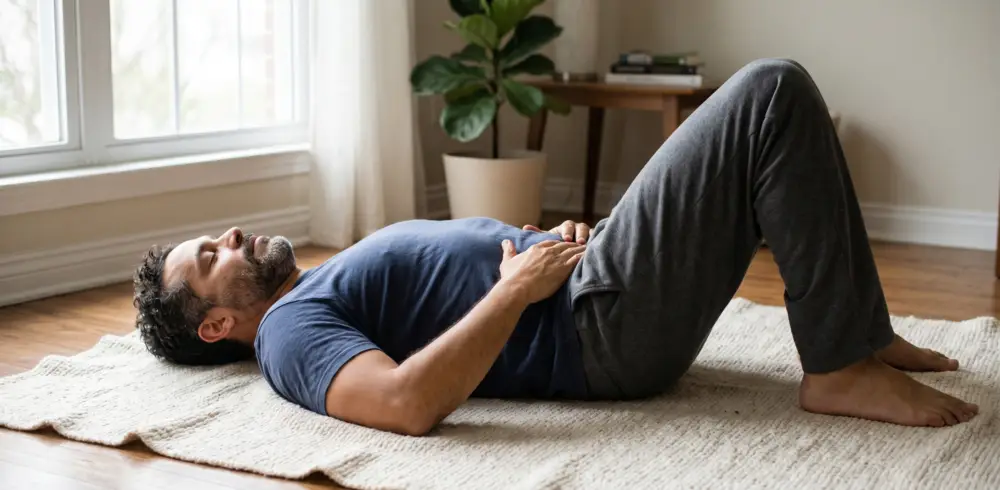
Most yoga practitioners understand their body through the lens of shape: how deep is the fold, how straight is the leg, how open is the chest. Somatic yoga inverts this entirely. It asks not what your body looks like in a posture, but what your nervous system is actually doing inside it.
This distinction reflects a fundamentally different theory of why bodies become tight, restricted, or chronically painful, and a correspondingly different approach to resolving those problems.
What is Somatic Yoga?
Somatic yoga is a practice that focuses on the connection between the mind and the body, emphasizing internal sensations and awareness. Unlike some traditional yoga styles that might prioritize external form or challenging poses, somatic yoga guides practitioners to explore their own physical experience.
The term "soma" originates from the Greek word for "body," highlighting the central role of bodily awareness in this approach. It is about learning to listen to and interpret the subtle signals your body sends.
The Core Principles of Somatic Yoga
Somatic yoga is built upon several key principles that differentiate it from other movement practices:
Internal Awareness: The primary focus is on noticing and understanding internal bodily sensations, such as temperature, pressure, or subtle movements, rather than on achieving a specific external shape.
Gentle Movement: Movements are typically slow, deliberate, and gentle, designed to explore the body's range of motion and release habitual patterns of tension without strain.
Mind-Body Connection: It cultivates a deeper understanding of how thoughts, emotions, and physical sensations are interconnected, recognizing that the body holds information about our experiences.
Self-Regulation: Practices aim to help individuals develop the capacity to regulate their nervous system, promoting a sense of calm and safety within the body.
Somatic Yoga vs. Traditional Yoga
While both somatic yoga and traditional yoga involve breath and movement, their emphasis differs significantly.
Traditional yoga often emphasizes alignment, flexibility, strength, and sometimes a spiritual or meditative outcome. The focus can be on mastering specific postures (asanas) and flowing between them in a structured way.
In contrast, somatic yoga prioritizes the process of movement and the internal experience over the final form. For instance, in a somatic approach to a familiar pose like Cat-Cow, a practitioner might be encouraged to explore variations based on their unique sensations—perhaps adding a head spiral, a sigh, or shifting weight differently—rather than strictly adhering to a prescribed alignment.
This internal exploration is key to releasing tension and improving body awareness, making it a distinct yet complementary practice.
Benefits of Practicing Somatic Yoga
Physical Health Benefits
Somatic yoga can contribute to improved physical well-being by addressing habitual patterns of tension and promoting greater ease of movement. Practices within somatic yoga focus on releasing stored physical tension, which may alleviate discomfort and stiffness.
This approach can also lead to increased flexibility and a more fluid range of motion. By bringing awareness to the body's signals, individuals may identify and begin to unwind patterns that contribute to physical strain.
Mental and Emotional Well-being
The practice of somatic yoga offers a pathway to support mental and emotional balance. By engaging with bodily sensations, practitioners can develop a greater capacity for emotional regulation.
This can be particularly helpful for people processing stress or past difficult experiences. The focus on present-moment awareness and gentle movement can promote a sense of calm and reduce feelings of overwhelm.
The mind-body connection is central to this process, allowing for a more integrated experience of emotional release.
Improved Body Awareness and Connection
One of the primary outcomes of somatic yoga is a heightened sense of body awareness. Through focused attention on internal sensations, practitioners learn to listen to their body's signals more effectively.
This increased connection can lead to a better understanding of physical needs and responses. It encourages a non-judgmental observation of the body, fostering a more supportive relationship with oneself. This practice helps in recognizing how the body holds tension and how to consciously release it, promoting a greater sense of presence and embodiment.
Getting Started with Somatic Yoga
To start, find a quiet space where you can move without interruption. Begin by simply noticing your breath and how your body feels in this moment. This initial check-in is a core part of somatic work, helping to build somatic awareness.
Consider these steps to begin your practice:
Prioritize Internal Experience: Let go of the idea of achieving a specific pose. Instead, pay attention to the sensations within your body as you move. What feels good? What feels restricted?
Gentle Exploration: Move slowly and with curiosity. If a movement creates tension, ease back or modify it. The goal is not to push through discomfort, but to explore your body's capacity for ease and release.
Mindful Breathing: Use your breath as an anchor. Notice how it moves through your body and how it changes with different movements. Deep, slow breaths can help to calm the nervous system.
Self-Compassion: Approach your practice with kindness. There is no right or wrong way to experience somatic yoga. Your body's wisdom is your guide.
Moreover, resources such as guided somatic yoga classes, available through various online platforms or apps, can offer structured sequences to follow. These often emphasize slow, deliberate movements and encourage participants to adapt the practice to their own needs and sensations.
Engaging with these resources can provide a supportive framework as you learn to connect more deeply with your body.
How Is Proprioception Cultivated in Somatic Practice?
Brain health and neuroscience research increasingly identifies proprioceptive acuity as a significant factor in fall prevention, injury risk, and the maintenance of coordination as people age. Somatic practice directly addresses this by demanding that practitioners develop precise, granular attention to sensory feedback from areas they would normally move through without noticing.
What Role Does Internal Focus Play in Refining Movement?
Conventional yoga, particularly in its studio-class form, frequently orients the practitioner toward an external target. The goal is often to achieve or approximate a visible shape, whether a straight leg, a fully extended arm, or a deep spinal rotation.
This external orientation is not without value, but it places the emphasis on the endpoint rather than on the quality and intelligence of the movement generating it.
Somatic practice reverses this orientation entirely. The practitioner is instructed to feel the movement rather than to achieve it.
This means tracking subtle muscular engagements before they become large-scale joint movements, noticing the precise moment a muscle begins to recruit, registering the difference between one side of the body and the other, feeling breath move into different regions of the ribcage as the spine changes position.
This quality of internal focus, sometimes called interoceptive awareness, is the actual training medium in somatic work.
How Can Somatic Awareness Be Integrated Into Traditional Asana?
Somatic yoga and traditional asana are not mutually exclusive. They represent different emphases rather than incompatible philosophies, and the principles of somatic practice can be introduced into virtually any yoga context without requiring a complete departure from familiar forms.
How Does a Somatic Approach Change the Experience of a Vinyasa Flow?
Vinyasa yoga, with its breath-linked transitions and continuous movement, might seem antithetical to the slow, exploratory quality of somatic practice. In practice, the two can be integrated productively. The key shift is one of attention rather than choreography.
Moving from plank to chaturanga, instead of simply arriving at the low-push-up position, they feel precisely how the shoulder girdle engages, whether the serratus anterior is working or whether the trapezius is compensating, how the weight distributes across the palms. This quality of attention converts each transition from a mechanical step into a sensory inquiry.
The benefits of this approach to yoga include a measurably reduced injury risk, because the practitioner is continuously receiving real-time feedback about whether the movement pattern they are executing is efficient or whether some compensatory habit is silently loading the wrong structures.
Embracing Somatic Movement for Holistic Health
Somatic yoga offers a distinct approach to well-being, moving beyond traditional postures to focus on internal sensation and the mind-body connection. This practice invites individuals to explore their physical selves with greater awareness, recognizing that the body holds a wealth of information about our experiences.
By tuning into subtle signals and sensations, practitioners can begin to understand and address patterns of tension and stress that may have accumulated over time.
Frequently Asked Questions
What exactly is somatic yoga?
Somatic yoga is a type of yoga that pays close attention to what your body is feeling inside, instead of just focusing on how you look in a yoga pose. It's about moving in ways that feel good and safe for your body, helping you connect with yourself on a deeper level.
How is somatic yoga different from regular yoga?
Regular yoga often emphasizes getting into specific poses correctly and holding them. Somatic yoga, on the other hand, encourages you to explore different movements within a pose or exercise, listening to your body's needs and sensations. It's less about perfection and more about personal experience.
What are the main benefits of somatic yoga?
Practicing somatic yoga can help reduce stress and physical tension. It also makes you more aware of your body and can help you feel more in control of your emotions. Many people find it helps them feel more relaxed and connected to themselves.
How does somatic yoga help with stress?
Somatic yoga helps calm your nervous system by guiding you through gentle movements and mindful breathing. This signals to your body that it's safe to relax, which can greatly reduce feelings of stress and anxiety.
Why is slow movement emphasized in somatic practice?
Slow movement allows the brain to receive detailed sensory feedback, which is essential for updating faulty motor patterns. It also prevents triggering the body's defensive reflexes, keeping the nervous system in a state where it can learn new, relaxed patterns.
How does somatic yoga improve proprioception?
By directing attention inward to feel subtle sensations and movements, practitioners refine their proprioceptive acuity—the sense of where the body is in space. This heightened internal awareness helps correct impaired feedback loops in areas affected by chronic tension.
Can somatic principles be applied to a faster yoga practice like Vinyasa?
Yes, by shifting from focusing on achieving poses to sensing the quality of each transition. Paying attention to muscle engagement and weight distribution during movements turns the flow into a sensory inquiry, reducing injury risk and improving efficiency.
Emotiv is a neurotechnology leader helping advance neuroscience research through accessible EEG and brain data tools.
Medical Disclaimer: The information provided on this website is for educational and informational purposes only and is not intended as medical or health advice. This content may contain errors and should not be relied upon to make life-altering health, medical, or lifestyle choices. Always seek the advice of your physician or other qualified health provider with any questions you may have regarding a medical condition or treatment.
Christian Burgos