The Essential Developer's Guide to Brainwave Monitoring
Emotiv
Updated on
Feb 3, 2026
The Essential Developer's Guide to Brainwave Monitoring
Emotiv
Updated on
Feb 3, 2026
The Essential Developer's Guide to Brainwave Monitoring
Emotiv
Updated on
Feb 3, 2026
As developers, we’ve mastered clicks, taps, and voice commands to create intuitive user experiences. The next step in this evolution is building applications that can respond to a user's cognitive state. By learning to interpret brainwave data, you can create truly adaptive games, powerful cognitive wellness tools, and groundbreaking assistive technologies. This journey starts with a solid understanding of the fundamentals. Consider this your essential Developer's Guide to Brainwave Monitoring. We will demystify the science, introduce you to the available hardware and software, and provide the best practices you need to start building your first brain-aware application today.
Key Takeaways
Translate Brainwaves into Application Features: Your first step is to understand the five main brainwave types (Gamma, Beta, Alpha, Theta, Delta). Each one signals a different cognitive state, like focus or relaxation, giving you the raw material to build responsive features for gaming, wellness, or BCI control.
Match Your Hardware to Your Project's Scope: The right EEG device depends entirely on your goal. A low-channel headset is perfect for accessible wellness apps, while a high-channel system is necessary for detailed academic research. Align your hardware choice with your specific use case and budget to avoid unnecessary complexity.
Prioritize User Trust and Technical Rigor: Building a successful BCI app requires solving two key problems at once. You must overcome technical hurdles like signal noise and individual user differences, while also earning user trust through transparent data policies, strong security, and a commitment to ethical design.
What Are Brainwaves? A Primer for Developers
If you're new to neurotechnology, the best place to start is with the basics. Brainwaves are simply the electrical pulses generated by your neurons as they communicate with each other. Think of it as the brain's background rhythm. We can observe these rhythms using electroencephalography (EEG), a non-invasive method that measures this electrical activity from the scalp. For developers, understanding these signals is the first step to creating applications that can interact with the user's cognitive state.
These brainwaves are categorized into five main types based on their frequency, which is measured in Hertz (Hz). Each frequency band is associated with different states of mind and levels of activity. Knowing the difference is key to interpreting brain data and building meaningful applications.
Here’s a quick rundown of the five major brainwave types:
Gamma (32–100 Hz): These are the fastest brainwaves and are associated with high-level information processing, learning, and intense focus. You might see gamma activity when someone is deeply engaged in solving a complex problem.
Beta (13–32 Hz): Beta waves are present during our normal waking state. They are linked to active thinking, alertness, and concentration. When you're working on a task that requires your full attention, your brain is likely producing a lot of beta waves.
Alpha (8–13 Hz): Alpha waves are dominant when you're in a state of relaxed wakefulness. Think of the calm, reflective state you might be in while meditating or just before you fall asleep.
Theta (4–8 Hz): These waves are associated with deep relaxation, daydreaming, and creativity. Theta activity is also prominent during the early stages of sleep and in deep meditative states.
Delta (0.5–4 Hz): As the slowest brainwaves, delta waves are linked to deep, dreamless sleep and restorative processes.
By learning to identify these different brainwave patterns, you can begin to build powerful brain-computer interface applications. For example, you could design a game that responds to a player's level of focus by analyzing their beta waves or create a wellness tool that guides a user into a more relaxed state by providing feedback on their alpha wave activity. This foundational knowledge opens up a world of possibilities for creating truly interactive and responsive experiences.
Get to Know the 5 Types of Brainwaves
Before you can build anything with brain data, you need to understand its language. That language is brainwaves—the rhythmic, electrical patterns generated by the activity of neurons in your brain. Think of them as different gears your brain shifts into depending on what you're doing, whether you're solving a complex coding problem, brainstorming a new idea, or just sleeping. Each type of brainwave has a distinct frequency, measured in Hertz (Hz), and corresponds to different mental states.
For a developer, this is where things get exciting. By using an EEG device to measure these brainwaves, you can get a glimpse into a user's cognitive and emotional state. Are they focused? Relaxed? Drowsy? This information is the raw material for creating responsive applications that can adapt to the user in real time. Whether you're building a brain-computer interface, a tool for cognitive wellness, or an immersive gaming experience, knowing the five main types of brainwaves is the first and most important step. It’s the foundation upon which every brain-aware application is built. Let's break down each one.
Gamma Waves (32-100 Hz)
Think of Gamma waves as the brain operating at its highest frequency. These are the fastest brainwaves, and they’re associated with peak concentration, high-level information processing, and problem-solving. When you have that "aha!" moment or feel completely absorbed in a complex task, your brain is likely producing a burst of Gamma waves. They are often observed during intense focus and are linked to binding information from different parts of the brain into a single, coherent thought. For developers, Gamma activity can be a powerful indicator of a user's peak cognitive performance, making it a fascinating metric for applications designed to support learning or complex analytical tasks.
Beta Waves (13-32 Hz)
Beta waves are your brain’s default state when you’re awake, alert, and engaged with the world. They dominate your brain activity when you're actively thinking, making decisions, or focusing on a specific task, like writing code or having a conversation. This is the brainwave of the busy, active mind. There are different ranges within the Beta band; lower-range Beta is associated with simple focus, while higher-range Beta can be linked to stress or anxiety. Understanding Beta waves is key for creating applications that help users manage focus and attention, such as productivity tools that can detect when a user is in a state of deep concentration.
Alpha Waves (8-13 Hz)
When you close your eyes and take a deep breath, your brain often shifts from Beta to Alpha waves. This is the brainwave of relaxed wakefulness. Alpha waves are present when you’re calm and reflective but not drowsy. It’s that state you might be in while daydreaming, meditating lightly, or engaging in a creative activity that doesn’t require intense focus. This state is often called the bridge between the conscious and subconscious mind. For developers, Alpha waves are a great indicator of a user's relaxation level, making them perfect for cognitive wellness apps, meditation guides, or any tool designed to help users unwind and de-stress.
Theta Waves (4-8 Hz)
Theta waves are even slower and are most common during deep meditation, light sleep (including the REM dream state), and tasks that involve creativity and intuition. It’s the state of mind where you might experience a sudden insight or a flood of new ideas—that "in the zone" feeling often described as a flow state. Theta waves are also strongly associated with memory formation and learning. Because of their connection to creativity and deep relaxation, Theta waves are a valuable metric for applications aimed at artistic expression, brainstorming, or guided meditation practices that help users access a more introspective state of mind.
Delta Waves (0.5-4 Hz)
Delta waves are the slowest and have the highest amplitude of all the brainwaves. They are the dominant rhythm when you are in a deep, dreamless sleep. This is the state where your body and brain do most of their healing and restoration. You are completely unconscious when Delta waves are dominant. While you wouldn't typically build an interactive application for a user in this state, measuring Delta wave activity is incredibly useful for applications that analyze sleep quality. By understanding a user's sleep patterns, you can provide valuable insights that help them understand their rest and recovery cycles, which is a growing area of interest in personal wellness technology.
How Do You Measure and Process Brainwaves?
So, how do we get from the electrical buzz inside someone's head to clean, usable data you can build an application with? It all comes down to a technology called electroencephalography, or EEG. It’s a non-invasive way to listen in on the brain's electrical activity. Think of it as the essential first step for any project in this space, from academic research to creating new cognitive wellness tools. Let's walk through how it works, from the initial signal to the processed data you'll use in your code.
EEG Technology Fundamentals
At its core, EEG technology uses small sensors to detect the tiny electrical voltages generated by the firing of neurons in the brain. Devices that do this are often called brain-computer interfaces, or BCIs. It’s a common misconception that these devices can "read minds." In reality, they don't interpret thoughts. Instead, they measure patterns of electrical activity. These patterns, or brainwaves, can show us a lot about a person's cognitive state, such as whether they are focused, relaxed, or stressed. For a developer, these patterns are the raw material you'll use to create responsive, data-driven experiences.
Signal Acquisition and Processing
The process starts with electrodes—small sensors placed on the scalp—that pick up the brain's faint electrical signals. Because these signals are so subtle, they have to be amplified and filtered to be useful. This is where the hardware and software work together. The raw EEG data is streamed from the headset to a computer, where software takes over. A platform like our EmotivPRO is designed to clean up these signals, removing interference and translating the raw data into the distinct brainwave frequencies we talked about earlier, like Alpha and Beta waves. This gives you a clean, organized dataset to work with.
Deal with Noise and Artifacts
One of the biggest hurdles you'll encounter when working with EEG data is dealing with "noise" and "artifacts." These are unwanted electrical signals that can contaminate your data. They can come from anywhere: muscle movements like blinking or clenching your jaw, electrical interference from nearby devices, or even a sensor that isn't making good contact with the scalp. This creates a low signal-to-noise ratio, which can be a significant technical challenge. High-quality hardware and smart software algorithms are crucial for filtering out these artifacts, ensuring you're analyzing actual brain activity and not just random noise. Our developer tools are built to help you manage these issues effectively.
What Tech is Available for Brainwave Development?
Once you have a handle on the different types of brainwaves, the next step is choosing the right tools to work with them. The EEG technology available today is incredibly diverse, with options designed for everything from simple mobile apps to complex academic studies. The best hardware for you really depends on what you’re trying to build. The key is to think about the level of detail you need from the brain data and how your end-user will interact with the device you create.
This will help you decide between a straightforward, low-channel setup or a more intricate, multi-channel system. You’ll also want to consider the form factor. Do you need something portable and discreet for everyday use, or is a more traditional headset for dedicated sessions a better fit for your project? Understanding these core differences will guide you to the perfect hardware for your development goals, whether you're building a simple wellness tool or a sophisticated neuromarketing solution. Let's break down the main categories of tech you'll encounter.
2-Channel EEG Solutions
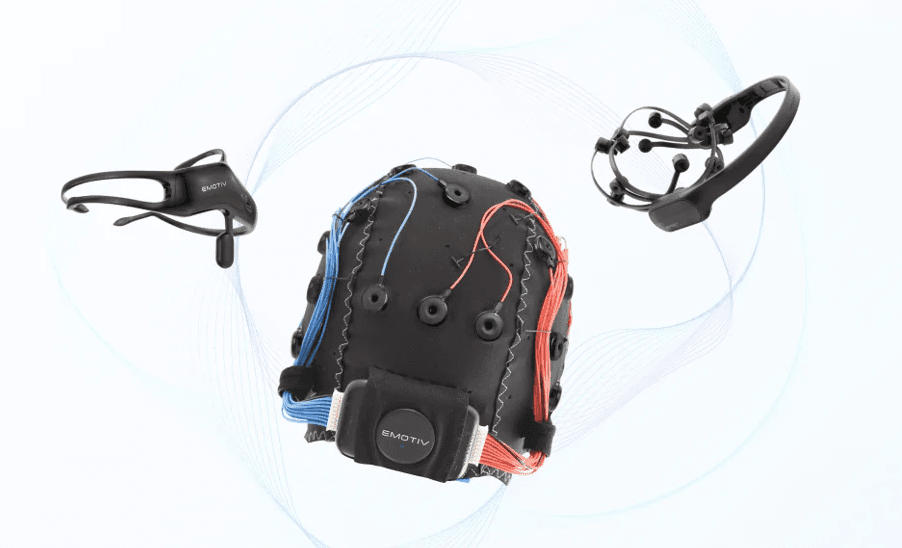
If you're just getting started or are building an application focused on personal wellness, a device with fewer channels is a fantastic entry point. These solutions, which typically have between two and five channels, are perfect for developing straightforward brain-computer interface applications or tools that give users access to their cognitive data. They are designed to be accessible and user-friendly, so you can focus on creating a great app experience without getting bogged down by the complexities of high-density EEG. Our MN8 earbuds, for example, offer a discreet and simple way to gather brain data for these kinds of projects, making them ideal for mobile applications.
Multi-Channel Research Systems
For projects that require a deep and detailed view of brain activity, you’ll want to look at multi-channel systems. Devices with a higher number of sensors, like our 32-channel Flex headset, are essential for advanced academic research and education. They provide the high-resolution data needed to create detailed brain maps and analyze complex neural patterns. This level of granularity is crucial when you're exploring nuanced brain states or building sophisticated BCI applications that require input from multiple brain regions. A system with more channels gives you a more comprehensive picture of what’s happening across the brain, which is vital for serious research and development.
Portable and Wearable Options
The great thing about modern EEG technology is that it’s no longer confined to a lab. The development of small, portable devices has made it possible to build applications for real-world use. Lightweight headsets like our Insight are designed for comfort and quick setup, making them great for studies or applications that require extended use. Even more discreet options, like earbuds, are perfect for creating personal wellness apps or mobile BCI experiences that people can use anywhere. This portability opens up a whole new world of possibilities for developers, allowing you to create brain-aware applications that fit seamlessly into a user's daily life.
What Can You Build with Brainwave Data?
Once you have access to brainwave data, a whole new world of application development opens up. This isn't just about visualizing squiggly lines; it's about creating interactive, responsive, and deeply personal experiences. The data from an EEG headset can become a powerful new input for your software, allowing you to build things that were once in the realm of science fiction. From creating assistive technologies to building more immersive games, the possibilities are really only limited by your imagination. Let's look at some of the most exciting areas where developers are making an impact.
Brain-Computer Interface Applications
A Brain-Computer Interface (BCI) creates a direct pathway between the brain and an external device, letting you translate brain signals into commands. As a developer, you can use BCI to build applications that allow users to control software or hardware with their minds. Imagine creating a program that lets someone fly a drone, compose music, or operate a smart home device without lifting a finger. This technology also has profound potential in accessibility, offering new ways for individuals with motor impairments to interact with the world. Our EmotivBCI software is a great place to start experimenting with these command-and-control applications.
Cognitive Wellness Tools
You can build applications that provide access to cognitive wellness tools, helping people better understand their own mental states. Instead of guessing how they feel, users can get real-time feedback on metrics like focus, stress, and relaxation. For example, you could develop an app that visualizes a user's attention levels during a work session, helping them identify when they're most productive. Or, you could create a guided meditation experience that responds to the user's state of calm. The goal is to empower users with personal insights, giving them a new way to engage with their own well-being.
Gaming and Entertainment Applications
Brainwave data can revolutionize gaming and entertainment by creating truly adaptive experiences. You can move beyond traditional controllers and use a player's cognitive state as a core game mechanic. Picture a horror game where the environment gets scarier as the player's stress levels rise, or a puzzle game that adjusts its difficulty based on the player's focus. You could also build immersive virtual reality worlds that react to a user's emotional state. By integrating EEG data, you can create deeply personal and engaging experiences that respond directly to the player. Our developer tools provide the access you need to start building these next-generation applications.
Neuromarketing Solutions
For developers interested in market research, brainwave data offers a way to get authentic, unfiltered feedback. You can build neuromarketing solutions that measure a person's subconscious reactions to content like advertisements, product designs, or movie trailers. This provides insights that traditional methods like surveys can't capture. For instance, your application could analyze a user's emotional engagement while they browse a website or watch a commercial, revealing what truly captures their attention. This allows brands to make more data-driven decisions based on genuine human responses rather than just self-reported opinions.
Choose the Right EEG Hardware for Your Project
Picking the right EEG hardware is one of the most important decisions you'll make at the start of your project. The device you choose will directly influence the quality of your data, the complexity of your setup, and the overall scope of what you can build. It’s not about finding the single "best" device on the market, but about finding the one that’s perfectly suited to your specific goals. Whether you're conducting in-depth academic research, developing a new gaming experience, or building a tool for personal use, there’s a headset designed for the job.
To make the right choice, you need to think about a few key factors. How much detail do you need in your brainwave data? How quickly do you need to capture it? How will the device connect with your software? And, of course, what’s your budget? Answering these questions will help you narrow down the options and select hardware that not only meets your technical requirements but also fits seamlessly into your development workflow. Let’s walk through the most important considerations to help you find the perfect match for your project.
Channel Count Considerations
The number of channels on an EEG headset refers to the number of sensors (electrodes) that make contact with the scalp. This is a critical factor because it determines the spatial resolution of your data—in other words, how detailed a picture you can get of brain activity across different regions. For complex research projects that require a granular understanding of neural processes, a high-channel-count device like our Flex headset is essential.
However, more isn't always better. For many applications, including building simple brain-controlled applications or personal wellness tools, a device with fewer channels is often more practical. Headsets like our 5-channel Insight or even the 2-channel MN8 earbuds offer a great balance of useful data, comfort, and ease of use, making them perfect for getting a project off the ground.
Sampling Rate Requirements
The sampling rate is the number of times per second that the EEG device records a data point from each channel. A higher sampling rate means you’re capturing a more continuous stream of information, which can be crucial for detecting very rapid changes in brain activity. This is particularly important in research settings where you might be studying fast-occurring neural events.
A high sampling rate can also help improve the signal-to-noise ratio, a common challenge when working with non-invasive EEG. While a higher rate provides more data, it also increases the file size and the processing power needed to analyze it. For many brain-computer interface applications, a moderate sampling rate is perfectly sufficient to capture the necessary brainwave patterns without overwhelming your system.
Connectivity and Integration Options
Your EEG hardware is only one piece of the puzzle; it needs to communicate effectively with your software. Before choosing a device, consider its connectivity options, such as Bluetooth or a dedicated wireless receiver. A stable, low-latency connection is vital for any real-time application to ensure the data you’re seeing on screen accurately reflects the user's brain activity as it happens.
Beyond the physical connection, look at the software support. A robust Software Development Kit (SDK) or Application Programming Interface (API) can make a world of difference. Our developer tools, for example, are designed to give you straightforward access to the data stream, so you can spend less time on setup and more time building your application.
Align Your Budget and Use Case
Ultimately, your choice of hardware should be a strategic decision that balances your project's technical needs with your budget. The most advanced, high-channel headset might be overkill if you're just starting out or building a simple proof-of-concept. It’s far more effective to clearly define your project goals first and then find a device that meets those specific requirements.
Are you a researcher needing publication-quality data, or a developer creating a simple focus app? The answer will guide you to the right tier of hardware. By aligning your use case with your budget, you can invest in a tool that gives you the capabilities you need to succeed without overspending on features you won't use.
Find Your Essential Software and Developer Tools
Once you’ve chosen your EEG hardware, the next step is to bring your project to life with software. Raw brainwave data is incredibly complex, and turning it into actionable insights or commands requires a powerful set of tools. The main challenges you'll face involve cleaning up noisy signals, analyzing data in real time, and integrating the results into a user-facing application. This is where the right software stack makes all the difference.
Think of it like this: your EEG headset is the microphone, but you still need the audio interface, mixing board, and recording software to produce a song. For brainwave development, your essential tools fall into three main categories: data processing libraries and SDKs for cleaning the raw signal, real-time analysis platforms for visualizing and interpreting the data, and development frameworks and APIs for building your final application. Our goal at Emotiv is to provide a comprehensive ecosystem of developer tools that support you at every stage of this process, from initial data acquisition to final deployment.
Data Processing Libraries and SDKs
The first hurdle in any EEG project is dealing with the raw data stream. Brain signals have a notoriously low signal-to-noise ratio, meaning the brainwaves you want to measure can be easily obscured by electrical noise from the environment or artifacts from muscle movements like blinking. Data processing libraries and Software Development Kits (SDKs) are your first line of defense. They provide pre-built functions for filtering, artifact removal, and signal transformation. Instead of writing complex signal processing algorithms from scratch, you can use these tools to quickly clean your data and prepare it for analysis. This foundational step is critical for building reliable and accurate applications.
Real-Time Analysis Platforms
For many applications, especially interactive ones like brain-computer interfaces or cognitive wellness tools, you need to analyze data as it’s being generated. This is where real-time analysis platforms come in. These applications are designed to ingest live data streams from your EEG hardware, perform complex calculations on the fly, and visualize the results instantly. Our EmotivPRO platform, for example, allows you to view raw EEG data, frequency bands, and performance metrics in real time. This immediate feedback is invaluable for researchers conducting experiments, developers debugging their code, or end-users interacting with a BCI application. It’s the bridge between raw data and meaningful, real-time insight.
Development Frameworks and APIs
With clean, analyzed data, you’re ready for the final step: building your application. Development frameworks and Application Programming Interfaces (APIs) provide the essential building blocks to integrate brainwave data into your software. An API acts as a messenger, allowing your application to request specific information—like a detected mental command or a user's focus level—from the EEG system. This simplifies the process of creating a brain-computer interface, as you can work with high-level outputs instead of raw brain signals. Our EmotivBCI software, for instance, lets you train and use mental commands to control software and devices, making it easier than ever to build intuitive, hands-free control systems.
Address Key Privacy and Ethical Challenges
As developers building with brainwave data, we're on the cutting edge of technology. This work is incredibly exciting, but it also comes with a significant responsibility. Brainwave data is deeply personal, and handling it ethically is non-negotiable. Building trust with your users is just as important as building a functional app. This means putting privacy and user control at the center of your design process from day one. When a user puts on an EEG headset and runs your application, they are placing an immense amount of trust in you and your code. It's our job to honor that trust by being transparent, secure, and respectful of their data. Thinking through these challenges isn’t about limiting innovation; it’s about creating a sustainable and trustworthy foundation for the future of brain-computer interfaces. By proactively addressing privacy, security, and consent, we not only protect our users but also strengthen the entire BCI ecosystem. A single high-profile data breach or ethical misstep could set the field back years. Let's walk through the key ethical pillars you need to address in your work to ensure your project contributes positively to this growing field.
Data Sensitivity and User Consent
Brainwave data is uniquely identifiable to an individual, making it one of the most sensitive forms of personal information. Because many BCI systems require subject-specific data to train their classifiers, you aren’t just collecting passive data points; you’re using the very fabric of a person’s neural activity to make your application work. This requires a commitment to informed consent that goes beyond a simple checkbox. Your users need to clearly understand what data you are collecting, why you need it, and how it will be used. Transparency is key, as the ethical challenges in BCI development demand a user-first approach to data handling.
Security Implementation Requirements
Protecting user data is a fundamental part of any application, but the stakes are higher with neurotechnology. As a developer, you are the custodian of your users' brainwave data, and you must implement robust security measures to protect it from unauthorized access. This includes end-to-end encryption, secure data storage, and rigorous access controls. The technical and usability challenges of BCI mean that security cannot be an afterthought. It must be a core component of your architecture, ensuring the integrity and confidentiality of every piece of data you handle. A security breach could profoundly damage user trust in your product and the field as a whole.
Regulatory Compliance Considerations
The legal and regulatory landscape for BCI technology is still taking shape, but we can look to existing data privacy laws like GDPR and HIPAA for guidance. These frameworks emphasize data protection, user rights, and the need for clear justification for data collection. Furthermore, technical issues like low signal-to-noise ratios in non-invasive BCIs highlight the need for accuracy and reliability, which are critical for meeting health and safety standards. As you develop your application, consider the challenges of brain-computer interfaces not just as technical hurdles, but as benchmarks for creating safe, effective, and compliant technology.
User Control and Transparency
Empowering your users is the cornerstone of ethical design. People should always feel in control of their own data. This means providing clear, easy-to-understand privacy policies and giving users straightforward tools to manage their information. A user dashboard where they can view their data, manage permissions, and request data deletion is a great place to start. When you integrate biometric sensors, you must be transparent about how that data is processed and used. By making users active participants in their data privacy, you build a stronger, more trusting relationship with your community.
Prepare for Common Technical Challenges
Working with brainwave data is an exciting frontier, but like any cutting-edge field, it comes with its own set of technical hurdles. From noisy signals to the uniqueness of every user's brain, you'll encounter challenges that require thoughtful solutions. But don't let that discourage you. Understanding these obstacles is the first step to overcoming them, and with the right approach, you can build robust and reliable applications that truly connect with your users.
Think of these challenges not as roadblocks, but as interesting problems to solve. Getting a clean signal, accounting for individual differences, processing data in real time, and integrating your tech smoothly are all part of the development process. It’s a journey of refinement and discovery. Let’s walk through some of the most common issues you might face and discuss practical ways to address them. By preparing for these scenarios, you'll be better equipped to create a seamless and effective experience for your users, turning potential frustrations into powerful features. This proactive mindset will set your project up for success from the very beginning.
Signal Quality and Environmental Factors
One of the first things you'll notice when working with EEG data is its sensitivity. The electrical signals from the brain are tiny, which means they can easily be drowned out by "noise." This is often described as a low signal-to-noise ratio. This noise can come from environmental factors, like electrical interference from nearby electronics, or from the user themselves in the form of movement artifacts—think blinking, clenching your jaw, or even small head movements. Your primary goal is to get the cleanest signal possible. This starts with ensuring the EEG headset has a proper fit and good sensor contact. Our EmotivPRO software can help you check contact quality in real time, allowing you to make adjustments before you even begin collecting data.
Individual User Variability
Just as everyone has a unique fingerprint, everyone has a unique brain. Differences in anatomy and physiology mean that EEG patterns can vary significantly from person to person. A brain-computer interface that works perfectly for one user might not work for another without some adjustments. This is why a one-size-fits-all approach rarely succeeds. Instead, your application will likely need a subject-specific training or calibration phase. This process allows your system to learn a user's specific brain patterns, creating a personalized model for more accurate performance. Our EmotivBCI software is designed around this principle, enabling you to train profiles tailored to each individual.
Real-Time Processing Requirements
For most interactive applications, you need to analyze brainwave data the moment it's captured. This real-time processing is essential for creating responsive experiences, whether you're building a game or a cognitive wellness tool. The challenge lies in the sheer volume and complexity of the data stream. Brain activity is constantly fluctuating, and your algorithms must be efficient enough to interpret these changes instantly without lag. This requires optimized code and a solid understanding of signal processing techniques. To get started, you can explore our resources for developers, which include SDKs designed to help you manage and analyze data streams effectively.
Integration Complexity
Once you've figured out how to acquire and process brainwave data, the final piece of the puzzle is integrating it into a larger application. Making your BCI technology communicate seamlessly with other software or hardware can be complex. You need to consider everything from communication protocols to the overall user experience. A clunky or unreliable interface will quickly frustrate users, no matter how innovative the underlying technology is. This is where a well-documented API becomes your best friend. A clear and flexible API simplifies the process of sending commands from your application to other devices, creating the foundation for a smooth and intuitive brain-computer interface.
Follow These Best Practices for App Development
Building a successful application with brainwave data goes beyond just writing code. It’s about creating an experience that is reliable, intuitive, and genuinely useful for your audience. To get there, you need a solid foundation built on clean data, thoughtful design, and rigorous testing. Focusing on these key areas will help you turn a promising concept into a functional and engaging application that people can depend on. Whether you're creating cognitive wellness tools or a complex BCI, these principles are your guide to building something great.
Optimize Your Signal Quality
The performance of your entire application rests on the quality of the EEG data you collect. One of the main challenges with non-invasive brain-computer interfaces is achieving a high signal-to-noise ratio; without it, your results can be unreliable. Start by ensuring your EEG headset has proper sensor contact and is fitted correctly. You should also work in an environment with minimal electrical interference from other devices. Our EmotivPRO software provides real-time data visualization, allowing you to check contact quality and spot potential noise, so you can make adjustments before you even begin a session. This first step is critical for building a dependable app.
Design for a Better User Experience
An application can have the most advanced backend in the world, but if it’s confusing or frustrating to use, people won’t stick with it. A user-friendly design is essential for making sure users can interact with your system easily and effectively. Provide clear, simple onboarding instructions and give users immediate visual or auditory feedback when the system registers a command or detects a change in their mental state. This helps build trust and makes the experience feel more responsive and interactive. A strong user experience is what separates a technical demo from a truly valuable brain-computer interface application.
Test and Validate Your Approach
Every person's brain activity is unique, which means an algorithm that works perfectly for one user might not work as well for another. This is why thorough testing and validation are so important. You’ll likely need to incorporate a user-specific training or calibration phase into your application to fine-tune its performance. Test your app with a diverse group of people to understand how it performs across different users and in various conditions. Gathering feedback and iterating on your design is a continuous process that ensures your application is robust, accurate, and ready for real-world use. Our developer tools provide the resources you need to build, test, and refine your approach.
Related Articles
Frequently Asked Questions
Does this technology let me build apps that interpret thoughts? That’s a common question, and it gets to the heart of what EEG can and can’t do. The short answer is no. state of the brain—whether it's focused, relaxed, or drowsy—rather than the specific thoughts running through it. This data is the foundation for building applications that can respond to a user's cognitive state.
I'm a developer new to EEG. What's the most straightforward way to start building a simple application? The best way to begin is by choosing a user-friendly hardware and software combination that lets you access the data without a steep learning curve. Start with a clear, simple goal, like creating an application that visualizes your own focus levels in real time. Using a device like our MN8 earbuds and our developer SDKs allows you to get a clean data stream quickly, so you can spend your time working on your application's logic and interface instead of complex signal processing.
How do I decide between a simple 2-channel device and a more complex multi-channel headset? Your project's goal is the most important factor here. If you're building an application focused on general cognitive states—like a wellness tool that responds to relaxation or a game that reacts to a player's engagement level—a 2-channel device is often the perfect choice. It's accessible and provides the essential data you need. However, if your project involves academic research or requires a detailed map of brain activity across different regions, you'll need the high spatial resolution that a multi-channel headset like our Flex provides.
The blog mentions that everyone's brain is different. How do I build an app that works for more than one person? You're right, a one-size-fits-all approach doesn't work well with brainwave data. The key is to incorporate a short, user-specific training or calibration phase into your application. During this phase, your app learns to recognize an individual's unique neural patterns for certain mental states or commands. This creates a personalized profile that makes the application far more accurate and reliable for that specific user. Our EmotivBCI software is built around this very principle.
What's the most important ethical consideration I should keep in mind when working with brainwave data? Above all else, prioritize user consent and data security. Brainwave data is incredibly personal, so it's your responsibility to be completely transparent with your users about what data you are collecting and exactly how you plan to use it. This information must be clear and easy to understand. From a technical standpoint, you must implement strong security measures, like end-to-end encryption, to protect that data from any unauthorized access. Building trust is just as critical as building great code.
As developers, we’ve mastered clicks, taps, and voice commands to create intuitive user experiences. The next step in this evolution is building applications that can respond to a user's cognitive state. By learning to interpret brainwave data, you can create truly adaptive games, powerful cognitive wellness tools, and groundbreaking assistive technologies. This journey starts with a solid understanding of the fundamentals. Consider this your essential Developer's Guide to Brainwave Monitoring. We will demystify the science, introduce you to the available hardware and software, and provide the best practices you need to start building your first brain-aware application today.
Key Takeaways
Translate Brainwaves into Application Features: Your first step is to understand the five main brainwave types (Gamma, Beta, Alpha, Theta, Delta). Each one signals a different cognitive state, like focus or relaxation, giving you the raw material to build responsive features for gaming, wellness, or BCI control.
Match Your Hardware to Your Project's Scope: The right EEG device depends entirely on your goal. A low-channel headset is perfect for accessible wellness apps, while a high-channel system is necessary for detailed academic research. Align your hardware choice with your specific use case and budget to avoid unnecessary complexity.
Prioritize User Trust and Technical Rigor: Building a successful BCI app requires solving two key problems at once. You must overcome technical hurdles like signal noise and individual user differences, while also earning user trust through transparent data policies, strong security, and a commitment to ethical design.
What Are Brainwaves? A Primer for Developers
If you're new to neurotechnology, the best place to start is with the basics. Brainwaves are simply the electrical pulses generated by your neurons as they communicate with each other. Think of it as the brain's background rhythm. We can observe these rhythms using electroencephalography (EEG), a non-invasive method that measures this electrical activity from the scalp. For developers, understanding these signals is the first step to creating applications that can interact with the user's cognitive state.
These brainwaves are categorized into five main types based on their frequency, which is measured in Hertz (Hz). Each frequency band is associated with different states of mind and levels of activity. Knowing the difference is key to interpreting brain data and building meaningful applications.
Here’s a quick rundown of the five major brainwave types:
Gamma (32–100 Hz): These are the fastest brainwaves and are associated with high-level information processing, learning, and intense focus. You might see gamma activity when someone is deeply engaged in solving a complex problem.
Beta (13–32 Hz): Beta waves are present during our normal waking state. They are linked to active thinking, alertness, and concentration. When you're working on a task that requires your full attention, your brain is likely producing a lot of beta waves.
Alpha (8–13 Hz): Alpha waves are dominant when you're in a state of relaxed wakefulness. Think of the calm, reflective state you might be in while meditating or just before you fall asleep.
Theta (4–8 Hz): These waves are associated with deep relaxation, daydreaming, and creativity. Theta activity is also prominent during the early stages of sleep and in deep meditative states.
Delta (0.5–4 Hz): As the slowest brainwaves, delta waves are linked to deep, dreamless sleep and restorative processes.
By learning to identify these different brainwave patterns, you can begin to build powerful brain-computer interface applications. For example, you could design a game that responds to a player's level of focus by analyzing their beta waves or create a wellness tool that guides a user into a more relaxed state by providing feedback on their alpha wave activity. This foundational knowledge opens up a world of possibilities for creating truly interactive and responsive experiences.
Get to Know the 5 Types of Brainwaves
Before you can build anything with brain data, you need to understand its language. That language is brainwaves—the rhythmic, electrical patterns generated by the activity of neurons in your brain. Think of them as different gears your brain shifts into depending on what you're doing, whether you're solving a complex coding problem, brainstorming a new idea, or just sleeping. Each type of brainwave has a distinct frequency, measured in Hertz (Hz), and corresponds to different mental states.
For a developer, this is where things get exciting. By using an EEG device to measure these brainwaves, you can get a glimpse into a user's cognitive and emotional state. Are they focused? Relaxed? Drowsy? This information is the raw material for creating responsive applications that can adapt to the user in real time. Whether you're building a brain-computer interface, a tool for cognitive wellness, or an immersive gaming experience, knowing the five main types of brainwaves is the first and most important step. It’s the foundation upon which every brain-aware application is built. Let's break down each one.
Gamma Waves (32-100 Hz)
Think of Gamma waves as the brain operating at its highest frequency. These are the fastest brainwaves, and they’re associated with peak concentration, high-level information processing, and problem-solving. When you have that "aha!" moment or feel completely absorbed in a complex task, your brain is likely producing a burst of Gamma waves. They are often observed during intense focus and are linked to binding information from different parts of the brain into a single, coherent thought. For developers, Gamma activity can be a powerful indicator of a user's peak cognitive performance, making it a fascinating metric for applications designed to support learning or complex analytical tasks.
Beta Waves (13-32 Hz)
Beta waves are your brain’s default state when you’re awake, alert, and engaged with the world. They dominate your brain activity when you're actively thinking, making decisions, or focusing on a specific task, like writing code or having a conversation. This is the brainwave of the busy, active mind. There are different ranges within the Beta band; lower-range Beta is associated with simple focus, while higher-range Beta can be linked to stress or anxiety. Understanding Beta waves is key for creating applications that help users manage focus and attention, such as productivity tools that can detect when a user is in a state of deep concentration.
Alpha Waves (8-13 Hz)
When you close your eyes and take a deep breath, your brain often shifts from Beta to Alpha waves. This is the brainwave of relaxed wakefulness. Alpha waves are present when you’re calm and reflective but not drowsy. It’s that state you might be in while daydreaming, meditating lightly, or engaging in a creative activity that doesn’t require intense focus. This state is often called the bridge between the conscious and subconscious mind. For developers, Alpha waves are a great indicator of a user's relaxation level, making them perfect for cognitive wellness apps, meditation guides, or any tool designed to help users unwind and de-stress.
Theta Waves (4-8 Hz)
Theta waves are even slower and are most common during deep meditation, light sleep (including the REM dream state), and tasks that involve creativity and intuition. It’s the state of mind where you might experience a sudden insight or a flood of new ideas—that "in the zone" feeling often described as a flow state. Theta waves are also strongly associated with memory formation and learning. Because of their connection to creativity and deep relaxation, Theta waves are a valuable metric for applications aimed at artistic expression, brainstorming, or guided meditation practices that help users access a more introspective state of mind.
Delta Waves (0.5-4 Hz)
Delta waves are the slowest and have the highest amplitude of all the brainwaves. They are the dominant rhythm when you are in a deep, dreamless sleep. This is the state where your body and brain do most of their healing and restoration. You are completely unconscious when Delta waves are dominant. While you wouldn't typically build an interactive application for a user in this state, measuring Delta wave activity is incredibly useful for applications that analyze sleep quality. By understanding a user's sleep patterns, you can provide valuable insights that help them understand their rest and recovery cycles, which is a growing area of interest in personal wellness technology.
How Do You Measure and Process Brainwaves?
So, how do we get from the electrical buzz inside someone's head to clean, usable data you can build an application with? It all comes down to a technology called electroencephalography, or EEG. It’s a non-invasive way to listen in on the brain's electrical activity. Think of it as the essential first step for any project in this space, from academic research to creating new cognitive wellness tools. Let's walk through how it works, from the initial signal to the processed data you'll use in your code.
EEG Technology Fundamentals
At its core, EEG technology uses small sensors to detect the tiny electrical voltages generated by the firing of neurons in the brain. Devices that do this are often called brain-computer interfaces, or BCIs. It’s a common misconception that these devices can "read minds." In reality, they don't interpret thoughts. Instead, they measure patterns of electrical activity. These patterns, or brainwaves, can show us a lot about a person's cognitive state, such as whether they are focused, relaxed, or stressed. For a developer, these patterns are the raw material you'll use to create responsive, data-driven experiences.
Signal Acquisition and Processing
The process starts with electrodes—small sensors placed on the scalp—that pick up the brain's faint electrical signals. Because these signals are so subtle, they have to be amplified and filtered to be useful. This is where the hardware and software work together. The raw EEG data is streamed from the headset to a computer, where software takes over. A platform like our EmotivPRO is designed to clean up these signals, removing interference and translating the raw data into the distinct brainwave frequencies we talked about earlier, like Alpha and Beta waves. This gives you a clean, organized dataset to work with.
Deal with Noise and Artifacts
One of the biggest hurdles you'll encounter when working with EEG data is dealing with "noise" and "artifacts." These are unwanted electrical signals that can contaminate your data. They can come from anywhere: muscle movements like blinking or clenching your jaw, electrical interference from nearby devices, or even a sensor that isn't making good contact with the scalp. This creates a low signal-to-noise ratio, which can be a significant technical challenge. High-quality hardware and smart software algorithms are crucial for filtering out these artifacts, ensuring you're analyzing actual brain activity and not just random noise. Our developer tools are built to help you manage these issues effectively.
What Tech is Available for Brainwave Development?
Once you have a handle on the different types of brainwaves, the next step is choosing the right tools to work with them. The EEG technology available today is incredibly diverse, with options designed for everything from simple mobile apps to complex academic studies. The best hardware for you really depends on what you’re trying to build. The key is to think about the level of detail you need from the brain data and how your end-user will interact with the device you create.
This will help you decide between a straightforward, low-channel setup or a more intricate, multi-channel system. You’ll also want to consider the form factor. Do you need something portable and discreet for everyday use, or is a more traditional headset for dedicated sessions a better fit for your project? Understanding these core differences will guide you to the perfect hardware for your development goals, whether you're building a simple wellness tool or a sophisticated neuromarketing solution. Let's break down the main categories of tech you'll encounter.
2-Channel EEG Solutions
If you're just getting started or are building an application focused on personal wellness, a device with fewer channels is a fantastic entry point. These solutions, which typically have between two and five channels, are perfect for developing straightforward brain-computer interface applications or tools that give users access to their cognitive data. They are designed to be accessible and user-friendly, so you can focus on creating a great app experience without getting bogged down by the complexities of high-density EEG. Our MN8 earbuds, for example, offer a discreet and simple way to gather brain data for these kinds of projects, making them ideal for mobile applications.
Multi-Channel Research Systems
For projects that require a deep and detailed view of brain activity, you’ll want to look at multi-channel systems. Devices with a higher number of sensors, like our 32-channel Flex headset, are essential for advanced academic research and education. They provide the high-resolution data needed to create detailed brain maps and analyze complex neural patterns. This level of granularity is crucial when you're exploring nuanced brain states or building sophisticated BCI applications that require input from multiple brain regions. A system with more channels gives you a more comprehensive picture of what’s happening across the brain, which is vital for serious research and development.
Portable and Wearable Options
The great thing about modern EEG technology is that it’s no longer confined to a lab. The development of small, portable devices has made it possible to build applications for real-world use. Lightweight headsets like our Insight are designed for comfort and quick setup, making them great for studies or applications that require extended use. Even more discreet options, like earbuds, are perfect for creating personal wellness apps or mobile BCI experiences that people can use anywhere. This portability opens up a whole new world of possibilities for developers, allowing you to create brain-aware applications that fit seamlessly into a user's daily life.
What Can You Build with Brainwave Data?
Once you have access to brainwave data, a whole new world of application development opens up. This isn't just about visualizing squiggly lines; it's about creating interactive, responsive, and deeply personal experiences. The data from an EEG headset can become a powerful new input for your software, allowing you to build things that were once in the realm of science fiction. From creating assistive technologies to building more immersive games, the possibilities are really only limited by your imagination. Let's look at some of the most exciting areas where developers are making an impact.
Brain-Computer Interface Applications
A Brain-Computer Interface (BCI) creates a direct pathway between the brain and an external device, letting you translate brain signals into commands. As a developer, you can use BCI to build applications that allow users to control software or hardware with their minds. Imagine creating a program that lets someone fly a drone, compose music, or operate a smart home device without lifting a finger. This technology also has profound potential in accessibility, offering new ways for individuals with motor impairments to interact with the world. Our EmotivBCI software is a great place to start experimenting with these command-and-control applications.
Cognitive Wellness Tools
You can build applications that provide access to cognitive wellness tools, helping people better understand their own mental states. Instead of guessing how they feel, users can get real-time feedback on metrics like focus, stress, and relaxation. For example, you could develop an app that visualizes a user's attention levels during a work session, helping them identify when they're most productive. Or, you could create a guided meditation experience that responds to the user's state of calm. The goal is to empower users with personal insights, giving them a new way to engage with their own well-being.
Gaming and Entertainment Applications
Brainwave data can revolutionize gaming and entertainment by creating truly adaptive experiences. You can move beyond traditional controllers and use a player's cognitive state as a core game mechanic. Picture a horror game where the environment gets scarier as the player's stress levels rise, or a puzzle game that adjusts its difficulty based on the player's focus. You could also build immersive virtual reality worlds that react to a user's emotional state. By integrating EEG data, you can create deeply personal and engaging experiences that respond directly to the player. Our developer tools provide the access you need to start building these next-generation applications.
Neuromarketing Solutions
For developers interested in market research, brainwave data offers a way to get authentic, unfiltered feedback. You can build neuromarketing solutions that measure a person's subconscious reactions to content like advertisements, product designs, or movie trailers. This provides insights that traditional methods like surveys can't capture. For instance, your application could analyze a user's emotional engagement while they browse a website or watch a commercial, revealing what truly captures their attention. This allows brands to make more data-driven decisions based on genuine human responses rather than just self-reported opinions.
Choose the Right EEG Hardware for Your Project
Picking the right EEG hardware is one of the most important decisions you'll make at the start of your project. The device you choose will directly influence the quality of your data, the complexity of your setup, and the overall scope of what you can build. It’s not about finding the single "best" device on the market, but about finding the one that’s perfectly suited to your specific goals. Whether you're conducting in-depth academic research, developing a new gaming experience, or building a tool for personal use, there’s a headset designed for the job.
To make the right choice, you need to think about a few key factors. How much detail do you need in your brainwave data? How quickly do you need to capture it? How will the device connect with your software? And, of course, what’s your budget? Answering these questions will help you narrow down the options and select hardware that not only meets your technical requirements but also fits seamlessly into your development workflow. Let’s walk through the most important considerations to help you find the perfect match for your project.
Channel Count Considerations
The number of channels on an EEG headset refers to the number of sensors (electrodes) that make contact with the scalp. This is a critical factor because it determines the spatial resolution of your data—in other words, how detailed a picture you can get of brain activity across different regions. For complex research projects that require a granular understanding of neural processes, a high-channel-count device like our Flex headset is essential.
However, more isn't always better. For many applications, including building simple brain-controlled applications or personal wellness tools, a device with fewer channels is often more practical. Headsets like our 5-channel Insight or even the 2-channel MN8 earbuds offer a great balance of useful data, comfort, and ease of use, making them perfect for getting a project off the ground.
Sampling Rate Requirements
The sampling rate is the number of times per second that the EEG device records a data point from each channel. A higher sampling rate means you’re capturing a more continuous stream of information, which can be crucial for detecting very rapid changes in brain activity. This is particularly important in research settings where you might be studying fast-occurring neural events.
A high sampling rate can also help improve the signal-to-noise ratio, a common challenge when working with non-invasive EEG. While a higher rate provides more data, it also increases the file size and the processing power needed to analyze it. For many brain-computer interface applications, a moderate sampling rate is perfectly sufficient to capture the necessary brainwave patterns without overwhelming your system.
Connectivity and Integration Options
Your EEG hardware is only one piece of the puzzle; it needs to communicate effectively with your software. Before choosing a device, consider its connectivity options, such as Bluetooth or a dedicated wireless receiver. A stable, low-latency connection is vital for any real-time application to ensure the data you’re seeing on screen accurately reflects the user's brain activity as it happens.
Beyond the physical connection, look at the software support. A robust Software Development Kit (SDK) or Application Programming Interface (API) can make a world of difference. Our developer tools, for example, are designed to give you straightforward access to the data stream, so you can spend less time on setup and more time building your application.
Align Your Budget and Use Case
Ultimately, your choice of hardware should be a strategic decision that balances your project's technical needs with your budget. The most advanced, high-channel headset might be overkill if you're just starting out or building a simple proof-of-concept. It’s far more effective to clearly define your project goals first and then find a device that meets those specific requirements.
Are you a researcher needing publication-quality data, or a developer creating a simple focus app? The answer will guide you to the right tier of hardware. By aligning your use case with your budget, you can invest in a tool that gives you the capabilities you need to succeed without overspending on features you won't use.
Find Your Essential Software and Developer Tools
Once you’ve chosen your EEG hardware, the next step is to bring your project to life with software. Raw brainwave data is incredibly complex, and turning it into actionable insights or commands requires a powerful set of tools. The main challenges you'll face involve cleaning up noisy signals, analyzing data in real time, and integrating the results into a user-facing application. This is where the right software stack makes all the difference.
Think of it like this: your EEG headset is the microphone, but you still need the audio interface, mixing board, and recording software to produce a song. For brainwave development, your essential tools fall into three main categories: data processing libraries and SDKs for cleaning the raw signal, real-time analysis platforms for visualizing and interpreting the data, and development frameworks and APIs for building your final application. Our goal at Emotiv is to provide a comprehensive ecosystem of developer tools that support you at every stage of this process, from initial data acquisition to final deployment.
Data Processing Libraries and SDKs
The first hurdle in any EEG project is dealing with the raw data stream. Brain signals have a notoriously low signal-to-noise ratio, meaning the brainwaves you want to measure can be easily obscured by electrical noise from the environment or artifacts from muscle movements like blinking. Data processing libraries and Software Development Kits (SDKs) are your first line of defense. They provide pre-built functions for filtering, artifact removal, and signal transformation. Instead of writing complex signal processing algorithms from scratch, you can use these tools to quickly clean your data and prepare it for analysis. This foundational step is critical for building reliable and accurate applications.
Real-Time Analysis Platforms
For many applications, especially interactive ones like brain-computer interfaces or cognitive wellness tools, you need to analyze data as it’s being generated. This is where real-time analysis platforms come in. These applications are designed to ingest live data streams from your EEG hardware, perform complex calculations on the fly, and visualize the results instantly. Our EmotivPRO platform, for example, allows you to view raw EEG data, frequency bands, and performance metrics in real time. This immediate feedback is invaluable for researchers conducting experiments, developers debugging their code, or end-users interacting with a BCI application. It’s the bridge between raw data and meaningful, real-time insight.
Development Frameworks and APIs
With clean, analyzed data, you’re ready for the final step: building your application. Development frameworks and Application Programming Interfaces (APIs) provide the essential building blocks to integrate brainwave data into your software. An API acts as a messenger, allowing your application to request specific information—like a detected mental command or a user's focus level—from the EEG system. This simplifies the process of creating a brain-computer interface, as you can work with high-level outputs instead of raw brain signals. Our EmotivBCI software, for instance, lets you train and use mental commands to control software and devices, making it easier than ever to build intuitive, hands-free control systems.
Address Key Privacy and Ethical Challenges
As developers building with brainwave data, we're on the cutting edge of technology. This work is incredibly exciting, but it also comes with a significant responsibility. Brainwave data is deeply personal, and handling it ethically is non-negotiable. Building trust with your users is just as important as building a functional app. This means putting privacy and user control at the center of your design process from day one. When a user puts on an EEG headset and runs your application, they are placing an immense amount of trust in you and your code. It's our job to honor that trust by being transparent, secure, and respectful of their data. Thinking through these challenges isn’t about limiting innovation; it’s about creating a sustainable and trustworthy foundation for the future of brain-computer interfaces. By proactively addressing privacy, security, and consent, we not only protect our users but also strengthen the entire BCI ecosystem. A single high-profile data breach or ethical misstep could set the field back years. Let's walk through the key ethical pillars you need to address in your work to ensure your project contributes positively to this growing field.
Data Sensitivity and User Consent
Brainwave data is uniquely identifiable to an individual, making it one of the most sensitive forms of personal information. Because many BCI systems require subject-specific data to train their classifiers, you aren’t just collecting passive data points; you’re using the very fabric of a person’s neural activity to make your application work. This requires a commitment to informed consent that goes beyond a simple checkbox. Your users need to clearly understand what data you are collecting, why you need it, and how it will be used. Transparency is key, as the ethical challenges in BCI development demand a user-first approach to data handling.
Security Implementation Requirements
Protecting user data is a fundamental part of any application, but the stakes are higher with neurotechnology. As a developer, you are the custodian of your users' brainwave data, and you must implement robust security measures to protect it from unauthorized access. This includes end-to-end encryption, secure data storage, and rigorous access controls. The technical and usability challenges of BCI mean that security cannot be an afterthought. It must be a core component of your architecture, ensuring the integrity and confidentiality of every piece of data you handle. A security breach could profoundly damage user trust in your product and the field as a whole.
Regulatory Compliance Considerations
The legal and regulatory landscape for BCI technology is still taking shape, but we can look to existing data privacy laws like GDPR and HIPAA for guidance. These frameworks emphasize data protection, user rights, and the need for clear justification for data collection. Furthermore, technical issues like low signal-to-noise ratios in non-invasive BCIs highlight the need for accuracy and reliability, which are critical for meeting health and safety standards. As you develop your application, consider the challenges of brain-computer interfaces not just as technical hurdles, but as benchmarks for creating safe, effective, and compliant technology.
User Control and Transparency
Empowering your users is the cornerstone of ethical design. People should always feel in control of their own data. This means providing clear, easy-to-understand privacy policies and giving users straightforward tools to manage their information. A user dashboard where they can view their data, manage permissions, and request data deletion is a great place to start. When you integrate biometric sensors, you must be transparent about how that data is processed and used. By making users active participants in their data privacy, you build a stronger, more trusting relationship with your community.
Prepare for Common Technical Challenges
Working with brainwave data is an exciting frontier, but like any cutting-edge field, it comes with its own set of technical hurdles. From noisy signals to the uniqueness of every user's brain, you'll encounter challenges that require thoughtful solutions. But don't let that discourage you. Understanding these obstacles is the first step to overcoming them, and with the right approach, you can build robust and reliable applications that truly connect with your users.
Think of these challenges not as roadblocks, but as interesting problems to solve. Getting a clean signal, accounting for individual differences, processing data in real time, and integrating your tech smoothly are all part of the development process. It’s a journey of refinement and discovery. Let’s walk through some of the most common issues you might face and discuss practical ways to address them. By preparing for these scenarios, you'll be better equipped to create a seamless and effective experience for your users, turning potential frustrations into powerful features. This proactive mindset will set your project up for success from the very beginning.
Signal Quality and Environmental Factors
One of the first things you'll notice when working with EEG data is its sensitivity. The electrical signals from the brain are tiny, which means they can easily be drowned out by "noise." This is often described as a low signal-to-noise ratio. This noise can come from environmental factors, like electrical interference from nearby electronics, or from the user themselves in the form of movement artifacts—think blinking, clenching your jaw, or even small head movements. Your primary goal is to get the cleanest signal possible. This starts with ensuring the EEG headset has a proper fit and good sensor contact. Our EmotivPRO software can help you check contact quality in real time, allowing you to make adjustments before you even begin collecting data.
Individual User Variability
Just as everyone has a unique fingerprint, everyone has a unique brain. Differences in anatomy and physiology mean that EEG patterns can vary significantly from person to person. A brain-computer interface that works perfectly for one user might not work for another without some adjustments. This is why a one-size-fits-all approach rarely succeeds. Instead, your application will likely need a subject-specific training or calibration phase. This process allows your system to learn a user's specific brain patterns, creating a personalized model for more accurate performance. Our EmotivBCI software is designed around this principle, enabling you to train profiles tailored to each individual.
Real-Time Processing Requirements
For most interactive applications, you need to analyze brainwave data the moment it's captured. This real-time processing is essential for creating responsive experiences, whether you're building a game or a cognitive wellness tool. The challenge lies in the sheer volume and complexity of the data stream. Brain activity is constantly fluctuating, and your algorithms must be efficient enough to interpret these changes instantly without lag. This requires optimized code and a solid understanding of signal processing techniques. To get started, you can explore our resources for developers, which include SDKs designed to help you manage and analyze data streams effectively.
Integration Complexity
Once you've figured out how to acquire and process brainwave data, the final piece of the puzzle is integrating it into a larger application. Making your BCI technology communicate seamlessly with other software or hardware can be complex. You need to consider everything from communication protocols to the overall user experience. A clunky or unreliable interface will quickly frustrate users, no matter how innovative the underlying technology is. This is where a well-documented API becomes your best friend. A clear and flexible API simplifies the process of sending commands from your application to other devices, creating the foundation for a smooth and intuitive brain-computer interface.
Follow These Best Practices for App Development
Building a successful application with brainwave data goes beyond just writing code. It’s about creating an experience that is reliable, intuitive, and genuinely useful for your audience. To get there, you need a solid foundation built on clean data, thoughtful design, and rigorous testing. Focusing on these key areas will help you turn a promising concept into a functional and engaging application that people can depend on. Whether you're creating cognitive wellness tools or a complex BCI, these principles are your guide to building something great.
Optimize Your Signal Quality
The performance of your entire application rests on the quality of the EEG data you collect. One of the main challenges with non-invasive brain-computer interfaces is achieving a high signal-to-noise ratio; without it, your results can be unreliable. Start by ensuring your EEG headset has proper sensor contact and is fitted correctly. You should also work in an environment with minimal electrical interference from other devices. Our EmotivPRO software provides real-time data visualization, allowing you to check contact quality and spot potential noise, so you can make adjustments before you even begin a session. This first step is critical for building a dependable app.
Design for a Better User Experience
An application can have the most advanced backend in the world, but if it’s confusing or frustrating to use, people won’t stick with it. A user-friendly design is essential for making sure users can interact with your system easily and effectively. Provide clear, simple onboarding instructions and give users immediate visual or auditory feedback when the system registers a command or detects a change in their mental state. This helps build trust and makes the experience feel more responsive and interactive. A strong user experience is what separates a technical demo from a truly valuable brain-computer interface application.
Test and Validate Your Approach
Every person's brain activity is unique, which means an algorithm that works perfectly for one user might not work as well for another. This is why thorough testing and validation are so important. You’ll likely need to incorporate a user-specific training or calibration phase into your application to fine-tune its performance. Test your app with a diverse group of people to understand how it performs across different users and in various conditions. Gathering feedback and iterating on your design is a continuous process that ensures your application is robust, accurate, and ready for real-world use. Our developer tools provide the resources you need to build, test, and refine your approach.
Related Articles
Frequently Asked Questions
Does this technology let me build apps that interpret thoughts? That’s a common question, and it gets to the heart of what EEG can and can’t do. The short answer is no. state of the brain—whether it's focused, relaxed, or drowsy—rather than the specific thoughts running through it. This data is the foundation for building applications that can respond to a user's cognitive state.
I'm a developer new to EEG. What's the most straightforward way to start building a simple application? The best way to begin is by choosing a user-friendly hardware and software combination that lets you access the data without a steep learning curve. Start with a clear, simple goal, like creating an application that visualizes your own focus levels in real time. Using a device like our MN8 earbuds and our developer SDKs allows you to get a clean data stream quickly, so you can spend your time working on your application's logic and interface instead of complex signal processing.
How do I decide between a simple 2-channel device and a more complex multi-channel headset? Your project's goal is the most important factor here. If you're building an application focused on general cognitive states—like a wellness tool that responds to relaxation or a game that reacts to a player's engagement level—a 2-channel device is often the perfect choice. It's accessible and provides the essential data you need. However, if your project involves academic research or requires a detailed map of brain activity across different regions, you'll need the high spatial resolution that a multi-channel headset like our Flex provides.
The blog mentions that everyone's brain is different. How do I build an app that works for more than one person? You're right, a one-size-fits-all approach doesn't work well with brainwave data. The key is to incorporate a short, user-specific training or calibration phase into your application. During this phase, your app learns to recognize an individual's unique neural patterns for certain mental states or commands. This creates a personalized profile that makes the application far more accurate and reliable for that specific user. Our EmotivBCI software is built around this very principle.
What's the most important ethical consideration I should keep in mind when working with brainwave data? Above all else, prioritize user consent and data security. Brainwave data is incredibly personal, so it's your responsibility to be completely transparent with your users about what data you are collecting and exactly how you plan to use it. This information must be clear and easy to understand. From a technical standpoint, you must implement strong security measures, like end-to-end encryption, to protect that data from any unauthorized access. Building trust is just as critical as building great code.
As developers, we’ve mastered clicks, taps, and voice commands to create intuitive user experiences. The next step in this evolution is building applications that can respond to a user's cognitive state. By learning to interpret brainwave data, you can create truly adaptive games, powerful cognitive wellness tools, and groundbreaking assistive technologies. This journey starts with a solid understanding of the fundamentals. Consider this your essential Developer's Guide to Brainwave Monitoring. We will demystify the science, introduce you to the available hardware and software, and provide the best practices you need to start building your first brain-aware application today.
Key Takeaways
Translate Brainwaves into Application Features: Your first step is to understand the five main brainwave types (Gamma, Beta, Alpha, Theta, Delta). Each one signals a different cognitive state, like focus or relaxation, giving you the raw material to build responsive features for gaming, wellness, or BCI control.
Match Your Hardware to Your Project's Scope: The right EEG device depends entirely on your goal. A low-channel headset is perfect for accessible wellness apps, while a high-channel system is necessary for detailed academic research. Align your hardware choice with your specific use case and budget to avoid unnecessary complexity.
Prioritize User Trust and Technical Rigor: Building a successful BCI app requires solving two key problems at once. You must overcome technical hurdles like signal noise and individual user differences, while also earning user trust through transparent data policies, strong security, and a commitment to ethical design.
What Are Brainwaves? A Primer for Developers
If you're new to neurotechnology, the best place to start is with the basics. Brainwaves are simply the electrical pulses generated by your neurons as they communicate with each other. Think of it as the brain's background rhythm. We can observe these rhythms using electroencephalography (EEG), a non-invasive method that measures this electrical activity from the scalp. For developers, understanding these signals is the first step to creating applications that can interact with the user's cognitive state.
These brainwaves are categorized into five main types based on their frequency, which is measured in Hertz (Hz). Each frequency band is associated with different states of mind and levels of activity. Knowing the difference is key to interpreting brain data and building meaningful applications.
Here’s a quick rundown of the five major brainwave types:
Gamma (32–100 Hz): These are the fastest brainwaves and are associated with high-level information processing, learning, and intense focus. You might see gamma activity when someone is deeply engaged in solving a complex problem.
Beta (13–32 Hz): Beta waves are present during our normal waking state. They are linked to active thinking, alertness, and concentration. When you're working on a task that requires your full attention, your brain is likely producing a lot of beta waves.
Alpha (8–13 Hz): Alpha waves are dominant when you're in a state of relaxed wakefulness. Think of the calm, reflective state you might be in while meditating or just before you fall asleep.
Theta (4–8 Hz): These waves are associated with deep relaxation, daydreaming, and creativity. Theta activity is also prominent during the early stages of sleep and in deep meditative states.
Delta (0.5–4 Hz): As the slowest brainwaves, delta waves are linked to deep, dreamless sleep and restorative processes.
By learning to identify these different brainwave patterns, you can begin to build powerful brain-computer interface applications. For example, you could design a game that responds to a player's level of focus by analyzing their beta waves or create a wellness tool that guides a user into a more relaxed state by providing feedback on their alpha wave activity. This foundational knowledge opens up a world of possibilities for creating truly interactive and responsive experiences.
Get to Know the 5 Types of Brainwaves
Before you can build anything with brain data, you need to understand its language. That language is brainwaves—the rhythmic, electrical patterns generated by the activity of neurons in your brain. Think of them as different gears your brain shifts into depending on what you're doing, whether you're solving a complex coding problem, brainstorming a new idea, or just sleeping. Each type of brainwave has a distinct frequency, measured in Hertz (Hz), and corresponds to different mental states.
For a developer, this is where things get exciting. By using an EEG device to measure these brainwaves, you can get a glimpse into a user's cognitive and emotional state. Are they focused? Relaxed? Drowsy? This information is the raw material for creating responsive applications that can adapt to the user in real time. Whether you're building a brain-computer interface, a tool for cognitive wellness, or an immersive gaming experience, knowing the five main types of brainwaves is the first and most important step. It’s the foundation upon which every brain-aware application is built. Let's break down each one.
Gamma Waves (32-100 Hz)
Think of Gamma waves as the brain operating at its highest frequency. These are the fastest brainwaves, and they’re associated with peak concentration, high-level information processing, and problem-solving. When you have that "aha!" moment or feel completely absorbed in a complex task, your brain is likely producing a burst of Gamma waves. They are often observed during intense focus and are linked to binding information from different parts of the brain into a single, coherent thought. For developers, Gamma activity can be a powerful indicator of a user's peak cognitive performance, making it a fascinating metric for applications designed to support learning or complex analytical tasks.
Beta Waves (13-32 Hz)
Beta waves are your brain’s default state when you’re awake, alert, and engaged with the world. They dominate your brain activity when you're actively thinking, making decisions, or focusing on a specific task, like writing code or having a conversation. This is the brainwave of the busy, active mind. There are different ranges within the Beta band; lower-range Beta is associated with simple focus, while higher-range Beta can be linked to stress or anxiety. Understanding Beta waves is key for creating applications that help users manage focus and attention, such as productivity tools that can detect when a user is in a state of deep concentration.
Alpha Waves (8-13 Hz)
When you close your eyes and take a deep breath, your brain often shifts from Beta to Alpha waves. This is the brainwave of relaxed wakefulness. Alpha waves are present when you’re calm and reflective but not drowsy. It’s that state you might be in while daydreaming, meditating lightly, or engaging in a creative activity that doesn’t require intense focus. This state is often called the bridge between the conscious and subconscious mind. For developers, Alpha waves are a great indicator of a user's relaxation level, making them perfect for cognitive wellness apps, meditation guides, or any tool designed to help users unwind and de-stress.
Theta Waves (4-8 Hz)
Theta waves are even slower and are most common during deep meditation, light sleep (including the REM dream state), and tasks that involve creativity and intuition. It’s the state of mind where you might experience a sudden insight or a flood of new ideas—that "in the zone" feeling often described as a flow state. Theta waves are also strongly associated with memory formation and learning. Because of their connection to creativity and deep relaxation, Theta waves are a valuable metric for applications aimed at artistic expression, brainstorming, or guided meditation practices that help users access a more introspective state of mind.
Delta Waves (0.5-4 Hz)
Delta waves are the slowest and have the highest amplitude of all the brainwaves. They are the dominant rhythm when you are in a deep, dreamless sleep. This is the state where your body and brain do most of their healing and restoration. You are completely unconscious when Delta waves are dominant. While you wouldn't typically build an interactive application for a user in this state, measuring Delta wave activity is incredibly useful for applications that analyze sleep quality. By understanding a user's sleep patterns, you can provide valuable insights that help them understand their rest and recovery cycles, which is a growing area of interest in personal wellness technology.
How Do You Measure and Process Brainwaves?
So, how do we get from the electrical buzz inside someone's head to clean, usable data you can build an application with? It all comes down to a technology called electroencephalography, or EEG. It’s a non-invasive way to listen in on the brain's electrical activity. Think of it as the essential first step for any project in this space, from academic research to creating new cognitive wellness tools. Let's walk through how it works, from the initial signal to the processed data you'll use in your code.
EEG Technology Fundamentals
At its core, EEG technology uses small sensors to detect the tiny electrical voltages generated by the firing of neurons in the brain. Devices that do this are often called brain-computer interfaces, or BCIs. It’s a common misconception that these devices can "read minds." In reality, they don't interpret thoughts. Instead, they measure patterns of electrical activity. These patterns, or brainwaves, can show us a lot about a person's cognitive state, such as whether they are focused, relaxed, or stressed. For a developer, these patterns are the raw material you'll use to create responsive, data-driven experiences.
Signal Acquisition and Processing
The process starts with electrodes—small sensors placed on the scalp—that pick up the brain's faint electrical signals. Because these signals are so subtle, they have to be amplified and filtered to be useful. This is where the hardware and software work together. The raw EEG data is streamed from the headset to a computer, where software takes over. A platform like our EmotivPRO is designed to clean up these signals, removing interference and translating the raw data into the distinct brainwave frequencies we talked about earlier, like Alpha and Beta waves. This gives you a clean, organized dataset to work with.
Deal with Noise and Artifacts
One of the biggest hurdles you'll encounter when working with EEG data is dealing with "noise" and "artifacts." These are unwanted electrical signals that can contaminate your data. They can come from anywhere: muscle movements like blinking or clenching your jaw, electrical interference from nearby devices, or even a sensor that isn't making good contact with the scalp. This creates a low signal-to-noise ratio, which can be a significant technical challenge. High-quality hardware and smart software algorithms are crucial for filtering out these artifacts, ensuring you're analyzing actual brain activity and not just random noise. Our developer tools are built to help you manage these issues effectively.
What Tech is Available for Brainwave Development?
Once you have a handle on the different types of brainwaves, the next step is choosing the right tools to work with them. The EEG technology available today is incredibly diverse, with options designed for everything from simple mobile apps to complex academic studies. The best hardware for you really depends on what you’re trying to build. The key is to think about the level of detail you need from the brain data and how your end-user will interact with the device you create.
This will help you decide between a straightforward, low-channel setup or a more intricate, multi-channel system. You’ll also want to consider the form factor. Do you need something portable and discreet for everyday use, or is a more traditional headset for dedicated sessions a better fit for your project? Understanding these core differences will guide you to the perfect hardware for your development goals, whether you're building a simple wellness tool or a sophisticated neuromarketing solution. Let's break down the main categories of tech you'll encounter.
2-Channel EEG Solutions
If you're just getting started or are building an application focused on personal wellness, a device with fewer channels is a fantastic entry point. These solutions, which typically have between two and five channels, are perfect for developing straightforward brain-computer interface applications or tools that give users access to their cognitive data. They are designed to be accessible and user-friendly, so you can focus on creating a great app experience without getting bogged down by the complexities of high-density EEG. Our MN8 earbuds, for example, offer a discreet and simple way to gather brain data for these kinds of projects, making them ideal for mobile applications.
Multi-Channel Research Systems
For projects that require a deep and detailed view of brain activity, you’ll want to look at multi-channel systems. Devices with a higher number of sensors, like our 32-channel Flex headset, are essential for advanced academic research and education. They provide the high-resolution data needed to create detailed brain maps and analyze complex neural patterns. This level of granularity is crucial when you're exploring nuanced brain states or building sophisticated BCI applications that require input from multiple brain regions. A system with more channels gives you a more comprehensive picture of what’s happening across the brain, which is vital for serious research and development.
Portable and Wearable Options
The great thing about modern EEG technology is that it’s no longer confined to a lab. The development of small, portable devices has made it possible to build applications for real-world use. Lightweight headsets like our Insight are designed for comfort and quick setup, making them great for studies or applications that require extended use. Even more discreet options, like earbuds, are perfect for creating personal wellness apps or mobile BCI experiences that people can use anywhere. This portability opens up a whole new world of possibilities for developers, allowing you to create brain-aware applications that fit seamlessly into a user's daily life.
What Can You Build with Brainwave Data?
Once you have access to brainwave data, a whole new world of application development opens up. This isn't just about visualizing squiggly lines; it's about creating interactive, responsive, and deeply personal experiences. The data from an EEG headset can become a powerful new input for your software, allowing you to build things that were once in the realm of science fiction. From creating assistive technologies to building more immersive games, the possibilities are really only limited by your imagination. Let's look at some of the most exciting areas where developers are making an impact.
Brain-Computer Interface Applications
A Brain-Computer Interface (BCI) creates a direct pathway between the brain and an external device, letting you translate brain signals into commands. As a developer, you can use BCI to build applications that allow users to control software or hardware with their minds. Imagine creating a program that lets someone fly a drone, compose music, or operate a smart home device without lifting a finger. This technology also has profound potential in accessibility, offering new ways for individuals with motor impairments to interact with the world. Our EmotivBCI software is a great place to start experimenting with these command-and-control applications.
Cognitive Wellness Tools
You can build applications that provide access to cognitive wellness tools, helping people better understand their own mental states. Instead of guessing how they feel, users can get real-time feedback on metrics like focus, stress, and relaxation. For example, you could develop an app that visualizes a user's attention levels during a work session, helping them identify when they're most productive. Or, you could create a guided meditation experience that responds to the user's state of calm. The goal is to empower users with personal insights, giving them a new way to engage with their own well-being.
Gaming and Entertainment Applications
Brainwave data can revolutionize gaming and entertainment by creating truly adaptive experiences. You can move beyond traditional controllers and use a player's cognitive state as a core game mechanic. Picture a horror game where the environment gets scarier as the player's stress levels rise, or a puzzle game that adjusts its difficulty based on the player's focus. You could also build immersive virtual reality worlds that react to a user's emotional state. By integrating EEG data, you can create deeply personal and engaging experiences that respond directly to the player. Our developer tools provide the access you need to start building these next-generation applications.
Neuromarketing Solutions
For developers interested in market research, brainwave data offers a way to get authentic, unfiltered feedback. You can build neuromarketing solutions that measure a person's subconscious reactions to content like advertisements, product designs, or movie trailers. This provides insights that traditional methods like surveys can't capture. For instance, your application could analyze a user's emotional engagement while they browse a website or watch a commercial, revealing what truly captures their attention. This allows brands to make more data-driven decisions based on genuine human responses rather than just self-reported opinions.
Choose the Right EEG Hardware for Your Project
Picking the right EEG hardware is one of the most important decisions you'll make at the start of your project. The device you choose will directly influence the quality of your data, the complexity of your setup, and the overall scope of what you can build. It’s not about finding the single "best" device on the market, but about finding the one that’s perfectly suited to your specific goals. Whether you're conducting in-depth academic research, developing a new gaming experience, or building a tool for personal use, there’s a headset designed for the job.
To make the right choice, you need to think about a few key factors. How much detail do you need in your brainwave data? How quickly do you need to capture it? How will the device connect with your software? And, of course, what’s your budget? Answering these questions will help you narrow down the options and select hardware that not only meets your technical requirements but also fits seamlessly into your development workflow. Let’s walk through the most important considerations to help you find the perfect match for your project.
Channel Count Considerations
The number of channels on an EEG headset refers to the number of sensors (electrodes) that make contact with the scalp. This is a critical factor because it determines the spatial resolution of your data—in other words, how detailed a picture you can get of brain activity across different regions. For complex research projects that require a granular understanding of neural processes, a high-channel-count device like our Flex headset is essential.
However, more isn't always better. For many applications, including building simple brain-controlled applications or personal wellness tools, a device with fewer channels is often more practical. Headsets like our 5-channel Insight or even the 2-channel MN8 earbuds offer a great balance of useful data, comfort, and ease of use, making them perfect for getting a project off the ground.
Sampling Rate Requirements
The sampling rate is the number of times per second that the EEG device records a data point from each channel. A higher sampling rate means you’re capturing a more continuous stream of information, which can be crucial for detecting very rapid changes in brain activity. This is particularly important in research settings where you might be studying fast-occurring neural events.
A high sampling rate can also help improve the signal-to-noise ratio, a common challenge when working with non-invasive EEG. While a higher rate provides more data, it also increases the file size and the processing power needed to analyze it. For many brain-computer interface applications, a moderate sampling rate is perfectly sufficient to capture the necessary brainwave patterns without overwhelming your system.
Connectivity and Integration Options
Your EEG hardware is only one piece of the puzzle; it needs to communicate effectively with your software. Before choosing a device, consider its connectivity options, such as Bluetooth or a dedicated wireless receiver. A stable, low-latency connection is vital for any real-time application to ensure the data you’re seeing on screen accurately reflects the user's brain activity as it happens.
Beyond the physical connection, look at the software support. A robust Software Development Kit (SDK) or Application Programming Interface (API) can make a world of difference. Our developer tools, for example, are designed to give you straightforward access to the data stream, so you can spend less time on setup and more time building your application.
Align Your Budget and Use Case
Ultimately, your choice of hardware should be a strategic decision that balances your project's technical needs with your budget. The most advanced, high-channel headset might be overkill if you're just starting out or building a simple proof-of-concept. It’s far more effective to clearly define your project goals first and then find a device that meets those specific requirements.
Are you a researcher needing publication-quality data, or a developer creating a simple focus app? The answer will guide you to the right tier of hardware. By aligning your use case with your budget, you can invest in a tool that gives you the capabilities you need to succeed without overspending on features you won't use.
Find Your Essential Software and Developer Tools
Once you’ve chosen your EEG hardware, the next step is to bring your project to life with software. Raw brainwave data is incredibly complex, and turning it into actionable insights or commands requires a powerful set of tools. The main challenges you'll face involve cleaning up noisy signals, analyzing data in real time, and integrating the results into a user-facing application. This is where the right software stack makes all the difference.
Think of it like this: your EEG headset is the microphone, but you still need the audio interface, mixing board, and recording software to produce a song. For brainwave development, your essential tools fall into three main categories: data processing libraries and SDKs for cleaning the raw signal, real-time analysis platforms for visualizing and interpreting the data, and development frameworks and APIs for building your final application. Our goal at Emotiv is to provide a comprehensive ecosystem of developer tools that support you at every stage of this process, from initial data acquisition to final deployment.
Data Processing Libraries and SDKs
The first hurdle in any EEG project is dealing with the raw data stream. Brain signals have a notoriously low signal-to-noise ratio, meaning the brainwaves you want to measure can be easily obscured by electrical noise from the environment or artifacts from muscle movements like blinking. Data processing libraries and Software Development Kits (SDKs) are your first line of defense. They provide pre-built functions for filtering, artifact removal, and signal transformation. Instead of writing complex signal processing algorithms from scratch, you can use these tools to quickly clean your data and prepare it for analysis. This foundational step is critical for building reliable and accurate applications.
Real-Time Analysis Platforms
For many applications, especially interactive ones like brain-computer interfaces or cognitive wellness tools, you need to analyze data as it’s being generated. This is where real-time analysis platforms come in. These applications are designed to ingest live data streams from your EEG hardware, perform complex calculations on the fly, and visualize the results instantly. Our EmotivPRO platform, for example, allows you to view raw EEG data, frequency bands, and performance metrics in real time. This immediate feedback is invaluable for researchers conducting experiments, developers debugging their code, or end-users interacting with a BCI application. It’s the bridge between raw data and meaningful, real-time insight.
Development Frameworks and APIs
With clean, analyzed data, you’re ready for the final step: building your application. Development frameworks and Application Programming Interfaces (APIs) provide the essential building blocks to integrate brainwave data into your software. An API acts as a messenger, allowing your application to request specific information—like a detected mental command or a user's focus level—from the EEG system. This simplifies the process of creating a brain-computer interface, as you can work with high-level outputs instead of raw brain signals. Our EmotivBCI software, for instance, lets you train and use mental commands to control software and devices, making it easier than ever to build intuitive, hands-free control systems.
Address Key Privacy and Ethical Challenges
As developers building with brainwave data, we're on the cutting edge of technology. This work is incredibly exciting, but it also comes with a significant responsibility. Brainwave data is deeply personal, and handling it ethically is non-negotiable. Building trust with your users is just as important as building a functional app. This means putting privacy and user control at the center of your design process from day one. When a user puts on an EEG headset and runs your application, they are placing an immense amount of trust in you and your code. It's our job to honor that trust by being transparent, secure, and respectful of their data. Thinking through these challenges isn’t about limiting innovation; it’s about creating a sustainable and trustworthy foundation for the future of brain-computer interfaces. By proactively addressing privacy, security, and consent, we not only protect our users but also strengthen the entire BCI ecosystem. A single high-profile data breach or ethical misstep could set the field back years. Let's walk through the key ethical pillars you need to address in your work to ensure your project contributes positively to this growing field.
Data Sensitivity and User Consent
Brainwave data is uniquely identifiable to an individual, making it one of the most sensitive forms of personal information. Because many BCI systems require subject-specific data to train their classifiers, you aren’t just collecting passive data points; you’re using the very fabric of a person’s neural activity to make your application work. This requires a commitment to informed consent that goes beyond a simple checkbox. Your users need to clearly understand what data you are collecting, why you need it, and how it will be used. Transparency is key, as the ethical challenges in BCI development demand a user-first approach to data handling.
Security Implementation Requirements
Protecting user data is a fundamental part of any application, but the stakes are higher with neurotechnology. As a developer, you are the custodian of your users' brainwave data, and you must implement robust security measures to protect it from unauthorized access. This includes end-to-end encryption, secure data storage, and rigorous access controls. The technical and usability challenges of BCI mean that security cannot be an afterthought. It must be a core component of your architecture, ensuring the integrity and confidentiality of every piece of data you handle. A security breach could profoundly damage user trust in your product and the field as a whole.
Regulatory Compliance Considerations
The legal and regulatory landscape for BCI technology is still taking shape, but we can look to existing data privacy laws like GDPR and HIPAA for guidance. These frameworks emphasize data protection, user rights, and the need for clear justification for data collection. Furthermore, technical issues like low signal-to-noise ratios in non-invasive BCIs highlight the need for accuracy and reliability, which are critical for meeting health and safety standards. As you develop your application, consider the challenges of brain-computer interfaces not just as technical hurdles, but as benchmarks for creating safe, effective, and compliant technology.
User Control and Transparency
Empowering your users is the cornerstone of ethical design. People should always feel in control of their own data. This means providing clear, easy-to-understand privacy policies and giving users straightforward tools to manage their information. A user dashboard where they can view their data, manage permissions, and request data deletion is a great place to start. When you integrate biometric sensors, you must be transparent about how that data is processed and used. By making users active participants in their data privacy, you build a stronger, more trusting relationship with your community.
Prepare for Common Technical Challenges
Working with brainwave data is an exciting frontier, but like any cutting-edge field, it comes with its own set of technical hurdles. From noisy signals to the uniqueness of every user's brain, you'll encounter challenges that require thoughtful solutions. But don't let that discourage you. Understanding these obstacles is the first step to overcoming them, and with the right approach, you can build robust and reliable applications that truly connect with your users.
Think of these challenges not as roadblocks, but as interesting problems to solve. Getting a clean signal, accounting for individual differences, processing data in real time, and integrating your tech smoothly are all part of the development process. It’s a journey of refinement and discovery. Let’s walk through some of the most common issues you might face and discuss practical ways to address them. By preparing for these scenarios, you'll be better equipped to create a seamless and effective experience for your users, turning potential frustrations into powerful features. This proactive mindset will set your project up for success from the very beginning.
Signal Quality and Environmental Factors
One of the first things you'll notice when working with EEG data is its sensitivity. The electrical signals from the brain are tiny, which means they can easily be drowned out by "noise." This is often described as a low signal-to-noise ratio. This noise can come from environmental factors, like electrical interference from nearby electronics, or from the user themselves in the form of movement artifacts—think blinking, clenching your jaw, or even small head movements. Your primary goal is to get the cleanest signal possible. This starts with ensuring the EEG headset has a proper fit and good sensor contact. Our EmotivPRO software can help you check contact quality in real time, allowing you to make adjustments before you even begin collecting data.
Individual User Variability
Just as everyone has a unique fingerprint, everyone has a unique brain. Differences in anatomy and physiology mean that EEG patterns can vary significantly from person to person. A brain-computer interface that works perfectly for one user might not work for another without some adjustments. This is why a one-size-fits-all approach rarely succeeds. Instead, your application will likely need a subject-specific training or calibration phase. This process allows your system to learn a user's specific brain patterns, creating a personalized model for more accurate performance. Our EmotivBCI software is designed around this principle, enabling you to train profiles tailored to each individual.
Real-Time Processing Requirements
For most interactive applications, you need to analyze brainwave data the moment it's captured. This real-time processing is essential for creating responsive experiences, whether you're building a game or a cognitive wellness tool. The challenge lies in the sheer volume and complexity of the data stream. Brain activity is constantly fluctuating, and your algorithms must be efficient enough to interpret these changes instantly without lag. This requires optimized code and a solid understanding of signal processing techniques. To get started, you can explore our resources for developers, which include SDKs designed to help you manage and analyze data streams effectively.
Integration Complexity
Once you've figured out how to acquire and process brainwave data, the final piece of the puzzle is integrating it into a larger application. Making your BCI technology communicate seamlessly with other software or hardware can be complex. You need to consider everything from communication protocols to the overall user experience. A clunky or unreliable interface will quickly frustrate users, no matter how innovative the underlying technology is. This is where a well-documented API becomes your best friend. A clear and flexible API simplifies the process of sending commands from your application to other devices, creating the foundation for a smooth and intuitive brain-computer interface.
Follow These Best Practices for App Development
Building a successful application with brainwave data goes beyond just writing code. It’s about creating an experience that is reliable, intuitive, and genuinely useful for your audience. To get there, you need a solid foundation built on clean data, thoughtful design, and rigorous testing. Focusing on these key areas will help you turn a promising concept into a functional and engaging application that people can depend on. Whether you're creating cognitive wellness tools or a complex BCI, these principles are your guide to building something great.
Optimize Your Signal Quality
The performance of your entire application rests on the quality of the EEG data you collect. One of the main challenges with non-invasive brain-computer interfaces is achieving a high signal-to-noise ratio; without it, your results can be unreliable. Start by ensuring your EEG headset has proper sensor contact and is fitted correctly. You should also work in an environment with minimal electrical interference from other devices. Our EmotivPRO software provides real-time data visualization, allowing you to check contact quality and spot potential noise, so you can make adjustments before you even begin a session. This first step is critical for building a dependable app.
Design for a Better User Experience
An application can have the most advanced backend in the world, but if it’s confusing or frustrating to use, people won’t stick with it. A user-friendly design is essential for making sure users can interact with your system easily and effectively. Provide clear, simple onboarding instructions and give users immediate visual or auditory feedback when the system registers a command or detects a change in their mental state. This helps build trust and makes the experience feel more responsive and interactive. A strong user experience is what separates a technical demo from a truly valuable brain-computer interface application.
Test and Validate Your Approach
Every person's brain activity is unique, which means an algorithm that works perfectly for one user might not work as well for another. This is why thorough testing and validation are so important. You’ll likely need to incorporate a user-specific training or calibration phase into your application to fine-tune its performance. Test your app with a diverse group of people to understand how it performs across different users and in various conditions. Gathering feedback and iterating on your design is a continuous process that ensures your application is robust, accurate, and ready for real-world use. Our developer tools provide the resources you need to build, test, and refine your approach.
Related Articles
Frequently Asked Questions
Does this technology let me build apps that interpret thoughts? That’s a common question, and it gets to the heart of what EEG can and can’t do. The short answer is no. state of the brain—whether it's focused, relaxed, or drowsy—rather than the specific thoughts running through it. This data is the foundation for building applications that can respond to a user's cognitive state.
I'm a developer new to EEG. What's the most straightforward way to start building a simple application? The best way to begin is by choosing a user-friendly hardware and software combination that lets you access the data without a steep learning curve. Start with a clear, simple goal, like creating an application that visualizes your own focus levels in real time. Using a device like our MN8 earbuds and our developer SDKs allows you to get a clean data stream quickly, so you can spend your time working on your application's logic and interface instead of complex signal processing.
How do I decide between a simple 2-channel device and a more complex multi-channel headset? Your project's goal is the most important factor here. If you're building an application focused on general cognitive states—like a wellness tool that responds to relaxation or a game that reacts to a player's engagement level—a 2-channel device is often the perfect choice. It's accessible and provides the essential data you need. However, if your project involves academic research or requires a detailed map of brain activity across different regions, you'll need the high spatial resolution that a multi-channel headset like our Flex provides.
The blog mentions that everyone's brain is different. How do I build an app that works for more than one person? You're right, a one-size-fits-all approach doesn't work well with brainwave data. The key is to incorporate a short, user-specific training or calibration phase into your application. During this phase, your app learns to recognize an individual's unique neural patterns for certain mental states or commands. This creates a personalized profile that makes the application far more accurate and reliable for that specific user. Our EmotivBCI software is built around this very principle.
What's the most important ethical consideration I should keep in mind when working with brainwave data? Above all else, prioritize user consent and data security. Brainwave data is incredibly personal, so it's your responsibility to be completely transparent with your users about what data you are collecting and exactly how you plan to use it. This information must be clear and easy to understand. From a technical standpoint, you must implement strong security measures, like end-to-end encryption, to protect that data from any unauthorized access. Building trust is just as critical as building great code.