Brainwave Data API Access: A Beginner's Guide
Duong Tran
Updated on
Nov 22, 2025
Brainwave Data API Access: A Beginner's Guide
Duong Tran
Updated on
Nov 22, 2025
Brainwave Data API Access: A Beginner's Guide
Duong Tran
Updated on
Nov 22, 2025
Think of an EEG headset as a microphone that listens to the electrical conversation happening in the brain. It picks up a lot of sound, but it's all in a language you don't understand. A brainwave data API is your universal translator. It listens to the raw signals from the headset and translates them into a clear, structured language that your software application can comprehend. Instead of a complex stream of voltage data, you get organized information about brainwave frequencies or even high-level metrics like focus and relaxation. This translation service is what makes brainwave data api access so powerful. It allows anyone, from a seasoned developer to a curious researcher, to start building applications that can understand and respond to the user's cognitive state.
Key Takeaways
An API is the essential link between hardware and software: It translates complex brain signals from an EEG headset into a usable format, freeing you to focus on building your application's features instead of on low-level hardware communication.
Choose the right data type for your project's goal: You can work with raw EEG signals for deep, custom analysis or use pre-processed performance metrics like focus and stress to integrate brain data into your app more quickly.
Build a trustworthy application from day one: Prioritizing secure authentication, efficient data handling, and solid error planning is crucial for creating a stable and reliable user experience when working with sensitive brain data.
What Is a Brainwave Data API?
An API, or Application Programming Interface, is essentially a set of rules that lets different software applications communicate with each other. A brainwave data API, then, is a specialized toolkit that allows your application to access and use the brainwave signals collected by an EEG headset. It acts as the crucial bridge between the complex hardware measuring brain activity and the software you want to build.
Think of it like using your phone's location services. As a developer, you don't need to understand the inner workings of GPS satellites to build a map application; you simply use the location API. A brainwave data API works on the same principle, giving you a straightforward way to integrate brain data into your projects without needing a deep background in neuroscience hardware. This accessibility is what makes the technology so exciting. It empowers developers, researchers, and creators to build innovative applications that can interpret and respond to brain activity. The possibilities range from creating powerful brain-computer interfaces for controlling devices to developing new tools for neuromarketing research. It also opens up new avenues for interactive entertainment and applications that provide access to cognitive wellness tools. Our goal with the Emotiv developer platform is to provide exactly these kinds of tools, making it easier for anyone to start building with brain data.
How Do Brainwave Data APIs Work?
So how does this bridge actually function? The API standardizes how your application requests and receives data from an EEG device. Instead of writing complex, low-level code to communicate with the hardware, you can make simple requests through the API. For example, you might ask the API to start a data stream, send you raw EEG signals from specific sensors, or provide processed performance metrics. The API handles the translation, fetching the correct data from the headset and delivering it to your application in a clean, usable format. This process allows developers to focus on building great applications, like our own EmotivBCI, without getting bogged down in hardware specifics.
How EEG Headsets Collect Data
The data that the API serves up originates from the EEG headset itself. EEG, or electroencephalography, is a method for recording the brain's electrical activity. Our headsets, like the 14-channel Epoc X, use a series of sensors placed on the scalp to detect these tiny electrical signals. The headset captures this data hundreds of times per second—a rate known as the sampling rate. This continuous flow of information provides a detailed, real-time look at brain activity. The API then takes this raw data stream, organizes it, and makes it available for your application to process and interpret.
What Brainwave Data Can You Access with an API?
Once you have an EEG headset connected, a brainwave data API acts as the bridge to your application, translating complex neural signals into usable information. The type of data you can access depends on the API, but it generally falls into a few key categories. You can work with the fundamental, unprocessed signals straight from the brain, or you can use pre-processed metrics that give you immediate, actionable insights.
Think of it like ingredients for a recipe. You can start with raw, whole ingredients (the raw EEG signals) and prepare them yourself, which gives you complete control but requires more skill. Or, you can use pre-chopped vegetables or a pre-made sauce (the processed metrics) to speed up the process and get to the final dish faster. Our developer platform is designed to give you access to both, so you can choose the level of data that best fits your project's needs and your own expertise.
Raw EEG Signals vs. Processed Metrics
Raw EEG data is the direct, unfiltered electrical activity recorded by the headset's sensors. This data is incredibly rich and contains a massive amount of information, but it also includes noise and artifacts from muscle movements or environmental interference. Working with raw EEG requires a solid understanding of signal processing to clean the data and extract meaningful patterns. It’s the perfect starting point if you’re an experienced researcher or a developer who wants maximum control to build custom algorithms from the ground up.
On the other hand, processed metrics are insights that have already been derived from the raw signal using machine learning models. Instead of a stream of raw voltage values, you get straightforward data points for things like attention, focus, or stress. This makes it much easier to build applications without needing a deep background in neuroscience. For example, our EmotivPRO software analyzes raw signals to provide these clear performance metrics.
Frequency Bands and Power Spectral Density
A common way to analyze EEG data is to break it down into frequency bands. These bands—Delta, Theta, Alpha, Beta, and Gamma—are associated with different mental states. For example, Alpha waves are often linked to a relaxed, wakeful state, while Beta waves are more prominent during active thinking and problem-solving. An API can provide you with data on the power within each of these bands, a measurement known as Power Spectral Density (PSD).
This tells you the "frequency makeup" of the brain's activity at any given moment. This level of data offers a great middle ground; it’s more interpretable than raw EEG but still provides a detailed look into brain dynamics. Many researchers in the field of academic research and education use frequency band analysis to study cognitive processes.
Real-Time Cognitive and Performance Metrics
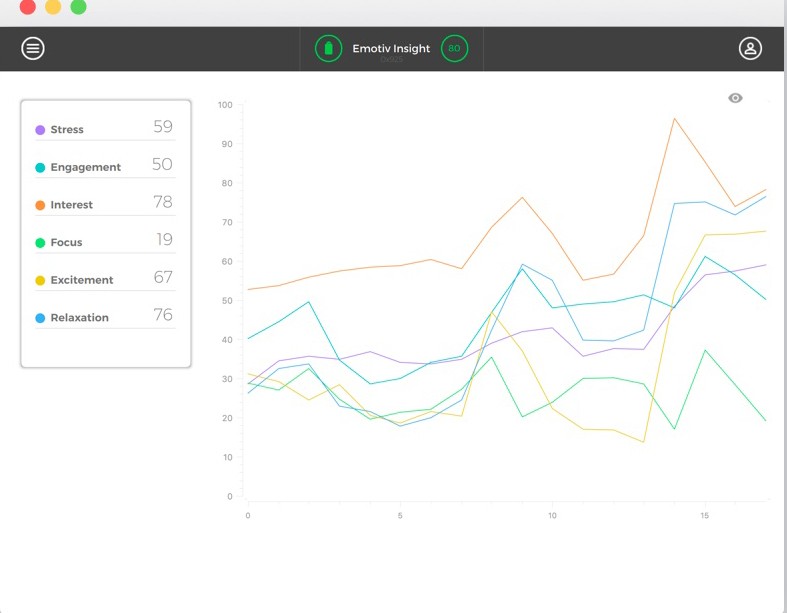
The most application-ready data you can get from a brainwave API are real-time cognitive and performance metrics. These are high-level insights, translated from brainwave patterns, that describe a person's mental state in simple terms. Our software can detect dozens of performance metrics, including engagement, interest, stress, and focus. These detections are delivered in real-time, allowing you to create applications that can adapt and respond to the user's cognitive state as it changes.
This is the core technology behind powerful applications like brain-computer interfaces (BCIs), adaptive learning software, and tools for cognitive wellness. For instance, a BCI could use focus metrics to control a drone, or a wellness app could guide a user through a meditation exercise by responding to their level of relaxation.
What Are the Key Features of a Brainwave Data API?
When you start exploring brainwave data APIs, you'll notice they aren't all created equal. The right API for your project depends entirely on what you want to build. Are you creating a real-time interactive experience or conducting detailed academic research? The features you need will vary. A great API simplifies the process of getting brainwave data from an EEG headset to your application without losing crucial information. It acts as the bridge, translating complex biological signals into a format your software can understand and use.
Think of it this way: the API handles the heavy lifting of data transmission and initial processing so you can focus on the creative part—designing your app. Key features to look for include high-quality data streams, flexible data access (real-time or recorded), and straightforward integration. A well-documented API with robust security is also essential, as you're working with personal data. Our goal at Emotiv is to provide a powerful yet accessible developer platform that gives you the tools to innovate, whether you're a seasoned neuroscientist or a developer diving into BCI for the first time.
Sampling Rates and Data Quality
One of the first technical specs you'll encounter is the sampling rate. This simply refers to how many data points the EEG headset collects every second, measured in Hertz (Hz). For example, a sampling rate of 256Hz means the device is capturing 256 snapshots of your brain's electrical activity each second. A higher sampling rate generally provides a more detailed and granular view of brainwave activity, which is critical for applications that need to detect rapid changes. The quality of the data is just as important as the quantity. A good API ensures that the data transmitted from the headset, like our Epoc X, is clean and free from noise, giving you a reliable foundation for your project.
Real-Time Streaming vs. Recorded Data
Your project will determine whether you need to work with data as it happens or analyze it later. Real-time streaming is essential for interactive applications. If you're building a brain-computer interface to control a drone or an app that reacts to a user's focus levels, you need data delivered with minimal delay. On the other hand, if you're conducting a scientific study or a neuromarketing analysis, you might prefer to work with recorded data. This allows you to collect complete datasets from sessions and perform in-depth, post-hoc analysis without the pressure of real-time processing. Many APIs, including ours, offer the flexibility to work with both live streams and recorded files.
Data Formats and Authentication
Getting data from different systems to talk to each other can be a major headache if they don't speak the same language. That's why standardized data formats are so important. A good brainwave API will deliver data in a common, easy-to-parse format like JSON. This makes it much simpler to integrate the data into your application, regardless of the programming language you're using. Just as crucial is authentication. Securely connecting your app to the API is the first step. This process ensures that only authorized users and applications can access sensitive brainwave data, protecting user privacy and maintaining data integrity from the very start.
What Hardware Do You Need to Collect Brainwave Data?
Before you can access any brainwave data with an API, you need a device to collect it. The hardware you choose is the foundation of your entire project, so it’s important to pick the right tool for the job. The best EEG headset for you depends entirely on what you want to build. Are you creating a simple app to explore cognitive states, or are you conducting in-depth academic research that requires high-density data from specific brain regions?
Different headsets offer varying numbers of sensors, or "channels," which affects the kind of data you can collect. More channels provide more detailed spatial information about brain activity, but they also generate more complex data. For many applications, a lower channel count is perfectly sufficient and much easier to work with. It’s all about matching the hardware’s capabilities to your project’s goals. For example, a project focused on general states like focus or relaxation might not need the same level of detail as one designed to control a complex external device. Thinking about your end goal first will help you narrow down the hardware options and avoid getting a device that's either underpowered or overly complicated for your needs.
Understanding EEG Headset Channel Configurations
Think of EEG channels as microphones for your brain. Each channel is a sensor that picks up electrical activity from a specific location on the scalp. The more channels you have, the more precisely you can pinpoint where brain activity is happening. For example, our 2-channel MN8 earbuds are designed for accessibility and ease of use in everyday environments, making them great for certain cognitive wellness applications.
For more complex projects, like building a brain-computer interface or conducting detailed research, you’ll likely need more channels. A device like our 14-channel Epoc X headset offers a great balance of comprehensive data and portability. For the highest spatial resolution, a 32-channel headset like our Flex is the standard. It’s also important to consider the sampling rate—how many data points the headset collects per second—as this influences the quality and granularity of the data you can analyze.
Checking Connectivity and Compatibility
Once you’ve identified the right type of headset, the next step is to ensure it will work with your setup. The last thing you want is to invest in hardware only to find it’s not compatible with your computer or programming language. Most modern EEG headsets connect wirelessly via Bluetooth, but it’s always a good idea to double-check the system requirements.
The most important thing for a developer is to review the API and SDK documentation. Our developer platform provides all the information you need to understand how our hardware communicates with software. You can check for compatibility with your preferred programming language, learn about the data output formats, and see what it takes to get a stable connection. Taking a few minutes to read the documentation upfront will save you hours of troubleshooting down the road and ensure a smooth integration process.
How to Integrate a Brainwave Data API into Your Application
Getting started with a brainwave data API might seem complex, but it really boils down to a few key steps. Think of it less like building a rocket and more like assembling a kit—with the right instructions and tools, you can create something amazing. The core of the process involves connecting your application to the EEG hardware, understanding the data you’re receiving, and then using that data to build your desired features.
A good API comes with a Software Development Kit (SDK) and clear documentation to guide you. These resources are your best friends, as they provide the necessary code libraries, examples, and instructions to make the connection seamless. Before you write a single line of code, spending some time with the documentation will save you a lot of headaches later on. We’ll walk through the main stages of integration: establishing the connection, making sense of the data streams, and choosing the right programming language for your project. By breaking it down, you’ll see that integrating brainwave data is an achievable and exciting process for any developer.
Set Up API Connections and SDKs
Your first step is to establish a connection between your application and the EEG headset. This is where a Software Development Kit, or SDK, comes in. An SDK is essentially a toolkit that contains pre-written code, libraries, and utilities that simplify the process of communicating with an API. Instead of building everything from scratch, you can use the SDK to handle the low-level connection details, allowing you to focus on what you want to build.
Our SDKs are designed to make accessing brainwave data as straightforward as possible. You’ll typically start by installing the SDK for your chosen programming language and using it to authenticate your application. This ensures a secure connection and grants you access to the data streams from the headset.
Understand Data Streams and Processing Workflows
Once you’re connected, you’ll gain access to various streams of brainwave data. It’s important to understand the different types available so you can choose the one that best fits your application’s needs. For example, you might work with raw EEG data, which gives you the unfiltered electrical signals directly from the sensors. This is great for detailed analysis or if you want to apply your own custom processing algorithms.
Alternatively, you can access processed metrics like Power Spectral Density (PSD), which shows the strength of brainwave activity across different frequency bands (Alpha, Beta, etc.). These pre-processed streams can be easier to work with and are often used for building applications for cognitive wellness or real-time feedback. Exploring these data types in a visualization tool like our EmotivPRO can help you get a feel for the data before you start coding.
Consider Your Programming Language
The programming language you choose will shape your development experience. Many brainwave data APIs, including ours, offer support for several popular languages like Python, C++, and JavaScript. Your choice often comes down to personal preference, project requirements, and the existing ecosystem of libraries you want to use. Python is a popular choice in the scientific and data analysis communities due to its extensive libraries for machine learning and signal processing.
If you’re building a web-based application, JavaScript might be the natural fit. For performance-critical applications, C++ could be the way to go. The key is to select a language you’re comfortable with and one that is well-supported by the API’s SDK. Our developer platform provides the resources you need to get started, regardless of which language you choose.
What Are Common Challenges for Developers?
Working with a brainwave data API is an exciting step, but like any integration project, it comes with a few common hurdles. When you’re dealing with something as complex and personal as brain data, it’s important to be prepared. Thinking through these challenges ahead of time will help you build a more robust, secure, and reliable application.
The main challenges usually fall into three categories: the flow of data itself, keeping that data secure, and ensuring your application is stable and dependable for users. Let’s walk through what to look out for in each of these areas. By understanding these potential roadblocks, you can plan your development process more effectively and create a much smoother experience for both you and your end-users. It’s all about building a solid foundation from the start.
Data Compatibility and Latency
One of the first technical challenges you might encounter is data compatibility. Different APIs can use various data formats, and getting them to communicate seamlessly can be tricky. You’ll need to make sure your application can correctly interpret the data stream from the EEG headset. Another major factor is latency, or the delay between when data is captured and when your application receives it. For real-time applications, like a brain-computer interface that responds instantly to user input, minimizing this delay is absolutely critical. A laggy experience can undermine the entire purpose of your project.
Security and Privacy
Brainwave data is deeply personal, which means security and privacy are non-negotiable. As a developer, you have a responsibility to protect this sensitive information. This starts with implementing strong authentication methods to ensure only authorized users can access the data. You also need to manage access controls carefully within your application. Beyond the technical safeguards, it’s crucial to be aware of and comply with data protection regulations that govern how personal data is collected, stored, and used. Building trust with your users means being transparent and diligent about protecting their privacy from day one.
Error Handling and Authentication
To build an application that people can rely on, you need a solid plan for when things go wrong. Effective error handling is essential for maintaining stability. Instead of crashing, your application should be able to manage unexpected issues gracefully, which helps build confidence and trust with your users. Authentication is another key piece of the puzzle. You’ll need a secure way to verify a user’s identity and permissions before granting them access to the API. Choosing the right API authentication method is crucial for creating a process that is both secure and user-friendly, ensuring a smooth start to every user session.
What Are the Most Popular Brainwave Data APIs?
Once you have your hardware, the API is your bridge to the brainwave data it collects. Different APIs offer different levels of access, data types, and compatibility, so your choice will often depend on your headset and project goals. Whether you're building a brain-computer interface or a tool for academic research, there's likely an API designed to support your work. Let's look at a couple of the main options available to developers and researchers today.
The Emotiv Cortex API and Developer Platform
Our goal at Emotiv is to make brain data accessible, and the Cortex API is central to that mission. It’s a high-performance interface that gives you access to data from all Emotiv EEG headsets, from the 2-channel MN8 earbuds to the 32-channel Flex. The developer platform allows you to work with real-time data streams, including raw EEG signals and our pre-processed performance metrics for states like focus and stress. This flexibility makes it a powerful tool for creating a wide range of applications, whether you're focused on neuromarketing, cognitive wellness tools, or complex academic studies. It’s designed to get you up and running quickly so you can focus on building your application.
Exploring Alternative APIs for Research
Beyond Emotiv, the EEG landscape includes various specialized APIs, often tied to specific hardware. For instance, the Neurosity SDK includes a Brainwaves API designed to provide straightforward data access for those familiar with EEG. Similarly, you can find open-source projects like the inME Python API, which is built for its corresponding research and educational device. The growing interest in BCI-based solutions for applications like optimizing industrial performance has led to a diverse ecosystem of tools. Many of these APIs are created to serve niche research communities or specific hardware, giving developers options when working with different data collection devices.
What Can You Build with a Brainwave API?
Once you have access to brainwave data, the possibilities for what you can create are incredibly broad. A brainwave API acts as a bridge, connecting raw brain activity to software applications that can interpret and react to it in real time. This opens up new frontiers in interactive technology, personal wellness, and scientific discovery. Developers and researchers are using these tools to build everything from hands-free control systems to applications that provide insights into a user's cognitive state.
Whether you're a developer looking to create a groundbreaking application, a researcher designing a novel experiment, or a hobbyist exploring the potential of neurotechnology, an API is your starting point. You can build applications that respond to a user's focus, create adaptive learning software that adjusts to a student's cognitive load, or design immersive gaming experiences that react to a player's emotional state. The key is that you’re no longer limited to traditional inputs like keyboards and mice; you can now incorporate the user's cognitive and emotional data directly into the application's logic. This allows for the creation of more personal, responsive, and intuitive digital experiences.
Brain-Computer Interfaces (BCIs)
A brain-computer interface (BCI) is one of the most exciting applications you can build. At its core, a BCI translates brain signals into commands that can control external devices or software. With a brainwave API, you can develop applications that allow users to perform actions with their minds. This could be as simple as controlling a character in a video game, navigating a software interface without physical touch, or even operating smart home devices. The technology has practical uses in fields like education and industrial settings, where it can be used to create more intuitive and accessible systems for everyone.
Neuromarketing and Cognitive Wellness Apps
In the world of neuromarketing, understanding genuine audience reactions is invaluable. Using a brainwave API, you can build tools that measure a user's cognitive and emotional responses to advertisements, product designs, or user interfaces. This provides a deeper layer of insight than traditional surveys or focus groups. On the personal side, you can develop applications that give users access to cognitive wellness tools for understanding their own mental states. For example, you could create an app that helps someone see their focus levels during a work session or their relaxation state during meditation, offering a new perspective on personal well-being.
Academic Research and Neurofeedback Tools
For those in academic research and education, a brainwave API is a powerful tool for innovation. It allows you to move beyond standard lab equipment and build custom software for your specific research questions. You can design experiments to study cognitive workload, analyze sleep patterns, or explore the neural correlates of learning. Furthermore, you can create sophisticated neurofeedback applications. These tools present users with real-time feedback on their brain activity, allowing them to learn how to self-regulate certain cognitive states. This opens up new avenues for studies in psychology, neuroscience, and human-computer interaction.
Best Practices for a Successful API Integration
Once you have your hardware and have chosen an API, the next step is the integration itself. While it can be exciting to jump right in, taking a methodical approach will save you a lot of headaches down the road. Following a few key best practices ensures your application is stable, secure, and performs well. Think of it as building a strong foundation—it’s the most important part of the project. Let’s walk through the three pillars of a successful API integration: error handling, performance, and security.
Implement Strong Error Handling and Testing
Things will inevitably go wrong—a network connection might drop, a headset could disconnect, or an API request might fail. That’s where solid error handling comes in. Instead of letting your app crash, you can guide the user through the problem with a clear message. This isn't just about code; it's about building trust. A well-tested application that handles hiccups gracefully feels reliable and professional. Make sure you implement comprehensive testing for different scenarios, from lost connections to invalid data, so you’re prepared for anything. Your users (and your future self, when debugging) will thank you for it.
Optimize Your Data and Performance
Brainwave data streams can be intense, sending a lot of information every second. If your application isn’t optimized, it can lead to lag, delays, and a poor user experience. To keep things running smoothly, focus on efficiency. Only request the specific data metrics you need from the API, rather than pulling everything available. Be mindful of API rate limits—making too many requests in a short period can get you temporarily blocked. For developers building with our tools, you can find detailed information on managing data streams in the Emotiv developer documentation. Efficient data handling ensures your application remains responsive and reliable, even when processing complex real-time information.
Prioritize Security and Compliance
You’re working with highly personal and sensitive information, so security can't be an afterthought. Protecting user data is your top responsibility. Start by securing your API credentials; never expose them in your client-side code. Always use secure, encrypted connections (HTTPS) for all communication with the API to prevent data interception. It’s also crucial to understand and adhere to data privacy regulations like GDPR, especially if your application will be used by people in different parts of the world. Building a secure application protects your users and establishes your project as a trustworthy platform from day one.
Related Articles
Frequently Asked Questions
Do I need a background in neuroscience to use a brainwave API? Not at all. While a neuroscience background is helpful if you want to work with raw EEG signals, our developer platform is designed to be accessible to everyone. The API provides processed performance metrics, which translate complex brain activity into straightforward insights like "focus" or "stress." This allows you to build powerful applications without needing to be an expert in signal processing.
What's the difference between raw EEG data and processed metrics? Think of raw EEG data as the fundamental, unfiltered electrical signals coming directly from the headset's sensors. It’s incredibly detailed but requires specialized knowledge to clean and interpret. Processed metrics, on the other hand, are the result of our machine learning models analyzing that raw data for you. They provide clear, application-ready insights, making it much faster and easier to build features that respond to a user's cognitive state.
How many channels does my EEG headset really need for my project? The number of channels you need depends entirely on your goal. For applications focused on general cognitive states, a device with fewer channels, like our 2-channel MN8, can be perfectly suitable. If you're building a more complex brain-computer interface or need more specific spatial data for research, a headset with more channels, like the 14-channel Epoc X, provides a richer dataset to work with.
Can I build a real-time application, or will there be a delay? Yes, you can absolutely build real-time applications. Our API is designed for low-latency streaming, which is essential for creating interactive experiences. Whether you're developing a game that responds to a player's engagement or a BCI that controls a device, the data is delivered fast enough to make those instant interactions possible and feel seamless.
What programming language should I use to get started? Our developer platform supports several popular languages, including Python, C++, and JavaScript, so you can work in an environment you're already comfortable with. Python is a common choice for data analysis and machine learning projects, while JavaScript is great for web-based applications. The best approach is to check our developer documentation to see which of our SDKs best fits your project and your existing skills.
Think of an EEG headset as a microphone that listens to the electrical conversation happening in the brain. It picks up a lot of sound, but it's all in a language you don't understand. A brainwave data API is your universal translator. It listens to the raw signals from the headset and translates them into a clear, structured language that your software application can comprehend. Instead of a complex stream of voltage data, you get organized information about brainwave frequencies or even high-level metrics like focus and relaxation. This translation service is what makes brainwave data api access so powerful. It allows anyone, from a seasoned developer to a curious researcher, to start building applications that can understand and respond to the user's cognitive state.
Key Takeaways
An API is the essential link between hardware and software: It translates complex brain signals from an EEG headset into a usable format, freeing you to focus on building your application's features instead of on low-level hardware communication.
Choose the right data type for your project's goal: You can work with raw EEG signals for deep, custom analysis or use pre-processed performance metrics like focus and stress to integrate brain data into your app more quickly.
Build a trustworthy application from day one: Prioritizing secure authentication, efficient data handling, and solid error planning is crucial for creating a stable and reliable user experience when working with sensitive brain data.
What Is a Brainwave Data API?
An API, or Application Programming Interface, is essentially a set of rules that lets different software applications communicate with each other. A brainwave data API, then, is a specialized toolkit that allows your application to access and use the brainwave signals collected by an EEG headset. It acts as the crucial bridge between the complex hardware measuring brain activity and the software you want to build.
Think of it like using your phone's location services. As a developer, you don't need to understand the inner workings of GPS satellites to build a map application; you simply use the location API. A brainwave data API works on the same principle, giving you a straightforward way to integrate brain data into your projects without needing a deep background in neuroscience hardware. This accessibility is what makes the technology so exciting. It empowers developers, researchers, and creators to build innovative applications that can interpret and respond to brain activity. The possibilities range from creating powerful brain-computer interfaces for controlling devices to developing new tools for neuromarketing research. It also opens up new avenues for interactive entertainment and applications that provide access to cognitive wellness tools. Our goal with the Emotiv developer platform is to provide exactly these kinds of tools, making it easier for anyone to start building with brain data.
How Do Brainwave Data APIs Work?
So how does this bridge actually function? The API standardizes how your application requests and receives data from an EEG device. Instead of writing complex, low-level code to communicate with the hardware, you can make simple requests through the API. For example, you might ask the API to start a data stream, send you raw EEG signals from specific sensors, or provide processed performance metrics. The API handles the translation, fetching the correct data from the headset and delivering it to your application in a clean, usable format. This process allows developers to focus on building great applications, like our own EmotivBCI, without getting bogged down in hardware specifics.
How EEG Headsets Collect Data
The data that the API serves up originates from the EEG headset itself. EEG, or electroencephalography, is a method for recording the brain's electrical activity. Our headsets, like the 14-channel Epoc X, use a series of sensors placed on the scalp to detect these tiny electrical signals. The headset captures this data hundreds of times per second—a rate known as the sampling rate. This continuous flow of information provides a detailed, real-time look at brain activity. The API then takes this raw data stream, organizes it, and makes it available for your application to process and interpret.
What Brainwave Data Can You Access with an API?
Once you have an EEG headset connected, a brainwave data API acts as the bridge to your application, translating complex neural signals into usable information. The type of data you can access depends on the API, but it generally falls into a few key categories. You can work with the fundamental, unprocessed signals straight from the brain, or you can use pre-processed metrics that give you immediate, actionable insights.
Think of it like ingredients for a recipe. You can start with raw, whole ingredients (the raw EEG signals) and prepare them yourself, which gives you complete control but requires more skill. Or, you can use pre-chopped vegetables or a pre-made sauce (the processed metrics) to speed up the process and get to the final dish faster. Our developer platform is designed to give you access to both, so you can choose the level of data that best fits your project's needs and your own expertise.
Raw EEG Signals vs. Processed Metrics
Raw EEG data is the direct, unfiltered electrical activity recorded by the headset's sensors. This data is incredibly rich and contains a massive amount of information, but it also includes noise and artifacts from muscle movements or environmental interference. Working with raw EEG requires a solid understanding of signal processing to clean the data and extract meaningful patterns. It’s the perfect starting point if you’re an experienced researcher or a developer who wants maximum control to build custom algorithms from the ground up.
On the other hand, processed metrics are insights that have already been derived from the raw signal using machine learning models. Instead of a stream of raw voltage values, you get straightforward data points for things like attention, focus, or stress. This makes it much easier to build applications without needing a deep background in neuroscience. For example, our EmotivPRO software analyzes raw signals to provide these clear performance metrics.
Frequency Bands and Power Spectral Density
A common way to analyze EEG data is to break it down into frequency bands. These bands—Delta, Theta, Alpha, Beta, and Gamma—are associated with different mental states. For example, Alpha waves are often linked to a relaxed, wakeful state, while Beta waves are more prominent during active thinking and problem-solving. An API can provide you with data on the power within each of these bands, a measurement known as Power Spectral Density (PSD).
This tells you the "frequency makeup" of the brain's activity at any given moment. This level of data offers a great middle ground; it’s more interpretable than raw EEG but still provides a detailed look into brain dynamics. Many researchers in the field of academic research and education use frequency band analysis to study cognitive processes.
Real-Time Cognitive and Performance Metrics
The most application-ready data you can get from a brainwave API are real-time cognitive and performance metrics. These are high-level insights, translated from brainwave patterns, that describe a person's mental state in simple terms. Our software can detect dozens of performance metrics, including engagement, interest, stress, and focus. These detections are delivered in real-time, allowing you to create applications that can adapt and respond to the user's cognitive state as it changes.
This is the core technology behind powerful applications like brain-computer interfaces (BCIs), adaptive learning software, and tools for cognitive wellness. For instance, a BCI could use focus metrics to control a drone, or a wellness app could guide a user through a meditation exercise by responding to their level of relaxation.
What Are the Key Features of a Brainwave Data API?
When you start exploring brainwave data APIs, you'll notice they aren't all created equal. The right API for your project depends entirely on what you want to build. Are you creating a real-time interactive experience or conducting detailed academic research? The features you need will vary. A great API simplifies the process of getting brainwave data from an EEG headset to your application without losing crucial information. It acts as the bridge, translating complex biological signals into a format your software can understand and use.
Think of it this way: the API handles the heavy lifting of data transmission and initial processing so you can focus on the creative part—designing your app. Key features to look for include high-quality data streams, flexible data access (real-time or recorded), and straightforward integration. A well-documented API with robust security is also essential, as you're working with personal data. Our goal at Emotiv is to provide a powerful yet accessible developer platform that gives you the tools to innovate, whether you're a seasoned neuroscientist or a developer diving into BCI for the first time.
Sampling Rates and Data Quality
One of the first technical specs you'll encounter is the sampling rate. This simply refers to how many data points the EEG headset collects every second, measured in Hertz (Hz). For example, a sampling rate of 256Hz means the device is capturing 256 snapshots of your brain's electrical activity each second. A higher sampling rate generally provides a more detailed and granular view of brainwave activity, which is critical for applications that need to detect rapid changes. The quality of the data is just as important as the quantity. A good API ensures that the data transmitted from the headset, like our Epoc X, is clean and free from noise, giving you a reliable foundation for your project.
Real-Time Streaming vs. Recorded Data
Your project will determine whether you need to work with data as it happens or analyze it later. Real-time streaming is essential for interactive applications. If you're building a brain-computer interface to control a drone or an app that reacts to a user's focus levels, you need data delivered with minimal delay. On the other hand, if you're conducting a scientific study or a neuromarketing analysis, you might prefer to work with recorded data. This allows you to collect complete datasets from sessions and perform in-depth, post-hoc analysis without the pressure of real-time processing. Many APIs, including ours, offer the flexibility to work with both live streams and recorded files.
Data Formats and Authentication
Getting data from different systems to talk to each other can be a major headache if they don't speak the same language. That's why standardized data formats are so important. A good brainwave API will deliver data in a common, easy-to-parse format like JSON. This makes it much simpler to integrate the data into your application, regardless of the programming language you're using. Just as crucial is authentication. Securely connecting your app to the API is the first step. This process ensures that only authorized users and applications can access sensitive brainwave data, protecting user privacy and maintaining data integrity from the very start.
What Hardware Do You Need to Collect Brainwave Data?
Before you can access any brainwave data with an API, you need a device to collect it. The hardware you choose is the foundation of your entire project, so it’s important to pick the right tool for the job. The best EEG headset for you depends entirely on what you want to build. Are you creating a simple app to explore cognitive states, or are you conducting in-depth academic research that requires high-density data from specific brain regions?
Different headsets offer varying numbers of sensors, or "channels," which affects the kind of data you can collect. More channels provide more detailed spatial information about brain activity, but they also generate more complex data. For many applications, a lower channel count is perfectly sufficient and much easier to work with. It’s all about matching the hardware’s capabilities to your project’s goals. For example, a project focused on general states like focus or relaxation might not need the same level of detail as one designed to control a complex external device. Thinking about your end goal first will help you narrow down the hardware options and avoid getting a device that's either underpowered or overly complicated for your needs.
Understanding EEG Headset Channel Configurations
Think of EEG channels as microphones for your brain. Each channel is a sensor that picks up electrical activity from a specific location on the scalp. The more channels you have, the more precisely you can pinpoint where brain activity is happening. For example, our 2-channel MN8 earbuds are designed for accessibility and ease of use in everyday environments, making them great for certain cognitive wellness applications.
For more complex projects, like building a brain-computer interface or conducting detailed research, you’ll likely need more channels. A device like our 14-channel Epoc X headset offers a great balance of comprehensive data and portability. For the highest spatial resolution, a 32-channel headset like our Flex is the standard. It’s also important to consider the sampling rate—how many data points the headset collects per second—as this influences the quality and granularity of the data you can analyze.
Checking Connectivity and Compatibility
Once you’ve identified the right type of headset, the next step is to ensure it will work with your setup. The last thing you want is to invest in hardware only to find it’s not compatible with your computer or programming language. Most modern EEG headsets connect wirelessly via Bluetooth, but it’s always a good idea to double-check the system requirements.
The most important thing for a developer is to review the API and SDK documentation. Our developer platform provides all the information you need to understand how our hardware communicates with software. You can check for compatibility with your preferred programming language, learn about the data output formats, and see what it takes to get a stable connection. Taking a few minutes to read the documentation upfront will save you hours of troubleshooting down the road and ensure a smooth integration process.
How to Integrate a Brainwave Data API into Your Application
Getting started with a brainwave data API might seem complex, but it really boils down to a few key steps. Think of it less like building a rocket and more like assembling a kit—with the right instructions and tools, you can create something amazing. The core of the process involves connecting your application to the EEG hardware, understanding the data you’re receiving, and then using that data to build your desired features.
A good API comes with a Software Development Kit (SDK) and clear documentation to guide you. These resources are your best friends, as they provide the necessary code libraries, examples, and instructions to make the connection seamless. Before you write a single line of code, spending some time with the documentation will save you a lot of headaches later on. We’ll walk through the main stages of integration: establishing the connection, making sense of the data streams, and choosing the right programming language for your project. By breaking it down, you’ll see that integrating brainwave data is an achievable and exciting process for any developer.
Set Up API Connections and SDKs
Your first step is to establish a connection between your application and the EEG headset. This is where a Software Development Kit, or SDK, comes in. An SDK is essentially a toolkit that contains pre-written code, libraries, and utilities that simplify the process of communicating with an API. Instead of building everything from scratch, you can use the SDK to handle the low-level connection details, allowing you to focus on what you want to build.
Our SDKs are designed to make accessing brainwave data as straightforward as possible. You’ll typically start by installing the SDK for your chosen programming language and using it to authenticate your application. This ensures a secure connection and grants you access to the data streams from the headset.
Understand Data Streams and Processing Workflows
Once you’re connected, you’ll gain access to various streams of brainwave data. It’s important to understand the different types available so you can choose the one that best fits your application’s needs. For example, you might work with raw EEG data, which gives you the unfiltered electrical signals directly from the sensors. This is great for detailed analysis or if you want to apply your own custom processing algorithms.
Alternatively, you can access processed metrics like Power Spectral Density (PSD), which shows the strength of brainwave activity across different frequency bands (Alpha, Beta, etc.). These pre-processed streams can be easier to work with and are often used for building applications for cognitive wellness or real-time feedback. Exploring these data types in a visualization tool like our EmotivPRO can help you get a feel for the data before you start coding.
Consider Your Programming Language
The programming language you choose will shape your development experience. Many brainwave data APIs, including ours, offer support for several popular languages like Python, C++, and JavaScript. Your choice often comes down to personal preference, project requirements, and the existing ecosystem of libraries you want to use. Python is a popular choice in the scientific and data analysis communities due to its extensive libraries for machine learning and signal processing.
If you’re building a web-based application, JavaScript might be the natural fit. For performance-critical applications, C++ could be the way to go. The key is to select a language you’re comfortable with and one that is well-supported by the API’s SDK. Our developer platform provides the resources you need to get started, regardless of which language you choose.
What Are Common Challenges for Developers?
Working with a brainwave data API is an exciting step, but like any integration project, it comes with a few common hurdles. When you’re dealing with something as complex and personal as brain data, it’s important to be prepared. Thinking through these challenges ahead of time will help you build a more robust, secure, and reliable application.
The main challenges usually fall into three categories: the flow of data itself, keeping that data secure, and ensuring your application is stable and dependable for users. Let’s walk through what to look out for in each of these areas. By understanding these potential roadblocks, you can plan your development process more effectively and create a much smoother experience for both you and your end-users. It’s all about building a solid foundation from the start.
Data Compatibility and Latency
One of the first technical challenges you might encounter is data compatibility. Different APIs can use various data formats, and getting them to communicate seamlessly can be tricky. You’ll need to make sure your application can correctly interpret the data stream from the EEG headset. Another major factor is latency, or the delay between when data is captured and when your application receives it. For real-time applications, like a brain-computer interface that responds instantly to user input, minimizing this delay is absolutely critical. A laggy experience can undermine the entire purpose of your project.
Security and Privacy
Brainwave data is deeply personal, which means security and privacy are non-negotiable. As a developer, you have a responsibility to protect this sensitive information. This starts with implementing strong authentication methods to ensure only authorized users can access the data. You also need to manage access controls carefully within your application. Beyond the technical safeguards, it’s crucial to be aware of and comply with data protection regulations that govern how personal data is collected, stored, and used. Building trust with your users means being transparent and diligent about protecting their privacy from day one.
Error Handling and Authentication
To build an application that people can rely on, you need a solid plan for when things go wrong. Effective error handling is essential for maintaining stability. Instead of crashing, your application should be able to manage unexpected issues gracefully, which helps build confidence and trust with your users. Authentication is another key piece of the puzzle. You’ll need a secure way to verify a user’s identity and permissions before granting them access to the API. Choosing the right API authentication method is crucial for creating a process that is both secure and user-friendly, ensuring a smooth start to every user session.
What Are the Most Popular Brainwave Data APIs?
Once you have your hardware, the API is your bridge to the brainwave data it collects. Different APIs offer different levels of access, data types, and compatibility, so your choice will often depend on your headset and project goals. Whether you're building a brain-computer interface or a tool for academic research, there's likely an API designed to support your work. Let's look at a couple of the main options available to developers and researchers today.
The Emotiv Cortex API and Developer Platform
Our goal at Emotiv is to make brain data accessible, and the Cortex API is central to that mission. It’s a high-performance interface that gives you access to data from all Emotiv EEG headsets, from the 2-channel MN8 earbuds to the 32-channel Flex. The developer platform allows you to work with real-time data streams, including raw EEG signals and our pre-processed performance metrics for states like focus and stress. This flexibility makes it a powerful tool for creating a wide range of applications, whether you're focused on neuromarketing, cognitive wellness tools, or complex academic studies. It’s designed to get you up and running quickly so you can focus on building your application.
Exploring Alternative APIs for Research
Beyond Emotiv, the EEG landscape includes various specialized APIs, often tied to specific hardware. For instance, the Neurosity SDK includes a Brainwaves API designed to provide straightforward data access for those familiar with EEG. Similarly, you can find open-source projects like the inME Python API, which is built for its corresponding research and educational device. The growing interest in BCI-based solutions for applications like optimizing industrial performance has led to a diverse ecosystem of tools. Many of these APIs are created to serve niche research communities or specific hardware, giving developers options when working with different data collection devices.
What Can You Build with a Brainwave API?
Once you have access to brainwave data, the possibilities for what you can create are incredibly broad. A brainwave API acts as a bridge, connecting raw brain activity to software applications that can interpret and react to it in real time. This opens up new frontiers in interactive technology, personal wellness, and scientific discovery. Developers and researchers are using these tools to build everything from hands-free control systems to applications that provide insights into a user's cognitive state.
Whether you're a developer looking to create a groundbreaking application, a researcher designing a novel experiment, or a hobbyist exploring the potential of neurotechnology, an API is your starting point. You can build applications that respond to a user's focus, create adaptive learning software that adjusts to a student's cognitive load, or design immersive gaming experiences that react to a player's emotional state. The key is that you’re no longer limited to traditional inputs like keyboards and mice; you can now incorporate the user's cognitive and emotional data directly into the application's logic. This allows for the creation of more personal, responsive, and intuitive digital experiences.
Brain-Computer Interfaces (BCIs)
A brain-computer interface (BCI) is one of the most exciting applications you can build. At its core, a BCI translates brain signals into commands that can control external devices or software. With a brainwave API, you can develop applications that allow users to perform actions with their minds. This could be as simple as controlling a character in a video game, navigating a software interface without physical touch, or even operating smart home devices. The technology has practical uses in fields like education and industrial settings, where it can be used to create more intuitive and accessible systems for everyone.
Neuromarketing and Cognitive Wellness Apps
In the world of neuromarketing, understanding genuine audience reactions is invaluable. Using a brainwave API, you can build tools that measure a user's cognitive and emotional responses to advertisements, product designs, or user interfaces. This provides a deeper layer of insight than traditional surveys or focus groups. On the personal side, you can develop applications that give users access to cognitive wellness tools for understanding their own mental states. For example, you could create an app that helps someone see their focus levels during a work session or their relaxation state during meditation, offering a new perspective on personal well-being.
Academic Research and Neurofeedback Tools
For those in academic research and education, a brainwave API is a powerful tool for innovation. It allows you to move beyond standard lab equipment and build custom software for your specific research questions. You can design experiments to study cognitive workload, analyze sleep patterns, or explore the neural correlates of learning. Furthermore, you can create sophisticated neurofeedback applications. These tools present users with real-time feedback on their brain activity, allowing them to learn how to self-regulate certain cognitive states. This opens up new avenues for studies in psychology, neuroscience, and human-computer interaction.
Best Practices for a Successful API Integration
Once you have your hardware and have chosen an API, the next step is the integration itself. While it can be exciting to jump right in, taking a methodical approach will save you a lot of headaches down the road. Following a few key best practices ensures your application is stable, secure, and performs well. Think of it as building a strong foundation—it’s the most important part of the project. Let’s walk through the three pillars of a successful API integration: error handling, performance, and security.
Implement Strong Error Handling and Testing
Things will inevitably go wrong—a network connection might drop, a headset could disconnect, or an API request might fail. That’s where solid error handling comes in. Instead of letting your app crash, you can guide the user through the problem with a clear message. This isn't just about code; it's about building trust. A well-tested application that handles hiccups gracefully feels reliable and professional. Make sure you implement comprehensive testing for different scenarios, from lost connections to invalid data, so you’re prepared for anything. Your users (and your future self, when debugging) will thank you for it.
Optimize Your Data and Performance
Brainwave data streams can be intense, sending a lot of information every second. If your application isn’t optimized, it can lead to lag, delays, and a poor user experience. To keep things running smoothly, focus on efficiency. Only request the specific data metrics you need from the API, rather than pulling everything available. Be mindful of API rate limits—making too many requests in a short period can get you temporarily blocked. For developers building with our tools, you can find detailed information on managing data streams in the Emotiv developer documentation. Efficient data handling ensures your application remains responsive and reliable, even when processing complex real-time information.
Prioritize Security and Compliance
You’re working with highly personal and sensitive information, so security can't be an afterthought. Protecting user data is your top responsibility. Start by securing your API credentials; never expose them in your client-side code. Always use secure, encrypted connections (HTTPS) for all communication with the API to prevent data interception. It’s also crucial to understand and adhere to data privacy regulations like GDPR, especially if your application will be used by people in different parts of the world. Building a secure application protects your users and establishes your project as a trustworthy platform from day one.
Related Articles
Frequently Asked Questions
Do I need a background in neuroscience to use a brainwave API? Not at all. While a neuroscience background is helpful if you want to work with raw EEG signals, our developer platform is designed to be accessible to everyone. The API provides processed performance metrics, which translate complex brain activity into straightforward insights like "focus" or "stress." This allows you to build powerful applications without needing to be an expert in signal processing.
What's the difference between raw EEG data and processed metrics? Think of raw EEG data as the fundamental, unfiltered electrical signals coming directly from the headset's sensors. It’s incredibly detailed but requires specialized knowledge to clean and interpret. Processed metrics, on the other hand, are the result of our machine learning models analyzing that raw data for you. They provide clear, application-ready insights, making it much faster and easier to build features that respond to a user's cognitive state.
How many channels does my EEG headset really need for my project? The number of channels you need depends entirely on your goal. For applications focused on general cognitive states, a device with fewer channels, like our 2-channel MN8, can be perfectly suitable. If you're building a more complex brain-computer interface or need more specific spatial data for research, a headset with more channels, like the 14-channel Epoc X, provides a richer dataset to work with.
Can I build a real-time application, or will there be a delay? Yes, you can absolutely build real-time applications. Our API is designed for low-latency streaming, which is essential for creating interactive experiences. Whether you're developing a game that responds to a player's engagement or a BCI that controls a device, the data is delivered fast enough to make those instant interactions possible and feel seamless.
What programming language should I use to get started? Our developer platform supports several popular languages, including Python, C++, and JavaScript, so you can work in an environment you're already comfortable with. Python is a common choice for data analysis and machine learning projects, while JavaScript is great for web-based applications. The best approach is to check our developer documentation to see which of our SDKs best fits your project and your existing skills.
Think of an EEG headset as a microphone that listens to the electrical conversation happening in the brain. It picks up a lot of sound, but it's all in a language you don't understand. A brainwave data API is your universal translator. It listens to the raw signals from the headset and translates them into a clear, structured language that your software application can comprehend. Instead of a complex stream of voltage data, you get organized information about brainwave frequencies or even high-level metrics like focus and relaxation. This translation service is what makes brainwave data api access so powerful. It allows anyone, from a seasoned developer to a curious researcher, to start building applications that can understand and respond to the user's cognitive state.
Key Takeaways
An API is the essential link between hardware and software: It translates complex brain signals from an EEG headset into a usable format, freeing you to focus on building your application's features instead of on low-level hardware communication.
Choose the right data type for your project's goal: You can work with raw EEG signals for deep, custom analysis or use pre-processed performance metrics like focus and stress to integrate brain data into your app more quickly.
Build a trustworthy application from day one: Prioritizing secure authentication, efficient data handling, and solid error planning is crucial for creating a stable and reliable user experience when working with sensitive brain data.
What Is a Brainwave Data API?
An API, or Application Programming Interface, is essentially a set of rules that lets different software applications communicate with each other. A brainwave data API, then, is a specialized toolkit that allows your application to access and use the brainwave signals collected by an EEG headset. It acts as the crucial bridge between the complex hardware measuring brain activity and the software you want to build.
Think of it like using your phone's location services. As a developer, you don't need to understand the inner workings of GPS satellites to build a map application; you simply use the location API. A brainwave data API works on the same principle, giving you a straightforward way to integrate brain data into your projects without needing a deep background in neuroscience hardware. This accessibility is what makes the technology so exciting. It empowers developers, researchers, and creators to build innovative applications that can interpret and respond to brain activity. The possibilities range from creating powerful brain-computer interfaces for controlling devices to developing new tools for neuromarketing research. It also opens up new avenues for interactive entertainment and applications that provide access to cognitive wellness tools. Our goal with the Emotiv developer platform is to provide exactly these kinds of tools, making it easier for anyone to start building with brain data.
How Do Brainwave Data APIs Work?
So how does this bridge actually function? The API standardizes how your application requests and receives data from an EEG device. Instead of writing complex, low-level code to communicate with the hardware, you can make simple requests through the API. For example, you might ask the API to start a data stream, send you raw EEG signals from specific sensors, or provide processed performance metrics. The API handles the translation, fetching the correct data from the headset and delivering it to your application in a clean, usable format. This process allows developers to focus on building great applications, like our own EmotivBCI, without getting bogged down in hardware specifics.
How EEG Headsets Collect Data
The data that the API serves up originates from the EEG headset itself. EEG, or electroencephalography, is a method for recording the brain's electrical activity. Our headsets, like the 14-channel Epoc X, use a series of sensors placed on the scalp to detect these tiny electrical signals. The headset captures this data hundreds of times per second—a rate known as the sampling rate. This continuous flow of information provides a detailed, real-time look at brain activity. The API then takes this raw data stream, organizes it, and makes it available for your application to process and interpret.
What Brainwave Data Can You Access with an API?
Once you have an EEG headset connected, a brainwave data API acts as the bridge to your application, translating complex neural signals into usable information. The type of data you can access depends on the API, but it generally falls into a few key categories. You can work with the fundamental, unprocessed signals straight from the brain, or you can use pre-processed metrics that give you immediate, actionable insights.
Think of it like ingredients for a recipe. You can start with raw, whole ingredients (the raw EEG signals) and prepare them yourself, which gives you complete control but requires more skill. Or, you can use pre-chopped vegetables or a pre-made sauce (the processed metrics) to speed up the process and get to the final dish faster. Our developer platform is designed to give you access to both, so you can choose the level of data that best fits your project's needs and your own expertise.
Raw EEG Signals vs. Processed Metrics
Raw EEG data is the direct, unfiltered electrical activity recorded by the headset's sensors. This data is incredibly rich and contains a massive amount of information, but it also includes noise and artifacts from muscle movements or environmental interference. Working with raw EEG requires a solid understanding of signal processing to clean the data and extract meaningful patterns. It’s the perfect starting point if you’re an experienced researcher or a developer who wants maximum control to build custom algorithms from the ground up.
On the other hand, processed metrics are insights that have already been derived from the raw signal using machine learning models. Instead of a stream of raw voltage values, you get straightforward data points for things like attention, focus, or stress. This makes it much easier to build applications without needing a deep background in neuroscience. For example, our EmotivPRO software analyzes raw signals to provide these clear performance metrics.
Frequency Bands and Power Spectral Density
A common way to analyze EEG data is to break it down into frequency bands. These bands—Delta, Theta, Alpha, Beta, and Gamma—are associated with different mental states. For example, Alpha waves are often linked to a relaxed, wakeful state, while Beta waves are more prominent during active thinking and problem-solving. An API can provide you with data on the power within each of these bands, a measurement known as Power Spectral Density (PSD).
This tells you the "frequency makeup" of the brain's activity at any given moment. This level of data offers a great middle ground; it’s more interpretable than raw EEG but still provides a detailed look into brain dynamics. Many researchers in the field of academic research and education use frequency band analysis to study cognitive processes.
Real-Time Cognitive and Performance Metrics
The most application-ready data you can get from a brainwave API are real-time cognitive and performance metrics. These are high-level insights, translated from brainwave patterns, that describe a person's mental state in simple terms. Our software can detect dozens of performance metrics, including engagement, interest, stress, and focus. These detections are delivered in real-time, allowing you to create applications that can adapt and respond to the user's cognitive state as it changes.
This is the core technology behind powerful applications like brain-computer interfaces (BCIs), adaptive learning software, and tools for cognitive wellness. For instance, a BCI could use focus metrics to control a drone, or a wellness app could guide a user through a meditation exercise by responding to their level of relaxation.
What Are the Key Features of a Brainwave Data API?
When you start exploring brainwave data APIs, you'll notice they aren't all created equal. The right API for your project depends entirely on what you want to build. Are you creating a real-time interactive experience or conducting detailed academic research? The features you need will vary. A great API simplifies the process of getting brainwave data from an EEG headset to your application without losing crucial information. It acts as the bridge, translating complex biological signals into a format your software can understand and use.
Think of it this way: the API handles the heavy lifting of data transmission and initial processing so you can focus on the creative part—designing your app. Key features to look for include high-quality data streams, flexible data access (real-time or recorded), and straightforward integration. A well-documented API with robust security is also essential, as you're working with personal data. Our goal at Emotiv is to provide a powerful yet accessible developer platform that gives you the tools to innovate, whether you're a seasoned neuroscientist or a developer diving into BCI for the first time.
Sampling Rates and Data Quality
One of the first technical specs you'll encounter is the sampling rate. This simply refers to how many data points the EEG headset collects every second, measured in Hertz (Hz). For example, a sampling rate of 256Hz means the device is capturing 256 snapshots of your brain's electrical activity each second. A higher sampling rate generally provides a more detailed and granular view of brainwave activity, which is critical for applications that need to detect rapid changes. The quality of the data is just as important as the quantity. A good API ensures that the data transmitted from the headset, like our Epoc X, is clean and free from noise, giving you a reliable foundation for your project.
Real-Time Streaming vs. Recorded Data
Your project will determine whether you need to work with data as it happens or analyze it later. Real-time streaming is essential for interactive applications. If you're building a brain-computer interface to control a drone or an app that reacts to a user's focus levels, you need data delivered with minimal delay. On the other hand, if you're conducting a scientific study or a neuromarketing analysis, you might prefer to work with recorded data. This allows you to collect complete datasets from sessions and perform in-depth, post-hoc analysis without the pressure of real-time processing. Many APIs, including ours, offer the flexibility to work with both live streams and recorded files.
Data Formats and Authentication
Getting data from different systems to talk to each other can be a major headache if they don't speak the same language. That's why standardized data formats are so important. A good brainwave API will deliver data in a common, easy-to-parse format like JSON. This makes it much simpler to integrate the data into your application, regardless of the programming language you're using. Just as crucial is authentication. Securely connecting your app to the API is the first step. This process ensures that only authorized users and applications can access sensitive brainwave data, protecting user privacy and maintaining data integrity from the very start.
What Hardware Do You Need to Collect Brainwave Data?
Before you can access any brainwave data with an API, you need a device to collect it. The hardware you choose is the foundation of your entire project, so it’s important to pick the right tool for the job. The best EEG headset for you depends entirely on what you want to build. Are you creating a simple app to explore cognitive states, or are you conducting in-depth academic research that requires high-density data from specific brain regions?
Different headsets offer varying numbers of sensors, or "channels," which affects the kind of data you can collect. More channels provide more detailed spatial information about brain activity, but they also generate more complex data. For many applications, a lower channel count is perfectly sufficient and much easier to work with. It’s all about matching the hardware’s capabilities to your project’s goals. For example, a project focused on general states like focus or relaxation might not need the same level of detail as one designed to control a complex external device. Thinking about your end goal first will help you narrow down the hardware options and avoid getting a device that's either underpowered or overly complicated for your needs.
Understanding EEG Headset Channel Configurations
Think of EEG channels as microphones for your brain. Each channel is a sensor that picks up electrical activity from a specific location on the scalp. The more channels you have, the more precisely you can pinpoint where brain activity is happening. For example, our 2-channel MN8 earbuds are designed for accessibility and ease of use in everyday environments, making them great for certain cognitive wellness applications.
For more complex projects, like building a brain-computer interface or conducting detailed research, you’ll likely need more channels. A device like our 14-channel Epoc X headset offers a great balance of comprehensive data and portability. For the highest spatial resolution, a 32-channel headset like our Flex is the standard. It’s also important to consider the sampling rate—how many data points the headset collects per second—as this influences the quality and granularity of the data you can analyze.
Checking Connectivity and Compatibility
Once you’ve identified the right type of headset, the next step is to ensure it will work with your setup. The last thing you want is to invest in hardware only to find it’s not compatible with your computer or programming language. Most modern EEG headsets connect wirelessly via Bluetooth, but it’s always a good idea to double-check the system requirements.
The most important thing for a developer is to review the API and SDK documentation. Our developer platform provides all the information you need to understand how our hardware communicates with software. You can check for compatibility with your preferred programming language, learn about the data output formats, and see what it takes to get a stable connection. Taking a few minutes to read the documentation upfront will save you hours of troubleshooting down the road and ensure a smooth integration process.
How to Integrate a Brainwave Data API into Your Application
Getting started with a brainwave data API might seem complex, but it really boils down to a few key steps. Think of it less like building a rocket and more like assembling a kit—with the right instructions and tools, you can create something amazing. The core of the process involves connecting your application to the EEG hardware, understanding the data you’re receiving, and then using that data to build your desired features.
A good API comes with a Software Development Kit (SDK) and clear documentation to guide you. These resources are your best friends, as they provide the necessary code libraries, examples, and instructions to make the connection seamless. Before you write a single line of code, spending some time with the documentation will save you a lot of headaches later on. We’ll walk through the main stages of integration: establishing the connection, making sense of the data streams, and choosing the right programming language for your project. By breaking it down, you’ll see that integrating brainwave data is an achievable and exciting process for any developer.
Set Up API Connections and SDKs
Your first step is to establish a connection between your application and the EEG headset. This is where a Software Development Kit, or SDK, comes in. An SDK is essentially a toolkit that contains pre-written code, libraries, and utilities that simplify the process of communicating with an API. Instead of building everything from scratch, you can use the SDK to handle the low-level connection details, allowing you to focus on what you want to build.
Our SDKs are designed to make accessing brainwave data as straightforward as possible. You’ll typically start by installing the SDK for your chosen programming language and using it to authenticate your application. This ensures a secure connection and grants you access to the data streams from the headset.
Understand Data Streams and Processing Workflows
Once you’re connected, you’ll gain access to various streams of brainwave data. It’s important to understand the different types available so you can choose the one that best fits your application’s needs. For example, you might work with raw EEG data, which gives you the unfiltered electrical signals directly from the sensors. This is great for detailed analysis or if you want to apply your own custom processing algorithms.
Alternatively, you can access processed metrics like Power Spectral Density (PSD), which shows the strength of brainwave activity across different frequency bands (Alpha, Beta, etc.). These pre-processed streams can be easier to work with and are often used for building applications for cognitive wellness or real-time feedback. Exploring these data types in a visualization tool like our EmotivPRO can help you get a feel for the data before you start coding.
Consider Your Programming Language
The programming language you choose will shape your development experience. Many brainwave data APIs, including ours, offer support for several popular languages like Python, C++, and JavaScript. Your choice often comes down to personal preference, project requirements, and the existing ecosystem of libraries you want to use. Python is a popular choice in the scientific and data analysis communities due to its extensive libraries for machine learning and signal processing.
If you’re building a web-based application, JavaScript might be the natural fit. For performance-critical applications, C++ could be the way to go. The key is to select a language you’re comfortable with and one that is well-supported by the API’s SDK. Our developer platform provides the resources you need to get started, regardless of which language you choose.
What Are Common Challenges for Developers?
Working with a brainwave data API is an exciting step, but like any integration project, it comes with a few common hurdles. When you’re dealing with something as complex and personal as brain data, it’s important to be prepared. Thinking through these challenges ahead of time will help you build a more robust, secure, and reliable application.
The main challenges usually fall into three categories: the flow of data itself, keeping that data secure, and ensuring your application is stable and dependable for users. Let’s walk through what to look out for in each of these areas. By understanding these potential roadblocks, you can plan your development process more effectively and create a much smoother experience for both you and your end-users. It’s all about building a solid foundation from the start.
Data Compatibility and Latency
One of the first technical challenges you might encounter is data compatibility. Different APIs can use various data formats, and getting them to communicate seamlessly can be tricky. You’ll need to make sure your application can correctly interpret the data stream from the EEG headset. Another major factor is latency, or the delay between when data is captured and when your application receives it. For real-time applications, like a brain-computer interface that responds instantly to user input, minimizing this delay is absolutely critical. A laggy experience can undermine the entire purpose of your project.
Security and Privacy
Brainwave data is deeply personal, which means security and privacy are non-negotiable. As a developer, you have a responsibility to protect this sensitive information. This starts with implementing strong authentication methods to ensure only authorized users can access the data. You also need to manage access controls carefully within your application. Beyond the technical safeguards, it’s crucial to be aware of and comply with data protection regulations that govern how personal data is collected, stored, and used. Building trust with your users means being transparent and diligent about protecting their privacy from day one.
Error Handling and Authentication
To build an application that people can rely on, you need a solid plan for when things go wrong. Effective error handling is essential for maintaining stability. Instead of crashing, your application should be able to manage unexpected issues gracefully, which helps build confidence and trust with your users. Authentication is another key piece of the puzzle. You’ll need a secure way to verify a user’s identity and permissions before granting them access to the API. Choosing the right API authentication method is crucial for creating a process that is both secure and user-friendly, ensuring a smooth start to every user session.
What Are the Most Popular Brainwave Data APIs?
Once you have your hardware, the API is your bridge to the brainwave data it collects. Different APIs offer different levels of access, data types, and compatibility, so your choice will often depend on your headset and project goals. Whether you're building a brain-computer interface or a tool for academic research, there's likely an API designed to support your work. Let's look at a couple of the main options available to developers and researchers today.
The Emotiv Cortex API and Developer Platform
Our goal at Emotiv is to make brain data accessible, and the Cortex API is central to that mission. It’s a high-performance interface that gives you access to data from all Emotiv EEG headsets, from the 2-channel MN8 earbuds to the 32-channel Flex. The developer platform allows you to work with real-time data streams, including raw EEG signals and our pre-processed performance metrics for states like focus and stress. This flexibility makes it a powerful tool for creating a wide range of applications, whether you're focused on neuromarketing, cognitive wellness tools, or complex academic studies. It’s designed to get you up and running quickly so you can focus on building your application.
Exploring Alternative APIs for Research
Beyond Emotiv, the EEG landscape includes various specialized APIs, often tied to specific hardware. For instance, the Neurosity SDK includes a Brainwaves API designed to provide straightforward data access for those familiar with EEG. Similarly, you can find open-source projects like the inME Python API, which is built for its corresponding research and educational device. The growing interest in BCI-based solutions for applications like optimizing industrial performance has led to a diverse ecosystem of tools. Many of these APIs are created to serve niche research communities or specific hardware, giving developers options when working with different data collection devices.
What Can You Build with a Brainwave API?
Once you have access to brainwave data, the possibilities for what you can create are incredibly broad. A brainwave API acts as a bridge, connecting raw brain activity to software applications that can interpret and react to it in real time. This opens up new frontiers in interactive technology, personal wellness, and scientific discovery. Developers and researchers are using these tools to build everything from hands-free control systems to applications that provide insights into a user's cognitive state.
Whether you're a developer looking to create a groundbreaking application, a researcher designing a novel experiment, or a hobbyist exploring the potential of neurotechnology, an API is your starting point. You can build applications that respond to a user's focus, create adaptive learning software that adjusts to a student's cognitive load, or design immersive gaming experiences that react to a player's emotional state. The key is that you’re no longer limited to traditional inputs like keyboards and mice; you can now incorporate the user's cognitive and emotional data directly into the application's logic. This allows for the creation of more personal, responsive, and intuitive digital experiences.
Brain-Computer Interfaces (BCIs)
A brain-computer interface (BCI) is one of the most exciting applications you can build. At its core, a BCI translates brain signals into commands that can control external devices or software. With a brainwave API, you can develop applications that allow users to perform actions with their minds. This could be as simple as controlling a character in a video game, navigating a software interface without physical touch, or even operating smart home devices. The technology has practical uses in fields like education and industrial settings, where it can be used to create more intuitive and accessible systems for everyone.
Neuromarketing and Cognitive Wellness Apps
In the world of neuromarketing, understanding genuine audience reactions is invaluable. Using a brainwave API, you can build tools that measure a user's cognitive and emotional responses to advertisements, product designs, or user interfaces. This provides a deeper layer of insight than traditional surveys or focus groups. On the personal side, you can develop applications that give users access to cognitive wellness tools for understanding their own mental states. For example, you could create an app that helps someone see their focus levels during a work session or their relaxation state during meditation, offering a new perspective on personal well-being.
Academic Research and Neurofeedback Tools
For those in academic research and education, a brainwave API is a powerful tool for innovation. It allows you to move beyond standard lab equipment and build custom software for your specific research questions. You can design experiments to study cognitive workload, analyze sleep patterns, or explore the neural correlates of learning. Furthermore, you can create sophisticated neurofeedback applications. These tools present users with real-time feedback on their brain activity, allowing them to learn how to self-regulate certain cognitive states. This opens up new avenues for studies in psychology, neuroscience, and human-computer interaction.
Best Practices for a Successful API Integration
Once you have your hardware and have chosen an API, the next step is the integration itself. While it can be exciting to jump right in, taking a methodical approach will save you a lot of headaches down the road. Following a few key best practices ensures your application is stable, secure, and performs well. Think of it as building a strong foundation—it’s the most important part of the project. Let’s walk through the three pillars of a successful API integration: error handling, performance, and security.
Implement Strong Error Handling and Testing
Things will inevitably go wrong—a network connection might drop, a headset could disconnect, or an API request might fail. That’s where solid error handling comes in. Instead of letting your app crash, you can guide the user through the problem with a clear message. This isn't just about code; it's about building trust. A well-tested application that handles hiccups gracefully feels reliable and professional. Make sure you implement comprehensive testing for different scenarios, from lost connections to invalid data, so you’re prepared for anything. Your users (and your future self, when debugging) will thank you for it.
Optimize Your Data and Performance
Brainwave data streams can be intense, sending a lot of information every second. If your application isn’t optimized, it can lead to lag, delays, and a poor user experience. To keep things running smoothly, focus on efficiency. Only request the specific data metrics you need from the API, rather than pulling everything available. Be mindful of API rate limits—making too many requests in a short period can get you temporarily blocked. For developers building with our tools, you can find detailed information on managing data streams in the Emotiv developer documentation. Efficient data handling ensures your application remains responsive and reliable, even when processing complex real-time information.
Prioritize Security and Compliance
You’re working with highly personal and sensitive information, so security can't be an afterthought. Protecting user data is your top responsibility. Start by securing your API credentials; never expose them in your client-side code. Always use secure, encrypted connections (HTTPS) for all communication with the API to prevent data interception. It’s also crucial to understand and adhere to data privacy regulations like GDPR, especially if your application will be used by people in different parts of the world. Building a secure application protects your users and establishes your project as a trustworthy platform from day one.
Related Articles
Frequently Asked Questions
Do I need a background in neuroscience to use a brainwave API? Not at all. While a neuroscience background is helpful if you want to work with raw EEG signals, our developer platform is designed to be accessible to everyone. The API provides processed performance metrics, which translate complex brain activity into straightforward insights like "focus" or "stress." This allows you to build powerful applications without needing to be an expert in signal processing.
What's the difference between raw EEG data and processed metrics? Think of raw EEG data as the fundamental, unfiltered electrical signals coming directly from the headset's sensors. It’s incredibly detailed but requires specialized knowledge to clean and interpret. Processed metrics, on the other hand, are the result of our machine learning models analyzing that raw data for you. They provide clear, application-ready insights, making it much faster and easier to build features that respond to a user's cognitive state.
How many channels does my EEG headset really need for my project? The number of channels you need depends entirely on your goal. For applications focused on general cognitive states, a device with fewer channels, like our 2-channel MN8, can be perfectly suitable. If you're building a more complex brain-computer interface or need more specific spatial data for research, a headset with more channels, like the 14-channel Epoc X, provides a richer dataset to work with.
Can I build a real-time application, or will there be a delay? Yes, you can absolutely build real-time applications. Our API is designed for low-latency streaming, which is essential for creating interactive experiences. Whether you're developing a game that responds to a player's engagement or a BCI that controls a device, the data is delivered fast enough to make those instant interactions possible and feel seamless.
What programming language should I use to get started? Our developer platform supports several popular languages, including Python, C++, and JavaScript, so you can work in an environment you're already comfortable with. Python is a common choice for data analysis and machine learning projects, while JavaScript is great for web-based applications. The best approach is to check our developer documentation to see which of our SDKs best fits your project and your existing skills.