10 Best Real Time Brainwave Analysis Tools
Duong Tran
Updated on
Nov 13, 2025
10 Best Real Time Brainwave Analysis Tools
Duong Tran
Updated on
Nov 13, 2025
10 Best Real Time Brainwave Analysis Tools
Duong Tran
Updated on
Nov 13, 2025
Real-Time Brainwave Analysis: The Software Powering Next-Gen Neurotechnology
What if you could control a device with your thoughts? Or see a person’s genuine, unfiltered reaction to an advertisement as they watch it? These aren’t concepts from science fiction; they are practical applications powered by modern neurotechnology. The engine behind these innovations is the ability to interpret brain signals the moment they occur. This immediate feedback loop is what makes brain-computer interfaces feel responsive and gives neuromarketing studies their power. To build these experiences, you need the right software. We’ll walk you through the top real-time brainwave analysis tools that are making these applications a reality today, for both seasoned researchers and curious developers.
Key Takeaways
Start with your “why” to find the right fit: Your primary goal—whether academic research, BCI development, or personal wellness—determines which software features are most important for your project.
Your headset and software are a team: Make sure your chosen software is fully compatible with your EEG hardware to guarantee you can capture and analyze clean, reliable data effectively.
Prioritize features that create clarity: Look for essential functions like real-time processing for immediate feedback, data cleaning for accuracy, and intuitive visualization to turn complex brain signals into understandable insights.
What is Real-Time Brainwave Analysis?
In simple terms, real-time brainwave analysis is the process of interpreting electrical signals from the brain the moment they are captured. Instead of recording data to review later, these tools give you an immediate look at brain activity as it happens. This instant feedback is what makes so many applications in neurotechnology possible, turning complex brain signals into understandable insights you can work with right away.
This immediate feedback loop is the key to creating interactive experiences. For example, in a brain-computer interface, real-time analysis allows a person to interact with a device or application using their brain signals. The system needs to interpret the user’s intent quickly to make the experience feel responsive. It’s also fundamental for neurofeedback training, where you receive immediate visual or auditory cues about your brain activity, which can help you learn to guide your own mental states.
These analysis tools do more than just show you raw data. They are designed to clean up the electrical signals, removing interference from things like muscle movements, and then process them to identify specific patterns and brainwave frequencies. This processed information is then visualized through graphs, charts, or other clear displays. For anyone involved in academic research or product development, this capability is essential for turning raw EEG data into meaningful discoveries and innovative applications.
Key Features to Look for in Analysis Software
Choosing the right analysis software is just as important as selecting your EEG headset. The software is your window into the brain data you’re collecting, and the right features can make the difference between a frustrating experience and a productive one. Your ideal software depends entirely on your goals. Are you conducting formal academic research that requires rigorous data cleaning and statistical analysis? Or are you developing a responsive application that needs to interpret data in the blink of an eye?
Think of it like a workshop. You need the right tools for the job. A simple project might only require a hammer and nails, while a complex one demands a full suite of power tools. In the world of EEG analysis, some software offers a straightforward look at brainwave activity, while other platforms provide advanced features for deep, multi-layered analysis. This guide will walk you through the essential features to look for, helping you identify the software that best fits your project’s needs and your own technical comfort level.
Real-time processing power
Real-time processing is the ability to analyze data the moment it’s collected. This isn’t just about speed; it’s about interactivity. For applications like brain-computer interfaces (BCI), real-time feedback is essential for creating a responsive connection between a user and a device. It’s also key for neurofeedback training, where a person learns to regulate their brain activity based on immediate audio or visual cues. If your project involves any form of live interaction or instant feedback, you’ll need software that can keep up without delays. This capability ensures that what you see on screen is a true reflection of what’s happening in the brain right now.
Tools for data cleaning and preprocessing
Raw EEG data is rarely perfect. It’s often filled with “noise” or artifacts—signals that don’t come from brain activity. These can be caused by simple things like eye blinks, muscle tension in the jaw, or even electrical interference from nearby devices. Good analysis software provides robust tools for data cleaning, also known as preprocessing. These features help you filter out the noise and isolate the true neural signals. Without this crucial step, your analysis could be based on flawed data, leading to inaccurate conclusions. Look for software that gives you control over filtering and artifact rejection to ensure your results are reliable.
Signal processing and pattern recognition features
Once your data is clean, the next step is to make sense of it. This is where signal processing comes in. These features are the analytical core of the software, allowing you to find specific patterns and metrics within the EEG data. This might involve breaking down the signal into different frequency bands (like alpha or beta waves) to see how they change over time or in response to certain tasks. Effective signal processing tools let you move beyond raw data to uncover meaningful insights about cognitive states, emotional responses, or focus levels. They are the key to transforming electrical signals into understandable information.
Clear visualization and reporting
Raw numbers and data streams can be overwhelming and difficult to interpret. That’s why clear visualization tools are a must-have. Quality software translates complex data into intuitive graphs, charts, and maps that help you see trends and patterns at a glance. Features like scalp heat maps can show you where brain activity is most prominent, while power spectrum graphs can illustrate the strength of different brainwaves. These visuals are not only vital for your own analysis but are also essential for sharing your findings with others. Our comprehensive platform, EmotivPRO, is designed with clear, actionable visualizations at its core.
Device compatibility and simple integration
This might seem obvious, but it’s a critical checkpoint: make sure the software works with your EEG headset. Compatibility isn’t always universal, so always verify before you commit. For researchers, developers, and power users, the ability to integrate with other platforms is also a major plus. Look for software that can connect with common programming environments like Python or analysis tools like MATLAB. This flexibility allows you to build custom applications, run specialized analysis scripts, and incorporate EEG data into a larger workflow. Our goal is to help you integrate with other tools to expand what’s possible.
An intuitive user interface
The most capable software in the world won’t help if it’s too complicated to use. A clean, logical, and intuitive user interface (UI) can dramatically shorten your learning curve and make your entire workflow more efficient. You should be able to easily set up an experiment, view data streams, and apply analysis tools without getting lost in a maze of menus. Before choosing a software package, see if you can find a demo video or a free trial. Getting a hands-on feel for the interface is the best way to know if it’s a good fit for you.
Machine learning capabilities
For those working on the cutting edge of neuroscience and BCI, machine learning (ML) capabilities are a meaningful add-on. ML algorithms can be trained to recognize complex patterns in brain data that might be missed by the human eye. This allows you to classify mental states—like focus, stress, or cognitive load—with increasing accuracy. By learning from an individual’s unique brain patterns, ML can help create personalized and adaptive applications. This feature automates much of the heavy lifting in pattern recognition, enabling you to build more sophisticated and responsive systems faster than before.
10 of the Best Real-Time Brainwave Analysis Tools
Finding the right software to pair with your EEG hardware is just as important as choosing the headset itself. The right tool for you really depends on your goals. Are you conducting in-depth academic research, developing a new brain-computer interface, or are you more interested in visualizing your own cognitive states for personal wellness? The software landscape is vast, with options ranging from open-source academic toolboxes to streamlined, user-friendly mobile apps. To help you find a good fit, here’s a list of ten real-time brainwave analysis tools.
EmotivPRO - Our comprehensive platform for EEG analysis
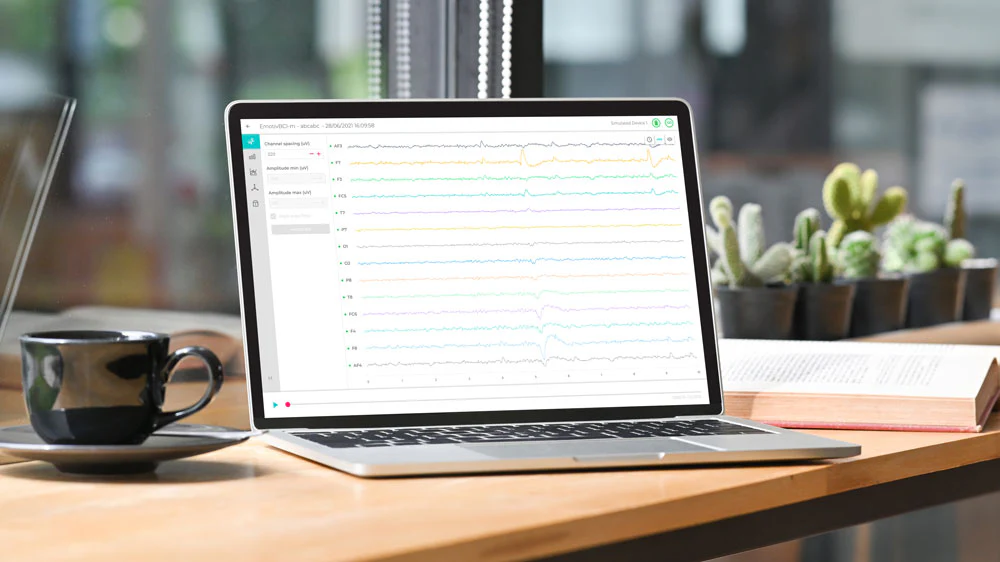
As our most comprehensive platform, EmotivPRO is designed for neuroscience researchers and professionals who need robust, real-time data analysis. It works seamlessly with all Emotiv EEG headsets, allowing you to view the raw EEG data stream, see performance metrics for different cognitive states like focus and stress, and observe frequency band activity across the scalp. The interface is straightforward, making it easy to set up experiments, record data, and place event markers for later analysis. Whether you’re working on a neuromarketing study, building a custom BCI application, or conducting academic research, EmotivPRO provides the detailed insights and reliable data quality you need to move your project forward.
Emotiv App - For user-friendly brain data visualization
If you’re looking for a more accessible way to engage with your brain data, the Emotiv App is the perfect starting point. Designed for simplicity and ease of use, this app helps you visualize your brain activity in a way that’s easy to understand. It pairs with our headsets to show you real-time feedback on states like focus, calm, and excitement. This makes it a practical tool for anyone interested in personal wellness or cognitive training applications.
EEGLAB - An open-source MATLAB toolbox
For the academic research community, EEGLAB is a familiar name. It’s a flexible open-source toolbox that runs on MATLAB, offering an extensive suite of tools for processing and analyzing EEG data. Researchers use EEGLAB to perform independent component analysis (ICA), time/frequency analysis, and create detailed data visualizations.
BrainVision Analyzer - Advanced software for researchers
BrainVision Analyzer is a professional software package widely recognized in the neuroscience research field for its comprehensive features. It provides a complete workflow, from data import and preprocessing to advanced analytical methods like connectivity measures and source-related analysis.
OpenViBE - A platform for real-time neuroscience
If your focus is on brain-computer interfaces, then OpenViBE should be on your radar. This open-source software platform is designed for real-time neuroscience, making it useful for creating and testing BCI systems. OpenViBE supports a range of EEG devices and offers a visual designer for rapid prototyping.
EEG Waves App - A mobile option for brainwave visualization
For those who want to see their brainwaves on the go, the EEG Waves app offers a mobile solution. It pairs with specific hardware to present brain activity in real time on your smartphone—handy for education and casual exploration.
Myndlift - A professional neurofeedback platform
Myndlift centers on neurofeedback training, combining brain-sensing hardware with guided sessions. Clinicians can design protocols and review session data to support user goals.
BioSig - For biomedical signal processing
BioSig is an open-source library for biomedical signals (EEG, ECG, EMG). It supports artifact filtering, feature extraction, and broad file-format interoperability—helpful for multi-modal projects.
BESA - For brain electrical source analysis
BESA Research specializes in brain electrical source analysis and connectivity. It’s widely used in cognitive neuroscience labs that need detailed source localization.
Brainstorm - An open-source tool for MEG/EEG analysis
Brainstorm offers an interactive, GUI-driven pipeline for EEG/MEG, from preprocessing to source modeling and statistics—well-documented and widely adopted in academia.
Breaking Down the Costs of Brainwave Analysis Tools
The cost of brainwave analysis software varies widely.
Free and open-source options
Open-source tools are free and maintained by research communities. Brainstorm and MNE-Python are popular examples for advanced analysis without licensing fees.
Professional software pricing
Paid platforms like EmotivPRO add dedicated support, streamlined workflows, and advanced visualization. Many commercial tools include regular updates and customer assistance.
Educational discounts and free trials
Students and institutions often qualify for reduced pricing. Always check for trial access to evaluate features and fit before purchasing.
Pairing Your Software with the Right EEG Headset
Your EEG headset and analysis software work best as a matched pair.
Research-grade, multi-channel systems
If you’re conducting in-depth studies, multi-channel headsets like FLEX Saline (32 channels) provide high-density data. Pair with EmotivPRO for advanced analysis and data management.
Portable consumer devices
For developers, students, or personal exploration, lighter systems like INSIGHT or MN8 earbuds pair with the Emotiv App for clear, real-time visualizations of cognitive states.
Specialized headsets for different applications
Match the tool to the task. A neuromarketing professional might use EPOC X with EmotivPRO to analyze cognitive metrics, while a developer builds a hands-free app with EmotivBCI to translate mental commands.
Top Applications for Real-Time Brainwave Analysis
Academic research and neuroscience
Real-time analysis reveals immediate responses to stimuli or tasks, helping researchers adjust experiments on the fly and accelerate discovery. Emotiv tools for academic research and education support these studies.
Brain-computer interface (BCI) development
A brain-computer interface translates brain activity into device control. Real-time processing is essential to make interactions feel responsive.
Neuromarketing and consumer insights
Neuromarketing uses EEG to measure cognitive and emotional responses to content in the moment, informing creative and UX decisions.
Cognitive wellness and performance
Real-time metrics help users recognize patterns in focus, calm, and stress—useful for training, routines, and daily awareness with cognitive wellness tools.
Neurofeedback training
Immediate visual or auditory cues help users learn to self-regulate brain activity—core to neurofeedback programs at home or with practitioner guidance.
Exploring Applications in Wellness and Performance Training
Modern EEG tools provide immediate, personalized feedback for growth and performance. With portable devices like MN8 and intuitive software, users can explore cognitive states during real life—work, meditation, creative practice—and build self-awareness over time.
Tools for personalized feedback
The Emotiv App converts complex signals into accessible metrics (focus, calm, excitement) for quick, actionable insight.
Supporting cognitive training programs
Developers can use EmotivBCI to build training experiences that reinforce desired mental states.
Making brain data accessible at home
Portable headsets and approachable software let users explore brain data outside labs, integrating EEG into everyday wellness.
Providing actionable insights for professionals
EmotivPRO helps coaches and practitioners tailor programs with objective, EEG-based feedback.
What’s Next for Brainwave Analysis Technology?
Four trends are shaping the future:
The role of AI and machine learning
ML models can identify subtle patterns in EEG data and classify mental states—useful for adaptive brain-computer interface systems.
The shift to cloud-based processing
Cloud pipelines simplify collaboration and large-scale analysis for academic research and education.
Advances in real-time feedback
Immediate, low-latency feedback powers more responsive neurofeedback and interactive applications built with EmotivBCI.
The rise of user-friendly neurofeedback devices
Portable devices and clear mobile apps broaden access to cognitive wellness tools and performance training.
How to Compare Your Software Options
Performance and processing speed
Determine whether you need low-latency, real-time feedback (e.g., BCI, neurofeedback) or deeper offline analysis after recording.
The learning curve and technical needs
GUI-first tools (e.g., Emotiv App) are fast to learn; scripting toolboxes (MATLAB/Python) offer maximum flexibility.
Quality of support and documentation
Look for tutorials, manuals, and responsive support to keep projects moving.
Integration with your current workflow
Confirm compatibility with your headset and check for APIs/SDKs. Emotiv’s developer tools support custom streaming and integrations.
Choosing the Right Tool for Your Project
Start with your “why”
Align features to your primary objective—publication-grade research, BCI prototyping, or personal insights.
Look for features that matter
Prioritize preprocessing, signal processing, visualization, and (if needed) real-time feedback. EmotivPRO provides these capabilities.
Match the software to your headset
Verify compatibility. Emotiv software integrates with Emotiv headsets—from INSIGHT to FLEX—for reliable acquisition and analysis.
Factor in your budget and skills
Open-source tools are cost-effective but may require coding; paid software adds support and streamlined UX.
Related Articles
Frequently Asked Questions
Do I need to be a programmer to use brainwave analysis software?
Not at all. The software you choose depends on your technical comfort level. Some platforms, like the Emotiv App, are designed with a simple, graphical interface so you can start visualizing your brain activity with just a few clicks. Other toolkits used in academic research might require scripting knowledge to build custom analysis pipelines.
What’s the main difference between software for research and software for personal use?
The biggest difference comes down to depth and purpose. Research software, like EmotivPRO, provides granular control, advanced analysis, and export options for scientific work. Software for personal use focuses on clear visualizations of cognitive states like focus or calm.
Can I use any EEG headset with any analysis software?
Check for compatibility before you commit. Each headset has a specific data format and workflow. Emotiv software is designed for Emotiv headsets to ensure a smooth experience.
What is “noise” in EEG data and why is cleaning it so important?
“Noise” refers to non-brain electrical signals—eye blinks, jaw tension, or environmental interference. Cleaning this noise is essential so your analysis reflects neural activity, not artifacts.
How is real-time analysis different from just recording data to look at later?
Recording for later review is like a snapshot; real-time analysis is like a live viewfinder. Immediate feedback enables interactive applications such as BCIs and neurofeedback training.
Real-Time Brainwave Analysis: The Software Powering Next-Gen Neurotechnology
What if you could control a device with your thoughts? Or see a person’s genuine, unfiltered reaction to an advertisement as they watch it? These aren’t concepts from science fiction; they are practical applications powered by modern neurotechnology. The engine behind these innovations is the ability to interpret brain signals the moment they occur. This immediate feedback loop is what makes brain-computer interfaces feel responsive and gives neuromarketing studies their power. To build these experiences, you need the right software. We’ll walk you through the top real-time brainwave analysis tools that are making these applications a reality today, for both seasoned researchers and curious developers.
Key Takeaways
Start with your “why” to find the right fit: Your primary goal—whether academic research, BCI development, or personal wellness—determines which software features are most important for your project.
Your headset and software are a team: Make sure your chosen software is fully compatible with your EEG hardware to guarantee you can capture and analyze clean, reliable data effectively.
Prioritize features that create clarity: Look for essential functions like real-time processing for immediate feedback, data cleaning for accuracy, and intuitive visualization to turn complex brain signals into understandable insights.
What is Real-Time Brainwave Analysis?
In simple terms, real-time brainwave analysis is the process of interpreting electrical signals from the brain the moment they are captured. Instead of recording data to review later, these tools give you an immediate look at brain activity as it happens. This instant feedback is what makes so many applications in neurotechnology possible, turning complex brain signals into understandable insights you can work with right away.
This immediate feedback loop is the key to creating interactive experiences. For example, in a brain-computer interface, real-time analysis allows a person to interact with a device or application using their brain signals. The system needs to interpret the user’s intent quickly to make the experience feel responsive. It’s also fundamental for neurofeedback training, where you receive immediate visual or auditory cues about your brain activity, which can help you learn to guide your own mental states.
These analysis tools do more than just show you raw data. They are designed to clean up the electrical signals, removing interference from things like muscle movements, and then process them to identify specific patterns and brainwave frequencies. This processed information is then visualized through graphs, charts, or other clear displays. For anyone involved in academic research or product development, this capability is essential for turning raw EEG data into meaningful discoveries and innovative applications.
Key Features to Look for in Analysis Software
Choosing the right analysis software is just as important as selecting your EEG headset. The software is your window into the brain data you’re collecting, and the right features can make the difference between a frustrating experience and a productive one. Your ideal software depends entirely on your goals. Are you conducting formal academic research that requires rigorous data cleaning and statistical analysis? Or are you developing a responsive application that needs to interpret data in the blink of an eye?
Think of it like a workshop. You need the right tools for the job. A simple project might only require a hammer and nails, while a complex one demands a full suite of power tools. In the world of EEG analysis, some software offers a straightforward look at brainwave activity, while other platforms provide advanced features for deep, multi-layered analysis. This guide will walk you through the essential features to look for, helping you identify the software that best fits your project’s needs and your own technical comfort level.
Real-time processing power
Real-time processing is the ability to analyze data the moment it’s collected. This isn’t just about speed; it’s about interactivity. For applications like brain-computer interfaces (BCI), real-time feedback is essential for creating a responsive connection between a user and a device. It’s also key for neurofeedback training, where a person learns to regulate their brain activity based on immediate audio or visual cues. If your project involves any form of live interaction or instant feedback, you’ll need software that can keep up without delays. This capability ensures that what you see on screen is a true reflection of what’s happening in the brain right now.
Tools for data cleaning and preprocessing
Raw EEG data is rarely perfect. It’s often filled with “noise” or artifacts—signals that don’t come from brain activity. These can be caused by simple things like eye blinks, muscle tension in the jaw, or even electrical interference from nearby devices. Good analysis software provides robust tools for data cleaning, also known as preprocessing. These features help you filter out the noise and isolate the true neural signals. Without this crucial step, your analysis could be based on flawed data, leading to inaccurate conclusions. Look for software that gives you control over filtering and artifact rejection to ensure your results are reliable.
Signal processing and pattern recognition features
Once your data is clean, the next step is to make sense of it. This is where signal processing comes in. These features are the analytical core of the software, allowing you to find specific patterns and metrics within the EEG data. This might involve breaking down the signal into different frequency bands (like alpha or beta waves) to see how they change over time or in response to certain tasks. Effective signal processing tools let you move beyond raw data to uncover meaningful insights about cognitive states, emotional responses, or focus levels. They are the key to transforming electrical signals into understandable information.
Clear visualization and reporting
Raw numbers and data streams can be overwhelming and difficult to interpret. That’s why clear visualization tools are a must-have. Quality software translates complex data into intuitive graphs, charts, and maps that help you see trends and patterns at a glance. Features like scalp heat maps can show you where brain activity is most prominent, while power spectrum graphs can illustrate the strength of different brainwaves. These visuals are not only vital for your own analysis but are also essential for sharing your findings with others. Our comprehensive platform, EmotivPRO, is designed with clear, actionable visualizations at its core.
Device compatibility and simple integration
This might seem obvious, but it’s a critical checkpoint: make sure the software works with your EEG headset. Compatibility isn’t always universal, so always verify before you commit. For researchers, developers, and power users, the ability to integrate with other platforms is also a major plus. Look for software that can connect with common programming environments like Python or analysis tools like MATLAB. This flexibility allows you to build custom applications, run specialized analysis scripts, and incorporate EEG data into a larger workflow. Our goal is to help you integrate with other tools to expand what’s possible.
An intuitive user interface
The most capable software in the world won’t help if it’s too complicated to use. A clean, logical, and intuitive user interface (UI) can dramatically shorten your learning curve and make your entire workflow more efficient. You should be able to easily set up an experiment, view data streams, and apply analysis tools without getting lost in a maze of menus. Before choosing a software package, see if you can find a demo video or a free trial. Getting a hands-on feel for the interface is the best way to know if it’s a good fit for you.
Machine learning capabilities
For those working on the cutting edge of neuroscience and BCI, machine learning (ML) capabilities are a meaningful add-on. ML algorithms can be trained to recognize complex patterns in brain data that might be missed by the human eye. This allows you to classify mental states—like focus, stress, or cognitive load—with increasing accuracy. By learning from an individual’s unique brain patterns, ML can help create personalized and adaptive applications. This feature automates much of the heavy lifting in pattern recognition, enabling you to build more sophisticated and responsive systems faster than before.
10 of the Best Real-Time Brainwave Analysis Tools
Finding the right software to pair with your EEG hardware is just as important as choosing the headset itself. The right tool for you really depends on your goals. Are you conducting in-depth academic research, developing a new brain-computer interface, or are you more interested in visualizing your own cognitive states for personal wellness? The software landscape is vast, with options ranging from open-source academic toolboxes to streamlined, user-friendly mobile apps. To help you find a good fit, here’s a list of ten real-time brainwave analysis tools.
EmotivPRO - Our comprehensive platform for EEG analysis
As our most comprehensive platform, EmotivPRO is designed for neuroscience researchers and professionals who need robust, real-time data analysis. It works seamlessly with all Emotiv EEG headsets, allowing you to view the raw EEG data stream, see performance metrics for different cognitive states like focus and stress, and observe frequency band activity across the scalp. The interface is straightforward, making it easy to set up experiments, record data, and place event markers for later analysis. Whether you’re working on a neuromarketing study, building a custom BCI application, or conducting academic research, EmotivPRO provides the detailed insights and reliable data quality you need to move your project forward.
Emotiv App - For user-friendly brain data visualization
If you’re looking for a more accessible way to engage with your brain data, the Emotiv App is the perfect starting point. Designed for simplicity and ease of use, this app helps you visualize your brain activity in a way that’s easy to understand. It pairs with our headsets to show you real-time feedback on states like focus, calm, and excitement. This makes it a practical tool for anyone interested in personal wellness or cognitive training applications.
EEGLAB - An open-source MATLAB toolbox
For the academic research community, EEGLAB is a familiar name. It’s a flexible open-source toolbox that runs on MATLAB, offering an extensive suite of tools for processing and analyzing EEG data. Researchers use EEGLAB to perform independent component analysis (ICA), time/frequency analysis, and create detailed data visualizations.
BrainVision Analyzer - Advanced software for researchers
BrainVision Analyzer is a professional software package widely recognized in the neuroscience research field for its comprehensive features. It provides a complete workflow, from data import and preprocessing to advanced analytical methods like connectivity measures and source-related analysis.
OpenViBE - A platform for real-time neuroscience
If your focus is on brain-computer interfaces, then OpenViBE should be on your radar. This open-source software platform is designed for real-time neuroscience, making it useful for creating and testing BCI systems. OpenViBE supports a range of EEG devices and offers a visual designer for rapid prototyping.
EEG Waves App - A mobile option for brainwave visualization
For those who want to see their brainwaves on the go, the EEG Waves app offers a mobile solution. It pairs with specific hardware to present brain activity in real time on your smartphone—handy for education and casual exploration.
Myndlift - A professional neurofeedback platform
Myndlift centers on neurofeedback training, combining brain-sensing hardware with guided sessions. Clinicians can design protocols and review session data to support user goals.
BioSig - For biomedical signal processing
BioSig is an open-source library for biomedical signals (EEG, ECG, EMG). It supports artifact filtering, feature extraction, and broad file-format interoperability—helpful for multi-modal projects.
BESA - For brain electrical source analysis
BESA Research specializes in brain electrical source analysis and connectivity. It’s widely used in cognitive neuroscience labs that need detailed source localization.
Brainstorm - An open-source tool for MEG/EEG analysis
Brainstorm offers an interactive, GUI-driven pipeline for EEG/MEG, from preprocessing to source modeling and statistics—well-documented and widely adopted in academia.
Breaking Down the Costs of Brainwave Analysis Tools
The cost of brainwave analysis software varies widely.
Free and open-source options
Open-source tools are free and maintained by research communities. Brainstorm and MNE-Python are popular examples for advanced analysis without licensing fees.
Professional software pricing
Paid platforms like EmotivPRO add dedicated support, streamlined workflows, and advanced visualization. Many commercial tools include regular updates and customer assistance.
Educational discounts and free trials
Students and institutions often qualify for reduced pricing. Always check for trial access to evaluate features and fit before purchasing.
Pairing Your Software with the Right EEG Headset
Your EEG headset and analysis software work best as a matched pair.
Research-grade, multi-channel systems
If you’re conducting in-depth studies, multi-channel headsets like FLEX Saline (32 channels) provide high-density data. Pair with EmotivPRO for advanced analysis and data management.
Portable consumer devices
For developers, students, or personal exploration, lighter systems like INSIGHT or MN8 earbuds pair with the Emotiv App for clear, real-time visualizations of cognitive states.
Specialized headsets for different applications
Match the tool to the task. A neuromarketing professional might use EPOC X with EmotivPRO to analyze cognitive metrics, while a developer builds a hands-free app with EmotivBCI to translate mental commands.
Top Applications for Real-Time Brainwave Analysis
Academic research and neuroscience
Real-time analysis reveals immediate responses to stimuli or tasks, helping researchers adjust experiments on the fly and accelerate discovery. Emotiv tools for academic research and education support these studies.
Brain-computer interface (BCI) development
A brain-computer interface translates brain activity into device control. Real-time processing is essential to make interactions feel responsive.
Neuromarketing and consumer insights
Neuromarketing uses EEG to measure cognitive and emotional responses to content in the moment, informing creative and UX decisions.
Cognitive wellness and performance
Real-time metrics help users recognize patterns in focus, calm, and stress—useful for training, routines, and daily awareness with cognitive wellness tools.
Neurofeedback training
Immediate visual or auditory cues help users learn to self-regulate brain activity—core to neurofeedback programs at home or with practitioner guidance.
Exploring Applications in Wellness and Performance Training
Modern EEG tools provide immediate, personalized feedback for growth and performance. With portable devices like MN8 and intuitive software, users can explore cognitive states during real life—work, meditation, creative practice—and build self-awareness over time.
Tools for personalized feedback
The Emotiv App converts complex signals into accessible metrics (focus, calm, excitement) for quick, actionable insight.
Supporting cognitive training programs
Developers can use EmotivBCI to build training experiences that reinforce desired mental states.
Making brain data accessible at home
Portable headsets and approachable software let users explore brain data outside labs, integrating EEG into everyday wellness.
Providing actionable insights for professionals
EmotivPRO helps coaches and practitioners tailor programs with objective, EEG-based feedback.
What’s Next for Brainwave Analysis Technology?
Four trends are shaping the future:
The role of AI and machine learning
ML models can identify subtle patterns in EEG data and classify mental states—useful for adaptive brain-computer interface systems.
The shift to cloud-based processing
Cloud pipelines simplify collaboration and large-scale analysis for academic research and education.
Advances in real-time feedback
Immediate, low-latency feedback powers more responsive neurofeedback and interactive applications built with EmotivBCI.
The rise of user-friendly neurofeedback devices
Portable devices and clear mobile apps broaden access to cognitive wellness tools and performance training.
How to Compare Your Software Options
Performance and processing speed
Determine whether you need low-latency, real-time feedback (e.g., BCI, neurofeedback) or deeper offline analysis after recording.
The learning curve and technical needs
GUI-first tools (e.g., Emotiv App) are fast to learn; scripting toolboxes (MATLAB/Python) offer maximum flexibility.
Quality of support and documentation
Look for tutorials, manuals, and responsive support to keep projects moving.
Integration with your current workflow
Confirm compatibility with your headset and check for APIs/SDKs. Emotiv’s developer tools support custom streaming and integrations.
Choosing the Right Tool for Your Project
Start with your “why”
Align features to your primary objective—publication-grade research, BCI prototyping, or personal insights.
Look for features that matter
Prioritize preprocessing, signal processing, visualization, and (if needed) real-time feedback. EmotivPRO provides these capabilities.
Match the software to your headset
Verify compatibility. Emotiv software integrates with Emotiv headsets—from INSIGHT to FLEX—for reliable acquisition and analysis.
Factor in your budget and skills
Open-source tools are cost-effective but may require coding; paid software adds support and streamlined UX.
Related Articles
Frequently Asked Questions
Do I need to be a programmer to use brainwave analysis software?
Not at all. The software you choose depends on your technical comfort level. Some platforms, like the Emotiv App, are designed with a simple, graphical interface so you can start visualizing your brain activity with just a few clicks. Other toolkits used in academic research might require scripting knowledge to build custom analysis pipelines.
What’s the main difference between software for research and software for personal use?
The biggest difference comes down to depth and purpose. Research software, like EmotivPRO, provides granular control, advanced analysis, and export options for scientific work. Software for personal use focuses on clear visualizations of cognitive states like focus or calm.
Can I use any EEG headset with any analysis software?
Check for compatibility before you commit. Each headset has a specific data format and workflow. Emotiv software is designed for Emotiv headsets to ensure a smooth experience.
What is “noise” in EEG data and why is cleaning it so important?
“Noise” refers to non-brain electrical signals—eye blinks, jaw tension, or environmental interference. Cleaning this noise is essential so your analysis reflects neural activity, not artifacts.
How is real-time analysis different from just recording data to look at later?
Recording for later review is like a snapshot; real-time analysis is like a live viewfinder. Immediate feedback enables interactive applications such as BCIs and neurofeedback training.
Real-Time Brainwave Analysis: The Software Powering Next-Gen Neurotechnology
What if you could control a device with your thoughts? Or see a person’s genuine, unfiltered reaction to an advertisement as they watch it? These aren’t concepts from science fiction; they are practical applications powered by modern neurotechnology. The engine behind these innovations is the ability to interpret brain signals the moment they occur. This immediate feedback loop is what makes brain-computer interfaces feel responsive and gives neuromarketing studies their power. To build these experiences, you need the right software. We’ll walk you through the top real-time brainwave analysis tools that are making these applications a reality today, for both seasoned researchers and curious developers.
Key Takeaways
Start with your “why” to find the right fit: Your primary goal—whether academic research, BCI development, or personal wellness—determines which software features are most important for your project.
Your headset and software are a team: Make sure your chosen software is fully compatible with your EEG hardware to guarantee you can capture and analyze clean, reliable data effectively.
Prioritize features that create clarity: Look for essential functions like real-time processing for immediate feedback, data cleaning for accuracy, and intuitive visualization to turn complex brain signals into understandable insights.
What is Real-Time Brainwave Analysis?
In simple terms, real-time brainwave analysis is the process of interpreting electrical signals from the brain the moment they are captured. Instead of recording data to review later, these tools give you an immediate look at brain activity as it happens. This instant feedback is what makes so many applications in neurotechnology possible, turning complex brain signals into understandable insights you can work with right away.
This immediate feedback loop is the key to creating interactive experiences. For example, in a brain-computer interface, real-time analysis allows a person to interact with a device or application using their brain signals. The system needs to interpret the user’s intent quickly to make the experience feel responsive. It’s also fundamental for neurofeedback training, where you receive immediate visual or auditory cues about your brain activity, which can help you learn to guide your own mental states.
These analysis tools do more than just show you raw data. They are designed to clean up the electrical signals, removing interference from things like muscle movements, and then process them to identify specific patterns and brainwave frequencies. This processed information is then visualized through graphs, charts, or other clear displays. For anyone involved in academic research or product development, this capability is essential for turning raw EEG data into meaningful discoveries and innovative applications.
Key Features to Look for in Analysis Software
Choosing the right analysis software is just as important as selecting your EEG headset. The software is your window into the brain data you’re collecting, and the right features can make the difference between a frustrating experience and a productive one. Your ideal software depends entirely on your goals. Are you conducting formal academic research that requires rigorous data cleaning and statistical analysis? Or are you developing a responsive application that needs to interpret data in the blink of an eye?
Think of it like a workshop. You need the right tools for the job. A simple project might only require a hammer and nails, while a complex one demands a full suite of power tools. In the world of EEG analysis, some software offers a straightforward look at brainwave activity, while other platforms provide advanced features for deep, multi-layered analysis. This guide will walk you through the essential features to look for, helping you identify the software that best fits your project’s needs and your own technical comfort level.
Real-time processing power
Real-time processing is the ability to analyze data the moment it’s collected. This isn’t just about speed; it’s about interactivity. For applications like brain-computer interfaces (BCI), real-time feedback is essential for creating a responsive connection between a user and a device. It’s also key for neurofeedback training, where a person learns to regulate their brain activity based on immediate audio or visual cues. If your project involves any form of live interaction or instant feedback, you’ll need software that can keep up without delays. This capability ensures that what you see on screen is a true reflection of what’s happening in the brain right now.
Tools for data cleaning and preprocessing
Raw EEG data is rarely perfect. It’s often filled with “noise” or artifacts—signals that don’t come from brain activity. These can be caused by simple things like eye blinks, muscle tension in the jaw, or even electrical interference from nearby devices. Good analysis software provides robust tools for data cleaning, also known as preprocessing. These features help you filter out the noise and isolate the true neural signals. Without this crucial step, your analysis could be based on flawed data, leading to inaccurate conclusions. Look for software that gives you control over filtering and artifact rejection to ensure your results are reliable.
Signal processing and pattern recognition features
Once your data is clean, the next step is to make sense of it. This is where signal processing comes in. These features are the analytical core of the software, allowing you to find specific patterns and metrics within the EEG data. This might involve breaking down the signal into different frequency bands (like alpha or beta waves) to see how they change over time or in response to certain tasks. Effective signal processing tools let you move beyond raw data to uncover meaningful insights about cognitive states, emotional responses, or focus levels. They are the key to transforming electrical signals into understandable information.
Clear visualization and reporting
Raw numbers and data streams can be overwhelming and difficult to interpret. That’s why clear visualization tools are a must-have. Quality software translates complex data into intuitive graphs, charts, and maps that help you see trends and patterns at a glance. Features like scalp heat maps can show you where brain activity is most prominent, while power spectrum graphs can illustrate the strength of different brainwaves. These visuals are not only vital for your own analysis but are also essential for sharing your findings with others. Our comprehensive platform, EmotivPRO, is designed with clear, actionable visualizations at its core.
Device compatibility and simple integration
This might seem obvious, but it’s a critical checkpoint: make sure the software works with your EEG headset. Compatibility isn’t always universal, so always verify before you commit. For researchers, developers, and power users, the ability to integrate with other platforms is also a major plus. Look for software that can connect with common programming environments like Python or analysis tools like MATLAB. This flexibility allows you to build custom applications, run specialized analysis scripts, and incorporate EEG data into a larger workflow. Our goal is to help you integrate with other tools to expand what’s possible.
An intuitive user interface
The most capable software in the world won’t help if it’s too complicated to use. A clean, logical, and intuitive user interface (UI) can dramatically shorten your learning curve and make your entire workflow more efficient. You should be able to easily set up an experiment, view data streams, and apply analysis tools without getting lost in a maze of menus. Before choosing a software package, see if you can find a demo video or a free trial. Getting a hands-on feel for the interface is the best way to know if it’s a good fit for you.
Machine learning capabilities
For those working on the cutting edge of neuroscience and BCI, machine learning (ML) capabilities are a meaningful add-on. ML algorithms can be trained to recognize complex patterns in brain data that might be missed by the human eye. This allows you to classify mental states—like focus, stress, or cognitive load—with increasing accuracy. By learning from an individual’s unique brain patterns, ML can help create personalized and adaptive applications. This feature automates much of the heavy lifting in pattern recognition, enabling you to build more sophisticated and responsive systems faster than before.
10 of the Best Real-Time Brainwave Analysis Tools
Finding the right software to pair with your EEG hardware is just as important as choosing the headset itself. The right tool for you really depends on your goals. Are you conducting in-depth academic research, developing a new brain-computer interface, or are you more interested in visualizing your own cognitive states for personal wellness? The software landscape is vast, with options ranging from open-source academic toolboxes to streamlined, user-friendly mobile apps. To help you find a good fit, here’s a list of ten real-time brainwave analysis tools.
EmotivPRO - Our comprehensive platform for EEG analysis
As our most comprehensive platform, EmotivPRO is designed for neuroscience researchers and professionals who need robust, real-time data analysis. It works seamlessly with all Emotiv EEG headsets, allowing you to view the raw EEG data stream, see performance metrics for different cognitive states like focus and stress, and observe frequency band activity across the scalp. The interface is straightforward, making it easy to set up experiments, record data, and place event markers for later analysis. Whether you’re working on a neuromarketing study, building a custom BCI application, or conducting academic research, EmotivPRO provides the detailed insights and reliable data quality you need to move your project forward.
Emotiv App - For user-friendly brain data visualization
If you’re looking for a more accessible way to engage with your brain data, the Emotiv App is the perfect starting point. Designed for simplicity and ease of use, this app helps you visualize your brain activity in a way that’s easy to understand. It pairs with our headsets to show you real-time feedback on states like focus, calm, and excitement. This makes it a practical tool for anyone interested in personal wellness or cognitive training applications.
EEGLAB - An open-source MATLAB toolbox
For the academic research community, EEGLAB is a familiar name. It’s a flexible open-source toolbox that runs on MATLAB, offering an extensive suite of tools for processing and analyzing EEG data. Researchers use EEGLAB to perform independent component analysis (ICA), time/frequency analysis, and create detailed data visualizations.
BrainVision Analyzer - Advanced software for researchers
BrainVision Analyzer is a professional software package widely recognized in the neuroscience research field for its comprehensive features. It provides a complete workflow, from data import and preprocessing to advanced analytical methods like connectivity measures and source-related analysis.
OpenViBE - A platform for real-time neuroscience
If your focus is on brain-computer interfaces, then OpenViBE should be on your radar. This open-source software platform is designed for real-time neuroscience, making it useful for creating and testing BCI systems. OpenViBE supports a range of EEG devices and offers a visual designer for rapid prototyping.
EEG Waves App - A mobile option for brainwave visualization
For those who want to see their brainwaves on the go, the EEG Waves app offers a mobile solution. It pairs with specific hardware to present brain activity in real time on your smartphone—handy for education and casual exploration.
Myndlift - A professional neurofeedback platform
Myndlift centers on neurofeedback training, combining brain-sensing hardware with guided sessions. Clinicians can design protocols and review session data to support user goals.
BioSig - For biomedical signal processing
BioSig is an open-source library for biomedical signals (EEG, ECG, EMG). It supports artifact filtering, feature extraction, and broad file-format interoperability—helpful for multi-modal projects.
BESA - For brain electrical source analysis
BESA Research specializes in brain electrical source analysis and connectivity. It’s widely used in cognitive neuroscience labs that need detailed source localization.
Brainstorm - An open-source tool for MEG/EEG analysis
Brainstorm offers an interactive, GUI-driven pipeline for EEG/MEG, from preprocessing to source modeling and statistics—well-documented and widely adopted in academia.
Breaking Down the Costs of Brainwave Analysis Tools
The cost of brainwave analysis software varies widely.
Free and open-source options
Open-source tools are free and maintained by research communities. Brainstorm and MNE-Python are popular examples for advanced analysis without licensing fees.
Professional software pricing
Paid platforms like EmotivPRO add dedicated support, streamlined workflows, and advanced visualization. Many commercial tools include regular updates and customer assistance.
Educational discounts and free trials
Students and institutions often qualify for reduced pricing. Always check for trial access to evaluate features and fit before purchasing.
Pairing Your Software with the Right EEG Headset
Your EEG headset and analysis software work best as a matched pair.
Research-grade, multi-channel systems
If you’re conducting in-depth studies, multi-channel headsets like FLEX Saline (32 channels) provide high-density data. Pair with EmotivPRO for advanced analysis and data management.
Portable consumer devices
For developers, students, or personal exploration, lighter systems like INSIGHT or MN8 earbuds pair with the Emotiv App for clear, real-time visualizations of cognitive states.
Specialized headsets for different applications
Match the tool to the task. A neuromarketing professional might use EPOC X with EmotivPRO to analyze cognitive metrics, while a developer builds a hands-free app with EmotivBCI to translate mental commands.
Top Applications for Real-Time Brainwave Analysis
Academic research and neuroscience
Real-time analysis reveals immediate responses to stimuli or tasks, helping researchers adjust experiments on the fly and accelerate discovery. Emotiv tools for academic research and education support these studies.
Brain-computer interface (BCI) development
A brain-computer interface translates brain activity into device control. Real-time processing is essential to make interactions feel responsive.
Neuromarketing and consumer insights
Neuromarketing uses EEG to measure cognitive and emotional responses to content in the moment, informing creative and UX decisions.
Cognitive wellness and performance
Real-time metrics help users recognize patterns in focus, calm, and stress—useful for training, routines, and daily awareness with cognitive wellness tools.
Neurofeedback training
Immediate visual or auditory cues help users learn to self-regulate brain activity—core to neurofeedback programs at home or with practitioner guidance.
Exploring Applications in Wellness and Performance Training
Modern EEG tools provide immediate, personalized feedback for growth and performance. With portable devices like MN8 and intuitive software, users can explore cognitive states during real life—work, meditation, creative practice—and build self-awareness over time.
Tools for personalized feedback
The Emotiv App converts complex signals into accessible metrics (focus, calm, excitement) for quick, actionable insight.
Supporting cognitive training programs
Developers can use EmotivBCI to build training experiences that reinforce desired mental states.
Making brain data accessible at home
Portable headsets and approachable software let users explore brain data outside labs, integrating EEG into everyday wellness.
Providing actionable insights for professionals
EmotivPRO helps coaches and practitioners tailor programs with objective, EEG-based feedback.
What’s Next for Brainwave Analysis Technology?
Four trends are shaping the future:
The role of AI and machine learning
ML models can identify subtle patterns in EEG data and classify mental states—useful for adaptive brain-computer interface systems.
The shift to cloud-based processing
Cloud pipelines simplify collaboration and large-scale analysis for academic research and education.
Advances in real-time feedback
Immediate, low-latency feedback powers more responsive neurofeedback and interactive applications built with EmotivBCI.
The rise of user-friendly neurofeedback devices
Portable devices and clear mobile apps broaden access to cognitive wellness tools and performance training.
How to Compare Your Software Options
Performance and processing speed
Determine whether you need low-latency, real-time feedback (e.g., BCI, neurofeedback) or deeper offline analysis after recording.
The learning curve and technical needs
GUI-first tools (e.g., Emotiv App) are fast to learn; scripting toolboxes (MATLAB/Python) offer maximum flexibility.
Quality of support and documentation
Look for tutorials, manuals, and responsive support to keep projects moving.
Integration with your current workflow
Confirm compatibility with your headset and check for APIs/SDKs. Emotiv’s developer tools support custom streaming and integrations.
Choosing the Right Tool for Your Project
Start with your “why”
Align features to your primary objective—publication-grade research, BCI prototyping, or personal insights.
Look for features that matter
Prioritize preprocessing, signal processing, visualization, and (if needed) real-time feedback. EmotivPRO provides these capabilities.
Match the software to your headset
Verify compatibility. Emotiv software integrates with Emotiv headsets—from INSIGHT to FLEX—for reliable acquisition and analysis.
Factor in your budget and skills
Open-source tools are cost-effective but may require coding; paid software adds support and streamlined UX.
Related Articles
Frequently Asked Questions
Do I need to be a programmer to use brainwave analysis software?
Not at all. The software you choose depends on your technical comfort level. Some platforms, like the Emotiv App, are designed with a simple, graphical interface so you can start visualizing your brain activity with just a few clicks. Other toolkits used in academic research might require scripting knowledge to build custom analysis pipelines.
What’s the main difference between software for research and software for personal use?
The biggest difference comes down to depth and purpose. Research software, like EmotivPRO, provides granular control, advanced analysis, and export options for scientific work. Software for personal use focuses on clear visualizations of cognitive states like focus or calm.
Can I use any EEG headset with any analysis software?
Check for compatibility before you commit. Each headset has a specific data format and workflow. Emotiv software is designed for Emotiv headsets to ensure a smooth experience.
What is “noise” in EEG data and why is cleaning it so important?
“Noise” refers to non-brain electrical signals—eye blinks, jaw tension, or environmental interference. Cleaning this noise is essential so your analysis reflects neural activity, not artifacts.
How is real-time analysis different from just recording data to look at later?
Recording for later review is like a snapshot; real-time analysis is like a live viewfinder. Immediate feedback enables interactive applications such as BCIs and neurofeedback training.
Continue reading