EEG Headset
EEG Headset
EEG Headset
EEG Device Headset
Electroencephalography (EEG) is the gold-standard method for non-invasively recording the brain’s electrical activity. Modern EEG headsets have evolved from bulky clinical machines into sleek, wireless wearables that allow researchers, developers, and clinicians to capture high-fidelity brain data in real-world environments. EEG systems use electrodes on the scalp to collect brain signals, giving information about thoughts, emotions, and mental health. The collected signals are amplified and digitized, and then sent to a computer or mobile device for storage and data processing.
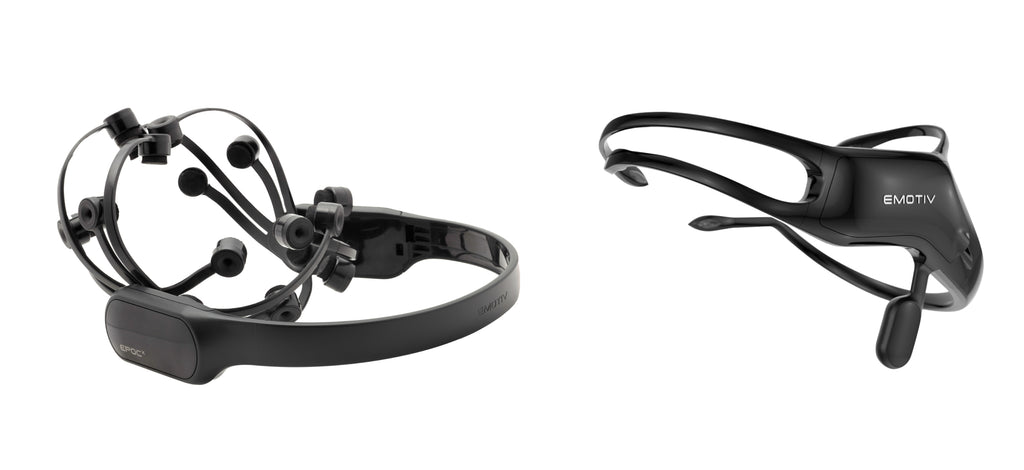
The clinical definition of EEG is the recording of brain activity over a period. EEG electrodes sense and record the electrical activity in your brain. The signals are made stronger and turned into digital form, then sent to a computer or phone for storage and processing.
Professional EEG systems span both research and consumer markets because of their versatility and non-invasive nature. Researchers use high-tech EEG machines for neuroscience, cognitive studies, and medical research. They provide accurate measurements and many features.
Consumer EEG devices are cheaper and easier to use, good for personal growth, meditation, and neurofeedback training. Choosing the right EEG equipment involves considering factors like accuracy, comfort, and software compatibility. This ensures that the equipment meets your requirements and budget.
EEG Technology
EEG headsets rely on sophisticated EEG technology to accurately capture and interpret brainwave activity. Electrodes placed strategically on the scalp pick up electrical signals generated by the brain's neurons. The system amplifies, filters, and converts these weak signals into digital data for further examination.
EEG readers, software programs that come with the headset, then process these digital signals. They look for patterns in brainwaves, such as alpha, beta, theta, and gamma waves, to understand different cognitive states.
High-tech EEG devices analyze brain data as it happens. They remove artifacts and identify different brainwave types. This helps us better understand brain activity.
Developers can use EEG for BCI to execute direct mental commands in app development and many other use cases.
How EEG Headsets Work
Electroencephalography headsets utilize advanced technology to effectively measure and interpret brain activity. Electrodes positioned on the head pick up electrical signals emitted by the brain. Computers amplify, filter, and convert these signals into digital data for analyzing.
EEG readers, software applications often included with the headset, analyze the processed digital signals. Researchers can understand mental states and thoughts by studying brainwaves and patterns in brain activity. You can visualize the processed data in real-time and store it for further analyzing later.
Hardware is only half the battle; high-quality analysis requires robust software. When using an EEG data analysis software like EmotivPRO, researchers can view raw data streams, perform FFT (Fast Fourier Transform), and export data for further processing in MATLAB or Python.
Here's what to consider when selecting an EEG device for home use:
Electrode Count: More electrodes generally provide more detailed brain activity data.
The sampling rate captures brain signals at a frequency that determines precision, with a higher rate offering better accuracy.
Software Compatibility: Ensure your chosen device works seamlessly with your preferred analyzing software.
For those prioritizing flexibility, portable EEG machines offer a great solution. These lightweight and compact headsets allow for easy use at home, work, or on-the-go. Some even boast wireless connectivity, freeing users from being tethered to a computer for brain activity monitoring.
EEG headphones is a common search term, but it's not entirely accurate. EEG devices typically consist of a cap or headband with embedded electrodes, not headphone-like structures.
By understanding how EEG headsets work, you can make an informed decision when choosing the right one for your needs.
From our blog: | 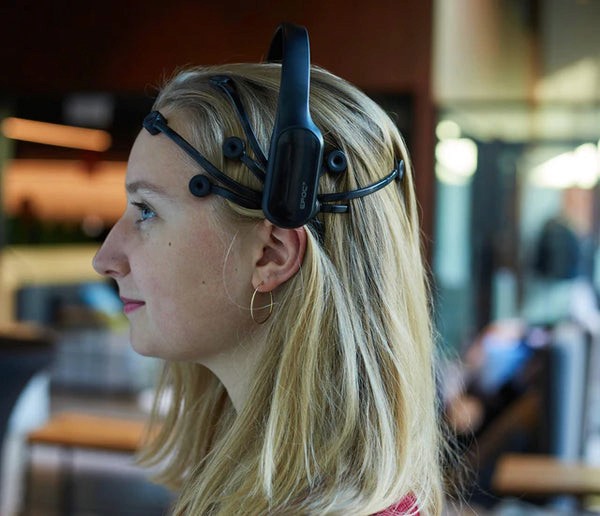 |
Diverse Landscape of EEG Devices
The world of EEG headsets offers a diverse range to suit various applications. Understanding these categories empowers you to choose the ideal one for your goals.
Research-Grade EEG Headsets:
Experts and researchers use high-quality 14-channel research-grade EEG headset for neuroscience studies and clinical research. These headsets provide top-notch data and advanced features. These headsets typically boast a high number of electrodes, enabling precise spatial mapping of brain activity.
They offer superior signal quality, high sampling rates, and seamless compatibility with advanced analyzing software. While research-grade EEG headsets tend to be more expensive, they provide unparalleled accuracy and flexibility for scientific investigations. For professionals requiring the highest data integrity without the hassle of conductive gels, the EMOTIV EPOC X offers a 14-channel saline-based system. It is widely recognized as the best EEG headset for research due to its rapid setup time and extensive spatial coverage of the frontal, temporal, and parietal lobes.
Consumer-Grade EEG Headsets:
Companies design consumer-grade EEG headsets for everyday users interested in monitoring their brain activity for personal development, relaxation, or entertainment purposes. These headsets are cheaper and easier to use than professional models, so more people can use them.
Consumer EEG headsets have fewer electrodes and functions compared to research-grade ones. However, they still offer valuable insights into brain function.
People commonly use these headsets for activities such as meditation, focus training, and gaming. You can use them for meditation, focus training, and gaming.
Portable EEG Headsets:
For users who prioritize mobility and convenience in brain monitoring, designers create portable EEG headsets. These lightweight and compact mobile 5-channel EEG headsets are ideal for use at home, work, or while traveling. Some portable EEG headsets can connect wirelessly. Users can monitor their brain activity without being tethered to a computer or stationary device.
EEG Devices for Home Use:
Advancements in technology have led to a growing market for EEG devices specifically designed for home use. These user-friendly and affordable devices often connect to mobile apps or software programs for easy data imaging.
EEG devices for home use allow people to track their brain activity at home. They can be helpful for managing stress, improving sleep quality, and potentially even enhancing cognitive function.
These devices are not as advanced as professional EEG systems. However, they still offer valuable information about brain function. This information can help users in managing their mental health and overall well-being.
EEG Helmet is a less common term for EEG headsets. Some EEG devices look like helmets with full-head coverage for electrode placement, but "headset" is the more common term used.
Comparing Top EEG Headsets: 2025 Guide
Choosing the right device depends on your specific use case—whether it's clinical research, BCI development, or wellness.
Feature | EMOTIV EPOC X | Muse S (Gen 2) | OpenBCI Mark IV | Neurosity Crown |
Channels | 14 Channels | 4 Channels | 8-16 Channels | 8 Channels |
Sensor Type | Saline (Easy Setup) | Dry (Fabric) | Dry/Wet (Modular) | Dry |
Primary Use | Research / BCI / UX | Meditation / Sleep | DIY / Open Source | Productivity / Focus |
Raw Data | Full Access (PRO) | Limited | Full Access | Full Access |
Scientific Proof | 22,000+ Citations | Consumer Use | Community Driven | Prosumer |
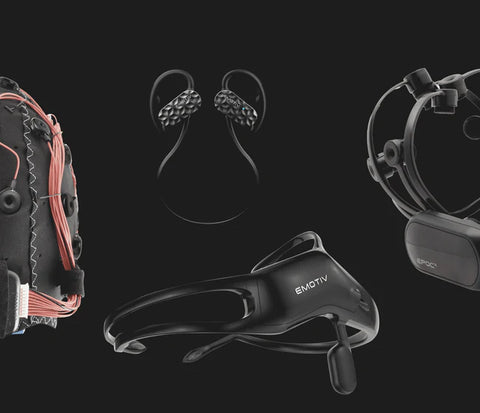
The EMOTIV EPOC X EEG headset gives high-quality brain data for academic and commercial biometrics research. Setting up the EMOTIV Insight headset is simple, and its design provides clear signals from any location. This makes it perfect for tracking performance and wellness.
The EMOTIV EPOC FLEX cap has many sensors and is good for researchers. It can cover a lot of the head.
Applications of EEG Headsets
EEG headsets find themselves at the forefront of innovation in numerous domains, including:
Neuroscience Research:
EEG headsets are invaluable tools in neuroscience research, enabling researchers to study brain function and dynamics in real-time. These headsets allow for recording brainwave activity during cognitive tasks, emotional responses, and sensory processing. Researchers leverage EEG data to investigate neurological disorders, understand cognitive processes, and explore the relationships between brain activity and behavior.
EEG headsets give detailed information about how the brain works, which other imaging methods can't do. They are important for studying the brain.
Brain-Computer Interfaces (BCIs):
EEG headsets play a crucial role in the development of brain-computer interfaces (BCIs). BCIs facilitate communication between the brain and external devices directly. By translating EEG signals into commands, BCIs empower individuals to control computers, prosthetic limbs, and other assistive technologies using their brain activity. EEG-based BCIs assist disabled individuals in interacting with their environment and gaining independence in various aspects of life.
Mental Health Monitoring:
Clinicians in clinical settings utilize EEG headsets for mental health monitoring and assessment. These devices can detect abnormal brainwave patterns associated with various psychiatric conditions such as depression, anxiety, and schizophrenia. EEG-based biomarkers assist in diagnosing and treating mental health conditions by providing an accurate measure of brain function. EEG headsets can assist individuals with anxiety, ADHD, and other mental health problems by regulating brain activity in therapy.
Personal Development and Wellness:
A growing application of EEG headsets is in the realm of personal development and wellness. These gadgets help people monitor and boost their brain function, which could improve their performance and overall health. EEG headsets can help with activities such as meditation, mindfulness training, and cognitive enhancement. EEG headsets give instant feedback on brainwaves to help users enhance mental clarity, focus, and relaxation in daily life.
EEG headsets price varies depending on the features, number of electrodes, and target audience (research vs. consumer). Understanding how EEG headsets can be used helps you determine if this technology is suitable for you and your goals.
Advantages of EEG Headsets
EEG headsets offer distinct advantages across various fields because of their unique capabilities:
Portability: Unlike bulky traditional systems, EEG headsets are compact and lightweight, enabling use beyond lab settings. Researchers can conduct studies outside labs, while users can monitor their brain activity at home. Portable models further enhance flexibility and convenience.
Non-Invasiveness: EEG headsets are safe and painless because of their non-invasive method. Unlike procedures requiring surgery or intrusive electrodes, EEG headsets use external scalp electrodes to detect brainwaves. This reduces infection risks and makes them accessible to a wider range of users.
Real-Time Monitoring: EEG headsets provide real-time feedback on brain activity. Users can observe changes in their thoughts and mental states as they occur.
Real-time data is crucial for activities like neurofeedback training. Users can learn to control brain activity for better performance. Researchers also benefit from this feature as they can capture dynamic brain function changes during experiments.
Versatility: EEG headsets are highly versatile, measuring various brain functions like cognition, emotions, and mental states. They help with studying the brain, making brain-computer interfaces, tracking mental health, and practicing mindfulness in various fields.
These advantages make EEG headsets powerful instruments for various applications, from scientific research and healthcare to personal development and overall well-being.
Limitations of EEG Headsets
EEG headsets show brain activity, but it's important to know their limits for accurately analyzing and properly using them. Some key limitations to consider:
Spatial Resolution:
Compared to imaging techniques like fMRI and MEG, EEG headsets have lower spatial resolution. EEG electrodes on the scalp detect surface brain activity. Determining the exact location of the brain activity is difficult. EEG recordings may not provide a clear picture of where specific brain functions are happening.
Sensitivity to Artifacts:
EEG recordings are susceptible to various artifacts that can distort the captured brainwave signals, potentially leading to inaccurate data processing and interpretation. These artifacts can include muscle activity, eye movements, and even environmental noise like power lines. EEG reader software can help mitigate some artifacts, but they cannot entirely eliminate them. Researchers and users should be cautious of possible errors and work to reduce their impact on EEG recordings.
Signal Depletion:
As brain signals travel through the skull, scalp, and brain tissue, they weaken. This signal depletion makes it harder for EEG electrodes to detect them. While amplification techniques can boost the signal strength, they can also amplify background noise, further complicating analyzing.
Signal loss is a major issue when studying deep parts of the brain. This is because the signals in these areas are weaker and more easily disrupted.
Limited Frequency Range:
EEG headsets can only measure brain activity within a specific frequency range. This range typically spans from a few hertz to a few hundred hertz. This limited range may restrict the types of brain activity that researchers can measure and analyze.
EEG recordings may not capture all brain activity. This includes high-frequency gamma waves and low-frequency slow waves. This limitation could restrict research opportunities.
Individual Variance:
Significant variations in brain anatomy and physiology exist among individuals. These variations, including skull thickness, electrode placement, and brain cell connections, can influence brainwave patterns. Researchers need to account for these individual differences when analyzing EEG data and interpreting results to ensure accurate and reliable conclusions.
By understanding these limitations, researchers and users can employ EEG technology effectively while acknowledging its boundaries.
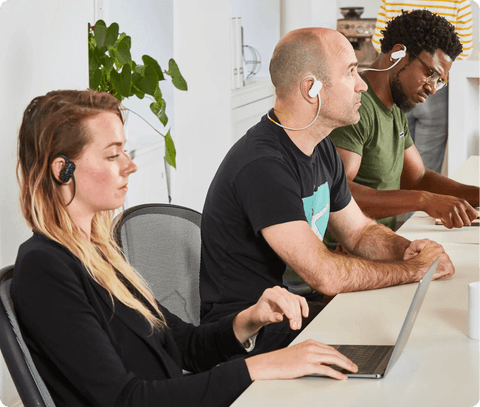
Above: Teammates monitor their stress and focus levels using MN8 2-channel EEG earbuds.
Looking at the Future of EEG Headsets
Here's a glimpse into what's possible in the future. Some are possible right now!
Sharper Brain Scans: Imagine sensors that capture even the faintest brain signals. This will unlock new brain mysteries, leading to breakthroughs in memory, focus, and even treatments.
Comfortable Brain Monitoring: Forget bulky lab equipment. EEG headsets will turn into comfortable headbands.They will easily fit into your daily routine. This will allow for continuous monitoring of your brain. You will also receive instant feedback.
Experience wireless freedom: No longer tether yourself to a computer! Wireless EEG headsets with Bluetooth and Wi-Fi will connect to your phone or tablet, letting you track your brain activity on the go. Imagine monitoring stress levels during a busy day!
Personalized Brain Control: BCIs will learn your unique brainwaves. This means controlling devices with just your thoughts - prosthetics, virtual worlds, even everyday tech!
VR/AR Mind Meld: The future might involve EEG-powered VR/AR, letting you control entire virtual worlds with your thoughts! Imagine using your brainpower for therapy, training, or even mind-blowing games.
EEG technology is on the verge of a revolution. Prepare for a future where we improve brain power, change healthcare and research, and have better interactions with computers. The future of EEG headsets is bright, and it's about to change how we experience the world!
Frequently Asked Questions (FAQ)
What is the best EEG headset for home use? For home users focused on wellness and focus, the EMOTIV Insight is ideal due to its 5-channel dry sensor design. If you are a developer looking to build apps, the MN8 brain-sensing earbuds offer a discreet form factor for everyday cognitive monitoring.
Can I get clinical-grade data from a wireless EEG headset? Yes. High-density caps like the EMOTIV EPOC FLEX provide 32 channels of data, matching the resolution of traditional clinical systems while offering the freedom of wireless movement.
How much does a professional EEG headset cost? EEG headset prices vary significantly. Consumer-grade devices typically range from $300 to $500, while research-grade systems with high channel counts and raw data access can range from $800 to $2,500+.
You might also enjoy:
EEG Device Headset
Electroencephalography (EEG) is the gold-standard method for non-invasively recording the brain’s electrical activity. Modern EEG headsets have evolved from bulky clinical machines into sleek, wireless wearables that allow researchers, developers, and clinicians to capture high-fidelity brain data in real-world environments. EEG systems use electrodes on the scalp to collect brain signals, giving information about thoughts, emotions, and mental health. The collected signals are amplified and digitized, and then sent to a computer or mobile device for storage and data processing.
The clinical definition of EEG is the recording of brain activity over a period. EEG electrodes sense and record the electrical activity in your brain. The signals are made stronger and turned into digital form, then sent to a computer or phone for storage and processing.
Professional EEG systems span both research and consumer markets because of their versatility and non-invasive nature. Researchers use high-tech EEG machines for neuroscience, cognitive studies, and medical research. They provide accurate measurements and many features.
Consumer EEG devices are cheaper and easier to use, good for personal growth, meditation, and neurofeedback training. Choosing the right EEG equipment involves considering factors like accuracy, comfort, and software compatibility. This ensures that the equipment meets your requirements and budget.
EEG Technology
EEG headsets rely on sophisticated EEG technology to accurately capture and interpret brainwave activity. Electrodes placed strategically on the scalp pick up electrical signals generated by the brain's neurons. The system amplifies, filters, and converts these weak signals into digital data for further examination.
EEG readers, software programs that come with the headset, then process these digital signals. They look for patterns in brainwaves, such as alpha, beta, theta, and gamma waves, to understand different cognitive states.
High-tech EEG devices analyze brain data as it happens. They remove artifacts and identify different brainwave types. This helps us better understand brain activity.
Developers can use EEG for BCI to execute direct mental commands in app development and many other use cases.
How EEG Headsets Work
Electroencephalography headsets utilize advanced technology to effectively measure and interpret brain activity. Electrodes positioned on the head pick up electrical signals emitted by the brain. Computers amplify, filter, and convert these signals into digital data for analyzing.
EEG readers, software applications often included with the headset, analyze the processed digital signals. Researchers can understand mental states and thoughts by studying brainwaves and patterns in brain activity. You can visualize the processed data in real-time and store it for further analyzing later.
Hardware is only half the battle; high-quality analysis requires robust software. When using an EEG data analysis software like EmotivPRO, researchers can view raw data streams, perform FFT (Fast Fourier Transform), and export data for further processing in MATLAB or Python.
Here's what to consider when selecting an EEG device for home use:
Electrode Count: More electrodes generally provide more detailed brain activity data.
The sampling rate captures brain signals at a frequency that determines precision, with a higher rate offering better accuracy.
Software Compatibility: Ensure your chosen device works seamlessly with your preferred analyzing software.
For those prioritizing flexibility, portable EEG machines offer a great solution. These lightweight and compact headsets allow for easy use at home, work, or on-the-go. Some even boast wireless connectivity, freeing users from being tethered to a computer for brain activity monitoring.
EEG headphones is a common search term, but it's not entirely accurate. EEG devices typically consist of a cap or headband with embedded electrodes, not headphone-like structures.
By understanding how EEG headsets work, you can make an informed decision when choosing the right one for your needs.
From our blog: | |
Diverse Landscape of EEG Devices
The world of EEG headsets offers a diverse range to suit various applications. Understanding these categories empowers you to choose the ideal one for your goals.
Research-Grade EEG Headsets:
Experts and researchers use high-quality 14-channel research-grade EEG headset for neuroscience studies and clinical research. These headsets provide top-notch data and advanced features. These headsets typically boast a high number of electrodes, enabling precise spatial mapping of brain activity.
They offer superior signal quality, high sampling rates, and seamless compatibility with advanced analyzing software. While research-grade EEG headsets tend to be more expensive, they provide unparalleled accuracy and flexibility for scientific investigations. For professionals requiring the highest data integrity without the hassle of conductive gels, the EMOTIV EPOC X offers a 14-channel saline-based system. It is widely recognized as the best EEG headset for research due to its rapid setup time and extensive spatial coverage of the frontal, temporal, and parietal lobes.
Consumer-Grade EEG Headsets:
Companies design consumer-grade EEG headsets for everyday users interested in monitoring their brain activity for personal development, relaxation, or entertainment purposes. These headsets are cheaper and easier to use than professional models, so more people can use them.
Consumer EEG headsets have fewer electrodes and functions compared to research-grade ones. However, they still offer valuable insights into brain function.
People commonly use these headsets for activities such as meditation, focus training, and gaming. You can use them for meditation, focus training, and gaming.
Portable EEG Headsets:
For users who prioritize mobility and convenience in brain monitoring, designers create portable EEG headsets. These lightweight and compact mobile 5-channel EEG headsets are ideal for use at home, work, or while traveling. Some portable EEG headsets can connect wirelessly. Users can monitor their brain activity without being tethered to a computer or stationary device.
EEG Devices for Home Use:
Advancements in technology have led to a growing market for EEG devices specifically designed for home use. These user-friendly and affordable devices often connect to mobile apps or software programs for easy data imaging.
EEG devices for home use allow people to track their brain activity at home. They can be helpful for managing stress, improving sleep quality, and potentially even enhancing cognitive function.
These devices are not as advanced as professional EEG systems. However, they still offer valuable information about brain function. This information can help users in managing their mental health and overall well-being.
EEG Helmet is a less common term for EEG headsets. Some EEG devices look like helmets with full-head coverage for electrode placement, but "headset" is the more common term used.
Comparing Top EEG Headsets: 2025 Guide
Choosing the right device depends on your specific use case—whether it's clinical research, BCI development, or wellness.
Feature | EMOTIV EPOC X | Muse S (Gen 2) | OpenBCI Mark IV | Neurosity Crown |
Channels | 14 Channels | 4 Channels | 8-16 Channels | 8 Channels |
Sensor Type | Saline (Easy Setup) | Dry (Fabric) | Dry/Wet (Modular) | Dry |
Primary Use | Research / BCI / UX | Meditation / Sleep | DIY / Open Source | Productivity / Focus |
Raw Data | Full Access (PRO) | Limited | Full Access | Full Access |
Scientific Proof | 22,000+ Citations | Consumer Use | Community Driven | Prosumer |
The EMOTIV EPOC X EEG headset gives high-quality brain data for academic and commercial biometrics research. Setting up the EMOTIV Insight headset is simple, and its design provides clear signals from any location. This makes it perfect for tracking performance and wellness.
The EMOTIV EPOC FLEX cap has many sensors and is good for researchers. It can cover a lot of the head.
Applications of EEG Headsets
EEG headsets find themselves at the forefront of innovation in numerous domains, including:
Neuroscience Research:
EEG headsets are invaluable tools in neuroscience research, enabling researchers to study brain function and dynamics in real-time. These headsets allow for recording brainwave activity during cognitive tasks, emotional responses, and sensory processing. Researchers leverage EEG data to investigate neurological disorders, understand cognitive processes, and explore the relationships between brain activity and behavior.
EEG headsets give detailed information about how the brain works, which other imaging methods can't do. They are important for studying the brain.
Brain-Computer Interfaces (BCIs):
EEG headsets play a crucial role in the development of brain-computer interfaces (BCIs). BCIs facilitate communication between the brain and external devices directly. By translating EEG signals into commands, BCIs empower individuals to control computers, prosthetic limbs, and other assistive technologies using their brain activity. EEG-based BCIs assist disabled individuals in interacting with their environment and gaining independence in various aspects of life.
Mental Health Monitoring:
Clinicians in clinical settings utilize EEG headsets for mental health monitoring and assessment. These devices can detect abnormal brainwave patterns associated with various psychiatric conditions such as depression, anxiety, and schizophrenia. EEG-based biomarkers assist in diagnosing and treating mental health conditions by providing an accurate measure of brain function. EEG headsets can assist individuals with anxiety, ADHD, and other mental health problems by regulating brain activity in therapy.
Personal Development and Wellness:
A growing application of EEG headsets is in the realm of personal development and wellness. These gadgets help people monitor and boost their brain function, which could improve their performance and overall health. EEG headsets can help with activities such as meditation, mindfulness training, and cognitive enhancement. EEG headsets give instant feedback on brainwaves to help users enhance mental clarity, focus, and relaxation in daily life.
EEG headsets price varies depending on the features, number of electrodes, and target audience (research vs. consumer). Understanding how EEG headsets can be used helps you determine if this technology is suitable for you and your goals.
Advantages of EEG Headsets
EEG headsets offer distinct advantages across various fields because of their unique capabilities:
Portability: Unlike bulky traditional systems, EEG headsets are compact and lightweight, enabling use beyond lab settings. Researchers can conduct studies outside labs, while users can monitor their brain activity at home. Portable models further enhance flexibility and convenience.
Non-Invasiveness: EEG headsets are safe and painless because of their non-invasive method. Unlike procedures requiring surgery or intrusive electrodes, EEG headsets use external scalp electrodes to detect brainwaves. This reduces infection risks and makes them accessible to a wider range of users.
Real-Time Monitoring: EEG headsets provide real-time feedback on brain activity. Users can observe changes in their thoughts and mental states as they occur.
Real-time data is crucial for activities like neurofeedback training. Users can learn to control brain activity for better performance. Researchers also benefit from this feature as they can capture dynamic brain function changes during experiments.
Versatility: EEG headsets are highly versatile, measuring various brain functions like cognition, emotions, and mental states. They help with studying the brain, making brain-computer interfaces, tracking mental health, and practicing mindfulness in various fields.
These advantages make EEG headsets powerful instruments for various applications, from scientific research and healthcare to personal development and overall well-being.
Limitations of EEG Headsets
EEG headsets show brain activity, but it's important to know their limits for accurately analyzing and properly using them. Some key limitations to consider:
Spatial Resolution:
Compared to imaging techniques like fMRI and MEG, EEG headsets have lower spatial resolution. EEG electrodes on the scalp detect surface brain activity. Determining the exact location of the brain activity is difficult. EEG recordings may not provide a clear picture of where specific brain functions are happening.
Sensitivity to Artifacts:
EEG recordings are susceptible to various artifacts that can distort the captured brainwave signals, potentially leading to inaccurate data processing and interpretation. These artifacts can include muscle activity, eye movements, and even environmental noise like power lines. EEG reader software can help mitigate some artifacts, but they cannot entirely eliminate them. Researchers and users should be cautious of possible errors and work to reduce their impact on EEG recordings.
Signal Depletion:
As brain signals travel through the skull, scalp, and brain tissue, they weaken. This signal depletion makes it harder for EEG electrodes to detect them. While amplification techniques can boost the signal strength, they can also amplify background noise, further complicating analyzing.
Signal loss is a major issue when studying deep parts of the brain. This is because the signals in these areas are weaker and more easily disrupted.
Limited Frequency Range:
EEG headsets can only measure brain activity within a specific frequency range. This range typically spans from a few hertz to a few hundred hertz. This limited range may restrict the types of brain activity that researchers can measure and analyze.
EEG recordings may not capture all brain activity. This includes high-frequency gamma waves and low-frequency slow waves. This limitation could restrict research opportunities.
Individual Variance:
Significant variations in brain anatomy and physiology exist among individuals. These variations, including skull thickness, electrode placement, and brain cell connections, can influence brainwave patterns. Researchers need to account for these individual differences when analyzing EEG data and interpreting results to ensure accurate and reliable conclusions.
By understanding these limitations, researchers and users can employ EEG technology effectively while acknowledging its boundaries.
Above: Teammates monitor their stress and focus levels using MN8 2-channel EEG earbuds.
Looking at the Future of EEG Headsets
Here's a glimpse into what's possible in the future. Some are possible right now!
Sharper Brain Scans: Imagine sensors that capture even the faintest brain signals. This will unlock new brain mysteries, leading to breakthroughs in memory, focus, and even treatments.
Comfortable Brain Monitoring: Forget bulky lab equipment. EEG headsets will turn into comfortable headbands.They will easily fit into your daily routine. This will allow for continuous monitoring of your brain. You will also receive instant feedback.
Experience wireless freedom: No longer tether yourself to a computer! Wireless EEG headsets with Bluetooth and Wi-Fi will connect to your phone or tablet, letting you track your brain activity on the go. Imagine monitoring stress levels during a busy day!
Personalized Brain Control: BCIs will learn your unique brainwaves. This means controlling devices with just your thoughts - prosthetics, virtual worlds, even everyday tech!
VR/AR Mind Meld: The future might involve EEG-powered VR/AR, letting you control entire virtual worlds with your thoughts! Imagine using your brainpower for therapy, training, or even mind-blowing games.
EEG technology is on the verge of a revolution. Prepare for a future where we improve brain power, change healthcare and research, and have better interactions with computers. The future of EEG headsets is bright, and it's about to change how we experience the world!
Frequently Asked Questions (FAQ)
What is the best EEG headset for home use? For home users focused on wellness and focus, the EMOTIV Insight is ideal due to its 5-channel dry sensor design. If you are a developer looking to build apps, the MN8 brain-sensing earbuds offer a discreet form factor for everyday cognitive monitoring.
Can I get clinical-grade data from a wireless EEG headset? Yes. High-density caps like the EMOTIV EPOC FLEX provide 32 channels of data, matching the resolution of traditional clinical systems while offering the freedom of wireless movement.
How much does a professional EEG headset cost? EEG headset prices vary significantly. Consumer-grade devices typically range from $300 to $500, while research-grade systems with high channel counts and raw data access can range from $800 to $2,500+.
You might also enjoy:
EEG Device Headset
Electroencephalography (EEG) is the gold-standard method for non-invasively recording the brain’s electrical activity. Modern EEG headsets have evolved from bulky clinical machines into sleek, wireless wearables that allow researchers, developers, and clinicians to capture high-fidelity brain data in real-world environments. EEG systems use electrodes on the scalp to collect brain signals, giving information about thoughts, emotions, and mental health. The collected signals are amplified and digitized, and then sent to a computer or mobile device for storage and data processing.
The clinical definition of EEG is the recording of brain activity over a period. EEG electrodes sense and record the electrical activity in your brain. The signals are made stronger and turned into digital form, then sent to a computer or phone for storage and processing.
Professional EEG systems span both research and consumer markets because of their versatility and non-invasive nature. Researchers use high-tech EEG machines for neuroscience, cognitive studies, and medical research. They provide accurate measurements and many features.
Consumer EEG devices are cheaper and easier to use, good for personal growth, meditation, and neurofeedback training. Choosing the right EEG equipment involves considering factors like accuracy, comfort, and software compatibility. This ensures that the equipment meets your requirements and budget.
EEG Technology
EEG headsets rely on sophisticated EEG technology to accurately capture and interpret brainwave activity. Electrodes placed strategically on the scalp pick up electrical signals generated by the brain's neurons. The system amplifies, filters, and converts these weak signals into digital data for further examination.
EEG readers, software programs that come with the headset, then process these digital signals. They look for patterns in brainwaves, such as alpha, beta, theta, and gamma waves, to understand different cognitive states.
High-tech EEG devices analyze brain data as it happens. They remove artifacts and identify different brainwave types. This helps us better understand brain activity.
Developers can use EEG for BCI to execute direct mental commands in app development and many other use cases.
How EEG Headsets Work
Electroencephalography headsets utilize advanced technology to effectively measure and interpret brain activity. Electrodes positioned on the head pick up electrical signals emitted by the brain. Computers amplify, filter, and convert these signals into digital data for analyzing.
EEG readers, software applications often included with the headset, analyze the processed digital signals. Researchers can understand mental states and thoughts by studying brainwaves and patterns in brain activity. You can visualize the processed data in real-time and store it for further analyzing later.
Hardware is only half the battle; high-quality analysis requires robust software. When using an EEG data analysis software like EmotivPRO, researchers can view raw data streams, perform FFT (Fast Fourier Transform), and export data for further processing in MATLAB or Python.
Here's what to consider when selecting an EEG device for home use:
Electrode Count: More electrodes generally provide more detailed brain activity data.
The sampling rate captures brain signals at a frequency that determines precision, with a higher rate offering better accuracy.
Software Compatibility: Ensure your chosen device works seamlessly with your preferred analyzing software.
For those prioritizing flexibility, portable EEG machines offer a great solution. These lightweight and compact headsets allow for easy use at home, work, or on-the-go. Some even boast wireless connectivity, freeing users from being tethered to a computer for brain activity monitoring.
EEG headphones is a common search term, but it's not entirely accurate. EEG devices typically consist of a cap or headband with embedded electrodes, not headphone-like structures.
By understanding how EEG headsets work, you can make an informed decision when choosing the right one for your needs.
From our blog: | |
Diverse Landscape of EEG Devices
The world of EEG headsets offers a diverse range to suit various applications. Understanding these categories empowers you to choose the ideal one for your goals.
Research-Grade EEG Headsets:
Experts and researchers use high-quality 14-channel research-grade EEG headset for neuroscience studies and clinical research. These headsets provide top-notch data and advanced features. These headsets typically boast a high number of electrodes, enabling precise spatial mapping of brain activity.
They offer superior signal quality, high sampling rates, and seamless compatibility with advanced analyzing software. While research-grade EEG headsets tend to be more expensive, they provide unparalleled accuracy and flexibility for scientific investigations. For professionals requiring the highest data integrity without the hassle of conductive gels, the EMOTIV EPOC X offers a 14-channel saline-based system. It is widely recognized as the best EEG headset for research due to its rapid setup time and extensive spatial coverage of the frontal, temporal, and parietal lobes.
Consumer-Grade EEG Headsets:
Companies design consumer-grade EEG headsets for everyday users interested in monitoring their brain activity for personal development, relaxation, or entertainment purposes. These headsets are cheaper and easier to use than professional models, so more people can use them.
Consumer EEG headsets have fewer electrodes and functions compared to research-grade ones. However, they still offer valuable insights into brain function.
People commonly use these headsets for activities such as meditation, focus training, and gaming. You can use them for meditation, focus training, and gaming.
Portable EEG Headsets:
For users who prioritize mobility and convenience in brain monitoring, designers create portable EEG headsets. These lightweight and compact mobile 5-channel EEG headsets are ideal for use at home, work, or while traveling. Some portable EEG headsets can connect wirelessly. Users can monitor their brain activity without being tethered to a computer or stationary device.
EEG Devices for Home Use:
Advancements in technology have led to a growing market for EEG devices specifically designed for home use. These user-friendly and affordable devices often connect to mobile apps or software programs for easy data imaging.
EEG devices for home use allow people to track their brain activity at home. They can be helpful for managing stress, improving sleep quality, and potentially even enhancing cognitive function.
These devices are not as advanced as professional EEG systems. However, they still offer valuable information about brain function. This information can help users in managing their mental health and overall well-being.
EEG Helmet is a less common term for EEG headsets. Some EEG devices look like helmets with full-head coverage for electrode placement, but "headset" is the more common term used.
Comparing Top EEG Headsets: 2025 Guide
Choosing the right device depends on your specific use case—whether it's clinical research, BCI development, or wellness.
Feature | EMOTIV EPOC X | Muse S (Gen 2) | OpenBCI Mark IV | Neurosity Crown |
Channels | 14 Channels | 4 Channels | 8-16 Channels | 8 Channels |
Sensor Type | Saline (Easy Setup) | Dry (Fabric) | Dry/Wet (Modular) | Dry |
Primary Use | Research / BCI / UX | Meditation / Sleep | DIY / Open Source | Productivity / Focus |
Raw Data | Full Access (PRO) | Limited | Full Access | Full Access |
Scientific Proof | 22,000+ Citations | Consumer Use | Community Driven | Prosumer |
The EMOTIV EPOC X EEG headset gives high-quality brain data for academic and commercial biometrics research. Setting up the EMOTIV Insight headset is simple, and its design provides clear signals from any location. This makes it perfect for tracking performance and wellness.
The EMOTIV EPOC FLEX cap has many sensors and is good for researchers. It can cover a lot of the head.
Applications of EEG Headsets
EEG headsets find themselves at the forefront of innovation in numerous domains, including:
Neuroscience Research:
EEG headsets are invaluable tools in neuroscience research, enabling researchers to study brain function and dynamics in real-time. These headsets allow for recording brainwave activity during cognitive tasks, emotional responses, and sensory processing. Researchers leverage EEG data to investigate neurological disorders, understand cognitive processes, and explore the relationships between brain activity and behavior.
EEG headsets give detailed information about how the brain works, which other imaging methods can't do. They are important for studying the brain.
Brain-Computer Interfaces (BCIs):
EEG headsets play a crucial role in the development of brain-computer interfaces (BCIs). BCIs facilitate communication between the brain and external devices directly. By translating EEG signals into commands, BCIs empower individuals to control computers, prosthetic limbs, and other assistive technologies using their brain activity. EEG-based BCIs assist disabled individuals in interacting with their environment and gaining independence in various aspects of life.
Mental Health Monitoring:
Clinicians in clinical settings utilize EEG headsets for mental health monitoring and assessment. These devices can detect abnormal brainwave patterns associated with various psychiatric conditions such as depression, anxiety, and schizophrenia. EEG-based biomarkers assist in diagnosing and treating mental health conditions by providing an accurate measure of brain function. EEG headsets can assist individuals with anxiety, ADHD, and other mental health problems by regulating brain activity in therapy.
Personal Development and Wellness:
A growing application of EEG headsets is in the realm of personal development and wellness. These gadgets help people monitor and boost their brain function, which could improve their performance and overall health. EEG headsets can help with activities such as meditation, mindfulness training, and cognitive enhancement. EEG headsets give instant feedback on brainwaves to help users enhance mental clarity, focus, and relaxation in daily life.
EEG headsets price varies depending on the features, number of electrodes, and target audience (research vs. consumer). Understanding how EEG headsets can be used helps you determine if this technology is suitable for you and your goals.
Advantages of EEG Headsets
EEG headsets offer distinct advantages across various fields because of their unique capabilities:
Portability: Unlike bulky traditional systems, EEG headsets are compact and lightweight, enabling use beyond lab settings. Researchers can conduct studies outside labs, while users can monitor their brain activity at home. Portable models further enhance flexibility and convenience.
Non-Invasiveness: EEG headsets are safe and painless because of their non-invasive method. Unlike procedures requiring surgery or intrusive electrodes, EEG headsets use external scalp electrodes to detect brainwaves. This reduces infection risks and makes them accessible to a wider range of users.
Real-Time Monitoring: EEG headsets provide real-time feedback on brain activity. Users can observe changes in their thoughts and mental states as they occur.
Real-time data is crucial for activities like neurofeedback training. Users can learn to control brain activity for better performance. Researchers also benefit from this feature as they can capture dynamic brain function changes during experiments.
Versatility: EEG headsets are highly versatile, measuring various brain functions like cognition, emotions, and mental states. They help with studying the brain, making brain-computer interfaces, tracking mental health, and practicing mindfulness in various fields.
These advantages make EEG headsets powerful instruments for various applications, from scientific research and healthcare to personal development and overall well-being.
Limitations of EEG Headsets
EEG headsets show brain activity, but it's important to know their limits for accurately analyzing and properly using them. Some key limitations to consider:
Spatial Resolution:
Compared to imaging techniques like fMRI and MEG, EEG headsets have lower spatial resolution. EEG electrodes on the scalp detect surface brain activity. Determining the exact location of the brain activity is difficult. EEG recordings may not provide a clear picture of where specific brain functions are happening.
Sensitivity to Artifacts:
EEG recordings are susceptible to various artifacts that can distort the captured brainwave signals, potentially leading to inaccurate data processing and interpretation. These artifacts can include muscle activity, eye movements, and even environmental noise like power lines. EEG reader software can help mitigate some artifacts, but they cannot entirely eliminate them. Researchers and users should be cautious of possible errors and work to reduce their impact on EEG recordings.
Signal Depletion:
As brain signals travel through the skull, scalp, and brain tissue, they weaken. This signal depletion makes it harder for EEG electrodes to detect them. While amplification techniques can boost the signal strength, they can also amplify background noise, further complicating analyzing.
Signal loss is a major issue when studying deep parts of the brain. This is because the signals in these areas are weaker and more easily disrupted.
Limited Frequency Range:
EEG headsets can only measure brain activity within a specific frequency range. This range typically spans from a few hertz to a few hundred hertz. This limited range may restrict the types of brain activity that researchers can measure and analyze.
EEG recordings may not capture all brain activity. This includes high-frequency gamma waves and low-frequency slow waves. This limitation could restrict research opportunities.
Individual Variance:
Significant variations in brain anatomy and physiology exist among individuals. These variations, including skull thickness, electrode placement, and brain cell connections, can influence brainwave patterns. Researchers need to account for these individual differences when analyzing EEG data and interpreting results to ensure accurate and reliable conclusions.
By understanding these limitations, researchers and users can employ EEG technology effectively while acknowledging its boundaries.
Above: Teammates monitor their stress and focus levels using MN8 2-channel EEG earbuds.
Looking at the Future of EEG Headsets
Here's a glimpse into what's possible in the future. Some are possible right now!
Sharper Brain Scans: Imagine sensors that capture even the faintest brain signals. This will unlock new brain mysteries, leading to breakthroughs in memory, focus, and even treatments.
Comfortable Brain Monitoring: Forget bulky lab equipment. EEG headsets will turn into comfortable headbands.They will easily fit into your daily routine. This will allow for continuous monitoring of your brain. You will also receive instant feedback.
Experience wireless freedom: No longer tether yourself to a computer! Wireless EEG headsets with Bluetooth and Wi-Fi will connect to your phone or tablet, letting you track your brain activity on the go. Imagine monitoring stress levels during a busy day!
Personalized Brain Control: BCIs will learn your unique brainwaves. This means controlling devices with just your thoughts - prosthetics, virtual worlds, even everyday tech!
VR/AR Mind Meld: The future might involve EEG-powered VR/AR, letting you control entire virtual worlds with your thoughts! Imagine using your brainpower for therapy, training, or even mind-blowing games.
EEG technology is on the verge of a revolution. Prepare for a future where we improve brain power, change healthcare and research, and have better interactions with computers. The future of EEG headsets is bright, and it's about to change how we experience the world!
Frequently Asked Questions (FAQ)
What is the best EEG headset for home use? For home users focused on wellness and focus, the EMOTIV Insight is ideal due to its 5-channel dry sensor design. If you are a developer looking to build apps, the MN8 brain-sensing earbuds offer a discreet form factor for everyday cognitive monitoring.
Can I get clinical-grade data from a wireless EEG headset? Yes. High-density caps like the EMOTIV EPOC FLEX provide 32 channels of data, matching the resolution of traditional clinical systems while offering the freedom of wireless movement.
How much does a professional EEG headset cost? EEG headset prices vary significantly. Consumer-grade devices typically range from $300 to $500, while research-grade systems with high channel counts and raw data access can range from $800 to $2,500+.
You might also enjoy: