A Guide to EEG Tools for Market Research

Heidi Duran

Jan 8, 2026

Share:

For years, the idea of using brain data in market research felt like something reserved for massive corporations with huge budgets and dedicated labs. The technology seemed complex, expensive, and inaccessible to most. That's no longer the case. Modern advancements have made EEG technology portable, user-friendly, and affordable, putting the power of neuromarketing within reach for businesses and researchers of all sizes. You can now conduct studies in realistic environments—like a retail store or a participant's home—to capture authentic reactions as they happen. This guide will introduce you to the most practical and effective EEG tools for market research, showing you how to integrate this powerful methodology into your work.


View Products

Key Takeaways

  • Uncover responses beyond self-report: EEG provides objective data on subconscious responses, giving you insights that go deeper than what people say in surveys or focus groups.

  • Match your hardware to your research goals: Choose the right EEG headset for your study, whether you need the detailed data of a multi-channel device for lab work or the discretion of earbuds for real-world settings.

  • Combine methods for a complete picture: Pairing EEG with traditional research like surveys or other biometric tools allows you to connect subconscious responses with conscious feedback, creating a comprehensive view of the consumer experience.

What is EEG and How Does It Work for Market Research?

If you've ever wondered how a customer is responding when they look at your product, you're not alone. Traditional methods like surveys and focus groups are great, but they only capture what people are willing or able to tell you. Electroencephalography, or EEG, offers a way to understand the subconscious responses associated with consumer decisions. It’s a powerful tool for neuromarketing that helps you get to the "why" behind the "what" of customer behavior. By measuring brain activity, you can gather data on brain responses associated with engagement and perception related to your ads, packaging, and brand messaging.

A Quick Look at the Science

So, what exactly is EEG? It’s a method that measures the tiny electrical signals, often called brainwaves, that your brain produces constantly. Think of it as listening in on the brain's electrical conversations. When you’re exposed to a stimulus, like watching a commercial, your brain's activity changes. An EEG headset uses small sensors placed on the scalp to detect these faint signals. Our software then translates these complex brainwave patterns into understandable metrics, giving you insights into a person's attention, engagement, and cognitive load at any given moment. It’s a non-invasive way to get a direct look at brain responses in real time.

Using EEG to Understand Consumer Behavior

This is where things get exciting for market researchers. EEG can reveal underlying cognitive and emotional responses that people often can't articulate. For example, a person might say they like an ad in a focus group to be polite, but their brain activity could suggest lower engagement or changes in emotional processing. This technology helps you move beyond self-reported data to see how consumers respond to things like pricing, product design, and brand stories on an unconscious level. It’s an essential tool for anyone in academic research and education or marketing who wants to understand the deeper drivers of human choice.

Why Use EEG Over Traditional Market Research?

Traditional market research methods like surveys and focus groups have been staples for decades, and for good reason. They give you direct feedback from your audience. But what happens when your customers can't quite put their finger on why they prefer one design over another, or when they tell you what they think you want to hear? This is where EEG comes in. It doesn't replace traditional methods; it adds a powerful layer of objective data, helping you understand the subconscious drivers behind consumer choices.

Measure Responses in Real Time

Imagine watching an ad and knowing the exact moment associated with changes in engagement or cognitive load. That’s the power of EEG. Because it measures the brain's electrical activity directly, you can see immediate cognitive responses as they happen. Instead of asking someone to recall how they felt later, you get a live, second-by-second account of their experience. This real-time feedback is invaluable for optimizing video content and user interface design, allowing you to pinpoint what truly resonates with your audience. This approach is a cornerstone of modern neuromarketing.

Uncover Subconscious Consumer Responses

We’ve all been there—saying we like something to be polite or simply not knowing how to explain a gut feeling. People can't always articulate the subconscious thoughts and feelings that drive their decisions. Surveys and focus groups rely on self-reported answers, which can be filtered through social pressures or a simple lack of awareness. EEG helps you get past what people say and understand what they are experiencing. By analyzing these brain responses, you can uncover insights about your products and brand messaging that participants might not even be aware of themselves.

Collect More Objective Data

One of the biggest challenges in market research is bias. In a focus group, one strong personality can influence the entire room. In a survey, the way you word a question can subtly nudge respondents toward a certain answer. Since EEG collects data directly from the brain, it provides a more objective data source. It’s less affected by participants trying to give the "right" answers or by the limitations of memory. This data provides additional context for decisions in your academic research or commercial projects.

What Consumer Insights Can You Uncover with EEG?

Traditional market research methods like surveys and focus groups are valuable, but they have a fundamental limitation: they rely on what people say they think and feel. There's often a gap between what someone reports and what they subconsciously believe, a gap influenced by social desirability, poor memory, or an inability to articulate a gut feeling. This can lead to misleading insights that send your marketing and product strategies in the wrong direction. What if you could get past those filters and tap directly into their responses?

That’s where EEG comes in. By measuring the brain's electrical activity, EEG technology gives you a direct window into a person's cognitive and emotional responses in real time. This isn't about reading minds; it's about collecting objective, quantitative data on brain responses associated with behavior. You can see what truly captures someone's attention during an ad, what is associated with increased mental effort when using your app, what supports an emotional connection to your brand story, and what parts of your message are associated with memory-related brain activity. These insights help you move beyond guesswork and make data-driven decisions that resonate with your audience. Let's explore some of the specific consumer insights you can gather using EEG.

Gauge Emotional Engagement with Your Brand

How do people respond when they see your logo or watch your latest brand story? EEG helps you measure immediate, subconscious emotional responses associated with behavior. You can see the response to your brand assets in real time, identifying moments associated with excitement, joy, or frustration that participants might not even be aware of or able to articulate. This allows you to test different creative approaches and see which ones forge a connection. Our neuromarketing solutions are designed to help you quantify this engagement, turning brain data into clear metrics that show how deeply your brand connects with its audience.

Pinpoint Attention Levels During Ads

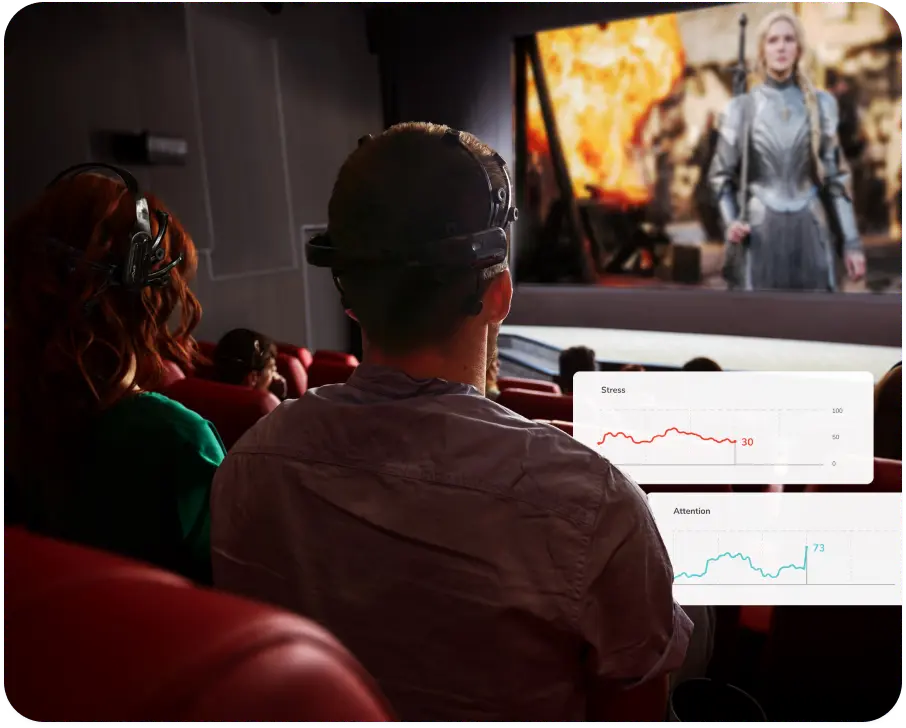
Every second of an ad costs money, so you need to know what’s holding your audience’s attention and what’s causing them to tune out. EEG can pinpoint exactly which visual or auditory elements in an advertisement capture focus and which ones are ignored. Was it the opening scene, the celebrity cameo, or the final call-to-action that made the biggest impact? By analyzing attention levels frame-by-frame, you can optimize your creative for maximum impact and avoid spending on elements that don't work. With a tool like EmotivPRO, you can visualize these attention peaks and valleys to build more compelling and effective advertising campaigns.

Understand Cognitive Load and Decision-Making

Is your website easy to use? Is your product packaging confusing? Cognitive load, or the amount of mental effort a task requires, is a critical factor in customer experience. High cognitive load is often associated with frustration, errors, and task abandonment. EEG allows you to measure this mental effort directly. You can see if a user is struggling with your app's interface or finding the checkout process overwhelming. This insight is invaluable for UX designers and product developers. By identifying and eliminating points of friction, you can create smoother, more intuitive experiences that customers enjoy, a principle often explored in academic research.

Analyze How Well Your Message Sticks

A memorable ad is an effective ad. But how do you know if your message is actually being retained? EEG can help identify brain activity patterns associated with memory encoding. This means you can get an indication of whether a specific scene, tagline, or key message is associated with brain activity linked to memory encoding. It’s a powerful way to test your creative and ensure your brand's story sticks. You can compare different versions of an ad to see which one is more memorable, giving you confidence that your marketing budget is building lasting brand recall. This approach helps you build a stronger brand presence with every campaign you launch.

Choosing the Best EEG Headset for Market Research

Picking the right EEG headset is a lot like choosing the right camera for a photoshoot. The best tool depends entirely on what you want to capture. Are you doing a detailed studio portrait or a candid shot on the street? Similarly, your market research goals will determine which headset is the perfect fit. The key is to match the device’s capabilities—like the number of channels and form factor—to the specific questions you’re trying to answer.

Whether you need to conduct in-depth academic research in a controlled lab or gather quick insights in a real-world retail environment, there’s a headset designed for the job. A study measuring nuanced emotional responses to a movie trailer will require more comprehensive data than one assessing a user's cognitive load while navigating a website. Let's walk through our lineup to help you find the ideal match for your project, from our most detailed multi-channel systems to our most discreet, wearable options.

Emotiv Epoc X: The 14-Channel Powerhouse

If you’re looking for a versatile and powerful tool that balances detail with practicality, the Emotiv Epoc X is your go-to. This headset provides 14 channels of high-quality EEG data, making it perfect for detailed studies of brain activity. It’s designed for both research and commercial applications, offering robust data collection in a portable format that can be set up quickly. For market researchers, those 14 channels allow you to explore brain responses with significant granularity, giving you a clearer picture of engagement and emotional valence. It’s an excellent choice for lab-based ad testing, user experience studies, and product evaluations where you need reliable, multi-channel data without the complexity of a full-cap system.

Emotiv Flex Saline: The 32-Channel Researcher's Choice

When your research demands the highest level of detail and precision, the Emotiv Flex Saline is the answer. This headset features 32 channels, allowing for comprehensive brain mapping and sophisticated analysis. What makes the Flex truly special is its adaptable design; researchers love it for the flexibility to customize electrode placement for highly specific studies. If your work involves pinpointing activity in precise brain regions or requires high-density data for advanced analysis, this is the headset for you. It’s the top choice for deep-dive neuromarketing studies, academic research, and any project where capturing the most complete picture of neural activity is the primary goal.

Emotiv Insight: The Accessible 5-Channel Option

Just starting with EEG or have a project that calls for straightforward, essential metrics? The Emotiv Insight is a fantastic entry point. This user-friendly headset offers 5 channels of quality data in a sleek, easy-to-wear design. It’s built for accessibility, making it ideal for those new to EEG research or for applications that don’t require extensive data collection. The Insight is perfect for gathering core performance metrics related to attention, focus, and engagement. Think of it for quick usability tests, educational applications, or pilot studies where ease of setup and participant comfort are top priorities. It effectively lowers the barrier to entry for integrating brain data into your research toolkit.

Emotiv MN8: The Discreet 2-Channel Earbuds

Sometimes, the best research happens when participants forget they’re even part of a study. The Emotiv MN8 earbuds offer a discreet and portable option for EEG data collection, featuring 2 channels in a familiar earbud format. They are designed for quick assessments and are especially useful in environments where a traditional headset might feel intrusive or out of place, like a retail store or a public event. The MN8 is perfect for capturing real-time cognitive states, such as attention or cognitive load, in natural settings. While you won’t be doing deep brain mapping, you’ll gain valuable insights into a consumer’s experience as it happens, with minimal disruption.

The Best EEG Software for Neuromarketing

Choosing the right EEG headset is only half the equation. To truly understand your customers, you need software that can translate raw brain data into clear, actionable insights. The software you choose will depend on the scale and complexity of your research. Are you running a detailed, lab-based study with multiple participants, or do you need a quick, flexible way to gather data in a real-world setting?

Our software solutions are designed to meet you where you are. For deep, granular analysis, EmotivPRO is the go-to platform for professional researchers. It gives you access to dense data streams and advanced analysis tools. If you need something more streamlined for quick data collection and real-time feedback, the Emotiv App offers a user-friendly experience that pairs perfectly with our wireless headsets. Both are powerful tools for neuromarketing, helping you move beyond what customers say they feel and get closer to what they actually experience when they interact with your brand, product, or advertisement. Let’s look at which one is the right fit for your project.

EmotivPRO: For In-Depth Professional Research

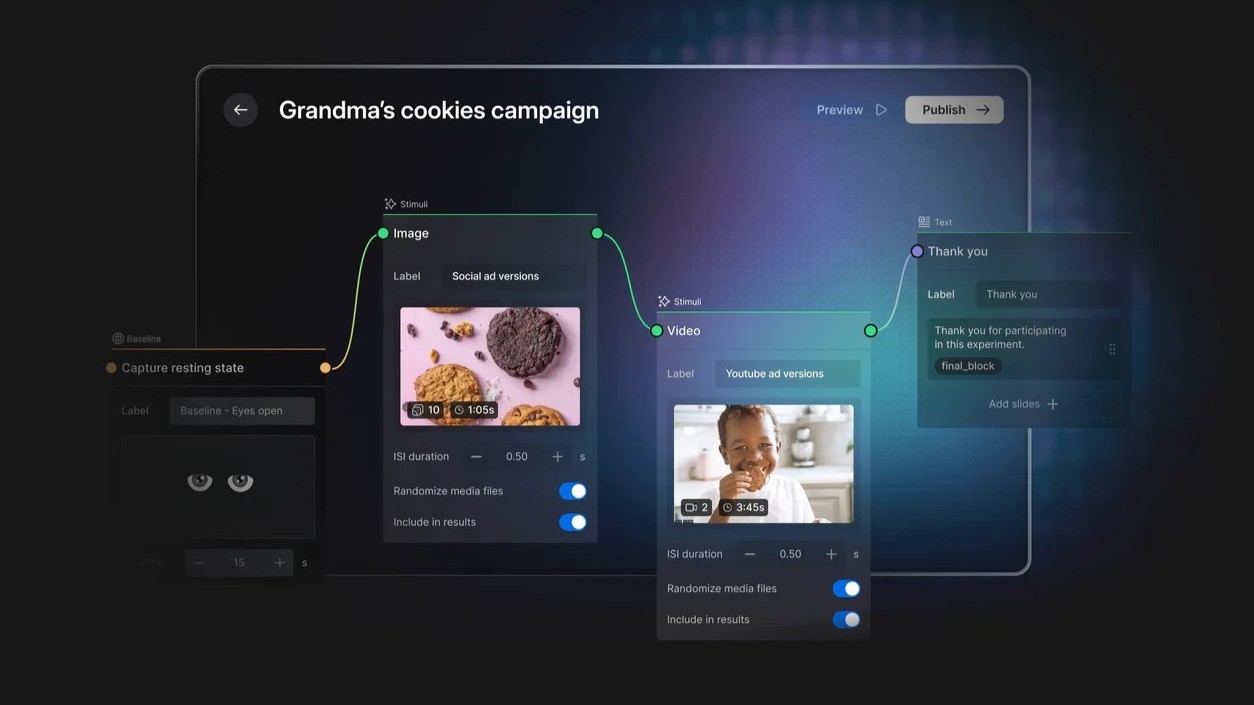
When your research demands a high level of detail, EmotivPRO is the tool you need. It’s designed for professionals who want to conduct in-depth analysis of brain activity. This software allows you to see the immediate, subconscious emotional and cognitive responses that shape consumer behavior. Instead of relying on self-reported feelings, you get objective data about what truly excites, frustrates, or engages your audience at a neural level. With EmotivPRO, you can record and review raw EEG data, view real-time performance metrics, and mark events to precisely sync brain responses with specific stimuli, like a scene in an ad or a feature on a website.

Emotiv App: For Quick and Easy Data Collection

If your research takes you out of the lab and into the real world, the Emotiv App is your ideal partner. It offers a simple, portable solution that works seamlessly with our wireless headsets, allowing you to collect data anywhere—from a retail store to a participant's home. This accessibility makes it easier than ever for companies of all sizes to integrate brain data into their market research. The app provides a straightforward interface for viewing key performance metrics, making it perfect for studies where you need quick insights and a setup that won’t intimidate participants. It’s a great way to get started with EEG research without a steep learning curve.

Tools for Analyzing and Visualizing Your Data

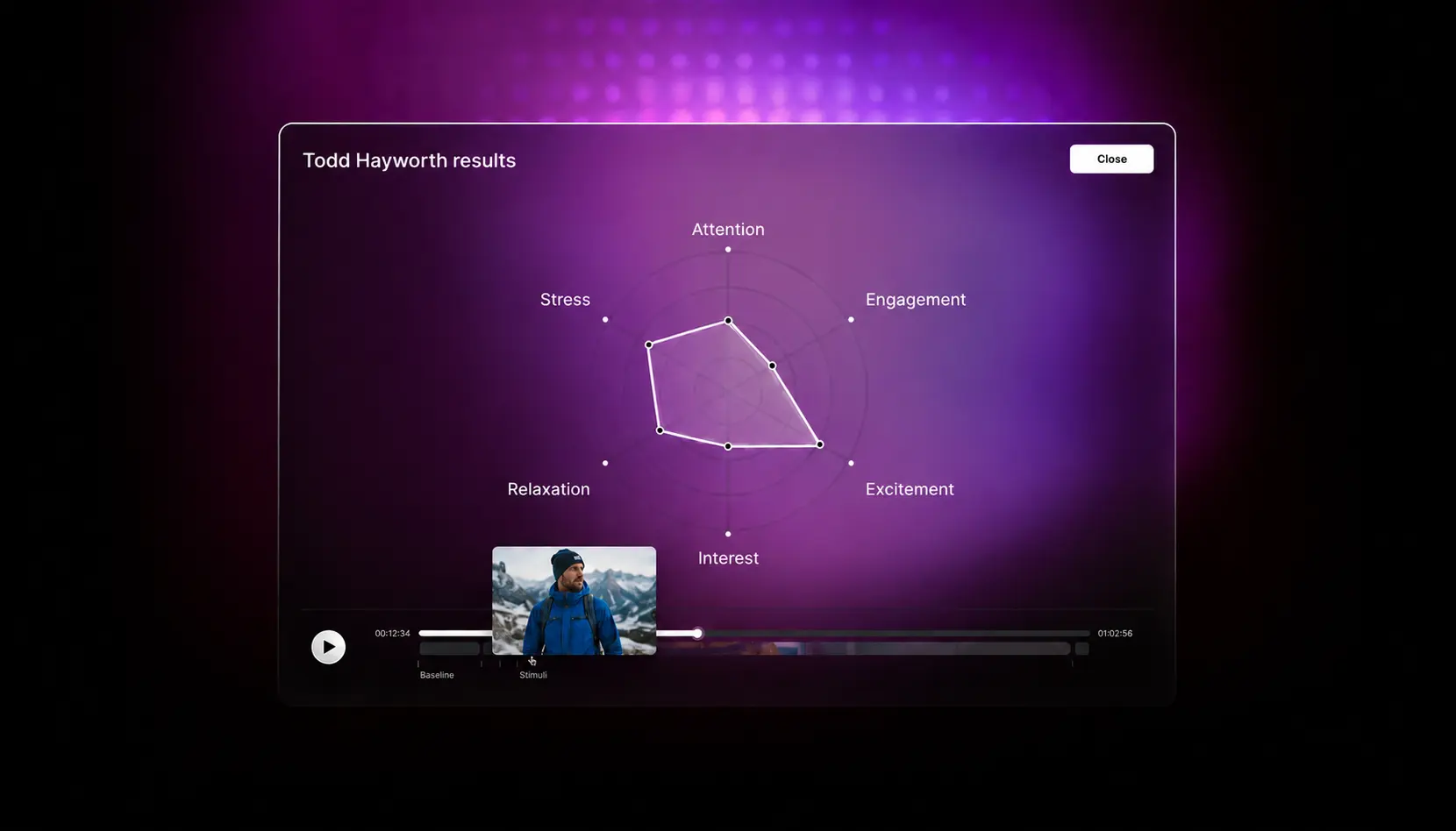
The real magic happens when complex brainwave patterns are transformed into information you can actually use. Our software is built to do just that. Platforms like EmotivPRO process the raw data and present it through understandable metrics that reflect attention, engagement, and mental effort. By analyzing these outputs, you can analyze brain patterns associated with reward processing, risk evaluation, or trust-related tasks when making a purchasing decision. These visualization tools are essential for turning a stream of data into a compelling story about your customer’s subconscious journey, giving you the evidence you need to build more effective marketing campaigns.


View Products

How to Combine EEG with Other Research Methods

Think of EEG as a powerful amplifier for your existing research toolkit. While it provides incredible data on its own, its true strength is revealed when you pair it with traditional methods. Combining research techniques gives you a more complete and nuanced understanding of human behavior. Traditional methods tell you what people say and do, while EEG helps you understand the subconscious drivers behind those actions.

This mixed-method approach allows you to cross-validate your findings. For instance, if a survey respondent says they love your new ad, their brain data can confirm if they experienced genuine emotional engagement or if they were just giving a socially desirable answer. By layer

For years, the idea of using brain data in market research felt like something reserved for massive corporations with huge budgets and dedicated labs. The technology seemed complex, expensive, and inaccessible to most. That's no longer the case. Modern advancements have made EEG technology portable, user-friendly, and affordable, putting the power of neuromarketing within reach for businesses and researchers of all sizes. You can now conduct studies in realistic environments—like a retail store or a participant's home—to capture authentic reactions as they happen. This guide will introduce you to the most practical and effective EEG tools for market research, showing you how to integrate this powerful methodology into your work.


View Products

Key Takeaways

  • Uncover responses beyond self-report: EEG provides objective data on subconscious responses, giving you insights that go deeper than what people say in surveys or focus groups.

  • Match your hardware to your research goals: Choose the right EEG headset for your study, whether you need the detailed data of a multi-channel device for lab work or the discretion of earbuds for real-world settings.

  • Combine methods for a complete picture: Pairing EEG with traditional research like surveys or other biometric tools allows you to connect subconscious responses with conscious feedback, creating a comprehensive view of the consumer experience.

What is EEG and How Does It Work for Market Research?

If you've ever wondered how a customer is responding when they look at your product, you're not alone. Traditional methods like surveys and focus groups are great, but they only capture what people are willing or able to tell you. Electroencephalography, or EEG, offers a way to understand the subconscious responses associated with consumer decisions. It’s a powerful tool for neuromarketing that helps you get to the "why" behind the "what" of customer behavior. By measuring brain activity, you can gather data on brain responses associated with engagement and perception related to your ads, packaging, and brand messaging.

A Quick Look at the Science

So, what exactly is EEG? It’s a method that measures the tiny electrical signals, often called brainwaves, that your brain produces constantly. Think of it as listening in on the brain's electrical conversations. When you’re exposed to a stimulus, like watching a commercial, your brain's activity changes. An EEG headset uses small sensors placed on the scalp to detect these faint signals. Our software then translates these complex brainwave patterns into understandable metrics, giving you insights into a person's attention, engagement, and cognitive load at any given moment. It’s a non-invasive way to get a direct look at brain responses in real time.

Using EEG to Understand Consumer Behavior

This is where things get exciting for market researchers. EEG can reveal underlying cognitive and emotional responses that people often can't articulate. For example, a person might say they like an ad in a focus group to be polite, but their brain activity could suggest lower engagement or changes in emotional processing. This technology helps you move beyond self-reported data to see how consumers respond to things like pricing, product design, and brand stories on an unconscious level. It’s an essential tool for anyone in academic research and education or marketing who wants to understand the deeper drivers of human choice.

Why Use EEG Over Traditional Market Research?

Traditional market research methods like surveys and focus groups have been staples for decades, and for good reason. They give you direct feedback from your audience. But what happens when your customers can't quite put their finger on why they prefer one design over another, or when they tell you what they think you want to hear? This is where EEG comes in. It doesn't replace traditional methods; it adds a powerful layer of objective data, helping you understand the subconscious drivers behind consumer choices.

Measure Responses in Real Time

Imagine watching an ad and knowing the exact moment associated with changes in engagement or cognitive load. That’s the power of EEG. Because it measures the brain's electrical activity directly, you can see immediate cognitive responses as they happen. Instead of asking someone to recall how they felt later, you get a live, second-by-second account of their experience. This real-time feedback is invaluable for optimizing video content and user interface design, allowing you to pinpoint what truly resonates with your audience. This approach is a cornerstone of modern neuromarketing.

Uncover Subconscious Consumer Responses

We’ve all been there—saying we like something to be polite or simply not knowing how to explain a gut feeling. People can't always articulate the subconscious thoughts and feelings that drive their decisions. Surveys and focus groups rely on self-reported answers, which can be filtered through social pressures or a simple lack of awareness. EEG helps you get past what people say and understand what they are experiencing. By analyzing these brain responses, you can uncover insights about your products and brand messaging that participants might not even be aware of themselves.

Collect More Objective Data

One of the biggest challenges in market research is bias. In a focus group, one strong personality can influence the entire room. In a survey, the way you word a question can subtly nudge respondents toward a certain answer. Since EEG collects data directly from the brain, it provides a more objective data source. It’s less affected by participants trying to give the "right" answers or by the limitations of memory. This data provides additional context for decisions in your academic research or commercial projects.

What Consumer Insights Can You Uncover with EEG?

Traditional market research methods like surveys and focus groups are valuable, but they have a fundamental limitation: they rely on what people say they think and feel. There's often a gap between what someone reports and what they subconsciously believe, a gap influenced by social desirability, poor memory, or an inability to articulate a gut feeling. This can lead to misleading insights that send your marketing and product strategies in the wrong direction. What if you could get past those filters and tap directly into their responses?

That’s where EEG comes in. By measuring the brain's electrical activity, EEG technology gives you a direct window into a person's cognitive and emotional responses in real time. This isn't about reading minds; it's about collecting objective, quantitative data on brain responses associated with behavior. You can see what truly captures someone's attention during an ad, what is associated with increased mental effort when using your app, what supports an emotional connection to your brand story, and what parts of your message are associated with memory-related brain activity. These insights help you move beyond guesswork and make data-driven decisions that resonate with your audience. Let's explore some of the specific consumer insights you can gather using EEG.

Gauge Emotional Engagement with Your Brand

How do people respond when they see your logo or watch your latest brand story? EEG helps you measure immediate, subconscious emotional responses associated with behavior. You can see the response to your brand assets in real time, identifying moments associated with excitement, joy, or frustration that participants might not even be aware of or able to articulate. This allows you to test different creative approaches and see which ones forge a connection. Our neuromarketing solutions are designed to help you quantify this engagement, turning brain data into clear metrics that show how deeply your brand connects with its audience.

Pinpoint Attention Levels During Ads

Every second of an ad costs money, so you need to know what’s holding your audience’s attention and what’s causing them to tune out. EEG can pinpoint exactly which visual or auditory elements in an advertisement capture focus and which ones are ignored. Was it the opening scene, the celebrity cameo, or the final call-to-action that made the biggest impact? By analyzing attention levels frame-by-frame, you can optimize your creative for maximum impact and avoid spending on elements that don't work. With a tool like EmotivPRO, you can visualize these attention peaks and valleys to build more compelling and effective advertising campaigns.

Understand Cognitive Load and Decision-Making

Is your website easy to use? Is your product packaging confusing? Cognitive load, or the amount of mental effort a task requires, is a critical factor in customer experience. High cognitive load is often associated with frustration, errors, and task abandonment. EEG allows you to measure this mental effort directly. You can see if a user is struggling with your app's interface or finding the checkout process overwhelming. This insight is invaluable for UX designers and product developers. By identifying and eliminating points of friction, you can create smoother, more intuitive experiences that customers enjoy, a principle often explored in academic research.

Analyze How Well Your Message Sticks

A memorable ad is an effective ad. But how do you know if your message is actually being retained? EEG can help identify brain activity patterns associated with memory encoding. This means you can get an indication of whether a specific scene, tagline, or key message is associated with brain activity linked to memory encoding. It’s a powerful way to test your creative and ensure your brand's story sticks. You can compare different versions of an ad to see which one is more memorable, giving you confidence that your marketing budget is building lasting brand recall. This approach helps you build a stronger brand presence with every campaign you launch.

Choosing the Best EEG Headset for Market Research

Picking the right EEG headset is a lot like choosing the right camera for a photoshoot. The best tool depends entirely on what you want to capture. Are you doing a detailed studio portrait or a candid shot on the street? Similarly, your market research goals will determine which headset is the perfect fit. The key is to match the device’s capabilities—like the number of channels and form factor—to the specific questions you’re trying to answer.

Whether you need to conduct in-depth academic research in a controlled lab or gather quick insights in a real-world retail environment, there’s a headset designed for the job. A study measuring nuanced emotional responses to a movie trailer will require more comprehensive data than one assessing a user's cognitive load while navigating a website. Let's walk through our lineup to help you find the ideal match for your project, from our most detailed multi-channel systems to our most discreet, wearable options.

Emotiv Epoc X: The 14-Channel Powerhouse

If you’re looking for a versatile and powerful tool that balances detail with practicality, the Emotiv Epoc X is your go-to. This headset provides 14 channels of high-quality EEG data, making it perfect for detailed studies of brain activity. It’s designed for both research and commercial applications, offering robust data collection in a portable format that can be set up quickly. For market researchers, those 14 channels allow you to explore brain responses with significant granularity, giving you a clearer picture of engagement and emotional valence. It’s an excellent choice for lab-based ad testing, user experience studies, and product evaluations where you need reliable, multi-channel data without the complexity of a full-cap system.

Emotiv Flex Saline: The 32-Channel Researcher's Choice

When your research demands the highest level of detail and precision, the Emotiv Flex Saline is the answer. This headset features 32 channels, allowing for comprehensive brain mapping and sophisticated analysis. What makes the Flex truly special is its adaptable design; researchers love it for the flexibility to customize electrode placement for highly specific studies. If your work involves pinpointing activity in precise brain regions or requires high-density data for advanced analysis, this is the headset for you. It’s the top choice for deep-dive neuromarketing studies, academic research, and any project where capturing the most complete picture of neural activity is the primary goal.

Emotiv Insight: The Accessible 5-Channel Option

Just starting with EEG or have a project that calls for straightforward, essential metrics? The Emotiv Insight is a fantastic entry point. This user-friendly headset offers 5 channels of quality data in a sleek, easy-to-wear design. It’s built for accessibility, making it ideal for those new to EEG research or for applications that don’t require extensive data collection. The Insight is perfect for gathering core performance metrics related to attention, focus, and engagement. Think of it for quick usability tests, educational applications, or pilot studies where ease of setup and participant comfort are top priorities. It effectively lowers the barrier to entry for integrating brain data into your research toolkit.

Emotiv MN8: The Discreet 2-Channel Earbuds

Sometimes, the best research happens when participants forget they’re even part of a study. The Emotiv MN8 earbuds offer a discreet and portable option for EEG data collection, featuring 2 channels in a familiar earbud format. They are designed for quick assessments and are especially useful in environments where a traditional headset might feel intrusive or out of place, like a retail store or a public event. The MN8 is perfect for capturing real-time cognitive states, such as attention or cognitive load, in natural settings. While you won’t be doing deep brain mapping, you’ll gain valuable insights into a consumer’s experience as it happens, with minimal disruption.

The Best EEG Software for Neuromarketing

Choosing the right EEG headset is only half the equation. To truly understand your customers, you need software that can translate raw brain data into clear, actionable insights. The software you choose will depend on the scale and complexity of your research. Are you running a detailed, lab-based study with multiple participants, or do you need a quick, flexible way to gather data in a real-world setting?

Our software solutions are designed to meet you where you are. For deep, granular analysis, EmotivPRO is the go-to platform for professional researchers. It gives you access to dense data streams and advanced analysis tools. If you need something more streamlined for quick data collection and real-time feedback, the Emotiv App offers a user-friendly experience that pairs perfectly with our wireless headsets. Both are powerful tools for neuromarketing, helping you move beyond what customers say they feel and get closer to what they actually experience when they interact with your brand, product, or advertisement. Let’s look at which one is the right fit for your project.

EmotivPRO: For In-Depth Professional Research

When your research demands a high level of detail, EmotivPRO is the tool you need. It’s designed for professionals who want to conduct in-depth analysis of brain activity. This software allows you to see the immediate, subconscious emotional and cognitive responses that shape consumer behavior. Instead of relying on self-reported feelings, you get objective data about what truly excites, frustrates, or engages your audience at a neural level. With EmotivPRO, you can record and review raw EEG data, view real-time performance metrics, and mark events to precisely sync brain responses with specific stimuli, like a scene in an ad or a feature on a website.

Emotiv App: For Quick and Easy Data Collection

If your research takes you out of the lab and into the real world, the Emotiv App is your ideal partner. It offers a simple, portable solution that works seamlessly with our wireless headsets, allowing you to collect data anywhere—from a retail store to a participant's home. This accessibility makes it easier than ever for companies of all sizes to integrate brain data into their market research. The app provides a straightforward interface for viewing key performance metrics, making it perfect for studies where you need quick insights and a setup that won’t intimidate participants. It’s a great way to get started with EEG research without a steep learning curve.

Tools for Analyzing and Visualizing Your Data

The real magic happens when complex brainwave patterns are transformed into information you can actually use. Our software is built to do just that. Platforms like EmotivPRO process the raw data and present it through understandable metrics that reflect attention, engagement, and mental effort. By analyzing these outputs, you can analyze brain patterns associated with reward processing, risk evaluation, or trust-related tasks when making a purchasing decision. These visualization tools are essential for turning a stream of data into a compelling story about your customer’s subconscious journey, giving you the evidence you need to build more effective marketing campaigns.


View Products

How to Combine EEG with Other Research Methods

Think of EEG as a powerful amplifier for your existing research toolkit. While it provides incredible data on its own, its true strength is revealed when you pair it with traditional methods. Combining research techniques gives you a more complete and nuanced understanding of human behavior. Traditional methods tell you what people say and do, while EEG helps you understand the subconscious drivers behind those actions.

This mixed-method approach allows you to cross-validate your findings. For instance, if a survey respondent says they love your new ad, their brain data can confirm if they experienced genuine emotional engagement or if they were just giving a socially desirable answer. By layer

For years, the idea of using brain data in market research felt like something reserved for massive corporations with huge budgets and dedicated labs. The technology seemed complex, expensive, and inaccessible to most. That's no longer the case. Modern advancements have made EEG technology portable, user-friendly, and affordable, putting the power of neuromarketing within reach for businesses and researchers of all sizes. You can now conduct studies in realistic environments—like a retail store or a participant's home—to capture authentic reactions as they happen. This guide will introduce you to the most practical and effective EEG tools for market research, showing you how to integrate this powerful methodology into your work.


View Products

Key Takeaways

  • Uncover responses beyond self-report: EEG provides objective data on subconscious responses, giving you insights that go deeper than what people say in surveys or focus groups.

  • Match your hardware to your research goals: Choose the right EEG headset for your study, whether you need the detailed data of a multi-channel device for lab work or the discretion of earbuds for real-world settings.

  • Combine methods for a complete picture: Pairing EEG with traditional research like surveys or other biometric tools allows you to connect subconscious responses with conscious feedback, creating a comprehensive view of the consumer experience.

What is EEG and How Does It Work for Market Research?

If you've ever wondered how a customer is responding when they look at your product, you're not alone. Traditional methods like surveys and focus groups are great, but they only capture what people are willing or able to tell you. Electroencephalography, or EEG, offers a way to understand the subconscious responses associated with consumer decisions. It’s a powerful tool for neuromarketing that helps you get to the "why" behind the "what" of customer behavior. By measuring brain activity, you can gather data on brain responses associated with engagement and perception related to your ads, packaging, and brand messaging.

A Quick Look at the Science

So, what exactly is EEG? It’s a method that measures the tiny electrical signals, often called brainwaves, that your brain produces constantly. Think of it as listening in on the brain's electrical conversations. When you’re exposed to a stimulus, like watching a commercial, your brain's activity changes. An EEG headset uses small sensors placed on the scalp to detect these faint signals. Our software then translates these complex brainwave patterns into understandable metrics, giving you insights into a person's attention, engagement, and cognitive load at any given moment. It’s a non-invasive way to get a direct look at brain responses in real time.

Using EEG to Understand Consumer Behavior

This is where things get exciting for market researchers. EEG can reveal underlying cognitive and emotional responses that people often can't articulate. For example, a person might say they like an ad in a focus group to be polite, but their brain activity could suggest lower engagement or changes in emotional processing. This technology helps you move beyond self-reported data to see how consumers respond to things like pricing, product design, and brand stories on an unconscious level. It’s an essential tool for anyone in academic research and education or marketing who wants to understand the deeper drivers of human choice.

Why Use EEG Over Traditional Market Research?

Traditional market research methods like surveys and focus groups have been staples for decades, and for good reason. They give you direct feedback from your audience. But what happens when your customers can't quite put their finger on why they prefer one design over another, or when they tell you what they think you want to hear? This is where EEG comes in. It doesn't replace traditional methods; it adds a powerful layer of objective data, helping you understand the subconscious drivers behind consumer choices.

Measure Responses in Real Time

Imagine watching an ad and knowing the exact moment associated with changes in engagement or cognitive load. That’s the power of EEG. Because it measures the brain's electrical activity directly, you can see immediate cognitive responses as they happen. Instead of asking someone to recall how they felt later, you get a live, second-by-second account of their experience. This real-time feedback is invaluable for optimizing video content and user interface design, allowing you to pinpoint what truly resonates with your audience. This approach is a cornerstone of modern neuromarketing.

Uncover Subconscious Consumer Responses

We’ve all been there—saying we like something to be polite or simply not knowing how to explain a gut feeling. People can't always articulate the subconscious thoughts and feelings that drive their decisions. Surveys and focus groups rely on self-reported answers, which can be filtered through social pressures or a simple lack of awareness. EEG helps you get past what people say and understand what they are experiencing. By analyzing these brain responses, you can uncover insights about your products and brand messaging that participants might not even be aware of themselves.

Collect More Objective Data

One of the biggest challenges in market research is bias. In a focus group, one strong personality can influence the entire room. In a survey, the way you word a question can subtly nudge respondents toward a certain answer. Since EEG collects data directly from the brain, it provides a more objective data source. It’s less affected by participants trying to give the "right" answers or by the limitations of memory. This data provides additional context for decisions in your academic research or commercial projects.

What Consumer Insights Can You Uncover with EEG?

Traditional market research methods like surveys and focus groups are valuable, but they have a fundamental limitation: they rely on what people say they think and feel. There's often a gap between what someone reports and what they subconsciously believe, a gap influenced by social desirability, poor memory, or an inability to articulate a gut feeling. This can lead to misleading insights that send your marketing and product strategies in the wrong direction. What if you could get past those filters and tap directly into their responses?

That’s where EEG comes in. By measuring the brain's electrical activity, EEG technology gives you a direct window into a person's cognitive and emotional responses in real time. This isn't about reading minds; it's about collecting objective, quantitative data on brain responses associated with behavior. You can see what truly captures someone's attention during an ad, what is associated with increased mental effort when using your app, what supports an emotional connection to your brand story, and what parts of your message are associated with memory-related brain activity. These insights help you move beyond guesswork and make data-driven decisions that resonate with your audience. Let's explore some of the specific consumer insights you can gather using EEG.

Gauge Emotional Engagement with Your Brand

How do people respond when they see your logo or watch your latest brand story? EEG helps you measure immediate, subconscious emotional responses associated with behavior. You can see the response to your brand assets in real time, identifying moments associated with excitement, joy, or frustration that participants might not even be aware of or able to articulate. This allows you to test different creative approaches and see which ones forge a connection. Our neuromarketing solutions are designed to help you quantify this engagement, turning brain data into clear metrics that show how deeply your brand connects with its audience.

Pinpoint Attention Levels During Ads

Every second of an ad costs money, so you need to know what’s holding your audience’s attention and what’s causing them to tune out. EEG can pinpoint exactly which visual or auditory elements in an advertisement capture focus and which ones are ignored. Was it the opening scene, the celebrity cameo, or the final call-to-action that made the biggest impact? By analyzing attention levels frame-by-frame, you can optimize your creative for maximum impact and avoid spending on elements that don't work. With a tool like EmotivPRO, you can visualize these attention peaks and valleys to build more compelling and effective advertising campaigns.

Understand Cognitive Load and Decision-Making

Is your website easy to use? Is your product packaging confusing? Cognitive load, or the amount of mental effort a task requires, is a critical factor in customer experience. High cognitive load is often associated with frustration, errors, and task abandonment. EEG allows you to measure this mental effort directly. You can see if a user is struggling with your app's interface or finding the checkout process overwhelming. This insight is invaluable for UX designers and product developers. By identifying and eliminating points of friction, you can create smoother, more intuitive experiences that customers enjoy, a principle often explored in academic research.

Analyze How Well Your Message Sticks

A memorable ad is an effective ad. But how do you know if your message is actually being retained? EEG can help identify brain activity patterns associated with memory encoding. This means you can get an indication of whether a specific scene, tagline, or key message is associated with brain activity linked to memory encoding. It’s a powerful way to test your creative and ensure your brand's story sticks. You can compare different versions of an ad to see which one is more memorable, giving you confidence that your marketing budget is building lasting brand recall. This approach helps you build a stronger brand presence with every campaign you launch.

Choosing the Best EEG Headset for Market Research

Picking the right EEG headset is a lot like choosing the right camera for a photoshoot. The best tool depends entirely on what you want to capture. Are you doing a detailed studio portrait or a candid shot on the street? Similarly, your market research goals will determine which headset is the perfect fit. The key is to match the device’s capabilities—like the number of channels and form factor—to the specific questions you’re trying to answer.

Whether you need to conduct in-depth academic research in a controlled lab or gather quick insights in a real-world retail environment, there’s a headset designed for the job. A study measuring nuanced emotional responses to a movie trailer will require more comprehensive data than one assessing a user's cognitive load while navigating a website. Let's walk through our lineup to help you find the ideal match for your project, from our most detailed multi-channel systems to our most discreet, wearable options.

Emotiv Epoc X: The 14-Channel Powerhouse

If you’re looking for a versatile and powerful tool that balances detail with practicality, the Emotiv Epoc X is your go-to. This headset provides 14 channels of high-quality EEG data, making it perfect for detailed studies of brain activity. It’s designed for both research and commercial applications, offering robust data collection in a portable format that can be set up quickly. For market researchers, those 14 channels allow you to explore brain responses with significant granularity, giving you a clearer picture of engagement and emotional valence. It’s an excellent choice for lab-based ad testing, user experience studies, and product evaluations where you need reliable, multi-channel data without the complexity of a full-cap system.

Emotiv Flex Saline: The 32-Channel Researcher's Choice

When your research demands the highest level of detail and precision, the Emotiv Flex Saline is the answer. This headset features 32 channels, allowing for comprehensive brain mapping and sophisticated analysis. What makes the Flex truly special is its adaptable design; researchers love it for the flexibility to customize electrode placement for highly specific studies. If your work involves pinpointing activity in precise brain regions or requires high-density data for advanced analysis, this is the headset for you. It’s the top choice for deep-dive neuromarketing studies, academic research, and any project where capturing the most complete picture of neural activity is the primary goal.

Emotiv Insight: The Accessible 5-Channel Option

Just starting with EEG or have a project that calls for straightforward, essential metrics? The Emotiv Insight is a fantastic entry point. This user-friendly headset offers 5 channels of quality data in a sleek, easy-to-wear design. It’s built for accessibility, making it ideal for those new to EEG research or for applications that don’t require extensive data collection. The Insight is perfect for gathering core performance metrics related to attention, focus, and engagement. Think of it for quick usability tests, educational applications, or pilot studies where ease of setup and participant comfort are top priorities. It effectively lowers the barrier to entry for integrating brain data into your research toolkit.

Emotiv MN8: The Discreet 2-Channel Earbuds

Sometimes, the best research happens when participants forget they’re even part of a study. The Emotiv MN8 earbuds offer a discreet and portable option for EEG data collection, featuring 2 channels in a familiar earbud format. They are designed for quick assessments and are especially useful in environments where a traditional headset might feel intrusive or out of place, like a retail store or a public event. The MN8 is perfect for capturing real-time cognitive states, such as attention or cognitive load, in natural settings. While you won’t be doing deep brain mapping, you’ll gain valuable insights into a consumer’s experience as it happens, with minimal disruption.

The Best EEG Software for Neuromarketing

Choosing the right EEG headset is only half the equation. To truly understand your customers, you need software that can translate raw brain data into clear, actionable insights. The software you choose will depend on the scale and complexity of your research. Are you running a detailed, lab-based study with multiple participants, or do you need a quick, flexible way to gather data in a real-world setting?

Our software solutions are designed to meet you where you are. For deep, granular analysis, EmotivPRO is the go-to platform for professional researchers. It gives you access to dense data streams and advanced analysis tools. If you need something more streamlined for quick data collection and real-time feedback, the Emotiv App offers a user-friendly experience that pairs perfectly with our wireless headsets. Both are powerful tools for neuromarketing, helping you move beyond what customers say they feel and get closer to what they actually experience when they interact with your brand, product, or advertisement. Let’s look at which one is the right fit for your project.

EmotivPRO: For In-Depth Professional Research

When your research demands a high level of detail, EmotivPRO is the tool you need. It’s designed for professionals who want to conduct in-depth analysis of brain activity. This software allows you to see the immediate, subconscious emotional and cognitive responses that shape consumer behavior. Instead of relying on self-reported feelings, you get objective data about what truly excites, frustrates, or engages your audience at a neural level. With EmotivPRO, you can record and review raw EEG data, view real-time performance metrics, and mark events to precisely sync brain responses with specific stimuli, like a scene in an ad or a feature on a website.

Emotiv App: For Quick and Easy Data Collection

If your research takes you out of the lab and into the real world, the Emotiv App is your ideal partner. It offers a simple, portable solution that works seamlessly with our wireless headsets, allowing you to collect data anywhere—from a retail store to a participant's home. This accessibility makes it easier than ever for companies of all sizes to integrate brain data into their market research. The app provides a straightforward interface for viewing key performance metrics, making it perfect for studies where you need quick insights and a setup that won’t intimidate participants. It’s a great way to get started with EEG research without a steep learning curve.

Tools for Analyzing and Visualizing Your Data

The real magic happens when complex brainwave patterns are transformed into information you can actually use. Our software is built to do just that. Platforms like EmotivPRO process the raw data and present it through understandable metrics that reflect attention, engagement, and mental effort. By analyzing these outputs, you can analyze brain patterns associated with reward processing, risk evaluation, or trust-related tasks when making a purchasing decision. These visualization tools are essential for turning a stream of data into a compelling story about your customer’s subconscious journey, giving you the evidence you need to build more effective marketing campaigns.


View Products

How to Combine EEG with Other Research Methods

Think of EEG as a powerful amplifier for your existing research toolkit. While it provides incredible data on its own, its true strength is revealed when you pair it with traditional methods. Combining research techniques gives you a more complete and nuanced understanding of human behavior. Traditional methods tell you what people say and do, while EEG helps you understand the subconscious drivers behind those actions.

This mixed-method approach allows you to cross-validate your findings. For instance, if a survey respondent says they love your new ad, their brain data can confirm if they experienced genuine emotional engagement or if they were just giving a socially desirable answer. By layer

© 2025 EMOTIV, All rights reserved.

Consent

Your Privacy Choices (Cookie Settings)

*Disclaimer – EMOTIV products are intended to be used for research applications and personal use only. Our products are not sold as Medical Devices as defined in EU directive 93/42/EEC. Our products are not designed or intended to be used for diagnosis or treatment of disease.

Note on Translations: Non-English versions of this website has been translated for your convenience using artificial intelligence. While we strive for accuracy, automated translations may contain errors or nuances that differ from the original text. For the most accurate information, please refer to the English version of this site.

© 2025 EMOTIV, All rights reserved.

Consent

Your Privacy Choices (Cookie Settings)

*Disclaimer – EMOTIV products are intended to be used for research applications and personal use only. Our products are not sold as Medical Devices as defined in EU directive 93/42/EEC. Our products are not designed or intended to be used for diagnosis or treatment of disease.

Note on Translations: Non-English versions of this website has been translated for your convenience using artificial intelligence. While we strive for accuracy, automated translations may contain errors or nuances that differ from the original text. For the most accurate information, please refer to the English version of this site.

© 2025 EMOTIV, All rights reserved.

Consent

Your Privacy Choices (Cookie Settings)

*Disclaimer – EMOTIV products are intended to be used for research applications and personal use only. Our products are not sold as Medical Devices as defined in EU directive 93/42/EEC. Our products are not designed or intended to be used for diagnosis or treatment of disease.

Note on Translations: Non-English versions of this website has been translated for your convenience using artificial intelligence. While we strive for accuracy, automated translations may contain errors or nuances that differ from the original text. For the most accurate information, please refer to the English version of this site.