
EEG for Consumer Research: A Practical Guide
Emotiv
Updated on
Dec 18, 2025
EEG for Consumer Research: A Practical Guide
Emotiv
Updated on
Dec 18, 2025
EEG for Consumer Research: A Practical Guide
Emotiv
Updated on
Dec 18, 2025
Focus groups and surveys have been the standard for decades, but they have a fundamental flaw: they rely on what people say they feel. This self-reported data is often skewed by social pressures, poor memory, or the simple inability to put a gut feeling into words. What if you could get past that conscious filter? This is the core value of using eeg for consumer research. By measuring the brain’s electrical activity directly, you can collect immediate, subconscious responses that influence behavior. This approach provides objective data on subjective experiences, helping you better understand what excites, frustrates, or engages your audience on a neurological level.
Key Takeaways
Go beyond what consumers say: EEG measures subconscious brain activity, providing insight into emotional and cognitive responses that traditional surveys and focus groups cannot access.
Measure what truly matters for your brand: By analyzing brain signals, you can gather objective data related to attention, engagement, and emotional connection to inform decisions about products and marketing.
A solid plan is your key to clear insights: Successful EEG research depends on more than just the hardware; it requires a well-designed study, a controlled environment, and expert interpretation to translate complex data into actionable business strategy.
What is EEG and How Does It Work in Consumer Research?
Have you ever wished you could understand what customers really think, beyond what they say in surveys or focus groups? That’s where electroencephalography (EEG) comes in. It’s a research method that offers insight into how the brain responds to stimuli, helping uncover emotional and cognitive drivers behind consumer decisions. Instead of relying solely on self-reported feedback, EEG allows researchers to measure genuine responses as they occur.
Using EEG for consumer research isn’t about reading minds; it’s about understanding patterns of attention, engagement, and emotional response. By measuring brain activity, researchers can identify moments of interest, confusion, or disengagement that participants may not consciously recognize. This approach supports more informed decisions when designing marketing campaigns, products, and experiences. It provides structured, objective data on subjective experiences, offering a complementary layer of insight alongside traditional research methods.
What Is Brain Electrical Activity?
At its core, the brain is a network of neurons that communicate through electrical signals. EEG is a non-invasive technology that measures this activity from the scalp. By placing sensors on the head, researchers can detect patterns in these signals, commonly referred to as brainwaves. These patterns offer insight into cognitive processes such as attention and mental workload. EEG is widely used across fields, including academic research and education, to study how the brain responds to different tasks and stimuli.
How Do EEG Sensors Collect Data?
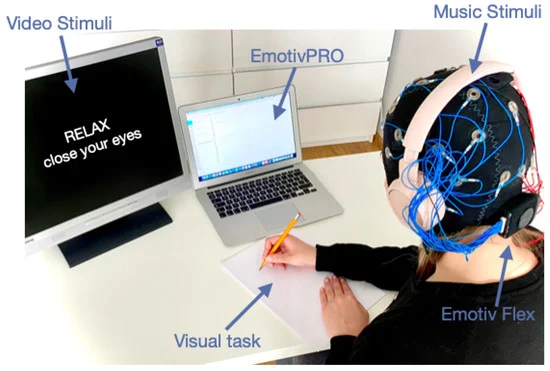
EEG data is gathered using headsets equipped with sensors positioned on the scalp. These sensors detect faint electrical signals generated by neural activity beneath them. Systems such as the high-density Emotiv Flex use multiple sensors to provide broader spatial coverage across the scalp. As a participant views an advertisement, interacts with a product, or navigates a digital experience, the system collects continuous data reflecting changes in cognitive and emotional state throughout the session.
Turning Brain Signals Into Consumer Insights
Raw EEG data appears as complex waveforms and requires processing to become meaningful. During analysis, specialized software translates patterns in the data into interpretable indicators related to attention, engagement, or cognitive effort. Tools like EmotivPRO help identify these patterns and visualize how responses change over time. This allows researchers to understand which elements of an experience hold attention or create friction, supporting more informed neuromarketing decisions.
Why Use EEG Over Traditional Research Methods?
Traditional research methods such as surveys and focus groups depend on conscious reflection. While valuable, these approaches can miss immediate reactions that shape perception and decision-making. EEG offers a complementary method by providing insight into responses that occur before a participant has time to reflect or rationalize their experience. Measuring brain activity directly helps researchers better understand how consumers respond moment by moment.
Limitations of Surveys and Focus Groups
Self-reported data can be influenced by social desirability, group dynamics, or memory limitations. Participants may struggle to articulate complex emotional reactions or may adjust responses based on perceived expectations. These methods capture what consumers say they feel, which may differ from their immediate response during an experience.
Access Subconscious Consumer Responses
EEG provides insight into rapid cognitive and emotional responses that occur within milliseconds. These responses often play a significant role in shaping preferences and behavior. By analyzing EEG data, researchers can explore underlying drivers of engagement or disengagement that are difficult to capture through verbal feedback alone. This perspective is central to many modern neuromarketing approaches.
Measure Responses in Real Time
EEG systems offer high temporal resolution, allowing researchers to examine how responses evolve second by second. When participants watch an advertisement or interact with a product, changes in attention and engagement can be observed as they happen. Software such as EmotivPRO supports visualization and analysis of these time-locked responses, helping researchers align brain activity with specific moments in the experience.
Reduce Bias in Consumer Feedback
Because EEG data is collected directly from physiological signals, it is less affected by the biases associated with self-reporting. This does not replace traditional feedback but provides an additional data layer that can help validate or contextualize stated preferences. Combining EEG with surveys and interviews often leads to more balanced and reliable insights.
How Does EEG Measure Subconscious and Emotional Responses?
EEG measures patterns of brain activity associated with different cognitive and emotional states. By examining changes in these patterns, researchers can infer levels of attention, mental effort, or engagement during an experience. This helps move beyond retrospective accounts and toward a more immediate understanding of consumer response.
What Brainwaves Reveal About Consumer Emotions
Different frequency bands are commonly associated with different mental states. For example, Alpha activity is often linked to relaxed alertness, while Beta activity is associated with active thinking and focus. By examining shifts in these patterns, researchers can infer how a consumer responds to specific stimuli. Our neuromarketing solutions support this type of analysis, helping teams interpret changes in engagement or emotional response.
Detecting Cognitive Load and Attention
EEG is well suited for assessing cognitive load and attentional demand. Changes in specific frequency bands can indicate when a task becomes more mentally demanding or when attention fluctuates. With tools like EmotivPRO, researchers can visualize these changes and identify moments where experiences may be confusing or overly complex.
Measuring Engagement and Preference
Engagement reflects sustained cognitive and emotional involvement. EEG data can help distinguish between passive exposure and active engagement by highlighting patterns associated with sustained attention. These insights can inform decisions about design, messaging, or feature prioritization based on observed responses rather than assumptions.
Interpreting Predictive Signals Carefully
Research suggests that EEG data can be associated with future behavior under certain conditions. However, these findings should be interpreted carefully and in context. EEG provides signals related to emotional and cognitive processing that may correlate with preference or intent, but it does not guarantee outcomes. When combined with other research methods, it can contribute to a more nuanced understanding of consumer response.
What Can EEG Reveal About Consumer Behavior?
EEG offers insight into how consumers respond at a neurological level, complementing traditional measures of behavior and preference. By examining patterns of brain activity, researchers can explore how attention, emotional response, and cognitive effort interact during decision-making.
Signals Related to Purchase Consideration
EEG research has explored neural patterns associated with reward processing, risk evaluation, and trust. These patterns can provide context around how consumers evaluate products during consideration phases. Such insights can inform product positioning or messaging strategies when interpreted alongside behavioral data.
Brand Perception and Emotional Connection
Brand experiences evoke emotional and cognitive responses that influence perception. EEG allows researchers to examine reactions to brand elements such as logos, packaging, or messaging. Understanding these responses can help refine brand communication and support more consistent emotional resonance.
Evaluating Product Features
EEG can be used to assess how consumers respond to different product designs or features. Changes in cognitive load may indicate usability challenges, while engagement-related patterns can suggest positive interaction. This approach supports iterative testing and evidence-based refinement of products or interfaces.
Measuring Advertisement Effectiveness
EEG’s temporal precision makes it useful for evaluating advertisements, where attention and emotional response can shift rapidly. By aligning brain activity with specific frames or audio cues, researchers can better understand which elements resonate and which may cause disengagement.
What Challenges Should You Expect in EEG Research?
Like any research method, EEG comes with practical and analytical challenges. Understanding these considerations helps ensure more reliable results and realistic expectations.
Interpreting Complex Data
EEG data reflects a combination of neural activity and noise from other sources. Careful processing and analysis are required to isolate relevant patterns. Software such as EmotivPRO supports this process, but expertise remains essential for meaningful interpretation.
Managing Environmental Factors
External stimuli can influence EEG measurements. Conducting studies in controlled environments and maintaining consistency across sessions helps reduce variability. Even in applied settings, thoughtful setup improves data quality.
Addressing Signal Artifacts
Artifacts from eye movements, muscle activity, or movement can affect EEG data. Identifying and managing these artifacts through participant instruction and data cleaning is a critical part of analysis.
The Importance of Expertise
EEG research benefits from collaboration between neuroscientists, data analysts, and domain experts. Interpreting results within the context of business or research goals ensures findings are applied appropriately and responsibly.
Types of EEG Headsets for Consumer Research
Different EEG systems support different research needs. Selecting the right device depends on study objectives, environment, and required data resolution.
Multi-Channel Systems
Systems with higher channel counts, such as the Emotiv Epoc X or Flex, provide broader scalp coverage and support more detailed analysis. These are well suited for in-depth studies requiring richer spatial information.
Portable Solutions
Wireless headsets enable studies outside traditional lab environments, supporting research in retail spaces, offices, or simulated settings. Devices like Emotiv Insight are designed for mobility and participant comfort.
Targeted, Lower-Channel Devices
For focused studies on attention or engagement, lower-channel devices such as Emotiv MN8 EEG earbuds can provide relevant data with minimal setup. These systems are useful when research questions are clearly defined and scope is limited.
Choosing the Right Device
Defining research objectives first helps guide device selection. Consider the environment, participant experience, and analytical requirements when aligning hardware with study goals.
Setting Up an Effective EEG Consumer Research Study
A thoughtful study design supports reliable data collection and meaningful insights.
Study Design and Participant Preparation
Clear research questions guide experimental design. Preparing participants by explaining procedures and ensuring comfort helps reduce noise and variability in data.
Creating Optimal Conditions
Minimizing distractions and maintaining consistent testing conditions across participants improves data quality. Portable systems like Emotiv Epoc X allow flexibility while still supporting controlled setups.
Combining EEG With Other Methods
EEG is often most effective when combined with complementary methods such as eye tracking or surveys. This multi-method approach provides a more comprehensive view of consumer experience.
The Role of Expert Interpretation
While software supports analysis, expert interpretation remains critical. Specialists help contextualize findings and translate data into actionable recommendations.
Common Misconceptions About EEG in Consumer Research
EEG is sometimes misunderstood due to misconceptions about its capabilities and use.
What EEG Can and Cannot Do
EEG does not interpret specific thoughts. It measures patterns of brain activity associated with cognitive and emotional states. Understanding both its strengths and limitations helps set realistic expectations.
Privacy and Ethics
Ethical EEG research relies on informed consent, transparency, and data anonymization. Participant data is typically analyzed in aggregate, focusing on group-level trends rather than individuals.
Cost and Accessibility
EEG is more accessible than many other neuroimaging methods. Advances in portable hardware have expanded its use beyond academic labs, enabling broader participation in consumer research.
Analyzing and Interpreting EEG Consumer Data
Turning EEG data into insights requires appropriate tools and clear objectives.
Software and Analysis Tools
Specialized software such as EmotivPRO supports data visualization and processing. Controlled study conditions further improve interpretability.
Key Metrics
Metrics commonly examined in neuromarketing research include attention, engagement, and cognitive load. These indicators provide context for understanding consumer response beyond self-report.
Applying Insights Responsibly
EEG data should be interpreted alongside other research findings. When used thoughtfully, it supports more informed decisions about design, messaging, and user experience.
What’s Next for EEG in Consumer Research?
EEG technology continues to evolve, expanding its role in consumer research.
Advances in Wearable EEG
Wireless and wearable devices support studies in more natural settings, enabling research beyond traditional labs without sacrificing data quality.
AI and Advanced Analysis
Machine learning techniques are increasingly used to explore large EEG datasets and identify subtle patterns. Software like EmotivPRO supports these workflows by organizing and visualizing complex data.
Growing Accessibility
As EEG hardware and software become more user-friendly, more organizations can integrate neuromarketing into their research strategies. This trend supports broader exploration of consumer experience grounded in objective physiological data.
Related Articles
Frequently Asked Questions
Do I need to be a neuroscientist to use EEG for my research?
A neuroscience background can be helpful, but it is not required. Tools like EmotivPRO are designed to support data processing and visualization, while collaboration with experienced analysts can help contextualize results.
Is EEG only for large companies with significant budgets?
EEG technology has become more accessible over time. Portable systems allow organizations of varying sizes to incorporate neuroscience-informed insights into their research efforts.
How do you know the data reflects a response to my ad?
Careful study design, controlled conditions, and time-locked analysis help align brain activity with specific stimuli, supporting more confident interpretation.
Why choose a multi-channel system over a simpler device?
Higher channel counts support more detailed analysis, while lower-channel systems may be sufficient for targeted research questions. The choice depends on study goals.
Can EEG help predict product success?
Research suggests EEG data can correlate with consumer response under certain conditions. These insights should be interpreted alongside other methods and are not guarantees of market outcomes.
Focus groups and surveys have been the standard for decades, but they have a fundamental flaw: they rely on what people say they feel. This self-reported data is often skewed by social pressures, poor memory, or the simple inability to put a gut feeling into words. What if you could get past that conscious filter? This is the core value of using eeg for consumer research. By measuring the brain’s electrical activity directly, you can collect immediate, subconscious responses that influence behavior. This approach provides objective data on subjective experiences, helping you better understand what excites, frustrates, or engages your audience on a neurological level.
Key Takeaways
Go beyond what consumers say: EEG measures subconscious brain activity, providing insight into emotional and cognitive responses that traditional surveys and focus groups cannot access.
Measure what truly matters for your brand: By analyzing brain signals, you can gather objective data related to attention, engagement, and emotional connection to inform decisions about products and marketing.
A solid plan is your key to clear insights: Successful EEG research depends on more than just the hardware; it requires a well-designed study, a controlled environment, and expert interpretation to translate complex data into actionable business strategy.
What is EEG and How Does It Work in Consumer Research?
Have you ever wished you could understand what customers really think, beyond what they say in surveys or focus groups? That’s where electroencephalography (EEG) comes in. It’s a research method that offers insight into how the brain responds to stimuli, helping uncover emotional and cognitive drivers behind consumer decisions. Instead of relying solely on self-reported feedback, EEG allows researchers to measure genuine responses as they occur.
Using EEG for consumer research isn’t about reading minds; it’s about understanding patterns of attention, engagement, and emotional response. By measuring brain activity, researchers can identify moments of interest, confusion, or disengagement that participants may not consciously recognize. This approach supports more informed decisions when designing marketing campaigns, products, and experiences. It provides structured, objective data on subjective experiences, offering a complementary layer of insight alongside traditional research methods.
What Is Brain Electrical Activity?
At its core, the brain is a network of neurons that communicate through electrical signals. EEG is a non-invasive technology that measures this activity from the scalp. By placing sensors on the head, researchers can detect patterns in these signals, commonly referred to as brainwaves. These patterns offer insight into cognitive processes such as attention and mental workload. EEG is widely used across fields, including academic research and education, to study how the brain responds to different tasks and stimuli.
How Do EEG Sensors Collect Data?
EEG data is gathered using headsets equipped with sensors positioned on the scalp. These sensors detect faint electrical signals generated by neural activity beneath them. Systems such as the high-density Emotiv Flex use multiple sensors to provide broader spatial coverage across the scalp. As a participant views an advertisement, interacts with a product, or navigates a digital experience, the system collects continuous data reflecting changes in cognitive and emotional state throughout the session.
Turning Brain Signals Into Consumer Insights
Raw EEG data appears as complex waveforms and requires processing to become meaningful. During analysis, specialized software translates patterns in the data into interpretable indicators related to attention, engagement, or cognitive effort. Tools like EmotivPRO help identify these patterns and visualize how responses change over time. This allows researchers to understand which elements of an experience hold attention or create friction, supporting more informed neuromarketing decisions.
Why Use EEG Over Traditional Research Methods?
Traditional research methods such as surveys and focus groups depend on conscious reflection. While valuable, these approaches can miss immediate reactions that shape perception and decision-making. EEG offers a complementary method by providing insight into responses that occur before a participant has time to reflect or rationalize their experience. Measuring brain activity directly helps researchers better understand how consumers respond moment by moment.
Limitations of Surveys and Focus Groups
Self-reported data can be influenced by social desirability, group dynamics, or memory limitations. Participants may struggle to articulate complex emotional reactions or may adjust responses based on perceived expectations. These methods capture what consumers say they feel, which may differ from their immediate response during an experience.
Access Subconscious Consumer Responses
EEG provides insight into rapid cognitive and emotional responses that occur within milliseconds. These responses often play a significant role in shaping preferences and behavior. By analyzing EEG data, researchers can explore underlying drivers of engagement or disengagement that are difficult to capture through verbal feedback alone. This perspective is central to many modern neuromarketing approaches.
Measure Responses in Real Time
EEG systems offer high temporal resolution, allowing researchers to examine how responses evolve second by second. When participants watch an advertisement or interact with a product, changes in attention and engagement can be observed as they happen. Software such as EmotivPRO supports visualization and analysis of these time-locked responses, helping researchers align brain activity with specific moments in the experience.
Reduce Bias in Consumer Feedback
Because EEG data is collected directly from physiological signals, it is less affected by the biases associated with self-reporting. This does not replace traditional feedback but provides an additional data layer that can help validate or contextualize stated preferences. Combining EEG with surveys and interviews often leads to more balanced and reliable insights.
How Does EEG Measure Subconscious and Emotional Responses?
EEG measures patterns of brain activity associated with different cognitive and emotional states. By examining changes in these patterns, researchers can infer levels of attention, mental effort, or engagement during an experience. This helps move beyond retrospective accounts and toward a more immediate understanding of consumer response.
What Brainwaves Reveal About Consumer Emotions
Different frequency bands are commonly associated with different mental states. For example, Alpha activity is often linked to relaxed alertness, while Beta activity is associated with active thinking and focus. By examining shifts in these patterns, researchers can infer how a consumer responds to specific stimuli. Our neuromarketing solutions support this type of analysis, helping teams interpret changes in engagement or emotional response.
Detecting Cognitive Load and Attention
EEG is well suited for assessing cognitive load and attentional demand. Changes in specific frequency bands can indicate when a task becomes more mentally demanding or when attention fluctuates. With tools like EmotivPRO, researchers can visualize these changes and identify moments where experiences may be confusing or overly complex.
Measuring Engagement and Preference
Engagement reflects sustained cognitive and emotional involvement. EEG data can help distinguish between passive exposure and active engagement by highlighting patterns associated with sustained attention. These insights can inform decisions about design, messaging, or feature prioritization based on observed responses rather than assumptions.
Interpreting Predictive Signals Carefully
Research suggests that EEG data can be associated with future behavior under certain conditions. However, these findings should be interpreted carefully and in context. EEG provides signals related to emotional and cognitive processing that may correlate with preference or intent, but it does not guarantee outcomes. When combined with other research methods, it can contribute to a more nuanced understanding of consumer response.
What Can EEG Reveal About Consumer Behavior?
EEG offers insight into how consumers respond at a neurological level, complementing traditional measures of behavior and preference. By examining patterns of brain activity, researchers can explore how attention, emotional response, and cognitive effort interact during decision-making.
Signals Related to Purchase Consideration
EEG research has explored neural patterns associated with reward processing, risk evaluation, and trust. These patterns can provide context around how consumers evaluate products during consideration phases. Such insights can inform product positioning or messaging strategies when interpreted alongside behavioral data.
Brand Perception and Emotional Connection
Brand experiences evoke emotional and cognitive responses that influence perception. EEG allows researchers to examine reactions to brand elements such as logos, packaging, or messaging. Understanding these responses can help refine brand communication and support more consistent emotional resonance.
Evaluating Product Features
EEG can be used to assess how consumers respond to different product designs or features. Changes in cognitive load may indicate usability challenges, while engagement-related patterns can suggest positive interaction. This approach supports iterative testing and evidence-based refinement of products or interfaces.
Measuring Advertisement Effectiveness
EEG’s temporal precision makes it useful for evaluating advertisements, where attention and emotional response can shift rapidly. By aligning brain activity with specific frames or audio cues, researchers can better understand which elements resonate and which may cause disengagement.
What Challenges Should You Expect in EEG Research?
Like any research method, EEG comes with practical and analytical challenges. Understanding these considerations helps ensure more reliable results and realistic expectations.
Interpreting Complex Data
EEG data reflects a combination of neural activity and noise from other sources. Careful processing and analysis are required to isolate relevant patterns. Software such as EmotivPRO supports this process, but expertise remains essential for meaningful interpretation.
Managing Environmental Factors
External stimuli can influence EEG measurements. Conducting studies in controlled environments and maintaining consistency across sessions helps reduce variability. Even in applied settings, thoughtful setup improves data quality.
Addressing Signal Artifacts
Artifacts from eye movements, muscle activity, or movement can affect EEG data. Identifying and managing these artifacts through participant instruction and data cleaning is a critical part of analysis.
The Importance of Expertise
EEG research benefits from collaboration between neuroscientists, data analysts, and domain experts. Interpreting results within the context of business or research goals ensures findings are applied appropriately and responsibly.
Types of EEG Headsets for Consumer Research
Different EEG systems support different research needs. Selecting the right device depends on study objectives, environment, and required data resolution.
Multi-Channel Systems
Systems with higher channel counts, such as the Emotiv Epoc X or Flex, provide broader scalp coverage and support more detailed analysis. These are well suited for in-depth studies requiring richer spatial information.
Portable Solutions
Wireless headsets enable studies outside traditional lab environments, supporting research in retail spaces, offices, or simulated settings. Devices like Emotiv Insight are designed for mobility and participant comfort.
Targeted, Lower-Channel Devices
For focused studies on attention or engagement, lower-channel devices such as Emotiv MN8 EEG earbuds can provide relevant data with minimal setup. These systems are useful when research questions are clearly defined and scope is limited.
Choosing the Right Device
Defining research objectives first helps guide device selection. Consider the environment, participant experience, and analytical requirements when aligning hardware with study goals.
Setting Up an Effective EEG Consumer Research Study
A thoughtful study design supports reliable data collection and meaningful insights.
Study Design and Participant Preparation
Clear research questions guide experimental design. Preparing participants by explaining procedures and ensuring comfort helps reduce noise and variability in data.
Creating Optimal Conditions
Minimizing distractions and maintaining consistent testing conditions across participants improves data quality. Portable systems like Emotiv Epoc X allow flexibility while still supporting controlled setups.
Combining EEG With Other Methods
EEG is often most effective when combined with complementary methods such as eye tracking or surveys. This multi-method approach provides a more comprehensive view of consumer experience.
The Role of Expert Interpretation
While software supports analysis, expert interpretation remains critical. Specialists help contextualize findings and translate data into actionable recommendations.
Common Misconceptions About EEG in Consumer Research
EEG is sometimes misunderstood due to misconceptions about its capabilities and use.
What EEG Can and Cannot Do
EEG does not interpret specific thoughts. It measures patterns of brain activity associated with cognitive and emotional states. Understanding both its strengths and limitations helps set realistic expectations.
Privacy and Ethics
Ethical EEG research relies on informed consent, transparency, and data anonymization. Participant data is typically analyzed in aggregate, focusing on group-level trends rather than individuals.
Cost and Accessibility
EEG is more accessible than many other neuroimaging methods. Advances in portable hardware have expanded its use beyond academic labs, enabling broader participation in consumer research.
Analyzing and Interpreting EEG Consumer Data
Turning EEG data into insights requires appropriate tools and clear objectives.
Software and Analysis Tools
Specialized software such as EmotivPRO supports data visualization and processing. Controlled study conditions further improve interpretability.
Key Metrics
Metrics commonly examined in neuromarketing research include attention, engagement, and cognitive load. These indicators provide context for understanding consumer response beyond self-report.
Applying Insights Responsibly
EEG data should be interpreted alongside other research findings. When used thoughtfully, it supports more informed decisions about design, messaging, and user experience.
What’s Next for EEG in Consumer Research?
EEG technology continues to evolve, expanding its role in consumer research.
Advances in Wearable EEG
Wireless and wearable devices support studies in more natural settings, enabling research beyond traditional labs without sacrificing data quality.
AI and Advanced Analysis
Machine learning techniques are increasingly used to explore large EEG datasets and identify subtle patterns. Software like EmotivPRO supports these workflows by organizing and visualizing complex data.
Growing Accessibility
As EEG hardware and software become more user-friendly, more organizations can integrate neuromarketing into their research strategies. This trend supports broader exploration of consumer experience grounded in objective physiological data.
Related Articles
Frequently Asked Questions
Do I need to be a neuroscientist to use EEG for my research?
A neuroscience background can be helpful, but it is not required. Tools like EmotivPRO are designed to support data processing and visualization, while collaboration with experienced analysts can help contextualize results.
Is EEG only for large companies with significant budgets?
EEG technology has become more accessible over time. Portable systems allow organizations of varying sizes to incorporate neuroscience-informed insights into their research efforts.
How do you know the data reflects a response to my ad?
Careful study design, controlled conditions, and time-locked analysis help align brain activity with specific stimuli, supporting more confident interpretation.
Why choose a multi-channel system over a simpler device?
Higher channel counts support more detailed analysis, while lower-channel systems may be sufficient for targeted research questions. The choice depends on study goals.
Can EEG help predict product success?
Research suggests EEG data can correlate with consumer response under certain conditions. These insights should be interpreted alongside other methods and are not guarantees of market outcomes.
Focus groups and surveys have been the standard for decades, but they have a fundamental flaw: they rely on what people say they feel. This self-reported data is often skewed by social pressures, poor memory, or the simple inability to put a gut feeling into words. What if you could get past that conscious filter? This is the core value of using eeg for consumer research. By measuring the brain’s electrical activity directly, you can collect immediate, subconscious responses that influence behavior. This approach provides objective data on subjective experiences, helping you better understand what excites, frustrates, or engages your audience on a neurological level.
Key Takeaways
Go beyond what consumers say: EEG measures subconscious brain activity, providing insight into emotional and cognitive responses that traditional surveys and focus groups cannot access.
Measure what truly matters for your brand: By analyzing brain signals, you can gather objective data related to attention, engagement, and emotional connection to inform decisions about products and marketing.
A solid plan is your key to clear insights: Successful EEG research depends on more than just the hardware; it requires a well-designed study, a controlled environment, and expert interpretation to translate complex data into actionable business strategy.
What is EEG and How Does It Work in Consumer Research?
Have you ever wished you could understand what customers really think, beyond what they say in surveys or focus groups? That’s where electroencephalography (EEG) comes in. It’s a research method that offers insight into how the brain responds to stimuli, helping uncover emotional and cognitive drivers behind consumer decisions. Instead of relying solely on self-reported feedback, EEG allows researchers to measure genuine responses as they occur.
Using EEG for consumer research isn’t about reading minds; it’s about understanding patterns of attention, engagement, and emotional response. By measuring brain activity, researchers can identify moments of interest, confusion, or disengagement that participants may not consciously recognize. This approach supports more informed decisions when designing marketing campaigns, products, and experiences. It provides structured, objective data on subjective experiences, offering a complementary layer of insight alongside traditional research methods.
What Is Brain Electrical Activity?
At its core, the brain is a network of neurons that communicate through electrical signals. EEG is a non-invasive technology that measures this activity from the scalp. By placing sensors on the head, researchers can detect patterns in these signals, commonly referred to as brainwaves. These patterns offer insight into cognitive processes such as attention and mental workload. EEG is widely used across fields, including academic research and education, to study how the brain responds to different tasks and stimuli.
How Do EEG Sensors Collect Data?
EEG data is gathered using headsets equipped with sensors positioned on the scalp. These sensors detect faint electrical signals generated by neural activity beneath them. Systems such as the high-density Emotiv Flex use multiple sensors to provide broader spatial coverage across the scalp. As a participant views an advertisement, interacts with a product, or navigates a digital experience, the system collects continuous data reflecting changes in cognitive and emotional state throughout the session.
Turning Brain Signals Into Consumer Insights
Raw EEG data appears as complex waveforms and requires processing to become meaningful. During analysis, specialized software translates patterns in the data into interpretable indicators related to attention, engagement, or cognitive effort. Tools like EmotivPRO help identify these patterns and visualize how responses change over time. This allows researchers to understand which elements of an experience hold attention or create friction, supporting more informed neuromarketing decisions.
Why Use EEG Over Traditional Research Methods?
Traditional research methods such as surveys and focus groups depend on conscious reflection. While valuable, these approaches can miss immediate reactions that shape perception and decision-making. EEG offers a complementary method by providing insight into responses that occur before a participant has time to reflect or rationalize their experience. Measuring brain activity directly helps researchers better understand how consumers respond moment by moment.
Limitations of Surveys and Focus Groups
Self-reported data can be influenced by social desirability, group dynamics, or memory limitations. Participants may struggle to articulate complex emotional reactions or may adjust responses based on perceived expectations. These methods capture what consumers say they feel, which may differ from their immediate response during an experience.
Access Subconscious Consumer Responses
EEG provides insight into rapid cognitive and emotional responses that occur within milliseconds. These responses often play a significant role in shaping preferences and behavior. By analyzing EEG data, researchers can explore underlying drivers of engagement or disengagement that are difficult to capture through verbal feedback alone. This perspective is central to many modern neuromarketing approaches.
Measure Responses in Real Time
EEG systems offer high temporal resolution, allowing researchers to examine how responses evolve second by second. When participants watch an advertisement or interact with a product, changes in attention and engagement can be observed as they happen. Software such as EmotivPRO supports visualization and analysis of these time-locked responses, helping researchers align brain activity with specific moments in the experience.
Reduce Bias in Consumer Feedback
Because EEG data is collected directly from physiological signals, it is less affected by the biases associated with self-reporting. This does not replace traditional feedback but provides an additional data layer that can help validate or contextualize stated preferences. Combining EEG with surveys and interviews often leads to more balanced and reliable insights.
How Does EEG Measure Subconscious and Emotional Responses?
EEG measures patterns of brain activity associated with different cognitive and emotional states. By examining changes in these patterns, researchers can infer levels of attention, mental effort, or engagement during an experience. This helps move beyond retrospective accounts and toward a more immediate understanding of consumer response.
What Brainwaves Reveal About Consumer Emotions
Different frequency bands are commonly associated with different mental states. For example, Alpha activity is often linked to relaxed alertness, while Beta activity is associated with active thinking and focus. By examining shifts in these patterns, researchers can infer how a consumer responds to specific stimuli. Our neuromarketing solutions support this type of analysis, helping teams interpret changes in engagement or emotional response.
Detecting Cognitive Load and Attention
EEG is well suited for assessing cognitive load and attentional demand. Changes in specific frequency bands can indicate when a task becomes more mentally demanding or when attention fluctuates. With tools like EmotivPRO, researchers can visualize these changes and identify moments where experiences may be confusing or overly complex.
Measuring Engagement and Preference
Engagement reflects sustained cognitive and emotional involvement. EEG data can help distinguish between passive exposure and active engagement by highlighting patterns associated with sustained attention. These insights can inform decisions about design, messaging, or feature prioritization based on observed responses rather than assumptions.
Interpreting Predictive Signals Carefully
Research suggests that EEG data can be associated with future behavior under certain conditions. However, these findings should be interpreted carefully and in context. EEG provides signals related to emotional and cognitive processing that may correlate with preference or intent, but it does not guarantee outcomes. When combined with other research methods, it can contribute to a more nuanced understanding of consumer response.
What Can EEG Reveal About Consumer Behavior?
EEG offers insight into how consumers respond at a neurological level, complementing traditional measures of behavior and preference. By examining patterns of brain activity, researchers can explore how attention, emotional response, and cognitive effort interact during decision-making.
Signals Related to Purchase Consideration
EEG research has explored neural patterns associated with reward processing, risk evaluation, and trust. These patterns can provide context around how consumers evaluate products during consideration phases. Such insights can inform product positioning or messaging strategies when interpreted alongside behavioral data.
Brand Perception and Emotional Connection
Brand experiences evoke emotional and cognitive responses that influence perception. EEG allows researchers to examine reactions to brand elements such as logos, packaging, or messaging. Understanding these responses can help refine brand communication and support more consistent emotional resonance.
Evaluating Product Features
EEG can be used to assess how consumers respond to different product designs or features. Changes in cognitive load may indicate usability challenges, while engagement-related patterns can suggest positive interaction. This approach supports iterative testing and evidence-based refinement of products or interfaces.
Measuring Advertisement Effectiveness
EEG’s temporal precision makes it useful for evaluating advertisements, where attention and emotional response can shift rapidly. By aligning brain activity with specific frames or audio cues, researchers can better understand which elements resonate and which may cause disengagement.
What Challenges Should You Expect in EEG Research?
Like any research method, EEG comes with practical and analytical challenges. Understanding these considerations helps ensure more reliable results and realistic expectations.
Interpreting Complex Data
EEG data reflects a combination of neural activity and noise from other sources. Careful processing and analysis are required to isolate relevant patterns. Software such as EmotivPRO supports this process, but expertise remains essential for meaningful interpretation.
Managing Environmental Factors
External stimuli can influence EEG measurements. Conducting studies in controlled environments and maintaining consistency across sessions helps reduce variability. Even in applied settings, thoughtful setup improves data quality.
Addressing Signal Artifacts
Artifacts from eye movements, muscle activity, or movement can affect EEG data. Identifying and managing these artifacts through participant instruction and data cleaning is a critical part of analysis.
The Importance of Expertise
EEG research benefits from collaboration between neuroscientists, data analysts, and domain experts. Interpreting results within the context of business or research goals ensures findings are applied appropriately and responsibly.
Types of EEG Headsets for Consumer Research
Different EEG systems support different research needs. Selecting the right device depends on study objectives, environment, and required data resolution.
Multi-Channel Systems
Systems with higher channel counts, such as the Emotiv Epoc X or Flex, provide broader scalp coverage and support more detailed analysis. These are well suited for in-depth studies requiring richer spatial information.
Portable Solutions
Wireless headsets enable studies outside traditional lab environments, supporting research in retail spaces, offices, or simulated settings. Devices like Emotiv Insight are designed for mobility and participant comfort.
Targeted, Lower-Channel Devices
For focused studies on attention or engagement, lower-channel devices such as Emotiv MN8 EEG earbuds can provide relevant data with minimal setup. These systems are useful when research questions are clearly defined and scope is limited.
Choosing the Right Device
Defining research objectives first helps guide device selection. Consider the environment, participant experience, and analytical requirements when aligning hardware with study goals.
Setting Up an Effective EEG Consumer Research Study
A thoughtful study design supports reliable data collection and meaningful insights.
Study Design and Participant Preparation
Clear research questions guide experimental design. Preparing participants by explaining procedures and ensuring comfort helps reduce noise and variability in data.
Creating Optimal Conditions
Minimizing distractions and maintaining consistent testing conditions across participants improves data quality. Portable systems like Emotiv Epoc X allow flexibility while still supporting controlled setups.
Combining EEG With Other Methods
EEG is often most effective when combined with complementary methods such as eye tracking or surveys. This multi-method approach provides a more comprehensive view of consumer experience.
The Role of Expert Interpretation
While software supports analysis, expert interpretation remains critical. Specialists help contextualize findings and translate data into actionable recommendations.
Common Misconceptions About EEG in Consumer Research
EEG is sometimes misunderstood due to misconceptions about its capabilities and use.
What EEG Can and Cannot Do
EEG does not interpret specific thoughts. It measures patterns of brain activity associated with cognitive and emotional states. Understanding both its strengths and limitations helps set realistic expectations.
Privacy and Ethics
Ethical EEG research relies on informed consent, transparency, and data anonymization. Participant data is typically analyzed in aggregate, focusing on group-level trends rather than individuals.
Cost and Accessibility
EEG is more accessible than many other neuroimaging methods. Advances in portable hardware have expanded its use beyond academic labs, enabling broader participation in consumer research.
Analyzing and Interpreting EEG Consumer Data
Turning EEG data into insights requires appropriate tools and clear objectives.
Software and Analysis Tools
Specialized software such as EmotivPRO supports data visualization and processing. Controlled study conditions further improve interpretability.
Key Metrics
Metrics commonly examined in neuromarketing research include attention, engagement, and cognitive load. These indicators provide context for understanding consumer response beyond self-report.
Applying Insights Responsibly
EEG data should be interpreted alongside other research findings. When used thoughtfully, it supports more informed decisions about design, messaging, and user experience.
What’s Next for EEG in Consumer Research?
EEG technology continues to evolve, expanding its role in consumer research.
Advances in Wearable EEG
Wireless and wearable devices support studies in more natural settings, enabling research beyond traditional labs without sacrificing data quality.
AI and Advanced Analysis
Machine learning techniques are increasingly used to explore large EEG datasets and identify subtle patterns. Software like EmotivPRO supports these workflows by organizing and visualizing complex data.
Growing Accessibility
As EEG hardware and software become more user-friendly, more organizations can integrate neuromarketing into their research strategies. This trend supports broader exploration of consumer experience grounded in objective physiological data.
Related Articles
Frequently Asked Questions
Do I need to be a neuroscientist to use EEG for my research?
A neuroscience background can be helpful, but it is not required. Tools like EmotivPRO are designed to support data processing and visualization, while collaboration with experienced analysts can help contextualize results.
Is EEG only for large companies with significant budgets?
EEG technology has become more accessible over time. Portable systems allow organizations of varying sizes to incorporate neuroscience-informed insights into their research efforts.
How do you know the data reflects a response to my ad?
Careful study design, controlled conditions, and time-locked analysis help align brain activity with specific stimuli, supporting more confident interpretation.
Why choose a multi-channel system over a simpler device?
Higher channel counts support more detailed analysis, while lower-channel systems may be sufficient for targeted research questions. The choice depends on study goals.
Can EEG help predict product success?
Research suggests EEG data can correlate with consumer response under certain conditions. These insights should be interpreted alongside other methods and are not guarantees of market outcomes.
Continue reading