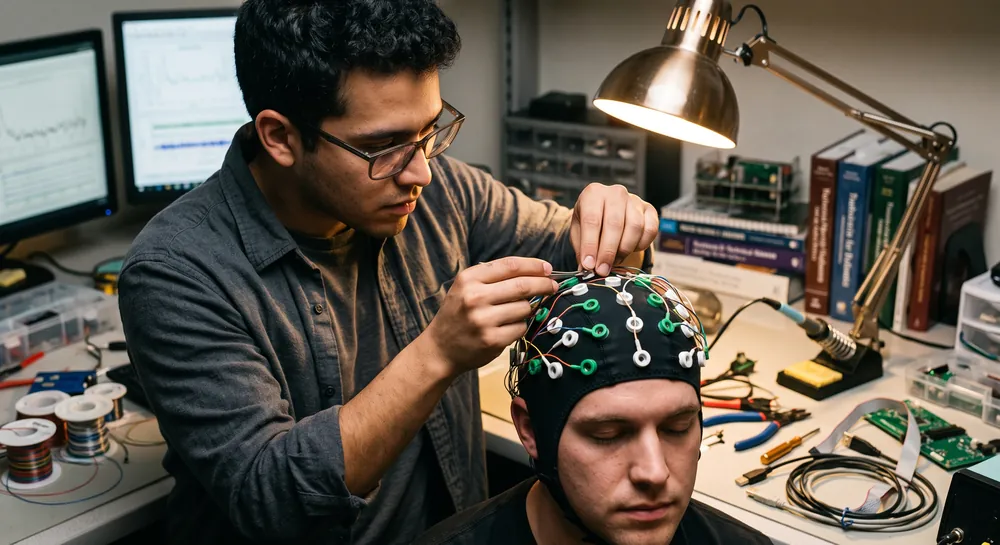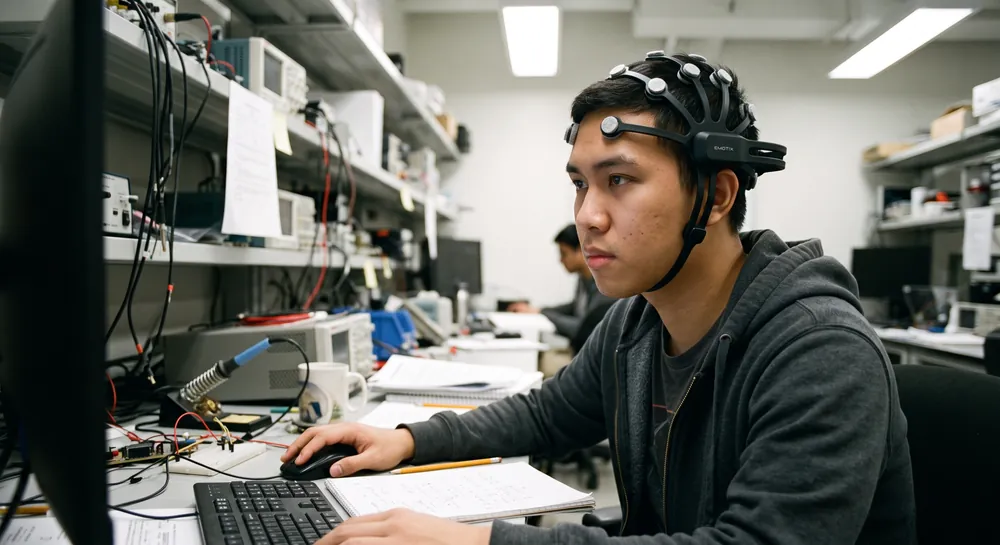
The human brain produces distinct electrical signatures during different states of consciousness. Sleep generates slow delta waves, focused attention creates beta rhythms, and relaxed awareness produces alpha frequencies.
Transcendental Meditation appears to generate a fourth state entirely, one that researchers have tried to document with precision instruments and controlled studies for over five decades.
Unlike other meditation techniques that require concentration or contemplation, TM uses a specific mantra-based approach that allows consciousness to settle into what practitioners describe as "pure awareness."
What is Transcendental Meditation?
Transcendental Meditation, often referred to as TM, is a specific form of silent mantra meditation.
It was introduced to the wider world in the mid-1950s by Maharishi Mahesh Yogi, an Indian spiritual teacher. Maharishi's aim was to bring a timeless Vedic practice to modern society, verifying its effects through scientific research.
He developed a structured method for teaching TM, training thousands of instructors globally to ensure its consistent delivery. The technique is rooted in ancient Indian traditions but has been presented in a way that is accessible to people from all backgrounds and belief systems.
How Does Transcendental Meditation Work?
The TM technique involves sitting comfortably with the eyes closed and silently using a specific mantra. This mantra is a sound or word given to the practitioner by a certified TM teacher during a personalized instruction session. The practice is typically done for 20 minutes twice a day.
The core principle is that the mantra helps the mind settle down naturally, moving beyond the surface level of active thinking to quieter, subtler levels of awareness.
Unlike some other meditation practices that might involve concentration or contemplation, TM is described as effortless. The mind is allowed to wander and settle on its own, guided by the mantra.
This process is said to lead to a state of 'restful alertness,' where the body is deeply relaxed, but the mind remains clear and alert. This state is thought to allow for the release of accumulated stress and fatigue, leading to a sense of rejuvenation and inner calm.
The Benefits of Practicing Transcendental Meditation
Practicing TM is thought to lead to a range of positive outcomes, affecting mental, emotional, and physical well-being.
Stress Reduction and Mental Well-being
One of the most frequently reported benefits of TM is its effect on stress. By allowing the mind to transcend active thinking, practitioners often experience a deep state of rest. This can lead to a reduction in stress hormones and a greater sense of calm.
Studies suggest that regular TM practice may help decrease symptoms associated with anxiety and depression. The process can help people manage their emotional responses more effectively, potentially leading to improved mood and a more stable outlook.
Improved Focus and Cognitive Function
Beyond stress reduction, TM is associated with improvements in cognitive abilities. The practice of settling the mind can translate to enhanced clarity and concentration during daily activities.
Some research suggests that TM may support better focus and a more organized thought process. This can be beneficial for tasks requiring sustained attention and mental acuity.
Physical Health Advantages
The benefits of TM are not limited to the mind. The deep relaxation experienced during the practice can influence the body's physiological state. This includes potential effects on the cardiovascular system and immune function.
By reducing the body's stress response, TM may contribute to overall physical resilience. Some studies have explored its impact on factors like blood pressure and immune cell activity.
What Are the Measurable Neurological Effects of TM Practice?
The most striking neuroscience finding associated with TM practice involves changes in brain coherence patterns that occur both during meditation sessions and throughout daily activity.
EEG studies consistently show increased coherence in the alpha-1 frequency range (8-10 Hz) across different brain regions, particularly in the frontal cortex. This coherence represents synchronized electrical activity between neurons in different areas of the brain, suggesting enhanced communication and integration of neural networks.
How Does TM Influence Brainwave Patterns Like Alpha-1 Coherence?
Alpha-1 coherence represents one of the most reliable and distinctive neurophysiological markers of the TM practice.
Unlike the random, desynchronized electrical activity that characterizes most mental states, TM produces highly ordered, synchronized alpha waves that spread across multiple brain regions simultaneously.
This coherence pattern correlates with practitioners' reports of "restful alertness" during meditation. The brain maintains wakeful awareness while simultaneously exhibiting the coherent, synchronized activity typically associated with deep rest.
What Changes in Brain Structure and Function Has fMRI Research Revealed?
Functional magnetic resonance imaging studies have identified specific brain regions that respond to regular TM practice with both structural and functional adaptations.
When observing highly experienced practitioners—averaging over 34 years of practice and 36,000 hours of meditation—fMRI data captures a unique neurological profile that is specific to the mechanics of the practice itself.
During TM practice, neuroimaging demonstrates significantly higher blood flow in key executive and attentional networks, specifically the anterior cingulate cortex and the dorsolateral prefrontal cortex. Concurrently, blood flow is significantly lower in localized arousal areas, namely the pons and the cerebellum.
This dual pattern indicates that the brain's attentional system is actively engaged, but does so in an automatic, low-effort manner due to the simultaneous downregulation of physiological arousal structures.
What Are the Cardiological and Autonomic Benefits Verified by Research?
The cardiovascular system responds to TM practice with adaptations that extend far beyond temporary relaxation during meditation sessions. The autonomic nervous system, which controls heart rate, blood pressure, and respiratory patterns, undergoes systematic changes that promote cardiovascular health and resilience.
How Does TM Contribute to Lowering Blood Pressure and Hypertension Risk?
TM practice appears to activate the parasympathetic nervous system, which promotes vasodilation and reduces peripheral resistance.
Regular practice also appears to reset baroreflex sensitivity, the body's mechanism for detecting and responding to blood pressure changes. This enhanced baroreflex function allows for more precise blood pressure regulation throughout daily activities.
In a comprehensive meta-analysis evaluating the impact of TM on blood pressure, researchers reveal that the practice provides mild cardiovascular improvements. Herein, they demonstrated that TM practice lowered systolic blood pressure by an average of 3.3 mmHg and diastolic blood pressure by 1.8 mmHg compared to control groups.
However, clinical expectations must be managed regarding long-term sustainability as these blood pressure reductions were found to wane after three months of practice, indicating that the intervention's standalone impact may decline over time.
The analysis also highlights that the cardiovascular effects of TM are heavily moderated by age, rather than representing a uniform clinical alternative to pharmaceutical therapies across all demographics. Adults aged 65 and older experienced a significantly more pronounced reduction in systolic blood pressure compared to cohorts under the age of 65 (-9.87 mmHg versus -1.44 mmHg), though no such age-related differential effect was observed for diastolic pressure.
What Is the Documented Impact of TM on Heart Rate Variability (HRV)?
Heart rate variability measures the natural variation in time intervals between heartbeats, serving as a key indicator of autonomic nervous system balance and cardiovascular adaptability. Higher HRV generally indicates better cardiovascular health, stress resilience, and overall physiological flexibility.
Studies using continuous heart rate monitoring show that TM practitioners may develop enhanced HRV. This improvement reflects increased parasympathetic nervous system activity and better balance between sympathetic and parasympathetic branches of the autonomic system.
How Does Transcendental Meditation Modulate the Body's Stress Response?
TM practice appears to recalibrate the fundamental stress response, reducing both baseline stress hormone levels and the magnitude of stress reactions to challenging situations. This modulation occurs at multiple levels, from immediate autonomic responses to long-term hormonal patterns that influence cellular aging and disease risk.
What Is the Effect of TM on Cortisol and Other Stress Hormones?
Studies measuring cortisol in TM practitioners reveal normalization of cortisol patterns within months of beginning practice.
In the study, participants were randomly assigned to either a TM group or a stress education control condition. After four months, the TM group exhibited a significant decrease in both basal cortisol levels and their average cortisol output measured across a stress testing session.
Crucially, while chronic stress is typically characterized by an unhealthy pattern of high baseline cortisol paired with a blunted, low cortisol response to immediate challenges, the TM practitioners demonstrated an increase in cortisol responsiveness to acute stressors.
By simultaneously lowering elevated baseline stress hormones and restoring the body's natural, acute hormonal sensitivity to immediate challenges, repeated TM practice appears to help reverse the specific physiological imbalances caused by chronic stress.
Does TM Reduce Allostatic Load Over the Long Term?
Allostatic load represents the cumulative physiological cost of adapting to chronic stress, measured through biomarkers including cortisol, blood pressure, inflammatory markers, and metabolic indicators. High allostatic load predicts increased risk for cardiovascular disease, cognitive decline, and premature mortality.
TM practitioners over multiple years demonstrate progressive reductions in allostatic load markers. The reduction in allostatic load occurs through multiple pathways.
TM practice reduces chronic inflammation, as measured by decreased levels of pro-inflammatory cytokines. Further, metabolic markers including insulin sensitivity and lipid profiles also improve, reducing the cardiovascular disease risk associated with chronic stress.
Embarking on Your Journey to Inner Peace
Transcendental Meditation offers a straightforward, evidence-based path to profound inner calm and enhanced mental well-being. Its unique, effortless technique allows the mind to naturally settle, leading to reduced stress, increased clarity, and greater resilience.
While many meditation styles exist, TM's structured approach, personalized instruction, and documented benefits make it an accessible and effective choice for people seeking a deeper connection with themselves and a more balanced life.
Consider exploring this time-tested practice to discover the lasting peace and potential that lies within.
References
Joshi, S. P., Wong, A. I., Brucker, A., Ardito, T. A., Chow, S. C., Vaishnavi, S., & Lee, P. J. (2022). Efficacy of Transcendental Meditation to Reduce Stress Among Health Care Workers: A Randomized Clinical Trial. JAMA network open, 5(9), e2231917. https://doi.org/10.1001/jamanetworkopen.2022.31917
Infante, J. R., Peran, F., Rayo, J. I., Serrano, J., Domínguez, M. L., Garcia, L., Duran, C., & Roldan, A. (2014). Levels of immune cells in transcendental meditation practitioners. International journal of yoga, 7(2), 147–151. https://doi.org/10.4103/0973-6131.133899
Travis, F., Haaga, D. A., Hagelin, J., Tanner, M., Arenander, A., Nidich, S., ... & Schneider, R. H. (2010). A self-referential default brain state: patterns of coherence, power, and eLORETA sources during eyes-closed rest and Transcendental Meditation practice. Cognitive processing, 11(1), 21-30. https://doi.org/10.1007/s10339-009-0343-2
Mahone, M. C., Travis, F., Gevirtz, R., & Hubbard, D. (2018). fMRI during Transcendental Meditation practice. Brain and cognition, 123, 30–33. https://doi.org/10.1016/j.bandc.2018.02.011
Schneider, J. K., Reangsing, C., & Willis, D. G. (2022). Effects of Transcendental Meditation on Blood Pressure: A Meta-analysis. The Journal of cardiovascular nursing, 37(3), E11–E21. https://doi.org/10.1097/JCN.0000000000000849
Khanal, M. K., Karimi, L., Saunders, P., Schneider, R. H., Salerno, J., Livesay, K., ... & de Courten, B. (2024). The promising role of Transcendental Meditation in the prevention and treatment of cardiometabolic diseases: A systematic review. Obesity Reviews, 25(10), e13800. https://doi.org/10.1111/obr.13800
MacLean, C. R., Walton, K. G., Wenneberg, S. R., Levitsky, D. K., Mandarino, J. P., Waziri, R., Hillis, S. L., & Schneider, R. H. (1997). Effects of the Transcendental Meditation program on adaptive mechanisms: changes in hormone levels and responses to stress after 4 months of practice. Psychoneuroendocrinology, 22(4), 277–295. https://doi.org/10.1016/s0306-4530(97)00003-6
Frequently Asked Questions
What exactly is Transcendental Meditation?
Transcendental Meditation, or TM, is a special way to relax and quiet your mind. It's not about trying hard to think about nothing. Instead, it's a simple technique that helps your mind naturally settle down. Think of it like letting your mind go to a very calm and peaceful place within itself. It's taught using a special sound, called a mantra, and you practice it for about 20 minutes twice a day while sitting comfortably with your eyes closed.
How is TM different from other meditation methods?
TM stands out because it's super easy and requires no effort. Many other meditation types ask you to concentrate hard, control your thoughts, or focus on your breathing. TM doesn't ask for any of that. Your mind naturally settles inward on its own, like water flowing downhill. It's a unique process that helps you reach a deep state of rest without trying.
Is TM scientifically proven?
Yes, TM has been studied by scientists for many years. Research has shown its positive effects on reducing stress, improving brain function, and enhancing overall health. These studies have been published in many respected scientific journals, showing that TM is a real and effective technique.
What happens to brainwave patterns during Transcendental Meditation?
TM practice increases alpha-1 coherence, creating synchronized electrical activity across different brain regions, especially the frontal cortex. This ordered brain state is associated with the experience of "restful alertness" and can extend into daily life, promoting cognitive stability.
What is the effect of TM on the default mode network?
TM produces a settled state in the brain's default mode network, which is usually active during mind-wandering and self-referential thoughts. The network continues to function but becomes less fragmented, aligning with the experience of a quiet yet awake awareness.
How does TM help reduce high blood pressure?
TM practice appears to activate the parasympathetic nervous system, leading to relaxation of blood vessels and improved baroreflex sensitivity for better blood pressure control. These changes can result in significant reductions in both systolic and diastolic pressure over time.
How does TM influence stress hormones like cortisol?
Regular TM practice helps normalize cortisol patterns, often reducing chronically high levels while maintaining a healthy daily rhythm. It also promotes faster recovery of cortisol after acute stress, indicating a more adaptive stress response.
Emotiv is a neurotechnology leader helping advance neuroscience research through accessible EEG and brain data tools.
Medical Disclaimer: The information provided on this website is for educational and informational purposes only and is not intended as medical or health advice. This content may contain errors and should not be relied upon to make life-altering health, medical, or lifestyle choices. Always seek the advice of your physician or other qualified health provider with any questions you may have regarding a medical condition or treatment.
Christian Burgos