In our hyper-connected world, our attention is constantly being pulled in a dozen directions at once. Most of us have adapted to living in a state of chronic distraction, where deep, steady focus feels like a rare superpower.
This is where focus meditation comes in. Scientifically known as Focused Attention (FA) meditation, this practice is a straightforward, practical workout for your mind. Instead of trying to empty your head or achieve zen states, you simply choose one single thing to pay attention to—like the rhythm of your breath, a single word, or a candle flame.
When your mind wanders (and it absolutely will), you simply notice the distraction and gently guide your awareness back to your anchor.
What is Focus Meditation?
Focus meditation is a practice designed to help train the mind to concentrate on a single point. It's about intentionally directing your attention and gently bringing it back when it wanders.
The Core Principles of Focus Meditation
Focus meditation, sometimes called Focused Attention (FA) meditation, is built on a few key ideas:
Single-Pointed Attention: The main goal is to rest your attention on one specific object. This could be your breath, a word or phrase (a mantra), a physical sensation, or even a visual object like a candle flame.
Awareness of Distraction: As you practice, you'll notice your mind drifting. This is completely normal. The practice isn't about preventing thoughts, but about becoming aware when your mind has wandered.
Gentle Redirection: When you realize your attention has strayed, the practice involves gently guiding it back to your chosen anchor. There's no judgment or frustration involved; it's simply a process of returning.
Consistency: Like any skill, focus improves with regular practice. Committing to short, consistent sessions is more effective than infrequent, long ones.
How Can Focused Attention Meditation Sharpen Your Cognitive Edge?
The modern professional operates in a cognitive minefield. Every notification, every open browser tab, every passing thought fragments attention into smaller, less effective pieces. This scattered mental state has become so normalized that most people have forgotten what sustained, deep focus actually feels like.
Focused attention meditation offers a systematic method to reclaim and strengthen this fundamental cognitive capacity.
Unlike the broad awareness cultivated in general mindfulness practices, focused attention meditation trains the mind to maintain unwavering concentration on a single object.
This targeted approach builds what neuroscientists call "sustained attention"—the ability to maintain focus on a chosen stimulus for extended periods. Research shows that this capacity has the potential to translate into enhanced memory formation, improved problem-solving abilities, and greater resilience to distraction in high-demand environments.
How to Practice Focus Meditation: A Step-by-Step Guide
Practicing focus meditation involves a structured approach to training the mind. It's not about emptying the mind, but rather about gently guiding attention back when it wanders. This process can be broken down into several key stages.
Finding a Quiet Space
The first step is to locate an environment conducive to concentration. This means a place with minimal distractions, where one can sit or lie down comfortably without interruption.
The goal is to create a physical space that supports mental stillness. Even a few minutes in a quiet corner can be sufficient.
Choosing Your Anchor (Breath, Mantra, Object)
To anchor the attention, a specific point of focus is selected. Common anchors include:
The Breath: Observing the natural sensation of breathing, the rise and fall of the chest or abdomen, or the feeling of air passing through the nostrils.
A Mantra: A word, phrase, or sound that is repeated silently or aloud. This repetition helps to occupy the mind and prevent it from drifting.
An Object: This could be a visual point, such as a candle flame, or even a subtle internal sensation. The key is to choose something that can hold attention without being overly stimulating.
The Practice: Observing and Returning
Once an anchor is chosen, the practice begins. The person often directs their attention to the chosen anchor.
When the mind inevitably wanders, the practice is to notice this distraction without judgment and gently guide the attention back to the anchor. This act of noticing and returning is the core of the practice. It is repeated as many times as necessary.
Dealing with Distractions
Distractions are a natural part of meditation. They can be external (sounds, movement) or internal (thoughts, emotions, physical sensations).
Instead of fighting distractions, the approach is to acknowledge their presence and then return focus to the anchor. Over time, this repeated redirection strengthens the mind's ability to concentrate and reduces the power of distractions.
Can Focused Attention Improve Memory and Learning Capacity?
Cognitive research demonstrates that attention acts as the gateway to long-term memory consolidation. Information that receives focused attention during encoding is more likely to form stable, retrievable memories. Conversely, when attention is divided or distracted during learning, memory formation becomes weak and fragmented.
Brain health depends on the efficient coordination between attention and memory systems. The hippocampus, the brain's primary memory formation center, relies on input from attention networks in the prefrontal cortex to determine which experiences deserve long-term storage. When attention is trained and stable, this communication becomes more efficient and selective.
Can Focus Meditation Aid in Reducing Proactive and Retroactive Interference?
Memory interference represents one of the most significant obstacles to effective learning and recall.
Proactive interference occurs when previously learned information disrupts the acquisition of new material. Retroactive interference happens when newly learned information interferes with the retrieval of older memories. Both forms of interference stem from inadequate separation between memory traces during encoding or retrieval.
Focused attention meditation addresses interference by strengthening the brain's ability to create distinct, well-differentiated memory representations. When attention is stable and concentrated during learning, the hippocampus can form more precise neural patterns that are less likely to overlap with existing memories.
Research on meditation practitioners reveals enhanced activity in the dentate gyrus, a region of the hippocampus specifically responsible for pattern separation. This area creates distinct neural representations for similar experiences, reducing the likelihood that memories will interfere with each other during storage or retrieval.
How Can Professionals Apply This Skill in the Workplace?
The transition from meditation cushion to conference room requires understanding how trained attention translates into practical professional benefits. The cognitive skills developed through focused attention practice map directly onto workplace demands for sustained concentration, analytical thinking, and effective decision-making.
Most professional environments present constant challenges to sustained attention. Email notifications, phone calls, meetings, and internal worries create a fragmented cognitive landscape that prevents deep engagement with complex tasks.
The practice also builds what researchers call "meta-cognitive awareness"—the ability to monitor one's own cognitive state in real-time. This awareness allows professionals to recognize when attention has become scattered or when fatigue is compromising performance.
With this information, they can make strategic decisions about when to take breaks, when to tackle demanding tasks, and how to structure their work environment for optimal productivity.
Implementation in professional settings often include:
Using short sessions before tasks to prime cognitive performance
Strengthening meta-cognitive awareness to recognize scattered attention
Reducing default mind-wandering to direct resources toward work
Practicing transitions between tasks to maintain a calm, alert state
Can EEG Biofeedback Provide Objective Feedback on Attentional States?
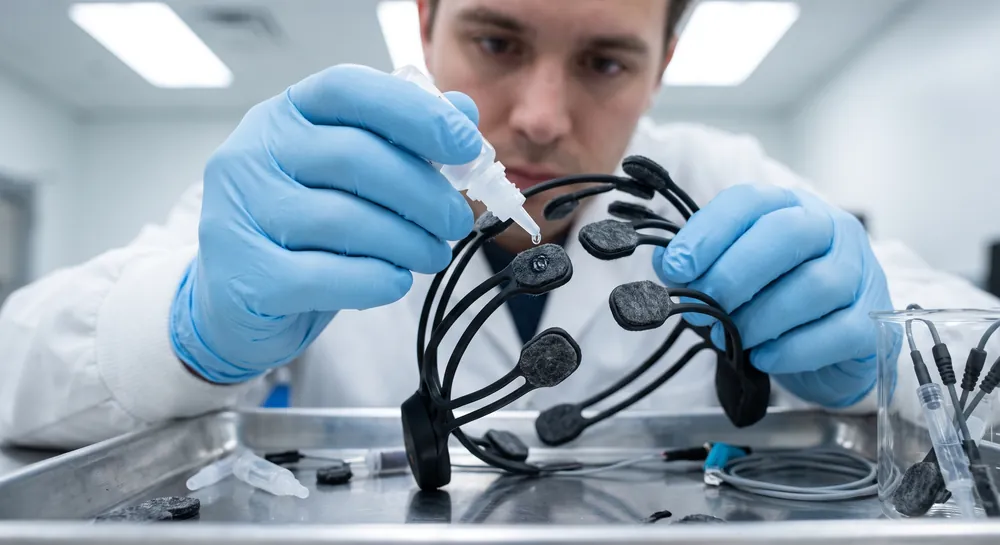
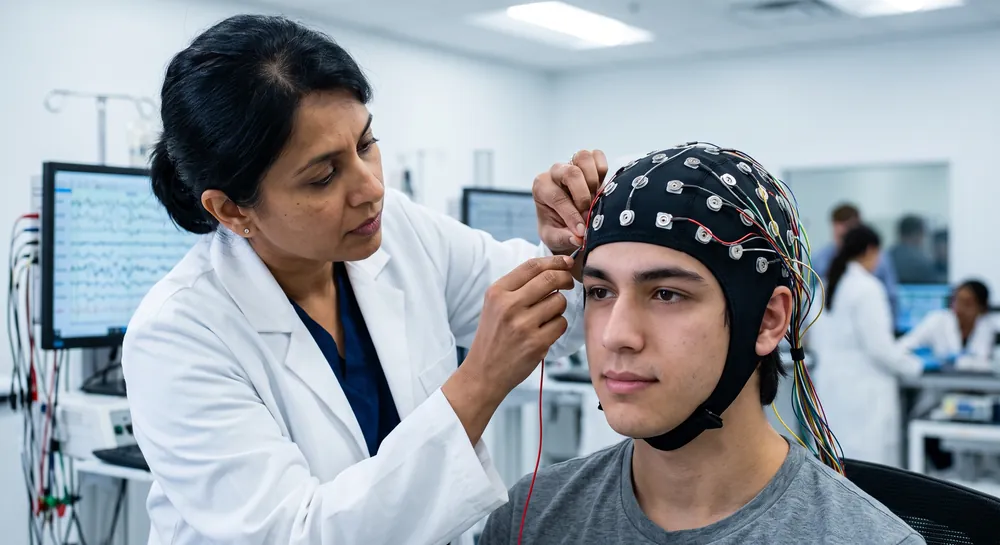
Portable EEG devices, including both consumer-grade headsets and lightweight research equipment, offer a non-invasive means to measure electrophysiological changes associated with attentional shifts during workplace tasks.
These systems typically look at specific metrics, such as the beta/theta frequency ratio and frontal alpha asymmetry, to gather real-time indicators of concentration and relaxation. For instance, an increased beta/theta ratio generally serves as an objective marker of active cognitive engagement and problem-solving.
Neurofeedback protocols leverage these real-time metrics by utilizing operant conditioning to train people to consciously modulate their own brainwave patterns. In a typical concentration protocol, the software provides immediate auditory or visual rewards when the user successfully upregulates central beta activity—associated with alert processing—while suppressing the slower theta waves linked to distraction.
Within corporate wellness and peak performance training, this method is explored as a technological adjunct to traditional mindfulness, helping professionals build a clearer internal awareness of their attentional states. Noteworthy, neurofeedback should be approached as an emerging training aid for cognitive exploration rather than a guaranteed or standard-of-care solution for productivity enhancement.
Bottom Line
Focus meditation, a practice rooted in ancient traditions, offers a tangible path toward a more concentrated and calm existence in our modern, distraction-filled world. By dedicating time to train the mind, people can cultivate improved attention spans, reduce feelings of stress and anxiety, and gain a clearer understanding of their inner workings.
Whether you choose to focus on your breath, a mantra, or an object, the consistent application of focus meditation techniques can lead to significant improvements in cognitive function and emotional well-being.
References
Rathore, M., Verma, M., Nirwan, M., Trivedi, S., & Pai, V. (2022). Functional Connectivity of Prefrontal Cortex in Various Meditation Techniques - A Mini-Review. International journal of yoga, 15(3), 187–194. https://doi.org/10.4103/ijoy.ijoy_88_22
Bandurska, C. (2018). The Effect of Mindfulness Training on Visual Object Pattern Separation and Hippocampal Structure (Master's thesis, Boston University).
Ding, H., Zhang, L., Ma, C., Wen, H., & Zhao, X. (2025). Effects of long-term mindfulness meditation training on attentional capacity in professional male fencer athletes. Scientific Reports, 15(1), 13040. https://doi.org/10.1038/s41598-025-97179-w
Wei, H., Chen, L., & Zhao, L. (2024). Can the spontaneous electroencephalography theta/beta power ratio and alpha oscillation measure individuals’ attentional control?. Behavioral Sciences, 14(3), 227. https://doi.org/10.3390/bs14030227
Frequently Asked Questions
What exactly is focused attention meditation?
Focused attention meditation is a systematic training of the mind to maintain unwavering concentration on a single chosen object, like the breath. By repeatedly returning your focus to this anchor when the mind wanders, you are directly strengthening your brain's capacity for sustained attention.
How is focused attention meditation different from general mindfulness?
General mindfulness cultivates a broad, open awareness of all thoughts and sensations without judgment. In contrast, focused attention meditation deliberately narrows your concentration to a single point, training the specific mental muscle of executive control to monitor and redirect focus.
Can this type of meditation improve my memory?
Yes, attention acts as the gateway to memory. When you train your brain to focus with less distraction, you create a more stable state for encoding new information, which makes it more likely to be stored as a strong, retrievable memory.
How does focused attention directly help with problem-solving?
Problem-solving requires holding information in your working memory while systematically analyzing it, a process coordinated by the prefrontal cortex. Focused attention meditation strengthens this executive center, helping you maintain a strong, clear signal for analysis while suppressing distracting mental noise.
How can I apply this to manage workplace distractions?
The practice builds meta-cognitive awareness, which is your ability to notice in real-time when your attention has drifted. Acknowledging an interruption without automatically reacting to it allows you to make a conscious choice to redirect your focus back to your priority task.
How does meditation improve decision-making under pressure?
Pressure often triggers an emotional, reactive response in the brain. Focused attention training strengthens the connection between your brain's rational control center and its emotional centers, helping you maintain rational analysis and consider more options instead of falling into reactive mental shortcuts.
Does a little bit of practice actually work in a professional setting?
Even a short session of five to ten minutes can enhance cognitive performance for hours. Using a brief focused attention exercise before a demanding task or meeting can create a qualitatively different mental state that is calmer, more alert, and better prepared for deep work.
Are there different types of focus meditation?
There are a few. Some people focus on their breath, others use a word or phrase called a mantra, and some might focus on a physical object, like a candle flame. Mindfulness meditation, where you notice everything without judgment, also helps with focus.
Emotiv is a neurotechnology leader helping advance neuroscience research through accessible EEG and brain data tools.
Medical Disclaimer: The information provided on this website is for educational and informational purposes only and is not intended as medical or health advice. This content may contain errors and should not be relied upon to make life-altering health, medical, or lifestyle choices. Always seek the advice of your physician or other qualified health provider with any questions you may have regarding a medical condition or treatment.
Christian Burgos