
Explicación de 5 herramientas clave de la neurociencia del consumidor
Emotiv
Actualizado el
25 dic 2025
Explicación de 5 herramientas clave de la neurociencia del consumidor
Emotiv
Actualizado el
25 dic 2025
Explicación de 5 herramientas clave de la neurociencia del consumidor
Emotiv
Actualizado el
25 dic 2025
No hace mucho tiempo, la idea de medir la actividad cerebral para la investigación de mercado parecía algo reservado para grandes corporaciones con laboratorios multimillonarios. El equipo era voluminoso, costoso y requería un equipo de especialistas para operar. Esa realidad ha cambiado drásticamente. Gracias a los avances tecnológicos, las potentes herramientas de neurociencia del consumidor son ahora más portátiles, asequibles y fáciles de usar que nunca. Esta accesibilidad significa que puede llevar su investigación fuera del laboratorio y al mundo real, recopilando datos más auténticos en los entornos donde las personas realmente toman decisiones, ya sea en una tienda, en casa o en su dispositivo móvil.
Puntos clave
Descubra lo que los consumidores sienten realmente, no solo lo que dicen: estas herramientas miden reacciones subconscientes y sin filtros, lo que le brinda datos objetivos sobre el compromiso emocional y la atención que las encuestas y los grupos focales pueden pasar por alto.
Utilice EEG portátil para obtener información práctica del mundo real: los auriculares EEG portátiles son una forma accesible de medir la actividad cerebral en entornos naturales, proporcionando datos en tiempo real sobre cómo reacciona la gente a su marketing sin las limitaciones de un laboratorio tradicional.
La estrategia y la ética son tan importantes como la tecnología: para obtener resultados fiables, debe comenzar con objetivos de investigación claros, interpretar los datos con cuidado y priorizar siempre las prácticas éticas como el consentimiento informado y la privacidad de los datos.
¿Qué son las herramientas de neurociencia del consumidor?
En esencia, la neurociencia del consumidor es un campo que combina la ciencia del cerebro con el marketing para comprender cómo las personas toman decisiones sobre qué comprar. En lugar de simplemente preguntarles a las personas qué piensan, este enfoque utiliza herramientas especializadas para medir la actividad cerebral y las respuestas fisiológicas. Piense en ello como obtener una mirada entre bastidores a lo que capta la atención del cliente, desencadena emociones y, en última instancia, lo impulsa a elegir un producto sobre otro. Se trata de ir más allá de lo que la gente dice que hará y acercarse a lo que la actividad de su cerebro sugiere que hará.
Estas herramientas nos brindan una imagen más completa del recorrido del consumidor. Al mirar directamente a las señales biológicas y neuronales, los investigadores y especialistas en marketing pueden recopilar datos sin filtros sobre cómo reacciona la gente realmente a un anuncio, al diseño de un producto o al diseño de un sitio web. Esto ayuda a responder las preguntas fundamentales que tiene toda marca: ¿Qué quieren realmente mis clientes y por qué me eligen a mí?
Comprender el "por qué" detrás del comportamiento del consumidor
Los métodos tradicionales de investigación de mercado, como las encuestas y los grupos focales, son valiosos, pero tienen una limitación clave: dependen de que las personas informen con precisión sobre sus propios sentimientos e intenciones. La realidad es que a menudo no podemos articular por qué preferimos una cosa sobre otra, ya que muchas de nuestras decisiones están impulsadas por reacciones inconscientes. Las herramientas de neurociencia del consumidor están diseñadas para conectarse directamente con estas respuestas subconscientes.
Nos ayudan a medir la brecha entre lo que alguien dice y lo que muestra su actividad cerebral. Por ejemplo, una persona podría decir que no se deja influenciar por el nombre de una marca, pero su cerebro puede mostrar una respuesta positiva más fuerte a un producto de una marca familiar. Este nivel más profundo de comprensión le ayuda a comprender los impulsores emocionales y cognitivos detrás del comportamiento de compra, brindándole un "por qué" mucho más claro.
Aplicaciones clave en la investigación de marketing
Las aplicaciones de estas herramientas son increíblemente amplias y pueden tocar casi todos los aspectos del ciclo de desarrollo de productos y marketing. Los conocimientos que recopile pueden ayudar a perfeccionar todo, desde la estrategia de marca de alto nivel hasta los detalles más pequeños de una interfaz de usuario. Es una forma poderosa de aportar datos objetivos a conversaciones creativas y estratégicas.
Los profesionales del neuromarketing utilizan estas herramientas para probar y mejorar la eficacia publicitaria, los mensajes de marca y el embalaje de los productos. También puede evaluar la experiencia del usuario de un sitio web o una aplicación, optimizar las estrategias de precios e incluso guiar el desarrollo de nuevos productos. Al comprender qué resuena realmente con su audiencia a nivel neuronal, puede crear experiencias más atractivas y efectivas que generen conexiones más sólidas con los clientes.
Explorando el conjunto de herramientas de neurociencia del consumidor
Cuando desea comprender el comportamiento del consumidor, necesita el conjunto de herramientas adecuado. Piense en ello como el kit de un detective: cada instrumento le brinda una pista diferente. En la neurociencia del consumidor, el conjunto de herramientas incluye métodos que miden desde la actividad cerebral hasta sutiles tics faciales. La combinación de estas herramientas puede brindarle una imagen mucho más clara de qué impulsa realmente las decisiones de un cliente. Veamos cinco de las herramientas más comunes utilizadas en el campo.
EEG (Electroencefalografía)
La electroencefalografía, o EEG, mide la actividad eléctrica del cerebro mediante sensores colocados en el cuero cabelludo. Su mayor fortaleza es su increíble sincronización: puede mostrarle cuándo ocurre una reacción, hasta el milisegundo. Esto lo hace perfecto para medir respuestas inmediatas a un anuncio o producto. Si bien es un campeón en lo que respecta a la sincronización, es menos preciso a la hora de determinar dónde ocurre la actividad en el cerebro. La excelente noticia es que los sistemas de EEG modernos se han vuelto altamente portátiles y accesibles, lo que los convierte en una opción práctica para todo tipo de estudios de neuromarketing fuera de un laboratorio tradicional.
fMRI (Imagen por resonancia magnética funcional)
La imagen por resonancia magnética funcional (fMRI) funciona mediante el seguimiento de los cambios en el flujo sanguíneo dentro del cerebro. Esto le da una excelente resolución espacial, lo que significa que es muy bueno para mostrar dónde se está produciendo la actividad cerebral. Si necesita saber qué región específica del cerebro está involucrada, la fMRI es una herramienta poderosa. Sin embargo, tiene algunas compensaciones importantes. La maquinaria es costosa, completamente estacionaria y requiere que los participantes permanezcan perfectamente quietos dentro de un escáner, lo cual no es el entorno típico de un consumidor. También es mucho más lento que el EEG, lo que lo hace menos ideal para medir el momento preciso de una reacción.
Tecnología de seguimiento ocular
Tal como suena, la tecnología de seguimiento ocular sigue la mirada de una persona para ver exactamente dónde está mirando. Es una forma fantástica de saber qué elementos de una página web, un paquete o el estante de una tienda captan primero la atención de alguien y durante cuánto tiempo. Esta tecnología es generalmente portátil, no invasiva y más asequible que los métodos de obtención de imágenes cerebrales. La principal limitación es que, si bien sabe qué está mirando alguien, no sabe cómo se siente al respecto sin combinarlo con otra herramienta. Para muchos investigadores, combinar el seguimiento ocular con el EEG proporciona una historia más completa tanto de la atención como del compromiso emocional.
Análisis de la expresión facial
El análisis de las expresiones faciales, o codificación facial, utiliza software para identificar pequeños movimientos en los músculos faciales para interpretar las respuestas emocionales. Puede ayudarle a evaluar si una persona tiene una reacción positiva o negativa ante algo que está viendo. Este método es flexible y fácil de implementar en diferentes entornos, ya que a menudo solo requiere una cámara. El desafío es que no puede decirle mucho sobre la atención o la memoria por sí solo. Una sonrisa puede indicar felicidad, pero no le dice si la persona recordará la marca más adelante, lo cual es un objetivo clave para muchos estudios de investigación académica.
Respuesta galvánica de la piel (GSR)
La respuesta galvánica de la piel (GSR) mide los cambios en la conductancia eléctrica de la piel, la cual está influenciada por el sudor. Es un indicador directo de la excitación fisiológica o la estimulación emocional, piense en la emoción o ansiedad que siente que podría hacer que le suden las palmas de las manos. Los sensores GSR son portátiles y fáciles de usar, lo que los hace ideales para estudios en entornos del mundo real, como una tienda minorista. Sin embargo, los datos pueden ser complicados. Le indica que la excitación está ocurriendo, pero no si la emoción es positiva o negativa. También tiene una baja precisión de sincronización y puede ser sensible al movimiento de una persona.
¿Cómo funcionan realmente estas herramientas?
Quizás se pregunte cómo un auricular o un sensor pueden decirle algo significativo sobre una campaña de marketing. Es una pregunta justa. A diferencia de los métodos tradicionales como las encuestas o los grupos focales, que se basan en lo que la gente dice, las herramientas de neurociencia del consumidor miden lo que las personas experimentan física y neurológicamente. Miden las reacciones instantáneas y sin filtros que ocurren antes de que una persona tenga tiempo de racionalizar sus sentimientos o tratar de dar la respuesta "correcta".
Piénselo de esta manera: cuando ve un anuncio cautivador, su actividad cerebral puede aumentar en áreas relacionadas con la emoción y la memoria. Su ritmo cardíaco podría aumentar y sus ojos podrían fijarse en el personaje principal. Todos estos son puntos de datos medibles. Las herramientas de neurociencia del consumidor funcionan midiendo estas señales biológicas a medida que alguien interactúa con un producto, anuncio o sitio web.
Al combinar diferentes flujos de datos, como la actividad cerebral de un auricular EEG, el movimiento ocular de un rastreador ocular y el ritmo cardíaco de un sensor biométrico, los investigadores pueden crear una imagen completa de la experiencia del consumidor. No se trata de leer la mente; se trata de comprender los impulsores no conscientes que dan forma a nuestro comportamiento del consumidor. Este enfoque le permite ver qué capta realmente la atención, qué causa confusión y qué genera una conexión emocional, brindándole un nivel de comprensión mucho más profundo.
Medición del cerebro y de las respuestas fisiológicas
En el núcleo de la neurociencia del consumidor se encuentra la medición de las reacciones automáticas del cuerpo. Estas son las respuestas que no controlamos conscientemente. Las herramientas como el EEG (electroencefalografía) miden la actividad eléctrica en el cerebro, brindándole una mirada directa a estados cognitivos como el compromiso, la emoción o la carga cognitiva. Esto es especialmente útil para ver cómo cambia el estado mental de una persona de un momento a otro mientras ve un anuncio o usa un producto.
Otras herramientas miden las respuestas fisiológicas. La tecnología de seguimiento ocular muestra exactamente dónde está mirando una persona, durante cuánto tiempo y en qué orden, revelando qué elementos captan su atención. Los sensores biométricos pueden medir los cambios en el ritmo cardíaco, la conductividad de la piel y las expresiones faciales para evaluar la excitación emocional y la valencia (si la emoción es positiva o negativa).
Recopilación y análisis de datos en tiempo real
Uno de los aspectos más potentes de estas herramientas es su capacidad para recopilar datos a medida que se desarrolla una experiencia. En lugar de pedirle a alguien que recuerde cómo se sintió más tarde, puede ver sus reacciones segundo a segundo. Por ejemplo, nuestro software EmotivPRO le permite ver y analizar flujos de datos de EEG en tiempo real, sincronizándolos con eventos en pantalla.
Esto significa que puede identificar el momento exacto en que un espectador se confundió con una interfaz de usuario o sintió una oleada de emoción durante un comercial. Al combinar datos neurofisiológicos (actividad cerebral) con datos fisiológicos (ritmo cardíaco, movimiento ocular), puede conectar un estímulo específico, como la aparición del logotipo de una marca, con una respuesta específica y medible. Este bucle de retroalimentación en tiempo real es invaluable para iterar en diseños y campañas rápidamente.
Descodificando las reacciones subconscientes del consumidor
Aquí es donde las cosas se ponen realmente interesantes. Gran parte de nuestra toma de decisiones ocurre a nivel subconsciente. A menudo tomamos decisiones basadas en corazonadas o asociaciones de las que ni siquiera somos conscientes. Las herramientas de neurociencia del consumidor ayudan a sacar a la luz estas reacciones ocultas. La investigación ha demostrado que lo que la gente dice que prefiere no siempre coincide con lo que revelan su cerebro y su cuerpo.
Por ejemplo, un estudio podría encontrar que, si bien los participantes califican verbalmente dos versiones del empaque de un producto por igual, los datos de su cerebro muestran una respuesta emocional positiva más fuerte a una sobre la otra. Este es el tipo de percepción que puede marcar una gran diferencia. Le ayuda a ir más allá de las preferencias declaradas para comprender los impulsores subconscientes que realmente influyen en las decisiones de compra.
Por qué los auriculares EEG son una opción accesible para la investigación
Cuando desea comprender el "por qué" detrás de las elecciones del consumidor, necesita herramientas que puedan medir las reacciones a medida que ocurren. La electroencefalografía, o EEG, es una herramienta popular en la neurociencia del consumidor porque es portátil y de costo relativamente bajo en comparación con otros métodos como la fMRI. Un auricular EEG funciona midiendo la actividad eléctrica del cerebro a través de sensores colocados en el cuero cabelludo. Esto le brinda una ventana directa al estado cognitivo y emocional de una persona, proporcionando información en tiempo real sobre qué tan comprometida está o cómo se siente con respecto a un anuncio, producto o experiencia específicos.
Dado que la tecnología EEG es portátil, rompe las barreras del laboratorio tradicional. Puede realizar estudios en entornos más naturales, como una tienda minorista o el hogar de una persona, recopilando un comportamiento del consumidor más auténtico. Esta flexibilidad la convierte en una opción increíblemente práctica para los especialistas en marketing e investigadores que necesitan datos objetivos para respaldar sus estrategias. En lugar de depender únicamente de lo que los consumidores dicen que sienten, puede medir sus reacciones subconscientes, lo que lleva a una comprensión mucho más profunda de lo que realmente impulsa sus decisiones.
Nuestras soluciones portátiles de EEG
Una de las mayores ventajas del EEG moderno es su portabilidad. Nuestras soluciones de EEG portátiles están diseñadas para ser livianas y fáciles de usar, lo que las hace perfectas para la investigación fuera de un laboratorio controlado. Esto le permite realizar estudios de campo donde el equipo tradicional sería poco práctico, recopilando datos en los entornos donde los consumidores realmente interactúan con los productos y las marcas. Ya sea que esté probando exhibiciones en tiendas o evaluando la experiencia del usuario en una aplicación móvil en una cafetería, nuestros auriculares portátiles brindan la flexibilidad que necesita para la investigación académica y la educación en contextos del mundo real.
Elegir entre opciones de 2 canales y multicanal
El sistema EEG adecuado depende completamente de sus objetivos de investigación. Para estudios que requieren una configuración rápida y facilidad de uso, un sistema de 2 canales como nuestros auriculares MN8 puede ser una excelente opción. Son más asequibles e ideales para medir estados emocionales y cognitivos amplios. For more detailed analysis, a multi-channel headset like the Epoc X or Flex provides higher-density data from across the brain. Esto permite una mirada más completa y detallada de la actividad neural, lo cual es esencial para la investigación que requiere una localización precisa de las respuestas cerebrales.
Integración con su software existente
Sabemos que los datos de EEG suelen ser solo una pieza del rompecabezas. Es por eso que nuestros sistemas están diseñados para una fácil integración con otras plataformas y software de investigación. Con nuestro potente software EmotivPRO, puede sincronizar los datos de EEG con otras transmisiones biométricas, como el seguimiento ocular, el análisis de las expresiones faciales y la respuesta galvánica de la piel (GSR). La combinación de estas fuentes de datos le brinda una visión holística del comportamiento del consumidor, lo que le permite conectar lo que una persona ve con cómo reaccionan su cerebro y su cuerpo en ese momento exacto.
¿Qué conocimientos puede descubrir?
Las herramientas de neurociencia del consumidor abren una ventana al subconsciente, permitiéndole ver más allá de lo que dice la gente y comprender lo que realmente piensa y siente. Si bien los métodos tradicionales, como las encuestas y los grupos focales, se basan en respuestas autonotificadas, no siempre pueden medir las reacciones instantáneas y sin filtros que impulsan el comportamiento. Aquí es donde entran en juego herramientas como el EEG. Al medir la actividad cerebral, puede recopilar datos objetivos sobre cómo reacciona la gente a sus productos, anuncios y experiencias de marca en tiempo real.
Este enfoque le ayuda a responder al "por qué" fundamental de las elecciones de los consumidores. ¿Por qué se fijaron en el diseño de un empaque pero ignoraron otro? ¿Qué parte de su comercial creó una conexión emocional genuina? ¿Fue clara y convincente su llamada a la acción o causó confusión y frustración? Estos son los tipos de conocimientos profundos y procesables que puede recopilar. Al agregar técnicas de neuromarketing a su investigación, pasa de adivinar qué funciona a saber qué resuena a nivel cognitivo y emocional, lo que le brinda una poderosa ventaja en la creación de estrategias más efectivas y centradas en el cliente.
Evaluar el compromiso emocional y la excitación
Una de las aplicaciones más potentes de la neurociencia del consumidor es medir el compromiso emocional. Cuando una persona ve un anuncio, usa un producto o camina por una tienda, su cerebro produce respuestas emocionales inmediatas. Herramientas como el EEG pueden detectar estas reacciones, mostrándole momentos de entusiasmo, alegría o frustración. Estos datos revelan cómo se conectan emocionalmente los consumidores con su marca. Por ejemplo, puede identificar la escena exacta de un video que provoca la respuesta positiva más fuerte o identificar un paso confuso en la interfaz de usuario de su aplicación que causa estrés. Esto le permite perfeccionar su marketing para crear asociaciones de marca más impactantes y positivas.
Mapear patrones de atención y enfoque
Saber dónde mira su audiencia es importante, pero saber a qué le prestan atención realmente cambia las reglas del juego. Si bien el seguimiento ocular puede mostrarle dónde cae la mirada de alguien, los datos de EEG pueden revelar su nivel de enfoque cognitivo o distracción. Puede ver si una persona está procesando activamente la información de su anuncio o si su mente está divagando. Esta información es invaluable para optimizar el diseño visual. Al comprender qué elementos captan y retienen la atención genuina, puede asegurarse de que sus mensajes clave, la marca y las llamadas a la acción no solo se vean, sino que su audiencia también los procese mentalmente.
Comprender la memoria y el recuerdo de marca
Para que una campaña de marketing tenga éxito, debe ser memorable. Las herramientas de neurociencia del consumidor pueden ayudarle a evaluar la probabilidad de que su marca y su mensaje permanezcan en la mente del consumidor mucho tiempo después de haber visto su anuncio. Ciertos patrones de actividad cerebral están asociados con la codificación de la memoria, el proceso de convertir una experiencia en un recuerdo a largo plazo. Al analizar esta actividad durante la exposición a un anuncio, puede estimar su potencial para lograr un sólido recuerdo de marca. Esto le ayuda a crear campañas que tengan un impacto duradero y contribuyan al reconocimiento de marca a largo plazo.
Desentrañar el proceso de toma de decisiones
Cada compra es el resultado de un complejo proceso de toma de decisiones que está fuertemente influenciado por factores subconscientes. La neurociencia del consumidor le permite examinar los impulsores cognitivos y emocionales detrás de estas elecciones. Por ejemplo, puede medir la carga cognitiva para ver si su sitio web está abrumando a un usuario con demasiada información, o puede evaluar la motivación de aproximación-evitación para ver si una oferta de producto se percibe como gratificante o riesgosa. Comprender estos mecanismos subyacentes le ayuda a adaptar sus estrategias para alinearlas con la forma en que las personas piensan y toman decisiones de forma natural, lo que en última instancia les facilita elegir su marca.
Los beneficios de utilizar la neurociencia del consumidor en el marketing
Integrar la neurociencia del consumidor en su estrategia de marketing no se trata solo de usar tecnología llamativa; se trata de obtener una comprensión fundamentalmente más profunda de su audiencia. Los métodos tradicionales como las encuestas y los grupos focales son valiosos, pero se basan en lo que la gente está dispuesta o puede decirle. Las herramientas de neurociencia, por otro lado, le brindan una línea directa con las respuestas subconscientes que realmente impulsan el comportamiento.
Al medir la actividad cerebral y las señales fisiológicas, puede ir más allá de las opiniones autonotificadas y ver cómo se sienten realmente los consumidores sobre sus productos, anuncios y experiencias de marca. Este enfoque le permite descubrir preferencias ocultas, identificar fuentes de fricción y señalar momentos de conexión emocional genuina. Se trata de agregar una capa de datos biológicos objetivos a su investigación de mercado, brindándole una imagen más completa y precisa del recorrido del cliente. No se trata de reemplazar los métodos tradicionales, sino de enriquecerlos con información que simplemente no se puede obtener en ningún otro lugar.
Obtenga datos objetivos, no solo opiniones
Las encuestas y las entrevistas solo pueden decirle lo que la gente dice que piensa. El desafío es que nuestras respuestas conscientes a menudo se filtran a través de las expectativas sociales y los sesgos personales. Las herramientas de neurociencia del consumidor, como el EEG, evitan este filtro al medir la actividad cerebral directamente. Esto le brinda acceso a las reacciones y emociones inconscientes que influyen en gran medida en el comportamiento de compra. En lugar de preguntar si a un cliente le gusta un anuncio, puede ver si su cerebro muestra signos de compromiso, entusiasmo o confusión en tiempo real. Estos datos objetivos proporcionan una mirada más veraz a las preferencias genuinas de los consumidores.
Obtenga información más profunda para el desarrollo de productos
Desarrollar un producto exitoso requiere comprender no solo lo que quieren los clientes, sino también cómo lo experimentan. Al utilizar técnicas de neuromarketing, puede probar prototipos e interfaces de usuario para ver cómo reacciona la gente a nivel neurológico. ¿Están frustrados por una determinada característica? ¿El diseño del empaque evoca una respuesta emocional positiva? Estos conocimientos van mucho más allá de los simples comentarios de usabilidad. Le ayudan a comprender la compleja interacción entre los sistemas cerebrales y las respuestas corporales durante la toma de decisiones, lo que le permite perfeccionar su producto para que sea más intuitivo, agradable y alineado con lo que sus clientes realmente valoran.
Cree publicidad más eficaz
¿Alguna vez ha lanzado una campaña publicitaria que pensó que era brillante, solo para que resultara un fracaso? La investigación de neuromarketing a menudo muestra una desconexión entre lo que la gente afirma que le gusta y aquello a lo que realmente responde su cerebro. El nombre de una marca o incluso un precio pueden cambiar la forma en que nuestro cerebro percibe algo. Al probar conceptos creativos con EEG, puede medir la atención, el compromiso emocional y la codificación de la memoria segundo a segundo. Esto le permite identificar las escenas, mensajes o sonidos más impactantes, asegurando que su anuncio final esté optimizado para captar la atención y crear una impresión de marca duradera antes de invertir un presupuesto significativo.
Minimice el sesgo de la investigación de mercado
Uno de los mayores desafíos en la investigación de mercado tradicional es el sesgo de deseabilidad social, donde los participantes en un grupo focal pueden decir lo que creen que el moderador quiere escuchar o lo que los hace quedar bien ante sus pares. Esto puede conducir a datos engañosos y malas decisiones comerciales. La neurociencia del consumidor ofrece una evaluación más honesta al medir las reacciones fisiológicas sin filtros. Debido a que está observando respuestas cerebrales directas, obtiene una imagen más clara de los verdaderos sentimientos de una persona, libre de la influencia de la dinámica de grupo o del deseo de dar la respuesta "correcta". Esto ayuda a garantizar que su estrategia se base en reacciones auténticas de los consumidores.
Desafíos comunes a tener en cuenta
Si bien las herramientas de neurociencia del consumidor ofrecen información increíble, es importante abordar este campo con una comprensión clara de sus desafíos. Ser consciente de estos obstáculos potenciales desde el principio le ayudará a diseñar mejores estudios, interpretar sus datos con mayor precisión y obtener más valor de su investigación. No piense en estos como obstáculos, sino como pautas para realizar un trabajo responsable y eficaz.
Navegando costos y experiencia técnica
Tradicionalmente, el alto costo de los equipos y la necesidad de experiencia especializada han sido barreras importantes en el neuromarketing. Si bien nuestras soluciones portátiles de EEG están diseñadas para hacer que el hardware sea más accesible, el elemento humano sigue siendo crucial. No puede simplemente ponerle un auricular a alguien y obtener respuestas claras. Todavía necesita un conocimiento sólido del diseño experimental y los principios de la neurociencia para crear un estudio válido e interpretar correctamente los resultados. Esto asegura que las aplicaciones de neuromarketing que persiga se construyan sobre una base sólida.
La complejidad de interpretar los datos
Los datos cerebrales son increíblemente ricos, pero también complejos. Un aumento en una determinada frecuencia de ondas cerebrales no es una simple señal de "comprar". Interpretar estos datos requiere una comprensión detallada de lo que podrían significar los diferentes patrones de actividad neuronal en un contexto específico. Sin este conocimiento, es fácil malinterpretar las señales y llegar a conclusiones incorrectas. Por eso software como nuestro EmotivPRO es tan valioso; le ayuda a procesar y visualizar los datos, pero la interpretación final todavía se beneficia de un analista humano calificado que pueda conectar los datos con sus preguntas de investigación.
Garantizar resultados fiables y generalizables
Una de las críticas a los estudios de neuroimagen es que sus hallazgos pueden ser difíciles de generalizar. Un estudio realizado en un laboratorio controlado con un grupo pequeño y específico de participantes puede no reflejar cómo se comportaría una audiencia más amplia en el mundo real. Para obtener resultados fiables, debe pensar detenidamente en el tamaño de su muestra y en el diseño del estudio. El objetivo es crear un experimento cuyos hallazgos no solo sean repetibles sino también aplicables a los segmentos de consumidores más grandes que desea comprender. Este es un principio fundamental para cualquier investigación académica seria.
Comprender las limitaciones metodológicas
Cada método de investigación tiene sus límites y es importante reconocerlos. Por ejemplo, el entorno donde realice su estudio puede influir en los resultados. Un participante en un laboratorio puede comportarse de manera diferente a como lo haría mientras compra desde su sofá. La clave es ser consciente de estas limitaciones y evitar sacar conclusiones que sus datos no puedan respaldar. Un sólido diseño experimental tendrá en cuenta estos factores, ayudándole a comprender los límites de sus hallazgos y presentarlos con el contexto y la precaución adecuados.
Navegando por la ética de la neurociencia del consumidor
A medida que exploramos los impulsores subconscientes del comportamiento del consumidor, es esencial manejar este trabajo con un marco ético sólido. El poder de estos conocimientos conlleva una responsabilidad significativa hacia las personas que participan en la investigación. Generar confianza no es solo una buena práctica; es fundamental para realizar estudios significativos y de buena reputación. Cuando los participantes se sienten seguros y respetados, la calidad de los datos y la integridad de sus hallazgos mejoran. Esto significa ser reflexivo y deliberado en cada etapa, desde el reclutamiento hasta el análisis y la aplicación de los datos. El objetivo es utilizar estas herramientas para crear mejores experiencias, no para explotar vulnerabilidades. Repasemos los principios básicos que deben guiar cualquier proyecto de neurociencia del consumidor.
La importancia del consentimiento informado y la transparencia
Antes de colocarle un auricular EEG a un participante, este debe saber exactamente a qué se está inscribiendo. El consentimiento informado es la base de la investigación ética. Esto significa explicar claramente la naturaleza del estudio, qué tipo de datos recopilará y cómo piensa utilizarlos. Evite la jerga y sea sincero sobre todo el proceso. Los participantes deben sentirse capacitados para hacer preguntas y tener la libertad de optar por no participar en cualquier momento sin presiones. Esta transparencia genera una base de confianza y garantiza que las personas sean socias activas y dispuestas en su investigación, no solo sujetos. Tener pautas éticas claras para su equipo es una excelente manera de estandarizar este proceso.
Protección de los datos y la privacidad de los participantes
Los datos cerebrales que recopila son increíblemente personales. Proteger la privacidad de los participantes es innegociable. Esto comienza por anonimizar los datos siempre que sea posible, garantizando que las respuestas individuales no puedan rastrearse hasta una persona específica. Los protocolos de seguridad para el almacenamiento y manejo de datos también son fundamentales para evitar el acceso no autorizado. Cuando se compromete a proteger los datos de los participantes, no solo cumple con las regulaciones; está asumiendo su responsabilidad ante las personas que le han confiado su información. Su política de privacidad debe ser clara y sus acciones deben demostrar constantemente que valora y protege la confidencialidad de sus participantes. Este compromiso es clave para mantener la integridad a largo plazo de su trabajo y del campo en su conjunto.
Uso responsable de la información del consumidor
La información que obtiene de la neurociencia del consumidor puede ser poderosa, por lo que es importante utilizarla de manera responsable. El objetivo principal siempre debe ser mejorar los productos, los servicios y las experiencias de los consumidores, no aprovecharse de los sesgos subconscientes. Piense en ello como una forma de comprender y satisfacer mejor las necesidades reales de los consumidores. Por ejemplo, podría descubrir que una campaña publicitaria está provocando ansiedad involuntaria o que el embalaje de un producto es confuso. Utilizar estos hallazgos para realizar cambios positivos es una aplicación responsable de la tecnología. Se trata de un esfuerzo de buena fe para crear más valor y una mejor conexión con su audiencia, sobre la base de una comprensión genuina del consumidor.
Cómo evitar la manipulación
Existe una delgada línea entre la persuasión y la manipulación, y debemos tener cuidado de no cruzarla. El neuromarketing ético se centra en comprender las preferencias para crear mensajes más resonantes y útiles, no en explotar desencadenantes psicológicos para impulsar las ventas de manera desleal. Para mantenerse en el lado correcto de esta línea, sea transparente sobre sus métodos y objetivos. Si tuviera que explicar los resultados de su investigación y cómo los utilizó a sus clientes, ¿se sentirían comprendidos o engañados? Esa es una gran prueba de fuego. Establecer reglas internas sólidas y cuestionar constantemente la intención detrás de sus estrategias de marketing ayudará a garantizar que su trabajo siga siendo una herramienta de conexión y no un método de manipulación poco ética.
¿Qué sigue en la neurociencia del consumidor?
El campo de la neurociencia del consumidor se encuentra en constante evolución, avanzando hacia aplicaciones más integradas, predictivas y en tiempo real. A medida que la tecnología se vuelve más accesible y potente, los investigadores obtienen una visión sin precedentes de los impulsores subconscientes del comportamiento del consumidor. El futuro no se trata solo de recopilar datos; se trata de entrelazarlos con otras disciplinas para crear una imagen completa del recorrido del cliente. Estos avances están abriendo nuevas formas para que las marcas se conecten con sus audiencias a un nivel más genuino y efectivo. Éstos son algunos de los desarrollos más interesantes en el horizonte.
Análisis predictivo impulsado por IA
La inteligencia artificial está transformando la forma en que interpretamos los datos de los consumidores. En lugar de simplemente analizar el comportamiento pasado, el análisis predictivo impulsado por IA puede examinar conjuntos de datos masivos para identificar patrones sutiles y estimar futuras acciones de los consumidores. Al comprender los factores subconscientes que conducen a una compra, las marcas pueden pasar de reaccionar a las tendencias a anticiparse a ellas. Esto permite a los especialistas en marketing crear campañas más resonantes y experiencias personalizadas que conecten con los consumidores antes de que se den cuenta de lo que están buscando. Este enfoque ayuda a crear estrategias que no solo se basan en datos, sino que también están profundamente sintonizadas con la toma de decisiones humana.
Avances en la tecnología de seguimiento ocular
Saber dónde mira un consumidor es valioso, pero la próxima ola de tecnología de seguimiento ocular va mucho más allá. Los sistemas modernos pueden analizar patrones de mirada, dilatación de pupilas y tasas de parpadeo para revelar qué capta realmente la atención visual y el interés emocional. Por ejemplo, empresas como Netflix utilizan este tipo de datos para realizar pruebas A/B de miniaturas y seleccionar las imágenes que generan la mayor cantidad de interacción. Estos avances en el seguimiento ocular permiten a las marcas optimizar desde el diseño de sitios web y creatividades publicitarias hasta el empaque de productos, asegurando que los elementos más importantes se destaquen y tengan impacto.
Análisis de la actividad cerebral en tiempo real
Uno de los cambios más importantes en la neurociencia del consumidor es la capacidad de analizar la actividad cerebral a medida que ocurre. Con herramientas como nuestro software EmotivPRO, los investigadores pueden ver las respuestas emocionales y la carga cognitiva en tiempo real, en lugar de esperar al análisis posterior a la sesión. Esto abre las puertas a una investigación más dinámica, donde los estímulos se pueden ajustar sobre la marcha en función de las reacciones inmediatas y sin filtros de un participante. Para las marcas, esto significa obtener comentarios instantáneos sobre un anuncio, una interfaz de usuario o la experiencia de un producto, lo que permite iteraciones más rápidas y precisas.
Integrándose con otras disciplinas
Los conocimientos más ricos provienen de una visión holística del consumidor. El futuro de la neurociencia del consumidor reside en su integración con otros campos. Al combinar los datos de EEG con el seguimiento ocular, el análisis de las expresiones faciales y métodos tradicionales como las encuestas y los grupos focales, los investigadores pueden construir un modelo integral del comportamiento del consumidor. Este enfoque interdisciplinario valida los hallazgos en diferentes flujos de datos y descubre conexiones que de otro modo se perderían. Se trata de crear una historia completa que combine lo que los consumidores dicen, lo que hacen y lo que realmente sienten.
Cómo elegir las herramientas adecuadas para su negocio
Seleccionar las herramientas de neurociencia del consumidor adecuadas puede parecer una decisión enorme, pero no tiene por qué ser abrumador. La clave es pensar en ello menos como una compra y más como una parte estratégica de su plan de investigación. La mejor herramienta para su negocio es aquella que se alinea con sus objetivos específicos, se ajusta a su presupuesto y puede ser utilizada eficazmente por su equipo. Se trata de encontrar la opción adecuada, no solo la tecnología más avanzada del mercado.
Antes de invertir, es útil repasar algunas consideraciones clave. Piense en lo que realmente necesita descubrir sobre su audiencia. ¿Está intentando medir las reacciones emocionales iniciales ante un anuncio o le interesa más la carga cognitiva de navegar por su sitio web? Responder a estas preguntas le guiará hacia la solución adecuada. A partir de ahí, podrá sopesar los aspectos prácticos como el costo, los requisitos técnicos y el nivel de soporte que necesitará para ponerse en marcha. Por último, considere cómo funcionarán estas nuevas herramientas con los métodos de investigación que ya utiliza. Un enfoque reflexivo garantiza que elija una tecnología que proporcione valor real y conocimientos procesables para su negocio.
Alinear las herramientas con sus objetivos de investigación
Su pregunta de investigación siempre debe ser su punto de partida. Antes de mirar una sola pieza de hardware, pregúntese: ¿Qué intento comprender? ¿Está probando el impacto emocional del diseño de un nuevo paquete, la memorabilidad del logotipo de una marca o los puntos de fricción en la experiencia de un usuario? Diferentes herramientas son adecuadas para diferentes preguntas. Por ejemplo, el EEG es excelente para medir el compromiso en tiempo real y la valencia emocional, mientras que el seguimiento ocular es perfecto para comprender la atención visual. Definir sus objetivos primero le ayuda a superar el ruido y concentrarse solo en las herramientas que le darán las respuestas específicas que necesita para comprender mejor el comportamiento del consumidor.
Considere su presupuesto y sus necesidades técnicas
El costo de las herramientas de neurociencia del consumidor puede variar drásticamente. Una máquina de fMRI puede costar millones, mientras que los sistemas de EEG de laboratorio de alta densidad también representan una inversión significativa. Afortunadamente, el aumento de los auriculares EEG portátiles de alta resolución ha hecho que esta tecnología sea mucho más accesible. Al planificar su presupuesto, piense más allá del costo inicial del hardware. Tenga en cuenta las licencias de software, los consumibles y cualquier capacitación que su equipo pueda necesitar. Nuestra gama de auriculares EEG, desde los accesibles auriculares MN8 hasta el Epoc X de grado de investigación, está diseñada para brindar opciones para diversos presupuestos y requisitos técnicos sin comprometer la calidad de los datos.
Factor en capacitación y soporte
Una herramienta poderosa solo es útil si su equipo sabe cómo usarla correctamente. La recopilación e interpretación de datos en neurociencia requiere un conjunto de habilidades específicas, por lo que es importante evaluar las capacidades actuales de su equipo. Al elegir un proveedor, investigue la capacitación, la documentación y el soporte al cliente que ofrecen. ¿Existe una comunidad sólida o una base de conocimientos a la que pueda acudir en busca de ayuda? Diseñamos nuestro software EmotivPRO con esto en mente, ofreciendo una plataforma intuitiva para el registro y análisis de datos que permite a los investigadores comenzar rápidamente. El sistema de soporte adecuado puede marcar la diferencia a la hora de convertir datos sin procesar en conocimientos significativos.
Integración con métodos de investigación tradicionales
Las herramientas de neurociencia del consumidor son más potentes cuando no se utilizan solas. En lugar de reemplazar los métodos tradicionales como encuestas, grupos focales y entrevistas, deberían complementarlos. Combinar los datos de EEG con las respuestas autonotificadas de una encuesta, por ejemplo, puede revelar discrepancias fascinantes entre lo que las personas dicen que sienten y lo que muestra su actividad cerebral. Este enfoque multimétodo proporciona una imagen más completa y confiable del comportamiento del consumidor. Busque herramientas que puedan sincronizarse fácilmente con otros flujos de datos, lo que le permitirá crear una visión única y completa de la experiencia de su cliente.
Artículos relacionados
Cómo el neuromarketing es la herramienta más confiable de investigación de mercado
Neuromarketing en la investigación del consumidor utilizando auriculares EEG - EMOTIV
Neuromarketing: uso de la tecnología EEG portátil de EMOTIV en la investigación de mercado
Preguntas frecuentes
¿En qué se diferencia esto de simplemente preguntar a la gente qué piensa en una encuesta? Las encuestas son excelentes para captar lo que la gente piensa conscientemente y está dispuesta a compartir. Las herramientas de neurociencia del consumidor agregan otra capa al medir las reacciones físicas y neuronales sin filtro que ocurren en el momento. Se trata de ver la diferencia entre lo que alguien dice que siente acerca de su anuncio y el entusiasmo emocional genuino o la confusión que su actividad cerebral podría mostrar. Esto le brinda una imagen más completa al revelar las respuestas subconscientes que a menudo impulsan nuestras elecciones.
¿Necesito tener formación científica para utilizar herramientas como el EEG? No es necesario ser neurocientífico, pero es importante tener un buen conocimiento de cómo diseñar un experimento sólido. Si bien nuestro hardware y software están diseñados para ser fáciles de usar, el valor real proviene de hacer las preguntas correctas e interpretar los datos dentro del contexto adecuado. Piense en ello como aprender a utilizar un instrumento nuevo y potente: la tecnología le ayuda a recopilar las notas, pero aún necesita comprender los principios de la música para crear una canción hermosa.
¿Con qué herramienta debería empezar si soy nuevo en esto? La mejor herramienta depende completamente de sus objetivos de investigación. Si su pregunta principal es sobre la atención visual, como dónde mira la gente primero en su sitio web, entonces el seguimiento ocular es un lugar fantástico para comenzar. Si desea medir el compromiso emocional en tiempo real o el enfoque cognitivo durante una experiencia, un sistema EEG portátil como nuestros auriculares MN8 o los auriculares Epoc X es una opción accesible y potente. A menudo, el mejor enfoque consiste en combinar una herramienta de neurociencia con un método tradicional para obtener una historia más completa.
¿Cómo puedo estar seguro de que utilizo estos conocimientos de forma ética? Esta es una de las preguntas más importantes que hay que hacerse. La investigación ética se basa en la transparencia y el respeto. Esto significa obtener siempre el consentimiento informado, tener claro cómo utilizará los datos y proteger la privacidad de los participantes por sobre todas las cosas. El objetivo debe ser utilizar estos conocimientos para crear mejores productos y experiencias más positivas, no para explotar los sesgos subconscientes. Una gran prueba de fuego es preguntarse: si mis clientes supieran cómo utilizo estos datos, ¿se sentirían comprendidos o se sentirían utilizados?
¿Realmente pueden estas herramientas predecir si alguien comprará mi producto? Estas herramientas no pueden predecir una compra específica con absoluta certeza y definitivamente no pueden leer la mente. Lo que sí pueden hacer es medir las respuestas emocionales y cognitivas subyacentes que están fuertemente vinculadas al comportamiento de compra. Por ejemplo, puede ver si el empaque de su producto crea una conexión emocional positiva o si su anuncio es lo suficientemente memorable como para influir en una decisión futura. Se trata de realizar estimaciones más informadas y basadas en datos sobre el comportamiento del consumidor, no de tener una bola de cristal.
No hace mucho tiempo, la idea de medir la actividad cerebral para la investigación de mercado parecía algo reservado para grandes corporaciones con laboratorios multimillonarios. El equipo era voluminoso, costoso y requería un equipo de especialistas para operar. Esa realidad ha cambiado drásticamente. Gracias a los avances tecnológicos, las potentes herramientas de neurociencia del consumidor son ahora más portátiles, asequibles y fáciles de usar que nunca. Esta accesibilidad significa que puede llevar su investigación fuera del laboratorio y al mundo real, recopilando datos más auténticos en los entornos donde las personas realmente toman decisiones, ya sea en una tienda, en casa o en su dispositivo móvil.
Puntos clave
Descubra lo que los consumidores sienten realmente, no solo lo que dicen: estas herramientas miden reacciones subconscientes y sin filtros, lo que le brinda datos objetivos sobre el compromiso emocional y la atención que las encuestas y los grupos focales pueden pasar por alto.
Utilice EEG portátil para obtener información práctica del mundo real: los auriculares EEG portátiles son una forma accesible de medir la actividad cerebral en entornos naturales, proporcionando datos en tiempo real sobre cómo reacciona la gente a su marketing sin las limitaciones de un laboratorio tradicional.
La estrategia y la ética son tan importantes como la tecnología: para obtener resultados fiables, debe comenzar con objetivos de investigación claros, interpretar los datos con cuidado y priorizar siempre las prácticas éticas como el consentimiento informado y la privacidad de los datos.
¿Qué son las herramientas de neurociencia del consumidor?
En esencia, la neurociencia del consumidor es un campo que combina la ciencia del cerebro con el marketing para comprender cómo las personas toman decisiones sobre qué comprar. En lugar de simplemente preguntarles a las personas qué piensan, este enfoque utiliza herramientas especializadas para medir la actividad cerebral y las respuestas fisiológicas. Piense en ello como obtener una mirada entre bastidores a lo que capta la atención del cliente, desencadena emociones y, en última instancia, lo impulsa a elegir un producto sobre otro. Se trata de ir más allá de lo que la gente dice que hará y acercarse a lo que la actividad de su cerebro sugiere que hará.
Estas herramientas nos brindan una imagen más completa del recorrido del consumidor. Al mirar directamente a las señales biológicas y neuronales, los investigadores y especialistas en marketing pueden recopilar datos sin filtros sobre cómo reacciona la gente realmente a un anuncio, al diseño de un producto o al diseño de un sitio web. Esto ayuda a responder las preguntas fundamentales que tiene toda marca: ¿Qué quieren realmente mis clientes y por qué me eligen a mí?
Comprender el "por qué" detrás del comportamiento del consumidor
Los métodos tradicionales de investigación de mercado, como las encuestas y los grupos focales, son valiosos, pero tienen una limitación clave: dependen de que las personas informen con precisión sobre sus propios sentimientos e intenciones. La realidad es que a menudo no podemos articular por qué preferimos una cosa sobre otra, ya que muchas de nuestras decisiones están impulsadas por reacciones inconscientes. Las herramientas de neurociencia del consumidor están diseñadas para conectarse directamente con estas respuestas subconscientes.
Nos ayudan a medir la brecha entre lo que alguien dice y lo que muestra su actividad cerebral. Por ejemplo, una persona podría decir que no se deja influenciar por el nombre de una marca, pero su cerebro puede mostrar una respuesta positiva más fuerte a un producto de una marca familiar. Este nivel más profundo de comprensión le ayuda a comprender los impulsores emocionales y cognitivos detrás del comportamiento de compra, brindándole un "por qué" mucho más claro.
Aplicaciones clave en la investigación de marketing
Las aplicaciones de estas herramientas son increíblemente amplias y pueden tocar casi todos los aspectos del ciclo de desarrollo de productos y marketing. Los conocimientos que recopile pueden ayudar a perfeccionar todo, desde la estrategia de marca de alto nivel hasta los detalles más pequeños de una interfaz de usuario. Es una forma poderosa de aportar datos objetivos a conversaciones creativas y estratégicas.
Los profesionales del neuromarketing utilizan estas herramientas para probar y mejorar la eficacia publicitaria, los mensajes de marca y el embalaje de los productos. También puede evaluar la experiencia del usuario de un sitio web o una aplicación, optimizar las estrategias de precios e incluso guiar el desarrollo de nuevos productos. Al comprender qué resuena realmente con su audiencia a nivel neuronal, puede crear experiencias más atractivas y efectivas que generen conexiones más sólidas con los clientes.
Explorando el conjunto de herramientas de neurociencia del consumidor
Cuando desea comprender el comportamiento del consumidor, necesita el conjunto de herramientas adecuado. Piense en ello como el kit de un detective: cada instrumento le brinda una pista diferente. En la neurociencia del consumidor, el conjunto de herramientas incluye métodos que miden desde la actividad cerebral hasta sutiles tics faciales. La combinación de estas herramientas puede brindarle una imagen mucho más clara de qué impulsa realmente las decisiones de un cliente. Veamos cinco de las herramientas más comunes utilizadas en el campo.
EEG (Electroencefalografía)
La electroencefalografía, o EEG, mide la actividad eléctrica del cerebro mediante sensores colocados en el cuero cabelludo. Su mayor fortaleza es su increíble sincronización: puede mostrarle cuándo ocurre una reacción, hasta el milisegundo. Esto lo hace perfecto para medir respuestas inmediatas a un anuncio o producto. Si bien es un campeón en lo que respecta a la sincronización, es menos preciso a la hora de determinar dónde ocurre la actividad en el cerebro. La excelente noticia es que los sistemas de EEG modernos se han vuelto altamente portátiles y accesibles, lo que los convierte en una opción práctica para todo tipo de estudios de neuromarketing fuera de un laboratorio tradicional.
fMRI (Imagen por resonancia magnética funcional)
La imagen por resonancia magnética funcional (fMRI) funciona mediante el seguimiento de los cambios en el flujo sanguíneo dentro del cerebro. Esto le da una excelente resolución espacial, lo que significa que es muy bueno para mostrar dónde se está produciendo la actividad cerebral. Si necesita saber qué región específica del cerebro está involucrada, la fMRI es una herramienta poderosa. Sin embargo, tiene algunas compensaciones importantes. La maquinaria es costosa, completamente estacionaria y requiere que los participantes permanezcan perfectamente quietos dentro de un escáner, lo cual no es el entorno típico de un consumidor. También es mucho más lento que el EEG, lo que lo hace menos ideal para medir el momento preciso de una reacción.
Tecnología de seguimiento ocular
Tal como suena, la tecnología de seguimiento ocular sigue la mirada de una persona para ver exactamente dónde está mirando. Es una forma fantástica de saber qué elementos de una página web, un paquete o el estante de una tienda captan primero la atención de alguien y durante cuánto tiempo. Esta tecnología es generalmente portátil, no invasiva y más asequible que los métodos de obtención de imágenes cerebrales. La principal limitación es que, si bien sabe qué está mirando alguien, no sabe cómo se siente al respecto sin combinarlo con otra herramienta. Para muchos investigadores, combinar el seguimiento ocular con el EEG proporciona una historia más completa tanto de la atención como del compromiso emocional.
Análisis de la expresión facial
El análisis de las expresiones faciales, o codificación facial, utiliza software para identificar pequeños movimientos en los músculos faciales para interpretar las respuestas emocionales. Puede ayudarle a evaluar si una persona tiene una reacción positiva o negativa ante algo que está viendo. Este método es flexible y fácil de implementar en diferentes entornos, ya que a menudo solo requiere una cámara. El desafío es que no puede decirle mucho sobre la atención o la memoria por sí solo. Una sonrisa puede indicar felicidad, pero no le dice si la persona recordará la marca más adelante, lo cual es un objetivo clave para muchos estudios de investigación académica.
Respuesta galvánica de la piel (GSR)
La respuesta galvánica de la piel (GSR) mide los cambios en la conductancia eléctrica de la piel, la cual está influenciada por el sudor. Es un indicador directo de la excitación fisiológica o la estimulación emocional, piense en la emoción o ansiedad que siente que podría hacer que le suden las palmas de las manos. Los sensores GSR son portátiles y fáciles de usar, lo que los hace ideales para estudios en entornos del mundo real, como una tienda minorista. Sin embargo, los datos pueden ser complicados. Le indica que la excitación está ocurriendo, pero no si la emoción es positiva o negativa. También tiene una baja precisión de sincronización y puede ser sensible al movimiento de una persona.
¿Cómo funcionan realmente estas herramientas?
Quizás se pregunte cómo un auricular o un sensor pueden decirle algo significativo sobre una campaña de marketing. Es una pregunta justa. A diferencia de los métodos tradicionales como las encuestas o los grupos focales, que se basan en lo que la gente dice, las herramientas de neurociencia del consumidor miden lo que las personas experimentan física y neurológicamente. Miden las reacciones instantáneas y sin filtros que ocurren antes de que una persona tenga tiempo de racionalizar sus sentimientos o tratar de dar la respuesta "correcta".
Piénselo de esta manera: cuando ve un anuncio cautivador, su actividad cerebral puede aumentar en áreas relacionadas con la emoción y la memoria. Su ritmo cardíaco podría aumentar y sus ojos podrían fijarse en el personaje principal. Todos estos son puntos de datos medibles. Las herramientas de neurociencia del consumidor funcionan midiendo estas señales biológicas a medida que alguien interactúa con un producto, anuncio o sitio web.
Al combinar diferentes flujos de datos, como la actividad cerebral de un auricular EEG, el movimiento ocular de un rastreador ocular y el ritmo cardíaco de un sensor biométrico, los investigadores pueden crear una imagen completa de la experiencia del consumidor. No se trata de leer la mente; se trata de comprender los impulsores no conscientes que dan forma a nuestro comportamiento del consumidor. Este enfoque le permite ver qué capta realmente la atención, qué causa confusión y qué genera una conexión emocional, brindándole un nivel de comprensión mucho más profundo.
Medición del cerebro y de las respuestas fisiológicas
En el núcleo de la neurociencia del consumidor se encuentra la medición de las reacciones automáticas del cuerpo. Estas son las respuestas que no controlamos conscientemente. Las herramientas como el EEG (electroencefalografía) miden la actividad eléctrica en el cerebro, brindándole una mirada directa a estados cognitivos como el compromiso, la emoción o la carga cognitiva. Esto es especialmente útil para ver cómo cambia el estado mental de una persona de un momento a otro mientras ve un anuncio o usa un producto.
Otras herramientas miden las respuestas fisiológicas. La tecnología de seguimiento ocular muestra exactamente dónde está mirando una persona, durante cuánto tiempo y en qué orden, revelando qué elementos captan su atención. Los sensores biométricos pueden medir los cambios en el ritmo cardíaco, la conductividad de la piel y las expresiones faciales para evaluar la excitación emocional y la valencia (si la emoción es positiva o negativa).
Recopilación y análisis de datos en tiempo real
Uno de los aspectos más potentes de estas herramientas es su capacidad para recopilar datos a medida que se desarrolla una experiencia. En lugar de pedirle a alguien que recuerde cómo se sintió más tarde, puede ver sus reacciones segundo a segundo. Por ejemplo, nuestro software EmotivPRO le permite ver y analizar flujos de datos de EEG en tiempo real, sincronizándolos con eventos en pantalla.
Esto significa que puede identificar el momento exacto en que un espectador se confundió con una interfaz de usuario o sintió una oleada de emoción durante un comercial. Al combinar datos neurofisiológicos (actividad cerebral) con datos fisiológicos (ritmo cardíaco, movimiento ocular), puede conectar un estímulo específico, como la aparición del logotipo de una marca, con una respuesta específica y medible. Este bucle de retroalimentación en tiempo real es invaluable para iterar en diseños y campañas rápidamente.
Descodificando las reacciones subconscientes del consumidor
Aquí es donde las cosas se ponen realmente interesantes. Gran parte de nuestra toma de decisiones ocurre a nivel subconsciente. A menudo tomamos decisiones basadas en corazonadas o asociaciones de las que ni siquiera somos conscientes. Las herramientas de neurociencia del consumidor ayudan a sacar a la luz estas reacciones ocultas. La investigación ha demostrado que lo que la gente dice que prefiere no siempre coincide con lo que revelan su cerebro y su cuerpo.
Por ejemplo, un estudio podría encontrar que, si bien los participantes califican verbalmente dos versiones del empaque de un producto por igual, los datos de su cerebro muestran una respuesta emocional positiva más fuerte a una sobre la otra. Este es el tipo de percepción que puede marcar una gran diferencia. Le ayuda a ir más allá de las preferencias declaradas para comprender los impulsores subconscientes que realmente influyen en las decisiones de compra.
Por qué los auriculares EEG son una opción accesible para la investigación
Cuando desea comprender el "por qué" detrás de las elecciones del consumidor, necesita herramientas que puedan medir las reacciones a medida que ocurren. La electroencefalografía, o EEG, es una herramienta popular en la neurociencia del consumidor porque es portátil y de costo relativamente bajo en comparación con otros métodos como la fMRI. Un auricular EEG funciona midiendo la actividad eléctrica del cerebro a través de sensores colocados en el cuero cabelludo. Esto le brinda una ventana directa al estado cognitivo y emocional de una persona, proporcionando información en tiempo real sobre qué tan comprometida está o cómo se siente con respecto a un anuncio, producto o experiencia específicos.
Dado que la tecnología EEG es portátil, rompe las barreras del laboratorio tradicional. Puede realizar estudios en entornos más naturales, como una tienda minorista o el hogar de una persona, recopilando un comportamiento del consumidor más auténtico. Esta flexibilidad la convierte en una opción increíblemente práctica para los especialistas en marketing e investigadores que necesitan datos objetivos para respaldar sus estrategias. En lugar de depender únicamente de lo que los consumidores dicen que sienten, puede medir sus reacciones subconscientes, lo que lleva a una comprensión mucho más profunda de lo que realmente impulsa sus decisiones.
Nuestras soluciones portátiles de EEG
Una de las mayores ventajas del EEG moderno es su portabilidad. Nuestras soluciones de EEG portátiles están diseñadas para ser livianas y fáciles de usar, lo que las hace perfectas para la investigación fuera de un laboratorio controlado. Esto le permite realizar estudios de campo donde el equipo tradicional sería poco práctico, recopilando datos en los entornos donde los consumidores realmente interactúan con los productos y las marcas. Ya sea que esté probando exhibiciones en tiendas o evaluando la experiencia del usuario en una aplicación móvil en una cafetería, nuestros auriculares portátiles brindan la flexibilidad que necesita para la investigación académica y la educación en contextos del mundo real.
Elegir entre opciones de 2 canales y multicanal
El sistema EEG adecuado depende completamente de sus objetivos de investigación. Para estudios que requieren una configuración rápida y facilidad de uso, un sistema de 2 canales como nuestros auriculares MN8 puede ser una excelente opción. Son más asequibles e ideales para medir estados emocionales y cognitivos amplios. For more detailed analysis, a multi-channel headset like the Epoc X or Flex provides higher-density data from across the brain. Esto permite una mirada más completa y detallada de la actividad neural, lo cual es esencial para la investigación que requiere una localización precisa de las respuestas cerebrales.
Integración con su software existente
Sabemos que los datos de EEG suelen ser solo una pieza del rompecabezas. Es por eso que nuestros sistemas están diseñados para una fácil integración con otras plataformas y software de investigación. Con nuestro potente software EmotivPRO, puede sincronizar los datos de EEG con otras transmisiones biométricas, como el seguimiento ocular, el análisis de las expresiones faciales y la respuesta galvánica de la piel (GSR). La combinación de estas fuentes de datos le brinda una visión holística del comportamiento del consumidor, lo que le permite conectar lo que una persona ve con cómo reaccionan su cerebro y su cuerpo en ese momento exacto.
¿Qué conocimientos puede descubrir?
Las herramientas de neurociencia del consumidor abren una ventana al subconsciente, permitiéndole ver más allá de lo que dice la gente y comprender lo que realmente piensa y siente. Si bien los métodos tradicionales, como las encuestas y los grupos focales, se basan en respuestas autonotificadas, no siempre pueden medir las reacciones instantáneas y sin filtros que impulsan el comportamiento. Aquí es donde entran en juego herramientas como el EEG. Al medir la actividad cerebral, puede recopilar datos objetivos sobre cómo reacciona la gente a sus productos, anuncios y experiencias de marca en tiempo real.
Este enfoque le ayuda a responder al "por qué" fundamental de las elecciones de los consumidores. ¿Por qué se fijaron en el diseño de un empaque pero ignoraron otro? ¿Qué parte de su comercial creó una conexión emocional genuina? ¿Fue clara y convincente su llamada a la acción o causó confusión y frustración? Estos son los tipos de conocimientos profundos y procesables que puede recopilar. Al agregar técnicas de neuromarketing a su investigación, pasa de adivinar qué funciona a saber qué resuena a nivel cognitivo y emocional, lo que le brinda una poderosa ventaja en la creación de estrategias más efectivas y centradas en el cliente.
Evaluar el compromiso emocional y la excitación
Una de las aplicaciones más potentes de la neurociencia del consumidor es medir el compromiso emocional. Cuando una persona ve un anuncio, usa un producto o camina por una tienda, su cerebro produce respuestas emocionales inmediatas. Herramientas como el EEG pueden detectar estas reacciones, mostrándole momentos de entusiasmo, alegría o frustración. Estos datos revelan cómo se conectan emocionalmente los consumidores con su marca. Por ejemplo, puede identificar la escena exacta de un video que provoca la respuesta positiva más fuerte o identificar un paso confuso en la interfaz de usuario de su aplicación que causa estrés. Esto le permite perfeccionar su marketing para crear asociaciones de marca más impactantes y positivas.
Mapear patrones de atención y enfoque
Saber dónde mira su audiencia es importante, pero saber a qué le prestan atención realmente cambia las reglas del juego. Si bien el seguimiento ocular puede mostrarle dónde cae la mirada de alguien, los datos de EEG pueden revelar su nivel de enfoque cognitivo o distracción. Puede ver si una persona está procesando activamente la información de su anuncio o si su mente está divagando. Esta información es invaluable para optimizar el diseño visual. Al comprender qué elementos captan y retienen la atención genuina, puede asegurarse de que sus mensajes clave, la marca y las llamadas a la acción no solo se vean, sino que su audiencia también los procese mentalmente.
Comprender la memoria y el recuerdo de marca
Para que una campaña de marketing tenga éxito, debe ser memorable. Las herramientas de neurociencia del consumidor pueden ayudarle a evaluar la probabilidad de que su marca y su mensaje permanezcan en la mente del consumidor mucho tiempo después de haber visto su anuncio. Ciertos patrones de actividad cerebral están asociados con la codificación de la memoria, el proceso de convertir una experiencia en un recuerdo a largo plazo. Al analizar esta actividad durante la exposición a un anuncio, puede estimar su potencial para lograr un sólido recuerdo de marca. Esto le ayuda a crear campañas que tengan un impacto duradero y contribuyan al reconocimiento de marca a largo plazo.
Desentrañar el proceso de toma de decisiones
Cada compra es el resultado de un complejo proceso de toma de decisiones que está fuertemente influenciado por factores subconscientes. La neurociencia del consumidor le permite examinar los impulsores cognitivos y emocionales detrás de estas elecciones. Por ejemplo, puede medir la carga cognitiva para ver si su sitio web está abrumando a un usuario con demasiada información, o puede evaluar la motivación de aproximación-evitación para ver si una oferta de producto se percibe como gratificante o riesgosa. Comprender estos mecanismos subyacentes le ayuda a adaptar sus estrategias para alinearlas con la forma en que las personas piensan y toman decisiones de forma natural, lo que en última instancia les facilita elegir su marca.
Los beneficios de utilizar la neurociencia del consumidor en el marketing
Integrar la neurociencia del consumidor en su estrategia de marketing no se trata solo de usar tecnología llamativa; se trata de obtener una comprensión fundamentalmente más profunda de su audiencia. Los métodos tradicionales como las encuestas y los grupos focales son valiosos, pero se basan en lo que la gente está dispuesta o puede decirle. Las herramientas de neurociencia, por otro lado, le brindan una línea directa con las respuestas subconscientes que realmente impulsan el comportamiento.
Al medir la actividad cerebral y las señales fisiológicas, puede ir más allá de las opiniones autonotificadas y ver cómo se sienten realmente los consumidores sobre sus productos, anuncios y experiencias de marca. Este enfoque le permite descubrir preferencias ocultas, identificar fuentes de fricción y señalar momentos de conexión emocional genuina. Se trata de agregar una capa de datos biológicos objetivos a su investigación de mercado, brindándole una imagen más completa y precisa del recorrido del cliente. No se trata de reemplazar los métodos tradicionales, sino de enriquecerlos con información que simplemente no se puede obtener en ningún otro lugar.
Obtenga datos objetivos, no solo opiniones
Las encuestas y las entrevistas solo pueden decirle lo que la gente dice que piensa. El desafío es que nuestras respuestas conscientes a menudo se filtran a través de las expectativas sociales y los sesgos personales. Las herramientas de neurociencia del consumidor, como el EEG, evitan este filtro al medir la actividad cerebral directamente. Esto le brinda acceso a las reacciones y emociones inconscientes que influyen en gran medida en el comportamiento de compra. En lugar de preguntar si a un cliente le gusta un anuncio, puede ver si su cerebro muestra signos de compromiso, entusiasmo o confusión en tiempo real. Estos datos objetivos proporcionan una mirada más veraz a las preferencias genuinas de los consumidores.
Obtenga información más profunda para el desarrollo de productos
Desarrollar un producto exitoso requiere comprender no solo lo que quieren los clientes, sino también cómo lo experimentan. Al utilizar técnicas de neuromarketing, puede probar prototipos e interfaces de usuario para ver cómo reacciona la gente a nivel neurológico. ¿Están frustrados por una determinada característica? ¿El diseño del empaque evoca una respuesta emocional positiva? Estos conocimientos van mucho más allá de los simples comentarios de usabilidad. Le ayudan a comprender la compleja interacción entre los sistemas cerebrales y las respuestas corporales durante la toma de decisiones, lo que le permite perfeccionar su producto para que sea más intuitivo, agradable y alineado con lo que sus clientes realmente valoran.
Cree publicidad más eficaz
¿Alguna vez ha lanzado una campaña publicitaria que pensó que era brillante, solo para que resultara un fracaso? La investigación de neuromarketing a menudo muestra una desconexión entre lo que la gente afirma que le gusta y aquello a lo que realmente responde su cerebro. El nombre de una marca o incluso un precio pueden cambiar la forma en que nuestro cerebro percibe algo. Al probar conceptos creativos con EEG, puede medir la atención, el compromiso emocional y la codificación de la memoria segundo a segundo. Esto le permite identificar las escenas, mensajes o sonidos más impactantes, asegurando que su anuncio final esté optimizado para captar la atención y crear una impresión de marca duradera antes de invertir un presupuesto significativo.
Minimice el sesgo de la investigación de mercado
Uno de los mayores desafíos en la investigación de mercado tradicional es el sesgo de deseabilidad social, donde los participantes en un grupo focal pueden decir lo que creen que el moderador quiere escuchar o lo que los hace quedar bien ante sus pares. Esto puede conducir a datos engañosos y malas decisiones comerciales. La neurociencia del consumidor ofrece una evaluación más honesta al medir las reacciones fisiológicas sin filtros. Debido a que está observando respuestas cerebrales directas, obtiene una imagen más clara de los verdaderos sentimientos de una persona, libre de la influencia de la dinámica de grupo o del deseo de dar la respuesta "correcta". Esto ayuda a garantizar que su estrategia se base en reacciones auténticas de los consumidores.
Desafíos comunes a tener en cuenta
Si bien las herramientas de neurociencia del consumidor ofrecen información increíble, es importante abordar este campo con una comprensión clara de sus desafíos. Ser consciente de estos obstáculos potenciales desde el principio le ayudará a diseñar mejores estudios, interpretar sus datos con mayor precisión y obtener más valor de su investigación. No piense en estos como obstáculos, sino como pautas para realizar un trabajo responsable y eficaz.
Navegando costos y experiencia técnica
Tradicionalmente, el alto costo de los equipos y la necesidad de experiencia especializada han sido barreras importantes en el neuromarketing. Si bien nuestras soluciones portátiles de EEG están diseñadas para hacer que el hardware sea más accesible, el elemento humano sigue siendo crucial. No puede simplemente ponerle un auricular a alguien y obtener respuestas claras. Todavía necesita un conocimiento sólido del diseño experimental y los principios de la neurociencia para crear un estudio válido e interpretar correctamente los resultados. Esto asegura que las aplicaciones de neuromarketing que persiga se construyan sobre una base sólida.
La complejidad de interpretar los datos
Los datos cerebrales son increíblemente ricos, pero también complejos. Un aumento en una determinada frecuencia de ondas cerebrales no es una simple señal de "comprar". Interpretar estos datos requiere una comprensión detallada de lo que podrían significar los diferentes patrones de actividad neuronal en un contexto específico. Sin este conocimiento, es fácil malinterpretar las señales y llegar a conclusiones incorrectas. Por eso software como nuestro EmotivPRO es tan valioso; le ayuda a procesar y visualizar los datos, pero la interpretación final todavía se beneficia de un analista humano calificado que pueda conectar los datos con sus preguntas de investigación.
Garantizar resultados fiables y generalizables
Una de las críticas a los estudios de neuroimagen es que sus hallazgos pueden ser difíciles de generalizar. Un estudio realizado en un laboratorio controlado con un grupo pequeño y específico de participantes puede no reflejar cómo se comportaría una audiencia más amplia en el mundo real. Para obtener resultados fiables, debe pensar detenidamente en el tamaño de su muestra y en el diseño del estudio. El objetivo es crear un experimento cuyos hallazgos no solo sean repetibles sino también aplicables a los segmentos de consumidores más grandes que desea comprender. Este es un principio fundamental para cualquier investigación académica seria.
Comprender las limitaciones metodológicas
Cada método de investigación tiene sus límites y es importante reconocerlos. Por ejemplo, el entorno donde realice su estudio puede influir en los resultados. Un participante en un laboratorio puede comportarse de manera diferente a como lo haría mientras compra desde su sofá. La clave es ser consciente de estas limitaciones y evitar sacar conclusiones que sus datos no puedan respaldar. Un sólido diseño experimental tendrá en cuenta estos factores, ayudándole a comprender los límites de sus hallazgos y presentarlos con el contexto y la precaución adecuados.
Navegando por la ética de la neurociencia del consumidor
A medida que exploramos los impulsores subconscientes del comportamiento del consumidor, es esencial manejar este trabajo con un marco ético sólido. El poder de estos conocimientos conlleva una responsabilidad significativa hacia las personas que participan en la investigación. Generar confianza no es solo una buena práctica; es fundamental para realizar estudios significativos y de buena reputación. Cuando los participantes se sienten seguros y respetados, la calidad de los datos y la integridad de sus hallazgos mejoran. Esto significa ser reflexivo y deliberado en cada etapa, desde el reclutamiento hasta el análisis y la aplicación de los datos. El objetivo es utilizar estas herramientas para crear mejores experiencias, no para explotar vulnerabilidades. Repasemos los principios básicos que deben guiar cualquier proyecto de neurociencia del consumidor.
La importancia del consentimiento informado y la transparencia
Antes de colocarle un auricular EEG a un participante, este debe saber exactamente a qué se está inscribiendo. El consentimiento informado es la base de la investigación ética. Esto significa explicar claramente la naturaleza del estudio, qué tipo de datos recopilará y cómo piensa utilizarlos. Evite la jerga y sea sincero sobre todo el proceso. Los participantes deben sentirse capacitados para hacer preguntas y tener la libertad de optar por no participar en cualquier momento sin presiones. Esta transparencia genera una base de confianza y garantiza que las personas sean socias activas y dispuestas en su investigación, no solo sujetos. Tener pautas éticas claras para su equipo es una excelente manera de estandarizar este proceso.
Protección de los datos y la privacidad de los participantes
Los datos cerebrales que recopila son increíblemente personales. Proteger la privacidad de los participantes es innegociable. Esto comienza por anonimizar los datos siempre que sea posible, garantizando que las respuestas individuales no puedan rastrearse hasta una persona específica. Los protocolos de seguridad para el almacenamiento y manejo de datos también son fundamentales para evitar el acceso no autorizado. Cuando se compromete a proteger los datos de los participantes, no solo cumple con las regulaciones; está asumiendo su responsabilidad ante las personas que le han confiado su información. Su política de privacidad debe ser clara y sus acciones deben demostrar constantemente que valora y protege la confidencialidad de sus participantes. Este compromiso es clave para mantener la integridad a largo plazo de su trabajo y del campo en su conjunto.
Uso responsable de la información del consumidor
La información que obtiene de la neurociencia del consumidor puede ser poderosa, por lo que es importante utilizarla de manera responsable. El objetivo principal siempre debe ser mejorar los productos, los servicios y las experiencias de los consumidores, no aprovecharse de los sesgos subconscientes. Piense en ello como una forma de comprender y satisfacer mejor las necesidades reales de los consumidores. Por ejemplo, podría descubrir que una campaña publicitaria está provocando ansiedad involuntaria o que el embalaje de un producto es confuso. Utilizar estos hallazgos para realizar cambios positivos es una aplicación responsable de la tecnología. Se trata de un esfuerzo de buena fe para crear más valor y una mejor conexión con su audiencia, sobre la base de una comprensión genuina del consumidor.
Cómo evitar la manipulación
Existe una delgada línea entre la persuasión y la manipulación, y debemos tener cuidado de no cruzarla. El neuromarketing ético se centra en comprender las preferencias para crear mensajes más resonantes y útiles, no en explotar desencadenantes psicológicos para impulsar las ventas de manera desleal. Para mantenerse en el lado correcto de esta línea, sea transparente sobre sus métodos y objetivos. Si tuviera que explicar los resultados de su investigación y cómo los utilizó a sus clientes, ¿se sentirían comprendidos o engañados? Esa es una gran prueba de fuego. Establecer reglas internas sólidas y cuestionar constantemente la intención detrás de sus estrategias de marketing ayudará a garantizar que su trabajo siga siendo una herramienta de conexión y no un método de manipulación poco ética.
¿Qué sigue en la neurociencia del consumidor?
El campo de la neurociencia del consumidor se encuentra en constante evolución, avanzando hacia aplicaciones más integradas, predictivas y en tiempo real. A medida que la tecnología se vuelve más accesible y potente, los investigadores obtienen una visión sin precedentes de los impulsores subconscientes del comportamiento del consumidor. El futuro no se trata solo de recopilar datos; se trata de entrelazarlos con otras disciplinas para crear una imagen completa del recorrido del cliente. Estos avances están abriendo nuevas formas para que las marcas se conecten con sus audiencias a un nivel más genuino y efectivo. Éstos son algunos de los desarrollos más interesantes en el horizonte.
Análisis predictivo impulsado por IA
La inteligencia artificial está transformando la forma en que interpretamos los datos de los consumidores. En lugar de simplemente analizar el comportamiento pasado, el análisis predictivo impulsado por IA puede examinar conjuntos de datos masivos para identificar patrones sutiles y estimar futuras acciones de los consumidores. Al comprender los factores subconscientes que conducen a una compra, las marcas pueden pasar de reaccionar a las tendencias a anticiparse a ellas. Esto permite a los especialistas en marketing crear campañas más resonantes y experiencias personalizadas que conecten con los consumidores antes de que se den cuenta de lo que están buscando. Este enfoque ayuda a crear estrategias que no solo se basan en datos, sino que también están profundamente sintonizadas con la toma de decisiones humana.
Avances en la tecnología de seguimiento ocular
Saber dónde mira un consumidor es valioso, pero la próxima ola de tecnología de seguimiento ocular va mucho más allá. Los sistemas modernos pueden analizar patrones de mirada, dilatación de pupilas y tasas de parpadeo para revelar qué capta realmente la atención visual y el interés emocional. Por ejemplo, empresas como Netflix utilizan este tipo de datos para realizar pruebas A/B de miniaturas y seleccionar las imágenes que generan la mayor cantidad de interacción. Estos avances en el seguimiento ocular permiten a las marcas optimizar desde el diseño de sitios web y creatividades publicitarias hasta el empaque de productos, asegurando que los elementos más importantes se destaquen y tengan impacto.
Análisis de la actividad cerebral en tiempo real
Uno de los cambios más importantes en la neurociencia del consumidor es la capacidad de analizar la actividad cerebral a medida que ocurre. Con herramientas como nuestro software EmotivPRO, los investigadores pueden ver las respuestas emocionales y la carga cognitiva en tiempo real, en lugar de esperar al análisis posterior a la sesión. Esto abre las puertas a una investigación más dinámica, donde los estímulos se pueden ajustar sobre la marcha en función de las reacciones inmediatas y sin filtros de un participante. Para las marcas, esto significa obtener comentarios instantáneos sobre un anuncio, una interfaz de usuario o la experiencia de un producto, lo que permite iteraciones más rápidas y precisas.
Integrándose con otras disciplinas
Los conocimientos más ricos provienen de una visión holística del consumidor. El futuro de la neurociencia del consumidor reside en su integración con otros campos. Al combinar los datos de EEG con el seguimiento ocular, el análisis de las expresiones faciales y métodos tradicionales como las encuestas y los grupos focales, los investigadores pueden construir un modelo integral del comportamiento del consumidor. Este enfoque interdisciplinario valida los hallazgos en diferentes flujos de datos y descubre conexiones que de otro modo se perderían. Se trata de crear una historia completa que combine lo que los consumidores dicen, lo que hacen y lo que realmente sienten.
Cómo elegir las herramientas adecuadas para su negocio
Seleccionar las herramientas de neurociencia del consumidor adecuadas puede parecer una decisión enorme, pero no tiene por qué ser abrumador. La clave es pensar en ello menos como una compra y más como una parte estratégica de su plan de investigación. La mejor herramienta para su negocio es aquella que se alinea con sus objetivos específicos, se ajusta a su presupuesto y puede ser utilizada eficazmente por su equipo. Se trata de encontrar la opción adecuada, no solo la tecnología más avanzada del mercado.
Antes de invertir, es útil repasar algunas consideraciones clave. Piense en lo que realmente necesita descubrir sobre su audiencia. ¿Está intentando medir las reacciones emocionales iniciales ante un anuncio o le interesa más la carga cognitiva de navegar por su sitio web? Responder a estas preguntas le guiará hacia la solución adecuada. A partir de ahí, podrá sopesar los aspectos prácticos como el costo, los requisitos técnicos y el nivel de soporte que necesitará para ponerse en marcha. Por último, considere cómo funcionarán estas nuevas herramientas con los métodos de investigación que ya utiliza. Un enfoque reflexivo garantiza que elija una tecnología que proporcione valor real y conocimientos procesables para su negocio.
Alinear las herramientas con sus objetivos de investigación
Su pregunta de investigación siempre debe ser su punto de partida. Antes de mirar una sola pieza de hardware, pregúntese: ¿Qué intento comprender? ¿Está probando el impacto emocional del diseño de un nuevo paquete, la memorabilidad del logotipo de una marca o los puntos de fricción en la experiencia de un usuario? Diferentes herramientas son adecuadas para diferentes preguntas. Por ejemplo, el EEG es excelente para medir el compromiso en tiempo real y la valencia emocional, mientras que el seguimiento ocular es perfecto para comprender la atención visual. Definir sus objetivos primero le ayuda a superar el ruido y concentrarse solo en las herramientas que le darán las respuestas específicas que necesita para comprender mejor el comportamiento del consumidor.
Considere su presupuesto y sus necesidades técnicas
El costo de las herramientas de neurociencia del consumidor puede variar drásticamente. Una máquina de fMRI puede costar millones, mientras que los sistemas de EEG de laboratorio de alta densidad también representan una inversión significativa. Afortunadamente, el aumento de los auriculares EEG portátiles de alta resolución ha hecho que esta tecnología sea mucho más accesible. Al planificar su presupuesto, piense más allá del costo inicial del hardware. Tenga en cuenta las licencias de software, los consumibles y cualquier capacitación que su equipo pueda necesitar. Nuestra gama de auriculares EEG, desde los accesibles auriculares MN8 hasta el Epoc X de grado de investigación, está diseñada para brindar opciones para diversos presupuestos y requisitos técnicos sin comprometer la calidad de los datos.
Factor en capacitación y soporte
Una herramienta poderosa solo es útil si su equipo sabe cómo usarla correctamente. La recopilación e interpretación de datos en neurociencia requiere un conjunto de habilidades específicas, por lo que es importante evaluar las capacidades actuales de su equipo. Al elegir un proveedor, investigue la capacitación, la documentación y el soporte al cliente que ofrecen. ¿Existe una comunidad sólida o una base de conocimientos a la que pueda acudir en busca de ayuda? Diseñamos nuestro software EmotivPRO con esto en mente, ofreciendo una plataforma intuitiva para el registro y análisis de datos que permite a los investigadores comenzar rápidamente. El sistema de soporte adecuado puede marcar la diferencia a la hora de convertir datos sin procesar en conocimientos significativos.
Integración con métodos de investigación tradicionales
Las herramientas de neurociencia del consumidor son más potentes cuando no se utilizan solas. En lugar de reemplazar los métodos tradicionales como encuestas, grupos focales y entrevistas, deberían complementarlos. Combinar los datos de EEG con las respuestas autonotificadas de una encuesta, por ejemplo, puede revelar discrepancias fascinantes entre lo que las personas dicen que sienten y lo que muestra su actividad cerebral. Este enfoque multimétodo proporciona una imagen más completa y confiable del comportamiento del consumidor. Busque herramientas que puedan sincronizarse fácilmente con otros flujos de datos, lo que le permitirá crear una visión única y completa de la experiencia de su cliente.
Artículos relacionados
Cómo el neuromarketing es la herramienta más confiable de investigación de mercado
Neuromarketing en la investigación del consumidor utilizando auriculares EEG - EMOTIV
Neuromarketing: uso de la tecnología EEG portátil de EMOTIV en la investigación de mercado
Preguntas frecuentes
¿En qué se diferencia esto de simplemente preguntar a la gente qué piensa en una encuesta? Las encuestas son excelentes para captar lo que la gente piensa conscientemente y está dispuesta a compartir. Las herramientas de neurociencia del consumidor agregan otra capa al medir las reacciones físicas y neuronales sin filtro que ocurren en el momento. Se trata de ver la diferencia entre lo que alguien dice que siente acerca de su anuncio y el entusiasmo emocional genuino o la confusión que su actividad cerebral podría mostrar. Esto le brinda una imagen más completa al revelar las respuestas subconscientes que a menudo impulsan nuestras elecciones.
¿Necesito tener formación científica para utilizar herramientas como el EEG? No es necesario ser neurocientífico, pero es importante tener un buen conocimiento de cómo diseñar un experimento sólido. Si bien nuestro hardware y software están diseñados para ser fáciles de usar, el valor real proviene de hacer las preguntas correctas e interpretar los datos dentro del contexto adecuado. Piense en ello como aprender a utilizar un instrumento nuevo y potente: la tecnología le ayuda a recopilar las notas, pero aún necesita comprender los principios de la música para crear una canción hermosa.
¿Con qué herramienta debería empezar si soy nuevo en esto? La mejor herramienta depende completamente de sus objetivos de investigación. Si su pregunta principal es sobre la atención visual, como dónde mira la gente primero en su sitio web, entonces el seguimiento ocular es un lugar fantástico para comenzar. Si desea medir el compromiso emocional en tiempo real o el enfoque cognitivo durante una experiencia, un sistema EEG portátil como nuestros auriculares MN8 o los auriculares Epoc X es una opción accesible y potente. A menudo, el mejor enfoque consiste en combinar una herramienta de neurociencia con un método tradicional para obtener una historia más completa.
¿Cómo puedo estar seguro de que utilizo estos conocimientos de forma ética? Esta es una de las preguntas más importantes que hay que hacerse. La investigación ética se basa en la transparencia y el respeto. Esto significa obtener siempre el consentimiento informado, tener claro cómo utilizará los datos y proteger la privacidad de los participantes por sobre todas las cosas. El objetivo debe ser utilizar estos conocimientos para crear mejores productos y experiencias más positivas, no para explotar los sesgos subconscientes. Una gran prueba de fuego es preguntarse: si mis clientes supieran cómo utilizo estos datos, ¿se sentirían comprendidos o se sentirían utilizados?
¿Realmente pueden estas herramientas predecir si alguien comprará mi producto? Estas herramientas no pueden predecir una compra específica con absoluta certeza y definitivamente no pueden leer la mente. Lo que sí pueden hacer es medir las respuestas emocionales y cognitivas subyacentes que están fuertemente vinculadas al comportamiento de compra. Por ejemplo, puede ver si el empaque de su producto crea una conexión emocional positiva o si su anuncio es lo suficientemente memorable como para influir en una decisión futura. Se trata de realizar estimaciones más informadas y basadas en datos sobre el comportamiento del consumidor, no de tener una bola de cristal.
No hace mucho tiempo, la idea de medir la actividad cerebral para la investigación de mercado parecía algo reservado para grandes corporaciones con laboratorios multimillonarios. El equipo era voluminoso, costoso y requería un equipo de especialistas para operar. Esa realidad ha cambiado drásticamente. Gracias a los avances tecnológicos, las potentes herramientas de neurociencia del consumidor son ahora más portátiles, asequibles y fáciles de usar que nunca. Esta accesibilidad significa que puede llevar su investigación fuera del laboratorio y al mundo real, recopilando datos más auténticos en los entornos donde las personas realmente toman decisiones, ya sea en una tienda, en casa o en su dispositivo móvil.
Puntos clave
Descubra lo que los consumidores sienten realmente, no solo lo que dicen: estas herramientas miden reacciones subconscientes y sin filtros, lo que le brinda datos objetivos sobre el compromiso emocional y la atención que las encuestas y los grupos focales pueden pasar por alto.
Utilice EEG portátil para obtener información práctica del mundo real: los auriculares EEG portátiles son una forma accesible de medir la actividad cerebral en entornos naturales, proporcionando datos en tiempo real sobre cómo reacciona la gente a su marketing sin las limitaciones de un laboratorio tradicional.
La estrategia y la ética son tan importantes como la tecnología: para obtener resultados fiables, debe comenzar con objetivos de investigación claros, interpretar los datos con cuidado y priorizar siempre las prácticas éticas como el consentimiento informado y la privacidad de los datos.
¿Qué son las herramientas de neurociencia del consumidor?
En esencia, la neurociencia del consumidor es un campo que combina la ciencia del cerebro con el marketing para comprender cómo las personas toman decisiones sobre qué comprar. En lugar de simplemente preguntarles a las personas qué piensan, este enfoque utiliza herramientas especializadas para medir la actividad cerebral y las respuestas fisiológicas. Piense en ello como obtener una mirada entre bastidores a lo que capta la atención del cliente, desencadena emociones y, en última instancia, lo impulsa a elegir un producto sobre otro. Se trata de ir más allá de lo que la gente dice que hará y acercarse a lo que la actividad de su cerebro sugiere que hará.
Estas herramientas nos brindan una imagen más completa del recorrido del consumidor. Al mirar directamente a las señales biológicas y neuronales, los investigadores y especialistas en marketing pueden recopilar datos sin filtros sobre cómo reacciona la gente realmente a un anuncio, al diseño de un producto o al diseño de un sitio web. Esto ayuda a responder las preguntas fundamentales que tiene toda marca: ¿Qué quieren realmente mis clientes y por qué me eligen a mí?
Comprender el "por qué" detrás del comportamiento del consumidor
Los métodos tradicionales de investigación de mercado, como las encuestas y los grupos focales, son valiosos, pero tienen una limitación clave: dependen de que las personas informen con precisión sobre sus propios sentimientos e intenciones. La realidad es que a menudo no podemos articular por qué preferimos una cosa sobre otra, ya que muchas de nuestras decisiones están impulsadas por reacciones inconscientes. Las herramientas de neurociencia del consumidor están diseñadas para conectarse directamente con estas respuestas subconscientes.
Nos ayudan a medir la brecha entre lo que alguien dice y lo que muestra su actividad cerebral. Por ejemplo, una persona podría decir que no se deja influenciar por el nombre de una marca, pero su cerebro puede mostrar una respuesta positiva más fuerte a un producto de una marca familiar. Este nivel más profundo de comprensión le ayuda a comprender los impulsores emocionales y cognitivos detrás del comportamiento de compra, brindándole un "por qué" mucho más claro.
Aplicaciones clave en la investigación de marketing
Las aplicaciones de estas herramientas son increíblemente amplias y pueden tocar casi todos los aspectos del ciclo de desarrollo de productos y marketing. Los conocimientos que recopile pueden ayudar a perfeccionar todo, desde la estrategia de marca de alto nivel hasta los detalles más pequeños de una interfaz de usuario. Es una forma poderosa de aportar datos objetivos a conversaciones creativas y estratégicas.
Los profesionales del neuromarketing utilizan estas herramientas para probar y mejorar la eficacia publicitaria, los mensajes de marca y el embalaje de los productos. También puede evaluar la experiencia del usuario de un sitio web o una aplicación, optimizar las estrategias de precios e incluso guiar el desarrollo de nuevos productos. Al comprender qué resuena realmente con su audiencia a nivel neuronal, puede crear experiencias más atractivas y efectivas que generen conexiones más sólidas con los clientes.
Explorando el conjunto de herramientas de neurociencia del consumidor
Cuando desea comprender el comportamiento del consumidor, necesita el conjunto de herramientas adecuado. Piense en ello como el kit de un detective: cada instrumento le brinda una pista diferente. En la neurociencia del consumidor, el conjunto de herramientas incluye métodos que miden desde la actividad cerebral hasta sutiles tics faciales. La combinación de estas herramientas puede brindarle una imagen mucho más clara de qué impulsa realmente las decisiones de un cliente. Veamos cinco de las herramientas más comunes utilizadas en el campo.
EEG (Electroencefalografía)
La electroencefalografía, o EEG, mide la actividad eléctrica del cerebro mediante sensores colocados en el cuero cabelludo. Su mayor fortaleza es su increíble sincronización: puede mostrarle cuándo ocurre una reacción, hasta el milisegundo. Esto lo hace perfecto para medir respuestas inmediatas a un anuncio o producto. Si bien es un campeón en lo que respecta a la sincronización, es menos preciso a la hora de determinar dónde ocurre la actividad en el cerebro. La excelente noticia es que los sistemas de EEG modernos se han vuelto altamente portátiles y accesibles, lo que los convierte en una opción práctica para todo tipo de estudios de neuromarketing fuera de un laboratorio tradicional.
fMRI (Imagen por resonancia magnética funcional)
La imagen por resonancia magnética funcional (fMRI) funciona mediante el seguimiento de los cambios en el flujo sanguíneo dentro del cerebro. Esto le da una excelente resolución espacial, lo que significa que es muy bueno para mostrar dónde se está produciendo la actividad cerebral. Si necesita saber qué región específica del cerebro está involucrada, la fMRI es una herramienta poderosa. Sin embargo, tiene algunas compensaciones importantes. La maquinaria es costosa, completamente estacionaria y requiere que los participantes permanezcan perfectamente quietos dentro de un escáner, lo cual no es el entorno típico de un consumidor. También es mucho más lento que el EEG, lo que lo hace menos ideal para medir el momento preciso de una reacción.
Tecnología de seguimiento ocular
Tal como suena, la tecnología de seguimiento ocular sigue la mirada de una persona para ver exactamente dónde está mirando. Es una forma fantástica de saber qué elementos de una página web, un paquete o el estante de una tienda captan primero la atención de alguien y durante cuánto tiempo. Esta tecnología es generalmente portátil, no invasiva y más asequible que los métodos de obtención de imágenes cerebrales. La principal limitación es que, si bien sabe qué está mirando alguien, no sabe cómo se siente al respecto sin combinarlo con otra herramienta. Para muchos investigadores, combinar el seguimiento ocular con el EEG proporciona una historia más completa tanto de la atención como del compromiso emocional.
Análisis de la expresión facial
El análisis de las expresiones faciales, o codificación facial, utiliza software para identificar pequeños movimientos en los músculos faciales para interpretar las respuestas emocionales. Puede ayudarle a evaluar si una persona tiene una reacción positiva o negativa ante algo que está viendo. Este método es flexible y fácil de implementar en diferentes entornos, ya que a menudo solo requiere una cámara. El desafío es que no puede decirle mucho sobre la atención o la memoria por sí solo. Una sonrisa puede indicar felicidad, pero no le dice si la persona recordará la marca más adelante, lo cual es un objetivo clave para muchos estudios de investigación académica.
Respuesta galvánica de la piel (GSR)
La respuesta galvánica de la piel (GSR) mide los cambios en la conductancia eléctrica de la piel, la cual está influenciada por el sudor. Es un indicador directo de la excitación fisiológica o la estimulación emocional, piense en la emoción o ansiedad que siente que podría hacer que le suden las palmas de las manos. Los sensores GSR son portátiles y fáciles de usar, lo que los hace ideales para estudios en entornos del mundo real, como una tienda minorista. Sin embargo, los datos pueden ser complicados. Le indica que la excitación está ocurriendo, pero no si la emoción es positiva o negativa. También tiene una baja precisión de sincronización y puede ser sensible al movimiento de una persona.
¿Cómo funcionan realmente estas herramientas?
Quizás se pregunte cómo un auricular o un sensor pueden decirle algo significativo sobre una campaña de marketing. Es una pregunta justa. A diferencia de los métodos tradicionales como las encuestas o los grupos focales, que se basan en lo que la gente dice, las herramientas de neurociencia del consumidor miden lo que las personas experimentan física y neurológicamente. Miden las reacciones instantáneas y sin filtros que ocurren antes de que una persona tenga tiempo de racionalizar sus sentimientos o tratar de dar la respuesta "correcta".
Piénselo de esta manera: cuando ve un anuncio cautivador, su actividad cerebral puede aumentar en áreas relacionadas con la emoción y la memoria. Su ritmo cardíaco podría aumentar y sus ojos podrían fijarse en el personaje principal. Todos estos son puntos de datos medibles. Las herramientas de neurociencia del consumidor funcionan midiendo estas señales biológicas a medida que alguien interactúa con un producto, anuncio o sitio web.
Al combinar diferentes flujos de datos, como la actividad cerebral de un auricular EEG, el movimiento ocular de un rastreador ocular y el ritmo cardíaco de un sensor biométrico, los investigadores pueden crear una imagen completa de la experiencia del consumidor. No se trata de leer la mente; se trata de comprender los impulsores no conscientes que dan forma a nuestro comportamiento del consumidor. Este enfoque le permite ver qué capta realmente la atención, qué causa confusión y qué genera una conexión emocional, brindándole un nivel de comprensión mucho más profundo.
Medición del cerebro y de las respuestas fisiológicas
En el núcleo de la neurociencia del consumidor se encuentra la medición de las reacciones automáticas del cuerpo. Estas son las respuestas que no controlamos conscientemente. Las herramientas como el EEG (electroencefalografía) miden la actividad eléctrica en el cerebro, brindándole una mirada directa a estados cognitivos como el compromiso, la emoción o la carga cognitiva. Esto es especialmente útil para ver cómo cambia el estado mental de una persona de un momento a otro mientras ve un anuncio o usa un producto.
Otras herramientas miden las respuestas fisiológicas. La tecnología de seguimiento ocular muestra exactamente dónde está mirando una persona, durante cuánto tiempo y en qué orden, revelando qué elementos captan su atención. Los sensores biométricos pueden medir los cambios en el ritmo cardíaco, la conductividad de la piel y las expresiones faciales para evaluar la excitación emocional y la valencia (si la emoción es positiva o negativa).
Recopilación y análisis de datos en tiempo real
Uno de los aspectos más potentes de estas herramientas es su capacidad para recopilar datos a medida que se desarrolla una experiencia. En lugar de pedirle a alguien que recuerde cómo se sintió más tarde, puede ver sus reacciones segundo a segundo. Por ejemplo, nuestro software EmotivPRO le permite ver y analizar flujos de datos de EEG en tiempo real, sincronizándolos con eventos en pantalla.
Esto significa que puede identificar el momento exacto en que un espectador se confundió con una interfaz de usuario o sintió una oleada de emoción durante un comercial. Al combinar datos neurofisiológicos (actividad cerebral) con datos fisiológicos (ritmo cardíaco, movimiento ocular), puede conectar un estímulo específico, como la aparición del logotipo de una marca, con una respuesta específica y medible. Este bucle de retroalimentación en tiempo real es invaluable para iterar en diseños y campañas rápidamente.
Descodificando las reacciones subconscientes del consumidor
Aquí es donde las cosas se ponen realmente interesantes. Gran parte de nuestra toma de decisiones ocurre a nivel subconsciente. A menudo tomamos decisiones basadas en corazonadas o asociaciones de las que ni siquiera somos conscientes. Las herramientas de neurociencia del consumidor ayudan a sacar a la luz estas reacciones ocultas. La investigación ha demostrado que lo que la gente dice que prefiere no siempre coincide con lo que revelan su cerebro y su cuerpo.
Por ejemplo, un estudio podría encontrar que, si bien los participantes califican verbalmente dos versiones del empaque de un producto por igual, los datos de su cerebro muestran una respuesta emocional positiva más fuerte a una sobre la otra. Este es el tipo de percepción que puede marcar una gran diferencia. Le ayuda a ir más allá de las preferencias declaradas para comprender los impulsores subconscientes que realmente influyen en las decisiones de compra.
Por qué los auriculares EEG son una opción accesible para la investigación
Cuando desea comprender el "por qué" detrás de las elecciones del consumidor, necesita herramientas que puedan medir las reacciones a medida que ocurren. La electroencefalografía, o EEG, es una herramienta popular en la neurociencia del consumidor porque es portátil y de costo relativamente bajo en comparación con otros métodos como la fMRI. Un auricular EEG funciona midiendo la actividad eléctrica del cerebro a través de sensores colocados en el cuero cabelludo. Esto le brinda una ventana directa al estado cognitivo y emocional de una persona, proporcionando información en tiempo real sobre qué tan comprometida está o cómo se siente con respecto a un anuncio, producto o experiencia específicos.
Dado que la tecnología EEG es portátil, rompe las barreras del laboratorio tradicional. Puede realizar estudios en entornos más naturales, como una tienda minorista o el hogar de una persona, recopilando un comportamiento del consumidor más auténtico. Esta flexibilidad la convierte en una opción increíblemente práctica para los especialistas en marketing e investigadores que necesitan datos objetivos para respaldar sus estrategias. En lugar de depender únicamente de lo que los consumidores dicen que sienten, puede medir sus reacciones subconscientes, lo que lleva a una comprensión mucho más profunda de lo que realmente impulsa sus decisiones.
Nuestras soluciones portátiles de EEG
Una de las mayores ventajas del EEG moderno es su portabilidad. Nuestras soluciones de EEG portátiles están diseñadas para ser livianas y fáciles de usar, lo que las hace perfectas para la investigación fuera de un laboratorio controlado. Esto le permite realizar estudios de campo donde el equipo tradicional sería poco práctico, recopilando datos en los entornos donde los consumidores realmente interactúan con los productos y las marcas. Ya sea que esté probando exhibiciones en tiendas o evaluando la experiencia del usuario en una aplicación móvil en una cafetería, nuestros auriculares portátiles brindan la flexibilidad que necesita para la investigación académica y la educación en contextos del mundo real.
Elegir entre opciones de 2 canales y multicanal
El sistema EEG adecuado depende completamente de sus objetivos de investigación. Para estudios que requieren una configuración rápida y facilidad de uso, un sistema de 2 canales como nuestros auriculares MN8 puede ser una excelente opción. Son más asequibles e ideales para medir estados emocionales y cognitivos amplios. For more detailed analysis, a multi-channel headset like the Epoc X or Flex provides higher-density data from across the brain. Esto permite una mirada más completa y detallada de la actividad neural, lo cual es esencial para la investigación que requiere una localización precisa de las respuestas cerebrales.
Integración con su software existente
Sabemos que los datos de EEG suelen ser solo una pieza del rompecabezas. Es por eso que nuestros sistemas están diseñados para una fácil integración con otras plataformas y software de investigación. Con nuestro potente software EmotivPRO, puede sincronizar los datos de EEG con otras transmisiones biométricas, como el seguimiento ocular, el análisis de las expresiones faciales y la respuesta galvánica de la piel (GSR). La combinación de estas fuentes de datos le brinda una visión holística del comportamiento del consumidor, lo que le permite conectar lo que una persona ve con cómo reaccionan su cerebro y su cuerpo en ese momento exacto.
¿Qué conocimientos puede descubrir?
Las herramientas de neurociencia del consumidor abren una ventana al subconsciente, permitiéndole ver más allá de lo que dice la gente y comprender lo que realmente piensa y siente. Si bien los métodos tradicionales, como las encuestas y los grupos focales, se basan en respuestas autonotificadas, no siempre pueden medir las reacciones instantáneas y sin filtros que impulsan el comportamiento. Aquí es donde entran en juego herramientas como el EEG. Al medir la actividad cerebral, puede recopilar datos objetivos sobre cómo reacciona la gente a sus productos, anuncios y experiencias de marca en tiempo real.
Este enfoque le ayuda a responder al "por qué" fundamental de las elecciones de los consumidores. ¿Por qué se fijaron en el diseño de un empaque pero ignoraron otro? ¿Qué parte de su comercial creó una conexión emocional genuina? ¿Fue clara y convincente su llamada a la acción o causó confusión y frustración? Estos son los tipos de conocimientos profundos y procesables que puede recopilar. Al agregar técnicas de neuromarketing a su investigación, pasa de adivinar qué funciona a saber qué resuena a nivel cognitivo y emocional, lo que le brinda una poderosa ventaja en la creación de estrategias más efectivas y centradas en el cliente.
Evaluar el compromiso emocional y la excitación
Una de las aplicaciones más potentes de la neurociencia del consumidor es medir el compromiso emocional. Cuando una persona ve un anuncio, usa un producto o camina por una tienda, su cerebro produce respuestas emocionales inmediatas. Herramientas como el EEG pueden detectar estas reacciones, mostrándole momentos de entusiasmo, alegría o frustración. Estos datos revelan cómo se conectan emocionalmente los consumidores con su marca. Por ejemplo, puede identificar la escena exacta de un video que provoca la respuesta positiva más fuerte o identificar un paso confuso en la interfaz de usuario de su aplicación que causa estrés. Esto le permite perfeccionar su marketing para crear asociaciones de marca más impactantes y positivas.
Mapear patrones de atención y enfoque
Saber dónde mira su audiencia es importante, pero saber a qué le prestan atención realmente cambia las reglas del juego. Si bien el seguimiento ocular puede mostrarle dónde cae la mirada de alguien, los datos de EEG pueden revelar su nivel de enfoque cognitivo o distracción. Puede ver si una persona está procesando activamente la información de su anuncio o si su mente está divagando. Esta información es invaluable para optimizar el diseño visual. Al comprender qué elementos captan y retienen la atención genuina, puede asegurarse de que sus mensajes clave, la marca y las llamadas a la acción no solo se vean, sino que su audiencia también los procese mentalmente.
Comprender la memoria y el recuerdo de marca
Para que una campaña de marketing tenga éxito, debe ser memorable. Las herramientas de neurociencia del consumidor pueden ayudarle a evaluar la probabilidad de que su marca y su mensaje permanezcan en la mente del consumidor mucho tiempo después de haber visto su anuncio. Ciertos patrones de actividad cerebral están asociados con la codificación de la memoria, el proceso de convertir una experiencia en un recuerdo a largo plazo. Al analizar esta actividad durante la exposición a un anuncio, puede estimar su potencial para lograr un sólido recuerdo de marca. Esto le ayuda a crear campañas que tengan un impacto duradero y contribuyan al reconocimiento de marca a largo plazo.
Desentrañar el proceso de toma de decisiones
Cada compra es el resultado de un complejo proceso de toma de decisiones que está fuertemente influenciado por factores subconscientes. La neurociencia del consumidor le permite examinar los impulsores cognitivos y emocionales detrás de estas elecciones. Por ejemplo, puede medir la carga cognitiva para ver si su sitio web está abrumando a un usuario con demasiada información, o puede evaluar la motivación de aproximación-evitación para ver si una oferta de producto se percibe como gratificante o riesgosa. Comprender estos mecanismos subyacentes le ayuda a adaptar sus estrategias para alinearlas con la forma en que las personas piensan y toman decisiones de forma natural, lo que en última instancia les facilita elegir su marca.
Los beneficios de utilizar la neurociencia del consumidor en el marketing
Integrar la neurociencia del consumidor en su estrategia de marketing no se trata solo de usar tecnología llamativa; se trata de obtener una comprensión fundamentalmente más profunda de su audiencia. Los métodos tradicionales como las encuestas y los grupos focales son valiosos, pero se basan en lo que la gente está dispuesta o puede decirle. Las herramientas de neurociencia, por otro lado, le brindan una línea directa con las respuestas subconscientes que realmente impulsan el comportamiento.
Al medir la actividad cerebral y las señales fisiológicas, puede ir más allá de las opiniones autonotificadas y ver cómo se sienten realmente los consumidores sobre sus productos, anuncios y experiencias de marca. Este enfoque le permite descubrir preferencias ocultas, identificar fuentes de fricción y señalar momentos de conexión emocional genuina. Se trata de agregar una capa de datos biológicos objetivos a su investigación de mercado, brindándole una imagen más completa y precisa del recorrido del cliente. No se trata de reemplazar los métodos tradicionales, sino de enriquecerlos con información que simplemente no se puede obtener en ningún otro lugar.
Obtenga datos objetivos, no solo opiniones
Las encuestas y las entrevistas solo pueden decirle lo que la gente dice que piensa. El desafío es que nuestras respuestas conscientes a menudo se filtran a través de las expectativas sociales y los sesgos personales. Las herramientas de neurociencia del consumidor, como el EEG, evitan este filtro al medir la actividad cerebral directamente. Esto le brinda acceso a las reacciones y emociones inconscientes que influyen en gran medida en el comportamiento de compra. En lugar de preguntar si a un cliente le gusta un anuncio, puede ver si su cerebro muestra signos de compromiso, entusiasmo o confusión en tiempo real. Estos datos objetivos proporcionan una mirada más veraz a las preferencias genuinas de los consumidores.
Obtenga información más profunda para el desarrollo de productos
Desarrollar un producto exitoso requiere comprender no solo lo que quieren los clientes, sino también cómo lo experimentan. Al utilizar técnicas de neuromarketing, puede probar prototipos e interfaces de usuario para ver cómo reacciona la gente a nivel neurológico. ¿Están frustrados por una determinada característica? ¿El diseño del empaque evoca una respuesta emocional positiva? Estos conocimientos van mucho más allá de los simples comentarios de usabilidad. Le ayudan a comprender la compleja interacción entre los sistemas cerebrales y las respuestas corporales durante la toma de decisiones, lo que le permite perfeccionar su producto para que sea más intuitivo, agradable y alineado con lo que sus clientes realmente valoran.
Cree publicidad más eficaz
¿Alguna vez ha lanzado una campaña publicitaria que pensó que era brillante, solo para que resultara un fracaso? La investigación de neuromarketing a menudo muestra una desconexión entre lo que la gente afirma que le gusta y aquello a lo que realmente responde su cerebro. El nombre de una marca o incluso un precio pueden cambiar la forma en que nuestro cerebro percibe algo. Al probar conceptos creativos con EEG, puede medir la atención, el compromiso emocional y la codificación de la memoria segundo a segundo. Esto le permite identificar las escenas, mensajes o sonidos más impactantes, asegurando que su anuncio final esté optimizado para captar la atención y crear una impresión de marca duradera antes de invertir un presupuesto significativo.
Minimice el sesgo de la investigación de mercado
Uno de los mayores desafíos en la investigación de mercado tradicional es el sesgo de deseabilidad social, donde los participantes en un grupo focal pueden decir lo que creen que el moderador quiere escuchar o lo que los hace quedar bien ante sus pares. Esto puede conducir a datos engañosos y malas decisiones comerciales. La neurociencia del consumidor ofrece una evaluación más honesta al medir las reacciones fisiológicas sin filtros. Debido a que está observando respuestas cerebrales directas, obtiene una imagen más clara de los verdaderos sentimientos de una persona, libre de la influencia de la dinámica de grupo o del deseo de dar la respuesta "correcta". Esto ayuda a garantizar que su estrategia se base en reacciones auténticas de los consumidores.
Desafíos comunes a tener en cuenta
Si bien las herramientas de neurociencia del consumidor ofrecen información increíble, es importante abordar este campo con una comprensión clara de sus desafíos. Ser consciente de estos obstáculos potenciales desde el principio le ayudará a diseñar mejores estudios, interpretar sus datos con mayor precisión y obtener más valor de su investigación. No piense en estos como obstáculos, sino como pautas para realizar un trabajo responsable y eficaz.
Navegando costos y experiencia técnica
Tradicionalmente, el alto costo de los equipos y la necesidad de experiencia especializada han sido barreras importantes en el neuromarketing. Si bien nuestras soluciones portátiles de EEG están diseñadas para hacer que el hardware sea más accesible, el elemento humano sigue siendo crucial. No puede simplemente ponerle un auricular a alguien y obtener respuestas claras. Todavía necesita un conocimiento sólido del diseño experimental y los principios de la neurociencia para crear un estudio válido e interpretar correctamente los resultados. Esto asegura que las aplicaciones de neuromarketing que persiga se construyan sobre una base sólida.
La complejidad de interpretar los datos
Los datos cerebrales son increíblemente ricos, pero también complejos. Un aumento en una determinada frecuencia de ondas cerebrales no es una simple señal de "comprar". Interpretar estos datos requiere una comprensión detallada de lo que podrían significar los diferentes patrones de actividad neuronal en un contexto específico. Sin este conocimiento, es fácil malinterpretar las señales y llegar a conclusiones incorrectas. Por eso software como nuestro EmotivPRO es tan valioso; le ayuda a procesar y visualizar los datos, pero la interpretación final todavía se beneficia de un analista humano calificado que pueda conectar los datos con sus preguntas de investigación.
Garantizar resultados fiables y generalizables
Una de las críticas a los estudios de neuroimagen es que sus hallazgos pueden ser difíciles de generalizar. Un estudio realizado en un laboratorio controlado con un grupo pequeño y específico de participantes puede no reflejar cómo se comportaría una audiencia más amplia en el mundo real. Para obtener resultados fiables, debe pensar detenidamente en el tamaño de su muestra y en el diseño del estudio. El objetivo es crear un experimento cuyos hallazgos no solo sean repetibles sino también aplicables a los segmentos de consumidores más grandes que desea comprender. Este es un principio fundamental para cualquier investigación académica seria.
Comprender las limitaciones metodológicas
Cada método de investigación tiene sus límites y es importante reconocerlos. Por ejemplo, el entorno donde realice su estudio puede influir en los resultados. Un participante en un laboratorio puede comportarse de manera diferente a como lo haría mientras compra desde su sofá. La clave es ser consciente de estas limitaciones y evitar sacar conclusiones que sus datos no puedan respaldar. Un sólido diseño experimental tendrá en cuenta estos factores, ayudándole a comprender los límites de sus hallazgos y presentarlos con el contexto y la precaución adecuados.
Navegando por la ética de la neurociencia del consumidor
A medida que exploramos los impulsores subconscientes del comportamiento del consumidor, es esencial manejar este trabajo con un marco ético sólido. El poder de estos conocimientos conlleva una responsabilidad significativa hacia las personas que participan en la investigación. Generar confianza no es solo una buena práctica; es fundamental para realizar estudios significativos y de buena reputación. Cuando los participantes se sienten seguros y respetados, la calidad de los datos y la integridad de sus hallazgos mejoran. Esto significa ser reflexivo y deliberado en cada etapa, desde el reclutamiento hasta el análisis y la aplicación de los datos. El objetivo es utilizar estas herramientas para crear mejores experiencias, no para explotar vulnerabilidades. Repasemos los principios básicos que deben guiar cualquier proyecto de neurociencia del consumidor.
La importancia del consentimiento informado y la transparencia
Antes de colocarle un auricular EEG a un participante, este debe saber exactamente a qué se está inscribiendo. El consentimiento informado es la base de la investigación ética. Esto significa explicar claramente la naturaleza del estudio, qué tipo de datos recopilará y cómo piensa utilizarlos. Evite la jerga y sea sincero sobre todo el proceso. Los participantes deben sentirse capacitados para hacer preguntas y tener la libertad de optar por no participar en cualquier momento sin presiones. Esta transparencia genera una base de confianza y garantiza que las personas sean socias activas y dispuestas en su investigación, no solo sujetos. Tener pautas éticas claras para su equipo es una excelente manera de estandarizar este proceso.
Protección de los datos y la privacidad de los participantes
Los datos cerebrales que recopila son increíblemente personales. Proteger la privacidad de los participantes es innegociable. Esto comienza por anonimizar los datos siempre que sea posible, garantizando que las respuestas individuales no puedan rastrearse hasta una persona específica. Los protocolos de seguridad para el almacenamiento y manejo de datos también son fundamentales para evitar el acceso no autorizado. Cuando se compromete a proteger los datos de los participantes, no solo cumple con las regulaciones; está asumiendo su responsabilidad ante las personas que le han confiado su información. Su política de privacidad debe ser clara y sus acciones deben demostrar constantemente que valora y protege la confidencialidad de sus participantes. Este compromiso es clave para mantener la integridad a largo plazo de su trabajo y del campo en su conjunto.
Uso responsable de la información del consumidor
La información que obtiene de la neurociencia del consumidor puede ser poderosa, por lo que es importante utilizarla de manera responsable. El objetivo principal siempre debe ser mejorar los productos, los servicios y las experiencias de los consumidores, no aprovecharse de los sesgos subconscientes. Piense en ello como una forma de comprender y satisfacer mejor las necesidades reales de los consumidores. Por ejemplo, podría descubrir que una campaña publicitaria está provocando ansiedad involuntaria o que el embalaje de un producto es confuso. Utilizar estos hallazgos para realizar cambios positivos es una aplicación responsable de la tecnología. Se trata de un esfuerzo de buena fe para crear más valor y una mejor conexión con su audiencia, sobre la base de una comprensión genuina del consumidor.
Cómo evitar la manipulación
Existe una delgada línea entre la persuasión y la manipulación, y debemos tener cuidado de no cruzarla. El neuromarketing ético se centra en comprender las preferencias para crear mensajes más resonantes y útiles, no en explotar desencadenantes psicológicos para impulsar las ventas de manera desleal. Para mantenerse en el lado correcto de esta línea, sea transparente sobre sus métodos y objetivos. Si tuviera que explicar los resultados de su investigación y cómo los utilizó a sus clientes, ¿se sentirían comprendidos o engañados? Esa es una gran prueba de fuego. Establecer reglas internas sólidas y cuestionar constantemente la intención detrás de sus estrategias de marketing ayudará a garantizar que su trabajo siga siendo una herramienta de conexión y no un método de manipulación poco ética.
¿Qué sigue en la neurociencia del consumidor?
El campo de la neurociencia del consumidor se encuentra en constante evolución, avanzando hacia aplicaciones más integradas, predictivas y en tiempo real. A medida que la tecnología se vuelve más accesible y potente, los investigadores obtienen una visión sin precedentes de los impulsores subconscientes del comportamiento del consumidor. El futuro no se trata solo de recopilar datos; se trata de entrelazarlos con otras disciplinas para crear una imagen completa del recorrido del cliente. Estos avances están abriendo nuevas formas para que las marcas se conecten con sus audiencias a un nivel más genuino y efectivo. Éstos son algunos de los desarrollos más interesantes en el horizonte.
Análisis predictivo impulsado por IA
La inteligencia artificial está transformando la forma en que interpretamos los datos de los consumidores. En lugar de simplemente analizar el comportamiento pasado, el análisis predictivo impulsado por IA puede examinar conjuntos de datos masivos para identificar patrones sutiles y estimar futuras acciones de los consumidores. Al comprender los factores subconscientes que conducen a una compra, las marcas pueden pasar de reaccionar a las tendencias a anticiparse a ellas. Esto permite a los especialistas en marketing crear campañas más resonantes y experiencias personalizadas que conecten con los consumidores antes de que se den cuenta de lo que están buscando. Este enfoque ayuda a crear estrategias que no solo se basan en datos, sino que también están profundamente sintonizadas con la toma de decisiones humana.
Avances en la tecnología de seguimiento ocular
Saber dónde mira un consumidor es valioso, pero la próxima ola de tecnología de seguimiento ocular va mucho más allá. Los sistemas modernos pueden analizar patrones de mirada, dilatación de pupilas y tasas de parpadeo para revelar qué capta realmente la atención visual y el interés emocional. Por ejemplo, empresas como Netflix utilizan este tipo de datos para realizar pruebas A/B de miniaturas y seleccionar las imágenes que generan la mayor cantidad de interacción. Estos avances en el seguimiento ocular permiten a las marcas optimizar desde el diseño de sitios web y creatividades publicitarias hasta el empaque de productos, asegurando que los elementos más importantes se destaquen y tengan impacto.
Análisis de la actividad cerebral en tiempo real
Uno de los cambios más importantes en la neurociencia del consumidor es la capacidad de analizar la actividad cerebral a medida que ocurre. Con herramientas como nuestro software EmotivPRO, los investigadores pueden ver las respuestas emocionales y la carga cognitiva en tiempo real, en lugar de esperar al análisis posterior a la sesión. Esto abre las puertas a una investigación más dinámica, donde los estímulos se pueden ajustar sobre la marcha en función de las reacciones inmediatas y sin filtros de un participante. Para las marcas, esto significa obtener comentarios instantáneos sobre un anuncio, una interfaz de usuario o la experiencia de un producto, lo que permite iteraciones más rápidas y precisas.
Integrándose con otras disciplinas
Los conocimientos más ricos provienen de una visión holística del consumidor. El futuro de la neurociencia del consumidor reside en su integración con otros campos. Al combinar los datos de EEG con el seguimiento ocular, el análisis de las expresiones faciales y métodos tradicionales como las encuestas y los grupos focales, los investigadores pueden construir un modelo integral del comportamiento del consumidor. Este enfoque interdisciplinario valida los hallazgos en diferentes flujos de datos y descubre conexiones que de otro modo se perderían. Se trata de crear una historia completa que combine lo que los consumidores dicen, lo que hacen y lo que realmente sienten.
Cómo elegir las herramientas adecuadas para su negocio
Seleccionar las herramientas de neurociencia del consumidor adecuadas puede parecer una decisión enorme, pero no tiene por qué ser abrumador. La clave es pensar en ello menos como una compra y más como una parte estratégica de su plan de investigación. La mejor herramienta para su negocio es aquella que se alinea con sus objetivos específicos, se ajusta a su presupuesto y puede ser utilizada eficazmente por su equipo. Se trata de encontrar la opción adecuada, no solo la tecnología más avanzada del mercado.
Antes de invertir, es útil repasar algunas consideraciones clave. Piense en lo que realmente necesita descubrir sobre su audiencia. ¿Está intentando medir las reacciones emocionales iniciales ante un anuncio o le interesa más la carga cognitiva de navegar por su sitio web? Responder a estas preguntas le guiará hacia la solución adecuada. A partir de ahí, podrá sopesar los aspectos prácticos como el costo, los requisitos técnicos y el nivel de soporte que necesitará para ponerse en marcha. Por último, considere cómo funcionarán estas nuevas herramientas con los métodos de investigación que ya utiliza. Un enfoque reflexivo garantiza que elija una tecnología que proporcione valor real y conocimientos procesables para su negocio.
Alinear las herramientas con sus objetivos de investigación
Su pregunta de investigación siempre debe ser su punto de partida. Antes de mirar una sola pieza de hardware, pregúntese: ¿Qué intento comprender? ¿Está probando el impacto emocional del diseño de un nuevo paquete, la memorabilidad del logotipo de una marca o los puntos de fricción en la experiencia de un usuario? Diferentes herramientas son adecuadas para diferentes preguntas. Por ejemplo, el EEG es excelente para medir el compromiso en tiempo real y la valencia emocional, mientras que el seguimiento ocular es perfecto para comprender la atención visual. Definir sus objetivos primero le ayuda a superar el ruido y concentrarse solo en las herramientas que le darán las respuestas específicas que necesita para comprender mejor el comportamiento del consumidor.
Considere su presupuesto y sus necesidades técnicas
El costo de las herramientas de neurociencia del consumidor puede variar drásticamente. Una máquina de fMRI puede costar millones, mientras que los sistemas de EEG de laboratorio de alta densidad también representan una inversión significativa. Afortunadamente, el aumento de los auriculares EEG portátiles de alta resolución ha hecho que esta tecnología sea mucho más accesible. Al planificar su presupuesto, piense más allá del costo inicial del hardware. Tenga en cuenta las licencias de software, los consumibles y cualquier capacitación que su equipo pueda necesitar. Nuestra gama de auriculares EEG, desde los accesibles auriculares MN8 hasta el Epoc X de grado de investigación, está diseñada para brindar opciones para diversos presupuestos y requisitos técnicos sin comprometer la calidad de los datos.
Factor en capacitación y soporte
Una herramienta poderosa solo es útil si su equipo sabe cómo usarla correctamente. La recopilación e interpretación de datos en neurociencia requiere un conjunto de habilidades específicas, por lo que es importante evaluar las capacidades actuales de su equipo. Al elegir un proveedor, investigue la capacitación, la documentación y el soporte al cliente que ofrecen. ¿Existe una comunidad sólida o una base de conocimientos a la que pueda acudir en busca de ayuda? Diseñamos nuestro software EmotivPRO con esto en mente, ofreciendo una plataforma intuitiva para el registro y análisis de datos que permite a los investigadores comenzar rápidamente. El sistema de soporte adecuado puede marcar la diferencia a la hora de convertir datos sin procesar en conocimientos significativos.
Integración con métodos de investigación tradicionales
Las herramientas de neurociencia del consumidor son más potentes cuando no se utilizan solas. En lugar de reemplazar los métodos tradicionales como encuestas, grupos focales y entrevistas, deberían complementarlos. Combinar los datos de EEG con las respuestas autonotificadas de una encuesta, por ejemplo, puede revelar discrepancias fascinantes entre lo que las personas dicen que sienten y lo que muestra su actividad cerebral. Este enfoque multimétodo proporciona una imagen más completa y confiable del comportamiento del consumidor. Busque herramientas que puedan sincronizarse fácilmente con otros flujos de datos, lo que le permitirá crear una visión única y completa de la experiencia de su cliente.
Artículos relacionados
Cómo el neuromarketing es la herramienta más confiable de investigación de mercado
Neuromarketing en la investigación del consumidor utilizando auriculares EEG - EMOTIV
Neuromarketing: uso de la tecnología EEG portátil de EMOTIV en la investigación de mercado
Preguntas frecuentes
¿En qué se diferencia esto de simplemente preguntar a la gente qué piensa en una encuesta? Las encuestas son excelentes para captar lo que la gente piensa conscientemente y está dispuesta a compartir. Las herramientas de neurociencia del consumidor agregan otra capa al medir las reacciones físicas y neuronales sin filtro que ocurren en el momento. Se trata de ver la diferencia entre lo que alguien dice que siente acerca de su anuncio y el entusiasmo emocional genuino o la confusión que su actividad cerebral podría mostrar. Esto le brinda una imagen más completa al revelar las respuestas subconscientes que a menudo impulsan nuestras elecciones.
¿Necesito tener formación científica para utilizar herramientas como el EEG? No es necesario ser neurocientífico, pero es importante tener un buen conocimiento de cómo diseñar un experimento sólido. Si bien nuestro hardware y software están diseñados para ser fáciles de usar, el valor real proviene de hacer las preguntas correctas e interpretar los datos dentro del contexto adecuado. Piense en ello como aprender a utilizar un instrumento nuevo y potente: la tecnología le ayuda a recopilar las notas, pero aún necesita comprender los principios de la música para crear una canción hermosa.
¿Con qué herramienta debería empezar si soy nuevo en esto? La mejor herramienta depende completamente de sus objetivos de investigación. Si su pregunta principal es sobre la atención visual, como dónde mira la gente primero en su sitio web, entonces el seguimiento ocular es un lugar fantástico para comenzar. Si desea medir el compromiso emocional en tiempo real o el enfoque cognitivo durante una experiencia, un sistema EEG portátil como nuestros auriculares MN8 o los auriculares Epoc X es una opción accesible y potente. A menudo, el mejor enfoque consiste en combinar una herramienta de neurociencia con un método tradicional para obtener una historia más completa.
¿Cómo puedo estar seguro de que utilizo estos conocimientos de forma ética? Esta es una de las preguntas más importantes que hay que hacerse. La investigación ética se basa en la transparencia y el respeto. Esto significa obtener siempre el consentimiento informado, tener claro cómo utilizará los datos y proteger la privacidad de los participantes por sobre todas las cosas. El objetivo debe ser utilizar estos conocimientos para crear mejores productos y experiencias más positivas, no para explotar los sesgos subconscientes. Una gran prueba de fuego es preguntarse: si mis clientes supieran cómo utilizo estos datos, ¿se sentirían comprendidos o se sentirían utilizados?
¿Realmente pueden estas herramientas predecir si alguien comprará mi producto? Estas herramientas no pueden predecir una compra específica con absoluta certeza y definitivamente no pueden leer la mente. Lo que sí pueden hacer es medir las respuestas emocionales y cognitivas subyacentes que están fuertemente vinculadas al comportamiento de compra. Por ejemplo, puede ver si el empaque de su producto crea una conexión emocional positiva o si su anuncio es lo suficientemente memorable como para influir en una decisión futura. Se trata de realizar estimaciones más informadas y basadas en datos sobre el comportamiento del consumidor, no de tener una bola de cristal.
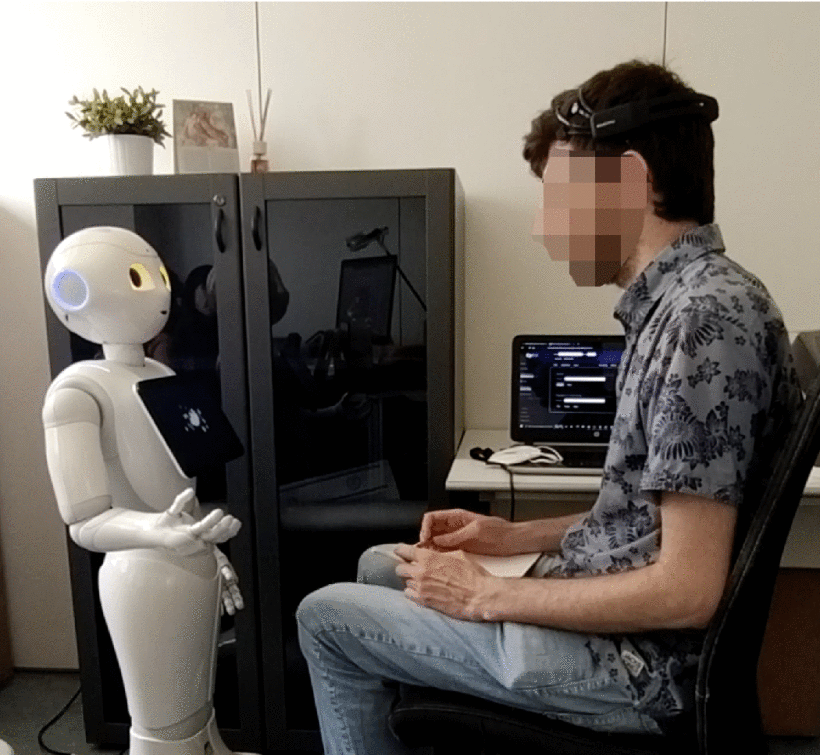
Continúa leyendo