Precio de auriculares EEG para uso comercial: un desglose
Emotiv
Actualizado el
24 dic 2025
Precio de auriculares EEG para uso comercial: un desglose
Emotiv
Actualizado el
24 dic 2025
Precio de auriculares EEG para uso comercial: un desglose
Emotiv
Actualizado el
24 dic 2025
Dar vida a un proyecto que utiliza datos cerebrales es una perspectiva emocionante. Es posible que esté planeando un estudio académico, desarrollando una aplicación o recopilando información más profunda para su negocio. Pero antes de poder comenzar, debe abordar el aspecto práctico de las cosas, empezando por su presupuesto. Comprender el eeg headset for commercial use price es un primer paso fundamental. El costo está directamente ligado a las capacidades del dispositivo, desde su número de canales hasta su ecosistema de software. Este artículo lo guiará a través de los diferentes niveles de precios, le explicará qué características influyen en el costo y lo ayudará a determinar cuántos canales necesita realmente para su trabajo.
Puntos Clave
Mire más allá del precio de etiqueta: Su inversión total incluye la diadema más los costos continuos de software, consumibles como solución salina o gel, y posibles accesorios. Presupuestar el paquete completo desde el principio ayuda a evitar sorpresas futuras.
Defina los objetivos de su proyecto primero: La diadema adecuada no es la más cara; es la que se adapta a sus necesidades. Determine la granularidad de los datos y la aplicación que necesita para evitar gastar de más en características que no utilizará.
Sepa qué impulsa el costo: Factores clave como el número de canales, la calidad de los datos y el tipo de electrodo afectan directamente el precio. Comprender estas compensaciones le ayuda a tomar una decisión informada que equilibre el presupuesto y las necesidades técnicas.
¿Qué Es Exactamente una Diadema EEG Comercial?
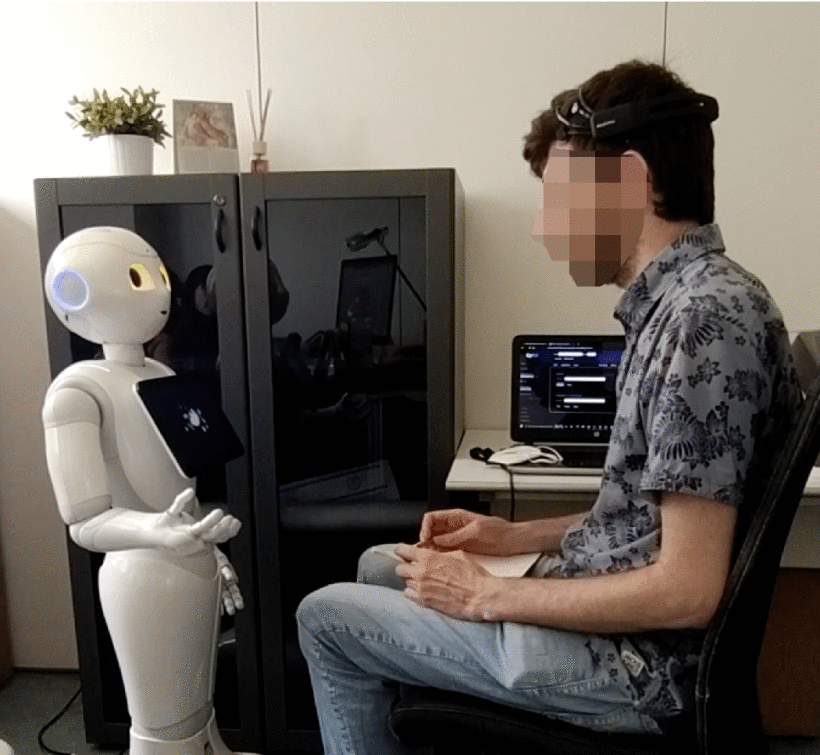
Cuando escucha "EEG", podría imaginarse una sala de hospital llena de maquinaria compleja. Una diadema EEG comercial es algo diferente. Es un dispositivo portátil y fácil de usar diseñado para medir la actividad eléctrica en el cerebro para aplicaciones fuera de un entorno clínico. Estas diademas hacen que la tecnología de interfaz cerebro-computadora sea accesible para la investigación, el desarrollo y los proyectos creativos. En lugar de estar confinado a un laboratorio, puede recopilar datos cerebrales en una amplia gama de entornos. Esto permite nuevos enfoques para estudiar la cognición y la interacción en contextos del mundo real.
Estos dispositivos no están diseñados para leer pensamientos. Detectan señales eléctricas producidas por la actividad cerebral. Al colocar sensores en el cuero cabelludo, una diadema comercial puede medir estas señales, que luego pueden analizarse para explorar diferentes estados cognitivos, como la concentración o la relajación. Esta capacidad permite a los creadores, investigadores y desarrolladores crear aplicaciones que respondan al estado mental del usuario, lo que respalda experiencias más intuitivas y personalizadas. Es una forma práctica de extender la neurociencia más allá del laboratorio.
Usos comunes para el EEG comercial
Los dispositivos EEG comerciales se utilizan en una amplia gama de campos. En la investigación académica y la educación, permiten a los estudiantes e investigadores realizar estudios de neurociencia sin necesidad de sistemas de laboratorio grandes y fijos. Los profesionales del neuromarketing los utilizan para estudiar cómo responden las audiencias a los anuncios y productos a nivel neuronal. Los desarrolladores y creadores también utilizan el EEG para crear aplicaciones como sistemas de control de manos libres o instalaciones artísticas interactivas. Estas diademas brindan acceso a la dinámica cerebral que respalda la innovación en áreas que van desde herramientas de bienestar cognitivo hasta análisis del rendimiento.
Dispositivos comerciales vs. de consumo: ¿Cuál es la diferencia?
La diferencia entre los dispositivos EEG comerciales y de consumo a menudo se reduce a la calidad de los datos, el número de canales y el acceso al software. Los dispositivos de consumo suelen tener menos sensores y están diseñados para casos de uso general como la meditación o interacciones simples de interfaz cerebro-computadora. Las diademas comerciales, como Epoc X, están diseñadas para aplicaciones más exigentes. Ofrecen un mayor número de canales, sensores más robustos y un mayor acceso a datos sin procesar, lo cual es importante para los flujos de trabajo de investigación y desarrollo. Elegir entre ellos depende de cuánto detalle y flexibilidad requiera su proyecto.
¿Cuánto Cuestan las Diademas EEG Comerciales?
El precio de una diadema EEG comercial puede variar desde unos cientos de dólares hasta decenas de miles. Este rango refleja la amplia variedad de casos de uso y requisitos técnicos. Un desarrollador que experimenta con conceptos básicos de interfaz cerebro-computadora tiene necesidades diferentes a las de un investigador que realiza un estudio cognitivo detallado o un equipo que analiza las respuestas de los consumidores.
El costo se ve influenciado por varios factores. El número de canales es el principal factor, ya que más canales permiten obtener datos espaciales más detallados. La calidad de los datos, incluida la tasa de muestreo y la resolución de la señal, también juega un papel importante, al igual que la complejidad del software utilizado para el análisis y la integración. Características como el funcionamiento inalámbrico y el tipo de electrodo afectan aún más el precio. Para ayudar a aclarar sus opciones, las secciones a continuación describen los niveles de precios comunes.
Nivel de entrada: Comenzando ($500–$1,000)
Las diademas de nivel de entrada suelen contar con un menor número de canales, a menudo entre 5 y 14. Son muy adecuadas para aplicaciones introductorias como el neurofeedback básico, el desarrollo temprano de interfaz cerebro-computadora o estudios piloto. Si bien estos sistemas pueden no proporcionar la densidad de datos requerida para publicaciones de investigación avanzadas, son útiles para el aprendizaje, la creación de prototipos y proyectos más pequeños. Este nivel hace que la tecnología EEG sea más accesible para estudiantes, desarrolladores independientes y equipos pequeños.
Gama media: Grado profesional ($1,000–$25,000)
Los sistemas de gama media se utilizan comúnmente en entornos profesionales y académicos. Estas diademas de grado de investigación suelen ofrecer entre 14 and 64 canales, proporcionando datos más detallados y confiables. Dispositivos como Epoc X y Flex entran en esta categoría. Muchos son inalámbricos, lo que permite un movimiento más natural durante los experimentos. Este nivel equilibra la calidad de los datos con la facilidad de uso y se elige a menudo para la investigación académica, estudios de neuromarketing y trabajos de desarrollo avanzado.
Premium: Sistemas de investigación avanzada ($25,000+)
Los sistemas EEG premium están diseñados para investigaciones altamente especializadas. Pueden incluir desde 32 hasta más de 256 canales, ofreciendo una alta resolución espacial para un mapeo cerebral detallado. Estos sistemas se utilizan típicamente en estudios a gran escala o en investigaciones avanzadas de neurociencia donde se requiere una cobertura y precisión extensas. Si bien la inversión es significativa, estos sistemas respaldan diseños experimentales complejos que requieren datos densos y de alta calidad.
¿Quiénes Son las Marcas Líderes en EEG Comercial?
Al evaluar las diademas EEG comerciales, varias marcas establecidas aparecen con frecuencia. Cada una se enfoca en diferentes prioridades, que van desde sistemas de investigación de alta densidad hasta plataformas accesibles para el desarrollo y la investigación aplicada.
Una mirada a las soluciones de Emotiv
Emotiv se enfoca en soluciones EEG accesibles y de grado profesional para investigación y aplicaciones comerciales. Productos como la diadema de 5 canales Insight, la de 14 canales Epoc X y la Flex de 32 canales están diseñados para admitir una variedad de casos de uso. Estos dispositivos se combinan con software como EmotivPRO para respaldar la grabación y el análisis de datos, ayudando a los equipos a pasar de la configuración a la obtención de información de manera eficiente.
Otros actores clave en el mercado
Otras empresas también ofrecen dispositivos EEG comerciales. NeuroSky, por ejemplo, produce la diadema MindWave de un solo canal, que se utiliza comúnmente en contextos educativos y de entretenimiento. Si bien estos dispositivos no proporcionan los datos multicanal necesarios para investigaciones complejas, ofrecen un punto de entrada sencillo en el desarrollo y aprendizaje basados en EEG.
Cómo se comparan las mejores marcas
Las revisiones comparativas de los dispositivos EEG comerciales a menudo evalúan la calidad de los datos, la facilidad de uso, el número de canales y el precio. La elección correcta depende de sus objetivos. Un proyecto simple de interfaz cerebro-computadora puede funcionar bien con un sistema de menor número de canales, mientras que un estudio de neuromarketing generalmente se beneficia de un mayor número de canales y un software avanzado. Adaptar las capacidades del dispositivo a los requisitos de su proyecto es clave para lograr resultados útiles.
¿Qué Características Elevan el Precio?
El costo de una diadema EEG comercial refleja sus capacidades técnicas. Factores como el diseño del hardware, la integridad de la señal, las características del software y la usabilidad contribuyen al precio. Comprender estos elementos le ayuda a enfocarse en las características que más importan para su trabajo.
Número de canales y tipo de electrodo
El número de canales afecta directamente el precio. Más canales proporcionan una mayor resolución espacial y permiten un análisis más detallado de la actividad cerebral. Para muchos proyectos de investigación académica, una diadema de 14 canales como Epoc X ofrece un equilibrio entre detalle y practicidad. Los sistemas de mayor densidad, como las configuraciones de 32 canales, admiten análisis más complejos. El tipo de electrodo, ya sea a base de solución salina o de gel, también influye en el costo y el tiempo de configuración.
Calidad de los datos y tasa de muestreo
La tasa de muestreo determina con qué frecuencia se registran las señales cerebrales. Las tasas de muestreo más altas permiten una captura más precisa de la actividad neural rápida. La calidad de la señal es igualmente importante, ya que reducir el ruido y los artefactos de movimiento mejora la confiabilidad de los datos. Lograr esto requiere un diseño de hardware y un procesamiento de señales cuidadosos, lo que contribuye al costo total de los sistemas profesionales.
Software y opciones de integración
El software transforma los datos brutos de EEG en información útil. Plataformas como EmotivPRO admiten la visualización, grabación y análisis de datos. El acceso a las API y SDK también agrega valor, lo que permite a los desarrolladores crear aplicaciones personalizadas e integrar los datos de EEG en flujos de trabajo más amplios. Estas capacidades se reflejan en los precios.
Portabilidad y características inalámbricas
Los sistemas de EEG inalámbricos respaldan los estudios fuera de los entornos tradicionales de laboratorio. Diseñar dispositivos que sean livianos, cómodos y capaces de entregar datos confiables de forma inalámbrica requiere ingeniería adicional. Las características como la duración de la batería, la configuración rápida y la portabilidad son particularmente importantes para aplicaciones en neuromarketing e investigación de campo.
¿Cuántos Canales Necesita Realmente?
Elegir el número correcto de canales es un equilibrio entre el presupuesto y los requisitos de datos. Más canales proporcionan más detalles, pero no siempre son necesarios. El número adecuado de canales depende de la complejidad y los objetivos de su proyecto.
2 canales para aplicaciones focalizadas
Los sistemas de dos canales son adecuados para aplicaciones sencillas de interfaz cerebro-computadora o mediciones cognitivas focalizadas. Suelen ser más asequibles y fáciles de configurar. Dispositivos como los auriculares MN8 están diseñados para casos de uso focalizados donde la portabilidad y la simplicidad son prioridades.
5–14 canales para investigación estándar
Las diademas con 5 a 14 canales se utilizan comúnmente para investigación cognitiva, pruebas de usabilidad y estudios de neuromarketing. Proporcionan suficiente cobertura espacial para muchas aplicaciones sin la complejidad de los sistemas de mayor densidad. La diadema Epoc X es una opción común en esta categoría.
32+ canales para estudios complejos
Los sistemas de alta densidad con 32 o más canales se utilizan para investigaciones avanzadas que requieren una resolución espacial detallada. Estos sistemas admiten diseños experimentales complejos y se utilizan a menudo en estudios profundos de neurociencia. Dispositivos como la diadema Flex Saline están diseñados para estas aplicaciones exigentes.
¿Para Qué Otros Costos Debería Presupuestar?
El precio de compra de una diadema EEG es solo una parte de la inversión total. Los costos adicionales pueden incluir suscripciones de software, consumibles, capacitación y accesorios. Planificar estos gastos ayuda a crear un presupuesto realista.
Suscripciones de software
Muchos sistemas EEG comerciales dependen de software basado en suscripción para el análisis de datos. Al comparar opciones, considere qué software está incluido y si las funciones avanzadas requieren tarifas continuas. Asegúrese de que el software se alinee con sus necesidades de investigación o desarrollo.
Electrodos y consumibles
Los sistemas de electrodos húmedos requieren consumibles como solución salina o gel, así como almohadillas de repuesto para los sensores. Con el tiempo, estos costos pueden acumularse, particularmente para estudios a largo plazo o de gran volumen.
Capacitación y soporte
El uso efectivo de la tecnología EEG a menudo requiere capacitación. La documentación, el soporte al cliente y los servicios de capacitación opcionales pueden agregar valor y deben tenerse en cuenta en su decisión, especialmente para equipos nuevos en EEG.
Accesorios y mantenimiento
Es posible que el estuche de viaje, los cables de repuesto o los extensores de ajuste no estén incluidos con la diadema. Presupuestar estos elementos ayuda a garantizar una configuración completa y confiable.
Electrodos Secos vs. Húmedos: ¿Cuál Cuesta Más?
El tipo de electrodo afecta tanto los costos iniciales como a largo plazo. Los electrodos secos suelen tener un precio inicial más alto pero no requieren consumibles. Los electrodos húmedos a menudo cuestan menos al principio pero implican gastos recurrentes de solución salina o gel. Evaluar el costo total de propiedad ayuda a determinar qué opción se adapta a sus patrones de uso.
Encuentre la Diadema EEG Adecuada para su Presupuesto
Elegir la diadema EEG adecuada implica equilibrar el costo, las características y el valor a largo plazo. Al definir claramente sus objetivos y considerar todo el ecosistema, puede seleccionar un sistema que respalde su trabajo de manera efectiva a lo largo del tiempo.
Preguntas Frecuentes
¿Puedo usar una diadema EEG comercial para fines médicos?
No. Las diademas EEG comerciales no son dispositivos médicos y no están destinadas a diagnosticar, tratar o prevenir condiciones médicas. Están diseñadas para la investigación, la educación, el desarrollo y aplicaciones no clínicas. Para inquietudes médicas, consulte a un profesional de la salud calificado.
Dar vida a un proyecto que utiliza datos cerebrales es una perspectiva emocionante. Es posible que esté planeando un estudio académico, desarrollando una aplicación o recopilando información más profunda para su negocio. Pero antes de poder comenzar, debe abordar el aspecto práctico de las cosas, empezando por su presupuesto. Comprender el eeg headset for commercial use price es un primer paso fundamental. El costo está directamente ligado a las capacidades del dispositivo, desde su número de canales hasta su ecosistema de software. Este artículo lo guiará a través de los diferentes niveles de precios, le explicará qué características influyen en el costo y lo ayudará a determinar cuántos canales necesita realmente para su trabajo.
Puntos Clave
Mire más allá del precio de etiqueta: Su inversión total incluye la diadema más los costos continuos de software, consumibles como solución salina o gel, y posibles accesorios. Presupuestar el paquete completo desde el principio ayuda a evitar sorpresas futuras.
Defina los objetivos de su proyecto primero: La diadema adecuada no es la más cara; es la que se adapta a sus necesidades. Determine la granularidad de los datos y la aplicación que necesita para evitar gastar de más en características que no utilizará.
Sepa qué impulsa el costo: Factores clave como el número de canales, la calidad de los datos y el tipo de electrodo afectan directamente el precio. Comprender estas compensaciones le ayuda a tomar una decisión informada que equilibre el presupuesto y las necesidades técnicas.
¿Qué Es Exactamente una Diadema EEG Comercial?
Cuando escucha "EEG", podría imaginarse una sala de hospital llena de maquinaria compleja. Una diadema EEG comercial es algo diferente. Es un dispositivo portátil y fácil de usar diseñado para medir la actividad eléctrica en el cerebro para aplicaciones fuera de un entorno clínico. Estas diademas hacen que la tecnología de interfaz cerebro-computadora sea accesible para la investigación, el desarrollo y los proyectos creativos. En lugar de estar confinado a un laboratorio, puede recopilar datos cerebrales en una amplia gama de entornos. Esto permite nuevos enfoques para estudiar la cognición y la interacción en contextos del mundo real.
Estos dispositivos no están diseñados para leer pensamientos. Detectan señales eléctricas producidas por la actividad cerebral. Al colocar sensores en el cuero cabelludo, una diadema comercial puede medir estas señales, que luego pueden analizarse para explorar diferentes estados cognitivos, como la concentración o la relajación. Esta capacidad permite a los creadores, investigadores y desarrolladores crear aplicaciones que respondan al estado mental del usuario, lo que respalda experiencias más intuitivas y personalizadas. Es una forma práctica de extender la neurociencia más allá del laboratorio.
Usos comunes para el EEG comercial
Los dispositivos EEG comerciales se utilizan en una amplia gama de campos. En la investigación académica y la educación, permiten a los estudiantes e investigadores realizar estudios de neurociencia sin necesidad de sistemas de laboratorio grandes y fijos. Los profesionales del neuromarketing los utilizan para estudiar cómo responden las audiencias a los anuncios y productos a nivel neuronal. Los desarrolladores y creadores también utilizan el EEG para crear aplicaciones como sistemas de control de manos libres o instalaciones artísticas interactivas. Estas diademas brindan acceso a la dinámica cerebral que respalda la innovación en áreas que van desde herramientas de bienestar cognitivo hasta análisis del rendimiento.
Dispositivos comerciales vs. de consumo: ¿Cuál es la diferencia?
La diferencia entre los dispositivos EEG comerciales y de consumo a menudo se reduce a la calidad de los datos, el número de canales y el acceso al software. Los dispositivos de consumo suelen tener menos sensores y están diseñados para casos de uso general como la meditación o interacciones simples de interfaz cerebro-computadora. Las diademas comerciales, como Epoc X, están diseñadas para aplicaciones más exigentes. Ofrecen un mayor número de canales, sensores más robustos y un mayor acceso a datos sin procesar, lo cual es importante para los flujos de trabajo de investigación y desarrollo. Elegir entre ellos depende de cuánto detalle y flexibilidad requiera su proyecto.
¿Cuánto Cuestan las Diademas EEG Comerciales?
El precio de una diadema EEG comercial puede variar desde unos cientos de dólares hasta decenas de miles. Este rango refleja la amplia variedad de casos de uso y requisitos técnicos. Un desarrollador que experimenta con conceptos básicos de interfaz cerebro-computadora tiene necesidades diferentes a las de un investigador que realiza un estudio cognitivo detallado o un equipo que analiza las respuestas de los consumidores.
El costo se ve influenciado por varios factores. El número de canales es el principal factor, ya que más canales permiten obtener datos espaciales más detallados. La calidad de los datos, incluida la tasa de muestreo y la resolución de la señal, también juega un papel importante, al igual que la complejidad del software utilizado para el análisis y la integración. Características como el funcionamiento inalámbrico y el tipo de electrodo afectan aún más el precio. Para ayudar a aclarar sus opciones, las secciones a continuación describen los niveles de precios comunes.
Nivel de entrada: Comenzando ($500–$1,000)
Las diademas de nivel de entrada suelen contar con un menor número de canales, a menudo entre 5 y 14. Son muy adecuadas para aplicaciones introductorias como el neurofeedback básico, el desarrollo temprano de interfaz cerebro-computadora o estudios piloto. Si bien estos sistemas pueden no proporcionar la densidad de datos requerida para publicaciones de investigación avanzadas, son útiles para el aprendizaje, la creación de prototipos y proyectos más pequeños. Este nivel hace que la tecnología EEG sea más accesible para estudiantes, desarrolladores independientes y equipos pequeños.
Gama media: Grado profesional ($1,000–$25,000)
Los sistemas de gama media se utilizan comúnmente en entornos profesionales y académicos. Estas diademas de grado de investigación suelen ofrecer entre 14 and 64 canales, proporcionando datos más detallados y confiables. Dispositivos como Epoc X y Flex entran en esta categoría. Muchos son inalámbricos, lo que permite un movimiento más natural durante los experimentos. Este nivel equilibra la calidad de los datos con la facilidad de uso y se elige a menudo para la investigación académica, estudios de neuromarketing y trabajos de desarrollo avanzado.
Premium: Sistemas de investigación avanzada ($25,000+)
Los sistemas EEG premium están diseñados para investigaciones altamente especializadas. Pueden incluir desde 32 hasta más de 256 canales, ofreciendo una alta resolución espacial para un mapeo cerebral detallado. Estos sistemas se utilizan típicamente en estudios a gran escala o en investigaciones avanzadas de neurociencia donde se requiere una cobertura y precisión extensas. Si bien la inversión es significativa, estos sistemas respaldan diseños experimentales complejos que requieren datos densos y de alta calidad.
¿Quiénes Son las Marcas Líderes en EEG Comercial?
Al evaluar las diademas EEG comerciales, varias marcas establecidas aparecen con frecuencia. Cada una se enfoca en diferentes prioridades, que van desde sistemas de investigación de alta densidad hasta plataformas accesibles para el desarrollo y la investigación aplicada.
Una mirada a las soluciones de Emotiv
Emotiv se enfoca en soluciones EEG accesibles y de grado profesional para investigación y aplicaciones comerciales. Productos como la diadema de 5 canales Insight, la de 14 canales Epoc X y la Flex de 32 canales están diseñados para admitir una variedad de casos de uso. Estos dispositivos se combinan con software como EmotivPRO para respaldar la grabación y el análisis de datos, ayudando a los equipos a pasar de la configuración a la obtención de información de manera eficiente.
Otros actores clave en el mercado
Otras empresas también ofrecen dispositivos EEG comerciales. NeuroSky, por ejemplo, produce la diadema MindWave de un solo canal, que se utiliza comúnmente en contextos educativos y de entretenimiento. Si bien estos dispositivos no proporcionan los datos multicanal necesarios para investigaciones complejas, ofrecen un punto de entrada sencillo en el desarrollo y aprendizaje basados en EEG.
Cómo se comparan las mejores marcas
Las revisiones comparativas de los dispositivos EEG comerciales a menudo evalúan la calidad de los datos, la facilidad de uso, el número de canales y el precio. La elección correcta depende de sus objetivos. Un proyecto simple de interfaz cerebro-computadora puede funcionar bien con un sistema de menor número de canales, mientras que un estudio de neuromarketing generalmente se beneficia de un mayor número de canales y un software avanzado. Adaptar las capacidades del dispositivo a los requisitos de su proyecto es clave para lograr resultados útiles.
¿Qué Características Elevan el Precio?
El costo de una diadema EEG comercial refleja sus capacidades técnicas. Factores como el diseño del hardware, la integridad de la señal, las características del software y la usabilidad contribuyen al precio. Comprender estos elementos le ayuda a enfocarse en las características que más importan para su trabajo.
Número de canales y tipo de electrodo
El número de canales afecta directamente el precio. Más canales proporcionan una mayor resolución espacial y permiten un análisis más detallado de la actividad cerebral. Para muchos proyectos de investigación académica, una diadema de 14 canales como Epoc X ofrece un equilibrio entre detalle y practicidad. Los sistemas de mayor densidad, como las configuraciones de 32 canales, admiten análisis más complejos. El tipo de electrodo, ya sea a base de solución salina o de gel, también influye en el costo y el tiempo de configuración.
Calidad de los datos y tasa de muestreo
La tasa de muestreo determina con qué frecuencia se registran las señales cerebrales. Las tasas de muestreo más altas permiten una captura más precisa de la actividad neural rápida. La calidad de la señal es igualmente importante, ya que reducir el ruido y los artefactos de movimiento mejora la confiabilidad de los datos. Lograr esto requiere un diseño de hardware y un procesamiento de señales cuidadosos, lo que contribuye al costo total de los sistemas profesionales.
Software y opciones de integración
El software transforma los datos brutos de EEG en información útil. Plataformas como EmotivPRO admiten la visualización, grabación y análisis de datos. El acceso a las API y SDK también agrega valor, lo que permite a los desarrolladores crear aplicaciones personalizadas e integrar los datos de EEG en flujos de trabajo más amplios. Estas capacidades se reflejan en los precios.
Portabilidad y características inalámbricas
Los sistemas de EEG inalámbricos respaldan los estudios fuera de los entornos tradicionales de laboratorio. Diseñar dispositivos que sean livianos, cómodos y capaces de entregar datos confiables de forma inalámbrica requiere ingeniería adicional. Las características como la duración de la batería, la configuración rápida y la portabilidad son particularmente importantes para aplicaciones en neuromarketing e investigación de campo.
¿Cuántos Canales Necesita Realmente?
Elegir el número correcto de canales es un equilibrio entre el presupuesto y los requisitos de datos. Más canales proporcionan más detalles, pero no siempre son necesarios. El número adecuado de canales depende de la complejidad y los objetivos de su proyecto.
2 canales para aplicaciones focalizadas
Los sistemas de dos canales son adecuados para aplicaciones sencillas de interfaz cerebro-computadora o mediciones cognitivas focalizadas. Suelen ser más asequibles y fáciles de configurar. Dispositivos como los auriculares MN8 están diseñados para casos de uso focalizados donde la portabilidad y la simplicidad son prioridades.
5–14 canales para investigación estándar
Las diademas con 5 a 14 canales se utilizan comúnmente para investigación cognitiva, pruebas de usabilidad y estudios de neuromarketing. Proporcionan suficiente cobertura espacial para muchas aplicaciones sin la complejidad de los sistemas de mayor densidad. La diadema Epoc X es una opción común en esta categoría.
32+ canales para estudios complejos
Los sistemas de alta densidad con 32 o más canales se utilizan para investigaciones avanzadas que requieren una resolución espacial detallada. Estos sistemas admiten diseños experimentales complejos y se utilizan a menudo en estudios profundos de neurociencia. Dispositivos como la diadema Flex Saline están diseñados para estas aplicaciones exigentes.
¿Para Qué Otros Costos Debería Presupuestar?
El precio de compra de una diadema EEG es solo una parte de la inversión total. Los costos adicionales pueden incluir suscripciones de software, consumibles, capacitación y accesorios. Planificar estos gastos ayuda a crear un presupuesto realista.
Suscripciones de software
Muchos sistemas EEG comerciales dependen de software basado en suscripción para el análisis de datos. Al comparar opciones, considere qué software está incluido y si las funciones avanzadas requieren tarifas continuas. Asegúrese de que el software se alinee con sus necesidades de investigación o desarrollo.
Electrodos y consumibles
Los sistemas de electrodos húmedos requieren consumibles como solución salina o gel, así como almohadillas de repuesto para los sensores. Con el tiempo, estos costos pueden acumularse, particularmente para estudios a largo plazo o de gran volumen.
Capacitación y soporte
El uso efectivo de la tecnología EEG a menudo requiere capacitación. La documentación, el soporte al cliente y los servicios de capacitación opcionales pueden agregar valor y deben tenerse en cuenta en su decisión, especialmente para equipos nuevos en EEG.
Accesorios y mantenimiento
Es posible que el estuche de viaje, los cables de repuesto o los extensores de ajuste no estén incluidos con la diadema. Presupuestar estos elementos ayuda a garantizar una configuración completa y confiable.
Electrodos Secos vs. Húmedos: ¿Cuál Cuesta Más?
El tipo de electrodo afecta tanto los costos iniciales como a largo plazo. Los electrodos secos suelen tener un precio inicial más alto pero no requieren consumibles. Los electrodos húmedos a menudo cuestan menos al principio pero implican gastos recurrentes de solución salina o gel. Evaluar el costo total de propiedad ayuda a determinar qué opción se adapta a sus patrones de uso.
Encuentre la Diadema EEG Adecuada para su Presupuesto
Elegir la diadema EEG adecuada implica equilibrar el costo, las características y el valor a largo plazo. Al definir claramente sus objetivos y considerar todo el ecosistema, puede seleccionar un sistema que respalde su trabajo de manera efectiva a lo largo del tiempo.
Preguntas Frecuentes
¿Puedo usar una diadema EEG comercial para fines médicos?
No. Las diademas EEG comerciales no son dispositivos médicos y no están destinadas a diagnosticar, tratar o prevenir condiciones médicas. Están diseñadas para la investigación, la educación, el desarrollo y aplicaciones no clínicas. Para inquietudes médicas, consulte a un profesional de la salud calificado.
Dar vida a un proyecto que utiliza datos cerebrales es una perspectiva emocionante. Es posible que esté planeando un estudio académico, desarrollando una aplicación o recopilando información más profunda para su negocio. Pero antes de poder comenzar, debe abordar el aspecto práctico de las cosas, empezando por su presupuesto. Comprender el eeg headset for commercial use price es un primer paso fundamental. El costo está directamente ligado a las capacidades del dispositivo, desde su número de canales hasta su ecosistema de software. Este artículo lo guiará a través de los diferentes niveles de precios, le explicará qué características influyen en el costo y lo ayudará a determinar cuántos canales necesita realmente para su trabajo.
Puntos Clave
Mire más allá del precio de etiqueta: Su inversión total incluye la diadema más los costos continuos de software, consumibles como solución salina o gel, y posibles accesorios. Presupuestar el paquete completo desde el principio ayuda a evitar sorpresas futuras.
Defina los objetivos de su proyecto primero: La diadema adecuada no es la más cara; es la que se adapta a sus necesidades. Determine la granularidad de los datos y la aplicación que necesita para evitar gastar de más en características que no utilizará.
Sepa qué impulsa el costo: Factores clave como el número de canales, la calidad de los datos y el tipo de electrodo afectan directamente el precio. Comprender estas compensaciones le ayuda a tomar una decisión informada que equilibre el presupuesto y las necesidades técnicas.
¿Qué Es Exactamente una Diadema EEG Comercial?
Cuando escucha "EEG", podría imaginarse una sala de hospital llena de maquinaria compleja. Una diadema EEG comercial es algo diferente. Es un dispositivo portátil y fácil de usar diseñado para medir la actividad eléctrica en el cerebro para aplicaciones fuera de un entorno clínico. Estas diademas hacen que la tecnología de interfaz cerebro-computadora sea accesible para la investigación, el desarrollo y los proyectos creativos. En lugar de estar confinado a un laboratorio, puede recopilar datos cerebrales en una amplia gama de entornos. Esto permite nuevos enfoques para estudiar la cognición y la interacción en contextos del mundo real.
Estos dispositivos no están diseñados para leer pensamientos. Detectan señales eléctricas producidas por la actividad cerebral. Al colocar sensores en el cuero cabelludo, una diadema comercial puede medir estas señales, que luego pueden analizarse para explorar diferentes estados cognitivos, como la concentración o la relajación. Esta capacidad permite a los creadores, investigadores y desarrolladores crear aplicaciones que respondan al estado mental del usuario, lo que respalda experiencias más intuitivas y personalizadas. Es una forma práctica de extender la neurociencia más allá del laboratorio.
Usos comunes para el EEG comercial
Los dispositivos EEG comerciales se utilizan en una amplia gama de campos. En la investigación académica y la educación, permiten a los estudiantes e investigadores realizar estudios de neurociencia sin necesidad de sistemas de laboratorio grandes y fijos. Los profesionales del neuromarketing los utilizan para estudiar cómo responden las audiencias a los anuncios y productos a nivel neuronal. Los desarrolladores y creadores también utilizan el EEG para crear aplicaciones como sistemas de control de manos libres o instalaciones artísticas interactivas. Estas diademas brindan acceso a la dinámica cerebral que respalda la innovación en áreas que van desde herramientas de bienestar cognitivo hasta análisis del rendimiento.
Dispositivos comerciales vs. de consumo: ¿Cuál es la diferencia?
La diferencia entre los dispositivos EEG comerciales y de consumo a menudo se reduce a la calidad de los datos, el número de canales y el acceso al software. Los dispositivos de consumo suelen tener menos sensores y están diseñados para casos de uso general como la meditación o interacciones simples de interfaz cerebro-computadora. Las diademas comerciales, como Epoc X, están diseñadas para aplicaciones más exigentes. Ofrecen un mayor número de canales, sensores más robustos y un mayor acceso a datos sin procesar, lo cual es importante para los flujos de trabajo de investigación y desarrollo. Elegir entre ellos depende de cuánto detalle y flexibilidad requiera su proyecto.
¿Cuánto Cuestan las Diademas EEG Comerciales?
El precio de una diadema EEG comercial puede variar desde unos cientos de dólares hasta decenas de miles. Este rango refleja la amplia variedad de casos de uso y requisitos técnicos. Un desarrollador que experimenta con conceptos básicos de interfaz cerebro-computadora tiene necesidades diferentes a las de un investigador que realiza un estudio cognitivo detallado o un equipo que analiza las respuestas de los consumidores.
El costo se ve influenciado por varios factores. El número de canales es el principal factor, ya que más canales permiten obtener datos espaciales más detallados. La calidad de los datos, incluida la tasa de muestreo y la resolución de la señal, también juega un papel importante, al igual que la complejidad del software utilizado para el análisis y la integración. Características como el funcionamiento inalámbrico y el tipo de electrodo afectan aún más el precio. Para ayudar a aclarar sus opciones, las secciones a continuación describen los niveles de precios comunes.
Nivel de entrada: Comenzando ($500–$1,000)
Las diademas de nivel de entrada suelen contar con un menor número de canales, a menudo entre 5 y 14. Son muy adecuadas para aplicaciones introductorias como el neurofeedback básico, el desarrollo temprano de interfaz cerebro-computadora o estudios piloto. Si bien estos sistemas pueden no proporcionar la densidad de datos requerida para publicaciones de investigación avanzadas, son útiles para el aprendizaje, la creación de prototipos y proyectos más pequeños. Este nivel hace que la tecnología EEG sea más accesible para estudiantes, desarrolladores independientes y equipos pequeños.
Gama media: Grado profesional ($1,000–$25,000)
Los sistemas de gama media se utilizan comúnmente en entornos profesionales y académicos. Estas diademas de grado de investigación suelen ofrecer entre 14 and 64 canales, proporcionando datos más detallados y confiables. Dispositivos como Epoc X y Flex entran en esta categoría. Muchos son inalámbricos, lo que permite un movimiento más natural durante los experimentos. Este nivel equilibra la calidad de los datos con la facilidad de uso y se elige a menudo para la investigación académica, estudios de neuromarketing y trabajos de desarrollo avanzado.
Premium: Sistemas de investigación avanzada ($25,000+)
Los sistemas EEG premium están diseñados para investigaciones altamente especializadas. Pueden incluir desde 32 hasta más de 256 canales, ofreciendo una alta resolución espacial para un mapeo cerebral detallado. Estos sistemas se utilizan típicamente en estudios a gran escala o en investigaciones avanzadas de neurociencia donde se requiere una cobertura y precisión extensas. Si bien la inversión es significativa, estos sistemas respaldan diseños experimentales complejos que requieren datos densos y de alta calidad.
¿Quiénes Son las Marcas Líderes en EEG Comercial?
Al evaluar las diademas EEG comerciales, varias marcas establecidas aparecen con frecuencia. Cada una se enfoca en diferentes prioridades, que van desde sistemas de investigación de alta densidad hasta plataformas accesibles para el desarrollo y la investigación aplicada.
Una mirada a las soluciones de Emotiv
Emotiv se enfoca en soluciones EEG accesibles y de grado profesional para investigación y aplicaciones comerciales. Productos como la diadema de 5 canales Insight, la de 14 canales Epoc X y la Flex de 32 canales están diseñados para admitir una variedad de casos de uso. Estos dispositivos se combinan con software como EmotivPRO para respaldar la grabación y el análisis de datos, ayudando a los equipos a pasar de la configuración a la obtención de información de manera eficiente.
Otros actores clave en el mercado
Otras empresas también ofrecen dispositivos EEG comerciales. NeuroSky, por ejemplo, produce la diadema MindWave de un solo canal, que se utiliza comúnmente en contextos educativos y de entretenimiento. Si bien estos dispositivos no proporcionan los datos multicanal necesarios para investigaciones complejas, ofrecen un punto de entrada sencillo en el desarrollo y aprendizaje basados en EEG.
Cómo se comparan las mejores marcas
Las revisiones comparativas de los dispositivos EEG comerciales a menudo evalúan la calidad de los datos, la facilidad de uso, el número de canales y el precio. La elección correcta depende de sus objetivos. Un proyecto simple de interfaz cerebro-computadora puede funcionar bien con un sistema de menor número de canales, mientras que un estudio de neuromarketing generalmente se beneficia de un mayor número de canales y un software avanzado. Adaptar las capacidades del dispositivo a los requisitos de su proyecto es clave para lograr resultados útiles.
¿Qué Características Elevan el Precio?
El costo de una diadema EEG comercial refleja sus capacidades técnicas. Factores como el diseño del hardware, la integridad de la señal, las características del software y la usabilidad contribuyen al precio. Comprender estos elementos le ayuda a enfocarse en las características que más importan para su trabajo.
Número de canales y tipo de electrodo
El número de canales afecta directamente el precio. Más canales proporcionan una mayor resolución espacial y permiten un análisis más detallado de la actividad cerebral. Para muchos proyectos de investigación académica, una diadema de 14 canales como Epoc X ofrece un equilibrio entre detalle y practicidad. Los sistemas de mayor densidad, como las configuraciones de 32 canales, admiten análisis más complejos. El tipo de electrodo, ya sea a base de solución salina o de gel, también influye en el costo y el tiempo de configuración.
Calidad de los datos y tasa de muestreo
La tasa de muestreo determina con qué frecuencia se registran las señales cerebrales. Las tasas de muestreo más altas permiten una captura más precisa de la actividad neural rápida. La calidad de la señal es igualmente importante, ya que reducir el ruido y los artefactos de movimiento mejora la confiabilidad de los datos. Lograr esto requiere un diseño de hardware y un procesamiento de señales cuidadosos, lo que contribuye al costo total de los sistemas profesionales.
Software y opciones de integración
El software transforma los datos brutos de EEG en información útil. Plataformas como EmotivPRO admiten la visualización, grabación y análisis de datos. El acceso a las API y SDK también agrega valor, lo que permite a los desarrolladores crear aplicaciones personalizadas e integrar los datos de EEG en flujos de trabajo más amplios. Estas capacidades se reflejan en los precios.
Portabilidad y características inalámbricas
Los sistemas de EEG inalámbricos respaldan los estudios fuera de los entornos tradicionales de laboratorio. Diseñar dispositivos que sean livianos, cómodos y capaces de entregar datos confiables de forma inalámbrica requiere ingeniería adicional. Las características como la duración de la batería, la configuración rápida y la portabilidad son particularmente importantes para aplicaciones en neuromarketing e investigación de campo.
¿Cuántos Canales Necesita Realmente?
Elegir el número correcto de canales es un equilibrio entre el presupuesto y los requisitos de datos. Más canales proporcionan más detalles, pero no siempre son necesarios. El número adecuado de canales depende de la complejidad y los objetivos de su proyecto.
2 canales para aplicaciones focalizadas
Los sistemas de dos canales son adecuados para aplicaciones sencillas de interfaz cerebro-computadora o mediciones cognitivas focalizadas. Suelen ser más asequibles y fáciles de configurar. Dispositivos como los auriculares MN8 están diseñados para casos de uso focalizados donde la portabilidad y la simplicidad son prioridades.
5–14 canales para investigación estándar
Las diademas con 5 a 14 canales se utilizan comúnmente para investigación cognitiva, pruebas de usabilidad y estudios de neuromarketing. Proporcionan suficiente cobertura espacial para muchas aplicaciones sin la complejidad de los sistemas de mayor densidad. La diadema Epoc X es una opción común en esta categoría.
32+ canales para estudios complejos
Los sistemas de alta densidad con 32 o más canales se utilizan para investigaciones avanzadas que requieren una resolución espacial detallada. Estos sistemas admiten diseños experimentales complejos y se utilizan a menudo en estudios profundos de neurociencia. Dispositivos como la diadema Flex Saline están diseñados para estas aplicaciones exigentes.
¿Para Qué Otros Costos Debería Presupuestar?
El precio de compra de una diadema EEG es solo una parte de la inversión total. Los costos adicionales pueden incluir suscripciones de software, consumibles, capacitación y accesorios. Planificar estos gastos ayuda a crear un presupuesto realista.
Suscripciones de software
Muchos sistemas EEG comerciales dependen de software basado en suscripción para el análisis de datos. Al comparar opciones, considere qué software está incluido y si las funciones avanzadas requieren tarifas continuas. Asegúrese de que el software se alinee con sus necesidades de investigación o desarrollo.
Electrodos y consumibles
Los sistemas de electrodos húmedos requieren consumibles como solución salina o gel, así como almohadillas de repuesto para los sensores. Con el tiempo, estos costos pueden acumularse, particularmente para estudios a largo plazo o de gran volumen.
Capacitación y soporte
El uso efectivo de la tecnología EEG a menudo requiere capacitación. La documentación, el soporte al cliente y los servicios de capacitación opcionales pueden agregar valor y deben tenerse en cuenta en su decisión, especialmente para equipos nuevos en EEG.
Accesorios y mantenimiento
Es posible que el estuche de viaje, los cables de repuesto o los extensores de ajuste no estén incluidos con la diadema. Presupuestar estos elementos ayuda a garantizar una configuración completa y confiable.
Electrodos Secos vs. Húmedos: ¿Cuál Cuesta Más?
El tipo de electrodo afecta tanto los costos iniciales como a largo plazo. Los electrodos secos suelen tener un precio inicial más alto pero no requieren consumibles. Los electrodos húmedos a menudo cuestan menos al principio pero implican gastos recurrentes de solución salina o gel. Evaluar el costo total de propiedad ayuda a determinar qué opción se adapta a sus patrones de uso.
Encuentre la Diadema EEG Adecuada para su Presupuesto
Elegir la diadema EEG adecuada implica equilibrar el costo, las características y el valor a largo plazo. Al definir claramente sus objetivos y considerar todo el ecosistema, puede seleccionar un sistema que respalde su trabajo de manera efectiva a lo largo del tiempo.
Preguntas Frecuentes
¿Puedo usar una diadema EEG comercial para fines médicos?
No. Las diademas EEG comerciales no son dispositivos médicos y no están destinadas a diagnosticar, tratar o prevenir condiciones médicas. Están diseñadas para la investigación, la educación, el desarrollo y aplicaciones no clínicas. Para inquietudes médicas, consulte a un profesional de la salud calificado.
Continúa leyendo