Your Guide to Wearables for Focus and Attention
Duong Tran
Updated on
Nov 13, 2025
Your Guide to Wearables for Focus and Attention
Duong Tran
Updated on
Nov 13, 2025
Your Guide to Wearables for Focus and Attention
Duong Tran
Updated on
Nov 13, 2025
Think of a fitness tracker. It gives you data about your physical activity, helping you understand your habits and work toward your health goals. A focus wearable does something similar, but for your mind. It treats attention not as a fixed trait you either have or don’t, but as a skill that can be trained and strengthened over time. By providing objective data on your brain activity and behavior, these devices give you the insights you need to start that training. This guide is your starting point for exploring this technology. We’ll cover how to choose the right wearable for focus and attention based on your personal goals, and how to use it to build a better understanding of your own cognitive patterns.
Key Takeaways
Use feedback to build self-awareness: Focus wearables provide real-time cues based on your brain activity or physical habits. The goal is to use this feedback to recognize when your attention drifts so you can learn to gently guide it back to your task.
Match the device to your specific needs: Your reason for using a wearable should guide your choice. A discreet, low-channel device is great for personal insights, while a multi-channel headset is necessary for researchers and developers who need detailed data.
Commit to a consistent practice: These devices are active training tools, not passive fixes. To get the most value, establish a regular routine and integrate the wearable into your daily life to turn its data into a practical skill for managing your attention.
What Are Focus Wearables?
Focus wearables are devices designed to help you understand and manage your attention. Think of them as a personal guide for your brain. They use sensors to gather data about your body’s signals—from brain activity to subtle movements—and then provide real-time feedback to help you recognize when you’re distracted. The goal isn’t to force you to concentrate, but to build your awareness of your own mental states, giving you the information you need to gently guide your focus back to the task at hand.
These devices come in many forms, from headbands and earbuds to clip-on sensors and wristbands. While their methods differ, they all share a common purpose: to translate your internal state into tangible data and feedback. This makes the abstract concept of "focus" something you can actively work with, rather than something that just happens to you.
The Different Types of Focus Wearables
Focus wearables generally fall into two main categories based on the type of feedback they provide. The first type uses neurofeedback, which involves measuring your brain's electrical activity directly using electroencephalography (EEG) sensors. These devices, often in the form of headbands or earbuds, give you insight into your brainwave patterns, helping you learn to recognize and replicate states of deep concentration.
The second category provides behavioral or physiological feedback. Instead of measuring brainwaves, these wearables use sensors to detect physical cues associated with distraction, like fidgeting, posture changes, or shifts in breathing patterns. When they sense you’ve lost focus, they might send a gentle vibration or a subtle notification to bring your attention back. These devices are great for building awareness of the physical habits that accompany a wandering mind.
The Science Behind How They Work
The science behind focus wearables is rooted in biofeedback—a technique where you learn to control bodily processes that are normally involuntary. These devices make you aware of your internal states by using advanced sensors to collect objective data. As research shows, wearables can continuously sample everything from movement to neuro-electrical activity, providing a clear picture of your attention levels in real-world settings. This technology is a practical application of a brain-computer interface.
Once the data is collected, an app or software analyzes it to identify patterns related to focus or distraction. When the device detects that your attention is drifting, it provides a cue, such as a sound or vibration. This feedback loop helps you access cognitive wellness tools by training your brain to recognize the feeling of being distracted and, over time, learn to self-correct more quickly and effectively.
How Do Focus Wearables Actually Work?
It might seem like magic, but focus wearables are grounded in established science. They don’t read your thoughts. Instead, they act as sophisticated sensors that measure physiological signals your body produces, giving you a window into your mental state. Think of it like a heart rate sensor for your brain and body—it provides data that you can use to understand and train your attention.
Most of these devices work in one of three ways. Some directly measure the electrical activity in your brain to see patterns associated with focus. Others observe your physical behaviors, like fidgeting or stillness, which are often linked to your level of concentration. Many of the most effective wearables combine these data streams and use artificial intelligence to provide you with real-time feedback. This feedback loop is the key: by becoming aware of when your focus shifts, you can learn to guide it back to the task at hand. Let’s break down exactly how each of these methods works.
Measuring Brain Activity with EEG
Many focus wearables rely on a technology called electroencephalography, or EEG. It sounds complex, but the concept is straightforward. Your brain is made up of billions of neurons that communicate using tiny electrical impulses. EEG sensors are designed to pick up on these signals from the surface of your scalp. Different patterns of brain activity, often called brainwaves, are associated with different mental states. For example, the brainwaves you produce when you’re deeply focused look different from the ones you produce when you’re relaxed or your mind is wandering. By measuring these patterns, devices like our Epoc X headset can provide objective data about your cognitive state, helping you see when you’re in the zone.
Providing Behavioral Feedback
Your brain isn’t the only thing that reveals your level of focus—your body does, too. Think about it: when you’re struggling to concentrate, you might start fidgeting, tapping your foot, or shifting in your chair. Some wearables are equipped with motion sensors that can detect these subtle physical cues. They can also incorporate other data points, like changes in your heart rate or sleep quality, to build a more complete picture of your attention patterns. By collecting this kind of objective data in your everyday environment, these devices help you become more aware of the physical habits connected to your focus, giving you another tool for self-awareness and personal discovery.
Using AI for Real-Time Insights
Collecting brainwave and behavioral data is just the first step. The real power of modern focus wearables comes from how they interpret this information. This is where artificial intelligence (AI) comes in. Sophisticated algorithms analyze the constant stream of data from the device’s sensors to identify the unique patterns that signal a drop in your attention. When the AI detects that your focus is drifting, the wearable can provide a gentle, real-time alert—like a subtle vibration or a soft sound. This immediate feedback helps you notice the shift in your mental state and gently guide your attention back. Software like our EmotivPRO allows you to see and analyze this data, turning raw signals into actionable insights.
What to Look For in a Focus Wearable
Choosing the right focus wearable can feel a bit like picking a new phone—the options are endless, and the tech specs can be confusing. But it really comes down to finding the device that fits your specific goals and lifestyle. Whether you're a researcher who needs granular data, a developer building the next great app, or someone just curious about their own attention patterns, certain features are key.
To help you make an informed choice, I've broken down the four most important things to consider: the accuracy of the data, the practicality of the design, the power of the software, and how comfortable it is to wear. Thinking through these aspects will help you find a wearable that you’ll actually use and get value from, instead of one that ends up collecting dust in a drawer. Let's get into what makes a focus wearable truly effective.
Signal Accuracy and Channel Count
When you’re looking at a device that measures brain activity, the quality of that data is everything. Most of these wearables use electroencephalography (EEG) to detect the tiny electrical signals produced by your brain. The accuracy of these signals is fundamental. You want a device that can reliably capture clean data with minimal interference. The number of channels, or sensors, on the device also plays a big role. A device with more channels can gather data from more locations on your head, giving you a more detailed picture of your brain activity. For some, a two-channel device is perfect for foundational cognitive wellness exercises, while researchers might need a 14- or 32-channel headset for more complex studies.
Portability and Battery Life
A focus wearable is only helpful if you can wear it when you need it. That’s why portability and battery life are so important. The best devices are designed for real-world use, not just for a lab setting. Think about your daily routine. Do you need something discreet you can wear at the office, like an earbud? Or are you planning to use it for dedicated sessions at home, where a larger headset might work? Look for a device that is lightweight and has a battery that can last through your intended use, whether that’s a full workday or a 30-minute training session. The goal is to find a wearable that integrates smoothly into your life, allowing you to gather insights without disruption.
Software and Data Analytics
The hardware gathers the data, but the software is what turns those signals into something you can understand and use. A great focus wearable is backed by powerful, intuitive software. For everyday users, this might mean a simple app that visualizes your focus levels and provides guided exercises. For professionals, this could be a more robust platform like our EmotivPRO, which allows for deep analysis and exporting raw EEG data. When evaluating a device, look at what the software offers. Does it provide real-time feedback? Can you see your progress over time? For developers, an open API is a must-have for creating custom applications. The software is your window into the data, so make sure it gives you the view you need.
Comfort and Design
Last but not least, if a device isn't comfortable, you're not going to wear it for long. Good ergonomic design is crucial. The materials should be high-quality, and the device should feel secure without being too tight or heavy. Form factor is a huge part of this. Some people prefer the barely-there feel of EEG earbuds, while others might find an over-the-head headset more stable and comfortable for their needs. Think about how long you plan to wear the device in a single session. A well-designed wearable, like our 5-channel Insight headset, should feel like a natural extension of your tech, not a cumbersome piece of equipment.
A Guide to the Top Focus Wearables
The world of focus wearables is broad, with devices ranging from simple behavioral prompters to sophisticated multi-channel EEG headsets. To help you get a feel for what’s available, I’ve put together a guide to some of the most common options on the market. This list includes a few of our own Emotiv devices, which measure brain activity directly, as well as other wearables that use different methods like behavioral cues or biofeedback. My goal here is to highlight the different approaches so you can better understand which type of device might be the right fit for your specific needs.
Emotiv MN8 - 2-Channel EEG Earbuds
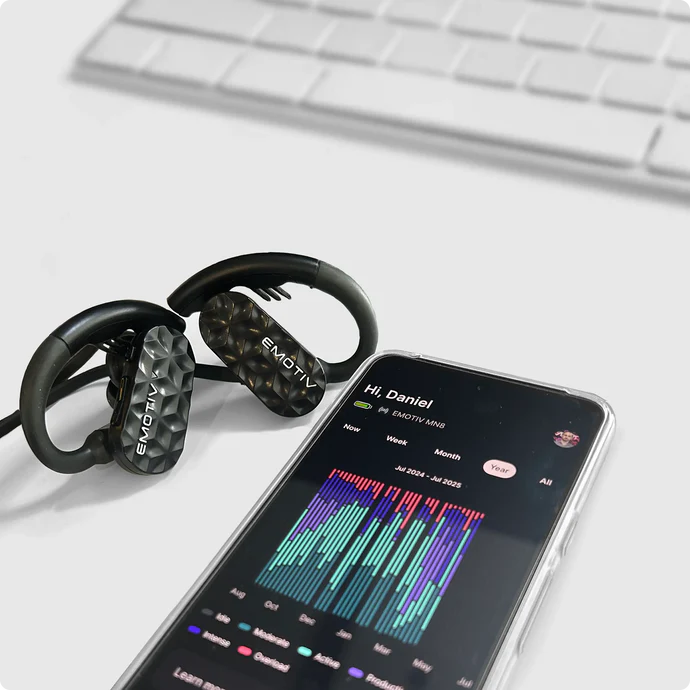
For those looking for a seamless way to integrate brain-sensing technology into their daily life, the MN8 is an excellent starting point. Designed as discreet earbuds, this device offers a 2-channel EEG system that is both portable and easy to use. It’s designed to give you foundational insights into your cognitive states without the complexity of a full headset. This makes it a great tool for anyone interested in exploring their focus during work or study, or for those looking to access tools for their cognitive wellness routines. The earbud form factor means you can gather data comfortably and without drawing attention, making it perfect for personal use in any environment.
Emotiv Insight - 5-Channel EEG Headset
If you’re ready for a deeper level of analysis, our Insight headset is a fantastic next step. This sleek, 5-channel wireless device provides a more detailed stream of brain data, allowing you to explore performance metrics and basic brain commands with greater precision. It strikes a perfect balance between user-friendly design and powerful data acquisition, which is why it’s so popular with developers, students, and citizen scientists. The additional sensors open up new possibilities for experimenting with brain-computer interfaces or getting more nuanced feedback on your mental performance, all while maintaining a lightweight and comfortable fit for extended wear.
Emotiv Epoc X - 14-Channel EEG Headset
For academic and commercial researchers, neuromarketing professionals, and advanced developers, the Epoc X is the gold standard. This 14-channel headset is engineered to deliver professional-grade, high-resolution EEG data suitable for scientific research and complex BCI applications. Its robust design ensures clean signal quality, which is essential for contextualized and reliable studies. When you pair the Epoc X with our EmotivPRO software, you can conduct real-time data analysis, visualize brain activity, and export raw data for deep, customized exploration. It’s the definitive tool for professionals who require precise and dependable brain data to drive their work forward.
Revibe Behavioral Tracking Wearable
Moving away from EEG, Revibe offers a different approach focused on behavioral reinforcement. This wearable doesn't measure brainwaves; instead, it provides quiet, personalized reminders to help you maintain focus. According to Pearson Assessments, the device uses gentle vibrations and optional on-screen messages to prompt you to check in with your attention. This method is grounded in behavioral psychology and is designed to help you build self-awareness and better work habits over time. It’s a simple, non-intrusive tool that’s often used in educational environments to help students manage their attention without disrupting the classroom.
FocusBand Neurofeedback Headband
The FocusBand is a neurofeedback device that has gained significant traction in the sports world, especially among golfers. The core idea is to train your brain to enter and maintain a state of calm concentration, often called being "in the zone." The headband measures your brain activity and gives you real-time audio-visual feedback, so you can literally see and hear when you are in your optimal mental state. With practice, athletes use this feedback to learn how to consciously replicate that state during high-pressure competitions. It’s a clear example of how neurotechnology can be applied to enhance performance in specific, skill-based activities.
FOCI Distraction Alert Device
FOCI introduces another unique method by inferring your cognitive state from your breathing patterns. This small device clips to your waist and analyzes your respiration to differentiate between mental states like focus, distraction, stress, and calm. When the device senses that you’ve become distracted, it sends a gentle vibration to cue you to return your attention to your task. This approach is built on the well-established link between breathing and cognition, offering a form of biofeedback that uses physiological data as a proxy for your cognitive state. It’s a non-invasive way to gain insight into your mental patterns throughout the workday.
How Effective Are Focus Wearables?
It’s the big question on everyone's mind: do these gadgets actually help you focus? The short answer is that it depends on the technology, the user, and what you're trying to achieve. While not a magic bullet, these devices can be powerful tools when used correctly. They offer a unique window into your brain's activity and behavior, providing data that can help you understand and refine your attention patterns. Let's look at what the science and real users have to say about their effectiveness.
What Does the Research Say?
Emerging research suggests that wearables are promising complements to traditional methods for managing attention. One of their biggest strengths is the ability to continuously collect objective data on things like movement, stress, and brain activity in real-world settings—something that’s difficult to capture in a lab or clinic. For example, some studies have explored smartwatch apps that use vibrations and visual cues to help users manage hyperactivity. One such study noted a significant reduction in ADHD symptoms over a six-week period. This shows the potential for wearables to provide tangible, data-driven feedback that can support attention management goals.
Real User Experiences
Of course, scientific studies don't always capture the full picture. Real-world user experiences are often more varied, and it's helpful to hear what people are actually saying. Some users express skepticism, questioning how a device clipped to their waist could accurately know when they're focused. A common concern is that the feedback itself—like a vibration—might break a person's concentration instead of guiding it. Others have found simple reminders, like a smartwatch vibrating every few minutes, to be more annoying than helpful. These experiences highlight the importance of finding a device with a feedback mechanism that works for you personally.
Setting Realistic Expectations
So, what's the takeaway? It's best to approach focus wearables with realistic expectations. The current body of research shows that these devices are generally well-liked and provide objective feedback that users find valuable. However, it's also clear that larger, more consistent, and longer-term studies are needed to fully understand their impact in clinical settings. Think of a focus wearable not as a passive cure, but as an active training tool. Its effectiveness is directly tied to your commitment to using the data it provides to build better habits and understand your own patterns of attention.
Find the Right Focus Wearable for You
Choosing the right focus wearable really comes down to what you want to achieve. Are you curious about your own attention patterns during the workday? Are you a researcher conducting a formal study? Or maybe you're a developer with a groundbreaking idea for a new application. Each goal calls for a different tool. Think of it like picking a camera: a point-and-shoot is perfect for vacation photos, but a professional photographer needs a DSLR with interchangeable lenses.
The world of brain-sensing technology is incredibly diverse, with options ranging from simple feedback devices to sophisticated multi-channel EEG systems. To help you find the perfect fit, I’ve broken down the options based on three common user types. Let’s walk through what to look for, so you can feel confident you’re choosing the device that will best support your journey into understanding the brain.
For Everyday Users and Beginners
If you're just starting out, the key is to find a device that’s easy to use and integrates smoothly into your daily life. You don’t need a complex setup to begin gathering interesting insights about your focus. Look for wearables that are comfortable, discreet, and pair with a user-friendly app. Some devices offer simple behavioral feedback, like gentle vibrations, to remind you to refocus.
For those who want to explore their brain activity directly, a low-channel EEG device is an excellent entry point. Our MN8 earbuds are designed for everyday use, allowing you to see your focus levels in real time without wearing a full headset. The goal here is accessibility and ease, helping you build a new awareness of your mental states throughout the day.
For Researchers and Professionals
When your work depends on high-quality, reliable data, your requirements become much more specific. Researchers and professionals need devices that provide clean, detailed brain activity data. This often means looking for a higher channel count, which gives you better spatial resolution to understand where activity is occurring in the brain. As studies show, wearable neurotechnology is becoming a valuable tool for objective data collection in real-world settings.
For this level of work, you’ll want a headset like our 5-channel Insight or 14-channel Epoc X. You also need powerful software to go with it. Our EmotivPRO platform is designed for just that, letting you analyze and visualize EEG data for serious academic or commercial research.
For Developers and Innovators
If you’re a builder, a creator, or an innovator, you need more than just a device—you need a platform. Your main priority is access to raw data and a flexible API that lets you bring your ideas to life. You’re the one building the next generation of applications, whether it’s a hands-free control system, an adaptive game, or a novel wellness tool.
You’ll want a robust headset that gives you reliable data streams and a comprehensive developer toolkit to work with. Devices like the Epoc X are popular for creating brain-computer interface applications. The ability to tap into real-time brain data opens up a whole new frontier for interactive experiences, and having the right hardware and software foundation is the key to getting started.
How Much Do Focus Wearables Cost?
The price of focus wearables can vary quite a bit, so it’s helpful to know what you’re looking for. The cost often depends on the technology inside the device. Simpler gadgets that provide behavioral cues, like a vibration to remind you to refocus, tend to be on the more affordable end. On the other hand, devices that use electroencephalography (EEG) to measure brain activity usually come with a higher price tag, especially those designed for detailed scientific research.
Your budget will likely guide your choice, but it’s important to think about what you want to achieve. Are you looking for a simple tool to help with daily tasks, or do you need a powerful device for in-depth data analysis? Prices can range from a couple of hundred dollars for a consumer-level device to several thousand for a research-grade EEG headset. Understanding the different types and where to shop can help you find the right fit for your goals and your wallet.
Comparing Costs by Device Type
When you start looking at prices, you’ll see they generally fall into a few categories. Wearables that offer behavioral feedback, like the Revibe device which uses personalized vibrations as reminders, are often priced in the low to mid-hundreds. These are great entry-level tools for anyone looking to build better habits. Another example is FOCI, a small device that clips to your waist and vibrates when it senses you’ve become distracted.
EEG devices have a wider price range based on their capabilities. A 2-channel EEG system, like our MN8 earbuds, offers a convenient and accessible way to work with brain data. For more complex applications, multi-channel headsets like our 5-channel Insight or 14-channel Epoc X provide richer data streams and are priced accordingly, reflecting their advanced technology for researchers and developers.
Where to Buy: Official Sites and Retailers
For specialized technology like EEG headsets, your best bet is almost always to buy directly from the manufacturer’s website. This ensures you’re getting an authentic product, a full warranty, and access to dedicated customer support. You can find our complete lineup of Emotiv headsets and software right on our official site. This direct-from-the-source approach gives you confidence in your purchase and access to the latest information.
Some other wearables are sold through official partners. For example, you can purchase the Revibe device through Pearson Assessments. While you might find some general fitness trackers at big-box stores, the highly specialized nature of focus wearables means the official brand websites are the most reliable places to shop.
How to Find Deals and Discounts
Everyone loves a good deal, and there are a few ways to find one on a focus wearable. A great first step is to sign up for the company’s newsletter. This is often the best way to hear about upcoming sales, new product announcements, and exclusive promotions. You should also keep an eye out for major sales events like Black Friday or Cyber Monday, as many tech companies offer significant discounts during these times.
If you’re a student, educator, or part of a research institution, it’s always worth checking for special pricing. Many companies, including Emotiv, offer discounts for academic use. You can learn more about our programs for academic research and education to see if you qualify. These programs are designed to make advanced technology more accessible for learning and discovery.
Get the Most Out of Your Focus Wearable
So, you’ve chosen a focus wearable. That’s a fantastic first step! But just like a new pair of running shoes won’t make you a marathoner overnight, simply owning a device isn’t the whole story. The real magic happens when you learn how to use it effectively and make it a consistent part of your life. Think of your wearable as a tool—a partner in helping you understand and direct your attention. To get the best results, you’ll want to be intentional about how you use it, turning passive data gathering into an active practice of self-awareness.
Many people assume the technology does all the work, but it's really a collaborative process. The device provides the insights, but you provide the action. The key is to move beyond just wearing the device and start actively engaging with the feedback it provides. This involves three simple but crucial stages: getting the setup right from the very beginning, building a consistent training routine that fits your schedule, and seamlessly weaving the wearable into your daily activities. By following these steps, you can transform your device from a neat piece of tech into a powerful resource for managing your focus. Let’s walk through how to make that happen.
Your First Steps: Setup and Calibration
Your journey begins the moment you open the box. Before you do anything else, take the time to read the instructions carefully. A proper fit is essential, especially for EEG devices, as good sensor contact is critical for gathering accurate data. Once your device is on and comfortable, the next step is calibration. This process helps the device establish a baseline for your unique brain activity, making the feedback you receive more personalized and meaningful. For many of our devices, the Emotiv App will guide you through this entire process. Similarly, some wearables use setup to learn your patterns so they can provide personalized vibration reminders to help you stay on task.
Build an Effective Training Routine
Consistency is your best friend when it comes to training your attention. Start small. Dedicate just 10 to 15 minutes each day to a focused session with your wearable. You can do this while meditating, reading, or working on a specific task. The goal is to create a habit. As you get more comfortable, you can extend the duration. Research has shown that even simple feedback, like the vibrations used in some smartwatch apps, can help reduce symptoms of inattention over time. This is because the feedback loop helps you recognize when your mind is wandering and gently guides it back. Our tools for cognitive wellness are designed to support you in building these effective and sustainable habits.
Add Your Wearable to Your Daily Routine
Once you’ve established a basic training routine, the next step is to integrate your wearable into your everyday life. The goal is for its use to become second nature. Wear it during your morning commute to practice mindfulness, put it on during a work block to maintain concentration, or use it while journaling to stay present. Some wearables are designed specifically for this, offering subtle reminders throughout the day to help you manage your attention without causing a distraction. By making the device a regular part of your activities, you’re not just training in isolated sessions; you’re applying your focus skills in real-world scenarios where they matter most.
Related Articles
Frequently Asked Questions
Do these devices read my thoughts? That’s a common question, but no, they don’t read your thoughts. Think of it this way: EEG technology is like placing microphones on the outside of a concert hall. You can hear the rhythm, the volume, and the overall tempo of the music inside—whether it’s fast and chaotic or slow and harmonious—but you can’t make out the specific lyrics. Similarly, these wearables measure the broad electrical patterns of your brain activity, not the content of your thoughts.
How long will it take before I notice a difference in my focus? This really depends on how consistently you use the device. It’s helpful to think of it like starting a new fitness routine. You wouldn’t expect to see a major change after just one trip to the gym. The key is consistent practice. By dedicating a little time each day to using the feedback from your wearable, you’re actively training your brain. Over time, you’ll build a stronger awareness of your mental states and become better at guiding your attention.
Are focus wearables safe to use every day? Yes, they are. The EEG technology used in our devices is completely passive and non-invasive. This means the sensors only listen to the tiny electrical signals your brain naturally produces—they don’t send any signals into your brain. It’s a well-established technology that has been used in medical and research settings for decades, and it’s safe for regular, daily use.
What's the real difference between a device with a few sensors and one with many? The number of sensors, or channels, determines the level of detail you can see in your brain activity. A device with two channels, like our MN8 earbuds, is great for getting a general overview of your cognitive state, making it perfect for personal use. A headset with 14 or more channels, like our Epoc X, provides a much more detailed, higher-resolution picture. This is essential for researchers and developers who need to understand activity in specific brain regions for their work.
Can I use these devices for more than just focus training? Absolutely. While they are excellent tools for understanding your attention, their capabilities go much further. Many of our devices are designed to be powerful brain-computer interfaces (BCIs). This means developers and innovators can use our software to build custom applications that respond to brain activity, from creating hands-free control systems for devices to designing unique interactive art and gaming experiences.
Think of a fitness tracker. It gives you data about your physical activity, helping you understand your habits and work toward your health goals. A focus wearable does something similar, but for your mind. It treats attention not as a fixed trait you either have or don’t, but as a skill that can be trained and strengthened over time. By providing objective data on your brain activity and behavior, these devices give you the insights you need to start that training. This guide is your starting point for exploring this technology. We’ll cover how to choose the right wearable for focus and attention based on your personal goals, and how to use it to build a better understanding of your own cognitive patterns.
Key Takeaways
Use feedback to build self-awareness: Focus wearables provide real-time cues based on your brain activity or physical habits. The goal is to use this feedback to recognize when your attention drifts so you can learn to gently guide it back to your task.
Match the device to your specific needs: Your reason for using a wearable should guide your choice. A discreet, low-channel device is great for personal insights, while a multi-channel headset is necessary for researchers and developers who need detailed data.
Commit to a consistent practice: These devices are active training tools, not passive fixes. To get the most value, establish a regular routine and integrate the wearable into your daily life to turn its data into a practical skill for managing your attention.
What Are Focus Wearables?
Focus wearables are devices designed to help you understand and manage your attention. Think of them as a personal guide for your brain. They use sensors to gather data about your body’s signals—from brain activity to subtle movements—and then provide real-time feedback to help you recognize when you’re distracted. The goal isn’t to force you to concentrate, but to build your awareness of your own mental states, giving you the information you need to gently guide your focus back to the task at hand.
These devices come in many forms, from headbands and earbuds to clip-on sensors and wristbands. While their methods differ, they all share a common purpose: to translate your internal state into tangible data and feedback. This makes the abstract concept of "focus" something you can actively work with, rather than something that just happens to you.
The Different Types of Focus Wearables
Focus wearables generally fall into two main categories based on the type of feedback they provide. The first type uses neurofeedback, which involves measuring your brain's electrical activity directly using electroencephalography (EEG) sensors. These devices, often in the form of headbands or earbuds, give you insight into your brainwave patterns, helping you learn to recognize and replicate states of deep concentration.
The second category provides behavioral or physiological feedback. Instead of measuring brainwaves, these wearables use sensors to detect physical cues associated with distraction, like fidgeting, posture changes, or shifts in breathing patterns. When they sense you’ve lost focus, they might send a gentle vibration or a subtle notification to bring your attention back. These devices are great for building awareness of the physical habits that accompany a wandering mind.
The Science Behind How They Work
The science behind focus wearables is rooted in biofeedback—a technique where you learn to control bodily processes that are normally involuntary. These devices make you aware of your internal states by using advanced sensors to collect objective data. As research shows, wearables can continuously sample everything from movement to neuro-electrical activity, providing a clear picture of your attention levels in real-world settings. This technology is a practical application of a brain-computer interface.
Once the data is collected, an app or software analyzes it to identify patterns related to focus or distraction. When the device detects that your attention is drifting, it provides a cue, such as a sound or vibration. This feedback loop helps you access cognitive wellness tools by training your brain to recognize the feeling of being distracted and, over time, learn to self-correct more quickly and effectively.
How Do Focus Wearables Actually Work?
It might seem like magic, but focus wearables are grounded in established science. They don’t read your thoughts. Instead, they act as sophisticated sensors that measure physiological signals your body produces, giving you a window into your mental state. Think of it like a heart rate sensor for your brain and body—it provides data that you can use to understand and train your attention.
Most of these devices work in one of three ways. Some directly measure the electrical activity in your brain to see patterns associated with focus. Others observe your physical behaviors, like fidgeting or stillness, which are often linked to your level of concentration. Many of the most effective wearables combine these data streams and use artificial intelligence to provide you with real-time feedback. This feedback loop is the key: by becoming aware of when your focus shifts, you can learn to guide it back to the task at hand. Let’s break down exactly how each of these methods works.
Measuring Brain Activity with EEG
Many focus wearables rely on a technology called electroencephalography, or EEG. It sounds complex, but the concept is straightforward. Your brain is made up of billions of neurons that communicate using tiny electrical impulses. EEG sensors are designed to pick up on these signals from the surface of your scalp. Different patterns of brain activity, often called brainwaves, are associated with different mental states. For example, the brainwaves you produce when you’re deeply focused look different from the ones you produce when you’re relaxed or your mind is wandering. By measuring these patterns, devices like our Epoc X headset can provide objective data about your cognitive state, helping you see when you’re in the zone.
Providing Behavioral Feedback
Your brain isn’t the only thing that reveals your level of focus—your body does, too. Think about it: when you’re struggling to concentrate, you might start fidgeting, tapping your foot, or shifting in your chair. Some wearables are equipped with motion sensors that can detect these subtle physical cues. They can also incorporate other data points, like changes in your heart rate or sleep quality, to build a more complete picture of your attention patterns. By collecting this kind of objective data in your everyday environment, these devices help you become more aware of the physical habits connected to your focus, giving you another tool for self-awareness and personal discovery.
Using AI for Real-Time Insights
Collecting brainwave and behavioral data is just the first step. The real power of modern focus wearables comes from how they interpret this information. This is where artificial intelligence (AI) comes in. Sophisticated algorithms analyze the constant stream of data from the device’s sensors to identify the unique patterns that signal a drop in your attention. When the AI detects that your focus is drifting, the wearable can provide a gentle, real-time alert—like a subtle vibration or a soft sound. This immediate feedback helps you notice the shift in your mental state and gently guide your attention back. Software like our EmotivPRO allows you to see and analyze this data, turning raw signals into actionable insights.
What to Look For in a Focus Wearable
Choosing the right focus wearable can feel a bit like picking a new phone—the options are endless, and the tech specs can be confusing. But it really comes down to finding the device that fits your specific goals and lifestyle. Whether you're a researcher who needs granular data, a developer building the next great app, or someone just curious about their own attention patterns, certain features are key.
To help you make an informed choice, I've broken down the four most important things to consider: the accuracy of the data, the practicality of the design, the power of the software, and how comfortable it is to wear. Thinking through these aspects will help you find a wearable that you’ll actually use and get value from, instead of one that ends up collecting dust in a drawer. Let's get into what makes a focus wearable truly effective.
Signal Accuracy and Channel Count
When you’re looking at a device that measures brain activity, the quality of that data is everything. Most of these wearables use electroencephalography (EEG) to detect the tiny electrical signals produced by your brain. The accuracy of these signals is fundamental. You want a device that can reliably capture clean data with minimal interference. The number of channels, or sensors, on the device also plays a big role. A device with more channels can gather data from more locations on your head, giving you a more detailed picture of your brain activity. For some, a two-channel device is perfect for foundational cognitive wellness exercises, while researchers might need a 14- or 32-channel headset for more complex studies.
Portability and Battery Life
A focus wearable is only helpful if you can wear it when you need it. That’s why portability and battery life are so important. The best devices are designed for real-world use, not just for a lab setting. Think about your daily routine. Do you need something discreet you can wear at the office, like an earbud? Or are you planning to use it for dedicated sessions at home, where a larger headset might work? Look for a device that is lightweight and has a battery that can last through your intended use, whether that’s a full workday or a 30-minute training session. The goal is to find a wearable that integrates smoothly into your life, allowing you to gather insights without disruption.
Software and Data Analytics
The hardware gathers the data, but the software is what turns those signals into something you can understand and use. A great focus wearable is backed by powerful, intuitive software. For everyday users, this might mean a simple app that visualizes your focus levels and provides guided exercises. For professionals, this could be a more robust platform like our EmotivPRO, which allows for deep analysis and exporting raw EEG data. When evaluating a device, look at what the software offers. Does it provide real-time feedback? Can you see your progress over time? For developers, an open API is a must-have for creating custom applications. The software is your window into the data, so make sure it gives you the view you need.
Comfort and Design
Last but not least, if a device isn't comfortable, you're not going to wear it for long. Good ergonomic design is crucial. The materials should be high-quality, and the device should feel secure without being too tight or heavy. Form factor is a huge part of this. Some people prefer the barely-there feel of EEG earbuds, while others might find an over-the-head headset more stable and comfortable for their needs. Think about how long you plan to wear the device in a single session. A well-designed wearable, like our 5-channel Insight headset, should feel like a natural extension of your tech, not a cumbersome piece of equipment.
A Guide to the Top Focus Wearables
The world of focus wearables is broad, with devices ranging from simple behavioral prompters to sophisticated multi-channel EEG headsets. To help you get a feel for what’s available, I’ve put together a guide to some of the most common options on the market. This list includes a few of our own Emotiv devices, which measure brain activity directly, as well as other wearables that use different methods like behavioral cues or biofeedback. My goal here is to highlight the different approaches so you can better understand which type of device might be the right fit for your specific needs.
Emotiv MN8 - 2-Channel EEG Earbuds
For those looking for a seamless way to integrate brain-sensing technology into their daily life, the MN8 is an excellent starting point. Designed as discreet earbuds, this device offers a 2-channel EEG system that is both portable and easy to use. It’s designed to give you foundational insights into your cognitive states without the complexity of a full headset. This makes it a great tool for anyone interested in exploring their focus during work or study, or for those looking to access tools for their cognitive wellness routines. The earbud form factor means you can gather data comfortably and without drawing attention, making it perfect for personal use in any environment.
Emotiv Insight - 5-Channel EEG Headset
If you’re ready for a deeper level of analysis, our Insight headset is a fantastic next step. This sleek, 5-channel wireless device provides a more detailed stream of brain data, allowing you to explore performance metrics and basic brain commands with greater precision. It strikes a perfect balance between user-friendly design and powerful data acquisition, which is why it’s so popular with developers, students, and citizen scientists. The additional sensors open up new possibilities for experimenting with brain-computer interfaces or getting more nuanced feedback on your mental performance, all while maintaining a lightweight and comfortable fit for extended wear.
Emotiv Epoc X - 14-Channel EEG Headset
For academic and commercial researchers, neuromarketing professionals, and advanced developers, the Epoc X is the gold standard. This 14-channel headset is engineered to deliver professional-grade, high-resolution EEG data suitable for scientific research and complex BCI applications. Its robust design ensures clean signal quality, which is essential for contextualized and reliable studies. When you pair the Epoc X with our EmotivPRO software, you can conduct real-time data analysis, visualize brain activity, and export raw data for deep, customized exploration. It’s the definitive tool for professionals who require precise and dependable brain data to drive their work forward.
Revibe Behavioral Tracking Wearable
Moving away from EEG, Revibe offers a different approach focused on behavioral reinforcement. This wearable doesn't measure brainwaves; instead, it provides quiet, personalized reminders to help you maintain focus. According to Pearson Assessments, the device uses gentle vibrations and optional on-screen messages to prompt you to check in with your attention. This method is grounded in behavioral psychology and is designed to help you build self-awareness and better work habits over time. It’s a simple, non-intrusive tool that’s often used in educational environments to help students manage their attention without disrupting the classroom.
FocusBand Neurofeedback Headband
The FocusBand is a neurofeedback device that has gained significant traction in the sports world, especially among golfers. The core idea is to train your brain to enter and maintain a state of calm concentration, often called being "in the zone." The headband measures your brain activity and gives you real-time audio-visual feedback, so you can literally see and hear when you are in your optimal mental state. With practice, athletes use this feedback to learn how to consciously replicate that state during high-pressure competitions. It’s a clear example of how neurotechnology can be applied to enhance performance in specific, skill-based activities.
FOCI Distraction Alert Device
FOCI introduces another unique method by inferring your cognitive state from your breathing patterns. This small device clips to your waist and analyzes your respiration to differentiate between mental states like focus, distraction, stress, and calm. When the device senses that you’ve become distracted, it sends a gentle vibration to cue you to return your attention to your task. This approach is built on the well-established link between breathing and cognition, offering a form of biofeedback that uses physiological data as a proxy for your cognitive state. It’s a non-invasive way to gain insight into your mental patterns throughout the workday.
How Effective Are Focus Wearables?
It’s the big question on everyone's mind: do these gadgets actually help you focus? The short answer is that it depends on the technology, the user, and what you're trying to achieve. While not a magic bullet, these devices can be powerful tools when used correctly. They offer a unique window into your brain's activity and behavior, providing data that can help you understand and refine your attention patterns. Let's look at what the science and real users have to say about their effectiveness.
What Does the Research Say?
Emerging research suggests that wearables are promising complements to traditional methods for managing attention. One of their biggest strengths is the ability to continuously collect objective data on things like movement, stress, and brain activity in real-world settings—something that’s difficult to capture in a lab or clinic. For example, some studies have explored smartwatch apps that use vibrations and visual cues to help users manage hyperactivity. One such study noted a significant reduction in ADHD symptoms over a six-week period. This shows the potential for wearables to provide tangible, data-driven feedback that can support attention management goals.
Real User Experiences
Of course, scientific studies don't always capture the full picture. Real-world user experiences are often more varied, and it's helpful to hear what people are actually saying. Some users express skepticism, questioning how a device clipped to their waist could accurately know when they're focused. A common concern is that the feedback itself—like a vibration—might break a person's concentration instead of guiding it. Others have found simple reminders, like a smartwatch vibrating every few minutes, to be more annoying than helpful. These experiences highlight the importance of finding a device with a feedback mechanism that works for you personally.
Setting Realistic Expectations
So, what's the takeaway? It's best to approach focus wearables with realistic expectations. The current body of research shows that these devices are generally well-liked and provide objective feedback that users find valuable. However, it's also clear that larger, more consistent, and longer-term studies are needed to fully understand their impact in clinical settings. Think of a focus wearable not as a passive cure, but as an active training tool. Its effectiveness is directly tied to your commitment to using the data it provides to build better habits and understand your own patterns of attention.
Find the Right Focus Wearable for You
Choosing the right focus wearable really comes down to what you want to achieve. Are you curious about your own attention patterns during the workday? Are you a researcher conducting a formal study? Or maybe you're a developer with a groundbreaking idea for a new application. Each goal calls for a different tool. Think of it like picking a camera: a point-and-shoot is perfect for vacation photos, but a professional photographer needs a DSLR with interchangeable lenses.
The world of brain-sensing technology is incredibly diverse, with options ranging from simple feedback devices to sophisticated multi-channel EEG systems. To help you find the perfect fit, I’ve broken down the options based on three common user types. Let’s walk through what to look for, so you can feel confident you’re choosing the device that will best support your journey into understanding the brain.
For Everyday Users and Beginners
If you're just starting out, the key is to find a device that’s easy to use and integrates smoothly into your daily life. You don’t need a complex setup to begin gathering interesting insights about your focus. Look for wearables that are comfortable, discreet, and pair with a user-friendly app. Some devices offer simple behavioral feedback, like gentle vibrations, to remind you to refocus.
For those who want to explore their brain activity directly, a low-channel EEG device is an excellent entry point. Our MN8 earbuds are designed for everyday use, allowing you to see your focus levels in real time without wearing a full headset. The goal here is accessibility and ease, helping you build a new awareness of your mental states throughout the day.
For Researchers and Professionals
When your work depends on high-quality, reliable data, your requirements become much more specific. Researchers and professionals need devices that provide clean, detailed brain activity data. This often means looking for a higher channel count, which gives you better spatial resolution to understand where activity is occurring in the brain. As studies show, wearable neurotechnology is becoming a valuable tool for objective data collection in real-world settings.
For this level of work, you’ll want a headset like our 5-channel Insight or 14-channel Epoc X. You also need powerful software to go with it. Our EmotivPRO platform is designed for just that, letting you analyze and visualize EEG data for serious academic or commercial research.
For Developers and Innovators
If you’re a builder, a creator, or an innovator, you need more than just a device—you need a platform. Your main priority is access to raw data and a flexible API that lets you bring your ideas to life. You’re the one building the next generation of applications, whether it’s a hands-free control system, an adaptive game, or a novel wellness tool.
You’ll want a robust headset that gives you reliable data streams and a comprehensive developer toolkit to work with. Devices like the Epoc X are popular for creating brain-computer interface applications. The ability to tap into real-time brain data opens up a whole new frontier for interactive experiences, and having the right hardware and software foundation is the key to getting started.
How Much Do Focus Wearables Cost?
The price of focus wearables can vary quite a bit, so it’s helpful to know what you’re looking for. The cost often depends on the technology inside the device. Simpler gadgets that provide behavioral cues, like a vibration to remind you to refocus, tend to be on the more affordable end. On the other hand, devices that use electroencephalography (EEG) to measure brain activity usually come with a higher price tag, especially those designed for detailed scientific research.
Your budget will likely guide your choice, but it’s important to think about what you want to achieve. Are you looking for a simple tool to help with daily tasks, or do you need a powerful device for in-depth data analysis? Prices can range from a couple of hundred dollars for a consumer-level device to several thousand for a research-grade EEG headset. Understanding the different types and where to shop can help you find the right fit for your goals and your wallet.
Comparing Costs by Device Type
When you start looking at prices, you’ll see they generally fall into a few categories. Wearables that offer behavioral feedback, like the Revibe device which uses personalized vibrations as reminders, are often priced in the low to mid-hundreds. These are great entry-level tools for anyone looking to build better habits. Another example is FOCI, a small device that clips to your waist and vibrates when it senses you’ve become distracted.
EEG devices have a wider price range based on their capabilities. A 2-channel EEG system, like our MN8 earbuds, offers a convenient and accessible way to work with brain data. For more complex applications, multi-channel headsets like our 5-channel Insight or 14-channel Epoc X provide richer data streams and are priced accordingly, reflecting their advanced technology for researchers and developers.
Where to Buy: Official Sites and Retailers
For specialized technology like EEG headsets, your best bet is almost always to buy directly from the manufacturer’s website. This ensures you’re getting an authentic product, a full warranty, and access to dedicated customer support. You can find our complete lineup of Emotiv headsets and software right on our official site. This direct-from-the-source approach gives you confidence in your purchase and access to the latest information.
Some other wearables are sold through official partners. For example, you can purchase the Revibe device through Pearson Assessments. While you might find some general fitness trackers at big-box stores, the highly specialized nature of focus wearables means the official brand websites are the most reliable places to shop.
How to Find Deals and Discounts
Everyone loves a good deal, and there are a few ways to find one on a focus wearable. A great first step is to sign up for the company’s newsletter. This is often the best way to hear about upcoming sales, new product announcements, and exclusive promotions. You should also keep an eye out for major sales events like Black Friday or Cyber Monday, as many tech companies offer significant discounts during these times.
If you’re a student, educator, or part of a research institution, it’s always worth checking for special pricing. Many companies, including Emotiv, offer discounts for academic use. You can learn more about our programs for academic research and education to see if you qualify. These programs are designed to make advanced technology more accessible for learning and discovery.
Get the Most Out of Your Focus Wearable
So, you’ve chosen a focus wearable. That’s a fantastic first step! But just like a new pair of running shoes won’t make you a marathoner overnight, simply owning a device isn’t the whole story. The real magic happens when you learn how to use it effectively and make it a consistent part of your life. Think of your wearable as a tool—a partner in helping you understand and direct your attention. To get the best results, you’ll want to be intentional about how you use it, turning passive data gathering into an active practice of self-awareness.
Many people assume the technology does all the work, but it's really a collaborative process. The device provides the insights, but you provide the action. The key is to move beyond just wearing the device and start actively engaging with the feedback it provides. This involves three simple but crucial stages: getting the setup right from the very beginning, building a consistent training routine that fits your schedule, and seamlessly weaving the wearable into your daily activities. By following these steps, you can transform your device from a neat piece of tech into a powerful resource for managing your focus. Let’s walk through how to make that happen.
Your First Steps: Setup and Calibration
Your journey begins the moment you open the box. Before you do anything else, take the time to read the instructions carefully. A proper fit is essential, especially for EEG devices, as good sensor contact is critical for gathering accurate data. Once your device is on and comfortable, the next step is calibration. This process helps the device establish a baseline for your unique brain activity, making the feedback you receive more personalized and meaningful. For many of our devices, the Emotiv App will guide you through this entire process. Similarly, some wearables use setup to learn your patterns so they can provide personalized vibration reminders to help you stay on task.
Build an Effective Training Routine
Consistency is your best friend when it comes to training your attention. Start small. Dedicate just 10 to 15 minutes each day to a focused session with your wearable. You can do this while meditating, reading, or working on a specific task. The goal is to create a habit. As you get more comfortable, you can extend the duration. Research has shown that even simple feedback, like the vibrations used in some smartwatch apps, can help reduce symptoms of inattention over time. This is because the feedback loop helps you recognize when your mind is wandering and gently guides it back. Our tools for cognitive wellness are designed to support you in building these effective and sustainable habits.
Add Your Wearable to Your Daily Routine
Once you’ve established a basic training routine, the next step is to integrate your wearable into your everyday life. The goal is for its use to become second nature. Wear it during your morning commute to practice mindfulness, put it on during a work block to maintain concentration, or use it while journaling to stay present. Some wearables are designed specifically for this, offering subtle reminders throughout the day to help you manage your attention without causing a distraction. By making the device a regular part of your activities, you’re not just training in isolated sessions; you’re applying your focus skills in real-world scenarios where they matter most.
Related Articles
Frequently Asked Questions
Do these devices read my thoughts? That’s a common question, but no, they don’t read your thoughts. Think of it this way: EEG technology is like placing microphones on the outside of a concert hall. You can hear the rhythm, the volume, and the overall tempo of the music inside—whether it’s fast and chaotic or slow and harmonious—but you can’t make out the specific lyrics. Similarly, these wearables measure the broad electrical patterns of your brain activity, not the content of your thoughts.
How long will it take before I notice a difference in my focus? This really depends on how consistently you use the device. It’s helpful to think of it like starting a new fitness routine. You wouldn’t expect to see a major change after just one trip to the gym. The key is consistent practice. By dedicating a little time each day to using the feedback from your wearable, you’re actively training your brain. Over time, you’ll build a stronger awareness of your mental states and become better at guiding your attention.
Are focus wearables safe to use every day? Yes, they are. The EEG technology used in our devices is completely passive and non-invasive. This means the sensors only listen to the tiny electrical signals your brain naturally produces—they don’t send any signals into your brain. It’s a well-established technology that has been used in medical and research settings for decades, and it’s safe for regular, daily use.
What's the real difference between a device with a few sensors and one with many? The number of sensors, or channels, determines the level of detail you can see in your brain activity. A device with two channels, like our MN8 earbuds, is great for getting a general overview of your cognitive state, making it perfect for personal use. A headset with 14 or more channels, like our Epoc X, provides a much more detailed, higher-resolution picture. This is essential for researchers and developers who need to understand activity in specific brain regions for their work.
Can I use these devices for more than just focus training? Absolutely. While they are excellent tools for understanding your attention, their capabilities go much further. Many of our devices are designed to be powerful brain-computer interfaces (BCIs). This means developers and innovators can use our software to build custom applications that respond to brain activity, from creating hands-free control systems for devices to designing unique interactive art and gaming experiences.
Think of a fitness tracker. It gives you data about your physical activity, helping you understand your habits and work toward your health goals. A focus wearable does something similar, but for your mind. It treats attention not as a fixed trait you either have or don’t, but as a skill that can be trained and strengthened over time. By providing objective data on your brain activity and behavior, these devices give you the insights you need to start that training. This guide is your starting point for exploring this technology. We’ll cover how to choose the right wearable for focus and attention based on your personal goals, and how to use it to build a better understanding of your own cognitive patterns.
Key Takeaways
Use feedback to build self-awareness: Focus wearables provide real-time cues based on your brain activity or physical habits. The goal is to use this feedback to recognize when your attention drifts so you can learn to gently guide it back to your task.
Match the device to your specific needs: Your reason for using a wearable should guide your choice. A discreet, low-channel device is great for personal insights, while a multi-channel headset is necessary for researchers and developers who need detailed data.
Commit to a consistent practice: These devices are active training tools, not passive fixes. To get the most value, establish a regular routine and integrate the wearable into your daily life to turn its data into a practical skill for managing your attention.
What Are Focus Wearables?
Focus wearables are devices designed to help you understand and manage your attention. Think of them as a personal guide for your brain. They use sensors to gather data about your body’s signals—from brain activity to subtle movements—and then provide real-time feedback to help you recognize when you’re distracted. The goal isn’t to force you to concentrate, but to build your awareness of your own mental states, giving you the information you need to gently guide your focus back to the task at hand.
These devices come in many forms, from headbands and earbuds to clip-on sensors and wristbands. While their methods differ, they all share a common purpose: to translate your internal state into tangible data and feedback. This makes the abstract concept of "focus" something you can actively work with, rather than something that just happens to you.
The Different Types of Focus Wearables
Focus wearables generally fall into two main categories based on the type of feedback they provide. The first type uses neurofeedback, which involves measuring your brain's electrical activity directly using electroencephalography (EEG) sensors. These devices, often in the form of headbands or earbuds, give you insight into your brainwave patterns, helping you learn to recognize and replicate states of deep concentration.
The second category provides behavioral or physiological feedback. Instead of measuring brainwaves, these wearables use sensors to detect physical cues associated with distraction, like fidgeting, posture changes, or shifts in breathing patterns. When they sense you’ve lost focus, they might send a gentle vibration or a subtle notification to bring your attention back. These devices are great for building awareness of the physical habits that accompany a wandering mind.
The Science Behind How They Work
The science behind focus wearables is rooted in biofeedback—a technique where you learn to control bodily processes that are normally involuntary. These devices make you aware of your internal states by using advanced sensors to collect objective data. As research shows, wearables can continuously sample everything from movement to neuro-electrical activity, providing a clear picture of your attention levels in real-world settings. This technology is a practical application of a brain-computer interface.
Once the data is collected, an app or software analyzes it to identify patterns related to focus or distraction. When the device detects that your attention is drifting, it provides a cue, such as a sound or vibration. This feedback loop helps you access cognitive wellness tools by training your brain to recognize the feeling of being distracted and, over time, learn to self-correct more quickly and effectively.
How Do Focus Wearables Actually Work?
It might seem like magic, but focus wearables are grounded in established science. They don’t read your thoughts. Instead, they act as sophisticated sensors that measure physiological signals your body produces, giving you a window into your mental state. Think of it like a heart rate sensor for your brain and body—it provides data that you can use to understand and train your attention.
Most of these devices work in one of three ways. Some directly measure the electrical activity in your brain to see patterns associated with focus. Others observe your physical behaviors, like fidgeting or stillness, which are often linked to your level of concentration. Many of the most effective wearables combine these data streams and use artificial intelligence to provide you with real-time feedback. This feedback loop is the key: by becoming aware of when your focus shifts, you can learn to guide it back to the task at hand. Let’s break down exactly how each of these methods works.
Measuring Brain Activity with EEG
Many focus wearables rely on a technology called electroencephalography, or EEG. It sounds complex, but the concept is straightforward. Your brain is made up of billions of neurons that communicate using tiny electrical impulses. EEG sensors are designed to pick up on these signals from the surface of your scalp. Different patterns of brain activity, often called brainwaves, are associated with different mental states. For example, the brainwaves you produce when you’re deeply focused look different from the ones you produce when you’re relaxed or your mind is wandering. By measuring these patterns, devices like our Epoc X headset can provide objective data about your cognitive state, helping you see when you’re in the zone.
Providing Behavioral Feedback
Your brain isn’t the only thing that reveals your level of focus—your body does, too. Think about it: when you’re struggling to concentrate, you might start fidgeting, tapping your foot, or shifting in your chair. Some wearables are equipped with motion sensors that can detect these subtle physical cues. They can also incorporate other data points, like changes in your heart rate or sleep quality, to build a more complete picture of your attention patterns. By collecting this kind of objective data in your everyday environment, these devices help you become more aware of the physical habits connected to your focus, giving you another tool for self-awareness and personal discovery.
Using AI for Real-Time Insights
Collecting brainwave and behavioral data is just the first step. The real power of modern focus wearables comes from how they interpret this information. This is where artificial intelligence (AI) comes in. Sophisticated algorithms analyze the constant stream of data from the device’s sensors to identify the unique patterns that signal a drop in your attention. When the AI detects that your focus is drifting, the wearable can provide a gentle, real-time alert—like a subtle vibration or a soft sound. This immediate feedback helps you notice the shift in your mental state and gently guide your attention back. Software like our EmotivPRO allows you to see and analyze this data, turning raw signals into actionable insights.
What to Look For in a Focus Wearable
Choosing the right focus wearable can feel a bit like picking a new phone—the options are endless, and the tech specs can be confusing. But it really comes down to finding the device that fits your specific goals and lifestyle. Whether you're a researcher who needs granular data, a developer building the next great app, or someone just curious about their own attention patterns, certain features are key.
To help you make an informed choice, I've broken down the four most important things to consider: the accuracy of the data, the practicality of the design, the power of the software, and how comfortable it is to wear. Thinking through these aspects will help you find a wearable that you’ll actually use and get value from, instead of one that ends up collecting dust in a drawer. Let's get into what makes a focus wearable truly effective.
Signal Accuracy and Channel Count
When you’re looking at a device that measures brain activity, the quality of that data is everything. Most of these wearables use electroencephalography (EEG) to detect the tiny electrical signals produced by your brain. The accuracy of these signals is fundamental. You want a device that can reliably capture clean data with minimal interference. The number of channels, or sensors, on the device also plays a big role. A device with more channels can gather data from more locations on your head, giving you a more detailed picture of your brain activity. For some, a two-channel device is perfect for foundational cognitive wellness exercises, while researchers might need a 14- or 32-channel headset for more complex studies.
Portability and Battery Life
A focus wearable is only helpful if you can wear it when you need it. That’s why portability and battery life are so important. The best devices are designed for real-world use, not just for a lab setting. Think about your daily routine. Do you need something discreet you can wear at the office, like an earbud? Or are you planning to use it for dedicated sessions at home, where a larger headset might work? Look for a device that is lightweight and has a battery that can last through your intended use, whether that’s a full workday or a 30-minute training session. The goal is to find a wearable that integrates smoothly into your life, allowing you to gather insights without disruption.
Software and Data Analytics
The hardware gathers the data, but the software is what turns those signals into something you can understand and use. A great focus wearable is backed by powerful, intuitive software. For everyday users, this might mean a simple app that visualizes your focus levels and provides guided exercises. For professionals, this could be a more robust platform like our EmotivPRO, which allows for deep analysis and exporting raw EEG data. When evaluating a device, look at what the software offers. Does it provide real-time feedback? Can you see your progress over time? For developers, an open API is a must-have for creating custom applications. The software is your window into the data, so make sure it gives you the view you need.
Comfort and Design
Last but not least, if a device isn't comfortable, you're not going to wear it for long. Good ergonomic design is crucial. The materials should be high-quality, and the device should feel secure without being too tight or heavy. Form factor is a huge part of this. Some people prefer the barely-there feel of EEG earbuds, while others might find an over-the-head headset more stable and comfortable for their needs. Think about how long you plan to wear the device in a single session. A well-designed wearable, like our 5-channel Insight headset, should feel like a natural extension of your tech, not a cumbersome piece of equipment.
A Guide to the Top Focus Wearables
The world of focus wearables is broad, with devices ranging from simple behavioral prompters to sophisticated multi-channel EEG headsets. To help you get a feel for what’s available, I’ve put together a guide to some of the most common options on the market. This list includes a few of our own Emotiv devices, which measure brain activity directly, as well as other wearables that use different methods like behavioral cues or biofeedback. My goal here is to highlight the different approaches so you can better understand which type of device might be the right fit for your specific needs.
Emotiv MN8 - 2-Channel EEG Earbuds
For those looking for a seamless way to integrate brain-sensing technology into their daily life, the MN8 is an excellent starting point. Designed as discreet earbuds, this device offers a 2-channel EEG system that is both portable and easy to use. It’s designed to give you foundational insights into your cognitive states without the complexity of a full headset. This makes it a great tool for anyone interested in exploring their focus during work or study, or for those looking to access tools for their cognitive wellness routines. The earbud form factor means you can gather data comfortably and without drawing attention, making it perfect for personal use in any environment.
Emotiv Insight - 5-Channel EEG Headset
If you’re ready for a deeper level of analysis, our Insight headset is a fantastic next step. This sleek, 5-channel wireless device provides a more detailed stream of brain data, allowing you to explore performance metrics and basic brain commands with greater precision. It strikes a perfect balance between user-friendly design and powerful data acquisition, which is why it’s so popular with developers, students, and citizen scientists. The additional sensors open up new possibilities for experimenting with brain-computer interfaces or getting more nuanced feedback on your mental performance, all while maintaining a lightweight and comfortable fit for extended wear.
Emotiv Epoc X - 14-Channel EEG Headset
For academic and commercial researchers, neuromarketing professionals, and advanced developers, the Epoc X is the gold standard. This 14-channel headset is engineered to deliver professional-grade, high-resolution EEG data suitable for scientific research and complex BCI applications. Its robust design ensures clean signal quality, which is essential for contextualized and reliable studies. When you pair the Epoc X with our EmotivPRO software, you can conduct real-time data analysis, visualize brain activity, and export raw data for deep, customized exploration. It’s the definitive tool for professionals who require precise and dependable brain data to drive their work forward.
Revibe Behavioral Tracking Wearable
Moving away from EEG, Revibe offers a different approach focused on behavioral reinforcement. This wearable doesn't measure brainwaves; instead, it provides quiet, personalized reminders to help you maintain focus. According to Pearson Assessments, the device uses gentle vibrations and optional on-screen messages to prompt you to check in with your attention. This method is grounded in behavioral psychology and is designed to help you build self-awareness and better work habits over time. It’s a simple, non-intrusive tool that’s often used in educational environments to help students manage their attention without disrupting the classroom.
FocusBand Neurofeedback Headband
The FocusBand is a neurofeedback device that has gained significant traction in the sports world, especially among golfers. The core idea is to train your brain to enter and maintain a state of calm concentration, often called being "in the zone." The headband measures your brain activity and gives you real-time audio-visual feedback, so you can literally see and hear when you are in your optimal mental state. With practice, athletes use this feedback to learn how to consciously replicate that state during high-pressure competitions. It’s a clear example of how neurotechnology can be applied to enhance performance in specific, skill-based activities.
FOCI Distraction Alert Device
FOCI introduces another unique method by inferring your cognitive state from your breathing patterns. This small device clips to your waist and analyzes your respiration to differentiate between mental states like focus, distraction, stress, and calm. When the device senses that you’ve become distracted, it sends a gentle vibration to cue you to return your attention to your task. This approach is built on the well-established link between breathing and cognition, offering a form of biofeedback that uses physiological data as a proxy for your cognitive state. It’s a non-invasive way to gain insight into your mental patterns throughout the workday.
How Effective Are Focus Wearables?
It’s the big question on everyone's mind: do these gadgets actually help you focus? The short answer is that it depends on the technology, the user, and what you're trying to achieve. While not a magic bullet, these devices can be powerful tools when used correctly. They offer a unique window into your brain's activity and behavior, providing data that can help you understand and refine your attention patterns. Let's look at what the science and real users have to say about their effectiveness.
What Does the Research Say?
Emerging research suggests that wearables are promising complements to traditional methods for managing attention. One of their biggest strengths is the ability to continuously collect objective data on things like movement, stress, and brain activity in real-world settings—something that’s difficult to capture in a lab or clinic. For example, some studies have explored smartwatch apps that use vibrations and visual cues to help users manage hyperactivity. One such study noted a significant reduction in ADHD symptoms over a six-week period. This shows the potential for wearables to provide tangible, data-driven feedback that can support attention management goals.
Real User Experiences
Of course, scientific studies don't always capture the full picture. Real-world user experiences are often more varied, and it's helpful to hear what people are actually saying. Some users express skepticism, questioning how a device clipped to their waist could accurately know when they're focused. A common concern is that the feedback itself—like a vibration—might break a person's concentration instead of guiding it. Others have found simple reminders, like a smartwatch vibrating every few minutes, to be more annoying than helpful. These experiences highlight the importance of finding a device with a feedback mechanism that works for you personally.
Setting Realistic Expectations
So, what's the takeaway? It's best to approach focus wearables with realistic expectations. The current body of research shows that these devices are generally well-liked and provide objective feedback that users find valuable. However, it's also clear that larger, more consistent, and longer-term studies are needed to fully understand their impact in clinical settings. Think of a focus wearable not as a passive cure, but as an active training tool. Its effectiveness is directly tied to your commitment to using the data it provides to build better habits and understand your own patterns of attention.
Find the Right Focus Wearable for You
Choosing the right focus wearable really comes down to what you want to achieve. Are you curious about your own attention patterns during the workday? Are you a researcher conducting a formal study? Or maybe you're a developer with a groundbreaking idea for a new application. Each goal calls for a different tool. Think of it like picking a camera: a point-and-shoot is perfect for vacation photos, but a professional photographer needs a DSLR with interchangeable lenses.
The world of brain-sensing technology is incredibly diverse, with options ranging from simple feedback devices to sophisticated multi-channel EEG systems. To help you find the perfect fit, I’ve broken down the options based on three common user types. Let’s walk through what to look for, so you can feel confident you’re choosing the device that will best support your journey into understanding the brain.
For Everyday Users and Beginners
If you're just starting out, the key is to find a device that’s easy to use and integrates smoothly into your daily life. You don’t need a complex setup to begin gathering interesting insights about your focus. Look for wearables that are comfortable, discreet, and pair with a user-friendly app. Some devices offer simple behavioral feedback, like gentle vibrations, to remind you to refocus.
For those who want to explore their brain activity directly, a low-channel EEG device is an excellent entry point. Our MN8 earbuds are designed for everyday use, allowing you to see your focus levels in real time without wearing a full headset. The goal here is accessibility and ease, helping you build a new awareness of your mental states throughout the day.
For Researchers and Professionals
When your work depends on high-quality, reliable data, your requirements become much more specific. Researchers and professionals need devices that provide clean, detailed brain activity data. This often means looking for a higher channel count, which gives you better spatial resolution to understand where activity is occurring in the brain. As studies show, wearable neurotechnology is becoming a valuable tool for objective data collection in real-world settings.
For this level of work, you’ll want a headset like our 5-channel Insight or 14-channel Epoc X. You also need powerful software to go with it. Our EmotivPRO platform is designed for just that, letting you analyze and visualize EEG data for serious academic or commercial research.
For Developers and Innovators
If you’re a builder, a creator, or an innovator, you need more than just a device—you need a platform. Your main priority is access to raw data and a flexible API that lets you bring your ideas to life. You’re the one building the next generation of applications, whether it’s a hands-free control system, an adaptive game, or a novel wellness tool.
You’ll want a robust headset that gives you reliable data streams and a comprehensive developer toolkit to work with. Devices like the Epoc X are popular for creating brain-computer interface applications. The ability to tap into real-time brain data opens up a whole new frontier for interactive experiences, and having the right hardware and software foundation is the key to getting started.
How Much Do Focus Wearables Cost?
The price of focus wearables can vary quite a bit, so it’s helpful to know what you’re looking for. The cost often depends on the technology inside the device. Simpler gadgets that provide behavioral cues, like a vibration to remind you to refocus, tend to be on the more affordable end. On the other hand, devices that use electroencephalography (EEG) to measure brain activity usually come with a higher price tag, especially those designed for detailed scientific research.
Your budget will likely guide your choice, but it’s important to think about what you want to achieve. Are you looking for a simple tool to help with daily tasks, or do you need a powerful device for in-depth data analysis? Prices can range from a couple of hundred dollars for a consumer-level device to several thousand for a research-grade EEG headset. Understanding the different types and where to shop can help you find the right fit for your goals and your wallet.
Comparing Costs by Device Type
When you start looking at prices, you’ll see they generally fall into a few categories. Wearables that offer behavioral feedback, like the Revibe device which uses personalized vibrations as reminders, are often priced in the low to mid-hundreds. These are great entry-level tools for anyone looking to build better habits. Another example is FOCI, a small device that clips to your waist and vibrates when it senses you’ve become distracted.
EEG devices have a wider price range based on their capabilities. A 2-channel EEG system, like our MN8 earbuds, offers a convenient and accessible way to work with brain data. For more complex applications, multi-channel headsets like our 5-channel Insight or 14-channel Epoc X provide richer data streams and are priced accordingly, reflecting their advanced technology for researchers and developers.
Where to Buy: Official Sites and Retailers
For specialized technology like EEG headsets, your best bet is almost always to buy directly from the manufacturer’s website. This ensures you’re getting an authentic product, a full warranty, and access to dedicated customer support. You can find our complete lineup of Emotiv headsets and software right on our official site. This direct-from-the-source approach gives you confidence in your purchase and access to the latest information.
Some other wearables are sold through official partners. For example, you can purchase the Revibe device through Pearson Assessments. While you might find some general fitness trackers at big-box stores, the highly specialized nature of focus wearables means the official brand websites are the most reliable places to shop.
How to Find Deals and Discounts
Everyone loves a good deal, and there are a few ways to find one on a focus wearable. A great first step is to sign up for the company’s newsletter. This is often the best way to hear about upcoming sales, new product announcements, and exclusive promotions. You should also keep an eye out for major sales events like Black Friday or Cyber Monday, as many tech companies offer significant discounts during these times.
If you’re a student, educator, or part of a research institution, it’s always worth checking for special pricing. Many companies, including Emotiv, offer discounts for academic use. You can learn more about our programs for academic research and education to see if you qualify. These programs are designed to make advanced technology more accessible for learning and discovery.
Get the Most Out of Your Focus Wearable
So, you’ve chosen a focus wearable. That’s a fantastic first step! But just like a new pair of running shoes won’t make you a marathoner overnight, simply owning a device isn’t the whole story. The real magic happens when you learn how to use it effectively and make it a consistent part of your life. Think of your wearable as a tool—a partner in helping you understand and direct your attention. To get the best results, you’ll want to be intentional about how you use it, turning passive data gathering into an active practice of self-awareness.
Many people assume the technology does all the work, but it's really a collaborative process. The device provides the insights, but you provide the action. The key is to move beyond just wearing the device and start actively engaging with the feedback it provides. This involves three simple but crucial stages: getting the setup right from the very beginning, building a consistent training routine that fits your schedule, and seamlessly weaving the wearable into your daily activities. By following these steps, you can transform your device from a neat piece of tech into a powerful resource for managing your focus. Let’s walk through how to make that happen.
Your First Steps: Setup and Calibration
Your journey begins the moment you open the box. Before you do anything else, take the time to read the instructions carefully. A proper fit is essential, especially for EEG devices, as good sensor contact is critical for gathering accurate data. Once your device is on and comfortable, the next step is calibration. This process helps the device establish a baseline for your unique brain activity, making the feedback you receive more personalized and meaningful. For many of our devices, the Emotiv App will guide you through this entire process. Similarly, some wearables use setup to learn your patterns so they can provide personalized vibration reminders to help you stay on task.
Build an Effective Training Routine
Consistency is your best friend when it comes to training your attention. Start small. Dedicate just 10 to 15 minutes each day to a focused session with your wearable. You can do this while meditating, reading, or working on a specific task. The goal is to create a habit. As you get more comfortable, you can extend the duration. Research has shown that even simple feedback, like the vibrations used in some smartwatch apps, can help reduce symptoms of inattention over time. This is because the feedback loop helps you recognize when your mind is wandering and gently guides it back. Our tools for cognitive wellness are designed to support you in building these effective and sustainable habits.
Add Your Wearable to Your Daily Routine
Once you’ve established a basic training routine, the next step is to integrate your wearable into your everyday life. The goal is for its use to become second nature. Wear it during your morning commute to practice mindfulness, put it on during a work block to maintain concentration, or use it while journaling to stay present. Some wearables are designed specifically for this, offering subtle reminders throughout the day to help you manage your attention without causing a distraction. By making the device a regular part of your activities, you’re not just training in isolated sessions; you’re applying your focus skills in real-world scenarios where they matter most.
Related Articles
Frequently Asked Questions
Do these devices read my thoughts? That’s a common question, but no, they don’t read your thoughts. Think of it this way: EEG technology is like placing microphones on the outside of a concert hall. You can hear the rhythm, the volume, and the overall tempo of the music inside—whether it’s fast and chaotic or slow and harmonious—but you can’t make out the specific lyrics. Similarly, these wearables measure the broad electrical patterns of your brain activity, not the content of your thoughts.
How long will it take before I notice a difference in my focus? This really depends on how consistently you use the device. It’s helpful to think of it like starting a new fitness routine. You wouldn’t expect to see a major change after just one trip to the gym. The key is consistent practice. By dedicating a little time each day to using the feedback from your wearable, you’re actively training your brain. Over time, you’ll build a stronger awareness of your mental states and become better at guiding your attention.
Are focus wearables safe to use every day? Yes, they are. The EEG technology used in our devices is completely passive and non-invasive. This means the sensors only listen to the tiny electrical signals your brain naturally produces—they don’t send any signals into your brain. It’s a well-established technology that has been used in medical and research settings for decades, and it’s safe for regular, daily use.
What's the real difference between a device with a few sensors and one with many? The number of sensors, or channels, determines the level of detail you can see in your brain activity. A device with two channels, like our MN8 earbuds, is great for getting a general overview of your cognitive state, making it perfect for personal use. A headset with 14 or more channels, like our Epoc X, provides a much more detailed, higher-resolution picture. This is essential for researchers and developers who need to understand activity in specific brain regions for their work.
Can I use these devices for more than just focus training? Absolutely. While they are excellent tools for understanding your attention, their capabilities go much further. Many of our devices are designed to be powerful brain-computer interfaces (BCIs). This means developers and innovators can use our software to build custom applications that respond to brain activity, from creating hands-free control systems for devices to designing unique interactive art and gaming experiences.
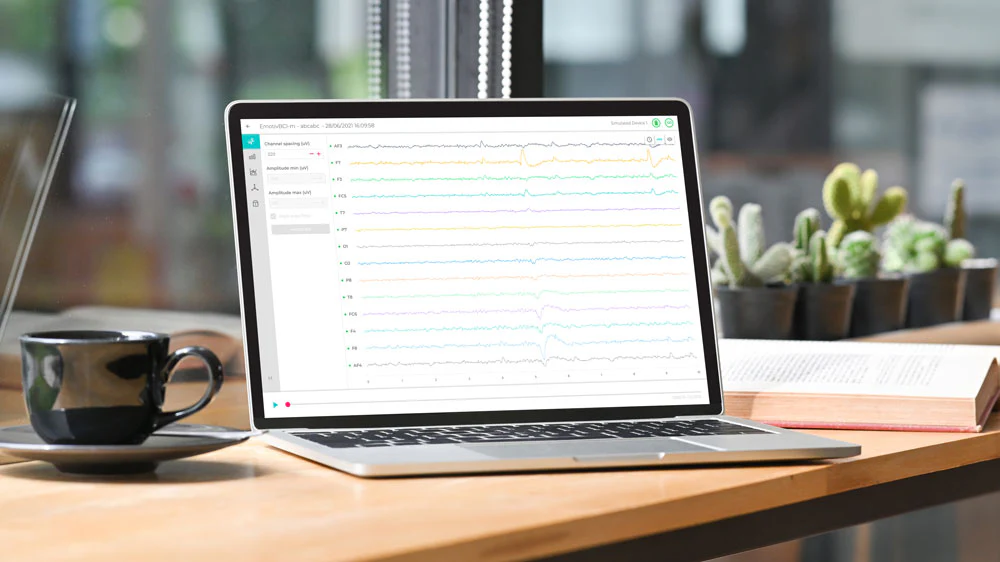
Continue reading