High Density EEG System 101: The Ultimate Guide
Duong Tran
Oct 21, 2025
Share:



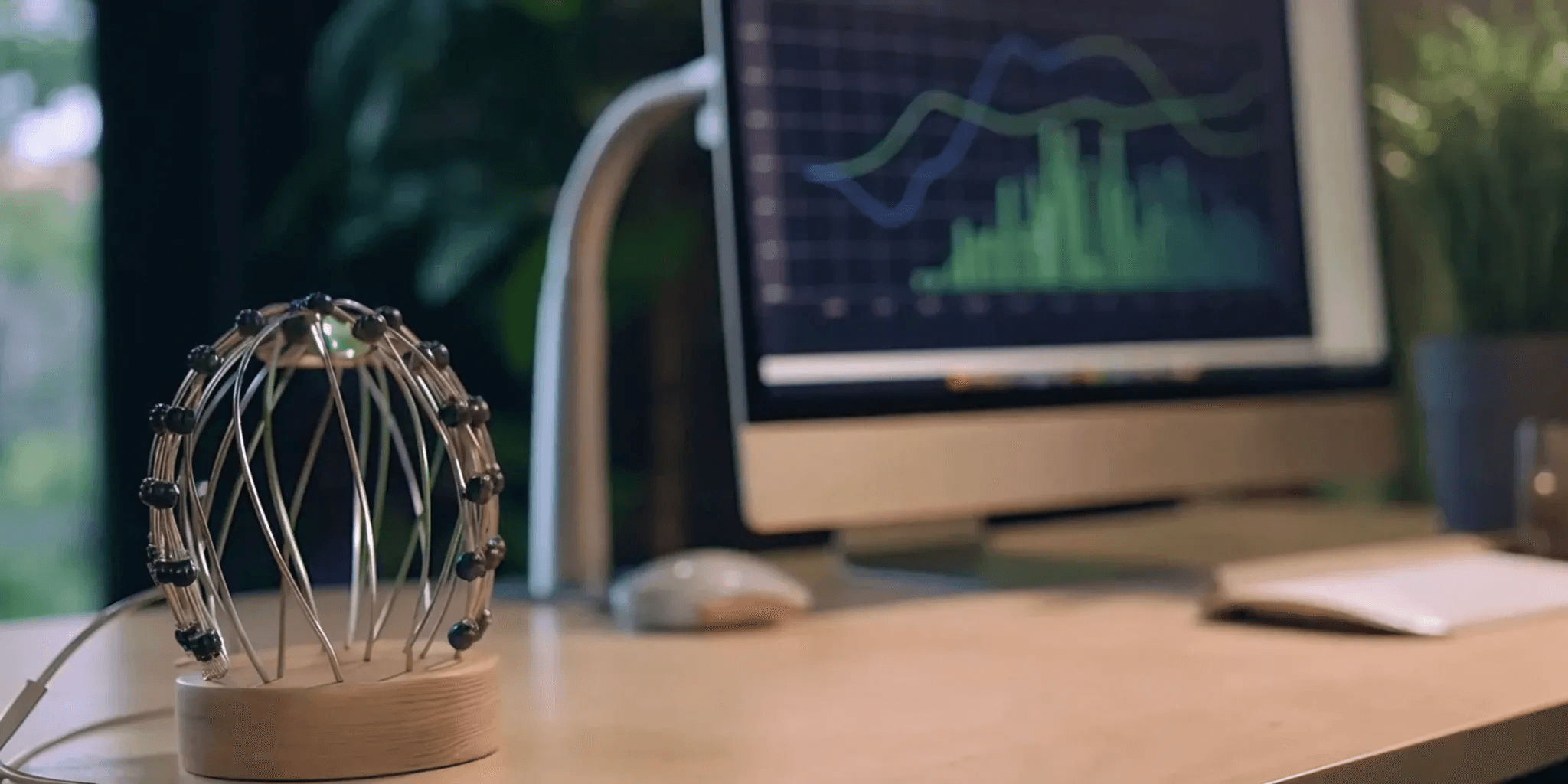
The ability to translate brain signals into commands or gain deep insights into cognitive processes was once the stuff of science fiction. Today, it's a reality driven by powerful technology. At the heart of many of these breakthroughs is the high density eeg system. Its ability to capture a detailed, high-resolution map of brain activity is what makes advanced applications like sophisticated brain-computer interfaces and precise neurological studies possible. This article explores the technology that powers these innovations. We’ll cover how it works, its impact in clinical settings, and how it’s being used to push the boundaries of neuroscience.
Key Takeaways
High Density Means High Precision: The core advantage of HD-EEG is finer spatial resolution. More electrodes yield a clearer topographic map of brain activity and more accurate localization of where signals originate.
A Flexible Tool for Research and Development: HD-EEG is versatile: essential for some clinical workflows (e.g., presurgical mapping), foundational for cognitive research, and a key component in advanced BCIs.
Technique Is as Important as Technology: Outcomes depend on setup quality. Choose the right system for your goals (speed vs. signal fidelity), place electrodes carefully, and optimize signal quality before recording.
What Is a High-Density EEG System?
If you’ve explored EEG, you’ve likely seen “high-density EEG” or “HD-EEG.” Conceptually, it’s simple: increase electrode count to capture a more detailed picture of scalp potentials—like upgrading from standard-definition to 4K.
HD-EEG is especially valuable for academic research and advanced BCI development, where precise localization and network-level analyses are crucial. Rather than a broad sketch of brain rhythms, HD-EEG provides a nuanced, spatially rich view of cortical activity.
What is electrode density?
Electrode density refers to how many electrodes are placed per area of scalp. A standard clinical montage may use ~19–21 electrodes, while HD-EEG often uses 64, 128, or 256 channels. Higher density increases “spatial sampling,” enabling finer-grained inferences about the underlying sources—much like adding pixels to an image.
Citation recommended: A peer-reviewed review comparing localization accuracy across 32/64/128/256-channel systems.
What are the key components?
An HD-EEG system typically includes:
A cap that supports a large number of electrodes at standardized locations.
Electrodes (sensors) that measure tiny voltage fluctuations from neural activity.
An amplifier that conditions and digitizes the signals.
Acquisition/analysis software (e.g., EmotivPRO) to record, process, visualize, and export data.
How is it different from standard EEG?
The main difference is spatial resolution. With more channels, HD-EEG improves source localization and detection of brief, focal events that lower-density systems may miss. Standard EEG is excellent for global state tracking; HD-EEG adds the granularity needed for localized or network-level questions.
Citation recommended: A methodological paper quantifying localization error vs. channel count.
Why signal quality and resolution matter
High-quality signals ensure you’re measuring neural activity—not artifacts. Higher spatial resolution supports stronger claims about where activity originates. While some network metrics work at 32–64 channels, finer cortical structure typically benefits from higher density. Systems like Flex are designed to deliver the fidelity required for serious scientific inquiry and advanced applications.
Citation recommended: Comparative studies on source imaging accuracy and network metrics vs. electrode count.
How Does High-Density EEG Work?
HD-EEG systems aim to capture a rich, high-resolution snapshot of scalp potentials and transform them into interpretable brain maps.
How does it capture brain signals?
A cap with 64–256 electrodes measures voltage differences caused by coordinated neural activity. With dense coverage (e.g., Flex Saline), you obtain detailed topographies across the scalp, improving downstream localization and pattern analysis.
How is the data processed?
Typical steps include:
Preprocessing: Filter line noise; remove ocular/muscle artifacts; check channel quality.
Feature extraction / Time–frequency analysis: Compute bands (delta–gamma), ERPs, connectivity metrics.
Source imaging: Estimate cortical generators from scalp maps to obtain 3D activity distributions.
Statistics / ML: Model effects, compare conditions, or train decoders.
EmotivPRO supports this workflow, from acquisition to export for advanced pipelines.
Can you analyze data in real time?
Yes. Real-time analysis underpins closed-loop systems and BCIs. For instance, EmotivBCI enables training classifiers that map patterns to commands—supporting assistive tech and responsive user experiences.
Common challenges in data interpretation
Depth ambiguity: EEG is most sensitive to superficial cortex; deep sources are harder to resolve.
Artifacts: Eye blinks, muscle activity, and motion contaminate data.
Model assumptions: Source imaging relies on head models and priors.
Careful design, consistent prep, and robust preprocessing mitigate these issues. See our resources for the academic research community.
What Are the Benefits of HD-EEG?
Think “4K view” of brain dynamics. With ≥32 channels—often 64–256—HD-EEG captures nuanced electrical activity, enabling:
Better spatial resolution
More electrodes placed closer together enhance spatial sampling. Systems like Flex Saline capture finer cortical detail, narrowing activity from broad regions to specific loci—crucial for questions about connectivity and localized processing.
Citation recommended: Validation studies on spatial resolution improvements with HD-EEG.
More precise brain mapping
HD-EEG improves source localization and functional mapping—valuable in research and presurgical contexts. For academic research, this supports tighter hypotheses and clearer interpretations.
Citation recommended: Benchmark papers on EEG source imaging accuracy and montage density.
Non-invasive by design
EEG measures naturally occurring electrical activity—no surgery or radiation required—supporting longer, more naturalistic recordings and broader participant inclusion (e.g., pediatrics). This is also advantageous in neuromarketing and UX study contexts.
How it’s used in research
From memory and attention to emotion and language, HD-EEG enables granular, time-resolved analyses and next-gen BCIs that translate learned patterns into useful interactions.
Clinical Applications and Their Impact
HD-EEG’s higher spatial sampling supports workflows where localization matters.
Applications in epilepsy studies
When standard montages are insufficient, HD-EEG can help localize seizure onset zones and inform care pathways, including potential surgical interventions.
Medical accuracy note: Keep language descriptive (e.g., “supports localization”) and avoid implying diagnostic or treatment guarantees.
Using HD-EEG for cognitive assessment
Dense recordings reveal detailed patterns relevant to neurological conditions and cognitive profiles, informing research and clinical assessment.
Citation caution: Verify recency and study scope before generalizing beyond the paper’s population/task.
Developing brain-computer interfaces
With EmotivBCI, learned EEG patterns can control devices or software. In clinical R&D, EEG-based BCIs can support communication and access technologies.
Citation recommended: A review article on EEG-BCI for assistive communication/motor restoration.
Informing treatment planning
Functional mapping with HD-EEG can support presurgical planning by identifying areas to preserve vs. target—contributing evidence along with other modalities—see surgical outcomes literature.
Framing: “supports,” “informs,” or “contributes to” rather than deterministic claims.
What Types of High-Density EEG Systems Are There?
Selecting a system involves trade-offs among sensor type, setup time, signal fidelity, and mobility.
Saline sensors: Rapid setup and cleanup; ideal for frequent sessions and participant comfort.
Gel sensors: Lower impedance and stable contacts for long recordings and maximum fidelity.
Wireless vs. wired: Wireless enables natural movement and field studies; wired may offer fixed-lab stability.
Flex gives you options—choose Flex Saline for speed and comfort or Flex Gel when maximum signal stability is the priority.
An introduction to Flex Saline
32 channels, hydrated sensors, quick setup/cleanup—ideal for ERPs, rapid iterations, and participant-friendly protocols.
A look at Flex Gel solutions
32 channels, gel electrodes, low-impedance contacts—preferred when long sessions and highest fidelity are required.
The freedom of wireless systems
Untethered systems (e.g., Flex) support naturalistic behaviors and mobile tasks—powerful for real-world research.
What makes a system research-grade?
High channel density, robust amplification, transparent data access, compatibility with standard tools, and validation vs. conventional lab systems.
Citation recommended: Validation/benchmark papers comparing Flex-class systems to traditional EEG amplifiers.
Your Guide to Technical Implementation
Strong results come from strong fundamentals: placement, signal optimization, data management, and calibration.
How to place electrodes correctly
Use standardized montages (e.g., 10–20 as a scaffold) and fill intermediate sites for HD-EEG. Flex caps provide pre-marked locations to streamline consistent placement across sessions and participants.
Tips for optimizing your signal
Ensure good skin contact (hydrate saline sensors appropriately; avoid gel bridging).
Minimize electrical/motion artifacts; reduce jaw tension and eye blinks during key epochs.
Use EmotivPRO to monitor per-channel quality in real time.
How to manage your data
Plan for large datasets. Typical pipeline: filter, artifact removal, epoching, time–frequency analysis, connectivity metrics, and source imaging. Use robust tooling for batch workflows and versioned analysis.
Calibrating your system
Check impedance and channel quality pre-recording; aim for low, uniform values across electrodes. Calibration is essential for reliable BCI performance and repeatable research.
Emerging Tech and Integrations
What’s new in data processing?
Better artifact handling and automated preprocessing improve signal-to-noise and reduce manual workload. EmotivPRO supports streamlined QA and export to advanced pipelines.
Integrating with other technologies
EEG pairs well with fMRI (spatial detail), VR/AR (immersive tasks), motion capture, and eye-tracking. Our developer tools help integrate EEG with broader stacks.
How machine learning is changing the game
ML models detect subtle patterns, enhance decoding, and personalize classifiers for BCIs—improving accuracy and responsiveness.
Citation recommended: Recent reviews on deep learning for EEG/BCI.
Advances in real-time analysis
Low-latency pipelines enable neurofeedback and closed-loop control. EmotivBCI translates brain patterns into commands with minimal delay.
The Future of HD-EEG
What’s next for the technology?
Expect multimodal systems, comfort-forward wearables, and richer real-world paradigms—from labs to everyday environments, including neuromarketing and HCI.
Where is HD-EEG headed?
Demand for high-quality brain data is rising across academia and industry, expanding the ecosystem of tools and lowering barriers to entry for academic research.
The future of data computation
AI-assisted pipelines will further automate artifact handling and pattern discovery. EmotivPRO is designed to support efficient preprocessing and export to ML workflows.
Making HD-EEG more accessible
Design trends favor lightweight, flexible caps (e.g., Flex) and intuitive software—supporting longer wear, outside-lab studies, and broader participation.
Related Articles
Frequently Asked Questions
When should I choose a high-density system instead of fewer channels?
Fewer channels (e.g., 5-channel Insight) are great for global states and trends. Choose 32-channel Flex or higher when you need precise spatial mapping or network-level analyses.
Is setting up a 32-channel system complicated for a beginner?
It’s approachable with a methodical workflow. Flex caps include pre-marked locations; Flex Saline sets up quickly (hydrate sensors, fit, verify), and software shows connection quality in real time.
How do I decide between saline and gel?
Pick saline for speed, comfort, and frequent sessions; pick gel for maximal stability over long recordings. Your study duration and fidelity requirements guide the trade-off.
Can I run research outside a traditional lab?
Yes. Wireless Flex supports mobile, naturalistic paradigms—see our overview of an EEG headset for research.
What software support do I need for HD-EEG?
You’ll want tools for multi-channel recording, real-time QA, artifact handling, and advanced analysis. EmotivPRO provides acquisition, cleaning, and visualization—so you spend more time on discovery than data wrangling.
The ability to translate brain signals into commands or gain deep insights into cognitive processes was once the stuff of science fiction. Today, it's a reality driven by powerful technology. At the heart of many of these breakthroughs is the high density eeg system. Its ability to capture a detailed, high-resolution map of brain activity is what makes advanced applications like sophisticated brain-computer interfaces and precise neurological studies possible. This article explores the technology that powers these innovations. We’ll cover how it works, its impact in clinical settings, and how it’s being used to push the boundaries of neuroscience.
Key Takeaways
High Density Means High Precision: The core advantage of HD-EEG is finer spatial resolution. More electrodes yield a clearer topographic map of brain activity and more accurate localization of where signals originate.
A Flexible Tool for Research and Development: HD-EEG is versatile: essential for some clinical workflows (e.g., presurgical mapping), foundational for cognitive research, and a key component in advanced BCIs.
Technique Is as Important as Technology: Outcomes depend on setup quality. Choose the right system for your goals (speed vs. signal fidelity), place electrodes carefully, and optimize signal quality before recording.
What Is a High-Density EEG System?
If you’ve explored EEG, you’ve likely seen “high-density EEG” or “HD-EEG.” Conceptually, it’s simple: increase electrode count to capture a more detailed picture of scalp potentials—like upgrading from standard-definition to 4K.
HD-EEG is especially valuable for academic research and advanced BCI development, where precise localization and network-level analyses are crucial. Rather than a broad sketch of brain rhythms, HD-EEG provides a nuanced, spatially rich view of cortical activity.
What is electrode density?
Electrode density refers to how many electrodes are placed per area of scalp. A standard clinical montage may use ~19–21 electrodes, while HD-EEG often uses 64, 128, or 256 channels. Higher density increases “spatial sampling,” enabling finer-grained inferences about the underlying sources—much like adding pixels to an image.
Citation recommended: A peer-reviewed review comparing localization accuracy across 32/64/128/256-channel systems.
What are the key components?
An HD-EEG system typically includes:
A cap that supports a large number of electrodes at standardized locations.
Electrodes (sensors) that measure tiny voltage fluctuations from neural activity.
An amplifier that conditions and digitizes the signals.
Acquisition/analysis software (e.g., EmotivPRO) to record, process, visualize, and export data.
How is it different from standard EEG?
The main difference is spatial resolution. With more channels, HD-EEG improves source localization and detection of brief, focal events that lower-density systems may miss. Standard EEG is excellent for global state tracking; HD-EEG adds the granularity needed for localized or network-level questions.
Citation recommended: A methodological paper quantifying localization error vs. channel count.
Why signal quality and resolution matter
High-quality signals ensure you’re measuring neural activity—not artifacts. Higher spatial resolution supports stronger claims about where activity originates. While some network metrics work at 32–64 channels, finer cortical structure typically benefits from higher density. Systems like Flex are designed to deliver the fidelity required for serious scientific inquiry and advanced applications.
Citation recommended: Comparative studies on source imaging accuracy and network metrics vs. electrode count.
How Does High-Density EEG Work?
HD-EEG systems aim to capture a rich, high-resolution snapshot of scalp potentials and transform them into interpretable brain maps.
How does it capture brain signals?
A cap with 64–256 electrodes measures voltage differences caused by coordinated neural activity. With dense coverage (e.g., Flex Saline), you obtain detailed topographies across the scalp, improving downstream localization and pattern analysis.
How is the data processed?
Typical steps include:
Preprocessing: Filter line noise; remove ocular/muscle artifacts; check channel quality.
Feature extraction / Time–frequency analysis: Compute bands (delta–gamma), ERPs, connectivity metrics.
Source imaging: Estimate cortical generators from scalp maps to obtain 3D activity distributions.
Statistics / ML: Model effects, compare conditions, or train decoders.
EmotivPRO supports this workflow, from acquisition to export for advanced pipelines.
Can you analyze data in real time?
Yes. Real-time analysis underpins closed-loop systems and BCIs. For instance, EmotivBCI enables training classifiers that map patterns to commands—supporting assistive tech and responsive user experiences.
Common challenges in data interpretation
Depth ambiguity: EEG is most sensitive to superficial cortex; deep sources are harder to resolve.
Artifacts: Eye blinks, muscle activity, and motion contaminate data.
Model assumptions: Source imaging relies on head models and priors.
Careful design, consistent prep, and robust preprocessing mitigate these issues. See our resources for the academic research community.
What Are the Benefits of HD-EEG?
Think “4K view” of brain dynamics. With ≥32 channels—often 64–256—HD-EEG captures nuanced electrical activity, enabling:
Better spatial resolution
More electrodes placed closer together enhance spatial sampling. Systems like Flex Saline capture finer cortical detail, narrowing activity from broad regions to specific loci—crucial for questions about connectivity and localized processing.
Citation recommended: Validation studies on spatial resolution improvements with HD-EEG.
More precise brain mapping
HD-EEG improves source localization and functional mapping—valuable in research and presurgical contexts. For academic research, this supports tighter hypotheses and clearer interpretations.
Citation recommended: Benchmark papers on EEG source imaging accuracy and montage density.
Non-invasive by design
EEG measures naturally occurring electrical activity—no surgery or radiation required—supporting longer, more naturalistic recordings and broader participant inclusion (e.g., pediatrics). This is also advantageous in neuromarketing and UX study contexts.
How it’s used in research
From memory and attention to emotion and language, HD-EEG enables granular, time-resolved analyses and next-gen BCIs that translate learned patterns into useful interactions.
Clinical Applications and Their Impact
HD-EEG’s higher spatial sampling supports workflows where localization matters.
Applications in epilepsy studies
When standard montages are insufficient, HD-EEG can help localize seizure onset zones and inform care pathways, including potential surgical interventions.
Medical accuracy note: Keep language descriptive (e.g., “supports localization”) and avoid implying diagnostic or treatment guarantees.
Using HD-EEG for cognitive assessment
Dense recordings reveal detailed patterns relevant to neurological conditions and cognitive profiles, informing research and clinical assessment.
Citation caution: Verify recency and study scope before generalizing beyond the paper’s population/task.
Developing brain-computer interfaces
With EmotivBCI, learned EEG patterns can control devices or software. In clinical R&D, EEG-based BCIs can support communication and access technologies.
Citation recommended: A review article on EEG-BCI for assistive communication/motor restoration.
Informing treatment planning
Functional mapping with HD-EEG can support presurgical planning by identifying areas to preserve vs. target—contributing evidence along with other modalities—see surgical outcomes literature.
Framing: “supports,” “informs,” or “contributes to” rather than deterministic claims.
What Types of High-Density EEG Systems Are There?
Selecting a system involves trade-offs among sensor type, setup time, signal fidelity, and mobility.
Saline sensors: Rapid setup and cleanup; ideal for frequent sessions and participant comfort.
Gel sensors: Lower impedance and stable contacts for long recordings and maximum fidelity.
Wireless vs. wired: Wireless enables natural movement and field studies; wired may offer fixed-lab stability.
Flex gives you options—choose Flex Saline for speed and comfort or Flex Gel when maximum signal stability is the priority.
An introduction to Flex Saline
32 channels, hydrated sensors, quick setup/cleanup—ideal for ERPs, rapid iterations, and participant-friendly protocols.
A look at Flex Gel solutions
32 channels, gel electrodes, low-impedance contacts—preferred when long sessions and highest fidelity are required.
The freedom of wireless systems
Untethered systems (e.g., Flex) support naturalistic behaviors and mobile tasks—powerful for real-world research.
What makes a system research-grade?
High channel density, robust amplification, transparent data access, compatibility with standard tools, and validation vs. conventional lab systems.
Citation recommended: Validation/benchmark papers comparing Flex-class systems to traditional EEG amplifiers.
Your Guide to Technical Implementation
Strong results come from strong fundamentals: placement, signal optimization, data management, and calibration.
How to place electrodes correctly
Use standardized montages (e.g., 10–20 as a scaffold) and fill intermediate sites for HD-EEG. Flex caps provide pre-marked locations to streamline consistent placement across sessions and participants.
Tips for optimizing your signal
Ensure good skin contact (hydrate saline sensors appropriately; avoid gel bridging).
Minimize electrical/motion artifacts; reduce jaw tension and eye blinks during key epochs.
Use EmotivPRO to monitor per-channel quality in real time.
How to manage your data
Plan for large datasets. Typical pipeline: filter, artifact removal, epoching, time–frequency analysis, connectivity metrics, and source imaging. Use robust tooling for batch workflows and versioned analysis.
Calibrating your system
Check impedance and channel quality pre-recording; aim for low, uniform values across electrodes. Calibration is essential for reliable BCI performance and repeatable research.
Emerging Tech and Integrations
What’s new in data processing?
Better artifact handling and automated preprocessing improve signal-to-noise and reduce manual workload. EmotivPRO supports streamlined QA and export to advanced pipelines.
Integrating with other technologies
EEG pairs well with fMRI (spatial detail), VR/AR (immersive tasks), motion capture, and eye-tracking. Our developer tools help integrate EEG with broader stacks.
How machine learning is changing the game
ML models detect subtle patterns, enhance decoding, and personalize classifiers for BCIs—improving accuracy and responsiveness.
Citation recommended: Recent reviews on deep learning for EEG/BCI.
Advances in real-time analysis
Low-latency pipelines enable neurofeedback and closed-loop control. EmotivBCI translates brain patterns into commands with minimal delay.
The Future of HD-EEG
What’s next for the technology?
Expect multimodal systems, comfort-forward wearables, and richer real-world paradigms—from labs to everyday environments, including neuromarketing and HCI.
Where is HD-EEG headed?
Demand for high-quality brain data is rising across academia and industry, expanding the ecosystem of tools and lowering barriers to entry for academic research.
The future of data computation
AI-assisted pipelines will further automate artifact handling and pattern discovery. EmotivPRO is designed to support efficient preprocessing and export to ML workflows.
Making HD-EEG more accessible
Design trends favor lightweight, flexible caps (e.g., Flex) and intuitive software—supporting longer wear, outside-lab studies, and broader participation.
Related Articles
Frequently Asked Questions
When should I choose a high-density system instead of fewer channels?
Fewer channels (e.g., 5-channel Insight) are great for global states and trends. Choose 32-channel Flex or higher when you need precise spatial mapping or network-level analyses.
Is setting up a 32-channel system complicated for a beginner?
It’s approachable with a methodical workflow. Flex caps include pre-marked locations; Flex Saline sets up quickly (hydrate sensors, fit, verify), and software shows connection quality in real time.
How do I decide between saline and gel?
Pick saline for speed, comfort, and frequent sessions; pick gel for maximal stability over long recordings. Your study duration and fidelity requirements guide the trade-off.
Can I run research outside a traditional lab?
Yes. Wireless Flex supports mobile, naturalistic paradigms—see our overview of an EEG headset for research.
What software support do I need for HD-EEG?
You’ll want tools for multi-channel recording, real-time QA, artifact handling, and advanced analysis. EmotivPRO provides acquisition, cleaning, and visualization—so you spend more time on discovery than data wrangling.
The ability to translate brain signals into commands or gain deep insights into cognitive processes was once the stuff of science fiction. Today, it's a reality driven by powerful technology. At the heart of many of these breakthroughs is the high density eeg system. Its ability to capture a detailed, high-resolution map of brain activity is what makes advanced applications like sophisticated brain-computer interfaces and precise neurological studies possible. This article explores the technology that powers these innovations. We’ll cover how it works, its impact in clinical settings, and how it’s being used to push the boundaries of neuroscience.
Key Takeaways
High Density Means High Precision: The core advantage of HD-EEG is finer spatial resolution. More electrodes yield a clearer topographic map of brain activity and more accurate localization of where signals originate.
A Flexible Tool for Research and Development: HD-EEG is versatile: essential for some clinical workflows (e.g., presurgical mapping), foundational for cognitive research, and a key component in advanced BCIs.
Technique Is as Important as Technology: Outcomes depend on setup quality. Choose the right system for your goals (speed vs. signal fidelity), place electrodes carefully, and optimize signal quality before recording.
What Is a High-Density EEG System?
If you’ve explored EEG, you’ve likely seen “high-density EEG” or “HD-EEG.” Conceptually, it’s simple: increase electrode count to capture a more detailed picture of scalp potentials—like upgrading from standard-definition to 4K.
HD-EEG is especially valuable for academic research and advanced BCI development, where precise localization and network-level analyses are crucial. Rather than a broad sketch of brain rhythms, HD-EEG provides a nuanced, spatially rich view of cortical activity.
What is electrode density?
Electrode density refers to how many electrodes are placed per area of scalp. A standard clinical montage may use ~19–21 electrodes, while HD-EEG often uses 64, 128, or 256 channels. Higher density increases “spatial sampling,” enabling finer-grained inferences about the underlying sources—much like adding pixels to an image.
Citation recommended: A peer-reviewed review comparing localization accuracy across 32/64/128/256-channel systems.
What are the key components?
An HD-EEG system typically includes:
A cap that supports a large number of electrodes at standardized locations.
Electrodes (sensors) that measure tiny voltage fluctuations from neural activity.
An amplifier that conditions and digitizes the signals.
Acquisition/analysis software (e.g., EmotivPRO) to record, process, visualize, and export data.
How is it different from standard EEG?
The main difference is spatial resolution. With more channels, HD-EEG improves source localization and detection of brief, focal events that lower-density systems may miss. Standard EEG is excellent for global state tracking; HD-EEG adds the granularity needed for localized or network-level questions.
Citation recommended: A methodological paper quantifying localization error vs. channel count.
Why signal quality and resolution matter
High-quality signals ensure you’re measuring neural activity—not artifacts. Higher spatial resolution supports stronger claims about where activity originates. While some network metrics work at 32–64 channels, finer cortical structure typically benefits from higher density. Systems like Flex are designed to deliver the fidelity required for serious scientific inquiry and advanced applications.
Citation recommended: Comparative studies on source imaging accuracy and network metrics vs. electrode count.
How Does High-Density EEG Work?
HD-EEG systems aim to capture a rich, high-resolution snapshot of scalp potentials and transform them into interpretable brain maps.
How does it capture brain signals?
A cap with 64–256 electrodes measures voltage differences caused by coordinated neural activity. With dense coverage (e.g., Flex Saline), you obtain detailed topographies across the scalp, improving downstream localization and pattern analysis.
How is the data processed?
Typical steps include:
Preprocessing: Filter line noise; remove ocular/muscle artifacts; check channel quality.
Feature extraction / Time–frequency analysis: Compute bands (delta–gamma), ERPs, connectivity metrics.
Source imaging: Estimate cortical generators from scalp maps to obtain 3D activity distributions.
Statistics / ML: Model effects, compare conditions, or train decoders.
EmotivPRO supports this workflow, from acquisition to export for advanced pipelines.
Can you analyze data in real time?
Yes. Real-time analysis underpins closed-loop systems and BCIs. For instance, EmotivBCI enables training classifiers that map patterns to commands—supporting assistive tech and responsive user experiences.
Common challenges in data interpretation
Depth ambiguity: EEG is most sensitive to superficial cortex; deep sources are harder to resolve.
Artifacts: Eye blinks, muscle activity, and motion contaminate data.
Model assumptions: Source imaging relies on head models and priors.
Careful design, consistent prep, and robust preprocessing mitigate these issues. See our resources for the academic research community.
What Are the Benefits of HD-EEG?
Think “4K view” of brain dynamics. With ≥32 channels—often 64–256—HD-EEG captures nuanced electrical activity, enabling:
Better spatial resolution
More electrodes placed closer together enhance spatial sampling. Systems like Flex Saline capture finer cortical detail, narrowing activity from broad regions to specific loci—crucial for questions about connectivity and localized processing.
Citation recommended: Validation studies on spatial resolution improvements with HD-EEG.
More precise brain mapping
HD-EEG improves source localization and functional mapping—valuable in research and presurgical contexts. For academic research, this supports tighter hypotheses and clearer interpretations.
Citation recommended: Benchmark papers on EEG source imaging accuracy and montage density.
Non-invasive by design
EEG measures naturally occurring electrical activity—no surgery or radiation required—supporting longer, more naturalistic recordings and broader participant inclusion (e.g., pediatrics). This is also advantageous in neuromarketing and UX study contexts.
How it’s used in research
From memory and attention to emotion and language, HD-EEG enables granular, time-resolved analyses and next-gen BCIs that translate learned patterns into useful interactions.
Clinical Applications and Their Impact
HD-EEG’s higher spatial sampling supports workflows where localization matters.
Applications in epilepsy studies
When standard montages are insufficient, HD-EEG can help localize seizure onset zones and inform care pathways, including potential surgical interventions.
Medical accuracy note: Keep language descriptive (e.g., “supports localization”) and avoid implying diagnostic or treatment guarantees.
Using HD-EEG for cognitive assessment
Dense recordings reveal detailed patterns relevant to neurological conditions and cognitive profiles, informing research and clinical assessment.
Citation caution: Verify recency and study scope before generalizing beyond the paper’s population/task.
Developing brain-computer interfaces
With EmotivBCI, learned EEG patterns can control devices or software. In clinical R&D, EEG-based BCIs can support communication and access technologies.
Citation recommended: A review article on EEG-BCI for assistive communication/motor restoration.
Informing treatment planning
Functional mapping with HD-EEG can support presurgical planning by identifying areas to preserve vs. target—contributing evidence along with other modalities—see surgical outcomes literature.
Framing: “supports,” “informs,” or “contributes to” rather than deterministic claims.
What Types of High-Density EEG Systems Are There?
Selecting a system involves trade-offs among sensor type, setup time, signal fidelity, and mobility.
Saline sensors: Rapid setup and cleanup; ideal for frequent sessions and participant comfort.
Gel sensors: Lower impedance and stable contacts for long recordings and maximum fidelity.
Wireless vs. wired: Wireless enables natural movement and field studies; wired may offer fixed-lab stability.
Flex gives you options—choose Flex Saline for speed and comfort or Flex Gel when maximum signal stability is the priority.
An introduction to Flex Saline
32 channels, hydrated sensors, quick setup/cleanup—ideal for ERPs, rapid iterations, and participant-friendly protocols.
A look at Flex Gel solutions
32 channels, gel electrodes, low-impedance contacts—preferred when long sessions and highest fidelity are required.
The freedom of wireless systems
Untethered systems (e.g., Flex) support naturalistic behaviors and mobile tasks—powerful for real-world research.
What makes a system research-grade?
High channel density, robust amplification, transparent data access, compatibility with standard tools, and validation vs. conventional lab systems.
Citation recommended: Validation/benchmark papers comparing Flex-class systems to traditional EEG amplifiers.
Your Guide to Technical Implementation
Strong results come from strong fundamentals: placement, signal optimization, data management, and calibration.
How to place electrodes correctly
Use standardized montages (e.g., 10–20 as a scaffold) and fill intermediate sites for HD-EEG. Flex caps provide pre-marked locations to streamline consistent placement across sessions and participants.
Tips for optimizing your signal
Ensure good skin contact (hydrate saline sensors appropriately; avoid gel bridging).
Minimize electrical/motion artifacts; reduce jaw tension and eye blinks during key epochs.
Use EmotivPRO to monitor per-channel quality in real time.
How to manage your data
Plan for large datasets. Typical pipeline: filter, artifact removal, epoching, time–frequency analysis, connectivity metrics, and source imaging. Use robust tooling for batch workflows and versioned analysis.
Calibrating your system
Check impedance and channel quality pre-recording; aim for low, uniform values across electrodes. Calibration is essential for reliable BCI performance and repeatable research.
Emerging Tech and Integrations
What’s new in data processing?
Better artifact handling and automated preprocessing improve signal-to-noise and reduce manual workload. EmotivPRO supports streamlined QA and export to advanced pipelines.
Integrating with other technologies
EEG pairs well with fMRI (spatial detail), VR/AR (immersive tasks), motion capture, and eye-tracking. Our developer tools help integrate EEG with broader stacks.
How machine learning is changing the game
ML models detect subtle patterns, enhance decoding, and personalize classifiers for BCIs—improving accuracy and responsiveness.
Citation recommended: Recent reviews on deep learning for EEG/BCI.
Advances in real-time analysis
Low-latency pipelines enable neurofeedback and closed-loop control. EmotivBCI translates brain patterns into commands with minimal delay.
The Future of HD-EEG
What’s next for the technology?
Expect multimodal systems, comfort-forward wearables, and richer real-world paradigms—from labs to everyday environments, including neuromarketing and HCI.
Where is HD-EEG headed?
Demand for high-quality brain data is rising across academia and industry, expanding the ecosystem of tools and lowering barriers to entry for academic research.
The future of data computation
AI-assisted pipelines will further automate artifact handling and pattern discovery. EmotivPRO is designed to support efficient preprocessing and export to ML workflows.
Making HD-EEG more accessible
Design trends favor lightweight, flexible caps (e.g., Flex) and intuitive software—supporting longer wear, outside-lab studies, and broader participation.
Related Articles
Frequently Asked Questions
When should I choose a high-density system instead of fewer channels?
Fewer channels (e.g., 5-channel Insight) are great for global states and trends. Choose 32-channel Flex or higher when you need precise spatial mapping or network-level analyses.
Is setting up a 32-channel system complicated for a beginner?
It’s approachable with a methodical workflow. Flex caps include pre-marked locations; Flex Saline sets up quickly (hydrate sensors, fit, verify), and software shows connection quality in real time.
How do I decide between saline and gel?
Pick saline for speed, comfort, and frequent sessions; pick gel for maximal stability over long recordings. Your study duration and fidelity requirements guide the trade-off.
Can I run research outside a traditional lab?
Yes. Wireless Flex supports mobile, naturalistic paradigms—see our overview of an EEG headset for research.
What software support do I need for HD-EEG?
You’ll want tools for multi-channel recording, real-time QA, artifact handling, and advanced analysis. EmotivPRO provides acquisition, cleaning, and visualization—so you spend more time on discovery than data wrangling.
Solutions
Support
Company

© 2025 EMOTIV, All rights reserved.

Your Privacy Choices (Cookie Settings)
*Disclaimer – EMOTIV products are intended to be used for research applications and personal use only. Our products are not sold as Medical Devices as defined in EU directive 93/42/EEC. Our
products are not designed or intended to be used for diagnosis or treatment of disease.
Solutions
Support
Company
© 2025 EMOTIV, All rights reserved.
Your Privacy Choices (Cookie Settings)
*Disclaimer – EMOTIV products are intended to be used for research applications and personal use only. Our products are not sold as Medical Devices as defined in EU directive 93/42/EEC. Our
products are not designed or intended to be used for diagnosis or treatment of disease.
Solutions
Support
Company
© 2025 EMOTIV, All rights reserved.
Your Privacy Choices (Cookie Settings)
*Disclaimer – EMOTIV products are intended to be used for research applications and personal use only. Our products are not sold as Medical Devices as defined in EU directive 93/42/EEC. Our
products are not designed or intended to be used for diagnosis or treatment of disease.