Emotiv Flex Customizable EEG Cap: A Full Guide
Emotiv
Updated on
Dec 15, 2025
Emotiv Flex Customizable EEG Cap: A Full Guide
Emotiv
Updated on
Dec 15, 2025
Emotiv Flex Customizable EEG Cap: A Full Guide
Emotiv
Updated on
Dec 15, 2025
Modern neuroscience demands more than just clean data; it requires context. Studying brain activity while a person is tethered to a machine in a lab can limit the real-world applicability of your findings. To truly understand cognition, we need to observe it in more natural, dynamic environments. We designed the Emotiv Flex customizable EEG cap to bridge this gap. It delivers the high-quality, research-grade data you expect from traditional systems but with the wireless freedom and comfort needed for today’s ambitious studies. This article explores how the Flex empowers you to move beyond the lab and capture brain activity as it happens.
Key Takeaways
Design Your Study, Your Way: The Flex’s modular design with movable sensors frees you from fixed layouts. You can place up to 32 channels precisely where your research demands, tailoring the hardware directly to your experimental questions.
Get Lab-Quality Data Without the Lab Hassle: The system combines research-grade data fidelity with practical features like wireless connectivity and quick-setup saline sensors, allowing you to conduct studies in more natural environments without sacrificing data quality.
Tackle Complex Research Questions: The Flex provides the high-fidelity, multi-channel data necessary for demanding applications like BCI development and ERP studies, giving you a reliable foundation for your most ambitious projects.
What is the Emotiv Flex Customizable EEG Cap?
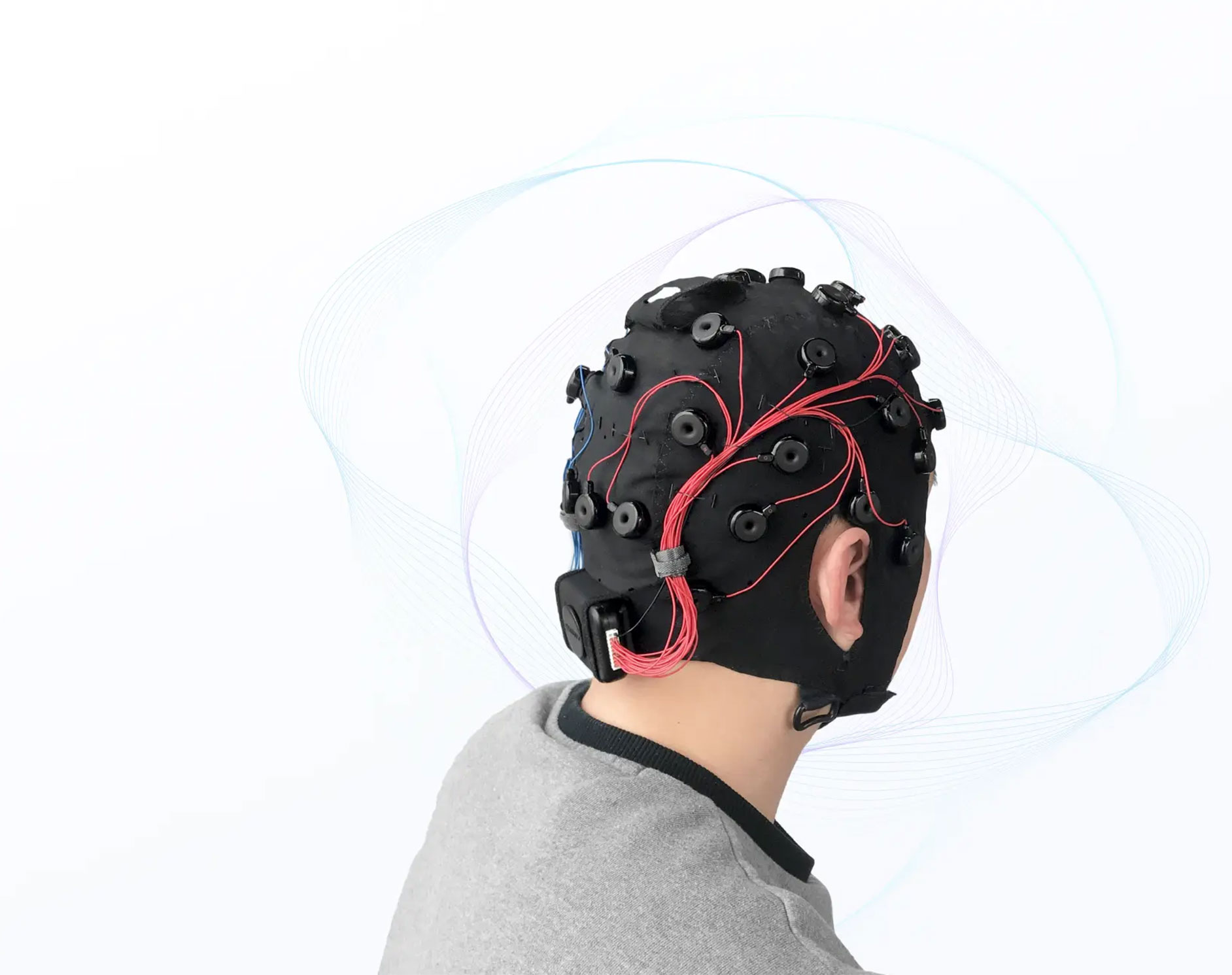
The Emotiv Flex is a modular, cap-based EEG system designed for researchers who need flexibility and high-quality data. Think of it as your custom toolkit for brain research. With up to 32 channels, you can place sensors exactly where your study requires, rather than being limited by a fixed array. This adaptability makes it a powerful instrument for a wide range of applications, from advanced academic research and education to complex brain-computer interface development. The Flex delivers research-grade data in a system that’s both user-friendly and designed for participant comfort, whether you choose our saline or gel-based sensors. It’s all about giving you the control to design your experiment, your way.
How Does EEG Technology Work?
At its core, electroencephalography (EEG) is a method for listening to the brain’s electrical activity. Your brain cells, or neurons, communicate using tiny electrical impulses. An EEG headset uses small sensors placed on the scalp to pick up on these signals. Our software then processes this information, providing you with real-time data about cognitive and affective states. For researchers, this data is invaluable. It allows you to see how the brain responds to different stimuli or tasks. Research-grade headsets like the Emotiv Flex are engineered with high sampling rates to capture the full spectrum of brain activity, ensuring you have the detailed data needed for robust analysis.
Customize Your Setup with a Modular Design
One of the biggest challenges in EEG research can be aligning your equipment with your experimental design. The Flex solves this with its completely modular system. The cap comes in multiple sizes for a comfortable fit, and you can place the sensors anywhere on the cap. This means you can precisely target specific brain regions according to standard layouts, like the 10-20 system, or create a completely custom montage tailored to your research questions. This level of customization is a game-changer, allowing you to move beyond the constraints of fixed-sensor devices and gather the exact data you need without compromise.
The Science Behind Our Saline Sensors
We designed our saline sensors to offer the best of both worlds: high-quality data and a hassle-free experience. Traditional EEG often requires sticky, abrasive gels to ensure a good connection, which can be time-consuming to apply and uncomfortable for participants to wash out. Our saline sensors, used in the Flex Saline system, simply need to be soaked in a saline solution before use. They provide a clean, comfortable, and quick setup while capturing reliable, research-grade data. This makes them ideal for studies that require long recording sessions or have a high throughput of participants, as it significantly reduces prep and cleanup time.
Experience the Freedom of Wireless Connectivity
Traditional EEG systems often keep participants tethered to a computer, limiting the scope of research to stationary, lab-based tasks. The Flex features a wireless controller that liberates your research from the desk. This freedom allows you to conduct studies in more natural and dynamic environments. You can explore brain activity during physical movement, social interactions, or real-world tasks that were previously difficult to study. This capability is especially valuable for fields like neuromarketing or sports science, where context is key to understanding cognitive processes. It helps create a more comfortable and realistic setting for participants, leading to more ecologically valid data.
What Makes the Flex EEG Cap Stand Out?
When we designed the Flex cap, we weren’t just thinking about hardware. We were thinking about the challenges researchers face every day. How can you get the precise data you need without being limited by a fixed sensor layout? How do you keep participants comfortable and engaged during long studies? The Flex is our answer. It’s a research tool built on four key pillars: complete customization, long-wear comfort, trusted data quality, and wireless freedom. Each feature is designed to solve common research hurdles and empower you to conduct more ambitious and effective studies. Let’s explore what makes the Flex stand out.
Configure Up to 32 Channels, Your Way
The Emotiv Flex offers a fully modular design, freeing you from fixed electrode arrays. You can place up to 32 channels anywhere on the cap based on the 10-20 system, allowing you to target the precise brain regions for your study. This customization is essential for researchers focusing on specific cortical areas for experiments on motor imagery, emotional responses, or cognitive workload. It empowers you to tailor the hardware directly to your research questions, ensuring you capture the exact data you need. This adaptability makes the Flex a highly versatile tool for a wide range of neuroscience applications.
Designed for Comfortable, Long-Term Wear
Participant comfort is critical for data quality, especially in long sessions. The Flex cap is made from a soft, breathable fabric that provides a snug yet comfortable fit, helping participants forget they’re even wearing it. A comfortable subject is more likely to remain still and engaged, which minimizes data artifacts and ensures cleaner recordings. This focus on wearability makes the Flex an ideal choice for academic research protocols that require extended recording times. It helps you prioritize both participant well-being and the integrity of your data.
Acquire High-Quality, Research-Grade Data
The Emotiv Flex is engineered to deliver reliable, research-grade data. Studies have demonstrated that our saline-based Flex system captures EEG and ERP data that is comparable to traditional, stationary lab systems. This means you can conduct serious scientific research with a portable and user-friendly device without sacrificing data fidelity. When you pair the Flex with our EmotivPRO software, you get a powerful, end-to-end solution for recording, visualizing, and analyzing your brain data with confidence, ensuring your findings are built on a solid foundation.
Stream Your Data Wirelessly in Real Time
Move beyond wired constraints with the Flex’s wireless capabilities. The cap streams data in real time, giving your subjects the freedom to move more naturally during experiments. This is a huge advantage for studies involving physical tasks or interactive simulations. Real-time data streaming also lets you see the EEG signals as they’re recorded, so you can immediately check signal quality and make adjustments. This capability is especially critical for developing brain-computer interface applications, where immediate feedback and control are essential for the system to function effectively.
How Does the Emotiv Flex Compare to Other EEG Systems?
When you’re choosing an EEG system, you’re looking for the right tool for your specific research questions. The landscape of EEG technology is vast, with systems ranging from fixed, clinical-grade devices to more adaptable, mobile solutions. The Emotiv Flex was designed to bridge the gap, offering the data quality you’d expect from traditional systems with the adaptability modern research demands. It stands out by prioritizing customization, participant comfort, and ease of use, which can make a significant difference in how you conduct your studies and the quality of data you collect. Let’s look at how the Flex compares to other systems in a few key areas.
Flexible Setups vs. Fixed Designs
Many traditional EEG systems come with a fixed sensor layout, which can be limiting if your research requires focusing on specific brain regions. The Emotiv Flex system, however, features movable sensors and multiple cap sizes, allowing you to create a custom montage for each study. This flexibility means you can tailor the setup to your exact needs, whether you’re doing high-density EEG research or targeting very specific cortical areas. Instead of being constrained by a one-size-fits-all design, you have the freedom to adapt the hardware to your research, not the other way around. This modular approach opens up possibilities for a wider range of experimental designs.
Wireless Freedom vs. Wired Constraints
One of the most significant hurdles in traditional EEG research is being tethered to a computer. Wired systems confine studies to a lab environment, which can feel unnatural for participants and limit the types of behaviors you can observe. The Flex’s wireless controller completely changes the game. It allows you to conduct research in more realistic, contextual settings, from classrooms to simulators. This wireless freedom not only enhances participant comfort and engagement but also enables you to gather more ecologically valid data. You can move beyond the lab and study brain activity as it happens in more natural environments.
Saline Sensors vs. Gel-Based Electrodes
If you’ve ever worked with traditional EEG, you know that applying conductive gel can be a messy and time-consuming process. Our Flex Saline system was created to solve this exact problem. The saline-based sensors provide high-quality signals comparable to research-grade systems without the hassle of sticky gels. A validation study found that the saline version of the Flex “captures data similar to that of a research-grade EEG system.” This makes setup faster, cleanup easier, and the overall experience much more pleasant for both the researcher and the participant. It’s a user-friendly innovation that streamlines your workflow without compromising on data quality.
Quick Setup and Ease of Use
Your time is best spent on your research, not on wrestling with complicated equipment. The Emotiv Flex is designed for a quick and intuitive setup, so you can get your study up and running with minimal downtime. While most research-grade headsets offer high sampling rates, the practical advantage of a system that’s easy to deploy can’t be overstated. This focus on ease of use means you can train assistants faster, reduce preparation time between participants, and dedicate more of your valuable time to data collection and analysis. It simplifies the technical side of EEG so you can focus on the science.
Explore Research Applications for the Flex EEG Cap
The Emotiv Flex isn’t just a piece of hardware; it’s a versatile tool that opens doors to a wide range of research fields. Because you can customize the sensor layout, you can adapt your setup to the specific demands of your study, whether you’re exploring broad cognitive states or pinpointing neural responses to a stimulus. This adaptability means you’re not locked into a one-size-fits-all approach. Instead, you can design experiments that precisely target the brain regions relevant to your questions, giving you cleaner, more relevant data from the start.
This flexibility is crucial for modern research, which often requires moving beyond traditional lab settings. The wireless design and comfortable fit of the Flex make it possible to collect data in more naturalistic environments, capturing brain activity as it happens in the real world. Whether you’re a seasoned neuroscientist or a developer breaking new ground in human-computer interaction, the Flex is designed to support your work. It bridges the gap between complex, research-grade technology and practical, real-world application. From psychology and neuroscience to BCI development and neuromarketing, the Flex provides a robust platform for gathering high-quality brain data. Let’s walk through some of the most common and impactful research applications for the Flex cap.
High-Density EEG Research
High-density EEG involves placing a large number of electrodes across the scalp to get a highly detailed map of brain activity. This is where the Flex truly shines. Its modular design with movable sensors allows you to concentrate channels over specific regions of interest, giving you a much finer spatial resolution than fixed-array systems. Whether you’re studying complex cognitive processes or mapping brain function, the Flex provides the adaptability needed for advanced academic research. The multiple cap sizes ensure a proper fit, which is crucial for collecting clean, high-quality data across different participant populations.
Brain-Computer Interface (BCI) Development
Developing a Brain-Computer Interface requires rich, reliable data to translate brain signals into commands. With up to 32 channels, the Flex provides the detailed neural data that developers need to build more sophisticated and responsive BCI applications. This high-fidelity information allows for the creation of complex algorithms that can distinguish between different mental commands with greater accuracy. From assistive technologies to innovative gaming controls, the Flex offers a powerful platform for prototyping and testing the next generation of BCI, all powered by our intuitive EmotivBCI software.
Event-Related Potential (ERP) Studies
ERPs are tiny electrical responses in the brain that are time-locked to a specific event, like seeing an image or hearing a sound. Measuring them requires precise, low-noise data, and studies have shown that the Flex saline system captures data comparable to traditional research-grade systems for this purpose. The high sampling rate and data quality make it possible to reliably detect these subtle neural signatures. This makes the Flex an excellent tool for researchers in cognitive psychology and neuroscience who are investigating perception, attention, and language processing.
Cognitive Load Assessment
How much mental effort does a task require? Answering this question is central to fields like ergonomics, education, and user experience design. The Flex can provide real-time data on cognitive performance, helping you objectively measure cognitive load. By analyzing brain activity as a user interacts with a system or completes a task, you can identify points of confusion or mental strain. The ability to configure a high-density array over the prefrontal cortex, an area heavily involved in executive function, makes the Flex particularly well-suited for this type of detailed analysis.
Neurofeedback Training
Neurofeedback is a process that gives individuals real-time feedback on their brain activity, helping them learn to self-regulate certain neural patterns. The Flex’s multi-channel system provides a nuanced and comprehensive view of brain activity, which is essential for effective neurofeedback protocols. Because the system is wireless and comfortable for long-term wear, participants can engage in training sessions without the distraction of cumbersome wires. This makes it easier to create a natural and immersive environment, which is key for successful training and provides access to valuable cognitive wellness tools.
How the Flex EEG Cap Solves Common Research Challenges
Conducting EEG research often comes with a set of predictable challenges. You might find yourself wrestling with complicated equipment, confined to a sterile lab environment, or struggling to keep participants comfortable during long data collection sessions. These hurdles can limit the scope of your studies and add unnecessary complexity to your workflow. We designed the Emotiv Flex to directly address these common pain points, making high-density EEG research more practical and accessible.
The Flex system streamlines the entire research process, from setup to data collection. Its modular design simplifies the logistical side of preparing for a study, while its wireless connectivity frees you from the lab, allowing you to gather data in more natural settings. This opens up new avenues for academic research and education that were previously difficult to explore. By making it easier to conduct studies remotely and ensuring participants remain comfortable, the Flex helps you gather high-quality data with fewer complications. It’s about removing the barriers so you can focus on the science.
Simplify Your Research Logistics
One of the biggest headaches in EEG research is managing the logistics. Traditional systems can be rigid and time-consuming to prepare. The Emotiv Flex system tackles this logistical complexity head-on with its movable sensors and multiple cap sizes. Instead of being locked into a fixed electrode layout, you can place sensors exactly where you need them for your specific study, following the 10-10 or 10-20 systems or a custom montage. This adaptability means you can use the same kit for various experimental designs, simplifying your equipment needs and speeding up your preparation time.
Collect Data in More Environments
Many important insights are found outside the lab. Unlike traditional EEG systems that keep participants tethered to bulky equipment, the Flex’s wireless controller allows you to conduct research in real-world contexts. Imagine studying a student’s focus in an actual classroom, an office worker’s cognitive load during a typical workday, or a consumer’s reaction to a product in a simulated store. This freedom to collect data in more natural environments enhances the ecological validity of your findings, providing a clearer picture of brain activity as it happens in everyday life.
Expand Your Remote Research Capabilities
The Flex system is designed to make high-density EEG research more accessible, which naturally expands your ability to conduct studies remotely. Because the setup is straightforward and the hardware is portable, you can equip multiple research sites or even send kits directly to participants’ homes. This capability dramatically widens your potential participant pool, allowing you to include more diverse populations that might not be able to travel to a central lab. It makes multi-site and longitudinal studies more feasible, helping you scale your research efforts efficiently.
Prioritize Participant Comfort in Long Sessions
Participant comfort is essential for data quality. An uncomfortable participant is a distracted one, which can introduce noise into your EEG recordings and lead to higher dropout rates in longer studies. The Emotiv Flex caps are made from a soft, breathable fabric that ensures participants can wear them comfortably for extended periods. The flexible design accommodates a wide variety of head shapes and sensor placements without creating uncomfortable pressure points. By prioritizing comfort, you help ensure participants remain engaged and that the data you collect is as clean as possible.
Find Your Ideal Flex System and Pricing
Building the right EEG system for your research means getting the components that fit your specific needs. The Emotiv Flex is a modular system, so its final price depends on the configuration you choose. This approach lets you create a setup that aligns perfectly with your study’s goals and budget. You start with the base cap and then select the type and number of sensors you need, ensuring you only pay for what’s essential for your work.
Below, I’ll walk you through the different components and options so you can piece together your ideal Flex system. We’ll cover the base cap, the choice between saline and gel sensors, and how our software completes the package.
Base System Pricing
The foundation of your setup is the Emotiv Flex Cap, which serves as the framework for your sensors. The cap itself is available for $199.00 and comes in three different sizes to ensure a comfortable and secure fit for your participants. It’s designed specifically for EEG research, featuring a high number of potential sensor locations for maximum flexibility. This design allows you to place sensors exactly where your experiment requires them. The control box placement is also adjustable, giving you even more control over your experimental setup and helping you maintain data quality.
Choose Between Saline and Gel Sensors
Your choice of sensors is one of the most important decisions you’ll make. We offer two types: saline and gel. The Flex Saline system is known for its quick setup time and captures data comparable to traditional research-grade EEG systems, making it a popular choice for many lab-based studies. On the other hand, the Flex Gel system is excellent for research in more natural environments. Because the entire system is wireless, it allows participants to move freely, which is a significant step up from older systems that required subjects to remain tethered to lab equipment.
Integrate Seamlessly with EmotivPRO
Your Flex hardware is designed to work hand-in-hand with our powerful software solutions. Once you start collecting data, EmotivPRO is where you can perform detailed analysis and visualization. This software lets you view raw EEG data in real time, see performance metrics for signal quality, and mark events in your data stream. Think of it as the command center for your research, turning the electrical signals from the brain into meaningful insights. The seamless integration ensures that you can move from data acquisition to analysis without any friction, keeping your research workflow smooth and efficient.
Learn About Our Research Discounts
We are committed to supporting the scientific community and making advanced neuroscience tools more accessible. Because of this, we often provide special pricing and packages for academic institutions, educators, and students. If you’re part of a university or a non-profit research organization, you may be eligible for a discount on your Flex system and software licenses. We encourage you to explore our academic research and education programs to see how we can support your work. It’s always worth checking for these opportunities to make your research budget go further.
How to Set Up and Optimize Your Emotiv Flex
The Emotiv Flex is designed for flexibility, but getting the most out of your high-density EEG research depends on a solid setup. Taking the time to properly prepare the cap, place the sensors, and check your signals will ensure you collect the highest quality data possible. Think of this as building a strong foundation for your experiment. A little preparation upfront saves a lot of time in analysis later. Let’s walk through the key steps to get you started, from unboxing your system to troubleshooting common issues.
Your Step-by-Step Initial Setup Guide
Getting your Flex system ready is a straightforward process. First, select the correct cap size for your participant to ensure a snug, comfortable fit. Next, prepare your sensors. If you’re using the Flex Saline system, soak the felt pads in the provided saline solution until they are fully saturated. Then, insert the hydrated sensors into the desired locations on the cap. The modular design allows you to customize the sensor layout to fit the specific needs of your study, giving you complete control over your electrode montage. Once the sensors are in place, you can gently place the cap on your participant’s head.
Best Practices for Sensor Placement
Accurate sensor placement is critical for collecting reliable data and ensuring your results are repeatable. The Flex cap is designed to align with the international 10-20 system, the standard for EEG electrode placement. To achieve a good connection, part the participant’s hair beneath each sensor location to ensure the hydrated felt pad makes direct contact with the scalp. A gentle wiggle of the sensor can help establish a solid connection. Taking a few extra minutes to confirm that each sensor is properly seated and hydrated will make a significant difference in your data quality and reduce setup-related artifacts.
Optimize Your Data Collection
Once the cap is on, it’s time to check your signals. Open our EmotivPRO software and view the contact quality map. This gives you a real-time, color-coded display of the connection quality for each sensor—aim for all green. Before you start recording, ask your participant to sit quietly for a minute. Have them blink, clench their jaw, and move their head slightly. This allows you to see what environmental and physiological artifacts look like in your data stream, so you can better account for them during your analysis. This simple baseline measurement is an essential step for any academic research.
Troubleshoot Common Setup Issues
Even with careful preparation, you might run into a few hiccups. If you see a poor connection for a specific sensor (indicated by orange, red, or black in EmotivPRO), the solution is usually simple. The most common cause is a dry sensor, so try applying a bit more saline solution directly to the felt pad with a syringe. You can also try wiggling the sensor again to improve its contact with the scalp. If the cap feels loose, double-check that you’re using the correct size and secure it with the included chin strap for added stability during longer recording sessions.
Is the Emotiv Flex Right for Your Research?
Choosing the right EEG system is a critical step for any research project, and it really comes down to what your study demands. The Emotiv Flex was designed with a specific type of researcher in mind: one who needs adaptability without compromising on data quality. If your work requires precise sensor placement, high-density data, and the freedom to collect data in diverse settings, then the Flex might be the perfect fit. It’s a system built for those who need to push the boundaries of traditional lab-based studies and ask questions that require a more tailored approach to data acquisition. Let’s look at a few scenarios where it truly shines, helping you decide if it aligns with your research goals.
When You Need a Custom Electrode Montage
Standard EEG caps with fixed sensor locations don’t work for every study. If your research requires you to target specific brain regions that aren’t covered by a standard 10-20 layout, the Flex is your solution. Its modular design with movable sensors allows you to create a completely custom electrode montage. This flexibility is essential for high-density EEG research where you need to focus on particular cortical sources or replicate a very specific experimental setup from another study. You’re no longer limited by a predetermined array, giving you full control over your data collection strategy and ensuring you capture the precise signals relevant to your hypothesis.
When Your Study Takes You Outside the Lab
Some of the most compelling brain data comes from real-world environments. The Flex’s wireless design and quick setup process make it ideal for studies that move beyond the traditional laboratory. Whether you’re assessing cognitive load in an office environment, conducting neuromarketing studies in a simulated store, or exploring brain dynamics during an artistic performance, the Flex gives you the freedom to collect research-grade data anywhere. This portability removes many of the constraints of wired systems and opens up new avenues for achieving ecological validity in your work, allowing you to observe brain activity as it happens naturally.
For Demanding Applications like BCI and ERPs
Projects in brain-computer interface development and event-related potential (ERP) analysis require clean, high-resolution data with precise timing. The Flex system, with its 32 channels and saline-based sensors, is built to meet these demands. It captures the nuanced brain activity needed to measure reliable auditory and visual responses for ERPs, providing the signal clarity essential for this type of work. For BCI developers, the combination of a customizable setup and real-time data streaming through our EmotivPRO software provides a powerful platform for building and testing new applications. This ensures you have the robust data stream necessary for creating responsive and accurate interfaces.
Related Articles
Frequently Asked Questions
What makes the Flex different from other EEG systems with fixed sensors? The biggest difference is freedom. Many EEG headsets have sensors locked into a specific layout, which means you have to adapt your research to the hardware. The Flex flips that around. Its modular design lets you place up to 32 sensors anywhere on the cap, so you can build a custom montage that perfectly matches your study’s requirements. This is especially important when you need to focus on specific brain regions that a standard layout might miss.
How complicated is it to set up the Flex cap for an experiment? We designed the Flex to be as straightforward as possible so you can spend more time on your research. The process is quite simple: you choose the right cap size, soak the saline sensor pads, and then place them in the desired locations on the cap. Once the cap is on the participant, you can use our EmotivPRO software to get a real-time view of the connection quality for each sensor, making it easy to make small adjustments for a clean signal.
Can the saline sensors really provide research-grade data? Absolutely. We know that traditional conductive gel can be a major hassle, which is why we developed our saline sensor technology. Studies have shown that our Flex Saline system captures high-quality data that is comparable to what you’d get from conventional, stationary lab systems. You get the reliable data you need for serious academic work without the time-consuming application and messy cleanup associated with gels.
What software do I need to use with the Flex cap? The Flex hardware is designed to integrate perfectly with our EmotivPRO software. EmotivPRO is the platform where you can view the raw EEG data stream in real time, check the signal quality of each sensor, and mark important events during your experiment. It’s the complete software solution that allows you to record, visualize, and analyze the brain data you collect with your Flex system.
Is the Flex suitable for studies that involve movement? Yes, it’s an excellent choice for studies that go beyond stationary tasks. The Flex features a wireless controller, which frees your participants from being physically connected to a computer. This allows for much more natural movement and interaction within an experimental setting. The comfortable, secure fit of the cap also helps ensure that the sensors stay in place, giving you the ability to conduct research in more dynamic, real-world environments.
Modern neuroscience demands more than just clean data; it requires context. Studying brain activity while a person is tethered to a machine in a lab can limit the real-world applicability of your findings. To truly understand cognition, we need to observe it in more natural, dynamic environments. We designed the Emotiv Flex customizable EEG cap to bridge this gap. It delivers the high-quality, research-grade data you expect from traditional systems but with the wireless freedom and comfort needed for today’s ambitious studies. This article explores how the Flex empowers you to move beyond the lab and capture brain activity as it happens.
Key Takeaways
Design Your Study, Your Way: The Flex’s modular design with movable sensors frees you from fixed layouts. You can place up to 32 channels precisely where your research demands, tailoring the hardware directly to your experimental questions.
Get Lab-Quality Data Without the Lab Hassle: The system combines research-grade data fidelity with practical features like wireless connectivity and quick-setup saline sensors, allowing you to conduct studies in more natural environments without sacrificing data quality.
Tackle Complex Research Questions: The Flex provides the high-fidelity, multi-channel data necessary for demanding applications like BCI development and ERP studies, giving you a reliable foundation for your most ambitious projects.
What is the Emotiv Flex Customizable EEG Cap?
The Emotiv Flex is a modular, cap-based EEG system designed for researchers who need flexibility and high-quality data. Think of it as your custom toolkit for brain research. With up to 32 channels, you can place sensors exactly where your study requires, rather than being limited by a fixed array. This adaptability makes it a powerful instrument for a wide range of applications, from advanced academic research and education to complex brain-computer interface development. The Flex delivers research-grade data in a system that’s both user-friendly and designed for participant comfort, whether you choose our saline or gel-based sensors. It’s all about giving you the control to design your experiment, your way.
How Does EEG Technology Work?
At its core, electroencephalography (EEG) is a method for listening to the brain’s electrical activity. Your brain cells, or neurons, communicate using tiny electrical impulses. An EEG headset uses small sensors placed on the scalp to pick up on these signals. Our software then processes this information, providing you with real-time data about cognitive and affective states. For researchers, this data is invaluable. It allows you to see how the brain responds to different stimuli or tasks. Research-grade headsets like the Emotiv Flex are engineered with high sampling rates to capture the full spectrum of brain activity, ensuring you have the detailed data needed for robust analysis.
Customize Your Setup with a Modular Design
One of the biggest challenges in EEG research can be aligning your equipment with your experimental design. The Flex solves this with its completely modular system. The cap comes in multiple sizes for a comfortable fit, and you can place the sensors anywhere on the cap. This means you can precisely target specific brain regions according to standard layouts, like the 10-20 system, or create a completely custom montage tailored to your research questions. This level of customization is a game-changer, allowing you to move beyond the constraints of fixed-sensor devices and gather the exact data you need without compromise.
The Science Behind Our Saline Sensors
We designed our saline sensors to offer the best of both worlds: high-quality data and a hassle-free experience. Traditional EEG often requires sticky, abrasive gels to ensure a good connection, which can be time-consuming to apply and uncomfortable for participants to wash out. Our saline sensors, used in the Flex Saline system, simply need to be soaked in a saline solution before use. They provide a clean, comfortable, and quick setup while capturing reliable, research-grade data. This makes them ideal for studies that require long recording sessions or have a high throughput of participants, as it significantly reduces prep and cleanup time.
Experience the Freedom of Wireless Connectivity
Traditional EEG systems often keep participants tethered to a computer, limiting the scope of research to stationary, lab-based tasks. The Flex features a wireless controller that liberates your research from the desk. This freedom allows you to conduct studies in more natural and dynamic environments. You can explore brain activity during physical movement, social interactions, or real-world tasks that were previously difficult to study. This capability is especially valuable for fields like neuromarketing or sports science, where context is key to understanding cognitive processes. It helps create a more comfortable and realistic setting for participants, leading to more ecologically valid data.
What Makes the Flex EEG Cap Stand Out?
When we designed the Flex cap, we weren’t just thinking about hardware. We were thinking about the challenges researchers face every day. How can you get the precise data you need without being limited by a fixed sensor layout? How do you keep participants comfortable and engaged during long studies? The Flex is our answer. It’s a research tool built on four key pillars: complete customization, long-wear comfort, trusted data quality, and wireless freedom. Each feature is designed to solve common research hurdles and empower you to conduct more ambitious and effective studies. Let’s explore what makes the Flex stand out.
Configure Up to 32 Channels, Your Way
The Emotiv Flex offers a fully modular design, freeing you from fixed electrode arrays. You can place up to 32 channels anywhere on the cap based on the 10-20 system, allowing you to target the precise brain regions for your study. This customization is essential for researchers focusing on specific cortical areas for experiments on motor imagery, emotional responses, or cognitive workload. It empowers you to tailor the hardware directly to your research questions, ensuring you capture the exact data you need. This adaptability makes the Flex a highly versatile tool for a wide range of neuroscience applications.
Designed for Comfortable, Long-Term Wear
Participant comfort is critical for data quality, especially in long sessions. The Flex cap is made from a soft, breathable fabric that provides a snug yet comfortable fit, helping participants forget they’re even wearing it. A comfortable subject is more likely to remain still and engaged, which minimizes data artifacts and ensures cleaner recordings. This focus on wearability makes the Flex an ideal choice for academic research protocols that require extended recording times. It helps you prioritize both participant well-being and the integrity of your data.
Acquire High-Quality, Research-Grade Data
The Emotiv Flex is engineered to deliver reliable, research-grade data. Studies have demonstrated that our saline-based Flex system captures EEG and ERP data that is comparable to traditional, stationary lab systems. This means you can conduct serious scientific research with a portable and user-friendly device without sacrificing data fidelity. When you pair the Flex with our EmotivPRO software, you get a powerful, end-to-end solution for recording, visualizing, and analyzing your brain data with confidence, ensuring your findings are built on a solid foundation.
Stream Your Data Wirelessly in Real Time
Move beyond wired constraints with the Flex’s wireless capabilities. The cap streams data in real time, giving your subjects the freedom to move more naturally during experiments. This is a huge advantage for studies involving physical tasks or interactive simulations. Real-time data streaming also lets you see the EEG signals as they’re recorded, so you can immediately check signal quality and make adjustments. This capability is especially critical for developing brain-computer interface applications, where immediate feedback and control are essential for the system to function effectively.
How Does the Emotiv Flex Compare to Other EEG Systems?
When you’re choosing an EEG system, you’re looking for the right tool for your specific research questions. The landscape of EEG technology is vast, with systems ranging from fixed, clinical-grade devices to more adaptable, mobile solutions. The Emotiv Flex was designed to bridge the gap, offering the data quality you’d expect from traditional systems with the adaptability modern research demands. It stands out by prioritizing customization, participant comfort, and ease of use, which can make a significant difference in how you conduct your studies and the quality of data you collect. Let’s look at how the Flex compares to other systems in a few key areas.
Flexible Setups vs. Fixed Designs
Many traditional EEG systems come with a fixed sensor layout, which can be limiting if your research requires focusing on specific brain regions. The Emotiv Flex system, however, features movable sensors and multiple cap sizes, allowing you to create a custom montage for each study. This flexibility means you can tailor the setup to your exact needs, whether you’re doing high-density EEG research or targeting very specific cortical areas. Instead of being constrained by a one-size-fits-all design, you have the freedom to adapt the hardware to your research, not the other way around. This modular approach opens up possibilities for a wider range of experimental designs.
Wireless Freedom vs. Wired Constraints
One of the most significant hurdles in traditional EEG research is being tethered to a computer. Wired systems confine studies to a lab environment, which can feel unnatural for participants and limit the types of behaviors you can observe. The Flex’s wireless controller completely changes the game. It allows you to conduct research in more realistic, contextual settings, from classrooms to simulators. This wireless freedom not only enhances participant comfort and engagement but also enables you to gather more ecologically valid data. You can move beyond the lab and study brain activity as it happens in more natural environments.
Saline Sensors vs. Gel-Based Electrodes
If you’ve ever worked with traditional EEG, you know that applying conductive gel can be a messy and time-consuming process. Our Flex Saline system was created to solve this exact problem. The saline-based sensors provide high-quality signals comparable to research-grade systems without the hassle of sticky gels. A validation study found that the saline version of the Flex “captures data similar to that of a research-grade EEG system.” This makes setup faster, cleanup easier, and the overall experience much more pleasant for both the researcher and the participant. It’s a user-friendly innovation that streamlines your workflow without compromising on data quality.
Quick Setup and Ease of Use
Your time is best spent on your research, not on wrestling with complicated equipment. The Emotiv Flex is designed for a quick and intuitive setup, so you can get your study up and running with minimal downtime. While most research-grade headsets offer high sampling rates, the practical advantage of a system that’s easy to deploy can’t be overstated. This focus on ease of use means you can train assistants faster, reduce preparation time between participants, and dedicate more of your valuable time to data collection and analysis. It simplifies the technical side of EEG so you can focus on the science.
Explore Research Applications for the Flex EEG Cap
The Emotiv Flex isn’t just a piece of hardware; it’s a versatile tool that opens doors to a wide range of research fields. Because you can customize the sensor layout, you can adapt your setup to the specific demands of your study, whether you’re exploring broad cognitive states or pinpointing neural responses to a stimulus. This adaptability means you’re not locked into a one-size-fits-all approach. Instead, you can design experiments that precisely target the brain regions relevant to your questions, giving you cleaner, more relevant data from the start.
This flexibility is crucial for modern research, which often requires moving beyond traditional lab settings. The wireless design and comfortable fit of the Flex make it possible to collect data in more naturalistic environments, capturing brain activity as it happens in the real world. Whether you’re a seasoned neuroscientist or a developer breaking new ground in human-computer interaction, the Flex is designed to support your work. It bridges the gap between complex, research-grade technology and practical, real-world application. From psychology and neuroscience to BCI development and neuromarketing, the Flex provides a robust platform for gathering high-quality brain data. Let’s walk through some of the most common and impactful research applications for the Flex cap.
High-Density EEG Research
High-density EEG involves placing a large number of electrodes across the scalp to get a highly detailed map of brain activity. This is where the Flex truly shines. Its modular design with movable sensors allows you to concentrate channels over specific regions of interest, giving you a much finer spatial resolution than fixed-array systems. Whether you’re studying complex cognitive processes or mapping brain function, the Flex provides the adaptability needed for advanced academic research. The multiple cap sizes ensure a proper fit, which is crucial for collecting clean, high-quality data across different participant populations.
Brain-Computer Interface (BCI) Development
Developing a Brain-Computer Interface requires rich, reliable data to translate brain signals into commands. With up to 32 channels, the Flex provides the detailed neural data that developers need to build more sophisticated and responsive BCI applications. This high-fidelity information allows for the creation of complex algorithms that can distinguish between different mental commands with greater accuracy. From assistive technologies to innovative gaming controls, the Flex offers a powerful platform for prototyping and testing the next generation of BCI, all powered by our intuitive EmotivBCI software.
Event-Related Potential (ERP) Studies
ERPs are tiny electrical responses in the brain that are time-locked to a specific event, like seeing an image or hearing a sound. Measuring them requires precise, low-noise data, and studies have shown that the Flex saline system captures data comparable to traditional research-grade systems for this purpose. The high sampling rate and data quality make it possible to reliably detect these subtle neural signatures. This makes the Flex an excellent tool for researchers in cognitive psychology and neuroscience who are investigating perception, attention, and language processing.
Cognitive Load Assessment
How much mental effort does a task require? Answering this question is central to fields like ergonomics, education, and user experience design. The Flex can provide real-time data on cognitive performance, helping you objectively measure cognitive load. By analyzing brain activity as a user interacts with a system or completes a task, you can identify points of confusion or mental strain. The ability to configure a high-density array over the prefrontal cortex, an area heavily involved in executive function, makes the Flex particularly well-suited for this type of detailed analysis.
Neurofeedback Training
Neurofeedback is a process that gives individuals real-time feedback on their brain activity, helping them learn to self-regulate certain neural patterns. The Flex’s multi-channel system provides a nuanced and comprehensive view of brain activity, which is essential for effective neurofeedback protocols. Because the system is wireless and comfortable for long-term wear, participants can engage in training sessions without the distraction of cumbersome wires. This makes it easier to create a natural and immersive environment, which is key for successful training and provides access to valuable cognitive wellness tools.
How the Flex EEG Cap Solves Common Research Challenges
Conducting EEG research often comes with a set of predictable challenges. You might find yourself wrestling with complicated equipment, confined to a sterile lab environment, or struggling to keep participants comfortable during long data collection sessions. These hurdles can limit the scope of your studies and add unnecessary complexity to your workflow. We designed the Emotiv Flex to directly address these common pain points, making high-density EEG research more practical and accessible.
The Flex system streamlines the entire research process, from setup to data collection. Its modular design simplifies the logistical side of preparing for a study, while its wireless connectivity frees you from the lab, allowing you to gather data in more natural settings. This opens up new avenues for academic research and education that were previously difficult to explore. By making it easier to conduct studies remotely and ensuring participants remain comfortable, the Flex helps you gather high-quality data with fewer complications. It’s about removing the barriers so you can focus on the science.
Simplify Your Research Logistics
One of the biggest headaches in EEG research is managing the logistics. Traditional systems can be rigid and time-consuming to prepare. The Emotiv Flex system tackles this logistical complexity head-on with its movable sensors and multiple cap sizes. Instead of being locked into a fixed electrode layout, you can place sensors exactly where you need them for your specific study, following the 10-10 or 10-20 systems or a custom montage. This adaptability means you can use the same kit for various experimental designs, simplifying your equipment needs and speeding up your preparation time.
Collect Data in More Environments
Many important insights are found outside the lab. Unlike traditional EEG systems that keep participants tethered to bulky equipment, the Flex’s wireless controller allows you to conduct research in real-world contexts. Imagine studying a student’s focus in an actual classroom, an office worker’s cognitive load during a typical workday, or a consumer’s reaction to a product in a simulated store. This freedom to collect data in more natural environments enhances the ecological validity of your findings, providing a clearer picture of brain activity as it happens in everyday life.
Expand Your Remote Research Capabilities
The Flex system is designed to make high-density EEG research more accessible, which naturally expands your ability to conduct studies remotely. Because the setup is straightforward and the hardware is portable, you can equip multiple research sites or even send kits directly to participants’ homes. This capability dramatically widens your potential participant pool, allowing you to include more diverse populations that might not be able to travel to a central lab. It makes multi-site and longitudinal studies more feasible, helping you scale your research efforts efficiently.
Prioritize Participant Comfort in Long Sessions
Participant comfort is essential for data quality. An uncomfortable participant is a distracted one, which can introduce noise into your EEG recordings and lead to higher dropout rates in longer studies. The Emotiv Flex caps are made from a soft, breathable fabric that ensures participants can wear them comfortably for extended periods. The flexible design accommodates a wide variety of head shapes and sensor placements without creating uncomfortable pressure points. By prioritizing comfort, you help ensure participants remain engaged and that the data you collect is as clean as possible.
Find Your Ideal Flex System and Pricing
Building the right EEG system for your research means getting the components that fit your specific needs. The Emotiv Flex is a modular system, so its final price depends on the configuration you choose. This approach lets you create a setup that aligns perfectly with your study’s goals and budget. You start with the base cap and then select the type and number of sensors you need, ensuring you only pay for what’s essential for your work.
Below, I’ll walk you through the different components and options so you can piece together your ideal Flex system. We’ll cover the base cap, the choice between saline and gel sensors, and how our software completes the package.
Base System Pricing
The foundation of your setup is the Emotiv Flex Cap, which serves as the framework for your sensors. The cap itself is available for $199.00 and comes in three different sizes to ensure a comfortable and secure fit for your participants. It’s designed specifically for EEG research, featuring a high number of potential sensor locations for maximum flexibility. This design allows you to place sensors exactly where your experiment requires them. The control box placement is also adjustable, giving you even more control over your experimental setup and helping you maintain data quality.
Choose Between Saline and Gel Sensors
Your choice of sensors is one of the most important decisions you’ll make. We offer two types: saline and gel. The Flex Saline system is known for its quick setup time and captures data comparable to traditional research-grade EEG systems, making it a popular choice for many lab-based studies. On the other hand, the Flex Gel system is excellent for research in more natural environments. Because the entire system is wireless, it allows participants to move freely, which is a significant step up from older systems that required subjects to remain tethered to lab equipment.
Integrate Seamlessly with EmotivPRO
Your Flex hardware is designed to work hand-in-hand with our powerful software solutions. Once you start collecting data, EmotivPRO is where you can perform detailed analysis and visualization. This software lets you view raw EEG data in real time, see performance metrics for signal quality, and mark events in your data stream. Think of it as the command center for your research, turning the electrical signals from the brain into meaningful insights. The seamless integration ensures that you can move from data acquisition to analysis without any friction, keeping your research workflow smooth and efficient.
Learn About Our Research Discounts
We are committed to supporting the scientific community and making advanced neuroscience tools more accessible. Because of this, we often provide special pricing and packages for academic institutions, educators, and students. If you’re part of a university or a non-profit research organization, you may be eligible for a discount on your Flex system and software licenses. We encourage you to explore our academic research and education programs to see how we can support your work. It’s always worth checking for these opportunities to make your research budget go further.
How to Set Up and Optimize Your Emotiv Flex
The Emotiv Flex is designed for flexibility, but getting the most out of your high-density EEG research depends on a solid setup. Taking the time to properly prepare the cap, place the sensors, and check your signals will ensure you collect the highest quality data possible. Think of this as building a strong foundation for your experiment. A little preparation upfront saves a lot of time in analysis later. Let’s walk through the key steps to get you started, from unboxing your system to troubleshooting common issues.
Your Step-by-Step Initial Setup Guide
Getting your Flex system ready is a straightforward process. First, select the correct cap size for your participant to ensure a snug, comfortable fit. Next, prepare your sensors. If you’re using the Flex Saline system, soak the felt pads in the provided saline solution until they are fully saturated. Then, insert the hydrated sensors into the desired locations on the cap. The modular design allows you to customize the sensor layout to fit the specific needs of your study, giving you complete control over your electrode montage. Once the sensors are in place, you can gently place the cap on your participant’s head.
Best Practices for Sensor Placement
Accurate sensor placement is critical for collecting reliable data and ensuring your results are repeatable. The Flex cap is designed to align with the international 10-20 system, the standard for EEG electrode placement. To achieve a good connection, part the participant’s hair beneath each sensor location to ensure the hydrated felt pad makes direct contact with the scalp. A gentle wiggle of the sensor can help establish a solid connection. Taking a few extra minutes to confirm that each sensor is properly seated and hydrated will make a significant difference in your data quality and reduce setup-related artifacts.
Optimize Your Data Collection
Once the cap is on, it’s time to check your signals. Open our EmotivPRO software and view the contact quality map. This gives you a real-time, color-coded display of the connection quality for each sensor—aim for all green. Before you start recording, ask your participant to sit quietly for a minute. Have them blink, clench their jaw, and move their head slightly. This allows you to see what environmental and physiological artifacts look like in your data stream, so you can better account for them during your analysis. This simple baseline measurement is an essential step for any academic research.
Troubleshoot Common Setup Issues
Even with careful preparation, you might run into a few hiccups. If you see a poor connection for a specific sensor (indicated by orange, red, or black in EmotivPRO), the solution is usually simple. The most common cause is a dry sensor, so try applying a bit more saline solution directly to the felt pad with a syringe. You can also try wiggling the sensor again to improve its contact with the scalp. If the cap feels loose, double-check that you’re using the correct size and secure it with the included chin strap for added stability during longer recording sessions.
Is the Emotiv Flex Right for Your Research?
Choosing the right EEG system is a critical step for any research project, and it really comes down to what your study demands. The Emotiv Flex was designed with a specific type of researcher in mind: one who needs adaptability without compromising on data quality. If your work requires precise sensor placement, high-density data, and the freedom to collect data in diverse settings, then the Flex might be the perfect fit. It’s a system built for those who need to push the boundaries of traditional lab-based studies and ask questions that require a more tailored approach to data acquisition. Let’s look at a few scenarios where it truly shines, helping you decide if it aligns with your research goals.
When You Need a Custom Electrode Montage
Standard EEG caps with fixed sensor locations don’t work for every study. If your research requires you to target specific brain regions that aren’t covered by a standard 10-20 layout, the Flex is your solution. Its modular design with movable sensors allows you to create a completely custom electrode montage. This flexibility is essential for high-density EEG research where you need to focus on particular cortical sources or replicate a very specific experimental setup from another study. You’re no longer limited by a predetermined array, giving you full control over your data collection strategy and ensuring you capture the precise signals relevant to your hypothesis.
When Your Study Takes You Outside the Lab
Some of the most compelling brain data comes from real-world environments. The Flex’s wireless design and quick setup process make it ideal for studies that move beyond the traditional laboratory. Whether you’re assessing cognitive load in an office environment, conducting neuromarketing studies in a simulated store, or exploring brain dynamics during an artistic performance, the Flex gives you the freedom to collect research-grade data anywhere. This portability removes many of the constraints of wired systems and opens up new avenues for achieving ecological validity in your work, allowing you to observe brain activity as it happens naturally.
For Demanding Applications like BCI and ERPs
Projects in brain-computer interface development and event-related potential (ERP) analysis require clean, high-resolution data with precise timing. The Flex system, with its 32 channels and saline-based sensors, is built to meet these demands. It captures the nuanced brain activity needed to measure reliable auditory and visual responses for ERPs, providing the signal clarity essential for this type of work. For BCI developers, the combination of a customizable setup and real-time data streaming through our EmotivPRO software provides a powerful platform for building and testing new applications. This ensures you have the robust data stream necessary for creating responsive and accurate interfaces.
Related Articles
Frequently Asked Questions
What makes the Flex different from other EEG systems with fixed sensors? The biggest difference is freedom. Many EEG headsets have sensors locked into a specific layout, which means you have to adapt your research to the hardware. The Flex flips that around. Its modular design lets you place up to 32 sensors anywhere on the cap, so you can build a custom montage that perfectly matches your study’s requirements. This is especially important when you need to focus on specific brain regions that a standard layout might miss.
How complicated is it to set up the Flex cap for an experiment? We designed the Flex to be as straightforward as possible so you can spend more time on your research. The process is quite simple: you choose the right cap size, soak the saline sensor pads, and then place them in the desired locations on the cap. Once the cap is on the participant, you can use our EmotivPRO software to get a real-time view of the connection quality for each sensor, making it easy to make small adjustments for a clean signal.
Can the saline sensors really provide research-grade data? Absolutely. We know that traditional conductive gel can be a major hassle, which is why we developed our saline sensor technology. Studies have shown that our Flex Saline system captures high-quality data that is comparable to what you’d get from conventional, stationary lab systems. You get the reliable data you need for serious academic work without the time-consuming application and messy cleanup associated with gels.
What software do I need to use with the Flex cap? The Flex hardware is designed to integrate perfectly with our EmotivPRO software. EmotivPRO is the platform where you can view the raw EEG data stream in real time, check the signal quality of each sensor, and mark important events during your experiment. It’s the complete software solution that allows you to record, visualize, and analyze the brain data you collect with your Flex system.
Is the Flex suitable for studies that involve movement? Yes, it’s an excellent choice for studies that go beyond stationary tasks. The Flex features a wireless controller, which frees your participants from being physically connected to a computer. This allows for much more natural movement and interaction within an experimental setting. The comfortable, secure fit of the cap also helps ensure that the sensors stay in place, giving you the ability to conduct research in more dynamic, real-world environments.
Modern neuroscience demands more than just clean data; it requires context. Studying brain activity while a person is tethered to a machine in a lab can limit the real-world applicability of your findings. To truly understand cognition, we need to observe it in more natural, dynamic environments. We designed the Emotiv Flex customizable EEG cap to bridge this gap. It delivers the high-quality, research-grade data you expect from traditional systems but with the wireless freedom and comfort needed for today’s ambitious studies. This article explores how the Flex empowers you to move beyond the lab and capture brain activity as it happens.
Key Takeaways
Design Your Study, Your Way: The Flex’s modular design with movable sensors frees you from fixed layouts. You can place up to 32 channels precisely where your research demands, tailoring the hardware directly to your experimental questions.
Get Lab-Quality Data Without the Lab Hassle: The system combines research-grade data fidelity with practical features like wireless connectivity and quick-setup saline sensors, allowing you to conduct studies in more natural environments without sacrificing data quality.
Tackle Complex Research Questions: The Flex provides the high-fidelity, multi-channel data necessary for demanding applications like BCI development and ERP studies, giving you a reliable foundation for your most ambitious projects.
What is the Emotiv Flex Customizable EEG Cap?
The Emotiv Flex is a modular, cap-based EEG system designed for researchers who need flexibility and high-quality data. Think of it as your custom toolkit for brain research. With up to 32 channels, you can place sensors exactly where your study requires, rather than being limited by a fixed array. This adaptability makes it a powerful instrument for a wide range of applications, from advanced academic research and education to complex brain-computer interface development. The Flex delivers research-grade data in a system that’s both user-friendly and designed for participant comfort, whether you choose our saline or gel-based sensors. It’s all about giving you the control to design your experiment, your way.
How Does EEG Technology Work?
At its core, electroencephalography (EEG) is a method for listening to the brain’s electrical activity. Your brain cells, or neurons, communicate using tiny electrical impulses. An EEG headset uses small sensors placed on the scalp to pick up on these signals. Our software then processes this information, providing you with real-time data about cognitive and affective states. For researchers, this data is invaluable. It allows you to see how the brain responds to different stimuli or tasks. Research-grade headsets like the Emotiv Flex are engineered with high sampling rates to capture the full spectrum of brain activity, ensuring you have the detailed data needed for robust analysis.
Customize Your Setup with a Modular Design
One of the biggest challenges in EEG research can be aligning your equipment with your experimental design. The Flex solves this with its completely modular system. The cap comes in multiple sizes for a comfortable fit, and you can place the sensors anywhere on the cap. This means you can precisely target specific brain regions according to standard layouts, like the 10-20 system, or create a completely custom montage tailored to your research questions. This level of customization is a game-changer, allowing you to move beyond the constraints of fixed-sensor devices and gather the exact data you need without compromise.
The Science Behind Our Saline Sensors
We designed our saline sensors to offer the best of both worlds: high-quality data and a hassle-free experience. Traditional EEG often requires sticky, abrasive gels to ensure a good connection, which can be time-consuming to apply and uncomfortable for participants to wash out. Our saline sensors, used in the Flex Saline system, simply need to be soaked in a saline solution before use. They provide a clean, comfortable, and quick setup while capturing reliable, research-grade data. This makes them ideal for studies that require long recording sessions or have a high throughput of participants, as it significantly reduces prep and cleanup time.
Experience the Freedom of Wireless Connectivity
Traditional EEG systems often keep participants tethered to a computer, limiting the scope of research to stationary, lab-based tasks. The Flex features a wireless controller that liberates your research from the desk. This freedom allows you to conduct studies in more natural and dynamic environments. You can explore brain activity during physical movement, social interactions, or real-world tasks that were previously difficult to study. This capability is especially valuable for fields like neuromarketing or sports science, where context is key to understanding cognitive processes. It helps create a more comfortable and realistic setting for participants, leading to more ecologically valid data.
What Makes the Flex EEG Cap Stand Out?
When we designed the Flex cap, we weren’t just thinking about hardware. We were thinking about the challenges researchers face every day. How can you get the precise data you need without being limited by a fixed sensor layout? How do you keep participants comfortable and engaged during long studies? The Flex is our answer. It’s a research tool built on four key pillars: complete customization, long-wear comfort, trusted data quality, and wireless freedom. Each feature is designed to solve common research hurdles and empower you to conduct more ambitious and effective studies. Let’s explore what makes the Flex stand out.
Configure Up to 32 Channels, Your Way
The Emotiv Flex offers a fully modular design, freeing you from fixed electrode arrays. You can place up to 32 channels anywhere on the cap based on the 10-20 system, allowing you to target the precise brain regions for your study. This customization is essential for researchers focusing on specific cortical areas for experiments on motor imagery, emotional responses, or cognitive workload. It empowers you to tailor the hardware directly to your research questions, ensuring you capture the exact data you need. This adaptability makes the Flex a highly versatile tool for a wide range of neuroscience applications.
Designed for Comfortable, Long-Term Wear
Participant comfort is critical for data quality, especially in long sessions. The Flex cap is made from a soft, breathable fabric that provides a snug yet comfortable fit, helping participants forget they’re even wearing it. A comfortable subject is more likely to remain still and engaged, which minimizes data artifacts and ensures cleaner recordings. This focus on wearability makes the Flex an ideal choice for academic research protocols that require extended recording times. It helps you prioritize both participant well-being and the integrity of your data.
Acquire High-Quality, Research-Grade Data
The Emotiv Flex is engineered to deliver reliable, research-grade data. Studies have demonstrated that our saline-based Flex system captures EEG and ERP data that is comparable to traditional, stationary lab systems. This means you can conduct serious scientific research with a portable and user-friendly device without sacrificing data fidelity. When you pair the Flex with our EmotivPRO software, you get a powerful, end-to-end solution for recording, visualizing, and analyzing your brain data with confidence, ensuring your findings are built on a solid foundation.
Stream Your Data Wirelessly in Real Time
Move beyond wired constraints with the Flex’s wireless capabilities. The cap streams data in real time, giving your subjects the freedom to move more naturally during experiments. This is a huge advantage for studies involving physical tasks or interactive simulations. Real-time data streaming also lets you see the EEG signals as they’re recorded, so you can immediately check signal quality and make adjustments. This capability is especially critical for developing brain-computer interface applications, where immediate feedback and control are essential for the system to function effectively.
How Does the Emotiv Flex Compare to Other EEG Systems?
When you’re choosing an EEG system, you’re looking for the right tool for your specific research questions. The landscape of EEG technology is vast, with systems ranging from fixed, clinical-grade devices to more adaptable, mobile solutions. The Emotiv Flex was designed to bridge the gap, offering the data quality you’d expect from traditional systems with the adaptability modern research demands. It stands out by prioritizing customization, participant comfort, and ease of use, which can make a significant difference in how you conduct your studies and the quality of data you collect. Let’s look at how the Flex compares to other systems in a few key areas.
Flexible Setups vs. Fixed Designs
Many traditional EEG systems come with a fixed sensor layout, which can be limiting if your research requires focusing on specific brain regions. The Emotiv Flex system, however, features movable sensors and multiple cap sizes, allowing you to create a custom montage for each study. This flexibility means you can tailor the setup to your exact needs, whether you’re doing high-density EEG research or targeting very specific cortical areas. Instead of being constrained by a one-size-fits-all design, you have the freedom to adapt the hardware to your research, not the other way around. This modular approach opens up possibilities for a wider range of experimental designs.
Wireless Freedom vs. Wired Constraints
One of the most significant hurdles in traditional EEG research is being tethered to a computer. Wired systems confine studies to a lab environment, which can feel unnatural for participants and limit the types of behaviors you can observe. The Flex’s wireless controller completely changes the game. It allows you to conduct research in more realistic, contextual settings, from classrooms to simulators. This wireless freedom not only enhances participant comfort and engagement but also enables you to gather more ecologically valid data. You can move beyond the lab and study brain activity as it happens in more natural environments.
Saline Sensors vs. Gel-Based Electrodes
If you’ve ever worked with traditional EEG, you know that applying conductive gel can be a messy and time-consuming process. Our Flex Saline system was created to solve this exact problem. The saline-based sensors provide high-quality signals comparable to research-grade systems without the hassle of sticky gels. A validation study found that the saline version of the Flex “captures data similar to that of a research-grade EEG system.” This makes setup faster, cleanup easier, and the overall experience much more pleasant for both the researcher and the participant. It’s a user-friendly innovation that streamlines your workflow without compromising on data quality.
Quick Setup and Ease of Use
Your time is best spent on your research, not on wrestling with complicated equipment. The Emotiv Flex is designed for a quick and intuitive setup, so you can get your study up and running with minimal downtime. While most research-grade headsets offer high sampling rates, the practical advantage of a system that’s easy to deploy can’t be overstated. This focus on ease of use means you can train assistants faster, reduce preparation time between participants, and dedicate more of your valuable time to data collection and analysis. It simplifies the technical side of EEG so you can focus on the science.
Explore Research Applications for the Flex EEG Cap
The Emotiv Flex isn’t just a piece of hardware; it’s a versatile tool that opens doors to a wide range of research fields. Because you can customize the sensor layout, you can adapt your setup to the specific demands of your study, whether you’re exploring broad cognitive states or pinpointing neural responses to a stimulus. This adaptability means you’re not locked into a one-size-fits-all approach. Instead, you can design experiments that precisely target the brain regions relevant to your questions, giving you cleaner, more relevant data from the start.
This flexibility is crucial for modern research, which often requires moving beyond traditional lab settings. The wireless design and comfortable fit of the Flex make it possible to collect data in more naturalistic environments, capturing brain activity as it happens in the real world. Whether you’re a seasoned neuroscientist or a developer breaking new ground in human-computer interaction, the Flex is designed to support your work. It bridges the gap between complex, research-grade technology and practical, real-world application. From psychology and neuroscience to BCI development and neuromarketing, the Flex provides a robust platform for gathering high-quality brain data. Let’s walk through some of the most common and impactful research applications for the Flex cap.
High-Density EEG Research
High-density EEG involves placing a large number of electrodes across the scalp to get a highly detailed map of brain activity. This is where the Flex truly shines. Its modular design with movable sensors allows you to concentrate channels over specific regions of interest, giving you a much finer spatial resolution than fixed-array systems. Whether you’re studying complex cognitive processes or mapping brain function, the Flex provides the adaptability needed for advanced academic research. The multiple cap sizes ensure a proper fit, which is crucial for collecting clean, high-quality data across different participant populations.
Brain-Computer Interface (BCI) Development
Developing a Brain-Computer Interface requires rich, reliable data to translate brain signals into commands. With up to 32 channels, the Flex provides the detailed neural data that developers need to build more sophisticated and responsive BCI applications. This high-fidelity information allows for the creation of complex algorithms that can distinguish between different mental commands with greater accuracy. From assistive technologies to innovative gaming controls, the Flex offers a powerful platform for prototyping and testing the next generation of BCI, all powered by our intuitive EmotivBCI software.
Event-Related Potential (ERP) Studies
ERPs are tiny electrical responses in the brain that are time-locked to a specific event, like seeing an image or hearing a sound. Measuring them requires precise, low-noise data, and studies have shown that the Flex saline system captures data comparable to traditional research-grade systems for this purpose. The high sampling rate and data quality make it possible to reliably detect these subtle neural signatures. This makes the Flex an excellent tool for researchers in cognitive psychology and neuroscience who are investigating perception, attention, and language processing.
Cognitive Load Assessment
How much mental effort does a task require? Answering this question is central to fields like ergonomics, education, and user experience design. The Flex can provide real-time data on cognitive performance, helping you objectively measure cognitive load. By analyzing brain activity as a user interacts with a system or completes a task, you can identify points of confusion or mental strain. The ability to configure a high-density array over the prefrontal cortex, an area heavily involved in executive function, makes the Flex particularly well-suited for this type of detailed analysis.
Neurofeedback Training
Neurofeedback is a process that gives individuals real-time feedback on their brain activity, helping them learn to self-regulate certain neural patterns. The Flex’s multi-channel system provides a nuanced and comprehensive view of brain activity, which is essential for effective neurofeedback protocols. Because the system is wireless and comfortable for long-term wear, participants can engage in training sessions without the distraction of cumbersome wires. This makes it easier to create a natural and immersive environment, which is key for successful training and provides access to valuable cognitive wellness tools.
How the Flex EEG Cap Solves Common Research Challenges
Conducting EEG research often comes with a set of predictable challenges. You might find yourself wrestling with complicated equipment, confined to a sterile lab environment, or struggling to keep participants comfortable during long data collection sessions. These hurdles can limit the scope of your studies and add unnecessary complexity to your workflow. We designed the Emotiv Flex to directly address these common pain points, making high-density EEG research more practical and accessible.
The Flex system streamlines the entire research process, from setup to data collection. Its modular design simplifies the logistical side of preparing for a study, while its wireless connectivity frees you from the lab, allowing you to gather data in more natural settings. This opens up new avenues for academic research and education that were previously difficult to explore. By making it easier to conduct studies remotely and ensuring participants remain comfortable, the Flex helps you gather high-quality data with fewer complications. It’s about removing the barriers so you can focus on the science.
Simplify Your Research Logistics
One of the biggest headaches in EEG research is managing the logistics. Traditional systems can be rigid and time-consuming to prepare. The Emotiv Flex system tackles this logistical complexity head-on with its movable sensors and multiple cap sizes. Instead of being locked into a fixed electrode layout, you can place sensors exactly where you need them for your specific study, following the 10-10 or 10-20 systems or a custom montage. This adaptability means you can use the same kit for various experimental designs, simplifying your equipment needs and speeding up your preparation time.
Collect Data in More Environments
Many important insights are found outside the lab. Unlike traditional EEG systems that keep participants tethered to bulky equipment, the Flex’s wireless controller allows you to conduct research in real-world contexts. Imagine studying a student’s focus in an actual classroom, an office worker’s cognitive load during a typical workday, or a consumer’s reaction to a product in a simulated store. This freedom to collect data in more natural environments enhances the ecological validity of your findings, providing a clearer picture of brain activity as it happens in everyday life.
Expand Your Remote Research Capabilities
The Flex system is designed to make high-density EEG research more accessible, which naturally expands your ability to conduct studies remotely. Because the setup is straightforward and the hardware is portable, you can equip multiple research sites or even send kits directly to participants’ homes. This capability dramatically widens your potential participant pool, allowing you to include more diverse populations that might not be able to travel to a central lab. It makes multi-site and longitudinal studies more feasible, helping you scale your research efforts efficiently.
Prioritize Participant Comfort in Long Sessions
Participant comfort is essential for data quality. An uncomfortable participant is a distracted one, which can introduce noise into your EEG recordings and lead to higher dropout rates in longer studies. The Emotiv Flex caps are made from a soft, breathable fabric that ensures participants can wear them comfortably for extended periods. The flexible design accommodates a wide variety of head shapes and sensor placements without creating uncomfortable pressure points. By prioritizing comfort, you help ensure participants remain engaged and that the data you collect is as clean as possible.
Find Your Ideal Flex System and Pricing
Building the right EEG system for your research means getting the components that fit your specific needs. The Emotiv Flex is a modular system, so its final price depends on the configuration you choose. This approach lets you create a setup that aligns perfectly with your study’s goals and budget. You start with the base cap and then select the type and number of sensors you need, ensuring you only pay for what’s essential for your work.
Below, I’ll walk you through the different components and options so you can piece together your ideal Flex system. We’ll cover the base cap, the choice between saline and gel sensors, and how our software completes the package.
Base System Pricing
The foundation of your setup is the Emotiv Flex Cap, which serves as the framework for your sensors. The cap itself is available for $199.00 and comes in three different sizes to ensure a comfortable and secure fit for your participants. It’s designed specifically for EEG research, featuring a high number of potential sensor locations for maximum flexibility. This design allows you to place sensors exactly where your experiment requires them. The control box placement is also adjustable, giving you even more control over your experimental setup and helping you maintain data quality.
Choose Between Saline and Gel Sensors
Your choice of sensors is one of the most important decisions you’ll make. We offer two types: saline and gel. The Flex Saline system is known for its quick setup time and captures data comparable to traditional research-grade EEG systems, making it a popular choice for many lab-based studies. On the other hand, the Flex Gel system is excellent for research in more natural environments. Because the entire system is wireless, it allows participants to move freely, which is a significant step up from older systems that required subjects to remain tethered to lab equipment.
Integrate Seamlessly with EmotivPRO
Your Flex hardware is designed to work hand-in-hand with our powerful software solutions. Once you start collecting data, EmotivPRO is where you can perform detailed analysis and visualization. This software lets you view raw EEG data in real time, see performance metrics for signal quality, and mark events in your data stream. Think of it as the command center for your research, turning the electrical signals from the brain into meaningful insights. The seamless integration ensures that you can move from data acquisition to analysis without any friction, keeping your research workflow smooth and efficient.
Learn About Our Research Discounts
We are committed to supporting the scientific community and making advanced neuroscience tools more accessible. Because of this, we often provide special pricing and packages for academic institutions, educators, and students. If you’re part of a university or a non-profit research organization, you may be eligible for a discount on your Flex system and software licenses. We encourage you to explore our academic research and education programs to see how we can support your work. It’s always worth checking for these opportunities to make your research budget go further.
How to Set Up and Optimize Your Emotiv Flex
The Emotiv Flex is designed for flexibility, but getting the most out of your high-density EEG research depends on a solid setup. Taking the time to properly prepare the cap, place the sensors, and check your signals will ensure you collect the highest quality data possible. Think of this as building a strong foundation for your experiment. A little preparation upfront saves a lot of time in analysis later. Let’s walk through the key steps to get you started, from unboxing your system to troubleshooting common issues.
Your Step-by-Step Initial Setup Guide
Getting your Flex system ready is a straightforward process. First, select the correct cap size for your participant to ensure a snug, comfortable fit. Next, prepare your sensors. If you’re using the Flex Saline system, soak the felt pads in the provided saline solution until they are fully saturated. Then, insert the hydrated sensors into the desired locations on the cap. The modular design allows you to customize the sensor layout to fit the specific needs of your study, giving you complete control over your electrode montage. Once the sensors are in place, you can gently place the cap on your participant’s head.
Best Practices for Sensor Placement
Accurate sensor placement is critical for collecting reliable data and ensuring your results are repeatable. The Flex cap is designed to align with the international 10-20 system, the standard for EEG electrode placement. To achieve a good connection, part the participant’s hair beneath each sensor location to ensure the hydrated felt pad makes direct contact with the scalp. A gentle wiggle of the sensor can help establish a solid connection. Taking a few extra minutes to confirm that each sensor is properly seated and hydrated will make a significant difference in your data quality and reduce setup-related artifacts.
Optimize Your Data Collection
Once the cap is on, it’s time to check your signals. Open our EmotivPRO software and view the contact quality map. This gives you a real-time, color-coded display of the connection quality for each sensor—aim for all green. Before you start recording, ask your participant to sit quietly for a minute. Have them blink, clench their jaw, and move their head slightly. This allows you to see what environmental and physiological artifacts look like in your data stream, so you can better account for them during your analysis. This simple baseline measurement is an essential step for any academic research.
Troubleshoot Common Setup Issues
Even with careful preparation, you might run into a few hiccups. If you see a poor connection for a specific sensor (indicated by orange, red, or black in EmotivPRO), the solution is usually simple. The most common cause is a dry sensor, so try applying a bit more saline solution directly to the felt pad with a syringe. You can also try wiggling the sensor again to improve its contact with the scalp. If the cap feels loose, double-check that you’re using the correct size and secure it with the included chin strap for added stability during longer recording sessions.
Is the Emotiv Flex Right for Your Research?
Choosing the right EEG system is a critical step for any research project, and it really comes down to what your study demands. The Emotiv Flex was designed with a specific type of researcher in mind: one who needs adaptability without compromising on data quality. If your work requires precise sensor placement, high-density data, and the freedom to collect data in diverse settings, then the Flex might be the perfect fit. It’s a system built for those who need to push the boundaries of traditional lab-based studies and ask questions that require a more tailored approach to data acquisition. Let’s look at a few scenarios where it truly shines, helping you decide if it aligns with your research goals.
When You Need a Custom Electrode Montage
Standard EEG caps with fixed sensor locations don’t work for every study. If your research requires you to target specific brain regions that aren’t covered by a standard 10-20 layout, the Flex is your solution. Its modular design with movable sensors allows you to create a completely custom electrode montage. This flexibility is essential for high-density EEG research where you need to focus on particular cortical sources or replicate a very specific experimental setup from another study. You’re no longer limited by a predetermined array, giving you full control over your data collection strategy and ensuring you capture the precise signals relevant to your hypothesis.
When Your Study Takes You Outside the Lab
Some of the most compelling brain data comes from real-world environments. The Flex’s wireless design and quick setup process make it ideal for studies that move beyond the traditional laboratory. Whether you’re assessing cognitive load in an office environment, conducting neuromarketing studies in a simulated store, or exploring brain dynamics during an artistic performance, the Flex gives you the freedom to collect research-grade data anywhere. This portability removes many of the constraints of wired systems and opens up new avenues for achieving ecological validity in your work, allowing you to observe brain activity as it happens naturally.
For Demanding Applications like BCI and ERPs
Projects in brain-computer interface development and event-related potential (ERP) analysis require clean, high-resolution data with precise timing. The Flex system, with its 32 channels and saline-based sensors, is built to meet these demands. It captures the nuanced brain activity needed to measure reliable auditory and visual responses for ERPs, providing the signal clarity essential for this type of work. For BCI developers, the combination of a customizable setup and real-time data streaming through our EmotivPRO software provides a powerful platform for building and testing new applications. This ensures you have the robust data stream necessary for creating responsive and accurate interfaces.
Related Articles
Frequently Asked Questions
What makes the Flex different from other EEG systems with fixed sensors? The biggest difference is freedom. Many EEG headsets have sensors locked into a specific layout, which means you have to adapt your research to the hardware. The Flex flips that around. Its modular design lets you place up to 32 sensors anywhere on the cap, so you can build a custom montage that perfectly matches your study’s requirements. This is especially important when you need to focus on specific brain regions that a standard layout might miss.
How complicated is it to set up the Flex cap for an experiment? We designed the Flex to be as straightforward as possible so you can spend more time on your research. The process is quite simple: you choose the right cap size, soak the saline sensor pads, and then place them in the desired locations on the cap. Once the cap is on the participant, you can use our EmotivPRO software to get a real-time view of the connection quality for each sensor, making it easy to make small adjustments for a clean signal.
Can the saline sensors really provide research-grade data? Absolutely. We know that traditional conductive gel can be a major hassle, which is why we developed our saline sensor technology. Studies have shown that our Flex Saline system captures high-quality data that is comparable to what you’d get from conventional, stationary lab systems. You get the reliable data you need for serious academic work without the time-consuming application and messy cleanup associated with gels.
What software do I need to use with the Flex cap? The Flex hardware is designed to integrate perfectly with our EmotivPRO software. EmotivPRO is the platform where you can view the raw EEG data stream in real time, check the signal quality of each sensor, and mark important events during your experiment. It’s the complete software solution that allows you to record, visualize, and analyze the brain data you collect with your Flex system.
Is the Flex suitable for studies that involve movement? Yes, it’s an excellent choice for studies that go beyond stationary tasks. The Flex features a wireless controller, which frees your participants from being physically connected to a computer. This allows for much more natural movement and interaction within an experimental setting. The comfortable, secure fit of the cap also helps ensure that the sensors stay in place, giving you the ability to conduct research in more dynamic, real-world environments.
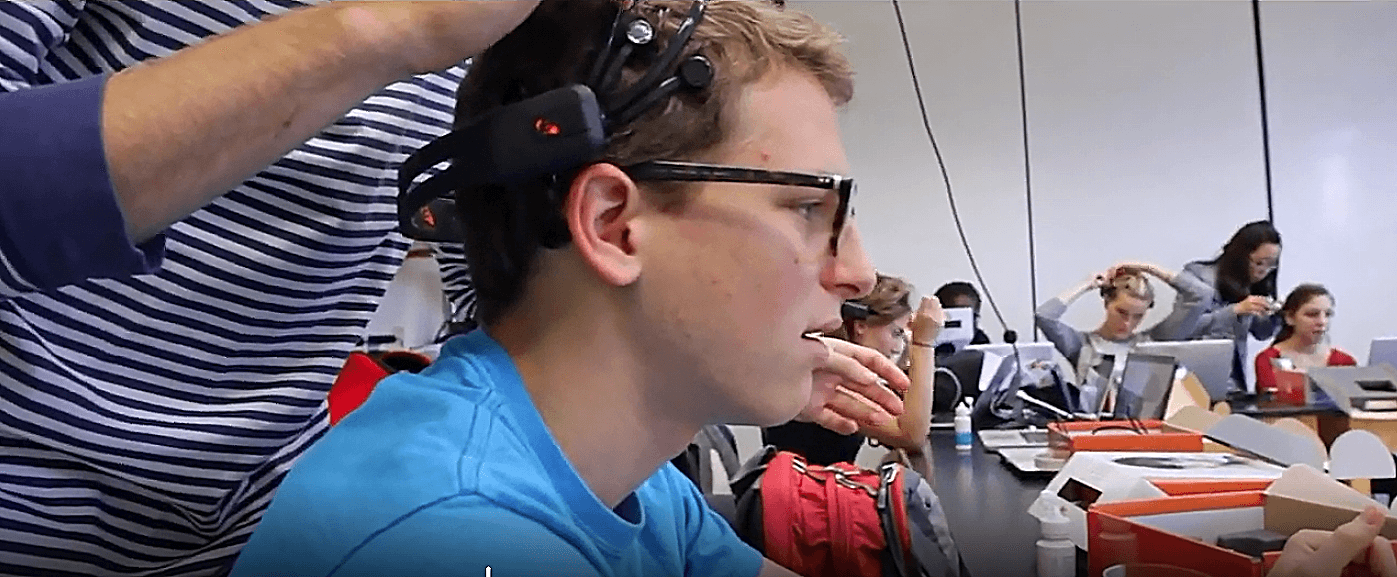
Continue reading