The Best Home EEG Devices in 2026: A Detailed Comparison
H.B. Duran
Updated on
Oct 9, 2025
The Best Home EEG Devices in 2026: A Detailed Comparison
H.B. Duran
Updated on
Oct 9, 2025
The Best Home EEG Devices in 2026: A Detailed Comparison
H.B. Duran
Updated on
Oct 9, 2025
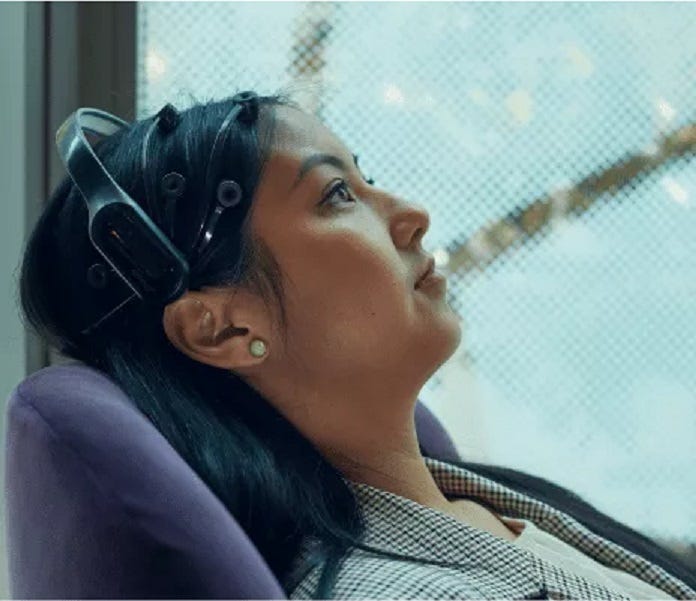
EEG technology was once largely confined to laboratories and clinical environments. Today, wireless and portable EEG systems make it possible to measure brain activity in homes, classrooms, workplaces, and other real-world settings.
But the best home EEG device depends on what you want to do with it.
Someone interested in observing their own cognitive patterns has very different requirements from a developer building a brain-computer interface or a researcher collecting EEG outside the lab.
This guide explains how home EEG works, what specifications matter, and how to choose an EEG system that fits your goals.
Key Takeaways
Home EEG devices use non-invasive sensors to measure electrical activity generated by the brain.
Different EEG systems are designed for personal use, brain-computer interface development, and scientific research.
More EEG channels provide measurements from more locations, but more channels are not automatically better for every application.
Sensor type, signal quality, software, data access, comfort, and portability are all important considerations.
Emotiv offers EEG systems ranging from discreet 2-channel earbuds to configurable 32-channel research systems.
Consumer and research EEG systems are not substitutes for clinical EEG used for medical diagnosis.
What Is a Home EEG Device?
A home EEG device is a portable electroencephalography system designed to measure brain activity outside a traditional laboratory or clinical environment.
EEG sensors detect small voltage changes at the scalp produced by the activity of populations of neurons. These signals can be recorded and processed by software to explore patterns in brain activity over time.
Unlike brain stimulation technologies, EEG is passive. The sensors measure electrical activity generated by the brain rather than sending electrical signals into it.
Portable EEG systems can make brain measurement accessible across a much wider range of environments, from individual sessions at home to real-world research studies.
What Can You Measure With EEG at Home?
What you can explore depends on the headset, sensor locations, software, and application.
EEG can provide information about patterns of brain activity associated with different cognitive states and activities. Depending on the system and software, users may be able to observe changes associated with metrics such as:
Focus and attention
Cognitive stress
Engagement
Relaxation
Excitement
Interest
The important distinction is that EEG provides information about patterns of electrical brain activity. It does not read thoughts or reveal the content of what someone is thinking.
For personal use, observing these patterns over time can provide additional context for daily routines and intentional activities. Researchers and developers can also work directly with raw EEG and other data streams for scientific studies and custom applications.
Why Use EEG Outside the Lab?
Portable EEG allows brain activity to be measured in environments where traditional laboratory systems may be impractical.
Personal Brain Insights
Wearable EEG can provide a way to observe how cognitive metrics change during intentional activities such as focused work, guided breathing, or cognitive challenges.
Rather than treating any individual measurement as a judgment of performance, users can observe patterns across sessions and consider how those patterns relate to their routines.
Real-World Research
Wireless EEG allows researchers to collect brain data in more natural environments.
Depending on the research question, this can support studies in classrooms, workplaces, product experiences, human factors, and other settings outside a traditional neuroscience laboratory.
Brain-Computer Interfaces
Developers can use real-time EEG data to build brain-computer interfaces that translate patterns of neural activity into commands or interactions.
BCI applications can range from experimental interfaces to games, accessibility research, robotics, and human-computer interaction.
Cognitive Research
Portable EEG can also support controlled research where mobility, rapid setup, or participant access makes traditional laboratory equipment less practical.
How to Choose a Home EEG Device
The best place to start is not with a particular headset. Start with the information you need.
1. Define What You Want to Measure
Ask what you actually want to accomplish.
Are you interested in observing personal cognitive patterns?
Do you need raw EEG for research?
Are you building a BCI?
Do you need to collect data from multiple locations across the scalp?
Your application determines which specifications matter.
2. Consider EEG Channel Count
An EEG channel measures electrical activity from a particular sensor location.
More channels provide measurements from more locations across the scalp. This can be valuable for research requiring broader spatial coverage.
But more channels also generally mean additional setup and more complex datasets.
A two-channel system may provide the signals needed for a specific application, while a neuroscience study may require 14, 32, or more channels.
Choose channel count based on the brain activity you need to measure rather than assuming more is always better.
3. Consider Sensor Type
EEG systems use several approaches to establishing electrical contact with the scalp.
Saline sensors can provide a balance between signal quality and setup requirements for many research applications. Gel-based systems are commonly used when researchers need configurable electrode placement and sustained contact.
Other systems use dry or semi-dry sensors to reduce preparation requirements.
Each approach involves tradeoffs among signal quality, setup time, comfort, portability, and experimental requirements.
4. Look Beyond the Headset
EEG hardware is only one part of the system.
Software determines what you can do with the data.
Depending on your application, consider whether you need:
Raw EEG access
Frequency-band data
Cognitive metrics
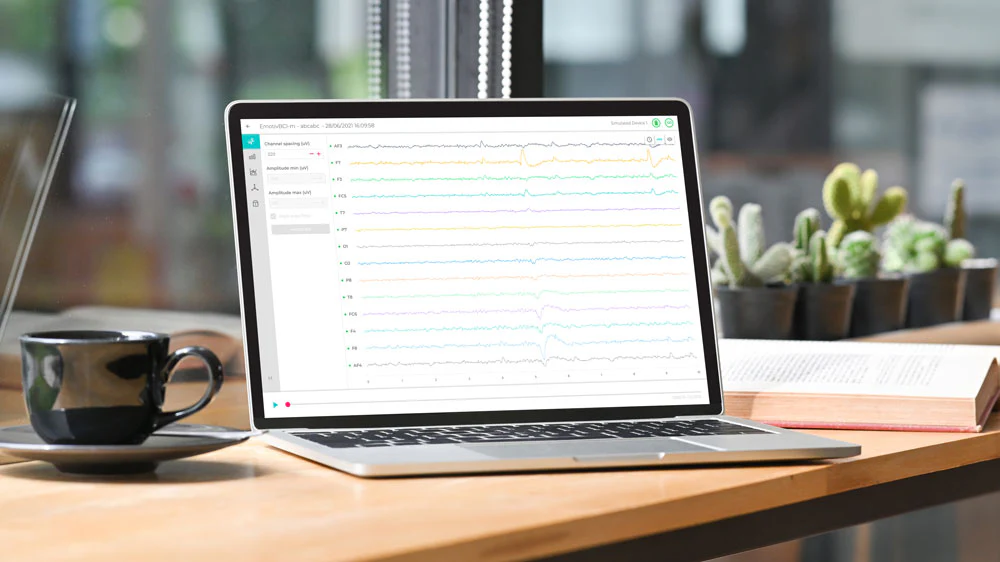
Real-time visualization
Recording and playback
Data export
Event marking
API or SDK access
Integration with analysis tools
Researchers should also consider compatibility with their existing experimental and analysis workflows.
5. Consider Where You'll Use It
A headset designed for a controlled laboratory experiment may have very different requirements from one intended for repeated sessions at home.
Consider:
Setup time
Portability
Wireless connectivity
Battery life
Participant comfort
Sensor preparation
Movement during recording
The right balance depends on the environment and the type of data you need.
6. Understand How Your Brain Data Is Handled
Brain data is deeply personal.
Before choosing an EEG platform, understand how your data is collected, processed, stored, and shared.
Look for clear information about data ownership, privacy, security, and consent. Whether EEG is being used for personal exploration, research, or product development, users should understand and maintain appropriate control over their brain data.
Comparing Emotiv EEG Devices
Emotiv offers several EEG systems designed for different applications, levels of coverage, and research requirements.
MN8: EEG in an Earbud Form Factor
2 EEG channels
MN8 integrates EEG sensors into wireless earbuds, providing a discreet way to measure brain activity during intentional sessions.
With Brainwear, users can observe changes in cognitive metrics during activities such as focus sessions, guided breathing exercises, and cognitive challenges.
Consider MN8 when you prioritize:
Simple setup
Personal brain insights
Intentional focus sessions
Portability
A familiar earbud form factor
Insight: Lightweight Multi-Channel EEG
5 EEG channels
Insight combines five-channel EEG with a lightweight headset and semi-dry polymer sensors.
It provides broader EEG coverage than ear-based sensing while maintaining portability and relatively simple setup.
Consider Insight when you need:
Five-channel EEG
Lightweight research
BCI development
Rapid setup
Real-time cognitive metrics
Raw EEG access
Epoc X: Professional Wireless EEG
14 EEG channels
Epoc X provides 14-channel wireless EEG using saline sensors positioned across the scalp.
Designed for research and development, Epoc X supports raw EEG recording, cognitive metrics, brain-computer interface development, and integration with Emotiv's research and developer tools.
Its wireless form factor also supports research beyond traditional laboratory environments.
Consider Epoc X when you need:
14-channel EEG
Broader scalp coverage
Academic or commercial research
BCI development
Raw EEG data
Real-world research
Flex 2.0: Configurable High-Density EEG
Up to 32 EEG channels
Flex 2.0 provides researchers with greater control over electrode placement and channel configuration.
Researchers can configure sensor locations around the requirements of an experimental protocol, making Flex particularly suited to advanced EEG and ERP research.
Consider Flex 2.0 when you need:
Up to 32 EEG channels
Configurable electrode placement
Saline or gel sensors
ERP research
Advanced neuroscience studies
Greater spatial coverage
Which Emotiv EEG Device Is Right for You?
Device | EEG Channels | Sensor Approach | Best Suited For |
|---|---|---|---|
2 | Ear EEG | Personal brain insights and intentional sessions (via Brainwear) | |
5 | Semi-dry | Lightweight research and BCI development | |
14 | Saline | Professional research, BCI, and real-world studies | |
Up to 32 | Saline or gel | Advanced and configurable EEG research |
There is no single configuration that is right for every application.
The best choice is the system that provides the sensor coverage, data access, software, and form factor required for what you want to do.
Home EEG for Personal Use
For personal use, ease of setup and understandable feedback may be more important than extensive EEG coverage. MN8 and Brainwear provide a streamlined way to explore personal brain data through intentional sessions.
Brainwear translates EEG measurements into cognitive metrics that can provide context for how mental effort changes during different activities. Rather than looking for a single "good" or "bad" score, users can observe changes over time and reflect on how different routines, environments, and activities correspond with their own patterns.
Home EEG for Research
Researchers have different requirements. A study may require specific electrode locations, raw EEG, higher channel counts, precise event timing, frequency-band data, or integration with experimental software.
Epoc X provides 14-channel wireless EEG for a range of research applications, while Flex 2.0 supports up to 32 configurable channels for studies requiring greater control over electrode placement.
Researchers should select EEG hardware based on the experimental design and establish their acquisition and analysis requirements before beginning data collection.
Home EEG for BCI Development
Brain-computer interfaces use measured brain activity as an input for software or hardware.
Developers may therefore prioritize real-time data access, APIs, SDKs, wireless performance, and compatibility with their development environment.
Emotiv provides tools for accessing EEG and other data streams through its software ecosystem, allowing developers to build applications around different Emotiv EEG devices depending on the required channel coverage and form factor.
What About Neurofeedback?
Neurofeedback uses information derived from measured brain activity as part of a real-time feedback loop. For example, an application may respond to changes in a measured EEG feature with visual, auditory, or interactive feedback.
The EEG headset provides the measurement. Software determines how that information is processed and how feedback is presented. This means choosing a neurofeedback system requires considering both the EEG hardware and the experience built around it.
Home EEG vs. Clinical EEG
Home and portable EEG systems should not be confused with clinical EEG used for medical diagnosis. Clinical EEG is performed by trained healthcare professionals using systems and protocols designed to investigate neurological conditions.
Consumer and research EEG systems serve different purposes. They may provide brain data for research, development, BCI applications, cognitive measurement, or personal exploration, but they should not be used to diagnose or treat a medical condition unless the specific device and application have received the appropriate regulatory authorization.
How Much Does a Home EEG Device Cost?
EEG systems vary considerably in price depending on channel count, sensor technology, hardware, software, and intended application.
When comparing systems, consider the complete cost rather than hardware price alone.
Depending on your application, that may include:
EEG hardware
Software or licensing
Replacement or consumable sensors
Accessories
Data analysis tools
Developer access
Research integrations
A lower-cost headset is not necessarily the best value if it cannot provide the data or software capabilities your application requires. Likewise, a higher-channel research system may provide capabilities that are unnecessary for a simpler application at prices up to hundreds of thousands of dollars. Emotiv wireless EEG, however, begins at just $399.
Frequently Asked Questions
Can You Use EEG at Home?
Yes. Portable and wireless EEG systems make it possible to measure brain activity outside traditional laboratories.
The appropriate device depends on what you want to measure, the environment where you'll use it, and the level of EEG coverage and data access required.
Is EEG Non-Invasive?
Yes. EEG is a non-invasive measurement technique. EEG sensors passively detect electrical activity generated by the brain rather than sending electrical stimulation into it.
Can a Home EEG Device Read Your Thoughts?
No. EEG measures patterns of electrical brain activity. It does not reveal specific thoughts, words, memories, or ideas.
How Many EEG Channels Do I Need?
It depends on your application.
Fewer channels may be appropriate when you need information from specific sensor locations. Research involving broader spatial coverage may require 14, 32, or more channels.
Start with what you need to measure, then choose the channel count.
Can I Access Raw EEG Data?
Emotiv research and developer solutions provide access to raw EEG with EmotivPRO software and licensing. The appropriate software depends on whether you need to record EEG, visualize data, export datasets, analyze recordings, or access real-time data streams for custom applications.
Can Home EEG Diagnose a Medical Condition?
Consumer and research EEG systems should not be used to diagnose medical conditions unless the specific product and application have received the appropriate regulatory authorization. If you have concerns about neurological symptoms or a medical condition, EEG interpretation should be performed by an appropriately qualified healthcare professional.
*Disclaimer – Emotiv products are intended to be used for research applications and personal use only. Our products are not sold as Medical Devices as defined in EU directive 93/42/EEC. Our products are not designed or intended to be used for diagnosis or treatment of disease.
Find the EEG System That Fits Your Goals
The best home EEG device isn't necessarily the one with the most sensors or the longest list of features. It's the one that provides the brain data you need in a form factor that works for your application.
Whether you're exploring your own cognitive patterns, developing a brain-computer interface, or taking EEG research beyond the lab, Emotiv offers hardware and software designed for different levels of brain measurement.
EEG technology was once largely confined to laboratories and clinical environments. Today, wireless and portable EEG systems make it possible to measure brain activity in homes, classrooms, workplaces, and other real-world settings.
But the best home EEG device depends on what you want to do with it.
Someone interested in observing their own cognitive patterns has very different requirements from a developer building a brain-computer interface or a researcher collecting EEG outside the lab.
This guide explains how home EEG works, what specifications matter, and how to choose an EEG system that fits your goals.
Key Takeaways
Home EEG devices use non-invasive sensors to measure electrical activity generated by the brain.
Different EEG systems are designed for personal use, brain-computer interface development, and scientific research.
More EEG channels provide measurements from more locations, but more channels are not automatically better for every application.
Sensor type, signal quality, software, data access, comfort, and portability are all important considerations.
Emotiv offers EEG systems ranging from discreet 2-channel earbuds to configurable 32-channel research systems.
Consumer and research EEG systems are not substitutes for clinical EEG used for medical diagnosis.
What Is a Home EEG Device?
A home EEG device is a portable electroencephalography system designed to measure brain activity outside a traditional laboratory or clinical environment.
EEG sensors detect small voltage changes at the scalp produced by the activity of populations of neurons. These signals can be recorded and processed by software to explore patterns in brain activity over time.
Unlike brain stimulation technologies, EEG is passive. The sensors measure electrical activity generated by the brain rather than sending electrical signals into it.
Portable EEG systems can make brain measurement accessible across a much wider range of environments, from individual sessions at home to real-world research studies.
What Can You Measure With EEG at Home?
What you can explore depends on the headset, sensor locations, software, and application.
EEG can provide information about patterns of brain activity associated with different cognitive states and activities. Depending on the system and software, users may be able to observe changes associated with metrics such as:
Focus and attention
Cognitive stress
Engagement
Relaxation
Excitement
Interest
The important distinction is that EEG provides information about patterns of electrical brain activity. It does not read thoughts or reveal the content of what someone is thinking.
For personal use, observing these patterns over time can provide additional context for daily routines and intentional activities. Researchers and developers can also work directly with raw EEG and other data streams for scientific studies and custom applications.
Why Use EEG Outside the Lab?
Portable EEG allows brain activity to be measured in environments where traditional laboratory systems may be impractical.
Personal Brain Insights
Wearable EEG can provide a way to observe how cognitive metrics change during intentional activities such as focused work, guided breathing, or cognitive challenges.
Rather than treating any individual measurement as a judgment of performance, users can observe patterns across sessions and consider how those patterns relate to their routines.
Real-World Research
Wireless EEG allows researchers to collect brain data in more natural environments.
Depending on the research question, this can support studies in classrooms, workplaces, product experiences, human factors, and other settings outside a traditional neuroscience laboratory.
Brain-Computer Interfaces
Developers can use real-time EEG data to build brain-computer interfaces that translate patterns of neural activity into commands or interactions.
BCI applications can range from experimental interfaces to games, accessibility research, robotics, and human-computer interaction.
Cognitive Research
Portable EEG can also support controlled research where mobility, rapid setup, or participant access makes traditional laboratory equipment less practical.
How to Choose a Home EEG Device
The best place to start is not with a particular headset. Start with the information you need.
1. Define What You Want to Measure
Ask what you actually want to accomplish.
Are you interested in observing personal cognitive patterns?
Do you need raw EEG for research?
Are you building a BCI?
Do you need to collect data from multiple locations across the scalp?
Your application determines which specifications matter.
2. Consider EEG Channel Count
An EEG channel measures electrical activity from a particular sensor location.
More channels provide measurements from more locations across the scalp. This can be valuable for research requiring broader spatial coverage.
But more channels also generally mean additional setup and more complex datasets.
A two-channel system may provide the signals needed for a specific application, while a neuroscience study may require 14, 32, or more channels.
Choose channel count based on the brain activity you need to measure rather than assuming more is always better.
3. Consider Sensor Type
EEG systems use several approaches to establishing electrical contact with the scalp.
Saline sensors can provide a balance between signal quality and setup requirements for many research applications. Gel-based systems are commonly used when researchers need configurable electrode placement and sustained contact.
Other systems use dry or semi-dry sensors to reduce preparation requirements.
Each approach involves tradeoffs among signal quality, setup time, comfort, portability, and experimental requirements.
4. Look Beyond the Headset
EEG hardware is only one part of the system.
Software determines what you can do with the data.
Depending on your application, consider whether you need:
Raw EEG access
Frequency-band data
Cognitive metrics
Real-time visualization
Recording and playback
Data export
Event marking
API or SDK access
Integration with analysis tools
Researchers should also consider compatibility with their existing experimental and analysis workflows.
5. Consider Where You'll Use It
A headset designed for a controlled laboratory experiment may have very different requirements from one intended for repeated sessions at home.
Consider:
Setup time
Portability
Wireless connectivity
Battery life
Participant comfort
Sensor preparation
Movement during recording
The right balance depends on the environment and the type of data you need.
6. Understand How Your Brain Data Is Handled
Brain data is deeply personal.
Before choosing an EEG platform, understand how your data is collected, processed, stored, and shared.
Look for clear information about data ownership, privacy, security, and consent. Whether EEG is being used for personal exploration, research, or product development, users should understand and maintain appropriate control over their brain data.
Comparing Emotiv EEG Devices
Emotiv offers several EEG systems designed for different applications, levels of coverage, and research requirements.
MN8: EEG in an Earbud Form Factor
2 EEG channels
MN8 integrates EEG sensors into wireless earbuds, providing a discreet way to measure brain activity during intentional sessions.
With Brainwear, users can observe changes in cognitive metrics during activities such as focus sessions, guided breathing exercises, and cognitive challenges.
Consider MN8 when you prioritize:
Simple setup
Personal brain insights
Intentional focus sessions
Portability
A familiar earbud form factor
Insight: Lightweight Multi-Channel EEG
5 EEG channels
Insight combines five-channel EEG with a lightweight headset and semi-dry polymer sensors.
It provides broader EEG coverage than ear-based sensing while maintaining portability and relatively simple setup.
Consider Insight when you need:
Five-channel EEG
Lightweight research
BCI development
Rapid setup
Real-time cognitive metrics
Raw EEG access
Epoc X: Professional Wireless EEG
14 EEG channels
Epoc X provides 14-channel wireless EEG using saline sensors positioned across the scalp.
Designed for research and development, Epoc X supports raw EEG recording, cognitive metrics, brain-computer interface development, and integration with Emotiv's research and developer tools.
Its wireless form factor also supports research beyond traditional laboratory environments.
Consider Epoc X when you need:
14-channel EEG
Broader scalp coverage
Academic or commercial research
BCI development
Raw EEG data
Real-world research
Flex 2.0: Configurable High-Density EEG
Up to 32 EEG channels
Flex 2.0 provides researchers with greater control over electrode placement and channel configuration.
Researchers can configure sensor locations around the requirements of an experimental protocol, making Flex particularly suited to advanced EEG and ERP research.
Consider Flex 2.0 when you need:
Up to 32 EEG channels
Configurable electrode placement
Saline or gel sensors
ERP research
Advanced neuroscience studies
Greater spatial coverage
Which Emotiv EEG Device Is Right for You?
Device | EEG Channels | Sensor Approach | Best Suited For |
|---|---|---|---|
2 | Ear EEG | Personal brain insights and intentional sessions (via Brainwear) | |
5 | Semi-dry | Lightweight research and BCI development | |
14 | Saline | Professional research, BCI, and real-world studies | |
Up to 32 | Saline or gel | Advanced and configurable EEG research |
There is no single configuration that is right for every application.
The best choice is the system that provides the sensor coverage, data access, software, and form factor required for what you want to do.
Home EEG for Personal Use
For personal use, ease of setup and understandable feedback may be more important than extensive EEG coverage. MN8 and Brainwear provide a streamlined way to explore personal brain data through intentional sessions.
Brainwear translates EEG measurements into cognitive metrics that can provide context for how mental effort changes during different activities. Rather than looking for a single "good" or "bad" score, users can observe changes over time and reflect on how different routines, environments, and activities correspond with their own patterns.
Home EEG for Research
Researchers have different requirements. A study may require specific electrode locations, raw EEG, higher channel counts, precise event timing, frequency-band data, or integration with experimental software.
Epoc X provides 14-channel wireless EEG for a range of research applications, while Flex 2.0 supports up to 32 configurable channels for studies requiring greater control over electrode placement.
Researchers should select EEG hardware based on the experimental design and establish their acquisition and analysis requirements before beginning data collection.
Home EEG for BCI Development
Brain-computer interfaces use measured brain activity as an input for software or hardware.
Developers may therefore prioritize real-time data access, APIs, SDKs, wireless performance, and compatibility with their development environment.
Emotiv provides tools for accessing EEG and other data streams through its software ecosystem, allowing developers to build applications around different Emotiv EEG devices depending on the required channel coverage and form factor.
What About Neurofeedback?
Neurofeedback uses information derived from measured brain activity as part of a real-time feedback loop. For example, an application may respond to changes in a measured EEG feature with visual, auditory, or interactive feedback.
The EEG headset provides the measurement. Software determines how that information is processed and how feedback is presented. This means choosing a neurofeedback system requires considering both the EEG hardware and the experience built around it.
Home EEG vs. Clinical EEG
Home and portable EEG systems should not be confused with clinical EEG used for medical diagnosis. Clinical EEG is performed by trained healthcare professionals using systems and protocols designed to investigate neurological conditions.
Consumer and research EEG systems serve different purposes. They may provide brain data for research, development, BCI applications, cognitive measurement, or personal exploration, but they should not be used to diagnose or treat a medical condition unless the specific device and application have received the appropriate regulatory authorization.
How Much Does a Home EEG Device Cost?
EEG systems vary considerably in price depending on channel count, sensor technology, hardware, software, and intended application.
When comparing systems, consider the complete cost rather than hardware price alone.
Depending on your application, that may include:
EEG hardware
Software or licensing
Replacement or consumable sensors
Accessories
Data analysis tools
Developer access
Research integrations
A lower-cost headset is not necessarily the best value if it cannot provide the data or software capabilities your application requires. Likewise, a higher-channel research system may provide capabilities that are unnecessary for a simpler application at prices up to hundreds of thousands of dollars. Emotiv wireless EEG, however, begins at just $399.
Frequently Asked Questions
Can You Use EEG at Home?
Yes. Portable and wireless EEG systems make it possible to measure brain activity outside traditional laboratories.
The appropriate device depends on what you want to measure, the environment where you'll use it, and the level of EEG coverage and data access required.
Is EEG Non-Invasive?
Yes. EEG is a non-invasive measurement technique. EEG sensors passively detect electrical activity generated by the brain rather than sending electrical stimulation into it.
Can a Home EEG Device Read Your Thoughts?
No. EEG measures patterns of electrical brain activity. It does not reveal specific thoughts, words, memories, or ideas.
How Many EEG Channels Do I Need?
It depends on your application.
Fewer channels may be appropriate when you need information from specific sensor locations. Research involving broader spatial coverage may require 14, 32, or more channels.
Start with what you need to measure, then choose the channel count.
Can I Access Raw EEG Data?
Emotiv research and developer solutions provide access to raw EEG with EmotivPRO software and licensing. The appropriate software depends on whether you need to record EEG, visualize data, export datasets, analyze recordings, or access real-time data streams for custom applications.
Can Home EEG Diagnose a Medical Condition?
Consumer and research EEG systems should not be used to diagnose medical conditions unless the specific product and application have received the appropriate regulatory authorization. If you have concerns about neurological symptoms or a medical condition, EEG interpretation should be performed by an appropriately qualified healthcare professional.
*Disclaimer – Emotiv products are intended to be used for research applications and personal use only. Our products are not sold as Medical Devices as defined in EU directive 93/42/EEC. Our products are not designed or intended to be used for diagnosis or treatment of disease.
Find the EEG System That Fits Your Goals
The best home EEG device isn't necessarily the one with the most sensors or the longest list of features. It's the one that provides the brain data you need in a form factor that works for your application.
Whether you're exploring your own cognitive patterns, developing a brain-computer interface, or taking EEG research beyond the lab, Emotiv offers hardware and software designed for different levels of brain measurement.
EEG technology was once largely confined to laboratories and clinical environments. Today, wireless and portable EEG systems make it possible to measure brain activity in homes, classrooms, workplaces, and other real-world settings.
But the best home EEG device depends on what you want to do with it.
Someone interested in observing their own cognitive patterns has very different requirements from a developer building a brain-computer interface or a researcher collecting EEG outside the lab.
This guide explains how home EEG works, what specifications matter, and how to choose an EEG system that fits your goals.
Key Takeaways
Home EEG devices use non-invasive sensors to measure electrical activity generated by the brain.
Different EEG systems are designed for personal use, brain-computer interface development, and scientific research.
More EEG channels provide measurements from more locations, but more channels are not automatically better for every application.
Sensor type, signal quality, software, data access, comfort, and portability are all important considerations.
Emotiv offers EEG systems ranging from discreet 2-channel earbuds to configurable 32-channel research systems.
Consumer and research EEG systems are not substitutes for clinical EEG used for medical diagnosis.
What Is a Home EEG Device?
A home EEG device is a portable electroencephalography system designed to measure brain activity outside a traditional laboratory or clinical environment.
EEG sensors detect small voltage changes at the scalp produced by the activity of populations of neurons. These signals can be recorded and processed by software to explore patterns in brain activity over time.
Unlike brain stimulation technologies, EEG is passive. The sensors measure electrical activity generated by the brain rather than sending electrical signals into it.
Portable EEG systems can make brain measurement accessible across a much wider range of environments, from individual sessions at home to real-world research studies.
What Can You Measure With EEG at Home?
What you can explore depends on the headset, sensor locations, software, and application.
EEG can provide information about patterns of brain activity associated with different cognitive states and activities. Depending on the system and software, users may be able to observe changes associated with metrics such as:
Focus and attention
Cognitive stress
Engagement
Relaxation
Excitement
Interest
The important distinction is that EEG provides information about patterns of electrical brain activity. It does not read thoughts or reveal the content of what someone is thinking.
For personal use, observing these patterns over time can provide additional context for daily routines and intentional activities. Researchers and developers can also work directly with raw EEG and other data streams for scientific studies and custom applications.
Why Use EEG Outside the Lab?
Portable EEG allows brain activity to be measured in environments where traditional laboratory systems may be impractical.
Personal Brain Insights
Wearable EEG can provide a way to observe how cognitive metrics change during intentional activities such as focused work, guided breathing, or cognitive challenges.
Rather than treating any individual measurement as a judgment of performance, users can observe patterns across sessions and consider how those patterns relate to their routines.
Real-World Research
Wireless EEG allows researchers to collect brain data in more natural environments.
Depending on the research question, this can support studies in classrooms, workplaces, product experiences, human factors, and other settings outside a traditional neuroscience laboratory.
Brain-Computer Interfaces
Developers can use real-time EEG data to build brain-computer interfaces that translate patterns of neural activity into commands or interactions.
BCI applications can range from experimental interfaces to games, accessibility research, robotics, and human-computer interaction.
Cognitive Research
Portable EEG can also support controlled research where mobility, rapid setup, or participant access makes traditional laboratory equipment less practical.
How to Choose a Home EEG Device
The best place to start is not with a particular headset. Start with the information you need.
1. Define What You Want to Measure
Ask what you actually want to accomplish.
Are you interested in observing personal cognitive patterns?
Do you need raw EEG for research?
Are you building a BCI?
Do you need to collect data from multiple locations across the scalp?
Your application determines which specifications matter.
2. Consider EEG Channel Count
An EEG channel measures electrical activity from a particular sensor location.
More channels provide measurements from more locations across the scalp. This can be valuable for research requiring broader spatial coverage.
But more channels also generally mean additional setup and more complex datasets.
A two-channel system may provide the signals needed for a specific application, while a neuroscience study may require 14, 32, or more channels.
Choose channel count based on the brain activity you need to measure rather than assuming more is always better.
3. Consider Sensor Type
EEG systems use several approaches to establishing electrical contact with the scalp.
Saline sensors can provide a balance between signal quality and setup requirements for many research applications. Gel-based systems are commonly used when researchers need configurable electrode placement and sustained contact.
Other systems use dry or semi-dry sensors to reduce preparation requirements.
Each approach involves tradeoffs among signal quality, setup time, comfort, portability, and experimental requirements.
4. Look Beyond the Headset
EEG hardware is only one part of the system.
Software determines what you can do with the data.
Depending on your application, consider whether you need:
Raw EEG access
Frequency-band data
Cognitive metrics
Real-time visualization
Recording and playback
Data export
Event marking
API or SDK access
Integration with analysis tools
Researchers should also consider compatibility with their existing experimental and analysis workflows.
5. Consider Where You'll Use It
A headset designed for a controlled laboratory experiment may have very different requirements from one intended for repeated sessions at home.
Consider:
Setup time
Portability
Wireless connectivity
Battery life
Participant comfort
Sensor preparation
Movement during recording
The right balance depends on the environment and the type of data you need.
6. Understand How Your Brain Data Is Handled
Brain data is deeply personal.
Before choosing an EEG platform, understand how your data is collected, processed, stored, and shared.
Look for clear information about data ownership, privacy, security, and consent. Whether EEG is being used for personal exploration, research, or product development, users should understand and maintain appropriate control over their brain data.
Comparing Emotiv EEG Devices
Emotiv offers several EEG systems designed for different applications, levels of coverage, and research requirements.
MN8: EEG in an Earbud Form Factor
2 EEG channels
MN8 integrates EEG sensors into wireless earbuds, providing a discreet way to measure brain activity during intentional sessions.
With Brainwear, users can observe changes in cognitive metrics during activities such as focus sessions, guided breathing exercises, and cognitive challenges.
Consider MN8 when you prioritize:
Simple setup
Personal brain insights
Intentional focus sessions
Portability
A familiar earbud form factor
Insight: Lightweight Multi-Channel EEG
5 EEG channels
Insight combines five-channel EEG with a lightweight headset and semi-dry polymer sensors.
It provides broader EEG coverage than ear-based sensing while maintaining portability and relatively simple setup.
Consider Insight when you need:
Five-channel EEG
Lightweight research
BCI development
Rapid setup
Real-time cognitive metrics
Raw EEG access
Epoc X: Professional Wireless EEG
14 EEG channels
Epoc X provides 14-channel wireless EEG using saline sensors positioned across the scalp.
Designed for research and development, Epoc X supports raw EEG recording, cognitive metrics, brain-computer interface development, and integration with Emotiv's research and developer tools.
Its wireless form factor also supports research beyond traditional laboratory environments.
Consider Epoc X when you need:
14-channel EEG
Broader scalp coverage
Academic or commercial research
BCI development
Raw EEG data
Real-world research
Flex 2.0: Configurable High-Density EEG
Up to 32 EEG channels
Flex 2.0 provides researchers with greater control over electrode placement and channel configuration.
Researchers can configure sensor locations around the requirements of an experimental protocol, making Flex particularly suited to advanced EEG and ERP research.
Consider Flex 2.0 when you need:
Up to 32 EEG channels
Configurable electrode placement
Saline or gel sensors
ERP research
Advanced neuroscience studies
Greater spatial coverage
Which Emotiv EEG Device Is Right for You?
Device | EEG Channels | Sensor Approach | Best Suited For |
|---|---|---|---|
2 | Ear EEG | Personal brain insights and intentional sessions (via Brainwear) | |
5 | Semi-dry | Lightweight research and BCI development | |
14 | Saline | Professional research, BCI, and real-world studies | |
Up to 32 | Saline or gel | Advanced and configurable EEG research |
There is no single configuration that is right for every application.
The best choice is the system that provides the sensor coverage, data access, software, and form factor required for what you want to do.
Home EEG for Personal Use
For personal use, ease of setup and understandable feedback may be more important than extensive EEG coverage. MN8 and Brainwear provide a streamlined way to explore personal brain data through intentional sessions.
Brainwear translates EEG measurements into cognitive metrics that can provide context for how mental effort changes during different activities. Rather than looking for a single "good" or "bad" score, users can observe changes over time and reflect on how different routines, environments, and activities correspond with their own patterns.
Home EEG for Research
Researchers have different requirements. A study may require specific electrode locations, raw EEG, higher channel counts, precise event timing, frequency-band data, or integration with experimental software.
Epoc X provides 14-channel wireless EEG for a range of research applications, while Flex 2.0 supports up to 32 configurable channels for studies requiring greater control over electrode placement.
Researchers should select EEG hardware based on the experimental design and establish their acquisition and analysis requirements before beginning data collection.
Home EEG for BCI Development
Brain-computer interfaces use measured brain activity as an input for software or hardware.
Developers may therefore prioritize real-time data access, APIs, SDKs, wireless performance, and compatibility with their development environment.
Emotiv provides tools for accessing EEG and other data streams through its software ecosystem, allowing developers to build applications around different Emotiv EEG devices depending on the required channel coverage and form factor.
What About Neurofeedback?
Neurofeedback uses information derived from measured brain activity as part of a real-time feedback loop. For example, an application may respond to changes in a measured EEG feature with visual, auditory, or interactive feedback.
The EEG headset provides the measurement. Software determines how that information is processed and how feedback is presented. This means choosing a neurofeedback system requires considering both the EEG hardware and the experience built around it.
Home EEG vs. Clinical EEG
Home and portable EEG systems should not be confused with clinical EEG used for medical diagnosis. Clinical EEG is performed by trained healthcare professionals using systems and protocols designed to investigate neurological conditions.
Consumer and research EEG systems serve different purposes. They may provide brain data for research, development, BCI applications, cognitive measurement, or personal exploration, but they should not be used to diagnose or treat a medical condition unless the specific device and application have received the appropriate regulatory authorization.
How Much Does a Home EEG Device Cost?
EEG systems vary considerably in price depending on channel count, sensor technology, hardware, software, and intended application.
When comparing systems, consider the complete cost rather than hardware price alone.
Depending on your application, that may include:
EEG hardware
Software or licensing
Replacement or consumable sensors
Accessories
Data analysis tools
Developer access
Research integrations
A lower-cost headset is not necessarily the best value if it cannot provide the data or software capabilities your application requires. Likewise, a higher-channel research system may provide capabilities that are unnecessary for a simpler application at prices up to hundreds of thousands of dollars. Emotiv wireless EEG, however, begins at just $399.
Frequently Asked Questions
Can You Use EEG at Home?
Yes. Portable and wireless EEG systems make it possible to measure brain activity outside traditional laboratories.
The appropriate device depends on what you want to measure, the environment where you'll use it, and the level of EEG coverage and data access required.
Is EEG Non-Invasive?
Yes. EEG is a non-invasive measurement technique. EEG sensors passively detect electrical activity generated by the brain rather than sending electrical stimulation into it.
Can a Home EEG Device Read Your Thoughts?
No. EEG measures patterns of electrical brain activity. It does not reveal specific thoughts, words, memories, or ideas.
How Many EEG Channels Do I Need?
It depends on your application.
Fewer channels may be appropriate when you need information from specific sensor locations. Research involving broader spatial coverage may require 14, 32, or more channels.
Start with what you need to measure, then choose the channel count.
Can I Access Raw EEG Data?
Emotiv research and developer solutions provide access to raw EEG with EmotivPRO software and licensing. The appropriate software depends on whether you need to record EEG, visualize data, export datasets, analyze recordings, or access real-time data streams for custom applications.
Can Home EEG Diagnose a Medical Condition?
Consumer and research EEG systems should not be used to diagnose medical conditions unless the specific product and application have received the appropriate regulatory authorization. If you have concerns about neurological symptoms or a medical condition, EEG interpretation should be performed by an appropriately qualified healthcare professional.
*Disclaimer – Emotiv products are intended to be used for research applications and personal use only. Our products are not sold as Medical Devices as defined in EU directive 93/42/EEC. Our products are not designed or intended to be used for diagnosis or treatment of disease.
Find the EEG System That Fits Your Goals
The best home EEG device isn't necessarily the one with the most sensors or the longest list of features. It's the one that provides the brain data you need in a form factor that works for your application.
Whether you're exploring your own cognitive patterns, developing a brain-computer interface, or taking EEG research beyond the lab, Emotiv offers hardware and software designed for different levels of brain measurement.
Continue reading