Challenge your memory! Play the new N-Back game in the Emotiv App
Challenge your memory! Play the new N-Back game in the Emotiv App
Challenge your memory! Play the new N-Back game in the Emotiv App
How to Choose the Best EEG Device for Your Needs
Emotiv
Share:



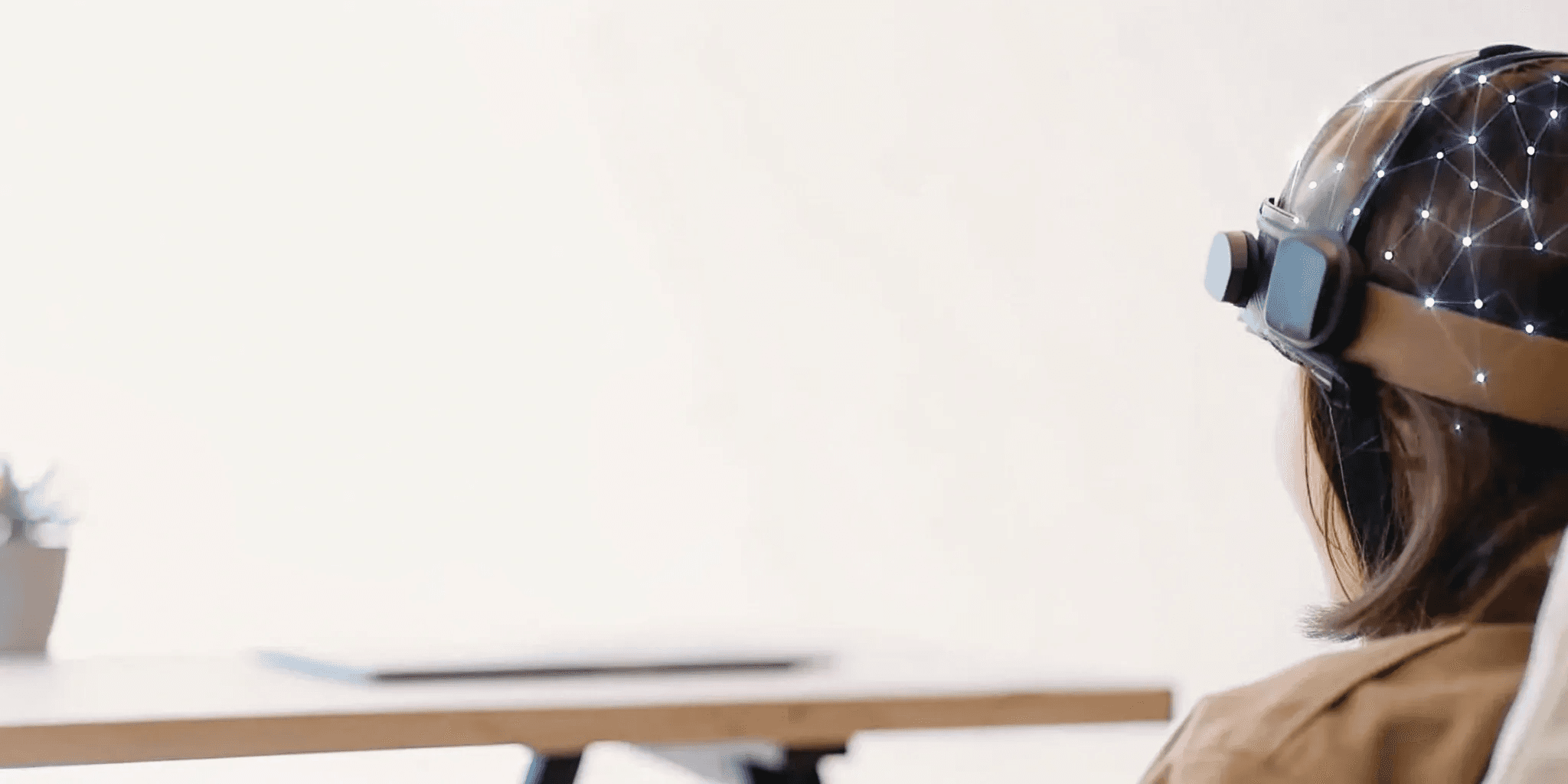
Not long ago, EEG technology was confined to clinical labs, involving messy gels and bulky, wired equipment. Today, the technology has become incredibly accessible, with wireless, comfortable, and user-friendly headsets available to researchers, developers, and curious individuals alike. This leap forward has opened up a world of possibilities, but it also creates a new challenge: choosing the right device from a growing market. To find the best EEG device for your needs, you first need to understand the fundamentals. We’ll break down what key terms like channel count and sensor type actually mean and explain why software is just as important as the hardware itself.
Key Takeaways
Choose a Device That Fits Your Purpose: Instead of searching for the "best" overall device, focus on what you need to accomplish. A high-channel headset is ideal for detailed academic research, while a simpler, user-friendly device is perfect for education or accessing cognitive wellness tools.
Understand the Key Trade-Offs: Features like channel count and sensor type directly impact your experience and data. More channels provide greater detail for research, while different sensors (dry, saline, gel) offer a trade-off between quick setup and the signal stability needed for longer sessions.
Recognize That Software Is Half the Equation: The hardware collects raw brain signals, but the software is what translates that complex data into usable insights. When comparing options, always evaluate the accompanying software platform to ensure it can support your analysis and project goals.
What Makes an EEG Device the "Best" for Your Needs?
Finding the "best" EEG device isn't about picking the one with the most features or the highest price tag. The truth is, the best device is the one that aligns perfectly with your specific goals. What works for a clinical researcher running a complex study will be entirely different from what a developer needs to build their first brain-computer interface application. The EEG market is growing quickly, and with it, the technology is becoming more powerful and accessible. This is great news for you, as it means more specialized options are available than ever before.
To find your perfect match, you need to start by asking the right questions. What problem are you trying to solve or what question are you trying to answer? Taking the time to define your project's scope now will save you from investing in a device that’s either overkill or underpowered for your needs. For example, are you conducting in-depth academic research that requires a high channel count for precise source localization? Or are you a neuromarketer who needs a portable, easy-to-use system for studies in real-world environments? Perhaps you're simply curious and want to access cognitive wellness tools with a streamlined device. Each of these scenarios points to a different set of ideal features. Modern EEG systems offer a huge range of capabilities, from simplified setups for rapid data gathering to advanced integrations with other technologies like virtual reality. Thinking clearly about your end goal will help you filter through the noise and focus on the features that truly matter for your project, ensuring you invest in a tool that will support your work now and in the future.
Comparing EEG Devices for Professional Research
When your work demands the highest level of detail, you need an EEG device built for professional research. These systems are all about high-density data, comprehensive scalp coverage, and the reliability to produce publishable results. They often feature a higher channel count—typically 32 channels or more—and advanced sensor technology to capture nuanced brain activity with greater precision. This level of detail is essential for complex studies in fields like cognitive neuroscience, clinical psychology, and neuromarketing. Unlike devices designed for personal use or education, professional research tools are engineered for rigorous scientific inquiry, where data quality and replicability are paramount.
Choosing the right professional-grade device is a critical first step. The decision often comes down to the specific requirements of your research protocol. Do you need the flexibility to place sensors anywhere on the scalp? Is participant comfort during long sessions a priority? What kind of software integration and data analysis tools will you need? These are all important questions to consider. The ideal device not only provides clean data but also fits seamlessly into your workflow. Below, we’ll compare some of the leading options available for researchers who need robust and precise data for their studies, looking at how each one addresses these key considerations to help you find the best fit for your lab.
Emotiv Flex Saline - 32 Channel EEG Headset
Our Emotiv Flex Saline headset is a gold standard for researchers who require high-density, comprehensive scalp coverage. With 32 channels, it’s designed for studies that demand detailed and accurate data collection across the entire brain. The flexible design allows you to place sensors according to standard placements like the 10-20 system or create custom montages for your specific research questions. The saline-based sensors are quick to set up, making the preparation process efficient without compromising on signal quality. It’s an excellent choice for professional research applications where precision and adaptability are key.
Emotiv Flex Gel - 32 Channel EEG Headset
Similar to its saline counterpart, our Emotiv Flex Gel headset also provides high-density, 32-channel data collection suitable for detailed research. The key difference lies in the gel-based electrodes, which are often preferred for longer recording sessions because they can maintain a strong, stable connection for hours. This enhances signal quality and is crucial for obtaining reliable results in studies that require extended participant engagement. The gel sensors also offer a comfortable fit, making this headset a great option for researchers looking for a balance between top-tier performance and user comfort during lengthy experiments.
g.Nautilus PRO Flexible
The g.Nautilus PRO Flexible is a wireless EEG system known for its high accuracy and adaptable design. It's well-suited for a range of applications, including medical, clinical, and research purposes. The device offers flexibility in its sensor placement and is designed to be comfortable for participants. Its accompanying software provides robust tools that can enhance data analysis capabilities. For researchers who need a versatile and reliable EEG solution for demanding experimental setups, the g.Nautilus PRO Flexible presents a strong option.
Advanced Brain Monitoring B-Alert X-Series
The B-Alert X-Series from Advanced Brain Monitoring is engineered specifically for advanced research applications. It provides high-quality EEG data while placing a strong emphasis on usability and comfort, particularly for extended sessions. This makes the device ideal for researchers conducting long-term studies where participant comfort is essential for maintaining data integrity over time. The system is known for its user-friendly interface and reliable performance, making it a solid contender for labs that need to run lengthy or complex experiments without compromising on data quality.
Which EEG Devices Work Best for Academic and Development Projects?
When you’re working on an academic study or a development project, your needs are specific. You require a device that delivers clean, reliable data and fits the unique demands of your work, whether that’s conducting cognitive science experiments or building a new brain-computer interface. The "best" device is the one that aligns with your project's complexity, environment, and goals. For some, that means a high channel count for detailed topographical analysis, while for others, portability and quick setup are the top priorities for conducting research in real-world settings.
Choosing the right tool involves balancing channel count, sensor type, and software compatibility. For academic and development work, you’ll want a system that offers robust data acquisition and the flexibility to export and analyze that data with your preferred tools. Portability can also be a major factor, especially for studies conducted outside of a traditional lab. To help you find the right fit, let's look at a few standout devices that are popular among researchers and developers for their performance and specific capabilities. Each of these options serves a different niche within the research community, from high-density mobile studies to clinical-grade applications.
Emotiv Epoc X - 14 Channel EEG Headset
The Epoc X is a trusted workhorse in the research community, and for good reason. It strikes an excellent balance between high-resolution data and a practical, wireless design. With 14 channels and saline-based sensors, it’s quick to set up, making it ideal for studies that require testing multiple participants in a day. Its portability allows you to conduct academic research in real-world environments, moving beyond the confines of the lab. This headset is a solid choice for a wide range of applications, including cognitive performance studies, psychology research, and BCI development projects where reliable data and ease of use are top priorities.
g.Nautilus Research
For researchers working in medical or clinical settings, the g.Nautilus system is a prominent option. It is designed to meet the rigorous standards required for clinical applications and holds both FDA clearance and CE certification. This device is built for high-accuracy data collection, which is essential for fields like neurorehabilitation and clinical neuroscience. Its robust design and software support are geared toward researchers who need to adhere to strict protocols for conducting and reporting EEG studies. If your work requires medical-grade precision and compliance with clinical standards, this is a device to consider.
Cognionics Quick-30
The Cognionics Quick-30 stands out for its design, which is optimized for integration with other technologies, particularly virtual reality (VR). This makes it an exciting tool for researchers exploring brain activity in immersive digital environments. Its dry electrode system is user-friendly and comfortable for longer sessions, which is a huge plus for complex experiments. This device is especially valuable for academic projects focused on BCI development and for using virtual reality for cognitive training, where understanding the brain’s responses within simulated worlds is key.
What Are the Best EEG Devices for Beginners and Educators?
If you're just starting with EEG or want to introduce it in a classroom, you don't need a complex, 32-channel research device. The best starting points are devices that are easy to set up, comfortable to wear, and come with software that makes brain data understandable and engaging. For beginners and educators, the focus is less on granular data analysis and more on accessibility and practical application. You want a device that you can get running in minutes, not hours, so you can spend more time exploring and learning.
These entry-level devices are perfect for exploring concepts like focus, relaxation, and the basics of brain-computer interfaces. They provide a fantastic, hands-on way to learn about neuroscience without the steep learning curve associated with professional research equipment. The goal is to spark curiosity and provide a clear, accessible window into brain activity. Whether you're a teacher planning a STEM lesson or an individual looking for tools to support your cognitive wellness routine, the devices in this category are designed to help. They offer a thoughtful balance of useful data and a user-friendly experience that makes the world of EEG accessible to everyone.
Emotiv Insight - 5 Channel EEG Headset
Our Emotiv Insight is a fantastic all-rounder for anyone new to EEG. With five channels of brain data, it offers a great balance between ease of use and data richness. The polymer biosensors are gel-free, which means setup is quick and clean—a huge plus for classroom environments or personal use at home. You can simply put it on and start exploring. The Insight is designed to help you understand your cognitive states, making it a great tool for personal wellness, meditation, and stress management exercises. It’s also a solid entry point for developers and students who want to begin experimenting with basic BCI applications without the complexity of a full research-grade system.
Emotiv MN8 - 2 Channel EEG Earbuds
For the most discreet and effortless experience, our MN8 EEG Earbuds are an excellent choice. They look and feel like regular wireless earbuds, making them incredibly comfortable and easy to wear throughout the day. This design removes any intimidation factor, which is ideal for students or anyone who might be hesitant about wearing a traditional headset. The two sensors are positioned to capture data related to focus, stress, and relaxation. This makes the MN8 a powerful yet simple tool for casual, everyday applications. Educators can use them to introduce concepts of attention in the classroom, while individuals can gain insights into their cognitive patterns during work or study sessions.
InteraXon Muse Headband
The Muse headbands are well-known in the consumer space, particularly for meditation and focus training. These devices are designed with a strong emphasis on a user-friendly experience, often pairing with mobile apps that provide real-time auditory feedback to guide meditation sessions. This feature can be especially helpful in an educational setting for teaching mindfulness and focus techniques in an interactive way. The straightforward approach and guided exercises make it a popular choice for individuals who are primarily interested in building a meditation practice. It’s a great example of how EEG technology can be applied in academic and educational contexts to support wellness instruction.
How Do EEG Devices Compare in Price, Performance, and Features?
When you start looking at different EEG devices, you’ll notice a wide range of prices and capabilities. It can feel a bit overwhelming, but the differences usually come down to a few key factors: the number of channels, the type of sensors, wireless capabilities, and the software that comes with it. Think of it like choosing a camera—a professional photographer needs different features than someone taking family photos. Similarly, a neuroscientist conducting a clinical study has different requirements than a developer building a brain-computer interface application.
Understanding these core features will help you cut through the noise and find a device that truly fits your project and budget. It’s not about finding the device with the most features, but about finding the one with the right features for what you want to accomplish. Let’s walk through what each of these specifications means in practice so you can make a confident and informed decision.
Understanding Channel Count and Signal Quality
One of the first things you'll see listed for an EEG device is its channel count. This number refers to how many sensors are on the headset collecting data from different parts of your brain. A device with more channels, like a 32-channel headset, can provide more detailed and comprehensive brain coverage. This is incredibly valuable for in-depth academic research where you need a high-resolution map of brain activity. On the other hand, devices with fewer channels are often simpler to set up and more affordable, making them a great starting point for personal wellness applications, educational projects, or initial BCI experiments.
Choosing Your Sensor Type: Dry vs. Saline vs. Gel
The type of sensor an EEG device uses directly impacts both the user experience and the quality of the data. Dry sensors are the most convenient; you can just put the headset on and go, which is perfect for quick, everyday use. Saline and gel sensors require a bit more prep time because they use a conductive solution to create a stronger connection with the scalp. This extra step pays off by producing more robust and reliable data, which is often a requirement for clinical studies and high-level research. Our Epoc X headset, for example, uses saline sensors to strike a balance between high-quality data and user-friendly setup.
A Look at Wireless Connectivity and Battery Life
Practical features like wireless connectivity and battery life are crucial for how you'll actually use your EEG device. Wireless headsets give you the freedom to move around, which is essential for studies involving physical tasks or for simply using the device without being tethered to a computer. A long battery life is just as important, especially if you plan to run extended experiments or use the device throughout the day. These features enhance the portability and versatility of a device, allowing you to collect data in a wider range of environments, from a controlled lab setting to a real-world scenario.
Breaking Down Software and Analysis Tools
An EEG headset is only as powerful as the software that interprets its data. When choosing a device, it’s essential to look at the accompanying software and analysis tools. You want a platform that is intuitive but also powerful enough for your needs. For instance, our EmotivPRO software allows you to view and analyze raw EEG data in real time, which is perfect for detailed research. It’s also worth checking if the software requires a subscription, as this can be a factor in the total cost. The right software turns complex brain data into clear, actionable insights for your project.
Which EEG Device Should You Choose for Your Specific Use Case?
The best EEG device is the one that fits your project's specific demands. A headset designed for in-depth academic research will have different features than one meant for personal wellness. Let's walk through some common use cases to help you identify which type of device aligns with your goals.
For Clinical and Medical Applications
When it comes to clinical and medical applications, the requirements for an EEG device are stringent. The primary focus is on providing efficient, routine procedures and the capability for continuous data acquisition to support patient care. According to recent insights on technological advancements in EEG care, modern devices are built to enhance diagnostic accuracy. For this field, you’ll need to look for equipment that meets specific medical-grade certifications and standards. The priority is always on reliability, signal integrity, and features that streamline the clinical workflow for healthcare professionals.
For Academic Research and BCI Development
If you're pushing the boundaries in academic research and education or building the next generation of brain-computer interfaces, your needs are all about flexibility and power. It’s crucial to choose devices that support advanced signal processing and can be integrated with other technologies, like virtual reality. As highlighted in research on pioneering BCI frontiers, this synergy can lead to significant breakthroughs. You’ll want a device with a higher channel count, like our Epoc X or Flex headsets, that provides access to raw EEG data and allows for custom experimental design.
For Neuromarketing and Consumer Insights
Understanding what truly captures a consumer's attention goes beyond what they say in a survey. For neuromarketing, you need a device that is portable, comfortable, and easy to set up in realistic environments, not just a sterile lab. This allows you to capture more authentic emotional and cognitive responses to advertisements, products, or experiences. As the industry moves beyond traditional diagnostics, the ability to gather nuanced insights is key. Devices with dry sensors, like our Insight or Epoc X, are great for quick setup and ensuring participants feel at ease, leading to more genuine data.
For Personal Wellness and Cognitive Training
Maybe you're not running a formal study, but you're curious about your own brain activity and want access to cognitive wellness tools. For personal use, the experience should be simple, engaging, and insightful. The most important features are a user-friendly interface and effective feedback mechanisms that make it easy to understand your data. A review of deep learning models for EEG notes the rise of applications in this space. Our more accessible devices, like the Insight headset or the discreet MN8 earbuds, are designed for this purpose, providing a straightforward way to explore your cognitive patterns and engage with our cognitive wellness applications.
What Factors Determine the Price of an EEG Device?
When you start shopping for an EEG device, you’ll notice a wide range of prices, from a few hundred to several thousand dollars. This isn't arbitrary; several key factors contribute to the final cost. The price tag often reflects the device's capabilities, the quality of its components, and the sophistication of the software that comes with it. Understanding these elements will help you see beyond the initial price and evaluate the true value of a device for your specific needs.
Think of it like buying a camera. A simple point-and-shoot is much less expensive than a professional DSLR with multiple lenses and advanced editing software. Both take pictures, but their capabilities and intended users are vastly different. Similarly, an EEG device designed for simple personal wellness applications will have a different price point than a 32-channel system built for complex academic research. Let's break down the main components that influence the cost so you can make an informed decision.
How Hardware and Build Quality Affect Cost
The physical device itself is often the biggest factor in its price. A higher channel count, which allows you to gather data from more areas of the brain simultaneously, generally means a higher cost. The materials used for the sensors—whether they are dry, saline, or gel-based—also play a role, affecting both price and performance. Beyond the sensors, the overall build quality, durability, and comfort of the headset are important considerations. As the market for EEG devices continues to grow, manufacturers are investing more in high-quality materials and ergonomic designs, which is reflected in the cost. A well-built device is an investment that can provide reliable data for years.
Understanding Software Licensing and Ongoing Fees
An EEG headset is only as powerful as the software that interprets its data. When you purchase a device, you're also investing in its software ecosystem. Some devices come with a one-time software license, while others operate on a subscription model, which can be an ongoing cost. Our EmotivPRO software, for example, is a platform for analyzing and visualizing brain data. The evolution of EEG technology means that software is constantly being updated with new features and analysis tools. It’s important to look into what software is included, what it can do, and whether there are recurring fees for access, updates, or premium features.
Calculating the Total Cost of Ownership
The sticker price is just the beginning. To get a full picture of the investment, you need to consider the total cost of ownership over the device's lifespan. This includes the initial hardware purchase, any software subscription fees, and the cost of consumables like replacement sensors or saline solution. You should also think about potential hidden costs, such as training for your team or paying for technical support. As EEG-based applications expand across more fields, understanding these long-term costs is crucial for budgeting, whether you're an independent developer or managing a research lab. Planning for these expenses from the start ensures you can get the most out of your device without any surprises.
What's New in EEG Technology?
The world of EEG is anything but static. Technology is constantly evolving, making brain data more accessible, understandable, and actionable than ever before. Three major trends are pushing the industry forward: a focus on user-friendly hardware, the integration of artificial intelligence for smarter data analysis, and the development of applications that provide immediate, real-time feedback. These shifts are opening up new possibilities for researchers, developers, and anyone curious about exploring brain activity.
The Move Toward Greater Portability and Comfort
Gone are the days when EEG was confined to labs with bulky equipment and messy gels. The biggest shift we've seen is toward devices that are lightweight, wireless, and comfortable enough for use in real-world settings. This focus on portability and comfort makes it possible to gather data outside of a controlled environment, from classrooms to living rooms. This evolution in EEG care means the technology is becoming more practical for long-term studies and personal applications. Devices like our MN8 earbuds or Insight headset are perfect examples of how discreet and easy-to-use hardware is making brain data more accessible to everyone.
How AI Is Shaping Signal Processing
Collecting EEG data is one thing; making sense of it is another. This is where artificial intelligence is making a huge impact. AI algorithms are becoming incredibly effective at processing raw EEG signals, filtering out noise, and identifying meaningful patterns that might be missed by the human eye. This enhanced approach to signal processing leads to more accurate and reliable data interpretation. For researchers, this means faster analysis and more robust findings. For developers, it means creating applications that can respond to brain activity with greater precision.
The Rise of Real-Time Feedback and Mobile Apps
As hardware becomes more portable and software gets smarter, we're seeing a surge in applications that provide real-time feedback. Instead of waiting for post-session analysis, you can now see your brain's responses as they happen. This is a game-changer for brain-computer interfaces, where immediate feedback is essential for control. This trend is also fueling the growth of mobile apps that connect directly to EEG headsets. These apps can guide users through cognitive exercises, visualize data in an intuitive way, or even integrate with other technologies like virtual reality to create immersive experiences.
Common Misconceptions About EEG Devices to Avoid
As EEG technology becomes more accessible, it’s easy to get tangled in a web of myths and misunderstandings. It’s a complex field, and a little bit of misinformation can send you down the wrong path when you’re trying to find the right device. Let’s clear up a few of the most common misconceptions I hear so you can approach your decision with confidence and clarity. Understanding what EEG can—and can’t—do is the first step toward choosing the perfect tool for your project.
Myth #1: EEG Can Read Your Mind
Let's get this one out of the way first. EEG devices are not mind-readers. They can't pull specific thoughts, words, or images out of your head. Instead, think of an EEG as listening to the rhythm and hum of your brain's activity. It measures the tiny electrical signals produced by your neurons, which change based on your mental state. Our software can interpret these patterns to detect states like focus, stress, or relaxation, but it doesn't know what you're focused on. This capability is the foundation of powerful applications like brain-computer interfaces, which respond to your mental commands, not your private thoughts.
Myth #2: More Channels Always Mean Better Data
It’s tempting to assume that a headset with more channels, or sensors, is automatically better. While a higher channel count provides greater spatial resolution—meaning it can pinpoint activity in more specific brain regions—it isn't always necessary. The right number of channels depends entirely on your goal. If you're interested in overall brain states for wellness or education, a device with fewer channels, like our Insight headset, can provide incredibly valuable data. For complex academic research that requires detailed brain mapping, a 32-channel device is more appropriate. It’s about matching the tool to the task at hand.
Myth #3: The Hardware Is All That Matters
A great EEG headset is only half of the equation. The hardware is responsible for collecting the raw brainwave data, but that data is incredibly complex and noisy. Without powerful software, it’s just a stream of numbers. The software is what translates those raw signals into meaningful insights. It cleans the data, performs complex analysis, and visualizes the results in a way you can actually understand and use. When you're comparing devices, be sure to look closely at the accompanying software platforms, like our EmotivPRO, because they are essential for turning data into discovery.
Myth #4: All Consumer EEG Devices Are the Same
The quality and capability of EEG devices can vary significantly, especially in the consumer market. Brain signals are incredibly faint, and capturing them accurately requires well-designed hardware. Factors like the type of sensors used (dry, saline, or gel), the stability of the headset, and the algorithms used to filter out noise all play a huge role in data quality. A device that struggles with signal acquisition will give you unreliable data, no matter how sleek it looks. It’s important to choose a device from a company that prioritizes scientific rigor and high-quality engineering, ensuring the data you collect is both clean and reliable.
Ready to Choose Your EEG Device?
Picking the right EEG device is a significant decision, and the best choice really comes down to what you want to achieve. The field is expanding rapidly, with the global market for electroencephalography devices projected to grow significantly by 2030. This growth reflects a huge demand for advanced EEG technologies that can support everything from academic research to personal wellness applications.
Recent technological advancements have made EEG devices more efficient and versatile than ever. This evolution is paving the way for exciting new applications, like integrating EEG with virtual reality (VR) to explore new avenues in neurorehabilitation. At the same time, the development of more streamlined systems has made it possible to obtain accurate readings much faster, which is a huge benefit for researchers and developers working on tight schedules.
As you look at your options, think about how these advancements fit into your work. Are you conducting complex research that requires high-density channel counts, or are you developing a BCI application that prioritizes portability and ease of use? Understanding your specific needs is the first step toward finding the perfect device. The right tool won't just collect data; it will empower you to effectively interpret brain activity and bring your project to life.
Related Articles
Frequently Asked Questions
Do I really need a device with a lot of channels? Not necessarily. The ideal number of channels depends entirely on what you want to accomplish. If you're conducting detailed academic research that requires mapping brain activity across specific regions, then a high-channel device like our 32-channel Flex is essential. However, if your goal is to explore general cognitive states like focus or relaxation for personal wellness or educational purposes, a device with fewer channels, such as our 5-channel Insight, provides more than enough valuable data without the complexity of a high-density setup.
What's the practical difference between saline, gel, and dry sensors? The main difference comes down to a trade-off between convenience and the specific demands of your session. Dry sensors are the quickest to set up since you can just put the headset on and begin. Saline sensors, used in our Epoc X, require a simple saline solution and offer a great balance of fast setup and high-quality signal. Gel sensors take the most time to prepare but are often preferred for very long recording sessions because they provide an extremely stable connection, which is critical for research where data integrity over several hours is a priority.
How important is the software that comes with an EEG device? The software is just as important as the hardware itself. The headset's job is to collect the raw brainwave data, but that data is incredibly complex. The software is what translates those raw signals into understandable and actionable insights. A powerful software platform, like our EmotivPRO, allows you to visualize, analyze, and export your data for deeper study. When choosing a device, always consider the software's capabilities and whether it provides the tools you need to achieve your project's goals.
As a beginner, what features should I look for in my first EEG device? If you're just starting, your top priorities should be ease of use and a clear, intuitive user experience. Look for a device with a simple and quick setup process, like one with dry or saline sensors, so you can spend less time on preparation and more time exploring. Comfort is also key, especially if you plan to wear it for more than a few minutes. Finally, make sure it comes with user-friendly software or apps that help you make sense of your brain activity without requiring a degree in neuroscience.
Can I use a device meant for personal wellness for academic research? While it's technically possible, it's generally not recommended for formal, publishable studies. Devices designed for personal wellness are optimized for ease of use and providing general insights, often with fewer channels and simpler software. Professional research headsets are built to a different standard, prioritizing high-density data, signal precision, and access to raw data for rigorous analysis. Using a wellness device for research would be like using a smartphone camera for a professional photoshoot—you can get a picture, but it won't meet the technical standards required by the field.
Not long ago, EEG technology was confined to clinical labs, involving messy gels and bulky, wired equipment. Today, the technology has become incredibly accessible, with wireless, comfortable, and user-friendly headsets available to researchers, developers, and curious individuals alike. This leap forward has opened up a world of possibilities, but it also creates a new challenge: choosing the right device from a growing market. To find the best EEG device for your needs, you first need to understand the fundamentals. We’ll break down what key terms like channel count and sensor type actually mean and explain why software is just as important as the hardware itself.
Key Takeaways
Choose a Device That Fits Your Purpose: Instead of searching for the "best" overall device, focus on what you need to accomplish. A high-channel headset is ideal for detailed academic research, while a simpler, user-friendly device is perfect for education or accessing cognitive wellness tools.
Understand the Key Trade-Offs: Features like channel count and sensor type directly impact your experience and data. More channels provide greater detail for research, while different sensors (dry, saline, gel) offer a trade-off between quick setup and the signal stability needed for longer sessions.
Recognize That Software Is Half the Equation: The hardware collects raw brain signals, but the software is what translates that complex data into usable insights. When comparing options, always evaluate the accompanying software platform to ensure it can support your analysis and project goals.
What Makes an EEG Device the "Best" for Your Needs?
Finding the "best" EEG device isn't about picking the one with the most features or the highest price tag. The truth is, the best device is the one that aligns perfectly with your specific goals. What works for a clinical researcher running a complex study will be entirely different from what a developer needs to build their first brain-computer interface application. The EEG market is growing quickly, and with it, the technology is becoming more powerful and accessible. This is great news for you, as it means more specialized options are available than ever before.
To find your perfect match, you need to start by asking the right questions. What problem are you trying to solve or what question are you trying to answer? Taking the time to define your project's scope now will save you from investing in a device that’s either overkill or underpowered for your needs. For example, are you conducting in-depth academic research that requires a high channel count for precise source localization? Or are you a neuromarketer who needs a portable, easy-to-use system for studies in real-world environments? Perhaps you're simply curious and want to access cognitive wellness tools with a streamlined device. Each of these scenarios points to a different set of ideal features. Modern EEG systems offer a huge range of capabilities, from simplified setups for rapid data gathering to advanced integrations with other technologies like virtual reality. Thinking clearly about your end goal will help you filter through the noise and focus on the features that truly matter for your project, ensuring you invest in a tool that will support your work now and in the future.
Comparing EEG Devices for Professional Research
When your work demands the highest level of detail, you need an EEG device built for professional research. These systems are all about high-density data, comprehensive scalp coverage, and the reliability to produce publishable results. They often feature a higher channel count—typically 32 channels or more—and advanced sensor technology to capture nuanced brain activity with greater precision. This level of detail is essential for complex studies in fields like cognitive neuroscience, clinical psychology, and neuromarketing. Unlike devices designed for personal use or education, professional research tools are engineered for rigorous scientific inquiry, where data quality and replicability are paramount.
Choosing the right professional-grade device is a critical first step. The decision often comes down to the specific requirements of your research protocol. Do you need the flexibility to place sensors anywhere on the scalp? Is participant comfort during long sessions a priority? What kind of software integration and data analysis tools will you need? These are all important questions to consider. The ideal device not only provides clean data but also fits seamlessly into your workflow. Below, we’ll compare some of the leading options available for researchers who need robust and precise data for their studies, looking at how each one addresses these key considerations to help you find the best fit for your lab.
Emotiv Flex Saline - 32 Channel EEG Headset
Our Emotiv Flex Saline headset is a gold standard for researchers who require high-density, comprehensive scalp coverage. With 32 channels, it’s designed for studies that demand detailed and accurate data collection across the entire brain. The flexible design allows you to place sensors according to standard placements like the 10-20 system or create custom montages for your specific research questions. The saline-based sensors are quick to set up, making the preparation process efficient without compromising on signal quality. It’s an excellent choice for professional research applications where precision and adaptability are key.
Emotiv Flex Gel - 32 Channel EEG Headset
Similar to its saline counterpart, our Emotiv Flex Gel headset also provides high-density, 32-channel data collection suitable for detailed research. The key difference lies in the gel-based electrodes, which are often preferred for longer recording sessions because they can maintain a strong, stable connection for hours. This enhances signal quality and is crucial for obtaining reliable results in studies that require extended participant engagement. The gel sensors also offer a comfortable fit, making this headset a great option for researchers looking for a balance between top-tier performance and user comfort during lengthy experiments.
g.Nautilus PRO Flexible
The g.Nautilus PRO Flexible is a wireless EEG system known for its high accuracy and adaptable design. It's well-suited for a range of applications, including medical, clinical, and research purposes. The device offers flexibility in its sensor placement and is designed to be comfortable for participants. Its accompanying software provides robust tools that can enhance data analysis capabilities. For researchers who need a versatile and reliable EEG solution for demanding experimental setups, the g.Nautilus PRO Flexible presents a strong option.
Advanced Brain Monitoring B-Alert X-Series
The B-Alert X-Series from Advanced Brain Monitoring is engineered specifically for advanced research applications. It provides high-quality EEG data while placing a strong emphasis on usability and comfort, particularly for extended sessions. This makes the device ideal for researchers conducting long-term studies where participant comfort is essential for maintaining data integrity over time. The system is known for its user-friendly interface and reliable performance, making it a solid contender for labs that need to run lengthy or complex experiments without compromising on data quality.
Which EEG Devices Work Best for Academic and Development Projects?
When you’re working on an academic study or a development project, your needs are specific. You require a device that delivers clean, reliable data and fits the unique demands of your work, whether that’s conducting cognitive science experiments or building a new brain-computer interface. The "best" device is the one that aligns with your project's complexity, environment, and goals. For some, that means a high channel count for detailed topographical analysis, while for others, portability and quick setup are the top priorities for conducting research in real-world settings.
Choosing the right tool involves balancing channel count, sensor type, and software compatibility. For academic and development work, you’ll want a system that offers robust data acquisition and the flexibility to export and analyze that data with your preferred tools. Portability can also be a major factor, especially for studies conducted outside of a traditional lab. To help you find the right fit, let's look at a few standout devices that are popular among researchers and developers for their performance and specific capabilities. Each of these options serves a different niche within the research community, from high-density mobile studies to clinical-grade applications.
Emotiv Epoc X - 14 Channel EEG Headset
The Epoc X is a trusted workhorse in the research community, and for good reason. It strikes an excellent balance between high-resolution data and a practical, wireless design. With 14 channels and saline-based sensors, it’s quick to set up, making it ideal for studies that require testing multiple participants in a day. Its portability allows you to conduct academic research in real-world environments, moving beyond the confines of the lab. This headset is a solid choice for a wide range of applications, including cognitive performance studies, psychology research, and BCI development projects where reliable data and ease of use are top priorities.
g.Nautilus Research
For researchers working in medical or clinical settings, the g.Nautilus system is a prominent option. It is designed to meet the rigorous standards required for clinical applications and holds both FDA clearance and CE certification. This device is built for high-accuracy data collection, which is essential for fields like neurorehabilitation and clinical neuroscience. Its robust design and software support are geared toward researchers who need to adhere to strict protocols for conducting and reporting EEG studies. If your work requires medical-grade precision and compliance with clinical standards, this is a device to consider.
Cognionics Quick-30
The Cognionics Quick-30 stands out for its design, which is optimized for integration with other technologies, particularly virtual reality (VR). This makes it an exciting tool for researchers exploring brain activity in immersive digital environments. Its dry electrode system is user-friendly and comfortable for longer sessions, which is a huge plus for complex experiments. This device is especially valuable for academic projects focused on BCI development and for using virtual reality for cognitive training, where understanding the brain’s responses within simulated worlds is key.
What Are the Best EEG Devices for Beginners and Educators?
If you're just starting with EEG or want to introduce it in a classroom, you don't need a complex, 32-channel research device. The best starting points are devices that are easy to set up, comfortable to wear, and come with software that makes brain data understandable and engaging. For beginners and educators, the focus is less on granular data analysis and more on accessibility and practical application. You want a device that you can get running in minutes, not hours, so you can spend more time exploring and learning.
These entry-level devices are perfect for exploring concepts like focus, relaxation, and the basics of brain-computer interfaces. They provide a fantastic, hands-on way to learn about neuroscience without the steep learning curve associated with professional research equipment. The goal is to spark curiosity and provide a clear, accessible window into brain activity. Whether you're a teacher planning a STEM lesson or an individual looking for tools to support your cognitive wellness routine, the devices in this category are designed to help. They offer a thoughtful balance of useful data and a user-friendly experience that makes the world of EEG accessible to everyone.
Emotiv Insight - 5 Channel EEG Headset
Our Emotiv Insight is a fantastic all-rounder for anyone new to EEG. With five channels of brain data, it offers a great balance between ease of use and data richness. The polymer biosensors are gel-free, which means setup is quick and clean—a huge plus for classroom environments or personal use at home. You can simply put it on and start exploring. The Insight is designed to help you understand your cognitive states, making it a great tool for personal wellness, meditation, and stress management exercises. It’s also a solid entry point for developers and students who want to begin experimenting with basic BCI applications without the complexity of a full research-grade system.
Emotiv MN8 - 2 Channel EEG Earbuds
For the most discreet and effortless experience, our MN8 EEG Earbuds are an excellent choice. They look and feel like regular wireless earbuds, making them incredibly comfortable and easy to wear throughout the day. This design removes any intimidation factor, which is ideal for students or anyone who might be hesitant about wearing a traditional headset. The two sensors are positioned to capture data related to focus, stress, and relaxation. This makes the MN8 a powerful yet simple tool for casual, everyday applications. Educators can use them to introduce concepts of attention in the classroom, while individuals can gain insights into their cognitive patterns during work or study sessions.
InteraXon Muse Headband
The Muse headbands are well-known in the consumer space, particularly for meditation and focus training. These devices are designed with a strong emphasis on a user-friendly experience, often pairing with mobile apps that provide real-time auditory feedback to guide meditation sessions. This feature can be especially helpful in an educational setting for teaching mindfulness and focus techniques in an interactive way. The straightforward approach and guided exercises make it a popular choice for individuals who are primarily interested in building a meditation practice. It’s a great example of how EEG technology can be applied in academic and educational contexts to support wellness instruction.
How Do EEG Devices Compare in Price, Performance, and Features?
When you start looking at different EEG devices, you’ll notice a wide range of prices and capabilities. It can feel a bit overwhelming, but the differences usually come down to a few key factors: the number of channels, the type of sensors, wireless capabilities, and the software that comes with it. Think of it like choosing a camera—a professional photographer needs different features than someone taking family photos. Similarly, a neuroscientist conducting a clinical study has different requirements than a developer building a brain-computer interface application.
Understanding these core features will help you cut through the noise and find a device that truly fits your project and budget. It’s not about finding the device with the most features, but about finding the one with the right features for what you want to accomplish. Let’s walk through what each of these specifications means in practice so you can make a confident and informed decision.
Understanding Channel Count and Signal Quality
One of the first things you'll see listed for an EEG device is its channel count. This number refers to how many sensors are on the headset collecting data from different parts of your brain. A device with more channels, like a 32-channel headset, can provide more detailed and comprehensive brain coverage. This is incredibly valuable for in-depth academic research where you need a high-resolution map of brain activity. On the other hand, devices with fewer channels are often simpler to set up and more affordable, making them a great starting point for personal wellness applications, educational projects, or initial BCI experiments.
Choosing Your Sensor Type: Dry vs. Saline vs. Gel
The type of sensor an EEG device uses directly impacts both the user experience and the quality of the data. Dry sensors are the most convenient; you can just put the headset on and go, which is perfect for quick, everyday use. Saline and gel sensors require a bit more prep time because they use a conductive solution to create a stronger connection with the scalp. This extra step pays off by producing more robust and reliable data, which is often a requirement for clinical studies and high-level research. Our Epoc X headset, for example, uses saline sensors to strike a balance between high-quality data and user-friendly setup.
A Look at Wireless Connectivity and Battery Life
Practical features like wireless connectivity and battery life are crucial for how you'll actually use your EEG device. Wireless headsets give you the freedom to move around, which is essential for studies involving physical tasks or for simply using the device without being tethered to a computer. A long battery life is just as important, especially if you plan to run extended experiments or use the device throughout the day. These features enhance the portability and versatility of a device, allowing you to collect data in a wider range of environments, from a controlled lab setting to a real-world scenario.
Breaking Down Software and Analysis Tools
An EEG headset is only as powerful as the software that interprets its data. When choosing a device, it’s essential to look at the accompanying software and analysis tools. You want a platform that is intuitive but also powerful enough for your needs. For instance, our EmotivPRO software allows you to view and analyze raw EEG data in real time, which is perfect for detailed research. It’s also worth checking if the software requires a subscription, as this can be a factor in the total cost. The right software turns complex brain data into clear, actionable insights for your project.
Which EEG Device Should You Choose for Your Specific Use Case?
The best EEG device is the one that fits your project's specific demands. A headset designed for in-depth academic research will have different features than one meant for personal wellness. Let's walk through some common use cases to help you identify which type of device aligns with your goals.
For Clinical and Medical Applications
When it comes to clinical and medical applications, the requirements for an EEG device are stringent. The primary focus is on providing efficient, routine procedures and the capability for continuous data acquisition to support patient care. According to recent insights on technological advancements in EEG care, modern devices are built to enhance diagnostic accuracy. For this field, you’ll need to look for equipment that meets specific medical-grade certifications and standards. The priority is always on reliability, signal integrity, and features that streamline the clinical workflow for healthcare professionals.
For Academic Research and BCI Development
If you're pushing the boundaries in academic research and education or building the next generation of brain-computer interfaces, your needs are all about flexibility and power. It’s crucial to choose devices that support advanced signal processing and can be integrated with other technologies, like virtual reality. As highlighted in research on pioneering BCI frontiers, this synergy can lead to significant breakthroughs. You’ll want a device with a higher channel count, like our Epoc X or Flex headsets, that provides access to raw EEG data and allows for custom experimental design.
For Neuromarketing and Consumer Insights
Understanding what truly captures a consumer's attention goes beyond what they say in a survey. For neuromarketing, you need a device that is portable, comfortable, and easy to set up in realistic environments, not just a sterile lab. This allows you to capture more authentic emotional and cognitive responses to advertisements, products, or experiences. As the industry moves beyond traditional diagnostics, the ability to gather nuanced insights is key. Devices with dry sensors, like our Insight or Epoc X, are great for quick setup and ensuring participants feel at ease, leading to more genuine data.
For Personal Wellness and Cognitive Training
Maybe you're not running a formal study, but you're curious about your own brain activity and want access to cognitive wellness tools. For personal use, the experience should be simple, engaging, and insightful. The most important features are a user-friendly interface and effective feedback mechanisms that make it easy to understand your data. A review of deep learning models for EEG notes the rise of applications in this space. Our more accessible devices, like the Insight headset or the discreet MN8 earbuds, are designed for this purpose, providing a straightforward way to explore your cognitive patterns and engage with our cognitive wellness applications.
What Factors Determine the Price of an EEG Device?
When you start shopping for an EEG device, you’ll notice a wide range of prices, from a few hundred to several thousand dollars. This isn't arbitrary; several key factors contribute to the final cost. The price tag often reflects the device's capabilities, the quality of its components, and the sophistication of the software that comes with it. Understanding these elements will help you see beyond the initial price and evaluate the true value of a device for your specific needs.
Think of it like buying a camera. A simple point-and-shoot is much less expensive than a professional DSLR with multiple lenses and advanced editing software. Both take pictures, but their capabilities and intended users are vastly different. Similarly, an EEG device designed for simple personal wellness applications will have a different price point than a 32-channel system built for complex academic research. Let's break down the main components that influence the cost so you can make an informed decision.
How Hardware and Build Quality Affect Cost
The physical device itself is often the biggest factor in its price. A higher channel count, which allows you to gather data from more areas of the brain simultaneously, generally means a higher cost. The materials used for the sensors—whether they are dry, saline, or gel-based—also play a role, affecting both price and performance. Beyond the sensors, the overall build quality, durability, and comfort of the headset are important considerations. As the market for EEG devices continues to grow, manufacturers are investing more in high-quality materials and ergonomic designs, which is reflected in the cost. A well-built device is an investment that can provide reliable data for years.
Understanding Software Licensing and Ongoing Fees
An EEG headset is only as powerful as the software that interprets its data. When you purchase a device, you're also investing in its software ecosystem. Some devices come with a one-time software license, while others operate on a subscription model, which can be an ongoing cost. Our EmotivPRO software, for example, is a platform for analyzing and visualizing brain data. The evolution of EEG technology means that software is constantly being updated with new features and analysis tools. It’s important to look into what software is included, what it can do, and whether there are recurring fees for access, updates, or premium features.
Calculating the Total Cost of Ownership
The sticker price is just the beginning. To get a full picture of the investment, you need to consider the total cost of ownership over the device's lifespan. This includes the initial hardware purchase, any software subscription fees, and the cost of consumables like replacement sensors or saline solution. You should also think about potential hidden costs, such as training for your team or paying for technical support. As EEG-based applications expand across more fields, understanding these long-term costs is crucial for budgeting, whether you're an independent developer or managing a research lab. Planning for these expenses from the start ensures you can get the most out of your device without any surprises.
What's New in EEG Technology?
The world of EEG is anything but static. Technology is constantly evolving, making brain data more accessible, understandable, and actionable than ever before. Three major trends are pushing the industry forward: a focus on user-friendly hardware, the integration of artificial intelligence for smarter data analysis, and the development of applications that provide immediate, real-time feedback. These shifts are opening up new possibilities for researchers, developers, and anyone curious about exploring brain activity.
The Move Toward Greater Portability and Comfort
Gone are the days when EEG was confined to labs with bulky equipment and messy gels. The biggest shift we've seen is toward devices that are lightweight, wireless, and comfortable enough for use in real-world settings. This focus on portability and comfort makes it possible to gather data outside of a controlled environment, from classrooms to living rooms. This evolution in EEG care means the technology is becoming more practical for long-term studies and personal applications. Devices like our MN8 earbuds or Insight headset are perfect examples of how discreet and easy-to-use hardware is making brain data more accessible to everyone.
How AI Is Shaping Signal Processing
Collecting EEG data is one thing; making sense of it is another. This is where artificial intelligence is making a huge impact. AI algorithms are becoming incredibly effective at processing raw EEG signals, filtering out noise, and identifying meaningful patterns that might be missed by the human eye. This enhanced approach to signal processing leads to more accurate and reliable data interpretation. For researchers, this means faster analysis and more robust findings. For developers, it means creating applications that can respond to brain activity with greater precision.
The Rise of Real-Time Feedback and Mobile Apps
As hardware becomes more portable and software gets smarter, we're seeing a surge in applications that provide real-time feedback. Instead of waiting for post-session analysis, you can now see your brain's responses as they happen. This is a game-changer for brain-computer interfaces, where immediate feedback is essential for control. This trend is also fueling the growth of mobile apps that connect directly to EEG headsets. These apps can guide users through cognitive exercises, visualize data in an intuitive way, or even integrate with other technologies like virtual reality to create immersive experiences.
Common Misconceptions About EEG Devices to Avoid
As EEG technology becomes more accessible, it’s easy to get tangled in a web of myths and misunderstandings. It’s a complex field, and a little bit of misinformation can send you down the wrong path when you’re trying to find the right device. Let’s clear up a few of the most common misconceptions I hear so you can approach your decision with confidence and clarity. Understanding what EEG can—and can’t—do is the first step toward choosing the perfect tool for your project.
Myth #1: EEG Can Read Your Mind
Let's get this one out of the way first. EEG devices are not mind-readers. They can't pull specific thoughts, words, or images out of your head. Instead, think of an EEG as listening to the rhythm and hum of your brain's activity. It measures the tiny electrical signals produced by your neurons, which change based on your mental state. Our software can interpret these patterns to detect states like focus, stress, or relaxation, but it doesn't know what you're focused on. This capability is the foundation of powerful applications like brain-computer interfaces, which respond to your mental commands, not your private thoughts.
Myth #2: More Channels Always Mean Better Data
It’s tempting to assume that a headset with more channels, or sensors, is automatically better. While a higher channel count provides greater spatial resolution—meaning it can pinpoint activity in more specific brain regions—it isn't always necessary. The right number of channels depends entirely on your goal. If you're interested in overall brain states for wellness or education, a device with fewer channels, like our Insight headset, can provide incredibly valuable data. For complex academic research that requires detailed brain mapping, a 32-channel device is more appropriate. It’s about matching the tool to the task at hand.
Myth #3: The Hardware Is All That Matters
A great EEG headset is only half of the equation. The hardware is responsible for collecting the raw brainwave data, but that data is incredibly complex and noisy. Without powerful software, it’s just a stream of numbers. The software is what translates those raw signals into meaningful insights. It cleans the data, performs complex analysis, and visualizes the results in a way you can actually understand and use. When you're comparing devices, be sure to look closely at the accompanying software platforms, like our EmotivPRO, because they are essential for turning data into discovery.
Myth #4: All Consumer EEG Devices Are the Same
The quality and capability of EEG devices can vary significantly, especially in the consumer market. Brain signals are incredibly faint, and capturing them accurately requires well-designed hardware. Factors like the type of sensors used (dry, saline, or gel), the stability of the headset, and the algorithms used to filter out noise all play a huge role in data quality. A device that struggles with signal acquisition will give you unreliable data, no matter how sleek it looks. It’s important to choose a device from a company that prioritizes scientific rigor and high-quality engineering, ensuring the data you collect is both clean and reliable.
Ready to Choose Your EEG Device?
Picking the right EEG device is a significant decision, and the best choice really comes down to what you want to achieve. The field is expanding rapidly, with the global market for electroencephalography devices projected to grow significantly by 2030. This growth reflects a huge demand for advanced EEG technologies that can support everything from academic research to personal wellness applications.
Recent technological advancements have made EEG devices more efficient and versatile than ever. This evolution is paving the way for exciting new applications, like integrating EEG with virtual reality (VR) to explore new avenues in neurorehabilitation. At the same time, the development of more streamlined systems has made it possible to obtain accurate readings much faster, which is a huge benefit for researchers and developers working on tight schedules.
As you look at your options, think about how these advancements fit into your work. Are you conducting complex research that requires high-density channel counts, or are you developing a BCI application that prioritizes portability and ease of use? Understanding your specific needs is the first step toward finding the perfect device. The right tool won't just collect data; it will empower you to effectively interpret brain activity and bring your project to life.
Related Articles
Frequently Asked Questions
Do I really need a device with a lot of channels? Not necessarily. The ideal number of channels depends entirely on what you want to accomplish. If you're conducting detailed academic research that requires mapping brain activity across specific regions, then a high-channel device like our 32-channel Flex is essential. However, if your goal is to explore general cognitive states like focus or relaxation for personal wellness or educational purposes, a device with fewer channels, such as our 5-channel Insight, provides more than enough valuable data without the complexity of a high-density setup.
What's the practical difference between saline, gel, and dry sensors? The main difference comes down to a trade-off between convenience and the specific demands of your session. Dry sensors are the quickest to set up since you can just put the headset on and begin. Saline sensors, used in our Epoc X, require a simple saline solution and offer a great balance of fast setup and high-quality signal. Gel sensors take the most time to prepare but are often preferred for very long recording sessions because they provide an extremely stable connection, which is critical for research where data integrity over several hours is a priority.
How important is the software that comes with an EEG device? The software is just as important as the hardware itself. The headset's job is to collect the raw brainwave data, but that data is incredibly complex. The software is what translates those raw signals into understandable and actionable insights. A powerful software platform, like our EmotivPRO, allows you to visualize, analyze, and export your data for deeper study. When choosing a device, always consider the software's capabilities and whether it provides the tools you need to achieve your project's goals.
As a beginner, what features should I look for in my first EEG device? If you're just starting, your top priorities should be ease of use and a clear, intuitive user experience. Look for a device with a simple and quick setup process, like one with dry or saline sensors, so you can spend less time on preparation and more time exploring. Comfort is also key, especially if you plan to wear it for more than a few minutes. Finally, make sure it comes with user-friendly software or apps that help you make sense of your brain activity without requiring a degree in neuroscience.
Can I use a device meant for personal wellness for academic research? While it's technically possible, it's generally not recommended for formal, publishable studies. Devices designed for personal wellness are optimized for ease of use and providing general insights, often with fewer channels and simpler software. Professional research headsets are built to a different standard, prioritizing high-density data, signal precision, and access to raw data for rigorous analysis. Using a wellness device for research would be like using a smartphone camera for a professional photoshoot—you can get a picture, but it won't meet the technical standards required by the field.
Not long ago, EEG technology was confined to clinical labs, involving messy gels and bulky, wired equipment. Today, the technology has become incredibly accessible, with wireless, comfortable, and user-friendly headsets available to researchers, developers, and curious individuals alike. This leap forward has opened up a world of possibilities, but it also creates a new challenge: choosing the right device from a growing market. To find the best EEG device for your needs, you first need to understand the fundamentals. We’ll break down what key terms like channel count and sensor type actually mean and explain why software is just as important as the hardware itself.
Key Takeaways
Choose a Device That Fits Your Purpose: Instead of searching for the "best" overall device, focus on what you need to accomplish. A high-channel headset is ideal for detailed academic research, while a simpler, user-friendly device is perfect for education or accessing cognitive wellness tools.
Understand the Key Trade-Offs: Features like channel count and sensor type directly impact your experience and data. More channels provide greater detail for research, while different sensors (dry, saline, gel) offer a trade-off between quick setup and the signal stability needed for longer sessions.
Recognize That Software Is Half the Equation: The hardware collects raw brain signals, but the software is what translates that complex data into usable insights. When comparing options, always evaluate the accompanying software platform to ensure it can support your analysis and project goals.
What Makes an EEG Device the "Best" for Your Needs?
Finding the "best" EEG device isn't about picking the one with the most features or the highest price tag. The truth is, the best device is the one that aligns perfectly with your specific goals. What works for a clinical researcher running a complex study will be entirely different from what a developer needs to build their first brain-computer interface application. The EEG market is growing quickly, and with it, the technology is becoming more powerful and accessible. This is great news for you, as it means more specialized options are available than ever before.
To find your perfect match, you need to start by asking the right questions. What problem are you trying to solve or what question are you trying to answer? Taking the time to define your project's scope now will save you from investing in a device that’s either overkill or underpowered for your needs. For example, are you conducting in-depth academic research that requires a high channel count for precise source localization? Or are you a neuromarketer who needs a portable, easy-to-use system for studies in real-world environments? Perhaps you're simply curious and want to access cognitive wellness tools with a streamlined device. Each of these scenarios points to a different set of ideal features. Modern EEG systems offer a huge range of capabilities, from simplified setups for rapid data gathering to advanced integrations with other technologies like virtual reality. Thinking clearly about your end goal will help you filter through the noise and focus on the features that truly matter for your project, ensuring you invest in a tool that will support your work now and in the future.
Comparing EEG Devices for Professional Research
When your work demands the highest level of detail, you need an EEG device built for professional research. These systems are all about high-density data, comprehensive scalp coverage, and the reliability to produce publishable results. They often feature a higher channel count—typically 32 channels or more—and advanced sensor technology to capture nuanced brain activity with greater precision. This level of detail is essential for complex studies in fields like cognitive neuroscience, clinical psychology, and neuromarketing. Unlike devices designed for personal use or education, professional research tools are engineered for rigorous scientific inquiry, where data quality and replicability are paramount.
Choosing the right professional-grade device is a critical first step. The decision often comes down to the specific requirements of your research protocol. Do you need the flexibility to place sensors anywhere on the scalp? Is participant comfort during long sessions a priority? What kind of software integration and data analysis tools will you need? These are all important questions to consider. The ideal device not only provides clean data but also fits seamlessly into your workflow. Below, we’ll compare some of the leading options available for researchers who need robust and precise data for their studies, looking at how each one addresses these key considerations to help you find the best fit for your lab.
Emotiv Flex Saline - 32 Channel EEG Headset
Our Emotiv Flex Saline headset is a gold standard for researchers who require high-density, comprehensive scalp coverage. With 32 channels, it’s designed for studies that demand detailed and accurate data collection across the entire brain. The flexible design allows you to place sensors according to standard placements like the 10-20 system or create custom montages for your specific research questions. The saline-based sensors are quick to set up, making the preparation process efficient without compromising on signal quality. It’s an excellent choice for professional research applications where precision and adaptability are key.
Emotiv Flex Gel - 32 Channel EEG Headset
Similar to its saline counterpart, our Emotiv Flex Gel headset also provides high-density, 32-channel data collection suitable for detailed research. The key difference lies in the gel-based electrodes, which are often preferred for longer recording sessions because they can maintain a strong, stable connection for hours. This enhances signal quality and is crucial for obtaining reliable results in studies that require extended participant engagement. The gel sensors also offer a comfortable fit, making this headset a great option for researchers looking for a balance between top-tier performance and user comfort during lengthy experiments.
g.Nautilus PRO Flexible
The g.Nautilus PRO Flexible is a wireless EEG system known for its high accuracy and adaptable design. It's well-suited for a range of applications, including medical, clinical, and research purposes. The device offers flexibility in its sensor placement and is designed to be comfortable for participants. Its accompanying software provides robust tools that can enhance data analysis capabilities. For researchers who need a versatile and reliable EEG solution for demanding experimental setups, the g.Nautilus PRO Flexible presents a strong option.
Advanced Brain Monitoring B-Alert X-Series
The B-Alert X-Series from Advanced Brain Monitoring is engineered specifically for advanced research applications. It provides high-quality EEG data while placing a strong emphasis on usability and comfort, particularly for extended sessions. This makes the device ideal for researchers conducting long-term studies where participant comfort is essential for maintaining data integrity over time. The system is known for its user-friendly interface and reliable performance, making it a solid contender for labs that need to run lengthy or complex experiments without compromising on data quality.
Which EEG Devices Work Best for Academic and Development Projects?
When you’re working on an academic study or a development project, your needs are specific. You require a device that delivers clean, reliable data and fits the unique demands of your work, whether that’s conducting cognitive science experiments or building a new brain-computer interface. The "best" device is the one that aligns with your project's complexity, environment, and goals. For some, that means a high channel count for detailed topographical analysis, while for others, portability and quick setup are the top priorities for conducting research in real-world settings.
Choosing the right tool involves balancing channel count, sensor type, and software compatibility. For academic and development work, you’ll want a system that offers robust data acquisition and the flexibility to export and analyze that data with your preferred tools. Portability can also be a major factor, especially for studies conducted outside of a traditional lab. To help you find the right fit, let's look at a few standout devices that are popular among researchers and developers for their performance and specific capabilities. Each of these options serves a different niche within the research community, from high-density mobile studies to clinical-grade applications.
Emotiv Epoc X - 14 Channel EEG Headset
The Epoc X is a trusted workhorse in the research community, and for good reason. It strikes an excellent balance between high-resolution data and a practical, wireless design. With 14 channels and saline-based sensors, it’s quick to set up, making it ideal for studies that require testing multiple participants in a day. Its portability allows you to conduct academic research in real-world environments, moving beyond the confines of the lab. This headset is a solid choice for a wide range of applications, including cognitive performance studies, psychology research, and BCI development projects where reliable data and ease of use are top priorities.
g.Nautilus Research
For researchers working in medical or clinical settings, the g.Nautilus system is a prominent option. It is designed to meet the rigorous standards required for clinical applications and holds both FDA clearance and CE certification. This device is built for high-accuracy data collection, which is essential for fields like neurorehabilitation and clinical neuroscience. Its robust design and software support are geared toward researchers who need to adhere to strict protocols for conducting and reporting EEG studies. If your work requires medical-grade precision and compliance with clinical standards, this is a device to consider.
Cognionics Quick-30
The Cognionics Quick-30 stands out for its design, which is optimized for integration with other technologies, particularly virtual reality (VR). This makes it an exciting tool for researchers exploring brain activity in immersive digital environments. Its dry electrode system is user-friendly and comfortable for longer sessions, which is a huge plus for complex experiments. This device is especially valuable for academic projects focused on BCI development and for using virtual reality for cognitive training, where understanding the brain’s responses within simulated worlds is key.
What Are the Best EEG Devices for Beginners and Educators?
If you're just starting with EEG or want to introduce it in a classroom, you don't need a complex, 32-channel research device. The best starting points are devices that are easy to set up, comfortable to wear, and come with software that makes brain data understandable and engaging. For beginners and educators, the focus is less on granular data analysis and more on accessibility and practical application. You want a device that you can get running in minutes, not hours, so you can spend more time exploring and learning.
These entry-level devices are perfect for exploring concepts like focus, relaxation, and the basics of brain-computer interfaces. They provide a fantastic, hands-on way to learn about neuroscience without the steep learning curve associated with professional research equipment. The goal is to spark curiosity and provide a clear, accessible window into brain activity. Whether you're a teacher planning a STEM lesson or an individual looking for tools to support your cognitive wellness routine, the devices in this category are designed to help. They offer a thoughtful balance of useful data and a user-friendly experience that makes the world of EEG accessible to everyone.
Emotiv Insight - 5 Channel EEG Headset
Our Emotiv Insight is a fantastic all-rounder for anyone new to EEG. With five channels of brain data, it offers a great balance between ease of use and data richness. The polymer biosensors are gel-free, which means setup is quick and clean—a huge plus for classroom environments or personal use at home. You can simply put it on and start exploring. The Insight is designed to help you understand your cognitive states, making it a great tool for personal wellness, meditation, and stress management exercises. It’s also a solid entry point for developers and students who want to begin experimenting with basic BCI applications without the complexity of a full research-grade system.
Emotiv MN8 - 2 Channel EEG Earbuds
For the most discreet and effortless experience, our MN8 EEG Earbuds are an excellent choice. They look and feel like regular wireless earbuds, making them incredibly comfortable and easy to wear throughout the day. This design removes any intimidation factor, which is ideal for students or anyone who might be hesitant about wearing a traditional headset. The two sensors are positioned to capture data related to focus, stress, and relaxation. This makes the MN8 a powerful yet simple tool for casual, everyday applications. Educators can use them to introduce concepts of attention in the classroom, while individuals can gain insights into their cognitive patterns during work or study sessions.
InteraXon Muse Headband
The Muse headbands are well-known in the consumer space, particularly for meditation and focus training. These devices are designed with a strong emphasis on a user-friendly experience, often pairing with mobile apps that provide real-time auditory feedback to guide meditation sessions. This feature can be especially helpful in an educational setting for teaching mindfulness and focus techniques in an interactive way. The straightforward approach and guided exercises make it a popular choice for individuals who are primarily interested in building a meditation practice. It’s a great example of how EEG technology can be applied in academic and educational contexts to support wellness instruction.
How Do EEG Devices Compare in Price, Performance, and Features?
When you start looking at different EEG devices, you’ll notice a wide range of prices and capabilities. It can feel a bit overwhelming, but the differences usually come down to a few key factors: the number of channels, the type of sensors, wireless capabilities, and the software that comes with it. Think of it like choosing a camera—a professional photographer needs different features than someone taking family photos. Similarly, a neuroscientist conducting a clinical study has different requirements than a developer building a brain-computer interface application.
Understanding these core features will help you cut through the noise and find a device that truly fits your project and budget. It’s not about finding the device with the most features, but about finding the one with the right features for what you want to accomplish. Let’s walk through what each of these specifications means in practice so you can make a confident and informed decision.
Understanding Channel Count and Signal Quality
One of the first things you'll see listed for an EEG device is its channel count. This number refers to how many sensors are on the headset collecting data from different parts of your brain. A device with more channels, like a 32-channel headset, can provide more detailed and comprehensive brain coverage. This is incredibly valuable for in-depth academic research where you need a high-resolution map of brain activity. On the other hand, devices with fewer channels are often simpler to set up and more affordable, making them a great starting point for personal wellness applications, educational projects, or initial BCI experiments.
Choosing Your Sensor Type: Dry vs. Saline vs. Gel
The type of sensor an EEG device uses directly impacts both the user experience and the quality of the data. Dry sensors are the most convenient; you can just put the headset on and go, which is perfect for quick, everyday use. Saline and gel sensors require a bit more prep time because they use a conductive solution to create a stronger connection with the scalp. This extra step pays off by producing more robust and reliable data, which is often a requirement for clinical studies and high-level research. Our Epoc X headset, for example, uses saline sensors to strike a balance between high-quality data and user-friendly setup.
A Look at Wireless Connectivity and Battery Life
Practical features like wireless connectivity and battery life are crucial for how you'll actually use your EEG device. Wireless headsets give you the freedom to move around, which is essential for studies involving physical tasks or for simply using the device without being tethered to a computer. A long battery life is just as important, especially if you plan to run extended experiments or use the device throughout the day. These features enhance the portability and versatility of a device, allowing you to collect data in a wider range of environments, from a controlled lab setting to a real-world scenario.
Breaking Down Software and Analysis Tools
An EEG headset is only as powerful as the software that interprets its data. When choosing a device, it’s essential to look at the accompanying software and analysis tools. You want a platform that is intuitive but also powerful enough for your needs. For instance, our EmotivPRO software allows you to view and analyze raw EEG data in real time, which is perfect for detailed research. It’s also worth checking if the software requires a subscription, as this can be a factor in the total cost. The right software turns complex brain data into clear, actionable insights for your project.
Which EEG Device Should You Choose for Your Specific Use Case?
The best EEG device is the one that fits your project's specific demands. A headset designed for in-depth academic research will have different features than one meant for personal wellness. Let's walk through some common use cases to help you identify which type of device aligns with your goals.
For Clinical and Medical Applications
When it comes to clinical and medical applications, the requirements for an EEG device are stringent. The primary focus is on providing efficient, routine procedures and the capability for continuous data acquisition to support patient care. According to recent insights on technological advancements in EEG care, modern devices are built to enhance diagnostic accuracy. For this field, you’ll need to look for equipment that meets specific medical-grade certifications and standards. The priority is always on reliability, signal integrity, and features that streamline the clinical workflow for healthcare professionals.
For Academic Research and BCI Development
If you're pushing the boundaries in academic research and education or building the next generation of brain-computer interfaces, your needs are all about flexibility and power. It’s crucial to choose devices that support advanced signal processing and can be integrated with other technologies, like virtual reality. As highlighted in research on pioneering BCI frontiers, this synergy can lead to significant breakthroughs. You’ll want a device with a higher channel count, like our Epoc X or Flex headsets, that provides access to raw EEG data and allows for custom experimental design.
For Neuromarketing and Consumer Insights
Understanding what truly captures a consumer's attention goes beyond what they say in a survey. For neuromarketing, you need a device that is portable, comfortable, and easy to set up in realistic environments, not just a sterile lab. This allows you to capture more authentic emotional and cognitive responses to advertisements, products, or experiences. As the industry moves beyond traditional diagnostics, the ability to gather nuanced insights is key. Devices with dry sensors, like our Insight or Epoc X, are great for quick setup and ensuring participants feel at ease, leading to more genuine data.
For Personal Wellness and Cognitive Training
Maybe you're not running a formal study, but you're curious about your own brain activity and want access to cognitive wellness tools. For personal use, the experience should be simple, engaging, and insightful. The most important features are a user-friendly interface and effective feedback mechanisms that make it easy to understand your data. A review of deep learning models for EEG notes the rise of applications in this space. Our more accessible devices, like the Insight headset or the discreet MN8 earbuds, are designed for this purpose, providing a straightforward way to explore your cognitive patterns and engage with our cognitive wellness applications.
What Factors Determine the Price of an EEG Device?
When you start shopping for an EEG device, you’ll notice a wide range of prices, from a few hundred to several thousand dollars. This isn't arbitrary; several key factors contribute to the final cost. The price tag often reflects the device's capabilities, the quality of its components, and the sophistication of the software that comes with it. Understanding these elements will help you see beyond the initial price and evaluate the true value of a device for your specific needs.
Think of it like buying a camera. A simple point-and-shoot is much less expensive than a professional DSLR with multiple lenses and advanced editing software. Both take pictures, but their capabilities and intended users are vastly different. Similarly, an EEG device designed for simple personal wellness applications will have a different price point than a 32-channel system built for complex academic research. Let's break down the main components that influence the cost so you can make an informed decision.
How Hardware and Build Quality Affect Cost
The physical device itself is often the biggest factor in its price. A higher channel count, which allows you to gather data from more areas of the brain simultaneously, generally means a higher cost. The materials used for the sensors—whether they are dry, saline, or gel-based—also play a role, affecting both price and performance. Beyond the sensors, the overall build quality, durability, and comfort of the headset are important considerations. As the market for EEG devices continues to grow, manufacturers are investing more in high-quality materials and ergonomic designs, which is reflected in the cost. A well-built device is an investment that can provide reliable data for years.
Understanding Software Licensing and Ongoing Fees
An EEG headset is only as powerful as the software that interprets its data. When you purchase a device, you're also investing in its software ecosystem. Some devices come with a one-time software license, while others operate on a subscription model, which can be an ongoing cost. Our EmotivPRO software, for example, is a platform for analyzing and visualizing brain data. The evolution of EEG technology means that software is constantly being updated with new features and analysis tools. It’s important to look into what software is included, what it can do, and whether there are recurring fees for access, updates, or premium features.
Calculating the Total Cost of Ownership
The sticker price is just the beginning. To get a full picture of the investment, you need to consider the total cost of ownership over the device's lifespan. This includes the initial hardware purchase, any software subscription fees, and the cost of consumables like replacement sensors or saline solution. You should also think about potential hidden costs, such as training for your team or paying for technical support. As EEG-based applications expand across more fields, understanding these long-term costs is crucial for budgeting, whether you're an independent developer or managing a research lab. Planning for these expenses from the start ensures you can get the most out of your device without any surprises.
What's New in EEG Technology?
The world of EEG is anything but static. Technology is constantly evolving, making brain data more accessible, understandable, and actionable than ever before. Three major trends are pushing the industry forward: a focus on user-friendly hardware, the integration of artificial intelligence for smarter data analysis, and the development of applications that provide immediate, real-time feedback. These shifts are opening up new possibilities for researchers, developers, and anyone curious about exploring brain activity.
The Move Toward Greater Portability and Comfort
Gone are the days when EEG was confined to labs with bulky equipment and messy gels. The biggest shift we've seen is toward devices that are lightweight, wireless, and comfortable enough for use in real-world settings. This focus on portability and comfort makes it possible to gather data outside of a controlled environment, from classrooms to living rooms. This evolution in EEG care means the technology is becoming more practical for long-term studies and personal applications. Devices like our MN8 earbuds or Insight headset are perfect examples of how discreet and easy-to-use hardware is making brain data more accessible to everyone.
How AI Is Shaping Signal Processing
Collecting EEG data is one thing; making sense of it is another. This is where artificial intelligence is making a huge impact. AI algorithms are becoming incredibly effective at processing raw EEG signals, filtering out noise, and identifying meaningful patterns that might be missed by the human eye. This enhanced approach to signal processing leads to more accurate and reliable data interpretation. For researchers, this means faster analysis and more robust findings. For developers, it means creating applications that can respond to brain activity with greater precision.
The Rise of Real-Time Feedback and Mobile Apps
As hardware becomes more portable and software gets smarter, we're seeing a surge in applications that provide real-time feedback. Instead of waiting for post-session analysis, you can now see your brain's responses as they happen. This is a game-changer for brain-computer interfaces, where immediate feedback is essential for control. This trend is also fueling the growth of mobile apps that connect directly to EEG headsets. These apps can guide users through cognitive exercises, visualize data in an intuitive way, or even integrate with other technologies like virtual reality to create immersive experiences.
Common Misconceptions About EEG Devices to Avoid
As EEG technology becomes more accessible, it’s easy to get tangled in a web of myths and misunderstandings. It’s a complex field, and a little bit of misinformation can send you down the wrong path when you’re trying to find the right device. Let’s clear up a few of the most common misconceptions I hear so you can approach your decision with confidence and clarity. Understanding what EEG can—and can’t—do is the first step toward choosing the perfect tool for your project.
Myth #1: EEG Can Read Your Mind
Let's get this one out of the way first. EEG devices are not mind-readers. They can't pull specific thoughts, words, or images out of your head. Instead, think of an EEG as listening to the rhythm and hum of your brain's activity. It measures the tiny electrical signals produced by your neurons, which change based on your mental state. Our software can interpret these patterns to detect states like focus, stress, or relaxation, but it doesn't know what you're focused on. This capability is the foundation of powerful applications like brain-computer interfaces, which respond to your mental commands, not your private thoughts.
Myth #2: More Channels Always Mean Better Data
It’s tempting to assume that a headset with more channels, or sensors, is automatically better. While a higher channel count provides greater spatial resolution—meaning it can pinpoint activity in more specific brain regions—it isn't always necessary. The right number of channels depends entirely on your goal. If you're interested in overall brain states for wellness or education, a device with fewer channels, like our Insight headset, can provide incredibly valuable data. For complex academic research that requires detailed brain mapping, a 32-channel device is more appropriate. It’s about matching the tool to the task at hand.
Myth #3: The Hardware Is All That Matters
A great EEG headset is only half of the equation. The hardware is responsible for collecting the raw brainwave data, but that data is incredibly complex and noisy. Without powerful software, it’s just a stream of numbers. The software is what translates those raw signals into meaningful insights. It cleans the data, performs complex analysis, and visualizes the results in a way you can actually understand and use. When you're comparing devices, be sure to look closely at the accompanying software platforms, like our EmotivPRO, because they are essential for turning data into discovery.
Myth #4: All Consumer EEG Devices Are the Same
The quality and capability of EEG devices can vary significantly, especially in the consumer market. Brain signals are incredibly faint, and capturing them accurately requires well-designed hardware. Factors like the type of sensors used (dry, saline, or gel), the stability of the headset, and the algorithms used to filter out noise all play a huge role in data quality. A device that struggles with signal acquisition will give you unreliable data, no matter how sleek it looks. It’s important to choose a device from a company that prioritizes scientific rigor and high-quality engineering, ensuring the data you collect is both clean and reliable.
Ready to Choose Your EEG Device?
Picking the right EEG device is a significant decision, and the best choice really comes down to what you want to achieve. The field is expanding rapidly, with the global market for electroencephalography devices projected to grow significantly by 2030. This growth reflects a huge demand for advanced EEG technologies that can support everything from academic research to personal wellness applications.
Recent technological advancements have made EEG devices more efficient and versatile than ever. This evolution is paving the way for exciting new applications, like integrating EEG with virtual reality (VR) to explore new avenues in neurorehabilitation. At the same time, the development of more streamlined systems has made it possible to obtain accurate readings much faster, which is a huge benefit for researchers and developers working on tight schedules.
As you look at your options, think about how these advancements fit into your work. Are you conducting complex research that requires high-density channel counts, or are you developing a BCI application that prioritizes portability and ease of use? Understanding your specific needs is the first step toward finding the perfect device. The right tool won't just collect data; it will empower you to effectively interpret brain activity and bring your project to life.
Related Articles
Frequently Asked Questions
Do I really need a device with a lot of channels? Not necessarily. The ideal number of channels depends entirely on what you want to accomplish. If you're conducting detailed academic research that requires mapping brain activity across specific regions, then a high-channel device like our 32-channel Flex is essential. However, if your goal is to explore general cognitive states like focus or relaxation for personal wellness or educational purposes, a device with fewer channels, such as our 5-channel Insight, provides more than enough valuable data without the complexity of a high-density setup.
What's the practical difference between saline, gel, and dry sensors? The main difference comes down to a trade-off between convenience and the specific demands of your session. Dry sensors are the quickest to set up since you can just put the headset on and begin. Saline sensors, used in our Epoc X, require a simple saline solution and offer a great balance of fast setup and high-quality signal. Gel sensors take the most time to prepare but are often preferred for very long recording sessions because they provide an extremely stable connection, which is critical for research where data integrity over several hours is a priority.
How important is the software that comes with an EEG device? The software is just as important as the hardware itself. The headset's job is to collect the raw brainwave data, but that data is incredibly complex. The software is what translates those raw signals into understandable and actionable insights. A powerful software platform, like our EmotivPRO, allows you to visualize, analyze, and export your data for deeper study. When choosing a device, always consider the software's capabilities and whether it provides the tools you need to achieve your project's goals.
As a beginner, what features should I look for in my first EEG device? If you're just starting, your top priorities should be ease of use and a clear, intuitive user experience. Look for a device with a simple and quick setup process, like one with dry or saline sensors, so you can spend less time on preparation and more time exploring. Comfort is also key, especially if you plan to wear it for more than a few minutes. Finally, make sure it comes with user-friendly software or apps that help you make sense of your brain activity without requiring a degree in neuroscience.
Can I use a device meant for personal wellness for academic research? While it's technically possible, it's generally not recommended for formal, publishable studies. Devices designed for personal wellness are optimized for ease of use and providing general insights, often with fewer channels and simpler software. Professional research headsets are built to a different standard, prioritizing high-density data, signal precision, and access to raw data for rigorous analysis. Using a wellness device for research would be like using a smartphone camera for a professional photoshoot—you can get a picture, but it won't meet the technical standards required by the field.
Continue reading