32 Channel Wireless EEG Headset: A Complete Guide
Duong Tran
Updated on
Nov 3, 2025
32 Channel Wireless EEG Headset: A Complete Guide
Duong Tran
Updated on
Nov 3, 2025
32 Channel Wireless EEG Headset: A Complete Guide
Duong Tran
Updated on
Nov 3, 2025
32-Channel Wireless EEG Headsets: A Practical Guide for High-Resolution Research
Have you ever felt limited by the data from a lower-channel EEG system? While great for general insights, they can’t always localize where specific brain activity is happening. When your research questions demand higher spatial resolution, a 32-channel wireless EEG headset is the solution. This level of detail lets you localize neural responses with much greater precision—it’s the difference between knowing the whole brain is active and identifying the specific networks involved. This guide helps you make that leap, covering how to select, set up, and troubleshoot a system for clean, actionable data.
Key Takeaways
Go Beyond General Brain States With High-Density Data: A 32-channel headset provides detailed, multi-region brain measurements essential for complex BCI development and in-depth academic studies.
Balance Practicality With Precision When Choosing Your Headset: Select saline electrodes for quick, convenient setup in real-world settings, or choose gel electrodes when you need the most stable signals for controlled lab experiments.
Plan Your Workflow to Ensure Quality Data: Success isn’t just about the headset. Clear plans for participant prep, data management, and equipment care help you collect clean, reliable data—and avoid common troubleshooting hurdles.
What Is a 32-Channel Wireless EEG Headset?
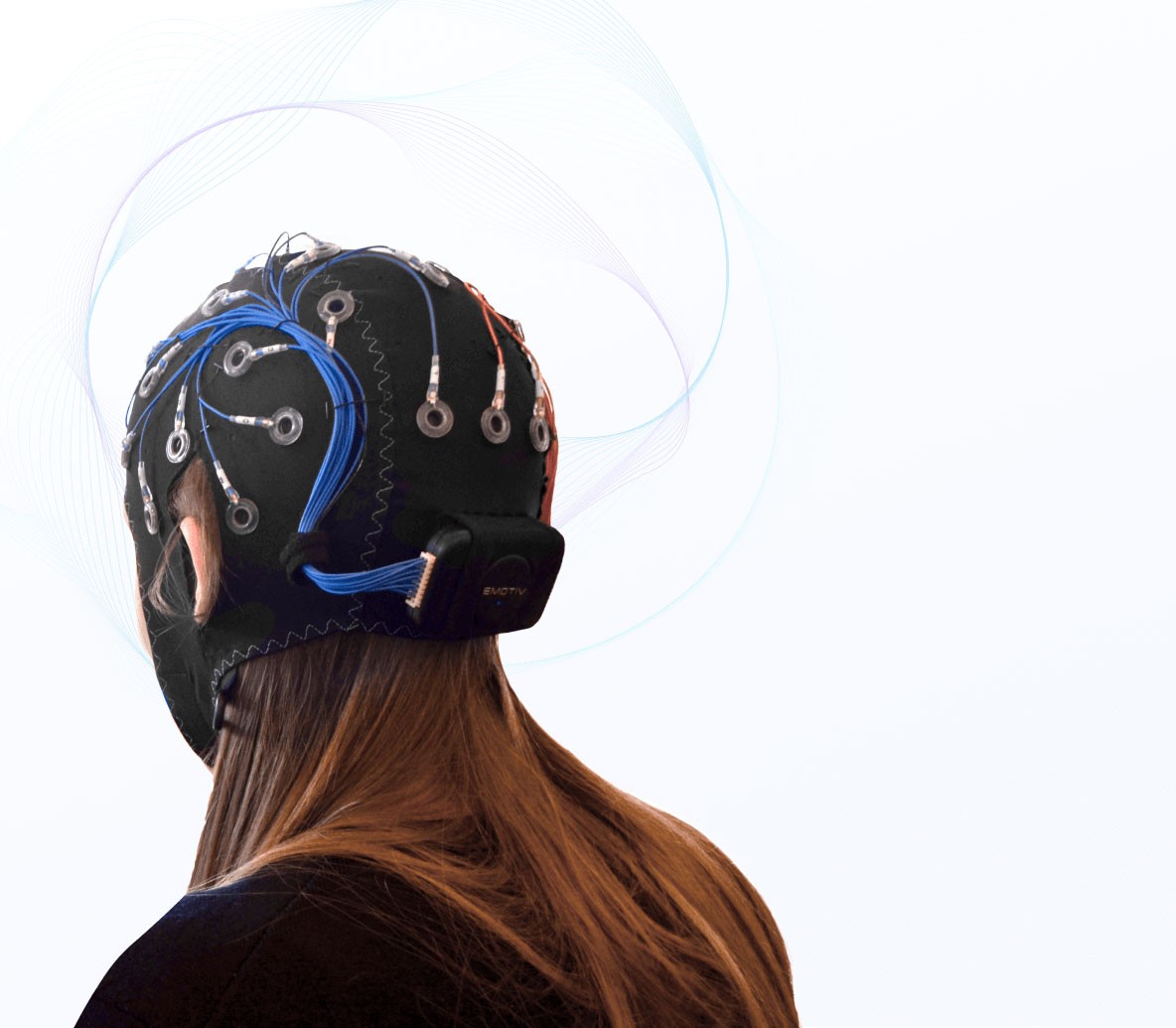
A 32-channel wireless EEG headset uses 32 sensors (electrodes) to measure the brain’s tiny electrical signals—without the restriction of wires. You gain high-resolution brain mapping in classrooms, clinics, studios, or field settings.
What Is EEG Technology?
Electroencephalography (EEG) measures brain activity via electrodes on the scalp. By analyzing brainwave patterns across frequencies, researchers and developers can infer states like attention, relaxation, or cognitive load. It’s a non-invasive, real-time window into functional brain dynamics.
Why Go Wireless?
Traditional systems tether participants to bulky gear. Wireless headsets cut the cord, enabling natural movement and ecologically valid studies—whether in offices, classrooms, or VR labs. This mobility matters for fields like neuromarketing and human-computer interaction.
How 32 Channels Improve Spatial Detail
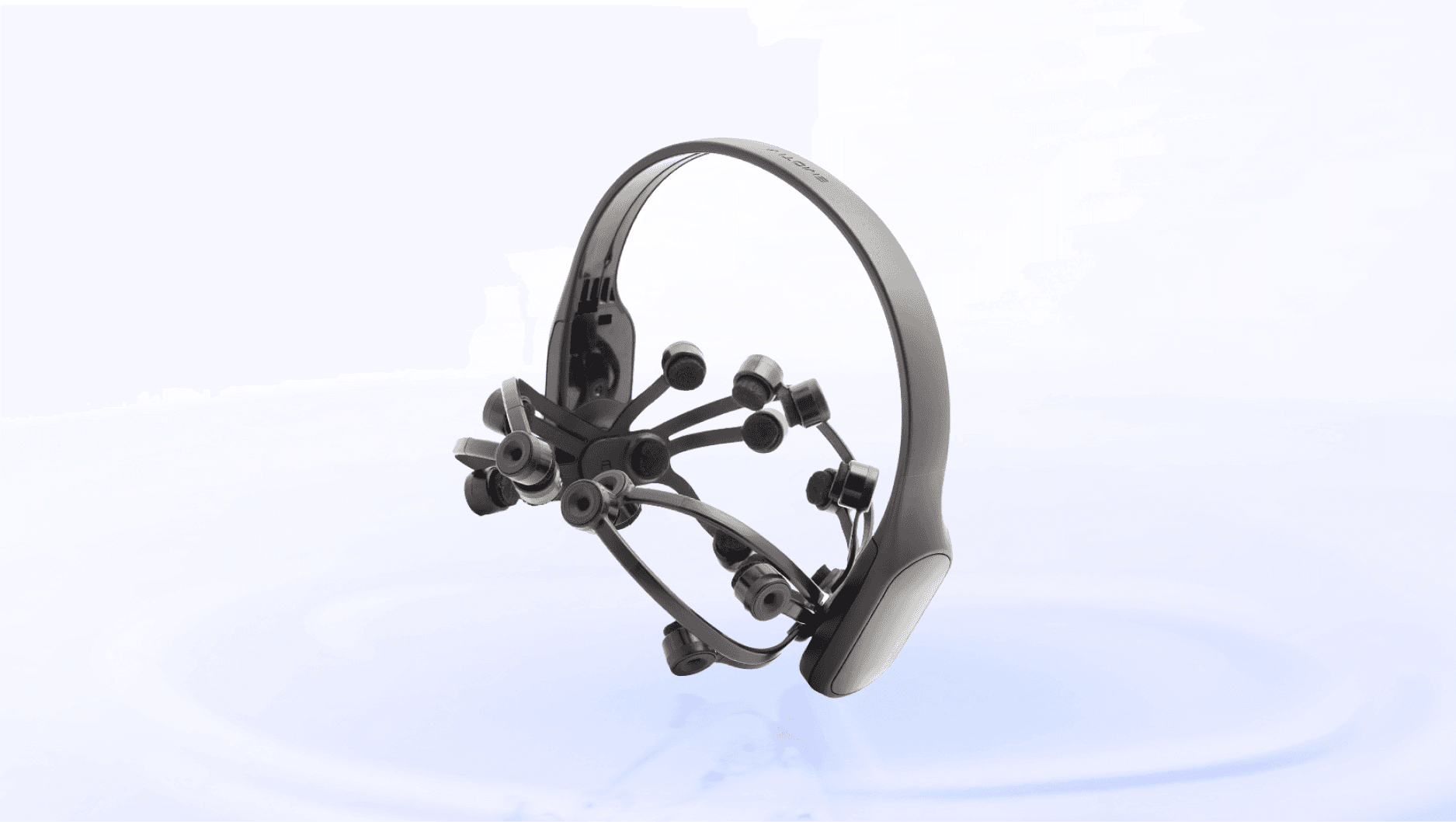
Each channel is a listening point on the scalp. More channels mean more spatial coverage. A 32-channel system such as Emotiv Flex provides a richer topography than low-channel devices, helping you localize activity with greater precision for advanced research and BCI prototypes.
How These Headsets Acquire and Stream Data
Electrodes measure scalp potentials, the headset digitizes the signals, and data streams wirelessly to your computer for real-time visualization and analysis in EmotivPRO. For developers, live streams enable responsive applications and next-gen brain-computer interfaces.
What To Look For in a 32-Channel Headset
Choosing a 32-channel device is about fit, not just specs. Evaluate signal quality, electrode type, sampling, software, and workflow impact.
Assess Signal Quality and Processing
Clean signals are foundational. Look for stable electrode contact, shielding against environmental noise, and software that supports filtering and artifact checks. A 32-channel system like Emotiv Flex provides comprehensive coverage for repeatable, analyzable measurements.
Gel vs. Saline: Which Electrode Type Fits Your Use Case?
Saline (e.g., Flex Saline): Fast setup, participant-friendly, ideal for back-to-back sessions and field work.
Gel (e.g., Flex Gel): Longer prep, very stable contact, preferred for extended recordings in controlled labs.
Choose based on throughput needs, recording length, and environment.
Understand Sampling Rate and Resolution
Sampling rate determines temporal precision. For many cognitive paradigms, 256 samples per second (SPS) per channel (as supported by Flex) provides fine-grained timing for ERPs and time–frequency analyses. Ensure bit resolution and anti-alias filtering meet your analysis goals.
Check Battery Life and Connectivity
Plan for full-session endurance and stable links. Flex supports multi-hour operation and low-latency Bluetooth streaming so you can monitor quality and markers in real time—critical for adaptive tasks and BCI.
Explore Software Compatibility
Confirm that your headset integrates with recording/analysis tools you rely on. EmotivPRO covers live views, event markers, and exports; Emotiv’s ecosystem also supports developer tooling for custom pipelines.
Comparing 32-Channel EEG Systems
Emotiv Flex: Saline Option
Flex Saline offers 32 channels with quick setup and multi-hour battery life, streaming at 256 SPS per channel. It’s built for portable, high-quality measurements in classrooms, clinics, and field studies.
Emotiv Flex: Gel Option
Flex Gel provides 32 channels at 256 SPS with gel electrodes for very stable contact—ideal for long, controlled sessions where maximum signal stability is required.
Other Systems
Some alternatives use dry electrodes for rapid donning and built-in contact feedback. Each electrode type—saline, gel, dry—trades off prep time, comfort, and signal stability. Match the modality to your environment and study design.
Cost Considerations
High-density systems vary by configuration and software. Emotiv’s Flex line provides accessible entry points for research teams; other vendors may quote pricing by request. Compare value by channel count, setup time, software, and support.
How Researchers Use 32-Channel Systems
Advance Neuroscience Research
High-density coverage supports source-sensitive designs, inter-regional connectivity analyses, and precise ERP mapping—enabling targeted questions beyond global “state” measures.
Develop Brain-Computer Interfaces
More channels yield richer features for training classifiers and decoding subtle intent—supporting reliable, nuanced BCI control paths.
Power Academic Studies
Thirty-two channels balance detail with practicality, supporting repeatable protocols across psychology, HCI, and human-factors research with strong ecological validity.
Access Cognitive Analysis Tools
Use EmotivPRO to visualize raw EEG, annotate events, and derive performance metrics (e.g., attention or workload indices) for UX, training, and neuromarketing scenarios.
Setting Up Your 32-Channel System
Define Your Signal-Processing Plan
Decide on references, band-pass filters, artifact mitigation (e.g., ICA), and ERP/time–frequency pipelines before first data collection. EmotivPRO supports live QC and flexible exports.
Plan Data Management
Standardize filenames (participant, date, task), version your pipelines, and back up locally and to secure cloud storage. High-density studies generate large datasets—plan retention and access early.
Check Integration Capabilities
If you need synchronization with stimuli or peripherals, confirm API/SDK access and Lab Streaming Layer (LSL) or equivalent. Emotiv’s developer resources aid custom integrations.
Follow Maintenance Best Practices
Rinse and dry saline pads after sessions; clean gel accessories per guidance; store headsets in protective cases; keep firmware and software current; spot-check batteries and contacts before runs.
Troubleshoot Common EEG Challenges
Optimize Signal Quality
Ensure thorough saline wetting (saline pads) or adequate gel (gel caps). Part hair for direct scalp contact. Reduce nearby electrical noise and ask participants to relax jaw/forehead.
Prepare Users and Staff
Brief participants on minimizing motion and blinks during critical windows. Pilot with your team to standardize fit and protocol timing for consistent measurements.
Simplify Analysis
Use templates/macros for routine preprocessing. In EmotivPRO, apply filters, verify reference choices, and sanity-check spectra and contact quality before committing long recordings.
Solve Battery and Connectivity Issues
Charge before sessions; minimize RF congestion; re-pair Bluetooth if needed; keep OS drivers and apps updated.
Quick Fixes
Flat/noisy channel: Re-seat sensor; re-wet saline pad; clear trapped hair.
No connection: Toggle headset and Bluetooth; confirm pairing in OS settings.
Motion artifacts: Pause, coach stillness; resume after relaxation.
How To Choose the Right 32-Channel System
Define Your Research Goals
List hypotheses, target brain regions, and tasks. The more source-sensitive your aims, the more you’ll value stable contact and precise timing.
Translate Goals Into Specs
Pick electrode type, sampling rate, and software features that align with your analyses (ERP, connectivity, decoding). Consider environment (lab vs. field).
Work Within Budget
Compare total cost of ownership: headset, consumables (saline/gel), software, and support. Choose the best value for your protocol, not just the lowest price.
Evaluate Support and Community
Documentation, response times, and active user communities reduce ramp-up time and keep studies on schedule. Emotiv provides resources for developers and researchers.
Create an Implementation Plan
Define SOPs for setup, QC checkpoints, artifact notes, export conventions, and backups. A clear plan accelerates IRB approvals, training, and publication-ready results.
Related Articles
Frequently Asked Questions
Why choose 32 channels over fewer?
Higher density provides finer spatial detail, enabling localization and inter-regional analyses that low-channel systems can’t resolve.
Gel vs. saline—what’s the practical difference?
Gel maximizes stability for long, controlled recordings; saline speeds setup and turnover for field and classroom studies. Choose based on throughput and session length.
Is wireless reliable for research-quality data?
Yes—data quality depends primarily on electrode contact and environment. A stable Bluetooth link streams measurements in real time; focus on fit, hydration/gel, and noise control.
What can I do with the data right away?
Use EmotivPRO to view raw waveforms across 32 channels, add precise event markers, inspect spectra, and export for MATLAB/Python/EEGLAB pipelines.
How long is setup?
With practice, saline setups typically take ~10–15 minutes. Gel setups take longer due to per-site gel application but offer very stable contact for extended sessions.
32-Channel Wireless EEG Headsets: A Practical Guide for High-Resolution Research
Have you ever felt limited by the data from a lower-channel EEG system? While great for general insights, they can’t always localize where specific brain activity is happening. When your research questions demand higher spatial resolution, a 32-channel wireless EEG headset is the solution. This level of detail lets you localize neural responses with much greater precision—it’s the difference between knowing the whole brain is active and identifying the specific networks involved. This guide helps you make that leap, covering how to select, set up, and troubleshoot a system for clean, actionable data.
Key Takeaways
Go Beyond General Brain States With High-Density Data: A 32-channel headset provides detailed, multi-region brain measurements essential for complex BCI development and in-depth academic studies.
Balance Practicality With Precision When Choosing Your Headset: Select saline electrodes for quick, convenient setup in real-world settings, or choose gel electrodes when you need the most stable signals for controlled lab experiments.
Plan Your Workflow to Ensure Quality Data: Success isn’t just about the headset. Clear plans for participant prep, data management, and equipment care help you collect clean, reliable data—and avoid common troubleshooting hurdles.
What Is a 32-Channel Wireless EEG Headset?
A 32-channel wireless EEG headset uses 32 sensors (electrodes) to measure the brain’s tiny electrical signals—without the restriction of wires. You gain high-resolution brain mapping in classrooms, clinics, studios, or field settings.
What Is EEG Technology?
Electroencephalography (EEG) measures brain activity via electrodes on the scalp. By analyzing brainwave patterns across frequencies, researchers and developers can infer states like attention, relaxation, or cognitive load. It’s a non-invasive, real-time window into functional brain dynamics.
Why Go Wireless?
Traditional systems tether participants to bulky gear. Wireless headsets cut the cord, enabling natural movement and ecologically valid studies—whether in offices, classrooms, or VR labs. This mobility matters for fields like neuromarketing and human-computer interaction.
How 32 Channels Improve Spatial Detail
Each channel is a listening point on the scalp. More channels mean more spatial coverage. A 32-channel system such as Emotiv Flex provides a richer topography than low-channel devices, helping you localize activity with greater precision for advanced research and BCI prototypes.
How These Headsets Acquire and Stream Data
Electrodes measure scalp potentials, the headset digitizes the signals, and data streams wirelessly to your computer for real-time visualization and analysis in EmotivPRO. For developers, live streams enable responsive applications and next-gen brain-computer interfaces.
What To Look For in a 32-Channel Headset
Choosing a 32-channel device is about fit, not just specs. Evaluate signal quality, electrode type, sampling, software, and workflow impact.
Assess Signal Quality and Processing
Clean signals are foundational. Look for stable electrode contact, shielding against environmental noise, and software that supports filtering and artifact checks. A 32-channel system like Emotiv Flex provides comprehensive coverage for repeatable, analyzable measurements.
Gel vs. Saline: Which Electrode Type Fits Your Use Case?
Saline (e.g., Flex Saline): Fast setup, participant-friendly, ideal for back-to-back sessions and field work.
Gel (e.g., Flex Gel): Longer prep, very stable contact, preferred for extended recordings in controlled labs.
Choose based on throughput needs, recording length, and environment.
Understand Sampling Rate and Resolution
Sampling rate determines temporal precision. For many cognitive paradigms, 256 samples per second (SPS) per channel (as supported by Flex) provides fine-grained timing for ERPs and time–frequency analyses. Ensure bit resolution and anti-alias filtering meet your analysis goals.
Check Battery Life and Connectivity
Plan for full-session endurance and stable links. Flex supports multi-hour operation and low-latency Bluetooth streaming so you can monitor quality and markers in real time—critical for adaptive tasks and BCI.
Explore Software Compatibility
Confirm that your headset integrates with recording/analysis tools you rely on. EmotivPRO covers live views, event markers, and exports; Emotiv’s ecosystem also supports developer tooling for custom pipelines.
Comparing 32-Channel EEG Systems
Emotiv Flex: Saline Option
Flex Saline offers 32 channels with quick setup and multi-hour battery life, streaming at 256 SPS per channel. It’s built for portable, high-quality measurements in classrooms, clinics, and field studies.
Emotiv Flex: Gel Option
Flex Gel provides 32 channels at 256 SPS with gel electrodes for very stable contact—ideal for long, controlled sessions where maximum signal stability is required.
Other Systems
Some alternatives use dry electrodes for rapid donning and built-in contact feedback. Each electrode type—saline, gel, dry—trades off prep time, comfort, and signal stability. Match the modality to your environment and study design.
Cost Considerations
High-density systems vary by configuration and software. Emotiv’s Flex line provides accessible entry points for research teams; other vendors may quote pricing by request. Compare value by channel count, setup time, software, and support.
How Researchers Use 32-Channel Systems
Advance Neuroscience Research
High-density coverage supports source-sensitive designs, inter-regional connectivity analyses, and precise ERP mapping—enabling targeted questions beyond global “state” measures.
Develop Brain-Computer Interfaces
More channels yield richer features for training classifiers and decoding subtle intent—supporting reliable, nuanced BCI control paths.
Power Academic Studies
Thirty-two channels balance detail with practicality, supporting repeatable protocols across psychology, HCI, and human-factors research with strong ecological validity.
Access Cognitive Analysis Tools
Use EmotivPRO to visualize raw EEG, annotate events, and derive performance metrics (e.g., attention or workload indices) for UX, training, and neuromarketing scenarios.
Setting Up Your 32-Channel System
Define Your Signal-Processing Plan
Decide on references, band-pass filters, artifact mitigation (e.g., ICA), and ERP/time–frequency pipelines before first data collection. EmotivPRO supports live QC and flexible exports.
Plan Data Management
Standardize filenames (participant, date, task), version your pipelines, and back up locally and to secure cloud storage. High-density studies generate large datasets—plan retention and access early.
Check Integration Capabilities
If you need synchronization with stimuli or peripherals, confirm API/SDK access and Lab Streaming Layer (LSL) or equivalent. Emotiv’s developer resources aid custom integrations.
Follow Maintenance Best Practices
Rinse and dry saline pads after sessions; clean gel accessories per guidance; store headsets in protective cases; keep firmware and software current; spot-check batteries and contacts before runs.
Troubleshoot Common EEG Challenges
Optimize Signal Quality
Ensure thorough saline wetting (saline pads) or adequate gel (gel caps). Part hair for direct scalp contact. Reduce nearby electrical noise and ask participants to relax jaw/forehead.
Prepare Users and Staff
Brief participants on minimizing motion and blinks during critical windows. Pilot with your team to standardize fit and protocol timing for consistent measurements.
Simplify Analysis
Use templates/macros for routine preprocessing. In EmotivPRO, apply filters, verify reference choices, and sanity-check spectra and contact quality before committing long recordings.
Solve Battery and Connectivity Issues
Charge before sessions; minimize RF congestion; re-pair Bluetooth if needed; keep OS drivers and apps updated.
Quick Fixes
Flat/noisy channel: Re-seat sensor; re-wet saline pad; clear trapped hair.
No connection: Toggle headset and Bluetooth; confirm pairing in OS settings.
Motion artifacts: Pause, coach stillness; resume after relaxation.
How To Choose the Right 32-Channel System
Define Your Research Goals
List hypotheses, target brain regions, and tasks. The more source-sensitive your aims, the more you’ll value stable contact and precise timing.
Translate Goals Into Specs
Pick electrode type, sampling rate, and software features that align with your analyses (ERP, connectivity, decoding). Consider environment (lab vs. field).
Work Within Budget
Compare total cost of ownership: headset, consumables (saline/gel), software, and support. Choose the best value for your protocol, not just the lowest price.
Evaluate Support and Community
Documentation, response times, and active user communities reduce ramp-up time and keep studies on schedule. Emotiv provides resources for developers and researchers.
Create an Implementation Plan
Define SOPs for setup, QC checkpoints, artifact notes, export conventions, and backups. A clear plan accelerates IRB approvals, training, and publication-ready results.
Related Articles
Frequently Asked Questions
Why choose 32 channels over fewer?
Higher density provides finer spatial detail, enabling localization and inter-regional analyses that low-channel systems can’t resolve.
Gel vs. saline—what’s the practical difference?
Gel maximizes stability for long, controlled recordings; saline speeds setup and turnover for field and classroom studies. Choose based on throughput and session length.
Is wireless reliable for research-quality data?
Yes—data quality depends primarily on electrode contact and environment. A stable Bluetooth link streams measurements in real time; focus on fit, hydration/gel, and noise control.
What can I do with the data right away?
Use EmotivPRO to view raw waveforms across 32 channels, add precise event markers, inspect spectra, and export for MATLAB/Python/EEGLAB pipelines.
How long is setup?
With practice, saline setups typically take ~10–15 minutes. Gel setups take longer due to per-site gel application but offer very stable contact for extended sessions.
32-Channel Wireless EEG Headsets: A Practical Guide for High-Resolution Research
Have you ever felt limited by the data from a lower-channel EEG system? While great for general insights, they can’t always localize where specific brain activity is happening. When your research questions demand higher spatial resolution, a 32-channel wireless EEG headset is the solution. This level of detail lets you localize neural responses with much greater precision—it’s the difference between knowing the whole brain is active and identifying the specific networks involved. This guide helps you make that leap, covering how to select, set up, and troubleshoot a system for clean, actionable data.
Key Takeaways
Go Beyond General Brain States With High-Density Data: A 32-channel headset provides detailed, multi-region brain measurements essential for complex BCI development and in-depth academic studies.
Balance Practicality With Precision When Choosing Your Headset: Select saline electrodes for quick, convenient setup in real-world settings, or choose gel electrodes when you need the most stable signals for controlled lab experiments.
Plan Your Workflow to Ensure Quality Data: Success isn’t just about the headset. Clear plans for participant prep, data management, and equipment care help you collect clean, reliable data—and avoid common troubleshooting hurdles.
What Is a 32-Channel Wireless EEG Headset?
A 32-channel wireless EEG headset uses 32 sensors (electrodes) to measure the brain’s tiny electrical signals—without the restriction of wires. You gain high-resolution brain mapping in classrooms, clinics, studios, or field settings.
What Is EEG Technology?
Electroencephalography (EEG) measures brain activity via electrodes on the scalp. By analyzing brainwave patterns across frequencies, researchers and developers can infer states like attention, relaxation, or cognitive load. It’s a non-invasive, real-time window into functional brain dynamics.
Why Go Wireless?
Traditional systems tether participants to bulky gear. Wireless headsets cut the cord, enabling natural movement and ecologically valid studies—whether in offices, classrooms, or VR labs. This mobility matters for fields like neuromarketing and human-computer interaction.
How 32 Channels Improve Spatial Detail
Each channel is a listening point on the scalp. More channels mean more spatial coverage. A 32-channel system such as Emotiv Flex provides a richer topography than low-channel devices, helping you localize activity with greater precision for advanced research and BCI prototypes.
How These Headsets Acquire and Stream Data
Electrodes measure scalp potentials, the headset digitizes the signals, and data streams wirelessly to your computer for real-time visualization and analysis in EmotivPRO. For developers, live streams enable responsive applications and next-gen brain-computer interfaces.
What To Look For in a 32-Channel Headset
Choosing a 32-channel device is about fit, not just specs. Evaluate signal quality, electrode type, sampling, software, and workflow impact.
Assess Signal Quality and Processing
Clean signals are foundational. Look for stable electrode contact, shielding against environmental noise, and software that supports filtering and artifact checks. A 32-channel system like Emotiv Flex provides comprehensive coverage for repeatable, analyzable measurements.
Gel vs. Saline: Which Electrode Type Fits Your Use Case?
Saline (e.g., Flex Saline): Fast setup, participant-friendly, ideal for back-to-back sessions and field work.
Gel (e.g., Flex Gel): Longer prep, very stable contact, preferred for extended recordings in controlled labs.
Choose based on throughput needs, recording length, and environment.
Understand Sampling Rate and Resolution
Sampling rate determines temporal precision. For many cognitive paradigms, 256 samples per second (SPS) per channel (as supported by Flex) provides fine-grained timing for ERPs and time–frequency analyses. Ensure bit resolution and anti-alias filtering meet your analysis goals.
Check Battery Life and Connectivity
Plan for full-session endurance and stable links. Flex supports multi-hour operation and low-latency Bluetooth streaming so you can monitor quality and markers in real time—critical for adaptive tasks and BCI.
Explore Software Compatibility
Confirm that your headset integrates with recording/analysis tools you rely on. EmotivPRO covers live views, event markers, and exports; Emotiv’s ecosystem also supports developer tooling for custom pipelines.
Comparing 32-Channel EEG Systems
Emotiv Flex: Saline Option
Flex Saline offers 32 channels with quick setup and multi-hour battery life, streaming at 256 SPS per channel. It’s built for portable, high-quality measurements in classrooms, clinics, and field studies.
Emotiv Flex: Gel Option
Flex Gel provides 32 channels at 256 SPS with gel electrodes for very stable contact—ideal for long, controlled sessions where maximum signal stability is required.
Other Systems
Some alternatives use dry electrodes for rapid donning and built-in contact feedback. Each electrode type—saline, gel, dry—trades off prep time, comfort, and signal stability. Match the modality to your environment and study design.
Cost Considerations
High-density systems vary by configuration and software. Emotiv’s Flex line provides accessible entry points for research teams; other vendors may quote pricing by request. Compare value by channel count, setup time, software, and support.
How Researchers Use 32-Channel Systems
Advance Neuroscience Research
High-density coverage supports source-sensitive designs, inter-regional connectivity analyses, and precise ERP mapping—enabling targeted questions beyond global “state” measures.
Develop Brain-Computer Interfaces
More channels yield richer features for training classifiers and decoding subtle intent—supporting reliable, nuanced BCI control paths.
Power Academic Studies
Thirty-two channels balance detail with practicality, supporting repeatable protocols across psychology, HCI, and human-factors research with strong ecological validity.
Access Cognitive Analysis Tools
Use EmotivPRO to visualize raw EEG, annotate events, and derive performance metrics (e.g., attention or workload indices) for UX, training, and neuromarketing scenarios.
Setting Up Your 32-Channel System
Define Your Signal-Processing Plan
Decide on references, band-pass filters, artifact mitigation (e.g., ICA), and ERP/time–frequency pipelines before first data collection. EmotivPRO supports live QC and flexible exports.
Plan Data Management
Standardize filenames (participant, date, task), version your pipelines, and back up locally and to secure cloud storage. High-density studies generate large datasets—plan retention and access early.
Check Integration Capabilities
If you need synchronization with stimuli or peripherals, confirm API/SDK access and Lab Streaming Layer (LSL) or equivalent. Emotiv’s developer resources aid custom integrations.
Follow Maintenance Best Practices
Rinse and dry saline pads after sessions; clean gel accessories per guidance; store headsets in protective cases; keep firmware and software current; spot-check batteries and contacts before runs.
Troubleshoot Common EEG Challenges
Optimize Signal Quality
Ensure thorough saline wetting (saline pads) or adequate gel (gel caps). Part hair for direct scalp contact. Reduce nearby electrical noise and ask participants to relax jaw/forehead.
Prepare Users and Staff
Brief participants on minimizing motion and blinks during critical windows. Pilot with your team to standardize fit and protocol timing for consistent measurements.
Simplify Analysis
Use templates/macros for routine preprocessing. In EmotivPRO, apply filters, verify reference choices, and sanity-check spectra and contact quality before committing long recordings.
Solve Battery and Connectivity Issues
Charge before sessions; minimize RF congestion; re-pair Bluetooth if needed; keep OS drivers and apps updated.
Quick Fixes
Flat/noisy channel: Re-seat sensor; re-wet saline pad; clear trapped hair.
No connection: Toggle headset and Bluetooth; confirm pairing in OS settings.
Motion artifacts: Pause, coach stillness; resume after relaxation.
How To Choose the Right 32-Channel System
Define Your Research Goals
List hypotheses, target brain regions, and tasks. The more source-sensitive your aims, the more you’ll value stable contact and precise timing.
Translate Goals Into Specs
Pick electrode type, sampling rate, and software features that align with your analyses (ERP, connectivity, decoding). Consider environment (lab vs. field).
Work Within Budget
Compare total cost of ownership: headset, consumables (saline/gel), software, and support. Choose the best value for your protocol, not just the lowest price.
Evaluate Support and Community
Documentation, response times, and active user communities reduce ramp-up time and keep studies on schedule. Emotiv provides resources for developers and researchers.
Create an Implementation Plan
Define SOPs for setup, QC checkpoints, artifact notes, export conventions, and backups. A clear plan accelerates IRB approvals, training, and publication-ready results.
Related Articles
Frequently Asked Questions
Why choose 32 channels over fewer?
Higher density provides finer spatial detail, enabling localization and inter-regional analyses that low-channel systems can’t resolve.
Gel vs. saline—what’s the practical difference?
Gel maximizes stability for long, controlled recordings; saline speeds setup and turnover for field and classroom studies. Choose based on throughput and session length.
Is wireless reliable for research-quality data?
Yes—data quality depends primarily on electrode contact and environment. A stable Bluetooth link streams measurements in real time; focus on fit, hydration/gel, and noise control.
What can I do with the data right away?
Use EmotivPRO to view raw waveforms across 32 channels, add precise event markers, inspect spectra, and export for MATLAB/Python/EEGLAB pipelines.
How long is setup?
With practice, saline setups typically take ~10–15 minutes. Gel setups take longer due to per-site gel application but offer very stable contact for extended sessions.