For decades, alpha waves were mistaken for a sign of cortical downtime. When an electroencephalogram (EEG) recording showed strong alpha activity over the back of the head, researchers assumed the visual parts of the brain had simply gone offline, idling in a relaxed, unfocused state.
Currently, far from a passive resting rhythm, alpha oscillations are now understood as an active, energy-consuming process that the brain deploys to control the flow of sensory information. This article examines the evidence that alpha waves function as a dynamic gatekeeper, suppressing irrelevant input, timing the brain’s perceptual windows, and shaping the very decisions we make about what we see.
What Are Alpha Brain Waves?
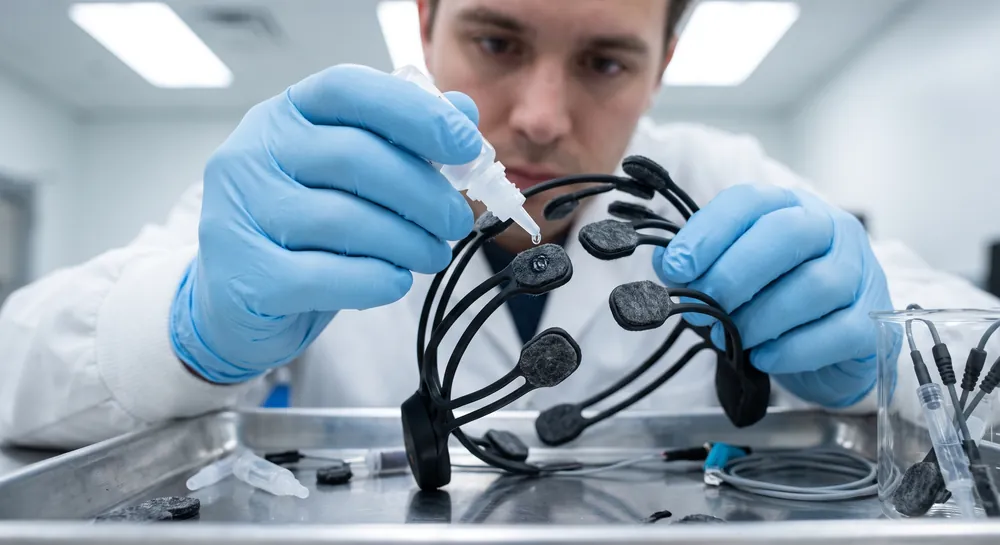
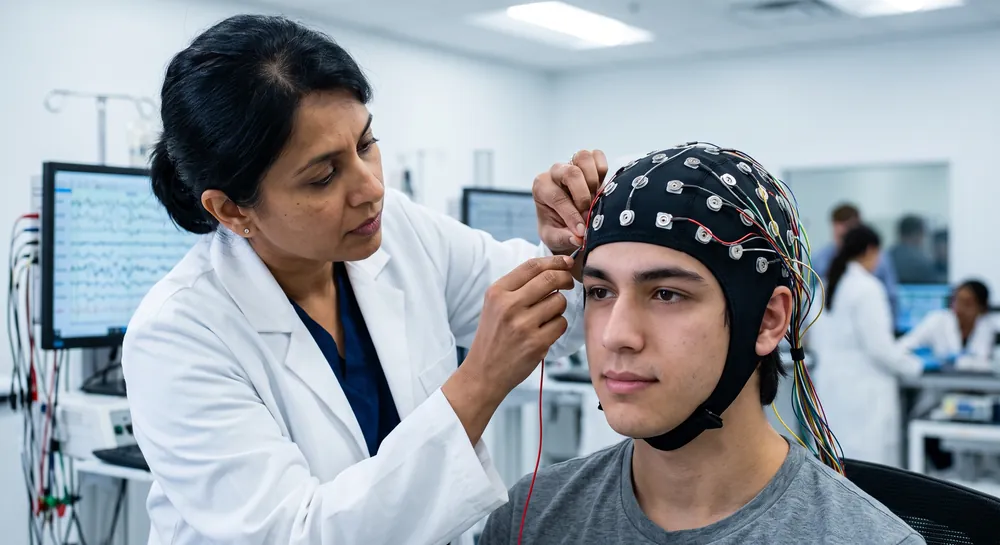
Alpha waves are recurring patterns of electrical activity produced by coordinated neural activity. They are measured indirectly through instruments such as electroencephalography, or EEG, rather than observed as visible waves inside the brain.
The phrase “alpha waves” describes a frequency pattern, not a single mental state or a complete explanation of behavior. Their significance depends on the brain region being measured, the person’s state, and the conditions of recording.
Frequency and Characteristics of Alpha Waves
Alpha waves are commonly described as oscillations around 8–12 hertz, meaning that the pattern cycles approximately eight to twelve times per second. They are often prominent over posterior regions during relaxed wakefulness, particularly when the eyes are closed, and may diminish when the eyes open or attention shifts toward a demanding task. The exact boundaries and distribution can vary across studies and individuals, so the label should be understood as a practical classification rather than an absolute biological constant.
The clearest interpretation comes from comparing alpha activity across carefully defined conditions. Researchers may examine amplitude, power, timing, spatial distribution, and changes between eyes-closed and eyes-open recordings.
How Alpha Oscillations Actively Suppress Irrelevant Information
The old idling model treated alpha as a default state that disappeared when the brain got busy. Modern electrophysiology tells us that alpha is actively generated within specific cortical circuits precisely when there is a need to shut out distracting information.
This active suppression serves a critical cognitive function. Rather than processing every signal that arrives at the senses, the brain can route its limited resources to the most relevant task by inhibiting the regions that handle the irrelevant ones.
Two comprehensive reviews converge on this mechanism. One body of work by Foxe & Snyder, which synthesized evidence from animal intracranial recordings and human EEG and MEG studies, concluded that alpha-band oscillations (8–14 Hz) are “actively invoked” across multiple sensory systems—visual, auditory, and tactile—whenever a region is processing information that needs to be ignored or selected against.
In an intersensory attention task, for example, focusing on a sound may trigger an increase in alpha power over visual cortex, effectively turning down the gain on vision to prevent distraction. This suppression can also operate within a single sense, selectively silencing a specific location or feature that is task-irrelevant.
A second review by Jensen & Mazaheri elaborated the physiological basis for this gating process. The proposal is that alpha activity provides “pulsed inhibition,” a rhythmic, transient reduction in the processing capability of a cortical area.
Each cycle of the alpha wave briefly lowers the excitability of the underlying neuronal population, making it harder for incoming signals to trigger a robust response. Over time, these pulses create a functional gate. When a region is engaged in active processing, it shows a drop in alpha power—a release from inhibition—while task-irrelevant regions simultaneously exhibit increased alpha.
This relationship suggests that optimal task performance should correlate with stronger alpha activity in the areas that need to be kept offline. The evidence supports that prediction, positioning alpha as a central mechanism for sculpting the brain’s functional architecture by inhibiting what does not matter.
How the Phase of Alpha Waves Times Visual Perception
The average strength, or power, of alpha oscillations tells one part of the story. But brain waves rise and fall with a precise temporal structure. The phase—the specific point in the oscillatory cycle, analogous to the position of a pendulum at a given instant—acts as a faster, finer-grained determinant of whether a faint stimulus will enter awareness.
The direct link between alpha phase and visual perception was demonstrated in an experiment by Busch et al. where participants had to report whether they saw a brief, barely visible flash of light while their EEG was recorded. The physical stimulus was identical across every trial, yet people detected it roughly half the time and missed it completely the other half.
When the researchers looked at the ongoing brain oscillations just before each flash, they found that the phase of the wave, particularly in the theta and alpha frequency bands, was systematically different for hits and misses. The phase distributions for detected and undetected trials were both concentrated around specific angles, but those angles were shifted relative to each other.
Crucially, the relationship was substantial. Oscillatory phase accounted for at least 16% of the trial-to-trial variability in detection performance. That was enough for the authors to conclude that by knowing the phase of a person’s alpha wave at the moment of stimulus presentation, one could forecast with above-chance accuracy whether they would report seeing the light.
The finding implies that the visual detection threshold is not fixed. Rather, it oscillates over time, synchronised with the brain’s endogenous rhythm. At certain phases of the alpha cycle, the brain is momentarily more receptive; at others, it is momentarily inhibited.
The result extends the concept of pulsed inhibition from a slow, sustained suppression (power) to a rapid, moment-by-moment gating (phase), where each wave cycle provides a brief window of relative perceptual opportunity.
Alpha Power and Perceptual Bias
If alpha oscillations gate perception, one might intuitively assume that lower alpha power (meaning less inhibition) would sharpen the senses and improve the ability to discriminate fine details. A wave of earlier studies interpreted decreases in prestimulus alpha as a sign of enhanced neural excitability that boosted perceptual acuity. A more recent investigation using a rigorous signal detection framework challenges that assumption and reveals a critical nuance.
In two EEG experiments by Lemi et al., participants performed tasks that required either detecting the mere presence of a faint stimulus or discriminating between two different stimuli. The researchers analyzed how spontaneous fluctuations in alpha power just before the stimulus affected performance.
They compared two competing models. The first, a baseline excitability model, proposes that lower alpha power increases the overall gain of the sensory system, amplifying the response to everything, both signal and noise. This would make a person more likely to say “yes, I saw something” irrespective of whether the stimulus was actually there, producing a more liberal detection criterion (a shift in decision bias) without any improvement in true sensitivity. The second model predicts that reduced alpha enhances the trial-by-trial precision of the sensory representation, which would show up as improved sensitivity, or a better ability to distinguish signal from noise.
Both experiments provided strong evidence for the baseline model. Decreased prestimulus alpha power reliably predicted a liberal bias, not improved sensitivity. When alpha was low, observers were more willing to report a stimulus, even on trials where none had been presented.
In other words, a state of high excitability makes the brain see more, but not more accurately. This finding reframes the interpretation of spontaneous alpha fluctuations. The brain’s momentary readiness to perceive is not a sharpening of the lens but a widening of the aperture, letting in more light and more noise in equal measure. The precision of sensory processing remains unchanged. Perception becomes biased, not more acute.
The Role of Alpha Gating in Attention and Working Memory
The same mechanisms that gate perception also underpin the brain’s ability to sustain focused attention and hold information in working memory. Selective attention demands that some information is enhanced while competing information is suppressed. The alpha rhythm is the neural instrument of that suppression.
When you concentrate on a conversation in a noisy room, your auditory cortex engages with the speech signal while your visual cortex does not need to process the flickering of a television screen in the periphery. The aforementioned study by Foxe & Snyder showed that alpha power increases over visual areas during such auditory tasks, functionally disengaging them.
This intersensory gating can also be directed within a single sensory modality. If you are looking for a red object, the brain may use alpha to suppress regions of the visual field that contain only blue objects, routing processing resources to the relevant location or feature. In every case, alpha acts as a top-down attentional suppression mechanism, actively silencing the circuits that would otherwise cause distraction.
This gating framework scales to working memory, where information must be actively maintained and protected from incoming interference. The proposal by Jensen & Mazaheri that alpha reflects “gating by inhibition” casts the entire functional network of the brain in a new light.
Task-relevant regions are released from alpha-mediated inhibition, allowing them to synchronize in the gamma band and engage in active computation. Meanwhile, task-irrelevant regions are held under the steady pulse of alpha, preventing them from disrupting the fragile contents of working memory.
From this perspective, a substantial portion of the oscillatory activity captured by EEG and MEG in the working brain is not a static signature of idling or effort but the ongoing, dynamic process of information routing via rhythmic inhibition. The brain’s ability to keep a thought in mind relies just as much on the alpha waves that block out the noise as on the gamma waves that represent the signal.
The Active Gatekeeper of Cognition
Alpha oscillations have been transformed in the scientific understanding from a passive marker of rest to a central, active mechanism for cognitive control. They suppress irrelevant sensory processing through pulsed inhibition (Study 2, Study 3). They time the receptivity of the perceptual system, determining whether a weak stimulus is seen or missed based on the phase of the wave at the exact moment of arrival (Study 1). And they bias our detection decisions by modulating baseline excitability, making us more or less likely to report seeing something without actually improving the precision of sensory analysis (Study 5).
Together, these findings reveal an elegantly simple operating principle. The brain handles the overwhelming flood of incoming data not by processing everything faster but by strategically shutting down what does not matter, moment by moment, using one of the strongest and most ubiquitous rhythms it generates. The next time you effortlessly ignore a buzzing notification while reading, you can credit the active gatekeeper oscillating quietly in your cortex, pulsing inhibition at 10 cycles per second to keep your mind on track.
Why the Brain’s Alpha Rhythm Matters for Focus and Perception
In neuroscience, alpha waves are the brain’s way of choosing what deserves attention. Instead of trying to process every incoming sight and sound, the brain uses these rhythmic pulses to suppress distractions and create brief windows of opportunity for perception.
Even when a faint stimulus is physically identical, the moment it arrives relative to the brain’s alpha cycle can make the difference between seeing it and missing it. This means everyday perception is more active and selective than it feels—what we notice is shaped by an internal rhythm, not just by what is in front of us.
The same gating process supports focus and working memory. To hold a thought in mind, the brain must release task-relevant areas from inhibition while keeping task-irrelevant areas under alpha’s steady suppression.
A drop in alpha power can make people more ready to report seeing something, but it does not make their sensory analysis more accurate; it makes perception biased, not sharper.
In other words, the brain navigates a flood of information by strategically switching off what does not matter, moment by moment, which is why understanding alpha waves matters for anyone interested in attention, memory, and daily mental performance.
References
Foxe, J. J., & Snyder, A. C. (2011). The role of alpha-band brain oscillations as a sensory suppression mechanism during selective attention. Frontiers in psychology, 2, 154. https://doi.org/10.3389/fpsyg.2011.00154
Jensen, O., & Mazaheri, A. (2010). Shaping functional architecture by oscillatory alpha activity: gating by inhibition. Frontiers in human neuroscience, 4, 186. https://doi.org/10.3389/fnhum.2010.00186
Busch, N. A., Dubois, J., & VanRullen, R. (2009). The phase of ongoing EEG oscillations predicts visual perception. The Journal of neuroscience, 29(24), 7869-7876. https://doi.org/10.1523/JNEUROSCI.0113-09.2009
Iemi, L., Chaumon, M., Crouzet, S. M., & Busch, N. A. (2017). Spontaneous neural oscillations bias perception by modulating baseline excitability. The Journal of Neuroscience, 37(4), 807-819. https://doi.org/10.1523/JNEUROSCI.1432-16.2016
Frequently Asked Questions
What are alpha waves and how has their role been redefined?
Alpha waves are rhythmic electrical patterns in the brain (8–12 Hz) once thought to be a sign of cortical downtime. They are now understood as an active, energy-consuming process the brain uses to control the flow of sensory information.
How do alpha waves suppress irrelevant sensory information?
Alpha waves provide "pulsed inhibition," a rhythmic and transient reduction in the processing capability of a cortical area. This active suppression prevents distracting signals from triggering robust responses, allowing the brain to allocate resources to the most relevant tasks.
How does the phase of an alpha wave affect visual perception?
The phase, or specific point in the oscillatory cycle, determines whether a weak stimulus is seen or missed. At certain phases, the brain is momentarily more receptive, while at others it is inhibited, creating a brief window of perceptual opportunity.
Does reduced alpha power improve perceptual acuity?
Reduced alpha power makes you more likely to report seeing a stimulus, but it does not improve your ability to distinguish signal from noise. It shifts your decision bias toward being more liberal, widening the aperture of perception without sharpening the lens.
How do alpha waves help you focus on a conversation in a noisy room?
When you focus on a sound, alpha power increases over the visual cortex, functionally disengaging it to prevent distraction. This intersensory gating actively silences circuits that would otherwise process irrelevant visual information.
What is "gating by inhibition" in the context of working memory?
Gating by inhibition means that task-relevant brain regions are released from alpha-mediated inhibition to allow active computation, while task-irrelevant regions are held under steady alpha pulses. This prevents incoming interference from disrupting the fragile contents of working memory.
Why are alpha waves now considered an active gatekeeper instead of a passive idle rhythm?
Alpha waves are actively generated within specific cortical circuits precisely when there is a need to shut out distracting information. They are not just a default state that disappears when the brain gets busy; they are strategically deployed to control what information gets processed.
Emotiv is a neurotechnology leader helping advance neuroscience research through accessible EEG and brain data tools.
Medical Disclaimer: The information provided on this website is for educational and informational purposes only and is not intended as medical or health advice. This content may contain errors and should not be relied upon to make life-altering health, medical, or lifestyle choices. Always seek the advice of your physician or other qualified health provider with any questions you may have regarding a medical condition or treatment.
Christian Burgos