What Is a Brain Decoder Device? An Explainer
Duong Tran
Updated on
Nov 24, 2025
What Is a Brain Decoder Device? An Explainer
Duong Tran
Updated on
Nov 24, 2025
What Is a Brain Decoder Device? An Explainer
Duong Tran
Updated on
Nov 24, 2025
The field of brain decoding is moving at an incredible pace, with breakthroughs that are turning concepts once confined to theory into tangible reality. Researchers are no longer just identifying simple brain patterns; they are beginning to interpret complex thoughts, like the words you think to yourself without speaking aloud. This progress is opening up entirely new possibilities for communication and human-computer interaction. At the heart of this revolution is the brain decoder device, which captures the neural data needed for translation. These advancements are not just academic exercises; they are being applied to solve real-world problems, particularly for individuals with severe communication impairments.
Key Takeaways
Decoders turn brain activity into communication: At their core, these systems use AI to interpret brain signals for unspoken words or commands. The main difference is between invasive decoders that require surgery and non-invasive ones like EEG, which make brain-computer interfaces more accessible for research and development.
The technology is promising, not perfect: While decoders can now grasp the general meaning of a person's thoughts, they still require extensive training and aren't 100% accurate. The field is actively working on making these systems more reliable and user-friendly while addressing important ethical questions about mental privacy.
Accessibility is the next major goal: The future of brain decoding lies in moving beyond large, lab-based equipment. The focus is on adapting this powerful technology to work with portable, non-invasive systems like EEG headsets, making it a practical tool for assistive communication and real-world research.
What Is a Brain Decoder?
A brain decoder is a system that translates brain activity into a usable format, like text, speech, or a command for a computer. Think of it as a bridge between your brain's electrical signals and the outside world. The primary goal of this technology is to give a voice to those who have lost the ability to speak due to injury or illness. It’s a field that combines neuroscience, engineering, and computer science to interpret the complex patterns of our neural activity. While the idea might sound like science fiction, researchers are making incredible progress in developing systems that can understand what’s happening inside the brain.
How Do Brain Decoders Work?
At its core, a brain decoder works in a few key steps. First, it measures brain activity using a sensor, such as an EEG headset or an fMRI scanner. These devices pick up on the electrical or metabolic signals that your brain cells produce when they communicate. Next, the system analyzes these signals to find specific patterns associated with certain thoughts, words, or intentions. For example, the pattern for thinking the word "hello" will be different from the pattern for thinking "goodbye." The final step is the translation, where the system converts the identified brain pattern into its corresponding output, like displaying the word "hello" on a screen. This process allows for communication without any physical movement.
The Role of AI in Brain Decoding
Artificial intelligence, particularly machine learning, is the engine that powers modern brain decoders. An AI algorithm is trained on vast amounts of brain data to learn the unique patterns associated with different mental states or words. The more data it processes, the better it gets at making accurate predictions. This is what allows a decoder to move beyond simple commands and begin to interpret the nuances of language. Researchers have used AI to create systems that can predict what a person is looking at or listening to with impressive detail. This technology is crucial for helping scientists understand how our brains process the world and form thoughts before we even speak.
What Brain Signals Can We Decode?
Scientists are exploring various types of brain signals for decoding, but one of the most exciting areas is "inner speech." This is the voice inside your head that you hear when you're thinking or reading to yourself, without moving your mouth. Researchers have discovered that the brain activity produced during inner speech is very similar to the patterns created when you try to speak out loud. This breakthrough is significant because it means a brain-computer interface doesn't need you to attempt physical speech to work. By focusing on these internal thought patterns, decoders can tap directly into imagined language, opening up new possibilities for communication.
What Kinds of Brain Decoders Are There?
Brain decoders aren't a one-size-fits-all technology. They come in several forms, each with its own way of listening to the brain's activity. The biggest distinction is between invasive and non-invasive methods. Invasive decoders require surgery to place sensors directly in the brain, while non-invasive ones work from outside the head. This single difference shapes what the technology can do, who can use it, and where it can be used.
Beyond that, different technologies like electroencephalography (EEG) and functional magnetic resonance imaging (fMRI) offer unique windows into brain function. EEG measures the brain's electrical signals, making it great for capturing activity in real-time. On the other hand, fMRI tracks blood flow to see which parts of the brain are active. Each approach has its strengths and is suited for different goals, from clinical applications that help people communicate to academic research that explores the foundations of human thought. Understanding these types is the first step to seeing where this incredible technology is headed.
Invasive vs. Non-Invasive: What's the Difference?
The line between invasive and non-invasive brain decoders is clear: one requires surgery, and the other doesn't. Invasive devices, such as electrode arrays, are surgically implanted directly into the brain's cortex. This proximity to neurons allows them to capture very precise, high-quality signals. Because of the risks involved, this approach is typically reserved for clinical research and medical applications, like helping individuals with severe paralysis regain the ability to communicate or control prosthetic limbs.
Non-invasive methods, however, measure brain activity from outside the skull. Technologies like EEG and fMRI fall into this category. They are much safer and more accessible, making them suitable for a broader range of uses, from neuromarketing studies to personal cognitive wellness tools. The trade-off is that the signals have to travel through the skull, which can make them less precise than invasive recordings.
Decoding with EEG Technology
Electroencephalography, or EEG, is a cornerstone of non-invasive brain decoding. It works by using small sensors placed on the scalp to measure the tiny electrical voltages generated by brain cells. Think of it as listening to the hum of electrical activity your brain produces as you think, feel, and perceive the world. Because EEG captures these signals in milliseconds, it provides a real-time look at brain processes as they happen.
This speed makes EEG an ideal technology for building a brain-computer interface, where thoughts can be translated into commands almost instantly. A primary goal for this technology is to help people who have lost the ability to speak. By decoding the brain signals associated with inner speech, researchers are working to create systems that can give a voice back to those with paralysis.
A Look at fMRI and Other Neuroimaging Methods
While EEG excels at timing, functional magnetic resonance imaging (fMRI) is a master of location. Instead of measuring electrical signals, fMRI detects changes in blood flow within the brain. When a brain area becomes more active, it requires more oxygen, and fMRI machines can pinpoint these hotspots with incredible spatial accuracy. This allows researchers to see exactly which brain structures are involved in a particular task.
This method has been used to create decoders that can reconstruct what a person is hearing, imagining, or even seeing in a silent film. The major limitation of fMRI is that the equipment is massive, expensive, and requires a person to lie perfectly still inside a large scanner. This confines its use to controlled lab or hospital settings, making it impractical for everyday applications.
Portable vs. Lab-Based Systems
The environment where a brain decoder can be used is just as important as the technology itself. Lab-based systems, like fMRI scanners, offer immense power and precision but are tethered to a specific location. They are essential for foundational research but can’t capture brain activity during everyday life. This is where portable systems come in, fundamentally changing how we can study and interact with the brain.
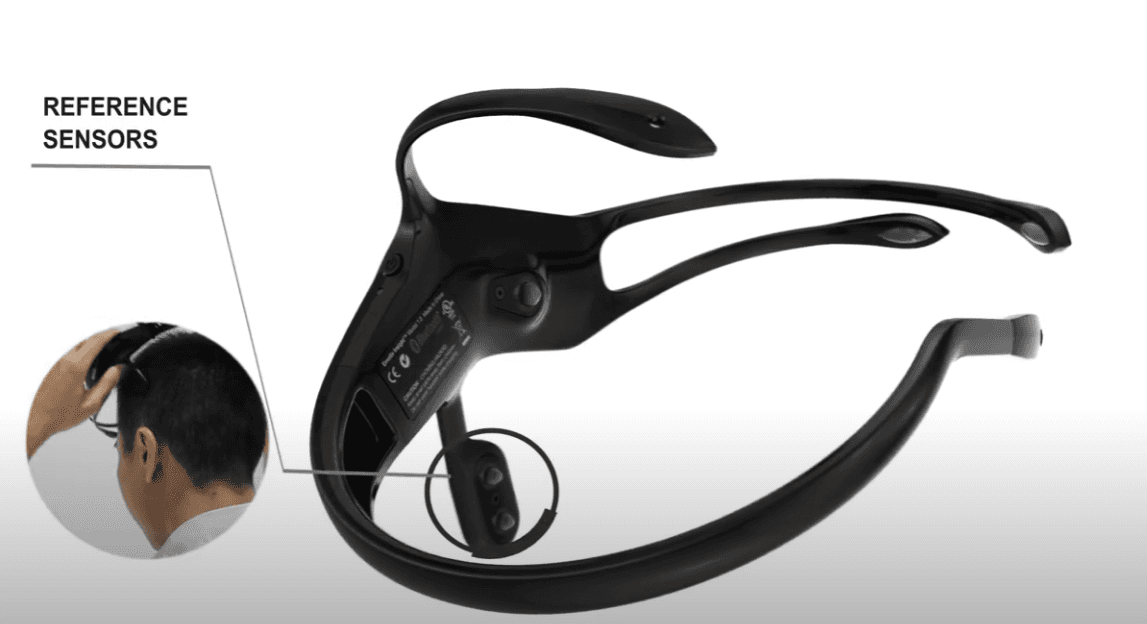
Portable EEG devices, like our Epoc X headset, allow data collection to happen anywhere—at home, in the office, or out in the world. This flexibility opens the door for real-world studies and applications that were once impossible. While today’s most advanced decoders often rely on lab-based equipment, the future of the field is moving toward more portable and accessible solutions that can integrate seamlessly into our daily lives.
What Are the Latest Breakthroughs in Brain Decoding?
The field of brain decoding is moving at an incredible pace, with new discoveries emerging that sound like they’re straight out of science fiction. What was once a theoretical concept is now becoming a tangible reality, thanks to major advancements in neuroscience, signal processing, and artificial intelligence. Researchers are no longer just identifying simple brain patterns; they are beginning to interpret complex cognitive processes like internal speech and imagined scenarios. This progress is opening up entirely new possibilities for communication, artistic expression, and human-computer interaction.
These breakthroughs aren't happening in a vacuum. They are the result of better hardware for capturing brain data and more sophisticated algorithms for making sense of it. As our tools get better, so does our understanding of the brain's language. The most exciting part is seeing how these developments are being applied to solve real-world problems, particularly for individuals with severe communication impairments. The focus is shifting from what’s possible in a lab to what’s practical and helpful in daily life, paving the way for technologies that could profoundly change how we connect with each other and the world around us.
Decoding Speech and Thought in Real-Time
One of the most significant recent advancements is the ability to decode "inner speech"—the words you think to yourself without speaking them aloud. Scientists have developed brain-computer interfaces that can interpret the neural signals associated with these silent thoughts. A groundbreaking study showed that a system could read brain signals from the motor cortex, the part of the brain that controls movement, to understand what a person intended to say. This is a huge leap forward, offering a more intuitive and natural way for people who cannot speak to communicate their thoughts directly. It’s a move from simple command-based interactions to a more fluid, conversational form of communication.
Improving Accuracy with Better Signal Processing
It’s one thing to detect brain activity, but it’s another to translate it accurately. The latest decoders are becoming remarkably precise, thanks to improved signal processing and machine learning models. Researchers have created systems that can not only reproduce specific words and phrases a person hears or imagines but also grasp the general meaning of the content. For instance, one brain decoder was able to determine which story a person was imagining from a set of options. This demonstrates a deeper level of comprehension, moving beyond literal translation to understanding context and semantics, which is crucial for meaningful communication.
Making Brain Decoders More Accessible
While many high-profile breakthroughs still rely on large, expensive lab equipment like fMRI machines, there is a strong push to make this technology more portable and accessible. The goal is to move brain decoding out of the lab and into real-world environments where it can make a difference. This is where non-invasive technologies like EEG come into play. By developing systems that work with wearable headsets, we can lower the cost and complexity of brain research. This shift is crucial for expanding academic research and education, allowing more innovators and developers to experiment with and build upon these incredible advancements.
Connecting Decoders with Brain-Computer Interfaces
The ultimate goal of brain decoding is to create a seamless link between the human brain and external devices. These advancements are transforming what's possible with brain-computer interface (BCI) technology, especially for assistive communication. We're now seeing real-world applications where BCI systems, powered by sophisticated decoders, are giving a voice back to individuals with paralysis. By translating brain signals into speech through a digital avatar, this technology offers a faster, more natural way for people to communicate with their loved ones. It’s a powerful example of how brain decoding is not just an academic exercise but a life-changing tool that can restore connection and independence.
What Are the Current Challenges with Brain Decoders?
Brain decoding technology is advancing at an incredible pace, but like any groundbreaking field, it faces its share of challenges. Getting from a research breakthrough to a practical, everyday tool involves clearing several hurdles. These range from the time it takes to train the systems and the user, to important ethical questions about privacy. There are also practical considerations, like making the technology affordable and accessible outside of a lab, and continuously improving its accuracy. Let's walk through the main challenges researchers and developers are working to solve right now.
The Learning Curve: Training and Setup
One of the biggest hurdles for any brain decoder is the training process. It’s not quite plug-and-play. Both the person using the device and the AI model doing the decoding need time to get in sync. For the user, this means learning to generate consistent brain patterns that the system can recognize. For the AI, it involves a significant training period to learn what those specific brain signals mean. Some of the most advanced systems even require invasive surgery, but even non-invasive methods demand a real commitment to training before they can work effectively.
Addressing Privacy and Ethical Questions
As this technology becomes more capable, it brings up important ethical questions, with mental privacy at the top of the list. It’s a valid concern: could a decoder accidentally access private thoughts you don’t intend to share? Researchers are taking this very seriously and are actively building in safeguards to prevent this. The goal of a brain-computer interface is to translate intentional commands or communication, not to create an open stream of consciousness. Establishing clear ethical guidelines and technical protections is a crucial step in building public trust and ensuring the responsible development of brain decoders.
Overcoming Cost and Accessibility Hurdles
Many of the most powerful brain decoding experiments you read about rely on massive, expensive machines like fMRI scanners. While incredible for research, these systems are confined to labs and hospitals, making them completely impractical for widespread use. The future of brain decoders depends on making them portable and affordable. The good news is that the field is moving in this direction. Researchers are exploring how to adapt their findings to work with more accessible technologies, like EEG headsets, which can bring the power of brain decoding out of the lab and into real-world settings for academic research and personal use.
Working Through Technical and Accuracy Limits
It’s important to have realistic expectations about what today’s brain decoders can do. The technology is still evolving, and it doesn’t create a perfect, word-for-word transcript of your thoughts. Instead, current systems are better at capturing the "gist" or the main idea of what a person is thinking or hearing. While some systems have achieved impressive results with limited vocabularies, error rates show there's still work to be done to reach the level of seamless communication we see in science fiction. Improving signal quality and refining the AI algorithms are key focus areas for making these decoders more precise and reliable.
What's Next for Brain Decoder Technology?
The field of brain decoding is advancing at an incredible pace, moving from theoretical concepts to practical applications. While we're still in the early stages, the future looks bright, with a strong focus on making this technology more accessible, ethical, and seamlessly integrated into everyday life. The next steps aren't just about refining the algorithms; they're about building a responsible framework for a new generation of neurotechnology. Researchers and developers are working to create systems that are not only powerful but also portable, private, and purposeful. This forward-thinking approach is paving the way for innovations that could reshape communication, research, and human-computer interaction.
The Next Wave of Non-Invasive Tech
A major focus for the future is developing powerful decoders that don't require surgery. Recent breakthroughs have relied on non-invasive methods like fMRI (functional magnetic resonance imaging) to translate brain activity into continuous language. While fMRI machines are large and expensive, this research serves as a vital proof-of-concept. The ultimate goal is to adapt these techniques for smaller, more portable systems. Researchers are already exploring how this could work with technologies like fNIRS (functional near-infrared spectroscopy), bringing powerful decoding capabilities out of the lab. This trend aligns with the broader mission of making brain data more accessible for academic research and education through portable EEG headsets.
Building Stronger Privacy and Security
As brain decoding technology becomes more capable, the conversations around privacy and ethics are becoming more important than ever. Researchers are not just aware of these concerns; they are actively designing safeguards into the technology itself. A core principle is ensuring that a decoder can only be used with the full cooperation and consent of the individual. Studies have shown that the technology doesn't work on someone who isn't actively participating, and scientists are continuing to build in protections to prevent any potential misuse. Establishing a strong ethical framework is crucial for building public trust and ensuring that these powerful tools are used for good.
Finding New Applications Beyond Communication
While restoring communication for people who have lost the ability to speak is a primary driver of brain decoder research, the potential applications extend much further. This technology offers an unprecedented window into how the brain processes information, understands language, and even forms abstract thoughts. For scientists, this opens up new avenues for studying the fundamental mechanics of cognition. Beyond the lab, these tools are foundational for creating more intuitive and responsive brain-computer interfaces. Imagine controlling a prosthetic limb or interacting with a smart home environment with a level of fluidity that feels completely natural.
Bringing Brain Decoders into Daily Life
The final frontier for brain decoders is their integration into our daily routines. For this to happen, the technology must become not only non-invasive but also comfortable, user-friendly, and affordable. We're already seeing this happen with the development of more streamlined EEG headsets that can be worn for extended periods. The goal is to create systems that provide a faster, more natural way for people with paralysis to communicate with their loved ones and caregivers. By providing accessible hardware and software, the community of developers can experiment and build the next generation of applications that will bring the benefits of brain decoding to more people.
Related Articles
Frequently Asked Questions
Is a brain decoder the same as a mind-reading device? Not at all. A brain decoder is designed to translate specific, intentional thoughts—like the words you mean to say—into a command or text. It requires your active cooperation and focus to work. The system is trained to recognize the brain patterns you generate on purpose, not to passively interpret your inner monologue. Think of it as a tool you learn to control, rather than a device that has open access to your mind.
What's the practical difference between using an EEG headset and an fMRI scanner for decoding? The main difference comes down to what they measure and where you can use them. An fMRI scanner is a massive machine found in a lab that maps brain activity by tracking blood flow, giving a very precise picture of where activity is happening. An EEG headset, on the other hand, is portable and measures the brain's electrical signals in real-time, making it excellent for capturing when activity happens. This makes EEG technology much more suitable for building accessible, real-world applications.
How much training is needed to use a brain decoder? There is definitely a learning curve involved. It’s a process that requires time and practice from both the user and the system. You have to learn how to produce consistent brain signals, and the AI model needs to be trained on your unique patterns to understand what they mean. It’s a collaborative effort that requires a dedicated setup and calibration period before you can achieve reliable results.
What is the primary real-world use for brain decoders today? Right now, the most significant and life-changing application is in assistive communication. Researchers are focused on developing these systems to give a voice back to individuals who have lost the ability to speak due to paralysis or neurological conditions. By translating intended speech from brain signals into text or a synthesized voice, this technology can help restore a fundamental form of human connection.
Will this technology ever be available for everyday use outside of a lab? That is absolutely the goal. While many of the most advanced experiments still use large, lab-based equipment, the entire field is pushing toward more portable, non-invasive, and affordable solutions. The development of sophisticated EEG headsets is a huge step in this direction. By making the hardware more accessible, we open the door for more researchers, developers, and innovators to create practical applications that can one day integrate into our daily lives.
The field of brain decoding is moving at an incredible pace, with breakthroughs that are turning concepts once confined to theory into tangible reality. Researchers are no longer just identifying simple brain patterns; they are beginning to interpret complex thoughts, like the words you think to yourself without speaking aloud. This progress is opening up entirely new possibilities for communication and human-computer interaction. At the heart of this revolution is the brain decoder device, which captures the neural data needed for translation. These advancements are not just academic exercises; they are being applied to solve real-world problems, particularly for individuals with severe communication impairments.
Key Takeaways
Decoders turn brain activity into communication: At their core, these systems use AI to interpret brain signals for unspoken words or commands. The main difference is between invasive decoders that require surgery and non-invasive ones like EEG, which make brain-computer interfaces more accessible for research and development.
The technology is promising, not perfect: While decoders can now grasp the general meaning of a person's thoughts, they still require extensive training and aren't 100% accurate. The field is actively working on making these systems more reliable and user-friendly while addressing important ethical questions about mental privacy.
Accessibility is the next major goal: The future of brain decoding lies in moving beyond large, lab-based equipment. The focus is on adapting this powerful technology to work with portable, non-invasive systems like EEG headsets, making it a practical tool for assistive communication and real-world research.
What Is a Brain Decoder?
A brain decoder is a system that translates brain activity into a usable format, like text, speech, or a command for a computer. Think of it as a bridge between your brain's electrical signals and the outside world. The primary goal of this technology is to give a voice to those who have lost the ability to speak due to injury or illness. It’s a field that combines neuroscience, engineering, and computer science to interpret the complex patterns of our neural activity. While the idea might sound like science fiction, researchers are making incredible progress in developing systems that can understand what’s happening inside the brain.
How Do Brain Decoders Work?
At its core, a brain decoder works in a few key steps. First, it measures brain activity using a sensor, such as an EEG headset or an fMRI scanner. These devices pick up on the electrical or metabolic signals that your brain cells produce when they communicate. Next, the system analyzes these signals to find specific patterns associated with certain thoughts, words, or intentions. For example, the pattern for thinking the word "hello" will be different from the pattern for thinking "goodbye." The final step is the translation, where the system converts the identified brain pattern into its corresponding output, like displaying the word "hello" on a screen. This process allows for communication without any physical movement.
The Role of AI in Brain Decoding
Artificial intelligence, particularly machine learning, is the engine that powers modern brain decoders. An AI algorithm is trained on vast amounts of brain data to learn the unique patterns associated with different mental states or words. The more data it processes, the better it gets at making accurate predictions. This is what allows a decoder to move beyond simple commands and begin to interpret the nuances of language. Researchers have used AI to create systems that can predict what a person is looking at or listening to with impressive detail. This technology is crucial for helping scientists understand how our brains process the world and form thoughts before we even speak.
What Brain Signals Can We Decode?
Scientists are exploring various types of brain signals for decoding, but one of the most exciting areas is "inner speech." This is the voice inside your head that you hear when you're thinking or reading to yourself, without moving your mouth. Researchers have discovered that the brain activity produced during inner speech is very similar to the patterns created when you try to speak out loud. This breakthrough is significant because it means a brain-computer interface doesn't need you to attempt physical speech to work. By focusing on these internal thought patterns, decoders can tap directly into imagined language, opening up new possibilities for communication.
What Kinds of Brain Decoders Are There?
Brain decoders aren't a one-size-fits-all technology. They come in several forms, each with its own way of listening to the brain's activity. The biggest distinction is between invasive and non-invasive methods. Invasive decoders require surgery to place sensors directly in the brain, while non-invasive ones work from outside the head. This single difference shapes what the technology can do, who can use it, and where it can be used.
Beyond that, different technologies like electroencephalography (EEG) and functional magnetic resonance imaging (fMRI) offer unique windows into brain function. EEG measures the brain's electrical signals, making it great for capturing activity in real-time. On the other hand, fMRI tracks blood flow to see which parts of the brain are active. Each approach has its strengths and is suited for different goals, from clinical applications that help people communicate to academic research that explores the foundations of human thought. Understanding these types is the first step to seeing where this incredible technology is headed.
Invasive vs. Non-Invasive: What's the Difference?
The line between invasive and non-invasive brain decoders is clear: one requires surgery, and the other doesn't. Invasive devices, such as electrode arrays, are surgically implanted directly into the brain's cortex. This proximity to neurons allows them to capture very precise, high-quality signals. Because of the risks involved, this approach is typically reserved for clinical research and medical applications, like helping individuals with severe paralysis regain the ability to communicate or control prosthetic limbs.
Non-invasive methods, however, measure brain activity from outside the skull. Technologies like EEG and fMRI fall into this category. They are much safer and more accessible, making them suitable for a broader range of uses, from neuromarketing studies to personal cognitive wellness tools. The trade-off is that the signals have to travel through the skull, which can make them less precise than invasive recordings.
Decoding with EEG Technology
Electroencephalography, or EEG, is a cornerstone of non-invasive brain decoding. It works by using small sensors placed on the scalp to measure the tiny electrical voltages generated by brain cells. Think of it as listening to the hum of electrical activity your brain produces as you think, feel, and perceive the world. Because EEG captures these signals in milliseconds, it provides a real-time look at brain processes as they happen.
This speed makes EEG an ideal technology for building a brain-computer interface, where thoughts can be translated into commands almost instantly. A primary goal for this technology is to help people who have lost the ability to speak. By decoding the brain signals associated with inner speech, researchers are working to create systems that can give a voice back to those with paralysis.
A Look at fMRI and Other Neuroimaging Methods
While EEG excels at timing, functional magnetic resonance imaging (fMRI) is a master of location. Instead of measuring electrical signals, fMRI detects changes in blood flow within the brain. When a brain area becomes more active, it requires more oxygen, and fMRI machines can pinpoint these hotspots with incredible spatial accuracy. This allows researchers to see exactly which brain structures are involved in a particular task.
This method has been used to create decoders that can reconstruct what a person is hearing, imagining, or even seeing in a silent film. The major limitation of fMRI is that the equipment is massive, expensive, and requires a person to lie perfectly still inside a large scanner. This confines its use to controlled lab or hospital settings, making it impractical for everyday applications.
Portable vs. Lab-Based Systems
The environment where a brain decoder can be used is just as important as the technology itself. Lab-based systems, like fMRI scanners, offer immense power and precision but are tethered to a specific location. They are essential for foundational research but can’t capture brain activity during everyday life. This is where portable systems come in, fundamentally changing how we can study and interact with the brain.
Portable EEG devices, like our Epoc X headset, allow data collection to happen anywhere—at home, in the office, or out in the world. This flexibility opens the door for real-world studies and applications that were once impossible. While today’s most advanced decoders often rely on lab-based equipment, the future of the field is moving toward more portable and accessible solutions that can integrate seamlessly into our daily lives.
What Are the Latest Breakthroughs in Brain Decoding?
The field of brain decoding is moving at an incredible pace, with new discoveries emerging that sound like they’re straight out of science fiction. What was once a theoretical concept is now becoming a tangible reality, thanks to major advancements in neuroscience, signal processing, and artificial intelligence. Researchers are no longer just identifying simple brain patterns; they are beginning to interpret complex cognitive processes like internal speech and imagined scenarios. This progress is opening up entirely new possibilities for communication, artistic expression, and human-computer interaction.
These breakthroughs aren't happening in a vacuum. They are the result of better hardware for capturing brain data and more sophisticated algorithms for making sense of it. As our tools get better, so does our understanding of the brain's language. The most exciting part is seeing how these developments are being applied to solve real-world problems, particularly for individuals with severe communication impairments. The focus is shifting from what’s possible in a lab to what’s practical and helpful in daily life, paving the way for technologies that could profoundly change how we connect with each other and the world around us.
Decoding Speech and Thought in Real-Time
One of the most significant recent advancements is the ability to decode "inner speech"—the words you think to yourself without speaking them aloud. Scientists have developed brain-computer interfaces that can interpret the neural signals associated with these silent thoughts. A groundbreaking study showed that a system could read brain signals from the motor cortex, the part of the brain that controls movement, to understand what a person intended to say. This is a huge leap forward, offering a more intuitive and natural way for people who cannot speak to communicate their thoughts directly. It’s a move from simple command-based interactions to a more fluid, conversational form of communication.
Improving Accuracy with Better Signal Processing
It’s one thing to detect brain activity, but it’s another to translate it accurately. The latest decoders are becoming remarkably precise, thanks to improved signal processing and machine learning models. Researchers have created systems that can not only reproduce specific words and phrases a person hears or imagines but also grasp the general meaning of the content. For instance, one brain decoder was able to determine which story a person was imagining from a set of options. This demonstrates a deeper level of comprehension, moving beyond literal translation to understanding context and semantics, which is crucial for meaningful communication.
Making Brain Decoders More Accessible
While many high-profile breakthroughs still rely on large, expensive lab equipment like fMRI machines, there is a strong push to make this technology more portable and accessible. The goal is to move brain decoding out of the lab and into real-world environments where it can make a difference. This is where non-invasive technologies like EEG come into play. By developing systems that work with wearable headsets, we can lower the cost and complexity of brain research. This shift is crucial for expanding academic research and education, allowing more innovators and developers to experiment with and build upon these incredible advancements.
Connecting Decoders with Brain-Computer Interfaces
The ultimate goal of brain decoding is to create a seamless link between the human brain and external devices. These advancements are transforming what's possible with brain-computer interface (BCI) technology, especially for assistive communication. We're now seeing real-world applications where BCI systems, powered by sophisticated decoders, are giving a voice back to individuals with paralysis. By translating brain signals into speech through a digital avatar, this technology offers a faster, more natural way for people to communicate with their loved ones. It’s a powerful example of how brain decoding is not just an academic exercise but a life-changing tool that can restore connection and independence.
What Are the Current Challenges with Brain Decoders?
Brain decoding technology is advancing at an incredible pace, but like any groundbreaking field, it faces its share of challenges. Getting from a research breakthrough to a practical, everyday tool involves clearing several hurdles. These range from the time it takes to train the systems and the user, to important ethical questions about privacy. There are also practical considerations, like making the technology affordable and accessible outside of a lab, and continuously improving its accuracy. Let's walk through the main challenges researchers and developers are working to solve right now.
The Learning Curve: Training and Setup
One of the biggest hurdles for any brain decoder is the training process. It’s not quite plug-and-play. Both the person using the device and the AI model doing the decoding need time to get in sync. For the user, this means learning to generate consistent brain patterns that the system can recognize. For the AI, it involves a significant training period to learn what those specific brain signals mean. Some of the most advanced systems even require invasive surgery, but even non-invasive methods demand a real commitment to training before they can work effectively.
Addressing Privacy and Ethical Questions
As this technology becomes more capable, it brings up important ethical questions, with mental privacy at the top of the list. It’s a valid concern: could a decoder accidentally access private thoughts you don’t intend to share? Researchers are taking this very seriously and are actively building in safeguards to prevent this. The goal of a brain-computer interface is to translate intentional commands or communication, not to create an open stream of consciousness. Establishing clear ethical guidelines and technical protections is a crucial step in building public trust and ensuring the responsible development of brain decoders.
Overcoming Cost and Accessibility Hurdles
Many of the most powerful brain decoding experiments you read about rely on massive, expensive machines like fMRI scanners. While incredible for research, these systems are confined to labs and hospitals, making them completely impractical for widespread use. The future of brain decoders depends on making them portable and affordable. The good news is that the field is moving in this direction. Researchers are exploring how to adapt their findings to work with more accessible technologies, like EEG headsets, which can bring the power of brain decoding out of the lab and into real-world settings for academic research and personal use.
Working Through Technical and Accuracy Limits
It’s important to have realistic expectations about what today’s brain decoders can do. The technology is still evolving, and it doesn’t create a perfect, word-for-word transcript of your thoughts. Instead, current systems are better at capturing the "gist" or the main idea of what a person is thinking or hearing. While some systems have achieved impressive results with limited vocabularies, error rates show there's still work to be done to reach the level of seamless communication we see in science fiction. Improving signal quality and refining the AI algorithms are key focus areas for making these decoders more precise and reliable.
What's Next for Brain Decoder Technology?
The field of brain decoding is advancing at an incredible pace, moving from theoretical concepts to practical applications. While we're still in the early stages, the future looks bright, with a strong focus on making this technology more accessible, ethical, and seamlessly integrated into everyday life. The next steps aren't just about refining the algorithms; they're about building a responsible framework for a new generation of neurotechnology. Researchers and developers are working to create systems that are not only powerful but also portable, private, and purposeful. This forward-thinking approach is paving the way for innovations that could reshape communication, research, and human-computer interaction.
The Next Wave of Non-Invasive Tech
A major focus for the future is developing powerful decoders that don't require surgery. Recent breakthroughs have relied on non-invasive methods like fMRI (functional magnetic resonance imaging) to translate brain activity into continuous language. While fMRI machines are large and expensive, this research serves as a vital proof-of-concept. The ultimate goal is to adapt these techniques for smaller, more portable systems. Researchers are already exploring how this could work with technologies like fNIRS (functional near-infrared spectroscopy), bringing powerful decoding capabilities out of the lab. This trend aligns with the broader mission of making brain data more accessible for academic research and education through portable EEG headsets.
Building Stronger Privacy and Security
As brain decoding technology becomes more capable, the conversations around privacy and ethics are becoming more important than ever. Researchers are not just aware of these concerns; they are actively designing safeguards into the technology itself. A core principle is ensuring that a decoder can only be used with the full cooperation and consent of the individual. Studies have shown that the technology doesn't work on someone who isn't actively participating, and scientists are continuing to build in protections to prevent any potential misuse. Establishing a strong ethical framework is crucial for building public trust and ensuring that these powerful tools are used for good.
Finding New Applications Beyond Communication
While restoring communication for people who have lost the ability to speak is a primary driver of brain decoder research, the potential applications extend much further. This technology offers an unprecedented window into how the brain processes information, understands language, and even forms abstract thoughts. For scientists, this opens up new avenues for studying the fundamental mechanics of cognition. Beyond the lab, these tools are foundational for creating more intuitive and responsive brain-computer interfaces. Imagine controlling a prosthetic limb or interacting with a smart home environment with a level of fluidity that feels completely natural.
Bringing Brain Decoders into Daily Life
The final frontier for brain decoders is their integration into our daily routines. For this to happen, the technology must become not only non-invasive but also comfortable, user-friendly, and affordable. We're already seeing this happen with the development of more streamlined EEG headsets that can be worn for extended periods. The goal is to create systems that provide a faster, more natural way for people with paralysis to communicate with their loved ones and caregivers. By providing accessible hardware and software, the community of developers can experiment and build the next generation of applications that will bring the benefits of brain decoding to more people.
Related Articles
Frequently Asked Questions
Is a brain decoder the same as a mind-reading device? Not at all. A brain decoder is designed to translate specific, intentional thoughts—like the words you mean to say—into a command or text. It requires your active cooperation and focus to work. The system is trained to recognize the brain patterns you generate on purpose, not to passively interpret your inner monologue. Think of it as a tool you learn to control, rather than a device that has open access to your mind.
What's the practical difference between using an EEG headset and an fMRI scanner for decoding? The main difference comes down to what they measure and where you can use them. An fMRI scanner is a massive machine found in a lab that maps brain activity by tracking blood flow, giving a very precise picture of where activity is happening. An EEG headset, on the other hand, is portable and measures the brain's electrical signals in real-time, making it excellent for capturing when activity happens. This makes EEG technology much more suitable for building accessible, real-world applications.
How much training is needed to use a brain decoder? There is definitely a learning curve involved. It’s a process that requires time and practice from both the user and the system. You have to learn how to produce consistent brain signals, and the AI model needs to be trained on your unique patterns to understand what they mean. It’s a collaborative effort that requires a dedicated setup and calibration period before you can achieve reliable results.
What is the primary real-world use for brain decoders today? Right now, the most significant and life-changing application is in assistive communication. Researchers are focused on developing these systems to give a voice back to individuals who have lost the ability to speak due to paralysis or neurological conditions. By translating intended speech from brain signals into text or a synthesized voice, this technology can help restore a fundamental form of human connection.
Will this technology ever be available for everyday use outside of a lab? That is absolutely the goal. While many of the most advanced experiments still use large, lab-based equipment, the entire field is pushing toward more portable, non-invasive, and affordable solutions. The development of sophisticated EEG headsets is a huge step in this direction. By making the hardware more accessible, we open the door for more researchers, developers, and innovators to create practical applications that can one day integrate into our daily lives.
The field of brain decoding is moving at an incredible pace, with breakthroughs that are turning concepts once confined to theory into tangible reality. Researchers are no longer just identifying simple brain patterns; they are beginning to interpret complex thoughts, like the words you think to yourself without speaking aloud. This progress is opening up entirely new possibilities for communication and human-computer interaction. At the heart of this revolution is the brain decoder device, which captures the neural data needed for translation. These advancements are not just academic exercises; they are being applied to solve real-world problems, particularly for individuals with severe communication impairments.
Key Takeaways
Decoders turn brain activity into communication: At their core, these systems use AI to interpret brain signals for unspoken words or commands. The main difference is between invasive decoders that require surgery and non-invasive ones like EEG, which make brain-computer interfaces more accessible for research and development.
The technology is promising, not perfect: While decoders can now grasp the general meaning of a person's thoughts, they still require extensive training and aren't 100% accurate. The field is actively working on making these systems more reliable and user-friendly while addressing important ethical questions about mental privacy.
Accessibility is the next major goal: The future of brain decoding lies in moving beyond large, lab-based equipment. The focus is on adapting this powerful technology to work with portable, non-invasive systems like EEG headsets, making it a practical tool for assistive communication and real-world research.
What Is a Brain Decoder?
A brain decoder is a system that translates brain activity into a usable format, like text, speech, or a command for a computer. Think of it as a bridge between your brain's electrical signals and the outside world. The primary goal of this technology is to give a voice to those who have lost the ability to speak due to injury or illness. It’s a field that combines neuroscience, engineering, and computer science to interpret the complex patterns of our neural activity. While the idea might sound like science fiction, researchers are making incredible progress in developing systems that can understand what’s happening inside the brain.
How Do Brain Decoders Work?
At its core, a brain decoder works in a few key steps. First, it measures brain activity using a sensor, such as an EEG headset or an fMRI scanner. These devices pick up on the electrical or metabolic signals that your brain cells produce when they communicate. Next, the system analyzes these signals to find specific patterns associated with certain thoughts, words, or intentions. For example, the pattern for thinking the word "hello" will be different from the pattern for thinking "goodbye." The final step is the translation, where the system converts the identified brain pattern into its corresponding output, like displaying the word "hello" on a screen. This process allows for communication without any physical movement.
The Role of AI in Brain Decoding
Artificial intelligence, particularly machine learning, is the engine that powers modern brain decoders. An AI algorithm is trained on vast amounts of brain data to learn the unique patterns associated with different mental states or words. The more data it processes, the better it gets at making accurate predictions. This is what allows a decoder to move beyond simple commands and begin to interpret the nuances of language. Researchers have used AI to create systems that can predict what a person is looking at or listening to with impressive detail. This technology is crucial for helping scientists understand how our brains process the world and form thoughts before we even speak.
What Brain Signals Can We Decode?
Scientists are exploring various types of brain signals for decoding, but one of the most exciting areas is "inner speech." This is the voice inside your head that you hear when you're thinking or reading to yourself, without moving your mouth. Researchers have discovered that the brain activity produced during inner speech is very similar to the patterns created when you try to speak out loud. This breakthrough is significant because it means a brain-computer interface doesn't need you to attempt physical speech to work. By focusing on these internal thought patterns, decoders can tap directly into imagined language, opening up new possibilities for communication.
What Kinds of Brain Decoders Are There?
Brain decoders aren't a one-size-fits-all technology. They come in several forms, each with its own way of listening to the brain's activity. The biggest distinction is between invasive and non-invasive methods. Invasive decoders require surgery to place sensors directly in the brain, while non-invasive ones work from outside the head. This single difference shapes what the technology can do, who can use it, and where it can be used.
Beyond that, different technologies like electroencephalography (EEG) and functional magnetic resonance imaging (fMRI) offer unique windows into brain function. EEG measures the brain's electrical signals, making it great for capturing activity in real-time. On the other hand, fMRI tracks blood flow to see which parts of the brain are active. Each approach has its strengths and is suited for different goals, from clinical applications that help people communicate to academic research that explores the foundations of human thought. Understanding these types is the first step to seeing where this incredible technology is headed.
Invasive vs. Non-Invasive: What's the Difference?
The line between invasive and non-invasive brain decoders is clear: one requires surgery, and the other doesn't. Invasive devices, such as electrode arrays, are surgically implanted directly into the brain's cortex. This proximity to neurons allows them to capture very precise, high-quality signals. Because of the risks involved, this approach is typically reserved for clinical research and medical applications, like helping individuals with severe paralysis regain the ability to communicate or control prosthetic limbs.
Non-invasive methods, however, measure brain activity from outside the skull. Technologies like EEG and fMRI fall into this category. They are much safer and more accessible, making them suitable for a broader range of uses, from neuromarketing studies to personal cognitive wellness tools. The trade-off is that the signals have to travel through the skull, which can make them less precise than invasive recordings.
Decoding with EEG Technology
Electroencephalography, or EEG, is a cornerstone of non-invasive brain decoding. It works by using small sensors placed on the scalp to measure the tiny electrical voltages generated by brain cells. Think of it as listening to the hum of electrical activity your brain produces as you think, feel, and perceive the world. Because EEG captures these signals in milliseconds, it provides a real-time look at brain processes as they happen.
This speed makes EEG an ideal technology for building a brain-computer interface, where thoughts can be translated into commands almost instantly. A primary goal for this technology is to help people who have lost the ability to speak. By decoding the brain signals associated with inner speech, researchers are working to create systems that can give a voice back to those with paralysis.
A Look at fMRI and Other Neuroimaging Methods
While EEG excels at timing, functional magnetic resonance imaging (fMRI) is a master of location. Instead of measuring electrical signals, fMRI detects changes in blood flow within the brain. When a brain area becomes more active, it requires more oxygen, and fMRI machines can pinpoint these hotspots with incredible spatial accuracy. This allows researchers to see exactly which brain structures are involved in a particular task.
This method has been used to create decoders that can reconstruct what a person is hearing, imagining, or even seeing in a silent film. The major limitation of fMRI is that the equipment is massive, expensive, and requires a person to lie perfectly still inside a large scanner. This confines its use to controlled lab or hospital settings, making it impractical for everyday applications.
Portable vs. Lab-Based Systems
The environment where a brain decoder can be used is just as important as the technology itself. Lab-based systems, like fMRI scanners, offer immense power and precision but are tethered to a specific location. They are essential for foundational research but can’t capture brain activity during everyday life. This is where portable systems come in, fundamentally changing how we can study and interact with the brain.
Portable EEG devices, like our Epoc X headset, allow data collection to happen anywhere—at home, in the office, or out in the world. This flexibility opens the door for real-world studies and applications that were once impossible. While today’s most advanced decoders often rely on lab-based equipment, the future of the field is moving toward more portable and accessible solutions that can integrate seamlessly into our daily lives.
What Are the Latest Breakthroughs in Brain Decoding?
The field of brain decoding is moving at an incredible pace, with new discoveries emerging that sound like they’re straight out of science fiction. What was once a theoretical concept is now becoming a tangible reality, thanks to major advancements in neuroscience, signal processing, and artificial intelligence. Researchers are no longer just identifying simple brain patterns; they are beginning to interpret complex cognitive processes like internal speech and imagined scenarios. This progress is opening up entirely new possibilities for communication, artistic expression, and human-computer interaction.
These breakthroughs aren't happening in a vacuum. They are the result of better hardware for capturing brain data and more sophisticated algorithms for making sense of it. As our tools get better, so does our understanding of the brain's language. The most exciting part is seeing how these developments are being applied to solve real-world problems, particularly for individuals with severe communication impairments. The focus is shifting from what’s possible in a lab to what’s practical and helpful in daily life, paving the way for technologies that could profoundly change how we connect with each other and the world around us.
Decoding Speech and Thought in Real-Time
One of the most significant recent advancements is the ability to decode "inner speech"—the words you think to yourself without speaking them aloud. Scientists have developed brain-computer interfaces that can interpret the neural signals associated with these silent thoughts. A groundbreaking study showed that a system could read brain signals from the motor cortex, the part of the brain that controls movement, to understand what a person intended to say. This is a huge leap forward, offering a more intuitive and natural way for people who cannot speak to communicate their thoughts directly. It’s a move from simple command-based interactions to a more fluid, conversational form of communication.
Improving Accuracy with Better Signal Processing
It’s one thing to detect brain activity, but it’s another to translate it accurately. The latest decoders are becoming remarkably precise, thanks to improved signal processing and machine learning models. Researchers have created systems that can not only reproduce specific words and phrases a person hears or imagines but also grasp the general meaning of the content. For instance, one brain decoder was able to determine which story a person was imagining from a set of options. This demonstrates a deeper level of comprehension, moving beyond literal translation to understanding context and semantics, which is crucial for meaningful communication.
Making Brain Decoders More Accessible
While many high-profile breakthroughs still rely on large, expensive lab equipment like fMRI machines, there is a strong push to make this technology more portable and accessible. The goal is to move brain decoding out of the lab and into real-world environments where it can make a difference. This is where non-invasive technologies like EEG come into play. By developing systems that work with wearable headsets, we can lower the cost and complexity of brain research. This shift is crucial for expanding academic research and education, allowing more innovators and developers to experiment with and build upon these incredible advancements.
Connecting Decoders with Brain-Computer Interfaces
The ultimate goal of brain decoding is to create a seamless link between the human brain and external devices. These advancements are transforming what's possible with brain-computer interface (BCI) technology, especially for assistive communication. We're now seeing real-world applications where BCI systems, powered by sophisticated decoders, are giving a voice back to individuals with paralysis. By translating brain signals into speech through a digital avatar, this technology offers a faster, more natural way for people to communicate with their loved ones. It’s a powerful example of how brain decoding is not just an academic exercise but a life-changing tool that can restore connection and independence.
What Are the Current Challenges with Brain Decoders?
Brain decoding technology is advancing at an incredible pace, but like any groundbreaking field, it faces its share of challenges. Getting from a research breakthrough to a practical, everyday tool involves clearing several hurdles. These range from the time it takes to train the systems and the user, to important ethical questions about privacy. There are also practical considerations, like making the technology affordable and accessible outside of a lab, and continuously improving its accuracy. Let's walk through the main challenges researchers and developers are working to solve right now.
The Learning Curve: Training and Setup
One of the biggest hurdles for any brain decoder is the training process. It’s not quite plug-and-play. Both the person using the device and the AI model doing the decoding need time to get in sync. For the user, this means learning to generate consistent brain patterns that the system can recognize. For the AI, it involves a significant training period to learn what those specific brain signals mean. Some of the most advanced systems even require invasive surgery, but even non-invasive methods demand a real commitment to training before they can work effectively.
Addressing Privacy and Ethical Questions
As this technology becomes more capable, it brings up important ethical questions, with mental privacy at the top of the list. It’s a valid concern: could a decoder accidentally access private thoughts you don’t intend to share? Researchers are taking this very seriously and are actively building in safeguards to prevent this. The goal of a brain-computer interface is to translate intentional commands or communication, not to create an open stream of consciousness. Establishing clear ethical guidelines and technical protections is a crucial step in building public trust and ensuring the responsible development of brain decoders.
Overcoming Cost and Accessibility Hurdles
Many of the most powerful brain decoding experiments you read about rely on massive, expensive machines like fMRI scanners. While incredible for research, these systems are confined to labs and hospitals, making them completely impractical for widespread use. The future of brain decoders depends on making them portable and affordable. The good news is that the field is moving in this direction. Researchers are exploring how to adapt their findings to work with more accessible technologies, like EEG headsets, which can bring the power of brain decoding out of the lab and into real-world settings for academic research and personal use.
Working Through Technical and Accuracy Limits
It’s important to have realistic expectations about what today’s brain decoders can do. The technology is still evolving, and it doesn’t create a perfect, word-for-word transcript of your thoughts. Instead, current systems are better at capturing the "gist" or the main idea of what a person is thinking or hearing. While some systems have achieved impressive results with limited vocabularies, error rates show there's still work to be done to reach the level of seamless communication we see in science fiction. Improving signal quality and refining the AI algorithms are key focus areas for making these decoders more precise and reliable.
What's Next for Brain Decoder Technology?
The field of brain decoding is advancing at an incredible pace, moving from theoretical concepts to practical applications. While we're still in the early stages, the future looks bright, with a strong focus on making this technology more accessible, ethical, and seamlessly integrated into everyday life. The next steps aren't just about refining the algorithms; they're about building a responsible framework for a new generation of neurotechnology. Researchers and developers are working to create systems that are not only powerful but also portable, private, and purposeful. This forward-thinking approach is paving the way for innovations that could reshape communication, research, and human-computer interaction.
The Next Wave of Non-Invasive Tech
A major focus for the future is developing powerful decoders that don't require surgery. Recent breakthroughs have relied on non-invasive methods like fMRI (functional magnetic resonance imaging) to translate brain activity into continuous language. While fMRI machines are large and expensive, this research serves as a vital proof-of-concept. The ultimate goal is to adapt these techniques for smaller, more portable systems. Researchers are already exploring how this could work with technologies like fNIRS (functional near-infrared spectroscopy), bringing powerful decoding capabilities out of the lab. This trend aligns with the broader mission of making brain data more accessible for academic research and education through portable EEG headsets.
Building Stronger Privacy and Security
As brain decoding technology becomes more capable, the conversations around privacy and ethics are becoming more important than ever. Researchers are not just aware of these concerns; they are actively designing safeguards into the technology itself. A core principle is ensuring that a decoder can only be used with the full cooperation and consent of the individual. Studies have shown that the technology doesn't work on someone who isn't actively participating, and scientists are continuing to build in protections to prevent any potential misuse. Establishing a strong ethical framework is crucial for building public trust and ensuring that these powerful tools are used for good.
Finding New Applications Beyond Communication
While restoring communication for people who have lost the ability to speak is a primary driver of brain decoder research, the potential applications extend much further. This technology offers an unprecedented window into how the brain processes information, understands language, and even forms abstract thoughts. For scientists, this opens up new avenues for studying the fundamental mechanics of cognition. Beyond the lab, these tools are foundational for creating more intuitive and responsive brain-computer interfaces. Imagine controlling a prosthetic limb or interacting with a smart home environment with a level of fluidity that feels completely natural.
Bringing Brain Decoders into Daily Life
The final frontier for brain decoders is their integration into our daily routines. For this to happen, the technology must become not only non-invasive but also comfortable, user-friendly, and affordable. We're already seeing this happen with the development of more streamlined EEG headsets that can be worn for extended periods. The goal is to create systems that provide a faster, more natural way for people with paralysis to communicate with their loved ones and caregivers. By providing accessible hardware and software, the community of developers can experiment and build the next generation of applications that will bring the benefits of brain decoding to more people.
Related Articles
Frequently Asked Questions
Is a brain decoder the same as a mind-reading device? Not at all. A brain decoder is designed to translate specific, intentional thoughts—like the words you mean to say—into a command or text. It requires your active cooperation and focus to work. The system is trained to recognize the brain patterns you generate on purpose, not to passively interpret your inner monologue. Think of it as a tool you learn to control, rather than a device that has open access to your mind.
What's the practical difference between using an EEG headset and an fMRI scanner for decoding? The main difference comes down to what they measure and where you can use them. An fMRI scanner is a massive machine found in a lab that maps brain activity by tracking blood flow, giving a very precise picture of where activity is happening. An EEG headset, on the other hand, is portable and measures the brain's electrical signals in real-time, making it excellent for capturing when activity happens. This makes EEG technology much more suitable for building accessible, real-world applications.
How much training is needed to use a brain decoder? There is definitely a learning curve involved. It’s a process that requires time and practice from both the user and the system. You have to learn how to produce consistent brain signals, and the AI model needs to be trained on your unique patterns to understand what they mean. It’s a collaborative effort that requires a dedicated setup and calibration period before you can achieve reliable results.
What is the primary real-world use for brain decoders today? Right now, the most significant and life-changing application is in assistive communication. Researchers are focused on developing these systems to give a voice back to individuals who have lost the ability to speak due to paralysis or neurological conditions. By translating intended speech from brain signals into text or a synthesized voice, this technology can help restore a fundamental form of human connection.
Will this technology ever be available for everyday use outside of a lab? That is absolutely the goal. While many of the most advanced experiments still use large, lab-based equipment, the entire field is pushing toward more portable, non-invasive, and affordable solutions. The development of sophisticated EEG headsets is a huge step in this direction. By making the hardware more accessible, we open the door for more researchers, developers, and innovators to create practical applications that can one day integrate into our daily lives.