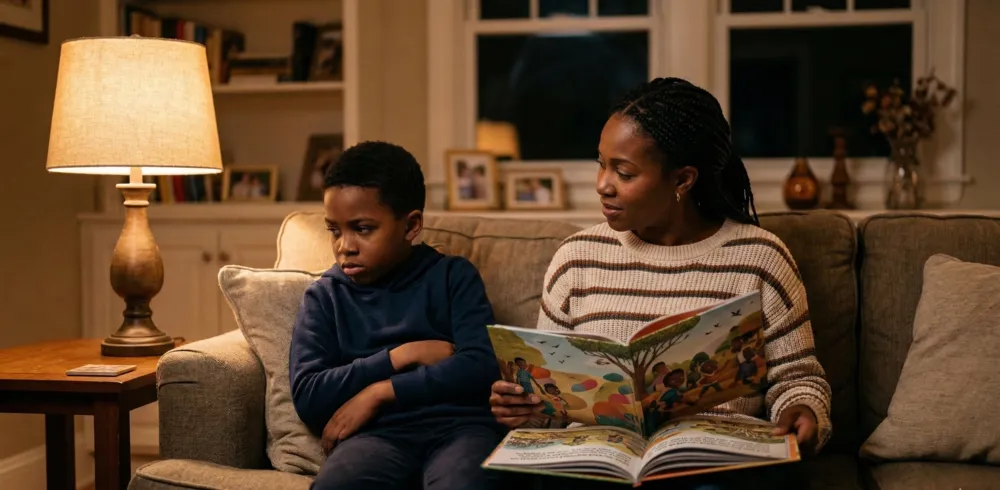
It can be tough for parents to figure out if their child is just having a normal learning struggle or if something else is going on, like dyslexia.
This guide breaks down what to look for at different ages, from toddlerhood right through elementary school, to help you understand the signs of dyslexia in kids and know when to seek further help.

Overview
Signs of dyslexia in kids evolve as they get older, so understanding age-specific clues is important.
In toddlers and preschoolers, look for delays in speech, trouble recognizing letters (especially in their own name), and unusual word mixing.
Early elementary schoolers might show difficulty connecting letters to sounds, struggle with spelling and sight words, and avoid reading.
By upper elementary, persistent issues with reading fluency, comprehension, written expression, and confusing small words can be indicators.
Family history can play a role, as dyslexia often runs in families.
Early identification and intervention are key to helping children with dyslexia succeed.
How Does the Developmental Path of Dyslexia Progress in Childhood?
Dyslexia is not a brain condition that suddenly appears when a child is handed their first book, nor is it a temporary phase they simply outgrow. It is a lifelong neurological difference in how the brain is wired to process language.
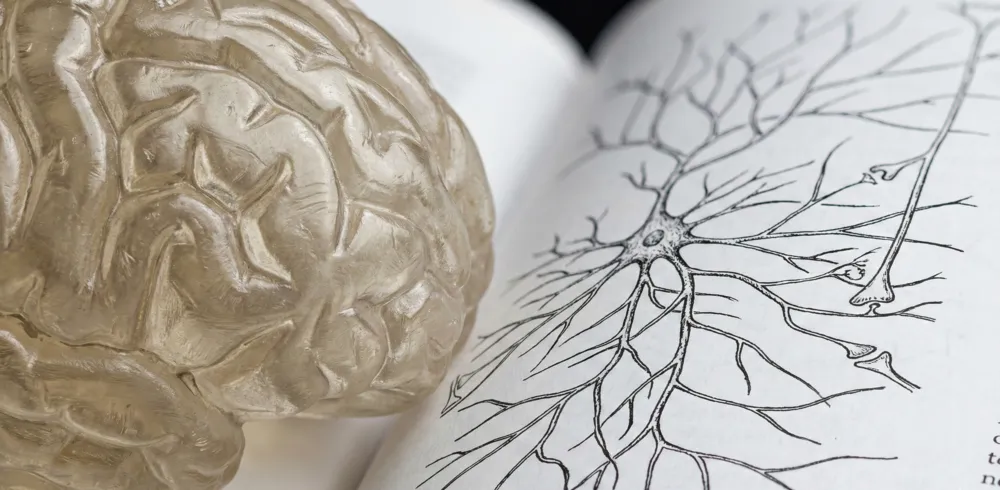
Because reading is not a naturally occurring human instinct but rather a complex cognitive skill that must be explicitly taught, a child's brain has to build new neural pathways to connect visual symbols (letters) with auditory sounds (phonemes).
As a child progresses through different stages of development and the educational demands placed on these neural networks increase, the way dyslexia presents itself will naturally evolve.
Why Do the Observable Signs of Dyslexia Change as Your Child Grows?
The observable symptoms of dyslexia shift because the environmental and educational expectations of the child are constantly changing.
Early Childhood (Pre-K to Kindergarten): Challenges at this stage usually involve difficulty recognizing the distinct sounds that make up speech (phonological awareness).
Early Elementary (1st to 3rd Grade): Signs manifest as struggling to sound out simple words, guessing at words based on the first letter, or experiencing extreme fatigue and frustration during reading practice.
Late Elementary and Beyond (4th Grade onward): At this stage, the underlying processing differences might look like slow reading fluency, poor spelling, or difficulty summarizing a textbook chapter, even if basic decoding has been mostly mastered.
The core neurobiological difference remains constant, but the behavioral output adapts to the specific cognitive tasks the child is being asked to perform.
What Do the True Early Indicators of Dyslexia Look Like Beyond Common Myths?
One of the most persistent myths about dyslexia is that its primary symptom is seeing words backward or constantly reversing letters like "b" and "d."
While visual tracking issues can co-occur, letter reversal is actually a standard developmental hurdle for many typical children as their brains learn that the orientation of a shape changes its meaning. Treating letter reversal as the definitive hallmark of dyslexia often leads to missed early diagnoses.
The true early indicators are much more deeply rooted in auditory and language processing. Real early signs to look for include:
Struggling with Rhymes: Having difficulty recognizing, predicting, or generating rhyming words (e.g., struggling with Dr. Seuss books or nursery rhymes).
Word Retrieval Issues: Frequently using filler words like "stuff," "things," or "whatchamacallit" because they struggle to pull the exact vocabulary word from memory.
Trouble with Sequences: Having persistent difficulty learning the alphabet song, the days of the week, or the months of the year in order.
Mispronouncing Familiar Words: Consistently mixing up the sounds in multi-syllable words (e.g., saying "aminal" instead of "animal" or "pasghetti" instead of "spaghetti") well past the typical toddler stage.
How Can I Spot Dyslexia Clues in Toddlers and Preschoolers Before School Starts?
It can be challenging to identify dyslexia in very young children, as many early signs can overlap with typical developmental stages. However, certain patterns in language development and early literacy skills may suggest a need for closer observation.
What Are the Significant Language and Speech Development Delays to Note?
While every child develops at their own pace, persistent delays in speech and language milestones can sometimes be an early indicator.
This might include a smaller vocabulary than expected for their age, difficulty finding the right words, or trouble understanding instructions. Some children may also have persistent issues with pronunciation, mispronouncing familiar words or using simpler, more childlike speech patterns longer than usual.
Delayed speech development: A child who is significantly behind peers in speaking or has very unclear speech.
Limited vocabulary: Using fewer words than expected for their age group.
Word-finding difficulties: Frequently struggling to recall or say the names of familiar objects or people.
Pronunciation issues: Consistently mispronouncing words or having difficulty with sounds.
Why Might a Child Experience Difficulty Recognizing Letters in Their Own Name?
As children approach preschool age, they often begin to show interest in letters, especially those in their own name. A child who shows little to no recognition of letters, even when they are familiar (like the first letter of their name), or struggles to learn them, might be exhibiting a sign.
This difficulty isn't just about memorization; it can point to a deeper challenge in distinguishing between letter shapes and understanding their distinct identities.
When Is Mixing Up Words a Normal Phase vs. a Potential Sign of Dyslexia?
It is common for young children to mix up words, substitute one word for another, or have trouble with sentence structure as they are learning language. This is a normal part of language acquisition.
However, if a child consistently struggles with word order, frequently uses incorrect words in sentences, or has significant difficulty understanding and following multi-step directions even when they are simple, it may warrant further attention.
This goes beyond typical speech errors and can indicate a more pervasive language processing challenge.
What Are the Signs of Dyslexia in Kindergarten to 2nd Grade?
As children enter kindergarten and the early elementary grades, the demands on their literacy skills increase significantly. This is often when the signs of dyslexia become more apparent, as the focus shifts from pre-reading skills to actual reading and spelling.
While some children may have shown earlier indicators, this age range is a common period for identification.
Why Is Connecting Letters to Corresponding Sounds a Core Struggle?
At this stage, a primary challenge for children with dyslexia is phonological processing, which is the ability to recognize and manipulate the sounds within words. This directly impacts their ability to connect letters with the sounds they represent.
For instance, a child might struggle to understand that the letter 'b' makes the /b/ sound, or that the word 'cat' is made up of three distinct sounds: /k/, /a/, and /t/. This difficulty is not about not knowing the letters themselves, but rather understanding the relationship between the visual symbol (the letter) and the auditory component (the sound).
What Indicators Point to Inconsistent Spelling and Trouble with Sight Words?
Children with dyslexia may spell the same word differently within the same piece of writing, or they might rely heavily on phonetic spelling, even for common words.
Memorizing sight words—words that are frequently encountered and often don't follow regular phonetic rules (like 'the', 'is', 'was')—can also be very challenging. These words are typically learned through memorization, and the memory difficulties associated with dyslexia can make this process slow and frustrating.
How Do Reading Reluctance and Avoidance Behaviors Typically Manifest?
Because reading is such an effortful task, children may begin to show a strong reluctance to read. This can manifest in various ways:
Avoiding reading aloud in class or at home.
Complaining of headaches or fatigue when asked to read.
Showing distress or anxiety when reading is required.
Preferring activities that do not involve reading.
Why Do Children with Dyslexia Experience Difficulty with Sequences Like the Alphabet?
Beyond reading and spelling, children with dyslexia may also struggle with tasks that require memorizing sequences. This can include reciting the alphabet in order, remembering the days of the week, or recalling the months of the year.
This difficulty often stems from challenges with auditory memory and processing, which are closely linked to the core deficits in dyslexia.
What Are the Developing Dyslexia Challenges in Upper Elementary Students?
As academic demands increase in upper elementary grades, children with dyslexia may face more pronounced difficulties. The foundational skills that were previously manageable can become significant hurdles.
The gap between a child's verbal abilities and their written output often becomes more apparent during these years.
Why Does Reading Fluency Often Remain Slow and Labored?
By this age, peers are typically reading with greater speed and ease. Children with dyslexia, however, may continue to read slowly and with considerable effort.
This is often because they are still working hard to decode words, sounding them out letter by letter rather than recognizing them automatically. This sustained effort can be tiring and lead to reading avoidance.
How Does Excessive Decoding Effort Impact Reading Comprehension?
When a child expends a lot of mental energy just to read the words on a page, there is less cognitive capacity left for understanding the meaning of the text.
This can result in a disconnect between reading the words and grasping the overall message, even with material that is otherwise at their intellectual level. They might read a passage accurately but struggle to answer questions about it or summarize its main points.
In What Ways Does Dyslexia Affect Written Expression and Idea Organization?
Writing can present a complex set of challenges for children with dyslexia, including inconsistent spelling and difficulty organizing coherent sentences. Children may struggle with:
Spelling: Inconsistent spelling, even for common words, and a tendency to spell words phonetically rather than by learned rules.
Grammar and Punctuation: Difficulty organizing thoughts into coherent sentences, using correct punctuation, and structuring paragraphs.
Handwriting: While not a universal sign, some children may have messy or illegible handwriting due to the effort involved in forming letters.
Idea Generation: While they may have many ideas verbally, translating those ideas onto paper in an organized fashion can be a significant obstacle.
Why Is Confusing or Misusing Small Words a Common Symptom?
These small, often overlooked words, known as sight words or function words, can be particularly tricky. In reading, a child might substitute one for another, changing the meaning of a sentence. In writing, they may struggle to recall the correct word or spell it accurately.
This is often linked to difficulties with phonological processing, where the subtle sound differences in these words are hard to distinguish and remember.
What Should I Do if I Recognize These Signs of Dyslexia in My Child?
If you've noticed several of the signs of dyslexia in your child, the next step involves seeking a professional evaluation. This is not about labeling your child, but rather about getting them the right support.
A formal assessment is typically conducted by educational psychologists, learning specialists, or neuropsychologists. These evaluations look at various skills, including reading, spelling, writing, and sometimes math abilities, as well as cognitive skills like memory and processing speed.
Early identification and intervention are key to helping children with dyslexia thrive. Without appropriate support, the academic and emotional gaps can widen over time. When dyslexia is identified early, children often show similar self-esteem levels to their peers without dyslexia.
Here's a general overview of what happens next:
Professional Evaluation: This is the most important step. It involves a series of tests to pinpoint specific areas of difficulty. The results help create a clear picture of your child's learning profile.
Diagnosis: Based on the evaluation, a diagnosis can be made. It's important to remember that dyslexia is a spectrum, and it affects individuals differently.
Intervention Strategies: Once diagnosed, a tailored intervention plan can be developed. These approaches often focus on explicit, systematic instruction in areas like phonics, decoding, fluency, spelling, and comprehension. Common evidence-based approaches include:
Orton-Gillingham and its derivatives
Multisensory structured language education
Phonics-based reading programs
Support Systems: This can involve working with school specialists, tutors, and sometimes speech-language pathologists. Accommodations in the classroom, such as extra time for assignments or tests, or assistive technology, can also be very helpful.
What Brain Science Reveals About the Earliest Roots of Reading Issues
How Is EEG Used as an Emerging Research Tool to Study Pre-Reading Skills?
To understand the earliest neurobiological foundations of reading, neuroscientists are increasingly utilizing electroencephalography (EEG) as a non-invasive method to observe how the brains of infants and toddlers process complex sounds.
Because it passively measures electrical activity along the scalp, EEG allows researchers to safely track the rapid neural responses that serve as precursors to phonological awareness, the foundational ability to recognize and manipulate the spoken parts of words.
However, it is important for parents to understand that in this young age group, EEG is employed strictly as an exploratory research instrument to study early brain development trends. It is not currently used or validated as a standard clinical diagnostic test to screen individual toddlers for dyslexia.
Can Brain-Based Risk Factors Be Identified Before a Child Begins Reading?
Through these electrophysiological studies, scientists are beginning to identify specific, brain-based risk factors long before a child is ever expected to open a book or recognize a letter.
Research using EEG has demonstrated that the brains of infants with a high familial risk for dyslexia sometimes exhibit subtle, measurable differences in how they automatically process rapid speech sounds. By detecting these early variations in auditory processing, researchers are gaining a clearer understanding of the biological roots underlying future reading challenges.
This emerging science helps illustrate that the behavioral signs of dyslexia observed in the preschool years are deeply connected to early neurodevelopment, offering a fascinating glimpse into the future of early identification and supportive interventions.
Conclusion
Recognizing the signs of dyslexia in your child is really about getting them the right help so they can do their best. The things we've talked about, from when they're little to when they're in school, are just guides to help you figure out what your child needs.
Remember, every kid is different, and what might be a sign for one might be totally normal for another. Trust your gut feeling as a parent, but also stay aware of how kids usually develop.
If you notice a few of these signs sticking around, even with good teaching, it’s a good idea to get a professional evaluation to check their brain health. Getting help early makes a big difference, and with the right support, your child can absolutely succeed.
Frequently Asked Questions
What is dyslexia?
Dyslexia is a learning difference that affects how a person's brain processes written words. It's not about intelligence; people with dyslexia are often very bright. It mainly makes reading, writing, and spelling challenging, but it can show up differently in each person.
Is dyslexia genetic?
Yes, dyslexia often runs in families. If parents or grandparents had it, a child might be more likely to have it too. However, it's not always passed down directly, and sometimes it can skip a generation.
Can dyslexia be cured?
There isn't a 'cure' for dyslexia because it's a lifelong condition related to how the brain is wired. However, with the right teaching methods and support, individuals with dyslexia can learn to read, write, and spell effectively and achieve success.
Are letter reversals a sure sign of dyslexia?
Not necessarily. Many young children mix up letters like 'b' and 'd' as they learn. While persistent letter reversals, especially after age six, can be a sign, it's just one piece of the puzzle and not a definite indicator on its own.
If my child has trouble speaking, does that mean they have dyslexia?
Delayed speech or difficulty pronouncing words can sometimes be an early sign, but it's not always dyslexia. Many children with speech delays develop normally. It's important to look at a pattern of signs rather than just one isolated issue.
How early can dyslexia be detected?
Signs can sometimes be noticed as early as toddlerhood or preschool, with challenges in rhyming, learning the alphabet, or recognizing letters. However, dyslexia is often more clearly identified when children begin formal reading instruction in kindergarten or first grade.
What's the difference between normal reading struggles and dyslexia?
All children face learning challenges. Dyslexia involves persistent difficulties with fundamental reading skills, like connecting sounds to letters (phonics), reading smoothly, and understanding what is read, even with good teaching. These struggles are usually more significant and long-lasting than typical learning bumps.
Does dyslexia only affect reading?
While reading is often the most noticeable area affected, dyslexia can also impact spelling, writing, and sometimes even math. It can make it harder to organize thoughts on paper or remember sequences like the days of the week.
Can dyslexia affect a child's self-esteem?
Yes, struggling with reading and schoolwork can be frustrating and impact a child's confidence. However, with early support and understanding, children with dyslexia can develop strong self-esteem and realize their potential.
Emotiv is a neurotechnology leader helping advance neuroscience research through accessible EEG and brain data tools.
Emotiv