Mindfulness-Based Stress Reduction (MBSR) has emerged from a Buddhist contemplative practice into one of the most rigorously studied mind-body interventions in modern medicine. Developed by Jon Kabat-Zinn at the University of Massachusetts Medical School in 1979, this eight-week structured program combines mindfulness meditation, body awareness, and yoga to help participants develop a different relationship with physical pain, emotional distress, and the pressures of daily life.
What began as an experimental program for chronic pain patients has generated over four decades of peer-reviewed research, establishing MBSR as an evidence-based therapeutic approach with measurable effects on both brain health and clinical outcomes.
How Does MBSR Mechanistically Impact the Brain and Nervous System?
The neurobiological effects of MBSR unfold across multiple levels of organization, from individual neurons to large-scale brain networks. This multilayered impact explains why a single intervention can produce therapeutic benefits for conditions as disparate as chronic pain, anxiety disorders, and immune dysfunction.
The program's eight-week structure appears optimally designed to capitalize on the brain's neuroplastic capacity while providing sufficient time for participants to internalize new patterns of attention and awareness.
Modern neuroimaging technologies have revealed that MBSR produces both structural and functional changes in brain regions critical for attention regulation, emotional processing, and self-awareness. These changes occur remarkably quickly, with some alterations detectable after just eight weeks of practice.
The consistency of these findings across multiple research centers and diverse populations suggests that MBSR has the potential to tap into fundamental mechanisms of brain adaptation and healing.
What Changes in Brain Structure Are Observed After an MBSR Program?
The amygdala, the brain's primary alarm system for detecting threats, shows decreased gray matter density following MBSR training. This structural shrinkage correlates with participants' self-reported reductions in stress levels, suggesting that regular mindfulness practice literally reshapes the brain's threat detection apparatus.
The amygdala changes occur alongside increases in prefrontal cortex thickness, indicating a rebalancing of emotional reactivity and cognitive control systems.
Further, the insula, a brain region that integrates sensory information from the body with emotional and cognitive processing, shows increased cortical thickness following MBSR. This change may underlie the enhanced body awareness and interoceptive sensitivity that participants frequently report.
Here’s a summary of brain areas that may also benefit from MBSR:
Brain Region | Change Observed |
|---|---|
Hippocampus | Increased gray matter density |
Posterior cingulate cortex | Increased gray matter density |
Amygdala | Decreased gray matter density |
Insula | Increased cortical thickness |
How Does MBSR Modulate Brain Activity in Key Networks?
Functional neuroimaging studies reveal that MBSR produces systematic changes in brain network activity patterns.
The default mode network, a collection of brain regions active during rest and self-referential thinking, shows reduced activity and altered connectivity following MBSR training. This network typically exhibits hyperactivity in conditions characterized by rumination and excessive self-focus, making its modulation a potential therapeutic mechanism.
What Is the Effect of MBSR on the Hypothalamic-Pituitary-Adrenal (HPA) Axis?
MBSR produces measurable changes in the body's primary stress response system. The hypothalamic-pituitary-adrenal axis, which governs the release of cortisol and other stress hormones, shows normalized functioning following MBSR participation.
Individuals with elevated baseline cortisol levels typically experience reductions, while those with abnormally low cortisol show modest increases, suggesting that MBSR helps restore optimal HPA axis functioning rather than simply suppressing stress responses.
Additionally, the inflammatory response system also shows modulation following MBSR. Pro-inflammatory cytokines such as interleukin-6 and tumor necrosis factor-alpha typically decrease after MBSR participation. This anti-inflammatory effect may contribute to MBSR's benefits for conditions involving chronic inflammation, including cardiovascular disease, autoimmune disorders, and certain pain syndromes.
Changes in Alpha and Gamma Oscillations as Markers of Attention
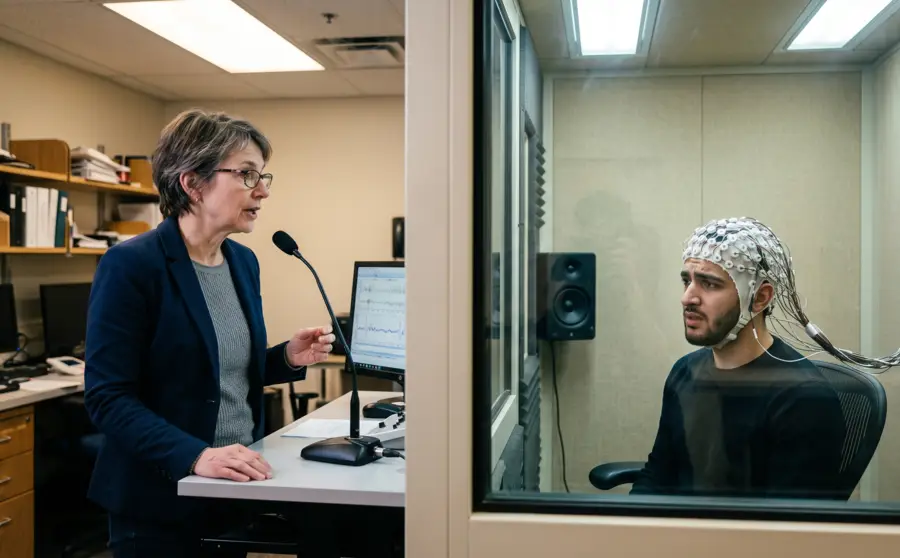
EEG research offers a high-resolution look at the dynamic electrical shifts that occur during and after MBSR training. While neuroimaging typically identifies the anatomical regions involved in mindfulness, electrophysiology clarifies the timing and coordination of neural activity.
A primary finding across several studies is the modulation of alpha oscillations (8–13 Hz). Increased alpha power, particularly in the posterior regions of the brain, serves as a significant marker of relaxed attentiveness in most people.
This state reflects the brain's ability to selectively inhibit distracting or irrelevant sensory input, allowing for a focused, yet non-striving, awareness. For practitioners of MBSR, this shift in alpha activity provides tangible evidence of an enhanced capacity to manage cognitive interference and maintain stable attention.
In addition to alpha modulation, scientific interest has focused on gamma-band activity (above 30 Hz), which is often associated with high-level cognitive integration and heightened states of awareness or "insight." However, these findings should be viewed with academic caution; gamma activity is notoriously difficult to measure accurately due to potential interference from muscle movement and high variability across different study populations.
Rather than viewing these patterns as a definitive "biological signature" of mindfulness, neuroscientists treat them as evolving indicators of the functional neuroplasticity that MBSR seeks to facilitate.
What Does Clinical Research Show for MBSR in Managing Chronic Pain?
The application of MBSR to chronic pain conditions represents one of the program's most thoroughly studied clinical applications. Unlike conventional pain management approaches that focus primarily on reducing pain intensity, MBSR targets the relationship individuals have with their pain experience.
This approach recognizes that the subjective experience of pain involves both sensory and affective components, and that altering the affective dimension can produce meaningful improvements in quality of life even when pain sensation persists.
How Does MBSR Affect the Subjective Experience of Pain and Quality of Life?
Randomized controlled trials consistently demonstrate that MBSR moderately reduces pain catastrophizing, a maladaptive cognitive pattern characterized by rumination about pain, magnification of pain's threat value, and feelings of helplessness.
The Pain Catastrophizing Scale, a validated measure of these thought patterns, typically shows significant reductions following MBSR participation. This change appears to mediate many of the program's beneficial effects on pain-related disability and emotional distress. Some reported benefits of MBSR include:
Pain acceptance increases substantially, promoting willingness to experience pain while engaging in meaningful activities
Quality of life improves across multiple domains, including physical functioning, vitality, social functioning, and mental health
Sleep quality shows significant gains, with participants reporting easier sleep onset, fewer nighttime awakenings, and more restorative rest
What Are the Neurological Correlates of Pain Reduction Through MBSR?
Functional neuroimaging studies reveal that MBSR alters brain activity patterns in regions critical for pain processing.
For instance, the anterior cingulate cortex, which processes the affective dimension of pain, shows reduced activation during painful stimulation following MBSR training. This change correlates with participants' reports of reduced pain unpleasantness, even when pain intensity remains unchanged.
How Effective Is MBSR for Anxiety and Mood Disorders?
The application of MBSR to anxiety and mood disorders has generated substantial research interest, particularly as alternatives to medication-only approaches gain acceptance.
MBSR's emphasis on present-moment awareness directly targets the future-focused worry characteristic of anxiety disorders and the past-focused rumination common in depression. The program teaches participants to observe anxious thoughts and depressed moods as temporary mental events rather than accurate reflections of reality or permanent aspects of identity.
The durability of these effects suggests that participants acquire lasting skills for emotional regulation. The absence of adverse effects makes MBSR particularly attractive for individuals who cannot tolerate or prefer to avoid psychiatric medications.
The Neurobiological Blueprint of Resilience
Mindfulness-Based Stress Reduction serves as a scientifically rigorous demonstration of the brain's inherent capacity for structural and functional reorganization. By transitioning the nervous system from a state of chronic reactivity to one of regulated awareness, the eight-week program effectively recalibrates the brain's internal architecture.
The observed reduction in amygdala gray matter density, coupled with increased thickness in the prefrontal cortex and insula, provides a biological foundation for the enhanced emotional regulation and interoceptive sensitivity reported by participants.
Beyond localized structural changes, MBSR's influence extends to systemic physiological systems, normalizing cortisol rhythms and reducing pro-inflammatory cytokines that drive chronic illness. This holistic impact spanning from the temporal precision of alpha oscillations to the cognitive decoupling of physical pain from emotional distress validates MBSR as a robust, evidence-based intervention.
As neuroscientific research continues to refine our understanding of these pathways, MBSR remains a cornerstone for understanding how intentional mental training can foster long-term neurological resilience and clinical healing.
References
Ruther, S., & Jackson, E. (2025). Mindfulness on the brain: a review of structural and functional MRI findings in mindfulness-based stress reduction. European Journal of Radiology, 112619. https://doi.org/10.1016/j.ejrad.2025.112619
Gotink, R. A., Meijboom, R., Vernooij, M. W., Smits, M., & Hunink, M. M. (2016). 8-week mindfulness based stress reduction induces brain changes similar to traditional long-term meditation practice–a systematic review. Brain and cognition, 108, 32-41. https://doi.org/10.1016/j.bandc.2016.07.001
Lengacher, C. A., Reich, R. R., Paterson, C. L., Shelton, M., Shivers, S., Ramesar, S., ... & Park, J. Y. (2019). A large randomized trial: effects of mindfulness-based stress reduction (MBSR) for breast cancer (BC) survivors on salivary cortisol and IL-6. Biological research for nursing, 21(1), 39-49. https://doi.org/10.1177/1099800418789777
Santarnecchi, E., D’Arista, S., Egiziano, E., Gardi, C., Petrosino, R., Vatti, G., ... & Rossi, A. (2014). Interaction between neuroanatomical and psychological changes after mindfulness-based training. PloS one, 9(10), e108359. https://doi.org/10.1371/journal.pone.0108359
Ng, H. H., Wu, C. W., Huang, F. Y., Cheng, Y. T., Guu, S. F., Huang, C. M., Hsu, C. F., Chao, Y. P., Jung, T. P., & Chuang, C. H. (2021). Mindfulness Training Associated With Resting-State Electroencephalograms Dynamics in Novice Practitioners via Mindful Breathing and Body-Scan. Frontiers in psychology, 12, 748584. https://doi.org/10.3389/fpsyg.2021.748584
Walsh, E., Hart, K., & Forster, B. (2026). A Systematic Review and Meta‐Analysis Examining the Effect of Mindfulness Based Stress Reduction on Pain Severity and Quality of Life in People Living With Fibromyalgia. European Journal of Pain, 30(4), e70239. https://doi.org/10.1002/ejp.70239
Fan, C., Wu, M., Liu, H., Chen, X., Gao, Z., Zhao, X., ... & Jiang, Z. (2024). Effects of meditation on neural responses to pain: A systematic review and meta-analysis of fMRI studies. Neuroscience & Biobehavioral Reviews, 162, 105735. https://doi.org/10.1016/j.neubiorev.2024.105735
Frequently Asked Questions
How does MBSR change the brain's structure?
MBSR decreases the gray matter in the amygdala (the brain's threat detector) and increases the cortical thickness of the insula (responsible for body awareness).
What happens to the amygdala after MBSR training?
The amygdala shows reduced gray matter density and lower reactivity to emotional stimuli, especially negative ones. This change is linked to stronger connections with prefrontal regions that improve emotional control.
How does MBSR affect the body's stress hormone system?
MBSR helps normalize the hypothalamic-pituitary-adrenal axis, leading to healthier daily cortisol rhythms. It also lowers pro-inflammatory cytokines and shifts the autonomic nervous system toward a restful state, reflected in improved heart rate variability.
Can MBSR help manage chronic pain?
MBSR reduces pain catastrophizing and increases pain acceptance, which improves quality of life even when pain sensation persists. Brain scans show less activation in the anterior cingulate cortex, reducing the unpleasant emotional aspect of pain.
Is MBSR effective for anxiety disorders?
Clinical trials demonstrate that MBSR significantly lowers anxiety symptoms and pathological worry. It also decreases the fear of bodily anxiety sensations and improves physiological markers like heart rate variability.
What are the main limitations of MBSR research?
Participants cannot be blinded, so expectancy effects might influence outcomes, and wait-list control groups may overstate benefits. Inconsistent instructor quality and variable home practice adherence also make it difficult to isolate MBSR's true impact.
Emotiv is a neurotechnology leader helping advance neuroscience research through accessible EEG and brain data tools.
Medical Disclaimer: The information provided on this website is for educational and informational purposes only and is not intended as medical or health advice. This content may contain errors and should not be relied upon to make life-altering health, medical, or lifestyle choices. Always seek the advice of your physician or other qualified health provider with any questions you may have regarding a medical condition or treatment.
Christian Burgos