Auditory dyslexia is a specific challenge that affects how some people process spoken language. It's not about not being able to hear, but rather how the brain interprets the sounds we hear, especially those that make up words. This can make learning to read and spell a real uphill battle.
How Does the Brain’s Sound System Process Spoken Language?
How Do Sound Signals Travel From the Ear to the Brain?
Our ability to understand spoken language begins with sound waves entering the ear. These waves cause the eardrum to vibrate, which in turn moves tiny bones in the middle ear.
This mechanical energy is then converted into electrical signals in the inner ear, specifically the cochlea. From the cochlea, these signals travel along the auditory nerve to the brainstem, then to the thalamus, and finally to the auditory cortex in the temporal lobe.
This intricate pathway is how raw sound is transformed into meaningful auditory information.
What Is the Role of the Auditory Cortex in Hearing and Understanding?
The auditory cortex, located in the temporal lobe, is the primary area of the brain responsible for processing sound. This region analyzes the pitch, loudness, and timing of sounds.
For language, specific areas within the auditory cortex work to distinguish speech sounds from other noises and begin to make sense of the patterns that form words and sentences. It’s here that the electrical signals from the ear are interpreted as recognizable sounds, including the complex nuances of human speech.
What Is Temporal Processing and Why Is It Crucial for Speech?
Temporal processing refers to the brain's ability to process information that changes over time. For speech, this is incredibly important because language unfolds sequentially. Words are made of sounds, and sentences are made of words, all presented in a specific order.
The brain needs to rapidly process these incoming sounds, distinguishing between very similar ones that might differ only by a fraction of a second. For example, the difference between the sounds /b/ and /p/ can be a matter of timing.
Efficient temporal processing allows us to perceive these rapid changes and understand the flow of spoken language. Without it, speech can sound jumbled or indistinct.
Neurological Roots of Auditory Challenges in Dyslexia
What Is the Temporal Processing Deficit Theory of Dyslexia?
One prominent idea about why some people struggle with reading has to do with how the brain handles the timing of sounds. This is often called the "temporal processing deficit" theory.
Basically, it suggests that the brain has a harder time processing rapid changes in sound, which are really important for understanding speech. Think about how quickly sounds in words change – like the difference between 'b' and 'p' or 's' and 'sh'. If the brain can't quite keep up with these fast-paced auditory signals, it can make it tough to distinguish between similar sounds.
This difficulty in processing the timing of sounds is thought to be a key factor in some forms of dyslexia.
How Does the Brain Represent Phonemes or Speech Sounds?
Our ability to read and understand language relies heavily on how our brain represents and manipulates phonemes, the smallest units of sound in a language.
For example, the word 'cat' is made up of three phonemes: /k/, /æ/, and /t/. In people with auditory dyslexia, there can be differences in how these phonemes are represented and processed.
Instead of clearly distinguishing each sound, the brain might blend them together or distort them. This can lead to hearing a word like 'spaghetti' as 'pasghetti' or 'commercial' as 'kershmal'.
Research using brain imaging techniques has shown that there can be less distinct neural representations of these speech sounds in individuals with dyslexia.
Why Is There Atypical Brain Activation in the Left Auditory Cortex?
The left auditory cortex, a region in the brain's temporal lobe, plays a significant role in processing auditory information, especially speech.
Studies have observed differences in how this area activates in people with dyslexia compared to those without. In some cases, there might be reduced activation or less efficient processing of speech sounds in this critical region.
This atypical activation pattern suggests that the brain's machinery for decoding spoken language may not be functioning in the typical way, contributing to reading difficulties.
Tracking Millisecond Brain Responses with EEG and ERPs
To fully understand the neurological roots of auditory challenges in dyslexia, researchers must look beyond where the brain is activating and closely examine when these responses occur.
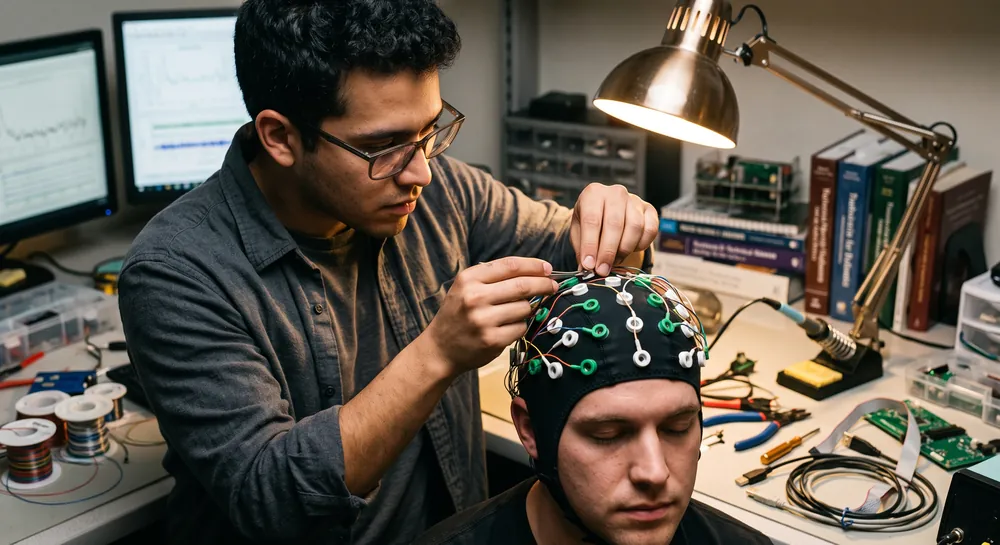
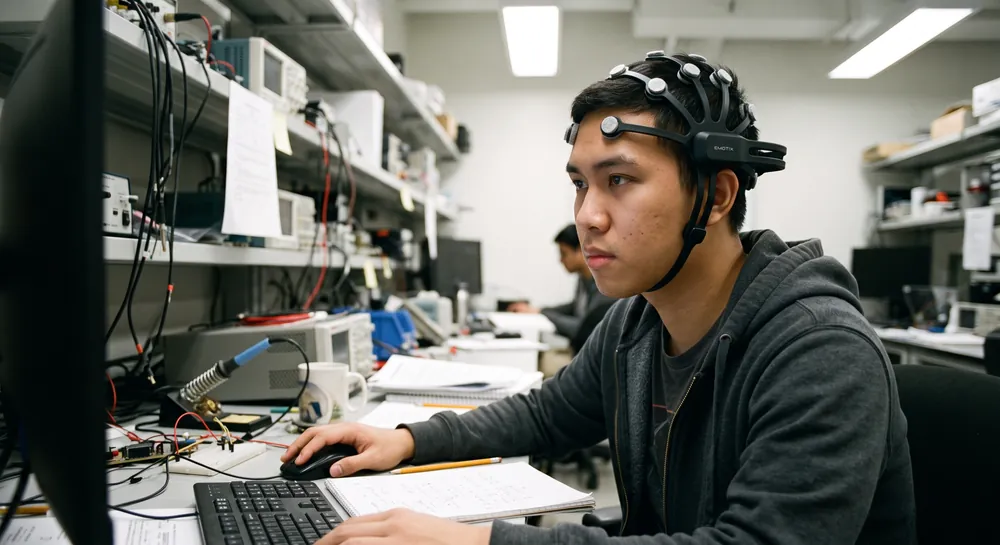
While other imaging tools are excellent for mapping spatial locations, electroencephalography (EEG) and its derived event-related potentials (ERPs) provide a high-precision look at the temporal dynamics of brain processing. By capturing electrical activity at the millisecond level, ERPs allow neuroscientists to track the exact timeline of how the brain reacts to rapid auditory stimuli, such as the fleeting acoustic changes that distinguish one consonant sound from another.
This precise temporal mapping has yielded critical insights into how the dyslexic brain processes speech. One of the most significant findings involves a specific ERP component known as Mismatch Negativity (MMN), an automatic neural response triggered when a person's brain detects a subtle change in a sequence of sounds.
In many people with dyslexia, EEG research frequently reveals a delayed or blunted MMN response when they are exposed to closely related speech sounds, such as "ba" and "da." This delayed neurological reaction offers direct, measurable evidence for the temporal processing deficit theory.
It suggests that a core auditory challenge in dyslexia is not necessarily a problem with basic hearing, but rather an underlying neurological inefficiency in processing rapid, millisecond-level acoustic changes—an inefficiency that cascades into broader difficulties with phonological awareness and reading.
Are There Differences in the White Matter Tracts Connecting Language Centers?
In dyslexia, particularly forms with auditory components, researchers have found differences in white matter pathways. These tracts are responsible for transmitting signals quickly and efficiently between areas involved in language processing, such as the auditory cortex and other language-related brain regions.
If these connections are not as robust or organized typically, it can disrupt the flow of information needed for reading and language comprehension.
Is Auditory Dyslexia an Auditory Deficit or a Language-Specific Problem?
While there are clear signs of auditory processing differences in some individuals with dyslexia, it's not always straightforward to say if the primary issue is with hearing sounds or with the brain's interpretation of those sounds within the context of language.
Some evidence points to a core difficulty in processing the timing and sequencing of speech sounds, which then impacts language development and reading. Others suggest that the problem might be more about how the brain processes language itself, and the auditory issues are a consequence of that.
It's likely a complex interplay, and the exact balance between auditory processing and language-specific challenges can vary from person to person.
How Neuroscience Informs Auditory-Based Interventions
Can Targeted Auditory Training Programs Change the Brain?
Research suggests that targeted auditory training programs may indeed lead to changes in brain function and structure, particularly in areas related to language processing.
These interventions often aim to improve the brain's ability to process rapid auditory information, a skill that can be challenging for people with auditory dyslexia. By engaging in specific listening exercises, the brain may develop more efficient neural pathways for decoding speech sounds.
The plasticity of the brain means that with consistent and appropriate training, improvements in auditory processing can be observed.
What Does Research Say About Fast ForWord and Other Computer-Based Tools?
Computer-based programs, such as Fast ForWord, have been developed to address some of the auditory processing challenges associated with dyslexia. These tools typically use adaptive learning technology to present language tasks at varying levels of difficulty, adjusting in real-time based on the user's performance.
The exercises often focus on improving skills like phonemic awareness, auditory memory, and the ability to distinguish between similar sounds. Studies investigating these programs have shown potential benefits, including improvements in phonemic awareness, speaking, and syntax, though results can vary among individuals.
What Is the Link Between Auditory Rhythm Entrainment and Reading?
There is a growing body of research exploring the connection between auditory rhythm, neural entrainment, and reading ability.
Neural entrainment refers to the brain's tendency to synchronize its neural oscillations with external rhythmic stimuli. For a person with auditory dyslexia, difficulties in processing the timing and rhythm of speech may impact their ability to segment words into their component sounds.
Interventions that incorporate rhythmic elements, such as music or timed auditory drills, aim to help the brain better synchronize with the natural rhythms of language, potentially improving phonological processing and reading skills.
How Are EEG and fMRI Used to Measure Intervention Outcomes?
Neuroimaging techniques like EEG and fMRI are valuable tools for understanding how auditory-based interventions affect the brain.
EEG can measure electrical activity in the brain, providing insights into the timing and patterns of neural responses to auditory stimuli. fMRI, on the other hand, can map brain activity by detecting changes in blood flow, showing which brain regions are activated during specific tasks.
By using these technologies before and after an intervention, researchers can objectively measure changes in brain function and connectivity, providing evidence for the effectiveness of different therapeutic approaches.
The Future of Auditory Research in Dyslexia
Are Researchers Investigating the Genetic Links to Auditory Deficits?
Scientists are looking more closely at the role genetics might play in auditory processing differences seen in dyslexia. Studies suggest that a family history of dyslexia or related language difficulties could increase the likelihood of someone experiencing these challenges.
By examining the genetic makeup of individuals and families affected by auditory processing issues, scientists hope to pinpoint specific genes or gene combinations that might influence how the brain handles sound and language.
This work could eventually lead to a better understanding of why some people are more prone to these difficulties than others.
How Will Exploring Neurobiological Factors Improve Our Understanding?
Future research will likely continue to map out the specific brain structures and pathways involved in auditory processing for people with dyslexia. Techniques like fMRI and EEG are becoming more refined, allowing scientists to observe brain activity in greater detail.
The focus is on understanding not just where differences occur, but how these differences affect the timing and accuracy of processing speech sounds. Understanding these neurobiological underpinnings is key to developing more targeted interventions that improve brain health in the long-term.
How Are Diagnostic Tools and Early Identification Advancing?
One significant area for future development is in creating more precise and accessible diagnostic tools.
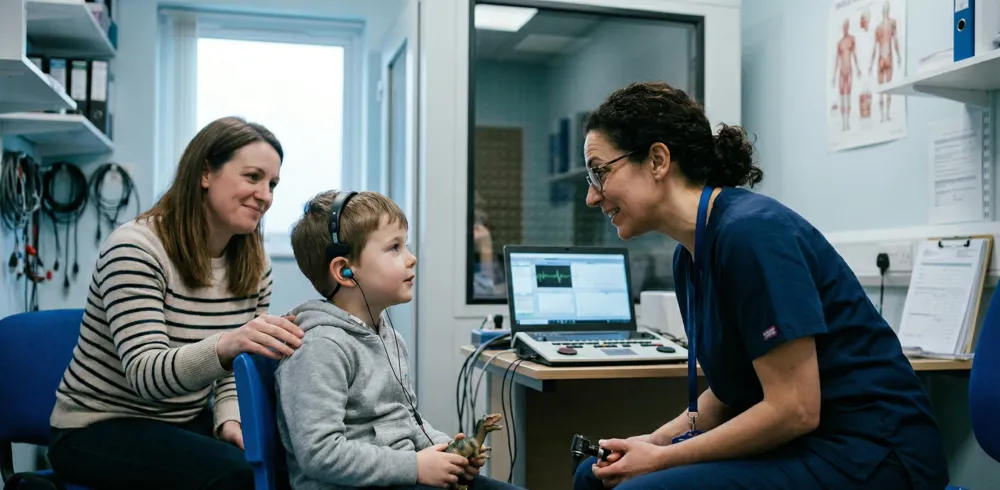
Currently, identifying auditory dyslexia often involves a team of specialists, including audiologists and speech-language pathologists. The goal is to develop screening methods that can identify potential issues earlier, perhaps even in preschool years, before significant reading challenges arise.
This could involve new types of auditory tests or even AI-driven analysis of speech patterns. Early identification means earlier support, which can make a big difference.
Can Auditory Interventions Be Refined and Personalized?
Looking ahead, the trend is towards interventions that are not one-size-fits-all. Scientific groups are exploring how to tailor auditory training programs to an individual's specific pattern of difficulties. This might involve using data from brain imaging or detailed auditory assessments to customize exercises.
The aim is to make training more efficient and effective by focusing precisely on the areas that need the most support. This could involve computer-based programs that adapt in real-time or specialized therapeutic approaches.
Moving Forward with Auditory Dyslexia
So, we've talked a lot about auditory dyslexia, which is basically when someone's brain has a tough time sorting out the sounds in spoken words. This can make reading, spelling, and even just following conversations pretty tricky.
With the right support, like specific training to help with sounds and using different ways to learn, people can get a lot better. It really takes a team effort, with parents, teachers, and specialists all working together.
References
Casini, L., Pech‐Georgel, C., & Ziegler, J. C. (2018). It's about time: revisiting temporal processing deficits in dyslexia. Developmental Science, 21(2), e12530. https://doi.org/10.1111/desc.12530
Skeide, M. A., Bazin, P. L., Trampel, R., Schäfer, A., Männel, C., von Kriegstein, K., & Friederici, A. D. (2018). Hypermyelination of the left auditory cortex in developmental dyslexia. Neurology, 90(6), e492-e497. https://doi.org/10.1212/WNL.0000000000004931
Gu, C., & Bi, H. Y. (2020). Auditory processing deficit in individuals with dyslexia: A meta-analysis of mismatch negativity. Neuroscience & Biobehavioral Reviews, 116, 396-405. https://doi.org/10.1016/j.neubiorev.2020.06.032
Joly-Pottuz, B., Mercier, M., Leynaud, A., & Habib, M. (2008). Combined auditory and articulatory training improves phonological deficit in children with dyslexia. Neuropsychological rehabilitation, 18(4), 402-429. https://doi.org/10.1080/09602010701529341
Hook, P. E., Macaruso, P., & Jones, S. (2001). Efficacy of Fast ForWord training on facilitating acquisition of reading skills by children with reading difficulties—A longitudinal study. Annals of Dyslexia, 51(1), 73-96. https://doi.org/10.1007/s11881-001-0006-1
Frequently Asked Questions
What exactly is auditory dyslexia?
Auditory dyslexia is a type of learning difference where someone has trouble processing and understanding spoken words. This can make it hard to learn to read and spell.
Does auditory dyslexia mean someone can't hear well?
No, that's a common misconception. People with auditory dyslexia usually have normal hearing. The issue isn't with their ears picking up sound, but with their brain's ability to interpret those sounds correctly, especially the small sound units that make up words, called phonemes.
How does auditory dyslexia affect reading?
It can make reading very challenging. Because it's hard to break words down into their individual sounds, it's tough to match those sounds to letters. This can lead to slow reading, many mistakes, and difficulty understanding what is read.
What are some common signs of auditory dyslexia?
Some signs include often misunderstanding what people say, having trouble telling similar sounds apart (like 'b' and 'p'), mixing up sounds in longer words (saying 'pasghetti' for 'spaghetti'), and finding it hard to follow spoken directions.
Can auditory dyslexia be cured?
There isn't a 'cure' in the sense of making it disappear completely. However, with the right help and practice, people with auditory dyslexia can get much better at processing sounds and improve their reading and spelling skills significantly.
How can auditory dyslexia be helped?
Help often involves special training programs that focus on listening skills, recognizing and manipulating sounds in words (phonemic awareness), and using different senses (like touch and sight) along with hearing to learn. Working with speech-language specialists is also very beneficial.
Is auditory dyslexia related to other types of dyslexia?
It's a specific type of dyslexia. While other forms might focus more on visual processing of letters or words, auditory dyslexia specifically deals with the challenges of processing spoken language sounds.
Can auditory dyslexia affect spelling?
Yes, it can. Since spelling involves knowing the sounds in words and matching them to letters, the difficulty in processing those sounds makes spelling a real struggle for individuals with auditory dyslexia.
What is 'phonemic awareness' and why is it important for auditory dyslexia?
Phonemic awareness is the ability to hear, identify, and change individual sounds in spoken words. It's super important because auditory dyslexia is essentially a difficulty with this skill. Learning to master phonemes is a key step in overcoming reading and spelling challenges.
Are there specific sounds that are harder for people with auditory dyslexia?
Yes, certain sounds like 'L,' 'R,' and 'Th' can be trickier to hear and say correctly. This can lead to mispronunciations, such as saying 'wabbit' instead of 'rabbit'.
Emotiv is a neurotechnology leader helping advance neuroscience research through accessible EEG and brain data tools.
Medical Disclaimer: The information provided on this website is for educational and informational purposes only and is not intended as medical or health advice. This content may contain errors and should not be relied upon to make life-altering health, medical, or lifestyle choices. Always seek the advice of your physician or other qualified health provider with any questions you may have regarding a medical condition or treatment.
Christian Burgos