Price increase for Epoc X and Flex on May 1st. Stock up now and save!
Price increase for Epoc X and Flex on May 1st. Stock up now and save!
Price increase for Epoc X and Flex on May 1st. Stock up now and save!
A Fitbit for the brain is around the corner
A Fitbit for the brain is around the corner
Updated on
By Betsy Isaacson at Newsweek
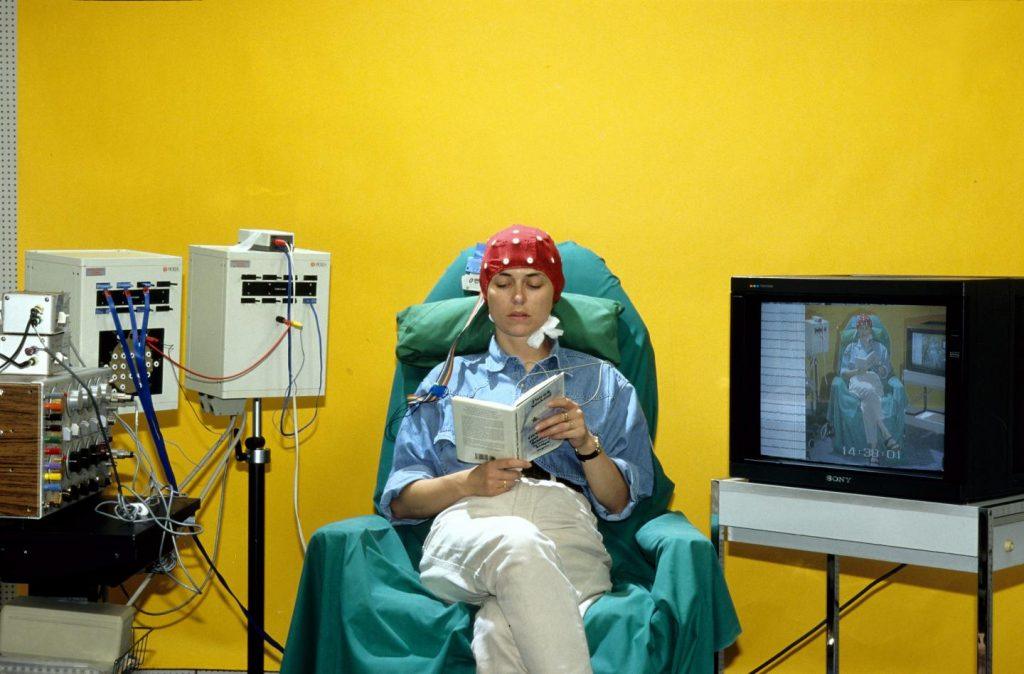
Every time you blink, think or move, your brain generates electricity as individual neurons in the skull transmit information needed to make it happen. If we could detect the electrical signals produced by individual neurons, we could, in theory, read a person’s mind.Amazing. And exceedingly difficult. The amount of electricity generated by an individual neuron transmitting a single piece of information is incredibly tiny. The brain, all 100 billion neurons of it, produces en masse about 20 watts—barely enough to power an incandescent light bulb. For decades, the best neuroscientists could do was use electroencephalography, or EEG, to detect the signals that characterized different stages of sleep, say, or the in-brain power surges brought about by epileptic seizures. And that wasn’t easy. They had to shave people’s heads, put them in a room far from any other sources of electricity and use conductive gel to stick several dozen electrodes to the skin atop their skulls…
By Betsy Isaacson at Newsweek
Every time you blink, think or move, your brain generates electricity as individual neurons in the skull transmit information needed to make it happen. If we could detect the electrical signals produced by individual neurons, we could, in theory, read a person’s mind.Amazing. And exceedingly difficult. The amount of electricity generated by an individual neuron transmitting a single piece of information is incredibly tiny. The brain, all 100 billion neurons of it, produces en masse about 20 watts—barely enough to power an incandescent light bulb. For decades, the best neuroscientists could do was use electroencephalography, or EEG, to detect the signals that characterized different stages of sleep, say, or the in-brain power surges brought about by epileptic seizures. And that wasn’t easy. They had to shave people’s heads, put them in a room far from any other sources of electricity and use conductive gel to stick several dozen electrodes to the skin atop their skulls…
By Betsy Isaacson at Newsweek
Every time you blink, think or move, your brain generates electricity as individual neurons in the skull transmit information needed to make it happen. If we could detect the electrical signals produced by individual neurons, we could, in theory, read a person’s mind.Amazing. And exceedingly difficult. The amount of electricity generated by an individual neuron transmitting a single piece of information is incredibly tiny. The brain, all 100 billion neurons of it, produces en masse about 20 watts—barely enough to power an incandescent light bulb. For decades, the best neuroscientists could do was use electroencephalography, or EEG, to detect the signals that characterized different stages of sleep, say, or the in-brain power surges brought about by epileptic seizures. And that wasn’t easy. They had to shave people’s heads, put them in a room far from any other sources of electricity and use conductive gel to stick several dozen electrodes to the skin atop their skulls…