5 Best Discreet EEG Devices: A 2025 Buyer's Guide
Heide Duran
2025年12月29日
分享:


Let's be honest: terms like "electroencephalogram" and "brainwaves" can sound pretty intimidating. It’s easy to assume that this technology is only for neuroscientists in white lab coats. But that’s not the case anymore. The goal of modern EEG is to be accessible, intuitive, and useful for everyone. A discreet eeg monitoring device is designed with exactly that in mind, stripping away the complexity to give you a clear, understandable window into cognitive activity. In this guide, I’ll break down everything you need to know in simple terms. We'll look at the top devices, compare their key features, and help you get started on your journey with confidence, no PhD required.
Key Takeaways
Match Your Device to Your Mission: Your ideal EEG device depends entirely on your goals. A simple, comfortable device is perfect for exploring personal wellness, while a multi-channel headset is necessary for capturing the detailed data required for academic research or complex BCI development.
Comfort Is Key for Consistent Use: The most effective device is one you'll actually wear. Prioritize a lightweight, unobtrusive design that fits your lifestyle to ensure you can gather meaningful data over longer periods in real-world environments.
Understand the Tool's Intended Purpose: Discreet EEG devices are powerful tools for making brain data accessible for research, development, and personal exploration. They provide high-quality data for these applications but are not intended to be used as medical diagnostic equipment.
What Is a Discreet EEG Device?
When you hear "EEG," you might picture a bulky cap covered in wires, tethered to a large machine in a lab. While that’s one version, a discreet EEG device is something entirely different. Think of it as EEG technology designed for the real world. These devices are built to be worn comfortably and unobtrusively, allowing you to go about your day without drawing much attention. The goal is to make gathering brain data as simple as putting on a pair of earbuds or a sleek headband.
This portability is a game-changer. Instead of being limited to a controlled lab environment, researchers and developers can now study brain activity in natural settings. This shift allows for the collection of more authentic data, reflecting how our brains function during everyday activities like working, studying, or even relaxing at home. Commercial EEG headsets prioritize usability and comfort, making advanced brain-computer interface technology more accessible than ever. By moving out of the lab, we open up new possibilities for understanding the brain in the context of our daily lives.
Key Features of Discreet EEG Technology
What really sets discreet EEG devices apart are the features that make them so easy to use. First and foremost is their design. They are lightweight, often wireless, and built for comfort over extended periods. Instead of messy gels and complicated setups, many use simple saline sensors or dry sensors that are ready to go in minutes. This focus on user experience means you don't need to be a neuroscientist to get started.
Wireless connectivity, usually via Bluetooth, is another core feature. This allows the device to send data directly to a computer or smartphone, where software like our Emotiv App can interpret it in real time. This combination of comfortable hardware and intuitive software makes the entire process feel seamless, removing many of the traditional barriers to exploring brain data.
Everyday Applications
The applications for discreet EEG devices are as varied as the people who use them. For academic research and education, these tools allow studies to move into more dynamic, real-world environments. Imagine studying a student's focus in a classroom instead of a sterile lab or a pilot's cognitive load during a flight simulation.
Developers are using this technology to create innovative applications, from hands-free device control to interactive art installations. On a personal level, people are using these devices to access cognitive wellness tools, helping them explore their own focus, stress, and relaxation patterns. They can also be used to gain insights into sleep quality by gathering data overnight in the comfort of your own bed.
A Guide to Today's Top Discreet EEG Devices
Finding the right EEG device can feel overwhelming, especially when you want something that fits seamlessly into your life. A discreet device lets you gather brain data without feeling self-conscious, whether you're at work, at home, or on the go. To help you find the perfect fit, I’ve put together a guide to some of the top discreet EEG devices available today. We’ll look at everything from simple earbuds designed for daily use to more advanced headsets built for deep research, so you can find the one that matches your goals.
Emotiv MN8 EEG Earbuds
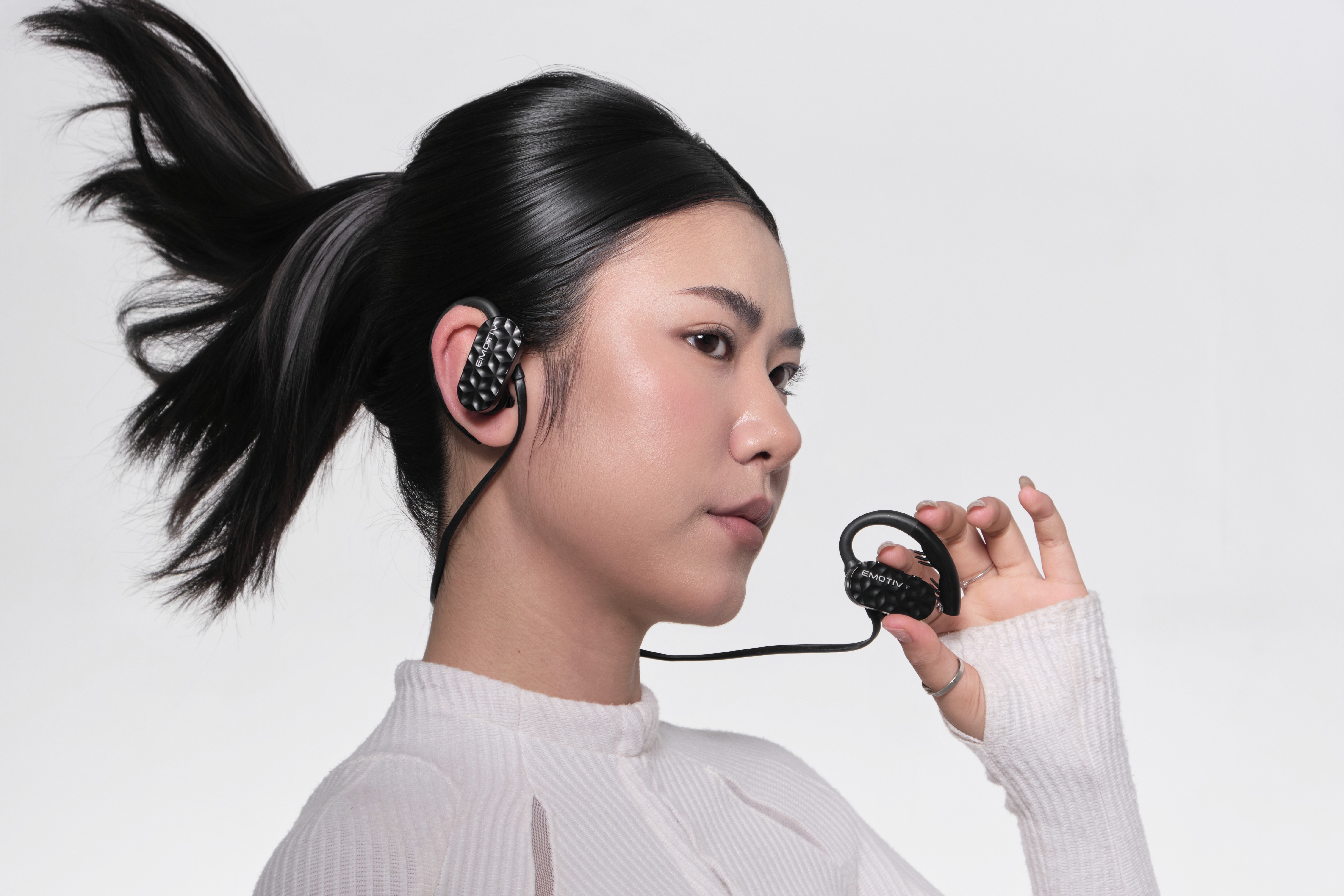
If you’re looking for the ultimate in discreet design, the Emotiv MN8 is a fantastic starting point. These look and feel just like regular wireless earbuds, allowing you to listen to music or take calls while the built-in sensors work in the background. They are designed to help you understand your daily patterns of focus and stress without any bulky hardware. Because they are so comfortable and portable, they’re a great choice for anyone who wants to access cognitive wellness tools throughout their day. The MN8 makes it easy to integrate brain data into your routine without anyone else knowing.
Emotiv Insight 5-Channel Headset
The Emotiv Insight strikes a great balance between providing more detailed data and maintaining a sleek, minimalist design. With five EEG sensors, this headset offers real-time feedback on your mental states, making it a popular choice for personal development and cognitive training applications. It’s lightweight and wireless, so you can wear it comfortably for extended periods. The Insight headset is ideal for users who have moved beyond basic metrics and want to explore performance analytics or build simple brain-computer interface commands. It’s a solid step up in capability while still being subtle enough for everyday use.
Emotiv Epoc X 14-Channel Headset
For those who need professional-grade data for research or development, the Emotiv Epoc X is a powerful option that remains surprisingly portable. Its 14 channels provide high-density brain data, making it suitable for complex scientific studies and advanced brain-computer interface projects. While it’s more of a traditional headset, its design is streamlined and wireless, offering the freedom to conduct research in real-world environments instead of being tethered to a lab. The Epoc X is built for users who demand robust, research-quality data without sacrificing mobility and ease of use.
Neurosity Crown
The Neurosity Crown is designed with a clear focus on productivity. It’s built to be worn throughout the workday, helping you understand and manage your focus. The device has a modern, headband-like appearance that blends in well in an office or home setting. It works by translating brainwave activity into simple metrics that can be used to trigger actions, like silencing notifications when you’re in a state of deep concentration. This makes it a practical tool for professionals, creatives, and students who want to create an environment that supports their workflow and helps them stay on task without constant interruptions.
NeuroSky MindWave
The NeuroSky MindWave is a popular entry-level device, often used in educational settings and for personal wellness exploration. It’s a single-channel headset that is simple to set up and use, making it accessible for beginners and younger users. The device provides basic metrics on attention and relaxation levels, which can be integrated with a wide range of third-party apps and games. Its lightweight and straightforward design makes it a great tool for classroom demonstrations or for anyone curious about EEG technology who wants an easy starting point. It’s a go-to for academic research and education projects that need a simple, cost-effective solution.
How Do Key Features Compare?
When you’re looking at different discreet EEG devices, it’s easy to get lost in the technical specs. But what really matters is how those features translate to your specific goals. Whether you’re a researcher needing robust data, a developer building a BCI application, or someone curious about their own cognitive patterns, a few key areas will make or break your experience.
Think about what you want to achieve. Do you need to capture subtle signals from multiple brain regions, or are you focused on general states like focus and relaxation? Will you be wearing the device for hours at a time, or just for short, dedicated sessions? Answering these questions will help you weigh the importance of sensor count, battery life, comfort, and software capabilities. Let’s break down what to look for in each of these categories.
Sensor Count and Data Quality
The number of sensors, or channels, on an EEG device determines how much data you can collect about your brain's electrical activity. Devices can range from two channels, like our MN8 EEG earbuds, to 14 or more. More sensors allow you to pinpoint activity in different brain regions with greater spatial resolution, which is essential for complex academic research or advanced BCI development. For example, our Epoc X headset uses 14 channels to provide a more comprehensive look at brain dynamics. However, for many applications, including exploring cognitive patterns or building simpler BCI commands, a device with fewer channels can provide plenty of high-quality, actionable data without the complexity of a larger setup.
Battery Life and Connectivity
For a device to be truly portable, it needs a battery that can keep up with your day. When comparing options, look for a battery life that matches your intended use. If you plan on conducting long experiments or want to understand your brain activity during a full workday, you’ll want a device that offers several hours of continuous use. Some professional-grade devices can run for up to 10 hours on a single charge. Just as important is a stable wireless connection, which is almost always handled by Bluetooth. A reliable connection ensures your data streams to your computer or mobile device without interruption, which is critical for getting clean, usable recordings.
Comfort and All-Day Wearability
A discreet EEG device is only useful if you’re actually willing to wear it. Comfort is personal, but it’s heavily influenced by the device's weight, form factor, and how it fits. Some people prefer the minimal feel of EEG earbuds, while others might find a lightweight headband more secure. If your goal is to gather data over long periods, look for a design you can almost forget you’re wearing. The materials and type of sensors also play a big role. Saline-based sensors, for example, often require less prep time and can be more comfortable for extended wear than traditional gel-based electrodes, making them a great choice for everyday applications.
Real-Time Data Processing
The ability to see and work with your brain data as it’s being collected is a game-changer for many applications. Real-time processing is the magic behind interactive brain-computer interface systems, allowing you to control software or devices with your mind. It’s also key for biofeedback applications, where you can see your focus or relaxation levels change from moment to moment. When looking at different devices, check what kind of software they come with. Powerful software like EmotivPRO not only visualizes your EEG data live but also provides tools to analyze it on the fly, giving you immediate insights into what’s happening.
Common Applications for Discreet EEG Devices
Discreet EEG devices are more than just cool gadgets; they're opening up new ways to understand the brain in real-world settings. By moving brain data acquisition out of the lab and into our daily lives, these tools make it possible to explore everything from long-term neurological patterns to sleep quality. They also provide accessible ways for people to engage with their own cognitive processes. Here are some of the most common applications for these innovative devices.
Exploring Neurological Patterns
One of the most powerful uses for discreet EEG is seeing how brain activity changes over extended periods. Traditional lab studies only offer a brief snapshot, but a portable device allows for longitudinal data collection as you go about your day. This is incredibly valuable for academic research and education, helping scientists understand cognitive changes over weeks or months. For individuals, it offers a chance to see how factors like stress or environment might correlate with their brain patterns. This kind of long-term, real-world data was once impossible to gather, but portable headsets are making it a reality.
Understanding Sleep Quality
Getting a clear picture of sleep quality can be tough. Clinical sleep studies often involve spending the night in an unfamiliar lab covered in wires, which isn't exactly a recipe for a normal night's rest. This is where discreet EEG devices make a huge difference. They allow you to gather data on your sleep stages from the comfort of your own bed, providing a more accurate and natural look at your sleep patterns. Understanding these patterns can be the first step toward making lifestyle adjustments that support better rest and, consequently, better daytime focus and energy.
Tools for Cognitive Wellness
Consumer-friendly EEG devices are also becoming popular as tools for personal insight. Devices like our Emotiv MN8 are designed for easy, everyday use, giving you a simple way to engage with your own brain activity. They provide access to cognitive wellness tools that can be used for focus exercises or guided meditation, offering real-time feedback on your mental state. These devices can also serve as a gentle introduction to brain-computer interfaces, allowing you to control simple applications. It’s an accessible way to explore your own cognitive landscape without needing a technical background.
Choose Your Device: Key Features to Consider
Picking the right EEG device feels a lot like choosing any other piece of personal tech—it has to fit your lifestyle and your goals. Whether you're a researcher, a developer, or just curious about your own brain activity, certain features will be more important to you than others. Let's walk through the key things to look for so you can find a device that works for you, not the other way around.
The best device is one you'll actually use, so think about what you want to achieve. Are you looking for a simple way to access cognitive wellness tools, or do you need robust data for a complex research project? Answering that question will help you weigh the following features and make a confident choice.
Comfort and Fit for Daily Use
If a device isn't comfortable, you're not going to wear it for very long. The user experience of a mobile EEG device is a major factor in how consistently you'll use it, so pay close attention to its design. Consider the device's weight, how it fits, and the materials it's made from. Some devices, like our MN8 earbuds, are designed to be nearly unnoticeable for all-day wear. Others, like headbands, offer a different kind of fit that might be better for shorter, more focused sessions. Think about your daily routine and when you plan to use the device to decide which form factor makes the most sense for you.
Wireless Connectivity and Portability
One of the biggest advantages of modern EEG devices is their portability. Being wire-free means you can gather data in real-world settings, not just in a lab. Look for devices with reliable Bluetooth connectivity that allows you to move around freely while staying connected to your computer or smartphone. This is especially important for academic research and education projects that study brain activity during everyday tasks. A truly mobile device opens up a world of possibilities for what you can explore, whether you're studying focus during a work session or relaxation while meditating outdoors.
Data Accuracy and Sensor Quality
While traditional EEG systems are known for their precision, today's commercial headsets offer an excellent balance of data quality and usability. The key is to look at the sensor technology. The number of sensors, their placement, and the type of contact they make with your scalp all influence the data you can collect. For example, a device like the Epoc X provides 14 channels for more detailed brain mapping, while simpler devices are perfect for measuring broader cognitive states. Good sensor quality ensures you’re getting reliable data you can trust, session after session.
Software Integration and Ease of Use
The hardware is just one piece of the puzzle—the software is what brings your brain data to life. A great EEG device should come with intuitive software that makes it easy to get started. Devices like the Emotiv MN8 are ideal for everyday use and simple brain-computer interface commands because they prioritize accessibility and a quick setup. For those who need to dig deeper, look for compatibility with advanced analysis platforms like our EmotivPRO software. The right software integration ensures you can easily view, record, and export your data, no matter your level of technical expertise.
Breaking Down the Cost of Discreet EEG Devices
The price of a discreet EEG device can vary quite a bit, and it really comes down to what you want to accomplish. The cost is often tied to the number of sensors (or channels), the quality of the data it can gather, and the complexity of the software it pairs with. You can find everything from simple, budget-friendly earbuds for personal use to sophisticated, multi-channel headsets designed for demanding academic studies.
Think of it like buying a camera: a point-and-shoot is perfect for casual photos, but a professional photographer will invest in a DSLR with multiple lenses for high-stakes shoots. Similarly, the right EEG device for you depends on your goals. Whether you're just starting to explore cognitive wellness tools or you're a developer building a complex brain-computer interface, there’s an option that fits your budget and your project. Let’s break down the typical price ranges you can expect to see.
Entry-Level Options (Under $300)
If you're new to EEG or want a simple device for daily use, the entry-level category is the perfect place to start. These devices prioritize accessibility, comfort, and a quick setup process so you can get going without a steep learning curve. Our Emotiv MN8 earbuds, for example, fall into this category. They are designed for everyday applications and exploring simple BCI commands. This price point is ideal for anyone curious about their own brain activity or looking for a straightforward tool to integrate into their daily routines without a major financial commitment. They offer a fantastic introduction to the world of personal neuroscience.
Mid-Range Devices ($300-$600)
For those who need a bit more data without jumping to a full research-grade system, mid-range devices offer a great balance of performance and price. Typically, these EEG headsets feature between 5 and 14 channels, giving you a more detailed picture of brain activity than entry-level models. Our Insight headset is a great example, providing reliable data that’s suitable for personal projects, educational use, and even some lighter academic research. This category is perfect for students, citizen scientists, and developers who need more robust data streams for their applications but aren't ready to invest in a professional lab setup just yet.
Professional-Grade Options (Over $600)
When your work demands high-density, research-quality data, you’ll want to look at professional-grade devices. These systems are built for the most demanding applications in academic research and neuromarketing. Headsets in this category, like our Epoc X or Flex models, can feature 14, 32, or even more channels for comprehensive brain mapping. The most advanced systems on the market can record from 64 channels and are designed for complex, wire-free experiments. While the investment is higher, these devices provide the precision and power necessary for peer-reviewed studies, clinical applications, and developing sophisticated neurotechnologies.
The Pros and Cons of Discreet EEG Devices
Discreet EEG devices are often called "fitness trackers for your brain," and for good reason. They take technology that was once exclusive to clinical labs and put it directly into your hands, allowing you to gather brain data from the comfort of your home or office. This shift is incredibly exciting. It means we can finally start to understand brain activity in the context of real life, not just in a controlled, artificial environment. For researchers, this opens up new avenues for academic research and education, enabling studies on everything from attention in a classroom to stress responses during a work presentation.
For developers and creators, it provides a new toolkit for building applications that respond to a user's cognitive state. And for individuals, it offers a unique window into personal wellness and cognitive patterns. However, with any powerful technology, it’s important to have a clear picture of both its capabilities and its limitations. Consumer-grade EEG devices are engineered differently than their multi-million dollar clinical counterparts. They are designed for accessibility, ease of use, and portability, which involves certain trade-offs. Understanding these nuances is the key to choosing the right device and using it effectively. Let's break down the major advantages you can expect and some common limitations to be aware of.
The Upside of Portable Brain Data
The most significant advantage of modern EEG devices is their ability to go wherever you go. This portability allows you to collect data in natural settings, providing a much richer and more relevant understanding of brain function during everyday tasks. The technology has become accessible to almost anyone, breaking down the barriers that once kept brain science confined to specialized institutions. This democratization empowers a new generation of scientists, developers, and curious minds. Plus, with increasingly discreet designs like our MN8 earbuds, you can gather data over longer periods without disrupting your day, making it easier to explore patterns related to work, relaxation, or creative flow.
Common Limitations to Keep in Mind
It’s important to set realistic expectations. A common misconception is that consumer EEG devices offer the exact same precision as clinical systems. While they provide high-quality data for their intended applications, they are not medical diagnostic tools. Another factor is comfort; while designs have improved dramatically, wearing any device for an entire day can be a challenge. Finally, the real world is full of electrical noise and movement artifacts that can affect your signal. Our EmotivPRO software is designed to help you filter and analyze your data effectively, but it’s a fundamental aspect of mobile EEG to be aware of as you interpret your results.
What Do Real Users Say About Their Devices?
When it comes to wearable technology, user reviews are everything. It’s one thing to read a spec sheet, but it’s another to hear from people who wear these devices every day. For discreet EEG devices, the conversation almost always comes down to a few key themes: comfort, practicality in real-world situations, and overall preference for daily use. After all, the most advanced device is useless if it’s too clunky or complicated to wear consistently.
Understanding what real users are saying can help you cut through the marketing noise and find a device that truly fits your needs. Whether you’re a researcher collecting data outside the lab, a developer building a new application, or someone exploring cognitive wellness tools, these firsthand experiences offer invaluable insight. Let’s look at the most common feedback points people share about their EEG devices.
Feedback on Comfort and Usability
Comfort is consistently the number one topic in user discussions. If a device is heavy, fits poorly, or takes too long to set up, it’s likely to end up in a drawer. Users often report that the wearability of a device is the deciding factor in how regularly they use it. Modern headsets and earbuds have made huge strides compared to traditional lab-based EEG systems, which were known for being cumbersome.
People frequently compare notes on everything from the device's weight to the feel of the sensors against their skin. The consensus is that lighter, more flexible designs lead to a better experience, especially for longer sessions. This is why devices like our MN8 EEG earbuds receive positive attention, as their form factor is both familiar and unobtrusive.
Performance in Real-World Settings
Taking EEG technology out of the lab and into daily life presents a unique set of challenges. A common piece of feedback is that conspicuous or bulky headsets can cause discomfort and make users feel self-conscious during extended wear. The goal for many is to find a device that allows them to gather brain data without disrupting their normal activities, whether they’re working, studying, or just relaxing at home.
Users often praise devices that are discreet and easy to manage throughout the day. The ability to put on a headset and forget it’s there is a huge plus. This is particularly important for academic research studies that require participants to wear a device for long periods in natural environments. Performance isn't just about data quality; it's also about how well the device integrates into real life.
User Preferences for Daily Wear
Ultimately, the decision to wear an EEG device daily comes down to personal preference. User reviews show that visual appearance and overall feel are major factors. People are simply more likely to use a device that they find aesthetically pleasing or, better yet, one that is barely noticeable to themselves and others. This is why the market has moved toward sleeker, more minimalist designs.
Preferences are also shaped by the user’s goals. Someone exploring meditation may prioritize a simple, comfortable design for short sessions. In contrast, a developer creating a brain-computer interface might need more sensors and be willing to accept a slightly larger device. User feedback highlights that there is no one-size-fits-all solution; the best device is the one that aligns with your specific lifestyle and objectives.
Find the Right Discreet EEG Device for You
Choosing the right EEG device isn’t about finding the one with the most features—it’s about finding the one that fits your specific goals. Whether you’re looking to deepen your meditation practice, conduct groundbreaking research, or build the next great brain-computer interface, your ideal device will have a unique set of capabilities. Think of this as a matching game: your project is on one side, and the perfect tool is on the other. Let’s walk through some common scenarios to help you find the EEG device that aligns with what you want to achieve.
For Mindfulness and Meditation Practices
If you’re interested in exploring your own mental states, a discreet EEG device can be an incredible tool. Think of it as a way to get real-time feedback on your focus, calm, and attention during mindfulness exercises. Instead of just guessing if you’re “in the zone,” you can see data that reflects your brain’s activity. For this purpose, you don’t need a complex, multi-channel headset. Something simple and comfortable, like our Emotiv MN8 earbuds, is perfect. They are designed for everyday use, allowing you to seamlessly integrate them into your daily routine and gain personal insights without any complicated setup.
For Academic Research and Education
When your work involves formal studies or educational demonstrations, data quality and reliability are your top priorities. Researchers need devices that offer more channels and cleaner signals to draw meaningful conclusions. While traditional lab equipment is powerful, its lack of portability can be limiting. Modern mobile headsets like the Emotiv Insight or Epoc X bridge that gap. They provide the high-resolution data needed for serious academic research and education while being comfortable and easy enough to use in real-world settings. This opens up possibilities for studies that simply weren’t feasible outside of a controlled laboratory environment.
For Brain-Computer Interface Development
For developers and creators, an EEG device is a gateway to innovation. You need a flexible platform that allows you to translate brain data into commands for software, games, or smart devices. The right device depends on the complexity of your project. You can start building simple applications with an accessible device like the MN8, which is great for learning the fundamentals of brain-computer interface technology. As your ambitions grow, you can move to a headset with more data streams, like the Epoc X, to create more nuanced and responsive controls. Our software and developer tools are designed to support you at every stage of your creative process.
Get Started With Your New EEG Device
So, you’ve chosen your device, and it’s finally in your hands. This is where the fun begins. Getting started with EEG can feel a little intimidating, but modern devices are designed to be user-friendly. The key is to take it one step at a time, from getting a comfortable fit to exploring your first streams of brain data. Think of it as learning your brain’s language. With a little patience and the right tools, you’ll be ready to explore your cognitive world.
Your First Steps: Setup and Calibration
Before you can explore your brain activity, you need to get your device set up correctly. First, ensure your headset is fully charged. While it’s charging, download the companion software, like our Emotiv App, to your computer or smartphone. Once charged, put on the headset. A snug, comfortable fit is essential for good sensor contact and accurate data. Don’t worry if it takes a few tries to get it right. The software will guide you through a quick calibration, showing the connection quality for each sensor so you can make adjustments.
How to Understand Your Brain Data
Once you’re connected, you’ll see your brain data streaming in real time. At first, it might look like a bunch of complex lines, but our software translates this activity into understandable metrics. You’ll see different brainwave frequencies—like Alpha, Beta, and Theta waves—which are associated with mental states like relaxation, focus, and drowsiness. Instead of getting lost in the raw data, start by observing how these metrics change as you perform different activities. Try a short meditation or listen to music, and notice the shifts in your data. This helps you build a personal baseline for your brain activity.
Find Compatible Software and Analysis Tools
Your EEG device is the key, but the software is what opens the door to meaningful insights. For daily use and exploring cognitive wellness tools, the Emotiv App is the perfect starting point. If you’re a researcher or developer who needs to dig deeper, our EmotivPRO software lets you access and analyze raw EEG data for advanced projects. We also provide resources for developers who want to create their own applications using brain-computer interfaces. Our goal is to provide a flexible ecosystem that supports you, whether you’re just curious about your focus levels or conducting a full-scale scientific study.
Related Articles
Frequently Asked Questions
Do I need a technical background to use one of these devices? Not at all. While these devices are powerful enough for academic research, many are designed with everyday users in mind. Products like our MN8 earbuds come with intuitive software that guides you through setup and translates your brain activity into simple, understandable metrics. The goal is to make this technology accessible, so you can start exploring your cognitive patterns without needing a degree in neuroscience.
What's the real difference between a device with a few sensors versus one with many? Think of it in terms of detail. A device with fewer sensors, like our 2-channel MN8, is great for understanding broad mental states like focus or relaxation. It gives you a clear, high-level view. A device with more sensors, like our 14-channel Epoc X, provides a more detailed map of your brain activity. This higher spatial resolution is essential for researchers who need to see which specific brain regions are active during a task.
Can I use a discreet EEG device for medical diagnosis? It's important to know that consumer EEG devices are not medical tools. They are designed to provide access to cognitive wellness tools and for research or development purposes. They can give you fascinating insights into your own cognitive patterns, but they cannot diagnose, treat, or cure any medical conditions. You should always consult a qualified healthcare professional for any medical concerns.
How long does it take to set up a device before I can start seeing my brain data? Getting started is surprisingly quick. For most modern devices, you can go from unboxing to seeing your live brain data in just a few minutes. After a quick charge, you'll put the device on, connect it to your computer or phone via Bluetooth, and let the software check the sensor connections. The whole process is designed to be seamless so you can spend less time setting up and more time exploring.
What kind of insights can I actually get from my brain data? The insights depend on your goals. On a personal level, you can see how your brain responds to different activities, like how your focus levels change during a work session or how your relaxation patterns shift during meditation. For developers, this data is the raw material for creating new applications, from hands-free controls to interactive art. Researchers use it to study cognitive function in real-world environments, gathering information that was once only possible to get in a lab.
Let's be honest: terms like "electroencephalogram" and "brainwaves" can sound pretty intimidating. It’s easy to assume that this technology is only for neuroscientists in white lab coats. But that’s not the case anymore. The goal of modern EEG is to be accessible, intuitive, and useful for everyone. A discreet eeg monitoring device is designed with exactly that in mind, stripping away the complexity to give you a clear, understandable window into cognitive activity. In this guide, I’ll break down everything you need to know in simple terms. We'll look at the top devices, compare their key features, and help you get started on your journey with confidence, no PhD required.
Key Takeaways
Match Your Device to Your Mission: Your ideal EEG device depends entirely on your goals. A simple, comfortable device is perfect for exploring personal wellness, while a multi-channel headset is necessary for capturing the detailed data required for academic research or complex BCI development.
Comfort Is Key for Consistent Use: The most effective device is one you'll actually wear. Prioritize a lightweight, unobtrusive design that fits your lifestyle to ensure you can gather meaningful data over longer periods in real-world environments.
Understand the Tool's Intended Purpose: Discreet EEG devices are powerful tools for making brain data accessible for research, development, and personal exploration. They provide high-quality data for these applications but are not intended to be used as medical diagnostic equipment.
What Is a Discreet EEG Device?
When you hear "EEG," you might picture a bulky cap covered in wires, tethered to a large machine in a lab. While that’s one version, a discreet EEG device is something entirely different. Think of it as EEG technology designed for the real world. These devices are built to be worn comfortably and unobtrusively, allowing you to go about your day without drawing much attention. The goal is to make gathering brain data as simple as putting on a pair of earbuds or a sleek headband.
This portability is a game-changer. Instead of being limited to a controlled lab environment, researchers and developers can now study brain activity in natural settings. This shift allows for the collection of more authentic data, reflecting how our brains function during everyday activities like working, studying, or even relaxing at home. Commercial EEG headsets prioritize usability and comfort, making advanced brain-computer interface technology more accessible than ever. By moving out of the lab, we open up new possibilities for understanding the brain in the context of our daily lives.
Key Features of Discreet EEG Technology
What really sets discreet EEG devices apart are the features that make them so easy to use. First and foremost is their design. They are lightweight, often wireless, and built for comfort over extended periods. Instead of messy gels and complicated setups, many use simple saline sensors or dry sensors that are ready to go in minutes. This focus on user experience means you don't need to be a neuroscientist to get started.
Wireless connectivity, usually via Bluetooth, is another core feature. This allows the device to send data directly to a computer or smartphone, where software like our Emotiv App can interpret it in real time. This combination of comfortable hardware and intuitive software makes the entire process feel seamless, removing many of the traditional barriers to exploring brain data.
Everyday Applications
The applications for discreet EEG devices are as varied as the people who use them. For academic research and education, these tools allow studies to move into more dynamic, real-world environments. Imagine studying a student's focus in a classroom instead of a sterile lab or a pilot's cognitive load during a flight simulation.
Developers are using this technology to create innovative applications, from hands-free device control to interactive art installations. On a personal level, people are using these devices to access cognitive wellness tools, helping them explore their own focus, stress, and relaxation patterns. They can also be used to gain insights into sleep quality by gathering data overnight in the comfort of your own bed.
A Guide to Today's Top Discreet EEG Devices
Finding the right EEG device can feel overwhelming, especially when you want something that fits seamlessly into your life. A discreet device lets you gather brain data without feeling self-conscious, whether you're at work, at home, or on the go. To help you find the perfect fit, I’ve put together a guide to some of the top discreet EEG devices available today. We’ll look at everything from simple earbuds designed for daily use to more advanced headsets built for deep research, so you can find the one that matches your goals.
Emotiv MN8 EEG Earbuds
If you’re looking for the ultimate in discreet design, the Emotiv MN8 is a fantastic starting point. These look and feel just like regular wireless earbuds, allowing you to listen to music or take calls while the built-in sensors work in the background. They are designed to help you understand your daily patterns of focus and stress without any bulky hardware. Because they are so comfortable and portable, they’re a great choice for anyone who wants to access cognitive wellness tools throughout their day. The MN8 makes it easy to integrate brain data into your routine without anyone else knowing.
Emotiv Insight 5-Channel Headset
The Emotiv Insight strikes a great balance between providing more detailed data and maintaining a sleek, minimalist design. With five EEG sensors, this headset offers real-time feedback on your mental states, making it a popular choice for personal development and cognitive training applications. It’s lightweight and wireless, so you can wear it comfortably for extended periods. The Insight headset is ideal for users who have moved beyond basic metrics and want to explore performance analytics or build simple brain-computer interface commands. It’s a solid step up in capability while still being subtle enough for everyday use.
Emotiv Epoc X 14-Channel Headset
For those who need professional-grade data for research or development, the Emotiv Epoc X is a powerful option that remains surprisingly portable. Its 14 channels provide high-density brain data, making it suitable for complex scientific studies and advanced brain-computer interface projects. While it’s more of a traditional headset, its design is streamlined and wireless, offering the freedom to conduct research in real-world environments instead of being tethered to a lab. The Epoc X is built for users who demand robust, research-quality data without sacrificing mobility and ease of use.
Neurosity Crown
The Neurosity Crown is designed with a clear focus on productivity. It’s built to be worn throughout the workday, helping you understand and manage your focus. The device has a modern, headband-like appearance that blends in well in an office or home setting. It works by translating brainwave activity into simple metrics that can be used to trigger actions, like silencing notifications when you’re in a state of deep concentration. This makes it a practical tool for professionals, creatives, and students who want to create an environment that supports their workflow and helps them stay on task without constant interruptions.
NeuroSky MindWave
The NeuroSky MindWave is a popular entry-level device, often used in educational settings and for personal wellness exploration. It’s a single-channel headset that is simple to set up and use, making it accessible for beginners and younger users. The device provides basic metrics on attention and relaxation levels, which can be integrated with a wide range of third-party apps and games. Its lightweight and straightforward design makes it a great tool for classroom demonstrations or for anyone curious about EEG technology who wants an easy starting point. It’s a go-to for academic research and education projects that need a simple, cost-effective solution.
How Do Key Features Compare?
When you’re looking at different discreet EEG devices, it’s easy to get lost in the technical specs. But what really matters is how those features translate to your specific goals. Whether you’re a researcher needing robust data, a developer building a BCI application, or someone curious about their own cognitive patterns, a few key areas will make or break your experience.
Think about what you want to achieve. Do you need to capture subtle signals from multiple brain regions, or are you focused on general states like focus and relaxation? Will you be wearing the device for hours at a time, or just for short, dedicated sessions? Answering these questions will help you weigh the importance of sensor count, battery life, comfort, and software capabilities. Let’s break down what to look for in each of these categories.
Sensor Count and Data Quality
The number of sensors, or channels, on an EEG device determines how much data you can collect about your brain's electrical activity. Devices can range from two channels, like our MN8 EEG earbuds, to 14 or more. More sensors allow you to pinpoint activity in different brain regions with greater spatial resolution, which is essential for complex academic research or advanced BCI development. For example, our Epoc X headset uses 14 channels to provide a more comprehensive look at brain dynamics. However, for many applications, including exploring cognitive patterns or building simpler BCI commands, a device with fewer channels can provide plenty of high-quality, actionable data without the complexity of a larger setup.
Battery Life and Connectivity
For a device to be truly portable, it needs a battery that can keep up with your day. When comparing options, look for a battery life that matches your intended use. If you plan on conducting long experiments or want to understand your brain activity during a full workday, you’ll want a device that offers several hours of continuous use. Some professional-grade devices can run for up to 10 hours on a single charge. Just as important is a stable wireless connection, which is almost always handled by Bluetooth. A reliable connection ensures your data streams to your computer or mobile device without interruption, which is critical for getting clean, usable recordings.
Comfort and All-Day Wearability
A discreet EEG device is only useful if you’re actually willing to wear it. Comfort is personal, but it’s heavily influenced by the device's weight, form factor, and how it fits. Some people prefer the minimal feel of EEG earbuds, while others might find a lightweight headband more secure. If your goal is to gather data over long periods, look for a design you can almost forget you’re wearing. The materials and type of sensors also play a big role. Saline-based sensors, for example, often require less prep time and can be more comfortable for extended wear than traditional gel-based electrodes, making them a great choice for everyday applications.
Real-Time Data Processing
The ability to see and work with your brain data as it’s being collected is a game-changer for many applications. Real-time processing is the magic behind interactive brain-computer interface systems, allowing you to control software or devices with your mind. It’s also key for biofeedback applications, where you can see your focus or relaxation levels change from moment to moment. When looking at different devices, check what kind of software they come with. Powerful software like EmotivPRO not only visualizes your EEG data live but also provides tools to analyze it on the fly, giving you immediate insights into what’s happening.
Common Applications for Discreet EEG Devices
Discreet EEG devices are more than just cool gadgets; they're opening up new ways to understand the brain in real-world settings. By moving brain data acquisition out of the lab and into our daily lives, these tools make it possible to explore everything from long-term neurological patterns to sleep quality. They also provide accessible ways for people to engage with their own cognitive processes. Here are some of the most common applications for these innovative devices.
Exploring Neurological Patterns
One of the most powerful uses for discreet EEG is seeing how brain activity changes over extended periods. Traditional lab studies only offer a brief snapshot, but a portable device allows for longitudinal data collection as you go about your day. This is incredibly valuable for academic research and education, helping scientists understand cognitive changes over weeks or months. For individuals, it offers a chance to see how factors like stress or environment might correlate with their brain patterns. This kind of long-term, real-world data was once impossible to gather, but portable headsets are making it a reality.
Understanding Sleep Quality
Getting a clear picture of sleep quality can be tough. Clinical sleep studies often involve spending the night in an unfamiliar lab covered in wires, which isn't exactly a recipe for a normal night's rest. This is where discreet EEG devices make a huge difference. They allow you to gather data on your sleep stages from the comfort of your own bed, providing a more accurate and natural look at your sleep patterns. Understanding these patterns can be the first step toward making lifestyle adjustments that support better rest and, consequently, better daytime focus and energy.
Tools for Cognitive Wellness
Consumer-friendly EEG devices are also becoming popular as tools for personal insight. Devices like our Emotiv MN8 are designed for easy, everyday use, giving you a simple way to engage with your own brain activity. They provide access to cognitive wellness tools that can be used for focus exercises or guided meditation, offering real-time feedback on your mental state. These devices can also serve as a gentle introduction to brain-computer interfaces, allowing you to control simple applications. It’s an accessible way to explore your own cognitive landscape without needing a technical background.
Choose Your Device: Key Features to Consider
Picking the right EEG device feels a lot like choosing any other piece of personal tech—it has to fit your lifestyle and your goals. Whether you're a researcher, a developer, or just curious about your own brain activity, certain features will be more important to you than others. Let's walk through the key things to look for so you can find a device that works for you, not the other way around.
The best device is one you'll actually use, so think about what you want to achieve. Are you looking for a simple way to access cognitive wellness tools, or do you need robust data for a complex research project? Answering that question will help you weigh the following features and make a confident choice.
Comfort and Fit for Daily Use
If a device isn't comfortable, you're not going to wear it for very long. The user experience of a mobile EEG device is a major factor in how consistently you'll use it, so pay close attention to its design. Consider the device's weight, how it fits, and the materials it's made from. Some devices, like our MN8 earbuds, are designed to be nearly unnoticeable for all-day wear. Others, like headbands, offer a different kind of fit that might be better for shorter, more focused sessions. Think about your daily routine and when you plan to use the device to decide which form factor makes the most sense for you.
Wireless Connectivity and Portability
One of the biggest advantages of modern EEG devices is their portability. Being wire-free means you can gather data in real-world settings, not just in a lab. Look for devices with reliable Bluetooth connectivity that allows you to move around freely while staying connected to your computer or smartphone. This is especially important for academic research and education projects that study brain activity during everyday tasks. A truly mobile device opens up a world of possibilities for what you can explore, whether you're studying focus during a work session or relaxation while meditating outdoors.
Data Accuracy and Sensor Quality
While traditional EEG systems are known for their precision, today's commercial headsets offer an excellent balance of data quality and usability. The key is to look at the sensor technology. The number of sensors, their placement, and the type of contact they make with your scalp all influence the data you can collect. For example, a device like the Epoc X provides 14 channels for more detailed brain mapping, while simpler devices are perfect for measuring broader cognitive states. Good sensor quality ensures you’re getting reliable data you can trust, session after session.
Software Integration and Ease of Use
The hardware is just one piece of the puzzle—the software is what brings your brain data to life. A great EEG device should come with intuitive software that makes it easy to get started. Devices like the Emotiv MN8 are ideal for everyday use and simple brain-computer interface commands because they prioritize accessibility and a quick setup. For those who need to dig deeper, look for compatibility with advanced analysis platforms like our EmotivPRO software. The right software integration ensures you can easily view, record, and export your data, no matter your level of technical expertise.
Breaking Down the Cost of Discreet EEG Devices
The price of a discreet EEG device can vary quite a bit, and it really comes down to what you want to accomplish. The cost is often tied to the number of sensors (or channels), the quality of the data it can gather, and the complexity of the software it pairs with. You can find everything from simple, budget-friendly earbuds for personal use to sophisticated, multi-channel headsets designed for demanding academic studies.
Think of it like buying a camera: a point-and-shoot is perfect for casual photos, but a professional photographer will invest in a DSLR with multiple lenses for high-stakes shoots. Similarly, the right EEG device for you depends on your goals. Whether you're just starting to explore cognitive wellness tools or you're a developer building a complex brain-computer interface, there’s an option that fits your budget and your project. Let’s break down the typical price ranges you can expect to see.
Entry-Level Options (Under $300)
If you're new to EEG or want a simple device for daily use, the entry-level category is the perfect place to start. These devices prioritize accessibility, comfort, and a quick setup process so you can get going without a steep learning curve. Our Emotiv MN8 earbuds, for example, fall into this category. They are designed for everyday applications and exploring simple BCI commands. This price point is ideal for anyone curious about their own brain activity or looking for a straightforward tool to integrate into their daily routines without a major financial commitment. They offer a fantastic introduction to the world of personal neuroscience.
Mid-Range Devices ($300-$600)
For those who need a bit more data without jumping to a full research-grade system, mid-range devices offer a great balance of performance and price. Typically, these EEG headsets feature between 5 and 14 channels, giving you a more detailed picture of brain activity than entry-level models. Our Insight headset is a great example, providing reliable data that’s suitable for personal projects, educational use, and even some lighter academic research. This category is perfect for students, citizen scientists, and developers who need more robust data streams for their applications but aren't ready to invest in a professional lab setup just yet.
Professional-Grade Options (Over $600)
When your work demands high-density, research-quality data, you’ll want to look at professional-grade devices. These systems are built for the most demanding applications in academic research and neuromarketing. Headsets in this category, like our Epoc X or Flex models, can feature 14, 32, or even more channels for comprehensive brain mapping. The most advanced systems on the market can record from 64 channels and are designed for complex, wire-free experiments. While the investment is higher, these devices provide the precision and power necessary for peer-reviewed studies, clinical applications, and developing sophisticated neurotechnologies.
The Pros and Cons of Discreet EEG Devices
Discreet EEG devices are often called "fitness trackers for your brain," and for good reason. They take technology that was once exclusive to clinical labs and put it directly into your hands, allowing you to gather brain data from the comfort of your home or office. This shift is incredibly exciting. It means we can finally start to understand brain activity in the context of real life, not just in a controlled, artificial environment. For researchers, this opens up new avenues for academic research and education, enabling studies on everything from attention in a classroom to stress responses during a work presentation.
For developers and creators, it provides a new toolkit for building applications that respond to a user's cognitive state. And for individuals, it offers a unique window into personal wellness and cognitive patterns. However, with any powerful technology, it’s important to have a clear picture of both its capabilities and its limitations. Consumer-grade EEG devices are engineered differently than their multi-million dollar clinical counterparts. They are designed for accessibility, ease of use, and portability, which involves certain trade-offs. Understanding these nuances is the key to choosing the right device and using it effectively. Let's break down the major advantages you can expect and some common limitations to be aware of.
The Upside of Portable Brain Data
The most significant advantage of modern EEG devices is their ability to go wherever you go. This portability allows you to collect data in natural settings, providing a much richer and more relevant understanding of brain function during everyday tasks. The technology has become accessible to almost anyone, breaking down the barriers that once kept brain science confined to specialized institutions. This democratization empowers a new generation of scientists, developers, and curious minds. Plus, with increasingly discreet designs like our MN8 earbuds, you can gather data over longer periods without disrupting your day, making it easier to explore patterns related to work, relaxation, or creative flow.
Common Limitations to Keep in Mind
It’s important to set realistic expectations. A common misconception is that consumer EEG devices offer the exact same precision as clinical systems. While they provide high-quality data for their intended applications, they are not medical diagnostic tools. Another factor is comfort; while designs have improved dramatically, wearing any device for an entire day can be a challenge. Finally, the real world is full of electrical noise and movement artifacts that can affect your signal. Our EmotivPRO software is designed to help you filter and analyze your data effectively, but it’s a fundamental aspect of mobile EEG to be aware of as you interpret your results.
What Do Real Users Say About Their Devices?
When it comes to wearable technology, user reviews are everything. It’s one thing to read a spec sheet, but it’s another to hear from people who wear these devices every day. For discreet EEG devices, the conversation almost always comes down to a few key themes: comfort, practicality in real-world situations, and overall preference for daily use. After all, the most advanced device is useless if it’s too clunky or complicated to wear consistently.
Understanding what real users are saying can help you cut through the marketing noise and find a device that truly fits your needs. Whether you’re a researcher collecting data outside the lab, a developer building a new application, or someone exploring cognitive wellness tools, these firsthand experiences offer invaluable insight. Let’s look at the most common feedback points people share about their EEG devices.
Feedback on Comfort and Usability
Comfort is consistently the number one topic in user discussions. If a device is heavy, fits poorly, or takes too long to set up, it’s likely to end up in a drawer. Users often report that the wearability of a device is the deciding factor in how regularly they use it. Modern headsets and earbuds have made huge strides compared to traditional lab-based EEG systems, which were known for being cumbersome.
People frequently compare notes on everything from the device's weight to the feel of the sensors against their skin. The consensus is that lighter, more flexible designs lead to a better experience, especially for longer sessions. This is why devices like our MN8 EEG earbuds receive positive attention, as their form factor is both familiar and unobtrusive.
Performance in Real-World Settings
Taking EEG technology out of the lab and into daily life presents a unique set of challenges. A common piece of feedback is that conspicuous or bulky headsets can cause discomfort and make users feel self-conscious during extended wear. The goal for many is to find a device that allows them to gather brain data without disrupting their normal activities, whether they’re working, studying, or just relaxing at home.
Users often praise devices that are discreet and easy to manage throughout the day. The ability to put on a headset and forget it’s there is a huge plus. This is particularly important for academic research studies that require participants to wear a device for long periods in natural environments. Performance isn't just about data quality; it's also about how well the device integrates into real life.
User Preferences for Daily Wear
Ultimately, the decision to wear an EEG device daily comes down to personal preference. User reviews show that visual appearance and overall feel are major factors. People are simply more likely to use a device that they find aesthetically pleasing or, better yet, one that is barely noticeable to themselves and others. This is why the market has moved toward sleeker, more minimalist designs.
Preferences are also shaped by the user’s goals. Someone exploring meditation may prioritize a simple, comfortable design for short sessions. In contrast, a developer creating a brain-computer interface might need more sensors and be willing to accept a slightly larger device. User feedback highlights that there is no one-size-fits-all solution; the best device is the one that aligns with your specific lifestyle and objectives.
Find the Right Discreet EEG Device for You
Choosing the right EEG device isn’t about finding the one with the most features—it’s about finding the one that fits your specific goals. Whether you’re looking to deepen your meditation practice, conduct groundbreaking research, or build the next great brain-computer interface, your ideal device will have a unique set of capabilities. Think of this as a matching game: your project is on one side, and the perfect tool is on the other. Let’s walk through some common scenarios to help you find the EEG device that aligns with what you want to achieve.
For Mindfulness and Meditation Practices
If you’re interested in exploring your own mental states, a discreet EEG device can be an incredible tool. Think of it as a way to get real-time feedback on your focus, calm, and attention during mindfulness exercises. Instead of just guessing if you’re “in the zone,” you can see data that reflects your brain’s activity. For this purpose, you don’t need a complex, multi-channel headset. Something simple and comfortable, like our Emotiv MN8 earbuds, is perfect. They are designed for everyday use, allowing you to seamlessly integrate them into your daily routine and gain personal insights without any complicated setup.
For Academic Research and Education
When your work involves formal studies or educational demonstrations, data quality and reliability are your top priorities. Researchers need devices that offer more channels and cleaner signals to draw meaningful conclusions. While traditional lab equipment is powerful, its lack of portability can be limiting. Modern mobile headsets like the Emotiv Insight or Epoc X bridge that gap. They provide the high-resolution data needed for serious academic research and education while being comfortable and easy enough to use in real-world settings. This opens up possibilities for studies that simply weren’t feasible outside of a controlled laboratory environment.
For Brain-Computer Interface Development
For developers and creators, an EEG device is a gateway to innovation. You need a flexible platform that allows you to translate brain data into commands for software, games, or smart devices. The right device depends on the complexity of your project. You can start building simple applications with an accessible device like the MN8, which is great for learning the fundamentals of brain-computer interface technology. As your ambitions grow, you can move to a headset with more data streams, like the Epoc X, to create more nuanced and responsive controls. Our software and developer tools are designed to support you at every stage of your creative process.
Get Started With Your New EEG Device
So, you’ve chosen your device, and it’s finally in your hands. This is where the fun begins. Getting started with EEG can feel a little intimidating, but modern devices are designed to be user-friendly. The key is to take it one step at a time, from getting a comfortable fit to exploring your first streams of brain data. Think of it as learning your brain’s language. With a little patience and the right tools, you’ll be ready to explore your cognitive world.
Your First Steps: Setup and Calibration
Before you can explore your brain activity, you need to get your device set up correctly. First, ensure your headset is fully charged. While it’s charging, download the companion software, like our Emotiv App, to your computer or smartphone. Once charged, put on the headset. A snug, comfortable fit is essential for good sensor contact and accurate data. Don’t worry if it takes a few tries to get it right. The software will guide you through a quick calibration, showing the connection quality for each sensor so you can make adjustments.
How to Understand Your Brain Data
Once you’re connected, you’ll see your brain data streaming in real time. At first, it might look like a bunch of complex lines, but our software translates this activity into understandable metrics. You’ll see different brainwave frequencies—like Alpha, Beta, and Theta waves—which are associated with mental states like relaxation, focus, and drowsiness. Instead of getting lost in the raw data, start by observing how these metrics change as you perform different activities. Try a short meditation or listen to music, and notice the shifts in your data. This helps you build a personal baseline for your brain activity.
Find Compatible Software and Analysis Tools
Your EEG device is the key, but the software is what opens the door to meaningful insights. For daily use and exploring cognitive wellness tools, the Emotiv App is the perfect starting point. If you’re a researcher or developer who needs to dig deeper, our EmotivPRO software lets you access and analyze raw EEG data for advanced projects. We also provide resources for developers who want to create their own applications using brain-computer interfaces. Our goal is to provide a flexible ecosystem that supports you, whether you’re just curious about your focus levels or conducting a full-scale scientific study.
Related Articles
Frequently Asked Questions
Do I need a technical background to use one of these devices? Not at all. While these devices are powerful enough for academic research, many are designed with everyday users in mind. Products like our MN8 earbuds come with intuitive software that guides you through setup and translates your brain activity into simple, understandable metrics. The goal is to make this technology accessible, so you can start exploring your cognitive patterns without needing a degree in neuroscience.
What's the real difference between a device with a few sensors versus one with many? Think of it in terms of detail. A device with fewer sensors, like our 2-channel MN8, is great for understanding broad mental states like focus or relaxation. It gives you a clear, high-level view. A device with more sensors, like our 14-channel Epoc X, provides a more detailed map of your brain activity. This higher spatial resolution is essential for researchers who need to see which specific brain regions are active during a task.
Can I use a discreet EEG device for medical diagnosis? It's important to know that consumer EEG devices are not medical tools. They are designed to provide access to cognitive wellness tools and for research or development purposes. They can give you fascinating insights into your own cognitive patterns, but they cannot diagnose, treat, or cure any medical conditions. You should always consult a qualified healthcare professional for any medical concerns.
How long does it take to set up a device before I can start seeing my brain data? Getting started is surprisingly quick. For most modern devices, you can go from unboxing to seeing your live brain data in just a few minutes. After a quick charge, you'll put the device on, connect it to your computer or phone via Bluetooth, and let the software check the sensor connections. The whole process is designed to be seamless so you can spend less time setting up and more time exploring.
What kind of insights can I actually get from my brain data? The insights depend on your goals. On a personal level, you can see how your brain responds to different activities, like how your focus levels change during a work session or how your relaxation patterns shift during meditation. For developers, this data is the raw material for creating new applications, from hands-free controls to interactive art. Researchers use it to study cognitive function in real-world environments, gathering information that was once only possible to get in a lab.
Let's be honest: terms like "electroencephalogram" and "brainwaves" can sound pretty intimidating. It’s easy to assume that this technology is only for neuroscientists in white lab coats. But that’s not the case anymore. The goal of modern EEG is to be accessible, intuitive, and useful for everyone. A discreet eeg monitoring device is designed with exactly that in mind, stripping away the complexity to give you a clear, understandable window into cognitive activity. In this guide, I’ll break down everything you need to know in simple terms. We'll look at the top devices, compare their key features, and help you get started on your journey with confidence, no PhD required.
Key Takeaways
Match Your Device to Your Mission: Your ideal EEG device depends entirely on your goals. A simple, comfortable device is perfect for exploring personal wellness, while a multi-channel headset is necessary for capturing the detailed data required for academic research or complex BCI development.
Comfort Is Key for Consistent Use: The most effective device is one you'll actually wear. Prioritize a lightweight, unobtrusive design that fits your lifestyle to ensure you can gather meaningful data over longer periods in real-world environments.
Understand the Tool's Intended Purpose: Discreet EEG devices are powerful tools for making brain data accessible for research, development, and personal exploration. They provide high-quality data for these applications but are not intended to be used as medical diagnostic equipment.
What Is a Discreet EEG Device?
When you hear "EEG," you might picture a bulky cap covered in wires, tethered to a large machine in a lab. While that’s one version, a discreet EEG device is something entirely different. Think of it as EEG technology designed for the real world. These devices are built to be worn comfortably and unobtrusively, allowing you to go about your day without drawing much attention. The goal is to make gathering brain data as simple as putting on a pair of earbuds or a sleek headband.
This portability is a game-changer. Instead of being limited to a controlled lab environment, researchers and developers can now study brain activity in natural settings. This shift allows for the collection of more authentic data, reflecting how our brains function during everyday activities like working, studying, or even relaxing at home. Commercial EEG headsets prioritize usability and comfort, making advanced brain-computer interface technology more accessible than ever. By moving out of the lab, we open up new possibilities for understanding the brain in the context of our daily lives.
Key Features of Discreet EEG Technology
What really sets discreet EEG devices apart are the features that make them so easy to use. First and foremost is their design. They are lightweight, often wireless, and built for comfort over extended periods. Instead of messy gels and complicated setups, many use simple saline sensors or dry sensors that are ready to go in minutes. This focus on user experience means you don't need to be a neuroscientist to get started.
Wireless connectivity, usually via Bluetooth, is another core feature. This allows the device to send data directly to a computer or smartphone, where software like our Emotiv App can interpret it in real time. This combination of comfortable hardware and intuitive software makes the entire process feel seamless, removing many of the traditional barriers to exploring brain data.
Everyday Applications
The applications for discreet EEG devices are as varied as the people who use them. For academic research and education, these tools allow studies to move into more dynamic, real-world environments. Imagine studying a student's focus in a classroom instead of a sterile lab or a pilot's cognitive load during a flight simulation.
Developers are using this technology to create innovative applications, from hands-free device control to interactive art installations. On a personal level, people are using these devices to access cognitive wellness tools, helping them explore their own focus, stress, and relaxation patterns. They can also be used to gain insights into sleep quality by gathering data overnight in the comfort of your own bed.
A Guide to Today's Top Discreet EEG Devices
Finding the right EEG device can feel overwhelming, especially when you want something that fits seamlessly into your life. A discreet device lets you gather brain data without feeling self-conscious, whether you're at work, at home, or on the go. To help you find the perfect fit, I’ve put together a guide to some of the top discreet EEG devices available today. We’ll look at everything from simple earbuds designed for daily use to more advanced headsets built for deep research, so you can find the one that matches your goals.
Emotiv MN8 EEG Earbuds
If you’re looking for the ultimate in discreet design, the Emotiv MN8 is a fantastic starting point. These look and feel just like regular wireless earbuds, allowing you to listen to music or take calls while the built-in sensors work in the background. They are designed to help you understand your daily patterns of focus and stress without any bulky hardware. Because they are so comfortable and portable, they’re a great choice for anyone who wants to access cognitive wellness tools throughout their day. The MN8 makes it easy to integrate brain data into your routine without anyone else knowing.
Emotiv Insight 5-Channel Headset
The Emotiv Insight strikes a great balance between providing more detailed data and maintaining a sleek, minimalist design. With five EEG sensors, this headset offers real-time feedback on your mental states, making it a popular choice for personal development and cognitive training applications. It’s lightweight and wireless, so you can wear it comfortably for extended periods. The Insight headset is ideal for users who have moved beyond basic metrics and want to explore performance analytics or build simple brain-computer interface commands. It’s a solid step up in capability while still being subtle enough for everyday use.
Emotiv Epoc X 14-Channel Headset
For those who need professional-grade data for research or development, the Emotiv Epoc X is a powerful option that remains surprisingly portable. Its 14 channels provide high-density brain data, making it suitable for complex scientific studies and advanced brain-computer interface projects. While it’s more of a traditional headset, its design is streamlined and wireless, offering the freedom to conduct research in real-world environments instead of being tethered to a lab. The Epoc X is built for users who demand robust, research-quality data without sacrificing mobility and ease of use.
Neurosity Crown
The Neurosity Crown is designed with a clear focus on productivity. It’s built to be worn throughout the workday, helping you understand and manage your focus. The device has a modern, headband-like appearance that blends in well in an office or home setting. It works by translating brainwave activity into simple metrics that can be used to trigger actions, like silencing notifications when you’re in a state of deep concentration. This makes it a practical tool for professionals, creatives, and students who want to create an environment that supports their workflow and helps them stay on task without constant interruptions.
NeuroSky MindWave
The NeuroSky MindWave is a popular entry-level device, often used in educational settings and for personal wellness exploration. It’s a single-channel headset that is simple to set up and use, making it accessible for beginners and younger users. The device provides basic metrics on attention and relaxation levels, which can be integrated with a wide range of third-party apps and games. Its lightweight and straightforward design makes it a great tool for classroom demonstrations or for anyone curious about EEG technology who wants an easy starting point. It’s a go-to for academic research and education projects that need a simple, cost-effective solution.
How Do Key Features Compare?
When you’re looking at different discreet EEG devices, it’s easy to get lost in the technical specs. But what really matters is how those features translate to your specific goals. Whether you’re a researcher needing robust data, a developer building a BCI application, or someone curious about their own cognitive patterns, a few key areas will make or break your experience.
Think about what you want to achieve. Do you need to capture subtle signals from multiple brain regions, or are you focused on general states like focus and relaxation? Will you be wearing the device for hours at a time, or just for short, dedicated sessions? Answering these questions will help you weigh the importance of sensor count, battery life, comfort, and software capabilities. Let’s break down what to look for in each of these categories.
Sensor Count and Data Quality
The number of sensors, or channels, on an EEG device determines how much data you can collect about your brain's electrical activity. Devices can range from two channels, like our MN8 EEG earbuds, to 14 or more. More sensors allow you to pinpoint activity in different brain regions with greater spatial resolution, which is essential for complex academic research or advanced BCI development. For example, our Epoc X headset uses 14 channels to provide a more comprehensive look at brain dynamics. However, for many applications, including exploring cognitive patterns or building simpler BCI commands, a device with fewer channels can provide plenty of high-quality, actionable data without the complexity of a larger setup.
Battery Life and Connectivity
For a device to be truly portable, it needs a battery that can keep up with your day. When comparing options, look for a battery life that matches your intended use. If you plan on conducting long experiments or want to understand your brain activity during a full workday, you’ll want a device that offers several hours of continuous use. Some professional-grade devices can run for up to 10 hours on a single charge. Just as important is a stable wireless connection, which is almost always handled by Bluetooth. A reliable connection ensures your data streams to your computer or mobile device without interruption, which is critical for getting clean, usable recordings.
Comfort and All-Day Wearability
A discreet EEG device is only useful if you’re actually willing to wear it. Comfort is personal, but it’s heavily influenced by the device's weight, form factor, and how it fits. Some people prefer the minimal feel of EEG earbuds, while others might find a lightweight headband more secure. If your goal is to gather data over long periods, look for a design you can almost forget you’re wearing. The materials and type of sensors also play a big role. Saline-based sensors, for example, often require less prep time and can be more comfortable for extended wear than traditional gel-based electrodes, making them a great choice for everyday applications.
Real-Time Data Processing
The ability to see and work with your brain data as it’s being collected is a game-changer for many applications. Real-time processing is the magic behind interactive brain-computer interface systems, allowing you to control software or devices with your mind. It’s also key for biofeedback applications, where you can see your focus or relaxation levels change from moment to moment. When looking at different devices, check what kind of software they come with. Powerful software like EmotivPRO not only visualizes your EEG data live but also provides tools to analyze it on the fly, giving you immediate insights into what’s happening.
Common Applications for Discreet EEG Devices
Discreet EEG devices are more than just cool gadgets; they're opening up new ways to understand the brain in real-world settings. By moving brain data acquisition out of the lab and into our daily lives, these tools make it possible to explore everything from long-term neurological patterns to sleep quality. They also provide accessible ways for people to engage with their own cognitive processes. Here are some of the most common applications for these innovative devices.
Exploring Neurological Patterns
One of the most powerful uses for discreet EEG is seeing how brain activity changes over extended periods. Traditional lab studies only offer a brief snapshot, but a portable device allows for longitudinal data collection as you go about your day. This is incredibly valuable for academic research and education, helping scientists understand cognitive changes over weeks or months. For individuals, it offers a chance to see how factors like stress or environment might correlate with their brain patterns. This kind of long-term, real-world data was once impossible to gather, but portable headsets are making it a reality.
Understanding Sleep Quality
Getting a clear picture of sleep quality can be tough. Clinical sleep studies often involve spending the night in an unfamiliar lab covered in wires, which isn't exactly a recipe for a normal night's rest. This is where discreet EEG devices make a huge difference. They allow you to gather data on your sleep stages from the comfort of your own bed, providing a more accurate and natural look at your sleep patterns. Understanding these patterns can be the first step toward making lifestyle adjustments that support better rest and, consequently, better daytime focus and energy.
Tools for Cognitive Wellness
Consumer-friendly EEG devices are also becoming popular as tools for personal insight. Devices like our Emotiv MN8 are designed for easy, everyday use, giving you a simple way to engage with your own brain activity. They provide access to cognitive wellness tools that can be used for focus exercises or guided meditation, offering real-time feedback on your mental state. These devices can also serve as a gentle introduction to brain-computer interfaces, allowing you to control simple applications. It’s an accessible way to explore your own cognitive landscape without needing a technical background.
Choose Your Device: Key Features to Consider
Picking the right EEG device feels a lot like choosing any other piece of personal tech—it has to fit your lifestyle and your goals. Whether you're a researcher, a developer, or just curious about your own brain activity, certain features will be more important to you than others. Let's walk through the key things to look for so you can find a device that works for you, not the other way around.
The best device is one you'll actually use, so think about what you want to achieve. Are you looking for a simple way to access cognitive wellness tools, or do you need robust data for a complex research project? Answering that question will help you weigh the following features and make a confident choice.
Comfort and Fit for Daily Use
If a device isn't comfortable, you're not going to wear it for very long. The user experience of a mobile EEG device is a major factor in how consistently you'll use it, so pay close attention to its design. Consider the device's weight, how it fits, and the materials it's made from. Some devices, like our MN8 earbuds, are designed to be nearly unnoticeable for all-day wear. Others, like headbands, offer a different kind of fit that might be better for shorter, more focused sessions. Think about your daily routine and when you plan to use the device to decide which form factor makes the most sense for you.
Wireless Connectivity and Portability
One of the biggest advantages of modern EEG devices is their portability. Being wire-free means you can gather data in real-world settings, not just in a lab. Look for devices with reliable Bluetooth connectivity that allows you to move around freely while staying connected to your computer or smartphone. This is especially important for academic research and education projects that study brain activity during everyday tasks. A truly mobile device opens up a world of possibilities for what you can explore, whether you're studying focus during a work session or relaxation while meditating outdoors.
Data Accuracy and Sensor Quality
While traditional EEG systems are known for their precision, today's commercial headsets offer an excellent balance of data quality and usability. The key is to look at the sensor technology. The number of sensors, their placement, and the type of contact they make with your scalp all influence the data you can collect. For example, a device like the Epoc X provides 14 channels for more detailed brain mapping, while simpler devices are perfect for measuring broader cognitive states. Good sensor quality ensures you’re getting reliable data you can trust, session after session.
Software Integration and Ease of Use
The hardware is just one piece of the puzzle—the software is what brings your brain data to life. A great EEG device should come with intuitive software that makes it easy to get started. Devices like the Emotiv MN8 are ideal for everyday use and simple brain-computer interface commands because they prioritize accessibility and a quick setup. For those who need to dig deeper, look for compatibility with advanced analysis platforms like our EmotivPRO software. The right software integration ensures you can easily view, record, and export your data, no matter your level of technical expertise.
Breaking Down the Cost of Discreet EEG Devices
The price of a discreet EEG device can vary quite a bit, and it really comes down to what you want to accomplish. The cost is often tied to the number of sensors (or channels), the quality of the data it can gather, and the complexity of the software it pairs with. You can find everything from simple, budget-friendly earbuds for personal use to sophisticated, multi-channel headsets designed for demanding academic studies.
Think of it like buying a camera: a point-and-shoot is perfect for casual photos, but a professional photographer will invest in a DSLR with multiple lenses for high-stakes shoots. Similarly, the right EEG device for you depends on your goals. Whether you're just starting to explore cognitive wellness tools or you're a developer building a complex brain-computer interface, there’s an option that fits your budget and your project. Let’s break down the typical price ranges you can expect to see.
Entry-Level Options (Under $300)
If you're new to EEG or want a simple device for daily use, the entry-level category is the perfect place to start. These devices prioritize accessibility, comfort, and a quick setup process so you can get going without a steep learning curve. Our Emotiv MN8 earbuds, for example, fall into this category. They are designed for everyday applications and exploring simple BCI commands. This price point is ideal for anyone curious about their own brain activity or looking for a straightforward tool to integrate into their daily routines without a major financial commitment. They offer a fantastic introduction to the world of personal neuroscience.
Mid-Range Devices ($300-$600)
For those who need a bit more data without jumping to a full research-grade system, mid-range devices offer a great balance of performance and price. Typically, these EEG headsets feature between 5 and 14 channels, giving you a more detailed picture of brain activity than entry-level models. Our Insight headset is a great example, providing reliable data that’s suitable for personal projects, educational use, and even some lighter academic research. This category is perfect for students, citizen scientists, and developers who need more robust data streams for their applications but aren't ready to invest in a professional lab setup just yet.
Professional-Grade Options (Over $600)
When your work demands high-density, research-quality data, you’ll want to look at professional-grade devices. These systems are built for the most demanding applications in academic research and neuromarketing. Headsets in this category, like our Epoc X or Flex models, can feature 14, 32, or even more channels for comprehensive brain mapping. The most advanced systems on the market can record from 64 channels and are designed for complex, wire-free experiments. While the investment is higher, these devices provide the precision and power necessary for peer-reviewed studies, clinical applications, and developing sophisticated neurotechnologies.
The Pros and Cons of Discreet EEG Devices
Discreet EEG devices are often called "fitness trackers for your brain," and for good reason. They take technology that was once exclusive to clinical labs and put it directly into your hands, allowing you to gather brain data from the comfort of your home or office. This shift is incredibly exciting. It means we can finally start to understand brain activity in the context of real life, not just in a controlled, artificial environment. For researchers, this opens up new avenues for academic research and education, enabling studies on everything from attention in a classroom to stress responses during a work presentation.
For developers and creators, it provides a new toolkit for building applications that respond to a user's cognitive state. And for individuals, it offers a unique window into personal wellness and cognitive patterns. However, with any powerful technology, it’s important to have a clear picture of both its capabilities and its limitations. Consumer-grade EEG devices are engineered differently than their multi-million dollar clinical counterparts. They are designed for accessibility, ease of use, and portability, which involves certain trade-offs. Understanding these nuances is the key to choosing the right device and using it effectively. Let's break down the major advantages you can expect and some common limitations to be aware of.
The Upside of Portable Brain Data
The most significant advantage of modern EEG devices is their ability to go wherever you go. This portability allows you to collect data in natural settings, providing a much richer and more relevant understanding of brain function during everyday tasks. The technology has become accessible to almost anyone, breaking down the barriers that once kept brain science confined to specialized institutions. This democratization empowers a new generation of scientists, developers, and curious minds. Plus, with increasingly discreet designs like our MN8 earbuds, you can gather data over longer periods without disrupting your day, making it easier to explore patterns related to work, relaxation, or creative flow.
Common Limitations to Keep in Mind
It’s important to set realistic expectations. A common misconception is that consumer EEG devices offer the exact same precision as clinical systems. While they provide high-quality data for their intended applications, they are not medical diagnostic tools. Another factor is comfort; while designs have improved dramatically, wearing any device for an entire day can be a challenge. Finally, the real world is full of electrical noise and movement artifacts that can affect your signal. Our EmotivPRO software is designed to help you filter and analyze your data effectively, but it’s a fundamental aspect of mobile EEG to be aware of as you interpret your results.
What Do Real Users Say About Their Devices?
When it comes to wearable technology, user reviews are everything. It’s one thing to read a spec sheet, but it’s another to hear from people who wear these devices every day. For discreet EEG devices, the conversation almost always comes down to a few key themes: comfort, practicality in real-world situations, and overall preference for daily use. After all, the most advanced device is useless if it’s too clunky or complicated to wear consistently.
Understanding what real users are saying can help you cut through the marketing noise and find a device that truly fits your needs. Whether you’re a researcher collecting data outside the lab, a developer building a new application, or someone exploring cognitive wellness tools, these firsthand experiences offer invaluable insight. Let’s look at the most common feedback points people share about their EEG devices.
Feedback on Comfort and Usability
Comfort is consistently the number one topic in user discussions. If a device is heavy, fits poorly, or takes too long to set up, it’s likely to end up in a drawer. Users often report that the wearability of a device is the deciding factor in how regularly they use it. Modern headsets and earbuds have made huge strides compared to traditional lab-based EEG systems, which were known for being cumbersome.
People frequently compare notes on everything from the device's weight to the feel of the sensors against their skin. The consensus is that lighter, more flexible designs lead to a better experience, especially for longer sessions. This is why devices like our MN8 EEG earbuds receive positive attention, as their form factor is both familiar and unobtrusive.
Performance in Real-World Settings
Taking EEG technology out of the lab and into daily life presents a unique set of challenges. A common piece of feedback is that conspicuous or bulky headsets can cause discomfort and make users feel self-conscious during extended wear. The goal for many is to find a device that allows them to gather brain data without disrupting their normal activities, whether they’re working, studying, or just relaxing at home.
Users often praise devices that are discreet and easy to manage throughout the day. The ability to put on a headset and forget it’s there is a huge plus. This is particularly important for academic research studies that require participants to wear a device for long periods in natural environments. Performance isn't just about data quality; it's also about how well the device integrates into real life.
User Preferences for Daily Wear
Ultimately, the decision to wear an EEG device daily comes down to personal preference. User reviews show that visual appearance and overall feel are major factors. People are simply more likely to use a device that they find aesthetically pleasing or, better yet, one that is barely noticeable to themselves and others. This is why the market has moved toward sleeker, more minimalist designs.
Preferences are also shaped by the user’s goals. Someone exploring meditation may prioritize a simple, comfortable design for short sessions. In contrast, a developer creating a brain-computer interface might need more sensors and be willing to accept a slightly larger device. User feedback highlights that there is no one-size-fits-all solution; the best device is the one that aligns with your specific lifestyle and objectives.
Find the Right Discreet EEG Device for You
Choosing the right EEG device isn’t about finding the one with the most features—it’s about finding the one that fits your specific goals. Whether you’re looking to deepen your meditation practice, conduct groundbreaking research, or build the next great brain-computer interface, your ideal device will have a unique set of capabilities. Think of this as a matching game: your project is on one side, and the perfect tool is on the other. Let’s walk through some common scenarios to help you find the EEG device that aligns with what you want to achieve.
For Mindfulness and Meditation Practices
If you’re interested in exploring your own mental states, a discreet EEG device can be an incredible tool. Think of it as a way to get real-time feedback on your focus, calm, and attention during mindfulness exercises. Instead of just guessing if you’re “in the zone,” you can see data that reflects your brain’s activity. For this purpose, you don’t need a complex, multi-channel headset. Something simple and comfortable, like our Emotiv MN8 earbuds, is perfect. They are designed for everyday use, allowing you to seamlessly integrate them into your daily routine and gain personal insights without any complicated setup.
For Academic Research and Education
When your work involves formal studies or educational demonstrations, data quality and reliability are your top priorities. Researchers need devices that offer more channels and cleaner signals to draw meaningful conclusions. While traditional lab equipment is powerful, its lack of portability can be limiting. Modern mobile headsets like the Emotiv Insight or Epoc X bridge that gap. They provide the high-resolution data needed for serious academic research and education while being comfortable and easy enough to use in real-world settings. This opens up possibilities for studies that simply weren’t feasible outside of a controlled laboratory environment.
For Brain-Computer Interface Development
For developers and creators, an EEG device is a gateway to innovation. You need a flexible platform that allows you to translate brain data into commands for software, games, or smart devices. The right device depends on the complexity of your project. You can start building simple applications with an accessible device like the MN8, which is great for learning the fundamentals of brain-computer interface technology. As your ambitions grow, you can move to a headset with more data streams, like the Epoc X, to create more nuanced and responsive controls. Our software and developer tools are designed to support you at every stage of your creative process.
Get Started With Your New EEG Device
So, you’ve chosen your device, and it’s finally in your hands. This is where the fun begins. Getting started with EEG can feel a little intimidating, but modern devices are designed to be user-friendly. The key is to take it one step at a time, from getting a comfortable fit to exploring your first streams of brain data. Think of it as learning your brain’s language. With a little patience and the right tools, you’ll be ready to explore your cognitive world.
Your First Steps: Setup and Calibration
Before you can explore your brain activity, you need to get your device set up correctly. First, ensure your headset is fully charged. While it’s charging, download the companion software, like our Emotiv App, to your computer or smartphone. Once charged, put on the headset. A snug, comfortable fit is essential for good sensor contact and accurate data. Don’t worry if it takes a few tries to get it right. The software will guide you through a quick calibration, showing the connection quality for each sensor so you can make adjustments.
How to Understand Your Brain Data
Once you’re connected, you’ll see your brain data streaming in real time. At first, it might look like a bunch of complex lines, but our software translates this activity into understandable metrics. You’ll see different brainwave frequencies—like Alpha, Beta, and Theta waves—which are associated with mental states like relaxation, focus, and drowsiness. Instead of getting lost in the raw data, start by observing how these metrics change as you perform different activities. Try a short meditation or listen to music, and notice the shifts in your data. This helps you build a personal baseline for your brain activity.
Find Compatible Software and Analysis Tools
Your EEG device is the key, but the software is what opens the door to meaningful insights. For daily use and exploring cognitive wellness tools, the Emotiv App is the perfect starting point. If you’re a researcher or developer who needs to dig deeper, our EmotivPRO software lets you access and analyze raw EEG data for advanced projects. We also provide resources for developers who want to create their own applications using brain-computer interfaces. Our goal is to provide a flexible ecosystem that supports you, whether you’re just curious about your focus levels or conducting a full-scale scientific study.
Related Articles
Frequently Asked Questions
Do I need a technical background to use one of these devices? Not at all. While these devices are powerful enough for academic research, many are designed with everyday users in mind. Products like our MN8 earbuds come with intuitive software that guides you through setup and translates your brain activity into simple, understandable metrics. The goal is to make this technology accessible, so you can start exploring your cognitive patterns without needing a degree in neuroscience.
What's the real difference between a device with a few sensors versus one with many? Think of it in terms of detail. A device with fewer sensors, like our 2-channel MN8, is great for understanding broad mental states like focus or relaxation. It gives you a clear, high-level view. A device with more sensors, like our 14-channel Epoc X, provides a more detailed map of your brain activity. This higher spatial resolution is essential for researchers who need to see which specific brain regions are active during a task.
Can I use a discreet EEG device for medical diagnosis? It's important to know that consumer EEG devices are not medical tools. They are designed to provide access to cognitive wellness tools and for research or development purposes. They can give you fascinating insights into your own cognitive patterns, but they cannot diagnose, treat, or cure any medical conditions. You should always consult a qualified healthcare professional for any medical concerns.
How long does it take to set up a device before I can start seeing my brain data? Getting started is surprisingly quick. For most modern devices, you can go from unboxing to seeing your live brain data in just a few minutes. After a quick charge, you'll put the device on, connect it to your computer or phone via Bluetooth, and let the software check the sensor connections. The whole process is designed to be seamless so you can spend less time setting up and more time exploring.
What kind of insights can I actually get from my brain data? The insights depend on your goals. On a personal level, you can see how your brain responds to different activities, like how your focus levels change during a work session or how your relaxation patterns shift during meditation. For developers, this data is the raw material for creating new applications, from hands-free controls to interactive art. Researchers use it to study cognitive function in real-world environments, gathering information that was once only possible to get in a lab.

© 2025 EMOTIV,版权所有。

您的隐私选择(Cookie 设置)
*免责声明 – EMOTIV 产品仅用于研究应用和个人使用。我们的产品不作为欧盟指令 93/42/EEC 中定义的医疗设备出售。我们的产品并非为诊断或治疗疾病而设计或意图使用。
翻译说明:本网站的非英文版本是为了方便您而使用人工智能进行了翻译。尽管我们努力追求准确性,自动翻译可能包含错误或与原文有所不同的细微差别。有关最准确的信息,请参考本网站的英文版本。

© 2025 EMOTIV,版权所有。

您的隐私选择(Cookie 设置)
*免责声明 – EMOTIV 产品仅用于研究应用和个人使用。我们的产品不作为欧盟指令 93/42/EEC 中定义的医疗设备出售。我们的产品并非为诊断或治疗疾病而设计或意图使用。
翻译说明:本网站的非英文版本是为了方便您而使用人工智能进行了翻译。尽管我们努力追求准确性,自动翻译可能包含错误或与原文有所不同的细微差别。有关最准确的信息,请参考本网站的英文版本。

© 2025 EMOTIV,版权所有。

您的隐私选择(Cookie 设置)
*免责声明 – EMOTIV 产品仅用于研究应用和个人使用。我们的产品不作为欧盟指令 93/42/EEC 中定义的医疗设备出售。我们的产品并非为诊断或治疗疾病而设计或意图使用。
翻译说明:本网站的非英文版本是为了方便您而使用人工智能进行了翻译。尽管我们努力追求准确性,自动翻译可能包含错误或与原文有所不同的细微差别。有关最准确的信息,请参考本网站的英文版本。