Dealing with brain cancer can feel like a lot to take in. It's a complex topic, and finding clear, straightforward information is key.
This article is here to break down what you need to know about brain cancer, from what it is to how it's treated. We aim to make understanding this condition a little easier for you and your loved ones.
What Is Cancer?
Cancer is a complex group of diseases characterized by the uncontrolled growth of abnormal cells. These cells have undergone changes, often in their DNA, that cause them to divide and multiply without regard for normal bodily processes. Unlike healthy cells, which have a defined life cycle and die off when damaged or old, cancerous cells can persist and proliferate, forming masses known as tumors.
These abnormal cells can invade surrounding tissues and, in some cases, spread to other parts of the body through the bloodstream or lymphatic system, a process called metastasis.
This ability to spread is a key characteristic that distinguishes malignant (cancerous) tumors from benign (non-cancerous) ones. The specific type of cancer is determined by the origin of the abnormal cells and where they are located in the body.
What Is Brain Cancer?
Brain cancer refers to the abnormal growth of cells within the brain. These growths, known as tumors, can either originate directly within the brain tissue or spread to the brain from cancer elsewhere in the body.
Primary vs. Secondary Brain Tumors
Brain tumors are broadly classified based on their origin. Primary brain tumors start in the brain cells themselves.
In contrast, secondary, or metastatic, brain tumors begin in another part of the body and then travel to the brain. Cancers that commonly spread to the brain include those originating in the lungs, breast, colon, kidneys, or skin.
Common Types of Brain Tumors
There are over 120 identified types of brain tumors, each named for the cells from which they arise or their location. They are often categorized by the type of cell involved:
Gliomas: These tumors develop from glial cells, which are the supportive cells of the brain. This is a broad category that includes astrocytomas, which can range from slow-growing to highly aggressive forms like glioblastoma.
Meningiomas: These tumors form in the meninges, the protective layers that surround the brain and spinal cord. Meningiomas are the most common type of primary brain tumor and are typically benign.
Medulloblastomas: These are fast-growing tumors that usually start in the cerebellum, the lower back part of the brain. They are more common in children.
Pituitary Tumors: Originating in the pituitary gland, these tumors can affect hormone production and vision.
Benign vs Malignant Tumors
Brain tumors are also distinguished by whether they are benign (noncancerous) or malignant (cancerous).
Benign Tumors: These tumors are not cancerous. They tend to grow slowly and do not spread to other parts of the brain. However, even benign tumors can cause serious mental health problems if their size or location puts pressure on critical brain structures.
Malignant Tumors: These are cancerous tumors. They can grow more rapidly and have the potential to invade surrounding brain tissue. Some malignant tumors can also spread to other areas within the central nervous system.
Tumors are also assigned a grade, typically from 1 to 4, which indicates how abnormal the cells look under a microscope and how quickly they are likely to grow and spread. Grade 1 tumors are the least aggressive, while Grade 4 tumors, such as glioblastoma, are the most aggressive.
Brain Cancer Symptoms
The signs and symptoms of brain cancer can vary widely. This variability is largely due to the tumor's size, its specific location within the brain, and how quickly it is growing.
Different areas of the brain are responsible for distinct functions, so a tumor pressing on or damaging a particular region can lead to specific symptoms. It's important to note that some brain tumors, particularly slower-growing ones, may not cause noticeable symptoms until they become quite large.
Neurological Symptoms
Neurological symptoms are often the first indicators that something is wrong. These can manifest in several ways:
Headaches: Persistent headaches, especially those that are different from typical headaches, worsen over time, or occur upon waking, can be a sign. Increased pressure inside the skull can cause this.
Seizures: New-onset seizures in an adult who has never had one before are a significant symptom that warrants immediate medical evaluation.
Vision Changes: This can include blurred vision, double vision, or even a loss of peripheral vision.
Speech and Language Difficulties: Trouble finding the right words, slurred speech, or difficulty understanding what others are saying can occur.
Motor Skill Impairments: Weakness or numbness in an arm or leg, problems with coordination, or difficulty walking and maintaining balance are also possible.
Hearing or Balance Issues: This might present as hearing loss, ringing in the ears (tinnitus), or persistent dizziness.
General Symptoms
Beyond specific neurological changes, some more general symptoms can also be associated with brain tumors:
Nausea and Vomiting: Unexplained and persistent nausea or vomiting, particularly if it's not related to illness or food intake, can be a symptom.
Cognitive and Personality Changes: Individuals might experience confusion, memory problems, difficulty concentrating, or noticeable shifts in personality and behavior. These changes can sometimes be subtle at first.
It is important to remember that many of these symptoms can be caused by conditions other than brain cancer. However, if you experience any persistent or unexplained changes, seeking prompt medical attention is advisable for proper diagnosis and care.
What Causes Brain Tumors
Figuring out exactly why a brain tumor starts can be complicated. For many people, there isn't one single, clear reason.
It often comes down to changes in a cell's DNA, which makes it grow out of control instead of following its normal life cycle. These abnormal cells just keep multiplying, forming a mass, or tumor.
Genetic Factors
Sometimes, a person might inherit a genetic condition that makes them more likely to develop brain tumors. Think of things like Li-Fraumeni syndrome or Turcot syndrome.
These inherited conditions can increase the risk. It's also worth noting that brain tumors can present themselves differently depending on the sex. For instance, there’s some evidence that meningiomas in women are more commonly low grade, while those in men are more commonly malignant.
Environmental Factors
While the exact causes are still being researched, some environmental factors might play a role. Prolonged exposure to high doses of radiation, like from radiation therapy for other cancers or frequent CT scans, has been linked to an increased risk.
There's also ongoing research into whether long-term exposure to certain industrial chemicals or pesticides could contribute, though this isn't as clear-cut.
It's important to remember that having a risk factor doesn't mean someone will definitely get a brain tumor. Many factors can influence a person's brain health, and for a lot of brain tumors, the cause remains unknown.
Diagnosis of Brain Cancer
Figuring out if someone has a brain tumor involves a few different steps. Doctors need to gather information to understand what's going on.
First, a doctor will likely do a neurological exam. This checks things like your vision, hearing, balance, coordination, reflexes, and how strong your muscles are. It helps them see if there are any signs of problems with how your brain is working.
Next, neuroscience-based imaging tests are really important. These create pictures of the inside of your head. Common ones include:
MRI (Magnetic Resonance Imaging): This uses magnets and radio waves to give very detailed images of the brain. It's often the best way to see tumors.
CT scan (Computed Tomography): This uses X-rays to create cross-sectional images. It can be quicker than an MRI and is good for seeing bone and some soft tissues.
PET scan (Positron Emission Tomography): This test can show how active cells are, which can help tell if a tumor is cancerous and how aggressive it might be.
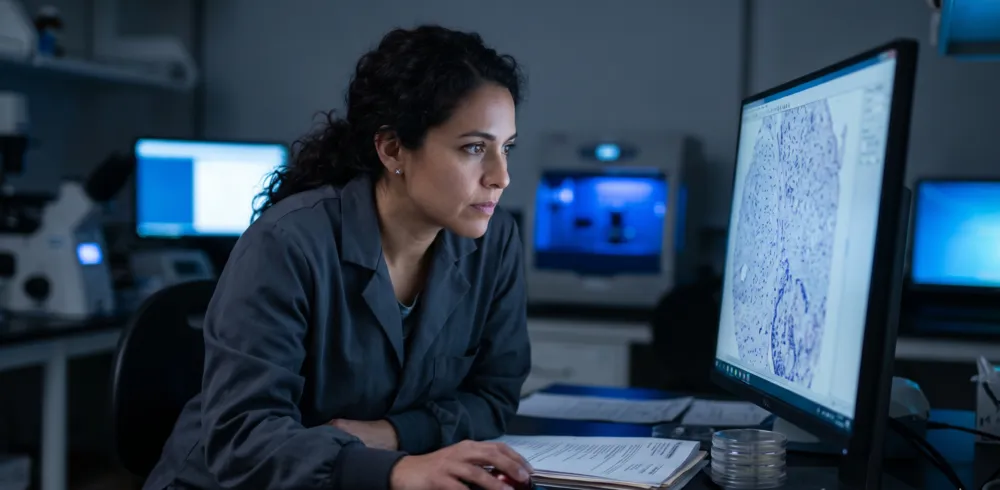
Sometimes, a doctor might need to get a closer look at the abnormal cells. This is done through a biopsy, where a small piece of the tumor is removed. A pathologist then examines this tissue under a microscope to determine the exact type of tumor and whether it's cancerous or not. If surgery isn't possible, a special needle biopsy might be used.
In some cases, a lumbar puncture, also known as a spinal tap, might be performed. This involves taking a small sample of the fluid that surrounds the brain and spinal cord (cerebrospinal fluid) to check for cancer cells. This is usually done if doctors suspect the tumor might have spread within the central nervous system.
Finally, tests that look at thinking and memory, called neurocognitive assessments, can help doctors understand how a tumor might be affecting a person's daily functions and cognitive abilities.
Treatment Options for Brain Cancer
When facing a brain cancer diagnosis, treatment plans are carefully put together by a team of medical professionals. These plans depend a lot on the specific type of tumor, its grade (how fast it's likely to grow), and where it's located in the brain.
The goal is always to remove as much of the tumor as possible while protecting brain function.
Brain Cancer Therapies
Several approaches are used to treat brain cancer, often in combination:
Surgery: This is frequently the first step, especially for tumors that are accessible. The surgeon aims to remove the tumor tissue. Sometimes, if a tumor is deep-seated or intertwined with critical brain areas, only a portion can be removed. Advances in surgical techniques, like using imaging during the operation, help surgeons be more precise.
Radiation Therapy: This uses high-energy rays to kill cancer cells or stop them from growing. It can be used after surgery to target any remaining cancer cells or as a primary treatment if surgery isn't an option. Different types of radiation therapy exist, including external beam radiation and stereotactic radiosurgery, which delivers a high dose of radiation to a very specific area.
Chemotherapy: This involves using drugs to kill cancer cells. Chemotherapy can be given orally (as pills) or intravenously (through an IV). Because the brain has a protective barrier (the blood-brain barrier), some chemotherapy drugs are specifically designed to cross this barrier and reach the tumor effectively.
Targeted Therapy: These drugs focus on specific abnormalities within cancer cells that help them grow and survive. By targeting these specific molecules, these therapies can attack cancer cells while causing less damage to normal cells compared to traditional chemotherapy.
Tumor Treating Fields (TTFields): This is a newer treatment that uses electrical fields to disrupt the division of cancer cells. It's typically used for certain types of brain tumors, like glioblastoma, and is worn on the scalp.
Brain Cancer Survival Rate
Survival rates for brain cancer can vary significantly. Factors influencing these rates include the type and grade of the tumor, the patient's age and overall health, and how well the cancer responds to treatment.
For instance, some benign tumors have very high survival rates, while more aggressive malignant tumors, like glioblastoma, present greater challenges. For this devastating cancer type the survival rate is only 2-3 months without treatment, and 2-5 years with standard of care.
Medical advancements continue to improve outcomes, but it's important to discuss specific prognosis with a healthcare team.
The multidisciplinary team approach is key to managing brain cancer effectively. This team often includes neurosurgeons, neuro-oncologists (doctors specializing in brain cancer), radiation oncologists, neurologists, pathologists, radiologists, nurses, and social workers.
They work together to create a personalized treatment strategy and provide ongoing support throughout the patient's journey.
Living with Brain Cancer: Support and Resources
A brain cancer diagnosis can bring about many questions and concerns. Beyond the medical treatments, finding the right support systems and resources is a significant part of managing the condition. This often involves a team approach, where medical professionals work together to create a treatment plan tailored to each patient.
Care teams typically include specialists such as neurosurgeons, who perform operations, and neuro-oncologists, who focus on cancer treatments for the brain. Radiation oncologists and other support staff also play important roles.
These multidisciplinary teams aim to provide coordinated care throughout the patient's journey, from diagnosis through survivorship.
For people and families seeking assistance, various resources are available. These can include:
Support groups: Connecting with others who have similar experiences can provide emotional comfort and practical advice.
Information centers: Reputable organizations offer educational materials about brain tumors, treatment options, and coping strategies.
Rehabilitation services: Physical, occupational, and speech therapy can help manage symptoms and improve daily functioning after treatment.
Mental health professionals: Counselors or therapists can assist with the emotional and psychological challenges associated with a cancer diagnosis.
Accessing specialized care is key, and many cancer centers have dedicated programs focused on brain and spinal tumors. These programs often provide advanced treatments and supportive services. Exploring these options can help people find the care and resources needed to navigate life with brain cancer.
Moving Forward with Brain Cancer Information
So, we've gone over a lot of ground about brain cancer. It's a complicated topic, and understanding the different types, symptoms, and how it's found can feel like a lot.
Remember, knowing the facts is the first step. If you or someone you know is dealing with this, reaching out to medical experts is key. They're the ones who can figure out the best path forward with treatments and research.
References
National Institute of Neurological Disorders and Stroke. (n.d.). Brain and spinal cord tumors. Retrieved April 23, 2026, from https://www.ninds.nih.gov/health-information/disorders/brain-and-spinal-cord-tumors
Yeini, E., Ofek, P., Albeck, N., Rodriguez Ajamil, D., Neufeld, L., Eldar‐Boock, A., ... & Satchi‐Fainaro, R. (2021). Targeting glioblastoma: advances in drug delivery and novel therapeutic approaches. Advanced Therapeutics, 4(1), 2000124. https://doi.org/10.1002/adtp.202000124
Duan, D., Goemans, N., Tassoni, A., & Flanigan, K. M. (2022, January 20). Duchenne and Becker muscular dystrophy. In M. P. Adam, et al. (Eds.), GeneReviews. University of Washington, Seattle. https://www.ncbi.nlm.nih.gov/sites/books/NBK1311/
Johansson, G., Andersson, U., & Melin, B. (2016). Recent developments in brain tumor predisposing syndromes. Acta oncologica, 55(4), 401-411. https://doi.org/10.3109/0284186X.2015.1107190
Sun, T., Plutynski, A., Ward, S., & Rubin, J. B. (2015). An integrative view on sex differences in brain tumors. Cellular and molecular life sciences : CMLS, 72(17), 3323–3342. https://doi.org/10.1007/s00018-015-1930-2
Frequently Asked Questions
What exactly is a brain tumor?
A brain tumor is a lump or mass of cells that grows in or around your brain. These cells don't grow like normal cells; they multiply without control. Even tumors that aren't cancerous, called benign tumors, can cause problems because the skull can't expand, and the growing mass can press on important parts of the brain.
What's the difference between primary and secondary brain cancer?
Primary brain cancer starts right in the brain cells themselves. Secondary, or metastatic, brain cancer is when cancer begins somewhere else in the body, like the lungs or breast, and then spreads to the brain. Both can be very serious.
Are all brain tumors cancerous?
No, not all brain tumors are cancerous. About one-third of brain tumors are cancerous (malignant), meaning they can invade nearby tissue and spread. The other two-thirds are benign, meaning they don't spread to other areas, but they can still cause issues by pressing on brain tissue.
What are some common types of brain tumors?
There are over 120 different kinds of brain tumors. Some common ones include gliomas, which start in the brain's support cells, and meningiomas, which grow from the protective layers around the brain. Glioblastoma is a very aggressive type of glioma.
What are the warning signs of a brain tumor?
Symptoms can vary a lot depending on where the tumor is and how big it is. Some common signs include persistent headaches, changes in vision or speech, trouble with balance, seizures, or shifts in personality or thinking. Sometimes, slow-growing tumors don't cause symptoms until they become quite large.
Can you have a brain tumor and not know it?
Yes, it's possible. Slower-growing tumors, like meningiomas, might not cause any noticeable symptoms for a long time. They can grow quite large before they start pressing on brain parts and causing problems.
What might cause someone to get a brain tumor?
The exact reason why most primary brain tumors start isn't known. However, some things might increase the risk. These include certain inherited gene conditions, exposure to high levels of radiation, and a weakened immune system. Research is ongoing to understand these causes better.
How do doctors figure out if someone has a brain tumor?
Doctors use a few methods to diagnose brain tumors. They might do a neurological exam to check your senses and reflexes. Imaging tests like MRI or CT scans can show the tumor's location and size. Sometimes, a small piece of the tumor is taken out for testing, called a biopsy, to see if it's cancerous and what type it is.
What are the main ways brain cancer is treated?
Treatment depends on the tumor type, size, and location. Common treatments include surgery to remove as much of the tumor as possible, radiation therapy to kill cancer cells, and chemotherapy, which uses drugs to fight cancer. Sometimes, newer treatments that target specific cancer cells are used.
Can people live a normal life after a brain tumor diagnosis?
Many people can live full and meaningful lives after a brain tumor diagnosis, especially if the tumor is benign or caught early. Treatment can help manage the tumor and its effects. Some individuals might face long-term challenges, but rehabilitation and support can greatly improve their quality of life.
Emotiv is a neurotechnology leader helping advance neuroscience research through accessible EEG and brain data tools.
Christian Burgos