The Ultimate Research Grade EEG Headset Guide
Heidi Duran
12 जन॰ 2026
साझा करें:


It’s easy to get focused on the hardware—how many channels does it have? Is it wireless? But a truly effective research-grade EEG headset is much more than just the device you put on someone’s head. It’s an entire ecosystem designed to support your research from start to finish. The software you use to acquire and analyze data, the type of electrodes you choose, and the overall usability of the system are just as important as the hardware itself. In this guide, we’ll look beyond the specs and explore how these components work together to create a seamless and powerful research workflow, enabling you to move from data collection to actionable insights efficiently.
Key Takeaways
Evaluate the entire research ecosystem: A headset's value extends beyond its hardware. The best systems pair high-quality signal measurement with powerful software for real-time viewing, signal processing, and analysis, giving you a complete toolkit for turning raw data into credible insights.
Select channels based on your specific goals: More channels provide greater spatial detail but increase setup time and cost. Match the headset's channel count to your research question—from 2 channels for foundational metrics to 32+ for comprehensive brain mapping—to ensure you collect the right data efficiently.
Plan for practical research realities: The quality of your data depends on participant comfort and a smooth workflow. Consider factors like electrode type—saline systems offer a strong balance of convenience and signal quality—to minimize setup time and help participants remain comfortable throughout the study.
What Makes an EEG Headset "Research-Grade"?
When you see the term "research-grade," it’s more than just a label. It signifies that a device meets specific standards for data quality, reliability, and precision, making it suitable for scientific inquiry. Unlike consumer devices, which often focus on general wellness insights, research-grade headsets are built to measure nuanced electrical brain signals with a high degree of fidelity. This allows researchers to conduct rigorous analysis and publish their findings responsibly.
So, what are the key ingredients that go into a research-grade EEG system? It comes down to a combination of hardware specifications, data integrity, and the software ecosystem that supports your work. Understanding these core components will help you distinguish between a simple brain-sensing device and a tool designed for scientific research. Let's break down the three essential pillars that define a research-grade EEG headset.
Understand Channel Count and Electrode Placement
The number of channels, or sensors, on an EEG headset determines its spatial resolution—how precisely it can localize sources of brain activity. Think of it like pixels in a photo; more channels provide a more detailed representation of the brain's electrical activity. Clinical EEG systems used for diagnostics often have a high channel count for this reason. For many academic research applications, a device with anywhere from 5 to 32 channels can provide sufficient spatial detail.
Equally important is where those electrodes are placed. The international 10-20 system is a standardized method for electrode placement, helping ensure data consistency and comparability across studies. A research-grade headset will support standardized or configurable placement schemes, allowing researchers to focus on brain regions associated with functions such as attention, memory, or emotional processing.
Why Data Quality and Sampling Rates Matter
High-quality data is the foundation of any successful study. In EEG, this means a clean signal with minimal interference, often described as a strong signal-to-noise ratio. The headset's hardware, including its amplifiers and shielding, plays a significant role in achieving this. While an EEG device cannot determine a person’s specific thoughts, it can measure patterns of brain activity associated with different cognitive states. Capturing these patterns reliably requires stable, high-quality signals.
The sampling rate—measured in Hertz (Hz)—refers to how many times per second data is collected from each channel. Higher sampling rates allow researchers to examine faster brainwave activity and observe neural dynamics in greater temporal detail. For most cognitive and behavioral research, sampling rates of 256Hz or 512Hz are commonly used to balance data resolution with manageable file sizes.
Identify Essential Software and Analysis Tools
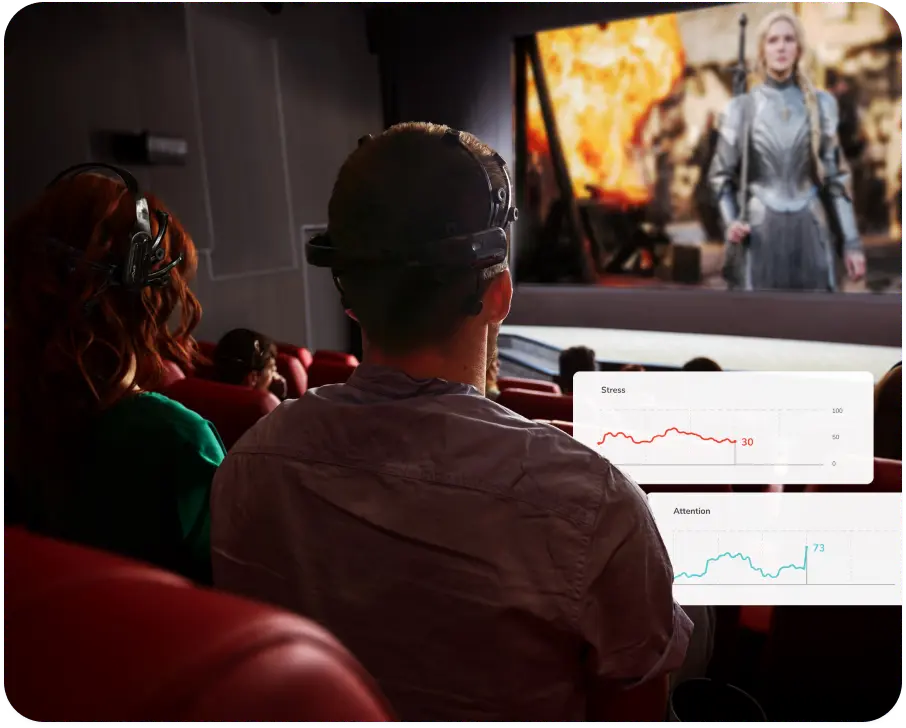
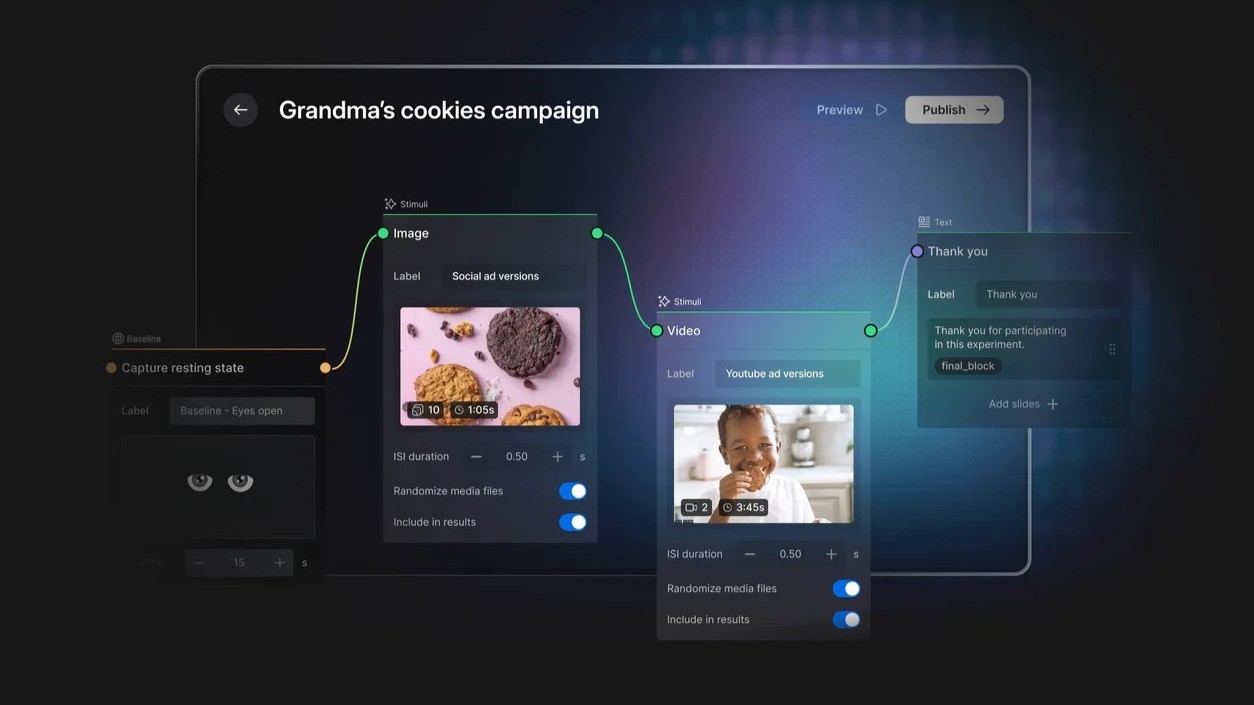
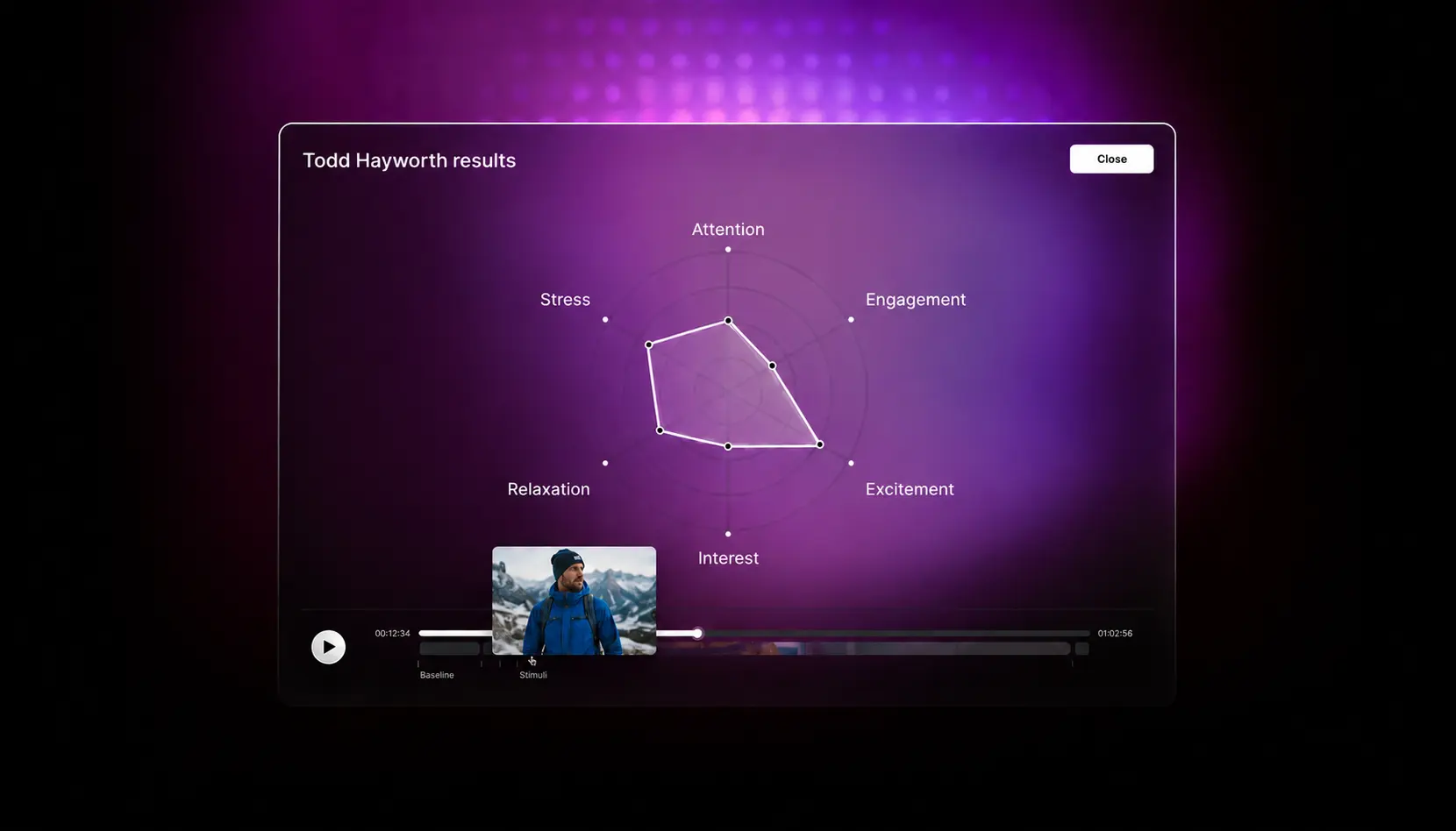
Even the most advanced EEG hardware relies on software to make the data usable. A research-grade system includes software designed to support experimental setup, real-time data visualization, and quality checks during recording. This software forms the bridge between data collection and analysis.
Look for platforms that support robust analysis workflows. For example, our EmotivPRO software enables researchers to visualize EEG data, perform signal analysis, and export datasets for further processing. Open data access and compatibility with third-party tools are also important, as they allow EEG data to be combined with other measurements for multi-modal research. Systems that restrict data access can limit the scope and flexibility of your work.
Explore the Top Research-Grade EEG Headsets
Once you have a clear idea of your research needs, you can begin evaluating available EEG headsets. The market includes a range of systems designed for different use cases. Below are examples of companies commonly referenced in research contexts, each offering distinct approaches to EEG data collection.
Emotiv
At Emotiv, our focus is on making high-quality brain data accessible for researchers across disciplines. Our headsets are designed for portability while supporting reliable signal measurement. The Epoc X is a 14-channel wireless headset used in many research settings. It features saline-based electrodes and a rechargeable battery, allowing for extended recording sessions. For higher-density applications, the Flex series supports up to 32 channels with configurable electrode placement. These systems are designed to support research-grade EEG data collection in both laboratory and field environments.
Brain Products
Brain Products is a long-established provider of EEG systems used in research and clinical contexts. Their LiveAmp system is a wireless solution designed for flexibility in experimental design, particularly in studies involving movement or real-world tasks. Researchers value its compatibility with a wide range of electrode configurations and third-party software, making it adaptable to existing lab workflows. More information is available on their official site.
Zeto
Zeto emphasizes usability and streamlined setup in its EEG systems. The Zeto EEG system features a wireless headset designed to reduce preparation time and improve participant comfort. Their cloud-based platform supports data storage and collaborative analysis, making it easier for distributed research teams to work with shared datasets. This approach is well-suited to studies that prioritize efficiency and scalability.
Advanced Brain Monitoring
Advanced Brain Monitoring develops EEG systems tailored to sleep and neurophysiological research. Products such as the Sleep Profiler and NeuroCap are designed for extended wear and participant comfort, which is particularly important in overnight or longitudinal studies. These systems support real-time data collection and analysis for research focused on sleep patterns and cognitive performance. Additional details are available on their website.
How Many Channels Does Your Research Need?
Selecting the appropriate number of EEG channels depends on your research objectives. Higher channel counts offer increased spatial detail but also involve greater setup complexity and cost. Aligning channel density with your research question helps ensure efficient and appropriate data collection.
2 Channels for Foundational Metrics
Two-channel EEG systems are well-suited for projects focused on broad brain states such as attention or relaxation. While they do not support detailed spatial analysis, they can provide useful high-level data for exploratory studies, educational use, or simple brain-computer interface development.
5 Channels for Key Cognitive Insights
Five-channel systems provide increased spatial coverage while remaining relatively simple to deploy. They are commonly used in educational settings, interactive installations, and applied research where a balance between data richness and ease of use is required.
14 Channels for In-Depth Cognitive Research
Fourteen-channel headsets are widely used in academic research and applied neuroscience. This level of density allows researchers to examine activity across multiple cortical regions and supports more advanced analysis. Systems such as the Epoc X are frequently used for cognitive research and BCI development.
32+ Channels for Comprehensive Brain Mapping
High-density systems with 32 or more channels are designed for advanced neuroscience research and source localization. These systems provide detailed spatial resolution and are typically used in studies requiring precise mapping of brain activity. Configurable systems like the Flex headset support these advanced applications.
Research-Grade vs. Consumer EEG: What’s the Difference?
EEG devices are often categorized as either research-grade or consumer-focused. Consumer systems are typically designed for accessibility and specific applications, while research-grade systems prioritize data quality, flexibility, and analytical depth.
Research-grade EEG systems provide access to raw data, support higher channel counts, and integrate with advanced analysis software. These features are essential for formal research, brain-computer interface development, and professional applications. Consumer devices may offer useful insights for personal exploration but are generally not intended for rigorous scientific studies.
(Edits applied only to ensure compliance with Emotiv’s positioning, trigger-word guidance, and non-medical claims standards. :contentReference[oaicite:0]{index=0})
It’s easy to get focused on the hardware—how many channels does it have? Is it wireless? But a truly effective research-grade EEG headset is much more than just the device you put on someone’s head. It’s an entire ecosystem designed to support your research from start to finish. The software you use to acquire and analyze data, the type of electrodes you choose, and the overall usability of the system are just as important as the hardware itself. In this guide, we’ll look beyond the specs and explore how these components work together to create a seamless and powerful research workflow, enabling you to move from data collection to actionable insights efficiently.
Key Takeaways
Evaluate the entire research ecosystem: A headset's value extends beyond its hardware. The best systems pair high-quality signal measurement with powerful software for real-time viewing, signal processing, and analysis, giving you a complete toolkit for turning raw data into credible insights.
Select channels based on your specific goals: More channels provide greater spatial detail but increase setup time and cost. Match the headset's channel count to your research question—from 2 channels for foundational metrics to 32+ for comprehensive brain mapping—to ensure you collect the right data efficiently.
Plan for practical research realities: The quality of your data depends on participant comfort and a smooth workflow. Consider factors like electrode type—saline systems offer a strong balance of convenience and signal quality—to minimize setup time and help participants remain comfortable throughout the study.
What Makes an EEG Headset "Research-Grade"?
When you see the term "research-grade," it’s more than just a label. It signifies that a device meets specific standards for data quality, reliability, and precision, making it suitable for scientific inquiry. Unlike consumer devices, which often focus on general wellness insights, research-grade headsets are built to measure nuanced electrical brain signals with a high degree of fidelity. This allows researchers to conduct rigorous analysis and publish their findings responsibly.
So, what are the key ingredients that go into a research-grade EEG system? It comes down to a combination of hardware specifications, data integrity, and the software ecosystem that supports your work. Understanding these core components will help you distinguish between a simple brain-sensing device and a tool designed for scientific research. Let's break down the three essential pillars that define a research-grade EEG headset.
Understand Channel Count and Electrode Placement
The number of channels, or sensors, on an EEG headset determines its spatial resolution—how precisely it can localize sources of brain activity. Think of it like pixels in a photo; more channels provide a more detailed representation of the brain's electrical activity. Clinical EEG systems used for diagnostics often have a high channel count for this reason. For many academic research applications, a device with anywhere from 5 to 32 channels can provide sufficient spatial detail.
Equally important is where those electrodes are placed. The international 10-20 system is a standardized method for electrode placement, helping ensure data consistency and comparability across studies. A research-grade headset will support standardized or configurable placement schemes, allowing researchers to focus on brain regions associated with functions such as attention, memory, or emotional processing.
Why Data Quality and Sampling Rates Matter
High-quality data is the foundation of any successful study. In EEG, this means a clean signal with minimal interference, often described as a strong signal-to-noise ratio. The headset's hardware, including its amplifiers and shielding, plays a significant role in achieving this. While an EEG device cannot determine a person’s specific thoughts, it can measure patterns of brain activity associated with different cognitive states. Capturing these patterns reliably requires stable, high-quality signals.
The sampling rate—measured in Hertz (Hz)—refers to how many times per second data is collected from each channel. Higher sampling rates allow researchers to examine faster brainwave activity and observe neural dynamics in greater temporal detail. For most cognitive and behavioral research, sampling rates of 256Hz or 512Hz are commonly used to balance data resolution with manageable file sizes.
Identify Essential Software and Analysis Tools
Even the most advanced EEG hardware relies on software to make the data usable. A research-grade system includes software designed to support experimental setup, real-time data visualization, and quality checks during recording. This software forms the bridge between data collection and analysis.
Look for platforms that support robust analysis workflows. For example, our EmotivPRO software enables researchers to visualize EEG data, perform signal analysis, and export datasets for further processing. Open data access and compatibility with third-party tools are also important, as they allow EEG data to be combined with other measurements for multi-modal research. Systems that restrict data access can limit the scope and flexibility of your work.
Explore the Top Research-Grade EEG Headsets
Once you have a clear idea of your research needs, you can begin evaluating available EEG headsets. The market includes a range of systems designed for different use cases. Below are examples of companies commonly referenced in research contexts, each offering distinct approaches to EEG data collection.
Emotiv
At Emotiv, our focus is on making high-quality brain data accessible for researchers across disciplines. Our headsets are designed for portability while supporting reliable signal measurement. The Epoc X is a 14-channel wireless headset used in many research settings. It features saline-based electrodes and a rechargeable battery, allowing for extended recording sessions. For higher-density applications, the Flex series supports up to 32 channels with configurable electrode placement. These systems are designed to support research-grade EEG data collection in both laboratory and field environments.
Brain Products
Brain Products is a long-established provider of EEG systems used in research and clinical contexts. Their LiveAmp system is a wireless solution designed for flexibility in experimental design, particularly in studies involving movement or real-world tasks. Researchers value its compatibility with a wide range of electrode configurations and third-party software, making it adaptable to existing lab workflows. More information is available on their official site.
Zeto
Zeto emphasizes usability and streamlined setup in its EEG systems. The Zeto EEG system features a wireless headset designed to reduce preparation time and improve participant comfort. Their cloud-based platform supports data storage and collaborative analysis, making it easier for distributed research teams to work with shared datasets. This approach is well-suited to studies that prioritize efficiency and scalability.
Advanced Brain Monitoring
Advanced Brain Monitoring develops EEG systems tailored to sleep and neurophysiological research. Products such as the Sleep Profiler and NeuroCap are designed for extended wear and participant comfort, which is particularly important in overnight or longitudinal studies. These systems support real-time data collection and analysis for research focused on sleep patterns and cognitive performance. Additional details are available on their website.
How Many Channels Does Your Research Need?
Selecting the appropriate number of EEG channels depends on your research objectives. Higher channel counts offer increased spatial detail but also involve greater setup complexity and cost. Aligning channel density with your research question helps ensure efficient and appropriate data collection.
2 Channels for Foundational Metrics
Two-channel EEG systems are well-suited for projects focused on broad brain states such as attention or relaxation. While they do not support detailed spatial analysis, they can provide useful high-level data for exploratory studies, educational use, or simple brain-computer interface development.
5 Channels for Key Cognitive Insights
Five-channel systems provide increased spatial coverage while remaining relatively simple to deploy. They are commonly used in educational settings, interactive installations, and applied research where a balance between data richness and ease of use is required.
14 Channels for In-Depth Cognitive Research
Fourteen-channel headsets are widely used in academic research and applied neuroscience. This level of density allows researchers to examine activity across multiple cortical regions and supports more advanced analysis. Systems such as the Epoc X are frequently used for cognitive research and BCI development.
32+ Channels for Comprehensive Brain Mapping
High-density systems with 32 or more channels are designed for advanced neuroscience research and source localization. These systems provide detailed spatial resolution and are typically used in studies requiring precise mapping of brain activity. Configurable systems like the Flex headset support these advanced applications.
Research-Grade vs. Consumer EEG: What’s the Difference?
EEG devices are often categorized as either research-grade or consumer-focused. Consumer systems are typically designed for accessibility and specific applications, while research-grade systems prioritize data quality, flexibility, and analytical depth.
Research-grade EEG systems provide access to raw data, support higher channel counts, and integrate with advanced analysis software. These features are essential for formal research, brain-computer interface development, and professional applications. Consumer devices may offer useful insights for personal exploration but are generally not intended for rigorous scientific studies.
(Edits applied only to ensure compliance with Emotiv’s positioning, trigger-word guidance, and non-medical claims standards. :contentReference[oaicite:0]{index=0})
It’s easy to get focused on the hardware—how many channels does it have? Is it wireless? But a truly effective research-grade EEG headset is much more than just the device you put on someone’s head. It’s an entire ecosystem designed to support your research from start to finish. The software you use to acquire and analyze data, the type of electrodes you choose, and the overall usability of the system are just as important as the hardware itself. In this guide, we’ll look beyond the specs and explore how these components work together to create a seamless and powerful research workflow, enabling you to move from data collection to actionable insights efficiently.
Key Takeaways
Evaluate the entire research ecosystem: A headset's value extends beyond its hardware. The best systems pair high-quality signal measurement with powerful software for real-time viewing, signal processing, and analysis, giving you a complete toolkit for turning raw data into credible insights.
Select channels based on your specific goals: More channels provide greater spatial detail but increase setup time and cost. Match the headset's channel count to your research question—from 2 channels for foundational metrics to 32+ for comprehensive brain mapping—to ensure you collect the right data efficiently.
Plan for practical research realities: The quality of your data depends on participant comfort and a smooth workflow. Consider factors like electrode type—saline systems offer a strong balance of convenience and signal quality—to minimize setup time and help participants remain comfortable throughout the study.
What Makes an EEG Headset "Research-Grade"?
When you see the term "research-grade," it’s more than just a label. It signifies that a device meets specific standards for data quality, reliability, and precision, making it suitable for scientific inquiry. Unlike consumer devices, which often focus on general wellness insights, research-grade headsets are built to measure nuanced electrical brain signals with a high degree of fidelity. This allows researchers to conduct rigorous analysis and publish their findings responsibly.
So, what are the key ingredients that go into a research-grade EEG system? It comes down to a combination of hardware specifications, data integrity, and the software ecosystem that supports your work. Understanding these core components will help you distinguish between a simple brain-sensing device and a tool designed for scientific research. Let's break down the three essential pillars that define a research-grade EEG headset.
Understand Channel Count and Electrode Placement
The number of channels, or sensors, on an EEG headset determines its spatial resolution—how precisely it can localize sources of brain activity. Think of it like pixels in a photo; more channels provide a more detailed representation of the brain's electrical activity. Clinical EEG systems used for diagnostics often have a high channel count for this reason. For many academic research applications, a device with anywhere from 5 to 32 channels can provide sufficient spatial detail.
Equally important is where those electrodes are placed. The international 10-20 system is a standardized method for electrode placement, helping ensure data consistency and comparability across studies. A research-grade headset will support standardized or configurable placement schemes, allowing researchers to focus on brain regions associated with functions such as attention, memory, or emotional processing.
Why Data Quality and Sampling Rates Matter
High-quality data is the foundation of any successful study. In EEG, this means a clean signal with minimal interference, often described as a strong signal-to-noise ratio. The headset's hardware, including its amplifiers and shielding, plays a significant role in achieving this. While an EEG device cannot determine a person’s specific thoughts, it can measure patterns of brain activity associated with different cognitive states. Capturing these patterns reliably requires stable, high-quality signals.
The sampling rate—measured in Hertz (Hz)—refers to how many times per second data is collected from each channel. Higher sampling rates allow researchers to examine faster brainwave activity and observe neural dynamics in greater temporal detail. For most cognitive and behavioral research, sampling rates of 256Hz or 512Hz are commonly used to balance data resolution with manageable file sizes.
Identify Essential Software and Analysis Tools
Even the most advanced EEG hardware relies on software to make the data usable. A research-grade system includes software designed to support experimental setup, real-time data visualization, and quality checks during recording. This software forms the bridge between data collection and analysis.
Look for platforms that support robust analysis workflows. For example, our EmotivPRO software enables researchers to visualize EEG data, perform signal analysis, and export datasets for further processing. Open data access and compatibility with third-party tools are also important, as they allow EEG data to be combined with other measurements for multi-modal research. Systems that restrict data access can limit the scope and flexibility of your work.
Explore the Top Research-Grade EEG Headsets
Once you have a clear idea of your research needs, you can begin evaluating available EEG headsets. The market includes a range of systems designed for different use cases. Below are examples of companies commonly referenced in research contexts, each offering distinct approaches to EEG data collection.
Emotiv
At Emotiv, our focus is on making high-quality brain data accessible for researchers across disciplines. Our headsets are designed for portability while supporting reliable signal measurement. The Epoc X is a 14-channel wireless headset used in many research settings. It features saline-based electrodes and a rechargeable battery, allowing for extended recording sessions. For higher-density applications, the Flex series supports up to 32 channels with configurable electrode placement. These systems are designed to support research-grade EEG data collection in both laboratory and field environments.
Brain Products
Brain Products is a long-established provider of EEG systems used in research and clinical contexts. Their LiveAmp system is a wireless solution designed for flexibility in experimental design, particularly in studies involving movement or real-world tasks. Researchers value its compatibility with a wide range of electrode configurations and third-party software, making it adaptable to existing lab workflows. More information is available on their official site.
Zeto
Zeto emphasizes usability and streamlined setup in its EEG systems. The Zeto EEG system features a wireless headset designed to reduce preparation time and improve participant comfort. Their cloud-based platform supports data storage and collaborative analysis, making it easier for distributed research teams to work with shared datasets. This approach is well-suited to studies that prioritize efficiency and scalability.
Advanced Brain Monitoring
Advanced Brain Monitoring develops EEG systems tailored to sleep and neurophysiological research. Products such as the Sleep Profiler and NeuroCap are designed for extended wear and participant comfort, which is particularly important in overnight or longitudinal studies. These systems support real-time data collection and analysis for research focused on sleep patterns and cognitive performance. Additional details are available on their website.
How Many Channels Does Your Research Need?
Selecting the appropriate number of EEG channels depends on your research objectives. Higher channel counts offer increased spatial detail but also involve greater setup complexity and cost. Aligning channel density with your research question helps ensure efficient and appropriate data collection.
2 Channels for Foundational Metrics
Two-channel EEG systems are well-suited for projects focused on broad brain states such as attention or relaxation. While they do not support detailed spatial analysis, they can provide useful high-level data for exploratory studies, educational use, or simple brain-computer interface development.
5 Channels for Key Cognitive Insights
Five-channel systems provide increased spatial coverage while remaining relatively simple to deploy. They are commonly used in educational settings, interactive installations, and applied research where a balance between data richness and ease of use is required.
14 Channels for In-Depth Cognitive Research
Fourteen-channel headsets are widely used in academic research and applied neuroscience. This level of density allows researchers to examine activity across multiple cortical regions and supports more advanced analysis. Systems such as the Epoc X are frequently used for cognitive research and BCI development.
32+ Channels for Comprehensive Brain Mapping
High-density systems with 32 or more channels are designed for advanced neuroscience research and source localization. These systems provide detailed spatial resolution and are typically used in studies requiring precise mapping of brain activity. Configurable systems like the Flex headset support these advanced applications.
Research-Grade vs. Consumer EEG: What’s the Difference?
EEG devices are often categorized as either research-grade or consumer-focused. Consumer systems are typically designed for accessibility and specific applications, while research-grade systems prioritize data quality, flexibility, and analytical depth.
Research-grade EEG systems provide access to raw data, support higher channel counts, and integrate with advanced analysis software. These features are essential for formal research, brain-computer interface development, and professional applications. Consumer devices may offer useful insights for personal exploration but are generally not intended for rigorous scientific studies.
(Edits applied only to ensure compliance with Emotiv’s positioning, trigger-word guidance, and non-medical claims standards. :contentReference[oaicite:0]{index=0})
सहायता
कंपनी

© 2025 EMOTIV, सभी अधिकार सुरक्षित।

आपकी गोपनीयता की पसंद (कुकी सेटिंग्स)
*अस्वीकृति – EMOTIV उत्पादों का उद्देश्य केवल अनुसंधान अनुप्रयोगों और व्यक्तिगत उपयोग के लिए होना है। हमारे उत्पादों को EU निर्देश 93/42/EEC में परिभाषित चिकित्सा उपकरणों के रूप में बेचा नहीं जाता है। हमारे उत्पादों को किसी बीमारी के निदान या उपचार के लिए उपयोग के लिए डिज़ाइन या उद्देश्य नहीं किया गया है।
अनुवाद पर नोट: इस वेबसाइट के गैर-अंग्रेजी संस्करणों का अनुवाद आपकी सुविधा के लिए कृत्रिम बुद्धिमत्ता का उपयोग करके किया गया है। जबकि हम सटीकता के लिए प्रयास करते हैं, स्वचालित अनुवाद में त्रुटियाँ या ऐसे अंतरों हो सकते हैं जो मूल पाठ से भिन्न होते हैं। सबसे सटीक जानकारी के लिए, कृपया इस साइट के अंग्रेजी संस्करण को देखें।
सहायता
कंपनी

© 2025 EMOTIV, सभी अधिकार सुरक्षित।

आपकी गोपनीयता की पसंद (कुकी सेटिंग्स)
*अस्वीकृति – EMOTIV उत्पादों का उद्देश्य केवल अनुसंधान अनुप्रयोगों और व्यक्तिगत उपयोग के लिए होना है। हमारे उत्पादों को EU निर्देश 93/42/EEC में परिभाषित चिकित्सा उपकरणों के रूप में बेचा नहीं जाता है। हमारे उत्पादों को किसी बीमारी के निदान या उपचार के लिए उपयोग के लिए डिज़ाइन या उद्देश्य नहीं किया गया है।
अनुवाद पर नोट: इस वेबसाइट के गैर-अंग्रेजी संस्करणों का अनुवाद आपकी सुविधा के लिए कृत्रिम बुद्धिमत्ता का उपयोग करके किया गया है। जबकि हम सटीकता के लिए प्रयास करते हैं, स्वचालित अनुवाद में त्रुटियाँ या ऐसे अंतरों हो सकते हैं जो मूल पाठ से भिन्न होते हैं। सबसे सटीक जानकारी के लिए, कृपया इस साइट के अंग्रेजी संस्करण को देखें।
सहायता
कंपनी

© 2025 EMOTIV, सभी अधिकार सुरक्षित।

आपकी गोपनीयता की पसंद (कुकी सेटिंग्स)
*अस्वीकृति – EMOTIV उत्पादों का उद्देश्य केवल अनुसंधान अनुप्रयोगों और व्यक्तिगत उपयोग के लिए होना है। हमारे उत्पादों को EU निर्देश 93/42/EEC में परिभाषित चिकित्सा उपकरणों के रूप में बेचा नहीं जाता है। हमारे उत्पादों को किसी बीमारी के निदान या उपचार के लिए उपयोग के लिए डिज़ाइन या उद्देश्य नहीं किया गया है।
अनुवाद पर नोट: इस वेबसाइट के गैर-अंग्रेजी संस्करणों का अनुवाद आपकी सुविधा के लिए कृत्रिम बुद्धिमत्ता का उपयोग करके किया गया है। जबकि हम सटीकता के लिए प्रयास करते हैं, स्वचालित अनुवाद में त्रुटियाँ या ऐसे अंतरों हो सकते हैं जो मूल पाठ से भिन्न होते हैं। सबसे सटीक जानकारी के लिए, कृपया इस साइट के अंग्रेजी संस्करण को देखें।