EEG Signal Processing Software: A Complete Guide
Emotiv
Updated on
Mar 10, 2026
EEG Signal Processing Software: A Complete Guide
Emotiv
Updated on
Mar 10, 2026
EEG Signal Processing Software: A Complete Guide
Emotiv
Updated on
Mar 10, 2026
Whether you're building a brain-computer interface that responds to mental commands, analyzing a consumer's unfiltered emotional reaction to a new product, or conducting foundational academic research, the magic happens when you interpret the data. The engine that powers these incredible applications is EEG signal processing software. It’s the critical link between the electrical signals captured by a headset and the groundbreaking insights you want to achieve. This software turns complex brainwaves into actionable information. Here, we’ll explore the features you need, compare the top tools, and show you how to get started on your path from raw data to discovery.
Key Takeaways
Software makes sense of brain signals: Raw EEG data is a complex mix of brain activity and noise; processing software is the critical tool that cleans, analyzes, and visualizes these signals to provide clear, actionable insights.
Match the software to your mission: Your specific goal, whether it's academic research or BCI development, should guide your choice. A comprehensive platform suits streamlined research, while open-source tools offer deep customization for developers.
Prioritize three key capabilities: When evaluating any software, look for robust signal filtering to ensure data quality, powerful statistical tools to uncover patterns, and intuitive visualization options to help you understand your findings.
What is EEG Signal Processing Software?
Think of EEG signal processing software as the translator for your brain's electrical language. When you use an EEG headset, it picks up raw data, which is a complex mix of brain activity and electrical noise. This software is designed to take that raw data, clean it, organize it, and analyze it so you can understand what’s actually happening. It’s the essential bridge between the hardware on your head and the meaningful insights you want to uncover. These software solutions can range from powerful desktop applications for deep analysis to real-time platforms that can be integrated into other programs, like games or assistive technologies.
Without this software, raw EEG data is a bit like an unedited audio recording from a busy street; you can’t clearly hear the conversation you’re trying to capture. Signal processing filters out the background noise, isolates the important sounds, and presents them in a clear format, often through visualizations like brain maps or frequency charts. Whether you're conducting academic research, developing a brain-computer interface, or exploring cognitive wellness tools, this software is what turns electrical signals into actionable data. It allows you to visualize brain activity, identify patterns, and extract specific information for your project, ultimately making advanced brain data accessible to a broad audience of researchers, developers, and enthusiasts.
Why Signal Processing Matters
Raw EEG signals are incredibly sensitive and easily contaminated by "noise" or artifacts. Simple actions like blinking your eyes, clenching your jaw, or even your own heartbeat can create electrical interference that masks the brain activity you want to measure. This makes the raw data very difficult to interpret accurately. Effective EEG signal processing is the critical first step to clean up this noise. By removing these artifacts, you can be much more confident that you are analyzing genuine brain patterns. This process is fundamental for achieving reliable and repeatable results in any application, from scientific studies to personal wellness exploration.
Key Functions of Processing Software
Most EEG processing software performs a few core functions to get from raw data to useful insights. First is data acquisition, which is simply capturing the signal from the headset. Next comes denoising, where the software filters out the artifacts we just discussed. After the data is clean, the software performs feature extraction, which involves identifying and isolating specific characteristics of the brainwaves, like their frequency or amplitude. Finally, many tools use classification to categorize brain states based on these features, often with the help of machine learning algorithms. These functions are the building blocks that allow developers and researchers to build sophisticated applications.
A Closer Look at EmotivPRO
When you’re ready to work with high-resolution EEG data, you need software that’s both powerful and intuitive. That’s where our EmotivPRO software comes in. It’s a comprehensive platform designed for neuroscience research and commercial use, allowing you to capture, analyze, and visualize brain data from any of our headsets. Whether you're conducting academic studies, developing a brain-computer interface, or exploring neuromarketing insights, EmotivPRO provides the tools you need to manage your data effectively.
The software is built to handle everything from raw EEG streams to advanced performance metrics. You can record unlimited amounts of data, mark important events in your recordings, and review everything in one place. We designed it to be flexible, supporting everything from quick analyses to complex, multi-participant studies. It’s the engine that powers your research, giving you a clear path from data collection to meaningful discovery.
Process Data in Real-Time
One of the most powerful features of EmotivPRO is its ability to process EEG data as it happens. This real-time capability is essential for applications that require immediate feedback, like interactive art installations or BCI experiments. We achieve this through built-in Lab Streaming Layer (LSL) support, which is a widely used system for synchronizing and transmitting data streams. This integration makes it easy to send your EEG data and performance metrics directly to your preferred analysis environment, allowing you to work with the data live in third-party applications without missing a beat.
Visualize Data with Advanced Tools
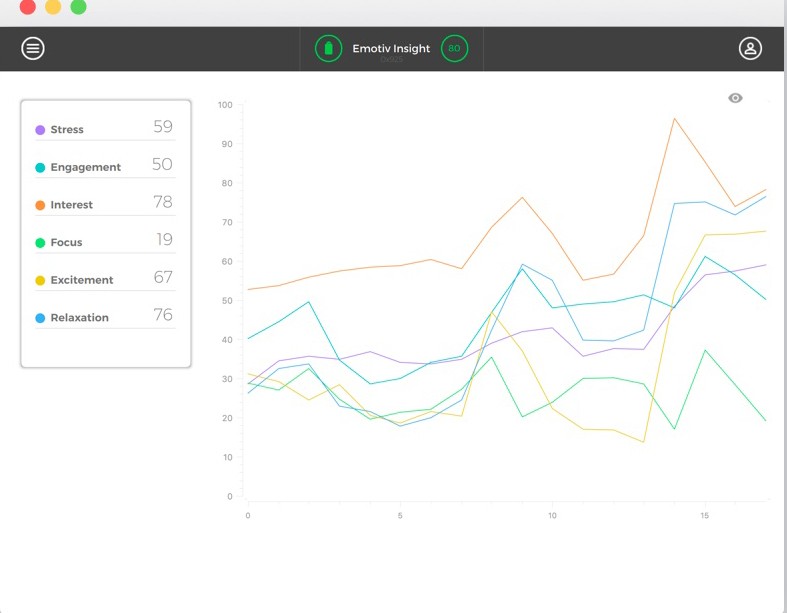
Understanding brain data starts with seeing it clearly. EmotivPRO includes an integrated EEG viewer that lets you visualize raw EEG signals right alongside our performance metrics and any event markers you’ve created. This unified view is incredibly helpful for making sense of complex brain activity. You can record a session, annotate it with markers for specific stimuli or participant actions, and then immediately review the data to see how the brain responded. This direct visualization helps you spot patterns and artifacts quickly, making your analysis process much more efficient and insightful.
Export and Integrate Your Findings
Your research data needs to be accessible and easy to share. With EmotivPRO, you have the flexibility to save your recordings to the Emotiv Cloud or locally on your computer. Our cloud storage is perfect for collaborative projects, as it includes robust sharing and permission controls for teams. This ensures your data is secure while remaining accessible to your colleagues. The software’s LSL support also simplifies integration with other tools, allowing you to build a seamless research workflow that incorporates your EEG findings into a larger analytical pipeline.
Exploring Open-Source EEG Processing Tools
While our EmotivPRO software offers a streamlined, all-in-one solution for data processing, the world of EEG analysis is also home to a vibrant open-source community. These tools are developed and maintained by researchers and developers from around the globe, making them free to use and incredibly flexible. If you have a background in programming or need to build a highly customized analysis pipeline for a specific research question, exploring open-source options can be a fantastic route.
These platforms often require some familiarity with coding environments like MATLAB or Python, but they reward you with a deep level of control over every step of your data processing. They are built on a foundation of community collaboration, with extensive documentation, forums, and tutorials to help you get started. Many researchers use these tools to implement novel analysis techniques or to ensure their methods are completely transparent and reproducible. Think of them not as replacements for dedicated software, but as powerful additions to your toolkit, perfect for when you need to dig deeper or tailor a workflow to unique experimental needs. Below are a few of the most popular and well-regarded open-source tools in the neuroscience community.
EEGLAB for MATLAB Users
If you spend your days working in the MATLAB environment, you’ve likely heard of EEGLAB. It’s one of the most widely used open-source toolboxes for EEG analysis, and for good reason. It combines a helpful graphical user interface (GUI) with powerful scripting capabilities, making it accessible for a wide range of users. You can use the GUI to easily import data, apply filters, remove artifacts, and run independent component analysis (ICA). For more advanced needs, you can tap into its scripting functions. One of its greatest strengths is its extensive library of plug-ins, which extend its functionality for specialized tasks like source localization or group-level statistics. You can find the EEGLAB toolbox and its documentation online.
MNE-Python for Developers
For developers and researchers who prefer the Python ecosystem, MNE-Python is an essential tool. This open-source package is specifically designed for processing electrophysiological data, including EEG and MEG. It provides a comprehensive set of functions for the entire analysis workflow, from preprocessing and artifact rejection to time-frequency analysis and statistical testing. Because it’s built on Python, it integrates seamlessly with other popular data science libraries like NumPy, SciPy, and Matplotlib. This makes it an incredibly powerful and flexible option for anyone comfortable with coding. The MNE-Python software package is well-documented, with plenty of examples to help you get your analysis pipeline up and running.
What the FieldTrip Toolbox Offers
Another excellent resource for MATLAB users is the FieldTrip toolbox. It is particularly well-known for its flexibility and its ability to handle complex and large datasets, making it a favorite for advanced research applications. FieldTrip offers a wide range of functions for preprocessing, frequency analysis, source reconstruction, and statistical analysis. Unlike the more GUI-driven approach of EEGLAB, FieldTrip is primarily script-based, which gives you granular control over your analysis parameters. This makes it a robust choice for researchers who need to implement sophisticated, non-standard analysis methods. The FieldTrip community maintains excellent documentation and tutorials to guide new users.
A Guide to Commercial EEG Software
Beyond open-source platforms and our own EmotivPRO software, the world of commercial EEG software is full of specialized tools designed for specific industries and research goals. These platforms often come with dedicated customer support, streamlined user interfaces, and features tailored to fields like clinical neurology or advanced biosignal analysis. If your project requires a high level of support or a tool built for a very specific workflow, exploring commercial options can be a great next step.
Choosing a commercial tool often means investing in a solution that prioritizes ease of use and reliability right out of the box. While open-source software provides incredible flexibility, it can also come with a steeper learning curve and require more hands-on configuration. Commercial software, on the other hand, is typically designed to get you from data collection to analysis as smoothly as possible. Many of these tools are built to handle complex data and integrate smoothly into established research or clinical environments. They provide a structured alternative to the DIY nature of open-source software, which can be a major advantage for teams that need to get up and running quickly or require validated, industry-standard processing pipelines for their work.
The Biosignal Tools Suite
For researchers who need a versatile and powerful environment for data processing, the Biosignal Tools Suite is a comprehensive option. It’s a toolbox designed specifically for analyzing various biosignals, including EEG data. Because it’s compatible with both Matlab and Octave, it provides a familiar and flexible space for developers and academics who are already comfortable working within those programming environments. The suite offers a wide range of functions that help you visualize and process complex datasets, making it a solid choice for anyone who needs to perform detailed, customized analysis without building every function from scratch. It’s particularly useful for projects that involve more than just EEG, allowing you to integrate different types of biosignal data in one place.
OpenVibe for Real-Time Applications
If your work involves real-time feedback, such as in brain-computer interface development, OpenVibe is a platform you should know about. It’s an open-source software designed for acquiring, visualizing, and processing brain signals as they happen. Its real-time capabilities make it a popular choice in both research and clinical settings. One of its biggest strengths is its flexibility; you can create custom processing pipelines using a visual designer, which lets you chain together different steps for filtering, analysis, and visualization. This makes it an accessible yet powerful tool for developers and researchers who want to build and test real-time EEG applications without getting bogged down in low-level coding for every component.
Specialized Clinical Software Options
In clinical settings, efficiency, reliability, and data management are top priorities. Software in this space is built to meet the rigorous demands of healthcare environments. A great example is Natus NeuroWorks, an EEG software that streamlines the entire process of collecting, reviewing, and managing patient data. It’s designed to enhance the workflow for neurologists and technicians, making it easier to interpret brain wave activity and manage records securely. Tools like this are essential for clinical work, where the focus is on accurate diagnostics and efficient patient care. They provide a structured, compliant, and user-friendly environment that ensures healthcare professionals can focus on what matters most: their patients.
What Features Should You Look For in EEG Software?
Choosing the right EEG software can feel like a huge decision, but it doesn’t have to be complicated. When you strip away the jargon, the best tools share a few core characteristics that are essential for turning raw brainwave data into clear, meaningful insights. Whether you're conducting academic research, developing a new BCI application, or exploring neuromarketing, focusing on the right features will make your work more efficient and your results more reliable.
Think of it like this: your EEG headset is the microphone, but the software is the recording studio. It needs to clean up the noise, let you mix and analyze the tracks, and present the final product in a way that’s easy to understand. A great software package should excel in four key areas: cleaning up the signal, providing robust analysis tools, visualizing the data clearly, and working seamlessly with your hardware. Let’s break down what to look for in each of these categories.
Signal Filtering and Artifact Removal
Raw EEG data is rarely perfect. Signals from the brain are incredibly subtle, and they can easily be contaminated by "artifacts," which is just a technical term for noise. This noise can come from blinking, clenching your jaw, muscle tension, or even electrical interference from nearby devices. Before you can do any meaningful analysis, you have to clean this up.
Your software should have powerful filtering and artifact removal tools to isolate the brain activity you care about. The most effective approaches often involve a combination of techniques to tackle different types of noise. This initial clean-up step is non-negotiable; without it, you risk basing your conclusions on flawed data. A good software platform makes this process straightforward, giving you confidence in the quality of your signal from the very beginning.
Powerful Statistical Analysis
Once your data is clean, the next step is to find the patterns hidden within it. This is where statistical analysis tools come into play. You need software that can go beyond just showing you the raw brainwaves and help you quantify what’s happening. This could involve looking at activity in different frequency bands (like alpha or beta waves) or using more advanced methods like Time-Frequency analysis to see how brain activity changes over time.
For more complex applications, you may want software that supports machine learning classifiers. These algorithms can be trained to recognize specific patterns in EEG data, which is fundamental for building a brain-computer interface or automating certain types of analysis. Ultimately, the goal is to equip you with the tools to test your hypotheses and extract statistically significant findings from your recordings.
Clear Visualization and Reporting
Data is only valuable if you can see and understand it. The best EEG software provides clear, intuitive, and flexible visualization options. At a basic level, you should be able to view the raw EEG stream in real-time to check the signal quality during a recording. From there, you’ll want more advanced options, like brain maps that show activity across different regions of the scalp or charts that display power spectrum density.
These visualizations aren't just for final reports; they are critical analysis tools. They help you spot artifacts, identify interesting events, and get a gut-level feel for your data before you dive into complex statistics. Our EmotivPRO software, for example, allows you to view data as raw waveforms, frequency spectrums, and dynamic brain maps, giving you multiple perspectives on the same information.
Hardware Compatibility
This might seem obvious, but it’s a crucial final check. The most advanced software in the world won’t help you if it can’t communicate with your EEG device. Before you commit to a software solution, make sure it’s fully compatible with your hardware. Some software is designed to be brand-agnostic, while other platforms are optimized for a specific set of devices.
An integrated ecosystem, where the hardware and software are designed to work together, can save you a lot of headaches. For instance, our software is built to connect seamlessly with Emotiv headsets like the Epoc X, ensuring a smooth workflow from data acquisition all the way to analysis. This removes technical barriers and lets you focus on your research or project instead of troubleshooting connection issues.
How Do Different EEG Software Tools Compare?
Choosing the right EEG software can feel like a major decision, because it is. The tool you select will directly shape your workflow, the quality of your data, and the insights you can uncover. While some tools are built for specific programming languages and others offer a complete graphical interface, they all differ in a few key areas. When you’re comparing options, it helps to move past the feature lists and think about how the software performs in practice. We can break down the comparison into four main areas: how fast it works, how smart its algorithms are, how easy it is to use, and where your data lives. Thinking through these points will help you find a solution that truly fits your project’s needs.
Processing Speed and Efficiency
How quickly can your software turn raw EEG data into meaningful results? The answer is critical, especially if you’re working with large datasets or applications that require immediate feedback. The demand for efficient processing is growing as researchers handle more complex experiments. For projects involving brain-computer interfaces or real-time performance analytics, processing speed isn't just a convenience, it's a necessity. Slow software can create a bottleneck that delays your research. When evaluating tools, look for features like optimized code for handling large files and the ability to process multiple data streams at once. Efficient software lets you spend less time waiting and more time focused on discovery.
Algorithm Sophistication
The heart of any EEG software is its set of algorithms. These are the mathematical processes that clean your data, identify patterns, and help you draw conclusions. The sophistication of these algorithms can make a huge difference in the quality of your results. For example, in fields like neuromarketing, the choice of pre-processing pipeline can significantly impact the accuracy of preference prediction. A good software package will offer a variety of well-documented algorithms for filtering, artifact rejection, and spectral analysis. This gives you the flexibility to test different approaches and find the one that best suits your specific research question, ensuring your findings are both robust and reliable.
User Interface and Experience
Powerful features are only useful if you can actually access them. That’s why the user interface (UI) and overall user experience (UX) are so important. A clunky or confusing interface can lead to a steep learning curve and frustrating workflows, while an intuitive design helps you get up and running quickly. For professionals in fast-paced environments, a clean UI is essential for efficient work. When comparing software, consider how data is displayed. Are the visualizations clear and interactive? Is the workflow logical? Our EmotivPRO software, for instance, is designed to let you see and interact with your data streams in a straightforward way, making complex analysis more accessible.
Cloud vs. Desktop Solutions
Where your software runs and stores data is another key consideration. Desktop solutions are installed directly on your computer, giving you complete control over your data and the ability to work offline. This can be ideal for individuals or labs with strict data privacy protocols. On the other hand, cloud-based solutions offer incredible flexibility. They allow you to access your data and processing tools from any device with an internet connection, making collaboration with a distributed team much simpler. Cloud platforms can also provide access to massive computing power for heavy-duty analysis without requiring you to own high-end hardware. Many modern solutions offer a hybrid approach, giving you the best of both worlds.
Common Challenges in EEG Signal Processing
Working with EEG data is an exciting way to understand the brain, but it’s not always a straight path from data collection to insight. The raw electrical signals from the brain are incredibly subtle and can be easily influenced by other factors. Getting clean, reliable data requires managing a few common hurdles. Think of it less as a roadblock and more as part of the process, like tuning an instrument before you play.
The main challenges you’ll encounter involve separating the true brain signals from outside interference, dealing with the natural differences between individuals, and simply getting comfortable with interpreting the data itself. It’s a field where both the quality of your tools and your understanding of the process play a huge role. Fortunately, modern EEG software is designed specifically to help you manage these issues. From filtering out environmental noise to accounting for the unique brain patterns of each participant, the right software provides a framework for producing sound, replicable results. Whether you're a seasoned researcher or just starting, these challenges are universal. Understanding them is the first step toward high-quality analysis. Let’s walk through some of the most common challenges and how you can approach them.
Managing Noise and Artifacts
One of the first and most important steps in EEG processing is dealing with noise and artifacts. Your EEG headset is designed to pick up the faint electrical signals from your brain, but it can also pick up electrical activity from other sources. These unwanted signals are called artifacts. Common culprits include eye blinks, muscle tension in the jaw or neck, and even electrical interference from nearby devices. Removing this "noise" is a crucial first step to ensure you’re analyzing actual brain activity. Our EmotivPRO software includes filtering tools to help you clean your data and get a clearer picture of the underlying neural signals.
Standardizing Your Data
No two brains are exactly alike, and EEG signals can be very different from person to person. Factors like age, mood, or even how much caffeine someone had can influence their brain activity. This natural variability can make it tricky to compare data across different people or even different sessions with the same person. Signal processing software helps by allowing you to standardize your data through techniques like baseline correction. This process creates a consistent foundation for your analysis, making it easier to spot meaningful patterns that aren't just due to individual quirks.
The Learning Curve and Expertise
Interpreting EEG data can feel intimidating at first. It’s a complex skill, and even trained professionals spend years honing their expertise. Many researchers and developers new to the field face a learning curve when trying to understand what their data is telling them. While AI and automated analysis are becoming more common, a well-trained human eye is still essential for validating results and ensuring data quality. This is why accessible software with clear data visualizations is so important. It helps you build confidence and connect what you see on the screen to the underlying brain science, which is a core part of our mission in academic research and education.
Accounting for Individual Variability
Beyond standardizing data for comparison, you also have to account for the inherent differences between individuals in your experimental design. One person's "calm" state might look different from another's. This variability isn't noise; it's a genuine feature of human biology. Good EEG analysis doesn't try to erase these differences but instead accounts for them. Your software should provide the flexibility to analyze data on both an individual and group level. This allows you to draw conclusions that are robust and acknowledge the natural diversity in brain function, leading to more accurate and meaningful findings.
How EEG Software is Changing Neuromarketing
For decades, marketers have relied on focus groups and surveys to understand what customers want. The problem is, people don’t always say what they truly feel, or they might not even be consciously aware of their own reactions. EEG software changes this by offering a direct window into the brain’s unfiltered responses to ads, products, and brand experiences. Instead of asking people how they feel about a commercial, you can see their emotional engagement in real time. This shift from self-reported data to objective brain data is giving marketers a much clearer picture of what actually captures attention and drives decisions. It’s a powerful way to test creative concepts, optimize user experiences, and build more effective campaigns based on genuine human reactions.
Analyze Emotions and Consumer Behavior
One of the biggest applications of EEG in marketing is understanding the emotional journey of a consumer. Software like EmotivPRO can process brain data to reveal metrics like excitement, stress, or focus as someone interacts with a product or watches an ad. This goes far beyond a simple "like" or "dislike." You can pinpoint the exact moment a key message resonates or when a confusing website layout causes frustration. This level of detail allows brands to refine their strategies based on subconscious responses. A deeper analysis of consumer behavior helps create marketing that connects with people on a more fundamental, emotional level.
Leverage Real-Time Feedback
The speed of EEG analysis provides an incredible advantage. You can get immediate feedback during a study, rather than waiting weeks for survey results. Imagine testing two different versions of a movie trailer and seeing which one generates a stronger emotional peak in real time. This allows for rapid iteration and data-driven decisions. Marketers can test everything from packaging designs to in-store displays and get instant insights into what works. This real-time capability is a core reason why the market for neuromarketing solutions continues to expand, as it helps businesses adapt quickly and optimize their creative output before a full-scale launch.
Integrate with Other Biometric Tools
While EEG provides rich data about cognitive and emotional states, it becomes even more powerful when combined with other measurement tools. Many neuromarketing studies integrate EEG with eye-tracking to see exactly what a person is looking at when a particular emotional response occurs. Others add galvanic skin response (GSR) to measure excitement or heart rate variability (HRV) to gauge stress. Combining these data streams creates a comprehensive view of the consumer experience. This holistic approach is driving growth in the neuromarketing solutions market as businesses seek a complete picture of how consumers engage with their brands, products, and advertising.
What's Next for EEG Processing Software?
The world of EEG signal processing is constantly evolving, driven by new technologies and a growing demand for deeper insights into the human brain. As hardware like our Epoc X becomes more accessible, the software used to interpret its data is also getting smarter, faster, and more intuitive. We're moving beyond basic analysis and into a future where processing tools can uncover subtle patterns and provide immediate, actionable feedback. These advancements are not just for seasoned neuroscientists; they are making powerful brain data analysis available to developers, marketers, and wellness enthusiasts alike. The focus is shifting toward automation, real-time application, and combining different analytical methods to create a more complete picture of cognitive and emotional states. This progress is opening up new possibilities in everything from academic studies to the development of next-generation brain-computer interfaces.
The Rise of AI and Machine Learning
One of the most exciting developments is how artificial intelligence (AI) and machine learning are changing the game. These technologies are incredibly good at sifting through massive amounts of EEG data to find meaningful patterns that might be missed by the human eye. Research has shown that AI tools can identify important features in EEG signals with an accuracy that rivals human experts, but they do it much faster and more consistently. For developers and researchers, this means less time spent on manual data cleaning and more time focused on discovery. Our EmotivPRO software is built to support this future, allowing you to analyze complex datasets with greater efficiency.
Better Real-Time Analysis
The ability to process and understand EEG data as it’s being collected is a huge leap forward. Real-time analysis allows you to see a person's cognitive or emotional response to a stimulus the moment it happens. This is especially powerful in fields like neuromarketing, where immediate feedback on an advertisement or product can guide creative decisions on the spot. It’s also fundamental for brain-computer interfaces, where the system needs to respond instantly to the user's intent. As processing software becomes more efficient, the lag between data acquisition and insight shrinks, making EEG a more dynamic and interactive tool for a wide range of applications.
Making EEG More Accessible
For a long time, EEG technology was confined to clinical settings and specialized research labs. That’s changing quickly. As software becomes more user-friendly and hardware becomes more portable, EEG is becoming accessible to a much broader audience. Businesses are increasingly using neuroscience-based tools to better understand their customers, while educators are bringing hands-on brain science into the classroom. Our goal at Emotiv has always been to support this shift. By providing intuitive software alongside our headsets, we help more people engage with brain data, whether for academic research or personal projects.
Exploring Hybrid Approaches
The future of EEG analysis isn't about relying on a single method; it's about combining the strengths of different techniques. Researchers are now creating hybrid models that integrate multiple approaches, such as pairing deep learning with other advanced mathematical frameworks. This allows for a more nuanced and robust analysis of brain activity. For example, one method might be great at filtering out noise, while another excels at classifying emotional states. By using them together, you can achieve a level of accuracy and detail that was previously out of reach. This sophisticated approach helps unlock deeper insights from the rich, complex data captured by multi-channel headsets like our Flex.
How to Choose the Right EEG Software for You
Finding the right EEG software feels a lot like finding the right pair of shoes. The most expensive or feature-packed option isn’t always the best fit for your specific journey. Your choice depends entirely on what you plan to do. Are you conducting academic research, developing a new application, or working in a clinical setting? Answering this question is the first step. Let’s walk through the key factors to consider so you can find the perfect software for your project.
Research vs. Clinical Needs
The needs of an academic researcher and a clinician are quite different, and the software they use reflects that. If you’re in academic research, you likely need software that offers flexibility. This means access to raw data, a wide range of analysis tools, and the ability to design custom experiments. Software like EmotivPRO is built for this, giving you the freedom to explore your data deeply.
On the other hand, clinical applications often require software that is more standardized and focused on specific diagnostic markers. These tools are typically designed for efficiency and consistency in a healthcare environment, where cloud-based solutions are becoming more common to handle the demand from hospitals and clinics.
Tools for BCI Development
If you’re a developer building a brain-computer interface, your software needs are all about real-time performance and integration. You’ll want a platform with a robust API that allows you to stream data directly into your own applications. Look for software that lets you easily translate EEG signals into commands, which is the core of any BCI system.
Our EmotivBCI software, for example, is designed to do just that. It provides the framework to create and train different mental commands, letting you focus on building your application without getting bogged down in the low-level signal processing. The goal is to find a tool that simplifies the connection between brain signals and machine interfaces.
Consider Your Budget and Licensing
Finally, let’s talk about budget. The cost of EEG software can vary significantly, and it’s important to understand what you’re paying for. A higher price often reflects more advanced features, greater hardware compatibility, or specialized analysis algorithms. When you’re planning your budget, remember to look beyond the initial price tag.
Consider ongoing costs like software subscriptions, per-user licensing fees, and any necessary supplies like saline or gel. A comprehensive understanding of the total cost of ownership will help you make a sustainable choice. This is a growing field, and investing in the right tools from the start will set you up for success.
Related Articles
Frequently Asked Questions
I'm not a programmer. Which type of EEG software is best for me? You can absolutely work with EEG data without being a coding expert. For non-programmers, I recommend looking for software with a graphical user interface (GUI), which lets you manage your data through menus and visual tools instead of writing code. Our EmotivPRO software is a great example of this. It’s designed to be intuitive, allowing you to record, visualize, and analyze your data in a streamlined way. While open-source tools like MNE-Python are incredibly powerful, they generally require a comfort level with scripting that isn't necessary for platforms built with a user-friendly experience in mind.
Why is "cleaning" the EEG data so important before analysis? Think of your raw EEG recording as a sensitive microphone picking up sound in a busy room. It captures the conversation you want to hear (your brain activity) but also picks up background noise like a cough (an eye blink) or a door slamming (a jaw clench). This "noise," or what we call artifacts, can easily overpower the subtle brain signals you're trying to study. Cleaning the data is the process of filtering out these artifacts. Without this crucial step, your analysis could be based on misleading information, which would make your final conclusions unreliable.
What's the main advantage of a cloud-based solution over a desktop one? The biggest advantage of a cloud-based solution is accessibility and collaboration. It allows you to store your data and access your analysis tools from any computer with an internet connection, which is perfect if you work with a team spread across different locations. It also makes sharing data and results with colleagues much simpler and more secure. Desktop software, on the other hand, keeps everything on your local machine, which can be ideal for solo projects or when you need to work offline.
Can I use the same software for a simple 2-channel device and a multi-channel headset? It depends on the software, but a flexible platform should be able to handle data from different types of devices. For example, our EmotivPRO software is designed to work seamlessly across the entire Emotiv ecosystem, whether you're using a 2-channel device like our MN8 earbuds or a high-density research headset like the 32-channel Flex. This scalability is a huge benefit because it means you don't have to learn a whole new system if you decide to upgrade your hardware or use different devices for different projects.
What is real-time processing, and why would I need it? Real-time processing means the software analyzes your brain data the instant it's collected, without any delay. This is essential for any application that requires immediate feedback. For instance, if you're developing a brain-computer interface to control a wheelchair, the system needs to interpret the user's commands as they happen. It's also incredibly useful in neuromarketing, where you might want to see a participant's emotional response to an ad at the exact moment they see it. It turns EEG from a purely analytical tool into an interactive one.
Whether you're building a brain-computer interface that responds to mental commands, analyzing a consumer's unfiltered emotional reaction to a new product, or conducting foundational academic research, the magic happens when you interpret the data. The engine that powers these incredible applications is EEG signal processing software. It’s the critical link between the electrical signals captured by a headset and the groundbreaking insights you want to achieve. This software turns complex brainwaves into actionable information. Here, we’ll explore the features you need, compare the top tools, and show you how to get started on your path from raw data to discovery.
Key Takeaways
Software makes sense of brain signals: Raw EEG data is a complex mix of brain activity and noise; processing software is the critical tool that cleans, analyzes, and visualizes these signals to provide clear, actionable insights.
Match the software to your mission: Your specific goal, whether it's academic research or BCI development, should guide your choice. A comprehensive platform suits streamlined research, while open-source tools offer deep customization for developers.
Prioritize three key capabilities: When evaluating any software, look for robust signal filtering to ensure data quality, powerful statistical tools to uncover patterns, and intuitive visualization options to help you understand your findings.
What is EEG Signal Processing Software?
Think of EEG signal processing software as the translator for your brain's electrical language. When you use an EEG headset, it picks up raw data, which is a complex mix of brain activity and electrical noise. This software is designed to take that raw data, clean it, organize it, and analyze it so you can understand what’s actually happening. It’s the essential bridge between the hardware on your head and the meaningful insights you want to uncover. These software solutions can range from powerful desktop applications for deep analysis to real-time platforms that can be integrated into other programs, like games or assistive technologies.
Without this software, raw EEG data is a bit like an unedited audio recording from a busy street; you can’t clearly hear the conversation you’re trying to capture. Signal processing filters out the background noise, isolates the important sounds, and presents them in a clear format, often through visualizations like brain maps or frequency charts. Whether you're conducting academic research, developing a brain-computer interface, or exploring cognitive wellness tools, this software is what turns electrical signals into actionable data. It allows you to visualize brain activity, identify patterns, and extract specific information for your project, ultimately making advanced brain data accessible to a broad audience of researchers, developers, and enthusiasts.
Why Signal Processing Matters
Raw EEG signals are incredibly sensitive and easily contaminated by "noise" or artifacts. Simple actions like blinking your eyes, clenching your jaw, or even your own heartbeat can create electrical interference that masks the brain activity you want to measure. This makes the raw data very difficult to interpret accurately. Effective EEG signal processing is the critical first step to clean up this noise. By removing these artifacts, you can be much more confident that you are analyzing genuine brain patterns. This process is fundamental for achieving reliable and repeatable results in any application, from scientific studies to personal wellness exploration.
Key Functions of Processing Software
Most EEG processing software performs a few core functions to get from raw data to useful insights. First is data acquisition, which is simply capturing the signal from the headset. Next comes denoising, where the software filters out the artifacts we just discussed. After the data is clean, the software performs feature extraction, which involves identifying and isolating specific characteristics of the brainwaves, like their frequency or amplitude. Finally, many tools use classification to categorize brain states based on these features, often with the help of machine learning algorithms. These functions are the building blocks that allow developers and researchers to build sophisticated applications.
A Closer Look at EmotivPRO
When you’re ready to work with high-resolution EEG data, you need software that’s both powerful and intuitive. That’s where our EmotivPRO software comes in. It’s a comprehensive platform designed for neuroscience research and commercial use, allowing you to capture, analyze, and visualize brain data from any of our headsets. Whether you're conducting academic studies, developing a brain-computer interface, or exploring neuromarketing insights, EmotivPRO provides the tools you need to manage your data effectively.
The software is built to handle everything from raw EEG streams to advanced performance metrics. You can record unlimited amounts of data, mark important events in your recordings, and review everything in one place. We designed it to be flexible, supporting everything from quick analyses to complex, multi-participant studies. It’s the engine that powers your research, giving you a clear path from data collection to meaningful discovery.
Process Data in Real-Time
One of the most powerful features of EmotivPRO is its ability to process EEG data as it happens. This real-time capability is essential for applications that require immediate feedback, like interactive art installations or BCI experiments. We achieve this through built-in Lab Streaming Layer (LSL) support, which is a widely used system for synchronizing and transmitting data streams. This integration makes it easy to send your EEG data and performance metrics directly to your preferred analysis environment, allowing you to work with the data live in third-party applications without missing a beat.
Visualize Data with Advanced Tools
Understanding brain data starts with seeing it clearly. EmotivPRO includes an integrated EEG viewer that lets you visualize raw EEG signals right alongside our performance metrics and any event markers you’ve created. This unified view is incredibly helpful for making sense of complex brain activity. You can record a session, annotate it with markers for specific stimuli or participant actions, and then immediately review the data to see how the brain responded. This direct visualization helps you spot patterns and artifacts quickly, making your analysis process much more efficient and insightful.
Export and Integrate Your Findings
Your research data needs to be accessible and easy to share. With EmotivPRO, you have the flexibility to save your recordings to the Emotiv Cloud or locally on your computer. Our cloud storage is perfect for collaborative projects, as it includes robust sharing and permission controls for teams. This ensures your data is secure while remaining accessible to your colleagues. The software’s LSL support also simplifies integration with other tools, allowing you to build a seamless research workflow that incorporates your EEG findings into a larger analytical pipeline.
Exploring Open-Source EEG Processing Tools
While our EmotivPRO software offers a streamlined, all-in-one solution for data processing, the world of EEG analysis is also home to a vibrant open-source community. These tools are developed and maintained by researchers and developers from around the globe, making them free to use and incredibly flexible. If you have a background in programming or need to build a highly customized analysis pipeline for a specific research question, exploring open-source options can be a fantastic route.
These platforms often require some familiarity with coding environments like MATLAB or Python, but they reward you with a deep level of control over every step of your data processing. They are built on a foundation of community collaboration, with extensive documentation, forums, and tutorials to help you get started. Many researchers use these tools to implement novel analysis techniques or to ensure their methods are completely transparent and reproducible. Think of them not as replacements for dedicated software, but as powerful additions to your toolkit, perfect for when you need to dig deeper or tailor a workflow to unique experimental needs. Below are a few of the most popular and well-regarded open-source tools in the neuroscience community.
EEGLAB for MATLAB Users
If you spend your days working in the MATLAB environment, you’ve likely heard of EEGLAB. It’s one of the most widely used open-source toolboxes for EEG analysis, and for good reason. It combines a helpful graphical user interface (GUI) with powerful scripting capabilities, making it accessible for a wide range of users. You can use the GUI to easily import data, apply filters, remove artifacts, and run independent component analysis (ICA). For more advanced needs, you can tap into its scripting functions. One of its greatest strengths is its extensive library of plug-ins, which extend its functionality for specialized tasks like source localization or group-level statistics. You can find the EEGLAB toolbox and its documentation online.
MNE-Python for Developers
For developers and researchers who prefer the Python ecosystem, MNE-Python is an essential tool. This open-source package is specifically designed for processing electrophysiological data, including EEG and MEG. It provides a comprehensive set of functions for the entire analysis workflow, from preprocessing and artifact rejection to time-frequency analysis and statistical testing. Because it’s built on Python, it integrates seamlessly with other popular data science libraries like NumPy, SciPy, and Matplotlib. This makes it an incredibly powerful and flexible option for anyone comfortable with coding. The MNE-Python software package is well-documented, with plenty of examples to help you get your analysis pipeline up and running.
What the FieldTrip Toolbox Offers
Another excellent resource for MATLAB users is the FieldTrip toolbox. It is particularly well-known for its flexibility and its ability to handle complex and large datasets, making it a favorite for advanced research applications. FieldTrip offers a wide range of functions for preprocessing, frequency analysis, source reconstruction, and statistical analysis. Unlike the more GUI-driven approach of EEGLAB, FieldTrip is primarily script-based, which gives you granular control over your analysis parameters. This makes it a robust choice for researchers who need to implement sophisticated, non-standard analysis methods. The FieldTrip community maintains excellent documentation and tutorials to guide new users.
A Guide to Commercial EEG Software
Beyond open-source platforms and our own EmotivPRO software, the world of commercial EEG software is full of specialized tools designed for specific industries and research goals. These platforms often come with dedicated customer support, streamlined user interfaces, and features tailored to fields like clinical neurology or advanced biosignal analysis. If your project requires a high level of support or a tool built for a very specific workflow, exploring commercial options can be a great next step.
Choosing a commercial tool often means investing in a solution that prioritizes ease of use and reliability right out of the box. While open-source software provides incredible flexibility, it can also come with a steeper learning curve and require more hands-on configuration. Commercial software, on the other hand, is typically designed to get you from data collection to analysis as smoothly as possible. Many of these tools are built to handle complex data and integrate smoothly into established research or clinical environments. They provide a structured alternative to the DIY nature of open-source software, which can be a major advantage for teams that need to get up and running quickly or require validated, industry-standard processing pipelines for their work.
The Biosignal Tools Suite
For researchers who need a versatile and powerful environment for data processing, the Biosignal Tools Suite is a comprehensive option. It’s a toolbox designed specifically for analyzing various biosignals, including EEG data. Because it’s compatible with both Matlab and Octave, it provides a familiar and flexible space for developers and academics who are already comfortable working within those programming environments. The suite offers a wide range of functions that help you visualize and process complex datasets, making it a solid choice for anyone who needs to perform detailed, customized analysis without building every function from scratch. It’s particularly useful for projects that involve more than just EEG, allowing you to integrate different types of biosignal data in one place.
OpenVibe for Real-Time Applications
If your work involves real-time feedback, such as in brain-computer interface development, OpenVibe is a platform you should know about. It’s an open-source software designed for acquiring, visualizing, and processing brain signals as they happen. Its real-time capabilities make it a popular choice in both research and clinical settings. One of its biggest strengths is its flexibility; you can create custom processing pipelines using a visual designer, which lets you chain together different steps for filtering, analysis, and visualization. This makes it an accessible yet powerful tool for developers and researchers who want to build and test real-time EEG applications without getting bogged down in low-level coding for every component.
Specialized Clinical Software Options
In clinical settings, efficiency, reliability, and data management are top priorities. Software in this space is built to meet the rigorous demands of healthcare environments. A great example is Natus NeuroWorks, an EEG software that streamlines the entire process of collecting, reviewing, and managing patient data. It’s designed to enhance the workflow for neurologists and technicians, making it easier to interpret brain wave activity and manage records securely. Tools like this are essential for clinical work, where the focus is on accurate diagnostics and efficient patient care. They provide a structured, compliant, and user-friendly environment that ensures healthcare professionals can focus on what matters most: their patients.
What Features Should You Look For in EEG Software?
Choosing the right EEG software can feel like a huge decision, but it doesn’t have to be complicated. When you strip away the jargon, the best tools share a few core characteristics that are essential for turning raw brainwave data into clear, meaningful insights. Whether you're conducting academic research, developing a new BCI application, or exploring neuromarketing, focusing on the right features will make your work more efficient and your results more reliable.
Think of it like this: your EEG headset is the microphone, but the software is the recording studio. It needs to clean up the noise, let you mix and analyze the tracks, and present the final product in a way that’s easy to understand. A great software package should excel in four key areas: cleaning up the signal, providing robust analysis tools, visualizing the data clearly, and working seamlessly with your hardware. Let’s break down what to look for in each of these categories.
Signal Filtering and Artifact Removal
Raw EEG data is rarely perfect. Signals from the brain are incredibly subtle, and they can easily be contaminated by "artifacts," which is just a technical term for noise. This noise can come from blinking, clenching your jaw, muscle tension, or even electrical interference from nearby devices. Before you can do any meaningful analysis, you have to clean this up.
Your software should have powerful filtering and artifact removal tools to isolate the brain activity you care about. The most effective approaches often involve a combination of techniques to tackle different types of noise. This initial clean-up step is non-negotiable; without it, you risk basing your conclusions on flawed data. A good software platform makes this process straightforward, giving you confidence in the quality of your signal from the very beginning.
Powerful Statistical Analysis
Once your data is clean, the next step is to find the patterns hidden within it. This is where statistical analysis tools come into play. You need software that can go beyond just showing you the raw brainwaves and help you quantify what’s happening. This could involve looking at activity in different frequency bands (like alpha or beta waves) or using more advanced methods like Time-Frequency analysis to see how brain activity changes over time.
For more complex applications, you may want software that supports machine learning classifiers. These algorithms can be trained to recognize specific patterns in EEG data, which is fundamental for building a brain-computer interface or automating certain types of analysis. Ultimately, the goal is to equip you with the tools to test your hypotheses and extract statistically significant findings from your recordings.
Clear Visualization and Reporting
Data is only valuable if you can see and understand it. The best EEG software provides clear, intuitive, and flexible visualization options. At a basic level, you should be able to view the raw EEG stream in real-time to check the signal quality during a recording. From there, you’ll want more advanced options, like brain maps that show activity across different regions of the scalp or charts that display power spectrum density.
These visualizations aren't just for final reports; they are critical analysis tools. They help you spot artifacts, identify interesting events, and get a gut-level feel for your data before you dive into complex statistics. Our EmotivPRO software, for example, allows you to view data as raw waveforms, frequency spectrums, and dynamic brain maps, giving you multiple perspectives on the same information.
Hardware Compatibility
This might seem obvious, but it’s a crucial final check. The most advanced software in the world won’t help you if it can’t communicate with your EEG device. Before you commit to a software solution, make sure it’s fully compatible with your hardware. Some software is designed to be brand-agnostic, while other platforms are optimized for a specific set of devices.
An integrated ecosystem, where the hardware and software are designed to work together, can save you a lot of headaches. For instance, our software is built to connect seamlessly with Emotiv headsets like the Epoc X, ensuring a smooth workflow from data acquisition all the way to analysis. This removes technical barriers and lets you focus on your research or project instead of troubleshooting connection issues.
How Do Different EEG Software Tools Compare?
Choosing the right EEG software can feel like a major decision, because it is. The tool you select will directly shape your workflow, the quality of your data, and the insights you can uncover. While some tools are built for specific programming languages and others offer a complete graphical interface, they all differ in a few key areas. When you’re comparing options, it helps to move past the feature lists and think about how the software performs in practice. We can break down the comparison into four main areas: how fast it works, how smart its algorithms are, how easy it is to use, and where your data lives. Thinking through these points will help you find a solution that truly fits your project’s needs.
Processing Speed and Efficiency
How quickly can your software turn raw EEG data into meaningful results? The answer is critical, especially if you’re working with large datasets or applications that require immediate feedback. The demand for efficient processing is growing as researchers handle more complex experiments. For projects involving brain-computer interfaces or real-time performance analytics, processing speed isn't just a convenience, it's a necessity. Slow software can create a bottleneck that delays your research. When evaluating tools, look for features like optimized code for handling large files and the ability to process multiple data streams at once. Efficient software lets you spend less time waiting and more time focused on discovery.
Algorithm Sophistication
The heart of any EEG software is its set of algorithms. These are the mathematical processes that clean your data, identify patterns, and help you draw conclusions. The sophistication of these algorithms can make a huge difference in the quality of your results. For example, in fields like neuromarketing, the choice of pre-processing pipeline can significantly impact the accuracy of preference prediction. A good software package will offer a variety of well-documented algorithms for filtering, artifact rejection, and spectral analysis. This gives you the flexibility to test different approaches and find the one that best suits your specific research question, ensuring your findings are both robust and reliable.
User Interface and Experience
Powerful features are only useful if you can actually access them. That’s why the user interface (UI) and overall user experience (UX) are so important. A clunky or confusing interface can lead to a steep learning curve and frustrating workflows, while an intuitive design helps you get up and running quickly. For professionals in fast-paced environments, a clean UI is essential for efficient work. When comparing software, consider how data is displayed. Are the visualizations clear and interactive? Is the workflow logical? Our EmotivPRO software, for instance, is designed to let you see and interact with your data streams in a straightforward way, making complex analysis more accessible.
Cloud vs. Desktop Solutions
Where your software runs and stores data is another key consideration. Desktop solutions are installed directly on your computer, giving you complete control over your data and the ability to work offline. This can be ideal for individuals or labs with strict data privacy protocols. On the other hand, cloud-based solutions offer incredible flexibility. They allow you to access your data and processing tools from any device with an internet connection, making collaboration with a distributed team much simpler. Cloud platforms can also provide access to massive computing power for heavy-duty analysis without requiring you to own high-end hardware. Many modern solutions offer a hybrid approach, giving you the best of both worlds.
Common Challenges in EEG Signal Processing
Working with EEG data is an exciting way to understand the brain, but it’s not always a straight path from data collection to insight. The raw electrical signals from the brain are incredibly subtle and can be easily influenced by other factors. Getting clean, reliable data requires managing a few common hurdles. Think of it less as a roadblock and more as part of the process, like tuning an instrument before you play.
The main challenges you’ll encounter involve separating the true brain signals from outside interference, dealing with the natural differences between individuals, and simply getting comfortable with interpreting the data itself. It’s a field where both the quality of your tools and your understanding of the process play a huge role. Fortunately, modern EEG software is designed specifically to help you manage these issues. From filtering out environmental noise to accounting for the unique brain patterns of each participant, the right software provides a framework for producing sound, replicable results. Whether you're a seasoned researcher or just starting, these challenges are universal. Understanding them is the first step toward high-quality analysis. Let’s walk through some of the most common challenges and how you can approach them.
Managing Noise and Artifacts
One of the first and most important steps in EEG processing is dealing with noise and artifacts. Your EEG headset is designed to pick up the faint electrical signals from your brain, but it can also pick up electrical activity from other sources. These unwanted signals are called artifacts. Common culprits include eye blinks, muscle tension in the jaw or neck, and even electrical interference from nearby devices. Removing this "noise" is a crucial first step to ensure you’re analyzing actual brain activity. Our EmotivPRO software includes filtering tools to help you clean your data and get a clearer picture of the underlying neural signals.
Standardizing Your Data
No two brains are exactly alike, and EEG signals can be very different from person to person. Factors like age, mood, or even how much caffeine someone had can influence their brain activity. This natural variability can make it tricky to compare data across different people or even different sessions with the same person. Signal processing software helps by allowing you to standardize your data through techniques like baseline correction. This process creates a consistent foundation for your analysis, making it easier to spot meaningful patterns that aren't just due to individual quirks.
The Learning Curve and Expertise
Interpreting EEG data can feel intimidating at first. It’s a complex skill, and even trained professionals spend years honing their expertise. Many researchers and developers new to the field face a learning curve when trying to understand what their data is telling them. While AI and automated analysis are becoming more common, a well-trained human eye is still essential for validating results and ensuring data quality. This is why accessible software with clear data visualizations is so important. It helps you build confidence and connect what you see on the screen to the underlying brain science, which is a core part of our mission in academic research and education.
Accounting for Individual Variability
Beyond standardizing data for comparison, you also have to account for the inherent differences between individuals in your experimental design. One person's "calm" state might look different from another's. This variability isn't noise; it's a genuine feature of human biology. Good EEG analysis doesn't try to erase these differences but instead accounts for them. Your software should provide the flexibility to analyze data on both an individual and group level. This allows you to draw conclusions that are robust and acknowledge the natural diversity in brain function, leading to more accurate and meaningful findings.
How EEG Software is Changing Neuromarketing
For decades, marketers have relied on focus groups and surveys to understand what customers want. The problem is, people don’t always say what they truly feel, or they might not even be consciously aware of their own reactions. EEG software changes this by offering a direct window into the brain’s unfiltered responses to ads, products, and brand experiences. Instead of asking people how they feel about a commercial, you can see their emotional engagement in real time. This shift from self-reported data to objective brain data is giving marketers a much clearer picture of what actually captures attention and drives decisions. It’s a powerful way to test creative concepts, optimize user experiences, and build more effective campaigns based on genuine human reactions.
Analyze Emotions and Consumer Behavior
One of the biggest applications of EEG in marketing is understanding the emotional journey of a consumer. Software like EmotivPRO can process brain data to reveal metrics like excitement, stress, or focus as someone interacts with a product or watches an ad. This goes far beyond a simple "like" or "dislike." You can pinpoint the exact moment a key message resonates or when a confusing website layout causes frustration. This level of detail allows brands to refine their strategies based on subconscious responses. A deeper analysis of consumer behavior helps create marketing that connects with people on a more fundamental, emotional level.
Leverage Real-Time Feedback
The speed of EEG analysis provides an incredible advantage. You can get immediate feedback during a study, rather than waiting weeks for survey results. Imagine testing two different versions of a movie trailer and seeing which one generates a stronger emotional peak in real time. This allows for rapid iteration and data-driven decisions. Marketers can test everything from packaging designs to in-store displays and get instant insights into what works. This real-time capability is a core reason why the market for neuromarketing solutions continues to expand, as it helps businesses adapt quickly and optimize their creative output before a full-scale launch.
Integrate with Other Biometric Tools
While EEG provides rich data about cognitive and emotional states, it becomes even more powerful when combined with other measurement tools. Many neuromarketing studies integrate EEG with eye-tracking to see exactly what a person is looking at when a particular emotional response occurs. Others add galvanic skin response (GSR) to measure excitement or heart rate variability (HRV) to gauge stress. Combining these data streams creates a comprehensive view of the consumer experience. This holistic approach is driving growth in the neuromarketing solutions market as businesses seek a complete picture of how consumers engage with their brands, products, and advertising.
What's Next for EEG Processing Software?
The world of EEG signal processing is constantly evolving, driven by new technologies and a growing demand for deeper insights into the human brain. As hardware like our Epoc X becomes more accessible, the software used to interpret its data is also getting smarter, faster, and more intuitive. We're moving beyond basic analysis and into a future where processing tools can uncover subtle patterns and provide immediate, actionable feedback. These advancements are not just for seasoned neuroscientists; they are making powerful brain data analysis available to developers, marketers, and wellness enthusiasts alike. The focus is shifting toward automation, real-time application, and combining different analytical methods to create a more complete picture of cognitive and emotional states. This progress is opening up new possibilities in everything from academic studies to the development of next-generation brain-computer interfaces.
The Rise of AI and Machine Learning
One of the most exciting developments is how artificial intelligence (AI) and machine learning are changing the game. These technologies are incredibly good at sifting through massive amounts of EEG data to find meaningful patterns that might be missed by the human eye. Research has shown that AI tools can identify important features in EEG signals with an accuracy that rivals human experts, but they do it much faster and more consistently. For developers and researchers, this means less time spent on manual data cleaning and more time focused on discovery. Our EmotivPRO software is built to support this future, allowing you to analyze complex datasets with greater efficiency.
Better Real-Time Analysis
The ability to process and understand EEG data as it’s being collected is a huge leap forward. Real-time analysis allows you to see a person's cognitive or emotional response to a stimulus the moment it happens. This is especially powerful in fields like neuromarketing, where immediate feedback on an advertisement or product can guide creative decisions on the spot. It’s also fundamental for brain-computer interfaces, where the system needs to respond instantly to the user's intent. As processing software becomes more efficient, the lag between data acquisition and insight shrinks, making EEG a more dynamic and interactive tool for a wide range of applications.
Making EEG More Accessible
For a long time, EEG technology was confined to clinical settings and specialized research labs. That’s changing quickly. As software becomes more user-friendly and hardware becomes more portable, EEG is becoming accessible to a much broader audience. Businesses are increasingly using neuroscience-based tools to better understand their customers, while educators are bringing hands-on brain science into the classroom. Our goal at Emotiv has always been to support this shift. By providing intuitive software alongside our headsets, we help more people engage with brain data, whether for academic research or personal projects.
Exploring Hybrid Approaches
The future of EEG analysis isn't about relying on a single method; it's about combining the strengths of different techniques. Researchers are now creating hybrid models that integrate multiple approaches, such as pairing deep learning with other advanced mathematical frameworks. This allows for a more nuanced and robust analysis of brain activity. For example, one method might be great at filtering out noise, while another excels at classifying emotional states. By using them together, you can achieve a level of accuracy and detail that was previously out of reach. This sophisticated approach helps unlock deeper insights from the rich, complex data captured by multi-channel headsets like our Flex.
How to Choose the Right EEG Software for You
Finding the right EEG software feels a lot like finding the right pair of shoes. The most expensive or feature-packed option isn’t always the best fit for your specific journey. Your choice depends entirely on what you plan to do. Are you conducting academic research, developing a new application, or working in a clinical setting? Answering this question is the first step. Let’s walk through the key factors to consider so you can find the perfect software for your project.
Research vs. Clinical Needs
The needs of an academic researcher and a clinician are quite different, and the software they use reflects that. If you’re in academic research, you likely need software that offers flexibility. This means access to raw data, a wide range of analysis tools, and the ability to design custom experiments. Software like EmotivPRO is built for this, giving you the freedom to explore your data deeply.
On the other hand, clinical applications often require software that is more standardized and focused on specific diagnostic markers. These tools are typically designed for efficiency and consistency in a healthcare environment, where cloud-based solutions are becoming more common to handle the demand from hospitals and clinics.
Tools for BCI Development
If you’re a developer building a brain-computer interface, your software needs are all about real-time performance and integration. You’ll want a platform with a robust API that allows you to stream data directly into your own applications. Look for software that lets you easily translate EEG signals into commands, which is the core of any BCI system.
Our EmotivBCI software, for example, is designed to do just that. It provides the framework to create and train different mental commands, letting you focus on building your application without getting bogged down in the low-level signal processing. The goal is to find a tool that simplifies the connection between brain signals and machine interfaces.
Consider Your Budget and Licensing
Finally, let’s talk about budget. The cost of EEG software can vary significantly, and it’s important to understand what you’re paying for. A higher price often reflects more advanced features, greater hardware compatibility, or specialized analysis algorithms. When you’re planning your budget, remember to look beyond the initial price tag.
Consider ongoing costs like software subscriptions, per-user licensing fees, and any necessary supplies like saline or gel. A comprehensive understanding of the total cost of ownership will help you make a sustainable choice. This is a growing field, and investing in the right tools from the start will set you up for success.
Related Articles
Frequently Asked Questions
I'm not a programmer. Which type of EEG software is best for me? You can absolutely work with EEG data without being a coding expert. For non-programmers, I recommend looking for software with a graphical user interface (GUI), which lets you manage your data through menus and visual tools instead of writing code. Our EmotivPRO software is a great example of this. It’s designed to be intuitive, allowing you to record, visualize, and analyze your data in a streamlined way. While open-source tools like MNE-Python are incredibly powerful, they generally require a comfort level with scripting that isn't necessary for platforms built with a user-friendly experience in mind.
Why is "cleaning" the EEG data so important before analysis? Think of your raw EEG recording as a sensitive microphone picking up sound in a busy room. It captures the conversation you want to hear (your brain activity) but also picks up background noise like a cough (an eye blink) or a door slamming (a jaw clench). This "noise," or what we call artifacts, can easily overpower the subtle brain signals you're trying to study. Cleaning the data is the process of filtering out these artifacts. Without this crucial step, your analysis could be based on misleading information, which would make your final conclusions unreliable.
What's the main advantage of a cloud-based solution over a desktop one? The biggest advantage of a cloud-based solution is accessibility and collaboration. It allows you to store your data and access your analysis tools from any computer with an internet connection, which is perfect if you work with a team spread across different locations. It also makes sharing data and results with colleagues much simpler and more secure. Desktop software, on the other hand, keeps everything on your local machine, which can be ideal for solo projects or when you need to work offline.
Can I use the same software for a simple 2-channel device and a multi-channel headset? It depends on the software, but a flexible platform should be able to handle data from different types of devices. For example, our EmotivPRO software is designed to work seamlessly across the entire Emotiv ecosystem, whether you're using a 2-channel device like our MN8 earbuds or a high-density research headset like the 32-channel Flex. This scalability is a huge benefit because it means you don't have to learn a whole new system if you decide to upgrade your hardware or use different devices for different projects.
What is real-time processing, and why would I need it? Real-time processing means the software analyzes your brain data the instant it's collected, without any delay. This is essential for any application that requires immediate feedback. For instance, if you're developing a brain-computer interface to control a wheelchair, the system needs to interpret the user's commands as they happen. It's also incredibly useful in neuromarketing, where you might want to see a participant's emotional response to an ad at the exact moment they see it. It turns EEG from a purely analytical tool into an interactive one.
Whether you're building a brain-computer interface that responds to mental commands, analyzing a consumer's unfiltered emotional reaction to a new product, or conducting foundational academic research, the magic happens when you interpret the data. The engine that powers these incredible applications is EEG signal processing software. It’s the critical link between the electrical signals captured by a headset and the groundbreaking insights you want to achieve. This software turns complex brainwaves into actionable information. Here, we’ll explore the features you need, compare the top tools, and show you how to get started on your path from raw data to discovery.
Key Takeaways
Software makes sense of brain signals: Raw EEG data is a complex mix of brain activity and noise; processing software is the critical tool that cleans, analyzes, and visualizes these signals to provide clear, actionable insights.
Match the software to your mission: Your specific goal, whether it's academic research or BCI development, should guide your choice. A comprehensive platform suits streamlined research, while open-source tools offer deep customization for developers.
Prioritize three key capabilities: When evaluating any software, look for robust signal filtering to ensure data quality, powerful statistical tools to uncover patterns, and intuitive visualization options to help you understand your findings.
What is EEG Signal Processing Software?
Think of EEG signal processing software as the translator for your brain's electrical language. When you use an EEG headset, it picks up raw data, which is a complex mix of brain activity and electrical noise. This software is designed to take that raw data, clean it, organize it, and analyze it so you can understand what’s actually happening. It’s the essential bridge between the hardware on your head and the meaningful insights you want to uncover. These software solutions can range from powerful desktop applications for deep analysis to real-time platforms that can be integrated into other programs, like games or assistive technologies.
Without this software, raw EEG data is a bit like an unedited audio recording from a busy street; you can’t clearly hear the conversation you’re trying to capture. Signal processing filters out the background noise, isolates the important sounds, and presents them in a clear format, often through visualizations like brain maps or frequency charts. Whether you're conducting academic research, developing a brain-computer interface, or exploring cognitive wellness tools, this software is what turns electrical signals into actionable data. It allows you to visualize brain activity, identify patterns, and extract specific information for your project, ultimately making advanced brain data accessible to a broad audience of researchers, developers, and enthusiasts.
Why Signal Processing Matters
Raw EEG signals are incredibly sensitive and easily contaminated by "noise" or artifacts. Simple actions like blinking your eyes, clenching your jaw, or even your own heartbeat can create electrical interference that masks the brain activity you want to measure. This makes the raw data very difficult to interpret accurately. Effective EEG signal processing is the critical first step to clean up this noise. By removing these artifacts, you can be much more confident that you are analyzing genuine brain patterns. This process is fundamental for achieving reliable and repeatable results in any application, from scientific studies to personal wellness exploration.
Key Functions of Processing Software
Most EEG processing software performs a few core functions to get from raw data to useful insights. First is data acquisition, which is simply capturing the signal from the headset. Next comes denoising, where the software filters out the artifacts we just discussed. After the data is clean, the software performs feature extraction, which involves identifying and isolating specific characteristics of the brainwaves, like their frequency or amplitude. Finally, many tools use classification to categorize brain states based on these features, often with the help of machine learning algorithms. These functions are the building blocks that allow developers and researchers to build sophisticated applications.
A Closer Look at EmotivPRO
When you’re ready to work with high-resolution EEG data, you need software that’s both powerful and intuitive. That’s where our EmotivPRO software comes in. It’s a comprehensive platform designed for neuroscience research and commercial use, allowing you to capture, analyze, and visualize brain data from any of our headsets. Whether you're conducting academic studies, developing a brain-computer interface, or exploring neuromarketing insights, EmotivPRO provides the tools you need to manage your data effectively.
The software is built to handle everything from raw EEG streams to advanced performance metrics. You can record unlimited amounts of data, mark important events in your recordings, and review everything in one place. We designed it to be flexible, supporting everything from quick analyses to complex, multi-participant studies. It’s the engine that powers your research, giving you a clear path from data collection to meaningful discovery.
Process Data in Real-Time
One of the most powerful features of EmotivPRO is its ability to process EEG data as it happens. This real-time capability is essential for applications that require immediate feedback, like interactive art installations or BCI experiments. We achieve this through built-in Lab Streaming Layer (LSL) support, which is a widely used system for synchronizing and transmitting data streams. This integration makes it easy to send your EEG data and performance metrics directly to your preferred analysis environment, allowing you to work with the data live in third-party applications without missing a beat.
Visualize Data with Advanced Tools
Understanding brain data starts with seeing it clearly. EmotivPRO includes an integrated EEG viewer that lets you visualize raw EEG signals right alongside our performance metrics and any event markers you’ve created. This unified view is incredibly helpful for making sense of complex brain activity. You can record a session, annotate it with markers for specific stimuli or participant actions, and then immediately review the data to see how the brain responded. This direct visualization helps you spot patterns and artifacts quickly, making your analysis process much more efficient and insightful.
Export and Integrate Your Findings
Your research data needs to be accessible and easy to share. With EmotivPRO, you have the flexibility to save your recordings to the Emotiv Cloud or locally on your computer. Our cloud storage is perfect for collaborative projects, as it includes robust sharing and permission controls for teams. This ensures your data is secure while remaining accessible to your colleagues. The software’s LSL support also simplifies integration with other tools, allowing you to build a seamless research workflow that incorporates your EEG findings into a larger analytical pipeline.
Exploring Open-Source EEG Processing Tools
While our EmotivPRO software offers a streamlined, all-in-one solution for data processing, the world of EEG analysis is also home to a vibrant open-source community. These tools are developed and maintained by researchers and developers from around the globe, making them free to use and incredibly flexible. If you have a background in programming or need to build a highly customized analysis pipeline for a specific research question, exploring open-source options can be a fantastic route.
These platforms often require some familiarity with coding environments like MATLAB or Python, but they reward you with a deep level of control over every step of your data processing. They are built on a foundation of community collaboration, with extensive documentation, forums, and tutorials to help you get started. Many researchers use these tools to implement novel analysis techniques or to ensure their methods are completely transparent and reproducible. Think of them not as replacements for dedicated software, but as powerful additions to your toolkit, perfect for when you need to dig deeper or tailor a workflow to unique experimental needs. Below are a few of the most popular and well-regarded open-source tools in the neuroscience community.
EEGLAB for MATLAB Users
If you spend your days working in the MATLAB environment, you’ve likely heard of EEGLAB. It’s one of the most widely used open-source toolboxes for EEG analysis, and for good reason. It combines a helpful graphical user interface (GUI) with powerful scripting capabilities, making it accessible for a wide range of users. You can use the GUI to easily import data, apply filters, remove artifacts, and run independent component analysis (ICA). For more advanced needs, you can tap into its scripting functions. One of its greatest strengths is its extensive library of plug-ins, which extend its functionality for specialized tasks like source localization or group-level statistics. You can find the EEGLAB toolbox and its documentation online.
MNE-Python for Developers
For developers and researchers who prefer the Python ecosystem, MNE-Python is an essential tool. This open-source package is specifically designed for processing electrophysiological data, including EEG and MEG. It provides a comprehensive set of functions for the entire analysis workflow, from preprocessing and artifact rejection to time-frequency analysis and statistical testing. Because it’s built on Python, it integrates seamlessly with other popular data science libraries like NumPy, SciPy, and Matplotlib. This makes it an incredibly powerful and flexible option for anyone comfortable with coding. The MNE-Python software package is well-documented, with plenty of examples to help you get your analysis pipeline up and running.
What the FieldTrip Toolbox Offers
Another excellent resource for MATLAB users is the FieldTrip toolbox. It is particularly well-known for its flexibility and its ability to handle complex and large datasets, making it a favorite for advanced research applications. FieldTrip offers a wide range of functions for preprocessing, frequency analysis, source reconstruction, and statistical analysis. Unlike the more GUI-driven approach of EEGLAB, FieldTrip is primarily script-based, which gives you granular control over your analysis parameters. This makes it a robust choice for researchers who need to implement sophisticated, non-standard analysis methods. The FieldTrip community maintains excellent documentation and tutorials to guide new users.
A Guide to Commercial EEG Software
Beyond open-source platforms and our own EmotivPRO software, the world of commercial EEG software is full of specialized tools designed for specific industries and research goals. These platforms often come with dedicated customer support, streamlined user interfaces, and features tailored to fields like clinical neurology or advanced biosignal analysis. If your project requires a high level of support or a tool built for a very specific workflow, exploring commercial options can be a great next step.
Choosing a commercial tool often means investing in a solution that prioritizes ease of use and reliability right out of the box. While open-source software provides incredible flexibility, it can also come with a steeper learning curve and require more hands-on configuration. Commercial software, on the other hand, is typically designed to get you from data collection to analysis as smoothly as possible. Many of these tools are built to handle complex data and integrate smoothly into established research or clinical environments. They provide a structured alternative to the DIY nature of open-source software, which can be a major advantage for teams that need to get up and running quickly or require validated, industry-standard processing pipelines for their work.
The Biosignal Tools Suite
For researchers who need a versatile and powerful environment for data processing, the Biosignal Tools Suite is a comprehensive option. It’s a toolbox designed specifically for analyzing various biosignals, including EEG data. Because it’s compatible with both Matlab and Octave, it provides a familiar and flexible space for developers and academics who are already comfortable working within those programming environments. The suite offers a wide range of functions that help you visualize and process complex datasets, making it a solid choice for anyone who needs to perform detailed, customized analysis without building every function from scratch. It’s particularly useful for projects that involve more than just EEG, allowing you to integrate different types of biosignal data in one place.
OpenVibe for Real-Time Applications
If your work involves real-time feedback, such as in brain-computer interface development, OpenVibe is a platform you should know about. It’s an open-source software designed for acquiring, visualizing, and processing brain signals as they happen. Its real-time capabilities make it a popular choice in both research and clinical settings. One of its biggest strengths is its flexibility; you can create custom processing pipelines using a visual designer, which lets you chain together different steps for filtering, analysis, and visualization. This makes it an accessible yet powerful tool for developers and researchers who want to build and test real-time EEG applications without getting bogged down in low-level coding for every component.
Specialized Clinical Software Options
In clinical settings, efficiency, reliability, and data management are top priorities. Software in this space is built to meet the rigorous demands of healthcare environments. A great example is Natus NeuroWorks, an EEG software that streamlines the entire process of collecting, reviewing, and managing patient data. It’s designed to enhance the workflow for neurologists and technicians, making it easier to interpret brain wave activity and manage records securely. Tools like this are essential for clinical work, where the focus is on accurate diagnostics and efficient patient care. They provide a structured, compliant, and user-friendly environment that ensures healthcare professionals can focus on what matters most: their patients.
What Features Should You Look For in EEG Software?
Choosing the right EEG software can feel like a huge decision, but it doesn’t have to be complicated. When you strip away the jargon, the best tools share a few core characteristics that are essential for turning raw brainwave data into clear, meaningful insights. Whether you're conducting academic research, developing a new BCI application, or exploring neuromarketing, focusing on the right features will make your work more efficient and your results more reliable.
Think of it like this: your EEG headset is the microphone, but the software is the recording studio. It needs to clean up the noise, let you mix and analyze the tracks, and present the final product in a way that’s easy to understand. A great software package should excel in four key areas: cleaning up the signal, providing robust analysis tools, visualizing the data clearly, and working seamlessly with your hardware. Let’s break down what to look for in each of these categories.
Signal Filtering and Artifact Removal
Raw EEG data is rarely perfect. Signals from the brain are incredibly subtle, and they can easily be contaminated by "artifacts," which is just a technical term for noise. This noise can come from blinking, clenching your jaw, muscle tension, or even electrical interference from nearby devices. Before you can do any meaningful analysis, you have to clean this up.
Your software should have powerful filtering and artifact removal tools to isolate the brain activity you care about. The most effective approaches often involve a combination of techniques to tackle different types of noise. This initial clean-up step is non-negotiable; without it, you risk basing your conclusions on flawed data. A good software platform makes this process straightforward, giving you confidence in the quality of your signal from the very beginning.
Powerful Statistical Analysis
Once your data is clean, the next step is to find the patterns hidden within it. This is where statistical analysis tools come into play. You need software that can go beyond just showing you the raw brainwaves and help you quantify what’s happening. This could involve looking at activity in different frequency bands (like alpha or beta waves) or using more advanced methods like Time-Frequency analysis to see how brain activity changes over time.
For more complex applications, you may want software that supports machine learning classifiers. These algorithms can be trained to recognize specific patterns in EEG data, which is fundamental for building a brain-computer interface or automating certain types of analysis. Ultimately, the goal is to equip you with the tools to test your hypotheses and extract statistically significant findings from your recordings.
Clear Visualization and Reporting
Data is only valuable if you can see and understand it. The best EEG software provides clear, intuitive, and flexible visualization options. At a basic level, you should be able to view the raw EEG stream in real-time to check the signal quality during a recording. From there, you’ll want more advanced options, like brain maps that show activity across different regions of the scalp or charts that display power spectrum density.
These visualizations aren't just for final reports; they are critical analysis tools. They help you spot artifacts, identify interesting events, and get a gut-level feel for your data before you dive into complex statistics. Our EmotivPRO software, for example, allows you to view data as raw waveforms, frequency spectrums, and dynamic brain maps, giving you multiple perspectives on the same information.
Hardware Compatibility
This might seem obvious, but it’s a crucial final check. The most advanced software in the world won’t help you if it can’t communicate with your EEG device. Before you commit to a software solution, make sure it’s fully compatible with your hardware. Some software is designed to be brand-agnostic, while other platforms are optimized for a specific set of devices.
An integrated ecosystem, where the hardware and software are designed to work together, can save you a lot of headaches. For instance, our software is built to connect seamlessly with Emotiv headsets like the Epoc X, ensuring a smooth workflow from data acquisition all the way to analysis. This removes technical barriers and lets you focus on your research or project instead of troubleshooting connection issues.
How Do Different EEG Software Tools Compare?
Choosing the right EEG software can feel like a major decision, because it is. The tool you select will directly shape your workflow, the quality of your data, and the insights you can uncover. While some tools are built for specific programming languages and others offer a complete graphical interface, they all differ in a few key areas. When you’re comparing options, it helps to move past the feature lists and think about how the software performs in practice. We can break down the comparison into four main areas: how fast it works, how smart its algorithms are, how easy it is to use, and where your data lives. Thinking through these points will help you find a solution that truly fits your project’s needs.
Processing Speed and Efficiency
How quickly can your software turn raw EEG data into meaningful results? The answer is critical, especially if you’re working with large datasets or applications that require immediate feedback. The demand for efficient processing is growing as researchers handle more complex experiments. For projects involving brain-computer interfaces or real-time performance analytics, processing speed isn't just a convenience, it's a necessity. Slow software can create a bottleneck that delays your research. When evaluating tools, look for features like optimized code for handling large files and the ability to process multiple data streams at once. Efficient software lets you spend less time waiting and more time focused on discovery.
Algorithm Sophistication
The heart of any EEG software is its set of algorithms. These are the mathematical processes that clean your data, identify patterns, and help you draw conclusions. The sophistication of these algorithms can make a huge difference in the quality of your results. For example, in fields like neuromarketing, the choice of pre-processing pipeline can significantly impact the accuracy of preference prediction. A good software package will offer a variety of well-documented algorithms for filtering, artifact rejection, and spectral analysis. This gives you the flexibility to test different approaches and find the one that best suits your specific research question, ensuring your findings are both robust and reliable.
User Interface and Experience
Powerful features are only useful if you can actually access them. That’s why the user interface (UI) and overall user experience (UX) are so important. A clunky or confusing interface can lead to a steep learning curve and frustrating workflows, while an intuitive design helps you get up and running quickly. For professionals in fast-paced environments, a clean UI is essential for efficient work. When comparing software, consider how data is displayed. Are the visualizations clear and interactive? Is the workflow logical? Our EmotivPRO software, for instance, is designed to let you see and interact with your data streams in a straightforward way, making complex analysis more accessible.
Cloud vs. Desktop Solutions
Where your software runs and stores data is another key consideration. Desktop solutions are installed directly on your computer, giving you complete control over your data and the ability to work offline. This can be ideal for individuals or labs with strict data privacy protocols. On the other hand, cloud-based solutions offer incredible flexibility. They allow you to access your data and processing tools from any device with an internet connection, making collaboration with a distributed team much simpler. Cloud platforms can also provide access to massive computing power for heavy-duty analysis without requiring you to own high-end hardware. Many modern solutions offer a hybrid approach, giving you the best of both worlds.
Common Challenges in EEG Signal Processing
Working with EEG data is an exciting way to understand the brain, but it’s not always a straight path from data collection to insight. The raw electrical signals from the brain are incredibly subtle and can be easily influenced by other factors. Getting clean, reliable data requires managing a few common hurdles. Think of it less as a roadblock and more as part of the process, like tuning an instrument before you play.
The main challenges you’ll encounter involve separating the true brain signals from outside interference, dealing with the natural differences between individuals, and simply getting comfortable with interpreting the data itself. It’s a field where both the quality of your tools and your understanding of the process play a huge role. Fortunately, modern EEG software is designed specifically to help you manage these issues. From filtering out environmental noise to accounting for the unique brain patterns of each participant, the right software provides a framework for producing sound, replicable results. Whether you're a seasoned researcher or just starting, these challenges are universal. Understanding them is the first step toward high-quality analysis. Let’s walk through some of the most common challenges and how you can approach them.
Managing Noise and Artifacts
One of the first and most important steps in EEG processing is dealing with noise and artifacts. Your EEG headset is designed to pick up the faint electrical signals from your brain, but it can also pick up electrical activity from other sources. These unwanted signals are called artifacts. Common culprits include eye blinks, muscle tension in the jaw or neck, and even electrical interference from nearby devices. Removing this "noise" is a crucial first step to ensure you’re analyzing actual brain activity. Our EmotivPRO software includes filtering tools to help you clean your data and get a clearer picture of the underlying neural signals.
Standardizing Your Data
No two brains are exactly alike, and EEG signals can be very different from person to person. Factors like age, mood, or even how much caffeine someone had can influence their brain activity. This natural variability can make it tricky to compare data across different people or even different sessions with the same person. Signal processing software helps by allowing you to standardize your data through techniques like baseline correction. This process creates a consistent foundation for your analysis, making it easier to spot meaningful patterns that aren't just due to individual quirks.
The Learning Curve and Expertise
Interpreting EEG data can feel intimidating at first. It’s a complex skill, and even trained professionals spend years honing their expertise. Many researchers and developers new to the field face a learning curve when trying to understand what their data is telling them. While AI and automated analysis are becoming more common, a well-trained human eye is still essential for validating results and ensuring data quality. This is why accessible software with clear data visualizations is so important. It helps you build confidence and connect what you see on the screen to the underlying brain science, which is a core part of our mission in academic research and education.
Accounting for Individual Variability
Beyond standardizing data for comparison, you also have to account for the inherent differences between individuals in your experimental design. One person's "calm" state might look different from another's. This variability isn't noise; it's a genuine feature of human biology. Good EEG analysis doesn't try to erase these differences but instead accounts for them. Your software should provide the flexibility to analyze data on both an individual and group level. This allows you to draw conclusions that are robust and acknowledge the natural diversity in brain function, leading to more accurate and meaningful findings.
How EEG Software is Changing Neuromarketing
For decades, marketers have relied on focus groups and surveys to understand what customers want. The problem is, people don’t always say what they truly feel, or they might not even be consciously aware of their own reactions. EEG software changes this by offering a direct window into the brain’s unfiltered responses to ads, products, and brand experiences. Instead of asking people how they feel about a commercial, you can see their emotional engagement in real time. This shift from self-reported data to objective brain data is giving marketers a much clearer picture of what actually captures attention and drives decisions. It’s a powerful way to test creative concepts, optimize user experiences, and build more effective campaigns based on genuine human reactions.
Analyze Emotions and Consumer Behavior
One of the biggest applications of EEG in marketing is understanding the emotional journey of a consumer. Software like EmotivPRO can process brain data to reveal metrics like excitement, stress, or focus as someone interacts with a product or watches an ad. This goes far beyond a simple "like" or "dislike." You can pinpoint the exact moment a key message resonates or when a confusing website layout causes frustration. This level of detail allows brands to refine their strategies based on subconscious responses. A deeper analysis of consumer behavior helps create marketing that connects with people on a more fundamental, emotional level.
Leverage Real-Time Feedback
The speed of EEG analysis provides an incredible advantage. You can get immediate feedback during a study, rather than waiting weeks for survey results. Imagine testing two different versions of a movie trailer and seeing which one generates a stronger emotional peak in real time. This allows for rapid iteration and data-driven decisions. Marketers can test everything from packaging designs to in-store displays and get instant insights into what works. This real-time capability is a core reason why the market for neuromarketing solutions continues to expand, as it helps businesses adapt quickly and optimize their creative output before a full-scale launch.
Integrate with Other Biometric Tools
While EEG provides rich data about cognitive and emotional states, it becomes even more powerful when combined with other measurement tools. Many neuromarketing studies integrate EEG with eye-tracking to see exactly what a person is looking at when a particular emotional response occurs. Others add galvanic skin response (GSR) to measure excitement or heart rate variability (HRV) to gauge stress. Combining these data streams creates a comprehensive view of the consumer experience. This holistic approach is driving growth in the neuromarketing solutions market as businesses seek a complete picture of how consumers engage with their brands, products, and advertising.
What's Next for EEG Processing Software?
The world of EEG signal processing is constantly evolving, driven by new technologies and a growing demand for deeper insights into the human brain. As hardware like our Epoc X becomes more accessible, the software used to interpret its data is also getting smarter, faster, and more intuitive. We're moving beyond basic analysis and into a future where processing tools can uncover subtle patterns and provide immediate, actionable feedback. These advancements are not just for seasoned neuroscientists; they are making powerful brain data analysis available to developers, marketers, and wellness enthusiasts alike. The focus is shifting toward automation, real-time application, and combining different analytical methods to create a more complete picture of cognitive and emotional states. This progress is opening up new possibilities in everything from academic studies to the development of next-generation brain-computer interfaces.
The Rise of AI and Machine Learning
One of the most exciting developments is how artificial intelligence (AI) and machine learning are changing the game. These technologies are incredibly good at sifting through massive amounts of EEG data to find meaningful patterns that might be missed by the human eye. Research has shown that AI tools can identify important features in EEG signals with an accuracy that rivals human experts, but they do it much faster and more consistently. For developers and researchers, this means less time spent on manual data cleaning and more time focused on discovery. Our EmotivPRO software is built to support this future, allowing you to analyze complex datasets with greater efficiency.
Better Real-Time Analysis
The ability to process and understand EEG data as it’s being collected is a huge leap forward. Real-time analysis allows you to see a person's cognitive or emotional response to a stimulus the moment it happens. This is especially powerful in fields like neuromarketing, where immediate feedback on an advertisement or product can guide creative decisions on the spot. It’s also fundamental for brain-computer interfaces, where the system needs to respond instantly to the user's intent. As processing software becomes more efficient, the lag between data acquisition and insight shrinks, making EEG a more dynamic and interactive tool for a wide range of applications.
Making EEG More Accessible
For a long time, EEG technology was confined to clinical settings and specialized research labs. That’s changing quickly. As software becomes more user-friendly and hardware becomes more portable, EEG is becoming accessible to a much broader audience. Businesses are increasingly using neuroscience-based tools to better understand their customers, while educators are bringing hands-on brain science into the classroom. Our goal at Emotiv has always been to support this shift. By providing intuitive software alongside our headsets, we help more people engage with brain data, whether for academic research or personal projects.
Exploring Hybrid Approaches
The future of EEG analysis isn't about relying on a single method; it's about combining the strengths of different techniques. Researchers are now creating hybrid models that integrate multiple approaches, such as pairing deep learning with other advanced mathematical frameworks. This allows for a more nuanced and robust analysis of brain activity. For example, one method might be great at filtering out noise, while another excels at classifying emotional states. By using them together, you can achieve a level of accuracy and detail that was previously out of reach. This sophisticated approach helps unlock deeper insights from the rich, complex data captured by multi-channel headsets like our Flex.
How to Choose the Right EEG Software for You
Finding the right EEG software feels a lot like finding the right pair of shoes. The most expensive or feature-packed option isn’t always the best fit for your specific journey. Your choice depends entirely on what you plan to do. Are you conducting academic research, developing a new application, or working in a clinical setting? Answering this question is the first step. Let’s walk through the key factors to consider so you can find the perfect software for your project.
Research vs. Clinical Needs
The needs of an academic researcher and a clinician are quite different, and the software they use reflects that. If you’re in academic research, you likely need software that offers flexibility. This means access to raw data, a wide range of analysis tools, and the ability to design custom experiments. Software like EmotivPRO is built for this, giving you the freedom to explore your data deeply.
On the other hand, clinical applications often require software that is more standardized and focused on specific diagnostic markers. These tools are typically designed for efficiency and consistency in a healthcare environment, where cloud-based solutions are becoming more common to handle the demand from hospitals and clinics.
Tools for BCI Development
If you’re a developer building a brain-computer interface, your software needs are all about real-time performance and integration. You’ll want a platform with a robust API that allows you to stream data directly into your own applications. Look for software that lets you easily translate EEG signals into commands, which is the core of any BCI system.
Our EmotivBCI software, for example, is designed to do just that. It provides the framework to create and train different mental commands, letting you focus on building your application without getting bogged down in the low-level signal processing. The goal is to find a tool that simplifies the connection between brain signals and machine interfaces.
Consider Your Budget and Licensing
Finally, let’s talk about budget. The cost of EEG software can vary significantly, and it’s important to understand what you’re paying for. A higher price often reflects more advanced features, greater hardware compatibility, or specialized analysis algorithms. When you’re planning your budget, remember to look beyond the initial price tag.
Consider ongoing costs like software subscriptions, per-user licensing fees, and any necessary supplies like saline or gel. A comprehensive understanding of the total cost of ownership will help you make a sustainable choice. This is a growing field, and investing in the right tools from the start will set you up for success.
Related Articles
Frequently Asked Questions
I'm not a programmer. Which type of EEG software is best for me? You can absolutely work with EEG data without being a coding expert. For non-programmers, I recommend looking for software with a graphical user interface (GUI), which lets you manage your data through menus and visual tools instead of writing code. Our EmotivPRO software is a great example of this. It’s designed to be intuitive, allowing you to record, visualize, and analyze your data in a streamlined way. While open-source tools like MNE-Python are incredibly powerful, they generally require a comfort level with scripting that isn't necessary for platforms built with a user-friendly experience in mind.
Why is "cleaning" the EEG data so important before analysis? Think of your raw EEG recording as a sensitive microphone picking up sound in a busy room. It captures the conversation you want to hear (your brain activity) but also picks up background noise like a cough (an eye blink) or a door slamming (a jaw clench). This "noise," or what we call artifacts, can easily overpower the subtle brain signals you're trying to study. Cleaning the data is the process of filtering out these artifacts. Without this crucial step, your analysis could be based on misleading information, which would make your final conclusions unreliable.
What's the main advantage of a cloud-based solution over a desktop one? The biggest advantage of a cloud-based solution is accessibility and collaboration. It allows you to store your data and access your analysis tools from any computer with an internet connection, which is perfect if you work with a team spread across different locations. It also makes sharing data and results with colleagues much simpler and more secure. Desktop software, on the other hand, keeps everything on your local machine, which can be ideal for solo projects or when you need to work offline.
Can I use the same software for a simple 2-channel device and a multi-channel headset? It depends on the software, but a flexible platform should be able to handle data from different types of devices. For example, our EmotivPRO software is designed to work seamlessly across the entire Emotiv ecosystem, whether you're using a 2-channel device like our MN8 earbuds or a high-density research headset like the 32-channel Flex. This scalability is a huge benefit because it means you don't have to learn a whole new system if you decide to upgrade your hardware or use different devices for different projects.
What is real-time processing, and why would I need it? Real-time processing means the software analyzes your brain data the instant it's collected, without any delay. This is essential for any application that requires immediate feedback. For instance, if you're developing a brain-computer interface to control a wheelchair, the system needs to interpret the user's commands as they happen. It's also incredibly useful in neuromarketing, where you might want to see a participant's emotional response to an ad at the exact moment they see it. It turns EEG from a purely analytical tool into an interactive one.